They Say: “Documentary and industrial underlays for current themes of modern life”.
We say: Mind-blowing, percussion-heavy, Afro-tinged, cosmic-disco library bomb.
This is the one. An absolutely outstanding record from 1983 and definitely one of the hardest to find on the collectable German library label, Coloursound. The Now Generation (Percussive Underscores) is comfortably one of the very best library records full stop.
The record comes galloping out the gate with a pair of rapid synthy-eurodisco bombs - the title-track and “Panama” - before slowing down to a woozy pace on “Inorganic Matter”. “African Nightclub” sounds like it reads, and is a particular favourite of Prins Thomas. Indeed, it was used to great effect on his seminal Cosmo Galactic Prism mix for Eskimo back in 2007. It’s followed by the dark, druggy, slow motion industrial groove of “Grease Plant” before “Southerly” lifts the tempo to close out side A with its Latin funk strut of bells and melancholic keys.
For us, though, it’s all about the opener to side B: “Mechanical Heart”. Seven minutes of building, mid-tempo disco-funk joy, deceptively explosive, club-ready gear for body and soul. The back cover dryly describes the track as “Guitar and percussion, light industrial underlay”. Hmmm. How about, “after finally emerging from a particularly heavy week jamming in a sunless, lawless German warehouse, Chic warily press record on a wayward, illicit instrumental for basement gatherings”. Just wait for those drums at the 3 minute mark…
The beatless ambience and menacing stabs of the proto-electro “Chemical Threat” follows, before the open drums and incredible fills of the metronomic “Steady Going” and fantastically monotonous funk breaks of “Nepal Trek” round out this sensational set.
This is a library masterpiece in no uncertain terms, full of synth funk, afro beats, exotica, leftfield madness, dance floor dynamite and all-around greatness.
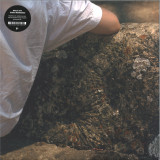
As with our KPM and Themes re-issues, the audio for The Now Generation comes from the original analogue tapes and has been remastered for vinyl by Be With regular Simon Francis. Richard Robinson has brought the original Coloursound sleeve back to life in all its metalic silver glory.
Cerca:ino 2
- A1: Tomoko Soryo - I Say Who
- A2: Taeko Ohnuki - Kusuri Wo Takusan
- A3: Minako Yoshida - Midnight Driver
- A4: Nanako Sato - Subterranean Futari Bocci
- B1: Haruomi Hosono - Sports Men
- B2: Izumi Kobayashi - Coffee Rumba
- B3: Foe - In My Jungle
- B4: Akira Inoue, Hiroshi Sato, Masataka Matsutoya - Sun Bathing
- C1: Hiroshi Satoh - Say Goodbye
- C2: Yukihiro Takahashi - Drip Dry Eyes
- C3: Masayoshi Takanaka - Bamboo Vender
- C4: Shigeru Suzuki - Lady Pink Panther
- D1: Haruomi Hosono, Takahiko Ishikawa, Masataka Matsutoya - Mykonos No Hanayome
- D2: Yasuko Agawa - La Night
- D3: Hitomi Tohyama - Exotic Yokogao
- D4: Tazumi Toyoshima - Machibouke
Pacific Breeze is a collection of choice cuts that range from silky smooth grooves to innovative techno pop bangers and everything in between.
Long-revered by crate diggers and adventurous music heads, this music has never been released outside of Japan until now. Including key artists like Taeko Ohnuki and Minako Yoshida, as well as cult favorites Hitomi Tohyama and Hiroshi Sato, the long-awaited release also features newly commissioned cover painting by Tokyo-based artist Hiroshi Nagai, whose iconic images of resort living have graced the covers of many classic City Pop albums of the 1980s.
Many of the key City Pop players evolved from the Japanese New Music scene of the early '70s, as heard on Light In The Attic's acclaimed Even a Tree Can Shed Tears: Japanese Folk & Rock 1969-1973, the first release of the ongoing Japan Archival Series. In fact, you could say City Pop set sail with a champagne smash from Happy End, the freakishly talented subversives who included amongst their ranks Haruomi Hosono and Shigeru Suzuki, both featured on this compilation. As Michael K. Bourdaghs noted in his book, Sayonara Amerika, Sayonara Nippon, this music was, 'Deconstructing the line between imitation and authenticity.' Some of the best City Pop teeters in this zone—easy listening with mutant exotica, tilted techno-pop, and steamy boogie bubbling beneath the gloss.
2xLP housed in a deluxe wide spine jacket with over sized fold-out booklet, full color printed inner sleeves, and custom die-cut obi card
Part two of the Masterworks Vol 3. vinyl sampler kicks off with the ethereal 'Lying To My Lie' where Lup Ino laces a magical, soul laden vocal behind a funked up backing beat, soring strings and glammed up guitar. Hands in the air business, hugs all round!
Woodhead steps up next for a cosmic disco trip complete with rapturous female vocal, a horn section sent straight from Mars and a squelching synth line doused in celestial sparkle.
On the B side Lux Experience goes full throttle funk, coupling a low-slung bassline and feisty male harmonies with a punchy kick and crisp hats. Last up, Mike Woods takes the scalpel to a series of strutting guitars, layering them behind a feel-good groove that captures the glory days of disco but with a fresh new spin. That enchantingly evocative vocal adds a touch of spice to proceedings, primed and ready to cause a stir.
Osaka based producer 7FO. Having previously released a cassette on RVNG International, and a 7'' single on Bokeh Versions in 2017, this is the Japanese producer's debut full length vinyl release. The tracks, recorded between 2012 and 2017, have been tweaked, remastered and recorded to vinyl for the first time.
.
The mysterious figure recorded the tracks at home, processing guitar sounds, using a sampler, synthesizer and junk equipment. Following in the footsteps of the ambient giants of his native lands, 7FO's music continues this illustrious heritage whilst offering something fresh, modern and beautifully rendered. He describes his own sound as 'gorgeous sustained tones and dreamlike oscillations that drift through the inorganic/electronic world reverberating through our subconscious creating sonic fables in our minds'.
The 12'' comes with artwork designed by label head & visual artist Jack Hardwicke. To accompany the release Greek filmmaker George Kountouras, who also collaborated on the artwork, has directed a gorgeous video for the title track 'Moment'.
'Harnessed To Flesh' is the new release from Berlin based industrial project OPERANT (Instruments of Discipline's founder and sub, respectively, Luna Vassarotti & August Skipper). Since 2016's 'ZK-II' & 2017's 'Zero Knowledge' Operant have been consistently touring, enforcing their reputation as a live act, melding chaotic noise with a disturbed, euphoric techno.
With this new release Operant engage a sense of intimacy which encapsulates their live performance; there is the familiar sense of hypnotic rhythms and collaged sound seen in the earlier works but the duo's production and focus have evolved, opening up new spaces and textures to their sound.
The opening track, 'Also To The Inorganic World' reflects the more noise oriented moments of their live show, improvised fragments, contact mic's and metal sheets combine with soundtrack like synths that seek to bolster a sense of unreality and pervert lo-fi expectations, 'Be A Boy' is a slow build, punctuated by car-crash impacts with the most coherent, almost narrative driven vocal of the record, concluding with a jarring, rhythmic seizure. Side-A finishes with 'Chancellory', an underlying sense of being underwater pervades, choking vocal sounds straddle the line between disturbing and playful. The B-Side sees a more direct and aggressive approach, 'The Sacrifice of Meaning for Power' is a dance floor oriented storm of percussion and punishing snares, Luna's vocals violently penetrate at moments, creating a feeling of vertigo within the locked rhythm, 'Dead Realities VIII' closes the record, beginning with a gabber influenced, rhythmic groundwork that unravels into a dronescape where an already torn reality is utterly destroyed.
Japanese vocal performer Hatis Noit will release her enigmatic EP Illogical Dance via Erased Tapes worldwide on 23rd March 2018.
The arresting 4-track record creates unique song-worlds with transcendent vocal interpretations that at once deconstruct and recombine Western Classical, Japanese folk and nature's own ambience atmosphere. Illogical Dance also features Björk-collaborators Matmos, who were so impressed with Hatis Noit's recordings, they volunteered to edit the lead track Illogical Lullaby.
Hailing from the distant Shiretoko, a small town in Hokkaido, which is the largest island in north Japan, Hatis Noit's accomplished range is astonishingly self-taught, inspired by everything she could find from Gagaku — Japanese classical music — and operatic styles, Bulgarian and Gregorian chanting, to avant-garde and pop vocalists. The sounds she created on Illogical Dance, co-produced by Haruhisa Tanaka and Matmos, bring to mind the experimental vocal patterns of Meredith Monk with the attentive production of Holly Herndon.
It was at the age of 16, during a trek in Nepal to the Buddha's birthplace, when she realised singing was her calling. While staying at a women's temple in Lumbini, one morning on a walk Hatis Noit heard someone singing. On further investigation it was a female monk singing Buddhist chants, alone. The sound moved her so intensely she was instantly aware of the visceral power of the human voice, a primal and instinctive instrument that connects us to the very essence of humanity, nature and our universe.
The name Hatis Noit itself is taken from Japanese folklore, meaning the stem of the lotus flower. The lotus represents the living world, while its root the spirit world, therefore Hatis Noit is what connects the two. For Hatis Noit, music represents the same netherworld with its ability to move and transport us to the other side, the past, a memory, our subconscious. It is the same for Illogical Dance, a set of transformative songs that taps into our most primal instincts.
The human voice is our oldest, most primal yet most powerful instrument. I use it to describe nature's many sounds, a language that isn't logical. Yet it forms a beautiful conversation that isn't restricted to words like the human language is. I want my music to remind us of that.' — Hatis Noit
Wanting to interpret and mimic the sounds Hatis Noit hears in nature, Illogical Dance is as unpredictable, beautiful and mysterious as the world around us. Each track is made up from multi layers of vocals, all improvised and without words, before being carefully pieced together. Astonishingly no samples are used throughout, even the sound of crushing leaves came from Hatis Noit's own vocal chords.
The result is a stunning array of sound sculptures that see her switching between multiple styles with great ease. From the sweet operatics on Illogical Lullaby, the manipulated vocal loops duplicating electronic production on Anagram c.i.y. to the primordial chanting call to arms of Angelus Novus, a 10-minute odyssey that features whispering and leaves crunching, it showcases Hatis Noit's full range and introduces a truly original artist.
Previously only available in Japan, Illogical Dance will receive a worldwide release on 23rd March 2018 including a first edition on 12' vinyl. After participating in a ceremony for memorial and appreciation tailored to the withdrawal of the evacuation area in Fukushima on 31st March 2017, Hatis Noit collaborated with renowned visual artist Nobumichi Asai on a project titled INORI (prayer) which they premiered live as part of an Erased Tapes showcase at Mutek Japan in Tokyo.
Having recently moved to London and performed a first string of UK shows, followed by a special live performance at the Milan Fashion Week and Mutek Japan appearance, Peter Broderick has invited Hatis Noit to support him at the Jazz Cafe on April 15th. She's also been announced as part of this year's Sea Change Festival line-up, and asked to participate in a workshop with the London Contemporary Orchestra.
There are some records that manage to sound both of a time and utterly timeless and Bon Voyage Organisation's Jungle Quelle Jungle (a nod to Supertramp's Crisis What Crisis) is one of those albums. Its silken-smooth production, irresistible grooves, funk-tinged guitars, lush soundscapes and general glowing presence could easily lead one to believe that have dug up a lost disco gem from the 1970s. However, behind the disco-pop gleam lies eerie dystopian sci-fi ruminations of a futuristic bent and tones that can often feel as French as they do Asian or African.
This sort of cross-continental exploration is an expansion on BVO's previous two EPs, the man behind the Organisation, Adrien Durand, says. 'I tried to continue the musical expedition between dystopian Science-Fiction Haunted Africa - plus Haitian Vaudou on 'Soleil Dieu' - and futuristic Asia. Addressing, in a double entendre manner, some of the political issues that I am sensitive to.' In fact the jungle in question in the album's title is a metaphorical one and one that creates a vast series of environments for Durand to explore such subjects as world trade, utopian ideals and themes of idols, as well as of time and communication. However, one will need to speak French to decipher such explorations, as well as shake off the natural impulse to move with every glorious beat on its 13 tracks, of which are moved along by Maud Nadal and Agathe Bonitzer's golden vocals.
Durand is a full-time producer based in Paris, working with the likes of Amadou & Mariam, so it makes sense that this record would absolutely sparkle in this department. Durand feeds off the variety of musicians coming and going during recording sessions as well as the rotating members and numbers of people involved with the band but fundamentally he writes all songs on piano first before bringing them to record live. 'We recorded a rhythm section of five - drums, percussion, guitar and myself on bass/synth bass and keyboards - at La Frette which is a studio located in a mansion outside of Paris and fitted with a beautiful 1973 NEVE desk. We only used analogue gear, by taste really, and found it a pretty reliable way of doing things. This simply consists of putting good players together in a room and waiting for the right take to happen.' Two four-day sessions and a 'cooling off' period (to let the recordings settle) soon followed before Durand picked the material back up to give it a final polish.
The resulting album is one loaded with intricacies and idiosyncrasies, something that Durand puts down to his own unique approach. 'I don't consider myself much of a songwriter but I love arranging rhythm sections and I'm pretty proud of the ones on this record.' This applies when it comes to working with such musicians as Inor Sotolongo Zapata, who with Durand used traditional Cuban percussive instruments and explored Haitian rhythms. When Durand expands on some of the ideas and influences that were funnelled into the record, you begin to get a sense of the vastness of the sounds that fill his world, from Trevor Horn's production work on ABC's Lexicon of Love, to the literary work of JG Ballard to the visual flair of the original Blade Runner and even the Tuareg sounds of Tinariwen, due to the fact that his studio neighbours their manager's and he would hear their rhythms bleeding through the walls. You therefore end up with an album that offers tracks such as 'GOMA' that fuses Chinese and African rhythms as well as 'SI D'Adventure' a piece of pop music that is dazzlingly hook-laden.
As a result of this cooking pot of sounds, influences, thoughts and creations, Durand has more of a gumbo approach to making this music than a set-out scientific formula. 'There is no definite recipe for me to like the production of a record,' he says. 'Of course it really sticks out that my work is really influenced by the 1978-1983 period, the golden age and last stand of analogue studios and session musicians.' Whilst Durand adores the traditional and conventional music, he really views this as something bigger and wider. 'I have a taste for the otherworldly vibe from records coming from less sought-after musical scenes, particularly Poland, Haiti, Ethiopia, Somalia, Congo and early Cantonese pop. Languages and the rapport of the people involved in the making of those records really inspires me. I particularly hate the use of the word 'World Music' as a potpourri for everything that doesn't sound quite western enough.'
more talking all that jazz, more high aiming music by fumio itabashi: mule musiq is ready to release another record by the legendary japanese jazz pianist, born in ashikaga, tochigi in the year 1949.
this time his first solo record ever: the heavy jazzing 'nature', which has never been reissued on vinyl since its birth in 1979. it has been recorded at nippon columbia 1st studio, tokyo from march 13 to 15 in the year of its release.
it features itabashi making feverish love with the piano and sharing the studio with the great bass players hideaki mochizuki and koichi yamazaki, drummers kenichi kameyama and ryojiro furusawa, soprano saxophonist yoshio otomo and vibraphone wizard hiroshi hatsuyama.
they all joined him to perform his very own songs, composed by itabashi himself and produced by ryonosuke honmura, who also produced japanese jazz heroes like saxophonist keizo inoue during his career.
but enough background information. what counts is sound. it is fresh, propulsive, twitchy and melodi-ous from the first to the last tone. sometimes the instrumentalists play a classic solo in an overall deep modal jazz atmosphere that seems to be made for cats that love the good old stars and inventors - from john coltrane to mile davis, from thelonious monk to art blakey.
'nature' also shows how deep itabashi studied the history of the genre, while keeping his very own vision of jazz alive. the man that made his professional debut as a member of the sadao watanabe quintet in 1971 and that also was a member of the elvin jones jazz machine world tour from 1985 to 1987, plays the piano in all tempos: nervous high-flying quick, deeply blue blues style slow.
besides the traditional jazz flavours, you get a feeling of mind-expanding spiritual jazz, that grand mas-ters like pharaoh sanders or gary bartz turned into a sacred music genre. a master-class record in ravishing big city jazz music, adventurous, sometimes meditative, sometimes faster than the speed of light, always grooving with a bright, pure-toned sensibility and deeply soulful melodic imaginations.
it extends the jazz history with a fine balance between tradition and innovation. and it stays infectious all the time while sounding surprisingly fresh due to a lot of thrilling musical spontaneity that touches profoundly even though all notes have been written down by fumio itabashi before he and his combat-ants entered the studio.
and maybe that's the mystery of these timeless five at times epic recordings: all notes been written on paper but each musician had the freedom to dance with them in his very own unique way. so, turn the volume loud and get ready to be steamrolled by fumio itabashi's 'nature', an inebriant album that is talking all that jazz deeply!
A multi-platform production that explores the overlap between the digital and the organic through field recordings of Inuit throat singing may sound, on surface level, to be something that is a rather niche. However, Zoe Mc Pherson's exploration of this world on String Figures is a deeply rhythmic, immersive and forward-thinking piece of electronic- leaning music that remains just as danceable as it does experimental.
The album is fundamentally one of duality, exploring the traditional and the contemporary, organic and electronic, audio and visual, history and the future. Rooted in this duality is also a core theme around string being one of the most ancient and playful art forms and the seemingly infinite possibilities it offers in terms of shapes, structures and figures lines up with this as a trans-global art project. One that over time will involve video art, choreography, 3D motion design, macro film, instrumental and electronic sound. Although for now is being presented through an AV performance, films and a record with Mc Pherson collaborating with director Alessandra Leone.!
Over the seven tracks (which are laid out as chapters) the record explores glitchy electronics, dub-tinged grooves, polyrhythms, and a huge array of instruments that takes in quiet blasts of atonal sax alongside wonky synths. This of course cross-pollinates with the throat singing and experimental field recordings to create an utterly inimitable sonic sphere. For Mc Pherson it's about mixing worlds, histories and timeframes and she uses a 1991 quote from Laurie Spiegel to hit home how she has elaborated upon this original thought of history and future overlapping. 'Folk music is considered anonymous common property in a culture and that's what a lot of computer music and other kinds of music data may end up becoming.' However, there's also a purer reason for the exploration of these worlds and colliding them together. 'Basically I thought that electronic music that is only digital is a bit boring and as I'm connected to jazz music for many reasons, I wanted it to sound organic: real instrumentation, field recordings.'
- A1: Domenique Dumont - 371
- A2: Stéphane Laporte - Timbuktu
- A3: Raphael Top-Secret - Maurilia
- B1: Antoine Kogut & Nico Motte - Jungle Dweller
- B2: Inoue Shirabe - Warm & Easy
- B3: Nico Motte - Cap De Creus
- C1: Iueke - Giza
- C2: Tolouse Low Trax - Raut
- C3: Leonardo Martelli - 03 23 (Notte)
- D1: Geena - Metromind
- D2: Natsukashii
- D3: The Simplists - Ambiance 9
- D4: Alek Lee Featuring Or Edry & Yovav - Plastic
5th Birthday comp featuring a host of artistst who've graced the label over the perioid.. Exclusives from Tolouse Lowtrax, Geena, Iueke, Domenique Dumont, . Inoue Shirabe, Raphael Top-Secret and more... Gatefold Sleeve. TIP!
.
Made of 14 sketches - each reflecting one of the many shades of the label's catalogue - Five years of Loving Notes features new names as well as those of artists who have been involved with the label since it's very beginning, like Geena or Iueke - responsible for the first 12' released on Antinote.
The music on this compilation covers a wide spectrum of moods and atmospheres, from the dark and raw excursions from Tolouse Low Trax or Iueke to the lush instrumental crafted by Nico Motte and Syracuse's Antoine Kogut; however as the listener gets deeper into the compilation, the whole of the tunes, sitting side by side on the records, start to make sense as they all seem to point towards the same direction. If one should try isolating a common trait from all these songs, one might come to the conclusion that it lies in the way they all speak directly to the listener's emotional receptors, unvarnished and without abusing of producer's 'tricks'.
We'll let the tricky question mentioned before in your hands once you will have been through this 63-minute long testimony of exclusive music by the artists who have been shaping Antinote's sound for five years; from the opening Latvian arabesques from Domenique Dumont to the Pink-Floyd-ian ending from the latest addition to the label, Alek Lee, via Leonardo Martelli's smoggy electro and Raphael Top Secret's ominous talk-over.
Die in Genf lebende, in Lyon, mit Vorfahren aus Kamerun, geborene Emilie Nana ist ein Wunderkind. 'The Meeting Legacy' beinhaltet eine eklektische Selektion, die Vieles von dem beinhaltet, was Emilie ausmacht.
'The Meeting Legacy' umfasst 11 Stücke, inclusive Like You, welches bereits Anfang 2013 auf Compost Black Label als Maxi veröffentlicht wurde. Die Black Label # 61 wurde digital veröffentlicht und die Black Label # 95 gibt es auf Vinyl. 2013 war das eine von fünf EPs, die Emilie Nana bis dato herausgebracht hatte. I'm Childish, So What!, was erstmals im Sommer 2015 als Teil der COMPOST 500 - Compilation zu hören. Dieses Juwel ist von Emilie's Neffen inspiriert und basiert auf der Idee, dass wir, egal in welcher Lebensphase, stets zu uns selbst stehen sollen. Es ist der einzige Track auf dem Album mit französischen Vocals und vermittelt ein getragenes, leicht verrücktes, regelloses Gefühl, ein absolut fantasievolles Glanzstück. Drei Stücke des Albums: Tolstoy' Changes, Music und The Meeting Legacy, werden 2016 als Compost Black Label - Remix - Maxi erscheinen, mit Remixen von Manoo, Beanfield & Thomas Herb, Floyd Lavine.
The Meeting Legacy, der Titeltrack des Albums, ist purer Musik-Aktivismus. Der Text stammt von Elaine Brown, eine schwarze amerikanische Aktivistin und Künstlerin, Vorsitzende der Black Panther Partei. Der Bass dieses gemächlich stolzierenden Kampfsymbols ist Nana-esk und die Vocals heben sich mit Leichtigkeit ab und positionieren diesen Track auf ergreifende Weise.
Black Like Me erhebt einen fortwährenden Anspruch auf Fiktion und Non-Fiktion und verkörpert die gelebten und kenntnisreichen Erfahrungen Emilie Nanas. Eine warme, melodiöse Kreation, mit einfachsten Lyrics und im Hintergrund dümpelnden Marimbas. Es ist die musikalische Interpretation des Buches 'Black Like Me' von John Howard Griffin. Er erzählt hier die Geschichte des weissen Journalisten, der sich einer Hautverdunkelung unterzog, um sich im schwarzen Leben des separierten Südens der U.S.A. zu engagieren. Emilie's musikalische Interpretation erfasst die bunten kulturellen Äußerungen, welchen der weisse Journalist im gelebten schwarzen Alltag begegnet.
Track Fünf des Albums, dem inoffiziellen 'letzten Track von Teil 1' heist Confessions Of No Language. Während Emilie Nana hier ihre innersten Erfahrungen transponiert, oder transportiert, zielt sie auf eine 'gewisse' Körperzone. Welche Das muss man hören.
Das Album beginnt mit Off The Street, die wilden Begleiterscheinungen einer durchfeierten Nacht von Party-Girls, geht weiter mit dem, durch die frühen 90er Jahre von Janet Jackson und Prince beeinflussten Music, bei dem wir Emilie Nana sehr warm und cool erleben. Schliesslich entdecken wir sie in Inward Path, wenn sie resümiert, dass es mehr Glücklichkeit als Traurigkeit gibt, da immer Hoffnung in uns selbst existiert.
Dieses Werk erfreut sich an dem Erguss aus Nana's grazilem und dennoch lebhaftem Wesen und trachtet erfolgreich nach dem Brechen der Regeln, mit denen Kunst oft behaftet ist. Indem sie ihr Leben vergegenwärtigt, führt sie uns gekonnt, mit Kindesaugen, Teenage-Erfahrungen bis erwachsenen Sehnsüchten und ausgereif-ten Konversationen, durch Subkultur, Kampf und verschiedenen sozialen Einflüsse. Nach vier Jahren Produktionszeit, liefert Emilie Nana ein Album, das ihr verspielten, aber reifen Geist widerspiegelt und ihre Seele miteinbezieht, The Meeting Legacy.
- A1: Typesun - Last Home
- A2: The Gino Fontaine - Revnorev
- A3: Salsoul Invention - Soul Machine
- A4: General Lee - Magic
- B1: Day Outside - Faraway Sensation
- B2: Mugwump - Boutade (Miseridub)
- C1: Hubbabubbaklubb - Mopedbart
- C2: Crowdpleaser & St Plomb - Not Yet Not Yet
- C3: The Grid & Robert Fripp - A Cabala Sky
- D1: Daniele Patucchi - People Come In (Mang Dynasty Edit)
- D2: Mang Dynasty - After Dark (Dub)
- D3: Detachments - The Flowers That Fell
Late Night Tales welcomes back the cult figure and ultimate musical connoisseur, Bill Brewster to compile his second episode of the curated compilation series 'After Dark'. An obscure and timeless DJled journey which begins somewhere out in the near ocean, the waves are rolling and lolling gently into the shore, while a full moon shines on the surface. It's only faint, but somewhere nearby is the sound of bass, pulsing slowly, almost in time to the waves. Welcome back to 'After Dark: Nightshift'. Once again Bill Brewster comes armed with a sensitivity and sense of occasion that few other DJs possess. Delivering another batch of slow cooked musical stews, making sure the tempo stays nice and steady and the emphasis is on funk, soul, grits and corn fried chicken, Brewster has done so much digging, Late Night Tales had to hire a forklift truck and tractor. Among the unreleased nuggets, there's the Fernando mix of The Detachments; inordinate excitement about Gino Fontaine, a tune spotted a year ago but has languished in Andy Meecham's Stafford catacombs ever since. Also unearthed are some hitherto secret recordings between Robert Fripp and The Grid, and there are also some proper club faves here, too, like the daft but brilliant 'Mopedbart' by Hubbabubbaklubb and the luminous 'Boutade' by Mugwump, as well as killer oldies like Salsoul Invention and General Lee
*Presenting a new collaboration featuring Oren Ambarchi on guitar, the electronics of Robin Fox, and both performing on various other instruments. The music on this album came about as the result of the two being asked to co-compose the soundtrack for a new production by renowned Australian contemporary dance company Chunky Move for their Connected production.
" Chunky Move's artistic director Gideon Obarzanek was drawn to the organic and deeply musical qualities of Ambarchi's work and the digital, almost scientic quality of Fox's sound. Over a process of many weeks these two aesthetics were merged. Working both in the Chunky Move studio and Head-gap studio in Melbourne, new works were forged from both digital and analog sources.
" This release brings together two of the most extraordinary artist/musicians working in Australia today. Both are renowned internationally for their individual practices, and here they join forces to produce powerful music that fuses Ambarchi's legendary guitar sound with Fox's mathematically rigorous tones and textures. This fusion results in sound works that stretch in scope from the sublime and spacious to the intensely dense and foreboding. Treading a precarious line between music and abstract sound, between organic and inorganic tones, this collaboration is a must listen for anyone interested in contemporary soundworks.