
Buscar:inspired

9
Binding a deep social and political conscious with rigorous musical experimentation, the Brussels based, Italian pianist, performer, composer, Giovanni Di Domenico, delivers Downtown Ethnic Music, the 4th instalment of Die Schachtel’s Decay Music series, focused on inspired contemporary experimental efforts in the ambient, ethereal, and emotively abstract music.
Over the last decade or so, Giovanni Di Domenico has carved a deep path through a diverse number of discrete fields within experimental music, working in various ensembles - Abschattungen, AufHeben, Bonjintan, Cement Shoes, Delivery Health, Going, etc. - as well as producing a discography of critically heralded solo efforts, and intimate collaborations with Jim O'Rourke, Tatsuhisa Yamamoto, Akira Sakata, Arve Henriksen, Tatsuhisa Yamamoto, Alexandra Grimal, Nate Wooley, Chris Corsano, and others.
Downtown Ethnic Music encounters Di Domenico reimagining the future of urban music, pluming the mysterious and emotive depths of self, to arrive at vision of sonorous utopia, radically divergent from those of the past. Hybridizing numerous forms of musical practice, while making a conceptual nod to Jon Hassell’s notion of the "fourth world”, as well as the cross-temporal transnationalism of Roberto Musci, Aktuala, Futuro Antico, and the Third Ear Band, Di Domenico’s vision of democracy - rendered through the creative metaphors of sound - is a true to life, bristling conflict, as open-ended as it is ordered, and as dramatic and tense as it is beautiful, playful, and refined.
A colorful tapestry of ideas, experiences, histories, and reference points, woven from a pallet of electronics, synthesis, and various acoustic sources - the intervening rhythms of drummer João Lobo, vocals by Pak Yan Lau and Patshiva CIE women choir, the horns of Ananta Roosens and Jordi Grognard etc. - across the length of Downtown Ethnic Music, the boundaries between idiom, expressive concept, collective, and individual blur, giving way to a visionary, forward-thinking rendering of electroacoustic music, that subtly reminds us of the social and political potential of art.
Seamlessly incorporating bubbling electronic abstraction, sprawling ambience and long tones, throbbing kosmische, acoustic free improvisation, and the human voice, Giovanni Di Domenico’s Downtown Ethnic Music represents a high-water mark in an already astounding career. Issued by Die Schachtel in a one-time edition of 250 copies, pressed to 180g marble vinyl and housed in a pro-printed inner sleeve and jacket, contained in a silk-screen PVC sleeve.

- A1: Banana Peel Samba
- A2: Thrasher In The Fastlane
- A3: Girl In The Random Dark
- A4: Una Noche En Tijuana
- A5: Satellite Samba
- A6: Space Jazz From Spazzmotica
- A7: Nu Roman Tek Ride
- B1: Weird Thrash Hop
- B2: World Of End
- B3: The Serious Metal Question
- B4: The Salsatronic Theme
- B5: Funky Spy Suite
- B6: Theme Of The Heroine
- B7: Hummn' With Mr Synth
14
Original compositions for virtual game music recorded in 1995 by Los Microwaves founder David Javelosa. That period in the 90s was one of rare times that Los Angeles was sort of a fun. You'd go somewhere for a drink and hear the late 1950s-early 1960s quirky instrumental pop that became known that year by the "Space Age Bachelor Pad Music" sobriquet. Many of the 14 tracks you are ideally hearing now for the first time were inspired by that long-gone cocktail-glass-shaped crack in time. Made in a tiny Santa Monica studio, surrounded by bits and pieces of torn-apart game consoles, trashed Casios and forgotten keyboards, inventing this set of ephemeral computer-generated sounds. Javelosa remembers what begat the tunes. Thrasher in the Fast Lane, inspired by driving on Bay Area freeways, fast, after hours, an Astor Piazzolla melody blowing with the wind, a party in Mexico City, an exotic perfume, Chet Baker in the background. He's always been fascinated by the concept of computer-generated jazz – still is. The sound of uncertainty, musical cut 'n' paste, excitement when something occurs that maybe has never happened before.

6
If you don't yet know, Flexi is a record store and music label based in Italy and run by Simone and Lorenzo.
Over the years, Flexi have gained both the respect and recognition of the music scene, earned by almost forty years of experience in the world of music and with the support of many DJs, artists and fans
Finally Flexi Cuts returns with a brand new release pressed on a “raw transparent" vinyl called “Velvet Series” no 2 – six quality tracks from six superb artists for an electronic journey that makes you fly over “velvet”.
Selection of the works wasn't easy; the tracks were chosen tryin' to maintain a high quality level, such as the oldest (v. series part 1) which have been so appreciated out there.
The A side opening is by Bologna-based Brine, with “YR Body” that provides a Juno-ish bassline with a catchy vocal and a jazzy mood.
Then we have “Benerice" from Daughters and Sons (aka the master Luca Fronza) who throws us into a beautiful Detroit-inspired analog jam.
This side ends with our very own Sicily man Manuold with fresh Italo-House vibes absolutely made for the dance floor.
On the B side, welcome back the veterans Tengrams (formerly the Piatto brothers from N.O.I.A Records) with the outstanding "Rapid Eye Movement"… travelling across retro-future influences and 808 patterns… under a dystopian-sci-fi movie theme.
B2 track is by the Calma duo who plays with a few elements to build a neverending techno climax...did you recognise the sample?
The last track is a sort of relaxing downtempo sunset closure complete with bells, from the California producer Gloved Hands, a name that speaks for itself.
12
2021 Repress
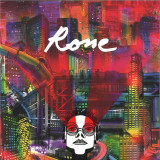
Rone is a stalwart of the French electronic scene and returns with his fourth album, 'Mirapolis', a synesthetic journey with features from Bryce Dessner (The National), Baxter Dury, John Stanier (Battles) and Saul Williams. The artwork was created by the critically acclaimed director Michel Gondry.
Stepping into Rone's music is like sleepwalking through a vividly colourful dream, eventually stumbling across a strange, scintillating Megapolis of saturated light and colours: 'Mirapolis'. Its twelve tracks / districts, each with their own specific planning, pulsate as though animated by their musical mastermind.
The project was an opportunity to get reacquainted with long- time stage and studio partners John Stanier, Gaspar Claus and the Vacarme band and Bryce Dessner (guitarist for The National,) while bringing in new collaborators (and thus, new interpretation of Rone's dreams). We find American slam-poet Saul Williams, who happened to be in Paris for a moment and contributes a searing anti-Trump screed, Baxter Dury, who brings an irresistible East London touch to 'Switches', a kind of fan fic that reimagines the Beatles' Sergeant Pepper lounging pensive in a club chair, Israeli electronic music muse Noga Erez, who inspired 'Waves' which, despite being recorded remotely, betrays a euphoric partnership, and finally, Kazu Makino, Blonde Redhead's bewitching singer and multi- instrumentalist, who contributes to the album's closer, the gauzy 'Down For The Cause'.
Rone remains a producer of grand instrumental pieces, which cannot be easily categorized in the architectural canon of our electronic music galaxy. Hypnotic, cinematic opening track 'I Philip' is an offshoot from the score for the first French virtual reality fiction, built around Philip K Dick - the perfect gate into a city that then opens up myriad temporal perspectives.

4
‘ACR:EPC’ is the second of a trilogy of EPs by A
Certain Ratio.
‘ACR:EPC’ is dedicated to Andrew Weatherall.
All four tracks on ‘ACR:EPC’ are collaborations.
‘Emperor Machine’ is a collaboration with Andy
Meecham, also known as Emperor Machine.
‘YOYOGRIP’ is a collaboration with Maria Uzor
from Sink Ya Teeth and Jacknife Lee and ‘Music
Control’ is a collaboration with Chris Massey who
remixed ‘Dirty Boy’ in 2019. The track ‘The
Guv’nor’ is inspired by longtime ACR friend
Andrew Weatherall and is a collaboration in spirit.
The EP follows the band’s highly acclaimed album
‘ACR Loco’ and ahead of a nationwide tour.
12” pressed on cornflour blue vinyl with digital
download code.

The fourth studio album from Melbourne’s 7-piece heavy groove combo is an abstruse journey into the darker fringes of instrumental music, drifting from funk to spiritual jazz and through to psychedelic fuzz rock.
Inspired by the catastrophic year that was 2020, the bands recording sessions were rescheduled three times due to extended Melbourne lock downs, before finally being recorded in November 2020. The album’s title, The Old World, refers to life before the onset of the pandemic which shattered 21stcentury humanity’s sense of stability and invincibility. Arcing back to the simplicities and blissful ignorance that existed before the grim onset of empty supermarket shelves, deserted streets and a world locked down.
The album begins with psychedelic-soul lament, Death of the Old Gods, before rolling into apocalyptic-dancefloor-fillers Hold Fast to the Void and Abode of the Clouds, then momentarily mellowing out on laid-back number, Never Again. Side 2 opens with Harry Cooper pt II (a tribute to the bands sax player and a follow up to part I from their 2017 album Drinking Water) before launching into brutal and fiery, The Beast, then finally closing with the epic 12 minute spiritual-jazz title-track, The Old World. The astute listener may also hear sprinkled across the album hints of Afrobeat, Free-Jazz and Stoner-Doom (yep, Stoner-Doom), along with plenty of the bands new favourite instrument, the goat bell.
Released on local Melbourne label, Northside Records, the album will be available on limited edition night-sky marbled vinyl and features cover artwork by Australian artist, Daniel Hend.

11
“French blues-rock singer Veronique Gayot is a one-of-a-kind and bundle of
energy rarely found.
Her distinctive voice is recognizable among thousands. She has the expressiveness of a wildcat. She is strong and uncompromising, yet vulnerable. She sings
as if a single life is not enough. Her deep, smoky voice easily joins the great
voices of the Blues.
Animal contains 10 original compositions inspired by traditional blues. Mixed
with modern urban sounds, the album offers a wide range of different moods.”

6
Nervous Horizon is happy to present 'Sogno EP', the new project by label co-owner Guglielmo Barzacchini, aka TSVI. Embarking on a journey inside the mind's most deep and intricate illusions and hallucinations, 'Sogno EP' is an exploration into various different types of dream states and altered states of consciousness. Characterised by intricate rhythms, slower beats inspired by techno, dancehall and little to no melodies, the record features Italian ASMR and spoken word to enhance the hazy and hypnotic mood permeating throughout. Taking a close look at his own states of unconsciousness and channelling them into his musical creation, TSVI dives into the abstract and eerie worlds of the subconscious with a project inspired by surreal dreamscapes, trance states and the concept of shadow work, in which each track explores a different aspect of the depth of the human psyche.

9
Re-mastering by: Cicely Baston at Alchemy/Air Mastering, London
Electric blues guitarist Melvin Taylor had been sporadically recording solo albums for 20 years when Dirty Pool arrived — and was somehow just beginning to find fame. Already a hit in Europe, it had taken a steady run of performing in Chicago’s famed blues clubs to slowly earn Taylor a well-deserved reputation as an equal talent among the giants before him, such as Otis Rush, Albert King and Stevie Ray Vaughan.
While early records like Melvin Taylor Plays the Blues For You show off an equally amazing jazz side, Taylor traded away his Wes Montgomery-inspired runs for more Luther Allison/Jimi Hendrix attacks with the formation of the trio Melvin Taylor and the Slack Band in the mid ’90’s.
The title song of the second album by that outfit, “Dirty Pool,” is actually more the balls-to-the-wall, no-compromise, hard-rockin’ electric Texas blues of Vaughan and Johnny Winter than the sweet Chicago soul of Buddy Guy.
Indeed, three tracks on this 1997 release, including “Dirty Pool,” were SRV tunes. Other standards, like “Kansas City” and “Floodin’ in California” also have more of a Lone Star State approach to them. But the Jackson, Miss.-born Taylor’s guitar is cleaner than his forebears and technically, he even surpasses them, yet the anger and sorrow of the blues is readily evident in his playing.
This rare combination of qualities really comes out in a slow blues tune like his solo in “Dirty Pool,” which after repeated listens, still makes me head shake in disbelief when I hear it.
“Too Sorry” is a good example of how well Taylor fares when he treads in Jimi Hendrix territory, whereas his rhythm work is the best I’ve heard from a lead guitarist since Vaughan; listen to “I Ain’t Superstitious,” “Born Under A Bad Sign” and the funky “Telephone Song” for your proof.
It also helps that Taylor’s drummer James Knowles is well in synch with him, while Ethan Farmer completely owns the low end of the sound. Farmer’s peppering bass lines in and “Floodin’ in California” is the textbook way electric blues bass should be. Overall, a tight little band.
Taylor’s vocals certainly won’t draw any comparisons to the Wide-Brimmed–Hatted One but he holds his own just fine until it’s cuttin’ time. This is right at the top of my list of best blues guitar playing on record over the last couple of decades. If you decide to give this one a listen, prepare to be blown away.

Nimbus West spirit jazz essential: the Creative Arts Ensemble's classic debut One Step Out. One of the most sought after and highly-regarded titles to have appeared on Tom Albach's celebrated Nimbus West imprint, One Step Out is a timeless work of spiritualized jazz. A true gem from the Los Angeles jazz underground, the album was pianist and composer Kaeef Ruzadun Ali's first recording as leader of the Creative Arts Ensemble, the only large ensemble group that emerged directly from Horace Tapscott's legendary Pan Afrikan Peoples Arkestra community jazz group. A Los Angeles native, Kaeef was introduced to the Tapscott circle in the late 1970s. His first experience of the Arkestra's ethos was through PAPA tenorist Michael Session, who took him to the famous "Great House" at 2412 South Western Ave., LA -- a large mansion house which members of the Arkestra had taken over as a space for communal living. Life in the Great House was a continuous stream of music, dance and community events. "When I walked in there," recalled Kaeef, "it was like this whole rush came over me, just from going in the front door -- It was like a very, very warm feeling of love. I went and I came out with 'Flashback Of Time', and that was my first arrangement." Kaeef quickly became a significant contributor of compositions to the Arkestra's songbook -- his piece "New Horizon" would be recorded by Horace Tapscott for the latter's Tapscott Sessions series. But "Flashback Of Time" would eventually appear on One Step Out, played by the new group he had put together from stalwart Arkestra members. Inspired by both Tapscott's example and by the Art Ensemble of Chicago, Kaeef had wanted to follow their lead by assembling a larger unit. Featuring seasoned Arkestra regulars including reedsman Dadisi Komolafe, drummer Woody "Sonship" Theus and altoist Gary Bias, with veterans Henry "The Skipper" Franklin on bass and George Bohannon on trombone, One Step Out is a key document of the Los Angeles radical jazz underground. Featuring the sanctified vocals of Kaeef's sister, B. J. Crowley, the album is a tour de force of spiritually energized independent jazz music.


- A1: Megalobox
- A2: Megalobox (Sorrow)
- A3: Megalobox (Acoustic)
- A4: Megalobox (Emotional)
- A5: Beginning Of The Fight
- A6: Battlefield
- A7: The Theme Of Gansaku Nanbu
- A8: The Theme Of Gansaku Nanbu (Sorrow)
- A9: The Theme Of Gansaku Nanbu (Slow)
- A10: The Theme Of Gansaku Nanbu (Playful)
- B1: A Day In The Life
- B2: The Theme Of Sachio
- B3: The Theme Of Sachio (Sorrow)
- B4: The Slum City (Feat Coma-Chi)
- B5: The Slum
- B6: The Slum (Night)
- B7: The Theme Of Bangaichi
- B8: The Theme Of Bangaichi (Celebration)
- B9: Get Up
- C1: The Theme Of Yukiko Shirato
- C2: The Theme Of Yukiko Shirato (Slow)
- C3: The Theme Of Yukiko Shirato (Fanfare)
- C4: The Theme Of Fujimaki
- C5: The Theme Of Aragaki
- C8: The Theme Of Mikio Shirato
- C9: The Theme Of Mikio Shirato (Slow)
- C10: Lost In Grief (Deep)
- D1: The Theme Of Yuri
- D2: Resolution
- D3: Gearless Joe (Feat Coma-Chi)
- D4: Megalonia News Network
- D5: Enter The Arena
- D6: The Theme Of Glen Burroughs
- D7: The Theme Of Pepe Iglesias
- D8: We Are Bangaichi (Feat Sachio)
- D9: The Beast (Feat Coma-Chi)
- D10: Celebration
- D11: The Ending
- C6: The Theme Of Aragaki (Piano Version)
- C7: Heartwarming
40
This is the very first original soundtrack of our new Japanese Anime Collection!
MEGALOBOX is the tribute animation to the legendary Ashita no Joe, produced by TMS Entertainment and broadcasted worldwide since 2018 with a dazzling success.
MEGALOBOX Original Soundtrack is produced by mabanua (Manabu Yamaguchi) and features several renowned artists such as DJ TAKU, KOMA-CHI or Michael Kaneko. It was acclaimed by the critics for its unforgettable rhythm and melodies, inspired by a broad variety of genres such as hip hop, black music and rap.
This soundtrack is now entirely remastered for the sumptuous vinyl format!
The Megalobox Vinyl Edition features:
- The illustrated gatefold with Joe and Yuri
- 2xLP black color, housed in two illustrated sleeves
- A 12-page booklet with comments from the composer and the team (Yo Moriyama, Keiichirô Miyoshi) and the English translated lyrics from the songs

9
On her second album Ursgal Mongolian singer Enji creates a unique blend of Jazz and Folk with the thousand-year-old traditions of Mongolian music. Currently based in Munich, her lyrics tell personal stories about unbearable distances, the oddness of being on earth and the simple truths in life.
She's accompanied by Paul Brändle on guitar and Munguntovch Tsolmonbayar on double bass.
Born in Ulaanbaatar, Enji grew up in a yurt to a working-class family. Having always been drawn to music, dance and literature, she initially wanted to become a music teacher with little ambitions to compose or be on stage. A program by the local Goethe Institute sparked her passion for Jazz and eventually led her to become a performing artist. Inspired by the music of Carmen McRae, Ella Fitzgerald and Nancy Wilson, Enji started writing songs of her own, cherishing this newfound means of expression. Ursgal is the first record featuring her original compositions.

Tampo is a mystic sextet from somewhere out of the hustle and bustle of the busy Helsinki scene. They operate on a level of their own, performing latin jazz inspired by cumbia and mambo. This 7" single release by We Jazz Records features two high calibre cuts, "Keumgang" and "Tampomambo", making this one a solid choice for all lovers of psychedelic music with character.

10
Nonesuch Records releases an album of songs written and performed by Caroline Shaw and Sō Percussion, Let the Soil Play Its Simple Part. The musicians, who have known each other since their student days, were presented with three days of gratis studio time and decided to experiment with ideas they had begun putting to tape during the sessions for their January 2021 Nonesuch release Narrow Sea. With Shaw on vocals and Sō – Eric Cha-Beach, Josh Quillen, Adam Sliwinski, and Jason Treuting – filling out this new band, they developed songs in the studio, with lyrics inspired by their own wide-ranging interests: James Joyce, the Sacred Harp hymn book, a poem by Anne Carson, the Bible’s Book of Ruth, the American roots tune ‘I’ll Fly Away’, and the pop perfection of ABBA, among others. The album is co-produced by Shaw, Sō Percussion, and the Grammy Award–winning engineer Jonathan Low (The National, Taylor Swift).
Shaw, who won a Pulitzer Prize for her vocal composition Partita for 8 Voices, written for and performed with Roomful of Teeth, makes her solo vocal debut with Let the Soil Play Its Simple Part. The album’s first track, ‘To the Sky’, from the Sacred Harp, takes its lyrics from Anne Steele. “I love the songs about death, and going home, and looking toward a time that is better or brighter, which, if there’s one thing to think about in the world, maybe that’s the thing,” Shaw says. “This one I love in particular. There’s a line, ‘Frail solace of an hour / So soon our transient comforts fly / And pleasure blooms to die.’ It’s meditation on the ephemeral, and I love it.”
“I hadn’t written very many songs, but I have certainly loved many in my life. I’ve been thinking of making a solo album for seven or eight years, but it takes having the right friends and community in the room,” Shaw says. “The prompt for all of us was: What would we make in the room together with no one person in charge, like a band writes in the studio?”
Cha-Beach recalls of the early test run during the Narrow Sea session: “It had that capturing-lightning-in-a bottle feeling.” When the opportunity to have three days in their friends’ studio, Guilford Sound, came up, the five musicians decamped for Vermont with engineer/co-producer Jonathan Low. “Jon is an amazing editor,” Cha-Beach says. “He is so helpful in thinking about: ‘We have these ideas: how do we shrink those and make them come across on an album?’”
One such idea was for Shaw to do a duet with each member of Sō. She sings with Josh Quillen on steel drums on the title track, which she wrote in under an hour in a “free-writing zone, very inspired by James Joyce, taking on that brain space,” she says. Lyrically, the song is “related to some math bits that I love, but also memory, and love songs of somebody who’s gone or passed away, or that you’re no longer with: what is the sound of that kind of devastation or confusion or love?” They recorded the song only twice, and the first take is on the album. “It’s very spare. The playing is very Josh; it’s so sensitive,” Shaw says.
Adam Sliwinski’s marimba duet with Shaw is an interpretation of the ABBA song ‘Lay All Your Love On Me’. She explains, “It’s really a Bach chorale. Also, the idea of someone singing ‘Don’t go wasting your emotion / Lay all your love on me / Don’t go sharing your devotion / Lay all your love on me,’ over and over again very slowly, there’s a certain tragedy in it. And then Adam did some absolutely exquisite layering that built this stunning world from the marimba.”
Jason Treuting on the drum kit joined Shaw for ‘Long Ago We Counted’. She suggested, “Why don’t we start with the voice and the kit having a weird conversation, sort of like two babies talking to each other? And then we built this loop, and we go from this place that’s totally uncomfortable and nonsensical to something that’s rich and rolling and satisfying.” For ‘Some Bright Morning’, the duet with Cha-Beach – who here plays electronics, piano, and Hammond organ – Shaw drew upon a twelfth century liturgical hymn she had sung regularly in church during her college years: ‘Salve Regina’.
“Some songs on Let the Soil… were very specifically composed by Caroline,” Cha-Beach says. “But others were this assemblage of ideas: finding words, an idea for how a melody could work, a harmony, and then tossing it in a blender and trusting each other.” Shaw adds, “What I love about Sō is the curiosity about how objects make sounds and how they speak to each other. There was an underlying thread of thinking about what goes into soil, how we take care of it, how we allow it to be itself, how we contain it, and what can come out of it if you cultivate the right environment, which for me is always this wonderful metaphor for creativity and collaboration: let people be themselves and see what happens,” she concludes.
Caroline Shaw is a New York–based musician – vocalist, violinist, composer, and producer – who performs in solo and collaborative projects. She was the youngest recipient of the Pulitzer Prize for Music in 2013 for Partita for 8 Voices, written for the Grammy–winning Roomful of Teeth, of which she is a member. Shaw’s film scores include Erica Fae’s To Keep the Light and Josephine Decker’s Madeline’s Madeline as well as the upcoming short 8th Year of the Emergency by Maureen Towey. Hailed for ‘astonishing both the pop and classical music worlds’ (Guardian), she has produced for Kanye West (The Life of Pablo; Ye) and Nas (NASIR), and has contributed to records by The National and by Arcade Fire’s Richard Reed Parry. Shaw currently teaches at NYU and is a Creative Associate at The Juilliard School. Her 2019 Nonesuch/New Amsterdam album Orange won a Grammy Award.
Through its interpretations of modern classics, innovative multi-genre original productions, and ‘exhilarating blend of precision and anarchy, rigor and bedlam’ (New Yorker), Sō Percussion has redefined the scope and role of the modern percussion ensemble. Sō’s repertoire ranges from twentieth century works by John Cage, Steve Reich, and Iannis Xenakis, to commissioning and advocating works by contemporary composers such as David Lang, Julia Wolfe, and Steven Mackey, to collaborations with artists who work outside the classical concert hall, including Shara Nova, choreographer Susan Marshall, The National, Bryce Dessner, and many others. Sō has recorded more than twenty albums, including a performance of Reich’s Mallet Quartet on the Nonesuch record WTC 9/11; appeared at Carnegie Hall, Lincoln Center, Walt Disney Hall, the Barbican, the Eaux Claires Festival, MassMoCA, and TED 2016; and performed with Jad Abumrad, JACK Quartet, the Mostly Mozart Festival Orchestra, and the LA Phil and Gustavo Dudamel, among others.

5
Originally released digitally in August 2020 and supported by DJ Stingray, Martin Gore (Depeche Mode), Manni Dee, Rommek and Tapefeed, OBSCUUR is thrilled to present the vinyl issue of Catartsis & Ōtone's split EP "Mechanical Gesture". Catartsis and Ōtone explore, both in their collaborative and respective work, a wide spectrum of electronic and electroacoustic music with the practices of field recording and attentive listening at the core of their creative process. Inspired by musique concrete and electroacoustic sonic manipulations, they combine and alter sounds from the real, from their surroundings and from found (mainly metallic) objects. Stemming from this approach, they engage in rhythmical and textural research to elaborate a - peculiar, acousmatic and almost tangible - percussive and club-oriented music. With "Mechanical Gesture" Catartsis & Ōtone bring us an EP that is the very definition of the word "groove" while investigating rhythms and timbres from various mechanical apparatuses. Press, slice and carve your way through this assortment, it's guaranteed to get you moving.

8
Marillion’s 2001 Studio Album ‘Anoraknophobia’ Now Available On Kscope
“A collection full of grace and tenacity, thoughtful and thought provoking and
not without moments of real clarity and beauty” - Classic Rock Magazine
Marillion formed in 1979 and have sold over 15 million albums worldwide.
Rightly regarded as legends of progressive rock, the band have also continued
to evolve and have been keen to embrace the possibilities of the internet, using
innovative ways to interact with listeners resulting in an incredibly loyal legion
of fans around the world.
‘Anoraknophobia’ is claimed by Marillion to have been the first crowdfunded
album in the music industry, completely financed by the fans, allowing the
band to record free from any record company pressures. The album is one of
their most absorbing records to date and finds the band departing their neoprogressive rock past in favour of elements of rap, groove, trip hop, blues, jazz
and dub elements to create a more contemporary sound.
Now issued on Kscope, this is a chance to revisit a band in truly inspired form
with a record far ahead of its time.

- A1: Lanquidity
- A2: Where Pathways Meet
- A3: That's How I Feel
- B1: Twin Stars Of Thence
- B2: There Are Other Worlds (They Have Not Told You Of)
- B1: Lanquidity (Alternate Version)
- C2: Where Pathways Meet (Alternate Version)
- C3: That's How I Feel (Alternateversion)
- D1: Twin Stars Of Thence (Alternate Version)
- D2: There Are Other Worlds (They Have Not Told You Of)
10
Strut present the definitive edition of Sun Ra's classic 'Lanquidity' album from 1978 with brand new 4LP box set and 2CD editions. Recorded overnight at Bob Bank's Blank Tapes on 17th July 1978 after the Arkestra had appeared on Saturday Night Live, the album is unique in the Ra catalogue. "Most critics felt that it was more of a fusion-inspired record," explains Michael Ray."As the name suggests, the album is liquid and languid." Bob Blank continues,"Musically, it was very ad hoc and freeform. There were horn charts but most trackscame out of improvised jams. Sun Ra just did his thing." Comprising five effortlessly fluid pieces, the album eases in with Lanquidity. Danny Ray Thompson remembers, "This was one of Sun Ra's on-the-spot compositions. It is almost like an Ancient Egyptian Stargazing Ceremony, mapping out the stars and the planets." Where Pathways Meet is "Sun Ra's funky version of an Egyptianmarch. Pharaoh is sending his troops off to fight and this is his pep-talk!" continues Thompson. "The music seems to take different pathways but still converges." The loping groove of That's How I Feel, features the reflective trumpet lines of Eddie Galewith solos by John Gilmore and Marshall Allen: "Marshall comes in with that snake charming oboe." Says Thompson. The funky Twin Stars Of Thence weaves around Richard Williams celebrated elastic bassline while the haunting closer, There Are Other Worlds (They Have Not Told You Of), is pure "space music." The poet Mama Nzinga described it as 'The essence of light. Spirit takes a ride inside the deep darkspace of just being."

- A1: Freddie Mcgregor - I Am A Revolutionist
- A2: The Silvertones - Burning In My Soul
- A3: Wailing Souls - Without You
- A4: Devon Russell - Jah Jah Fire
- A5: Trevor Clarke - Sufferation
- B1: The Gladiators - Sonia
- B2: Judah Eskender Tafari - Always Trying
- B3: The Viceroys - Ya Ho
- B4: Im & Count Ossie - Give Me Back Me Language & Me Culture
- C1: The Gladiators - Serious Thing
- C2: The Prospectors - Glory For I
- C3: Wailing Souls - Things & Time
- C4: Pablove Black - Inner Peace
- C5: The Gladiators - Peace
- D1: Horace Andy - Mr Jolly Man
- D2: Wailing Souls - Rock But Don’t Fall
- D3: Albert Griffiths & The Gladiators - Righteous Man
- D4: The Viceroys - So Many Problems
18
Soul Jazz Records’ new Studio One collection ‘Fire Over Babylon: Dread, Peace and Conscious Sounds at Studio One’ features a stellar selection of 70s roots music – classic and rare tracks recorded at
Clement Dodd’s musical empire at 13 Brentford Road in the 1970s.
Rastafarian-inspired Roots music was an ever-important aspect of Studio One’s output from the start of the 1970s onwards and this album features many of the ground-breaking groups and artists that
established the sound of Jamaica during this decade and beyond.
Featured here are seminal artists such as Freddie McGregor, The Wailing Souls, The Gladiators, Horace Andy, Devon Russell, Cedric Brooks, Count Ossie, Judah Eskender Tafari alongside a host of lesserknown rare cuts made at Studio One from artists such as The Prospectors, Viceroys and Pablove Black. Studio One and founder Clement Dodd’s connection with Rastafarianism dates back to the early 1960s, with Dodd accompanying members of the Skatalites up to the hills of Kingston to listen to the music of the Rastafarian Count Ossie and his drummers. The album sleevenotes discuss how Clement Dodd’s musical links, as well as his role in heading the most important record label in Reggae, are in many ways linked to the beliefs of Rastafarianism. This album is released as a heavyweight black vinyl double-album with gatefold sleeve, full notes and
download code, deluxe CD with full booklet and slipcase and digital album.
