Kindred spirits Passepartout Duo and Inoyama Land embody the essence of play - charting a new chapter and reinvigorating the environmental music and electronic landscape.
Passepartout Duo is formed of Nicoletta Favari (IT) and Christopher Salvito (IT/US), who since 2015 have been on a continuous journey travelling the world's corners, engaged in a creative process they term "slow music". Having been guests of many notable artist residencies and with live performances in cultural spaces and institutions, their evocative music escapes categorisation. With no fixed abode their musical pilgrimage brought them to Japan first in 2019, which prompted a deep connection to Kanky? Ongaku 'environmental music', a genre in which Inoyama Land is often associated with, soundtracking the duo's first immersive experience. In 2023 the duo revisited Japan and set out to reconnect in particular with the music of Inoyama Land, performed by Makoto Inoue and Yasushi Yamashita. The highly revered album 'Danzindan-Pojidon' (1983) produced by Haruomi Hosono amongst other well publicized and acclaimed reissues (Light in The Attic Records' Grammy-nominated compilation 'Kanky? Ongaku'), produced a global resurgence and admiration of the environmental music movement. Nicoletta took the lead to seek out Inoyama Land and in making contact successfully their intrigue and eagerness to meet was warmly reciprocated, and the group scheduled to meet in the form of a spontaneous improvisation session. "We're deeply concerned with what it means to be a duo, and what it means for people to connect through music."
Radio Yugawara is a unique one-off transmission from a specific place and point in time, unlikely to ever occur again. The respective duo's approach can really be described as "tuning in", a tuning into each other, to themselves, and to the surrounding nature of Yugawara. Like waves that travel off-world, sounds travel through the universe and can be lost forever if we don't seek them out. In finding a harmonic affinity within their instruments and a spiritual kinship in their interwoven performance, Radio Yugawara at its core is an interpretation of feeling, of close human interaction and the true essence of discovery.
"The album is both a transmission from a location, but also a tuning into the surroundings and to each other. Music in this kind of ephemeral moment is much less about active creation and more about discovering something which is already there in the air."
Search:instruments
- 01: Burgundy Dotted Black Cow
- 02: Kreisler`s Prealudium
- 03: Introvert
- 04: Victorsson
- 05: J. K. Lasocki
- 06: Nail File
- 07: Self Grown
- 08: Little Wing
- 09: Artus
- 10: My Space
- 11: Jazz Madness
- 12: The Envelope
- 13: More Gigs!
- 14: Crossing
- 15: Christiansgade
- 16: The First Bike
- 17: Roux
- 18: Tiu Droppar
- 19: Trash Nylon
- 20: Koshaolin
- 21: Crates
- 22: Collective
- 23: Onesemble
- 24: Mellomaniac
- 25: Beat The Road
- 26: Freedum
- 27: Artsty Fartsy
- 28: Full Cycle (Enough)
Burgundy[33,57 €]
The 180g vinyl is available in two colors: Classic Black and a Limited Burgundy Edition, with the outer cover hand-colored and numbered (100 copies) by Moo Latte himself.
Mellomaniac, the seventh full-length album by Moo Latte, is different. These 28 compositions, written and recorded in 2021/22, were initially created for Moo's personal use, serving as a life soundtrack during many weeks and months spent away from home while touring with the band. Most of the tracks were recorded in hotel rooms and even backstage areas, fully embracing the lo-fi mindset and philsophy. Comparing to his previous works, this one holds a special significance and it's the most personal of them all.
What's Mellomaniac? The wordplay combines "melomania"—defined as an excessive and abnormal attraction to music—with the "mello" vibe that reflects both Moo Latte's personality and the nature of the music itself. The album leans toward a mellow sound, designed more for an intimate, individual listening experience where each spin of the record leads to new discoveries.
Why is this album different? Each of these pieces was created without any predetermined goal, which is why the tracklist is so eclectic—much like Moo Latte's palette of inspirations. These influences stretch back to when he was just four years old, singing in front of others for the first time or listening to his sister practice the violin. These early memories and instincts are blended with more deliberate musical choices, refined over two decades of music education. Each song is dedicated to a person, place, or situation that shaped him both as a musician and as an individual, reflecting the journey he has been on so far.
After six previous albums rooted in beat-making culture, this is the first one that is 95% drumless and free from sampling of any kind. Although the stories in these songs are told without words, Moo Latte incorporates his voice alongside a wide array of instruments, using it more expressively than ever before. The album's sonic quality is both raw and lush. The grit comes from the way it was recorded, using gear and microphones that, while not top-tier, were simply what was available. Everything was mixed in Moo Latte's bedroom and mastered on analog tape, resulting in a personal, intimate, and dynamic listening experience.
- 01: Burgundy Dotted Black Cow
- 02: Kreisler`s Prealudium
- 03: Introvert
- 04: Victorsson
- 05: J. K. Lasocki
- 06: Nail File
- 07: Self Grown
- 08: Little Wing
- 09: Artus
- 10: My Space
- 11: Jazz Madness
- 12: The Envelope
- 13: More Gigs!
- 14: Crossing
- 15: Christiansgade
- 16: The First Bike
- 17: Roux
- 18: Tiu Droppar
- 19: Trash Nylon
- 20: Koshaolin
- 21: Crates
- 22: Collective
- 23: Onesemble
- 24: Mellomaniac
- 27: Artsty Fartsy
- 28: Full Cycle (Enough)
- 25: Beat The Road
- 26: Freedum
Black[27,31 €]
The 180g vinyl is available in two colors: Classic Black and a Limited Burgundy Edition, with the outer cover hand-colored and numbered (100 copies) by Moo Latte himself.
Mellomaniac, the seventh full-length album by Moo Latte, is different. These 28 compositions, written and recorded in 2021/22, were initially created for Moo's personal use, serving as a life soundtrack during many weeks and months spent away from home while touring with the band. Most of the tracks were recorded in hotel rooms and even backstage areas, fully embracing the lo-fi mindset and philsophy. Comparing to his previous works, this one holds a special significance and it's the most personal of them all.
What's Mellomaniac? The wordplay combines "melomania"—defined as an excessive and abnormal attraction to music—with the "mello" vibe that reflects both Moo Latte's personality and the nature of the music itself. The album leans toward a mellow sound, designed more for an intimate, individual listening experience where each spin of the record leads to new discoveries.
Why is this album different? Each of these pieces was created without any predetermined goal, which is why the tracklist is so eclectic—much like Moo Latte's palette of inspirations. These influences stretch back to when he was just four years old, singing in front of others for the first time or listening to his sister practice the violin. These early memories and instincts are blended with more deliberate musical choices, refined over two decades of music education. Each song is dedicated to a person, place, or situation that shaped him both as a musician and as an individual, reflecting the journey he has been on so far.
After six previous albums rooted in beat-making culture, this is the first one that is 95% drumless and free from sampling of any kind. Although the stories in these songs are told without words, Moo Latte incorporates his voice alongside a wide array of instruments, using it more expressively than ever before. The album's sonic quality is both raw and lush. The grit comes from the way it was recorded, using gear and microphones that, while not top-tier, were simply what was available. Everything was mixed in Moo Latte's bedroom and mastered on analog tape, resulting in a personal, intimate, and dynamic listening experience.
Sasu Ripatti presents the fourth volume in his "Dancefloor Classics" series with five 10" releases coming throughout 2023. Music for imaginary dancefloors, released on Ripatti's own label "Rajaton".
”Look up, into the light” she said, while the camera shutter clicked. ”Like this? Does it look holy?” His neck felt stiff. Her reply: ”Yes, just like that. What do you mean holy? Like religious? ”No, more like trying to look very far, somewhere beyond what we can see.” ”Okay, stand still, I’m going to come close to you now. The light hits your face great.” click, click, click.
He noticed her fingernails. They were not polished. Natural. Even somewhat rugged, as if something wore out the fingers slightly. What had these hands held besides the camera? What made the edges of her fingernails drift off?
He thought it’s weird to look straight into the camera. The photographer had closed her left eye, the one not looking into the lens. Then it opened, she looked up, perusing the surroundings, then she closed her eye again, then looked up, closed, looking up, very quickly. It all seemed very professional. Maybe she calculated the light, making sure it’s close to perfect. ”What will these photos look like?” – the thought popped into his head briefly. It was liberating to think it wouldn’t matter.
”What’s that song playing?” he asked. ”Wait a sec, Ol’ Dirty Bastard?” she replied. ”Oh yeah, right. But the sample?” ”Hey, could you look up again, like that. No, lower.”
New directions: ”Look out from the window, turn left.” ”My left or yours?” ”Yours, I always try to think from the direction of my model.” How professional! This is a good shoot, so natural. Should I worry about how the photos look like? No, I don’t want to. His thoughts bounced around. What would the story be like? It’s a big newspaper, everyone will read it. Maybe someone drinks coffee and eats a stroopwafel while they do it. Will they place the waffle on top of the mug for a brief while, so that it gets hot and the syrup melts a little? Then it feels wet, and you can bend the cookie.
She broke his train of thought off midway through: ”Now turn right, but look left, and slightly up, but don’t turn your face right.” ”Umm, like this? Sounds like a set of pilates instructions.” she laughed ”You do pilates?” ”Yeah, it’s hard sometimes. Have you tried?” ”No”, she said. ”I’m not good for sports that are done in groups.” ”Yeah, but in pilates you can just be inside your mind, drowning in your private thoughts.”
”What are you thinking in pilates?” she asked, taking more photos. ”Well, mostly just which way is right. And which left.” click, click.
Q&A with Sasu Ripatti:
1) Tell us something about the EP series ”Dancefloor Classics”, what’s the idea and what can we expect?
I’ve been slowly writing these sort of dance music pieces and finally curated them together for a conceptual release. I like to create music for a dancefloor that exists only in my imagination and doesn’t try to suck up to the standardized reality.
2) Your vinyl format is 10” which is quite special (as opposed to LP / 12”). Why did you choose it?
It’s my favourite format, absolutely. The size is perfect, and you can make it sound really good @ 45 rpm. And you still can make great artwork.
3) You seem interested in sampling/repurposing, what does it mean to you as an artist to approach something already existing from a new angle? How does the source material inform you about the approach to take?
I guess i could flip it around and just say I’ve outgrown synths or electronic sounds to a great extend, and having gotten rid off all my synths already good while ago I’ve used samples as my main source material a lot. It’s obvious on this series that i’ve sampled existing music, but I also sample instruments and things in the studio and resample my own library that I have built over the years, it’s quite large. To me the end result matters, not so much how I get there. Once I have something on my keyboard and play around, it’s all an instrument, though with sampling other music it becomes a really interesting and complex one as you’re possibly playing rhythm, but also harmonic content and maybe hooks or whatever, all at once.
I never sample premeditadedly, like listening to records and looking for that mindblowing 3 sec part. I just throw the cards in the air and see what lands where, just full intuition and hopefully zero mind involved, playing tons of stuff, trying things, just recording hours of stuff. Then comes the interesting part to listen to hours of mostly crazy stuff and finding that mindblowing 3 sec part.
4) What is your relationship with the dancefloor (conceptually and/or in experiences / as a performer)?
Very complicated. I have never really felt comfortable on a dancefloor but have always wanted to. There’s something in club music, in theory, that really speaks to me. It has never really materialized for me – speaking mainly from a performer’s point of view who goes to check on a dancefloor for a moment after a concert. I never have DJ’d or felt much interest towards it. But again, I love the idea and concept of DJing. As well as producing music for imaginary DJs. Lately, as in the past 10+ years, I haven’t even performed in any sort of club spaces. So my relationship to the dancefloor is quite removed and reduced, but there’s quite a bit of passion and interest left.
All tracks composed and produced by Sasu Ripatti.
Artwork & photography by Marc Hohmann.
Mastering by Stephan Mathieu for Schwebung Mastering.
Vinyl cut by SST Brueggemann.
Publishing by WARP Music Ltd.
“Loves Love” jettisoned STÜM into 2024 and now “Beautiful Dancers” is here to take him ever higher.
As the second single off his forthcoming Essence Of Time EP, “Beautiful Dancers” is a blissful yet haunting take on techno. This track is total club rapture made up of ghostly vocal calls, static-like percussion and howling wind effects. A record of mixed emotions, pleasure and pain all blended up into 6 plus minutes.
Speaking on the tune, STÜM says “The songwriting process involved juxtaposing the organic with the synthetic weaving together contrasting sounds to mirror the duality of human emotion.”
Third in line is “Limbo”, a heaving acid hit full of hypnotic foreign instruments and vocals. This one gives off a massive street party feeling. From there we head to “Escape” a more dreamy and introspective bell-tone tune. A deliberate breather from STÜM before storming into the title track of the EP.
“Essence Of Time” is a shimmering rave piece. Dulcet piano intertwines with airy effects and hammering synths – another excellent example of STÜM’s ability to blend light and shade all at once.
As many artists before them (Gainsbourg, Snoop Dogg, Lavilliers, Sinead O'Connor…), DA BREAK embarques us to revisit their best tracks “Inna Reggae Vibe”, and invites us listeners to rediscover their repertoire with a more than ever “Roots” sound. An enchanted break that will seduce the early fans as well as reggae connoisseurs; A suspended moment with a band on their new musical quest, assuming a different side of their DNA.
The idea of an “old school reggae auto remix” had bloomed for quite a long time, with the will to dive into the 60s & 70s sound esthetics and to pay tribute to this reggae culture - this unique cultural temple they love and respect so much.
DA BREAK concerts are always rich and intense musical moments, thanks to a crew of solid musicians, so the choice to record LIVE, all in the same room, was quite obvious; with “vintage” instruments and microphones, to enjoy this warm and authentic sonic texture. The result is a “Roots & Rock Steady” album without electronics, leaning towards sweaty and rough Jazz, tropical Soul or even Gospel with sand between the toes… definitely Reggae!
DA BREAK remains DA BREAK, with its inner light, this time looking towards the Caribbean musical culture.
Given the historical influence of Jamaican Sound Systems on the American Block Parties, it seemed logical for DA BREAK to pay tribute to the artists that influenced them since day one, and still do today: Bob Marley & the Wailers, Jimmy Cliff. Culture, Toots & the Maytals, Burning Spears, The Gladiators, YellowMan, Israel Vibrations, LKJ & Mad Professor, UB40, Shaka Demus, Peter Tosh... Just to name a few.
New pressing of Oiro Pena's debut. All compositions & instruments played by A.E. Vauhkonen Risoprinted cover art printed by Timo Vaittinen Spiritual flute jazz by the mastermind Antti Vauhkonen. Originally released as a 20 copy edition lathe-cut, now on 10" vinyl. ”Wow where did this come from??!? Raw and essential outsider jazz which will be whispered about for years to come…” -Matti Nives / We Jazz "Vauhkonen’s hands simultaneously summon up brass, flutes, keyboards, drums, stringed instruments and all sorts of percussion. The sound is firm and slightly cosmic, like early Sun Ra Arkestra at its heartiest. But that’s enough about the music, listen for yourself.” – Markus Karlqvist
On this LP you hear two kanteles built by the Master Luthier Rauno Nieminen. One of them is a copy of a historical instrument built by the folk poet Ontrei Malinen in 1833. It is carved from single piece of pine, and it has five bronze strings. The other one is carved from a single piece of spruce. Its lowest seven strings are bronze, and highest three strings are English iron. On most tracks the two kanteles are played simultaneously.
For me, playing these instruments is searching for meaningful ways to interact with wooden objects from another time. By choosing a set of 5 to 15 frequencies and plucking them, I'm able to think, feel, and imagine more than I could without the instruments. the patterns that emerge from the vibrating strings give temporal shapes to thoughts.
The music on this album is improvised. It was recorded at home after dark and outdoors in daylight during 2020-2022. No overdubs or edits were made afterwards. On the last track the kantele is accompanied by detritus gathered from the forest floor.
Tuokioita translates to moments. This music is about colouring time.
Wann genau die Langhalslaute Bouzouki nach Griechenland kam, ist unklar. Ihre Wurzeln gehen bis ins vierte Jahrhundert vor Christus zurück. Die heutige Form des Instruments, benannt nach "Βυζί", dem griechischen Wort für die weibliche Brust, ist relativ jung und seit etwa 1920 in Athen und auf dem Peloponnes verbreitet. Ursprünglich in Bars und auf privaten Festen gespielt fand es durch das Revival des „Rebetiko“, dem „griechischen Blues“ ab den 1960er Jahren weitere Verbreitung. „Ursprünglich wurde auf der Bouzouki viel improvisiert“, meint Georgios Propkopiou, „viel mehr als später. Denn ab den Fünfzigerjahren wurde ihr Spiel professionell unterrichtet. Da wurde vieles festgelegter“. Seitdem ist der metallische Klang des Instruments fast zum Synonym für die griechische Folklore als Begleitung von Liedern und Tänzen geworden... vor allem bei dem Komponisten Mikis Theodorakis, der mehr als nur ein paar Ohrwürmer hervorgebracht hat.
Die Jazzkarriere der Bouzouki hingegen stand bislang noch aus. Es brauchte einen Umweg über Stockholm, damit etwas in Bewegung kam. „Die Kombination Bouzouki und Jazz liegt erst einmal nicht so nahe“, meint der Pianist Joel Lyssarides. „Für mich persönlich hängt sie mit meinem Großvater zusammen, einem griechischen Zyprioten. Er kam in den 1940ern nach Schweden. Griechische Musik mochte ich immer, ich war aber damit nicht wirklich vertraut. Jedenfalls fand ich die Bouzouki faszinierend. Während der Pandemie habe ich mir ein Instrument gekauft, um es ein wenig zu lernen. Beim Stöbern im Internet entdeckte ich dann Georgios durch ein TV-Konzert, ein Tribute an Theodorakis. Ich war total begeistert und habe in Stockholm herumgefragt, ob ihn jemand kennt. Tatsächlich spielte er zufällig ein paar Tage später in der Nähe in einer Hotelbar ein Konzert“.
Das war im Herbst 2022. Joel Lyssarides hörte Georgios Prokopiou zu, sprach ihn an und sie verabredeten sich zu einer Session. Sie jammten und improvisierten, fanden musikalisch schnell zusammen und im Sommer 2023 spielten sie ihr erstes gemeinsames Konzert. „Es ist sehr unüblich, dass jemand mit der Bouzouki über Changes improvisiert,“ erzählt Joel Lyssarides weiter. „Sie ist ja ein traditionelles Instrument mit klar definierter Rolle, meistens Begleitung mit gedoppelten Terzen und Sexten. Georgios aber macht viel mehr. Ich hatte zunächst keine Ahnung, wie unglaublich virtuos und stilistisch variabel er ist. Seine Vielseitigkeit öffnet viele Türen. Wir hatten von Anfang an sehr viel Spaß an den neuen Möglichkeiten. Und ich hatte vorher noch niemanden gehört, der so spielt. Dafür musste ich unbedingt Musik schreiben“.
Lyssarides erzählte ACT-Chef und Produzent Andreas Brandis von der Idee für das Duo und auch dieser war sofort begeistert: „In der Lesart von ACT steht der Begriff Jazz vor allem für ein Vokabular mithilfe dessen Musiker:innen ihre eigene Geschichte vor ihrem persönlichen kulturellen Hintergrund erzählen. Es ist faszinierend, dass hier immer wieder Konstellationen entstehen, die es vorher nicht gegeben hat. Und die Musik, die Joel Lyssarides und Georgios Prokopiou gemeinsam kreieren ist einerseits absolut überraschend und neu, klingt jedoch gleichzeitig so organisch und natürlich, als hätte es diese Konstellation schon immer gegeben.“
Es sind aber nicht nur die Instrumente Klavier und Bouzouki, die sich getroffen haben, sondern auch die speziellen Charaktere und Geschichten der beiden Duopartner. Der Stockholmer Joel Lyssarides verbindet in seinem Spiel größte Virtuosität mit beeindruckender Leichtigkeit und einem starken Gespür für Stimmung und Dynamik. Er arbeitet mit so unterschiedlichen Künstler:innen wie Anne Sofie von Otter, Benny Anderson, Nils Landgren, Viktoria Tolstoy und ist Teil des Esbjörn Svensson Tributes „e.s.t. 30“. Das ACT-Debüt „Stay Now“ von Lyssarides‘ eigenem Trio wurde seit seinem Erscheinen 2022 allein auf Spotify eindrucksvolle 25 Millionen Mal gehört. Der Athener und Wahl-Stockholmer Georgios Prokopiou spielte zum ersten Mal mit sechseinhalb Jahren Bouzouki, gab mit acht seinen Konzerteinstand und hatte als Zehnjähriger bereits feste Musikengagements in Bars und Bordellen. Seitdem arbeitet er im klassischen Kontext ebenso wie in der Folklore und dem Experimentellen, spielt neben der Bouzouki außerdem Saz und andere Saiteninstrumente.
Die Voraussetzungen für das Album „Arcs & Rivers“ waren daher so vielfältig und offen, wie nur möglich. Nach einem Probekonzert in der Berliner ACT Art Collection, von dem das Live-Stück „Zafeirious Solo“ auf das Album übernommen wurde, trafen sich die beiden noch einmal am selben Ort, um mit Studio-Equipment auch andere Facetten aufnehmen zu können. „Wir wollten zum Beispiel leise Stellen dabeihaben, nah mikrofoniert. Außerdem den großartigen Klang des Flügels, der früher einmal Alfred Brendel gehört hat. Insgesamt aber war vieles sehr spontan. Das ganze Album wurde in einem Rutsch aufgenommen, innerhalb von vier Stunden, meistens mit den ersten Takes. Ich bin sonst oft Perfektionist und verbringe Tage mit der Nachbearbeitung von Musik im Studio. Diesmal hingegen sollte es so direkt und spontan wie möglich sein“. Und es funktionierte: „Arc & Rivers“ ist ein Dialogskizzenbuch mit normsetzender Wirkung. Egal ob neue Kompositionen oder Verarbeitungen traditioneller Rhythmen und Muster wie in „Kamilieriko Road“ – diese Musik hat eine schillernde, klangmagische Kraft. Und das Duo selbst strahlt eine Selbstverständlichkeit der Kulturverknüpfung aus, die die Enge der Stile hinter sich lässt. Und es macht klar: Es ist tatsächlich Zeit für etwas mehr Bouzouki im Jazz, in der Improvisation und auf den Bühnen der internationalen Musikwelt.
To launch Mr Bongo’s new Cuban Classic Series, we are thrilled to present this sought-after, psychedelic-funk masterpiece. A fusion of traditional Latin and Afro-Cuban rhythms meets disco, jazz, and funk, with hints of 70s soundtrack productions, this much-loved cult album featuring nine predominantly instrumental tracks is a real treasure that deserves a much wider appreciation. One look at the trippy artwork and you know it is going to be special.
Originally released in 1977 on Areito Records, a sub-label of the state-owned label Egrem, it has become one of the rarest (even in Cuba) and most in-demand albums to come from the label. It is the sole album from Grupo Los Yoyi and was composed, orchestrated, and produced by the mysterious, Jorge Soler Leó.
After Castro ring-fenced Cuba with an embargo on, among other things, Western music, the ‘Yoyi’ album had a sound more left of centre than what was normally allowed to be recorded there at the time. It subtly and covertly flirts with disco, jazz-funk, and electronic sounds coming from the US and Europe. It is probably best known for the space funk, bubbly club cut 'Paco La Calle’. A track that was edited in 2008 by the fantastic DJ / producer, Nick the Record, and one that is guaranteed to set a discerning dancefloor alight. However, ‘Yoyi’ is far from a one-track album. Other highlights include, 'Banana’, with its call and response trombone and horn section, squelchy keys, pulsating breaks and percussion, and a loose, floating vocal arrangement. 'Tu No Me Puedes Conquistar' is a beautiful, bouncing plodder with a variety of instruments interchanging as the track progresses. 'Ruta 30' takes things in a straighter Latin direction, which we are accustomed to from Cuba at that time, yet it is still full of personality, treats and vigour. Take our word for it, this album is strong throughout.
This is one of our favourites and most beloved albums to come out of Cuba and is the perfect flagship for our Cuban Classics Series. Look out for plenty more to come real soon.
The group formed by the legendary Joseph Hill, accompanied by his two acolytes Albert Walker and Kenneth Dayes, delivers an album recorded at Mixing Lab and mixed at the Lion & Fox studio (reference studio for the RAS label) in 1989.
Recorded with 3 brass instruments, bass, drums, keyboards and percussion, it's in the pure roots tradition, with a few interesting dub twists. There's also a tribute to Bob Marley entitled ‘Psalm of Bob Marley’ and the excellent ‘Cousin Rude Boy’.
This is a pure roots album remastered to the highest standards, with a 350g cardboard sleeve showing off the full extent of Mitch Goldberg's graphic design. Never reissued on vinyl since its release, and only once on CD in the 90s.
Brand new remastered version of PENTAGRAM legendary album Sub-Basement in new coloured vinyl and with a brand new cover designed by Solo Macello. Doom is made out of 666 tons heavy riffing, vocals filled with pain, regret and spite as well as leaden song-structures stretched taut to the point of ripping. PENTAGRAM embody all those virtues like no other contender in this oldest of all genres of Metal being founded by none other than Black Sabbath. Many have named PENTAGRAM the true heirs of those originators of Heavy Metal and honourably dubbed them 'the American Black Sabbath'. In this sixth incarnation of the band, Doom lord Bobby Liebling had reunited with drummer Joe Hasselvander, who had already been a member of PENTAGRAM twice before. Hasselvander played all the instruments, while Liebling added his matchless vocals. "Sub-Basement" was the second output of this line-up and is regarded as the most Rock N' Roll effort of the doomsters ever. On top of PENTAGRAM's perfect Doom sound an irresistible groove and capturing catchiness was added, which made the album an all time favourite for many fans. "Sub-Basement" will kick your ass and twist your legs.
Blue jay vinyl, limited to 400 copies. Brand new remastered version of PENTAGRAM legendary album Sub-Basement in new coloured vinyl and with a brand new cover designed by Solo Macello. Doom is made out of 666 tons heavy riffing, vocals filled with pain, regret and spite as well as leaden song-structures stretched taut to the point of ripping. PENTAGRAM embody all those virtues like no other contender in this oldest of all genres of Metal being founded by none other than Black Sabbath. Many have named PENTAGRAM the true heirs of those originators of Heavy Metal and honourably dubbed them 'the American Black Sabbath'. In this sixth incarnation of the band, Doom lord Bobby Liebling had reunited with drummer Joe Hasselvander, who had already been a member of PENTAGRAM twice before. Hasselvander played all the instruments, while Liebling added his matchless vocals. "Sub-Basement" was the second output of this line-up and is regarded as the most Rock N' Roll effort of the doomsters ever. On top of PENTAGRAM's perfect Doom sound an irresistible groove and capturing catchiness was added, which made the album an all time favourite for many fans. "Sub-Basement" will kick your ass and twist your legs.
Call for Winter II: Resonance is the new album from Daniel Herskedal and the second album, as part of his solo project Call forWinter. A musician and composer who is meticulously crafting a sound of his own blending Tuba, bass trumpet with classical,world and improvised music, Call for Winter II :Resonance is a profound statement, aptly titled, depicting his expansive vision,ambition as much as the influence of the stark, breathtaking expanse of the Norwegian valley and landscape—an ever-presentmuse in Herskedal's work. Following the thematic and sonic footsteps of his first "Call for Winter" album, which expanded upon"The Mistral Noir" from his 2015 album "Slow Eastbound Train," Herskedal dives deeper in "Resonance." Here, he layers hissignature instruments with even greater emotional gravity and artistic conviction, crafting a soundscape that is both expansiveand introspective.
The Ruins' eponymous EP (also known as the “gray record”) was originally released in the late spring of 1984 and in fact represents a significant moment in the Italian independent music scene of the early 1980s. The then contemporary burgeoning wave of entertainment music contaminated by experimental accents and conveyed essentially by electronic instruments saw the Ruins at the forefront. The band, essentially a duo, formed in Mestre (Venice) in 1978, had already carved out a window of national attention within the Italian new wave in 1981 with their first single “Short wave” and their participation in one of the very first (if not the very first) Italian new wave compilations entitled “Samples Only.”
Following this, between 1982 and 1983, there had been an important interlude in the evolution of the RUINS sound with the foundation of the quintet project (of which SPITTLE/DepenDance recently published an essential anthology titled “BRAIN FLAKES”). At the end of 1983, having concluded the group experience with the consequent and inevitable return to the original duo dimension the musical style further evolved putting even more emphasis on the unique blend of electronic sounds and almost black /soul influences of the new compositions that would later be collected in 1984 in the original version of E.P.
The duo's sound at that particular time was characterized by the innovative use of synthesizers and drum machines for unconventional song structures, which at the same time also encapsulated Ciranna and Pizzin's experimental ethos, thus allowing them to follow a parallel trajectory capable of maintaining a certain distance - while remaining somewhat related to - from the contemporary mainstream pop and the so-called ITALO disco strand.
Ultimately, this 1984 EP by the Ruins - of which Spittle DepenDance now offers a valuable reissue enriched with additional material from the period that has remained completely unreleased until now - is a testament to the band's innovative spirit and its role in shaping the Italian new wave scene, landing moreover to international acclaim and acclaim even over the following decades. With its mix of electronic experimentation and dark pop sensibility, it remains essential listening for fans of avant-garde pop music.
- Milan Knízák - (Maybe) Sonata (1971)
- Henning Christiansen - Mond-Glass-Fiber-Rohr (1986)
- Milan Knízák - Novelties (From The Cycle Processes Mainly For The Space Of Mind) (1978)
- La Monte Young - Piano Piece For David Tudor #2 (1960)
- Philip Corner - Cello Walking - I. Walk The Walk (2017)
- Philip Corner - Cello Walking - Præludium: Cello Slow Drag (2017)
- Bengt Af Klintberg - Triad No. 2 (2021)
- George Maciunas - Solo For Violin (For Sylvano Bussotti) (1962)
- Milan Knízák - Negations (From Cycle Processes Mainly For The Space Of Mind) (1978)
- Takako Saito - Untitled (2018)
- Toshi Ichiyanagi - In Memoriam Of John Cage (1992-93)
- George Maciunas - Solo For Sick Man (1962)
- Milan Knízák - Destroyed Händel & Chopin (1981)
- Philip Corner - Good Jew, After A Listen To Julius Eastman's Evil Nigger Version Iii
- Philip Corner - Man In Field (Sound As "Hero") (2020)
- John Cage - Mozart Mix (Edit) (1991)
- Geoffrey Hendricks - Sky Music V. Ii (1985)
- Nam June Paik - Video Flag (1985)
- Sara Miyamoto - Peck And Plunk (2022)
- Ken Friedman - Rational Music (1987)
- Yoko Ono - Voice Piece For Soprano (Scream Against The Sky) (1961)
- Yoko Ono - Voice Piece For Soprano (Scream Against The Wall) (1961)
- Yoko Ono - Voice Piece For Soprano (Scream Against The Wind) (1961)
- Josef Anton Riedl - Tabchiernchau (Für Sprechen) (1998)
- Giancarlo Cardini - Foglie D'autunno Lentamente Trascolorano (1983)
- Ay-O - Ha He Fu Hi Ho (1976)
- Milan Knízák - Tramp Sonate (2021)
- George Brecht - Water (1963)
- Philip Corner - Good Jew, After A Listen To Julius Eastman's Evil Nigger Version I (2021)
- Jen Friedman - Zen For Record (1966)
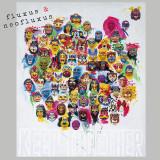
In April 2023, there was released the first part of the Fluxus edition called Stolen Symphony. The year has come and gone and there is the second part of the Fluxus edition called Keep Together. At the centre of both parts of this edition was a broken piano, acquired by the Opening Performance Orchestra for the purpose of making live and studio recordings. During this time other new works for this broken piano were written by diverse Fluxus and non-Fluxus composers. In the spring of 2022, the Opening Performance Orchestra and broken piano participated in an event hosted by Mieko Shiomi. This was a new version of her early work Spatial Poem, documentation of which was presented at the 2022 Aichi Triennale in Tokyo. At present, broken piano lies in the open air in Prague and is subject to gradual decay.
These both parts of this edition contain 73 new and old pieces, live and studio recordings, finished pieces and scores to be performed, solos and pieces for ensemble, using classical and special instruments from 33 Fluxus artists, which have been played by 10 soloists and 4 ensembles. There are new essays and articles from 15 writers on the theme Fluxus, original photos and other documentation in the booklets.
Transparent blue vinyl, limited to 1000 copies. Swedish Grammy Award winning rock duo Johnossi are back. John, Ossi and their long time partner keyboardist Mattias Franzén went back to basics and spent a lot of time together in the rehearsal room to write their eighth album "Forevers" (release September 27th). "When we were younger, that's where we did everything," the band explains. "Our instruments and our interplay were all the inspiration we needed and now we simply wanted to return to that feeling of tireless belief in ourselves". The result is an album described by the band themselves as "a distinct, big and fearless album". The album is produced by Måns Lundberg (Håkan Hellström, Deportees, Hurula etc.) and was recorded in Stockholm during spring.
Swiss intergalactic 3 piece experimentalists lean on a Dadaist theme for their late-night, jam-inspired, and smokey beat laden trip to the cosmos.
Distilling surf rock, jazz and ambience, energised and patched together with spoken word samples, wind instruments and, blunted hip hop beats, ali dada’s album SUM is their invitation to dadaversum’ - their eccentric universe of sound and emotion.
Featuring Orlando Ludens (guitar & ambient soundscapes), Rulla (beats & field recordings) and Max Licht (brass & trombone), experimentation is the trio’s constant and SUM is the result of jams and associative distillation’ always with a fluid sense of genre.
Whilst SUM clearly takes new and furtive steps, ali dada’s sound is wholly their own. Nothing feels rigid here and rules don’t apply. Improvisation lingers in the air, even after the last note fades. A series of sound sketches, dense in detail, stylistically rich, SUM gives licence to couch-melt, sungaze or for those used to wintry climes, add another log on the fire.
“The songs often emerge from imperfect elements or mistakes, like from a loop or glitch. or something I played that wasn’t quite clean and building on that becomes the challenge ” recalls Orlando. Rulla adds “I play a lot of instruments, very, very badly and in music production, I’m trained to craft something awesome out of wonky sounds. That’s how songs emerge from unusual sounds”.
As for who played the double bass, no one remembers. Who belongs to the band and who doesn’t is open to interpretation. Though a core group exists the spotlight remains on experimentation through jam sessions. ali dada is a construct, a dadaverse.
Highlights include the album’s opener 'abolish the police', a mix of guitars, weirded-out wind instruments and Häuserfrau’s ever chilled vocal presence. 'tone print' is the band’s first single from the album, which combines sliding guitar, the infamous psychedelic Tim as a narrator, some early CPU game sound-splats and a meteoric dope beat, providing the head nodding groove. 'ohnedi'’s ambient charm features some gorgeous manipulated choir moments and some fidgety electronic synths.
Ever-evolving the mythologies and magic of Dialect's sonic sphere, Andrew PM Hunt returns with Atlas of Green, elegantly molding unexacting details of memory and mistranslation into the framework of the British musician and composer's creative pursuit. The album imagines a young musician named Green working in a future dawning era where lost signals and enduring impulses are unearthed from the sediments of technology and time. Across twelve compositions, Green becomes the compass in an epoch of transition; one shaded with pastoral patinas and studded with the fragments of allegorical ruin. As tattered as it is tender, Atlas of Green is a patchwork of scavenged relics and bygone hues, cast through the iridescent shimmers of a mid-future in flux. Growing up on the Wirral Peninsula in North West England, Hunt was surrounded by stone age landmarks and rock carvings that infused the landscape with legend. It was beside those carvings on a residency at Bidston Artistic Research Center where he began the journey of Atlas of Green, experimenting with tape loops and exploring the center's library of sci-fi. Here Hunt also encountered the work of Italian philosopher Federico Campagna, a writer who believes we're at the end of our current world. This encouraged Hunt's exploration of how the fabric and fantasies of our current era might endure into the future of Green, as they try to make sense of the riddles of the past, utilizing broken electronics and simple acoustic instruments to create new mythic forms. This question of endurance led Hunt to inscribe Atlas of Green with its own lucid markings - sometimes almost anthemic adornments - which unfurl through the album's melancholic air as possible new metaphors for how the human spirit might persist through dark days and regain lost wisdom. As Hunt reflects, "We're not just on an endless procession through constantly better worlds. Our lack of action (on climate and inequality) feels hopeless at times. I find some comfort in the idea that maybe the world needs a new song in order to tell a new story about itself". The image of Green as a journeying adolescent in-between eras developed out of a burgeoning interest in the fantasy writing of Ursula K. Le Guin and Gene Wolfe and occurred at a point in Hunt's life where the question of starting a family was looming. Green became a device for thinking about the future, or futures, putting someone in another world and granting access to a slightly longer timeframe than one's own life. What would this person, in this as-yet-unsung world do with something as powerful as music? As Hunt notes, "I imagined them doing what we've always done with music - using it to build a map of feeling, providing boundaries and tracing the edges of our emotions, defining a space of possibility and giving voice to our intuition. This is an alternative future to the one of endless growth but one which still holds space for hopes and dreams." Mapping new folds in the passage of time, Atlas of Green is traced with an aura of sonic urgency which arises through its process-led construction. Following a series of live shows in early 2023, the record was created with an assemblage of analogue electronics and acoustic instruments, including scratched records and a broken four track, collaging studio work with recorded live recordings featuring work in progress. Where the indeterminate energies of Under~Between (2021) appeared through digital processing, Atlas of Green embraces chance encounters within the malfunctions of physical media and glitching gear. Within these interwoven clusters of organic and blemished sound, Dialect reclaims the joyfulness of the inner amateur and creates a soft landing for new seeds of magical possibility - rooted in the bounds and abundance of realism. "As a planet of people we have to deal one way or another with our finite existence. We have to deal with that loss with hope still in our hearts - our capacity to love cannot be contingent on things lasting forever, and so this image of Green is not a vision of dystopia, nor utopia but an expression of trust and an acceptance of limits."
Aesthetically, Ed Schrader’s Music Beat hates to tread water. At the same time, the Baltimore-based two-piece of vocalist Ed Schrader and bassist Devlin Rice won’t force their songs to fit a preconceived style. “The next album’s always gotta be different from the last one. We’re different people from record to record. So, writing authentically to ourselves will always bring our work to a place that we haven’t been to yet,” Rice said. Schrader added, “We’re terrified of turning into AC/DC. We never want to be married to one scene or time or sound. We want to be the Boba Fett of bands! Constantly altering the way in which we make records has been pretty key in that process.”
For Orchestra Hits, the band’s latest, that alteration was welcoming longtime musical comrade Dylan Going into the fold as a co-writer and co-producer. A songwriter in his own right, a guitar sideman for ESMB on their last two tours, and a collaborator with Rice in the noise riffage band Mandate, Going had both a unique vision and an intimate familiarity with the ESMB vibe.
“Dylan came to every show we’ve ever played in New York—no matter how weird it was,” Schrader said. “He’d be standing there ready to move an amp or feed us barbecued cactus after the gig and toss on some Golden Girls so we could decompress. It felt like family as soon as we began working, but I honestly had no idea how damn good he was at tossing out these hooks.”
According to Schrader, the songs “just poured out of us” over the course of a highly caffeinated three-day weekend in a tiny room in Devlin’s house while his cat, Sandy Goose, screamed continually. “It was like three kids hiding from the world to get into some lovely mischief,” they said. The lack of external pressure in the process gives Orchestra Hits an almost paradoxical vibe. For all of the album’s layers, that mix live and sequenced instruments, it never loses the raw energy of a small handful of friends in the same room plugging in, cranking up, and playing until they pass out.
Lyrically, the album finds Schrader, now 45, meditating on experiences in their youth to make sense of the present moment. “We are not into the garden,” Schrader wails on the relentless “Roman Candle,” a song about the sad debacle of Woodstock ’99, and a direct response to Joni Mitchell’s “Woodstock,” a utopian ode to hippie idealism. A 19-year-old Schrader, having snuck into Woodstock ’99 through a hole in the fence, was there the night members of the crowd used candles intended for a vigil for victims of the Columbine High School massacre to set fires all over the grounds. Even before the fires, Schrader remembered feeling disconnected from the music, the nostalgic cash grab, and the meatheads in the crowd. After watching a press tower collapse, they boarded a random shuttle bus and were dropped off near a Denny’s. “It was a far cry from the Garden of Eden,” Schrader said. “That experience defined what I didn’t want to be a part of, and yet America is more like Woodstock ’99 than ever.”
With percolating synthesizer arpeggios, and climbing bass grooves, “IDKS” is the album’s dance-floor slapper. “’IDKS’ is a funny one,” Schrader said. “We already had a pretty satisfying suite of songs when Dylan was packing up to head back to New York, but he missed the train because of a freak snowstorm. Realizing he’d be stuck in town another day, he says to me, ‘Here’s this other weird thing I have.’ It was ‘IDKS.’ The hooks were so good I felt like Homer Simpson at a free donut convention. I just dove right in, and we cranked that baby out in like 20 minutes.”
Lyrically, “IDKS” is a letter from the true self to public-facing self. “It’s an angry song,” Schrader said. “Because the public-facing self is always looking for an easy escape, but it forces the true self into a cage. I honestly thought my lyrics were corny and was about to change them, but Dylan was digging it just the way it was. So that’s what you hear.”
With the soaring “Daylight Commander,” the band went against all of their musty-basement-bred instincts. “I went full High School Musical with the vocals,” Schrader said. “At first it felt almost embarrassing, but I remember reading somewhere that Bowie recommended always floating a little bit above your comfort zone, and that’s what we did here.” The song is part exercise in absurdity and part pop Trojan horse. “If ever we had a ‘Shiny Happy People’ moment, I guess this is it,” Schrader said.