During the year 2021, Charlemagne entrusted us with numerous archives recently found on audio cassettes dating from the 70s and 80s. After a long process of listening and selection, Matière Mémoire is pleased to present the first volume of these archives to you.
ALL MUSIC, instruments & voices by charlemagne palestine
Except CD2 track4 by Simone Forti & Charlemagne Palestine
Track selection by Karbé dinel / Cassette digitization by Lionel Hubert
Mastering by Frederic Alstadt at Mont analogue Mastering
COVER PICTURE BY Henry Ughetto "Pour charlemagne palestine" 1998
Поиск:instruments
Все
Birds chirp through a tape-hiss breeze atop a bed of airy pads, and a cleareyed, forlorn guitar springs forth: this is the beginning of the debut album from Sans Merit, a new rock project from Griffin James, otherwise known as Francis Inferno Orchestra.
For over a decade, the Melbourne-raised—and now L.A.-based—producer has been indulging his indie and alt interests, and this fuzzed-out bedroom janglepop and shoegaze LP, Early Grave, is his first extensive deliverance.
The album represents a gestalt of sorts: years of approaching different genres and songwriting styles, and producing not “in the box,” with soft synths and
samples, but with live instruments (and sometimes a band), has led to this focused and succinct thirteen-track musical journey.
In pursuit of a pure and low-key aesthetic, James recorded demos on phones and chose to rely heavily on budget instruments, clapped-out synths, and
crappy amps, and would often cut tapes live in bedrooms, lay down vocal takes in closets and put microphones to broken speakers, all in part of the quest of using limited resources to create a truthful body of work. The finishing touch is a thick coating of nostalgia ooze; soundbites from internet clips flitter throughout the record, and goofy sound effects flicker above like dying incandescent bulbs.
A dream-pop album for our times: its lyrics are off-kilter romantic musings, sarcastic self-loathing mumbles, reflections on the unrealness of real life.
After a creative break of more than 10 years the Contemporary Noise Ensemble returns with the brand new album called »An Excellent Spiritual Serviceman«. With the band’s line-up reduced and the sound of the brass section replaced with programmable synthesizers comes an entirely new sound of the band’s music. Leaning towards composition instead of improvisation the music is now less jazzy sounding - with electric bass being used instead of double bass and drums actually being the only strictly acoustical instrument. But then again you can hear a lot of other prerecorded instruments like marimba, vibraphone, Rhodes and upright pianos surrounded by arpeggiated synths and other programmable electronic instruments.
The album takes you to a journey through jazz, space rock, funk and electronic music with a destination in a form of a rock song which is as well the title song of the album. The Contemporary Noise Ensemble still impresses with maturity and class.
Fresh out of high school, Hannah Jadagu released her debut EP, What Is Going On?, a collection of intimate bedroom pop tracks recorded entirely on an iPhone 7, which was, at the time, Jadagu's most accessible mode of production. An off-the-cuff approach to music making and instinctive ability to write unforgettable hooks belied the intensity of Jadagu's subject matter. What Is Going On? confronted some of the nation's most urgent struggles through Jadagu's compassionate perspective. What Is Going On? built on the small online fanbase Jadagu had developed by releasing music on SoundCloud for years as she realized her growing passion for songwriting. Now, Jadagu is releasing Aperture, her first LP and most ambitious work to date. Written in the years between graduating from high school in Mesquite, TX and her sophomore year of college in New York, Aperture finds Jadagu in a state of transition. "Where I grew up, everyone is Christian; even if you don't go to church, you're still practicing in some form," Jadagu says, laughing. "Moving out of my small hometown has made me reflect on how embedded Christianity is in the culture down there, and though I've been questioning my relationship to the church since high school, it's definitely a theme on this album, but so is family." As a kid, Jadagu followed her older sister - a major source of inspiration - to a local children's chorus, where she received choral training. "I hated it," Jadagu admits. "But it taught me how to harmonize, how to discover my tone, how to recognize and write melody." The aching single "Admit It" is dedicated to Jadagu's sister, whose love and impeccable taste have been a constant since Jadagu was a kid. The siblings were raised on mom's Young Money mixtapes and the Black Eyed Peas (to whom Hannah credits her love of vocoder) but it was in the sanctity of her sister's car that Jadagu discovered the indie artists who inspire her work. With Aperture, Jadagu faced the challenge of finding a co-producer capable of complementing her work without dominating it. Enter Max Robert Baby, a French songwriter and producer who captured Jadagu's attention with his take on Aperture's lead single "Say It Now." The duo worked remotely, sending stems to one another via email, before meeting in-person for the first time at Greasy Studios on the outskirts of Paris. "When I recorded my EP, it was all MIDI, but in the studio Max and I worked with a ton of analog instruments," Jadagu says. "Every track on this album, except for 'Admit It,' was written first on guitar. But the blanket of synths throughout helps me move between sensibilities. There's rock Hannah, there's hip-hop Hannah, and so on. I didn't want any of the songs to sound too alike." An aperture is defined as an opening, a hole, a gap. On a camera, it's the mechanism that light passes through, allowing a photographer to immortalize a moment in time. For Jadagu, the word perfectly encapsulates the mood of her debut album. In the years it took her to complete, she faced moments of darkness, sure, but the process of making it was ultimately a cathartic experience, one she now shares with you. Let the light in.
Tape
Fresh out of high school, Hannah Jadagu released her debut EP, What Is Going On?, a collection of intimate bedroom pop tracks recorded entirely on an iPhone 7, which was, at the time, Jadagu's most accessible mode of production. An off-the-cuff approach to music making and instinctive ability to write unforgettable hooks belied the intensity of Jadagu's subject matter. What Is Going On? confronted some of the nation's most urgent struggles through Jadagu's compassionate perspective. What Is Going On? built on the small online fanbase Jadagu had developed by releasing music on SoundCloud for years as she realized her growing passion for songwriting. Now, Jadagu is releasing Aperture, her first LP and most ambitious work to date. Written in the years between graduating from high school in Mesquite, TX and her sophomore year of college in New York, Aperture finds Jadagu in a state of transition. "Where I grew up, everyone is Christian; even if you don't go to church, you're still practicing in some form," Jadagu says, laughing. "Moving out of my small hometown has made me reflect on how embedded Christianity is in the culture down there, and though I've been questioning my relationship to the church since high school, it's definitely a theme on this album, but so is family." As a kid, Jadagu followed her older sister - a major source of inspiration - to a local children's chorus, where she received choral training. "I hated it," Jadagu admits. "But it taught me how to harmonize, how to discover my tone, how to recognize and write melody." The aching single "Admit It" is dedicated to Jadagu's sister, whose love and impeccable taste have been a constant since Jadagu was a kid. The siblings were raised on mom's Young Money mixtapes and the Black Eyed Peas (to whom Hannah credits her love of vocoder) but it was in the sanctity of her sister's car that Jadagu discovered the indie artists who inspire her work. With Aperture, Jadagu faced the challenge of finding a co-producer capable of complementing her work without dominating it. Enter Max Robert Baby, a French songwriter and producer who captured Jadagu's attention with his take on Aperture's lead single "Say It Now." The duo worked remotely, sending stems to one another via email, before meeting in-person for the first time at Greasy Studios on the outskirts of Paris. "When I recorded my EP, it was all MIDI, but in the studio Max and I worked with a ton of analog instruments," Jadagu says. "Every track on this album, except for 'Admit It,' was written first on guitar. But the blanket of synths throughout helps me move between sensibilities. There's rock Hannah, there's hip-hop Hannah, and so on. I didn't want any of the songs to sound too alike." An aperture is defined as an opening, a hole, a gap. On a camera, it's the mechanism that light passes through, allowing a photographer to immortalize a moment in time. For Jadagu, the word perfectly encapsulates the mood of her debut album. In the years it took her to complete, she faced moments of darkness, sure, but the process of making it was ultimately a cathartic experience, one she now shares with you. Let the light in.
Black Vinyl[35,71 €]
Lucy has been a prominent figure on the UK folk scene for many years with her
skills much in demand by a plethora of esteemed folk artists, which has meant
her solo career has taken a back seat. Until now.
'We are only Sound' was recorded in the glorious medieval surrounds of Much
Wenlock Abbey, home to Nick Drake's sister Gabrielle who gifted the recording
space - as well as the use of her brother's instruments - through a mutual friend.
Specifically, Nick Drake's piano and guitar were tuned and used in the recording
bestowing a unique quality to the album. Songs were recorded together, in one
room, in one take.
Lucy's crystalline vocals are highlighted by sparse accompaniment: the exquisite
melodies interwoven with intricate - yet delicate - guitar playing and subtle
electronic touches. Songs are introspective and dreamy, written over a span of
eight years during which Lucy experienced motherhood, breakups and all that
comes with such heart and life changing events. "I think these themes and ideas
are universal," she says. "They would resonate for other people too." Lucy
continues, "I find it hard to articulate my thoughts in sentences - it's much easier
to muse through them in songs. It's how I work through my feelings. There's a lot
of wonderings in them, but no answers".
Lucy is joined by Kris Drever (Lau) on guitar and vocals, Ben Nichols (Nadine
Shah) on double bass, Tom Lenthall on piano, Neil McSweeney on bass and M G
Boulter on slide guitar.
Sea Blue Vinyl[35,71 €]
Lucy has been a prominent figure on the UK folk scene for many years with her
skills much in demand by a plethora of esteemed folk artists, which has meant
her solo career has taken a back seat. Until now.
'We are only Sound' was recorded in the glorious medieval surrounds of Much
Wenlock Abbey, home to Nick Drake's sister Gabrielle who gifted the recording
space - as well as the use of her brother's instruments - through a mutual friend.
Specifically, Nick Drake's piano and guitar were tuned and used in the recording
bestowing a unique quality to the album. Songs were recorded together, in one
room, in one take.
Lucy's crystalline vocals are highlighted by sparse accompaniment: the exquisite
melodies interwoven with intricate - yet delicate - guitar playing and subtle
electronic touches. Songs are introspective and dreamy, written over a span of
eight years during which Lucy experienced motherhood, breakups and all that
comes with such heart and life changing events. "I think these themes and ideas
are universal," she says. "They would resonate for other people too." Lucy
continues, "I find it hard to articulate my thoughts in sentences - it's much easier
to muse through them in songs. It's how I work through my feelings. There's a lot
of wonderings in them, but no answers".
Lucy is joined by Kris Drever (Lau) on guitar and vocals, Ben Nichols (Nadine
Shah) on double bass, Tom Lenthall on piano, Neil McSweeney on bass and M G
Boulter on slide guitar.
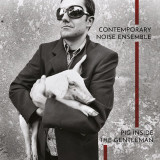
After a creative break of more than 10 years finally the comeback: In line with the long-awaited new album called "An Excellent Spiritual Serviceman" a limited colored vinyl reissue of the classic Contemporary Noise Ensemble debut record "Pig Inside The Genleman" from 2006.
"Jazz music without jazz, film music without movie but something splendid instead! Despite the band's name suggesting noisy music for the chosen ones, Contemporary Noise Ensemble appears to be a revelation for everyone. Beautiful, hard, romantic piano tunes in the dialogue with brass section. Simple and extraordinary emotional compositions leading to the climax which makes the flesh creeps while listening. Hair bristle on the heads of those who remember the musical past of the The Contemporary Noise Ensemble members..."
"The Contemporary Noise Ensemble impresses with maturity and class. There's elegance as well as punk energy. The compositions are unbelievably spacious but on the other hand all fulfilled with instruments - from the superb rhythm combo to the greatly equipped brass section. The roots of the most of The Contemporary Noise Ensemble musicians reach harder music, sometimes even heavy metal what bears excellent interest. The compositions are vigorous and expressive. The name of the band must be remembered because it undoubtedly is Polish export commodity."
"There’s no doubt that the Contemporary Noise Ensemble is one of the most fascinating musical projects from Poland which catches the attention of both pure jazz fans and people who are interested in experimental instrumental music in general. For fans of Cinematic Orchestra & jazz influenced film sounds."
Ten years ago, Parish Bracha anonymously released his Disconscious album Hologram Plaza, significantly influencing the still nascent Vaporwave scene. He continued producing a number of disparate anonymous projects until Cascade II was released in 2020 on Arca's Mutant Mixtape.
Cascades of Refinement, which includes the single Cascade II, is Parish's debut album released under his own name and his focus on the dialogue between the digital and the organic continues. The techniques that defined his influential early sound have been refined into a flawless hybrid of analog and digital textures which give his post-minimalist compositions an unmistakably personal expressivity.
Classical instruments are mutilated and transmuted into razor-sharp shards of glass suspended on piano wire above warped opalescent metal while never losing sight of their tonal integrity. Much like the impartial juxtaposition Parish employs in his timbral exploration, each composition explores the concepts of beauty and gentleness through and with extremity, violence, and chaos as equal counterparts, with each successive piece refining and relieving the artificial tension between these states. Employing use of the Una Corda, prepared piano, bowed piano, plucked piano, harpsichord, church organ, untuned violin, voice, synthesizers, and resampled field recordings, Cascades of Refinement lies somewhere in the indefinite space between acoustic and electronic and is beholden to neither.
Parish's initial electroacoustic experiments with piano and strings were interrupted by the pandemic lockdown when he was limited to sampled instrumentation and digital processing available on a computer. Out of this necessity evolved an appreciation for the incidental nature of digitally sampled acoustic instrumentation and the unpredictability of its interaction with digital signal processing.
As work on Cascades of Refinement continued and acoustic recording was reintroduced, the focus turned to the tension between recorded and sampled instrumentation, with the goal of integrating the two into a singular indistinguishable material to be warped and shaped together. Each of the four pieces of the Cascade series explore this tension, successively integrating and collapsing their distinction with each piece.
The subtle artifacts of digital processing and incidental mechanical sounds of the acoustic are amplified and given presence alongside the tonal elements of each piece until a point of indivisibility is reached. The sound of a bow scraping along a string or a granular buffer freezing are neither discarded nor hidden, but selected as the ripest material to accompany and structure each composition. Cascades of Refinement is a dialogue between organic and digital, between the mercurial and infinitely reproducible, not as opposites, but as mereologically cohabiting counterparts with equal expressivity.
Markus Popp is endlessly curious and his music as Oval is delightfully inventive. Since pioneering albums in the 90s systemisch and 94diskont., Oval has continually excavated new spaces in electronic music, leaving an indelible mark on the landscape. New album Romantiq finds Popp delivering his most light and delicate tones to date. Like the plucking of harp strings, Popp"s organic and playful approach to sound is warm and bright. Oval continually, confounds with his ability to conjure such lithe, evocative sonics from software. Romantiq evolved from an audio-visual collaboration with digital artist Robert Seidel for the grand opening of the German Romantic Museum, where a huge outdoor projection covered the museum building. Popp sought a more expansive definition of the romantic, conjuring flickering images that glitch, evolve and collapse in on one another - opulent neo-chamber music lit by the paradoxically heartwarming screen glow of social media flirtations. Popp crafted dozens of short vignettes that each sought to evoke a specific mood or emotion. Processed period instruments trace luxuriant spaces that shift from low-lit chambers to glistening palatial grandeur, glitching through past, present and future. Swelling atmospheres emerge like perfume, rich scents flooding the senses before evaporating on the breeze. Romantiq"s musical oxytocin is made from ancient instruments processed and edited by a modern electronic master with the utmost deftness and delicacy.
Fans of Coltrane will certainly dig this historical 1970s spiritual jazz album from Argentina which left an everlasting imprint in the local jazz scene. From the eerie "Blues para un cosmonauta" —which could easily fit in the Twin Peaks soundtrack—, to the majestic "Líneas Torcidas" or the mid-tempo groove of "Mi amigo Tarzán", new landscapes in jazz are explored without hiding, at moments, the musicians' bebop pedigree. Venturing into unchartered dimensions, the album breaks with traditionalism and combines jazz and new electronic instruments into a contemporary concept that is both cosmic and sensual, a sound where timbre and space play a crucial role. Here, no track sounds like the other.
The charismatic, multifaceted saxophone player Horacio "Chivo" Borraro is joined here most notably by Fernando Gelbard —who pioneered electronic keyboards and analog synths in Argentina, playing here Fender Rhodes and Minimoog— and Brazilian musician Stenio Mendes —who plays the 12-string craviola and contributes two tracks. Jorge González on bass and Néstor Astarita on drums —both part of Gato Barbieri's rhythm section in the early 60s— and Chino Rossi —responsible for much of the unusual percussion and special effects that give the album its unprejudiced aura— complete the line-up of Blues para un Cosmonauta.
- A1: Cannibal Holocaust (Main Theme) 2:56
- A2: Adulteress' Punishment 3:21
- A3: Cameramen's Recreation 3:15
- A4: Massacre Of The Troupe 3:53
- 5: Love With Fun 2:4
- B1: Crucified Woman 2:19
- B2: Relaxing In The Savana 3:06
- B3: Savage Rite 3:41
- B4: Drinking Coco 3:23
- B5: Cannibal Holocaust (End Titles) 3:52
- C1: Savage Rite (# 2) 1:50
- C2: Crucified Woman (Short Version) 1:26
- C3: Savage Rite (# 3) 2:31
- C4: Cannibal Holocaust (Terror) 2:16
- C5: Savage Rite (# 4) 3:53
- D1: Adulteress’ Punishment (Long Version) 4:01
- D2: Savage Rite (# 5) 2:04
- D3: Cannibal Holocaust (Main Theme)
THE SOUNDTRACK OF THE MOST CONTROVERSIAL FILM EVER.
FOR THE FIRST TIME IN FULL IN A SPECIAL DOUBLE VINYL EDITION!!! (NON-RETURNABLE)
This Legacy Edition of “Cannibal Holocaust” includes the film score remastered and released in its entirety for the first time ever on double LP; graphically speaking, it includes a gatefold cover with glossy title letters printed on a special soft touch paper, OBI and an 8-page booklet complete with reproductions of posters, lobby cards and photographs from the set, plus presentation essays written by Fabio Capuzzo (one of today’s best soundtrack experts), Stefan Dimle (Landberk, Anekdoten, Paatos, Morte Macabre) and Mikael Åkerfeldt.
AMS Records is proud to present a special edition of the “Cannibal Holocaust” soundtrack, exclusively released on the occasion of Record Store Day 2023. It is, of course, one of the many 'cannibalistic' movies, but perhaps it’s also the only one of its a genre that even today generates mixed feelings and strong controversy.
The excellent soundtrack, composed by Riz Ortolani, makes extensive use of string instruments, masterfully arranged and directed to match the strong contrast between the more relaxed scenes - the incipit of the film is memorable, with the main theme accompanying the spectator in a flight over the Amazon forest - and those full of rhythm and tension; in the first case, the strings go along with guitar arpeggios, while in the second they vibrate alone or together with glacial electronic beats. There are also funk-rock episodes such as in “Cameramen’s Recreation”, “Relaxing In The Savana” and “Drinking Coco”, while “Cannibal Holocaust (Terror)” is pure noise mixed with haunting percussion.
Essential UK experimental composer Richard Skelton returns to Phantom Limb for new album selenodesy, interweaving his newfound love of electronics and synthesis with mastery of gritty organic texture.
Skelton’s music has always been rooted in landscape, in the loam and grit of the earth: from his 2009 Pennine Moors-inspired modern classic Landings to his more recent Moraine Sequence of geological excavations, his work has been bound inexorably with the stark and untended wilderness of northern landscapes. With this new album, however, Skelton shifts his gaze skyward — in part the result of a move in 2017 to the countryside near the Kielder Observatory, and to a so-called ‘dark sky’ region of the UK. In this remote landscape, light pollution is minimal, allowing the austere majesty of the night sky to be seen with greater clarity.
The resulting album, selenodesy, reveals a new, reverberant spaciousness to Skelton’s use of electronics. It marries the twin worlds of his previous Phantom Limb release - 2020’s These Charms May Be Sung Over A Wound, and its abandoned-factory threnody - with the landscape-revering arcana of his earlier work, which saw him bury instruments in the soil to return months later to recover and record with them, newly imbued with the land they occupied. selenodesy was prefigured by a period of insomnia and the relief found
in stargazing, during which Skelton tried to transcribe his hypnagogic visions: “much of this music came to me in the early hours, in that nowhere state between dreaming and waking. I’d look out the window and the night sky would be swirling with stars. Mars or Venus would be hovering in the corner of the room. I’d lie there and watch the Aurora Borealis dance across the ceiling.”
In selenodesy, we find the lingering, distorted sine waves of album opener “Albedo” that thrum and fizz with an icy, foreboding moonlight, rays of subtle movement that illuminate and darken alternately. Next follows lead single “The Plot of Lunar Phases”, whose passive shrieks echo about a cold, yawning space, reaching an ecstatic crescendo of hissing sonics and swirling celestial drone. Its dynamic range acts like the light of a lunar passage, from utmost darkness to radiant luminosity. Elsewhere, the pulsing, precessional bass of “Faint Ray Systems” gradually opens to reveal mournful, elegiac synthesis that reaches high into the night sky with an unearthly beauty. It is as if, during those long months of lockdown in the Scottish countryside, Skelton tapped into a series of sidereal electromagnetic transmissions, and transposed them into musical form.
Since relocating to Brazil some years back, Needs Music co-founder Lars Bartkuhn has returned to his long-held love of musical improvisation. Although it’s a product of his jazz roots and classical training, the German producer has constantly found new ways to apply it to his work in the sphere of electronic music.
‘Dystopia’, his first solo album for almost nine years, was born out of two interlinked ideas: a desire to create improvised music without the aid of computer sequencers or an electronic drum set, and a deeply held love of storytelling through sound. Bartkuhn set to work improvising with modular synthesizers, acoustic instruments and hand percussion, later adding light-touch overdubs to a handful of pieces. When he listened back to the recordings, an aural narrative emerged, and you’ll hear it if you listen to the album from start to finish, as is intended.
As you’d expect from a musician and composer of Bartkuhn’s undoubted ability, ‘Dystopia’ is a stunning album – an undulating, expansive ambient journey packed with emotional resonance. While Bartkuhn naturally sees it as a logical progression of his previous ambient-leaning work with Kabuki as The First Minute of a New Day (and particularly their self-titled 2020 album Séance Centre), ‘Dystopia’ also features subtle nods to many of his long-held musical loves, including John Hassell’s ‘fourth world’ recordings, the impossible-to-pigeonhole 1970s catalogue of deep jazz imprint ECM, and the far-sighted American minimalism of Terry Riley and Steve Reich.
The album’s emotional depth is evident early on, with the slow-burn title track – all bubbling electronics, billowing chords, clarinet-style notes and gently strummed guitars offering the most melancholic and bittersweet of openings. The becalmed ‘A Drop Of Water In The Ocean’ follows, with discordant aural textures and hand percussion mimicking the rolling ocean, before ‘Largo (Calm Before The Storm)’ hints at unsettling times ahead.
‘Water and Warm Air’, the only track on the album whose starting point was not Bartkuhn’s cherished modular set-up, bleeps and bubbles across the sound space, adding a starry and otherworldly slant to proceedings, while ‘Disembodied Journey (Parts 1, 2 and 3)’ is a sublime, slowly unfurling journey in three movements – all Tangerine Dream style synthesizer motifs, Pat Metheny-esque guitars and jazz-fusion instrumentation.
So the album continues, with the poignant warmth and looped motifs of ‘Still Existing’ and the sparse, dubbed-out minimalism of ‘Do You Know How To Get Out?’ – a kind of 21st century jazz-fusionist’s take on sparse electronic hypnotism – giving wat to closing cut ‘Into The Waves’, a gentle combination of undulating electronic arpeggios and echoing instrumentation that offers a hopeful and undeniably picturesque conclusion.
Fittingly, the album cover features a painting by the late Dutch artist Franz Deckwitz (1934-94), whose images of alien landscapes were used by Phillips on a series of music concrete compilations. The image featured on the cover of ‘Dystopia’, depicting a deep blue ocean and shoreline, was painted by Deckwitz in Amsterdam in the late 1970s and inspired by a trip to the island of Ponza, Italy.
Matt Anniss
The official reissue of Adelhard Roidinger’s contemporary jazz/fusion masterpiece.
An extremely talented and eclectic musician, Adelhard Roidinger’s creativity couldn’t be contained by the walls of music. His compositions for computers, graphic designs and geometric studies are a testament to his wide array of interests and artistic expressions. This fascination for computers is in full display in Computer & Jazz Project I. Adelhard believed that machines are vital tools for the development of humans. By using the machines, one can refine his own self, absorbing into their mind the possibilities that such tools unlock. It’s with this belief that Computer & Jazz Project I was created: fusing acoustic instruments, that Adelhard had mastered through his career, with new machines and computers. A timeless masterpiece that unleashes the artist’s creativity, enhanced by the machines of which he is now enamoured.
Without a doubt, Kiriku is the hottest upcoming producer of contemporary Balearic Beat music of this year.
Kiriku lives between London and Ibiza, two poles which are well audible in his versatile style, ranging from
groovy Downtempo to clubby House. Uplifting Balearic atmospheres meet jazzy club vibes, featuring loose
drum programming, jazzy chords, bouncy basses, laid back vocals and sophisticated sampling. From song
structures to straight up club track, his tunes always combine electronic and acoustic instruments, which
results in a throughout warm and organic feel.
His new EP for The Magic Movement is co-produced and mixed by The Magic Movement' label head
honcho Noema, who gave "Washingtonia" an extended balearic club treatment. If you liked Dj Gregory's
"Elle" back in the days, this will be right up your alley. "Santa Rita" features the vocalists Monblume , Yalisaxx on Saxophone and comes with an bouncy uptempo club version of Brazil' own Kurup. "Jacaranda" features Hallyx on Vocals and is accompanied by a remix by no one else then legendary Balearic Beat DJ, poducer and label owner Chris Coco, who gave the track a dubby and extended chill-out sunset-sound treatment. Smell the sea, and feel the sky. Let your soul and spirit fly!
GRAPH embarks on a search for sound beyond trends within electronic music. The focus is on sound and rhythmic structures that are constructed and deconstructed with the help of digital musical instruments and effects. The focus here is on the attempt to create a living, organic "soundspace".
On their seventh album, GRAPH work with vocals for the first time in their 17-year history, and the result is astonishing! The track "Mad World (astonished)" is a cover version of the Tears For Fears classic, dressed in GRAPH-typical electronic garb and produced atmospherically dense. With "Instabil", GRAPH present one more completely newly produced and extremely danceable track. The whole thing is rounded off with a remix of "Instabil" by Bob Humid. Stunning, astonishing, allways unconventional and very Düsseldorf!
"Westerman — the London-born, Athens-based pop maverick — has returned with his new album, ‘An Inbuilt Fault’.
The album's nine songs took shape throughout the depths of the pandemic and soundtrack Westerman’s reckoning with two years of intense isolation, loneliness, heartbreak, and dread. The phrase “an inbuilt fault” itself is an examination of the inherent and innate flaws that make us human – a visceral response to Westerman’s disillusionment with AI and social media during this time period.
Through it all, the album is visceral and live-sounding, full of the sound of breath and the idiosyncratic gestures of acoustic instruments. It creates a spatial feeling, sounding like musicians assembled in a room, passing evolving ideas back and forth. Co-produced with producer and percussionist James Krivchenia (Big Thief), and featuring an extended crew of Los Angeles associates, 'An Inbuilt Fault' exhibits music that is heavier and more sonically daring than Westerman’s previous releases, and it is the most adventurous and unselfconscious songwriting of Will Westerman’s career.
‘An Inbuilt Fault’ follows Westerman’s acclaimed 2020 debut ‘Your Hero Is Not Dead,’ a graceful and self-reflective project which earned him a spot as one of the most talked about new artists of the year thanks to profiles from Pitchfork (‘Rising’), Stereogum (‘Artist To Watch’), and Rolling Stone (‘Artist You Need To Know’)."
Tom Zé and Faust collide in Domenico Lancellotti's "machine samba"
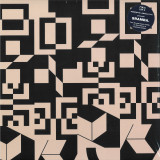
Domenico Lancellotti's SRAMBA reaches back to the roots of samba whilst completely revamping its blueprint, indoctrinating guitar and percussion-led rhythms with analogue synthesisers, courtesy of album producer Ricardo Dias Gomes.
The majority of SRAMBA was recorded over two months in The Cave - Domenico's home studio in Lisbon, the city both Brazilian ex-pats reside in, where the arrival of a couple of Russian-designed synths purchased by Ricardo influenced the direction of their initial experimentation: "Ricardo had these instruments, modular machines" remembers Domenico, "and I had my guitar, some percussion instruments. On the first day we started making sounds and recording them, and songs started to appear, sambas started to appear."
The son of a renowned samba songwriter, at home Domenico would watch his father play and compose. At parties, the adults would hand his father a tamborim (a small tambourine) and ask him to play along. "I grew up inside samba, it's my roots", he says. "For me, everything is samba, I bring it into whatever style of music I am making".
Domenico and Ricardo instantly saw how the synthesisers were not at odds with the sambas they were playing, instead they had a similar sound to its typical percussion instruments (ganza, repinique, surdo, tarol). What's more, they saw a connection with roots samba, the samba that existed before bossa nova and samba jazz came along. This was rhythmic samba, with grooves that could go on ad infinitum. "It's samba de clave, geometrically structured" says Domenico. "It's ostinato samba", adds Ricardo.
"Diga" is a great example of what their proposal is capable of, as what begins as a glitchy machine whirring into action soon turns into a glorious samba in which the gurgles and scratchy beats coming from the analogue equipment only add to the arrangement. Likewise, on "Tá Brabo" it's an aching melody from one of the synths that gives the guitar rhythm its needed counterpoint, and shows how the duo's greatest accomplishment is not in invention alone, but in creating a great samba album. It's an album that can go from the opening track "Ere" with its reverberant bass thud, mantra-like vocals and staccato rhythms to the string-accompanied "Nada Sera de Outra Maneira", a swooning samba that pays tribute to the Brazilian ensemble Tamba Trio, who along with Tom Zé's Estudando O Samba, Domenico names as the biggest influence on their treatment of samba.
Other important reference points are made clear on "Um Abraço No Faust". One of three instrumentals on the album its title riffs off a JoãoGilberto song, "Um Abraço no Bonfá", but whereas JoãoGilberto was giving a hug (um abraço) to bossa nova guitarist Luiz Bonfá, Domenico and Ricardo are giving theirs to the German avant-gardists Faust. "Quem Samba", with its horn section and dramatic melody give a whiff of Domenico's Italian ancestry, while "Descomunal" is devoid of rhythm whatsoever, guest vocalist Tori singing over a bed of electronic drums, cello and swirling synths, that highlights the duo's unwillingness to stick to a particular formula.
Both Domenico Lancellotti and Ricardo Dias Gomes are revered names within Brazilian music over the past 20 years. As a member of the +2's, with Moreno Veloso and Kassin, Domenico released a trio of albums on Luaka Bop in the early 00s that pioneered a new Rio samba sound with elements of funk and psychedelia. With Veloso and Kassin he would later form Orquestra Imperial, a big band intent on reviving ballroom (gafieira) samba, and that has worked with guest vocalists such as Seu Jorge, Elza Soares and Ed Motta. SRAMBA is his fourth solo album. Multi-instrumentalist Ricardo Dias Gomes first came to notice as a member of Caetano Veloso's band Cê which helped reinvigorate Caetano's career with a sound influenced by British new wave. As well as collaborations with Lucas Santtana, Negro Leo and Thiago Nassif, and work with his own group Do Amor, he has released a series of acclaimed solo albums that reveal a restless music-maker.
SRAMBA is a glorious showcase of the duo's style, uniting Domenico's playful lyrics and rhythmic, samba-rooted songs with with Ricardo's assured accompaniment of unorthodox textures and instrumentations. It may be a new language for samba, machine samba (samba de máquina), but as Domenico says, "samba da máquina is samba".