For Greg Mendez, reflection doesnüft mean a static image in a mirror, or even a face he recognizes. Itüfs more a kaleidoscopic mirage, where paths taken shapeshift with the prospect of paths untread, and the subconscious merges with the intentional. On his self-titled new album, the Philadelphia-based songwriter and multi-instrumentalist investigates the shaky camera of memory, striving to carve out a collage that points to a truth. But there isnüft a regimented actuality here; instead, Mendez highlights the merit in many truths, and many lives, and how even the hardest truths can still contain some humor. While this is technically Mendezüfs third full-length album, his back catalog boasts an extensive range of EPs and live recordings. Heüfs a prolific and thoughtful songwriter, understanding the joy in impulse, and shying away from the clinical sheen of overproduction. 2017üfs ügüP/ _(c)_ /üPüh and 2020üfs Cherry Hell garnered acclaim for their quiet, lo-fi urgency, exploring themes of addiction and heartbreak with an intentional, authentic haze, and itüfs this approach that has solidified Mendez as a staple in the DIY community for years. Greg Mendez was written in fragments, some stretching across more than a decade, with Mendez reworking old ideas and arrangements, and others blossoming much more recently. The weight of time..and perhaps the anxiety in running out of it..clouds the album, as Mendez prods at some painful experiences from his childhood and early adulthood. The common thread connecting the characters is their evident imperfections, and the various degrees of damage they cause, both knowingly and unknowingly. But where do we draw the line between a good person and a bad person? For Mendez, itüfs never been that easy. Greg Mendez is an intimate dialogue between the chapters weüfve experienced, and how they can inform the reality we perceive. Itüfs a reminder that we are constantly shifting, ever-changing selves and that if we ruminate too long, we may find ourselves stuck in the seriousness of it all. Here, Mendez allows us to take the time to notice what happens outside of the framework we may have built for ourselves, and the beauty that can occur when we finally do.
Buscar:intention
- Prologue
- Your Band Needs Your Voice
- Gretchen's Song (Featuring Hunter Schaefer)
- The New House
- Gretchen Theme
- Bike Chase
- Hospital 1
- Crashed
- Hospital 2
- Investigations
- The Lovers Nest
- Confrontation
- The Answering Machine
- The Villa
- The Pool
- Confirmation Of Dreams And Good Intentions
- Insights
- Panic
- Shelves
- Lamento
- Sisters
- Away From This Place
Mutant, in partnership with NEON, are proud to present the premiere physical release of the original soundtrack to Cuckoo.
Tillman Singer’s follow-up to Luz is an incredibly intense and unique thriller set in the Bavarian alps, blending elements of horror and science fiction.
Composer Simon Waskow returns to score Singer’s sophomore feature, adding a distinct voice to the film. His music becomes a supporting character to the action on screen, transitioning from the intimate and delicate to neck snappingly loud and direct as needed. This is a truly masterful score that deserves to be played as loud as possible.
This limited edition soundtrack features “Gretchen’s Song” with vocals by the film’s star Hunter Schaefer.
Pressed on 140g blue vinyl, and housed in a gatefold sleeve.
- Ama (Studio 1969)
- Bañan Ez (Studio 1969)
- Solferinoko Itsua (Studio 1969)
- Ama (Live 2023)
- Bañan Ez (Live 2023)
- Solferinoko Itsua (Live 2023)
In 1967, in the midst of Franco's dictatorship, a group of seminarians created a rock band: Enarak. They played pop, rock and psychedelia, styles that were strange in the society of the time and, only in Basque. Faced with a society that found these rhythms strange, they had the courage to play blues, psychedelia and progressive rock in Basque. In 1969 they recorded and released three songs and, over the next four years, they gave hundreds of concerts all over the Basque Country. The last one, in Larraitz, in the shadow of Mount Txindoki, on 31 October 1971. On a cold, misty night lit by a full moon, they brought together some 5,000 young people with the intention of enjoying modern music. After that night, they disappeared forever. Their only traces are the three songs you will find on this album. With the aim of recovering and making the history of the group known, the Bira Produkzioak cooperative has produced a documentary entitled 'Enarak'. Using the power of cinema for social transformation, we are organizing a concert on 21 May 2023. Again in Larraitz, Amorante, Rüdiger and Liher covered the three songs of Enarak. This is not just an album or a concert in the usual way. It is an exorcism, a ritual for the resurrection of Enarak, a historical piece and, at the same time, an object of memory that encapsulates the soul of the late 60s Basque group. In 1969 they recorded the original EP consisting of three songs including a version of the popular song "Solferinoko istua" and "Ama" and "Bañan ez", band's own compositions. The B side songs of this release are performed live in 2023 by Amorante, Rüdiger and Liher.
Black[23,49 €]
Ben Lukas Boysen’s new album, Alta Ripa, signifies a seismic shift in his artistic journey. It revisits the foundational impulses of his youth, shaped amidst the serene beauty of rural Germany—a bucolic backdrop where his creative palette flourished. However, it was his move to Berlin in the early 2000s that electrified his sound, infusing it with the city’s pulsating energy and diverse cultural influences. Alta Ripa captures this transformative experience, blending the introspective melodies of his rural beginnings with the bold, experimental tones born from Berlin’s vibrant electronic music scene. This album is a testament to Boysen’s evolution, showcasing how geographical shifts can profoundly shape artistic expression.
Boysen’s fourth studio album under his own name, Alta Ripa is a nod to his beginnings as much as a hint to his future, and as a work, it’s almost contradictory in its boldness and humility. He invites the listener on a journey of self-discovery; both for himself and for them, describing the music as “something the 15-year-old in me would have liked to hear but only the grown-up version of myself can write.”
His last two albums involved working closely with other musicians, including cellist Anne Müller, flugelhorn player Steffen Zimmer, and drummer Achim Färber. However, inspired in part by a recent return to live performance, Alta Ripa sees Boysen circling back to his passion for pure computer music.
For Boysen, the return to his youthful musical language marks a major turning point in his career. It represents a departure from his roots in classical music – his mother was an opera singer and his father an actor with an appreciation for Wagner, Arvo Pärt, Keith Jarrett, and Stockhausen. Although these are still important influences, Alta Ripa encapsulates a new, exploratory interplay between Boysen’s careful craft and his ability to let go of some of the process.
The album’s title comes from the original Roman name of the town that Boysen grew up in, Altrip, where he lived until his early twenties. This formative period is central to the ideas behind this album, from Boysen’s parental ‘schooling’ in classical music through to his sonic journeys through drum and bass, Aphex Twin, and Autechre — all of which changed his idea of what music could be. The extreme energy of tracks like ‘Acperience 1’ by Hardfloor, ‘Tracks & Fragment’ by Cari Lekebusch, ‘Focus2 Implan’ by Jiri.Ceiver, and ‘Low On Ice’ by Alec Empire are also pivotal influences.
For Boysen, this time of his musical development also involved knocking down the pillars that he previously thought had carried his world. A key moment for Boysen was being given a precious (pre-internet) club cassette at school that featured artists like Source Direct, Photek and Goldie. Excited by this new discovery, he introduced his father to the song ‘Dred Bass’ by Dead Dred. After the song finished, Boysen Sr. turned off the tape and proclaimed it was “the end of all music”. This heated exchange sparked a new, and more mature dialogue between the two that involved them sharing and discussing music on a regular basis.
Boysen’s classical and jazz music upbringing might not be easily noticeable from the electronic palette that he uses. But it can be found in its bones; the structure of the tracks and their dynamic shifts. On Alta Ripa, he intentionally embraces a spirit of controlled chaos, churning out sonic ideas to see what sticks.
One of Brian Eno’s Oblique Strategy cards contains the phrase “gardening, not architecture”, and the trajectory of Boysen’s creative path reflects this metaphor. In much of his previous work he followed a sort of Brutalist architect’s approach; here, he was fully responsible for the tracks’ austere structures and planned them with deliberate care. But by sacrificing some of that control on Alta Ripa, he sets the right conditions for a dark and unpredictable, organic growth. It’s a push forward into a new world.
2024 Repress
Micron Audio embodies a hub for a modern and futuristic electro sound, led by its master DJ Stingray 313. The imprint beckons intense electronic sounds, roughened textures and geometries that speak to a guiding principle of making technological advancement accessible to the people. These technoid adventures of sci-fi sound design and arrays of unabating rhythm, draw its listeners through warped microworlds and wicked contortions. Behind the sounds, it exists as a display of artistic responsibility, making statements and providing solutions from socio-political commentaries.? The first Micron Audio physical release emerged in 2011, with DJ Stingray 313's Electronic Countermeasures EP, following a digital-only compilation that is no longer available. Tracks from the Micron Audio hemisphere have featured in several compilation records released by the likes of Rush Hour and Creme Organization, including Stringray's Urban Tribe project. It represents a crisply defiant and firmly electronic approach, drawing in the infective indicators of video games. Relaunching afresh in 2021, Micron Audio is working with new artists and is stepping not only further into the future but into the foreground, where its clear scientific intention and political attitude is entrenched through top-shelf sound design and pumping rhythms.
Moondog's jovial H'art Songs was the first release not to incorporate his name in the title, but the record that forever proved his genius. A rare vocal album recorded by Moondog when he was in his sixties, these ten art songs blur the boundaries between classical and pop music. Moondog called this series of art songs "H'art songs" - Hardin's art songs. The musical content is on a higher level than most popular music, but has an appeal to a wide range of tastes, from the pop to the classical listener. This collection of piano pop songs written and recorded in 1977 made Moondogs' stunningly eclectic discography even more chaotic musically. It also featured some of his most mesmerizing wordplay. Telling tales that can be interpreted as metaphors for how to live - sometimes political, sometimes autobiographical, sometimes nature loving - they are always intriguingly poetic, and helped push this album to the very top of all Moondog'sreleases. "My singing style is without vibrato, as is the singing style of most of the people in the world. The voice part I have kept simple, intentionally, so that I and many others who like to sing such songs, including the barbershop quartet people, would be able to sing them. As I did on the record, the voice part should be sung by one voice or in unison, but not in harmony, because the harmony is exclusively in the piano parts, which are more complicated than the voice parts, especially in the canons and the obligati, which carry the main melodic burden." "Moondog singing Moondog? Really! even goodness knows, Moondog doesn't sing a song; he shows you how it goes." - Louis T Hardin aka Moondog. First time on Vinyl since 1978. Inner sleeve with lyrics to sing along to. Album liner notes by Moondog.
- Vintage Collection
- La Flare
- Deep Ain't It
- Sooth Sayings
- Mollyamory
- Over The Phone
- Candyman
- Supanatural
- Brick That Broke The Window
- Space Blue
- Buttaflies & Brownies
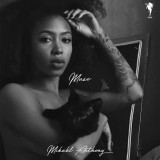
Hailing from the West side of St. Louis, Missouri, Mikahl Anthony’s sonic roots spread far across the global Alt-Soul / Hip-Hop scene. A highly soughtafter multidisciplinary artist (who has collaborated with the likes of Mick Jenkins, Chance The Rapper, Joey Purp, Smino and more), as well as being a founding member of Chicago’s THEMpeople collective, he now prepares to unveil his masterful full-length debut Muse via R&S Records.
Accompanied by several beautiful, self-directed film pieces, Muse is a record with storytelling at its core. Interspersed with commentary from a range of sources telling their stories to Mikhal, whilst collaboratively analysing their personal experiences, it speaks a candid and honest narrative, which reinforce the heartfelt lyrics within. With the project’s name anchored around a dual meaning acronym (1. Ms. Using sensual energy and 2. Making use of seclusion every day). The record is an audio version of docufilm, that creatively interprets the idea of self-therapy, an internal/interpersonal reflection of life experiences that serendipitously connect to Mikahl’s personal romantic relationships. Mikahl explains: ‘I wanted to use a unique style of songwriting, arrangement and filming with the intention of soundtracking my self-development/maturation process’.
On the project’s lasting impression on the listener, Mikahl elaborates ’The exploration of inner truth and vulnerability is key to the future of good music. I want this project to act as symbolism that highlights the mantra that honest approaches and authenticity still has the most value. I also want people to see how important the use of community is when you can connect them to your subject matter...I'd like my audience to observe and engage in their own self-reflections, approaches by way of listening or interacting with the story.’
Drifting to an elevated state of consciousness, Muse is a deeply intoxicating and engrossing listening experience from front to back. From the sliding, kaleidoscopic shadows of opening track ‘La Flare’, via the trepidation-laced atmosphere of ‘Polyamorous’ and the hazy, reverb drenched saxophone notes of LP closer ‘Eddie Kane’ - Mikahl channels moments of joy and pain, infused with spirit enriching instrumentation and gritty textures.
Visual stimuli play an integral role within Mikahl’s music. His songs represent transparency and openness dipped in funk. Layers of soft velvety vocals emerge from jazz harmonies, trap rhythms, and social commentary sourced from voiceovers/excerpts. His creations are the musical representation of documentary films. His art is imagery embodied.
WRWTFWW Records is happy to announce a new collaborative album between Polish producer, multi-instrumentalist and sound engineer Albert Karch (notably known for his superb 2019 album Celestially Light featuring Ichiko Aoba) and Irish ambient master and label’s favorite Gareth Quinn Redmond (Ar Ais Arís, Laistigh Den Ghleo, Umcheol albums from the WR catalogue). The 6-track LP comes as a limited edition of 300 copies worldwide with an artwork by Dublin artist Barry Gibbons and liner notes. It is available in digital format as well.
Recorded in at Albert Karch’s studio in Warsaw in January 2023, Warszawa is conceptually rooted in the reason the two artists met in the first place: the work of Japanese composer Satoshi Ashikawa (Still Way - Wave Notation 2) who sought to compose a time that was stationary. Sparse in approach but sharp with intention, the 6 pieces of the collaborative album were sculpted with precise and floating use of piano, drums, synthesizers, and strings. The result is gentle but emotionally deep minimalistic ambient, reassuring environmental music with an indescribable Mark Hollis touch, also an artist whose worked influenced the recording sessions.
Gareth Quinn Redmond’s previous albums, Laistigh Den Ghleo, another ode to the work of Satoshi Ashikawa, Umcheol, mixing ambient with traditional Irish music instruments, and his tape loops wonder Ar Ais Arís are still available on WRWTFWW Records - complete the collection now!
Warszawa by Albert Karch and Gareth Quinn Redmond is dedicated to the memory of Satoshi Ashikawa.
- 1: Shrug (Knowing)
- 2: Go To Your Room
- 3: Roll Your Eyes
- 4: Rewind Beethoven
- 5: Replenishment
- 6: Spontaneous Deep Dive
- 7: Polyphonic Creatures
- 8: Metallic Machine
- 9: A Thousand Ways Of Falling
- 10: The Wild Woman Archetype
- 11: Resonance
- 12: Vivid Peace Restored
Composer and performer Stina Stjern have for over 25 years been a steady presence in the Norwegian music scene – starting out as a vocalist in the rock band Supervixen while studying jazz in Trondheim, Stjern’s road has been anything but predictable, and has over the years shown a will to experiment and explore new areas in her music making. Her new album ”Vivid Peace Restored” is perhaps her most radical musical statement yet, as the entire album is made using cassette tape. The sound sources vary from found sounds, various instruments and Stjern’s own voice, but there is no hierarchy, the different elements are given equal importance, and through considerate looping, layering, cut-ups, re-arranging the bits and pieces it forms a rich tapestry of sound. This blurring is intentional, Stjern wants us to get lost in her sound world, a place where nothing is forced or overstated. Tape hiss, subtle melody lines, distant location recordings, gentle waves of noise, and voices melt together creating lush soundscapes
Blood Incantation's "Absolute Elsewhere" ist anders als alles, was man je zuvor gehört hat. Nur wenige Bands beherrschen musikalische Wendepunkte so perfekt wie dieses Quartett aus Denver, Colorado. Mit einer Länge von etwa 45 Minuten sind die beiden Song-Kompositionen dieses Albums ebenso verwirrend wie einnehmend in ihrem Umfang. Sie vereinen die 70er Jahre Prog-Anleihen von Tangerine Dream (deren Thorsten Quaesching auf "The Stargate Tablet II" zu hören ist) mit der tödlichen Intention von Morbid Angel. Blood Incantation haben bereits bewiesen, dass sie mit "Hidden History of the Human Race" (2019) den progressiven Death Metal perfektioniert haben, während sie mit "Timewave Zero" (2022) in ein ausschließlich synthiegetriebenes Soundtrack-Territorium eintauchten. Jetzt, mit "Absolute Elsewhere", das seinen Titel von dem Prog-Kollektiv aus der Mitte der 70er Jahre hat (am besten bekannt als himmlischer Zwischenstopp für King Crimson-Schlagzeuger Bill Bruford), lassen Blood Incantation den Begriff des Genres hinter sich und schreiben eine neue Sprache für die Extreme Musik selbst "Absolute Elsewhere" ist erhältlich als Ltd. Deluxe 3CD+Blu-ray Artbook, Ltd. CD Digipak, Gatefold black 180g LP & Poster, Ltd. Gatefold 180g transp. türkis LP & Poster sowie als Digital Album.
J. Written has been preparing for this moment almost his entire life. From early on he has been writing. You might even say he was obsessed with writing. It did not matter what he was writing, he just felt compelled to write. Hence the name Written.
Born on January 18, 1994 (yes, he will gladly accept birthday greetings!) in the Payne Land neighborhood of Kingston, Jamaica, J. Written entered this world as Jason Rasheed Wright. Due to certain financial instability in his family they had moved around a bit to various locations within the Kingston area. His parents, wanting him to be safe, encouraged him to be at home with his two sisters and to occupy his time at home he began to write. And write and write. And write some more.
He would write daily journals and even create newspaper articles written on the walls of their home. This creative outlet gave way to writing poems, speeches and essays while a student in high school. At 16 he started a dance trope known as the ACEZ dancers who were quite popular around Kingston.
He was then drawn to music around age 18 and began to create beats at a studio in Trench Town. He became part of the Trench Town community and is still very connected with the people there. His drive to write songs became his new medium for expressing himself. And this has led to him being recorded for various producers and included in the song “Fear To Understand” with Albarosie. Other songs and music videos followed and J. Written was brought to the attention of reggae producer Doctor Dread.
“When I first saw a video with J. Written and began to listen to more of his songs I knew this was a unique artist with a special vibe and a knack for writing interesting songs” says Doctor Dread. So he came to Jamaica and produced a first album “Kaleidoscope” for J. Written which is due for release in late 2024.
“My mission is to be active and positive. Not to confirm with the norm. To sometimes make people feel uncomfortable with issues impacting our community and society at large. To give thought to what is happening in the world and presently around us”. J. Written has made his intentions clear and it is revealed through his music.
And of special note is that J. Written has a role in the Bob Marley movie “One Love” as Junior Braithwaite, a member of the early Wailers in the scene when the young Wailers first come to audition for Coxsone Dodd of Studio One.
The future is bright for J. Written. He is creating music and lyrics as a constant in his life. And now the world will be able to share in his vision of creative expression.
- Once Upon A Time
- Come To Me
- Premonition
- Herr Knock
- Ellen's Dream
- Incantation
- Goodbye
- The Inn / Moroi
- Shrine
- A Carriage Awaits
- Come By The Fire
- Destiny
- The Castle
- Covenant
- The Crypt
- Lost
- Hysterical Spell
- Devourance
- The Monastery
- Solomonar
- Increase Thy Thunders
- The Professor
- Dreams Grow Darker
- Possession
- An Arrival
- A Return
- Grünewald
- Despair In My Coming
- A Curious Mark
- Orlok's Shadow
- The Vampyr
- The First Night
- Death, All Around Us
- I Know Him
- The Second Night
- These Nightmares Exist
- A Priestess Of Isis
- Last Goodbye
- Never Sleep Again
- The Third Night
- The Prince Of Rats
- Daybreak
- Liliacs
Oxblood Vinyl[30,04 €]
Robin Carolan's latest soundtrack for Robert Eggers' highly anticipated Nosferatu is a haunting, gothic-infused and meticulously crafted work that draws from a vast palette of sounds, instruments, and inspirations. Following their successful collaboration on The Northman, Carolan reunites with Eggers to bring the legendary tale of Nosferatu to life, infusing the film with a score that is as complex and nuanced as the story itself. With Daniel Pioro, one of Britain's most exciting young classical musicians, at the helm as the orchestra leader and first chair for a vast majority of the recording, the soundtrack features a vast orchestration, including 60 string players, a full choir, various horns and woodwinds, a harpist, and two percussionists. Despite the grandeur of the orchestration, one of the most challenging pieces was the music box used at the film's beginning. Carolan and Eggers struggled to perfect its sound, a process marked by their meticulous attention to detail, which Carolan describes as almost telepathic. Set in the 1800s, Nosferatu allowed Carolan to incorporate contemporary instrumentation, though he made a deliberate effort to ensure the score didn't sound overly modern. Letty Stott, who also worked on The Northman, contributed ancient horns and pipes, enhancing the soundtrack's eerie atmosphere. Additionally, percussionist Paul Clarvis custom-built a toaca-like instrument for added authenticity. Carolan's inspirations for the soundtrack were as eclectic as they were profound. He frequently drew upon the works of Bartok and Coil, while films like The Innocents, Angels and Insects, and Eyes Wide Shut provided cinematic inspiration. Additionally, he explored the more obscure side of Hammer Horror soundtracks and found a deep connection to the music of the Ukrainian film The Eve of Ivan Kupalo, which helped shape the score's otherworldly tone. Carolan intentionally moved beyond the typical horror score, focusing on capturing the tale's melancholy and tragic elements while weaving in a sense of warped romanticism. The result is a soundtrack that not only complements the film but also stands on its own as a testament to Carolan's artistry and the enduring power of collaboration.
- A1: Once Upon A Time
- A2: Come To Me
- A3: Premonition
- A4: Herr Knock
- A5: Ellen's Dream
- A6: Incantation
- A7: Goodbye
- A8: The Inn/Moroi
- A9: Shrine
- A10: A Carriage Awaits
- A11: Come By The Fire
- A12: Destiny
- A13: The Castle
- B1: Covenant
- B2: The Crypt
- B3: Lost
- B4: Hysterical Spell
- B5: Devourance
- B6: The Monastery
- B7: Solomonar
- B8: Increase Thy Thunders
- B9: The Professor
- B10: Dreams Grow Darker
- C1: Possession
- C2: An Arrival
- C3: A Return
- C4: Grunewald
- C5: Despair In My Coming
- C6: A Curious Mark
- C7: Orlok's Shadow
- C8: The Vampyr
- C9: The First Night
- C10: Death, All Around Us
- C11: I Know Him
- D1: The Second Night
- D2: These Nightmares Exist
- D3: A Priestess Of Isis
- D4: Last Goodbye
- D5: Never Sleep Again
- D6: The Third Night
- D7: The Prince Of Rats
- D8: Daybreak
- D9: Liliacs
Black Vinyl[28,78 €]
Robin Carolan's latest soundtrack for Robert Eggers' highly anticipated Nosferatu is a haunting, gothic-infused and meticulously crafted work that draws from a vast palette of sounds, instruments, and inspirations. Following their successful collaboration on The Northman, Carolan reunites with Eggers to bring the legendary tale of Nosferatu to life, infusing the film with a score that is as complex and nuanced as the story itself. With Daniel Pioro, one of Britain's most exciting young classical musicians, at the helm as the orchestra leader and first chair for a vast majority of the recording, the soundtrack features a vast orchestration, including 60 string players, a full choir, various horns and woodwinds, a harpist, and two percussionists. Despite the grandeur of the orchestration, one of the most challenging pieces was the music box used at the film's beginning. Carolan and Eggers struggled to perfect its sound, a process marked by their meticulous attention to detail, which Carolan describes as almost telepathic. Set in the 1800s, Nosferatu allowed Carolan to incorporate contemporary instrumentation, though he made a deliberate effort to ensure the score didn't sound overly modern. Letty Stott, who also worked on The Northman, contributed ancient horns and pipes, enhancing the soundtrack's eerie atmosphere. Additionally, percussionist Paul Clarvis custom-built a toaca-like instrument for added authenticity. Carolan's inspirations for the soundtrack were as eclectic as they were profound. He frequently drew upon the works of Bartok and Coil, while films like The Innocents, Angels and Insects, and Eyes Wide Shut provided cinematic inspiration. Additionally, he explored the more obscure side of Hammer Horror soundtracks and found a deep connection to the music of the Ukrainian film The Eve of Ivan Kupalo, which helped shape the score's otherworldly tone. Carolan intentionally moved beyond the typical horror score, focusing on capturing the tale's melancholy and tragic elements while weaving in a sense of warped romanticism. The result is a soundtrack that not only complements the film but also stands on its own as a testament to Carolan's artistry and the enduring power of collaboration.
Black vinyl 180g made only in 100 numbered copies.
This record is different. It is different from what might be expected of Jan Emil Mlynarski by those who know him, from sold-out shows and platinum albums of his bands – Jazz Band Młynarski – Masecki and Warsaw Dance Combo, as an old-timer, curator and reenactor of pre-World War II Warsaw's plush dancehalls and backyards folklore. Quite likely they may not recognize him until the last song, when he removes his shaman mask and bows down: Yeah, that's really me, folks, your good ol' Jan Emil, the entertainer. They might not have even known that he ever played drums because in his flagship bands, clad in a white tux in the former or in a Peaky Blinder hat in the latter, he sings and plays mandolin banjo. In fact, Młynarski has been a drummer for a lot longer than a singer. He stands clear of the jazz mainstream but is active on the progressive scene. A record he contributed to, trumpeter Tomasz Dąbrowski's 2022 release The Individual Beings, was recognized by Downbeat magazine as "excellent" and awarded the highest rating of five stars.
However, this is the first instrumental record to bear his name. As an album by a drummer, it stands out from other records, especially as it features drums as the principal content rather than the performance by a band with a drummer as the leader. It's all about drums, there is neither an articulate melody – because the melodies that are there are only micro-linesencased in ostinato modules – nor is harmony as an intentional chord progression – because whatever harmony-wise there is, is rather a product of the counterpoint of overlapping voices. All sounds other than the drums make only a riverbed through which runs a raging stream of rhythms. And indeed, this record took off just with this stream. At first all the drums were recorded live onto an analog tape, all at once, without overdubs or editing. After that, synthesizer riffs were added, and the record was ultimately assembled on tape without the use of computers or complex postproduction, which sets it apart from most releases today.
Młynarski the drummer acknowledges that he follows the trail beaten by Art Blakey, Max Roach, Roy Haynes, and Billy Higgins, but he walks it in his own strides. He treats the jazz drumming with specific reversed engineering by decompiling the jazz drum kit originally compiled by the pioneer jazz drummers from an array of instruments that had made their way from a jungle to New Orleans, first to Congo Square and then to street brass bands.
This takes him back to the jungle, his drums don't sound like jazz drums, the snare is rare, and the hi-hat and ride aren't there at all. Instead, there are drums and bells from Nigeria, Ghana, Burkina Faso, and Côte d'Ivoire. He doesn't sound like a jazz drummer either, but like a gang of drummers, each playing their own rhythm, and it's hard to believe that all this is the work of one man.
Not only his drumware comes from the jungle, but also the software – his approach to rhythm and time. Its essence is polyrhythm and ostinato. The polyrhythmic matters were unveiled to Młynarski and Piotr Zabrodzki, his creative partner in many projects and co-composer/producer of this album, by the legendary eccentric veteran-drummer Władysław Jagiełło, who introduced them, aged thirteen, to his concept and practice of "17 Latino rhythms at once". Ostinato, an obstinate repetition of a phrase or rhythm, "arrests" time, turning its linear course into cyclical in-place rotations. This is specific not only to African music but also to cultural music of other regions and differs from Western artistic music in that it does not "run" to fulfil an aesthetic intention but "stays" to provide the framework for recurrent routines of communal proceedings.
So, this record is different. And, if you are different too, this is the record for you.
- A1: Cygne
- A2: Save Me
- A3: Onze (Feat. Prince Waly)
- A4: Ballade
- A5: Doutes
- B1: La Sève
- B2: Go
- B3: Mystère
- B4: Fleur De Peau
- B5: Leitmotiv
- B6: Les Santolines
After two highly acclaimed EPs and a number of collaborations, singer, songwriter and melodist Enchantée Julia opens a new chapter in her career with ONZE, a debut album with a carefully matured groove on which she blazes a trail in France, between neo-soul intentions and R&B inflections. Or the art of grooving a French language that's not always all-terrain, of marrying a certain lyricism inherited from chanson with the rhythmic and melodic codes of contemporary soul with Anglo-Saxon roots.
Such is the promise kept by Enchantée Julia on this album, recorded between south-east France and the Noble studio in Paris - where sound engineer Clément Caritg (Luidji, Lala &ce, Lossapardo...) helped meticulously shape the sonic identity of the 11 tracks, 8 of which are produced (or co-produced) by the young and highly visible multi-instrumentalist LaBlue. With her pure, celestial voice, set against sophisticated arrangements, she recounts her most intimate emotional torments in an unvarnished yet poetic way.
As a key representative of French neo-soul with ambitious intentions, the singer, songwriter, and composer Enchantée Julia has truly made her mark on the French scene with her second EP LONGO MAÏ, released in 2022 and available on vinyl for the first time. On this cathartic yet hedonistic project, whose title is a nod to her southern origins, she collaborates with the Saint-Etienne duo Terrenoire and rapper Benjamin Epps.
Julia places even more emphasis on vocal harmonies and sophisticated arrangements, whether on upbeat, sunny tracks or delicate, intimate ballads like "MOUSSA" (produced by The Hop), a personal and sensitive ode to the one she shares her life with—a mix of cathartic song and a message of hope, referencing the tough challenges they’ve faced together. The fear of happiness and love slipping through her fingers is also present in "VÉNUS," composed and arranged by Bastien Cabezon and Oscar Emch. As the opening track of the EP, it showcases Julia’s mastery in blending the French language with neo-soul influences from across the Atlantic, laying the foundation for a unique universe that unfolds throughout the project. The second single, "PLUS FORT QUE MOI," breaks down genre barriers: Julia’s enchanting voice is wrapped in a pop-driven production with electronic hints, crafted by Terrenoire. She continues this pop momentum with "QUESTIONS," where she releases her torments—both trivial and profound—over a groove-laden production with sharp percussion, courtesy of the much sought-after Parisian producer Crayon. Julia's bewitching voice shines on the bittersweet "SOS," which bears the scars of a past relationship. On "LONGO MAÏ," a dreamy ballad with trap-inspired rhythms, Enchantée Julia invites rapper Benjamin Epps for an anthem about brighter days ahead, reminding us of the importance of familial love. To close this second EP, Julia reunites with long-time friends, brothers Théo and Raphaël Herrerias, who form the duo Terrenoire. "TOUCHER TOI" forms a diptych with the track "MOUSSA" and reveals Julia's full potential, as she shines here in a French chanson style that she has previously explored less.
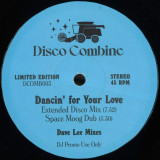
Here we have a new Disco Combine ready to plough the proverbial Disco fields. This time Dave Lee harvests some Disco/Funk gold with his mix of 'Dancin' For Your Love', a foot stompin' Rod Temperton style dancefloor rocket filled with soaring strings, rippling piano, vocal harmonies and killer bass action. Backed up by a cosmic Moog dub which doubles down on the delays and synths. On the flip Dave doths his cap to mid 80's NYC for some serious Proto House biz. Brimming with detuned cowbells, HOUSE basslines & proggy synth arpeggios under a Colonel Abrams-ish vocal. Think Serious Intention meeting Visual in Cultural Vibe's garage.
Free Help is Minnesota trio Heart to Gold's celebration of the titular idea, conceived while broken down on the side of a road in Georgia. Recorded at Will Yip's Studio 4 and releasing on Memory Music, it's an expertly arranged, arena-sized rendering of the group's scrappy, bold guitar rock, a heartening mix of melodic punk, cavernous post-hardcore, and '90s alt-rock. It's the sound and feeling of a band growing into adulthood and maturity_singer Grant Whiteoak's writing is subtle and figurative, a result of deepening introspection spurred by years of touring.Free Help represents a push beyond Heart to Gold's long-time community, and a broadening of the boundaries of the project. The rich, spacious single "Can't Feel Me," released in February, evidenced this new sound and space, and record opener "Surrounded" leaves no room for doubt: This is Heart to Gold operating on a new level. It's a sleek, pit-ready thrasher, tearing at the seams with energy and intention, loaded with melody. There are classic, pedal-to-the-metal bangers, like "Get It Back" and "Blow Up the Spot," alongside the down-tempo drift of "Pandora," and the multi-movement epic "Belonging." Here it is, from Heart to Gold to you: Free Help.
On this new LP Harry Bertoia shows why he may have been the first industrial musician. Bertoia often referred to his sound sculptures as a "collaboration with industry" and on this LP Bertoia is intentionally creating heavy, rhythmic music he described as "mechanized," "mechanical" and "factory like."
Recorded in 1971, percussion and repetition emulate the pounding rhythms of machinery on this unique pair of conceptual Bertoia compositions. Bertoia utilizes innovative performance techniques to create new sounds unheard in his ouevre. Even in the busy factory of Bertoia's mind, distant stillness rises up as Bertoia exhibits the massive amount of control he possesses over his many looming sculptures.
"Mechanization" is just one of the many sonic directions Bertoia took while composing and recording between the late 1950's and his death in 1978. He documented all of his ideas and directions in notes accompanying the hundreds of tapes discovered in his barn.
Bertoia's recordings are as much a celebration of sustained tones, intervallic relationships, healing vibrations, deep listening and shimmering harmonics as Indian Classical music, singing bowls, The Well Tuned Piano or Benjamin Franklin's glass armonica. Through these rich harmonics and pulsing pure tone, Bertoia was able to more clearly articulate his inner spirit than he could with sculpture alone – a point he made himself many times in interviews.
Harry Bertoia first came into artistic prominence in the late 1930s and his sculptural, ergonomic chairs, produced by Knoll Furniture beginning in 1952, were soon modernist furniture classics. Inspired by the resonant sounds emanating from metals as he worked them and encouraged by his brother Oreste, whose passion was music, Harry restored a fieldstone "Pennsylvania Dutch" barn as the home for this experiment in sounding sculptures which he had begun in the 1950s. Bertoia was an obsessive composer and relentless experimenter, often working late into the night and accumulating hundreds of tapes of his best performances; Oreste, too, would explore and record the sculptures' sounds during his annual visits to his brother's home in rural Pennsylvania.
Learning by experimentation was common for Bertoia and he mastered the art of tape recording, turning the Sonambient barn into a sound studio with four overhead microphones hanging from the rafters in a square formation. He would experiment with overdubbing by performing along to previous recordings, sometimes backwards, constantly improving his methods while also honing his performance skills. Bertoia was a careful editor of his own work and only chosen recordings remained, each with a date and carefully considered observations written on a note included with each tape. Through these pieces of paper a greater logic can be uncovered, a careful approach to composition, ideas, feelings and forms. The story of Sonambient barn collection will slowly be told through the release of recordings from the archive as well as installations and performances built from Bertoia's own recordings, lectures and a book.
Paquito D’Rivera's - NEA Jazz Master, multiple Gramm winner, Downbeat Hall of Fame Inductee - gained worldwide attention as member of the Grammy Award winning Cuban group Irakere, a revolutionary ensemble co-founded with Chucho Valdés in the early 1970s. Blending Afro-Cuban rhythms and jazz, the band was a seminal force and marked a new era in Cuban music. His defection to the United States in 1980 was a turning point, as he became an ambassador of Latin jazz around the world, fusing cultures and genres effortlessly.
A decade into his new status, D’Rivera entered a New York studio to record an homage to Bebop.
He enlisted Grammy award winner and Dizzy Gillespie alum James Moody, distinguished straight ahead jazzers Mark Morganelli, Harvey Swartz and Al Foster, and major Latin-jazz players of the day Claudio Roditi, Danilo Perez, and Pedrito Lopez. While his intentions may have been to make an album like “Monk, Bird, and Dizzy” as he states in the liner notes, the results here are undeniably in D’Rivera’s signature style.
The album features a mix of original compositions from featured players, alongside the ensembles take on Coltrane’s “Giant Steps”, and Monks “I Mean You,” all delivered with D’Rivera’s unique perspective and deep understanding of traditional jazz and Latin music traditions.