
pre-order now16.01.2026
expected to be published on 16.01.2026
22,48 €
expected to be published on 16.01.2026

In addition to performing his own compositions, the legendary Bruce Springsteen has, throughout his career, covered numerous songs by artists he most admired and favoured.
Presented here are 23 original artist tracks that Springsteen covered most frequently, offering a clear window into a wide range of musical influences that mark his own work: Rhythm & Blues, Rock 'N' Roll, Doo-Wop, Soul, and Folk, and artists such as Elvis Presley , Pete Seeger , Woody Guthrie , The Isley Brothers , Little Richard , Eddie Cochran, Chuck Berry, John Lee Hooker, and many more.
expected to be published on 16.01.2026

This new chapter marks Gordon’s first solo release as Leaving Laurel - a deeply personal and instinctive body of work born from a period of rediscovery. The record began as an open exploration of whatever music naturally came through, a process that became both freeing and revealing to Gordon. The album is a wordless love story told through sound. An emotional arc that mirrors the stages of falling for someone: the spark, the curiosity, the vulnerability, and the quiet realisation that your heart has opened without you even noticing. The album carries an uplifting, hopeful energy, reflecting both personal growth and newfound love - ‘our lives entwined' is a tribute to Gordon’s journey of finding “the one.” Following the loss that inspired ‘when the quiet comes’, Gordon’s eulogy to his late friend and musical partner Pierce, this album finds light emerging from grief. Where the previous record lingered in somber reflection, this album begins in that same emotional landscape but quickly blooms into something more vibrant and full of life. The opening track transitions from the cold, atmospheric tones of mourning into a more radiant energy - a sonic awakening symbolising the shift that came after meeting someone who changed everything. Sonically, the record expands Leaving Laurel's signature sound while embracing new textures. Gordon moved away from the lo-fi experimentation of earlier works, leaning instead into a more expressive palette driven by synths and fresh instrumentation, while still preserving the nostalgic warmth that defines Leaving Laurel. The result is a collection that feels both renewed and rooted - a reflection of growth, optimism, and the timeless beauty of connection.
Order now and we will order the item for you at our supplier.

Editions Mego is proud to release the new album by Australian producer Jasmine Guffond. Developed over a two year period, Microphone Permission is an unsettling musical journey utilising contemporary tools of communication to display Guffond's ongoing research into online surveillance and sound as a method of investigation.
Source material on Microphone Permission are from various projects Guffond has been working on; a commission to sonify the data of the city of Melbourne, a dance performance about the future sounds of an extinct forest, an installation that sonifies Twitter meta data in real time, a job as a composer for a theatre work about music and feminism by five young female identifying performers in Western Sydney and a site specific installation at the Linachtalsperre dam that employed the harmonic frequencies of electric currents.
The results are a stark, brooding, disorientating journey into a paranoid musical field that sits somewhere between ambient club music and a dystopian soundtrack. Elements of techno, classical music and sound art form a dark intriguing masterwork that questions the nature of invasive, algorithmic and computational listening practices.
For example Microphone Permission refers to the consent we routinely give when installing various apps. onto our smart devices. Inspired by a 2018 scandal in which fans of Spain's most popular soccer team were effectively turned into unwitting spies by granting the La Liga application microphone permission. No matter which make or model, all smart devices are built with a microphone that is by default, forever listening. Listening in these situations often takes on an algorithmic form that enables tech developers to bypass public response to what is intuitively considered invasive practice, that is, traditional modes of eavesdropping such as using the microphone to listen and record audio.
Order now and we will order the item for you at our supplier.

Brussels-based accordionist Suzan Peeters releases her debut album Cassotto on the Belgian label blickwinkel. With Cassotto, she opens a door into a hidden chamber of sound. The title refers to the “cassotto” — a small resonating chamber inside the accordion that warms, softens, and deepens its tone. Listening to this record feels as if you’ve stepped into that room yourself, enveloped in a world where intimacy and grandeur collide.
Although this is her first release, Peeters is already recognised as one of the most promising names in Belgium’s experimental music scene. Her distinctive live shows — from leading venues across Belgium to a packed Café Oto in London — have earned her a reputation for combining accordion, electronics and unconventional objects such as a massage board into a compelling whole where contrasts come together in an unexpected way. Cassotto captures this approach in recorded form, giving listeners the same sense of immediacy as her concerts, but framed within the intimate space suggested by the album’s title.
While the cassotto chamber naturally gives the accordion a soft and velvety voice, Peeters harnesses that warmth to explore extremes — from hushed detail to bold, expansive gestures that fill the room. As such, the album moves between the acoustic and the electronic, the tender and the abrasive, the static and the dynamic, the traditional and the experimental.
With Cassotto, Suzan Peeters presents a debut that places the accordion at the centre of an adventurous and contemporary sound world — one that invites to discover how far an accordion can reach when tradition and imagination intertwine.
Suzan Peeters (*1999) is a Belgian accordionist, composer, and experimentalist. She is constantly looking for new timbres and sound textures within the accordion, pushing its acoustic spectrum to its limits by manipulating the interplay between her body and the body of her instrument.
Suzan studied classical accordion at KASK & Conservatorium in Ghent and at the Royal Danish Academy of Music in Copenhagen. She is currently studying Live Electronics at the Royal Conservatory of Brussels.
Order now and we will order the item for you at our supplier.
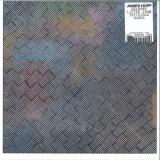
Shadows Lifted from Invisible Hands is an autobiographical record, comprised of four songs that Hoff refers to as ambient media. Each track is composed from sources drawn from his own involuntary aural landscape, specifically musical earworms and tinnitus frequencies.
Neither sound nor a daydream, the earworm (or stuck song) emblematizes music as a commercial form—immediate, ubiquitous, and persistent. Likewise, tinnitus is inaudible and unscrupulous, manifesting across a spectrum of frequencies at will. The cognitive swirling of these phenomena provides an ambivalent, internal soundtrack that scores a person’s movement through the world.
Those suffering from tinnitus or those who have grown accustomed to the “Tinnitus Effect” in movies will likely recognize the buzzing pitches on the record, but will likely not recognize the songs. Distorted and distilled, Shadows Lifted from Invisible Hands features altered versions of four commercial pop songs: Blondie’s “Heart of Glass,” David Bowie’s “Space Oddity,” Madonna’s “Into the Groove,” and Lou Reed’s “Perfect Day.”
Having been haunted by these songs on and off for years, Hoff tweaks the tracks, transposing and recomposing them for orchestral instrumentation. Speaking back to these involuntary echoes, these tracks go to great lengths to obfuscate their sources; to be sure not to simply re-introduce each earworm, as though they were samples. Otherwise, what’s the point? No one needs another stream.
Besides, earworms are not music, although we perceive them as such. They are non-cochlear and exist as an affective force that is neither subjective nor objective, which is to say they are an invasive—and alien—phenomenon. Like tinnitus, they are aggravated by economic, social, and environmental forces as well as emotional states, mental health, and aging. Hoff doesn’t underplay his own struggles with mental health in discussing the record—noting a long history of depression and its acuteness over the last few years, which serve as the backdrop to the composition of this record.
Scratch any pop song hard enough and you’ll find sadness underneath it. Subdermal, the songs on this record evoke a type of ephemeral weariness and despair. By recasting the original songs through their shadowy doubles, Hoff provides a window into the dark core of pop music. At the center of which lies capitalism’s desperate attempt to replicate itself through a cheap high built on echoing refrains. Just below the surface the listener finds a hangover of shadows dancing through the mind.
Order now and we will order the item for you at our supplier.

A1. Cars
Smoove tears this classic apart to reveal its raw, drum-heavy break and solo bass riff. Epic synth lines weave through the extended rework, seamlessly transporting us from the 1980s straight into the modern era.
A2. Midnight Rider
An unexpected choice, but irresistibly funky nonetheless. The signature 12-string guitars are replaced with lush Fender Rhodes and Hammond organ, both pushed forward in the mix. The drums hit hard, backed by crisp percussion that drives the groove home.
B1. You Belong to Me
Opening with an extended Fender Rhodes intro, this rework builds gradually with real strings, subtle guitar licks, and groovy drums. Smoove reshapes the structure, dubbing out Carly’s lead chorus vocals to spotlight the stunning harmonies underneath.
B2. Searching
Luther’s vocals are utterly transcendent here. Smoove slows the pace and strips back the arrangement, leaving only Fender Rhodes and a string orchestra to accompany the soulful performance — a truly breathtaking moment.
Order now and we will order the item for you at our supplier.
For the second instalment of the Curio Cabinet gourmet-dub series, we bring you two fat slices of steppers’ delight, straight from the southern city of Toulouse.
Both are made by Stefan Dubs under the guiding light of his live project, Sòn Du Maquis. This project has deep roots in the free rave, micro-festival, and dub & sound system culture of his country. It’s also the name of his own label, home to his dub-infested productions; ranging from slo-mo jungle to droney steppers and blown-out trip-hop on a slightly medieval tip.
Staying true to classic sound system tradition, each side pairs the original cut with its own version.
First there is Tolosan Dub, a trancey bass meditation colossus with deep synth work moving around in the trees. Some early nineties UK digidub vibes are surely mashing up the dance here. The version workout slows things down a bit, taking you even deeper into the riddim... strictly warrior style !
On the B-side we've got Bonnefoï Dub, which is pure bass-bin filth with a rootsy harmonica touch and a raw clubby feel. This tune just screams to be played out loud on a proper sound system. The version is certified dance-floor gold, yet there are enough dubbed-out flavours going on for intimate headphone sessions or some mad home skanking.
Order now and we will order the item for you at our supplier.

Swan Song
The vinyl LP at the heart of this éthiopiques 31 tracks 2 to 11 was one of the very last vinyl records ever released in Ethiopia. But above all it represents, we felt, the absolute masterpiece of the Ethiopian Groove – the Swan Song of Swinging Addis. The album leaves a clear idea for posterity of the level of sophistication and mastery that modern Ethiopian music had achieved, before being crushed under the Stalino-military heel of the Derg – as the bloody revolution that was unfolding came to be called.
Ethiopia1976.
The Revolution that broke out in February 1974 rolled on in a ruthless march. The whole of Ethiopian society was utterly stunned. The bouquets of flowers handed joyfully to the first tanks of the coup d'état were to wilt very rapidly. From September 1976 to February 1978, 18 months of Red Terror (the name given by the junta itself) spilled blood throughout the country. This fratricidal conflict took its heaviest toll among students and youth. The shift from feudalism to a cruel and primitive Stalinism left the country's citizens deeply traumatised, and snuffed out any pretence of activism, whatever the sector of society. This ice age was to last for seventeen long years.
ሙሉቀን፡መለሰ Mulukèn Mellèssè Muluqän Mälläsä
It was three tracks by Muluken that served as the opener for éthiopiques-1 more than 25 years ago. Seven more tracks appeared on éthiopiques-3 and 13, all accompanied by The Equators, which was soon to become the Dahlak Band.
The first track, Hédètch alu, also the very first piece that Muluken ever recorded, left audiences both unsettled and amazed. Reflecting the singer's extremely young age (he was just 17 at the time), this angelic voice mystified many, who thought they were in fact listening to a feminine voice. He was not yet 22 when he released his last vinyl record in 1976 with Kaifa Records (KF 39LP), one of the very last to be issued in Ethiopia, before the cassette tape became the dominant medium for music distribution – and before the new revolutionary regime put a stop to all independent musical life, via an unspeakable barrage of prohibitions and other persecutions.
Mulu qèn, literally, “A well filled day”. This tender maternal intention wasn't enough to ward off the cruelty of fate. His mother's premature death drove Muluken to leave his native Godjam, in northeast Ethiopia, to live with an uncle in Addis Ababa. Born Muluken Tamer, he took his uncle's last name – Mèllèssè.
The spelling Muluken appeared in his administrative records. Transcription of Amharic to the Latin alphabet, both in Ethiopia and for scholars, gives rise to controversies and quibbles that can never be neatly settled. French allows for a closer approximation of the original pronunciation, thanks to its battery of accent marks, confusing as they may be to anglophones.
Between rather accommodating administrative record-keepers and the various versions that pop up in interviews given by the artist, Muluken's year of birth oscillates between 1953 and 1955…
1954? One thing is certain: the artist's talent made itself known very early indeed, because he got his start in 1966-67, at the age of 13 or 14. Photos from the period attest to his extreme youth. It's a strange sort of initiation for a very young teenager to become a sensation in the heart of Addis's nightlife at the time, Woubé Bèrèha – the Wilds of Woubé. And what's more, in the club of the Queen of the Night, the Godjamé Assègèdètch Alamrèw herself, the very same that was portrayed by Sebhat Guèbrè-Egziabhér in his novel-memoir Les Nuits d’Addis Abeba2… The legendary female club owner who is remembered to this day by the capital's ageing boomers.
Muluken first tried his hand at the drums, before he grabbed the microphone. He emigrated briefly to the Zula Club, across the street from the old Addis Post Office, one of the ground-breaking bars of the burgeoning musical scene, before joining the Second Police Band in 1968, for around three years. He spent a few months with the short-lived Blue Nile Band founded by saxophonist Besrat Tammènè. As the musical scene grew increasingly successful, and pulled slowly but decisively away from its institutional ties, Muluken released his first 45rpm single in February 1972 (Amha Records AE 440). It was included in two LP Ethiopian Hit Parade compilation albums in September of the same year. All in all, Muluken released eight two-track 45s and the same number of original cassette tapes between February 1972 and 1984, the year that he departed for permanent exile in the USA. After converting to Pentecostalism in 1980, Muluken gradually abandoned all secular musical activity. In 1985, at the end of a concert in Philadelphia, he decided to quit concerts and recording for good. Mèlakè Gèbré, the historic bass player from the Walias band who was playing with him that night, recalls that everything appeared so irredeemably diabolical in Muluken's eyes, that it was to be the end of his contribution to Ethiopian Groove.
The end of the story, the beginning of a legend.
Dahlak Band, forgotten by History
Aside from his personal history and vocal talents, it must be remembered that Muluken Mèllèssè was one of the biggest names in the musical innovations that marked the end of the imperial period. These éthiopiques aim to convince those who are just discovering this hidden gem... As for Ethiopians themselves, they are to this day captivated by this singular and atypical figure in the Abyssinian pop landscape – even though he withdrew from public life some 40 years ago. Incorrigible devotees of poetic twists, of more or less hidden meanings, Ethiopians appreciate above all the care Muluken took in choosing his lyrics and the writers who penned them, such as Feqerte Haylou, Alemtsehay Wodajo and, here, Shewalul Mengistu (1944-1977). Love songs, written by women, a far cry from the conventional drivel that pleases sappy sentimentalists.
Muluken is equally acclaimed for his perfectionism when it came to music, the opposite of the overly casual approach that is all too common. He remained a faithful partner of musicians who came from a lineage that borrowed from several inventive and pioneering bands (Venus, Equators, Dahlak). Amongst them were certain artists who began their musical lives with Nersès Nalbandian at the Haile Sellassie Theatre and who come of age in around 1973 – at just the wrong time, you might say. Among them were the pillars Shimèlis Bèyènè (trumpet), Dawit Yifru (keyboards) and Tilayé Gèbrè (sax & flute). Most notably Tilayé Gèbrè, certainly one of the most important musicians, composers and arrangers of his generation, of the end of the imperial era, and of the early years of the Derg.
It was only in 1981 that a miraculous opportunity arose for Tilayé to escape the Stalinist paradise of the dictator Menguistou Haylè-Maryam. Once again it was Amha Eshèté (1946-2021) who provided a solution. The spirited and courageous producer, who had been in exile in Washington since 1975, succeeded, thanks to his incredible perseverence, in bringing the Walias Band to the USA. It was, in fact an extended Walias Band comprising ten musicians3, six of whom chose to slip away after a few concerts and the recording of an LP (The Best of Walias, WRS 100). Tilayé Gèbrè was one of these. He has been living in the USA ever since. There he joined the then-nascent Ethiopian diaspora, which lived largely unto itself, and was making only very modest headway in the American musical market. It seems unfair that Tilayé Gèbrè and the Dahlak Band were not able to benefit earlier from the public recognition that they do deserve.
A similar draining away of the top-rate talents would lead to the reorganization of the major groups of the “Derg Time”. The remaining artists spread themselves around between Ibex Band (renamed Roha Band), Ethio Star Band and a remodeled Walias Band. That spelled the end of the Dahlak Band.
With this record, produced by the essential Ali Abdella Kaifa a.k.a. Ali Tango, we can appreciate everything that the Derg not only destroyed, but also prevented from flourishing. This gem of Ethiopian-style afrobeat came out in 1976 (and, by way of a parenthesis, before the FESTAC 1977 in Lagos, which was attended by an impressive delegation of Ethiopian musicians — although Fela was already personna non grata in his own country). Despite everything that might distinguish this ethio-groove from Fela’s music – no colonial axe to grind, no question of political confrontation with the authorities, no claims to negritude or Africanism for the Ethiopian musicians, and less extrovertion! –, this LP fits beautifully into the saga of intense and electrified soul of the new “African” groove that Fela and Manu Dibango embodied so well from that point onwards.
In restoring this record to its place in the afrobeat epic, it can be seen that, if nothing else, the timeline bestows a legitimate pedigree and a historical primacy to works that had no international impact when they were originally released.
Warning! Masterpiece!
Order now and we will order the item for you at our supplier.

From the heart of his own Safe Space imprint, Ackermann returns with a powerful new statement that traces a high-voltage line between techno and house. Known for his raw yet precision-tooled club cuts and a sound that moves from warehouse grit to late-night euphoria, the Stuttgart-based producer once again delivers tracks that are direct, functional and full of character, built for DJs who like it tight, driving and emotional at the same time.
On remix duties, Berlin icon Anja Schneider flips Ackermanns ideas into elegant, rolling peak-time material, balancing subtle tension with her trademark sense of groove and warmth. Rising force Confidential Recipe pushes things further into raw, percussive territory, upping the pressure with jacking drums and rave-soaked energy made for smoke-filled rooms and redlined sound systems.
True to the Safe Space motto, this release is all about the dancefloor: no filler, just stripped-back, high-impact tracks that lock you in and don’t let go.
Order now and we will order the item for you at our supplier.
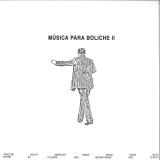
Our journey through “Música Para Boliche” literally “music for the club” from Argentina’s underground scene doesn’t stop. We dug even deeper, right into the ’90s.
Four tracks plus one, all visionary even at the time of their release. Once again, you can feel the magical touch of the Italian and Argentine DJs who worked on it.
Jack Bulgaro did his part, bringing home an instrumental unreleased version of Podés Seguir Sin Arriesgarte, taken from the album Undermalabia, produced by El Signo, pioneers of electronic music in Latin America.
The version will be officially released for the first time, vinyl only, by Maledetta Discoteca Records.
Order now and we will order the item for you at our supplier.

KEG announce new EP Girders set for release September 2nd on Alcopop! Records/BMG. The band also share the frenzied and whip-smart new single Kids. The band, who have been hotly tipped across the board for 2022, will also play their debut UK headline tour plus festivals which include Green Man, End Of The Road, Latitude and more. Kids strides into the deep lineage of British art-punk songwriting that is both self-referencing and outward-facing - while being consistently innovative. Few singles manage to take aim at both the restaurant chain Itsu and the comedian Michael McIntyre, but KEG somehow pull it off.
Following a widely successful debut single release Heyshaw in the summer of 2021, KEG saw major support from publications such as NME, DIY, Dork, So Young, Clash etc. Leading into their debut EP Assembly, released October 2021, KEG toured with contemporaries such as Squid and Talk Show.
KEG are a seven piece. Albert (vocals), Joel (bass) & Will (synth) grew up together around the seaside Yorkshire town of Bridlington; and like many artists growing up in removed quarters of the country, they shared a yearning to leave. Spreading to different parts of the country after leaving school, they found their bandmates in their respective cities and found one another once again on the southern shores of Brighton.
Frank (guitar), whose background resides mostly in hip-hop, afforded a unique pulse with a guitar sound which is manic, discordant but firm. Jules (guitar) whose songwriting sensibilities come from a love of cadence and craft of beautiful soul ballads, imbued the band with his structured sense of composition. Both Charlie (trombone & shell) and Johnny (drums) come from classically trained Jazz backgrounds.
The announcement will receive digital marketing support and will launch with new tour dates announced (below) with pre-order for presale access available.
expected to be published on 12.01.2026
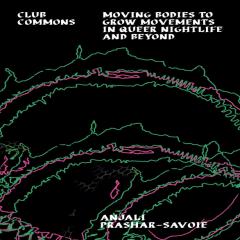
Queer communities have long transformed parties into something powerful: spaces where care flourishes, injustice gets challenged, and new worlds are danced into being. But today, DJs command huge fees while behind-the-scenes workers earn below minimum wage. Corporations profit from our culture while communities that created these spaces are displaced. As venues shut and workers burn out, it’s clear that something has gone deeply wrong.
Club Commons: Moving Bodies to Grow Movements in Queer Nightlife & Beyond by Anjali Prashar-Savoie takes you inside hidden stories of resistance and reinvention. We meet the people reshaping nightlife from below: abolitionist security teams creating safety without police, sober raves doubling as mental health support, radical childcare at parties, venues becoming worker cooperatives, and free party crews reclaiming public space. Through their work, we see how party-throwing skills build movements, how refusing to play changes everything, and why protecting queer nightlife means transforming who owns it.
Quotes
“When Anjali shines her perceptive light on dancefloor culture, everything is better illuminated. I can’t wait to read this book. It’s one we need.” Emma Warren (author of Dance Your Way Home/Up the Youth Club)
“Anjali’s one of the most exciting and insightful voices writing about dance music today, bringing fresh perspectives, intellectual rigour and emotive power to a conversation that’s too often homogenous, superficial or cynically commercial. Club Commons promises to be an essential and overdue book: a chance to reexamine the queer history of club culture, celebrate and critique its present, and map out radical possibilities for its future.” Ed Gillett (author of Party Lines)
“Beautifully written and unique, Anjali Prashar-Savoie’s behind-the-scenes journey through queer nightlife is as thorough as it is fascinating. Documenting a world that commercial interests are rapidly destroying, Club Commons is proof that queer culture holds the key to a better future for the dancefloor and beyond.” Professor Sam Parsley (author of Minor Keys, coach, DJ and founder of In the Key, a directory and platform championing the careers of women, trans and non-binary electronic music producers)
“Club Commons: Moving Bodies to Grow Movements in Queer Nightlife & Beyond is a vital reminder of how important the dance floor is to connect, unfurl and envision new futures. The text highlights the historic and existing care work entangled with the club space, particularly in providing temporary sites of refuge and embodied joy for Black and LGBTQIA+ communities. This is juxtaposed with research on the corporate and carceral commodification of nightlife in recent years, which exposes the false premise that club spaces are always radical. This book affirms my belief that the non-commercial nightlife ecosystem is an essential part of our social change infrastructure, rather than a luxury. Club Commons is a call to action to reclaim this space on our own terms and revive the underground.” Camille Sapara Barton, (author of Tending Grief: An Embodied Guide to Being with Grief Individually and in Community)
expected to be published on 12.01.2026

Aaron Frazer - der in Los Angeles lebende Sänger, Songwriter, Multi-Instrumentalist und Mitglied der gefeierten Gruppe Durand Jones & the Indications - lässt mit "Into the Blue" eine gewagte Mischung aus Soul, Psychedelia, Spaghetti-Western, Disco, Gospel und Hip-Hop auf sein hochgelobtes Debütalbum "Introducing_" aus dem Jahr 2021 folgen. "Into The Blue" repräsentiert die beeindruckende Bandbreite von Frazers klanglichen Talenten. "Es ist das klarste Porträt dessen, was ich als Künstler bin", sagt Frazer über sein zweites Solo-Album, auf dem er die unverwechselbare Falsettstimme und das klassische Songwriting beibehält, für das er bekannt ist, aber mit einer Hip Hop inspirierten Mentalität im Kern, die Genres und Produktionstechniken miteinander verwebt und "Into The Blue" somit fest im Hier und Jetzt verankert. "Into The Blue" ist das Ergebnis eines gebrochenen Herzens. Nach dem Ende einer langen Beziehung zog Frazer quer durchs Land von Brooklyn nach Los Angeles und begab sich auf eine Reise, die sich in den Themen des Albums widerspiegelt: Trauer, Einsamkeit und die Suche nach Heilung. "Into The Blue" enthält Momente mit überragenden Arrangements, die an David Axelrod und Ennio Morricone erinnern, wird aber durch die Rohheit von iPhone-Aufnahmen und One-Take-Vocals ausgeglichen. Als Co-Produzent für das Album konnte Frazer den Grammy-Gewinner Alex Goose gewinnen, der für seine Crate-Digging-Samples und die Zusammenarbeit mit Hip-Hop-Künstler*innen wie Freddie Gibbs, Madlib und Brockhampton bekannt ist. Frazer experimentierte auch zum ersten Mal mit Samples, die er aus unerwarteten Quellen wie der R&B-Gruppe Hi-Five aus den 90ern bezog. Und Obwohl "Into the Blue" aus Herzschmerz entstanden ist, hofft Frazer, dass es die Zuhörer*innen mit einem Gefühl des Optimismus zurücklässt. "Weißt du, man kann auch an einem Tag, an dem man trauert, lachen", sagt er, "es gibt keine Gipfel ohne Täler" - aber mit "Into The Blue" erreicht Aaron Frazer neue Höhen.
expected to be published on 09.01.2026

Montreal indie rock trio Plants and Animals announce "The Jungle", their fifth studio album set to be released October 23rd via Secret City Records. Their shortest album yet and certainly their boldest, "The Jungle" is eight acts in a world full of noise. The album is auto-produced and was recorded at Mixart, their studio in Montreal. The band explains : "We started working on this a couple of years ago. Warren was afraid for a friend's health. He thought he was self-medicating too much and not taking care of himself. He couldn't let go of this image of an overworked dude swallowing too many sleeping pills and falling asleep with the stove on. So it began as the place next door, sometime before Greta Thunberg turned the expression into a rallying cry, where Earth is the house and the people are sleeping. It's terrifying, and on the whole we're not unlike this friend, are we?" "The Jungle" starts with electronic drums that sound like insects at night. A whole universe comes alive in the dark. It's beautiful, complex and unsettling. Systematic and chaotic. All instinct, no plan. Voices taunt,"yeah yeah yeah." This tangled time in which we find ourselves is reflected back in shadows. Every song is such a landscape. The first one grinds to a halt and you become a kid looking out a car window at the moon, wondering how it's still on your tail as you speed past a steady blur of trees. You watch a house go up in a yellow strobe that echoes the disco weirdness of Giorgio Moroder, Donna Summer and David Bowie. You get pummelled by a rhythm then set free by a sudden change of scenery_the wind stops, clarity returns. You're under a streetlight in Queens, soft-focus, slow motion, falling in love. You speak French now too, in case you didn't already. Bienvenue. These are personal experiences made in a volatile world, and they reflect that world right back at us, even by accident. There's one song Nic sings to his teenage son who was dealing with climate change anxiety and drifting into uncharted independence. The band carries it out slowly together into a sweet blue horizon. Warren wrote the words to another shortly after losing his father. It's about the things we inherit not necessarily being the things we want. In a broader sense, that's where a lot of people find themselves right now.
expected to be published on 09.01.2026

For the first time on vinyl! Sly and the Family Stone – Who in the Funk Do You Think You Are: The Warner Recordings brings together Sly Stone’s groundbreaking albums from 1979 and 1982 for Warner. This collection includes rare demos and material previously only available on the limited Rhino Handmade CD release. Sly and the Family Stone took the Sixties ideal of unity and turned it into deeply groove-driven music.
expected to be published on 09.01.2026

London’s gothic five-piece, Dog Race, unveil ‘Return The Day’—a debut EP that drags you deep into the fog of burnout, codependency, and emotional stasis. Across five tracks, the band unspools the slow horror of fading joy and fractured identity, where insomnia bleeds into daylight and personal growth is sacrificed to keep others comfortable. Following the stark theatrics of ‘It’s The Squeeze’ and the icy operatic swell of ‘The Leader – which earned praise from BBC Radio 6, landed them in NME’s 2025 Top 100, and left Anthony Fantano in awe, placing It’s The Squeeze at #11 in his Best Singles of 2024 – the EP pushes further into the dark. Operatic vocals drift through modulated guitars and synths that crackle with unease. Produced by Ali Chant and released via Fascination Street Records, ‘Return The Day’ captures a band fully embracing psychological unrest and emotional paralysis. Dog Race may take their time, but they strike hard.
expected to be published on 09.01.2026

Jefferson Berry combines story telling with the intricacies of JamBand and Roots instrumentation. His songs are performed by a cadre of unique
players: The Urban Acoustic Coalition. The band is anchored by the virtuosity of Bud Burroughs and the harmonies of Theresa Ratliff. While acoustic by nature, never missing is the locked-in bass/drums drive of Uncle Mike and Adam Stranburg. Complementing all this with a variety of guitar styles, Berry’s projects bring a danceable style and contemporary point of view to a unique wing of Philadelphia’s local music scene. With the release of his fourth album in five years, this reputation is spreading nationally.
Berry’s lyrics are informed by his years in corporate media followed by a dozen years teaching African American History, Economics and Government to inner-city Philadelphia high school students. Symeer Woods (aka Lil Uzi Vert) and the late Rasheen Jones (aka Runup Rico) were among his students. Born Into A Blizzard is the latest release from Jefferson Berry & the UAC and has 10 tracks in total featuring “Leaving Santa Maria", “Thirty Miles to the Beach” and “Philly Eats its Own”.
expected to be published on 09.01.2026

Replicant Memories is the seismic fallout from the clash between bvdub and East of Oceans: two of Brock Van Wey's three aliases representing different stylistic directions, while being vessels for the same unbridled oceanic creativity.
Within the four chapters of this epic, the bottomless emotion of bvdub melts into the euphoria of East of Oceans, electricity discharging and mists rising from their collision while they together reach new heights of intensity.
This music changes you. Like being exposed to forces of nature, there is no holding back and no place to hide within its wild embrace. It is music for surrendering into. And be left in gratitude for.
Order now and we will order the item for you at our supplier.

“So, how did this band even happen?” That’s the question most often asked of Winged Wheel, a creatively and geographically scattered collective who have somehow congregated to make a noise that’s unexpected but undeniable. The band includes Whitney Johnson (Matchess, Circuit des Yeux), Cory Plump (Spray Paint, co-owner of the dream venue Tubby’s), Matthew J. Rolin (solo guitar wizard and half of the Powers/Rolin Duo), Steve Shelley (Sonic Youth), Lonnie Slack, and Fred Thomas (Idle Ray, Tyvek), each player living in a different city and bringing their own unique element to the group’s chain reactions. Early long distance file-trading between a few members yielded 2022’s No Island, a debut album that was accidentally really good. Good enough for the band to expand their membership and meet in person for the sessions that became 2024’s Big Hotel, a surgically-assembled murk of high energy kosmische rock with jammed-out tendencies.
Fast forward just a little and all of a sudden the band that started out as a passing idea has completed multiple tours, become a taper’s dream with sets that drift through structure and improvisation, and ridden the momentum to places unforeseen on their third album, Desert So Green. After a run of shows across the Midwest in the spring of 2025, the group settled into a studio on the outskirts of Chicago to track their next record. Though the full lineup had only been solidified for a little over a year at this point, time together on stage led to a quickly-expanding sound and a unified vision of always going somewhere new. To this end, Winged Wheel abandoned the play-now-sort-it-out-later approach of Big Hotel and instead spent hours refining flashes of inspiration into coherent songs.
expected to be published on 09.01.2026

Huge news! jazz pianist Ai Furusato is finally releasing her first-ever vinyl LP!
The analog edition features a brand-new remaster by Shinya Matsushita (PICCOLO AUDIO WORKS), bringing out even more warmth and detail in her piano
sound. The first pressing comes as a limited clear vinyl - don’t miss it!
At just 12 years old, she became the youngest person ever accepted into the prestigious Berklee College of Music.
Now 14, Ai Furusato continues to capture the world’s attention as one of the most promising young jazz pianists of her generation.
expected to be published on 09.01.2026
THE FALL CLEAR VINYL ED[24,79 €]
Bruit's sound is a tectonic collision of raw noise and patient, cinematic structure: layers of metallic percussion, low-end rumbles and fractured melodic fragments that creep, accumulate and then converge. Balancing soaring melancholy and industrial grit with meticulous dynamics, they turn long-form pieces into physical architectures where silence, resonance and sudden force are equally important. In this reissue of their staggering debut EP `Monolith', Bruit give us the opportunity to rediscover their first ever release, the completely self-produced and recorded record that defined their direction and introduced their world-shattering sound. `Monolith' is an epic portrayal at the centre of the human experience, the band's use of melancholia, industrial textures reimagined through patient dynamics, sculpted resonances, and a singular attention to momentum gives listeners access deep and power terrains. `Monolith' is the first expression of Bruit's exploration of material sound and human scale. Building on the dense palette of integrity and compositional mastery, Bruit interrogates what long-form composition can hold: memory, pressure, and a cinematic coalescence. Bruit's sound captures the exorbitant nature of the times, the outrageousness of humanity at a moment in time that is grotesque in scale and overwhelming in scope. Two long tracks for FOR FANS OF Hans Zimmer * Nils Frahm * Godspeed You! Black Emperor * Balmorhea * Max Richter * Olafur Arnalds * A Silver Mount Zion * Boards Of Canada
expected to be published on 09.01.2026

Calling All Captains have built a reputation for turning personal struggle into explosive, emotionally charged punk rock. Blending post-hardcore grit with the melodic urgency of pop-punk and alt-rock, the Edmonton-based band delivers music that’s as volatile as it is vulnerable. Their upcoming EP, The Things That I’ve Lost (out January 9, 2026 via New Damage Records), is their most personal and sonically refined work to date. Recorded at The Audio Department in Edmonton, Alberta with longtime collaborator and producer Quinn Cyrankiewicz, the seven-track release features a standout co-write on “Blood for Blood” with world-acclaimed songwriter Tom Denney (A Day to Remember, Pierce the Veil, Neck Deep, etc.) Mastered by Stuart McKillop at Rain City Recorders, the EP explores burnout, grief, and the quiet collapse of identity; capturing a band reckoning with itself in real time: honest, raw, and entirely unfiltered. “This is the most personal release we’ve ever put out,” says Gauthier. “These songs came from a place of reflecting on everything we’ve been through, personally and as a band. It’s raw, but it’s real. And I think people will feel that.”
expected to be published on 09.01.2026

Belgian sitar player Nicolas Mortelmans will release his second album, titled "SPACE". For these recordings, he went into the studio with Roland van Campenhout, Stef Kamil Carlens, Tim Vanhamel and Simon Segers. The result of this encounter is a raw and honest record in which all the music is improvised. With this album, Nicolas returns to his roots and experiments with psychedelic rock, ambient, funk, and jazz. Expect an intense meditative and explosive listening experience.
Order now and we will order the item for you at our supplier.

Lillian King's debut album In Your Long Shadow is out October 24th. It is about letting the wind in, Lake Michigan in the winter, and the silence of a long summer evening. And really it's about the grief of losing her dad, Neil King Jr. When her dad died in September 2024, grief permeated every facet of Lillian's life. The loss is felt in everything, but especially when doing the things her dad loved the most -- the simple everyday good things that make life worth living: cooking, walking the longer way to work, swimming in cold water. In the throes of grief it feels impossible to find anything that doesn't just make you sadder, but when Lillian did find those things, she grabbed onto them. Soon it was clear that the best coping mechanisms weren't gin and tonics, but talking to her mom and sister as much as possible, and producing an album. The album arrangement came together in a couple of weeks as Lillian brought bandmates and friends Robert Salazar and Nick DePrey new and old songs to build on. Robert played the drums, while Nick played keys (with a smattering of bass and guitar). The process was collaborative and intimate, and only got better when Jack Henry (producer of albums by Friko and Free Range) joined to record and mix it. Some of the songs on this album are years old, including "Underwater", which Lillian wrote one late night in Montreal a decade ago. However, most came together in the months approaching recording."Dragging Dirt" was written just a week before getting into the studio. Despite the bummer material, the recording process was spontaneous and light hearted. The song "Echo" came together unexpectedly during a break between songs. In the midst of recording In Your Long Shadow, Lillian had concerns about making a "grief album." Her sister Frances, as usual, had the right advice: "Every album from now on is going to be a grief album." In Your Long Shadow is about loss as much as it is about living with it. Take it outside on a walk.
expected to be published on 09.01.2026
Bruit's sound is a tectonic collision of raw noise and patient, cinematic structure: layers of metallic percussion, low-end rumbles and fractured melodic fragments that creep, accumulate and then converge. Balancing soaring melancholy and industrial grit with meticulous dynamics, they turn long-form pieces into physical architectures where silence, resonance and sudden force are equally important. In this reissue of their staggering debut EP `Monolith', Bruit give us the opportunity to rediscover their first ever release, the completely self-produced and recorded record that defined their direction and introduced their world-shattering sound. `Monolith' is an epic portrayal at the centre of the human experience, the band's use of melancholia, industrial textures reimagined through patient dynamics, sculpted resonances, and a singular attention to momentum gives listeners access deep and power terrains. `Monolith' is the first expression of Bruit's exploration of material sound and human scale. Building on the dense palette of integrity and compositional mastery, Bruit interrogates what long-form composition can hold: memory, pressure, and a cinematic coalescence. Bruit's sound captures the exorbitant nature of the times, the outrageousness of humanity at a moment in time that is grotesque in scale and overwhelming in scope. Two long tracks for FOR FANS OF Hans Zimmer * Nils Frahm * Godspeed You! Black Emperor * Balmorhea * Max Richter * Olafur Arnalds * A Silver Mount Zion * Boards Of Canada
expected to be published on 09.01.2026

Quickness is the fourth full-length studio album by Bad Brains, originally released by Caroline Records in 1989. At the time of it's release, it was the band's best-selling album and also landed them a featured MTV music video for the opening track, "Soul Craft." This reissue marks the fifth release in the remaster campaign, re-launching the Bad Brains Records label imprint. In coordination with the band, Org Music has overseen the restoration and remastering of the iconic Bad Brains' recordings. The audio was mastered by Dave Gardner at Infrasonic Mastering and pressed at Furnace Record Pressing.
Order now and we will order the item for you at our supplier.

Supergroups existed before Emerson, Lake & Palmer formed in 1970. And, as we all know well, many came after. But few, if any, matched the English trio’s chemistry and its elevated combination of virtuosity, vision, and verve. Having influenced a multitude of followers, ELP’s prowess was obvious from the start. The band’s self-titled debut stands as a towering statement of creative imagination, execution, and discipline more than five decades after its original release.
Mastered at MoFi’s California studio, housed in a Stoughton jacket, and pressed at Fidelity Record Pressing, Mobile Fidelity’s numbered-edition 180g 33RPM LP of Emerson, Lake & Palmer presents the benchmark album in audiophile sound. Clear, dynamic, and balanced, this collectible edition honors the perfectionist approaches that both informed the playing and recording of the record.
Distinguished with black backgrounds, this reissue brings to light the epic scope, tonal depth, and mind-bending degrees of musicianship on display. Aspects — textures, nuances, effects, melodies, tempo changes — that go hand-in-hand with the trio’s compositions and interplay are rendered amid broad soundstages and delivered with pinpoint detail. Whether you’ve owned multiple copies of this touchstone or seeking out your first version, you’ll relish the presence, separation, imaging, and crispness that help make every song come across as if the group has set up shop in your listening space.
Opening the door to the seemingly infinite possibilities of progressive rock while steering clear of excess, Emerson, Lake & Palmer achieved a rare feat in that its complex, cerebral music didn’t prevent it from attaining mainstream success. The gold-certified effort launched the career of a band that would sell tens of millions of records. It also landed a Top 50 single in the form of the ballad “Lucky Man,” whose vocal harmonies, folksy strumming, multi-tracked instrumentation, and breakthrough Moog solo almost feel quaint in the face of the other fare on the album.
Comprised of genre-defying originals and hybrid arrangements of two classical pieces, the album Rolling Stone originally and rightly said is “best heard as a whole” matches outrageous ambition with the otherworldly skills of three musicians who remain among the finest to ever pick up their respective instruments. While Emerson soon drew the lion’s share of headlines for his ability on keys — clavinet, Moog, piano, Hammond organ, and pipe organ included — Greg Lake’s aptitude on guitar and bass, along with well as Carl Palmer’s monster talents behind the kit, created a three-headed hydra that devoured everything in front of it.
That extends to the radical reinterpretation of Bela Bartok’s “The Barbarian” that begins the LP, a performance that in less than four-and-a-half minutes runs the gamut from distorted to churchy to angular and blustery. More classical flourishes, keyboard wizardry, hard-rock heaviness, and gothic signatures emerge throughout “Knife-Edge,” which reimagines music by Leos Janacek and J.S. Bach — and ultimately invites you to explore a cathedral of sound teeming with separate bursts of keys and percussion.
And did someone say “drumming”? Check out Palmer’s monster salvo on “Tank,” a rhythmic showcase that marches out with knee-bent notes and mirror-reflected passages. Or dive into the mythological suite “The Three Fates.” Replete with three parts and Emerson playing the pipe organ at Royal Festival Hall, it shoots off sonic fireworks via sophisticated arpeggios, jazz improvisations, dancing counter-meters, sizzling chords, and a few explosions. Please don’t hold anyone at MoFi responsible if your system cannot handle it; this is heady stuff.
Indeed, everything on Emerson, Lake & Palmer is there for a purpose. Whether you aim to attempt to dissect all of the notes, shifts, and polyrhythmic bluster or just want to absorb this album as one living, breathing organism, this version invites you to do both as many times as you desire.
This item has not yet been released. You can pre-order the product now.

The notion of home isn’t precise, even a dictionary will offer multiple definitions. A home can be a place where you live, a place where you belong, where you originate from or a place where you’re given care; it can be a physical space, a land, a people or even a person. The concept isn’t completely universal, but everyone possesses a unique idea of what home means to them. On her fifth album, Ziúr considers not just what home symbolizes from her perspective, but the word’s resonance to the diverse community that surrounds her, and how their stories have impacted her over the years. Indeed, it’s the first time she’s felt it necessary to examine her own nationality. In the past, she’s deliberately avoided labelling herself as German, feeling disconnected from her country’s politics, culture and even the German language itself. In 2025, the idea of Germanness is in flux and progressives are under attack from all sides. The country’s politics aren’t only being turned inward by the growing throng of far-right voices, but by scared moderates, opportunists and those blinded by comfort, willing to ignore hatred to maintain their privilege. Stepping up to provide a different narrative, Ziúr scours her soul, writing and singing in German for the first time and proposing growth and evolution, not fear and regression. “I never considered being part of Germany,” she explains. “But I am.”
A solemn mood permeates the album’s opening track ‘Brown is the Color’, and Ziúr sings in measured, slow-motion breaths over noisy synth oscillations and doomed piano flourishes. Already, it’s a significant departure from her last run of releases, veering away from the frenetic, satirical chaos of 2023’s Hakuna Kulala-released ‘Eyeroll’ or its fantastical, dubby predecessor ‘Antifate’. Ziúr pulls on real world insights here, tracing her oldest, dearest musical inspirations to present her origins to anybody who might be listening. “Cold world is holding up,” she laments with a metallic crunch. “To let go of your heart, let me go.” And her voice emerges from the shadows completely on ‘Tame’; unprocessed, Ziúr sounds naked and vulnerable on ‘Tame’, curving her precise words around broken, lopsided rhythms and jangling new wave guitars. It’s pop music in its own way, inverted and reconstructed to fit snugly into her well-established sonic landscape. On ‘No Yawn’, brittle, downsampled hi-hats and industrial scrapes ping-pong around distorted riffs, provided by James Ó Ceallaigh aka WIFE; “You fail to sugarcoat your half-ass attempt,” she deadpans, “to build your promised wonderland on quicksand.” Even the beatless ‘All Odds No Chants’, a collaboration with Elvin Brandhi and Sara Persico, reveals another room in Ziúr’s autobiographical suite, mirroring György Ligeti’s enduringly influential choral works with its gnarled, dissonant vocal harmonies.
This item has not yet been released. You can pre-order the product now.

The Germany-based band Rikas' new album, "Soundtrack For A Movie That Has Not Been Written Yet," promises to be their most cohesive and contemplative project to date
Comprising 11 brisk yet beautiful tracks, the album showcases the band's tight tempos and mellow delivery. "We started this record just to have fun. It's not been that easy, because so much change has happened," guitarist and keyboardist Sascha Scherer reflects. "We've had to learn to adapt... This record is more inward-looking. We were reflecting. " Scherer further explains, "I think a lot of bands have trouble staying still. When you stop touring and moving to a new city each day, you feel lost. I feel like our new album is capturing that feeling of go, go, go." This feeling of inertia contains layers: there's a sense of restlessness, but also brotherhood and camaraderie-- feelings Rikas aim to depict in each of the album's videos. "For our sophomore album, we wanted to create a very homogeneous one," Scherer continues. "Which was not easy to achieve because we have made the experience that throughout all of our records every song differs from each other. We have four songwriters who happen to be also multi-instrumentalists in our band, and that's why we don't have to put much effort into diverse record making. Instead, we had to put pressure on ourselves to make something consistent. But we also didn't want to make every song sound the same. So the concept of the album lays in its topics."The songs for "Soundtrack For A Movie That Has Not Been Written Yet" were written over the past year, adapting and shaping old snippets and ideas, as well as creating songs completely from scratch. "For some reason, when we started writing and listening back to the songs, they all shared a similar feeling of cruising, traveling, being in motion," Scherer says. "This wasn't intentional at first, but felt more and more suiting as we proceeded with the writing. We found we'd enjoy the songs most while driving in our van, looking out the window, seeing the landscapes passing by. This has something very meditating to itself already, amplified even more by a suiting soundtrack. This is the soundtrack we tried to write. The album in its entirety is supposed to feel warm, hugging, like 'being bedded in cotton.'" For the visual content of the album, the band decided to travel to San Remo, northern Italy, to capture some of the late November sun. "In a way, you could say we tried to film the first part of the movie whose soundtrack we had just written," Scherer concludes. "Soundtrack For A Movie That Has Not Been Written Yet" is a testament to Rikas' ability to adapt and reflect on their journey, offering listeners a meditative and immersive experience that captures the essence of being in motion.
This item has not yet been released. You can pre-order the product now.

They are sexy, powerful, and subversive! HUMAN TOYS is a raw punk rock duo fronted by fierce female vocals
Poupee Mecanik (vocals, theremin) thrives on playing with female archetypes, bringing a subversive edge to their music, all flavoured with a generous dose of irony.
The addition of guitarist Jon Von, formerly of RIP OFFS, since their previous hit record "Spin To Win" (Topsy- Turvy Records), has revitalised the band with an all- new punk rock sound that lands somewhere between THE RAMONES and THE AVENGERS.
Since their debut album "Excuse My French" (Records Ad Nauseam), HUMAN TOYS has evolved musically into a wild punk rock riot grrrl-style force. Anyone lucky enough to catch one of their electrifying live shows around the globe knows they deliver relentless energy, raw power, and a tough yet seductive attitude. That same fierce energy shines through in their new album "At The Poor Cow", named after a legendary underground punk rock bar in Tokyo. The album features fantastic covers of IGGY POP's "I'm Sick of You", THE NERVES' "When You Find Out", and BOB CENTER's "Lost In The Jungle", alongside addictive and wild HUMAN TOYS originals. This record is a true modern-day punkrock-classic!
This item has not yet been released. You can pre-order the product now.

R2 2-CHANNEL ROTARY DJ MIXER
Introducing the Headliner R2, a 2-channel rotary DJ mixer that
is perfect for DJ’s looking for precise control and a warm sound,
without breaking the bank. The R2 is packed with features, like an
analog filter and 3-band isolator EQs on each channel, and uses
only high-quality components, including genuine ALPS potentiometers.
Featuring two stereo channels with selectable Line and Phono
RCA inputs, each channel on the Headliner R2 comes equipped
with gain control with a peak LED, a 3-band isolator EQ, a headphone cue selector, a large channel volume control knob, and a
filter activation switch.
The Master channel boasts an analog filter, headphone monitoring,
and output control section. The analog filter features selectable
High Pass / Low Pass Filter modes with Frequency and Resonance
controls, giving you precise control over your sound. Independent
Master and Booth outputs with volume controls, both with balanced
XLR and unbalanced RCA connectors, give you the flexibility to
connect to any sound system.
The Headliner R2 features genuine ALPS potentiometers, and a
sturdy metal enclosure with stained wood side panels for a classic
look that will complement any DJ setup. The modular internal
construction, coupled with the external power supply connected
via locking Mini XLR ensure superior audio performance.
The Headliner R2 is a reliable, high-quality mixer that will give
your DJ performances that classic vibe. Whether you’re spinning
house, techno, or classic funk/soul/disco jams, this fun little mixer
is the perfect addition to your setup.
• Two stereo channels with selectable Line and Phono RCA inputs
• Each channel features Gain control with Peak LED, 3-Band Isolator EQ, Headphones Cue selector with LED, channel
volume control and filter activation switch with LED
• Master channel features analog filter, headphone monitoring and output control section
• Analog filter features selectable High Pass / Low Pass Filter modes with Frequency and Resonance controls
• Genuine ALPS potentiometers
• Headphone Cue control section features volume control, mix control (Cue/Master), and split monitor switch
• High current headphone amplifier with dual 1/4” and 1/8” jacks
• Independent Master and Booth outputs with volume controls, balanced XLR outputs and unbalanced RCA outputs
• Additional Record output with unbalanced RCA jacks
• Dual LED level meters for the Master output
• Microphone input with level control on front panel
• Sturdy metal enclosure with stained wood side panels
• Modular internal construction for superior audio performance
• External split rail power supply connected via locking Mini XLR connector and push-button power switch
• Measurements: 320 x 219 x 106 mm
• Weight: 2.8 kg
Microphone Input
Nominal Input Level: -50dBu
Frequency Response: 20Hz – 20kHz (+/- 0.1dB)
THD + N: 100dB
Crosstalk: 100dB
Übersprechen: < -65dB
THD + N: < 0,05%
Kopfhörerausgang
Maximaler Ausgangspegel: 70mA/Kanal in 150Ω
Minimale Lastimpedanz: 32 Ohm/Kanal
Stromversorgung
Typ: Extern mit verriegelbarem Mini-XLR-Stecker
Eingangsspannung: 100-240v ~ 50/60Hz
Ausgangsspannung: +/-15V; 500mA
Spannungsbereich: 32 Ohm/Kanal
This item has not yet been released. You can pre-order the product now.

The capstone of Miles Davis’ electric period, Agharta reigns as a funk-rock fireball — a blazing comet streaked energy and elan, a fearless organism feasting on adventure and freedom, a seven-headed Godzilla stomping its way through Osaka, Japan. Recorded on February 1, 1975 at Osaka Festival Hall at the first of a two-show stand, the double album offers an endless abundance of surprises and shifts — as well as a road-proven ensemble whose chemistry and abilities equal that of any of Davis’ celebrated bands. If the true measure of jazz is the capacity to adapt to the moment and challenge perception, Agharta is consummate.
Sourced from the original master tapes, housed in a Stoughton gatefold jacket, and pressed at Fidelity Record Pressing in California, Mobile Fidelity’s numbered-edition 180g 33RPM 2LP set of this epic live release presents it in audiophile sound on a domestic pressing for the first time. Offering greater degrees of separation, detail, and richness than the compressed CD editions and more clarity, openness, and presence than older vinyl copies, this version of the 1975 release helps bring the concert stage to your home. Just make sure your turntable and speakers are up to the challenge of Davis and Co.’s explosive performances — and producing the decibels they demand.
Teeming with vibrant colors, tones, and pace, Mobile Fidelity’s reissue captures the hear-it-to-believe-it flow, sweep, and moodiness of the music. Though the group honors looseness and freedom with religious verve, the specificity and scale rendered by this remaster allows you to detect methods behind the alleged madness that are often otherwise harder to discern. This insight extends to the understated changes in volume, harmonics, and phrasings. In many ways, you can listen as Davis himself did that early February evening as he helped coordinate the overall direction and decided on whether to blow his wah-wah-wired trumpet or take a turn on the organ.
Tellingly, Agharta would likely never have been made if not for Davis’ ventures overseas and, specifically, to the Land of the Rising Sun. Having for years faced a backlash on his native soil for his choices to experiment and blow past all known borders, Davis was welcomed with open arms in Japan. The concert documented on Agharta — as well as the day’s later show, captured on the equally exciting Pangea — stemmed from a sold-out three-week tour that would ultimately mark Davis’ final public appearances for years, as he soon settled into semi-retirement and nursed the wounds connected to an unprecedented stretch of restless and relentless output.
For all the band-fueled merit of Agharta — and there’s plenty, given the cast of saxophonist Sonny Fortune, bassist Michael Henderson, drummer Al Foster, percussionist James Mtume, and guitarists Reggie Lucas and Pete Cosey seemingly blasts off to outer space and travels distant galaxies by the time this minimally edited record runs its course — Davis’ own playing often remains overlooked. As critics Richard Cook and Brian Morton observed, it is “often fantastically subtle, creating surges and ebbs in a harmonically static line, allowing him to build huge melismatic variations on a single note.” He attacks like a man on a mission, out to prove naysayers wrong and bent on trailblazing another new path forward. Convention and skeptics be damned.
Noisy and furious, dark and discordant, abstract and off-balance, radical and intense, abrasive and atmospheric, strangely beautiful and hypnotically eccentric: Agharta evades simple description, and refuses to be pinned down in any established category — rock, jazz, punk, ambient, prog, avante-garde, or otherwise. Shot through with trench-deep grooves, screaming riffs, scalding solos, and free-improv leads, its cosmic thrust comes on as the equivalent of an animated pointillist painting comprised of millions of textured dots, dashes, and dabs that hold your attention so raptly you want to revisit the ideas again and again.
Always steps ahead of everyone else, Davis knew what he was doing even when Agharta debuted in Japan before later hitting U.S. markets. Though “Maiysha” and “Theme from Jack Johnson” are identified in the track listing, the record contains a number of uncredited references to other Davis works, including a nod to “So What.” This decision to bypass labels only adds to the art of the reveal — the rare black magic in which Agharta expertly deals.
This item has not yet been released. You can pre-order the product now.

The RIOT DJ-BACKPACK XL is a high-end, extremely rugged-built backpack designed for the heavy-travelling Pro-DJ. It comfortably holds any digital gear from Kontrol S4 to battle-mixers such as Rane Sixty-Two or Pioneer DJM-S9 along with a laptop and accessories. Constructed entirely from hardwearing PVC Tarpaulin, its outer shell and all zippers are fully waterproof which ensures your gear is protected even in the worst weather. The featured “Zip-Around-Expansion-System” means the main compartment’s capacity can be doubled, turning the RIOT DJ-Backpack into the ultimate versatile packing monster.
+ FITS
Laptop up to 17"
Ableton Push2
Akai MPK-25
Akai MPC Renaissance
Denon MC-4000
NI Kontrol S5
NI Kontrol S4 MK2
NI Kontrol S2 MK2
NI Kontrol S2 MK3
NI Kontrol D2
NI Kontrol Z2
NI Maschine+
NI Maschine
Numark Mixtrack Pro 2
Pioneer DDJ-SB2
Pioneer DDJ-SB3
Pioneer DDJ-400
Pioneer DDJ-RB
Pioneer DJM-S11
Pioneer DJM-S9
Pioneer DJM-S7
Pioneer DJM-900 SRT/NXT
Rane Seventy-Two
Rane Sixty-Two
Rane Sixty-Eigth
Reloop Elite
Roland DJ-202
Vestax VCI-400
Vestax VCI-380
12“ Vinyl
Accessories
+ BASICS
Crafted from hardwearing and 100% waterproof PVC Tarpaulin
Soft-fleece lining
PVC-coated (waterproof zippers)
Lockable zippers on main and laptop compartment
Rubber corner protectors and rubber feet
Main compartment includes several removable adjustment foams, a divider and a protection panel
The “Zip-Around-Expansion-System” doubles the main compartment’s capacity
Main compartment can be packed and unloaded in the “DJ-booth-friendly” stand-up position or in the fully opened and unfolded position to gain easy access
Separate and fully padded laptop-compartment up to 17”
Two large front pockets with internal mesh pouches provide perfect organization of small accessories
Padded back panel with airflow system, ergonomic backpack straps and chest straps
Top and side carrying handles
Detachable trolley sling
Hand luggage compatible
+ SPECS
+ Outer dimensions: 56 x 37 x 23 cm
+ Inner dimensions: 51 x 32 x 8 cm
+ Weight: 3,0 kg
This item has not yet been released. You can pre-order the product now.
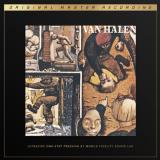
The song titles on Van Halen's aptly titled Fair Warning don't lie. The likes of "Unchained," "Mean Street," "Push Comes to Shove," "One Foot Out the Door," and more indicate the mood the band channels on its double-platinum 1981 record — the nastiest, darkest, and fiercest album of the group's storied career. For the fourth time in four years, Van Halen throws down the gauntlet to all challengers and emerges victorious.
Sourced from the original analog tapes, pressed on MoFi SuperVinyl at Fidelity Record Pressing, and strictly limited to 5,000 numbered copies, Mobile Fidelity's UltraDisc One-Step 180g 45RPM 2LP set plays with unfettered clarity, dynamics, and immediacy. Benefitting from superb groove definition, an ultra-low noise floor, and dead-quiet surfaces, this vinyl edition captures what went down in the studio with tremendous realism and involving presence.
Taking a more controlled approach in the studio and still completing everything in less than two weeks, Van Halen and producer Ted Templeman relied on studio amplifiers to direct the sound. Further diverging from the live-on-the-floor approach of its earlier albums, the ensemble also employed overdubs to great effect. The result: Dense, stacked architecture that underlines the hard-hitting tenor of the songs — and which comes alive like never before on this reference edition that looks as good as it sounds.
The premium packaging and gorgeous presentation befit the reissue's select status. Housed in a deluxe slipcase, it features special foil-stamped jackets and faithful-to-the-original graphics that illuminate the splendor of the recording. Aurally and visually, it is made for listeners who want to immerse themselves in everything involved with the album, including the iconic cover art adopted from William Kurelek's haunting painting, "The Maze."
Isolated frames from Kurelek's childhood-inspired work — including a man bashing his head into a brick wall, a guy pinning down an adversary as he delivers bare-fist blows to his face and others watch with apparent glee, a boy tied down on a conveyer belt and being sent through the equivalent of a meat saw — adorn the front and back covers. The sunnier visual disposition of Van Halen's prior efforts gives way to something sinister and tortured, traits reflective of the music within. The band members, too, are visually depicted not in glamorous shots but in a serious black-and-white portrait in which the quartet is clad in black leather jackets.
Tough, aggressive, stark: Fair Warning comes on like a series of bare-knuckled punches to the solar plexus and boasts lyrical narratives to match. Though not a concept record, the concise album revolves around themes of roughing it on the streets and struggling to survive amid dim prospects. Singer David Lee Roth reportedly penned many of the initial lyrics after traveling to Haiti and observing extreme poverty. The characters and situations populating Fair Warning reflect hardscrabble existence, last-chance desperation, and underlying danger.
Witness the crazies, poor folks, and hunters of “Mean Street”; the former prom queen turned pornographic actress on “Dirty Movies”; the menace and vice of “Sinners Swing!”; the streetwise hustle of “Unchained”; the isolation and alienation of “Push Comes to Shove”; the desire for escape on “One Foot Out the Door”: A carefree California beach party Fair Warning is not.
Having said he felt angry and frustrated during the sessions, guitarist Eddie Van Halen uses the forceful arrangements as a playground for his seemingly unlimited arsenal. Supported by a crack rhythm section and a hyped-up Roth, he performs with an almost impossible combination of punk-like intensity, technical finesse, lyrical fluidity, and unbridled emotion. The virtuoso was increasingly butting heads with Templeton and seeking a freedom in the studio he believed denied him.
No wonder he plays like a bat out of hell. Listen to the rapid-fire manner in which he slaps the high and low E strings on the 12th fret of his instrument on “Mean Street,” instilling the tune with funk flair and metal-spiked sharpness. For the pouty strut of “Dirty Movies,” Eddie Van Halen contributes slide guitar magic made possible after he sawed off the lower portion of a Gibson SG so he could reach further down the fretboard.
Related intensity, urgency, and daredevil momentum punctuate the surging “Sinner’s Swing!” A heavily flanged, delicately melodic introduction frames the attitudinal “Hear About It Later,” among the most creative arrangements of Van Halen’s career. And do riffs come any bigger or magnetic than those on the high-wire kick of “Unchained”? As for the out-of-left-field “Sunday in the Park,” an instrumental composed on an Electro-Harmonix micro-synthesizer: Who but Eddie Van Halen to supply creep factor in such an ingenious way?
Despite selling fewer quantities than Van Halen’s prior efforts, Fair Warning remains for many diehards the record that epitomizes all of the band’s immense strengths —Roth’s manic energy and tongue-wagging humor, Alex Van Halen’s rhythmic heartbeat-in-your-chest bombast, and Michael Anthony’s lucid bass lines included. Arriving when the New Wave of British Heavy Metal and new-wave movements were taking flight, it signaled a shot across the bow from a band determined to stay a step ahead and provide proof nobody could touch what it delivered.
More than four decades later, Fair Warning still sounds that alarm.
This item has not yet been released. You can pre-order the product now.

Brixton Heights Records proudly presents the brand new single ‘Am I the Same Man?’, a soulful roots-reggae gem featuring a heavyweight all-star lineup including: Mafia & Fluxy on drum and bass respectively, the Ital Horns on brass, Gussie Clarke on mastering and Gaudi on falsetto vocals + BVs, dub mixing, piano and co-production alongside The Brixton Heights Orchestra.
Drawing inspiration from the timeless instrumental groove ‘Soulful Strut’ by Young-Holt Unlimited, the track channels vintage soul through a deep lovers-rock lens. A fresh and earnest reinterpretation of Barbara Acklin’s 1968 classic ‘Am I the Same Girl?’, this version flips the narrative with an adaptation on the lyrics voiced by none other than Gaudi singing in falsetto, resulting with a smooth, dub-infused love song that combines classic soul and international reggae into a modern masterpiece.
Gaudi is not stranger to falsetto-singing and backing vocals, in fact he has lent his distinctive vocal talent to albums by reggae giants such as Steel Pulse, Horace Andy, Lee “Scratch” Perry, Don Letts, Johnny Clarke, Mad Professor, Hollie Cook, Michael Rose, Creation Rebel, Africa Unite, Awa Fall, African Head Charge, Lion D & Capleton.
Mixed and co-produced by Gaudi at his Metatron Studio in London UK and mastered by Gussie Clarke at Anchor Studios in Kingston Jamaica, ‘Am I the Same Man?’ is more than a cover version, it’s a heartfelt transformation that captures the emotional core of the original song while creating a whole new vibe that speaks to today’s lovers and soul seekers alike.
The B-side presents a meticulously crafted dub version by Gaudi, produced exclusively with analogue equipment and vintage studio hardware. The mix brings forward the intricacies of the original instrumentation and enhances the lyrical elements through spacious delays and warm, analogue textures. Last but not least, in order to maintain the highest level of authenticity and an organic sonic texture, all recordings were done at 432Hz, tuned to resonate naturally.
This item has not yet been released. You can pre-order the product now.

Bonbon Vodou’s third album (Épopée métèque), created by Oriane Lacaille and JereM Boucris, follows the paths of exile with lush orchestration and lyrics in French, Creole, and Gascon.
The bonbon piment (a spicy Réunionese fritter) is deceptive. Beneath its harmless appearance lies a fiery kick that can jolt you into clarity. Bonbon Vodou operates the same way. While the duo's musical influences sway between the Indian Ocean and the Mediterranean Sea, a sharp edge cuts through the tenderness of their graceful songs, often carried by the rhythms of maloya. This contrast gives depth to their third album, Épopée métèque, which takes us on journeys of exile—both across land and sea.
Oriane Lacaille is the daughter of accordionist René Lacaille, a key figure in the revival of Réunionese music in the 1970s, who has lived in mainland France for five decades. JereM Boucris’s father, from a Tunisian Jewish family, was 14 when he arrived in France at the end of the colonial protectorate. Their lives are interwoven with these paternal exiles, which they continue to explore and unravel, alongside the broader, universal stories of migrants fleeing poverty, persecution, and war.
The duo is now joined by a vibrant trio—Piment Piment (Juliette Minvielle, Roland Seilhes, and Yann-Lou Bertrand)—bringing a rich orchestration featuring guitars, flutes, brass, roulèr, kayamb, jaw harp… all set to lyrics in French, Creole, and Gascon. Their voices are joined by numerous guests, including Mouss and Hakim, Rosemary Standley, and Bernard Lavilliers. This playful yet poignant album explores themes of life and death—radiant but aware—seemingly echoing Camus: “There is no sun without shadow, and one must know the night.”
This item has not yet been released. You can pre-order the product now.

“OTHERWORLDS” is a fantasy / sci-fi book presenting collaborators from the past and future through their otherworldly visions. Each artist offers an intimate glimpse into their own abstractions. The A3 spreads reveal visions, fragments of alternative realities, strange and mysterious flora and fauna, fantastic creatures and altered states of perception.
The book takes you on a curious journey through the minds of many, connected by shared inspirations and their collective contribution to building the Childhood Intelligence universe over the past eight years.
This item has not yet been released. You can pre-order the product now.

James Brown wants to know one thing before he and his band begin Sex Machine. “Can I get into the thing, really?,” he asks. His cohorts enthusiastically respond in the affirmative. And for the next hour and change, Mr. Dynamite gets into it and more, turning in a sweat-soaked, feet-moving, hip-swiveling, emotion-purging, in-the-red, drop-everything-you’re-doing-and-dance performance for the ages. Ranked by Rolling Stone among the 500 Greatest Albums of All Time, the sweeping 1970 effort towers as a testament to Brown’s inimitable legacy as well as the peak powers of his voice, vibrancy, and bands.
Sourced from the original master tapes, pressed at Fidelity Record Pressing, and housed in a Stoughton gatefold jacket, Mobile Fidelity’s numbered-edition 180g 33RPM 2LP set presents Sex Machine in audiophile sound for the first time. It explodes with the energy the lightning-strike music demands. Dynamic, immediate, present, airy: Everything from the brassiness and fluidity of the horns to the snap and decay of the snare to the swell and carry of the organ comes across in full-range perspective.
Then there’s Brown’s superhuman singing, which here emerges with a purity, naturalism, and transparency that ensure you feel everything. Screeching, shouting, pleading, moaning, preaching, stinging, commanding, testifying, crooning, humming: The Godfather of Soul contributes one of the finest vocal performances known to man. This definitive 55th anniversary reissue of Brown’s monster funk statement further exhibits a combination of clarity, solidity, separation, and imaging that helps bring to light what he and his crack ensembles committed to tape. Both in the studio and on the stage.
Just how lifelike does this reissue sound? Senior Mobile Fidelity Sound Lab engineer Krieg Wunderlich, who handled the remaster, notes: “There were some artifacts that sounded a bit like mistracking. But they turned out to be breath blasts on the vocal microphone. That is part of history. JB was workin' hard, and breathin' hard. And there was an edit the timing of that was truly strange. Again, a part of history.”
Originally marketed as a live album, Sex Machine contains six songs recorded in the studio and later overdubbed with canned crowd noise and reverberation. Save for “Low Down Popcorn,” the tracks on the latter half stem from a phenomenal performance captured in October 1969 at Bell Auditorium in Brown’s adopted hometown of Augusta, GA. The special relationship between the singer, the audience, and the location is palpable.
As the 1960s gave way to a new decade, Brown experienced immense success and dealt with unexpected change. Soul Brother Number One soon expanded his idea for an official live album captured in Augusta when the ensemble that backed him on that date morphed into the original version of the world-famous J.B.’s just months after the show. The virtuosic abilities, sticky chemistry, and rhythm-forward nature of the J.B.’s prompted him to book a one-off session in Cincinnati, OH, on a late July night.
Anchored by brothers William “Bootsy” Collins and Phelps “Catfish” Collins, the group — as well as two different drummers — laid down a nearly 11-minute rendition of “Get Up I Feel Like Being Like a Sex Machine” and a thrilling medley of “Bewildered,” “I Got the Feeling,” and “Give It Up or Turnit a Loose.” A pair of then-recent studio singles cut in separate locations in 1969, “Brother Rapp” and “Low Down Popcorn,” each featuring his prior group, took care of the second LP worth of material that complements the originally planned live set.
Complicated? Somewhat. Unusual? Definitely. But just as he elevated the expectations for all present and future R&B artists, Brown not only makes it all work. He makes it positively electrifying.
“Get Up I Feel Like Being Like a Sex Machine” is alone deserving of a dissertation on the art of funk music, seeing it moves up and down akin to an oil derrick, witnesses Brown unleashing a trademark series of grunts, squeaks, and “good god” asides, and glides to a hypnotic groove that won’t quit. Or look to the syncopated rhythms of “Brother Rapp (Part I and Part II),” one of multiple pieces here that signify the point where Brown began viewing every instrument as a percussive tool. Brown closes the three-song medley with his new band with a skedaddling “Give It Up or Turnit a Loose,” which provides jolts on the order of sticking your finger into a socket.
Not that the actual live material falls short in any way. Setting an insistent tempo for the vitality that follows, “I Don’t Want Nobody to Give Me Nothing” positions Brown as a role model, leader, and self-sufficient entrepreneur. All simmer and boil, the short and sweet “Licking Stick” dares you to keep pace. The floating, almost comforting “Spinning Wheel” spotlights the instrumental prowess of Maceo Parker and company, and functions as a seamless segue into the tender, horn-saluted “If I Ruled the World.”
And Brown and his mates still aren’t done. Just try to resist the one-two closing punch of “I Can’t Stand Myself (When You Touch Me)” and “Mother Popcorn.” Mercy.
Ain’t it funky? Sure ‘nuff.
Order now and we will order the item for you at our supplier.

expected to be published on 26.12.2025