James Ruskin & Mark Broom are back as The Fear Ratio with their third album ‘They Can’t Be Saved’.
180G 2x12"
The duo, who are long-term collaborators have created their own signature style with abstract synths, heavy basslines and experimental soundscapes that fit somewhere in between IDM, electronica and ambient.
Their acclaimed debut album ‘Lightbox’ was initially released in 2011 on Ruskin’s Blueprint Records, featuring remixes from Warp aficionados Plaid and Deadhand. Soon after they formed a long-lasting relationship with cult Manchester based label Skam, with the follow-up album in 2015 ‘Refuge of a Twisted Soul’.
2018 saw a four track ‘Live EP’ release made up of exclusive versions of their Autechre supporting slot at the Great Northern Warehouse in Manchester, Several years and various solo productions later, The Fear Ratio return with an album that solidifies their reputation as experimental producers.
From the ethereal opening bars of ‘Sender’ slowly twisting into a brooding dub breakbeat, to the staccato, bugged out atmospherics of ‘Grey Code’, ghostly electronics of ‘Small World’, tripped out, schizophrenic hip hop haunting bass of ‘Game Plan’ and sun-dappled keys of ‘The Final Vision’ Broom & Ruskin flex their techno muscles ever further beyond the floor.
Search:invisible records
- A1: Now I'm Running
- A2: Lust For Love
- A3: Invisible Love
- A4: Name Of Love
- B1: Winter In Wonderland
- B2: God Ceases To Dream
- B3: Ieya
- B4: Waiting
- B5: Neon Womb
- C1: Elusive Stranger
- C2: Our Movie
- C3: Thunder In The Mountains
- C4: I Wanna Be Free
- C5: It's A Mystery
- D1: Be Proud, Be Loud (Be Heard) (Be Heard)
- D2: Desire
- D3: Obsolete
- D4: Angel & Me
- D5: Danced
“Take The Leap!” (1994) saw Toyah revisit some of her classic hits – “It’s A Mystery”, “Thunder In The Mountains” and “I Wanna Be Free” – as well as earlier punk material in a heavy rock style. Six original compositions also feature, written with Nick Beggs (Kajagoogoo), Cris Bonacci (Girls School) and Simon Darlow (Buggles). Includes previously unseen photography and adds five revisited classics on Side Four.
First ever release on vinyl, and pressed on 180 gram clear vinyl.
10” clear vinyl) Five years on since their last joint outing in Stroboscopic Artefacts Monad series, Speedy J and Lucy team up again as Zeitgeber on 'Seventeen Zero Four', a new three-tracker descending deep into the filthy, tenebrous outskirts of club music.
Five years on since their last joint outing in Stroboscopic Artefacts Monad series, Speedy J and Lucy team up again as Zeitgeber on 'Seventeen Zero Four', a new three-tracker descending deep into the filthy, tenebrous outskirts of club music. Torchbearers of techno as a life-affirming vehicle for human expression, as can be experienced through their multi-dimensional back catalogue of solo records and shared live performances at some of the finest clubs and events including Concrete, Goa Club and London’s E1, it's safe to say Jochem and Luca share a certain taste for taking things off the beaten path and into new perspectives. True to their bold approach towards production, 'Seventeen Zero Four' proudly continues the pair's tradition of chiselled floor-focused shifts and divagations outside the ringfenced domain of no-nonsense 4/4 mechanics initiated on their self-titled debut album in 2013.
Drawing first blood, the title-track 'Seventeen Zero Four' submerges us in a state of amniotic solitude as hell's all set to break loose around. Sonar bleeps drip and dissolve across invisible plateaux as thunder rumbles and roars in the distance, mirroring and shattering all linearity between the bars. 'One Zero Five' then implements a further straightforward groove, sequenced hats and kicks carving out a more familiar scenario for the dancers to appropriate, whilst maintaining that oddball, slightly off kind of minimal, dubbed-out blur. Rounding off the package, 'Twenty Zero Two' throws further jazz into the mix, letting its sine curves hula hoop into the upper layers of the outer-audio-space as a shrewdly engineered industrial swing drops the hammer for an epic last stretch.
French wielder of exotic machine music Epsilove debuts a full EP of sensuous, melodic electro on Dekmantel. Formerly one-half of Syracuse, Isabelle Maitre depicts a vision of daring, yet euphoric vocal-led, dreamy electro that oscillates with sturdier, warehouse sounds full of heaving 808s, and experimental qualities.
‘Time is the longest distance’ preaches the qualities that brought Antinote’s Epsilove to the distinguished status she has today. It is the sound of chic dancers, shuffling-together leisurely under neon lights, pressing against each other along to nostalgic acid basslines, interstellar synths, and dreamy, cinematic vocals. Rich with harmony, emotion, and cold-wave sensuality. ’Sea Snakes’ pulses faster under a Drexciyan dream-state, painting kaleidoscopic motifs, as the 808 rattles out multi-paced tempos, driving levels of uncompromising Detroit velocities, through to Lynchian-mirror-world listlessness. It’s an acid-acid test of colourful, pulsing electro.
On the remixes are fellow Parisian’s Ali Bobo (Bruits De La Passion) and Shelter (Bigwax Records), who rework ‘Time is the longest distance’ into something more sinister, reflecting the dystopic IDM aesthetics of early Rephlex Records with playful, darkened electronics. The more elusive pairing of French producer HAJJ (Dawn Records) and Lastrack (BFDM) meanwhile, team up to turn ‘Sea Snakes’ into something that harkens towards the world of Warp-like experimental and progressive contemporary post-trap, and breakbeats.
"À dix mètres sous moi, l'eau invisible. Entre l'eau et la brume, pas de frontière, la brume aussi lourde que l'eau, l'eau aussi irréelle que la brume. Passage dans un autre monde, transition par une osmose où toute forme ancienne est désagrégée et dissoute.” Raymond Abellio, Heureux les Pacifiques (1946)
Craig Leon revisits the extraterrestrial origins of civilization on Anthology of Interplanetary Folk Music Vol. 2: The Canon, a continuing chronicle of his early 80s albums Nommos and Visiting. Exploring the cosmic lore of Leon’s earlier work, The Canon expands upon the conceptual cycle based on the alien and mathematical relationships that backbone the creation of art, architecture, science, and music.
In 1981, producer and composer Craig Leon, known in the downtown New York zeitgeist for his production on The Ramones and Suicide’s debut albums, released Nommos, a minimal, primitive electronic exploration based on a speculative, wildly imaginative anthropology.
After viewing an exhibition of Dogon art at the Brooklyn Museum in 1973, Leon remained fascinated by the Mali tribe’s creation myth that the Earth was visited in ancient times by the Nommos, a semi-amphibious alien race who travelled from the white dwarf Sirius B to impart their wisdom to mankind.
Nommos, curiously released on John Fahey’s Takoma Records, manifested Leon’s obsession and investigation: an abstract, ascendent collection of music that could have soundtracked the interstellar visitors’ journey to Earth. Shimmering, mechanical, and anchored by an entrancing pulse of the Dogon’s ceremonial music, Nommos and its sequel, the privately pressed 1982 album Visiting, careened into obscurity.
In the intervening years, while Leon pursued his career as a successful producer, cult interest in the albums grew, culminating in the Anthology of Interplanetary Folk Music Vol. 1., the 2014 archival collection which presented Nommos and Visiting as they were intended to be heard, two sides of the same coin.
The Canon picks up where Nommos and Visiting left off, tracing the path of ancient wisdom imparted by the Dogon’s alien visitors spreading from Mali into Egypt and across the water to Greece as imagined in William Stirling’s ""The Canon,"" an anonymous exposition of cosmic law published in a nearly invisible print edition in 1897.
Though the music – propulsive and spacious – is clearly of a part with Nommos and Visiting, the alien sounds of the Nommos become more familiar to western ears and musical vocabulary as the album narrative thrusts forward. The Canon implies – through ecstatic, contemporary sound and synthesis – that the origins of Western thought, and civilization itself, lie in the great beyond.
Nearly four decades since their first collaboration on Nommos and Visiting, Leon is once again joined by his partner Cassell Webb on vocals and album production. Leon composed, and both he and Cassell performed, and produced all of the music of The Canon, consciously engaging many of the same synthesizers and programs of Anthology of Interplanetary Folk Music Vol. 1 for Vol. 2.
- A1: Turning Invisible In An Imaginary Rose Garden One Evening
- A2: Amhrán An Dreoilín
- A3: Jonny Tries To Catch A Pomegranate
- A4: The Road To Your Door
- A5: Requiem For Joe Dillon / Light A Penny Candle
- B1: Somebody Else\'S Blues
- B2: God Bless Little Peter
- B3: That Go To Sleep Rag
- B4: Mad Sweeney’s Day Off
- B5: Again, But With Feeling This Time
- B6: Start Again (Carry On)
"I love it. SO beautiful"
Josh Rosenthal [Tompkins Square]
Songs For A One-String Guitar is the debut instrumental acoustic guitar LP from Jonny Dillon. Better known for his analogue electronic music productions and all-hardware live sets under the ‘Automatic Tasty’ moniker [Lunar Disko, CPU, Wrong Island], Jonny’s records (bearing heavy acid and electro influences), along with live appearances at venues like Berlin’s Panorama Bar and Kiev’s Closer belie the fact that he has been quietly exploring the musical landscape of the guitar for nearly twenty years.
Recorded as a series of sketches over the last 10 years, Songs For A One-String Guitar represents a snapshot taken over a long exposure; one individual’s private response to a variety of currents and inspirations both musical and emotional. While informed in large measure by the world of Irish traditional music and song (of Sweeney’s Men, Planxty and Seán Garvey) along with that of primitivism and the American Spiritual (of John Fahey, Hank Williams and Mississippi John Hurt) these songs are equally a personal attempt to give expression to an inner landscape, from the experience of sorrow and loss to the promise of redemption and renewal.
The LP opens with ‘Turning Invisible In An Imaginary Rose Garden One-Evening’ a contemplative piece played in free-time; “I’ve been playing this piece for years, and it’s gone by so many different names in that time. It’s a sort of shoe-staring daydream, to my mind at least. I want people to disappear when they hear it, and think it suits the LP to open up slowly and reflectively”. While a contemplative strain underpins some of these songs, others are informed more directly by the experience of grief; “I wrote ‘A Requiem For Joe Dillon’ at the death of my uncle. He used play lots of wonderful songs of his own at family gatherings when I was a child, and while a very gifted and sensitive soul, was also troubled by his own demons. The last time I saw him alive was at my family home with my father; I was going out to see some friends and Joe called me back, gave me a hug and made the sign of the cross with his thumb on my forehead, to bless me. It still chokes me up when I think about it. A song of his ‘Light A Penny Candle’ I included to finish the piece in his honour.” A sense of longing and hope is present in other pieces; “Songs like ‘Again But With Feeling This Time’ and ‘Start Again (Carry On)’ come from a sort of hopeful yearning feeling which is always within me; a melancholic sort of joy in search of redemption. For me, music has the strange capacity to express contrary positions simultaneously; to console, redeem and offer transcendence while also expressing suffering and pain. I don’t know what any of this means, but feel as though I’m trying to find my way home by writing the same song over and over again.”
Songs For A One-String Guitar may seem to represent a departure for those who know Dillon for his electronic productions alone, though the reality is that these songs merely represent a new opening onto an old landscape; they are an invitation to more fully share in one individual’s yearning to find meaning through creative expression. “These songs are very personal to me, so there’s a certain nervousness in my seeing them released. I hope that they prove of some use, and that they do some small good to those who hear them.”
Black Truffle is honoured to announce the first ever vinyl reissue of David Rosenboom’s legendary Brainwave Music, originally released on A.R.C. Records in 1975 and here expanded to a double LP with the addition of over 40 minutes of contemporaneous material. Pioneer of live electronics, innovator in music education, collaborator with artists as diverse as Jon Hassell, Jacqueline Humbert, Terry Riley and Anthony Braxton, Rosenboom is renowned for his ground-breaking experiments with the use of brain biofeedback to control live electronic systems.
Each of the three pieces that make up the original Brainwave Music LP integrates biofeedback with musical technology in different ways. In the side-long opening piece “Portable Gold and Philosophers’ Stones”, four performers have electrodes and monitoring devices attached to their bodies to receive information about brainwaves, temperature, and galvanic skin response. This information is analysed and fed into a complex set of frequency dividers and filters, manned by Rosenboom, but essentially played by each of the performers through their psychophysiological responses to the situation. The result is a slowly unfolding web of filtered electronic tones over a tanpura-esque fundamental, possessing the unhurried, stately grandeur of an electronic raga. In “Chilean Drought”, three different variations of a text about a drought in Chile, each read by a different voice in a different style, are associated with the Beta, Alpha, and Theta brainwave bands. Alongside an insistent piano accompaniment, we hear a constantly shifting combination of the three vocal recordings controlled by the relative preponderance of each of the brainwave bands in the soloist whose brainwaves are being monitored. “Piano Etude I (Alpha)”, the earliest piece included here, is based on research into the link between Alpha brain wave production and the execution of repetitive motor tasks. As Rosenboom plays a very rapid, incessantly repeated pattern in both hands – deliberately designed to be difficult to execute without being in an alert, non-thinking state similar to that associated with strong Alpha brainwave production – two filters controlled by monitoring his brainwaves process the piano sound, moving gradually higher in frequency as the average Alpha amplitude increases, resulting in a hypnotic, constantly shifting blur of repeated notes reflected through the shimmering, watery lights of the filters. For this reissue, the original LP is supplemented with an additional LP containing an unreleased 1977 live recording of Rosenboom’s “On Being Invisible”, in which the composer himself performs on an array of electronics that are fed information from his brainwaves. Stretching out over 40 minutes, the piece begins in similar territory to “Portable Gold and Philosophers’ Stones” but eventually becomes far wilder, building up to pointillistic bleeps and dense layers of electronic fizz that unexpectedly cut to near-silence. As Rosenboom explains, the piece creates a situation in which the ‘performer’s active imaginative listening became one of the ways to play their instrument, as well as an active agent in how self-organizing musical forms might emerge.’ Enriched with archival images and new notes from the composer, this expanded reissue of Brainwave Music is essential listening for anyone interested in the history of live electronic music and alive to the possibilities it might still contain.
Vanishing Twin is songwriter, singer and multi-instrumentalist Cathy Lucas, drummer Valentina Magaletti, bassist Susumu Mukai, synth/guitar player Phil MFU and visual artist/film maker Elliott Arndt on flute and percussion; and on this album they have made their first artistic statement for the ages.
Some of its great power comes from liberation. The album was produced by Lucas in a number of non-standard, non-studio settings. 'KRK (At Home In Strange Places)' summons up the spirit of Sun Ra's Lanquidity and Broadcast And The Focus Group Investigate Witch Cults Of The Radio was simply recorded on an iPhone during a live set which crackled with psychic connectivity on the Croatian island of Krk.
The magical Morricone-esque lounge of 'You Are Not an Island', the blissed-out Jean-Claude Vannier style arrangement of 'Invisible World' and burbling sci fi funk ode to a 1972 cult French animation, 'Plane`te Sauvage', were all recorded in nighttime sessions in an abandoned mill in Sudbury. The only two outsiders to work on the recording were '6th member' and engineer Syd Kemp and trusted friend Malcolm Catto, band leader of the spiritual jazz/future funk outfit The Heliocentrics, who mixed seven of the tracks (with Lucas taking care of the other three).
Vanishing Twin formed in 2015 - their first LP, Choose Your Own Adventure, which came out on Soundway in 2016; followed by the darker, more abstract, mostly instrumental Dream By Numbers EP in 2017. The band explored their more experimental tendencies on the Magic And Machines tape released by Blank Editions in 2018, an improvised session recorded in the dead of night, offering a glimpse into their practice of deep listening, near band telepathy, and ritually improvised sound making. These sessions formed the basis of The Age Of Immunology.
- A1: Daisy Fields
- A2: Sruthi Dub Resonance
- A3: Barefoot
- A4: Pollinator (Eternal Opuscule #120)
- A5: Stamens (Eternal Opuscule #121)
- B1: Oregano In Dub Minor
- B2: Sunken Forest
- B3: Daisy Dub
- B4: Beat Resonance (Eternal Opuscule #118)
- B5: Gyration (Eternal Opuscule #119)
- C1: Time Zone Conversations
- C2: Deeping Breathely
- C3: Oregano In E-Minor
- C4: All That Spins (Eternal Opuscule #124)
- D1: Sruthi Box Resonance
- D2: Galaxea
- D3: Be As You Are
- D4: Be As You Will (Eternal Opuscule #126)
- E1: Sundog Suite
- E2: Pear Strings
- E3: Pair Of Seeds (Eternal Opuscule #122)
- F1: Spiral Activator
- F2: Final Oscillator (Eternal Opuscule #117)
- F3: Sundog Reprise (Eternal Opuscule #125)
It gives me the greatest honour to finally be able to announce the release of this amazing triple vinyl masterpiece by log(m) and Laraaji on Invisible, Inc.
It's been over a decade since Laraaji first joined forces with log(m) in their Canadian studio in early 2007. In those ten years the trio recorded many hours of music. Over time these recordings, beginning essentially as live jams, were polished, dissected, processed, re-arranged and then finely and painstakingly distilled down to the 105 minutes of music that now form this album, which finally reached completion just earlier this year. The wait has been more than worth it.
The Onrush Of Eternity is a melding of minds like no other. Ever the pioneer of experimental ambience, Laraaji's signature hammered dulcimer, zither, mbira, auto harp, sruthi drone box and of course his exceedingly positive vibes are here combined with log(m)'s unique vision of gronky hi-tech psychedelic space dub. The resultant voyage into deeply meditative ambience and trance-inducing dub is as unexpected an outcome as it is a bona fide "Eureka" moment. It sounds neither like log(m) OR Laraaji....but of course like both. It is one of those rare collaborations that is, without a doubt, even greater than the sum of its already great parts.
Log(m) started making waves in the early '90s as Legion Of Green Men with their visually striking 12"s, complete with eternal opuscules (locked grooves) and mathematically inspired titles, all lovingly issued on their own Post Contemporary imprint. These deservedly got the attention of Richie Hawtin who promptly asked the duo for an album on his own classic Plus 8 Records. 20+ years later and the music (much like their name) has morphed into something more sophisticated: even more complex, atmospheric and deeper than ever.
Laraaji's reputation of course precedes him: he first came to wider attention when Brian Eno released his "Day Of Radiance" as part 3 of his Ambient Series in 1980. Since then, Laraaji has released over 40 albums, yet his stellar path seems still to be on the ascendant - a recent landmark being the 2017 "Sun" series of albums for the wonderful All Saints' Records.
This unique triple LP in tri-fold sleeve is limited to 200 copies on coloured vinyl and 300 copies on black vinyl featuring ten of log(m)'s signature eternal opuscules and cryptic engravings on all three discs.
White Shadows In The South Seas is the title of a book written in 1919 by Frederick O'Brien as part of a trilogy he wrote based on his experiences living in the Pacific islands in the early part of the 20th century. His book was taken as the starting point for a film to be directed, initially, by Robert Flaherty (famous at the time for his groundbreaking documentary / fiction film Nanook Of The North) with W.S.Van Dyke as his support. The film, ultimately, apart from the title, had little to do with O'Brien's book and Flaherty left the film after a few months leaving Van Dyke to finish it.
I purchased O'Brien's book, along with many others, from Basement Books, a secondhand bookstore in Melbourne/Australia. Part of my 'Islomania' and on going fascination with all things Pacific. When I discovered there was a 1929 silent film based on the book I sought it out and started to present it as part of my 'Live Music/Silent films' repertoire. Tabu by Frederick Murnau, which coincidently also had Flaherty as co-director originally, was the first film I ever wrote / improvised a score for and presented as a live film/music performance. My repertoire extends to over 23 films now.
My eclectic and diverse musical and artistic interests extend into 'Hawaiian', 'Exotica', 'Ambient' and 'Electronic' Music. I have produced several volumes of so called 'Electronic, Ambient, Exotica' on CD and Vinyl, including Kiribati, Globe Notes, Rayon Hula ( on Vinyl, CD and digital format ) and most recently, New Globe Note on Vinyl and White Shadows In The South Seas on CD.
White Shadows In The South Seas features some of the music presented in my live screenings of the 1929 silent film.
The film is the story of Dr. Matthew Lloyd, an alcoholic doctor who is disgusted by the exploitation by white people of the natives on a Polynesian island. The natives dive for pearls, however, numerous accidents occur and one diver dies. In anger, Dr. Lloyd punches Sebastian, the employer. As revenge and to prevent further interruption of his activities, he tricks Dr. Lloyd onto a ship with a diseased crew (thinking they are ill) and his men rough him up and send the ship off into a storm. Dr. Lloyd survives and is washed ashore on an island where none of the natives have ever seen a white man before. Lloyd is rescued and ultimately falls in love with the chief's daughter, who is Taboo, hence Lloyd is prevented from pursuing his love for her. An incident occurs and a young boy is thought to have drowned but Lloyd is able to revive him, earning him points and permission with the chief's daughter. Lloyd begins to realise that the local islanders have no sense of the value of the black pearls which grow in abundance around their island and he starts to dive for them and collect them. One morning the white man Sebastian unexpectedly turns up on a scooner and starts to offer the islanders trade for their pearls. Llloyd tries to interrupt the encounter and is shot and dies. His wife and the islanders morn for his dead body and, symbolically, the passing of a way of life.
Mike Cooper plays - Electric and acoustic lap steel guitars / electronics / Zoom Sampletrack / Kaos Pad / Casio SK1 / Korg Drum Machine / Self Made Instruments.
It also features field recordings made on Pulau Ubin by Mike Cooper during a month as Artist In Residence for The Artist Village / Singapore.
I would like to acknowledge and thank Lawrence English (Room40 Records) for his assistance and encouragement with the original recordings and the CD version of White Shadows In The South Seas.
All music written and played by Mike Cooper PRS/MCPS - except Po Mahina (trad. Arr. Cooper) and Hilo Hanakahi (trad. Arr. Cooper)
Recorded and Mixed at the Steelworks in Rome 2012/2013.
A White Shadow In The South Seas
In February 2014 'A White Shadow In The South Seas' was the title of an audio-visual installation I made at the Teatro In Scatola in Rome, Italy, presented as part of a series of sound installations titled 'Visitazioni' produced by Proposte Sonore.
The essay below, as well as our collection of Hawaiian shirts, Exotica and Hawaiian vinyl records, was an inspiration for this installation.
'..the transformation and reconstitution of the souvenir commodity as an indigenous ethnic art form and a scarce relic of Hawai'i's romanticized past...' from - Clothing and Textile Reasearch Journal - From Kitsch to Chic by Marcia A. Morgado.
And....
Michael Thompson's Rubbish Theory (1979)
' ...a critical aspect of Western culture is the pre-disposition to see objects in terms of two overt categories: the transient and the durable. Objects identified as transient have finite life spans and lose value over time, whereas those identified as durable have infinite lives and over time increae in value....category assignments are arbitrary, but once assigned a category membership determines relative value. Fashion apparel-by defenition-is assigned to the transient category; paintings commonly are designated durables....how is it that transient objects.. ( e.g. Hawaiian shirts and vinyl records ) ..sometimes become durables.
Objects assigned to the rubbish category are largely invisible, have no value and, ideally, no life span. Fashion for example, no longer worn and relegated to the back of the wardrobe has fallen into the covert rubbish category. But rubbish can be rescued and transformed. Thompson says ' What I believe happens is a transient object gradually declining in value and in expected life span may slide across into rubbish. Here it exists in a timeless and valueless limbo where it has a chance to be re-discovered and be successfully transformed to a durable. Such transferes are radical: objects gradually slide from transcience to rubbish, but the transformation from rubbish to durable involves an all-or-nothing leap across two boundaries, that separating the worthless from the valuable and that between the covert and the overt. Things drift into obscurity but they leap into prominence.
The delightful consequence of this hypothesis is that in order to study the social control of value we must study rubbish.
The rubbish-to-durable transformation is accompanied by the development of highly specialized knowledge derived from the discovery of subtle variations and complex details that went unnoticed in the objects transient stage. The discoveries initiate renewed interest in the object and its market value begins to climb. As prices soar beyond the reach of ordinary people, the object becomes available only in high priced collectors' markets. Furthermore, as market values rise, the aesthetic value of the object undergoes a reassessment as well, and it becomes increasingly apparent that the objects intrinsic beauty has been overlooked. Ultimately the object is re -assigned as a durable and becomes recognized as a timeless classic.
Exotica, Ambience and Pacificism - A dialogue with Mike Cooper & Professor Philip Hayward Deputy Pro Vice Chancellor of Research Southern Cross University, Lismore, Australia.
Günter Schickert, four decades of multi-instrumental cosmic explorations, under Berlin's sky, above genres, and compromises.
It was memorable the time when I firstly listened to his debut LP of 1974, the monumental Samtvogel. It overwhelmed me with layers of echoing guitars roaring into space, causing a powerful release of dopamine spreading through my skin, in the way an Interstellar Overdrive', or a Richard D James Album would do. It was a proof of the divine to discover Günter Schickert, it is a profound honour today to present on Marmo his seventh album to date, Labyrinth, the first to be released on vinyl format since 1983`s Kinder In Der Wildnis.
Schickert's Samtvogel, self-published first, then licensed to Brain, equaled the imaginative leap and sonic power of the early Pink Floyd, Manuel Gottsching's Inventions For Electric Guitar or A.R. & Machines's Die Grüne Reise. What followed, from his second LP Überfällig on Sky Records to his collaborations with Klaus Schulze, Jochen Arbeit and Schneider TM, even if little acclaimed, spans a large spectrum of music styles, always through a distinctive and personal aesthetic, that is deeply linked to the one he firstly crafted back in '74, when Schickert pioneered the use of echo effects applied to guitar playing.
And now Labyrinth, a record that stands for versatility, where genres do not matter, soundscapes or life situations take over, song-writing emotions pop out, handing out a spectrum of surprises to the listener. You may find yourself flying low along steep cliffs and with a blink of eye you are thrown into a Middle Eastern scenery.
The album is divided into two parts, two different production bulks and periods of Günther Schickert's life. Side A features a selection of tracks recorded in 1996, appearing on the 2012 album HaHeHiHo, released via Pittsburgh based VCO Recordings, on a limited press of 100 units, tape format only. I felt that the visionary and emotional richness of these pieces deserved the vinyl format and a chance to reach to a wider audience.
The Raga-inspired Morning' opens Labyrinth with exotic charm and bitter-sweet nostalgia. Sieben' kicks off with the same guitar scales of the previous theme, before the motorised progressions of a Korg MS-20 synth surprisingly storm in, carrying along an intersecting multitude of filters and sharp guitar effects, flowing into an epic, paradisiac ending. Ninja Schwert' remains on astral dimensions, it is a struggle of cosmic forces, where the steady ride of a pounding beat gets embraced by different guitar layers and analogue electronic filtering. The side closes up with HaHeHiHo', a slow ballad featuring Mr. Schickert on vocals, guitar, bass guitar and drum machine - an example of simple, stripped down yet gifted songwriting that is capable to reach the heart of the listener.
Side B contains material produced between 2007 and today. The intricate, bewildering Tsunami' shows the multi-instrumental and recording abilities of Günter Schickert: a field-recorded storm with mesmerising powers, a peculiar progressive approach to guitar playing. Mysterious sinister spirits and sounds are emerging and the feeling of being lost in a pleasant trance arises. In contrast, Oase' muffles the intensity and jumps into a completely different soundscape, where in liaison with the sounds of a rolling drum tom and a desert-like trumpet, the microphone carefully captures the found sound tones of everyday-life objects and actions. Like HaHeHiHo on side A, Checking' represents the vocal gem of the B side, in a raw and direct way of songwriting like if Syd Barrett was his invisible helper. Palaver' (which means unnecessarily talk' in German) assembles different vocal recordings of Schickert into a bizarre free-style conversation through a mysterious language, where he attempts to emulate illiterate children conversating. The final track, Morning (Slide)', reprises the opening theme, this time solely performed through the caressing dilated sounds of Günter's slide guitar.
D-Leria returns to the scene more than a year after debuting on Berlin-based label Delirio, releasing a collection of work produced between 2014 and 2018; ten tracks which mark a new beginning for this young Italian producer, sweeping between heavy ambient excursions to hypnotic/ tribal techno, modernized and polished off in his own way.'Driving to Nowhere' is the summation of an extended journey; a year-long hiatus due to unforeseen health concerns allowed time to meditate and consider his past experiences in Italy's various underground electronic music scenes, and the potential directions inspired by thriving Berlin.
From 2014 to 2017 he released several EP's, each developing upon this new style, until joining the young label Delirio as both a musician and a manager. With Delirio he has hosted artists such as Stanislav Tolkackev, Roberto Bosco, Plaster, Retina.it and more, with a unique agenda to record precisely produced music live, instead of laboring in the studio to achieve over-polished audio. His first album inaugurates the beginning of the new DLP catalog, which will be dedicated to LPs, albums and other projects released on 12-inch vinyl. Through these 10 tracks D-Leria experiments with various production methods, as in 'Makumba' where he precisely combines the kick drum with a tight bass line in a 12-step sequence, making the track fluid and never predictable. 'Reborn' is an even more ambitious undertaking, initially recorded on tape before being sent back to the mixer via Hi Fi stereo, D-Leria modulated the cassette coil with a bic pen to create a unique 'detune' effect. 'From the Ground' and 'Driving to Nowhere', both made through the same setup, combine tribal voices and moans, combining an ethereal ambience with drums and analog percussion, connecting the rhythm directly to the soul. The opening track 'Libero' is dedicated to himself, while 'Her Smile' and 'Uragano' are both dedicated to the person that was closest to him in his last period of stop and realization of the album, where he expresses his most deep moments in the first, and more difficult in the second.
Just like in most of the EP already released on Delirio, Giuseppe Tillieci aka Neel took care of the mastering of the tracks, while the artist has taken care of the smallest details from the production, to the mixing, to the graphics and also to the titles of the tracks, which refer to personal thoughts and events that happened during this long journey to nowhere.
* The third of the Death To Digital EPs drops hard. This one, like the first two, aims to provide a selection of distinct and varied old skool tunes, from producers with very different approaches and sounds, but very similar attitudes. Wislov just gets better with every release, and his track The Time Is Out is certain to put a smile on your face. Meanwhile, KF label stalwart Dj Deluxe FINALLY gets his KF Radio anthem 'Glorious' released, and what a wicked tune it is. Apparently the sample has something to do with wrestling, but dont let that put you off, its glorious all the same! Recent KF signee Abyss displays his rare talent for touching that sweet spot between drum and bass and jungle, that era of The Invisible Man and LTJ Bukem, when the atmosphere, bass and breaks were where it was at. Many attempt this style, but Abyss has it perfected, and Falling is like a 95 classic you have never heard until now. And of course, Shoreman, hot off his Deep Waters EP, shines super strong with Growing Stronger.
Strut present the frst ever international reissue of in-demand '80s zouk LP 'Las Palé'
by Feeling Kréyol, out of Guadeloupe.
Producer Darius Denon explains: 'This was 1988 and bands like Zouk Machine and Kassav
were huge. I had met producer Frankie Brumier when I was performing at festivals and
parties and he wanted to record a girl group so we began scouting venues, mainly around
the Grande-Terre district in the island's capital, Pointe-à-Pitre. I ran auditions and picked out
the best three voices - Fabienne, Leïla and Yolande. One was singing in a choir and none of
them had met each other previously.'
Recording at a studio in Le Gosier, Denon trained them to sing the songs and spent around
6 weeks recording the album: 'I gave them a couple of compositions that I had planned for
my own solo album. I remember that we all got on really well; the sessions were fun.'
The title track 'Las Palé' was the lead track pushed as a single and achieved modest
success domestically. The band did a few promotional performances in the island's
discotheques but, in the end, the album stalled. 'Studios were expensive and there was
no cheap technology as we have now. So, the producer ended up cutting corners with the
production - the mix was not completely fnished and the voices were not synchronised
right to some of the tracks.'
For Denon, he continued his career to the present day, successfully moving to Paris and
breaking through with the hit 'Je t'emmene' in 1998. Meanwhile, although 'Las Palé' turned
out to be Feeling Kréyol's only recording, the interest in the album has grown in recent years
with the title track's lo-f charm fnding its way into sets by Invisible City and onto Red Light
Radio and more. This frst full reissue is remastered by The Carvery and features full original
artwork along with a new interview with Darius Denon.
KEY POINTS:
- First ever reissue of sought after original zouk LP from 1988
- Sleeve notes by modern day zouk star and album producer Darius Denon
- Remastered by The Carvery
- Tracks already cult classics through plays by Invisible City, Motor City Drum
Ensemble and more
FOR FANS OF:
Sofrito, Digital Zandoli, Kassav, William Onyeabor, Soundway, Invisible City, Motor
City Drum Ensemble, Disques Debs, zouk, Haitian compas, Gilles Peterson, Darius
Denon, Les Vikings
Kami Is The Fourth Opus Of Foudre! - A Telluric Drone Quartet Composed Of Frédéric D. Oberland (oiseaux-tempête, Le Réveil Des Tropiques, The Rustle Of The Stars, Farewell Poetry), Romain Barbot (saåad), Grégory Buffier (saåad, Autrenoir) And Paul Régimbeau (mondkopf, Autrenoir, Extreme Precautions) Who Meet Punctually For Sessions Of Ritual Improvisation Where They Invoke Noise And Drone And The Deities Of Chaos. Improvised And Recorded Live At Le Rex De Toulouse Supporting The 10th Anniversary Of French Doom Metal Band Monarch!, Kami Extends The Cosmogony And The Sound Of The Band By Taking Excursions Into The Invisible And Ambiguous Side Of Nature. In This Orgiastic And Surprising Mix Of Sonic Textures And Rhythms, You May Hear Strange Phenomena, Summoning Of Animistic Spirits, Shamanic Calls, Siren Yellings And Growls. The Original Chemigram Artwork Was Created By French Artist Fanny Béguély By Painting With Chemicals On Light-sensitive Paper. Following The Sold-out Earth Soundtrack (gzh71, 2015), Kami Delivers An Immersive Soundscape For Abstract Clubbers, Where Kosmiche Electronic, Power Ambient And Industrial Punk Music Are Freely Invited To Commune. This Pagan Ceremonial Is An Ode To The Ever-changing Vortex Of Life - A Sonic Dream Machine For The Occurring Now.
300 Beer-coloured Vinyl With Black Inner, Poly-lined Paper Sleeve.
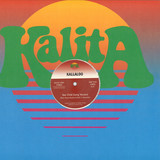
Kalita Records are proud and honoured to announce the first
ever and official reissue of Kallaloo's sought-after 1982
disco single 'Star Child', accompanied by interview-based
liner notes. Originally released on Jeffrey Turpin's
Trinidadian record label IDA, 'Star Child' has since become
highly sought-after by both DJs and collectors alike as an
invisible, yet astonishing piece of Caribbean disco. Unable
at the time to gain the traction and success that it deserved,
we hope that this re-release provides an opportunity to bring
such a great record to a much wider audience.
Kallaloo consisted of various Trinidadian musicians including
Keith Alexander and Peter Wayne Barkley. Keith had been
well-respected as a member of the Trinidadian group Impact, and
was later to become an in-demand producer and composer under
the name of Keith Diamond, responsible for various hits by Billy
Ocean, Donna Summer, Starpoint and Melba Moore. In contrast,
Peter was a well-known recording session drummer, but after
'Star Child's' release he moved to North Carolina to pursue other
interests and 'was never heard from again'.
'Star Child' was recorded at Right Track Recording, in mid-town
Manhattan, New York. As Jeffrey recalls, the atmosphere in the
studio was 'great', with 'everyone upbeat, the cream of the crop
just looking for that break... everyone was talented and just
wanted the chance to express their own ideas'. Five hundred
copies of the record were released on IDA with a white label
design, and they were sold both in Brooklyn, New York and Port
of Spain, Trinidad. It was also released on a red label, however
this was not to Jeffrey's knowledge at the time.
Jeffrey explains that the reason why the record didn't fare well at
the time was because of the difficulty in getting the song played
on the radio. As he recalls, radio stations were much more likely
to play 'radio versions' of songs which lasted for a couple of
minutes, rather than five or seven minute 'extended' versions
such as 'Star Child', which were more suitable to a club
environment. In addition, as Jeffrey explains, radio airplay is a
'political business', and also within a short while band members
such as Keith got their own breaks, and the Kallaloo era was over
as quickly as it had started.
In line with the release of Blackfilm's new album "Zero One Seven", Denovali release the 2010 collaboration masterpiece "Along the Corridor" with Eraldo Bernocchi for the first time on vinyl.
"(...) From its heavy stone dropping bass to cinematic orchestration, beautiful piano melodies, and progressive dowtempo electronic beats, this collaboration between Eraldo Bernocchi and Blackfilm is an amazing find. Designed as a soundtrack for those lonely nights, walking through abandoned streets and skeleton buildings, Along The Corridors will keep you on the edge of your seat, with your imagination as the only projector for the cinema of your mind.
Italy's heavy dub producer Eraldo Bernocchi is not a new face to the scene. Starting out his career in the 90s, Bernocchi produced under many aliases. ... But it is the works under his real name that deserve the most attention. In 1999 he released Charged recording with Tashinori Kondo and Bill Laswell. In 2005 he appeared alongside Harold Budd in Music For 'Fragments From The Inside' on Sub Rosa. And in 2007 he recorded Manual together with Thomas Fehlmann for 21st Records. There are also numerous EPs with Bill Laswell under Apollo's Re-charged series....
Blackfilm, who continues to remain anonymous, is a Hungarian artist that was first introduced to us through his self-titled debut on the now defunct Spectraliquid Records. Since then, the album has been picked up by Denovali Records and repressed in 2010 on compact disc and vinyl. His dark atmospheric soundscapes and a bricolage of modern classical samples and instrumental hip-hop beats reminded me of my favorite works by Amon Tobin and Future Sound of London, for a brooding soundtrack enveloping your mind with heavy fog of penetrating sound. Since the release, Blackfilm has relocated to London where he has embedded himself with the heavyweights of dub and even darker journeys in the underground ..." Headphone Commute
If you check the credits of The Rolling Stones' Goats Head Soup LP from 1973 you'll find a certain "Pascal" listed on the percussion section. That is none other than Los Angeles based artist Nicolas Pascal Raicevik (1933-1994), aka 107-34-8933, aka Head, aka Nik Pascal, aka Nik Raicevic. Besides his hitting the bongoes on the Stones album, Nik was a great artist on his own, both as a painter and as a musician. As a musician, he was a pioneer in the use of synthesizers, preceeding the Berlin school by some years when his Head LP was released on on Buddah in 1970. Buddah probably saw in Head the opportunity to cash in some money from the remains of the psychedelic scene - the three tracks on the LP are named after drugs used in the late sixties. The sounds, however, are accomplished works that show Raicevic as one of the most interesting pioneers in the use of synths. The album probably didn't do too well, since Buddah didn't renew the contract with Raicevic, who instead took his own way releasing his works on his very own Narco Records and Tapes label. Between 1968 and 1975 Narco would issue 4 LPs credited either to Nik Raicevic (Beyond The End... Eternity) or Nik Pascal (The Sixth Ear, Magnetic Web and Zero Gravity) plus one credited to 107-34-8933 (Numbers, which is in fact the same LP as Buddah's Head, albeit with different cover art). Copies of these LPs came with an ironic sticker over the shrinkwrap that read "Do not listen to this LP if you are stoned".
1972 saw the release of The Sixth Ear (Narco NR666), this time credited to Nik Pascal. A more complex work than Beyond The End..., it adds consistent rhythmic patterns to the mix with the addition of bongoes and also explores some interesting chord progressions.
Besides his musical explorations, Nik was also an interesting painter. His paintings are auctioned from time to time, and are consciousness expanding works influenced by abstract cubism and surrealism, some kind of Salvador Dalí on drugs exploring the outter and inner space. All the artwork on the sleeves of his LPs is done by himself. Spacey landscapes and psychedelic colours that fit perfectly to the music they contain.
"Nik Raicevic's music is at the intersection of radical psycho-electronic weirdness and kraut kosmische music (in particular the scifi-hypno-minimal modules of Conrad Schnitzler in Grun, Rot and Blau). It presents mega epic & tripped out electronic improvisations.
"This is an absolute must for collectors and fans of visceral, neurotic soundscapes." (progarchives)
"As far as late-60s / early-70s American Bedroom' Electronic Music goes, these LPS have to be among the first transmissions from this sector, made all the more attractive when coupled with Raicevic's alien topographIes - the covers are high-color portrayals of Venusian lanes, knotted growths, & future-past architecture in a style you might equate with Vintage' sci-fi pulp-novel covers - & copious Downer' sentiment. This music is imbued with a sort of lonely, anti-social sensibility that's about as far as you can get from the Academic' Early Electronic vector. I will say that if the Steve Birchall, Cellutron & the Invisible, and/or Pythagoron™ seed your garden, this will likely do the same." (twoheadeddog)
Never reissued before on vinyl format, the Wah Wah reissue features original sleeve artwork made of paintings and drawings by Nik himself and reproduction of the famous ironic "Do not listen if you are stoned" sticker. Limited edition, 500 copies only.
If you check the credits of The Rolling Stones' Goats Head Soup LP from 1973 you'll find a certain "Pascal" listed on the percussion section. That is none other than Los Angeles based artist Nicolas Pascal Raicevik (1933-1994), aka 107-34-8933, aka Head, aka Nik Pascal, aka Nik Raicevic. Besides his hitting the bongoes on the Stones album, Nik was a great artist on his own, both as a painter and as a musician. As a musician, he was a pioneer in the use of synthesizers, preceeding the Berlin school by some years when his Head LP was released on on Buddah in 1970. Buddah probably saw in Head the opportunity to cash in some money from the remains of the psychedelic scene - the three tracks on the LP are named after drugs used in the late sixties. The sounds, however, are accomplished works that show Raicevic as one of the most interesting pioneers in the use of synths. The album probably didn't do too well, since Buddah didn't renew the contract with Raicevic, who instead took his own way releasing his works on his very own Narco Records and Tapes label. Between 1968 and 1975 Narco would issue 4 LPs credited either to Nik Raicevic (Beyond The End... Eternity) or Nik Pascal (The Sixth Ear, Magnetic Web and Zero Gravity) plus one credited to 107-34-8933 (Numbers, which is in fact the same LP as Buddah's Head, albeit with different cover art). Copies of these LPs came with an ironic sticker over the shrinkwrap that read "Do not listen to this LP if you are stoned".
Magnetic Web was released in 1973. It appeared under the Nik Pascal monicker and showed a clear evolution in sound, favoured by the addition of an Arp 2600 and some rhythm boxes. It also included percussions and cymbals. The Two Headed Dog site thinks "this is his masterpiece in all of its acid-laced glory."
Besides his musical explorations, Nik was also an interesting painter. His paintings are auctioned from time to time, and are consciousness expanding works influenced by abstract cubism and surrealism, some kind of Salvador Dalí on drugs exploring the outter and inner space. All the artwork on the sleeves of his LPs is done by himself. Spacey landscapes and psychedelic colours that fit perfectly to the music they contain.
"Nik Raicevic's music is at the intersection of radical psycho-electronic weirdness and kraut kosmische music (in particular the scifi-hypno-minimal modules of Conrad Schnitzler in Grun, Rot and Blau). It presents mega epic & tripped out electronic improvisations.
"This is an absolute must for collectors and fans of visceral, neurotic soundscapes."
"As far as late-60s / early-70s American Bedroom' Electronic Music goes, these LPS have to be among the first transmissions from this sector, made all the more attractive when coupled with Raicevic's alien topographIes - the covers are high-color portrayals of Venusian lanes, knotted growths, & future-past architecture in a style you might equate with Vintage' sci-fi pulp-novel covers - & copious Downer' sentiment. This music is imbued with a sort of lonely, anti-social sensibility that's about as far as you can get from the Academic' Early Electronic vector. I will say that if the Steve Birchall, Cellutron & the Invisible, and/or Pythagoron™ seed your garden, this will likely do the same."
Never reissued before on vinyl format, the Wah Wah reissue features original sleeve artwork made of paintings and drawings by Nik himself, and reproduction of the famous ironic "Do not listen if you are stoned" sticker. Limited edition, 500 copies only.