Except from Rachid Taha, who allowed himself a few forays into the teeming, vibrant heaths of techno, no raï singer other than Cheb Malik has ever ventured into this terrain known for its abundance of sound. If you know about Malik Adouane's ancestry, this is hardly surprising. Born in Librecourt, near Lens, he comes from a union between an Italo-Celtic mother who instilled Western sounds into his ears and a father, a former miner born in Biskra (north-east Algeria), a palm grove near the desert, musically renowned for its lively diwan that could be called Saharan opera. In addition, the town is renowned for its chakhchouka, a dish called after its rich blend of various ingredients and spices. Just like Malik’s music, as he was a fan of James Brown, Barry White, classical Arabic and raï music. He had been thinking about it from the beginning, but the dream took a long time to materialize. In January 1986, many raï idols turned up in Bobigny, France, for a historic and seminal festival. In the midst of the audience, the young man, dressed in black leather, provided security for the concerts of many stars before becoming one himself. He would rub his eyes, not because he was dazzled, but because they were clouded by a nostalgia that remained him of itself. So, with his head full of sounds warmly recommended by the best DJs, he set out, a little provocatively, to position himself at the cutting edge of music with a new concept called "After raï". It combined the sweet and precious past with an almost uncontrollable creative audacity. It's a balm made in a test-tube-studio from a mix of Arabic melodies and lyrics - a kind of "Arabeat", and the arrogant modernity produced by samplers, electronic spinning, roaring bass and guitars made for house music. The pinnacle of the record is a masterful cover of Isaac Hayes' Shaft, which set dancefloors on fire in Paris, London, Ibiza and New York, and became internationally known thanks to its presence on a Paris Dernière compilation curated by French musician and DJ Béatrice Ardisson along with Claude Challe's iconic Buddha Bar series. Now, shall we dance?
quête:its a musical
- A1: Garden Of Eden (Feat. Charlotte Savary) - 3’38
- A2: Middle Of Nowhere (Feat. Charlotte Savary) - 4’22
- A3: Insomnia - 3’46
- A4: The Trip (Feat. Charlotte Savary) - 3’44
- A5: Andy’s Dream - 4’27
- B1: Game Over (Feat. Charlotte Savary) - 3’43
- B2: Around The Corner - 2’58
- B3: Stranger Night - 3’19
- B4: One Day (Feat. Charlotte Savary) - 3’30
- B5: Last Call From Earth - 3’29
The Trip is the first solo album by N'Zeng, better known as Sébastien Blanchon. It has to be said that he hid behind his (hollow) nose to sniff out the right projects (ex Le Peuple de l'Herbe, member of Entourloop). His nose is hollow, but not for the trumpet, and yet it's with this instrument that he started out. And he reinvents it, giving it a subtle place on this musical road trip we call The Trip.
A journey open to all, with no tolls and no filters, apart from the cinematic filter of this lover of original soundtracks and trip hop. Beautiful images flash before our eyes, and in our ears, the smooth voice of Charlotte Savary (Wax Tailor). An album, a very good trip for lovers of Portishead, Gorillaz, and well-felt scratches in the form of controlled skids.
He's making a name for himself as N'Zeng, with his smooth arrangements.
N'Zeng's father played trumpet with his grandfather in the Feurs brass band in the Loire department. When he arrived in Saint Etienne, young Sébastien started out with a cornet à pistons at the Conservatoire. His teacher at the time, Marcel Heyte, had won a prize in Paris at the same time as a certain Maurice André.
His father took lessons in orchestral conducting, accompanying the offspring's budding musical career, which included a course at the Festival de Cuivre in Monastier-sur-Gazeille, where he met the soloists of the Radio France orchestra. A new awareness, a new confidence: off to Lyon, not for a soccer derby, but to "beef up his game". In 1997, he was awarded a gold medal for trumpet by a unanimous jury at the Conservatoire National de Lyon.
Lyon, capital of the Gauls, was the starting point for N'Zeng, who went on to become a member of the group Le Peuple de l'Herbe. 15 years later, with several successful records to his credit, a concert in 2003 at the Transmusicales with Beth Gibbons (Portishead), and a Victoire de la Musique award, it was time for N'Zeng to move on to other things.
Arrival in the City of Light, the place where dreams come true. Nzeng's dreams are not only sonic, but also visual, for Sébastien is not only a friendly presence and a talented musician, but also a cinephile. His knowledge of music theory, acquired during his years at the conservatory, enables him to tackle music for pictures.
He created a soundtrack for the cult film Alien - The 8th Passenger, and worked with musician Rone (collaborating with Baxter Dury) and his bandmates from Le Peuple de l'Herbe, composing 2 tracks for the soundtrack of Virginie Despentes's hard-hitting film "Baise-moi". On the album "Hollywood Hustlers", with the group "Mustang Force", he pays tribute to the soundtracks of Lalo Shiffrin, Ennio Morricone... The album is also well received by the critics. He conducts the arrangements and orchestrations for the Degiheuga Orchestra, and composes the original music for the Hôtel Bellevue dance show, another success!
2019 sees the birth of "The Trip" project. On this record, no masks, but a female voice, that of Charlotte Savary (Wax Taylor), laid on a carpet of strings. With this musical voyage, trip hop takes pride of place, with a balance between the body of the instruments and the mechanics of beatmaking.
There's no getting off track on this well-balanced record, with its silky orchestrations. N'Zeng accompanies us elegantly, with his trusty trumpet as GPS, here used subtly. The album cover is a photograph taken by Sébastien Blanchon's mother, in 1973, a year when Saint Etienne was about to become French champion for the 7th time.
The ever poignant yet exceedingly elusive Chorg Dorgon speaks on the new album by Charles Moothart, entitled Black Holes Don’t Choke: “For the sake of clarity, and its clarity that we seek, Charles has been a pillar of our musical experience since he began playing eons ago in the various projects and countless albums he has contributed to. Charles is a musician who has been constantly on the road for years playing in Ty Segall’s Freedom Band and Fuzz. When there has been a rare time away from those engagements especially in the post-pandemic scramble to catch up world of gigs and tours, he has been spending all of his time in his laboratory figuring out how to synthesize all of the info he has collected and musical ideas he has developed in the past few years since the last CFM record and subsequent shows for this new solo work. Just before the pandemic started, he was out playing solo shows in a project that revolved around an MPC sampler, just to give an example as to the wideness of his explorations. His result is Black Holes Don’t Choke. Love songs for the apocalypse. A prayer toward optimism amid chaos. A plea toward nature. The themes on this album are the themes of today. Charles appeals for us to visualize evolution. And with a signature, the music sounds exactly as you want it to. It sounds like Charles Moothart’s music only more evolved and with greater focus and direction. With greater textural dynamic and more sonic variation and realization, but never sacrificing the insane riff that he is clearly the master of. He gets to the point on this record. He is presenting a voice you can understand and rely on as you make your own journey into it. Create your own meanings. The record now belongs to the world. Because we all start a thought as that which is beginning-less and endless and at some certain point it becomes its own thought, takes it owns shape and becomes itself, separate from the thinker, separate from the observer. alive in the ether!”
Brooklyn-based artist Jonah Parzen-Johnson returns with the new album You're Never Really Alone, out on We Jazz Records, March 8. If you look at the label on the LP containing eight intimate compositions for baritone sax & flute, you will find the words, “we made this together”. At first thought, this simple phrase may seem out of place on a solo record, but just like the compositions on this album, it was carefully crafted to cut to the core of what this music is all about.
In Jonah’s words: “It’s pretty hard to end up at a solo saxophone concert by accident. Odds are pretty good, if you are there, it is because you light up when you experience something new, something experimental. That shared desire connects us, and suddenly, for a night, we are a community. For me, being connected to those spontaneous communities is the best part of being an experimental artist. Everything I make is in service to the cultivation of that community, our community. Without it my music doesn’t exist and because of that I can joyfully say to each person, at every concert, that we made this together.
”You’re Never Really Alone arrives in stark contrast to Parzen-Johnson’s 2020 We Jazz Records solo debut, Imagine Giving Up. Where Imagine Giving Up was celebrated for Parzen-Johnson’s ability to assemble deeply evocative electr acoustic sound worlds, “filling the landscape in one element at a time until a picture emerges that could almost be a full band,” (Wire Magazine, March 2020) You’re Never Really Alone shows us that Jonah can look you in the eye and say “my voice alone is enough”.
Across eight tracks, Parzen-Johnson, a Chicago native, explores the technical limits of his baritone saxophone and flute without ever making the listener feel like he has something to prove. You will find circular breathing, multiphonics, and explosive levels of sound, but more importantly, you will enjoy every moment of musical storytelling and compositional skill. This album is made for repeat listening.
The opening track, “When I Feel Like Myself” is a meditative invocation of self realization. Parzen-Johnson summons three and four note harmonies from his saxophone with deep control, as he gently explores how tension can become its own release. An unadorned melodic thread gently weaves each musical expression to the last, guiding us deeper into an album that simultaneously celebrates the power of one, and the yearning for exploration that unites us all.
- Rain And Snow- J. Obray Ramsey
- Mama Tried- Merle Haggard
- Iko Iko- Dixie Cups
- Samson And Delilah- Rev. Gary Davis
- Big Railroad Blues- Cannon's Jug Stomp
- El Paso- Marty Robbins
- It's All Over Now, Baby Blue- Bob Dylan
- Spoonful- Charlie Patton
- The Red Rooster- Howlin' Wolf
- The Promised Land- Chuck Berry
- Don't Ease Me In- Henry Thomas
- Big Boss Man- Jimmy Reed
- Turn On Your Love Light-Bobby "Blue" Bland
In their long career The Grateful Dead have been inspired by a stunning variety of American musical artists and traditions from blues to country to rock to folk - some of the most exciting and moving music ever recorded. Here are the original versions of The Dead's best loved cover tunes that surprise and delight with their musical depth, originality, and feeling. This collection has been lovingly compiled by a group of Dead insiders including Henry Kaiser, David Gans, and others with the enthusiastic support of The Dead itself. There are extensive notes included that give an overview detailing how the band came to cover each of these tunes and when they first played them in concert. The distinctive Robert Crumb cover artwork is an instant attraction and add to the collectability of this release.
When accidents happen, they are normally over in seconds, sometimes minutes; this one has been going on for 20 years. It is two decades since the members of Emile Parisien’s quartet played a jam session together. At the end, they looked at each other in disbelief. They had not just been hit by a collective musical thunderbolt, they also knew they had just brought...well...something...into being. The common ground between them was jazz, but each had all kinds of seeds to sow in it, from classical music and contemporary sounds to rock, electronica and chanson. Saxofonist Emile Parisien, Pianist Julien Touéry, Bassist Ivan Gélugne and drummer Julien Loutelier rip up labels, break down barriers, upset codes, and yet they know exactly where they are headed. There is a shared obsession with narrative. “The central axis of the quartet has always been storytelling,” Parisien emphasizes.
“Let Them Cook” is like a breath of fresh air, and with a band sound now firmly and unmistakably of 2024 rather than 2004. There was a particular turning point: at a concert in Sweden near the end of their “Double Screening” album tour, they had taken a chance and tried out a move from an entirely acoustic sound to incorporate some electronics.It worked, so they stayed with it: they found that these electronic punctuations never polluted the band’s DNA, but rather stimulated it. The electronic apparatus was clearly additive to the stories of these compositions, the way it all fitted together was astounding.
Which brings us back to the ever-present question: how do you get away from the classic jazz quartet of sax, piano, bass and drums? “We’re always trying to find the answer! There’s no point in redoing what the John Coltrane and Wayne Shorter groups did, because in many ways you’ll never reach their level.” “There’s a certain road in life most people walk on,” Wayne Shorter once said, “because it’s familiar, and they can jostle to get in front. I prefer to take a different road that’s less crowded, with many forks, where you get a wider view of life. I call it ‘the road less travelled’. That’s where I want to be.” In the year which marks its 20th anniversary, Emile Parisien’s quartet has never been more in tune with the thinking of one of its main influences.
slide 7 to 10 of 8
Les Égarés
Les Égarés
DOODSESKADER (Dutch for “Death Squad”) is a merging of the minds of Tim De Gieter (Amenra, Much Luv Studio) and Sigfried Burroughs (Kapitan Korsakov, Paard).
Throughout their three years of existence, DOODSESKADER has been relentlessly pushing the envelope of what it means to be a “heavy” band. From the grunge-infused sludge on their EP “MMXX : Year Zero” to the punishing blend of hiphop and hardcore of their debut album “Year One” and the sonic onslaught of relentless rapping on standalone singles such as “FLF” and “Still Haven’t Killed Myself”, they’re breaking free of any form of categorization.
The duo has been compared to genre-defying trailblazers such as Ghostemane, Show Me The Body, and Ho99o9, however, they clearly bring their own sonic palette to the table.
The red thread in all of this has been their brutally honest and introspective lyrics. Far from your run-of-the mill type of band, DOODSESKADER uses their instrumentation as a sonic backdrop for the emotion and message they try to convey; their music serves as a mirror for life itself. Sometimes brutal, sometimes fragile, sometimes energizing, but always unexpected.
Now, on March 8th, with the arrival of their sophomore album “Year Two”, DOODSESKADER takes things up another couple of notches. From silky-soft “Pastel Prison” to the absolute carnage of “The Sheer Horror Of The Human Condition”, this record is a testament to both their creativity and their will to leave their mark on this world. It’s a trip in every sense of the word, tapping into even more genres such as R&B, techno, hardcore punk, and moody ballads reminiscent of the 90s, all blended seamlessly in their musical vocabulary and making for a sonic journey unlike anything you’ve heard before.
Where their last record “Year One” saw the duo struggling with their inner demons both past and present, “Year Two” is an undeniable display of progress; not only introspectively, but also musically. De Gieter and Burroughs sound outright bloodthirsty, ready to take on anyone in their way. Tracks like “Bone Pipe” or “I Ask With My Mouth, I’ll Take With My Fist” paint a vivid picture of the band’s will to plot their own their path through this world, while at the same time slowly coming to terms with their pasts on tracks like “Peine” or “People Have Poisoned My Mind To A Point Where I Can No Longer Function”. “Year Two” undeniably sees DOODSESKADER’s promise fulfilled: it’s both a complete teardown of genres and boundaries, a sonic wrecking ball wielded by two people trying to get better.
Live, DOODSESKADER proves to be an absolute must see, translating into their sold out AB-release and a sleuth shows over Europe playing with acts such as Brutus and Amenra and on the stages of festivals such as Hellfest (FR), Mystic Fest (PL), Lokerse Feesten (BE), Fluff Fest (CZ) and much more.
Love Is Yes is the first album by Sander van der Toorn and Dax Niesten, an audio-visual duo de force of the same name.
This heady debut is rooted equally in the worlds of fine art and experimental music. Sound and image meld wonderfully across 10 tracks, with shifting movements of music accompanied by a wealth of paintings and animations.
Niesten's work summons the likes of Philip Guston and Maurice Sendak - with its crestfallen, cartoonish voids and cockle-warming grotesquery. Serenely contorted creatures are rendered on large canvases, and brought to fuzzy, maudlin life through a full-length animation that can be viewed alongside the record.
Musically, the pair cite influences ranging from Vashti Bunyan to Morton Feldman. There is an ornate fragility, smeared by zero gravity focus shifts. Some glimpses suggest a corroded grail of Boards of Canada samples; motorik guitar, whispered messages, euphoric vistas and tangled memories all bathing in atomic glow.
The third album by RICO FRIEBE is a clearance, an outcry, an universe within itself, a hope and a message at once – sending out ANTHEMS FOR A LOST GENERATION!
After his preceding albums of intimacy WORD VALUE and FACES MEET, based on personal tragedies and the accompanying struggles, RICO FRIEBE has something to tell to a whole generation and delivers ten radiant and distinct top-notch productions that find a most modern and futuristic sound within different styles of pop music while his soft and emotive voice is hovering above all.
Originally, ANTHEMS FOR A LOST GENERATION has been recorded as an acoustic double-album, but RICO FRIEBE threw it all out, wrote new songs and found a truly more fitting sound after he realised that there could only be one musical outcome to tell these stories: Songs like BAD SEED, I LIKE MEMES, REDO, GAMES or LAZY, BORED AND SAD are milestones of capturing a complete zeitgeist and beyond. Each line within the lyrics is taken from close and personal experiences and interactions that made him undergo a whole spectrum of emotions, creating deep worries and sadness, but also a far hope.
Feel lost? Be found! With ANTHEMS OF A LOST GENERATION...
If there ever was a monicker apt for describing an artist’s behavior, that is Ghost Lemurs. Manifesting spottily in compilations and limited edition tapes, then returning to the shadows without much fanfare, the project has indeed demonstrated a ghostly behavior and a nature as puzzling as the animal it takes its name from. Wombs And Alien Spirits represents now their most public outing, one in which the duo of visual artist / producer Kareem Lofty and Daniele Guerrini (better known as Heith and as Haunter’s co-founder) are happy to showcase all the discoveries in a process of musical and spiritual research begun in 2019. Described by the artists themselves as an experiment in mediterranean psi-trance, the album makes use of an incredibly diverse number of traditions, sonic sources and techniques of musical experimentation, keeping its psychedelic intentions central to the whole creative endeavor. Moments of meditative relaxation are brought to unsettling new levels by cavernous basses and spaced out drones, while tight polyrhythms bring beautiful granular melodies to a sidereal ceremonial dance. As beautiful and captivating as it is, Wombs And Alien Spirits remains as chimeric and unrestrained as any previous effort by the two artists. It’s a type of folk music devoid of a specific homeland, but resulting from the authors’ heritages, simultaneously divided and united by the mediterranean sea, injected with all the trajectories of their personal journeys. It ends up sounding profoundly human and uncannily inhuman, tapping into the undiscovered alien element at the beginning of the experience of life. Genre: Electronic / Experimental Listen:
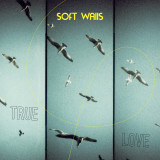
Soft Walls is the solo recording project of Dan Reeves, who has spent his entire adult life kicking around in the dust of the UK's underground music scenes. Cutting his teeth in the South West's post-hardcore scene; centred around Exeter's The Cavern club, before moving to the South East and forming his own record label; Faux Discx, and the propulsive post-punk band: Brighton via London's Cold Pumas. Projects have come and gone over the years, but Reeves' Soft Walls has remained, an outlet for whatever musical whim takes his fancy.
'True Love' is Soft Walls' 4th album. Written and recorded at home, during breaks in work. During the aftermath of you-know-what.
For this album Dan leaned heavily in to his guitar playing, searching for those purest moments of true emotion and connection. Aiming to strike an instant blow. "Emotional guitar music. But not Emo." The result of falling in love with an instrument again and playing for the joy of it, much like he did as a teenager. Just older, wiser(?) and certainly more world-weary / teary-eyed.
Thematically, 'True Love' revels in stating its love for everything that is dear to Reeves. Odes to marriage, romance, unconditional love, parenthood and creativity pierce through the record's down-swings that tackle existential crisis and the feeling of falling in to depression. Each song attempts to encapsulate a vivid feeling, be it positive or negative. It's all part of a life worth living.
Although recorded at home, this album marks a leap in to digital mid-fidelity for Soft Walls, embracing a wider, richer sound beyond the tape hiss of earlier releases. That same spirt is still in the mix, but is presented wide-eyed and caffeinated in to clarity. Elevated by the input of a handful of collaborators contributing to the performances and helping to shape it sonically, 'True Love' ends up being the truest version of Soft Walls committed to (digital) tape thus far.
Red Vinyl[20,97 €]
REKORDER is "a kind of retrospective of myself", says M.RUX about his second, long-awaited solo album. For over 10 years, Marten Rux aka M.RUX appears as a DJ, producer, editor, remixer and multi-instrumentalist all over the world and has developed an idiosyncratic sound that opens up subtle fields of tension: M.RUX mixes a sound between experimental sound design and hooklines that stay in your ears forever. Between wild percussion and contemplative harmonies, between ecstasy and meditative calm. In his DJ and live sets, M.RUX usually steps up to the controls with a smile, discreetly bobbing his head, while the audience goes wild. He circumnavigates clichés with trustworthy certainty and develops his very own guiding threads in his selection beyond BPM or genre straitjackets. One constant is his warm, often stoically slow kick drum, which holds all that playfulness together. REKORDER is a manifestation of this typical M.RUX sound. Similar to his concept album "Vermonische Melodien" from 2020 (on the Pingipung label), the artist's curiosity is directed towards the musical visions of the past. When new music technology projected great visions of the future and when new sounds had not yet solidi ed into clichés. REKORDER refers to the recording device, spelled in a German way, because most of the recordings were made in Germany (and in England as well). Phonography is a miracle that has only been around for 150 years: Technology gifts upon us prosthetics for remembering sound. Every recording is a process, and every playback a new performative act. Recordari (Latin) is a beautiful word. It literally means to take something to heart (cor) once again (re-). This doesn't just refer to remembering, but also to a ponderous, loving, sometimes doubtful contemplation. It is a perfect headline for M.RUX’ approach to processing sound. REKORDER draws deeply from its own archive, which has ourished quite splendidly during the pandemic. Multi-instrumentalist M.RUX mixes his own recordings of banjo, guitar, auto-harp, synths, percussion and jews harp with fragments from sessions with friends that have accumulated since 2020. They unfold in the process of re-listening in the mix and transform into a solid musical tapestry. A typical gesture for this album? M.RUX bows deeply to the history of pop music - especially the blues and its melancholy, coolness and shuf ing groove. The harmonic framework of the album is based on blues scales throughout. Instead of conveying blue emotions via lyrics or the tone of the voice, as the original genre does, the synthesizer takes on this role on REKORDER. With his sound design, M.RUX achieves an ecstatic sorrow in his melodies, this gurgling portamento that is reminiscent of R&B (or even the ingenious title melody of the series "Bojack Horseman”). If voices are heard on REKORDER, then as hypnotic fragments that guide us through the groove as conjunctions: "Because...", says the voice in the track of the same name. That's enough. There are no lyrics, no literal weariness, no love-songs or storytelling, REKORDER processes all of this into timbres and groove as vessels for the album’s individual, contemplative melancholy. Never forgetting, with a gentle smile, to swing a leg.
Black Vinyl[17,61 €]
LIMITED RED COLOURED VINYL!
REKORDER is "a kind of retrospective of myself", says M.RUX about his second, long-awaited solo album. For over 10 years, Marten Rux aka M.RUX appears as a DJ, producer, editor, remixer and multi-instrumentalist all over the world and has developed an idiosyncratic sound that opens up subtle fields of tension: M.RUX mixes a sound between experimental sound design and hooklines that stay in your ears forever. Between wild percussion and contemplative harmonies, between ecstasy and meditative calm. In his DJ and live sets, M.RUX usually steps up to the controls with a smile, discreetly bobbing his head, while the audience goes wild. He circumnavigates clichés with trustworthy certainty and develops his very own guiding threads in his selection beyond BPM or genre straitjackets. One constant is his warm, often stoically slow kick drum, which holds all that playfulness together. REKORDER is a manifestation of this typical M.RUX sound. Similar to his concept album "Vermonische Melodien" from 2020 (on the Pingipung label), the artist's curiosity is directed towards the musical visions of the past. When new music technology projected great visions of the future and when new sounds had not yet solidi ed into clichés. REKORDER refers to the recording device, spelled in a German way, because most of the recordings were made in Germany (and in England as well). Phonography is a miracle that has only been around for 150 years: Technology gifts upon us prosthetics for remembering sound. Every recording is a process, and every playback a new performative act. Recordari (Latin) is a beautiful word. It literally means to take something to heart (cor) once again (re-). This doesn't just refer to remembering, but also to a ponderous, loving, sometimes doubtful contemplation. It is a perfect headline for M.RUX’ approach to processing sound. REKORDER draws deeply from its own archive, which has ourished quite splendidly during the pandemic. Multi-instrumentalist M.RUX mixes his own recordings of banjo, guitar, auto-harp, synths, percussion and jews harp with fragments from sessions with friends that have accumulated since 2020. They unfold in the process of re-listening in the mix and transform into a solid musical tapestry. A typical gesture for this album? M.RUX bows deeply to the history of pop music - especially the blues and its melancholy, coolness and shuf ing groove. The harmonic framework of the album is based on blues scales throughout. Instead of conveying blue emotions via lyrics or the tone of the voice, as the original genre does, the synthesizer takes on this role on REKORDER. With his sound design, M.RUX achieves an ecstatic sorrow in his melodies, this gurgling portamento that is reminiscent of R&B (or even the ingenious title melody of the series "Bojack Horseman”). If voices are heard on REKORDER, then as hypnotic fragments that guide us through the groove as conjunctions: "Because...", says the voice in the track of the same name. That's enough. There are no lyrics, no literal weariness, no love-songs or storytelling, REKORDER processes all of this into timbres and groove as vessels for the album’s individual, contemplative melancholy. Never forgetting, with a gentle smile, to swing a leg.
dog-rose is an exploration of musical articulation and vocalization. Its themes can be felt gnawing at the surface of the world: people's clumsy everyday intimacies, the neverending pursuit of self-knowledge, God. Of foremost interest was the unreliability of memory as a tool through which we experience life, yielding an attempt to dismantle it into its minute elements.
"I arrived at a combination of diary entries in the form of field recordings, various, mostly acoustic, instruments through which I invoke different modes of memory // its associative functions, and my own voice, more an agent of introspection than any conventional vocal. The lyrics were originally written as pop-songs, but committed to the form of contemporary music they appear as field recordings made to be sung. They are field-songs."
"To me, musicmaking is a dialogue with sounds where I seek to understand their character and how to handle them. This is a performative process and admittedly also a projection – what I am actually discussing is myself. The recording took place at a remote cabin in the forests of Tribeč. Most of my work is created in isolation, regardless of the social distancing and lockdowns of the outside world."
Tomas Pristiak is a member of Tante Elze, Pain Palace (FKA Weltschmerzen), and dog-rose is his first solo album and the 11th release by contemplative label Weltschmerzen.
2024 Repress
To celebrate its 30th anniversary, Plastikman's redefining acid techno masterpiece, Sheet One, has been mastered from the original tapes and reissued on vinyl via Mute and NovaMute.
Released in 1993 on Mute's subsidiary label NovaMute, this record was the debut for Richie Hawtin's alias Plastikman. 30 years on Sheet One is a landmark album in the field of electronic music, it changed the shape of what the genre could be and became.
Introducing one of techno's most recognisable logos, the album achieved a degree of notoriety for its acid blotter-style perforated artwork. Musically it focuses on laser-precise minimalist rhythms to drive a series of echo-box acid lines that gradually acquire power over the course of lengthy album tracks, with frequent use of the Roland TB-303, which gained prominence in the electronic music world as a staple of Chicago's acid house scene. Hawtin once described Sheet One perfectly in an interview with MusicRadar, saying "...It's music for the end of the party as you're melting into the floor, which is exactly what the name Plastikman was made to represent."
This seminal album helped to establish the template for minimal techno, and is a must listen for lovers of electronic music.
Available on double bio vinyl.
Since the early 80's Allan Crockford has been a major figure in Medway's garage rock scene, including playing for The Prisoners, Billy Childish's Thee Headcoats, the original line-up of the James Taylor Quartet, The Solarflares and many more. Since 2010 he has fronted his own band, The Galileo 7, as writer, guitarist, and lead vocalist. Their unique blend of powerful '60s garage rock'n'roll, psychedelic vocal harmonies and quality songwriting has now featured on no less than eight albums. Their ninth, You, Me and Reality, sounds like the work of a seasoned rock 'n' roll band dialling things up one and approaching its zenith. The group performances of the quartet of Allan Crockford, Viv Bonsels, Paul Moss and Mole ooze energy and dynamics - whether it's the garage ramalama of opener 'Can't Go Home', the woozy psychedelics of 'Slow Down', the chipper folk-rock of 'A Simple Man' or the '60s mod-pop stomp of the title track. As with 2019's last album proper, There Is Only Now, all four group members share lead vocal duties, with Viv's contributions adding an affecting indie-pop flavour that coyly suggests new directions. You, Me & Reality largely eschews its predecessor's predilection for ambling unplugged off the beaten path, instead sticking with up-tempo ensemble performances that showcase the players' musical chops and vocal interplay in the kind of warm, fizzy, analogue soundscape that's become a touchstone of many Medway bands.
Although 30 years after its birth this fundamental electronic gem called 'Reflections' has achieved cult status, it is worth remembering that it all started in 1993 in a small apartment in Waterloo, London, with the help of a mixer and a bunch of hardware synth and drum machines of hardware, with the mastodontic Oberheim OB-8 synthesizer as the main partner.
While in the UK the vast majority of kids showed a certain rejection of what came from North America in the form of electro, Kirk Degiorgio, under his alias As One, embraced it openly and incorporated it into his productions along with influences from other genres that he had already adored since he was young, such as jazz, soul or funk, thus becoming one of the true early adopters of Detroit techno in the UK.
If we look back, 'Reflections' is a challenge in itself, and even more so considering what the consumption pattern of electronic music was in the early 90s. This timeless album fits into the delicate border between being enough club to work on the dance floor, and still being musical and cerebral enough to be listened to at home. A milestone that, whether premeditated or not, Degiorgio more than achieved.
Three decades later Lapsus Records has been able to access the pre-masters extracted from the original DATs to build a special 30th anniversary edition within its Perennial series. For the occasion, this reissue not only offers the tracks included in the first edition, it also adds the songs 'The Priestess' –never released on vinyl before– and Forgotten Memory –until now unreleased and rediscovered in one of the DATs dating back to 1992 from the 'Reflexions' recording sessions. We are therefore facing the definitive edition of an album that, despite coexisting with the explosion of the rave movement, would pave the path for the UK-Detroit connection.
Fire! have always been about finding the essence by getting to the core of the music. Their 8th album sees the trio - for the first time on record - stripped down to the bare-bones essentials; with no flutes, no electronics, no guests and no extras, recorded live in the studio to analogue tape - the Steve Albini way - with the master himself at the controls in Electrical Audio in Chicago. Thus, this album stands as a true testament to the group's expressive power and glowing intimacy. Musically, Testament can be seen as an extension of their previous full length album Defeat, released two years ago, to the month. A solitary bass figure from Johan Berthling, quickly joined by a stout drum groove, gets it all going in a familiar fashion before Gustafsson adds desolate cries and whispers from his baritone sax. This approach is even more honed on the second track, with the most simplistic groove you're likely to hear in jazz and Gustafsson shifting between extended, lonely, tortured lines, only once abrupted by a series of short bursts. The third track starts with loose and relatively lively drums that continue throughout, but the mournful saxophone maintains a subdued atmosphere. Track four is a real beauty with the trio slipping into a trance-like dream state before shifting gear halfway into its nine minutes. The final track is the most dynamic of the lot, shifting between bursts of energy and lyrical beauty. Fire's debut album, You Liked Me Five Minutes Ago, was released in 2009 to wide international acclaim. "The basic strategy of pairing the expressive energy of free jazz with a sturdy sense of groove has yielded something potent and self-contained" (New York Times). Between this and Testament there's been six albums, including collaborations with Jim O'Rourke (Unreleased?) and Oren Ambarchi (In The Mouth A Hand), as well as the Requies EP with Stephen O'Malley and David Sandström in 2022. Testament was recorded and mixed during a three-day stint at Steve Albini's Electrical Audio studio in Chicago in December 2022. Mats Gustafsson - baritone sax Johan Berthling - bass Andreas Werliin - drums.
The composer, percussionist and instrument builder Limpe Fuchs has spent six decades exploring the outer limits of sound and its effects on the listener. Born in Munich in 1941, Fuchs is part of a generation of German artists who sought radical new approaches to art, music and social organisation in the period following the Second World War.
Alloa, Bavarian for alone. Limpe likes to be alone, because she is never lonely. When she is not on concert tours, she cultivates the garden in front of the door or playfully handles her instruments in the house. Among these has recently been a restored concert grand piano, which she found orphaned at a performance venue in Switzerland and rescued from being scrapped in Peterskirchen. Since then it has been the center of Limpe's attention, is played daily, and can be heard on the recordings of this LP.
The music alternates between free improvisation and impromptu compositions, played also around fragmented recited poems. Beyond the boundaries of jazz, art song and classical music lies the freedom Limpe takes at the piano, laughingly commenting on her unorthodox, even carefree way of making music with a quote from Friedrich Gulda: "From seventy on, all pianists are bad."
Well, so what, Limpe is not a pianist anyway, she is much more than that. She is the most vivid proof of a long-lasting, versatile and intrepid musical career, the next chapter of which will also consist of Limpe no longer exclusively traveling through Europe heavily laden with all her self-made instruments, but every now and then light-heartedly from grand piano to grand piano, to then make music for everyone, as always but not necessarily alone.
Fire! have always been about finding the essence by getting to the core of the music. Their 8th album sees the trio - for the first time on record - stripped down to the bare-bones essentials; with no flutes, no electronics, no guests and no extras, recorded live in the studio to analogue tape - the Steve Albini way - with the master himself at the controls in Electrical Audio in Chicago. Thus, this album stands as a true testament to the group's expressive power and glowing intimacy. Musically, Testament can be seen as an extension of their previous full length album Defeat, released two years ago, to the month. A solitary bass figure from Johan Berthling, quickly joined by a stout drum groove, gets it all going in a familiar fashion before Gustafsson adds desolate cries and whispers from his baritone sax. This approach is even more honed on the second track, with the most simplistic groove you're likely to hear in jazz and Gustafsson shifting between extended, lonely, tortured lines, only once abrupted by a series of short bursts. The third track starts with loose and relatively lively drums that continue throughout, but the mournful saxophone maintains a subdued atmosphere. Track four is a real beauty with the trio slipping into a trance-like dream state before shifting gear halfway into its nine minutes. The final track is the most dynamic of the lot, shifting between bursts of energy and lyrical beauty. Fire's debut album, You Liked Me Five Minutes Ago, was released in 2009 to wide international acclaim. "The basic strategy of pairing the expressive energy of free jazz with a sturdy sense of groove has yielded something potent and self-contained" (New York Times). Between this and Testament there's been six albums, including collaborations with Jim O'Rourke (Unreleased?) and Oren Ambarchi (In The Mouth A Hand), as well as the Requies EP with Stephen O'Malley and David Sandström in 2022. Testament was recorded and mixed during a three-day stint at Steve Albini's Electrical Audio studio in Chicago in December 2022. Mats Gustafsson - baritone sax Johan Berthling - bass Andreas Werliin - drums.