Andreu G. Serra and Kiran Leonard first met in Lisbon nine years ago, arriving in the city within weeks of each other by chance. Living together in a crumbling warehouse in Alto São João, they recorded a series of improvisations that became The Piri Piri Samplers (Memorials of Distinction, 2019): Serra’s abrasive, tape-warped guitar lines colliding with Leonard’s stark, pedal-free counterpoint. They played a single gallery show, left Lisbon that summer, and then spent almost a decade living in different countries.
When Stroom reissued The Piri Piri Samplers in 2024, the label suggested the duo make a new record. At first, it seemed impossible: Leonard was in London, Ubaldo in southern Catalonia, and their attempts at long-distance recording quickly collapsed into nothing. But the near-failure sparked something. Leonard travelled to Catalonia to restart the process in person; soon after, Serra moved to South London, and the pair began meeting every week.
The result is Making Friends: a richer, more expansive album built over six months. Where The Piri Piri Samplers was assembled from raw improvisations, Making Friends transforms fragments into fully realised songs, weaving together nylon and steel-string guitars, piano, drums, bells, samplers and more. For the first time, Serra and Leonard sing together, each in his own language - Catalan and English - sometimes translating one another in real time.
Musically, Making Friends still carries the jagged dissonance and free-blues spirit of the duo’s earlier work, while opening outward toward everything from emo and blown-out noise to fractured chamber pop. There are only three guests on the album, and they are worth mentioning: Rachel Leonard and Antonia Serra (the musicians' mothers) on the seventh tune, and the American poet Pete Simonelli (of Enablers) appears on Top of Duboce / Tyne Bridge Crossing, one of the album’s two sprawling centerpieces.
At its heart, Making Friends is an album about friendship: about distance, reunion, family, and the stubborn need to make music together. It begins with uncertainty and disconnection, but ends somewhere stronger - with, as put on the closing track, “molta il.lusió per lo que pugue vindre” or “much excitement for what may come.”
Buscar:its a musical
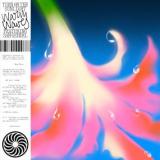
‘Warm Waves’ first appeared in 2020, ten years after Turn On The Sunlight’s debut self-titled album was first released in Japan. During that decade, Turn On The Sunlight’s Jesse Peterson and Mia Doi Todd welcomed their first child and co-founded a music venue in Los Angeles. When performance spaces were required to close at the start of the pandemic, Jesse’s focus shifted back towards home recording. Since ‘Warm Waves,’ five more Turn On The Sunlight albums have followed (including ‘Drives To The Beach,’ also on Tokonoma Records), all of which can be seen as an expansion of the musical direction set forth on this album.
The group heard on ‘Warm Waves’ consists of musicians who Mia and Jesse were regularly playing with at the time - Sam Gendel, Mitchell Brown, Andres Renteria & Gabe Noel - joined by Laraaji, Arji & Luis Pérez Ixoneztli, making their first recordings together.
The group’s blended signal was routed through Mitchell’s tape loops and modular synthesizer, which contributed to the unique communal sound of these recordings. Further extending this approach, Carlos Niño then reprocessed and reimagined ‘Passing Rain’ with Jamael Dean for his Elemental Beat Mix.
Originally released one week into the official lockdown period, some listeners found the warm, collective sound well-suited for the time of introspection and shifting priorities that followed. Now, in 2026, ‘Warm Waves’ returns on vinyl to once again encourage peaceful contemplation and open-hearted togetherness, in echo of the spirit of its creation.
Credits
Sam Gendel: Saxophone & Electronics on A1, A2, A3, B1, B2, B3
Laraaji: Voice & Zither on A3
Luis Pérez Ixoneztli: Bird Sounds on A1, Aerophones & Water Drums on B2
Mia Doi Todd: Voice on A1, A2, B2, B3; Piano on A3
Jesse Peterson: Guitar, Bass, Organ & Bird Sounds on A1; Organ on A2; Guitar & Bass on A3; Wooden Whistles, Guitar, Ukulele & Piano on B1; Ice Breaking on B3
Andres Renteria: Percussion on A1, A2, B1, B2, B3; Marimba & Percussion on A3
Mitchell Brown: Synthesizers & Magnetic Tape on A1, A2, A3, B2, B4
Gabe Noel: Bass on A2, A3, B1
Arji: Bells & Shells on A3
Carlos Niño: Production / Remix on B4
Jamael Dean: Additional Keyboards on B4
Produced, mixed & recorded by Jesse Peterson
Except B4, produced by Carlos Niño
‘Warm Waves’ first appeared in 2020, ten years after Turn On The Sunlight’s debut self-titled album was first released in Japan. During that decade, Turn On The Sunlight’s Jesse Peterson and Mia Doi Todd welcomed their first child and co-founded a music venue in Los Angeles. When performance spaces were required to close at the start of the pandemic, Jesse’s focus shifted back towards home recording. Since ‘Warm Waves,’ five more Turn On The Sunlight albums have followed (including ‘Drives To The Beach,’ also on Tokonoma Records), all of which can be seen as an expansion of the musical direction set forth on this album.
The group heard on ‘Warm Waves’ consists of musicians who Mia and Jesse were regularly playing with at the time - Sam Gendel, Mitchell Brown, Andres Renteria & Gabe Noel - joined by Laraaji, Arji & Luis Pérez Ixoneztli, making their first recordings together.
The group’s blended signal was routed through Mitchell’s tape loops and modular synthesizer, which contributed to the unique communal sound of these recordings. Further extending this approach, Carlos Niño then reprocessed and reimagined ‘Passing Rain’ with Jamael Dean for his Elemental Beat Mix.
Originally released one week into the official lockdown period, some listeners found the warm, collective sound well-suited for the time of introspection and shifting priorities that followed. Now, in 2026, ‘Warm Waves’ returns on vinyl to once again encourage peaceful contemplation and open-hearted togetherness, in echo of the spirit of its creation.
Credits
Sam Gendel: Saxophone & Electronics on A1, A2, A3, B1, B2, B3
Laraaji: Voice & Zither on A3
Luis Pérez Ixoneztli: Bird Sounds on A1, Aerophones & Water Drums on B2
Mia Doi Todd: Voice on A1, A2, B2, B3; Piano on A3
Jesse Peterson: Guitar, Bass, Organ & Bird Sounds on A1; Organ on A2; Guitar & Bass on A3; Wooden Whistles, Guitar, Ukulele & Piano on B1; Ice Breaking on B3
Andres Renteria: Percussion on A1, A2, B1, B2, B3; Marimba & Percussion on A3
Mitchell Brown: Synthesizers & Magnetic Tape on A1, A2, A3, B2, B4
Gabe Noel: Bass on A2, A3, B1
Arji: Bells & Shells on A3
Carlos Niño: Production / Remix on B4
Jamael Dean: Additional Keyboards on B4
Produced, mixed & recorded by Jesse Peterson
Except B4, produced by Carlos Niño
- A1: Jon Hopkins - Embodiment Breathing (With Fearne Cotton)
- B1: Cherub Sanson, Tim Wheater And Rommek - Bliss Code 000
- B2: Hannah Holland - Ambient Chronolight 1
- B3: Djrum - Come Find Me
- C1: Alessandro Cortini - Iv
- C2: Wata Igarashi - Mineral
- C3: Silent Shadow - Red World
- D1: Cherub Sanson & Tim Wheater - Stillpoint
- D2: Manami - Sown
- D3: Jennifer Loveless - If You Let It
- D4: Ruthlss - Dark Angel
- D5: Hannah Holland - A Door To Who Knows
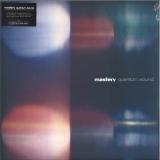
Mastery, London’s pioneering sound studio, has spent its first two years creating live experiences and installations exploring sound as a gateway to altered states. Now, with co-founders LWE, Mastery enters recorded music with Quantum Sound, a first-of-its-kind project combining sound meditation, breathwork, neuroscience and ambient electronic composition. Announced in December in collaboration with Houndstooth, the album builds on Mastery’s ongoing exploration of sound as both meditation and live electronic music, first introduced through immersive performances by Cherub Sanson, Tim Wheater and Daniel Avery.
Released on 12th February, Quantum Sound positions sound as a psychedelic catalyst, designed for eyes-closed listening. The multi-artist album spans ambient and transcendental spaces, featuring Jon Hopkins, Hannah Holland, Wata Igarashi, Manami, Jennifer Loveless, Silent Shadow and Alessandro Cortini. It also includes a continuous 60-minute mix by Hannah Holland, alongside a 15-minute sound meditation by Cherub Sanson and Tim Wheater with electronic composer Rommek. Following Djrum’s Come Find Me, Ruthlss'’ Dark Angel is out today. Ruthlss is a live electronic artist, composer and producer building a singular musical universe where club culture, classical virtuosity and emotional
storytelling collide. At the centre of the project is a fully authored live show - written, produced and performed entirely by Ruth - that treats electronic music with the emotional and structural depth of film scores and symphonic works, while retaining the physical impact and communal release of the dancefloor.
With Motions, Black Flower presents a unique EP, a compact collection of musical organisms that simply insisted on coming into the world. During the creation of their latest LP Kinetic, an abundance of ideas emerged, far more than could fit on the album. Among these half-formed sketches were a few striking pieces with such a strong character that they refused to be left behind, and some even grew into band favourites.
Diagonal Walk, for instance, has long opened the Kinetic live set while on tour in Europe, despite not appearing on the record itself. The band loved playing it so much that they decided to bring it to its full potential: mixing it, mastering it, and ultimately giving it a physical release. The result is a track where energy swells and breaks in waves, offering groove, colour and deft counterpoint.
That momentum also elevated Out of One, Many, a meditation on polyrhythm and shimmering harmony, as well as Trip to the Store. Both pieces were further developed and now complete this new collection of tracks. The time between full studio albums has proved creatively rich for Black Flower. Motions stands as a vibrant statement of kinetic energy, and the band is thrilled to finally share it with the world.
For over two decades, FLOX has been shaping a unique musical
identity - a vibrant blend of roots reggae, dub, electro, and
nu-soul. This French-British artist h a s become a cornerstone of
the alternative scene, known for his genre-bending productions
and powerful live performances. With seven studio albums and
countless shows a c r o s s Europe, FLOX h a s carved out a distinc-
tive path, merging analog warmth with digital precision.
crédits
If you like cold-wave music and you’re nostalgic of the 80s, “Lines & Parallels” by French Swiss trio Factice Factory clearly reveals multiple parallels with this golden decade of dark music. A delicious propulsive bass, cold synths and lots of atmosphere. A dark and at times even claustrophobic atmosphere.
On the release, two musical sides can be identified: two lines or parallels. An electronic and more hypnotic side with the Neue Deutsche Welle-like “Leuchtturm”, the minimal film noir tribute “Audran”, the eighties sounding “Sway” or the harsh industrial tainted “Extinguisher”. The other line is to be heard in tracks such as the desperate and goosebumping “Defeat”, the oriental sounding “Hatch End” or the melancholic end ballad “The Weeping Willow” These two parallel lines finally merge into one single and united sound pattern, a delight that will surely find its place in the ears of many dark music addicts.
- A1: Another Night (It's Just) Ft. Theo Croker, Daru Jones & Oli Rockberger
- A2: Another Night (It's Just) Coda Ft. Theo Croker, Daru Jones & Oli Rockberger
- A3: I Can Be Happy (I Can Be Blue)Ft. Marvin Sewell
- A4: My Part Of Town (For Mama) Ft. Daru Jones
- A5: It's Okay (I'm Not Alone) Ft. Marvin Sewell
- B1: Silence (Sirens) Prelude Ft. Daru Jones
- B2: Silence (Sirens) Ft. Daru Jones
- B3: Broken (For Alberte)
- B4: Nowhere To Hide (Inside)
- B5: Better (It Is What It Is)
You may be excused if, seeing the dazzling China Moses on stage, online, or on-air, you thought that she, fabulous and French, an orchestra trailing her, with one of those light-up-a-room smiles you only hear about in myth, was someone who might only be singing cheery songs about her glamorous musical life. Not so. It’s complicated… vibrates with the joy, wistfulness, ambivalence, and wisdom of a woman who’s been on many journeys, down many paths, and landed here, in your ears, on purpose, with something to say.
Through these songs, China captures the many hues of grown Black womandom: her choices, her regrets; her place in society as both citizen and observer. Her voice is girlish and playful; gritty and growly; truly prismatic, as Anthony Peyton Young’s cover art suggests, to reflect the many lives she’s lived. And she does all this with vulnerability, a quality that transcends and supersedes genre, taste, or ability. Of all the tools a singer-songwriter could possess, it might be the most important one. Though there is bravado here (“I can be happy”, the song and the video, are the best example), this is an album that taps into the full, resplendent spectrum of human experience, its many facets hewn into these 10 gems before you.
It’s complicated… and it’s complex. How could it be anything else?
— Kyla Marshell
Ltd Edition 10"
Budapest based concept label Blue Sun welcomes formerly independent local afrobeat-jazz ensemble to its catalogue with a nuanced 4 tracker EP. The release not only marks the beginning of the collaboration, but a definite new musical direction in the band’s life.
Written in a one week jam session retreat in the Hungarian countryside, and recorded at one of the highest peaks of Hungary after a year of global touring, The Garden becomes an amalgamation of the band's personal and artistic experiences. The material conveys a more jazzier approach, with complex harmonies, and an almost cinematic, dreamlike atmosphere, somewhat distancing from (but not completely forgetting) the previously emphasized, dance-oriented Afro- and Latino roots. Song for Ramon serves as the EP’s emotional climax inspired by the passing of a close friend and local underground chef pioneer.
Formed in 2019 in Budapest, Hakumba is a staple of the Hungarian festival circuit, with a growing international presence (SXSW London, SHIP, PIN Music Showcase). They’ve recently finished a tour in Australia this January.
The groove-driven ensemble blends afrobeat, jazz, and various strands of world music into a sound that is both rhythmically powerful and harmonically adventurous. With an eleven-piece lineup featuring an expansive horn section, multiple vocalists, percussion, and keys, the band moves effortlessly between dancefloor energy and more intricate, jazz-influenced musical ideas.
Like the band’s previous album, the EP was again recorded, mixed, and mastered by András Weil, the producer behind The Qualitons, the only hungarian band ever performed Live at KEXP. This continuity preserves Hakumba’s recognizable sonic identity while giving space for new colors and more complex musical ideas to emerge.
Written & performed by:
Soma Számel – drums
Endre Szép – bass
Imre Hegedűs – guitar
Zalán Bendegúz Huff – guitar, vocals
Csongor Mari – keys
Noel Nagy – percussion, vocals
Dorka Foster – flute, vocals
Kristóf Szabó – alto sax
Alpár Sikó – tenor sax
Gáspár Simon – trumpet
András Téglásy – baritone sax
Produced, recorded, mixed and mastered by Andras Weil
Artwork by Eszter Lukács
Graphic design by Péter Tóth
Manufactured by AD Records
Distributed by Rush Hour
Recorded at Galyatető, Hungary
Released under the Blue Sun
David August's most expansive, ambitious album to date, the Italian – German composer and producer lets his vast sonic universe collapse, rediscovering in its wake an instrument that's been a constant presence in his life. 'Hymns' is a deeply personal set of candid piano – led reflections that tell a simpler but far more distinctive story; rather than concentrate on the life cycle of humanity and civilization, August narrows his field of vision, tracing his own background and re - asserting his relationship with a musical language he'd tried hard to unlearn. An intimate, instinctual album that emerged from isolation and contemplation, 'Hymns' is also a surprisingly hopeful suite of soft hued, evocative improvisations that well up from the depths of the soul. In August's own words, "it should recall light, not darkness."
Let Me In is a sweet drop of musical sunshine, a song of love and yearning distilled in the southern hemisphere and elevated by the dulcet tones of Dub Princess.
The bones were first created by Isaac Chambers in 2015 as a rough sketch, and over the years more elements were added, including a woodwind section played by Jarrod Bremerton and a guitar solo by Prosad Freeman. It stayed as an instrumental until 2020 when Dub Princess added her stunning vocals to lock the tune into its final form.
“I love the long journey this song took to reach the finish line. Some tunes are created quickly and others need to marinate for years before all the ingredients come together” (Isaac Chambers)
On the flip, International Observer is on stellar form, weaving an accordion melody in to the original to create a taut, bass-forward dub mix.
Longtime Observer observers will recognise many of his distinctive production trademarks, originally developed in the eighties and honed further still since his debut release on Different Drummer in the early noughties set audiophiles ears aflame.
"What a pleasure it was to take a deep dive into dub with Isaac and Dub Princess” (Tom Bailey)
- A1: Zar 12
- A2: Unchanging Game
- A3: Wana Leih
- A4: H. Z. K. (Haga Zay Kidda)
- B1: Dawsha
- B2: Bahlam Biyoum (Dream Of A Day)
- B3: Somoud
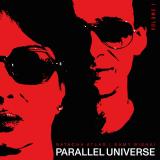
Parallel Universe – Volume 1 marks the latest collaboration between Natacha Atlas and Samy Bishai — a bold reimagining of the musical crossroads between East and West. While its textures echo retro-futurism and electronic lineage, the spirit of the record is unmistakably present-tense — rooted in a boldly contemporary vision of Arabic pop, refracted through experimental production.
Between electronic shadows and cinematic textures, this new album from QUENUM draws its influences from the likes of Massive Attack, Archive, and Burial. Started and produced in London, it reflects a change of time — both in the climate and within.
This project represents a personal and artistic turning point for QUENUM. He wanted to experiment with new ideas, not necessarily music for the club. The album was created in close collaboration with his son Zac, a talented musician who contributed both as a singer and instrumentalist on several tracks. They shared wonderful moments creating this album together.
He also worked hand in hand with his long-time friend Christophe Calpini, who played a key role in mixing and in developing the textures and atmospheres that shape the album’s sound. The result is an intimate, personal, and timeless journey, deeply rooted in the now.
Quenum elaborates: “The idea for my album was born during Covid in London, when concerts, museums, and social activities suddenly stopped. To cope, I started running daily and spending hours in the studio creating music. In our garden cabin I worked alongside my son Zac who was practicing piano, preparing for his entry into Trinity Laban Conservatoire. He listened to my tracks, and eventually contributed vocals with his ex-partner on two songs, ‘Blue Sky’ and ‘Never Like Before’. The album’s dark atmosphere reflects that period. Once it was complete, I asked my longtime friend Christophe Calpini to handle arrangements and mixing.”
A true pioneer of electronic music, QUENUM has been shaping the global techno and house scene for over two decades. One of his most celebrated tracks, “Orange Mistake”, co-produced with Luciano in 2001, became a turning point in his career. The success of this collaboration led them to launch the legendary Cadenza label, which rapidly grew into one of the most recognisable and respected imprints in the scene, known for its vital releases and unforgettable parties worldwide.
Over the years, QUENUM has continued to explore new creative paths and refine his artistic identity, constantly reinventing his sound while maintaining his unique musical signature. His insatiable curiosity and openness to new influences have kept him consistently in demand, from intimate underground venues to the world’s most respected festivals and clubs.
- A1: Sixfold Radianz (G-Man Remix) - 7 18 (From '8 1/2 Bit' )
- A2: Frontera Extraterrestre (Hardfloor Remix) - 5 55 (From 'The Psychonautic ..)
- B1: Hypothermia (34,8) (Silicon Scally Remix) - 6 58 (From 'Wetware Unveiled')
- B2: Mäckchen (Annie Hall Remix) 5 30 (From 'Wetware Unveiled')
- C1: Pseudoliparis Swirei (Electro Nation Remix) - 5 23 (From 'The Electrifying
- C2: Reklonstrusion (Martin Matiske Remix) - 5 00 (From 'Sermans Of The ..)
- D1: Verquerer Weise (Lloyd Stellar Remix) - 4 47 (From 'Sermans Of The Electr
- D2: Sycorax (Dj Di'jital Remix) - 5 17 (From 'Wetware Unveiled')
pdqb, the producer whose name sounds like a coded message, has surpassed the need for introduction. It emerged from nowhere, becoming omnipresent almost instantly, leaving every electronic music producer eager - if not obsessed - to work with it. Its original tracks are raw and elegant with warm synth lines, pulsing rhythms, and melodies that feel like echoes from forgotten futures. They always carry a strange magnetic pull.
Presented here are eight stunning remixes of its already-released tracks. Each one its own universe, each one remarkable in its own way, each one crafted by an expert in their field. The eight pieces twist, stretch, break apart, and rebuild the originals. They mutate into technoid creatures, melodies dissolve into vapor, and rhythms reorganize themselves into something alien and alive, yet each still holds a faint spark of pdqb's DNA, buried beneath layers of transformation.
Listeners will understand: this isn't just a remix album. It is an evolution - eight reinterpretations of the same musical core, each pushing pdqb's world into a new dimension.
- A1: C’est Loin
- A2: Là Où Tu Veux (Deixa A Gira Girá)
- A3: Pas Tant De D'chichi Ponpon
- A4: Assez
- A5: Le Soleil En Haut
- A6: Tout L’or
- B1: Désillusion
- B2: Attends-Moi
- B3: O Sapo
- B4: Horssaison
- B5: Presque Rien
- B6: Vou Festejar
For his sixth solo album, Ezéchiel Pailhès returns with a new collection of songs infused by a sunny wandering spirit.
Within each of the twelve songs on SOL is a thread of melancholic happiness that has permeated much of Pailhès’ music and songwriting. He addresses love, the passing of time, hope, lost illusions, fleeting moments of grace, the temptation of forgetting, a need to escape, and desire. All this is
insulated by understated orchestrations that blend acoustic and electronic instrumentation with deft confidence.
The Portuguese and Brazilian concept of saudade—a form of melancholic longing and nostalgia— pervades, thanks in part to Pailhès decision to record the album in Rio de Janiero and to reinterpret some of the finest works of Música Popular Brasileira (MPB). In particular, he revisits a handful of
lesser known classics from the mid-century samba and bossa nova era—originally written or performed by talents including Vinícius de Moraes, João Gilberto, Tom Zé, Dorival Caymmi, João Donato, Os Tincoãs, and Ataulfo Alves.
The shift from Brazilian Portuguese to French and the decision to adapt rather than perform a straightforward cover versions, allows Pailhès to invent a form of prosody and euphony (the musicality and harmonious combination of words) that feels vibrant and unlike anything else in today’s French
chanson landscape.
“Some lyrics are simple translations from Portuguese, in what I’d call an expanded version. For others, I started from a single word or a single phrase and embroidered an entirely new text that carried me elsewhere,” explains Pailhès. “I allowed myself great interpretive freedom, while preserving the humanist dimension of the original songs. I’ve always been deeply moved by the way Brazilians transfigure reality through heightened emotion. I love this visceral and spontaneous country, which always seems to live through emotion. And above all, I love its music both popular and unifying,
bringing together all social classes. In that sense, it’s very political music, but even more so utopian, made by the people and for the people.”
On this new album, however, the French artist was keen to avoid cliché. Each song is therefore built around a carefully balanced interplay between Pailhès’ piano and synthesizers, alongside restrained arrangements of percussion, brass, bass, and cavaquinho (a small four-string plucked guitar). These parts were recorded in Rio de Janeiro with two musicians who regularly perform alongside the legendary Caetano Veloso—Kainã Do Jêje and Alberto Continentino—joined by Thomas Harres, Antônio Neves, Eduardo Neves, and Gabriel Loddo.
Since the 1960s, France and Brazil have shared a long-standing cultural and musical relationship. Some Brazilian artists, most famously Gilberto Gil, took refuge in France during the dictatorship years (1964–1985). But above all, French chanson quickly fell in love with the richness and ingenuity of
bossa nova and samba, translating and reinventing them in the language of Molière. Throughout the 1960s and 1970s, albums and hits by Henri Salvador, Georges Moustaki, Pierre Barouh, Pierre Vassiliu, and Claude Nougaro all drew from the MPB repertoire.
Fifty years later, with SOL, Ezéchiel Pailhès reinvents this rich Franco-Brazilian musical legacy, bringing to it a personality and modernity that stand confidently alongside those of his forbears.
- 1: When Hamlet Left Town 0:32
- 2: Radio Four 05:45
- 3 34: E 03:34
- 4: Solid Ground 0:25
- 5: Arc 04:37
- 6: Aelita 03:12
- 7: All Tomorrows Past Part Ii 04:26
- 8: Interlude 03:26
- 9: Henry & The Ghosts 03:22
- 1: Space Minor 03:22
- 2: Loop D 03:36
- 3: Tomorrows Past Part I 0:11
- 4: Modest Farewell 03:5
- 5: Nordlead 03:3
- 6: Momo 03:12
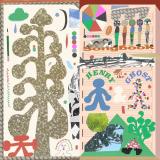
On his new album, Micha Acher rearranged compositions for bands such as Tied & Tickled Trio and Ms. John Soda from previous years.
Why are we interested in ghosts? What fascinates us about the eerie? According to cultural theorist Mark Fisher, the allure that the eerie possesses is not captured by the idea that we „enjoy what scares us“. It has, rather, to do with a fascination for the outside. For that which lies beyond standard perception, cognition or experience, as he writes in his book „The Weird and the Eerie“.
In fact, also none of the 15 pieces from Henry and the Ghost is really scary. On the contrary, they all feel strangely familiar. Like revenants or doppelgängers, which in fact they are. They have all been released before. But in a different form. In different line-ups. With different band projects such as Tied & Tickled Trio, The Notwist or the Alien Ensemble.
With the „Songbook“, Micha Acher's aim was, as he says, to find out how the familiar pieces sound in a chamber music instrumentation. Therefore he met with Theresa Loibl (bass clarinet, piano), Timm Kornelius (bassoon), Markus Rom (guitar, banjo, electronics) and Simon Popp (drums, percussion) in his living room for a musical séance in the summer of 2022. The séance lasted two days. Afterwards, Markus Rom (Oh No Noh), added some haunting electronical ideas.
The mood of most of the pieces is melancholic. There are surprising twists and siren-like melodies. Just as ghost stories should be. However, most of the songs sound very light-footed. With their feet in pop, folk, jazz and classical music. Pieces such as „Johanna“ with its wheezing harmonium and spooky piano, or the dreamy „Modest Farewell“ on the other hand have a cinematic flair. Immediately faces and scenes arise in the mind. But at the beginning, there is „Hamlet“. It starts with ghostly electronics and merges into a calm, almost classical guitar piece. Could it be that the ghost of Hamlet's father is hiding between the strings?
„34E“ begins with a banjo. Then the deep humming of Micha Achers sousaphone and the other brass instruments kick in. In the slow, solemn „Aelita“, the sousaphone starts a dialogue with a children's piano. With the banjo and the other wind instruments acting as mediators. The title of „All Tomorrow's Past“ brings Velvet Undergrounds „All Tomorrow's Parties“ to mind. Another ghost from the past. What connects the two pieces is free-floating percussion, which accompanies the sumptuous melodies.
„Arc“ takes us on an exhilarating voyage at sea, with the sousaphone providing powerful propulsion. Towards the end, things get quite turbulent. With the clarinet stirring up the water, before the sea calms down again. „Henry and the Ghost“ is characterised by a ghostly mood change between major and minor. In „Radio Four“ the banjo with its stoic chords keeps the lively brass section in check. „Solid Ground“ is imbued with melancholy. „Space Minor“ takes us into outer space, with the power of sousaphone and percussion.
„Tomorrows“ is filled with cautious optimism. And the concluding „Nordlead“ turns out to be a revenant of the instrumental „N.L.“ from The Notwist's legendary album „Shrink“ from 1998. In the new version, the piece sounds like a distant echo. One that also brings to mind how Micha Acher's music has evolved. Which new worlds he explored and opened up since the nineties. And yet Acher's signature is recognisable in every single note of this fascinating „Songbook“.
Seattle-based label Soft Spoken Secret (SSS) proudly debuts with "SOFT", setting the tone for a new chapter in dancefloor-driven electronic music.
Adam Collins delivers a stripped-down yet propulsive groove, radiating raw, hypnotic energy. On the remix, UK legend 100Hz reimagines the soundscape with his signature ethereal touch—blending intricate rhythms, fluid textures, and a dreamlike atmosphere.
With SSS001, Soft Spoken Secret asserts itself as a home for cutting-edge sound, timeless artistry, and deep musical storytelling.
- A1: Not The Country You Know
- A2: This Ain't That
- A3: Am I Wrong
- A4: Comin Right Back
- A5: Bad For You
- A6: Nasty Player
- B1: God Mode
- B2: Freddy Tiffany
- B3: Is You Cool
- B4: How You Wanna Play
- B5: No Fun
- B6: Ain't Going
- C1: Should I
- C2: Always Something
- C3: Who Am I
- C4: Psychology Of Revenge
- C5: Control What I Can
- C6: What's Really Real
- D1: Plant A Seed
- D2: Chasing
- D3: Massage Envy
- D4: Walk Away
- D5: Bad At Goodbyes
In the evolving landscape of modern Southern hip-hop, the pairing of Starlito and Bandplay stands out as a unique bridge between street-level authenticity and refined, calculated musicality. Their collaborative project, Not The Country You Know, functions less like a standard release and more as a manifesto—a masterclass in the chemistry between a seasoned, introspective lyricist and a producer who possesses an intuitive grasp of the region's pulse. It is an exploration of legacy and adaptation, capturing the tension between where they came from and where the culture is currently headed.
Bandplay, long recognized for sculpting the sonic identity of Memphis icons, brings his signature, trunk-rattling 808s to the project, yet he manages to pivot here. The production feels remarkably expansive, masterfully blending the raw, stripped-back aesthetics of classic Tennessee rap with forward-thinking textures that refuse to be confined to a single sub-genre. Complementing this, Starlito operates with his trademark mix of cynical observation and genuine vulnerability. He navigates these beats with the weary grace of an artist who has weathered the music industry's relentless cycles, treating every bar like a necessary piece of a larger, ongoing story.
The album’s title serves as a direct commentary on these shifting tides. Across the tracklist, the duo investigates the growing disparity between the romanticized South and the cold realities of the streets, alongside the inevitable evolution of the music business itself. There is no frantic chasing of streaming-era trends or algorithmic bait here; instead, the project remains a stubborn, confident assertion of artistic identity. By weaving together Starlito’s "voice-of-reason" flow and Bandplay’s evolving, genre-bending sound, Not The Country You Know challenges the listener to abandon their preconceived notions of the region, offering instead a complex, urgent vision of a South that is as haunting as it is vibrant.
- 01: L'école De La Nuit (:51)
- 02: La Règle Du Vieux (:56)
- 03: Hà Mar (Feat Alvaro Lancellotti) (:07)
- 04: Rêve 36 (01:58)
- 05: White Light (Feat Monica Tormell) (03:58)
- 06: R Ville (04:21)
- 07: A Thousand Frames (Feat Monica Tormell) (03:48)
- 08: Beauté Tarée (02:41)
- 09: A Presença (Feat Julio Pimentel) (01:58)
- 10: Deep Side Center (03:54)
- 11: Monsieur Zinzin (02:58)
- 12: Souffle Sauvage (01:38)
“L’École de la nuit” marks Versatile Records’ 30th anniversary with a musical découpage by label founder Gilb’R. The album’s 12 songs and numerous collaborations form an adroit exploration of life and music, all threaded together by lifelong “partner in crime” I:Cube’s signature mixdowns.
“Hà mar” represents the peak of the album’s organic spectrum—an instantly captivating melodic and percussive Brazilian song featuring Alvaro Lancellotti on guitar and vocals—while “White Light” serves as its electronic counterpart, with a classic pop feel, featuring Swedish singer Monica Tormell
Musically, “L’École de la nuit” moves across many different landscapes and languages, intersecting rock, shoegaze, ambient, electronica, and, of course, jazz. Gilb’R collaborates with a rich arsenal of guest musicians: saxophonist Quentin Rollet; guitarist and producer Maxime Delpierre; French artist Judah Warsky, with whom Gilb’R previously released an album; Jonny Nash, producer and guitarist; as well as Ben Shemie. Not least, father and son Julio and Julinho Pimentel contribute their distinctive percussion, alongside François Creamer on bass clarinet.
“L’École de la nuit” is the 50th album release on Versatile Records. It was initiated in Amsterdam, then entirely reimagined and rebuilt in Paris. It stands as a manifesto for the album format and a tribute to the listener.
- A1: Super Boiro Band - So I Si Sa
- A2: Bembeya Jazz National - Armée Guinéenne
- A3: Kaloum Star - Maliba
- A4: Balla Et Ses Balladins - Nyo
- B1: Quintette Guinéenne - Douga
- B2: Le Simandou De Beyla - Festival
- B3: Horoya Band - Zoumana
- C1: Kaloum Star - Gbassikolo
- C2: Sombory Jazz De Fria - Nana
- C3: Syli Authentic - Fabara
- D1: Balla Et Ses Balladins - Paulette
- D2: 22 Band Kankan - Deny
On October 2 1958, after over 60 years of colonial rule, Guineans voted overwhelmingly for their independence, and Guinea was declared a Republic with Sékou Touré as President. Guinea was the first of West Africa’s Francophone colonies to gain independence. To free Guinea from its colonial legacy, president Touré sought to restore dignity to his nation and give cause for Guineans to take pride in their culture, history and newfound freedom. To achieve this, he instructed his government to implement new cultural policies that were intended to revitalise and celebrate indigenous culture. The focus of these new policies was on music.
In 1961, President Touré launched authenticité, the name of his new cultural policy for Guinea. One of its first acts was to assemble the best Guinean musicians into a new state-sponsored orchestras that were tasked with presenting traditional Guinean music in a new and modern style. All musicians in Guinea’s orchestras were officially designated as members of the public service. During the years of Sékou Touré’s presidency (1958 – 1984), the government’s cultural policy of authenticité was applied strictly to the creative arts. Guinea’s sole political party, the Parti Démocratique de Guinée exercised complete authority over artistic production. The scale of the Guinean government’s commitment and efforts to invigorate its indigenous musical cultures was unmatched in Africa, and it presented a clear contrast to the minimal endeavours undertaken by Guinea’s former colonial rulers.
From 1967 to 1983, Guinea’s government presented selections of songs from the Voix de la Révolution catalogue on its own recording label, Syliphone. These recordings were described as ‘the fruit of the revolution’. Syliphone was revolutionary in many aspects: it was the first recording label to feature traditional African musical instruments such as the kora and balafon within an orchestre setting; it was the first to present the traditional songs of the griots within an orchestre setting; and it was the first government-sponsored recording label of post-colonial Africa. Syliphone represented authenticité in action, and over 750 songs were released by the recording label on 12-inch and 7-inch vinyl discs. All are highly sought after by collectors worldwide.
This is the second of a two-volume release which presents a selection of the best songs from Guinea's Syliphone recording label. This volume focuses on recordings from the 1970s, when Guinea’s authenticité policy had transformed the nation's music through a network of over 30 orchestras, each representing their local region, and each presenting Guinean musical traditions alongside the influences of Cuban music, jazz and funk.