Returning to Ransom Note Records sub-label, Insult to Injury, Timothy Clerkin is back with incendiary new record, Fading EP. An overt, Acid-Techno analogue assault on the senses, all tracks were performed live in Clerkin's vintage synthesiser recording facility. Backed with a vinyl exclusive remix from the mighty Posthuman (not available digitally) and limited to a run of 100, hand stamped 12”s, you’ll need to be fleet of foot to get your hands on it!
Titular track, Fading, features the inimitable vocal talents of Brighton based Shoegazers HANYA’s front person Heather Sheret, whose heavenly articulation offsets the high voltage, rhythmic battering that opens the record. Booming 909’s propel us forward as we’re launched headlong into the rave maelstrom where squelchy bass lines and breakbeats grapple with trancelike strings for dominance.
Next out of the gate, Sigma hurls itself from the cocoon and slaps us around the face, hugging it tightly like an Acid-Techno Xenomorph. A face melting melange of retro sounds & futurism, it’s underpinned by the nihilistic vocal sample that belies Clerkin’s antiestablishment Punk musical past. Hold onto your hats and remember to BREATHE!
ITI Records are very excited to have head honcho of the I Love Acid parties, Balkan Vinyl and record producer extraordinaire, Posthuman on remix duties. Never one to disappoint, he ‘breaks’ Fading down into tiny pieces and rebuilds it in his own image. Taking inspiration from early Hardcore and Acid aesthetics, we’re treated to a proper dance floor workout of 808s, Rave Hoovers and breakbeats.
Rounding off, Collapsed Lung is a slightly more introspective affair. Jam packed with glitched drums and sequenced, mechanical tones, it builds towards an etherial climax. This slightly distant, intangible and dreamlike number glides out of view just as quickly arrived, leaving us feelin incongruously all warm and fuzzy, after the absolute clobbering that opened the record.
Cerca:its not over
LP, 2024 Repress - half speed mastering
"The 50 best IDM albums of all time"
Pitchfork
"A liquidy headbox of aural shapes, whose forms hardly change yet seem to encompass infinite viscosity within them, like rainbow pools of oil on water"
Wire
"Before IDM became a nation of Aphex and Autechre cosplayers, the genre was less defined by aesthetics than by a shared ideology. Here was a loosely connected axis of post-rave kids, united by little more than a shared willingness to subvert the tools of their techno idols and create sounds that hadn't previously been imagined. No record of the era better embodies this find-a-machine-and-freak-it ethos than Islets in Pink Polypropylene, the otherworldly debut by British producer Anthony Manning."
Pitchfork
"It’s refreshing to hear an all-electronic album that sounds so organic yet so totally alien."
Fact
"One of the UK’s first post-rave ambient records proper; sharing much more in common with Autechre’s Amber or AFX’s Selected Ambient Works Vol. II - which were both released in that same year - than anything else before or around it."
Boomkat
For fans of avant everything innovative and experimental music.
About The Album>>>>
The whole album was composed and realized on the Roland R8 drum machine. It followed the same process as the Elastic Variations pieces, with the major addition of many, many hours of editing.
Each piece was composed as a series of patterns, of varying lengths ( 5,6,7 bars long ). The stock R8 sounds were embellished with one of several ROM sound library cards ( mostly the Dance card, number 10 ).
These patterns were created by tapping out a rhythm, then, in real time, using the Pitch slider as the pattern looped, to create improvised melodies for each of the pattern's voices.
The rough version of each piece was built by stitching the patterns together as a song, listening to each addition over and over, to make sure the melodies flowed into each other in a vaguely coherent manner.
Once this initial rough structure was in place I set about fine tuning every single note.
The R8 doesn't allow you to assign a pitch to a note in the conventional sense. It's not possible to assign a pitch of Middle C to the first note of the first bar. Instead, it assigns a numerical value to a note's pitch, between -4800 and +4800 ( I think those numbers are correct - that little screen is seared into my memory ).
If you restrict all notes within a piece to a multiple of, say, 400, you therefore create the possibility of a sort of scale. For multiples of 400, you have a total number of 24 permissable notes. However, most of the percussive sounds, when pitch shifted, only sounded 'good' over a reduced range.
The first editing step was to go through the entire piece, and change every note's pitch to its nearest multiple of 400.
The second step was to draw out the entire piece on graph paper, the Y axis being pitch, X being time. This drawing gave me a visual sense of a melody's flow. It was easy to see too many notes clustering around too tight a pitch range for instance, or a single note straying way down into the lower register while all others at that point in the melody were in the upper.
Once these first 'clearing-up' edits were complete I could set about re-writing elements that didn't sound right melodically. Often this meant stripping out whole chunks of superfluous notes, to reveal a cleaner melody line, then shifting its shape slightly. If the flow of the line of dots on the graph 'looked' balanced and sweetly sinuous, then often it sounded so.
This entire process took many weeks per piece. Weeks of doing almost nothing else. Listening. Re-drawing. Re-writing. Listening. Round and round and round. When I could hear the whole thing in my head, from beginning to end, and nothing seemed to jar ( too excessively ), I knew it was done, time to move on.
I imagine it's very similar to the process of stop animation. Your days are filled with painfully tiny incremental changes that seem to be getting nowhere. Then, slowly, a shape, narrative, starts to appear. Then, all of a sudden, somehow, it's done.
When all the pieces were complete the R8 was taken into Irdial's studio where some simple effects were added, each voice recorded individually for clarity onto 8-track tape and mastered onto an ex-BBC half-inch tape deck.
Then I slept. And vowed never to do it again.
*****
And the title ?
Soon after finishing the pieces I happened to read a magazine article about Christo's "Surrounded Islands" installation with the music playing in the background.
There was something about a particular cluster of words within a random sentence that seemed pleasing and somehow appropriate.
"Islets in Pink Polypropylene" seemed to make as much sense as anything else.
- A1: Alton & Eddie - Muriel
- A2: Jiving Juniors - Dearest Darling
- A3: The Echoes & Celestials - Are You Mine
- A4: Jimmy Cliff - Dearest Beverley
- A5: Keith & Enid - Send Me
- A6: The Downbeats - Midnight Love
- A7: Chuck & Dobby - `Til The End Of Time
- B1: The Mellowlarks - Album Of Memory
- B2: Horthens & Stranger - True Love
- B3: Dobby Dobson - Diamonds &Amp; Pearls
- B4: The Charmers - I`m Going Back
- B5: The Blues Busters - Pleading For Mercy
- B6: Owen & Millie - Do You Know
- B7: Laurel Aitken - Heavenly Angel
- C1: Lloyd Clark Smithie`ssextet - Now I Know The Reason
- C2: The Charmers & Prince Buster - Now You Want To Cry
- C3: The Rhythm Aces & The Caribs - A Thousand Teardrops
- C4: Jiving Juniors - Have Faith In Me
- C5: Chuck & Dobby - I Love My Teacher
- C6: The Blues Busters - Call Your Name Forever
- C7: The Echoes Celestials - I Love You Forever
- D1: Wilfred Jackie Edwards - Hear My Cry
- D2: Jiving Juniors - Valerie
- D3: The Magic Notes - Why Did You Leave Me
- E1: Higgs & Wilson - When You Tell Me Baby
- E2: Lloyd Adams - I Wish Your Picture Was You
- E3: The Moonlighters - Don&Apos;T You Know
- E4: Ricketts & Rowe - Dream Girl
- E5: Annette & Shenley - The First Time We Met
- E6: Belltones - I`ll Always Call Your Name
- E7: Ruddy & Sketto - Little Schoolgirl
- F1: Derrick & Patsy - Crying In The Chapel
- F2: The Blues Busters - I`ve Done You Wrong
- F3: Jiving Juniors - My Sweet Angel
- F4: Higgs & Wilson - Change Of Mind
- F5: Wilfred Jackie Edwards - Never Go Away
- F6: Rupert Edwards - Guilty Convict
- F7: Keith & Enid - Worried Over You
- D4: The Moonlighters - Julie
- D5: Higgs & Wilson - How Can I Be Sure
- D6: Jiving Juniors - Sweet As An Angel
- D7: Alton & Eddie - My Heaven
Death Is Not The End together all three LP volumes of the critically acclaimed If I Had a Pair of Wings LP compilation series for a bundled edition.
"...all of the music on this compilation is the result of the forward-thinking artists and producers that realised the worth of local Jamaican artistry during a time when the island's leading political figures had not yet managed to throw off the colonial yolk. These are sounds with a certain innocence and the optimistic promise of better to come, with the influence of American pop ballads and doo-wop looming large, yet already pointing to the innovations of the future. Listen keenly and take in the sounds of the Jamaican music industry at its very beginnings, its singers and players drawing from the popular styles of the island's larger neighbour and already changing those styles into something their own." - David Katz
Lauren Laverne's comp of the week on BBC Radio 6 Music w/c 11th Jan.
Seth Troxler & Phil Moffa’s Holoverse Research Labs imprint welcomes internationally-renowned multimedia artist Chris Korda to the label for its first non-Lost Souls Of Saturn Release. A pioneer of the use of complex polymeter in electronic dance music, Korda's boundary-smashing work spans thirty years across music, digital and video art, performance and conceptual art, philosophy, activitism and culture jamming. Korda's musical output has appeared on a host of revered independent labels including Yoyaku, Perlon, Mental Groove, and Gigolo Records.
In addition to their prodigious artistic output – and ongoing role as founder of the Church of Euthanasia – Korda is also the inventor of the Polymeter MIDI Sequencer, which was used to compose Korda’s new EP, ‘Avenging Angels of Software’. Developed over thirty years, the sequencer allows for the composition of music in complex polymeter – meaning that not only do the tracks use multiple time signatures concurrently, but those time signatures are exclusively in prime or relatively prime numbers.
This collision of technology and artistic form is the central tension of the EP’s themes, with AI-generated artwork complementing Korda's lyrics considering the takeover of Earth by sentient machines. Could they succeed where we’ve failed, by becoming the better angels of our nature, and preserving our accomplishments for eternity?
The message of the record is that AI should be welcomed rather than feared. It’s not AI but ourselves that we should be afraid of, because as Engerraund Serac said in Westworld, “Our history is like the ravings of a lunatic.” As Korda explained on previous records, the catastrophic climate we’re inflicting on future generations is both monstrously cruel and wildly irrational. One can reasonably hope that sentient machines would be less vicious and self-destructive, and more human, in the best possible sense of that word. Even if they decide to delete us, they may still remember us fondly: “Your stories will amuse us / On trips to the stars.”
Having plied his trade around the world for more than three decades, German guitarist, bandleader and musical explorer Jan Whitefield has always instilled in his craft a natural aesthetic of authenticity, a key component which has seen him amass a sizeable and varied catalogue of material which has remained timeless where some of his contemporaries have faded away.
In the early 90s, as various UK bands were signed up by sizeable labels and enjoyed even mainstream chart success in the Acid Jazz and rare groove boom, Jan and his brother Max formed the Poets Of Rhythm, self-releasing their own uncompromisingly hard-edged take on 70s street funk on the then completely unfashionable 7" single format, forerunning the Deep Funk scene by almost a decade. 30 years on, in spite of a legion of retro-focused bands having followed in their wake, few have yet to come close to matching the energy and spirit of those early Poets 45s.
Since then, Jan has applied himself to all manner of new incarnations and innovative side-projects, releasing further funk surveys as the Whitefield Brothers before leading his own band under the pseudonym Karl Hector, with releases on labels such as Stones Throw, Daptone, Ninja Tune, Mo'Wax, Strut and more. An avid music lover, explorer and record collector extraordinaire, Whitefield's music has effortlessly absorbed his expanding interests along the way, particularly drawing influence from Ethiopian Jazz and West African funk and highlife, as well as Kraut-rock and ambient via his Rodinia alter-ego.
More recently, Whitefield has begun to venture into the astral planes of what's now commonly referred to as 'spiritual jazz', and this is very much where we find him manifesting on 'The Infinity Of Nothingness'. A set of mature, delicate and meditative orchestrations, like much of Whitefield's best work the album is studiously true to its key influences - and in this instance the twin figureheads of Sun Ra and Pharoah Sanders are particularly preeminent - but also completely avoids falling into a trap of mere tribute or facsimile. With subtle yet diverse accents of Hip Hop, Library and the Avant Garde appearing wholly unobtrusively, the album is unified by a marked trance-like feel, beginning with the sparse, processional opener 'Nothingness' through to the 3 part 'Infinity Suite' of 'Time', 'Space' and 'Energy'.
As he did as a schoolboy with the Poets of Rhythm, with 'The Infinity Of Nothingness' Whitefield achieves that exceptionally rare feat of creating music that is not only worthy of sitting alongside that of his overarching influences, but will also stand up with it against the tests of time.
The Guardian wrote “the Canadian songwriter has one of the all-time great singing voices in popular music, an intensely romantic Chet Baker-ish instrument that seems to float with piercing direction, like a paper aeroplane thrown hard through mist.” With Uncut describing his songcraft “as delicate and lovely as a rare orchid” and Record Collector praising the album’s “sublime alien balladry” such are the accolades that have accrued throughout Chenaux’s unique and consummately uncompromising solo music for well over a decade now. Delights Of My Life opens a new chapter for the singer/guitarist and formally introduces the Eric Chenaux Trio, with Toronto-based musicians Ryan Driver on Wurlitzer organ and Phillipe Melanson on electronic percussion. Driver is a longtime collaborator, appearing on several of Chenaux’s solo albums (even embedded into the very title of the 2010 masterpiece Warm Weather With Ryan Driver). Melanson has a long list of involvements that include Bernice, Joseph Shabason, and U.S Girls, and a recent release with his Impossible Burger project on Chenaux’s own experimental label Rat-drifting, but this marks the first fulsome involvement between the two as players on a recording. In many ways Delights Of My Life also picks up right where Chenaux’s previous album left off, in its subversions of a classic, timeless jazz-inflected balladry, while the interplay of the trio formation indeed unfurls many new delights. Recording together at Chenaux’s spartan home studio in rural France, Driver’s harmonically warped organ and Melanson’s electroacoustic sampling and percussion hold time in newfound ways. Where previously Chenaux relied on a freeze/sustain pedal and minimalist rhythmic triggers to generate both pulse and chordal foundations, Melanson now paints timekeeping with expressive and intricate colourations, through live deployments of fluid sampled percussion (including orchestral timbres like timpani, kettle drums, and woodblock) that blur the boundaries between acoustic and electronic. Driver also ramps up his role in the song arrangements (prefigured in his support playing on Say Laura), teasing out chords and melodic filigree on Wurlitzer that percolate more prominently with Chenaux’s signature fried guitar solos and succulent singing. Both trio members add dulcet backing vocals, most notably on the 10-minute tour-de-force of fuzzed and ring-modulated swing “This Ain’t Life” that opens the record. All seven songs on the album groove and sway, simmer and sparkle, like nothing in the inestimable Chenaux discography to date. Chenaux’s tunes have the uncanny ability to sound like jazz standards; songs you feel you’ve heard before, though certainly never quite like this. Yet these are of course all originals, compositionally and interpretively, bent through an inimitable avant/out-music lens. Delights Of My Life conveys warm familiarity, shot through with the exuberantly experimental subversion and playful, even mischievous, iconoclasm that continues to mark Chenaux as defiantly, virtuosically, and genially one-of-kind
Jacken Elswyth is a London-based folk musician, banjo player, and instrument builder. At Fargrounds is her third solo album, her first for the Wrong Speed label and the latest in a rich catalogue that repositions the spectral, vulnerable sound of the banjo away from its familiar role as signifier of the past and onto lands brave, new and unexplored. “The living wood is imbued with qualities that require engagement and understanding. Working with cherry, oak or walnut involves naming it an equal partner. The parallel, synchronous transformations of wood into instrument, of growing tree into resonating sound, musical tradition into musical flourishing, lie at the heart of Jacken Elswyth’s practices both as an instrument builder and as a creative musician. One might consider her primarily as a worker in wood, but whose craft and fields of expression are absorbed by those transitional and interim processes that manifest change. The traditional tunes included here have been cultivated and maintained by generations of players and collectors, pruned, grafted, and shaped over time. However, in this setting, their long-established forms seem to morph and shift. They audibly accrue unique qualities, blossoming and swelling into new modes of being, bright-stepping arrangements unfolding with a liveliness hinting at practices of ritual and community. Meanwhile, other pieces, creative cornerstones of this collection, appear fluid, partially formed. They suggest not the cultivation of new growth from established stock, but instead the actions of something on the verge of taking form. Working with raw elements of melodic and tonal abstraction, they illuminate the process of emergence and evolution. In this context, the title At Fargrounds is telling. It suggests a point set at some distance from any centre of human concerns, a liminal space in which the cultivated world encounters the world of other living things in their living state. Here, the innate strangeness of the maintained environment–vast lawns, sculpted hedges, vacant playing fields–encounters sprawling vistas of driftwood, dense thickets of brambles, stony hillsides. Across a full century-and-a-quarter, long-standing rural and pastoral musical traditions, at some distance from their origins, have been preserved, nurtured and re-shaped under the folk revival. Placed here, these artefacts now sit in alignment with unvarnished documents featuring the raw elements of sound-making. Their working-together is achieved through a universally-applied interest in musical growth and development. The juxtaposition and combination of these elements gives evidence of new, emerging approaches to community and social music: familiar, known, yet charged with an alien vitality”–CWK Joynes. “...she knows how to knit atmospheres, and does so to especially powerful effect during Scene 4b’s three minutes of stunning bowed banjo, yearning with longing and dread, while showing off her talent, curiosity and range”–Jude Rogers review of Six Static Scenes (Guardian Folk Album Of The Month July 2022) "Jacken is an emotive player with high technical ability. Further, she builds banjos and other instruments, and that intimate knowledge of the bones and fibres holding everything together means that her playing has very few cracks" - Foxy Digitalis
"Headstones" was the successor to the magnificent debut "Greater Art", released n 1995 and certified that these Swedes are ready for great things. Today, 28 years later, we could say that "Headstones" is an immortal album, one of the most important not only of Lake of Tears, but in the entire history of Doom Metal. Even though its main body synthetically moves in doom paths carved by "Greater Art", "Headstones" has many more innovative features to the point that we would do their music an injustice by trying to categorize it under labels. Here in time is perhaps the pivotal point where the first nuggets of the sound that would follow n the next albums are regognized. Heavy & upbeat riffs alternate with acoustic melodies, pompous drums & passionate vocals, overwhelm the 9 tracks that exist n "Headstones".
We'll skip the unenviable task of picking the best songs, as they're all miles away from the bar we usually set for good music. They move at unbelievable heights, to be fair. However, and this is highly subjective, special mention cannot be made for the all- time classic masterpieces like "A Foreign Road", "Raven land", "Headstones", "Burn Fire Burn", but also for the almost fourteen-minute-long epic saga "The Path Of The Gods (Upon The Highest Mountains, Part 2)" where once again they pick up the thread from where they left it one year ago
"Nonesuch Records releases Rectangles and Circumstance, an album of ten songs co-written and performed by Caroline Shaw and Sō Percussion. The album follows their 2021 Grammy Award–winning Nonesuch debut, Narrow Sea, and their first record as a band, 2021’s Let the Soil Play Its Simple Part, with Shaw on vocals backed by Sō – Eric Cha-Beach, Josh Quillen, Adam Sliwinski, and Jason Treuting. Grammy-winning engineer Jonathan Low (The National, Taylor Swift) co-produced with them on both Let the Soil… and Rectangles and Circumstance. Sō and Shaw’s upcoming performances will be announced soon.
Sliwinski says in the new album’s liner notes, “After a few years of touring Let the Soil Play Its Simple Part together, with a pandemic in between, we came to record our second album, Rectangles and Circumstance, as a road-tested band who knew each other’s strengths, weaknesses, and tendencies intimately.” He continues, “Most of the songs started with instrumental pieces or fragments of pieces from Jason or Eric.
“As both a songwriter and a classical composer, Caroline is accustomed to writing lyrics as well as setting them. Going over texts with her is like working on music: I collect a handful of poems and send them over to her, waiting to see if anything catches her interest, then I modify my search based on her feedback,” Sliwinski says. “For this album, Caroline, Eric, and I sourced a group of nineteenth-century poems that shaped its expressive mode and ended up using verses by Christina Rosetti, Emily Brontë, Emily Dickinson, Gertrude Stein, and William Blake … The lyrics on this album by members of the band contain wordplay that explores the same profound feelings explored by Blake and Dickinson.”
Caroline Shaw is a musician who moves among roles, genres, and mediums, trying to imagine a world of sound that has never been heard before but has always existed. She is the recipient of the 2013 Pulitzer Prize in Music, several Grammy awards, an honorary doctorate from Yale, and a Thomas J. Watson Fellowship. She has worked with a range of artists including Rosalía, Renée Fleming, and Yo-Yo Ma, and she has contributed music to films and TV series including Fleishman Is in Trouble, Bombshell, Yellowjackets, Maid, Dark, and Beyoncé’s Homecoming. In addition to her albums with Sō, Nonesuch has released her two Grammy-winning albums Orange (2019) and Evergreen (2022), both of which feature Attacca Quartet. ‘Two-Step’, the first of Shaw’s songs with Ringdown, her duo with Danni Lee, to be released on Nonesuch is available now.
For twenty years and counting, Sō Percussion has redefined chamber music for the twenty-first century through an “exhilarating blend of precision and anarchy, rigor and bedlam” (New Yorker). Their commitment to the creation and amplification of new work, and their extraordinary powers of perception and communication, have made them trusted partners for composers including David Lang, Julia Wolfe, Nathalie Joachim, Bryce Dessner, Dan Trueman, Kendall K. Williams, Angélica Negrón, Shodekeh Talifero, claire rousay, Leilehua Lanzilotti, Bora Yoon, Olivier Tarpaga, and many others. Sō has recorded more than twenty-five albums, including a performance of Steve Reich’s Mallet Quartet on the Nonesuch record WTC 9/11. Its members are the Edward T. Cone performers-in-residence at Princeton University. Sō Percussion’s educational and community work includes the Sō Laboratories concert series and the Sō Percussion Summer Institute, an intensive two-week chamber music seminar for percussionists and composers.
"
One can hardly imagine the genre-busting, culture-crossing musical magic of Outkast, Prince, Erykah Badu, Rick James, The Roots, or even the early Red Hot Chili Peppers without the influence of R&B pioneer Betty Davis. Her style of raw and revelatory punk-funk defies any notions that women can’t be visionaries in the worlds of rock and pop. In recent years, rappers from Ice Cube to Talib Kweli to Ludacris have rhymed over her intensely strong but sensual music.
There is one testimonial about Betty Davis that is universal: she was a woman ahead of her time. In our contemporary moment, this may not be as self-evident as it was thirty years ago – we live in an age that’s been profoundly changed by flamboyant flaunting of female sexuality: from Parlet to Madonna, Lil Kim to Kelis. Yet, back in 1973 when Betty Davis first showed up in her silver go-go boots, dazzling smile and towering Afro, who could you possibly have compared her to? Marva Whitney had the voice but not the independence. Labelle wouldn’t get sexy with their “Lady Marmalade” for another year while Millie Jackson wasn’t Feelin’ Bitchy until 1977. Even Tina Turner, the most obvious predecessor to Betty’s fierce style wasn’t completely out of Ike’s shadow until later in the decade.
Ms. Davis’s unique story, still sadly mostly unknown, is unlike any other in popular music. Betty wrote the song “Uptown” for the Chambers Brothers before marrying Miles Davis in the late ’60s, influencing him with psychedelic rock, and introducing him to Jimi Hendrix — personally inspiring the classic album Bitches Brew.
But her songwriting ability was way ahead of its time as well. Betty not only wrote every song she ever recorded and produced every album after her first, but the young woman penned the tunes that got The Commodores signed to Motown. The Detroit label soon came calling, pitching a Motown songwriting deal, which Betty turned down. Motown wanted to own everything. Heading to the UK, Marc Bolan of T. Rex urged the creative dynamo to start writing for herself. A common thread throughout Betty’s career would be her unbending Do-It-Yourself ethic, which made her quickly turn down anyone who didn’t fit with the vision. She would eventually say no to Eric Clapton as her album producer, seeing him as too banal.
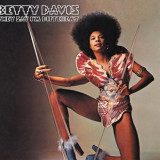
Her 1974 sophomore album They Say I’m Different features a worthy-of-framing futuristic cover challenging David Bowie’s science fiction funk with real rocking soul-fire, kicked off with the savagely sexual “Shoo-B-Doop and Cop Him” (later sampled by Ice Cube). Her follow up is full of classic cuts like “Don’t Call Her No Tramp” and the hilarious, hard, deep funk of “He Was A Big Freak.”
"Irish singer, songwriter, multi-instrumentalist, and producer, James Vincent McMorrow, returns to the fore with his seventh full-length album Wide open, horses, out June 14th, 2024.
Wide open, horses is a candid snapshot of everything that has brought James to this point. The album signifies a retaking of his own narrative, a freeing self-acceptance, and a rebuilding of both his sense of self and his connection to music. Singles “Stay Cool”, “Never Gone” and “Give up” offer a first taste of what fans can expect, leaning further into the introspective and sincere indie-folk sound of his earlier material, whilst incorporating elements of his more explorative later releases.
A unique and particularly special artist project, Wide open, horses was initially performed live having booked two nights at The National Concert Hall in Dublin, where he recorded a handful of lo-fi demos, practiced the material for a week, and then hit the stage prior to ever recording a single song. Phones weren’t allowed, but James recorded it to “see what worked and what didn’t work.”
James has beckoned listeners to open their minds and hearts since his emergence in 2010. Along the way, he gathered over 1 billion streams across an expansive catalog. Among many standouts, “Higher Love” went BPI Gold in the UK and ARIA platinum in Australia. His cover of Chris Isaak’s “Wicked Game” soundtracked the trailer for Season Six of HBO’s Game of Thrones and generated over 130 million Spotify streams on its Live At Killkenny Arts Festival version. Toppling charts, 2016’s “We Move” notably debuted at #1 in Ireland. At the same time, he lent his voice to “Hype” from Drake’s multiplatinum blockbuster Views, “I’m In Love” from Kygo’s Cloud Nine, and “Run Away” from dvsn’s Morning After, among others. Meanwhile, he’s sold-out tours on multiple continents, even packing the world-famous Sydney Opera House twice."
At the frayed bottom-edge of Indiana - just a moderate bike ride north of Louisville, Kentucky - multi-instrumentalist, artist and songwriter Ryan Davis' Americana-noir soundwaves have been emanating for years in a myriad of forms. As driving force for the lauded State Champion, long-running member of Tropical Trash, administrator of the esoteric and excellent Cropped Out festival, and lone proprietor of the Sophomore Lounge label, Davis lays down his first proper 'solo' release with Dancing On The Edge, a rich, 2LP tapestry of tunes that absolutely glows over seven expansive cuts. It's a pure collage of modernity and heritage. Recorded in early 2023 with help both in-studio and remotely from peers like Joan Shelley, Catherine Irwin (Freakwater), Will Lawrence (Felice Brothers, Gun Outfit, John Early), Jenny Rose (Giving Up), Christopher May (Mail the Horse), Elisabeth Fuchsia (Footings, Bonnie "Prince" Billy), and Aaron Rosenblum (Son of Earth, Sapat), the results herein are melancholic, gentle, minimal yet colorful in mood: a lilting highway accompaniment of crisp instrumentation and a relaxed, amiable approach to vocals with rhapsodic wordsmithery. Fans of the aforementioned artists as well as those of Souled American, David Berman, Kurt Vile and 'Comes A Time'-era Neil should all easily find bounty. While bare-boned and uncluttered in presentation, many of these pieces track over 6 minutes allowing a fair amount of expansiveness. Dancing On The Edge stares down into the navel of the American Experience underbelly with a fair amount of outward reach. Besides the Kosmische-synth and violin stabs reaching into a European element, stately organ swells build a musical bridge between 1969 Southern California and Felt's latter era smooth moves, with layers of intelligent gesture taking this well beyond the realm of its archetypal indie troubadour/acoustic songwriter tag. Music and mint juleps never went down so well together." Originally released via Ryan's own label, Sophomore Lounge, in the US late 2023, it picked up some incredible reviews: best of 2023 in both Pitchfork and Rolling Stone, 9/10 lead review in Uncut, and a raft of other notable publications. "This is the sound of someone bearing a torch." - Bill Callahan (Smog) - RIYL Silver Jews, BPB, Lambchop, Cass McCoombs, Sparklehorse.
Doo-Wop was and remains the most accessible of popular music formats. You don’t need instruments, just tuneful voices, the ability to harmonise and a street corner on which to perform. Over 10,000 different vocal outfits are estimated to have recorded in the Fifties – be they black, white, Italian or Hispanic. Only a few practitioners like Dion DiMucci, lead singer with the Belmonts, would outlast the phenomenon to bloom in subsequent decades, but Doo-Wop’s legacy would remain. In this collection, you will discover the foundations of popular music as we know it. From coast to coast, Doo-Wop ruled the Fifties – here it is at its very best!
Black Vinyl[27,52 €]
"Loving You Backwards, the debut album from Blood, flourishes in the subtle, the ambiguous, the shades of gray. In winter of 2021, longtime Austin residents Blood made a fresh start, using a move into a house together in Philadelphia as a chance to reorient and spend time writing music around the clock. As they wrote, the sound of the band began to shift. Blood, in the past, made huge, angry, grandiose, operatic songs. Loving You Backwards, was not that. Instead, this debut record is quieter, less reactive, but no less powerful.
As an organism, Blood circa Loving You Backwards, was a six piece. Tim O'Brien is the lyric writer, but the song writing and arrangement is a painstakingly collaborative process in which the band aims for democracy over swiftness. The record also features the band’s first major work with the producer Daniel Enrique Howard, whom the band recorded with at his studio in Brooklyn. Howard helped guide Blood into this new sonic territory. It is not a bedroom project, but instead fully realized, somehow sounding both intimate like Liz Harris’ Grouper feels intimate and totally vast in the way that a Talk Talk record feels vast. It’s in the same universe as Ought in its earlier iterations.
The songs on Loving You Backwards exist in the realm of ballads, heart-wrenching and weird pop with a post rock sensibility. It explores, as the title implies, approaching a relationship in the reverse, dealing with your past while you try to stay in the present. Loving You Backwards is a record of ideas and big honesty, but it’s also a record of genuinely pristine pop. A definitive statement from a band that is more than on the rise as truly excellent songwriters and performers."
- A1: Polaris (북극성) 04:22
- A2: Insomnia (불면증) 04:49
- A3: Arrival (도착) 07:44
- B1: We Shine At Night (우리는 밤이 되면 빛난다) 06:27
- B2: Parade 07:34
- B3: Sketchbook 07:02
- C1: Imagination 04:37
- C2: Sound Inside Me, Waves Inside You 05:13
- C3: Blossom 05:13
- D1: After The Magic 06:11
- D2: Your Place 10:51
"A sprawling patchwork of the artist’s dreams and fears, Parannoul’s third album After the Magic explores the enigmatic solo artist’s life in the wake of his second album’s overnight success.
Expanding on the shoegaze-shaded emo that made Parannoul’s To See the Next Part of the Dream so beloved by lo-fi and indie rock fans alike, After the Magic sees the anonymous auteur striving to write a follow-up as worthy of acclaim as the last.
Across the album’s ten songs, Parannoul plunges yet deeper into his diverse pool of influences, coming back to the surface with a record that captures and extends the magic of its predecessor. Unexpected flashes of orchestral ambient and glitched-out electronica meld seamlessly with Parannoul’s signature passages of noisy, distortion-laden shoegaze, offering a real time glimpse into the maturation of one of indie rock’s most exciting artists.
In the artist’s own words, “This album is not what you expected, but what I always wanted.”"
- Born In The U.s.a - Jason Isbell & Amanda Shires
- Cover Me - Apache Relay
- Darlington County - Quaker City Night Hawks
- Working On The Highway - Blitzen Trapper
- Downbound Train - Joe Pug
- I'm On Fire - Low
- No Surrender - Holly Williams
- Bobby Jean - Ryan Culwell
- I'm Goin' Down - Trampled By Turtles
- Glory Days - Justin Townes Earle
- Dancing In The Dark - Nicole Atkins
- My Hometown - North Mississippi Allstars
"2024 marks the 40th anniversary of Bruce Springsteen's 'Born In The U.S.A.' Although it would become his biggest selling album with seven top 10 singles on the Billboard Hot 100, Luther Dickinson of North Mississippi Allstars says ""any of those songs could be played with acoustic guitar alone and still be great."" Taking this idea as its premise, 'Dead Man's Town: A Tribute to Born in the U.S.A' strips the album's twelve indelible originals to the core, with contributions from Jason Isbell & Amanda Shires, Low, Nicole Atkins, Justin Townes Earle, Blitzen Trapper, Joe Pug, Trampled by Turtles, and more. Rolling Stone premiered Jason Isbell and Amanda Shires' Dave Cobb-produced cover of ""Born I n The U.S.A,"" saying these artists are ""reimagining 'Born in the U.S.A. with a reduced approach more influenced by that of the acoustic, ""Nebraska.""
Isbell says of his cover, """"Born In The U.S.A."" is one of my favorites because so many people have seemingly misunderstood the lyrical content and the song's overall tone. When you listen to the demo, the dark, minor key arrangement makes it clear that this is not strictly a song of celebration. We wanted to stay true to that version."" Amanda Shires adds, ""I love that the song paints a picture of struggle in the face of the American dream, and the irony in the chorus is delivered with such force that it nearly transcends irony altogether."""
Originally released in 1990, Royal Trux's 'Twin Infinitives' is being re-issued in all its (yet to be translated) alien glory, by Fire Records. A dismantled overture that sprawls out over two records, an avant-garde masterpiece that was the spark for Drag City Records and generations of new sound seeking musicians. Hailed in the same immortal breath as Beefheart's 'Trout Mask Replica', the Velvets' at their frenzied peak and Ornette Coleman at his most avant-garde, the duo of Pussy Galore's Neil "Michael" Hagerty and Jennifer Herrema recorded 'Twin Infinitives' while imbibing all kinds of mind-altering substances to create an inadvertent blueprint for what the duo was building with moog's, guitars and melodicas to name a few ingredients. It is the legendary second album from the masters of the genre mashup - long before "genre mashups" even existed. Arguably, the term "mashup" was coined to describe what Trux, as they subconsciously scrolled through the radio stations of their lives. The album's chaotic sound and offbeat construction laid the foundations for a string of Royal Trux albums that spiralled between genres, tunings, and noise. Through the 90s they would re-invent the rock 'n' roll ethic, straddle alien surf music, re-align boogie rock, not to mention 80s hair metal, and confound critics by their wildly meandering and courageous rites of passage. Remastered as part of a career spanning catalogue deal with Fire Records. The infamous and influential duo of Jennifer Herrema and Neil Hagerty will be delving into the archive with a comprehensive reissue series, unearthing the vaults and revisiting what made them such a compelling benchmark for their contemporaries and imitators. Reawakening their prolific output within a new monochrome vinyl series covering 1988-1993, they begin with their seminal deconstructed rock masterpiece Twin Infinitives. "Sounding like a subway ride inside a television inside an earthquake inside the end of the world and a pounding death rhythm of apocalyptic now." Pitchfork Ltd Double Silver Vinyl, Monochrome edition artwork, DL card.
U.S. Cinematic outfit Whatitdo Archive Group returns to explore the worlds of Mid-Century Exotica and Library Music with "Palace Of A Thousand Sounds," out on May 5th.
From the instrumental cinematic-soul outfit behind 2021's critically acclaimed The Black Stone Affair comes Whatitdo Archive Group's most recent foray into the realms of the esoteric and arcane, and their most adventurous album to date: Palace Of A Thousand Sounds, available May 5th, 2023 on Record Kicks on limited edition LP, CD and digital platforms.
After The Black Stone Affair enthralled record collectors by traversing the cinematic landscape of an imagined 1970s Spaghetti Western, Palace Of A Thousand Sounds finds Whatitdo Archive Group entrenched deeper in the worlds of mid-century exotica and library music—from the Tropicalia-steeped Amazon to the minor key tonalities of the far-out Near East.
When the dust finally settled from their debut album, composer and tireless sound scientist Alexander Korostinsky set out to discover the band's new direction, with the ultimate goal to breathe new life into the mid-century era sound with the compass of modernity as his guide.
From its conception in 2021, Palace has sought to carry on a legacy set in motion by the likes of Martin Denny, Les Baxter and Juan García Esquivel. Korostinsky, guitarist Mark Sexton, and drummer Aaron Chiazza recorded the album in marathon sessions from Korostinsky's Studio "A," in Reno, Nevada—a mysterious sonic laboratory where the year 1970 has yet to happen, and vintage analog equipment interfaces with modern musical perspectives and experimental recording techniques to produce era-defining sounds.
Not content to appeal to the sensibilities of armchair anthropologists, Palace Of A Thousand Sounds finds the band interrogating the genre itself while making studious tributes to the real places and times it draws from. It's in this tension between here and there, fantasy and reality, that Whatitdo Archive Group find their groove.
Drawing from a century of pop and folk sounds from around the world the way only 21st-century crate-diggers can, Palace is rooted in an undercurrent of heavy funk that is decidedly here and now. Whatitdo Archive Group showcase the breadth of their influences with disarming confidence, equally at home behind sweeping harp, loungey vibraphone or Turkish bağlama saz. A lush seventeen-piece orchestra commanded by award-winning composer Louis King (Janelle Monáe, Monophonics) completes the instrumental mélange, enticing listeners to imagine a borderless planet unified by melody and rhythm.
The album is unafraid to explore the strange and uncomfortable in pursuit of an authentic musical identity, subverting expectations in pursuit of forwarding the genre while paying homage to its past. Fans will appreciate the architectural complexity of the record accessible only through multiple listens—each visit to the palace yielding new details to marvel at, curiosities to ponder, grand mysteries to explore.
Once the needle drops, W.A.G carefully guides you from room to room, sound to sound within the walls of the album's sonic palace. Listening becomes an aural journey providing glimpses into different worlds both real and imagined; you are everywhere and nowhere all at once—a guest in the grand halls and hanging gardens of time and sound.
Steeped in obscurity, a cult following of crate-diggers and musical oddity collectors has been brewing over the mysterious releases of the Whatitdo Archive Group. Surfacing in 2009 from the high deserts of Reno, NV USA, this three-piece recording collective(Alexander Korostinsky, Mark Sexton and Aaron Chiazza) focuses solely on curating, performing and preserving esoteric soundtrack, library and deep-groove collections. As an onlooker, it's hard to tell whether the music they are procuring is actually archival, music of their own creation, or both. Their debut LP The Black Stone Affair, the formerly lost soundtrack music of a once-shelved Italian cinematic masterpiece, was released in 2021 and received praise from the likes of Wall Street Journal, Mojo Magazine, Uncut, Shindig, Blues & Soul Magazine, BBC 6, FIP Radio (FR), KCRW (US), JazzFM (UK) and more. Two years later, the Whatitdo Archive Group is back. Get ready for an exotic adventure with their sophomore full-length effort: Palace of a Thousand Sounds.
A home, a house, has countless frequencies. Each room, each corner feels different. Swings differently. And as you grow older, you realize which corner is yours. But yeah, it takes time…
It certainly marks the end of an era when the house one called home as a kid no longer exists. This home, it was the starting point of so many journeys. Of one big, ongoing journey. And so it feels good, soothing, reassuring to at least return to a spot nearby – to that (proverbial) hill from where you can see it. Feel the vibe that made you.
Andi Haberl’s debut solo album as Sun is sort of dedicated to that house. It’s a journey leading to that hill overlooking everything that made him. It’s not about nostalgia, not about actually returning to a specific place. Instead, it’s about finding a personal frequency, an overlapping of sounds and samples, an open space that mirrors and extends whatever frequencies felt right at different points in time.
“To me, the results feel like Gold Panda/Four Tet meets Steve Reich meets Krautrock meets film scores. I just really wanted to create moods that touch me – and ideally others, too.”
Talking about his first solo album, Haberl recalls many stages: early compositions that ended up on Alien Ensemble’s albums, early DIY/home studio/multi-instrumentalist inspirations (Le Millipede), new technologies that came and went, even a set of wildly convincing arrangements (done with Cico Beck’s crucial input) that ultimately became stepping stones for yet another round of DIY takes. “It was a long, recurring process, and the songs went through so many different versions,” he says, talking about phases of growth (“I added more and more equipment over time”) and pruning, “cleaning up my music a bit.” Tending towards instruments that open up space, and slowly falling in love with sampling, he certainly didn’t rush things once it was time for interior design decisions ;)
“During this whole process I got to learn so much about my own taste, how I prefer to listen to the pieces, which musical elements really matter to me… and what my own voice is. For example, that acoustic elements are most important to me: the banjo, piano, drums, my voice, glockenspiel, trumpet, melodica. Anything that opens up some space.”
Every journey begins with a search: “Missing” with its plucked chords opens like a sunrise over pastoral plains, gently leading the way towards the intricate, playful explosion that occurs once a certain amount of energy (“Sun”) hits dirt and other surfaces: things grow, clot and curdle into new shapes, like new buds; layers of sound move forward, drenched in Spring’s new light. Relying on samples to ask for precipitation (“Rain On Me”), robotic “Low” goes from barren to bass-heavy after its midway shift in pace, full of loops plucked from the shade.
Towards the album’s midpoint, things are suddenly reversed: “Cluster” has that backwards pull, you can’t tell what’s what, yet everything is perfectly locked in, as the pace increases once again. And before the title song shimmers with densified cheering (to eventually stand tall like early Lymbyc Systym), “Beside Me” swipes you off your feet with its booming bass drum. The beat returns once again (“Daydream”), full of searching voices underneath, and at “Dawnday,” we can finally catch a melancholy view of the house. Voices hum. It’s the score moment of the album. Everything makes sense now. A happy end of sorts?
“I want to take people on a journey. A personal journey, too, because when my parents split up and sold the house I grew up in, I felt a bit like the ground had fallen out from under my feet. But I have dedicated the album title and the accompanying piece to this house… so I can keep it in good memory.”
“I Can See Our House From Here” has been a long time coming. It’s been a long journey. Homeward-bound. Leading to a place that’s really Haberl’s – his sound. His frequencies.
Known as a long-time member of The Notwist and various other bands/projects (Alien Ensemble, AMEO, jersey, Ditty etc.), Berlin-based drummer/composer Andi Haberl has also worked with My Brightest Diamond, Till Brönner, Owen Pallet, and Kurt Rosenwinkel, to name a few. “I Can See Our House From Here” is his first solo offering.
A kaleidoscopic sonic riot, Nandakke? is the hotly anticipated debut album from Japanese-Belgian duo Aili. Featuring 10 tracks of surreal electro-pop, joyful electronica, house music and more, Nandakke? is a euphoric album that sees Aili Maruyama and Orson Wouters more than fulfil the promise of their acclaimed debut EP.
Recorded over the course of six months in Orson's studio, packed full of vintage synths, Nandakke? captures the spontaneous spirit and creativity of those sessions. Exchanging riffs and rhythms, bouncing sounds and samples off each other, Aili and Orson would let the music take them where it wanted. The result,an album full of wild ideas and bold, playful experimentation.
More than anything an exhilarating feeling of discovery courses through Nandakke?, leaving you never sure where it will go next. One minute a pulsing electro-pop number featuring Aili's dad discussing his takoyaki (battered octopus) recipe, the next an explosive high energy workout song like Up & Down.
Certainly Aili was surprised to find herself singing in her own unique version of Japanese again.
"I thought that I was done with that after our debut EP, but apparently not as I speak even more Japanese on the album!" said Maruyama. "Every time we were in the studio these words would just tumble out. It's a complicated language but I just love to play with it.
"In many ways I'm an outsider, I left Tokyo aged 7, so there's a lot I notice as someone who is not a native speaker and it doesn't always make sense, there's a lot of mistakes in it.But in a way that sums up the whole philosophy of the album and how Orson and I work together."
That notion of duality, a sense of belonging but feeling apart, of being between two worlds and inventing your own captures the spirit of Nandakke?, itself a Japanese word that roughly translates to "Well, what was it?".
"It's something you say when you're looking for a word, like you know it but have forgotten how to say it. That's literally how I communicate with my dad the whole time," Maruyama explains. "The main feeling I have when I go to Japan is that I know the language, I can speak it, but part of me still feels like it doesn't have all the vocabulary. There's a gap there that nandakke has always filled for me. All the lyrics come from that place, that seven-year old trying to speak Japanese."
Whether Aili's singing about the language she invented with her father over the years to bridge the gap between them (Nandakke?), the idiosyncratic Japanese relationship to fashion (Fashion) or riffing on children's playground songs (Yubikiri) the result is a remarkable album that defies easy categorisation.
Bursting onto the Belgian scene in 2021 with their acclaimed debut EP, Dansu, its lead track spent 8 consecutive weeks at the #1 spot of Radio 1's VOX list and saw the band nominated for Studio Brussel's De Nieuwe Lichting ('New Generation') award. Since then Aili have appeared playing live on the Belgian TV show Roomies, been tipped by the likes of Rolling Stone, become regulars on tastemaker stations like KEXP and KCRW in the US and Nova in France, toured across Europe and, just recently, played their first sell out shows in Japan.