GER "Wir suchen nach Glitzer, nach dem hellsten Geröll und Blitzen. Wer sich heute Nacht verliert, wird sich nicht finden. Ihr sucht in uns die Perfektion der Generation Maximum.." An was noch glauben. Mit ihrem dritten Album Generation Maximum nehmen CULK den Druck von einer Generation, die den Horror der Gegenwart wie durch Magie doch noch zu etwas Positivem wandeln - und richten ihn bewusst auf diejenigen, die ihre Zukunft zerstört haben. "... Ihr sucht in uns die Revolution, bürgt uns auf, was ihr nicht leisten wollt. Wer sich heute nicht mehr wehrt, wird übrigbleiben." Generation Maximum ist sicherlich kein Album, bei dem im SUV laut mitgegrölt wird, weil der Refrain so schön in die Sonnenuntergangsstimmung passt. Niemand klatscht vor Freude über den nächsten Waldbrand die Hände zusammen. Stattdessen beobachtet Sängerin Sophie Löw ihre Umwelt durch ein Brennglas und nimmt die Zuhörer:innen mit auf eine lyrische Rückblende der letzten zwanzig Jahre, in denen sie selbst vom Kind zur Zeugin wurde. Das selbstbetitelte CULK Debut (2019) erschien beim Wiener Label Siluh Records, einer der verlässlichsten Quellen für spannende Indie-Musik in all seinen Facetten. Vom Spiegel-Magazin gab es dazu das Attribut "Suchtsound". Mit ihrem zweiten Album "Zerstreuen über Euch" (2020) schuf die Gruppe ein famoses Konzept-Album. Es wurde von vielen Seiten als eine Kampfansage an tiefverwurzelte patriarchale Strukturen gedeutet und schaffte es u.a. in die TOP 5 der Jahresbestenliste des Spiegel-Magazins. Mit "Generation Maximum" übernimmt Jakob Herber die Rolle des Bassisten von Gründungsmitglied Benjamin Steiger. Herber ist von Anfang an ein wichtiger Wegbegleiter im engen Zirkelder Band, Sängerin/Gitarristin Sophie Löw hat im August 2022 als SOPHIA BLENDA ihr Solo-Debüt-Album "Die neue Heiterkeit" veröffentlicht. "Die neue Heiterkeit" ist eines der stärksten deutschsprachigen Pop-Statements der jüngeren Zeit" - Spiegel. Für ihr neues und nun drittes Album "Generation Maximum" hat sich die Band mit dem Produzenten Wolfgang Lehmann, vormals Wolfgang Möstl, zusammengetan, der unter anderem für seine Arbeit mit Voodoo Jürgens, Clara Luzia, Jungstötter, Dives uvm. bekannt ist. Und bringen es musikalisch nach draußen zu den Menschen, die vor lauter Existenzkämpfen fast vergessen hätten, die Revolution zu starten ("Generation Maximum"). Kein Ausbaden. Generation Maximum ist ein progressiv lauter werdendes "Nein" zur auferlegten Bürde, ein Appell an mehr Verletzlichkeit ("Eisenkleid") "Jede Rüstung erzählt von Verletzlichkeit. Stärke zeigt, wer Narben teilt." und weniger Elend im Privaten wie im Öffentlichen. Letztlich aber auch eine Suche nach einer neuen "Ode an die Freude" und Mut um uns. "Wir erheben Stimmen, auf dass sie für immer klingen. Wo sollen wir heute Zukunft finden?" Wer genau hinhört, findet sie: Lieder über unausgesprochene Träume, die durch epische Gitarrenklänge und Löws entrückten Gesang näher wirken, als sie eigentlich sind. LP klassisch schwarzes Vinyl.
With their third album Generation Maximum, CULK take the pressure off a generation that magically transforms the horror of the present into something positive after all - and deliberately direct it at those who have destroyed their future."... Ihr sucht in uns die Revolution, bürgt uns auf, was ihr nicht leisten wollt. Wer sich heute nicht mehr wehrt, wird übrig bleiben." Generation Maximum is certainly not an album to be bawled along to loudly in the SUV because the chorus fits so nicely into the sunset mood. No one claps their hands together in joy over the next forest fire. Instead, singer Sophie Löw observes her environment through a burning glass and takes the listeners on a lyrical flashback of the last twenty years, during which she herself went from child to witness. The self-titled CULK debut album (2019) was released on the Viennese label Siluh Records, one of the most reliable sources for exciting indie music in all its facets. Spiegel magazine gave it the attribute "addictive sound". With their second album "Zerstreuen über Euch" (2020), the group created a fabulous concept album. It was often viewed as a declaration of war against deeply rooted patriarchal structures and made it to the TOP 5 of the Spiegel magazine's best of the year list and gained the band a following in various scenes and audiences. With "Generation Maximum", Jakob Herber takes over the role of bass player from founding member Benjamin Steiger. Herber has been an important companion from the beginning. Singer/guitarist Sophie Löw released her solo debut album "Die neue Heiterkeit" as SOPHIA BLENDA in August 2022. "Die neue Heiterkeit" is one of the strongest German-language pop statements of recent times" - Spiegel. For their new and now third album "Generation Maximum", the band teamed up with producer Wolfgang Lehmann, formerly Wolfgang Möstl, who is known for his work with Voodoo Jürgens, Clara Luzia, Jungstötter, Dives and many more. And they take it musically outside to the people who almost forgot to start the revolution because of all the struggles for existence ("Generation Maximum"). No payback Generation Maximum is a progressively louder "no" to the burden imposed, an appeal for more vulnerability ("Eisenkleid") "Every armour tells of vulnerability. Strength shows who shares scars" and less misery in private as well as in public. But ultimately also a search for a new "Ode an die Freude" and courage around us. "Wir erheben Stimmen, auf dass sie für immer klingen. Wo sollen wir heute Zukunft finden?" Wer genau hinhört, findet sie: Lieder über unausgesprochene Träume, die durch epische Gitarrenklänge und Löws entrückten Gesang näher wirken, als sie eigentlich sind. RIYL Nu Wave, Independent, Shoegaze
Поиск:its not over
Все
Frozen reeds presents the only recorded duo playing of two legendary musical figures. Derek Bailey and Paul Motian – two longstanding pioneers of distinct strains of improvised music – came together for a brief period of collaboration in the early 1990s. Tapes of their two known live performances (one at Groningen’s JazzMarathon festival in the Netherlands, the other a year later at New Music Cafe, NYC) were recently unearthed in the Incus archives, and their contents will surprise and delight fans of both supremely idiosyncratic musicians.
The Groningen concert (1990) is released on vinyl, while the New York date (1991) is included with the digital download, free of charge for all purchasers. A conversation between Bill Frisell and Henry Kaiser on Bailey, Motian, their intertwined backgrounds, and the significance of these recordings is included as sleeve-note insert.
“This is one of those moments that we’re always hoping for, and it's so rare. And it's so hard to talk about, because it's so beautiful. It's like you're seeing some new species of plant that you never knew existed or something.” – Bill Frisell
Each player bringing decades of crucial experience to their encounters – with histories taking in vast swathes of the development of jazz and free improvisation – these fleeting shared moments provide some of the most riveting playing in the career of either.
There is precious little recorded evidence of Motian as a free improviser, but his mastery is beyond any doubt in these recordings. From knife-edge precision to textural haze, Motian’s palette is astounding, but perhaps even more impressive is his confidence in the non-idiomatic conversation itself. Pushing far beyond the established vocabulary of free percussion, his playing allows a measured degree of repetition to take form, giving rise to almost song-like structures. The covert influence of the drummer’s work on the post-rock genre (just taking its first nascent steps in the early 1990s) is made overt here.
In turn, Bailey allows some of his most unashamedly melodic passages to unfold without a mote of his trademark contrariness or antagonism. Patterns that would be acerbically disrupted elsewhere are allowed to settle, with variations of note and timbre introduced more gradually than is typical of his playing. When forceful changes in dynamics or tone do arrive, they do so in such close tandem with Motian’s rhythmic and textural transitions as to beggar belief. The guitarist’s duos with percussionists (Jamie Muir, Han Bennink, John Stevens…) arguably provide some of the highlights of his discography. ‘Duo in Concert’ represents a strong addition to the list.
An elegant sense of construction pervades the sets, as the duo ably fulfil the promise of free improvisation: carving out hugely compelling, expertly balanced, and thrillingly paced music as if from thin air.
The phoenix symbolizes a new beginning. The fire burns off the last vestiges of the past as the bird spreads its wings and takes flight into the future. The Polyphonic Spree harness the flames of rebirth on their 2023 full-length offering, Salvage Enterprise. Led by frontman, founder, producer, multi-instrumentalist, and visionary Tim DeLaughter, the group embark on their next season. They're reverent of their history, yet they're also ready for an even brighter tomorrow. "Across all of the music I've done, lyrically there's a sense of desperation and a moment of convincing myself I'm going to make it through regardless of how the music dresses up," notes Tim. "On this one, I struggled with the amount of vulnerability I was experiencing and was willing to share both musically and lyrically, but ultimately decided to let it play out. Now that it's done, I'm happy with the dance between the two. It's a `rising-from-theashes' record." Salvage Enterprise beckons complete immersion. Opener "Galloping Seas (Section 44)" affixes softly strummed acoustic guitar to an orchestral hum as Tim urges, "Hold on through the galloping seas." "We're all galloping through rough waters," he says. "I tried to describe the process as well as I could and encourage people to keep their heads above the storm and the waves. Ride it out. It's going to be okay. It starts off very calm and introspective, and you can envision where it's going." Flute echoes over nimbly plucked guitar during "Shadows On The Hillside (Section 48)" as keys twinkle. A glorious harmony amplifies the nostalgia of "Hop Off The Fence (Section 49)." It concludes with "Morning Sun, I Built The Stairs (Section 52)." Optimism strains through his hopeful intonation, "I learned to fly, the more that I become a new reason, I want to try," uplifted by boisterous horns and cinematic strings. It crashes into an Ennio Morricone-style crescendo bolstered even higher by operatic vocals. "There is an arc of leaving the world behind, stripping your old self away, and becoming new again," he offers. "You're shedding off this old world, and you're heading into the future. It's an epic ending. You've made it. You're going to be alright." In the end, The Polyphonic Spree are the soundtrack to that light at the end of the tunne
SOARS is the solo project of Kristian Karlsson, synth player in CULT OF LUNA and bass player/vocalist in PG.LOST - and yes, `Repeater', a truly epic instrumental rock album bustling with delay-drenched drama and joyful yet melancholic melodies will make every PG.LOST fan very, very happy. Why is it not a PG.LOST album then? "I got tired of discarding ideas I've written that didn't ft PG.LOST, but at the same time were too good for my ears to throw away. PG.LOST as a collective works at a relatively slow pace, while I by default write music all the time_ so eventually it became clear to me that I needed a new outlet for all those ideas". Karlsson released his debut solo album `Enfold' under the Soars moniker in 2021. Recorded and released all by the artist himself, `Enfold' made waves in the post rock world and the vinyl pressing sold out quickly. Repeater connects seamlessly with the debut album: propelled by the powerful drumming of Christian Augustin (Stiu Nu Stiu, live drummer of Cult of Luna) and Karlsson's charismatic synths melodies, these eight tracks share a distinct reference to the cinematic works of artists like Vangelis and Jean-Michelle Jarre, as well as post rock acts like God is An Astronaut, Caspian and Mogwai. "Soars is a personal journey and expression of a sound that has been developed over the years," explains Karlsson. And this long-term development of his artistry ensures that while painting with a familiar palette of tones and textures as the aforementioned artists, Karlsson always paints a picture that is very much his own. Title track «Repeater» comes saturated with orchestral grandeur and melancholy, and yet somehow exudes a sense of hopefulness which lingers throughout the album. Driven by layers of processed vocals and glorious melodies, «Uprise» literally gives rise to waves of exalted joy, while tracks like «The Waiting» or «Grow» demonstrate that Repeater shines through sheer strength of composition. Wrapping his retro synth sounds into a fat modern production, Repeater is stuffed with stunning dynamic arcs, catchy melodies and atmospheric density. The recording and mix are fawless and, in a sense, timeless. "The recording process was pretty simple," explains Karlsson matter-of-factly. "A lot of the ideas was formed at home in my kitchen and took its fnal form in the studio." With Soars, Karlsson is proving his innate ability to convert his blithe spirit into sound waves. Repeater is a manifestation of a man who lives and breathes music - an album that grabs you and carries you away.
Considered one of the most innovative groups on the Colombian musical circuit in 1973, Columna de Fuego forged its sound by creatively and organically mixing elements of heavy rock with rhythms rooted in the music of the Pacific and Caribbean coasts of the country. Columna de Fuego, the first Colombian rock band to tour outside South America, was the supporting act for Leonor González —La Negra Grande de Colombia— for months and featured members of Los Young Beats, Los Speakers and Siglo Cero. Their only LP, recorded in Spain and released in Colombia only in 1974, was a turning point in the history of Colombian rock, an album full of funk, soul, cumbia and currulao that maintains a fast pace from start to finish. After unsuccessful attempts to establish themselves in Europe, the group parted ways; some members returned to Colombia and others stayed in Europe as part of La Banda Salsa, a vibrant and little mentioned chapter in the history of Latin rock. Roberto Fiorilli, the stand-out drummer of Colombian rock, returned to his native Italy. Over the following five decades, the myth of Columna de Fuego, that wonderful Bogota rock band that dared to experiment with the music of the Colombian coastline, grew. The curiosity of musicians interested in the traditional music and folklore of the coasts since the late 80's, the consequent mixture of different musical genres (modern and roots) at the end of the 20th century and the almost impossible desire of collectors to find a copy of the album or one of the band’s singles, gave it the status it should always have had as a pioneer, milestone and beacon. After remaining unavailable for five decades, we are proud to now present the first-time reissue of this obscure gem with its original artwork, including an insert with notes and rare photos. Sleeve
Tin Fingers takes on a darker, melancholic direction on their second full album. Felix Machtelinckx' weeping vocals, preaching, searching, and trying to understand God, form the leitmotif. With rich melodies, haunting piano sounds, improvisations, first takes and no overdubs, Tin Fingers is searching for pureness and keeping things human and simple. The band is playing together intuitively, without a computer, without ego, just for the sake of music
The creation of the album was very fluent and spontaneous. Singer Felix wrote the backbones of the songs and the lyrics on acoustic guitar and piano. He wanted to have songs ready in order to be able to record and write arrangements fast. With an eye for details but without overthinking, keeping the ideas fresh. 'I wanted to stay in love with the music.' he explains. 'It needed to go fast, very fast, in just two weeks the entire album was recorded and ready to be mixed.'
In the studio, the band especially focused on picking the right mood rather than playing the right notes.
They were fed up with working on a computer for many hours, overthinking production choices, and adding instruments on top of each other as if they were Lego blocks. This time they decided to work in a more traditional way, going for first takes, jams, and essentially working with analog gear. No computers, no screens, no distractions. Only four humans in a studio trying to make a sound together by keeping things spontaneous and raw. They said goodbye to perfection and worked towards an unfinished product, a snapshot.
Tin Fingers also didn't want to sound like any other artist on this record. They decided not to listen to music during the sessions, and to never express ideas by referencing other bands. Just before the studio session, however, bass player Simen Wouters broke the rules and shared Bonnie 'Prince' Billy's, I See Darkness. Its dark and searching sound ended up inspiring the band unmistakably.
Once the recording was finished, the band decided to keep the volatile rhythm going and asked reputable NYC-based mixer and producer D. James Goodwin to finish the job. Goodwin, known for his analog folk productions with a real American punchy sound but a tender touch, proved the right man for the job. He opened up the songs and kept things poetic, minimal but impressive.
Berlin-based Swedish bassist and producer Petter Eldh returns with a new Koma Saxo album Post Koma, out on We Jazz Records, 10 November. The title Post Koma aptly describes the vibe of this one: The Koma Saxo sound continues its evolution, morphing into a holistic vision of jazz now and soon, where live instrumentation and repurposed sampling lose their boundaries.
Over the course of its three iterations (self-titled debut in 2019, LIVE in 2020, Koma West in 2022) Koma Saxo has sounded at times "liquid" and postproduced, at times raw and direct, at times acoustic and at other times oddly electronic (even while still being made with acoustic instruments). Post Koma is a culmination of this sonic study by Eldh, resulting in a music vision that never second-guesses throwing tasty hooks and everlasting melodies out the window after a mere bite of them. But fear not: there are even more new ideas just around the corner.
Eldh's compositions and ideas merge together in a way that just flows. There are quality musicians in the mix, including Koma Saxo live band members Sofia Jernberg, Jonas Kullhammar, Otis Sandsjö, Mikko Innanen, Maciej Obara and Christian Lillinger, but that's like saying that a cake includes flour and sugar. This music is not about playing, it's essentially about how the music is and how it takes its shape, so you quickly lose track of who did what, and that's all in the benefit of encountering this music as an entity that is constantly challenging itself while moving forward. The musicians are valued contributors, and an integral part of what's here, but this is far from traditional jazz playing where a band sits in a room playing takes after takes of compositions on sheet.
That being said, this is jazz to the fullest. That is, music that understands its past but always moves forward, and is never afraid of taking risks. Petter Eldh uses jazz as a starting point, not the end goal. This gives his music edge and mobility beyond what can be contained on one album. In a way, an album, then, becomes a snapshot of a creative process in constant flux and evolution.
Opening track "Koma" is literally drum & bass. It only consists of those two elements, yet what comes out of it is an open invite, a way of clearing your palette. It would be useless to describe individual tracks beyond that, but there's a strong sense of deliverance to the set. It feels like an ending, and also like a new beginning.
Berlin-based Swedish bassist and producer Petter Eldh returns with a new Koma Saxo album Post Koma, out on We Jazz Records, 10 November. The title Post Koma aptly describes the vibe of this one: The Koma Saxo sound continues its evolution, morphing into a holistic vision of jazz now and soon, where live instrumentation and repurposed sampling lose their boundaries.
Over the course of its three iterations (self-titled debut in 2019, LIVE in 2020, Koma West in 2022) Koma Saxo has sounded at times "liquid" and postproduced, at times raw and direct, at times acoustic and at other times oddly electronic (even while still being made with acoustic instruments). Post Koma is a culmination of this sonic study by Eldh, resulting in a music vision that never second-guesses throwing tasty hooks and everlasting melodies out the window after a mere bite of them. But fear not: there are even more new ideas just around the corner.
Eldh's compositions and ideas merge together in a way that just flows. There are quality musicians in the mix, including Koma Saxo live band members Sofia Jernberg, Jonas Kullhammar, Otis Sandsjö, Mikko Innanen, Maciej Obara and Christian Lillinger, but that's like saying that a cake includes flour and sugar. This music is not about playing, it's essentially about how the music is and how it takes its shape, so you quickly lose track of who did what, and that's all in the benefit of encountering this music as an entity that is constantly challenging itself while moving forward. The musicians are valued contributors, and an integral part of what's here, but this is far from traditional jazz playing where a band sits in a room playing takes after takes of compositions on sheet.
That being said, this is jazz to the fullest. That is, music that understands its past but always moves forward, and is never afraid of taking risks. Petter Eldh uses jazz as a starting point, not the end goal. This gives his music edge and mobility beyond what can be contained on one album. In a way, an album, then, becomes a snapshot of a creative process in constant flux and evolution.
Opening track "Koma" is literally drum & bass. It only consists of those two elements, yet what comes out of it is an open invite, a way of clearing your palette. It would be useless to describe individual tracks beyond that, but there's a strong sense of deliverance to the set. It feels like an ending, and also like a new beginning.
Black Truffle is thrilled to present a previously unheard performance by rudra veena master Ustad Zia Mohiuddin Dagar, recorded in the North Indian city of Vrindavan at the Druhpad Samaroh festival in 1982. Z.M. Dagar was a nineteenth-generation descendant of the Dagar family of musicians, famed for their profoundly meditative approach to the tradition of Hindustani court music. Perhaps the most revered members of the family were the brothers Mohinuddin and Aminuddin Dagar, who played a key role in reawakening interest in dhrupad in the mid-20th century. The great exponents of the tradition from whom Z.M. Dagar descended were all singers, and dhrupad is essentially vocal music. However, as Z.M. Dagar explained, the veena family of instruments plays an important role in the education and practice of dhrupad singers, especially as an aid to mastering the fine microtonal nuances of pitch essential to the genre. Introduced as a child by his father to the rudra veena, a large and low-pitched veena amplified by two enormous gourds, Z.M. Dagar became the first modern dhrupad musician to perform with it as an instrumental soloist, giving his first recital at the age of 16. Devoted to the instrument throughout his life, he made innovations to its design and materials, as well as introducing novel techniques (such as playing without the use of the traditional wire plectrum, resulting in the remarkable warmth of his tone). In the great Dagar family tradition, his approach to the various ragas that make up the dhrupad repertoire was stately, slow, and considered, with a great emphasis on the alap, the heavily improvised exposition section. True to form, in this recording of Dagar performing the night raga Yaman Kalyan, the alap section stretches out to more than forty minutes of slow-motion bliss, a frozen tanpura drone hovering above Dagar’s gracefully bent notes and elegantly twisting phrases. In the alap’s first half, Dagar’s figures are so intently focused on the lower reaches of the rudra veena’s range that they register more as shudders and moans than melodic patterns. As the performance continues, he slowly climbs in pitch, though continuing with the same intent focus on the articulation of single notes and subtle microtonal variations. This leads to the jod section of the performance, which, though still accompanied only by the tanpura, gradually takes on a more rhythmic character. Developing almost imperceptibly over the course of nearly thirty minutes, the jod moves from the stillness of the opening alap to a rapid pulse that announces the closing section of the piece, where Dagar is joined by Shrikant Mishra on the pakhawaj (a double headed hand drum). Where many performers use the final section of the raga as an exercise in unrestrained virtuosity, Dagar and Mishra subtly weave a web of finely shifting accents and hypnotic melodic variations, bringing the recording to a fitting conclusion while remaining within the meditative space occupied by the performance as a whole. Adorned with beautiful archival photographs of Dagar taken by Swedish percussion legend Bengt Berger and accompanied by detailed notes from Bradford Bailey, Vrindavan 1982 is a stunning document of music unmatched in its patient focus and mysterious emotional depth. .
For over a decade, Dean Johnson’s rustic tenor and simply strummed acoustic guitar have been perking up ears around the Pacific Northwest and beyond. Johnson has gradually built a devoted fan base — strictly through live performances and word of mouth — singing existential cowboy waltzes, ballads about wishing one could find a way out of heaven, honest confessionals, and other heartbreakers from a unique perspective. The phrase “hidden gem” would seem appropriate here, but it’s a misnomer when talking about Dean Johnson. He shines bright, in plain sight, and it was only a matter of time before people stopped to take a look. Dean’s gentle and passionate approach to songwriting has inspired many, and his work provides the listener the opportunity to believe once more that a song can be more than the sum of its parts. If you catch even a phrase of his melodies or the sobering tone of his voice, it waltzes its way into your heart like a letter written, signed, sealed, and delivered just for you. His debut album 'Nothing for Me, Please' (Mama Bird Recording Co.) was recorded at Mashed Potato Records in New Orleans with the help of Sam Gelband and Charlie Meyer, Dean’s bandmates in The Sons of Rainier; as well as Mashed Potato regulars Sam Doores (The Deslondes), Duff Thompson and Steph Green. The record is a hazy, relaxed daydream – anthems for those who know the sweetness and coldness of quiet moments, the power and the pain of love. Whether you’ve been waiting patiently these many for Dean to release these songs, or you’re just now coming across his work for the first time, the name Dean Johnson, much like his songs, won’t soon leave your mind.
I want to introduce this work ‘Halos of Perception’ to you in the way Lisa introduced me to it, through the sharing of experiences.
Lisa and I met for a walk near South Yarra station to talk about this work, when inclement weather made it too wet to visit the tunnels. Moving almost seamlessly from a world of leisurewear, infinite milk alternatives and blaring neons to stretches of green by the water that brimmed with sounds and life, we saw a few people climbing the Burnley bouldering wall, butterflies suspended in the hot wind and lots of plants I wish I knew the names of. Overhead the cars rumbled like a ceaseless animal as we talked about hidden ecosystems, imagined spaces and networks of care.
Stemming from a serendipitous encounter with an original Cave Clan member that led to many underground adventures, this work explores the worlds that exist outside of our perceptions. By the river, I leafed through a selection of tunnel photos Lisa had printed off at Officeworks, revealing alien textures, tunnels that stretch on into abysses of their own, underground flowing streams. Light is sparse and delicate, something reflected by the flickering and wavering in Lisa’s piano compositions.
As we walked, we noticed the ways in which infrastructure is often designed to keep people out—cut doors into fencing and clipped wires show an active and ongoing defiance of this. We spoke about how her Cave Clan friend used to go down to this painted room and read in solitude, using candles for light. The way sound exists underground, encased in these hollow cement tunnels, a painted room with its own deep hum. How people used to hold underground shows, how there were rules for safety (no exploring after rain, never alone) that was shared with each other. This warmth and absorption of other’s experiences is present in Lisa’s work—it’s immersive, like wading in water.
We paused on the walk to eat berries and talk about how The Caretaker creates transitory worlds with recorded sound, how this technology captures memory, and the exploratory pursuits of Pauline Oliveros’ Deep Listening Band. These citations of memory and deep listening inform Lisa’s use of analogue and classical instruments, playback artefacts and acoustic feedback in her own world-building. When speaking about ‘Halos of Perception’, she describes it as a fascination with timbre and acoustic artefacts.
Ideas of networks and enmeshment are felt deeply in Lisa’s compositions, motifs overlaid over each other evoking the image of many hands interlinking playfully, tenderly, softly. The way her compositions delve into refraction and echo makes me think about the tunnels and the way they splinter off into many possibilities. Manipulated textures reminiscent of the chalky, earthy, moss air that perfumes the tunnels’ subterranean air. Tactile details that gesture towards close attention, verging on obsession.
This work is also about imagining ecosystems of potential. Lisa shared with me that during this project, she has been reimagining subterranean networks in dreams, thinking about oral traditions, and the way water moves—from the sky to the earth, through the ground, connecting all these spheres. Realised in collaboration with hyperreal video artist Tristan Jalleh, Lisa’s dream landscape melds waterfalls, leaks, flower graffiti, and hidden messages lit up by imagined light sources with existing subterranean networks. There’s a real sense of wonder in this world she has built, how the city can reveal itself to you with some patience and care, how the city and its secrets can find its way into your dreams.
— Panda Wong
- A1: String Quartet No. 5 I
- A2: String Quartet No. 5 Ii
- A3: String Quartet No. 5 Iii
- A4: String Quartet No. 5 Iv
- A5: String Quartet No. 5 V
- B1: String Quartet No. 4 (Buczak) I
- B2: String Quartet No. 4 (Buczak) Ii
- B3: String Quartet No. 4 (Buczak) Iii
- C1: String Quartet No. 2 (Company) I
- C2: String Quartet No. 2 (Company) Ii
- C3: String Quartet No. 2 (Company) Iii
- C4: String Quartet No. 2 (Company) Iv
- D1: String Quartet No. 3 (Mishima) 1957 – Award Montage
- D2: String Quartet No. 3 (Mishima) November 25 – Ichigaya
- D3: String Quartet No. 3 (Mishima) 1934 – Grandmother And Kimitake
- D4: String Quartet No. 3 (Mishima) 1962 – Body Building
- D5: String Quartet No. 3 (Mishima) Blood Oath
- D6: String Quartet No. 3 (Mishima) Mishima/Closing
When Kronos plays a piece, they become fellow composers, true collaborators. Without them, we wouldn’t have the kind of string quartet playing that we find around us today. There are two kinds of string quartet playing: the ‘Before Kronos’ and the ‘After Kronos’.” – Philip Glass
‘Kronos Quartet has broken the boundaries of what string quartets can do.’ – New York Times
Nonesuch releases Kronos Quartet’s acclaimed album Kronos Quartet Performs Philip Glass on vinyl for the first time to coincide with Kronos Quartet: Five Decades, a year-long celebration marking the quartet’s 50th anniversary. Originally released in 1995, the album features David Harrington (violin), John Sherba, (violin), Hank Dutt (viola) and Joan Jeanrenaud (cello) performing Quartet No. 2 (Company) (1983), No. 3 (Mishima) (1985), No. 4 (Buczak) (1990), and No. 5 (1991), the first piece Glass wrote especially for Kronos. Recorded at Skywalker Sound in California, the album was produced by Judith Sherman, Kurt Munkacsi and Philip Glass. The cover art features Francesco Clemente’s painting The Four Corners (1985). At the time of the album’s release, the New York Times said, ‘It contains some of Glass's best music since Koyaanisqatsi. His ear for sumptuous string sonorities is undeniable,’ while the Washington Post called it ‘An ideal combination of composer and performers.’ It was a top 10 hit on Billboard’s Top Classical Albums, and spent 12 weeks on Billboard’s Classical chart.
In his original liner note, critic Mark Swed wrote, ‘Glass’ string quartets may contain his most intimate music. They are works through which a very public composer, perhaps the most important opera reformer of our age and a longstanding collaborator in large-scale music theater, holds up a mirror to himself and his way of composing. “In an odd way,” Glass explains, “string quartets have always functioned like that for composers. I don’t really know why, but it’s almost impossible to get away from it. It’s the way composers of the past have thought and that’s no less true for me. It’s almost as if we say we’re going to write a string quartet, we take a deep breath, and we wade in to try to write the most serious, significant piece that we can.” Glass says that as he sat down to write String Quartet No. 5, he had discovered that perhaps not taking a serious tone might be the most serious way to deal with it. “I was thinking that I had really gone beyond the need to write a serious string quartet and that I could write a quartet that is about musicality, which in a certain way is the most serious subject.”’
Glass’ first numbered quartet was written in 1966; however, he did not return to the string quartet medium until 1983, when he provided incidental music for a dramatization of Samuel Beckett’s prose poem, Company. During those 17 years, Glass had formed an ensemble and developed his style in a series of increasingly elaborate pieces for it. String Quartet No. 3 is also adapted to dramatic music, this time from his score to the 1985 Paul Schrader film, Mishima. It was with the music of Mishima that Kronos became associated with Glass, recording the string quartet sections of the soundtrack and subsequently working extensively with the composer on all five of his numbered quartets. Kronos also gave the first concert performances of Company and Mishima. String Quartet No. 4 was composed in remembrance of the artist Brian Buczak, who died of AIDS in 1988.
As Kronos’ anniversary season continues with further concerts around the world, Nonesuch will reissue Black Angels on vinyl on February 16. First released in 1990, the award-winning album includes George Crumb’s title piece, which inspired David Harrington to found the quartet. Called ‘an unusually elevated and searing Vietnam War protest’ by the New York Times, it sets a dark, powerful tone for this collection, which addresses the political/physical/spiritual consequences of war. Also featured are works by Charles Ives, István Márta, Thomas Tallis, and Dmitri Shostakovich. ‘Stylishly packaged, intelligently programmed, superbly recorded and brilliantly performed,’ proclaimed Gramophone. ‘In short, very much the sort of disc we’ve come to expect from the talented and imaginative Kronos Quartet.’ The Evening Standard included it among its ‘100 Definitive Classical Albums of the 20th Century’.
Born in Baltimore, Maryland, in 1937, Philip Glass is a graduate of the University of Chicago and the Juilliard School. By 1974, he had created a large collection of music for The Philip Glass Ensemble. The period culminated in the landmark opera, Einstein on the Beach. Since Einstein, Glass’s repertoire has grown to include music for opera, dance, theatre, orchestra, and film. His scores have received Academy Award nominations (including Kundun and The Hours, as well as Notes on a Scandal) and a Golden Globe (The Truman Show). Recent works include his memoir, Words Without Music, his first Piano Sonata, opera Circus Days and Nights, and Symphony No. 14. Glass received the Praemium Imperiale in 2012, the US National Medal of the Arts from President Barack Obama in 2016, and 41st Kennedy Center Honors in 2018.
Nonesuch’s relationship with Glass began in 1985, with the release of the score for Paul Schrader’s Mishima featuring Kronos Quartet. Over the years other Glass works on Nonesuch have included Einstein on the Beach (1993), Kronos Quartet Performs Philip Glass (1995), Music in Twelve Parts (1996), Glass Box (2008), as well as the soundtracks for Powaqqatsi (1988), Kundun (1997), Koyaanisqatsi (1998), and The Hours (2002), amongst others.
For 50 years, San Francisco’s Kronos Quartet – David Harrington (violin), John Sherba (violin), Hank Dutt (viola), and Paul Wiancko (cello) – has challenged and reimagined what a string quartet can be. Founded at a time when the form was largely centred on long-established, Western European traditions, Kronos has been at the forefront of revolutionizing the string quartet into a living art form that responds to the people and issues of our time. In the process, Kronos has become one of the most celebrated and influential groups of our era, performing thousands of concerts worldwide, releasing more than 70 recordings of extraordinary breadth and creativity, and collaborating with many of the world’s most accomplished composers and performers. Through its nonprofit organization, Kronos Performing Arts Association, Kronos has commissioned more than 1,000 works and arrangements for string quartet – including the Kronos Fifty for the Future library of free, educational repertoire. Kronos has received more than 40 awards, including three Grammy Awards and the Polar Music, Avery Fisher, and Edison Klassiek Oeuvre Prizes.
Kronos is prolific and wide-ranging on recordings. The ensemble’s expansive discography on Nonesuch includes three Grammy-winning albums: Terry Riley’s Sun Rings (2019), Landfall with Laurie Anderson (2018), and Alban Berg’s Lyric Suite featuring soprano Dawn Upshaw (2003); the 40th-anniversary boxed set Kronos Explorer Series; Nuevo (2002), a Grammy- and Latin Grammy–nominated celebration of Mexican culture; Pieces of Africa (1992), a showcase of African-born composers that simultaneously topped Billboard’s Classical and World Music charts; and Folk Songs (2017), Nonesuch’s 50th album with Kronos, which featured Sam Amidon, Olivia Chaney, Rhiannon Giddens, and Natalie Merchant singing traditional folk songs.
Five groups, one mythical studio - documenting the emergence of a generation!
The initial postulate was simple: five groups, one emblematic studio and 24 hours for each to imagine and record two unreleased tracks with one objective - the will to document a French jazz scene in the midst of renewal.
In these last few years, several innovative currents have shaken up the world of jazz and attracted new fans. They have bubbled up from Los Angeles, impregnated with hip-hop culture (Kamasi Washington, Terrace Martin, Thundercat), or from London, tinged with African rhythms (Nubya Garcia, Kokoroko, Ezra Collective). Meanwhile, in France, a new scene is emerging, carrying with it more of a dancefloor-oriented sound influenced by electronic music - an obvious kinship with the French Touch explosion of the late 90s.
Historically, every movement has been assimilated to a certain neighbourhood, to specific clubs where late at night, young guns stayed up to imagine the jazz of tomorrow - the Cotton Club for the jazz of the 20s, Minton’s Playhouse in Harlem for Be-Bop, the Black Hawk in San Francisco for West Coast jazz, Birdland in New York for Hard-Bop or a lot more recently, the Total Refreshment Centre which has been the playing field for the new London scene.
In Paris too, this new sound is associated with actual venues, places which have allowed these groups to form, create a repertoire and forge an aesthetic - Le Baiser Salé for Monsieur Mâlâ, La Gare/Le Gore for Photon, La Pêche in Montreuil for Ishkero, La Petite Halle for Underground Canopy and also le Duc des Lombards and le 38 Riv’ for Alex Monfort; it’s in a live context that this music will always continue to evolve.
Keeping this “live” spirit, with all its spontaneity, was actually the guiding line for the elaboration of this Studio Pigalle compilation. Each take was recorded in the most organic way possible, bringing all the musicians together in the same room to limit post-production alterations before the final cut was assembled, in just one day, by studio in-house sound engineer, Felix Rémy.
A feeling of urgency permeates a record guided by an artistic production taking care to crystalise the essence of this artistically free-range generation whose childhoods were rocked just as much by Bill Evans and Roy Hargrove as by J Dilla and Jeff Mills. One of the two tracks recorded is geared towards the dancefloor, and the other, more cosmic/ambient gives freer rein to individual interpretation.
There were therefore many possible ways of interpreting these guidelines for the five formations which number among the most distinctive on the current French musical landscape, and the occasion, for some, to rummage through their archives! With Transe (Mbappé) and Da Verdere (Vella), Monsieur
Mâlâ present us with two unreleased tracks issued from the very first rehearsals of the quintet reworked especially for this compilation. “Seen the aesthetic range of this group, it all worked out very naturally in the studio”, recounts keyboardist Nicholas Vella “Recording like they did in the sixties with all the channels live and working with small imperfections was a very interesting task, even when it came to the mix, we had to make do with the takes we had... “
“Our group is very recent, and with this session, in just two tracks, we had the opportunity to present the entirety of our musical universe,” says Photons pianist Gauthier Toux. “All too often, we assimilate this fusion between jazz and dance music to computers and post-production modifications. For “Dessine”, we kept the first take, and we must have recorded just three or four for the other track with more of a techno bent. In one day, we understood that we could play our entire repertoire live, from A to Z”.
“When the Komos label offered me this project, it immediately spoke to me”, remembers Alex Monfort “Straight away, I thought of “Since I Met You”, a track with a nine/four time signature which really is reminiscent of a new- soul groove, but with this extra cosmic vibe! I wrote the words to the chorus and Nina Tonji placed her voice on the track, adding her own verses. For “Tonight”, the up-tempo track, I wanted to head off in more of a hybrid direction inspired by Kaytranada or the Black Radio series by Robert Glasper. A cross-over between jazz and hip-hop which really does represent my world, and I also tried to place vocals centre stage (Emcee Agora)”.
“We truly resonated with the way Antoine Rajon imagined this compilation and the recording session”, confide Warren Dongué and Jérémy Tallon from Underground Canopy. “When arriving in this studio we felt as if we had gone backtothe70s! Inkeepingwiththespiritofthisera,heknewhowtoletus keep our spontaneity, without recording in too many takes, and that’s how we like to work”.
“We managed to adhere to the themes of the compilation without changing our instrumentation, we wanted to remain faithful to the sound of Ishkero on these new compositions and take them somewhere else” – says drummer TaoEhrlich -“Withoutaddinganyelectronics.Thesessionwassupervisedin a truly subtle and benevolent manner. From a human perspective, it was also a wonderful experience”.
Whether turned towards hip-hop, ethnic or electronic music, the artists featured on this Studio Pigalle compilation represent the eclecticism of a new generation in the process of writing the first chapters of its history. Open to experimentation, these artists continue to hold high an immutable love for improvisation and creation in the moment... another definition of the word Jazz!
On For Annette, singer-songwriter ronja summons forth a certain unbridgeable void within our existence and the acceptance of the deafening silence that comes with it. Weaving the strands of her previous release something about us with multiple openings towards more abstract territory, this 5-track EP marks her debut under the forward-thinking Unguarded label, astutely situating her music well beyond the confines of the genre.
The opening track “Nothing Makes Me Feel” beckons the listener into a discreet moment amid the early light of dawn, commencing with an up-close acoustic guitar, soon to be graced by ronja’s hushed voice, softly whispering, as if to avoid waking someone near. “Just Once”, with its weeping waltz, is about losing one’s place in the world, about choosing the imaginary over the real. Behind the strummed chords hides a soft dither of sine tones that attempts to fill the gap that cannot be filled, only to transform into quavering distortion ever after. Where language may falter, ronja turns to choral-like instrumental pieces (“Light” & “Grass from Below”), characterized by her distinctive and multi-layered flute arrangements. The absence of words here allows for a sensible stage of introspection, a fleeting and diaphanous pause, forging a passage to a more hopeful outlook. Yet, these pieces are not isolated; hints of fluttering air and cavernous depths are subtly alluded to in the earlier, more song-based tracks. In just under 18 minutes running time, the theme of loss, or the anticipation of its arrival, lingers solemnly before transcending intermediate states in “Almost There”.
Admirers of the dreamgaze band Roomer, which made waves in and around the Berlin music scene this past year, might detect faint resemblances. Nonetheless, ronja—a pivotal presence in said band—unveils a distinct effort here, striking subdued but enticing tones, a foreshadowing of what is yet to come from this luminary artist. – Luka Aron
Unlike what we might expect, traditional music is not one-size-fits-all. Each song has its own story,
history and characters which the singers must serve, rather than themselves. On his new album, Look
Over The Wall, See The Sky, John Francis Flynn delicately unpicks these traditional songs and
rearranges them with an emotional force that sometimes leaves them unanchored, floating in a surreal
space between the past and the present, the analogue and the digital, between love and tragedy.
All Over You is a forgotten gem, remastered and presented here for the first time on vinyl, nearly 25 years to do the day after its original release. Recorded raw with a band pulled from the ranks of Austin’s legendary Antone’s Nightclub, this session finds an older, laid-back Lester revisiting his classic Excello sides and distilling them to their essence. The remastered album features a bonus live recording of the Lightning Slim track, “Nothing But The Devil.”. The audio was remastered from original source material and pressed at GZ Vinyl in the Czech Republic. Tasting notes: leather, freshly-oiled gunmetal, boiled crawfish.
Morikawa Seiichirou, vocals, bass
Yamagiwa Hideki, electric & classical guitar
Takahashi Ikuro, drums & percussion
je prie pour que la goutte ne tombe pas
(I pray that the drop does not fall) is the first international release by Japanese trio Chi To Shizuku. While they have released five albums and a 7” in Japan, their spectral, haunted rock songs haven’t yet reached a much wider audience overseas. With this album, then, a live recording taken at Koenji HIGH, Suginami, Tokyo on 23rd November 2021, the unique, quartz-like character of Chi To Shizuku’s music is writ large, the bleak bliss of their songs carved onto twelve-inch vinyl.
Perhaps the best-known member of Chi To Shizuku, at least for audiences with an ear turned to Japanese psychedelia, is drummer Takahashi Ikuro, known for his membership of almost every group worth a damn from that scene – Fushitsusha, Nagisa Ni Te, Ché-SHIZU, Kousokuya, High Rise, Maher Shalal Hash Baz, LSD March, the list goes on. But the core of Chi To Shizuku’s music is the collaboration between vocalist, bassist and lyricist Morikawa Seiichirou, and guitarist and arranger Yamagiwa Hideki. Morikawa is a member of long-running punk/goth group Z.O.A., and has also played with YBO , Zzzoo, and as collaborator with Takeshi and Atsuo of Boris in A/N; he’s also recently been performing with Mitsuru Tabata. Yamagiwa’s history takes in stints with Katsurei and Cock C’ Nell, and he also recently guested with la scene 裸身.
All this contextual information does relatively little, though, to prepare you for the unique vibration of Chi To Shizuku’s lustrous songs. They shimmer in the same half-light, perhaps, as Shizuka and the quieter moments of LSD March, sharing a similar poise and classicism, and there’s a tenderness and wracked poetry to Morikawa’s voice that reminds of the emotional intensities both of traditional Japanese folk, and of British folk music: on “Musuu No Nemuri No Naka De Kumo Wo Tukamu”, the combination of his singing, backed with gorgeously plangent guitar, reminds of no-one so much as it does The Pentangle or Spriguns Of Tolgus. Chi To Shizuku’s love for the ballad as form gifts their music an archaic, sometimes arcane resonance, and from what you can hear on this album, it’s clear they’re in love with graceful melancholy.
But this is not a folk album, by any means; it just shivers with the same eternal spirit. There are also hints of prog rock, and you can catch some passages of scratchy, distended free rock, on the extended spirit invocation of “Nanhito Hanhito”. je prie pour que la goutte ne tombe pas is an extraordinary album, a melancholy surprise, that reminds dedicated listeners of the seemingly bottomless well of great music to be found via the Japanese underground in its many forms. Perhaps Michel Henritzi says it best, though, in his liner notes, when he writes, “Chi To Shizuku’s music reminds us that our life is a dream that lasts only a season, and that oblivion will follow.”
Recorded at Koenji High Suginami, Tokyo, 23 November 2021
Mix & Mastering: Taku Unami, photography : Noriko Akiyama
Liner notes by Jon Dale Printed by Alan Sherry
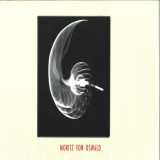
What are the differences and similarities between human and artificial sound, between oscillations generated by vocal cords and synthesizer voices, voltage amplified by speakers? On Silencio, his latest album for Tresor Records, Moritz von Oswald works with a 16-voice choir to explore this concept.
Drawing from the ensemble works of long-standing inspirations Edgard Varèse, György Ligeti and Iannis Xenakis, von Oswald and Vocalconsort Berlin delve into the space between sounds, creating a deeply textured collection that shifts between light & ethereal and
dark & dissonant.
As masterfully demonstrated in the early work of von Oswald and Mark Ernestus’ influential Basic Channel project, repetition and reduction are key elements here, much in the tradition of techno and minimalism. The vast dynamism of the human voice adds to the
profound weight of electronics while offering up a rhythmic source and sonic noise palette unexplored in von Oswald’s repertoire. In Silencio, von Oswald dredges a dank murk, pulling clouds over a distant pulse. It hangs, ready to take on new forms.
The compositions were written in von Oswald’s Berlin studio on classic synthesizers, such as the EMS VCS3 & AKS, Prophet V, Oberheim 4-Voice and the Moog Model 15. These abstract recordings were transcribed to sheet music for choir by Berlin-based Finnish composer and pianist, Jarkko Riihimäki and performed by Vocalconsort Berlin in Ölberg church in the city’s Kreuzberg district, only few metres down the road from where Dubplates & Mastering and Hard Wax opened their doors for music enthusiasts for many years so long. The recordings of the choral versions were then incorporated into the synthesized parts of the album and brought into anew electronic context; in Silencio, the focus is not on using one means to imitate the other, but to sonically discuss the tensions and harmonies between the two worlds and create a dialogue between them.
The relationship between von Oswald and Tresor Records goes back thirty years, all the way to Blake Baxter’s Dream Sequence in 1991 - which von Oswald engineered alongside Thomas Fehlmann. The collaboration with Fehlmann lived on, seeing the duo team up as 3MB with Eddie Fowlkes or Juan Atkins. More recently, the Detroit-Berlin connection continued as Juan Atkins & Moritz von Oswald present Borderland.
For von Oswald, Tresor Records and also the participating guest musicians of the choir, this release brings together audiences from other musical areas, cross-pollinating; Silencio is an album that stands for itself beyond the musical genre boundaries.