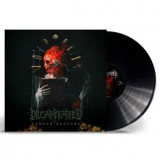
Across eight studio albums, DECAPITATED grew from the adolescent dream of teenagers from a small Central European town to one of the leaders of the metal genre. Each successive album further expands the band’s sound with genre-bending authenticity and integrity. As Metal Injection rightfully observed, “any self-respecting death metalhead knows the name well.”
DECAPITATED’s music is a weapon forged by four young men from a historic medieval-fortified town in Poland, which catapulted them to the top of a worldwide subculture. Like a rose in the devil’s garden, the DECAPITATED story builds triumph from tragedy. The gleeful grotesquery of extreme metal imagery and rifftastic bludgeoning beckons listeners to uncover broader truths.Upon the release of 2017’s Anticult, Metal Hammer declared DECAPITATED “a serious successor to the likes of Pantera and Lamb Of God – a band who can draw new legions into the metal world as its new champions.” Their diverse follow-up, 2022’s Cancer Culture, delivers on that promise.
Instantly recognizable devastation and deceptively sinister hooks abound. Freshly minted DECAPITATED anthems like “Last Supper,” “Hello Death,” “Just Cigarette,” “No Cure,” “Iconoclast,” and “Cancer Culture” shimmer with sonically sharp production and unrelenting bombast. There’s also a newly increased emphasis on melody, even venturing into darkly romantic territory. Wacław "Vogg" Kiełtyka (guitar), Rafał "Rasta" Piotrowski (vocals), Paweł Pasek (bass), and James Stewart (drums) are at the top of their game, delivering the goods at peak performance. Jinjer vocalist Tatiana Shmayluk and Machine Head frontman Robb Flynn make guest appearances.
Set on the descending plains of a mountain range amid a dense forest, Krosno boasts a 14th-century Gothic church, a Subcarpathian museum, and stunning artisan glassware. In this Polish town, teenage music student Wacław "Vogg" Kiełtyka discovered records from bands like Morbid Angel, Cannibal Corpse, Metallica, and Machine Head. The guitarist and his younger brother, drummer Witold “Vitek” Kiełtyka, cofounded DECAPITATED in 1996, inspired by a wide range of technical death, blackened thrash, and local heroes, like KAT and the world-renowned Vader. Death and black metal reigned supreme in the Polish scene of the 1990s, where Behemoth originated as well. In fact, a Vader song called “Decapitated Saints” inspired the band’s moniker.
The organic musical chemistry between the Kiełtykas was akin to the brotherly connectivity and vibe driving Pantera, Gojira, and the classic era of Sepultura. In 2006, Kerrang! praised the first three DECAPITATED albums - Winds of Creation (2000), Nihility (2002), and The Negation (2004) – as “superbly conceived and executed eruptions of technical brilliance and razor-sharp songwriting that turned these youthful Poles into one of the genre’s most widely respected bands.” That year’s Organic Hallucinosis further perfected Vogg’s penchant for blending extremity with catchy hooks.
The rule-breaking ferocity and invention of the first four albums reinvigorated death metal, as DECAPITATED inspired a new generation of bands who followed suit. Sadly, this era came to a shocking end in late 2007. While touring Russia, the band’s bus collided with a large truck near the border with Belarus. Both Vitak and then-singer Adrian “Covan” Kowanek sustained severe head injuries. Tragically, Vitak passed away in a Russian hospital a few days later. He was just 23.Vogg summoned the courage to continue, in honor of his brother and what they created, and returned with a new incarnation of DECAPITATED and the fiercely adventurous comeback album, Carnival is Forever (2011) featuring new vocalist Rafał "Rasta" Piotrowski. Blood Mantra (2014) introduced bassist, Paweł Pasek. Blabbermouth declared it “perhaps the most poised and gutsy” DECAPITATED album, adding “its courageous bends make it a turbulent but pleasurable ride.”
Cancer Culture sounds brilliant, modern, and tasty. “There is no place for any fake, plastic, bullshit drum machine or anything like that,” Vogg insists. “It’s all organic, pure, and clear, showing the true face of the band. Vogg and company entrusted the Cancer Culture mix to David Castillo at Sweden’s Fascination Street Studios / Studio Gröndahl (Sepultura, Carcass, Opeth, Katatonia), and legendary American producer Ted Jensen (Metallica, Slipknot, Pantera, Machine Head, Korn).
The devoted supporters who traveled to see DECAPITATED on international tours with the likes of Lamb Of God, Meshuggah, Soulfly, Fear Factory, and Suffocation over the years will recognize the ever-present pummeling backbone. Longtime fans and newcomers alike will connect to the variety of atmospheric depth throughout Cancer Culture’s ten boundlessly energetic and creative tracks.
“If you told me 25 years ago, in my neighborhood in the South of Poland, that I would be in Machine Head, sharing riffs with Robb Flynn,” Vogg marvels. “It’s simply incredible. It means that everything is possible in your life. That gives me the faith to believe that I can achieve even more in my career. The dreams we have when we are kids, things we can barely imagine, can happen.” Flynn contributes a hauntingly beautiful vocal to the Cancer Culture track “Iconoclast.” “Clean vocal singing is a really new thing in DECAPITATED,” Vogg notes. “It’s really unique and amazing.”
Driven by Vogg’s passion and integrity, the dual emphasis on creative invention and technical prowess maintains DECAPITATED’s stature as genre-leaders in 2022 and beyond. The band’s supporters continually demonstrate confidence and absolute certainty DECAPITATED will deliver.
Cerca:j courage
The Diva Faïrouz.
Her real name Nouhad Haddad, she was born in the Zokak el Blat district of Beirut. The eldest of a modest Maronite family, she developed a passion for singing very early on. Her parents are too poor to afford the luxury of a radio, so she spends most of her time listening, her ear glued to the wall, to the neighbors. Nouhad quickly memorizes the songs she hears and gives a few samples at parties organized by her school. It was there that she seduced her comrades with her vocal abilities and that she was noticed in 1947 by the composer Mohammed Fleyfel.
The echo of his velvety voice reaches Halim el Roumi, talent scout, renowned singer-songwriter and director of Lebanese Radio, who asks to audition him immediately. Literally fascinated, el Roumi introduced him to the choir of Radio Beirut, baptized it with the name of Faïrouz and became its appointed composer. Then, he introduces her to Assi el Rahbani, a young avant-garde composer who, in the company of his brother Mansour, wishes to renew a Lebanese song under profound Egyptian influence.
The teenager Faïrouz succumbed to the personal charm of Assi, whom she married in 1954, and to that of his compositions (the model couple of Arab song would be separated by the death of their husband in 1986). The heavenly trio causes, from the publication of its first titles, a real musical revolution. Traditionalists howl at sacrilege and distortion while sympathizers of the rejuvenation and modernization of Lebanese folklore, weary of insipid refrains and pale copies, show their enthusiasm.
In 1957, Faïrouz opened the International Festival of Baalbek (a locality mentioned in one of his flagship titles) and sang in the middle of the six columns of the Roman temple. This initial encounter with his audience, who warmly welcomed him, earned him the nickname "seventh column". Faced with this fabulous galloping success, the Rahbanis are stepping up their offensive and courageously playing the card of constant innovation. They wrote for Faïrouz musical sketches, operettas and, from 1962 to 1976, about fifteen sung plays in which she plays the role of a woman in love with Love, the true, the pure, the innocent. , and that of hope. She also appears in a few films but she quickly interrupts her cinematic odyssey.
It is still and always one of the major references of Arabic song and many of its titles, such as "Bint el Chalabia", are hummed as much by the new generation as by the old.
The music of Isaac de Martin, aka IKE, blends jazz and electronic influences into warm, smooth, and often cinematic soundscapes. A certain eclecticism is not surprising considering that the Berlin-based composer, producer and guitarist was born in Italy into a musical family with British roots, studied classical guitar, graduated in jazz and went on to develop his personal style through creative experimentation, live touring and collaborative work with artists from a variety of disciplines and countries.
The Great Escape, his second album under the moniker IKE, is a collection of songs and instrumental pieces that have a common theme: the escape from – or possible antidotes to – our present techno-scientific society. It is an invitation to take courage, look into ourselves, and go back to our inner child, seen as the guardian of a world of freedom, imagination, spontaneity and natural rhythms.
The concept for the album first came to IKE in mid-2019, when he started collaborating with American singer-songwriter and actress Sera Kalo. Not only did Sera's soulful melodies, powerful vocals and heart-felt lyrics beautifully complement IKE's elegant nu jazz compositions, but the songs they penned together unlocked a specific creative vision. IKE went on to explore and capture it over the next year or so, getting on board great musicians from the US, UK, Scandinavia and, of course, Italy.
Recorded in various locations by IKE himself, the album was mixed by Nene Baratto at Big Snuff Studio, Berlin, and mastered by Fabrizio De Carolis at Reference Mastering Studio, Rome. The stunning artwork is by Italian graphic designer Franz Longhi, who, in line with the album's concept, created an analog feel by hand painting on Xeroxed photographs.
Repress
To emerge from a global pandemic with a renewed sense of situational awareness, hard won insight, and a new album is the kind of move we've come to expect from THRICE over the last twenty years. With Horizons/East, Dustin Kensrue and his bandmates address, with candor and courage, the fragile and awkward arrangements that pass for civilization, while inviting us to dwell more knowingly within our own lives. Without surrendering any of the energy and hard edge of their previous albums, they've given us a profoundly meditative work which serves as a musical summons to everyday attentiveness. Since forming THRICE with guitarist Teppei Teranishi, bassist Eddie Breckenridge, and drummer Riley Breckenridge in 1998, Kensrue has never been one to back down from a mental fight. This mood is set by the opening synth-driven number "Color of the Sky," which sounds well-suited to accompany the closing credits of the Stranger Things season finale. Think Flying Lotus giving way to Elbow and setting the listener down in a new dimension. A self-recorded effort, Horizons/East conveys a palpable sense of danger, determination, and possibility.
To emerge from a global pandemic with a renewed sense of situational awareness, hard won insight, and a new album is the kind of move we've come to expect from THRICE over the last twenty years
With Horizons/East, Dustin Kensrue and his bandmates address, with candor and courage, the fragile and awkward arrangements that pass for civilization, while inviting us to dwell more knowingly within our own lives. Without surrendering any of the energy and hard edge of their previous albums, they've given us a profoundly meditative work which serves as a musical summons to everyday attentiveness.Since forming THRICE with guitarist Teppei Teranishi, bassist Eddie Breckenridge, and drummer Riley Breckenridge in 1998, Kensrue has never been one to back down from a mental fight. This mood is set by the opening synthdriven number "Color of the Sky," which sounds well- suited to accompany the closing credits of the Stranger Things season finale. Think Flying Lotus giving way to Elbow and setting the listener down in a new dimension. A self-recorded effort, Horizons/ East conveys a palpable sense of danger, determination, and possibility.
- A1: A Gente Acaba (Vento Em Rosa) (Vento Em Rosa)
- A2: Don't Forget You're Precious
- A3: Fucking Let Them
- A4: The World Is Mine
- A5: The Sound Of My Feet On This Earth Is A Song To Your Spirit
- B1: I'm Gonna Say Seven
- B2: Do You Know A Human Being When You See One?
- B3: Visitors Yt15B - Jerusalem, Palestine
- B4: I'm Good At Not Crying
- B5: Now (Stars Are Lit) (Stars Are Lit)
- B6: Again (Feat Falle Nioke)
- C1: Mrs Calamari
- C2: People What's The Difference?
- C3: Visitors Xt8B - Oak
- C4: Who Is A Fool
- C5: I Will Not Be Safe
- D1: Visitors Yt15 - Krupp Steel Condition Pivot
- D2: Broken Like
- D3: Now (Pink Triangle, Blue Valley) (Pink Triangle, Blue Valley)
LA FAMILIA AUFLAGE!!!
GOLD, the follow-up to Alabaster DePlume's widely-acclaimed, 2020-
released cinematic instrumental LP To Cy & Lee: Instrumentals Vol. 1,
introduces the world to the artist’s truest self.
That is... though DePlume’s now known across the globe as the saxophonist who created that collection of wonderful, wordless music, he’s most known to fervent fans in his home zone of London, UK, as an outspoken poet and orator, beloved for his inspiring words of encouragement and sing-a-long-able songs about vulnerability, humanity, and courage. GOLD is a sprawling double album that finds DePlume expressing both sides of his artistic character beautifully: (1) an articulate singer and songwriter who invokes the melodious crooning of Donovan as much as Devendra Banhart or Syd Barrett, whose tunes are almost like mini-sermons, full of existential comedy and spiritual enlightenment; and (2) a brilliant composer of simple, soothing, and viscerally nourishing instrumental melodies, with a gift for expanding them into intrepid collective improvisations, led by a delicate and distinguished saxophone tone that conjures the fluttery sweetness of the great Ethiopique Getatchew Mekurya.
Packaging specs: Black & 'Eye of the Sun' coloured Vinyl 2xLP in Heavyweight Gatefold Jacket with Gold-Foil Stamp over Reverse-Board print, with Insert Sheet, IA OBI Strip and Dome-Pattern Inner Sleeves
All Away Lou is the new band from Lou Hanman; a 40 something, queer, English woman living in Philadelphia, PA, still playing punk rock three decades in because it's fun and she needs it! The force behind UK punk favourites Caves & Flamingo 50. Lou emigrated to the US 6 years ago to pursue music full time, touring & recording drums, bass, guitar for the likes of RVIVR, Mikey Erg, Thin Lips, Katie Ellen, Queen of Jeans, Worriers. After a significant songwriting drought, the pandemic and a break from touring gave Lou the space to focus on her own musical output and spend some time recording at Headroom Studios in her current hometown of Philadelphia, PA with Kyle Pulley and Jackie Milestone. While she records everything herself, All Away Lou is very much a band, and an opportunity to get loud, sweaty and rock out as soon as the possibility arises. The name simply comes from never feeling at home, always away. She had felt the culture shock of moving to the states from the UK (especially of the political landscape after November 2016) and a breakup that underpinned the realization that life was not turning out the way she had hoped. Lyrics on the record reflect this point in Lou’s life: the need to return to a feeling of “home” and have the courage to change her mind, take a new path and not settle for things that didn’t feel right. All Away Lou will be taking the album on the road with dates in the UK & Ireland supporting Jeff Rosenstock & Fresh in April 2022.
Loss and hope, isolation and communion, the cessation and renewal of purpose. Timeless and
salient, these themes echo throughout the fifth album from Midlake, their first since ‘Antiphon’
in 2013.
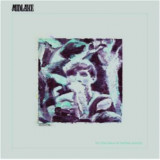
From the cover to the title and beyond, a longing to reconnect with that which seems lost and
seek purpose in its passing sits at the record’s core. The cover star is keyboardist/flautist Jesse
Chandler’s father, who, tragically, passed away in 2018. As singer Eric Pulido explains, “He
was a lovely human, and it was really heavy and sad, and he came to Jesse in a dream. I
reference it in a song. He said, ‘Hey, Jesse, you need to get the band back together.’ I didn’t
take that lightly.”
A desire to commune with the past and connect with present, lived experience asserts itself
from the opening of the album. ‘Bethel Woods’ sustains and develops that reconnection,
evoking the steadfast and contemplative urgency of ‘The Trials of Van Occupanther’ to back a
lyric steeped in yearning for a paradisal time and place of hope and optimism. Soaring guitars
and atmospheric noise effects extend a sonic scope further developed by ‘Glistening,’ where
arpeggios dance like light glancing off a lake. In just three songs, Midlake reintroduce
themselves and reach out into fresh territory with a richly intuitive dynamism, honouring their
past as a seedbed of possibility.
Elsewhere, the prog-enhanced funk-rock of ‘Gone’ seeks to find hope in relationships that
seem fragile. The ELO-esque ‘Meanwhile…’ draws inspiration from what happened when
Midlake paused after ‘Antiphon’, developing universal resonance as a song about the beautiful
growths that can emerge from the cracks and gaps between things. ‘Dawning’ draws on 1970s
soft-rock stylings for another song searching for hope, its keyboard line reaching out towards
an uncertain future while everything seems to collapse around it; ‘The End’ reflects on the
difficulties of partings.
On-hand was new collaborator John Congleton, who produced, engineered and mixed the
album, marking Midlake’s first record with an outside producer. “I can’t say enough just how
much his influence brought our music to another sonic place than we would have,” says Pulido.
“I don’t want to record without a producer again. Part of that is the health of the band, because
as you get older you get more opinionated and you kind of need that person who says, ‘No, it’s
going to be this way!’ It’s hard to do that with your friends.”
The result is a powerful, warming expression of resolve and renewal for Midlake, opening up
new futures for the band and honouring their storied history. Formed in the small town of
Denton, with roots in the University of North Texas College of Music, Midlake delivered an
auspicious debut with 2004’s ‘Bamnan and Slivercork’. For the follow-up, they looked further
afield and deeper within to deliver 2006’s wondrous ‘The Trials of Van Occupanther’, a modern
classic pitched between 1871, 1971 and somewhere out of time: between Henry David
Thoreau and Neil Young’s ‘After the Gold Rush’, between 1970s Laurel Canyon thinking and a
longing for something more mysterious.
Confidence bolstered by a growing fanbase and a developed sense of their own far-reaching
abilities, Midlake - a band acutely attuned to seasonal shifts - then embraced change. In 2010,
they visited darker psych-folk thickets for ‘The Courage of Others’ and backed John Grant on
his lustrously spiky breakthrough album, ‘Queen of Denmark’. When singer Tim Smith departed
Midlake in 2012, Pulido stepped up to the lead vocal role for 2013’s freshly exploratory
‘Antiphon’, teasing out singular routes through vintage electric-folk pastures.
In reuniting, the bandmates were adamant that Midlake needed their absolute focus. The result
is an album of tremendously engaged thematic and sonic reach with a warm, wise sense of
intimacy at its heart: an album to break bread and commune with, honour the past and travel
onwards with. In ‘Bethel Woods’, Pulido sings of gathering seeds. On ‘For the Sake of Bethel
Woods’, those seeds are lovingly nurtured, taking rich and spectacular bloom.
LP pressed on 180g vinyl in a gatefold sleeve printed on matt card and printed inner sleeve
with lyrics and digital download card.
Loss and hope, isolation and communion, the cessation and renewal of purpose. Timeless and
salient, these themes echo throughout the fifth album from Midlake, their first since ‘Antiphon’
in 2013.
From the cover to the title and beyond, a longing to reconnect with that which seems lost and
seek purpose in its passing sits at the record’s core. The cover star is keyboardist/flautist Jesse
Chandler’s father, who, tragically, passed away in 2018. As singer Eric Pulido explains, “He
was a lovely human, and it was really heavy and sad, and he came to Jesse in a dream. I
reference it in a song. He said, ‘Hey, Jesse, you need to get the band back together.’ I didn’t
take that lightly.”
A desire to commune with the past and connect with present, lived experience asserts itself
from the opening of the album. ‘Bethel Woods’ sustains and develops that reconnection,
evoking the steadfast and contemplative urgency of ‘The Trials of Van Occupanther’ to back a
lyric steeped in yearning for a paradisal time and place of hope and optimism. Soaring guitars
and atmospheric noise effects extend a sonic scope further developed by ‘Glistening,’ where
arpeggios dance like light glancing off a lake. In just three songs, Midlake reintroduce
themselves and reach out into fresh territory with a richly intuitive dynamism, honouring their
past as a seedbed of possibility.
Elsewhere, the prog-enhanced funk-rock of ‘Gone’ seeks to find hope in relationships that
seem fragile. The ELO-esque ‘Meanwhile…’ draws inspiration from what happened when
Midlake paused after ‘Antiphon’, developing universal resonance as a song about the beautiful
growths that can emerge from the cracks and gaps between things. ‘Dawning’ draws on 1970s
soft-rock stylings for another song searching for hope, its keyboard line reaching out towards
an uncertain future while everything seems to collapse around it; ‘The End’ reflects on the
difficulties of partings.
On-hand was new collaborator John Congleton, who produced, engineered and mixed the
album, marking Midlake’s first record with an outside producer. “I can’t say enough just how
much his influence brought our music to another sonic place than we would have,” says Pulido.
“I don’t want to record without a producer again. Part of that is the health of the band, because
as you get older you get more opinionated and you kind of need that person who says, ‘No, it’s
going to be this way!’ It’s hard to do that with your friends.”
The result is a powerful, warming expression of resolve and renewal for Midlake, opening up
new futures for the band and honouring their storied history. Formed in the small town of
Denton, with roots in the University of North Texas College of Music, Midlake delivered an
auspicious debut with 2004’s ‘Bamnan and Slivercork’. For the follow-up, they looked further
afield and deeper within to deliver 2006’s wondrous ‘The Trials of Van Occupanther’, a modern
classic pitched between 1871, 1971 and somewhere out of time: between Henry David
Thoreau and Neil Young’s ‘After the Gold Rush’, between 1970s Laurel Canyon thinking and a
longing for something more mysterious.
Confidence bolstered by a growing fanbase and a developed sense of their own far-reaching
abilities, Midlake - a band acutely attuned to seasonal shifts - then embraced change. In 2010,
they visited darker psych-folk thickets for ‘The Courage of Others’ and backed John Grant on
his lustrously spiky breakthrough album, ‘Queen of Denmark’. When singer Tim Smith departed
Midlake in 2012, Pulido stepped up to the lead vocal role for 2013’s freshly exploratory
‘Antiphon’, teasing out singular routes through vintage electric-folk pastures.
In reuniting, the bandmates were adamant that Midlake needed their absolute focus. The result
is an album of tremendously engaged thematic and sonic reach with a warm, wise sense of
intimacy at its heart: an album to break bread and commune with, honour the past and travel
onwards with. In ‘Bethel Woods’, Pulido sings of gathering seeds. On ‘For the Sake of Bethel
Woods’, those seeds are lovingly nurtured, taking rich and spectacular bloom.
LP pressed on 180g vinyl in a gatefold sleeve printed on matt card and printed inner sleeve
with lyrics and digital download card.
- A1: One Summer Day
- A2: A Road To Somewhere
- A3: The Empty Restaurant
- A4: Nighttime Coming
- A5: The Dragon Boy
- A6: Sootballs
- A7: Procession Of The Spirits
- A8: Yubaba
- B1: Bathhouse Morning
- B2: Day Of The River
- B3: It's Hard Work
- B4: The Stink Spirit
- B5: Sen's Courage
- B6: The Bottomless Pit
- B7: Kaonashi (No Face) (No Face)
- C1: The Sixth Station
- C2: Yubaba's Panic
- C3: The House At Swamp Bottom
- C4: Reprise
- C5: The Return
- C6: Always With Me
2xLP gatefold jacket (recorded in Side A, B, C, and no music recorded in back side of Side D)
Soundtracks recorded in a hall by full orchestra of New Japan Philharmonic.
Including the main theme “Itsumo Nando Demo” (vocal: Yumi Kimura).
'Revisited' is a hybrid of studio and concert recordings from the
acclaimed Norwegian pianist/composer Helge Lien and his trio
Miraculously, however, you can't hear the hybrid nature of the source material. All
tracks blend into a cohesive, 50- minute piece: There are no sounds from the
audience and the studio takes feel as urgent as the live performances.
After the departure of Frode Berg (after 'Guzuguzu') and Per Oddvar Johansen
(after '10'), Helge Lien had to re-think and re-assemble his trio. All the while, he
continued to record and (virtually) perform you could call it improvisation
squared.
The courage has paid off: The new formation - Johannes Eick joining on bass
alongside the returning Knut Aalefjaer on drums - arrived at interpretations which
felt like a look back and a fresh departure all at once: This is not a revolution, it's
passion under the microscope.
With her very own musical language, pianist Julia Kadel has become a
regular talking point in jazz circles, releasing her first two records on Blue
Note/Universal she and her trio were nominated in 2015 for the
prestigious German Music Award Echo Jazz as "Newcomer of the year"
and Julia Kadel as "Female instrumentalist of the year"
Julia Kadel's variable competitions, her imaginative playing and the band's
striking improvisations became more courageous over time. On 'Kaskaden' they
have now reached a new dimension of detail and intensity. More determined than
ever, the trio balances the fine line between harmony and atonality, intuition and
reflection, poetry and austerity.The live qualities of the trio, which was founded in
2011, its subtle interaction and intuitive understanding encouraged the trio to
produce the new album under live conditions - especially as it took place in the
legendary MPS studio in Villingen (Black Forest, Germany). Its history dates back
to 1958, great jazz pianists such as Oscar Peterson, George Shearing, Monty
Alexander and Bill Evans once recorded here. With the Bösendorfer Grand
Imperial grand piano - once acquired for Friedrich Gulda - in the center
surrounded by classic analogue technology, Kaskaden was captured to tape oneto- one. This influenced not only the charismatic sound but also the special
atmosphere that characterises the album.
Furthermore, the location of the recording not only came as a surprise but
probably also as a small sensation to every fan of MPS as the Julia Kadel Trio is
the first MPS act after over 35 years recording again in the historic studios; the
popular German magazine Der Spiegel reported about it.
- A1: Alexander Courage– Star Trek - Original Series Main Title 1:03
- A2: Alexander Courage– The Cage - Vena's Dance 1:49
- A3: Alexander Courage– The Naked Time - Trailer 1:02
- A4: Gerald Fried– Shore Leave - Ruth 2:37
- A5: Alexander Courage– Theme From Star Trek - Lounge Mix 1:39
- A6: Jerry Fielding– Suite From The Trouble With Tribbles 5:19
- A7: Alexander Courage– Star Trek - End Title 0:50
- B1: Alexander Courage, Jerry Goldsmith– Star Trek: The Next Generation - Main Title 1:49
- B2: Dennis Mccarthy, Alexander Courage– Encounter At Farpoint - Stardate 1:43
- B3: Jay Chattaway– Suite From Tin Man 2:55
- B4: Dennis Mccarthy, Alexander Courage– Departure - Main Title Version #2 (Alternate Main Title) 1:46
- B5: Ron Jones (2)– The Best Of Both Worlds - Borg Take Picard 3:06
- B6: Jay Chattaway– Theme From The Inner Light 2:51
- B7: Jay Chattaway– A Fistful Of Datas 4:53
- B8: Ron Jones (2), Jerry Goldsmith– Star Trek: The Next Generation - End Credit 1:02
- C1: Dennis Mccarthy– Star Trek: Deep Space Nine - Main Title 1:56
- C2: Dennis Mccarthy– The Emissary - Cucumbers In Space 1:44
- C3: Dennis Mccarthy– The Emissary - The Sisko Kid 4:41
- C4: Dennis Mccarthy– Suite From Way Of The Warrior - Yo! 4:09
- C5: Dennis Mccarthy– Suite From The Visitor - Rainy Night 1:08
- C6: Dennis Mccarthy– Suite From The Visitor - One Last Visit 2:58
- C7: Jay Davenport, Eric Cooley– "Fever" From His Way Performer – Nana Visitor 2:01
- D1: Jerry Goldsmith– Star Trek: Voyager - Main Title 1:45
- D2: Jay Chattaway– Caretaker - Prologue 3:13
- D3: Jay Chattaway– The Caretaker's Hoedown 2:35
- D4: Dennis Mccarthy– Suite From Heroes And Demons - Last Hope 2:32
- D5: Dennis Mccarthy– Suite From Heroes And Demons - Dr. Schweitzer 1:20
- D6: David Bell– Suite From Bride Of Chaotica - Begin Chapter 18/1 Present... Arachnia 4:21
- D7: Jerry Goldsmith– Star Trek: Voyager - End Credit 1:16
- C8: Dennis Mccarthy– Theme From Star Trek: Deep Space Nine - Season 4 1:56 Voyager
After being out of print for several years, Duval Timothy’s phenomenal ‘Brown Loop’ has finally been reissued. Recorded in New York in the winter months of 2016, this brand-new edition features a slightly adjusted track listing. The release date is 2nd of October 2020, which happens to be the multidisciplinary artist’s birthday. Duval has asked me to write a few words about his record.
I often find myself listening to Duval’s music when travelling. On an aeroplane for example, where the comforting piano pieces are set starkly against the sound of the world passing by, the constant engine humming, air conditioning running. Or when I’m walking through a city I’ve not been to before, the music blending into the continuous noise of cars and motorbikes, anchoring me when I find myself in unknown surroundings. Grounding me, one note at a time, in contrast to a city that does the exact opposite. Duval’s compositions bring a sense of comfort where there is detachment. It’s the soundtrack for an immigrant (such as myself), alienated from wherever he came, but someone who also doesn’t fully belong to the place he set off to.
I heard Duval describe the music of Brown Loop as ascending a mountain, and after you reached the top you come down to the other end. Through rhythmic repetitive patterns, the music builds. Within the pieces, melodies stray away from the theme, into unknown territories, but always find their way back to a comfortable home. Most elaborately this happens on my favourite piece, Hairs. The patterns and melodies on pieces such as Through The Night and (recently added to the vinyl version) G are stripped down to their very essence.
It is not just jazz, it’s pure hip hop, as the hooks are reminiscent of the shards of melancholy legends like Dilla, Pete Rock and Havoc used in their best work. In terms of repetition, the music is also very techno. And like in all good techno, the patterns (perhaps contrary to popular belief) ooze humanity and emotion. But most of all Duval’s Brown Loop is a very personal record. it takes courage to expose your inner self like that in the most minimal of compositions. But once you find the right notes, the right pattern, music is the most beautiful thing in the world.
- 01: Kalbim Yok
- 02: Toz Duman
- 03: Dibini Gör
- 04: Hepsi Hepsi Hayat Nasıl Olsa
- 05: Aramızda Birşeyler Var
- 06: Küçük Şirin Bir Cuma Akşamı
- 07: Sarışınlar Boktur
- 08: Benim Yolum Ayrı
- 09: Oyun
- 10: Bırak İşini
- 11: Mayıs
- 12: Serseri Marşı
- 13: Tadım Yok
- 14: Beni Seversen
- 15: Ben Yokum Artık
- 16: Yarım
- 17: Rövanş
- 18: Sen
- 19: Kaçacağım
The punchy sound, courageous lyrics and their anarchist attitude was a bit too much for the mainstream music industry. Still the underground rock scene of Turkey in the 2000s was broad and generous enough to welcome the discrete.
Zardanadam hit hard with their DIY practices. Besides being the pioneers of copyleft digitals, they self-produce and distribute almost 100 000 CDs at concerts and via airmail for free.
Here is a selection of their greatest hits from the six-album discography compiled for the first time on vinyl for the 20th anniversary of the band.
- A1: Italia: Ultimo Atto? Seq 1
- A2: Italia: Ultimo Atto? Seq 2
- A3: Italia: Ultimo Atto? Seq 3
- A4: Italia: Ultimo Atto? Seq 4
- A5: Italia: Ultimo Atto? Seq 5
- B1: Italia: Ultimo Atto? Seq 6
- B2: Italia: Ultimo Atto? Seq 7
- B3: Italia: Ultimo Atto? Seq 8
- B4: Italia: Ultimo Atto? Seq 9
- B5: Italia: Ultimo Atto? Seq 10
In 1977, in the midst of a period of political turmoil and social unrest that went down in Italian history as "years of lead", screenwriter and director Massimo Pirri made a film no one else had the courage to make: Italia: ultimo atto? (Could It Happen Here?). Here, Pirri explores the controversial (and, in the 70s, very current) topic of left-wing armed struggle. He does so through a storyline that is almost prophetic: in the film, a mysterious ultra-leftwing armed group plans and executes the killing of the Ministry of the Interior; in 1978 Christian Democrat leader and former premier Aldo Moro was kidnapped and killed by the Marxist-Leninist Red Brigades).
The violence of Pirri's storyline is fully captured by the score composed by Lallo Gori, who uses obscure synths, analog keyboards, and dry-sounding acoustic drums to create an extremely tense and frenzied soundscape of electronic textures.
The result is an album that combines dark, haunting jazz-funk with ambient atmospheres and suspenseful electronic sounds, and which ends up sounding like an instrumental proto-hip hop record where Moog synths take the lead together with drums.
At the time, this must have seemed like a low-budget, ramshackle soundtrack – essentially, a B-movie soundtrack. Indeed, the extensive use of electronic sounds was meant to compensate for the lack of acoustic instruments, such as the bass or (alas!) brass, which were replaced by keyboards and MiniMoog synths. Today, however, Lallo Gori's odd and minimalistic style of arranging makes this score sound unexpected, avant-garde, and innovative. In short, modern and contemporary.
Previously unreleased in any format, all tracks have been remastered from the original master tapes.
- 1: Main Theme
- 2: Steel Thy Shovel
- 3: One Fateful Knight
- 4: Strike The Earth! (Plains Of Passage)
- 5: The Rival (Black Knight - First Battle)
- 6: For Shovelry! (Boss Victory)
- 7: The Starlit Wilds (Campfire Scene)
- 8: The Adventure Awaits (Map Screen)
- 9: In The Halls Of The Usurper (Pridemoor Keep)
- 10: The Decadent Dandy (King Knight Battle)
- 11: High Above The Land (The Flying Machine)
- 12: The Spin Controller (Propeller Knight Battle)
- 13: An Underlying Problem (The Lost City)
- 14: The Claws Of Fate (Mole Knight Battle)
- 15: No Weapons Here (Village)
- 16: Pastorale (Village Interiors)
- 17: The Local Happenstance (Village Basement)
- 18: Watch Me Dance! Spin Ye Bottle (Minigame)
- 19: A Thousand Leagues Below (Iron Whale)
- 20: The Bounty Hunter (Treasure Knight Battle)
- 21: Of Devious Machinations (Clockwork Tower)
- 22: The Schemer (Tinker Knight Battle)
- 23: The Destroyer (Tinker Tank Battle)
- 24: The Donor's Despair (Hall Of Champions)
- 27: Waltz Of The Troupple King
- 28: The Defender (Black Knight Battle)
- 29: Courage Under Fire - Armorer Village
- 30: Bucklers And Bonnets - Armorer Interior
- 31: Fighting With All Of Our Might
- 32: Flowers Of Antimony (The Explodatorium)
- 33: The Vital Vitriol (Plague Knight Battle)
- 34: La Danse Macabre (Lich Yard)
- 35: The Apparition (Spectre Knight Battle)
- 36: A Cool Reception (The Stranded Ship)
Shovel Knight began as a modest, yet highly promising Kickstarter project in March 2013. Billed as “a groundbreaking love letter to 8 bits!” by Indie developer Yacht Club Games, this 2D side-scrolling platform game released in June 2014 to universal praise and accolades.
Fans and industry professionals praised Shovel Knight for its charming retro-2D visuals, humorous story, fun characters and strong gameplay design, which all came together to offer a game that is nostalgic yet very modern. The efforts of Yacht Club Games paid off when Shovel Knight was won the prestigious “Best Independent Game” award at The Game Awards 2014. The game’s chiptune soundtrack, composed by Jake Kaufman and Manami Matsumae, is integral to the game’s modern-retro identity and has been similarly praised for its outstanding arrangements, memorable melodies and strong technical composition. This definitive soundtrack contains all music from the original Shovel Knight game released in June 2014, with a vinyl tracklist crafted by Jake Kaufman himself. The package cover and inner-gatefold have been designed exclusively for the soundtrack by Hitoshi Ariga; an interview with co-composer Manami Matsumae; and character artwork from the game.
- A1: Tomaga - Dub Divers
- A2: Zzmmyyhh - Ypy
- A3: Kuzaliwa Upya - Hieroglyphic Being
- A4: Hilal - Tarek Yamani
- A5: Vaguement (Haddadi) - Alan Strani
- B1: And The Ashes Of Our Burning Souls Will Fly Away - Ben Bertrand
- B2: Schein Davon - Conny Frischauf
- B3: Sitt-Il Muhanna - Aya Metwalli
- B4: Zumayyah (Remix) - Joakim
- C1: Yā Mal (Midaf ) - Poul Rovsing Olsen (Archive)
- C2: Zumayyah - Poul Rovsing Olsen (Archive)
- C3: Haddadi - Poul Rovsing Olsen (Archive)
- D1: Bahrï - Poul Rovsing Olsen (Archive)
2LP + 258p book[44,08 €]
New FLEE publication focused on Arabian Gulf's pearl divers, their culture through their soundscape, traditional songs & rhythms. Including archival recordings and reinterpretations by moderns electronic artists such as Joakim, Tomaga, Ben Bertrand, Conny Frischauf, Hieroglyphic Being .....
Available as 2LP, black vinyls & 2LP+258p book (English & Arabic text) bundle.
The pearls of the Gulf have stoked the imagination and desire of people around the world for centuries, their magnificence matched only by the courage of the divers who found them. This project aims to honor the memory of these valiant free-divers, their culture and their music by the means of a 2XLP compilation with undisclosed original recordings of pearl divers and inspired modern-day compositions by artists like Tomaga, YPY, Ben Betrand, Tarek Yamani or Hieroglyphic Being. Along with that record, a 258 pages long book in Arabic and English is available featuring contributions from regional experts and artists to contextualize the tremendously rich theme that is pearling and its music.
- A1: Sigrgaldr
- A2: Holmgång (Svitjod Edition)
- A3: Vápnum (Svitjod Edition)
- A4: Ulfhednar (Svitjod Edition)
- A5: Hardrádi (Svitjod Edition)
- A6: Till Valhall (Svitjod Edition)
- A7: Jörmungand (Svitjod Edition)
- A8: Hekwos (Svitjod Edition)
- A9: Sänd Dina Korpar (Svitjod Edition)
- A10: Fnfal (Svitjod Edition)
- A11: Ragnarök (Svitjod Edition)
- B1: S Igrgaldr
- B2: Holmgång (Vinland Edition)
- B3: Vápnum (Vinland Edition)
- B4: Ulfhednar (Vinland Edition)
- B5: Hardrádi (Vinland Edition)
- B6: Till Valhall (Vinland Edition)
- B7: Jörmungand (Vinland Edition)
- B8: Hekwos (Vinland Edition)
- B9: Sänd Dina Korpar (Vinland Edition)
- B10: Fnfal (Vinland Edition)
- B11: Ragnarök (Vinland Edition)
Ragnarök will be HULKOFF's third solo album. The album's primary focus is to honor the courageous people who came before us and those ahead of us, the brave ones who will ultimately replace us. Repeating the successful duo- lingual approach of HULKOFF's previous album Pansarfolk, Ragnarök will be available in both English and Swedish; with the Svitjod Edition sung in Swedish and the Vinland Edition in American English.
To emerge from a global pandemic with a renewed sense of situational awareness, hard won insight, and a new album is the kind of move we've come to expect from THRICE over the last twenty years. With Horizons/East, Dustin Kensrue and his bandmates address, with candor and courage, the fragile and awkward arrangements that pass for civilization, while inviting us to dwell more knowingly within our own lives. Without surrendering any of the energy and hard edge of their previous albums, they've given us a profoundly meditative work which serves as a musical summons to everyday attentiveness. Since forming THRICE with guitarist Teppei Teranishi, bassist Eddie Breckenridge, and drummer Riley Breckenridge in 1998, Kensrue has never been one to back down from a mental fight. This mood is set by the opening synth-driven number "Color of the Sky," which sounds well-suited to accompany the closing credits of the Stranger Things season finale. Think Flying Lotus giving way to Elbow and setting the listener down in a new dimension. A self-recorded effort, Horizons/East conveys a palpable sense of danger, determination, and possibility.