
8
vorbestellen31.05.2024
erscheint voraussichtlich am 31.05.2024
25,00 €
erscheint voraussichtlich am 31.05.2024

Dubbed out new version of a Japanese reggae classic from 1982 by UK-based Tokyo Riddim Band. Recorded and mixed by the legendary Prince Fatty in South London, it's a fusion of past and present, East and West.
Three generations of female musicians from Japan come together, blending reggae drums, funky bass, and the smooth City Pop guitar, all magically dubbed-out live on stage. Tokyo Riddim Band is a culture clash phenomenon unlike anything else.
Championed by Gilles Peterson, and featured on NTS, Pitchfork and Bandcamp Daily, the group was born out of Time Capsule’s wildly popular compilation “Tokyo Riddim 1976-1985”. In just a matter of months they have sold out headline shows across London and supported Kyoto Jazz Massive at Jazz Cafe, conjuring a raucous, dubby dancefloor that brings the classic Japanese reggae sound of the ‘70s and ‘80s to life for a new generation.
Led by the inimitable pianist and composer Izumi ‘Mimi’ Kobayashi who featured on the original compilation, Tokyo Riddim Band are set to release a series of 7” singles in the coming months with more live shows planned throughout the summer 2024.
The first single, 'Denshi Lenzi', reinvents the Natural Mystic riddim of the original Japanese production, infusing it with dubbed-out vocals, sirens, and electrifying e-tom sounds, delivering an authentic reggae/dub experience with a distinct UK flair.
Bestelle jetzt und wir bestellen den Artikel für dich beim Lieferanten.

Horace Andy a.k.a.Sleepy must process one of the sweetest and most distinctive voices in reggae music. 1951 in Kingston Jamaica. He cut his first track in 1966 for producer George ‘Phil’ Pratt, a tune called ‘Black Man’s Country’. But it was four years later his star really began to shine when he joined the stable of Clement ‘Coxsone’ Dodd’s Studio One. It was Coxsone Dodd who renamed him Andy after another of his leading artists Bob Andy, such was his belief in Horace’s writing talent and singing abilities. Still only twenty years of age Horace used his falsetto talent to the fore and cut some impressive tracks at 13 Brentford Road, Studio One’s headquarters. Such reggae standards as ’Skylarking’, ‘Just Say Who’, ‘Love of a Women’ and ‘Something on my Mind’ to name but a few. The early 1970’s saw Horace due to political reasons move on to work with producer Bunny Lee, a move that suited his talents and beliefs, Horace being an early advocate to the Rastafarian faith.The tracks which he cut with Bunny, which we concentrate on here gave his songs a rootsy feel. The rhythms often cut at Channel ONE and Randy’s Studio17 and finalised at King Tubby’s, provided a fine backbone for Horace to recut some of his earlier classics, along side his newer songs also to become reggae standards. Like ‘Money Money’, ‘Zion Gate’ the great ‘You are my Angel’ and a version of The Heptones ‘My Guiding Star’. The power of these recordings were such that the earlier tracks like ‘Skylarking’ became hits a second time around.Proving that the ‘you can’t keep a good tune down’ mantra was alive and kicking… …A golden time for Horace and Reggae music in general… Horace would go on to work with other producers like Everton Da Silva in 1977 creating the ‘In the Light’ album and the New York based Lloyd ‘Wackies’ Barnes in the 1980’s for his ‘Dancehall Style’ recordings. Most recently his work with Massive Attack has brought his majestic voice full circle and back into the arena once more. Those ‘Massive’ recordings and this dub collection here seem to fit side by side. Horace’s distinctive vocal riding over the rhythms adding a magic as only he can .....
RESPECT JAH FLOYD.
Bestelle jetzt und wir bestellen den Artikel für dich beim Lieferanten.

* The long awaited follow-up to `Dub from the Heart Part 2’ which was released 26 years ago.
Good things come to those who wait.
* A modern venture into raw dub-wise territory with weighty sub bass-lines built for sound system and annoying the neighbours.
* Featuring the voices of Ranking Joe, Jah Mason, Hughie Izachaar and Martin Luther King Jr.
Bestelle jetzt und wir bestellen den Artikel für dich beim Lieferanten.

Bestelle jetzt und wir bestellen den Artikel für dich beim Lieferanten.

Audionaut sound adventurer Neil Stringfellow (aka Audio Obscura) makes a welcome return to Subexotic with his many-splendoured mixed media project Acid Field Recordings In Dub. Following years of avid field recording, Neil explains how it came about through a series of epiphanies: "It sort of started after I did a field recording introduction weekend workshop with the legend that is Chris Watson (the BBC wildlife team and ex-Cabaret Voltaire), just in terms of it being very inspirational and meeting like minded people. I've been sound recording for about 12 years now and have a good archive of sounds, and simply enjoy just listening and capturing the world. Since then over the years I've learned to really listen to the everyday soundscapes and as such I no longer walk down the street listening to a personal stereo anymore, the world can often be more exciting than music. A few memories of listening stick out which really helped form this album. I was walking up a hill in Norwich and a street cleaner was coming down pushing his cart, the broom attached to the cart but one end was bouncing up and down in the exact way a snare drum in a Dub reggae record might sound with the dub echo effect.. for a few seconds it was amazing and I stopped and stood still and just savoured the moment but of course did not have a microphone with me. Another time recording the dawn chorus in Lowestoft the chirping birds sounded intense coming from different trees and walking between the trees seemed to make the classic 303 acid squelch sound. part of this is in the middle section of the Babyloniacid track. Another time I was recording in a forest after a storm sitting under thick trees trying to keep the mics dry and the wind blowing the tops of the trees was like a swooshing synth line. I always liked the moments when the soundscapes felt like music and over time had a desire to marry music and field sounds together. Things really came together though when in summer 2022 I had a minor operation and was resting in bed after the operation, high on painkillers feeling quite spaced out. It was in the middle of a heat wave and the nurses had opened the ward windows, it was evening and I could see pink clouds but the sunset was out of view. I'd been listening to the Eno / Harmonia album and after that ended, I put on some Burial. I just lay there watching the clouds and the title Acid Field Recordings In Dub just came into my head... I could hear how the concept should be: made with field recordings, manipulating them and creating ambient soundscapes... dubby beats fractured in places and snatches of the acid 303. This is more or less what I wrote down that day and a few weeks later I started to create it... the process came easy and at first, I thought I'd need to spend some time making new extra field recordings but, to be honest, I has such an archive I pulled most of the sounds from that." Music, electronics & field recording by Neil Stringfellow. Design & mastering by Dan Seville. Test siren on 'Through Nuclear Skies' recorded by Marc Weidenbaum. Melodica on 'Hollowlands' played by Simon McCorry
erscheint voraussichtlich am 17.05.2024

Dub & Sound International returns for a third time and this one welcomes legendary Jamaican trombonist Vin Gordon who is rightly 'Digging The Vibes.' The title track kicks off and pairs his playful patterns with a Dubsetters rhythm and some nice sunny and soothing melodies from Trommie aka Don Drummond Jr.. After the horn-led, organic and unhurried instrumental comes a dub that is fleshed out with a little more echo and is a sublime bit of roots. A second version adds another perspective to the original and we already look forward to hearing more from this project.
Bestelle jetzt und wir bestellen den Artikel für dich beim Lieferanten.

New Recruit Mister Shifter Drops His Debut Ep For J:kenzo's Artikal Music UK.
Bestelle jetzt und wir bestellen den Artikel für dich beim Lieferanten.

VOL. 2[16,39 €]
More astonishing new music from Jason Boardman's BiD imprint.
KlangKollektor is a solo project by Lars Fischer (the drummer with the Psychedelic Cumbia band Trak Trak from Nurnberg.)
The clips here only tell half the story, these are meticulously evolving and utterly absorbing pieces.
A stellar collection of seven dubwise tracks over 4 sides with a Techno and Balearic influence.
Bestelle jetzt und wir bestellen den Artikel für dich beim Lieferanten.

Special new 25th anniversary edition of this most popular and highly-acclaimed of all Soul Jazz Records' Dynamite! series - 300% Dynamite is jam-packed with reggae tunes that crossed-over to become dancefloor hits and are 100% guaranteed to rock any party!
Out of print for the last 15 years, this new edition is being released in a one-off limited-edition heavyweight special-edition yellow coloured vinyl pressing + download code exclusively for Record Store Day 2024. This album is fully remastered, relicensed and with new tracks exclusively for RSD 24. Wayne Smith's booming anthem "Sleng Teng", Althea & Donna's worldwide hit 'Uptown Top Ranking', Sister Nancy's classic "Bam Bam", Augustus Pablo, Lee Perry - it's all here as 300% Dynamite joins the dots between reggae, jazz, funk, dub and soul.
Bestelle jetzt und wir bestellen den Artikel für dich beim Lieferanten.

This album consists of unreleased Dubs recorded between 1986-90 at the early
Blakamix Studios.
Blakamix have re-opened the tape vaults and let Mixman loose to revamp and revitalise and give the Dub Doctor treatment to these early Dub tapes.
erscheint voraussichtlich am 05.05.2024

Soul Ex Machina is proud to announce its first vinyl release, featuring a hot three-tracker from Prague based producer with Slovak origins - EchoBoy. His background in digital reggae, as a former half of the Riddim Tuffa duo has clearly left its mark on the foundation of his current production. Delving in contemporary sounds from the deeper side of dubstep, infused with strong roots and dub influences, while keeping a steadfast focus on the current production standards. The EP is a testament to EchoBoy's skill as a producer, demonstrating his ability to weave together diverse elements into a cohesive result that is both innovative and deeply satisfying. The three tracks on "Roots of Dub EP" showcase his unique approach to his influences.
Bestelle jetzt und wir bestellen den Artikel für dich beim Lieferanten.
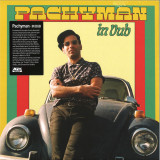
Im Stil der frühen Dancehall-Platten hat es sich Pachy García zur Aufgabe gemacht, den Sound von Scientist, King Tubby, Lee "Scratch" Perry und den großen Technikern und Instrumentalisten der frühen jamaikanischen Reggae-Musik zu reproduzieren. Inspiriert von den Channel One Studios und der Roots Radics Band, ist der Sound im Dancehall-Stil mit einigen Ausflügen in den Rub-a-Dub- und Rocker-Stil gehalten. Aufgenommen in Pachys eigenem 333 House von Januar bis März 2019. Geschrieben, produziert und gemixt von ihm selbst. Auch alle Instrumente hat er selbst eingespielt.
Bestelle jetzt und wir bestellen den Artikel für dich beim Lieferanten.

Bestelle jetzt und wir bestellen den Artikel für dich beim Lieferanten.

The infamous and legendary "Jah Life in Dub" LP, finally released. Originally slated for release in late '80/early '81, this was to be Jah Life's first dub LP, featuring all exclusive mixes to now-classic Barrington Levy tunes. For one reason or another, the LP was never released. To confuse matters, a couple years later, some of the unused jackets were given to Germain to house an untitled dub LP of his productions. Naturally, we needed to rectify this situation. So here it is, finally released 34 years later! Featuring ten killer dubs to Barrington Levy tunes, ALL MIXED BY SCIENTIST AT KING TUBBY'S. Six out of the ten tracks are previously unreleased mixes, including a dub to the song "Jah Life" which has never been available anywhere before. As an added bonus, the first pressing of this LP will come housed in the original jackets from 1980, which features killer artwork by Oneil Nanco.
erscheint voraussichtlich am 01.05.2024

Superb indie czeck prod.
4 Dub instrumentals, steppers and very musical. Notice the second track is a perl of a kind, with a nice Middle-East melody !
erscheint voraussichtlich am 29.04.2024

Bestelle jetzt und wir bestellen den Artikel für dich beim Lieferanten.

Musicians include Aston 'Family Man' Barrett, Carlton Barrett, Robbie Shakespeare, Sly Dunbar, Ansel Collins, Ossie Hibbert, Earl 'Chinna' Smith, Tommy McCook, Cornell Campbell, Jackie Mittoo. Both The Aggravators and The Revolutionaries were influential in creating the distinctive sound of reggae music during its formative years, contributing their talents as studio bands behind some of the most significant recordings in the history of Jamaican music. 'Guerilla Dub' provides an illustration and insight into the close working relationships between the many producers, musicians and mixing engineers who created so many of Jamaica's marvellous musical masterpieces during its golden age and how interwoven and interconnected they were during this period of intense musical creativity.
erscheint voraussichtlich am 26.04.2024

Sledgehammer Dub In The Street Of Jamaica by Niney The Observer, released 22 March 2024, includes the following tracks: "You're No Dub Baby", "Kingsgate Version", "God Bless My Dub", "Rich And Poor Dub" and more.
This version of Sledgehammer Dub In The Street Of Jamaica comes as a 1xLP.
The vinyl is pressed as a red disc.
erscheint voraussichtlich am 22.04.2024

Pt. 2 of the 'Dub me crazy' series by Mad Professor. Reggae meets twisted electronics for wild dub trips!
Originally released in 1982 on the same Ariwa imprint.
True D.I.Y. business from this UK dub pioneer.
Bestelle jetzt und wir bestellen den Artikel für dich beim Lieferanten.
