Cerca:j mclaughlin
- 1: Through Darkened Glass
- 2: Very Heavy Greening
- 3: Wet Skull
- 4: The Magus
- 5: Exodus
- 6: Music For Mandrax
- 7: Return To Earth
- 8: The Middle Way
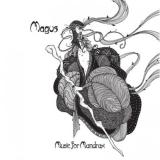
A magus is a wizard…a sorcerer. Magus, the band, is certainly interested in such things (who isn’t), but the name is especially apt due to the band’s approach to alchemy, the blending of rock, gothic, proto metal, and psychedelic styles to create a sound that is, ultimately, unique. Part of that uniqueness comes from the instrumentation. While guitar is often a dominant instrument of the rock oeuvre, the Fender Rhodes generally plays a supportive role. Not so here, where Jessica Weeks’ deft use of the keyboard dovetails with Greg Weeks’ more standard six-string approach. Not standard is the band’s sound. Doomy yet inspirational, dour yet vibrant, the duo’s tunes map sinister realms whose subjects span metaphysical creatures to enigmatic portals. You know, the typical stuff that rubs elbows with a magus.
Formed in late 2024, Magus sprung from a desire by both artists to experiment with darker, heavier sounds. Long enamored of artists like Flower Travelling Band,, Black Sabbath, and Deep Purple, the duo delved deeply into trance like riffs and euphoric solos to create the backbone of what has become their debut album, Music for Mandrax. This thirteenth Language of Stone offering features grounded, metronomic grooves, organic, lugubrious synth lines, and tandem vocals (supplied by both Weekses) that, in total, weave a heavy, trancelike spell sure to entice fans of bands as disparate as Sabbath is to Pink Floyd. Recorded at Weeks’ Hexham Head studio (to analog tape, of course), the band enlisted long-time counterparts Jesse Sparhawk (bass) and Ben McConnell (drums) to round out their sound and lock down the grooves that propel the album.
Mixed by Brian McTear and Amy Morrisey at Miner Street in Philadelphia, the band’s fully realized vision came to fruition, which left only the album art to contemplate. The band, wishing to further the gothic aesthetic of their sound, enlisted fashion designer and artist extraordinaire Hogan McLaughlin (Game of Thrones) to create the starkly beautiful line drawings of the front and back covers. The duo travelled to Salem, MA to complete the package with Courtney Brooke Hall, who shot the moody and evocative photographs that grace the gatefold release’s inner panels.
- 1: The Dead Ones
- 2: Make It To Heaven
- 3: Rat Trap
- 4: Freak Reflection
- 5: 1-800-Do You Want To Die?
- 6: Stiletto
- 7: Stereo
- 8: Dollar To A Dime
- 9: Corruption Concerto
- 10: Xxxxxxxxxx
Intense and intensely personal, The Dead Ones marks The Last Ten Seconds of Life’s Metal Blade label debut. 10 original tracks of pulverizing deathcore produced by Carson Slovak and Grant McFarland of Pennsylvania’s Atrium Audio. In creating The Dead Ones, “everyone took what we learned from the past two releases and assembled what we thought would bring out the best of us from song structure, tonality of instruments, the mix/master, and the lyrical themes,” furthers McLaughlin.
The end result reflects a more personal and human experience rather than the philosophical and fictional approach used on earlier releases. The Dead Ones follows 2024’s acclaimed No Name Graves in the theme of death and rebirth, but in contrast, is directly focused on the human experience and the band members’ own struggles.
- A1: O Mi Sol Li Lon (Angie March) (Side A)
- A2: Arabesque No 1 & 2 (Sally Heath)
- A3: Midtown (Tom Waits)
- A4: On Le Joue Pour Nous (Mistinguett)
- A5: Menlimontant (Charles Trenet)
- A6: Cockroach & Barflies (The Tiger Lillies)
- A7: Soutine's Cow (The Tiger Lillies)
- A8: Bridge (The Tiger Lillies)
- A9: Goodbye (Sacha Puttnam & Steve Mclaughlin
- B1: Modi's Place (Caroline Dale) (Side B)
- B2: Cinzia (Oskar Shuster)
- B3: Disfruto (Carla Morrison)
- B4: Doves (Sacha Puttnam, Steve Mclaughlin & Tim Wheeler)
- B5: Beef Painting (Sacha Puttnam, Steve Mclaughlin & Yasmin Ogilvie)
- B6: Cathedrals (Instrumental) (Robert Stevenson & Caroline Dale)
- B7: Sunday In The Park (Sacha Puttnam, Steve Mclaughlin & Caroline Dale)
- B8: Sculpture Drums (Sacha Puttnam, Steve Mclaughlin & Tim Wheeler)
- B9: Stairway Romance (Sacha Puttnam, Steve Mclaughlin & Tim Wheeler)
- B10: The Stars (Sacha Puttnam, Steve Mclaughlin & Tim Wheeler)
- C1: Cemetery (The Tiger Lillies) (Side C)
- C2: Cemetery Nightmare (The Tiger Lillies)
- C3: Blown Up Cafe (Sacha Pullman, Steve Mclaughlin & Llan Eshkeri)
- C4: The Black Angel's Death Song (The Velvet Underground & Niko)
- C5: Tom Traubert's Blues (Tom Waits)
- D1: Gangnat Dinner (Sacha Puttnam, Steve Mclaughlin, Robert Stevenson & Sally Heath)
- D2: Modi Speech (Sacha Pullman, Steve Mclaughlin & Llan Eshkeri)
- D3: How Did It Go (Sacha Pullman, Steve Mclaughlin, Tim Wheeler & Llan Eshkeri)
- D4: Argument Pt2 (Sacha Pullman, Steve Mclaughlin & Llan Eshkeri)
- D5: Bea Returns Sculpture (Sacha Puttnam, Steve Mclaughlin & Tim Wheeler)
- D6: Cathedrals (Jump, Little Children)
- D7: Doves Ending (Sacha Puttnam, Steve Mclaughlin & Tim Wheeler)
- C6: Pour Lui (Lucienne Delyle)
- C7: Stairs (The Tiger Lillies)
Modi: Three Days on the Wing of Madness is a 2024 biographical drama based on the life of renowned Italian artist Amedeo Modigliani.
Directed by Johnny Depp, the film stars Riccardo Scamarcio in the title role, with supporting performances by Stephen Graham,
Al Pacino, and Antonia Desplat. The film’s original soundtrack plays a pivotal role, blending evocative original compositions by The Tiger Lillies
with classic tracks from artists such as Charles Trenet, Augie March, Tom Waits, and The Velvet Underground & Nico.
The soundtrack is available as a deluxe 2LP vinyl set in a gatefold sleeve with imagery from the film
And as a 2CD Box Set with lift-off lid, featuring a 24-page booklet including exclusive notes from Johnny Depp and behind-the-scenes images
Shhh. The command to be quiet is not just part of the title of one of the two sprawling compositions on this pioneering album. It's also an apt metaphor for the relaxed hypnotism and spaced-out atmosphere that define In a Silent Way, a record that pushes the boundaries of studio possibilities, artist-producer relationships, and rock-jazz chasms. Recognized as Miles Davis' first full-on fusion effort and part of his "electric" era, the 1969 landmark claims a Who's Who line-up that sends the music into an ethereal stratosphere.
Mastered from the original master tapes and pressed at RTI, this unsurpassed 180g LP edition lifts the veil on the cutting-edge assembly process that created the pair of lengthy suites. Helmed by three electric instruments, the bevelled compositions melt away all preconceived notions of "jazz," ˜rock," and "ambience," following a loose theory Davis dubbed "New Directions."
Few albums are so delicately textured. And on Mobile Fidelity's meticulous reissue, such sulcate elements pour over ink-black backgrounds on a canyon-wide soundstage. In particular, Tony Williams' inventive percussive touch – he causes the cymbals to shimmer as a pieces of silver tend to do when exposed to sunlight – is broadcast with lifelike three-dimensional qualities, the panoramic view extending to Davis' nocturnal trumpet, Wayne Shorter's ribbon-unfurling saxophone, Dave Holland's extrapolative bass, and the mosaic of keys.
If the record's only accomplishment is its introduction of guitarist John McLaughlin to the world, it alone would be enough. Yet In a Silent Way continues to bedazzle, puzzle, and inspire for myriad reasons – not the least of which is the seemingly telepathic communicative methods employed by the group's members. The line-up is great on paper, but, if it's even possible, the octet sounds even better in practice, with the instruments and tonalities conjoining in avant-garde communion like hyper-sensitive tentacles exploring the stippled landscapes of an undiscovered planet.
Diverting from expectation, tubular grooves twist, turn, and spin, sometimes piling atop of each other, always shying away from structure and melody. Ellipsoidal solos provide hesitant guidance, ranging from Chick Corea's Fender Rhodes phrases to Davis' decorative spirals. And as colour is the primary unit of currency on Davis' Sketches of Spain, laid-back episodes, geometric spaces, and quiet sensuality reign here, with the set's maverick reputation attained via musings on solitude rather than explosions of noise.
Controversial for the period, the heavily edited production of In a Silent Way blew open the once-locked doors on what producer's could attempt – and how artists could assist them. Knitted together as one would construct a cross-hatched quilt, songs contain grafts of repeat passages that provide unifying structure and experimental continuity. What a statement.
Marbles is the legendary 1970 proto punk / dance classic from John McLaughlin’s US debut album 'De?otion', recorded at the time in which he played on Miles Davis' Bitches Brew and taped the Record Plant session with Jimi Hendrix.
Marbles didn't just deliver jazz rock's most danceable 4/4 beat, played by Band of Gypsies / Electric Flag drummer Buddy Miles. It is also centered with a once-in-ageneration bass line performed by Billy Rich. Larry Young's otherworldly Hammond textures predate a lot of what synthesizers were about to do much later, and the blowtorch energy emanating from John McLaughlin's cranked amp went beyond what most would had dared during the defining era of heavy rock guitar. An apex achievement at the intersection of jazz rock, guitar rock and dance music without parallel, before or since.
Background: John McLaughlin arrived in New York in 1969 to join Tony Williams' new group Lifetime which also featured Larry Young and eventually Jack Bruce (of Cream). On the second day in town he found himself in the studio with Miles Davis, recording 'In a Silent Way.' His playing would also take center stage in Bitches Brew, Jack Johnson, On The Corner and several other Davis key works of his much beloved first electric era. In between a busy schedule with Lifetime and Davis, McLaughlin also recorded two solo albums in 1970, 'De?otion' with an all-electric group and ‚'My Goa|’s B?y?nd' as its acoustic counterpart. By the time he formed his group Mahavishnu Orchestra in 1972, John McLaughlin was firmly established as the most important practitioner of his instrument of his generation within and well beyond the emerging jazz rock / fusion genre, and he has continued to evolve and surprise until today.
Here, a thorough remaster is supplemented by a new and throbbing techno version by Stefan Goldmann.
Two musical giants, guitarist Lionel Loueke and bassist Dave Holland, unite their individual talents into one harmonious recording,igniting creativity, honouring cultural roots, and showcasing music's powerful role in fostering unity amidst societal division.
United is an inspiring testament to the power of collaboration, blending Loueke's masterful guitar work with Holland's deep,resonant bass. Both musicians have profoundly impacted the global jazz scene—Loueke, known for his innovative fusion of WestAfrican traditions with modern jazz, has played with a who’s who of virtuosic and celebrated artists, most notably serving asHerbie Hancock’s guitarist for over 15 years, and collaborating with legends like Wayne Shorter, Sting, Terence Blanchard, MarcusMiller, and Esperanza Spalding. Holland, one of the most influential bassists and composers in jazz, has shaped contemporaryjazz since the late 1960s, performing with icons like Miles Davis, Chick Corea, John McLaughlin, Pat Metheny, Sam Rivers, andJack DeJohnette. Though Loueke and Holland have worked together many times in various groups, this album marks their firstcollaboration as a duo. The result is nothing short of extraordinary.
The new batch from the bottomless edit archives of Danny Krivit is an uptempo, guitar-heavy excursion into two cuts of danceable rock from opposite sides of a decade.
“Marbles” originally came out late in 1970, the result of a collaboration between the fiery British guitarist John McLaughlin and drummer Buddy Miles. Miles was hot off his time with Jimi Hendrix, and producer Alan Douglas, who’d been instrumental in putting together the Band of Gypsys group, attempted another crossover combination with a brand new, blazing guitar god. Also on the date was Larry Young, an organ player best known for his expansive jazzy albums on Blue Note, and several veterans of Buddy Miles’ funk-rock combos. The resulting mixture produced in “Marbles” a powerful, driving rhythm anchoring an addictive riff that steamrolls through the cut in a fashion not unlike the motorik sound of Velvet Underground or Can. Mr. K’s edit leans heavily on the drums, naturally, with a long, tailor-made intro and a mesmerizing focus on the main riff, extending things well past the seven-minute mark.
Ten years later, the world of music was in an entirely different place but a good guitar riff coupled with a driving beat was still powerful currency on the dancefloor. This time, the group was Scottish new wave-punk group APB, whose single “Shoot You Down” had garnered unexpected peak time play in cutting edge NYC hotspots Danceteria, the Peppermint Lounge, the Ritz and the Mudd Club. “Shoot You Down” combines the urgency of the Clash with the free for all vibe that characterized the downtown scene (and throws in a chant borrowed from P-Funk for good measure). Mr. K has created a long instrumental opening that leads into the vocals, giving the tightly-wound 7-inch single a proper extended 12-inch treatment it deserved but never had before.
The sound is crisply remastered for club play, and stretched over the breadth of a 12-inch single. Both of these tracks are appearing on the long-format player for the first time.
Strut Records presents a fresh look at Oblivion Express, the 1971 album that marked Brian Auger’s shift into a new musical frontier. After years spent shaping the sound of British jazz-soul with the Trinity, Auger stepped into the new decade with a leaner, electrified ensemble and a renewed sense of purpose. This record captures the moment that transformation took shape.
Oblivion Express introduced a sound that was distinctly Auger’s own. Rather than echoing the fusion emerging in the United States, Auger developed a language rooted in the UK’s jazz underground, culminating in a spaced out jazz- rock / prog-fusion album awash with larger than life drum fills and Auger’s virtuosic organ playing. Between bassist Barry Dean and drummer Robbie McIntosh the album moves effortlessly between tight, articulated phrases and broader, improvisational passages. The trio’s interplay forms the backbone of the album and sets the tone for the sound that would define the early years of the Express.
Album opener “Dragon Song” launches with a restless drive that immediately signals Auger’s new direction. Auger chose to record this version of John McLaughlin’s piece (his friend and former bandmate in 'The Niddy Griddys') after hearing McLaughlin’s album Devotion during its mix at New York’s Record Plant Studios. Auger was blown away, recalling, “Oh my god, this is amazing. I wanted to record that myself - and I did!”. Pieces like “Total Eclipse” demonstrate the Oblivion Express’ command of dynamic contrast, and title track “Oblivion Express” explores the cinematic and compositional prowess of the group through stripped back, building moments vs. explosive melodic breakdowns. Riff-heavy “The Sword” later became known through Madlib’s usage in 2014 tracks “Yeti Movie” and “Parodies”.
In retrospect, Oblivion Express stands as a jazz leaning, prog-rock masterpiece and foundational moment in Auger’s catalogue. It captures the starting point of a new sound that is more focused, more urgent, and fully committed to the possibilities of jazz-rock at the dawn of the seventies. The album remains a vivid document of a band discovering its identity and setting the stage for the further array of influential releases that would follow.
Eine bemerkenswerte Zusammenkunft improvisierender Meister aus unterschiedlichen musikalischen Hintergründen: Zakir Hussains Making Music erschien 1987 wie aus dem Nichts und fesselte die Hörer mit seiner
eigenständigen Klangwelt. „Der Austausch zwischen Flöte, Tabla und Gitarre ist oft atemberaubend“, bemerkte die Philadelphia Tribune und beschrieb Jan Garbareks Spiel als „Linien, die die Töne so biegen, dass
sie zur indischen Vokalmusik und zur Sitar passen – und an anderer Stelle die norwegischen Winter heraufbeschwören.“ McLaughlins elegante Akustikgitarreneinsätze fügen sich mit improvisatorischer Leichtigkeit
ein und verbinden die eindrucksvolle Flötenkunst Hariprasad Chaurasias mit Hussains scheinbar alle Pulse
durchwanderndem Tablaspiel zu einem harmonischen Ganzen. Es ist ein Leichtes, nachzuvollziehen, warum
die FAZ zu dem Schluss kam: „Ohne auch nur einen der vier wäre ‚Making Music‘ nicht vorstellbar.“
Das Album wird im Rahmen der Luminessence-Serie erstmals seit seiner ursprünglichen Veröffentlichung
wieder auf Vinyl aufgelegt und erscheint im hochwertigen Tip-on-Gatefold-Cover
Miles Kane, gefeierter englischer Rocker und Mitbegründer von The Last Shadow Puppets zusammen mit
Alex Turner von den Arctic Monkeys, veröffentlicht mit Sunlight In The Shadows sein erstes Easy Eye
Sound-Album in Zusammenarbeit mit dem GRAMMY-prämierten Produzenten Dan Auerbach (The Black
Keys). Das Album wurde gemeinsam mit Auerbach, Patrick Carney, Daniel Tashian und Pat McLaughlin geschrieben. Überlagert von üppigen, kreischenden Gitarren und vollgepackt mit Hooks, bewegt sich
das Album auf dem schmalen Grat zwischen rauem, energiegeladenem Rock und entspannten CrooningHymnen, alles mit einer Prise von Miles’ charakteristischer Tremolo-Gitarre und einer ganzen Menge Spaß.
Über die Entstehung von Sunlight In The Shadows sagt Miles: „Alle Wege, die ich in den letzten 20
Jahren gegangen bin, haben hierhergeführt“.
- 1: Extrapolation
- 2: It's Funny
- 3: Arjen's Bag
- 4: Pete The Poet
- 5: This Is For Us To Share
- 6: Spectrum
- 7: Binky's Beam
- 8: Really To Know
- 9: Two For Two
- 10: Peace Piece
- A1: Mediterranean Sundance / Rio Ancho
- A2: Short Tales Of The Black Forest
- B1: Frevo Rasgado
- B2: Fantasia Suite
- B3: Guardian Angel
Friday Night in San Francisco is a live album by Al Di Meola, John McLaughlin, and Paco de Lucía.
It was recorded live at the Warfield Theatre in San Francisco,
on December 5 in 1980. The album is considered an iconic recording and was described by jazz author Walter Kolosky as
"a musical event that could be compared to the Benny Goodman Band's performance at Carnegie Hall in 1938...
it may be considered the most influential of all live acoustic guitar albums."
Al Di Meola is an acclaimed Italian American jazz fusion and Latin jazz guitarist, composer, and record producer.
He experienced a celebrated career that has spanned four decades and earned him critical accolades,
three gold albums and more than six million record sales worldwide.
Di Meola has amassed over 20 albums as a leader while collaborating on a dozen or so others.
John McLaughlin, also known as Mahavishnu, is an English guitarist, bandleader, and composer.
He is a pioneer of jazz fusion, combining elements of jazz with rock, world music,
Indian classical music, Western classical music, flamenco, and blues. He received multiple "Guitarist of the Year"
and "Best Jazz Guitarist" Awards from magazines such as Downbeat and Guitar Player and was ranked 49th in Rolling Stone
magazine's list of "100 Greatest Guitarists of All Time". Jeff Beck called him "the best guitarist alive".
Paco de Lucía was a Spanish virtuoso flamenco guitarist, composer, and record producer.
He was one of the first flamenco guitarists to branch into classical and jazz. De Lucía was noted for his fast and fluent fingerstyle runs
and gained popularity outside Spain after collaborating with McLaughlin and Di Meola. Richard Chapman and
Eric Clapton described de Lucía as a "titanic figure in the world of flamenco guitar."
Friday Night in San Francisco is available as a limited edition of 1000 individually numbered copies on purple coloured vinyl and includes an insert.
John McLaughlin feiert sein Comeback mit "Live at Montreux Jazz Festival 2022". Dieses unverzichtbare Live-Album gibt den einzigartigen Auftritt von John und seiner langjährigen Band "The 4th Dimension" in Musik und Film wieder.
Am 11. Juli 2022 kehrten John und The 4th Dimension gemeinsam mit der preisgekrönten Künstlerin Jany McPherson, die den Auftritt mit ihrem Gesang und ihrer Klavierkunst bereicherte, zum Montreux Jazz Festival zurück. Zusammen boten sie dem Publikum im Stravinski Auditorium eine beeindruckende Show und spielten Fan-Favoriten wie "New Blues Old Bruise", "El Hombre Que Sabia" und Pharoah Sanders' "The Creator Has a Master Plan".
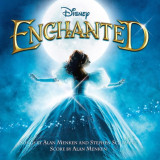
A 1 True Love's Kiss 3:13
A2 Happy Working Song
Performer – Amy Adams
Producer – Alan Menken, Stephen Schwartz 2:11
A3 That's How You Know
Guitar – Dean Parks, Michael Landau
Performer – Amy Adams
Piano, Keyboards, Electric Organ – Robbie Buchanan
Producer – Alan Menken, Robbie Buchanan, Stephen Schwartz 3:49
A4 So Close
Performer – Jon McLaughlin 3:49
A5 Ever Ever After (Record Version)
Performer – Carrie Underwood 3:31
B1 Andalasia 1:47
B2 Into The Well 4:42
B3 Robert Says Goodbye 3:16
B4 Nathaniel And Pip 4:03
B5 Prince Edward's Search 2:24
C1 Girls Go Shopping 1:41
C2 Narissa Arrives 1:34
C3 Storybook Ending 10:44
D1 Enchanted Suite 4:36
D2 That's Amore
Performer – James Marsden 3:07
- Pharaoh's Dance
- Bitches Brew
- Spanish Key
- John Mclaughlin
- Miles Runs The Voodoo Down
- Sanctuary
Listen to This.” As the original working title for Bitches Brew, the instruction and invitation remains to this day as the best way to approach a record that shattered conventions, altered music history, and, 55 years later, still sounds far ahead of its time. The template for jazz fusion, Bitches Brew is rightly ranked by virtually every significant outlet among the 100 greatest albums ever made. Sewn together with vibrant colors, voodoo textures, and ethereal moods, the 1970 landmark emerges with supreme detail and nonpareil feeling on Mobile Fidelity’s UltraDisc One-Step 180g 33RPM 2LP vinyl set.
Sourced from the original master tapes, strictly limited to 5,000 numbered copies, and pressed at Fidelity Record Pressing in California, this definitive-sounding 55th anniversary reissue enhances every element of a double album that established new possibilities for studio recording techniques. You’ll hear wide and deep soundstages, separation between instruments, and an extremely broad dynamic range. If ever a jazz album can be said to have gone to outer space and back, this is it.
Davis conceived Bitches Brew by having the musicians stand in a semi-circle. There, he pointed at them with vague directions for tempo, solos, and cues. The collective improvisation and interplay spawned a galaxy of melodies and grooves that were later spliced together by producer Ted Macero. Benefitting from the ultra-low noise floor and superb groove definition of this pressing, these distinct creations take shape with utmost realism. Compositions stretch across jet-black backgrounds and paint canvases laden with millions of colors and shades. Juxtaposed percussion, loose jams, and melodic segues explode with impressionistic verve.
Bitches Brew also boasts visionary artwork. By design, the lavish packaging and gorgeous presentation of the UD1S Bitches Brew set call attention to such matters. Housed in a deluxe slipcase, it features special foil-stamped jackets and faithful-to-the-original graphics that illuminate the splendor of the recording. It is made for discerning listeners who desire to fully immerse themselves in everything surrounding the album, from the images to the tones. And this is one effort where every last detail matters.
Gathering a Hall of Fame-worthy lineup of musicians and tweaking it according to his desires, Davis follows through on his idea to “put together the greatest rock and roll band you ever heard.” Central to his proposition is the presence of two (and sometimes three) drummers and two bassists, a tactical move that makes rhythms a central focus. Akin to the futuristic album cover art, the drum-driven suites head toward distant universes and uncharted territories. At once hypnotizing and grooving, they chart maverick adventures via quixotic rock, funk, and R&B elements.
A without-a-net experiment involving interchangeable double-quintet lineups, Bitches Brew explores the previously unimaginable with electrified instruments — Fender Rhodes piano, processed trumpet, dissonant guitars, and bass among them — and an emphasis on feeling over composition. Mesmerizing and soothing, jarring and smooth, overt and subtle: The music seemingly covers an entire map of emotions and sensations, and like no record before, ties together the groundbreaking creativity of the multiple disciplines that were changing popular culture at the end of the 1960s and dawn of a new decade.
Conceptually, Davis described Bitches Brew as “a novel without words” and “an incredible journey of pain, joy, sorrow, hate, passion, and love.” The vast psychedelic expanses of warped echoes, liquid reverb, and tape loops confirm such ambitious contrasts of light and dark, fear and hope. Yet the most absolute characteristic of the watershed effort lies in how it resists definitive interpretation and encourages free thought — the very principles Davis used to conceive Bitches Brew.
More About Mobile Fidelity UltraDisc One-Step and Why It Is Superior
Mobile Fidelity Sound Lab’s UltraDisc One-Step (UD1S) technique bypasses generational losses inherent to the traditional three-step plating process by removing two steps: the production of father and mother plates, which are created to yield numerous stampers from each lacquer that is cut. For UD1S plating, stampers (also called “converts”) are made directly from the lacquers. Since each lacquer yields only one stamper, multiple lacquers need to be cut. Mobile Fidelity's UD1S process produces a final LP with the lowest-possible noise floor. The removal of two steps of the plating process also reveals musical details and dynamics that would otherwise be lost due to the standard multi-step process. With UD1S, every aspect of vinyl production is optimized to produce the best-sounding vinyl album available today.
Das Allstar-Projekt des King Of Jazz - Miles Davis .ist gewiss die erfolgreichste alles Jazz-Legenden. Auch wenn seine Aufnahmen gelegentlich umstritten waren - bei einem war man sich stets einig: In den Sixties hat Davis einige der anrührendsten Jazz-Stücke der vergangenen Jahrzehnte geschaffen. Wer sich davon überzeugen möchte, ist mit "In A Silent Way" (1969) bestens bedient. Zu den Mitstreitern bei diesem Projekt seien nur deren Namen erwähnt: Joe Zawinul, Wayne Shorter, Dave Holland, Tony Williams, John McLaughlin, Chick Corea und Herbie Hancock.
- Introduction
- Clown
- I Am The Tall Tree
- Tired Of Waiting For You
- Store Bought - Store Thought
- Truth
"The Flock is the debut album of the band with the same name, originally released in 1969. The band consists of members Fred Glickstein, Jerry Goodman, Rick Canoff, Tom Webb, Frank Posa, Jerry Smith and Ron Karpman. The eponymous debut studio album focuses on classical violinist Jerry Goodman, with counter point performed by a horn section, and guitarist Fred Glickstein. It is a blend of different genres, varying between rock, classical, jazz, blues, and even soul. Jerry Goodman later joined John McLaughlin's Mahavishnu Orchestra. The Flock is available as a limited edition on silver coloured vinyl and includes an insert."
- A1: Birds Of Fire
- A2: Miles Beyond
- A3: Celestial Terrestrial Commuters
- A4: Sapphire Bullets Of Pure Love
- A5: Thousand Island Park
- A6: Hope
- B1: One Word
- B2: Sanctuary
- B3: Open Country Joy
- B4: Resolution
"Birds Of Fire" - John McLaughlin (g); Jerry Goodman (v); Jan Hammer (keyb, synth); Rick Laird (b); Billy Cobham (dr)
Of the three 'incarnations' by the spiritually inspired Mahavishnu Orchestra, the first is the most full-bodied. The enlightened John McLaughlin and his musicians were immortalized through their début album "The Inner Mounting Flame", which was included in the list of the 100 Best Jazz Albums; a short time later they recorded their highly concentrated studio compilation "Birds Of Fire". Long before today's saleably labelled World Music, the quintet set the standards for a meaningful amalgamation of dynamic rock with complex Indian rhythms and occidental conventions. Already in the title piece, the musicians combine a sharpened Hendrix style with expansive melodies, and with smacking grooves and fine riffs draw all that is grand in jazz ("Miles Beyond") into the musical centre. With almost chamber-music-like density, "Thousand Island Park" blossoms out in soft colours, whilst as a contrast unremittingly flowing cascades in "Hope" search desperately for their destination.
It is thrilling how finely weighed patterns ("One Word") escalate to techno-like violin playing and how the listener is invited to take part in an inner procession in the following "Sanctuary". After such soaring heights, we are brought back to earth with a familiar funky sound in a popular, pastoral vein ("Open Country Joy") before taking off abruptly once again: in the final piece, "Resolution" with its slowly rising carpets of sound, all that is sublime in New Music conquers over world cultures.
In what many consider to be the birth of jazz fusion, Emergency!, led by Tony Williams (drums) with bandmates John Mclaughlin (guitar) and Larry Young (organ), is a true adventure in the beginning of the jazz-rock blend that would take shape in late 1960s and beyond. From the opening title track, the direction is decisive and commands attention as Williams leads his crew through a mixture of swing, rock and free jazz that cements its place as one of the most influential albums of the time. This Verve By Request title is pressed on 180-gram vinyl at Third Man in Detroit.
- Meditation
- Going Home
- A-1 Funk
- Every Step Of The Way
- Black Magic Woman
- Gypsy Queen
- Oye Como Va
- Yours Is The Light
- Batukada Xibaba (She-Ba-Ba)
- Stone Flower (Introduction)
- Waiting
- Castillos De Arena, Part I
- (Sand Castle)
- Free Angela
- Samba De Sausalito
- Matra
- Kyoto
- Castillos De Arena, Part Ii
- (Sand Castle)
- Se A Cabo
- Samba Pa Ti
- Mr. Udo
- Toussaint L’overture
- Incident At Neshabur
One of the Most Exhilarating Live Albums Ever Released: Santana’s Lotus Documents 1973 Performances Distinguished by Passionate Soulfulness, Chemistry, and Inventiveness
Mobile Fidelity’s 180g 33RPM 3LP Set Features Reference Sound and Deluxe Trifold Packaging Faithful to That of the Original Japanese Import: Strictly Limited to 5,000 Numbered Copies, Includes Four Photo Inserts and Two Fold-Out Posters
The bizarre legacy of Lotus transcends its status as both the definitive onstage document of Santana’s career and one of the most spectacular live albums ever released. Originally issued in 1974, the triple LP contains exhilarating performances of the band recorded at two shows in early July 1973 at the 2400-seat Osaka Kosei Nenkin Kaikan concert hall. It bears witness to the eight-piece collective playing with a chemistry, inventiveness, cohesiveness, and soulfulness no other Santana lineup would ever surpass. Featuring seven previously unreleased tracks as well as remarkable renditions of material from Santana’s first four albums and the Carlos SantanaJohn McLaughlin collaboration Love Devotion Surrender, Lotus simultaneously suggests and inspires, dreams and delivers.
Transferred by original engineer Tomoo Suzuki, strictly limited to 3,000 numbered copies, and housed in deluxe trifold packaging faithful to that of the original pressing, Lotus benefits from reference audiophile treatment on Mobile Fidelity’s 180g 3LP set. Featuring rich tones, smooth dynamics, excellent separation, deep soundstages, and involving presence, this reissue pays tribute to both the virtuosic lineup and the magnetic fusion of Latin- and Afro-Cuban-influenced jazz, rock, psychedelia, R&B, and blues. The complexity of the spiritual passages, demands of the crescendos, delicacy of the calm transitions, electricity of the solos: everything is rendered with superb balance and free of the harshness, compression, and fatiguing peaks that would otherwise distract from the presentations at hand. Black magic, indeed.
"You're Under Arrest is a 1985 album recorded by Miles Davis, presenting a mixture of pop covers (including Cyndi Lauper's ""Time After Time"" and Michael Jackson's ""Human Nature""), and original material dealing with politics, racism, pollution and war. It is the first Davis album since On the Corner in 1972 to include electric guitarist John McLaughlin. This version comes as a limited edition of 1500 individually numbered copies on red & clear marbled vinyl."
Als Höhepunkt einer bemerkenswerten Reise – vom Busking auf den Straßen Torontos bis hin Auftritten
mit Künstlern wie Orville Peck und Sierra Ferrell – schlägt Albino mit „Our Time In The Sun“ sein nächstes
musikalisches Kapitel auf.
Für die zwölf Songs hat er sich mit Dan Auerbach - Leadsänger der Black Keys, Gründer von Easy Eye
Sound und GRAMMY®-prämierter Produzent - zusammengetan, nachdem dieser zufällig auf Albinos Musik
gestoßen und direkt fasziniert war. In Nashville, wo das Album entstand, stellte Auerbach Albino einigen der
besten Session-Spieler und Songwriter der Stadt vor, darunter Pat McLaughlin (u.a. John Prine, Johnny
Cash).
Albinos Geschichte begann auf einem Bauernhof im ländlichen Ontario. Aus dem Verkauf von Obst und
Gemüse in Toronto wurde schnell das Musizieren auf den Straßen der Stadt und schließlich mitreißende
Live-Shows mit Größen wie Shovels & Rope, St. Paul & The Broken Bones und Shakey Graves in den USA
und Kanada.
Als er die Arbeit an „Our Time In The Sun“ aufnahm, war es das Ziel, diese packende Live-Energie auch im
Studio einzufangen: Das Album besteht aus tief empfundenen Eigenkompositionen, geprägt von cleveren
Wendungen. Albino greift auf die Südstaaten-Psychedelik und den Blues-Rock der 60er Jahre zurück, um
Geschichten über eine gescheiterte Liebe, den Kampf mit der Flasche und ein von der Arbeit bestimmtes
Leben zu erzählen.
The common thread throughout the album is the sitar. With this album Nicolas Mortelmans (Condor Gruppe, Leki, Merdan Taplak) builds a bridge between his love for Indian music and his roots in Western genres such as electronic, jazz and rock music.
On April 12, 2024, Nicolas Mortelmans (Condor Gruppe, Leki, Merdan Taplak) will release his long-awaited debut album MÁYÀ on WERF Records!
The common thread throughout the album is the sitar, an instrument that he learned in the traditional way from various sitar masters in India. Since 2017 he has been trained by the world-famous Anoushka Shankar. In every song he tries to approach this unique instrument in a different way.
With this album he builds a bridge between his love for Indian music and his roots in Western genres such as electronic, jazz and rock music. On the album guest musicians from all over the world are playing, such as Ravichandra Kulur from India (Anoushka/Ravi Shankar, John McLaughlin, Aka Moon,..), Benny Bettane (Australia/handpan) & Belgian friends like Roland van Campenhout, Tim Vanhamel and Stef Kamil Carlens.
'Awayland' ist der Nachfolger des für den Mercury-Award nominierten Albums Becoming A Jackal. Produziert und abgemischt wurde es bei Attica Audio in Donegal von Conor J O’ Brien, selbst Kopf hinter Villagers, und dem Gitarristen Tommy McLaughlin. Original erschien das Album im Januar 2013.
Format: - Blaues Vinyl inkl. Downloadkarte
Pressed on a triple 180-gram CLEAR vinyl! This album features the Mahavishnu Orchestra, a jazz fusion band led by English guitarist John McLaughlin. Formed in New York City in 1971, the group underwent lineup changes during its active periods from 1971 to 1976 and 1984 to 1987. Known for their complex blend of Indian classical music, jazz, and psychedelic rock, the band received acclaim for dynamic live performances. Many former members have pursued successful careers in jazz and jazz fusion.
Pressed on a triple 180-gram CLEAR MARBLE vinyl! This album features the Mahavishnu Orchestra, a jazz fusion band led by English guitarist John McLaughlin. Formed in New York City in 1971, the group underwent lineup changes during its active periods from 1971 to 1976 and 1984 to 1987. Known for their complex blend of Indian classical music, jazz, and psychedelic rock, the band received acclaim for dynamic live performances. Many former members have pursued successful careers in jazz and jazz fusion.
- A1: Conflagration
- A2: Malachite
- A3: Nuts
- B1: 6'S And 7'S
- B2: B
- B3: Afore The Morrow
The core membership of free jazz act The Trio ensured its output was captivating, comprised as it was of double-bassist Barre Phillips, who had played with Archie Shepp, Chris McGregor, and Gong; saxophonist John Surman, who had played with John McLaughlin, Lester Bowie, and Alexis Korner; and drummer Stu Martin, who had played with Count Basie, Donald Byrd and Herbie Hancock. On the gripping sophomore set Conflagration, guest players include Chick Corea and trumpeter Harry Beckett, ensuring their take on abstract jazz contains melody as well as jarring exchanges. Another great Trio free jazz set!
- Dance With The Devil
- Tiny Bard
- Celestial Dust
- Little Ghost In The Room
- Toil And Trouble
- The Red Room
- Lady Peregrine's Concubine
- Spirit Of The Forest
- Bête Noire
- Long Kiss Goodnight
- Thieves Fools And Crows
- Midnight View
- (Japanese Doll)
- Ladies Of The Road (King Crimson)
- Dirty (Johnny Winter)
- Dance With The Devil (5.1 Mix)
- Tiny Bard (5.1 Mix)
- Celestial Dust (5.1 Mix)
- Little Ghost In The Room (5.1 Mix)
- Toil And Trouble (5.1 Mix)
- The Red Room (5.1 Mix)
- Lady Peregrine's Concubine (5.1 Mix)
- Spirit Of The Forest (5.1 Mix)
- Bête Noire (5.1 Mix)
- Long Kiss Goodnight (5.1 Mix)
- Thieves Fools And Crows (5.1 Mix)
- Midnight View (5.1 Mix)
- (Japanese Doll) (5.1 Mix)
2x12"[42,65 €]
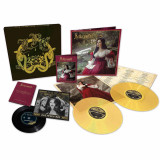
Netherworld Double Gatefold Vinyl in 'Celestial Dust' transparent gold CD / DVD - 5.1 Surround mixed by Jakko M. Jakszyk: 'Storybook' Edition 'Ladies' Double A-Side 7" Single - Ladies Of The Road / Dirty (Black Vinyl) Netherworld A6 illustrated 'Little Stories' book All housed in a Black Textured Box with Gold Hot Foil Embossing Netherworld marks a considerable step onwards from the territory that Louise Patricia Crane explored on her debut long player Deep Blue, crafting audial landscapes that go further into both inner and outer space; hallucinatory and surrealistic yet also grittier and more direct. For all that this stemmed in part from early Genesis and The Beatles, Netherworld also sits in alignment with the luxurious but oddly intimate realm of modern classics, by the likes of Tears For Fears, Tori Amos and Joni Mitchell, with passionate intensity set in a bold, cinematic vista. In realising these romantic and expansive visions, Crane not only wrote or co-wrote the entire album, but arranged, co-produced and played a wide variety of instruments on it. Yet as a supporting cast, she has surrounded herself with a formidable selection of mercurial contributors. Once again, Jakko M. Jakszyk (King Crimson) brings his fiery and mellifluous solo guitar work, as well as contributing backing vocals, keyboards and co-production. Elsewhere, the flute soliloquies of Tiny Bard are the work of Jethro Tull's Ian Andersonwhile saxophone duties are handled by Mel Collins, whose work with King Crimson marks only one chapter in an incredibly storied life in music. Providing violin and viola across the stylistic expanse of the album, Shir-Ran Yinon (New Model Army / Eluveitie) returns as a collaborator. The rhythm section for the lion's share of the record consists of the dream team of Tony Levin (King Crimson / Peter Gabriel) and Gary Husband (John McLaughlin / Billy Cobham / Allan Holdsworth) with Nick Beggs stepping in on bass for Dance With The Devil and upright bass on Long Kiss Goodnight. Crucially however, even amidst this kind of company, Louise's voice and vision is never remotely overshadowed_with the talents on offer only serving to make the backdrop to her songs still more vivid, sharp and intense.
"The Red Room Crystal-Ruby Splatter Vinyl". Netherworld marks a considerable step onwards from the territory that Louise Patricia Crane explored on her debut long player Deep Blue, crafting audial landscapes that go further into both inner and outer space; hallucinatory and surrealistic yet also grittier and more direct. For all that this stemmed in part from early Genesis and The Beatles, Netherworld also sits in alignment with the luxurious but oddly intimate realm of modern classics, by the likes of Tears For Fears, Tori Amos and Joni Mitchell, with passionate intensity set in a bold, cinematic vista. In realising these romantic and expansive visions, Crane not only wrote or co-wrote the entire album, but arranged, co-produced and played a wide variety of instruments on it. Yet as a supporting cast, she has surrounded herself with a formidable selection of mercurial contributors. Once again, Jakko M. Jakszyk (King Crimson) brings his fiery and mellifluous solo guitar work, as well as contributing backing vocals, keyboards and co-production. Elsewhere, the flute soliloquies of Tiny Bard are the work of Jethro Tull's Ian Andersonwhile saxophone duties are handled by Mel Collins, whose work with King Crimson marks only one chapter in an incredibly storied life in music. Providing violin and viola across the stylistic expanse of the album, Shir-Ran Yinon (New Model Army / Eluveitie) returns as a collaborator. The rhythm section for the lion's share of the record consists of the dream team of Tony Levin (King Crimson / Peter Gabriel) and Gary Husband (John McLaughlin / Billy Cobham / Allan Holdsworth) with Nick Beggs stepping in on bass for Dance With The Devil and upright bass on Long Kiss Goodnight. Crucially however, even amidst this kind of company, Louise's voice and vision is never remotely overshadowed-with the talents on offer only serving to make the backdrop to her songs still more vivid, sharp and intense. In as much as Netherworld is a work that exists on a lineage of progressive music and the visionary artists who've expanded their boundaries of exploration to form sound-worlds as big as their imagination, it's also a work of magical realism in the tradition of Pan's Labyrinth, The Company Of Wolves or the work of Gabriel Garcia Marquez and Haruki Murakami-in which the supernatural and otherworldly, lead to a shortcut to the essence of being human. In this World, Louise Patricia Crane is our Storyteller.
"Philadelphia’s So Totally are a portrait of utmost devotion, and how longevity in any kind of relationship can’t occur without it. Since 2015, the band originally called So Totally In Love has humbly studied their surroundings and themselves, perfecting a sound that from inception was present. So Totally’s shimmering guitars and melodies typically sit underneath lush vocals that concurrently embed themselves in a listener’s subconscious, haunting them with heavy mood and nostalgia for 90’s rock groups like Swirlies, Pixies, and The Breeders. Previous releases, and their dedication to spending years playing regionally, brought So Totally to the point of singular focus on drafting a third album, entitled Double Your Relaxation, while in quarantine in 2020.
Upon formation, So Totally collectively bonded over an admiration of Land of Talk. While the influence is certainly present in vocalist/guitarist Roya Weidman’s sugary vocals, the band's love of comfortably resolving melodies, and auxiliary percussion, So Totally sonically have more in common with bands like Sonic Youth, My Bloody Valentine, and Spirit of the Beehive…creating massive walls of sound on each record that plainly implies the quartets towering live experience. Such huge tones aren’t only because of Weidman and guitarist/vocalist Matt Arbiz playing, but the collective effort of the band, which is rounded out by bassist Ryan Wildsmith and drummer Joe McLaughlin.
Lyrically and thematically, Double Your Relaxation explores where influence and “hypnosis” exist in life, specifically in environment, media, relationships, and self (via mental illness), bouncing between perspectives of witnessing, interacting with, and contributing to illusion and how that ultimately affects our idea of identity. The moody and, at times, surreal nature of the songs lends itself very appropriately to the shoegaze and heavy indie style So Totally plays, making them a perfect addition to the canon of the genre."
Miles Davis' A Tribute to Jack Johnson is the best jazz-rock record ever made. Equally inspired by the leader's desire to assemble the "greatest rock and roll band you have ever heard,” his adoration of Johnson, and Black Power politics, Davis created a hard-hitting set that surges with excitement, intensity, majesty, and power. Bridging the electric fusion he'd pursued on earlier efforts with a funkier, dirtier rhythmic approach, Davis zeroes in on concepts of spontaneity, freedom, and identity seldom achieved in the studio — and just as infrequently accepted by the mainstream.
Sourced from the original analog master tapes, pressed on MoFi SuperVinyl, and housed in a Stoughton jacket, Mobile Fidelity's 180g LP reissue brings it all to fore with startling realism. Benefitting from SuperVinyl’s nearly inaudible noise floor, superb groove definition, and clean, ultra-quiet surfaces, this 180g LP showcases everything — from the bold tonality of the headliner's white-hot trumpet solos to the decay of crashing cymbals, carry of wiry guitar notes, and echoes of the studio — in reference fashion.
Bristling with exuberance, Davis' high-register passages explode with authority and commanding presence. Around him, a barrage of urgent backbeats, knifing riffs, and supple bass lines emerge amidst black backgrounds. One of the most prominent differences long-time fans will notice is how much more aggressive, immediate, and vibrant the music sounds, with those aspects central to the composer's original desires.
Utilizing wah-wah and distortion, the go-to instrumentalist of the performances— guitarist John McLaughlin — attacks with a nasty edge, slashing style, and vicious streak that allows A Tribute to Jack Johnson< cross the until-then-impenetrable divide between rock and jazz. Davis puts both feet in the former camp and erases any gap. The stories of the record’s creation are nearly as legendary as the sounds within: Two sessions, multiple jams, different sets of musicians (several uncredited), and near-miraculous production perfectionism that made it all appear cohesive.
The least-well-known masterpiece of Davis' career, the 1971 record — seamlessly assembled and spliced together by producer Teo Macero — was a victim of limited record-label promotion. Audiences also didn’t immediately know what to make of its original cover art — faithfully replicated here. In addition, the powers that be at Columbia Records were directing the public’s attention to Miles at Fillmore, a completely different kind of album guided by two keyboardists. A Tribute to Jack Johnson practically lives in a different universe, one from the future. To many listeners who did manage to hear it — among them critic/musician Robert Quine, Stooges leader Iggy Pop, and renowned critic Robert Christgau — it surpassed everything that came before.
Indeed, Davis treated it as a personal manifesto: An opportunity to salute the Black championship boxer admired for his threatening image to the establishment and impeccable taste in clothes, cars, women and music. Davis explains in the liner notes his affinity for Johnson — a stance mirrored by the defiant music, which hits with a prize fighter's force and reflects the graceful elegance with which a pugilist navigates the ring — and closes the album with a Johnson quote read by Brock Peters.
Inspired not only by Johnson but by Jimi Hendrix and Sly Stone, Davis changed his approach and his band. He surrounds himself with a cadre of musicians in their 20s and, in the case of bassist Michael Henderson, a 19-year-old fresh from touring with Stevie Wonder. Henderson gives Davis what he requested: boogie-based grooves that don’t lose shape or direction. Soprano saxophonist Steve Grossman, drummer Billy Cobham, and organist Herbie Hancock adhere to a similar aesthetic that prizes brazenness, innovation, and energy.
In that vein, during a portion of “Yesternow,” Davis segues into a separate performance (which became known in its entirety as “Willie Nelson”) played by guitarists McLaughlin and Sonny Sharrock, bass clarinetist Bernie Maupin, keyboardist Chick Corea, bassist Dave Holland, and drummer Jack DeJohnette. Dig it!
Talking with jazz scholar Bill Milkowski — who himself noted how McLaughlin’s unrestrained style, decibel-forward volumes, and rapid-fire power chords engendered himself to the rock crowd at the same time that his harmonics and syncopation still definitely made him a jazz player — guitarist Henry Kaiser summed up part of the appeal of A Tribute to Jack Johnson as well as anyone, saying: “It’s a jazz record that way way more open than other jazz records at the time, but still not free jazz. McLaughlin’s rhythm guitar playing on ‘Right Off’ — the use of different chords in a rock shuffle than what anybody had used before — was revolutionary.”
And to think that’s just one aspect of a record that contains multitudes. “Never let them forget it.” Indeed.
This is a charity recording of Mark Knopfler's instrumental "Going Home (Theme From Local Hero)", produced in aid of Teenage Cancer Trust and Teen Cancer America. The recording features today's biggest and best-known guitarists, accompanied by an all-star band. Artists: Joan Armatrading, Jeff Beck, Richard Bennett, Joe Bonamassa, Joe Brown, James Burton, Jonathan Cain, Paul Carrack, Eric Clapton, Ry Cooder, Jim Cox, Steve Cropper, Danny Cummings, Duane Eddy, Sam Fender, Guy Fletcher, Peter Frampton, Audley Freed, Vince Gill, David Gilmour, Buddy Guy, Tony Iommi, John Jorgenson, Mark Knopfler, Joan Jett, Albert Lee, Greg Leisz, Hank Marvin, Brian May, Robbie McIntosh, John McLaughlin, Orianthi, Nile Rodgers, Mike Rutherford, Joe Satriani, John Sebastian, Connor Selby, Slash, Bruce Springsteen, Ringo Starr and Zak Starkey, Sting, Susan Tedeschi and Derek Trucks, Ian Thomas, Pete Townshend, Keith Urban, Steve Vai, Waddy Wachtel, Joe Louis Walker, Joe Walsh, Ronnie Wood, Glenn Worf and Zucchero.
Jazz fusion legend Bob Holz is back with Holz- Stathis: Collaborative. This album features John McLaughlin , Jean Luc Ponty, Darryl Jones, Randy Brecker, Ralphe Armstrong, Brandon Fields, Dean Brown, Billy Steinway, Airto Moreira, Joey Heredia, Alex Acuna, Rob Stathis, Elliot Yamin, Ric Fierabracci, Ada Rovatti, Karen Briggs, Diana Morira, Jamie Glaserand Ben Shepherd.
The Capitols were an American, Detroit, Michigan-based soul trio, widely known in 1966 for their Billboard hit single "Cool Jerk". After playing predominantly small gigs, they were discovered by former Ann Arbor radio DJ Ollie McLaughlin after performing at a local dance.
The mid-1960s saw many dance crazes; one of the most popular ones was a dance called "the jerk". Seeking to capitalize on the popularity of the dance, and dance songs in general, The Capitols member Donald Storball wrote the song "Cool Jerk", which was later recorded in Detroit with Motown house band The Funk Brothers. The single was released late March 1966 and became a hit, reaching number 7 on the Billboard Hot 100. Ever since, it has been used in many movie soundtracks, including More American Graffiti, Home Alone 2: Lost in New York, and Madagascar 3. The group released eight additional singles after "Cool Jerk".
So, let's crank up the stereo and Dance The Cool Jerk!
Dance The Cool Jerk is available as a limited edition of 750 individually numbered copies on red coloured vinyl.
It's not because one might have worked with people like Jimi Hendrix, John McLaughlin and Rod Stewart throughout their career that Italo-Disco wouldn't get the best of your work. A great example of the Italian phenomenon's infectiously widespread grip is British rock keyboardist Brian Auger's path, when he found himself in a Milanese recording studio during the mid 80's and recorded his last known release in that decade. Powerfully fusing decades of rock and jazz education with the synthetic hysteria of the time (and culture), the result is a classic downtempo number that has found its way into some of our favorite DJ sets for a while now. Vocal and instrumental are featured on the A-side and in addition the B-side offers a new remix where things take somewhat of a catastrophic turn into what sounds like Brian getting on the wrong train to a K-hole, probably not for most dance floors. Meticulously remastered at manmade mastering in Berlin.
This Moment' - Shakti's first new studio album in more than 45 years - is
a work of immense depth and radiant optimism
With John McLaughlin (guitar, guitar synth) and Zakir Hussain (tabla) joined by
vocalist Shankar Mahadevan, violinist Ganesh Rajagopalan, and percussionist
Selvaganesh Vinayakram, the Shakti of now is a powerfully dynamic collective,
defined by deft interplay, dazzling unison passages, extraordinarily dexterous
improvisations, and the ability to draw from a vast well of global traditions and,
miraculously, put them in conversation with one another.
As a cornerstone of what is now called World Music, the vision and virtuosity of
Shakti has inspired generations of musicians from around the world to explore
sonic hybrids once thought impossible. Born of the musical and spiritual
brotherhood shared by the revolutionary British guitarist and bandleader John
McLaughlin and master Indian percussionist Zakir Hussain, Shakti's soulful,
organic intermingling of Eastern and Western musical traditions has proven
transformative for both the band's members and its listeners. Fifty years after the
informal conversations and jam sessions that sparked the band into existence,
their music continues to resonate and evolve.
Despite the large gap in their studio discography, Shakti has persisted
intermittently over the years as a live proposition, releasing several concert
recordings. "Shakti is very much a 'live' band, " explains McLaughlin. "A part of the
problem with making a studio recording has always been the fact that we live on
different continents, and we all follow our individual careers – in addition to
working together in Shakti. 'This Moment' is the result of me calling everyone in
the fall of 2021 and persuading them to use today's recording technology to
realise it."
Recorded and mixed in the U.S., Monaco, India, and Great Britain, This Moment is
nevertheless cohesive, bound by the deeply held bond shared by the players - a
bond that is audibly apparent across the album's eight tracks.
In addition to his day job transforming pop music with his own records, as well as those of Gastr del Sol, Loose Fur and Sonic Youth over the past few decades, Jim O"Rourke has been contracted for several dozen film scores over the years as well. It makes sense - his abilities as an improviser, composer and producer allow him to interpret cinematic moments with a unique understanding for their construction and how they work. It doesn"t hurt that Jim"s a well-versed cineaste, a complete and total fan of watching films, which has given him a preternatural understanding of the role of music in movies. What doesn"t make sense is how Hands That Bind is the first film soundtrack of Jim"s to ever receive worldwide release! He"s worked with filmmakers of international repute, like Olivier Assayas, Allison Anders, Werner Herzog and Kôji Wakamatsu! He served as music consultant on Richard Linklater"s 2003 laff-fest, School of Rock! He"s played in ensembles of award-winning documentaries and films alike! Throw the guy an internationally-promoted soundtrack LP every more often, why doncha? It was left to the "suits" of Drag City Records to innovate, once again, by taking a leap on an O"Rourke work. Made for an indie film that"s been seen by festival audiences and not enough others, the soundtrack for Hands That Bind is a moody, atmospheric delight. Jim"s roots in composition via tape-editing have evolved into a sophisticated assembly of found-and-processed sounds that achieve highly musical, near-orchestral majesty as they hang in the very air of the drama that unfolds in Kyle Armstrong"s Hands That Bind. Described as a "slow-burn prairie gothic drama" set in the farmland of Canada"s Alberta province, and starring Paul Sparks, Susan Kent, Landon Liboiron, Nicholas Campbell, Will Oldham, and Bruce Dern, Hands That Bind is a spellbinding trip to the existential bone of rural working life in North America. As conflict rises over the hard-worked patches of land that provide a mere and mean existence, a desperate air settles in, as a series of mysterious, often supernatural occurrences rock the small community. O"Rourke"s vaporous, serpentine musical backdrops and atmospheres reflect the obsessions and distractions of the film"s principles; moods of all sorts seen or otherwise implied. Additionally, the music highlights cinematographer Mike McLaughlin"s closely observed accounting of the farmers" environment, as well as the striking widescreen images of the big sky country with unnerving flair. For fans of Jim"s ongoing steamroom series as well as collectors of soundtracks, Hands That Bind will provide hours of engrossing listening. And if you get a chance, see the movie projected in a movie house, please - farmers aren"t the only ones struggling these days!