Marie Knight's legendary 45 from 1964 that made her a name in the Northern Soul scene. Massive spin in Wigan Casino allnighters, officially reissued here for the first time with 'Say It Again' on the flip, as originally released.
DESCRIPTION
Singer and pianist, Marie Knight made her name as a gospel superstar recording for Decca in duet with the legendary Sister Rosetta Tharpe. Her first solo record for Decca arrived in the mid '50s, just a couple of years before her signing to Mercury. She later toured with rhythm and blues acts like the Drifters, Clyde McPhatter and Brook Benton. Three singles followed on Diamond in 1963/64 before she was signed to Musicor Records later in 64.
Her definitive non-religious song 'That's No Way To Treat A Girl', crafted in this period, failed to become a hit at the time but was the recording that would make her name with the Northern Soul fans in the UK many years later, standing as one of the most celebrated spins at the Wigan Casino allnighters.
The slow-paced ballad on the flip-side, 'Say It Again', is a beautiful deep soul song that echoes the gospel singing Knight had mastered over the years. After her deal with Musicor ended, she was unable to land another secular recording contract. "That's No Way To Treat a Girl' is officially reissued here with 'Say It Again' on the flip for the first time, as originally released.
Cerca:j period
Sabaturin is Charles-Émile Beullac (Galerie Stratique, Canada) and Simon Crab (Bourbonese Qualk, United Kingdom). In the spirit of old school tape exchanges that resulted in musical collaborations developed over long periods of time but informed by the infinitely easier processes of the digital age, "Kenemglev" was assembled without the musicians ever meeting.
The title "Kenemglev" means "consensus" in Breton, something which quite naturally had to be achieved between both musicians. The other consensus was a sort of virtual middle ground symbolized by the Breton language, particular to a geographical area (Brittany) that both agreed would stand for a neutral meeting point between their respective native languages and, consequently, cultures. All titles are Breton words and the name Sabaturin ("standing on one feet", "to be off-balance") expresses mainly Charles' excitement: "Simon's bold approach has been some kind of a shock therapy for my music".
The sleeve was designed by Simon Crab, using a Chladni pattern simulation based on specific pitches. Looking like stained glass, it sort of reflects the way the music is presented: although including 9 titles, the album's tracklist flows uninterrupted on each side of the vinyl, semi-mixed, blended.
Detailed electronic ambience, glitches, loops and tiny details are augmented by a sort of signature rhythmic grid we recognize from "My Government Is My Soul"-era Bourbonese Qualk. It never settles into a formula and so the music remains loose, as much Mille Plateaux as classic 80s industrial shortwave-sampling or dub, rolled into one same entity, touching base with the gorgeous glitch dub "Morgouskus". This concludes a gentle and discreet album that doesn't require the validation of being associated with any of the current keywords in the electronic music scene.
white vinyls
5 years after his last studio album, Wax Tailor is back with "The Shadow Of Their Suns" a darkly elegant "sound feature" accompanied by a new and prestigious cast.
Behind this allegorical title hides a long period of brainstorm. The luxury of time in a world where everything goes fast. Time to observe the light from the shadow, the "whirlwind of life", its excesses, its drifts and its symbolic violence. Time to think and translate into music as a privileged witness of our society.
Among the guests of this new album, the rock legend Mark Lanegan & his unique voice, Del the Funky Homosapien (Gorillaz, Hieroglyphics), D Smoke (Winner Netflix Rythm + Flow, the new west coast scene sensation), the late Gil Scott Heron, Rosemary Standley (Moriarty), Mr LIF (Thievery Corporation, Def Jux), Yugen Blakrok (noticed alongside Kendrick Lamar & Vince Staples on the Black Panther album), Adeline (Brooklyn’s Best Kept secret soul singer), Boog Brown (Detroit femcee).
Early summer 2019, João Lobo started recording his compositions at les Ateliers Claus in Brussels, with guitarist Norberto Lobo, bassist Soet Kempeneer and recording engineer Christophe Albertijn. The recording sessions were planned over the course of one week, however the job was mostly done in just a few takes. With the addition of some overdubs, the whole process was finalised in a spontaneous wave. It is too simplistic to define Joao Lobo’s compositions with one term, and the association of the album “Simorgh” with this ingenious partnership’s new creations, is inevitable.
While the mix of genres and styles may be easy to distinguish, the focus centres on the result of the mixing: a highly grooving and an occasionally paused and introspective music that seems out of time and out of space. It is difficult to grasp or define a specific period in time or a geographic origin in this fusion of references, as what you listen to is a bold creation of original and surprising elements. Drummers – such as João Lobo – employ a multi-layered concept in their music, weaving the different tracks into a linear wash of sound. He plays the song with the drum set while the other members fly in and out of the compositions, always gathering around their phoenix in order to attain enlightenment.
What João Lobo and many of his contemporaries are up to, can be explained through simple terms as a future exploration of the emotionally expressive possibilities of sound. It breaks away from the conventional order providing space for the discovery of a new order. Simultaneously it allows a more profound and broader expression of what the current reality of music is and represents. It was instantly clear for me that we had to share his music with our audience and create this medium for happiness.
This release is the trio’s debut record, which is the impetus for their personal development in the realisation that features João as a mentor in the creation process. The featured compositions highlight the musicians’ unique physical aspect to control their instruments and their hidden techniques that underlying these tracks. The result is an ongoing aural interplay. It was love at first sound.
This album is a co-release between Les Albums Claus and Shhpuma.
Legendary Turkish psych innovators Moğollar grace the Artone Studios in Haarlem for a masterclass in the original Anadolu psych roots, cutting a compendium of their rawest hits and most-wanted psychedelic rock classics – including the J.Dilla-sampled ‘Haliç’te Güneşin Batışı’ – for the latest edition of Night Dreamer’s essential Direct-to-Disc series.
In the beginning, there was Moğollar.
Formed at the end of 1967 with five young musicians, Moğollar were the original Anadolu psych originators. They were the first Turkish pop band who tried to blend the microtonal folklore and traditional instruments of rural Anatolia with Western pop and rock; they were the first Turkish psychedelic band to achieve overseas recognition, winning the prestigious French Grand Prix Du Disque in 1971 after a period in Paris; and they coined the very phrase ‘Anadolu Pop’ with their first album release. They were radical, innovative, and hugely popular, and when the great artists of the Turkish rock revolution appeared on the scene, Moğollar were already there – stars including Barış Manço, Selda, Cem Karaca and Ersen all recorded with them or briefly joined the line-up. Moğollar were and are the undisputed pioneers of the style.
More than fifty years after first forming, Moğollar materialised in the Artone Studios to give a masterclass in fuzzed-out folklore and Turkish psychedelic roots for Night Dreamer’s Direct-to-Disc series – a fitting follow-up to Night Dreamer’s BaBa ZuLa set, coming straight from the group who laid the foundations of the genre.
In 1971, having already released numerous singles, they secured an album deal with French label Guild International du Disques. Travelling to Paris that year, they recorded their first major statement, Danses Et Rythmes de la Turquie d’Hier à Aujourd’hui, a set later released in Turkey as Anadolu Pop. The album won a prestigious French award – the Grand Prix du Disque from the L’Académie Charles Cros, an honour that had been won in the past by Jimi Hendrix, Pink Floyd and Soft Machine. Moğollar, and Anadolu psychedelic pop, had arrived on the international scene.
In 1976, after many more releases and line-up changes, and pressured by an increasingly difficult political situation in Turkey, the group dissolved for seventeen years, and various members dispersing to exile in Paris and Berlin. However, after a petition from their fanbase asked them to reform, they agreed to play a comeback concert in 1993. It was a huge success, and reunited, they went on to record some of their greatest work. Led today by original member Cahit Berkay alongside original bass player Taner Öngür, and joined by Cem Karaca’s son Emrah, Moğollar continue to push their uniquely original brand of fuzz-scorched folk-rock and crackling Anadolu psychedelia forward into a new millennium.
For this Night Dreamer session, Moğollar spent two days in the Artone studios, recording sides A and B on the first day, and C and D on day two. With BaBa ZuLa’s Murat Ertel adding contemporary sonic punch behind the boards, the band revisited their most renowned hits to lay down energised new versions, and dusted off some of the most sought-after cuts from their enormous catalogue. The result is a showcase set by a band that are one of true pioneers in global psychedelic rock, and a masterclass in the true roots of the Anadolu psych sound: fuzzed-out, committed, and straight from the source.
Highlights of the set include:
-‘Haliç’te Güneşin Batışı’, an Anadolu psych classic which was first issued as the b-side to the ‘Ternek’ single in 1970, before being recorded again for the Danses Et Rythmes de la Turquie d’Hier à Aujourd’hui LP in 1971. A tense slab of roughneck psychedelia, the final breakdown of the original recording was sampled by none other than J. Dilla for the ‘Intro’ cut on Welcome To Detroit.
-‘Gel Gel’, a 1974 song with head-nodding tempo change, originally featuring Cem Karaca. It is here voiced by his son Emrah Karaca, now a permanent member of Moğollar.
-‘Çığrık’, a 1972 cut which originally appeared on one of Moğollar’s most coveted singles, is a funky psych-rock workout with an unforgettably riff, a ringing guitar motif, and twist of Led Zeppelin.
-‘Düm Tek’, the title track of the bands second full LP (Düm Tek, 1975), a raw psych screamer, laced with hardcore davul drum patterns.
-‘Bi’Sey Yapmali’, first recorded for the 1996 Dört Renk album, became the anthem of huge street protests that took place in Turkey that year after an investigation uncovered a huge network of state, police and mafia corruption.
-‘Dinleyiverin Gari’, a hit from the 1994 come-back album Moğollar 94, addresses a notorious corruption scandal of the era.
It seems that every major jazz artist has a one-off sort of record in their discography, be it with strings, voices, spoken word or - as in this case - a foray into the funkier side of jazz. Charlie Rouse (going here as Charles Rouse) gets his chance on Two Is One, a funky soul jazz excursion on Strata-East, the artist-run label where creativity and pushing boundaries was at the forefront. Playing mostly with a group of session musicians, Rouse put together an album that may stray a bit from his hard bop roots, but is nonetheless an enjoyable and at times inventive record. The style of music played here - sophisticated soul jazz with some post bop and spiritual jazz thrown in for good measure - is very much a product of it's time. 1974 saw a whole slew of artists stretching the boundaries of what jazz music could be, combining elements from the past two decades into electric jazz adventures. The piano-less group that Rouse put together is a funky one, with lots of rhythmic playing behind either the searching solos of Rouse on the tenor or some inventive electric guitar work from either George Davis or Paul Metzke who appear together on all but a couple of tracks. Cal Scott gets plenty of time to shine throughout on what sounds like an electrified cello, an unusual instrument for modern jazz to be sure, but one that manages to fit in just fine here.
The first side of the album is all slow burning soul jazz, highlighted by the opening track "Bitchin'" where Rouse shows off that he is more than capable of setting down soulful lines over a funky backbeat. The second side is where the group gets a whole lot more inventive, particularly on the title track where they mix some post bop madness with the soul jazz sound. "Two Is One" features different tempos throughout: in the "first section" the bass plays in 9/8 time, the drums in 6/8 time and the cello and tenor are in 3/4 time. For the "second section" the rhythm section switches to 7/8 time while cello and tenor move to 4/4 time. Stanley Clarke is on bass here and his deep and twisty electric bass line is placed prominently up front.
"Two Is One" is certainly the highlight of the album from a pure jazz standpoint, and it lives up to it's title, which according to Gene Lewis' liner notes is taken from a Thelonious Monk phrase meaning two people so in tune with one another that they become one. The album finishes off with "In His Presence Searching," a spiritually informed jazz number that is reminiscent of the work being done during this period by the likes of Pharoah Sanders and Gary Bartz, (while not being quite as out there as their best work). The tune is all rhythmic glory, with Rouse and Scott playing introspective and penetrating solos throughout. It's a nice album closer, and a good reminder that while Two Is One may be best known for it's funkier excursions, Rouse had a few tricks up his sleeve and the album, when taken as a whole, is a complete statement from a legendary jazz musician.
Pascal Comelade and Richard Pinhas met in Paris in 1974, when Pinhas was beginning to go on stage with his group Heldon. With Heldon and, afterwards, solo, Pinhas became the pioneer and accelerator of electronic music in France, and a fundamental reference throughout the world. Comelade's electronic period was much shorter, from 1974 to 1981. From 1983 on, he developed his policy of instrumental, strictly acoustic music. In 1975, Pinhas recorded the introduction to Comelade's Fluence album. In 1996, Comelade recorded 'Back to schizo' with Pinhas. In 1999, Comelade and Pinhas recorded their first duo album, a CD for the Les disques du soleil et de l'acier label: Oblique Sessions II. In 2012, they released a second CD album for the G3G label in Barcelona, Flip Side of Sophism. In 2018, Comelade again invited Pinhas on his album Le cut-up populaire. During the last few years, they have had several concerts as a duo in Paris (Cité de la musique, La Maroquinerie) and Barcelona (Sónar Festival). They met again in 2020 for this LP album, Le plan de Paris. It contains six titles that were either previously unreleased or completely revisited, developed, remixed.
ACCEPT ARE BACK! The German kingpins of heavy metal will release their new, eagerly-awaited studio album via Nu- clear Blast on January 15th 2021. The ingenious title of the masterpiece is “Too Mean To Die”.
Speaking of heavy metal kingpins, when ACCEPT first launched at the end of the 70s, the metal genre didn’t even exist - at first the band could only be labelled with the (quality) seal “crazy loud and crazy wild”. Today we know that this was (and is) metal par excellence. And we also know that ACCEPT opened the door to thrash metal, inspiring giants such as Metallica. Guitarist Kirk Hammett recently stated in the German magazine “Gitarre & Bass”: “Wolf Hoffmann has a huge influence on me.“
ACCEPT, who once had their origins in the city of Solingen, a city of sound, have been a worldwide music phenomenon for more than 40 years. They still impress with razor-sharp guitar licks and a steel-hard sound. The band created all-time metal classics like “Balls To The Wall”, “Metal Heart” and many more.
Countless world tours and headline slots at the biggest, cutting-edge festivals cemented the band’s reputation as one of the best, hottest and loudest live acts ever. In addition, the band has sold millions of records, has achieved gold status in the USA, top 10 chart positions worldwide and a number 1 album (Germany, Finland) for “Blind Rage” (2014).
Now with “Too Mean To Die” their 16th studio album is in the starting blocks - it is the fifth album that US vocalist and front man Mark Tornillo has put his incomparable vocal stamp on.Recorded in the world music capital of Nashville (USA), ACCEPT’s music was once again produced by British master producer Andy Sneap, who is responsible for the mix. Sneap, who works for Judas Priest and Megadeth among others, has also been responsible for all ACCEPT productions since 2010.
Special circumstances often lead to very special albums. This is certainly true for “Too Mean To Die”, which of course alludes to the Corona period, although in a different way than one might assume. Hoffmann says: “Its to be expected that many musicians will address the Corona situation in their songs. There will certainly be slogans for cohesion, through which positive vibes should be spread, which is also good. But we have decided to not let ourselves be influenced by it. The fans will get a hard, direct and uncompromising metal album, but of course accompanied with a wink: We are too mean to die! Weeds do not go away! ACCEPT do not let themselves get down!”
Wolf isn’t wrong - the title track is a classic Accept cracker: dynamic and unwavering, turned up to eleven!
Zombie Apocalypse’, also relentless and hard, strikes the same note in the band’s signature style.
The first single - which will be released on October 2nd 2020 together with a remarkable video - is different. Titled ‘The Undertaker’, its a terrific midtempo number with great vocals and a built-in character that chugs along – certain to deliver some mermorable live moments! According to Wolf Hoffmann its one of the most catchy, pleasing pieces of the album.
New to the band, and thus to be heard for the first time on an ACCEPT album, is Philip Shouse (Gene Simmons Band, among others). The US guitarist fights hot duels with Hoffmann, while Uwe Lulis makes the guitar trio perfect and pro- vides the right rhythm. “Phil was part of our orchestra project and was also completely convincing live. We recognised his great talent immediately and simply didn’t let him go,” explains Hoffmann.
Just how varied the ACCEPT guitar trio performs on the new album is proven by one of the secret highlights: ‘The Best Is Yet To Come’ – a beguiling ballad in which Mark Tornillo is at his best. The metal world knows that Mark can scream like no other, but here it shows once again that the frontman can also sing magnificently. “Mark sang this, for us rather unusual song stunningly well. The fantastic thing about Mark is that he not only masters the typical metal screams, but can also sing melodically and beautifully. He proves this impressively in this song”, chief guitarist Hoffmann raves.
In addition, ACCEPT have strengthened their team even further with newcomers Martin Motnik (bass) and Philip Shouse (guitar), thus forming an unbeatable team together with “Drum God” Christopher Williams and “Rhythm Mas- ter” Uwe Lulis.
There’s no doubt that with “Too Mean To Die” Accept are once again playing at the top of the Champions League of the genre. Wolf Hoffmann & Co. present the (music) world eleven masterpieces at the beginning of 2021 - eleven songs for eternity!
DAUW present the release of What the Fog, the second album of David Allred & Peter Broderick. The album is a follow-up of their first full-length LP Find the Ways, which was released through Erased Tapes in 2017.
The music itself was originally composed as a soundtrack for an 11-hours slow motion journey in the Louvre museum in Paris. The title, #monalisa, can be interpreted as a new way of perceiving art through technology and social media such as Twitter or Instagram. The movie is directed by Jennifer Anderson and Vernon Lott and tries to make us more aware of the presence of technology in our lives as well as the way we experience an exhibition or art itself. The album is a 42-minutes extraction of the 11-hours journey they went through. Each track is built in a way that makes it possible for the listener to travel from one place to the other, as if you were walking in the museum yourself. In that way, the record can even be perceived as a music documentary.
Being completely instrumental, What the Fog distinguishes itself from their first album in which the voices of both artists held a central place. Nevertheless, in line with an earlier observation from Clash Magazine, the music still combines minimalism and serenity to construct intense pieces of music.
“It presents a moment of calm that uses sparsity to create something quietly intense.” (Clash Magazine on their debut album)
Born in Maine, raised in Oregon, Peter Broderick learned to play several instruments such as piano, banjo and violin. In 2007 he joined the Danish ensemble Efterklang on their tour and had numerous collaborations with artists such as Machinefabriek and Nils Frahm. His most recent release Blackberry was released this August through Erased Tapes. It marked his first vocal album in 5 years and once again showed the variety in his ever growing repertoire.
In a relatively short period of time, Portland-based musician and multi-instrumentalist David Allred showed his songwriting capabilities through several releases on Oscarson and Erased Tapes. Besides his own music, he played as a session musician for several artists and ensembles such as Heather Woods Broderick, Masayoshi Fujita and The Beacon Sound Choir. His most recent album Felt the Transition sees the light late December 2020 through Erased Tapes.
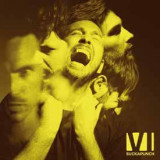
After a tumultuous period of emotional blows, leaving the majority of the band getting to grips with new life scenarios, the new album is rooted in reflection and redemption, and sees You Me At Six harness those darker experiences as a catalyst for creativity, empowerment and positivity.
Recorded over five weeks at Karma Sound studio in Bang Saray, and continuing their creative relationship with that album’s producer, Dan Austin (Biffy Clyro, Massive Attack, Pixies), ‘SUCKAPUNCH’ is the sound of a band embracing change. You Me At Six have crafted their most experimental, personal and
progressive record to date
After a brief period of studio lock-down at the start of 2019, Brame & Hamo are back and present their fifth EP ‘Pressure’ on their eponymous imprint, due out on the 24th of June.
Having recently appeared in the Mixmag Lab, and put out a highly-curated mix via Ninja Tune’s Solid Steel Radio late last year, the duo from Sligo have an ever-increasing tour schedule, which is taking their vibrant brand of music to dancefloors worldwide. They recently completed a sell out four-show tour in Australia, and have trips to the USA, Canada and Asia booked for later in 2019.
This EP is a contagiously energetic three tracker. Starting off with ‘Pressure’, an infectious drum pattern morphs into a driving and spacey dance floor weapon. ‘Transit’ is an intricate commute of driving synths, whilst ‘Dial Up’ is the guy’s take on breakbeat rave, taking inspiration from Josh Wink and Chemical Brothers.
“The start of 2019 has been a few months locked away in the studio juggling demos for various labels and making sure everything is just the way we wanted it. We have been putting ourselves under a lot of (self-inflicted) pressure to continue to deliver music of the standard of previous releases, and finally we got there. Each of the tunes took only a few hours and were all done in one take, using all the hardware in our studio during some intense jam sessions’.
Back in 1977, the LP Point Of Know Return marked the commercial peak of Kansas. The Progressive Rock band had experienced tremendous success with their previous release (1976’s Leftoverture) and were no longer starving for a hit, yet the sessions for their fifth album were tense. Steve Walsh briefly left the group in the middle of these sessions. Nevertheless, the LP turned out an even bigger success for the band than its predecessor. It would be their highest charting record and with four million copies sold, it was certified Quadruple Platinum by the RIAA. The tour to support the album brought them to huge venues such as New York’s Madison Square Garden and the LA Forum, with the tour book including an essay written by Rolling Stone contributor Cameron Crowe. The band became a staple on FM radio at this point, and during this period was one of the most popular rock acts in the country. “Dust In The Wind” became the hit single of the album.
• 180 GRAM AUDIOPHILE VINYL
• INSERT
• MULTI-PLATINUM 1977 ALBUM FEATURING THE SINGLES “DUST IN THE WIND” & “PORTRAIT (HE KNEW)”
• LIMITED EDITION OF 1500 INDIVIDUALLY NUMBERED COPIES ON FLAMING COLOURED VINYL
Barang Bang Records Archive Series vol. 1
Previously unreleased recordings
Compiled by Gianmarco Liguori
Bernie McGann - alto sax
Kim Paterson - trumpet
Bobby Gebert - piano (side A)
Andy Brown – bass
George Neidorf – drums
Recorded by Trevor Graham in Sydney, Australia (copyright 1966)
There is no more engaging nor distinctive alto saxophone sound on the planet than McGann’s.
Sydney Morning Herald
McGann takes the language of Bebop then bends and stretches it to fit the contours of his own remarkable im-agination.
The Wire
Bernie McGann’s sound is exciting and physical, as heated as any post-coltrane modernist.
Downbeat
A lost treasure of Antipodean jazz
This compilation documents part of an exciting period in Australasian jazz. Recorded in Sydney, 1966, we can hear Bernie McGann was already one of the great Australian jazz stylists. At the time, the only publicly available recording he made was two tracks on the Jazz Australia compilation (1967) (CBS BP 233450).
Two years earlier, McGann was living in Auckland, New Zealand (1963-64). It was here that he worked regular-ly with Kim Paterson, Andy Brown and pianist Dave MacRae, and the basis of this band came into being.
‘Lazy Days’, ‘Chuggin’, and ‘Sky’ were salvaged from a cassette in Kim Paterson’s collection, one of the few remaining copies. Originally intended for a radio broadcast, the master tapes were reportedly destroyed after the session.
‘Rhythm-a-Ning’ and ‘When Will The Blues Leave?’ were taped by Trevor Graham at the Wayside Chapel in King’s Cross. Graham was a Sydney music journalist and ally of the avant garde, with the foresight to capture some of what was happening at the time.
This album is also notable for a rare appearance by the mysterious American drummer George Neidorf (mis-spelt as ‘Neidori’ in the liner notes on the first Soft Machine album), an early influence on drummer Robert Wyatt.
Field recordings of a major artist in strong company – a lost treasure of Antipodean modern jazz.
White Vinyl
For Intervals, Arndt's chose the family piano to begin the creative process. By placing less importance on the skittering rhythms, which propelled previous Near the Parenthesis collections, Arndt was able to focus more on the instant gratification of sitting down and just playing. These ideas became the back- bone in which he then composed eight tidal tracks, mostly in the early morning hours in his East San Franciso Bay creekside home.
In these sessions, Arndt utilized various synths, and percussion to provide additional depth and atmosphere to the tracks' original skeletal structures. Arndt says of Intervals, "The title has a dual meaning as there has been a decent period of time between my previous album Helical and the release of Intervals, Four years to be exact. This concept of time and the spaces between gives the title its other connotation, which is a nod to musical intervals and the spaces between notes. I think this becomes evident in my use of arpeggiation, which I feel is a grounding motif across the album."
As with many Arndt's Near The Parenthesis works, there is a gentile hopefulness sewn through Intervals forty-minute runtime that provides much-needed solace in such unsettling times.
light blue vinyl + purple vinyl
French ROD imprint returns with the second chapter of his "Rave Encounter" trilogy, featuring four original and exclusive bangers packed in another collectible 2x10''!
Frankfurt legend Marc Acardipane (The Mover - Planet Phuture) engages hostilities on a side with an hardcore ode to the label. Powerful breakbeat rhythms melt with hitting lines turn this "Rave Or Die" cut into a true underground and future classic anthem. Insane!
On the flip, German J. Lindenthal & R. Russino from Mental Fear Productions go dark with implacable "Constant Sorrow", a hypnotic yet doom-like song that fits pretty well to this odd period we are all living at the moment.
On the C-side, Scottish Dave Tarrida (boss of Sativae) signs his second contribution to ROD. Punishing "Rave Death Cult" skilfully combines bleepy tones to raging spirit for the greatest happiness of your neighbours!
Last but not the least, ROD mastermind Umwelt concludes the compilation in apotheosis with the rollin' "Chaos & Mayhem", a tense, brutal and oldschool masterpiece full of early 90's sounds.
If you enjoyed the first opus of "Rave Encounter", you'll 100% dig this brain-melting new release that goes further into murky industrial rave waters.
- A1: Lloyd Clarke & Smithie's Sextet - Now I Know The Reason
- A2: The Charmers & Prince Buster - Now You Want To Cry
- A3: The Rhythm Aces & The Caribs - A Thousand Teardrops
- A4: Jiving Juniors - Have Faith In Me
- A5: Chuck & Dobby - I Love My Teacher
- A6: The Blues Busters - Call Your Name Forever
- A7: The Echoes Celestials - I Love You Forever
- B1: Wilfred Jackie Edwards - Hear My Cry
- B2: Jiving Juniors - Valerie
- B3: The Magic Notes - Why Did You Leave Me
- B4: Rupert Edwards - Guilty Convict
- B5: Keith & Enid - Worried Over You
- B6: The Moonlighters - Julie
- B7: Higgs & Wilson - How Can I Be Sure
Limited Vinyl LP edition!
The second volume in a two-part collection of Jamaican doo wop from the late 1950s through to the early 1960 represents a period in which sound systems began to dominate the island, and were starting to step up their rivalry by beginning to record heir own platters rather than rely on imports to gain the competitive edge.
With the uniquely Jamaican ska craze yet to fully catch hold, these tracks are largely imitative of the sounds that had been reaching the island from American shores, albeit peppered with hints of what was to come ~ some of the future stars of ska, rocksteady and reggae are starting to cut their teeth here on these records, providing a unique view into the fledgling industry at a time of creative flux.
"It is time for man to set a goal for himself. It is time for man to plant the seed of his highest hope. His soil is still rich enough for it. But that soil will one day be poor and exhausted, and no lofty tree will any longer be able to grow on it. Alas. There will come a time when man will no longer launch the arrow of his longing beyond man - and the string of his bow will have unlearned to whir! I say to you: one must still have chaos in oneself to give birth to a dancing star. I say to you: you still have chaos in yourself. Alas. There will come a time when man can no longer give birth to any star. Alas. There will come the time of the most despicable man, who can no longer despise himself."
This excerpt of Nietzsche's "Thus Spoke Zarathustra" sets the mood for the latest album of Sardinian sound researcher Eugenio Caria. "In Origine: The Field of Repentance" is a concept album dealing with the origin of man and its impact on the cycle of creation and destruction which drives the evolution of the universe. This time Caria invited one of the world's major trumpeters, prolific Sardinian jazz artist Paolo Fresu to collaborate on the album. Fresu's unique trumpet sound is recognized as one of the most distinctive in the contemporary jazz scene and on this album Caria and Fresu succeed in perfectly merging their contributions into a coherent entity. Fresu is not accompanying Caria and Caria is not accompanying Fresu. Instead they both drive each others plays, building and rebuilding, forming and reforming meticulous pieces of analogue-electronic music that invoke the feeling of a pure timelessness.
2023 Restock
Within the elusive confines of this film awaits an unreleased album that defies categorisation by a musician who in a different time and space would be revered amongst some of the most important exponents of progressive rock, dark ambient, Krautrock and pioneering synthesiser composition - not to mention sound design and art-house film scores. As a protégé of François Bayle and Luc Ferrari who had studied classical music before immersing himself in found-sound manipulation and oscillators, Alain Pierre quickly became an enthusiastic go-to man for sound sculpture and technical studio proficiency in Belgium’s small film industry.
To the many generations of dedicated fans of the visual work of Philippe Druillet it might seem virtually impossible to adequately “score” the alien, futurist landscapes of the man who many called the “space architect” (on account of his space age reductions of Gothic cathedrals, Art Nouveau, and Indian temples), but once you have heard the sonic reactions of Alain Pierre on this the first-ever dedicated Druillet documentary, Ô Sidarta, complete with his own equivalent sound palette, it will be difficult to “hear” Druillet’s world via any other composer. Despite Druillet’s truly incredible record sleeve designs for projects like cosmic disco ensemble Black Sun, concept albums such as Attention by Jean-Pierre Mirouze (composer of Le Mariage Collectif), Parisian metal bands like Sortilège, gatefold portraits of Jimi Hendrix, later period albums by William Sheller and most relevantly on albums by Igor Wakhévitch (Docteur Faust, 1971) as well as separate releases by both Richard Pinhas and Georges Grünblatt (both from the cosmic prog outfit Heldon), it is fair to say that this criminally unreleased album by Alain Pierre would conjure up the closest synergy between sound and vision that either artist would come close to.
The almost twelve of continuous music that Alain Pierre supplied for Ô Sidarta in 1974 fortunately appears in its entirety, unedited, as it does here for the first time ever away from its original broadcasts. Broadcast on Belgian and French TV that autumn, the film received a warm reception from Druillet fans, prospective film producers and space rock fans lucky enough to catch the short feature.
Throughout his career Alain’s commitment to conceptual music excelled within both cinematic realms as well as with the live arena. Never shying away from the constraints of transporting heavy synthesiser technolog and unpredictable analogue equipment to public spaces, Alain took his self-initiated “live” work very seriously. It was within his lesser-documented performances that you would find the closest sound to the music on Ô Sidarta, proving that the Druillet collaboration was naturalistic and conceptually close to Alain’s personal stylistic agenda. A rare recording of a one-off concert at the Université libre de Bruxelles in October 1976 reveals a very similar set of movements and soundscapes found on Ô Sidarta. This rare artefact has been included on the second side of this record under its original title Notions de physique intérieure (Notions Of Interior Physics) and stands as a perfect companion piece to Ô Sidarta - complete with a very similar “kit list” including the welcome addition of an Arp Sequencer, a Korg Vocoder and a Theremin (a back line whose total would far surpass any stationary studio of the era never mind a live show!).
By looking back at his original composition for one of his very first solo soundtrack commissions, Ô Sidarta, you can hear that back in 1974 Alain had already successfully managed to combine more unlikely musical influences, experimental techniques, and previously unheard soundscapes and studio tricks in to one twelve-minute score than most musicians fail to cram in to a whole discography. But still there is so much music yet to be discovered and Ô Sidarta is just the tip of the iceberg in the middle of a cosmic sea. Much like a character from one of Philippe Druillet’s books, Alain Pierre is a rogue pilot, steering his own ship in to the unknown, uncharted, unnoticed and quite unbelievable.
Favorite Recordings presents an exclusive reissue of the first private press eponymous LP by Sacbé, a Mexican Jazz Fusion masterpiece from 1977. Unique and beautifully recorded, with a breezy feel brought by the synthesizers, Sacbé could be likened to what Azymuth was doing at the same time in Brazil. Available as a vinyl-only limited pressing Deluxe Tip-On LP, coming with its original printed innersleeve, remastered by The Carvery.
Sacbé was composed of Eugenio (keyboards), Enrique (electric bass) & Fernando Toussaint (drums), three brothers hailing from the huge Mexico city, and their friend and sax player Alejandro Campos. Growing up in a family of musicians, they quickly became familiar with jazz music. However they were mostly self-taught, most of them choosing at first to work and study outside the music industry, but somehow, Eugenio had the opportunity to start studies at the Berklee Music University. Before leaving, he deeply wanted to play jazz with his brothers. That’s how Sacbé was created on a hot day of October 1976.
The band then built step by step a challenging repertoire including Chick Corea, Herbie Hancock, Weather Report, Milton Nascimento, Focus, Passport, and many more… Gradually, Eugenio started to compose more tracks, and through a cooperative work of arrangement, Sacbé ended up playing only their own compositions. That was not an easy choice for the band, resulting in a lot fewer opportunities to play in bars and clubs at night, while they were cumulating small jobs during the daytime. But their dedication, tightness, and integrity started to attract a wider audience thanks to their sessions at the Musicafé and helped Sacbé to assert its imprint within Mexico’s creative artistic circles. A group of artists with similar attitudes was created and they began working almost as a team, holding live shows, exhibitions, and dance performances, all with a very unique and creative proposal. It’s at this period that the band met Luis Gil, a young designer and recording engineer, who had access to one of the best studios of the city called LAGAB. Recording at nights and weekends for free, the Toussaint brothers had, therefore, the chance to really put their band quite literally under the microscope.
With tenacity, they explored all the possibilities of interpretations, structures and improvisations, collaborating with great musicians and finding themselves in the position of being their own producers, despite being only around 20 years old! This album is the result of this perfectionism ethics, shared by everyone involved. “Sacbé” means white road in the Mayan culture, it was the name for the roads connecting the main ceremonial centres with the jungle, made of roughly three feet of coral limestone. They were sacred roads used by high priests and warriors, which echoed the musical path of the three brothers. Putting the pieces together, they managed to create their own label and pressed 1000 copies of their reunited recordings in 1977. The artwork was painted by Enrique, inspired by the work of Le Douanier Rousseau and the Mayan jungle. Hopefully, the LP met some success in Mexico and California, opening many radio and TV doors for them. It was the starting point for a whole career of recordings, with a total of seven albums including various guests.
Over two years in the making, and it’s finally here. Amsterdam based, brand new old-school label “Betonska” kicks off with this highly diverse release for the selector, collector, radio host and club DJ.
Crisp instrumentation, tight retro drum computer programming and propulsive danceable bass lines are what you will find here. The Amsterdam based label will be focusing on previously unreleased and tough-to-find material from the 80s and 90s – all re-mastered, officially licensed and in collaboration with the original artist. In addition to the original material an occasional modern twist will be given by contemporary artists who cherish that signature sound.
The first release is an alternative issue of Flo Sullivan’s “Higher” release, originally recorded in 1984 in the world famous Amazon Studios in Liverpool and released in 1985. On the A-side both the 12” and the 7” version of the hard-to-get, firm synth-pop track “Higher” will be pressed on a loud 45rpm vinyl. The 12” version is the (bass-)heavier one, while the 7” version sounds more “organic” with an extended intro and an added horns part. The tracks on the A-side have been pressed before and are made available now again for the wider public, giving those tracks the recognition and attention they deserve.
The B-side focuses on previously unreleased original downtempo material by the same artist but released under her real name: Gayna Rose Madder. This, accompanied by a refreshing club-ready remix of one of those tracks by Vienna’s top-notch selector, producer and Neubau label owner: Heap.
Neither of the two original tracks “Over” and “Element” have ever been released on vinyl before, up until now. “Over” was written and recorded in 1983 in Splash Sound Studios in Liverpool. A beautiful melancholic synth-pop track, which was meant to be released, but unfortunately never saw the light of day. At the time it was recorded Gayna left her band “Shiny Two Shiny” and therefore needed a new deal from a different company for her solo releases. But by the time she found the right one, many newer songs needed release. Much later, in 2005, Gayna decided to self-release “Over” on a compilation CD to sell copies online.
“Element” is a spoken-word poem accompanied by a fire-crackling tribal kind of rhythm. It was written for a musical play and recorded in Sparks Studio Liverpool in 2004 and has never officially been released before. (For a short period it was available on a self-released CD on Gayna’s website; a compilation of the songs written for one of her musicals).
And last but not least, the icing on the cake is Heap’s remix of “Element”. He translated this spoken word poem into a refreshing 90s-style and danceable club-track to complete the diversity of Betonska’s first release. A chugging acid bass, breakbeat rhythms, crisp claps and sharp snares and a screeching lead synth to get you screaming on the dance floor.