Another Interplanetary STAR CREATURE team up for a Chicago Tokyo expedition across a soundscape ranging from bossa nova lounge to pre-vaporwave exotica; new age city pop to minimal library boogie. JUNE CHIKUMA is best known now for her ground breaking Video Game soundtracks throughout the late 1980s and early 90s, most notably the now cult-classic status Bomberman Hero OST for Nintendo. During this same period she produced many recordings for a wide variety of clients including Japanese Public Transit Commercials, Video Game Arcades and VHS Nature Documentaries. STAR CREATURES combed her archives and selected a nice mix of tracks as entry point into her work. These tracks have been rescued from obscurity, remastered and waxed up for contemporary universal enjoyment. 500 Copies. Pressed in Detroit.
quête:j period
With Pere Ubu on hiatus since 1982’s excellent ‘Song Of The Bailing Man’, David Thomas had recorded a` much-praised solo album and the band had now signed to a major label. In a period of rampant world commercialism, what would happen next? Another crucial era for the band unravelled, Pere Ubu’s journey charted new undulating territory and so began a three-album escapade that retooled our understanding of what pop music is. Things were further obscured with ‘Cloudland’ when they released “their industrial strength equivalent of a class Beach Boys album from musicians more familiar with factories than surf.” (Greg Kot, Chicago Sun Times).
1982, Brussels: The former au pair for Rick Wakeman of Yes and two of her teenage friends are at the doorstep of Les Disques Du Crepuscule, ready to cut an album with Gilles Martin. Living on busking wages and next door to Tuxedomoon, their work results in a contemporary bossanova record that would provide a missing link between Antonio Carlos Jobim and Kraftwerk. Camino Del Sol was issued and promptly forgotten, with Isabelle Antena moving toward jazz in Asia and the others returning to France. Twenty years later, it was findable only as a VG+ LP with a sticker price of $4.99. Intrigued by the striking cover's sunlit patio furniture emptiness basking in the south of France, we scooped up Camino Del Sol and grouped the extant Antena recordings from that exceptional period by session. Numero Group's definitive 2LP reissue of the original five-song mini-LP adds the group's first 12" (a cover of Jobim's "Girl From Ipanema," naturally), the Seaside Weekend 12", compilation tracks, and two previously unissued cuts, recasting this short-lived combo's forward-thinking milemarker as a modern-day masterstroke. 2x150g LP in a 2-pocket gatefold tip-on jacket with 2 printed inner sleeves.
- Last Epoch Theme
- Burning Forest
- In Preparation
- Keepers Camp
- Escape From The Fortress Vaults
- What She Left To Remember
- Fires Before Dawn
- Bastion Of The Sun
- War Machines Of Solarum
- Eterra
- Highlands
- Ascending The Summit
- Inferno And Fury
- The End Of Time
- Crystal Mines: Crystal Lotus
- Shattered Remains
- The Temple Of Eterra
- Twisted Fire
- The Precipice
- Above The Black
- The Council Chambers
- The Sheltered Wood
- The Forsaken Trail
- The Ritual Site
- Guardian Of Ruins
- The End Of Ruin
- Ruins Of Welryn
- Shadows Whisper
This epic loot sees the epoch-making score for time-hopping action RPG Last Epoch blessing heavyweight wax.
28 tracks chosen by composer Erik Desiderio have been specially mastered for vinyl and will be pressed onto heavyweight discs. These slip into a deluxe double gatefold sleeve with artwork by the team at Eleventh Hour Games.
Desiderio had to cast his mind through time to soundtrack each of the game’s four different epochs of Eterra, with the music of this release focusing mainly on the brighter Divine Era and the darker, apocalyptic Ruined Era. Most eras of the game have a natural, acoustic sound to them with more traditional instrumentation, while the Ruined Era focuses on warped synthetic and acoustic sounds. Over the course of the game’s Early Access period, the composer was able to gather fan feedback, which in turn helped shape the final score.
Some less well-known instruments and techniques colour the music. The sound of the lute helped capture the beauty of the world, while the scratchy, intense tagelharpa embodied the conflict of a war-torn land. In the Ruined Era, fretless bass guitar and expressive Ebow serve to create a sense of unease, with melodic material returning from earlier eras.
Choral lyrics were sung in Old Norse, in particular on the “Last Epoch Theme” with its stirring refrain “Fyoern Oowled” (trans. “Ancient Era”). Vocalists include Ffion Elisa, Colm McGuiness, Mason Lieberman and Matt Lambert.
- A1: Dance Dance Dance (Enthalten In Neil Young – Archives Vol. I.)
- A2: Come On Baby, Lass Uns In Die Innenstadt Gehen (Unveröffentlichte Version)
- A3: Winterlong (Unveröffentlichte Version)
- A4: Everybody's Alone (Anderer Mix In Archives Vol. I Enthalten)
- A5: Wonderin' (Unveröffentlichte Version)
- B1: Cinnamon Girl (Original 7-Zoll-Mono-Mix. Veröffentlicht Am 20. April 1970. Enthält Gitarren-Outro, Nicht Auf Der Lp-Version.)
- B2: Look At All The Things (Unveröffentlichte Version)
- B3: Helpless (Unveröffentlichte Version)
- B4: Birds (Unveröffentlichter Stereomix). Der Mono-Mix Wurde Als B-Seite Von „Only Love Can Break Your Heart“ Veröffentlicht
- B5: Down By The River (Unveröffentlichte Version Mit Alternativem Gesang)
clear LP[30,88 €]
The earliest recordings of Neil Young with Crazy Horse are surrounded by a very special aura. The material is so historic - 55 years! - that the most loyal fans, whose shelves are filled with just about every release by the musician and his formative band, can hardly contain their excitement when new releases from this period are announced. Now the time has come again: EARLY DAZE will be released on June 28 and the excitement among fans is already palpable.
The album will be released on June 28th on black vinyl, CD and digital. A limited edition clear vinyl with exclusive poster will be available at indie retailers. EARLY DAZE is a collection of 10 songs, each one a unique original that became an instant classic and remains so to this day. The recordings on this album have never been heard before and sound as new as when they were made. The EARLY DAZE are back.
- A1: Dance Dance Dance (Enthalten In Neil Young – Archives Vol. I.)
- A2: Come On Baby, Lass Uns In Die Innenstadt Gehen (Unveröffentlichte Version)
- A3: Winterlong (Unveröffentlichte Version)
- A4: Everybody's Alone (Anderer Mix In Archives Vol. I Enthalten)
- A5: Wonderin' (Unveröffentlichte Version)
- B1: Cinnamon Girl (Original 7-Zoll-Mono-Mix. Veröffentlicht Am 20. April 1970. Enthält Gitarren-Outro, Nicht Auf Der Lp-Version.)
- B2: Look At All The Things (Unveröffentlichte Version)
- B3: Helpless (Unveröffentlichte Version)
- B4: Birds (Unveröffentlichter Stereomix). Der Mono-Mix Wurde Als B-Seite Von „Only Love Can Break Your Heart“ Veröffentlicht
- B5: Down By The River (Unveröffentlichte Version Mit Alternativem Gesang)
black LP[29,83 €]
The earliest recordings of Neil Young with Crazy Horse are surrounded by a very special aura. The material is so historic - 55 years! - that the most loyal fans, whose shelves are filled with just about every release by the musician and his formative band, can hardly contain their excitement when new releases from this period are announced. Now the time has come again: EARLY DAZE will be released on June 28 and the excitement among fans is already palpable.
The album will be released on June 28th on black vinyl, CD and digital. A limited edition clear vinyl with exclusive poster will be available at indie retailers. EARLY DAZE is a collection of 10 songs, each one a unique original that became an instant classic and remains so to this day. The recordings on this album have never been heard before and sound as new as when they were made. The EARLY DAZE are back.
Following a 21-year hiatus since their last album release, UK-industrial-metal pioneers KILL II THIS return with a new album, Variant. KILL II THIS guitarist Mark Mynett spoke about the album title and artwork: "We originally had a much more complicated title for the album but the Variant title came about during the Covid lockdown period. It also echoes previous KILL II THIS album titles, especially 'Deviate,' and the roman numeral V signifies that this is the fifth album. The artwork was created by Andy Pilkington at Very Metal Art and we are delighted with what he has come up with. There are some really clever touches and the detail is incredible. We've recorded a very strong album with Variant and it needed powerful artwork to match."
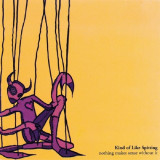
Nothing Makes Sense Without It, the seminal sophomore LP by Kind of Like Spitting, is finalyl getting the deluxe reissue that it deserves.. The group's second album, originally released in 2000, is a heartbreakingly tender effort, with songwriter Ben Barnett's signature, sullen voice aching across twelve slow-burners. Now, 24 years after its original vinyl pressing, the album has been reissued as a deluxe 2xLP featuring an entire extra LP of demos and unreleased tracks. Whether you're replacing your worn out original pressing or just discovering Nothing Makes Sense Without It, this reissue is a must have for both longtime die-hards or any fan of the music of Kind of Like Spitting's northwest indie contemporaries like Death Cab For Cutie, Pedro The Lion and Elliott Smith.
Lenticular Sleeve / White Vinyl. When Jack Tatum began work on Life of Pause, his third full-length to date, he had lofty ambitions: Don't just write another album; create another world. One with enough detail and texture and dimension that a listener could step inside, explore, and inhabit it as they see fit. "I desperately wanted for this to be the kind of record that would displace me," he says. "I'm terrified by the idea of being any one thing, or being of any one genre. And whether or not I accomplish that, I know that my only hope of getting there is to constantly reinvent. That reinvention doesn't need to be drastic, but every new record has to have its own identity, and it has to have a separate set of goals from what came before." What came before: a rightfully acclaimed, much beloved display of singular pop craftsmanship. Tatum's dreamy, unexpected 2010 debut, Gemini, was written while he was still a student at Virginia Tech University. Its equally disarming follow-up, 2012's Nocturne, marked the first time he'd been able to bring his bedroom recordings into a studio, to be performed and fully realized with the help of other musicians. There has been a set of wonderfully expansive EPs in between_each hinting at new directions and punctuating previous ideas_but with Life of Pause, Tatum delivers what he describes as his most "honest" and "mature" work yet, an exquisitely arranged and beautifully recorded collection of songs that marry the immediate with the indefinable. "I allowed myself to go down every route I could imagine even if it ended up not working for me," he says. "I owe it to myself to take as many risks as possible. Songs are songs and you have to allow yourself to be open to everything." After a prolonged period of writing and experimentation, recording took place over several weeks in both Los Angeles and Stockholm, with producer Thom Monahan (Devendra Banhart, Beachwood Sparks) helping Tatum in his search for a more natural and organically textured sound. In Sweden, in a studio once owned by ABBA, they enlisted Peter, Bjorn and John drummer John Ericsson and fellow Swedish Radio Symphony Orchestra veteran Pelle Jacobsson, to contribute drums and marimba. In California, at Monahan's home, Tatum collaborated with Medicine guitarist Brad Laner and a crew of saxophonists. From the hypnotic polyrhythms of "Reichpop" to the sugary howl of "Japanese Alice" to the hallucinogenic R&B of "A Woman's Wisdom," the result is a complete, fully immersive listening environment. "I just kept things really simple, writing as ideas came to me," he says. "There's definitely a different kind of `self' in the picture this time around. There's no real love lost, it's much more a record of coming to terms and defining what it is that you have_your place, your relationships. I view every record as an opportunity to write better songs. At the end of the day it still sounds like me, just new."
We can't really say that Japanese jazzmen benefit (not justify in fact) from a great international fame. However, trumpet player Terumasa Hino is an exception, undoubtedly because since the 70s he has collaborated with numerous American musicians : Gary Burton, Roy Haynes, Herbie Hancock … On Into the Heaven, which was released in 1970, Terumasa Hino is surrounded by the same musicians as on Hi- Nology, released a year earlier : his brother Motohiko Hino on drums, Hiromasa Suzuki on electric piano, Kunimitsu Inaba on electric bass and Takeru Muraoka on tenor sax. The eponymous piece, which lasts more than 20 minutes, is a jazz fusion giving room to choruses and which is reminiscent of the music that Miles Davis then offered, in what we will call his "electric period". B side opens with "Love More Train", a brilliant and long hard bop song, while the album closes melancholy with the peaceful "Feeling Blues As You Are Feeling".
2024 repress.
Five years ago, back in September 2016, Stefano Gentile published a photographic book entitled IL SILENZIO DEI TUOI PASSI (The Silence of Your Steps), which collected a series of 56 pictures, both in b/w and colour, dedicated to the nights in Venice. The book was a journey through the most remote "calli" and "campi" (streets, alleys and squares, as they're called in Venice) in search of the true 'breath' of the city, far away from the hordes of tourists who 'attack' it every day during daylight hours.
On such occasion, renowned musician Gigi Masin composed a 30 minutes epic ambient track entitled VENEZIA 2016 which was the perfectsoundtrack to the images included in the book. The track was published on CD and released bounded with the book itself in a limited edition of 480 copies only, and has been unavailable for years now.In 2021 Gigi Masin returned to that great piece of music and to its timeless sounds. Finally, Silentes can now offer PLAYS VENEZIA, Masin's latest work contanining a re-edited version of that 'pearl', accompanied by two unreleased tracks composed and recorded in the same period.
Once again inspired by the city, Masin created an enduring and wonderful ambient masterpiece, a sort of return to the origins, to his home. Adding to the intrinsic quality of the originals, the tracks were beautifully mastered by Brandenburg Mastering in Amsterdam. PLAYS VENEZIA is simply an unmissable release and one of Masin's greatest accomplishment in a long carrier that never ceases to amaze us.
* CASSETTE VERSION **
Five years ago, back in September 2016, Stefano Gentile published a photographic book entitled IL SILENZIO DEI TUOI PASSI (The Silence of Your Steps), which collected a series of 56 pictures, both in b/w and colour, dedicated to the nights in Venice. The book was a journey through the most remote "calli" and "campi" (streets, alleys and squares, as they're called in Venice) in search of the true 'breath' of the city, far away from the hordes of tourists who 'attack' it every day during daylight hours.
On such occasion, renowned musician Gigi Masin composed a 30 minutes epic ambient track entitled VENEZIA 2016 which was the perfect soundtrack to the images included in the book. The track was published on CD and released bounded with the book itself in a limited edition of 480 copies only, and has been unavailable for years now.In 2021 Gigi Masin returned to that great piece of music and to its timeless sounds. Finally, Silentes can now offer PLAYS VENEZIA, Masin's latest work contanining a re-edited version of that 'pearl', accompanied by two unreleased tracks composed and recorded in the same period.
Once again inspired by the city, Masin created an enduring and wonderful ambient masterpiece, a sort of return to the origins, to his home. Adding to the intrinsic quality of the originals, the tracks were beautifully mastered by Brandenburg Mastering in Amsterdam. PLAYS VENEZIA is simply an unmissable release and one of Masin's greatest accomplishment in a long carrier that never ceases to amaze us.
- A1: Mr Righteous (Intro)0 35
- A2: You Need Knowledge 3 45
- A3: 88 Soul 3 12
- A4: Black Shakespeare 3 02
- B1: For My People ..It's Spiritual 2 55
- B2: Lonely At The Top 3 56
- B3: Just Listen 4 05
- B4: California Dreamin' 4 33
- C1: Purity 3 59
- C2: Kunta Kente 4 20
- C3: 1993 Shit 3 49
- D1: We Got Plots 3 38
- D2: Do Win-Dis 4 11
- D3: Hope She Remembers Me 3 15
A Gilles Peterson-approved deep jazz-rap classic.
2024 first time vinyl release, 140g double vinyl, remastered audio with restored artwork.
Limited and Non-Returnable.
Holy grail hip-hop alert! Superstar Quamallah's Invisible Man was never released on wax so, to celebrate the 15th anniversary of this astounding record, we present the first ever vinyl edition. A stunning record which gained accolades upon its initial release, such as a prominent feature on Gilles Peterson's renowned Best Of 2009 show, it's one of the most essential jazz rap albums of all time.
Deep jazz rap on that mellow-melodic tip, Invisible Man is an unforgettable album with nothing but dope beats and dope bars. There's a strong chance this album has passed you by but we truly believe it to be a lost hip-hop masterpiece. It supremely captures the essence of a golden age classic without being slavish to the past. No, this ain't some facile throwback rap. It's a fresh and deeply soulful, original album shot through straight from the heart. Perfect to chill to, Invisible Man is profoundly jazz-oriented and captures with simplicity and sincerity the essence of hip-hop circa 1983-1994. It sounds like vibing with your nearest, dearest and oldest friends on a long hot summer night as the tantalising thought that anything is possible fills the air. You know what, we can just call this "magic hour rap" and we think you'll know what we mean. It's just beautiful. Just Listen.
Brooklyn-born, California-based emcee, DJ, and producer Superstar Quamallah was active in the West Coast underground scene throughout the 90s and recorded extensively with such revered names as Defari and Tajai. His parents were some serious artistic heavyweights, too; his father was soul organist Big John Patton, a giant in the jazz world known for his releases on Blue Note whilst his mother was an active designer. However, he remains relatively unknown. Invisible Man, named ostensibly after the classic Ralph Ellison novel, could also refer to how he is viewed by the public at large. With close affiliations to the Hieroglyphics, Dilated Peoples and Likwit crew, his debut EP "Don't Call Me John" arrived in 1999 on ABB Records, after which he took a sabbatical from recording which included graduate school, travelling, teaching at Inglewood High and eventually a professorship of African Studies at Berkeley.
With a laidback flow and deep, relaxing presence on the mic, Superstar Quamallah is equal parts Big Daddy Kane, Rakim and Guru. Invisible Man is refined, soulful, feel-good hip-hop of the old school. Its wise, spiritual and literate sound, combined with the summertime vibes projected by the smooth beats and the nostalgia-inducing samples and vocal scratches, created jazzy boom-bap rap reminiscent of prime De La Soul, A Tribe Called Quest and Gang Starr.
Irresistibly bouncing opener "You Need Knowledge" loops sparkling pianos, horns and a nagging whistle refrain with scratched vocal refrains from Slick Rick, Mobb Deep and Guru. The super-smooth head-nod classic "88 Soul" also utilises a beautifully swelling piano line and dusty breaks whilst Quamé reminisces about his childhood in NYC. Deeply moving, the silky, sultry "Black Shakespeare" is built around an elegant piano loop and goes hard on the superman lover tip whilst "For My People...It's Spiritual" is transcendental rap in conversation with Rakim and older gods. The "Moment Of Truth"-sampling "Lonely At The Top" is striking for its undiluted boom-bap stylings and the staccato flute-hop of "Just Listen" is riddled with soulful refinement. The deeply-affecting, wistful-yet-triumphant bells and horn-drenched single "California Dreamin'" is top-tier rap of unimpeachable quality. What a flow!
Another highlight is the rich melodic piano-rap of "Purity", a beautiful ode to the foundations of rap and those keeping the culture authentically alive. Beautifully played instruments and spiritual jazz samples elevate the deep thinking present on "Kunta Kente" whilst the darker jazz-tinged battle-rap of "93 Shit" goes super hard both in a lyrical sense and with its no-holds drum punches. The breezy Rhodes and string loops that serve as the sonic backdrop to the slinky jazz rap of "We Got Plots" are just gorgeous as our hero evokes Common's "I Used To Love H.E.R." with a head-spinning tale of crime, deception and double crossing. And some twist! "Do Win-Dis" has a tense crime-funk backing and rolling beats which complement Quamé's flow perfectly before the record is rounded out by the tough yet jazzy brilliance of rap confessional "Hope She Remembers Me". Just sensational.
Upon its original release, Quamallah himself declared: "My favorite time period for Hip Hop music was definitely between 1983 and 1994 with 1988 and 1993 being two years that standout as extremely impressive years musically and culturally. The fashion, slang, movies, TV shows and vibe during those years was incredible. While totally submerged in the feelings and music of that entire time period, I went to work on Invisible Man and I am excited for people to hear the result! It is an album that I would want to hear from some of my favorite artists of the past and present today. This is not a RETRO trip for me; this is me at my best lyrically and spiritually using the accessories of the 80s and 90s to fuel me. I am a 88 soul as the song states!"
This album goes deep. It goes all in. When Invisible Man first came out it had a real hold on us here at Be With HQ. We couldn't stop listening to it. We'd venture to say it's one of the top 25 rap records of the 2000s. In the years since its release, it has remained a criminally underrated record, an increasingly hidden gem. We sincerely hope this first time double LP release will go some way to correct this.
It's been mastered for vinyl by Simon Francis, cut by Cicely Balston and pressed at Record Industry. Finally available on the format it should always have been on, it must never be rendered invisible again.
Black Truffle is thrilled to present the first vinyl reissue of David Rosenboom’s unique Future Travel, originally released on the short-lived Detroit label Street Records in 1981 and here presented in an expanded edition with an additional LP of wild, previously unheard live and studio material from the same period.
Future Travel emerged from the confluence of two important streams in Rosenboom’s work at this time. First, his exploration of ‘propositional music’, defined as ‘complete cognitive models of music’ that start from the radical question, ‘What is music?’ In this case, the music belongs to the universe of Rosenboom’s In the Beginning (1978-1981), in which proportional relationships determine the material available to the composer in all musical parameters (harmonic relationships, melodic shapes, rhythmic subdivisions, dynamics, and so on). Second, the work documents a key moment in Rosenboom’s long collaboration with synthesizer pioneer Don Buchla. Having played a role in developing concepts for some of the modules of the Buchla 300 Series Electric Music Box (an innovative analogue modular system controlled by micro-processors), Rosenboom went on to write the software for Buchla’s hybrid analogue-digital keyboard synthesiser, the Touché, the instrument heard most prominently here.
In a way that no purely analogue synthesizer could, the 300 Series and Touché allowed Rosenboom to work with the In the Beginning algorithms in real time, the synthesizers becoming ‘intelligent instruments’ that actively collaborate with the performer. Developing the open structures of the electronic pieces from In the Beginning, Future Travel explored the possibilities of simply ‘playing the system’, recording live at Francis Ford Coppola’s Zoetrope studio in San Francisco. Working from loose sketches, Rosenboom added acoustic instruments to the electronic sounds and, on some pieces, the processed voice of Jacqueline Humbert. Like Rosenboom’s collaboration with Humbert on the abstracted synth-chanson of Daytime Viewing, this music set out deliberately to challenge the ‘stratified and illusorily coagulated identities in the musical culture of the time,’ refusing distinctions between ‘serious’ and popular music. But where Daytime Viewing achieves this in part through genre references, Future Travel is bracingly sui generis, existing in a unique universe where radical formalisation à la Xenakis spontaneously gives rise to expressive jazz harmonies and old-timey folk melodies.
The crystalline quality of many of the Touché sounds gives Future Travel a sparkling, immediately enticing surface, its layers of shifting ostinato patterns pulsating outside conventional meter, rippling like waves on the surface of water. On opener ‘Station Oaxaca’, ping-ponging synth arpeggios and hand percussion accompany a sentimental violin melody, abruptly overtaken by layered keyboard runs, before the entry of tinkling marimba-like sounds reframe the scene as sci-fi Martin Denny exotica. ‘Time Arroyo’ begins as an austere study in staccato synth sounds in multiple overlapping tempi, reminiscent of Ligeti’s famous ‘clock’ rhythmic effects. Before long, it opens up into a melodic passage with the gentle heroism of classic Roedelius, which proves to be only a brief interlude before the layers of rhythmically distinct synthesiser patterns begin to build and accelerate into an increasingly dense cacophony. The wildest twists and turns are saved for the epic closer ‘Nova Wind’, where the arrangement focuses on Rosenboom’s virtuoso piano playing, perfectly embodying the project’s radical disregard of stylistic orthodoxies as he moves from hyperactive pointillistic flurries to a kind of space-age gospel.
At several points throughout the record, the distinctive voice of Jacqueline Humbert is heard reading passages from the text component of In the Beginning, a dialogue between The Double (an embodiment of humanity’s timeless desire to replicate itself in spiritual and technological copies) and two Spirit Characters. Fittingly, as all are conceived as embodiments of a future form of techno-human collective consciousness, distinctions between the three characters are not immediately evident in Humbert’s delivery, just as the music blurs the boundaries between intelligent computing and human spontaneity. Adorned with a striking retro-futurist cover (and here accompanied by extensive new liner notes and archival images), Future Travel is a time capsule of radical imaginings at the birth of our digital age, reminding us of utopian possibilities of which our own present seems so often to fall short.
LP Ltd Edition CREAM Vinyl, DL card. Originally released in 2002 ‘Edge Of A Dream’ will be reissued on limited edition Cream vinyl as part of ‘Bert Jansch 80’, celebrating the enduring legacy of Bert Jansch’s peerless guitar playing and songwriting. Following ‘Crimson Moon’, ‘Edge Of A Dream’ is one of Jansch’s last studio records featuring original and traditional songs that are modal with his trademark bluesy and folk sound. It features some traditional reworkings including the lesser-known instrumental ‘Gypsy Dave’ with fiddler Dave Swarbrick and the stunning ghostly track ‘All That Remains’ with Mazzy Star’s Hope Sandoval. Known for his collaborations, ‘Edge Of A Dream’ sees Jansch accompanied by Bernard Butler, Ralph McTell, Johnny ‘Guitar’ Hodge’, Makoto Sakamoto, Paul Wassif, Colm Ó Cíosóig and Loren Jansch. “One of the most revered artists of his generation” Shindig. “Edge Of A Dream remains that period's most overlooked beauty, featuring some beautiful playing and some great collaborations” The Quietus. “Despite 40 years at folk’s vanguard, Jansch was still bright and inventive, as new generation of musicians embraced his music” Mojo
Big Wave, the sixth full-length release from the Catalan singer-songwriter, strides boldly in a new direction, its songs charged with a fresh power -- precipitated by changes in her personal life. On her previous albums, particularly Hardcore From The Heart and Dripping Springs, Joana's music engages in a tug-of-war between fragility and intensity, a dynamic that has caught the attention of major publications such as Mojo, Uncut, and The Guardian, as well as Lauren Laverne, Guy Garvey and Gideon Coe on their BBC 6 Music show. Her songs have been described as "torrents of familiar heartache made startling and luminous". Big Wave retains her characteristic use of reverb and pop melody, but is tighter, fiercer, shrouded in distortion. An emotional and sonic ferocity because "I wanted to be more aggressive," Joana explains. "Because I was going through a period where I was feeling very uncomfortable."
- A1: Fé De Sábio - Crepúsculo
- A2: Nuno Rebelo - Vê-Se Das Nuvens
- A3: Vítor Rúa - T
- A4: Tó Neto - Daly
- B1: Luis Cilia - Saxofonía
- B2: Spqr - Flow
- B3: Telectu - Untitled
- B4: Pilar - Voz Do Mar
- C1: Carlos María Trindade - Em Campo Aberto
- C2: Balladium - Andrómeda
- C3: Ban - Irreal Social
- D1: Pop Dell'arte - Querelle
- D2: Santa Maria Gasolina Em Teu Ventre - Optical Sunday Without William Burroughs
- D3: Croix Sainte - We Build Cities
- D4: Linha Geral - Hino À Nossa Luta
Unveiling an unheard scene: Glossy Mistakes presents "Atlantic Mavericks: a Decade of Experimental Music in Portugal 1982-1993"
Glossy Mistakes is proud to announce the upcoming release of "Atlantic Mavericks: a Decade of Experimental Music in Portugal 1982-1993," a groundbreaking double LP compilation that offers a unique glimpse into the vibrant landscape of Portuguese experimental music. Set to launch on June 10th, this monumental release showcases the evolution and innovation of the Portuguese music scene during a transformative decade marked by political upheaval and artistic experimentation.
Compiled by Glossy Mario and featuring liner notes by Rui Miguel Abreu, "Atlantic Mavericks" captures the essence of a generation of artists who dared to challenge conventions and push the boundaries of what was possible in music.
The compilation stands as a testament to the eclecticism of the Portuguese music scene during this period, featuring a diverse range of genres and styles. From ambient and new age to electro, rock, and synth-pop, "Atlantic Mavericks" offers something for every listener, inviting them to explore the rich tapestry of sounds that defined the era.
The 1980s in Portugal were a time of profound transformation, marked by the aftermath of a peaceful revolution and a burgeoning desire for artistic expression. As the country emerged from political turbulence, a new generation of musicians began to explore uncharted territories, paving the way for a wave of experimentation and innovation.
From the emergence of artists like Rui Veloso and bands like UHF, who ushered in a new era of Portuguese rock, to the founding of independent record labels like Fundação Atlântica and Ama Romanta, the 1980s saw a surge in creativity and a desire for independence within the music industry.
"Atlantic Mavericks: a Decade of Experimental Music in Portugal 1982-1993" offers a comprehensive overview of this dynamic period, featuring tracks that span the spectrum of experimental music. Each song tells a story of artistic evolution and creative risk-taking, reflecting the diverse influences and eclectic tastes of the Portuguese music scene during this transformative decade.
Spanning from 1982 to 1993, the compilation includes contributions from a wide range of artists, including SPQR, Croix Sainte, Linha Geral, Balladium, Ban, Santa Maria, Gasolina Em Teu Ventre!, Fé de Sábio, and Telectu, among others. With each track carefully curated to showcase the breadth and depth of Portuguese experimental music, "Atlantic Mavericks" promises to be a must-have for music enthusiasts and adventurous listeners alike.
"Atlantic Mavericks: a Decade of Experimental Music in Portugal 1982-1993" will be available on June 10th as a double LP release, offering listeners a chance to immerse themselves in the sonic landscapes of 1980s Portugal. Whether experienced on vinyl or through digital channels, this monumental compilation is sure to leave a lasting impression on all who encounter it.
LEE MOSES is a cult figure amongst rare funk and deep soul collectors with his lone album, Time And Place, the holy grail of his brief but majestic recording legacy. Despite working with the likes of Eddie Billups, King Hannibal, Freddie Terrell, Barbara Hall and Gladys Knight & The Pips, he remains obscure and yet revered. He recorded just eight singles over a period of eight years and scratched a living playing the bars and R&B clubs in Atlanta. “Bad Girl” is a funk/soul masterpiece that is heavily in demand around the world as the three million views on YouTube lays testament. It was recorded in New York in 1967 and is produced by the legendary Johnny Brantley who captures the very soul of Moses in every tortured second of this 5-minute opus that stretches over both sides of the 45.
The next release in the Mr Bongo Cuban Classics series, is one of Juan Pablo Torres' most-known and loved albums, the iconic Super Son from 1977. A wonderful record of tripped-out rumbas, psych-Afro-Latin funk and quirky orchestrated tracks with a big band horn section courtesy of Torres’ band, Algo Nuevo.
As well as being the director of Algo Nuevo and Cuban all-star ensemble Estrellas De Areito, the trombonist, bandleader, arranger and producer also released a wealth of albums under his own name predominately on the state-owned imprint Areito/EGREM.
Post-revolution, there was a contrast in Cuba’s musical world. State censorship was at play, but professional musicians were on the government payroll which gave them an artistic freedom. Experimentation emanated in the ‘70s and ‘80s and Super Son is a prime example of that. ‘Y Que Bien' kicks off the album taking you down a tripped-out, cosmic rabbithole, psych guitars and skat vocals opening up into a joyful funk groove laced with jazzy Afro-Cuban horns stabs. Tracks such as 'Pastel En Descarga' seem to come out of nowhere and are completely unique. Fuzzed-up guitar lines and percussion lay the groundwork, with those jubilant horns adding to the energy of this forever building track.
Elsewhere, there’s the ‘70s TV theme-tune feeling of 'Con Aji Guaguao', a playful funk number that boils and bubbles with blistering trombone playing by Torres. Or ‘Son A Propulsión' and ‘Son Riendo’, two more brilliant examples of psychedelic funk, wrapped up in a blanket of Afro-Cuban rhythms. The former sweeping you up in rushes of wind as trumpets, trombones and distorted guitars trade off, the latter, an intergalactic fiesta of tradition and exploration.
Super Son is up there as one of the funkiest Cuban records around, a playful fusion of ideas from a producer, player and group on fine form and, for us, one of our favourite gems to come out of Cuba in this period. A sheer masterpiece.
Live Volume is the first live album by American heavy metal band Corrosion of Conformity, which was originally released in 2001. The album was recorded on April 20, 2001, at the Harpos Concert Theatre in Detroit, Michigan. Although the group began with strong punk leanings, they were one of the first groups to merge punk and metal. Live Volume features live recordings from their entire ‘metal period’ from Blind until America’s Volume Dealer, including “Albatross”, “Clean My Wounds”, “Vote With A Bullet”, and “Congratulations Song”. Live Volume is available as a limited edition of 1000 individually numbered copies on silver coloured vinyl, housed in a gatefold sleeve.