Nils Petter Molvær and Mino Cinelu had both come a long way in their careers before they met. Cinelu gained international renown on Miles Davis’ albums We Want Miles and Amandla, also noted for his playing with the likes of Weather Report, Gong, Herbie Hancock, Pat Metheny, Sting, Santana, Lou Reed and Laurie Anderson, to name just a few. He has also released 3 solo records and collaborated with Dave Holland and Kevin Eubanks on the World Trio album. Nils Petter Molvær, meanwhile, is one of the most outstanding figures in European jazz. In 1997, he made his debut on ECM Records with the album Khmer, combining the Nordic feeling of nature with the Southeast Asian philosophy of sound. His journey into the uncharted areas of music spans almost a dozen records, on which he explores various combinations of acoustic and electrical sounds. He collaborated with Berlin’s electronic producer Moritz von Oswald in 2013, with the reggae philosophers Sly & Robbie in 2018 and with Bill Laswell on several occasions.
Cinelu and Molvær in some senses represent two worlds, which – at first glance – could hardly be more different. Their musical home is the entire planet, but while Molvær's hoarse and cloudy trumpet sound evokes boreal cold, Cinelu stands for the rhythmic fire of Latin America and Africa. On ‘SulaMadiana’, they’ve found their common playground - the album’s title itself a tribute to the two musicians’ heritage. Sula is the Norwegian island from where Molvær grew up, and Madiana is a synonym for Martinique, from where Cinelu's father hails.
SulaMadiana is a cornucopia, spilling out reverberations of Miles Davis, Gong, and previous works of Molvær, and yet Molvær and Cinelu open up doors to entirely new worlds. Cinelu becomes a singer on his percussion, while Molvær's electronically distorted sounds create a driving pulse. Cinelu plays acoustic guitar, Molvær conjures up drones on the electric guitar. The interplay between the two musicians is key, Molvær observing; “We are different, but what we have in common is that we like to give some space to things. I create space for him, he creates space for me, and we both create space for music.” Cinelu adds: “It doesn't matter who has what share in music. We both know each other’s cultures, we find bridges and crossings, and often we walk these paths that lead in the same direction. We wrote everything together and followed our feelings. There are no limits or barriers.”
Cerca:j rob
Cromby debuts on Radio Slave’s Rekids with ‘Twisted Future’ EP, showcasing his talent for tweaked out techno.
Following standout appearances on Feel My Bicep, Unknown To The Unknown, and E-MISSIONS, Irish-born DJ/producer Cromby hits Rekids with a four-track EP of crisp techno cuts. Heavily utilising the sound of hardware across the release, ‘Twisted Future EP’ sees Cromby explore the depths of these classic sound palettes over robust techno frameworks.
‘IXP-42’ brings crunching drums and wiggling synths together for over two minutes, building tension before eventually, the much-awaited bassline comes in thick and fast. ‘Follow The Bass’ brings a dose of the unusual to proceedings, with snaking FM leads modulating throughout a maze of sizzling percussion.
On the flip, Bleep meets Baltimore on ‘Relief’, with meaty acid lines, vocals and clattering drums sparring with each other across the track, while ‘Vortex’ rounds off the release, with bright shimmering stabs peppering the stomping drums and distinct squelch of the 303.
- A1: Impulsion (03 02)
- A2: Tension Build (00 30)
- A3: Fast Action (02 28)
- A4: The Chaser (01 57)
- A5: Heat On (01 03)
- A6: Runaway (02 04)
- A7: Power Source (00 30)
- A8: Percussion Power (02 51)
- A9: Shivers (03 08)
- A10: Gathering Storm (02 21)
- A11: Drums On Parade (02 16)
- B1: Samba Street (A) (03 00)
- B2: Samba Street (B) (03 00)
- B3: Child’s Theme (A) (01 14)
- B4: Child’s Theme (B) (00 40)
- B5: Child’s Theme (C) (01 04)
- B6: Child’s Theme (D) (01 26)
- B7: Child’s Theme (E) (01 25)
- B8: Spanner In The Works (02 17)
- B9: Tropical Peace (01 45)
- B10: Clippity Clop (01 15)
- B11: Red Indian Drums (00 35)
- B12: Fairy Wand (A) (00 08)
- B13: Fairy Wand (B) (00 09)
- B18: Timpani (B) (00 05)
- B19: Timpani (C) (00 05)
- B20: Vibraphone (A) (00 15)
- B21: Vibraphone (B) (00 15)
- B22: Bell Chimes (00 27)
- B23: Clock Chimes (00 37)
- B14: Fairy Wand (C) (00 12)
- B15: Snare Drum Roll (A) (00 12)
- B16: Snare Drum Roll (B) (00 07)
- B17: Timpani (A) (00 25)
They Say: “Exploring the wide range of moods and sounds produced by percussion”.
We say: MPCs at the ready because this does exactly what it says on the tin, to devastating effect. Oh, and the sleeve is stunning.
Originally released in 1979, Percussion Spectrum was produced by the legendary percussionists Barry Morgan and Ray Cooper. With dope beats taking in diverse styles, from funk and soul and jazz through to Latin, Brazilian, samba and Afro-Cuban, this is an amazing sample source filled with killer drum-breaks and percussion flares. Unsurprisingly it’s one of the most sought-after records from the Themes catalogue.
This library LP is a library in itself, with its mix of short themes of single beats, short breaks and some longer, more fully-formed DJ-friendly tracks. Trust us when we say that this is a box full of percussion firework ready to be thrown onto the dancefloor at the just right moment. We don’t have anywhere near enough space to describe all 34 tracks (there isn’t even enough room on the labels to list them all!) so we’ll pick out some favourites.
Favourites like opener “Impulsion”, a percussive masterclass with drum upon drum upon drum making it feel like a neat prototype to the percussive underscores of Peter Lüdemann and Pit Troja’s eternal The Now Generation LP. And the dramatic “Fast Action” is exactly that, racing along on a rapid roll of congas, cymbal crashes and throbbing kicks. “The Chaser” is classic library cop-funk with dilapidated drum figures, and the outrageously funky “Heat On” is the perfect accompaniment to your wild action sequences.
A real highlight is “Runaway”, and not just because it sounds like nothing else on the record. Here are drums and percussion in that tight funk style that just cries out to be sampled. “Percussion Power” is an extended, near-three minute suite of funky drum solo after funky drum solo that just aches to be looped: open drums to die for people! “Shivers” is a tense, apprehensive underscore with shock stabs that builds to a climax whilst “Drums On Parade” is a showcase of head-nod drums and cymbals in march time. Did someone say “funky”?
Side B starts with a stroll down “Samba Street”. With the noise of the crowd in the background, this is riotous, authentically drawn samba that sounds like it’s been beamed straight in from Rio in full flow. Drop this at midnight and watch the cobwebs fly off any dancefloor. Prefer it without the fake crowd? “Samba Street (b)” has you covered.
The simple, innocent “Child’s Themes” (all five of them) provide a nice, sweet respite from all the funk. Nursery sounds tinged with only a touch of melancholy. The gentle marimba solo of “Tropical Peace” only adds to the sense of serenity we get from the relatively calm second side. The album closes out with a veritable toolkit of tom toms, snare drum rolls, timpani, vibraphones and chiming bells.
Percussion Spectrum is a joyous collection of sounds, as bright, beaming and downright funky as the vibrant cover. The Themes series is known for each record having its own particularly striking sleeve, which was unusual for library records at the time, and Percussion Spectrums’s multi-coloured drumsticks make for one of the most eye-catching.
As with all of our other Themes re-issues, the audio for Percussion Spectrum comes from the original analogue tapes and has been remastered for vinyl by Be With regular Simon Francis. As usual Richard Robinson has taken the same care with restoring the original sleeve from archive scans. This is another one ticked off the list of library records that should be out there for anyone who wants a copy.
- A1: High Velocity (02 26)
- A2: Crash Course (02 40)
- A3: Crash Course Ii (00 14)
- A4: Crash Course Iii (00 10)
- A5: Matter Of Urgency (02 37)
- A6: Dawn Of Aquarius (02 50)
- A7: Dawn Of Aquarius Ii (02 50)
- A8: Staying Power (03 28)
- B1: Trucking Company (02 32)
- B2: Trucking Company (A) (01 03)
- B3: Trucking Company (B) (00 50)
- B4: Trucking Company (C) (00 38)
- B5: Hot Cargo (02 25)
- B6: Espionage (03 08)
- B7: Interplay (01 55)
- B8: Omen (05 17)
- B9: Perpetual Motion (03 30)
They Say: “Contemporary scores for visual effect”.
We say: Synth-heavy, low-slung space-funk masterpiece.
The creator of the romping tunes that became the iconic themes to the BBC’s Grandstand programme and their televised Wimbledon Tennis Championship coverage, Keith Mansfield was perhaps KPM’s most prolific artist from the mid 1960s right the way through the 1980s. As well as the sort of pop orchestral sound that is all over these classic library records, he could also turn his hand to raw, edgy rock and funk. Quentin Tarantino is a big fan, going as far as including some of Keith’s work on the soundtracks to Kill Bill and Grindhouse.
This is it. This is THE ONE for us: Keith “The Man” Mansfield’s Vivid Underscores from 1977. A sample freak’s wet dream and one of Be With Rob’s favourite ever KPM records. A must for fans of Brian Bennett’s Voyage (yes, THAT good). And no, we’ve no idea either why it took us this long to get round to tackling this monster of a record. But then again some things are worth waiting for.
Attention! Calling all crate diggers, DJs, beat heads, Hip Hop junkies, MF DOOM fans! Behold! Vivid Underscores makes sampling easy. Prepare to be up all night, every night, chopping, looping and splicing these endless grooves and spacey synths. The highlights are too many and too mind-blowing so we’ll pull out a few particular highlights. Trust us, this library LP is just jaw-dropping.
“High Velocity” sets the tone with its aggressive horns, wah-wah guitars, funky baseline and wobbly synth refrain. So good and so hypnotic that Memphis Bleek just had to swipe the ominous, frazzled intro for “What You Think of That” featuring Jay-Z. Also, for real drama, the 1985 Lakers retrospective “Return to Glory” used it to soundtrack the footage from the legendary game five of the NBA finals at the Forum. Heady days. “Crash Course” - Stetsasonic horn refrain? Beautiful - jazzy chase-funk, amazing warm keys, percussion and funky horns - all action.
The more restrained “Matter Of Urgency” is an utterly amazing, brass-heavy underscore. The grandiose, uplifting “Dawn Of Aquarius” still sounds like the future with its tense, thundering drums, killer bassline and swirling synths. Version II loses the drums and percussion but is no less startling. “Staying Power” closes the first side with a relentless, pounding groove which *will* snap your neck. Be warned.
“Trucking Company” is a pacey, synth-and-string masterpiece and its accompanying parts (a–c) mess with the formula to great effect. Part (a) adds echo delay to really dazzle and part (c) plays the breezy, beautiful middle section without the tension. “Hot Cargo” and “Espionage” are both tense spy-funk themes par excellence. “Interplay” is a quiet killer, with flutes over a glistening piano refrain just waiting to be looped. The intro to the menacing “Omen” might’ve been sampled by 7L & Esoteric for their classic “So Glorious” but the entire 5 minute track is a mini-drama masterpiece, one only Mansfield could create.
Even though its a mix of short themes in-and-amongst longer, full-length tracks, Vivid Underscores is still thoroughly listenable from start to finish. That’s not something that can be said of all library records and it still manages to serve as rich resource to keep even the keenest samplers busy for a while.
As with all of our KPM re-issues, the audio for Vivid Underscores comes from the original analogue tapes and has been remastered for vinyl by Be With regular Simon Francis. And as usual, the sleeve reproduction duties were handed over to Richard Robinson, the current custodian of KPM’s brand ident
They Say: “New directions in contemporary scoring”.
We say: Contempo is one of the best full album listens in the KPM 1000 library. Succinct smoking soul, super tight breaks and string-drenched sleaze composed by the library master, Keith Mansfield.
The creator of the romping tunes that became the iconic themes to the BBC’s Grandstand programme and their televised Wimbledon Tennis Championship coverage, Keith Mansfield was perhaps KPM’s most prolific artist from the mid 1960s right the way through the 1980s. As well as the sort of pop orchestral sound that is all over these classic library records, he could also turn his hand to raw, edgy rock and funk. Quentin Tarantino is a big fan, going as far as including some of Keith’s work on the soundtracks to Kill Bill and Grindhouse.
Many library records are a game of two halves and Contempo is certainly one of those. The first side cooks on a high funk breaks flame whilst the flip is something altogether more tranquil, yet no less groovy. It lays back with dreamier, post-coital grooves.
Rugged funk opener “The Fix” confidently displays its low slung languid grooves with heavy drums, horns and bass. Smokin’ in slow motion. The punchy “What’s Cooking” follows and has a lighter, more whimsical touch. But the drums still roll and the clavs wiggle in fascinating opposition to those horns. The dark and moody intro to “Cut To Music” gives way to a more inclusive, relaxed funk that’s all irresistible bass and stabbing horns. The mid-tempo “Man Alive” signals the time to really get down. A percussive monster jam. If you can’t strut to this then we really can’t help you! Closing out the A side, fresh guitar licks drip all over the slick drums of “Funky Footage”, with a New Orleans piano vibe coming on to really light a fire.
Whilst the dramatic crime funk of the A side is enough on its own to have earned this record its place in the great library record canon, it’s undoubtedly the more smoothed out B side for which Contempo is rightfully adored and celebrated. It’s so chilled and mellow, with beautifully arranged, sweeping strings, sax solos aplenty and a real 70s soundtrack feel. Think Love Boat, CTI label, Bob James, Grover Washington Jr.-type jams.
The super sleek and sexy jazz funk of “Breezin’” is as light and magical as you’d hope. An open-air masterpiece, its indulgent sound is just a taster of the sophisticated funk to follow. The elegant, romantic feels of “Good Vibrations” (used brilliantly by Odd Future’s Mike G for “Swiss Army”) is a string-drenched, wah-wah fuelled ode to living your best life. Nonchalantly. Whilst it keeps a very West Coast feel, the blaxploitation strut is certainly more Blackbyrds than Brian Wilson. “Sun Goddess” will blow your mind with the sensuous sound of glorious horns and beautiful keys. The luxurious “Love De Luxe” and its horizontal grooves have been much sampled, but here it proves that it doesn’t need any help to get you in an intimate mood. Closer “Snake Hips” is a cool mid-pace slouch. Just divine.
Originally released in 1976 but, like the very best KPM records, wonderfully timeless, Contempo is also no mere LP-length collection of loosely related tracks. This is a rare example of a library record that is a genuinely great listen from start to finish.
As with all of our KPM re-issues, the audio for Contempo comes from the original analogue tapes and has been remastered for vinyl by Be With regular Simon Francis. And as usual, the sleeve reproduction duties were handed over to Richard Robinson, the current custodian of KPM’s brand identity.
: Contempo (KPM) (LP)
British funk/disco band The Chequers began in reggae, formed by bassist John Matthias and
his guitarist brother Richard in 1973, with drummer George Young, keyboardist Paul War
and vocalist Jackie Robins. Despite the success of early single “Rudi’s In Love,” the group
soon aimed for a broader sound informed by lush disco and Philly soul; thus, debut LP Check
It Out had Mike Spear on congas, Andy Dummit on sax and flute and Ken Freeman on string
synth. Tracks like “Theme One” and “Rock On Brother” are heavily orchestrated, and there’s
an unusual funk/disco reading of The Wailers’ “Get Up Stand Up” too.
It didn’t always crave mayhem and destruction. There was even a time when it knew peace.
For centuries, its home was safe. Hidden away in the wintery recesses of MACS0647-JD, Alania provided peace and plenty. But that was before The Invasion. Before the Caucasians desecrated all that was sacred in their campaign for intergalactic dominance.
As one of the chosen, it was taken and forced to endure the horrors of captivity. Every memory and allegiance to its former identity was mercilessly reprogrammed. Forged in the fires of greed and death, Bad Robot was reborn.
Now, blinded by rage and bound to a power-hungry master, it leaves only blood and bones in its wake. One thing is certain: no one is safe. Bad Robot is coming for you.
Cool Ghouls - a band fledged in San Francisco on house shows, minimum wage jobs, BBQ's in Golden Gate Park and the romance of a city’s psychedelic history turns 10 this year. What better a decennial celebration than the release of their fourth album, At George's Zoo!
How did San Francisco's fab four arrive at George's Zoo? The teenage friendship of complimentary spirits Pat McDonald (Guitar/Vox) and Pat Thomas (Bass/Vox) serves as square one. The Patricks were munching on Eggo-waffle-sandwiches and downing warm vokda in suburban Benicia (San Francisco bay) years before McDonald would hear George Clinton address his fans as "Cool Ghouls". The boys played their debut gig as Cool Ghouls at San Francisco's legendary The Stud in 2011, but there's no doubt the musical moment cementing the band's trajectory was much earlier at the 18th birthday party for boy-wonder Ryan Wong (Guitar/Vox) - at the Wong household.
You might remember the Ghouls' earliest days... McDonald’s hair hung luxuriously past his waist, Thomas dreamt of no longer having to crash on friends' couches to call SF home and Wong looked forward to turning 21. Cool Ghouls' Pete Best, Cody Voorhees, thrashed wildly – but briefly - on the drums and Alex Fleshman (Drums), who still claims he's not really "a drummer", turned out to be a really good drummer. Thomas would sleep pee on tour. Those were golden days!
Flash forward to today and everything is up in flames. No shows, parties or bars. Cool people are streaming out of SF. It's been 2 years since the last time Cool Ghouls have even played. The STUD is gone, The Eagle Tavern is for sale and The Hemlock has been demolished for condos. Your boss is an app. Fascism is no-knocking down the door. There's a pandemic.
Fortunately for us, the Ghouls got an album in before it all went to shit, and they made it count. At George's Zoo includes 15 of the 27 tunes they managed to eke out while simultaneously working through major life moves. It was a 5-month, all out, final sprint down the homestretch (to Ryan's moving day) with affable engineer Robby Joseph, at his makeshift garage studio in the Outer Sunset (pictured on the cover). Instead of recording the entire album over a few consecutive days - like they'd done with Tim Cohen, Sonny Smith and Kelley Stoltz for the first three LPs - the band took it slow by working through a few songs each weekend after rehearsing them the week before. Robby would cue up the tape, McDonald would throw some steaks on the grill and they'd get to work - much to the neighbor, George's, chagrin.
These guys have a real commitment to elevating as songwriters, musicians and ensemble players. It's always been for the music with Cool Ghouls and this long-awaited self-produced outing is a track by track display of the ground they've covered and heights they can achieve. Their vocals and trademark harmonies are front and center and out-of-control-good. Ryan's guitar solos are incredible. The horns by Danny Brown (sax) and Andrew Stephens (trumpet) hit in all the right places. Maestro, Henry Baker (Pat Thomas Band / Tino Drima), plays keys throughout. There's even a mesmerizing string section ("Land Song") by sonic polyglot, Dylan Edrich.
None of this growth is to the detriment of the fun, natural, feeling that fans have come to expect from the band. This is a fully realized Cool Ghouls album. It paints a remarkable portrait of SF's homegrown heroes and the many corners they've explored over the last decade. The songwriting, harmony and playing are nothing if not solid. The lyrics are keen. Robby's recording and mixing sound great start to finish and even better after mastering by Mikey Young. It's a triumphant addition to their catalogue. Recommended for Stooges and Beach Boys fans alike. Listen and see!
Yes, many things have changed since 2011. Who knows what the 20's will have in store for life on Earth, let alone the Cool Ghouls? We at least know that 2021 has At George's Zoo for us, a beautiful keepsake from the Before Times when we used to stand in living rooms together while bands played.
Statistique Synthétique draws as much from the history of computer sound synthesis as from its latest developments. But well beyond developing simply as a proof of concept, this piece aims to transcend the abstract status of synthetic sound objects and lead them to a properly hallucinatory state, that is to say to a meeting point where the object and perception dissolve into each other, in a sort of transcendental field. Beyond, also, hylomorphism, to reach the world of matter-form fusions, where perception knows how to see "shoulders of hills", as Cézanne wrote.
Teum (the Silvery Slit) is, as the title suggests, an overture, an opening to the game of multiplications, fragmentations, duplications. But it is also the opening understood as the void that blossoms between two borders, a break from which escapes a double tension, both the pulling force of these two edges which move apart and the opposite force of reconciliation, of compression. Okkyung Lee invites us to a truly telluric moment, a rare moment of expression where tectonic movements and shear stresses become music. If the earthquakes were, as we thought in the 18th century, due to underground thunderstorms, there is no doubt that this piece of music, both celestial and continental, could have been their audible manifestation.
Text by François Bonnet
HeckerStatistique Synthétique2020 / 25'15Computer-generated sound with resynthesized situated texture recordingsWritten and produced by Florian Hecker, 2019 - 2020Texture analysis and resynthesis algorithm: Axel Röbel, Analysis/Synthesis Team, IRCAM, ParisMastered by Rashad BeckerPhoto by Mauricio Guillén, 2019
Thanks to Axel Röbel for his commitment to the project and special appreciation to GRM, Luke Fowler, Mauricio Guillén, Dirk Mayer and Porta33
Location Texture Recordings, using DPA 4060, DPA 4017B, DPA 4021 and DPA 4060 microphones to Sound Devices 702 recorder; except segment 04:31 - 05:37, recorded by Luke Fowler, April 2019 using Sony M10.
00:00 - 02:00 Lopud, Croatia, June 200802:00 - 03:12 Ponta do Sol, Madeira, ER 101, April 201903:12 - 04:14 Prentiss St, Cambridge, MA, February 201504:14 - 04:31 Anjos, Ponta do Sol, Madeira, ER 101, April 201904:31 - 05:37 Atelier Cézanne, Aix-en-Provence, April 201905:37 - 08:31 Anjos, Ponta do Sol, Madeira, ER 101, April 201908:31 - 09:46 Praia dos Anjos, Ponta do Sol, Madeira, ER 101, April 201909:46 - 10:39 Private garden, Kissing, September 200910:39 - 11:15 Praia dos Anjos, Ponta do Sol, Madeira, ER 101, April 201911:15 - 15:11 Porto do Paul do Mar, Calheta, Madeira, April 201915:11 - 16:53 Prinz Eugen Strasse, Vienna, June 200816:53 - 24:27 Risco, Rabaçal, Madeira, April 201924:27 - 25:15 Bois de Boulogne, Avenue du Mahatma Gandhi, Paris, September 2015
:::::::::::::::::::::::::::::
Okkyung LeeTeum (the Silvery Slit)2019 / 20'03Performed, recorded and composed by Okkyung Lee (ASCAP)Mixed by Lasse MarhaugMastered by Guuseppe IelasiPhoto by Lasse MarhaugPart of Re-Imagine Europe, co-funded by the Creative Europe Programme of the European Union.
Cut by Andreas Kauffelt at Schnittstelle, Berlin, September 2020Sleeve design by Stephen O'Malley
Both tracks produced by Robin The Fog at The Sticky Shed, Penge during lockdown 2020. Side A features a recording of a wine glass. Side B is created entirely from closed input sounds of the tape machines themselves. One take, no edits, no overdubs, no artificial FX. Mastered by Steven McInerney. A.H.M.F. and long live the Wyrm.
Robin The Fog is a sound designer, radio producer, audio archivist, educator and occasional DJ based in London. His work falls under the broad term "radiophonics" and includes composition, sound installation, field recording and documentary. Best known as founder and chief strategist of "tape loop quintet" Howlround, he also produces work alongside DJ Food and Chris Weaver as The New Obsolescents and with Ken Hollings as The Howling. Originally described as a "second wave hauntologist", his current obsession is attempting to use closed-input feedback loops to create primitive techno, which is quite a long way from where he started. His biggest fear is being swallowed by a python, but living in South London he appreciates the contingency is a remote one.
British artist Robin Rimbaud (Scanner) traverses the experimental terrain between sound and space connecting a bewilderingly diverse array of genres. Since 1991 he has been intensely active in sonic art, producing concerts, installations and recordings, the albums Mass Observation (1994), Delivery (1997), and The Garden is Full of Metal (1998) hailed by critics innovative and inspirational works of contemporary electronic music. Committed to working with cutting edge practitioners he has collaborated with Bryan Ferry, Wayne McGregor, Mike Kelley, Carsten Nicolai, Michael Nyman, Steve McQueen, Laurie Anderson and Hussein Chalayan, amongst many others.
Rimbaud first met Belgian artist Hans Op de Beeck at Le Fresnoy Studio national des Arts Contemporains when they were both Visiting Professors in 2012. Op de Beeck lives and works in Brussels, Belgium and creates sculpture, installations, video, photography, animated films, drawing, painting, and writing. His various works show the viewer non-existent, but identifiable places, moments and characters that appear to have been taken from everyday life.
The artists found an immediate creative connection, and a year after meeting Staging Silence (2) was completed. In 2019, they returned to the theme and created Staging Silence (3).
Each of the films is realised through the same principles, as two pairs of anonymous hands construct and deconstruct fictional interiors and landscapes on a mini film set of just three-square metres in size. The films take the viewer on a visual journey through depopulated, enigmatic and often melancholic, but nonetheless playful, small-scaled places, which are built up and taken down before the eye of the camera.
Ranging from hyper-realistic fictional land and cityscapes to absurd, almost surreal, dreamscapes, the various locations are connected by the sense of mystery and melancholy that pervades them. And at every moment Rimbaud's score is amplifying and illustrating these moments, from tragedy to nostalgia, witty to optimistic.
Introspective and lyrical, Staging Silence offers us a world of mystery and intrigue, held together by nature and time. This is a very humane works experienced at a time when many of us feel disconnected from the world around us. The peculiar silence that permeates this hauntingly beautiful work is very much an illustration of our times, anticipating a future in the past. Staging Silence is an exquisite study in dreamlike abstract ambience, a kaleidoscope of sounds and tones that engage the head and the heart.
Heady power pop trio Portable Radio announce the release of their debut eponymous LP on March 12th 2021 on Crimson Crow Records. Lead track and first single Hot Toddy, out in February, introduces the album with its ethereal brooding pop arrangement.
Some years ago, the world started to go weird – and that’s when the then duo, Portable Radio, decided it was as good a time as any, to start making first steps.
Phil … and Mof … shared some messages and a love of melodies, and as a gift to friends and those feeling the weight of everything, recorded a version of Brian Wilson’s gorgeous opus, ‘Love & Mercy’. The result was enough for them to start writing songs, and the blueprint for Portable Radio was born – hope, empathy, fun, love, and mercy.
Phil had cut his teeth in the Beep Seals and Mof was a DJ and student of pop, and in each other they both wanted to make music that was a tonic for the times; what transpired was a clutch of songs that were filled with uplifting, rich harmonies – stirring power pop inspired by Todd Rundgren, Wings, Carole King, Electric Light Orchestra, NRBQ, Emitt Rhodes, ‘70s West Coast AOR, The Zombies, and of course, The Beach Boys.
The duo released their Baroque Pop debut single with You Are The Cosmos recordings – the double A-Side of ‘Seven Hills’ and ‘Parades’. A cult following started and some shows and radio sessions ensued, joined by extended family – tap room-Mozart Jim Noir, shed-pop wizard Aidan Smith, and Phil’s previous bandmate, the supremely talented Ian Smith (Beep Seals/Alfie).
Soon, Robyn Gibson (The Junipers/Bob Of The Pops) joined the ranks for their star turn and appearance on the ‘12 String High’ compilation. The two becoming a trio, the output cranked up, seeing the release of the debut Portable Radio EP (produced by Jim Noir) and the Christmas Selection Box, all loaded with killer hooks, washes of dreamy harmonies, and just a sprinkling of cynicism because no-one is impervious to the all-encompassing weirdness of the last couple of years.
All of these things were the groundwork for the imminent full-length, self-titled debut, out in March 2021. The LP (vinyl/download/streaming) is full to bursting with big choruses, reflective popsike, FM ready pop, melancholic ballads, with each song is treated like it’s going to be a single.
Obviously is the new album from beloved band Lake Street Dive. It includes the new single ‘Nobody’s Stopping You Now’, a letter of encouragement from lead vocalist Rachael Price to her teenaged self, co-written with bassist Bridget Kearney. Lake Street Dive has figured out how to write tunes that reflect this particularly turbulent chapter in our shared history. The album track ‘Making Do’, which was released at the end of last year, speaks to the world that future generations are inheriting while exploring the lasting impacts of climate change and our responsibility to address it (featuring a cameo from Senator Ed Markey who co-sponsored the Green New Deal).
As Price puts it, “You’re trying to express your anxieties, your feelings, your sadness, your happiness, all of these things – your authentic state of being in a song. But you’re also trying to create something people will listen to over and over again. That’s the unique fun thing about music, putting these messages into three and a half minute snippets, dropping whatever truth we can and hoping it’s the type of thing that people want to ruminate on.”
Obviously was produced by Grammy Award-winning producer, songwriter, and multi-instrumentalist Mike Elizondo who is best known as a songwriting collaborator for Dr. Dre, Eminem, and 50 Cent and has also served as a record producer for Fiona Apple, Mary J. Blige, Carrie Underwood, and 21 Pilots, among many others. Utilizing Elizondo’s hip-hop record-making expertise coupled with the permanent addition of keyboardist Akie Bermiss, Lake Street Dive’s wide-ranging taste in pop, rock, R&B, and jazz have blended together to make an impressively cohesive sound, combining retro influences with a contemporary attitude. “We’ve been a band for so long that we didn’t want to just become a feedback loop of our own ideas,” recounts Kearney. “It felt like a really good time to bring another person like Mike Elizondo, and he really opened us up. He encouraged us to make bolder arrangement choices, take those chances and try those things. The record really is a success in what we set out to do: continue to challenge ourselves, continue to grow, and do things we’ve never done before.”
The members of Lake Street Dive founded the group in 2004 while attending the New England Conservatory of Music in Boston. The band features Rachael Price (lead vocals), Mike “McDuck” Olson (trumpet, guitar), Bridget Kearney (bass) and Mike Calabrese (drums) as well as their newest member Akie Bermiss (keyboards), who has been a touring member of the group since 2017. Since the band’s inception, they have released six studio albums. Their 2018 self-produced record, Free Yourself Up, debuted at #4 on the US’s Top Album Chart and charted #8 on the Billboard 200. In addition, the album’s hit single ‘Good Kisser’ peaked at #5 at Americana radio and appeared in the Top 20 at AAA radio, both career peaks for the band. The group has toured worldwide performing at major music festivals including Bonnaroo, New Orleans Jazz Festival and Newport Folk Festival while preforming alongside artists such as T Bone Burnett, The Avett Brothers, Robert Finley, Jack Johnson and Trombone Shorty.
The American rock/metal band Alter Bridge released their third album AB III in 2009. It was a new venture in which they combined progressive metal and hard rock. The album received acclaim from many music critics. Rob Laing from MusicRadar called it “one of the guitar albums of the year” and Rick Florino from Artistdirect gave the record a perfect 5 out of 5 score and said “it’s a sprawling masterpiece that illuminates just how brilliant this band truly is”. “Isolation”, the band’s most successful single to date, is one of the many highlights the band recorded for this album. It doesn’t matter if you like to call it a metal or a hard rock album, because it’s the music that speaks for itself.
Alter Bridge was formed by Creed bandmembers Mark Tremonti, Scott Phillips and Brian Marshall. They recruited vocalist Myles Kennedy, and have since released five albums, all of which charted in both the UK as well as the US charts.
Lingering at the remains of a campfire before dawn, with the politics of the personal burnt into ash, running his stick through what’s left, Wand singer/guitarist Cory Hanson is reflecting on a series of moments in which he steps farther into himself, finding the ultimate big sky country on the inside of his skull. It’s a combination of songs and sounds that journey
through bleak and broken territory and places of sweet, lush remove and it adds up to the best record he’s been involved in yet: his second solo album, ‘Pale Horse Rider’.
Cory’s first solo, ‘The Unborn Capitalist From Limbo’, was an intense affair, a grand experiment that produced inspiring,
nconventional music - but this time around, he wanted to breathe a bit easier, to feel that breath in the music as well. So he and his band drove out to the desert to record in a lowstress environment: Brian Harris’ Cactopia, a house surrounded by 6ft tall sculptural psychotropic cacti. They built a studio inside and then they made music and lived off pots of coffee and chili and cases of Miller High Life as they played guitars, bass, keyboards and drums in what seemed increasingly like a living biomech, their tech made out of fungal networks and cacti needles.
It was loose and flowed onto tape well. Recorded by Robbie Cody and Zac Hernandez (who assisted on Wand’s ‘Laughing Matter’), the sounds were great from the get-go. First takes were mostly best takes. Fuelled with DNA lifted from country-rock cut with native psych and prog strands, Cory guided his craft toward the cosmic side of the highway, a benevolent alien in ambient fields hazy with heat and synths, early morning fog and space echo spreading the harmonies wide.
‘Pale Horse Rider’’s got a lot to get out of its mind, looking around and seeing that, on the surface, things don’t always look like much. A lifelong Californian, Cory’s naturally found himself standing to the left of most of the
country. The west may be only what you make it; these days, the roadside view looks exceptionally sunbleached and left behind. ‘Pale Horse Rider’ eyes the city, the country and the fragile environment that holds them both in its hands - a record as much about Los Angeles as it can be with its back to the town and the sun in its eyes; as much about
ostalgia as new music can be with the apocalypse over the next rise.
On ‘Pale Horse Rider’, Cory Hanson moves ceaselessly forward. The old myths weave and waft, the shadows of tombstones flickering in the mirages and the light that lies dead ahead.
Lingering at the remains of a campfire before dawn, with the politics of the personal burnt into ash, running his stick through what’s left, Wand singer/guitarist Cory Hanson is reflecting on a series of moments in which he steps farther into himself, finding the ultimate big sky country on the inside of his skull. It’s a combination of songs and sounds that journey
through bleak and broken territory and places of sweet, lush remove and it adds up to the best record he’s been involved in yet: his second solo album, ‘Pale Horse Rider’.
Cory’s first solo, ‘The Unborn Capitalist From Limbo’, was an intense affair, a grand experiment that produced inspiring,
nconventional music - but this time around, he wanted to breathe a bit easier, to feel that breath in the music as well. So he and his band drove out to the desert to record in a lowstress environment: Brian Harris’ Cactopia, a house surrounded by 6ft tall sculptural psychotropic cacti. They built a studio inside and then they made music and lived off pots of coffee and chili and cases of Miller High Life as they played guitars, bass, keyboards and drums in what seemed increasingly like a living biomech, their tech made out of fungal networks and cacti needles.
It was loose and flowed onto tape well. Recorded by Robbie Cody and Zac Hernandez (who assisted on Wand’s ‘Laughing Matter’), the sounds were great from the get-go. First takes were mostly best takes. Fuelled with DNA lifted from country-rock cut with native psych and prog strands, Cory guided his craft toward the cosmic side of the highway, a benevolent alien in ambient fields hazy with heat and synths, early morning fog and space echo spreading the harmonies wide.
‘Pale Horse Rider’’s got a lot to get out of its mind, looking around and seeing that, on the surface, things don’t always look like much. A lifelong Californian, Cory’s naturally found himself standing to the left of most of the
country. The west may be only what you make it; these days, the roadside view looks exceptionally sunbleached and left behind. ‘Pale Horse Rider’ eyes the city, the country and the fragile environment that holds them both in its hands - a record as much about Los Angeles as it can be with its back to the town and the sun in its eyes; as much about
ostalgia as new music can be with the apocalypse over the next rise.
On ‘Pale Horse Rider’, Cory Hanson moves ceaselessly forward. The old myths weave and waft, the shadows of tombstones flickering in the mirages and the light that lies dead ahead.
Award-Winning Welsh Multi-Instrumentalist The Anchoress Returns With Her New
Studio Album ‘The Art Of Losing’
Featuring Guest Appearances From James Dean Bradfield (Manic Street Preachers)
And Sterling Campbell (David Bowie, Duran Duran)
“A devastatingly powerful voice.” MOJO “Hounds Of Love, updated for the 21st century.” PROG “Davies is making music like nobody else at the moment.” NME
‘The Art of Losing’ is the second album from Welsh multi-instrumentalist The Anchoress (aka Catherine Anne Davies), following up on her critically acclaimed debut album,
‘Confessions of A Romance Novelist’, which was named amongst the Guardian critics’
Albums of the Year, won HMV’s Welsh Album of the Year, Best Newcomer at the PROG
awards, and a nomination for the Welsh Music Prize.
Written and produced by Davies, the new album features guest performances from
James Dean Bradfield (Manic Street Preachers) and drums from Sterling Campbell (David Bowie, Duran Duran) along with the mixing talents of Dave Eringa (Manics, Wilko
Johnson) and grammy-award winner Mario McNulty (David Bowie, Prince, Laurie Anderson).
‘The Art Of Losing’ ambitiously navigates the topic of loss in all its forms and was written
and recorded during an unfeasibly busy few years as Davies found solace and purpose in
a range of projects whilst navigating her griefs. Most recently this came via the release
of her collaborative album ‘In Memory of My Feelings’ with Bernard Butler (on Pete
Paphides’ label Needle Mythology), duetting with the Manic Street Preachers on ‘Resistance Is Futile’, and being personally invited by The Cure’s Robert Smith to perform at his
Meltdown Festival. She also brought a new generation of ears to legendary Scottish rock
band Simple Minds, where she spent much of the last five years appearing on the ‘Big
Music’ (2015) and ‘Walk Between Worlds’ (2018) albums.
The Anchoress will launch the album with a special show at London’s Queen Elizabeth
Hall in July 2021.
*2 LP 140gm Black Gatefold Vinyl Edition with lyric printed inner bags.
Cathal Coughlan is the co-founder and singer of acclaimed 80s/90s pop-rock groups Microdisney and Fatima Mansions, and widely considered to be one of Ireland's most revered singer/songwriters, beloved by fans of caustic literate music in the vein of Wilco, Robert Forster and Mark Eitzel. He's released four acclaimed solo albums and this will be his first new music in 10 years. Features and reviews already set for Mojo and The Wire and expect plentiful support from BBC6 Music. Enclosed in a stunning sleeve by award-winning Bruce Brand (The Darkness and White Stripes) with a focus image portrait by outsider artist Cristabel Christo. The new record not only has his usual backing musicians, The Necropolitan String Quartet, but also Luke Haines (Auteurs/Black Box Recorder), Sean O'Hagan (Microdisney/High Llamas), Rhodri Marsden (Scritti Politti) , Aindrías O Gruama (Fatima Mansions), Cory Gray (The Delines) and Dublin singer-songwriter Eileen Gogan.. Loosely conceptual, and based around the persona of Co-Aklan, the LP is melodic and inventive. Twelve fabulous new songs; three will have videos from Marry Waterson and Andy Golding of the Wolfhounds. "Coughlan's intelligence and passion are a rebuke to a vapid music industry, his chronicles of disaffection and disgust an inspiration." - David Peschek, The Guardian
- A1: Wolfwalkers Theme
- A2: Wolves
- A3: Running With The Wolves (Wolfwalkers Version)
- A4: Mechanical
- A5: Wolf Or Girl
- A6: I'm A Wolfwalker
- A7: Howls The Wolf (Moll's Song Wolf Run Free) (Moll's Song Wolf Run Free)
- A8: Our Forest
- B1: What Are You Doing Here?
- B2: This Is Intolerable
- B3: Please Mummy
- B4: My Little Wolf
- B5: Our Victory
- B6: Follow Me
- B7: Mebh's Tune
- B8: Robyn's Tune
In the cinema, the composer must go to meet the filmmakers, enter their world, but without giving up his own. This is the difficulty or the paradox of music for the image. By collaborating with directors from a wide variety of backgrounds, I think I have indirectly discovered a lot about myself. It helped me to progress, to explore territories that were not naturally mine. Cinema is a laboratory where I have sought to construct original orchestral formulas combining Corsican polyphonies, musicians from jazz, variety, classical, or even rappers. Like the world today, a fragmented world where all cultures mingle. So said Bruno Coulais, one of the most innovative composers of contemporary cinema, during the tribute paid to him in 2011 at the Cinémathèque de Paris
In 1978, Bruno Coulais, a young composer of concert works, discovered in film music a new means of expression, a way of bringing the demands of his writing to the masses. François Reichenbach, then Josée Dayan, Jacques Davila, Souleymane Cissé or Laurent Heynemann, first on television and then in the cinema, lead him of his own accord in the discovery of this new world.
In 1995, he composed the music for Microcosmos. This centimeter-scale initiatory journey offers him the opportunity to reveal the full dimension of his writing. He injects into his score a strange lyricism, between wonder and fantasy, confirming the lesson learned from François Reichenbach: "to any documentary image, music brings a part of fiction".
The success of Microcosmos established the musician and made him the indispensable composer of other natural tales, notably alongside Jacques Perrin (Le Peuple migrateur, Oceans, Les Saisons, etc.). Other long-term relationships will be forged, in particular with Benoît Jacquot, with whom he has worked for more than a decade, not to mention Frédéric Schoendoerffer, James Huth or Jean-Paul Salomé.
In addition to great popular successes such as Les Choristes, Brice de Nice or Sur La Piste Du Marsipulami, it is hardly surprising that this insatiable curiosity has found in the animated cinema the most inspiring playgrounds, in particular through his collaboration with two exceptional designers, Henry Selick and Tomm Moore.
The first, American director of The Nightmare Before Christmas produced by Tim Burton, invites Bruno Coulais to sign in 2009 the magnificent score of Coraline (film nominated for the Oscars). 10 years later, he is about to find him for a new and beautiful Wendell & Wild adventure. For Irishman Tomm Moore, Bruno Coulais has already composed the music for two Oscar-nominated films, The Secret of Kells (2009) and Song Of the Sea (2014), and in 2020 he will sign the score for Wolfwalkers.
Whether it is about author's films or more mainstream films, Bruno Coulais maintains the same standards, always considering his art as a window open to the world. Much less wise than it seems, he reveals in it a gift of a modern alchemist and a very personal way of mixing the most diverse cultures in universal harmony at work.
Repress
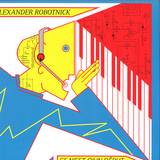
Alexander Robotnick (aka Maurizio Dami) is an Italian electronic musician. He made his debut on the Italian music scene as the founding member of Avida, a dance-cabaret band featuring Daniele Trambusti and Stefano Fuochi.In 1983 he attained international popularity with his track Problemes d'amour, published first by the Italian label Materiali Sonori and then by Sire-Wea. Problemes d'amour went on to become a cult track of the disco scene. It became quite an import hit in America's underground club scene, and sparked the mini-LP Ce N'est Qu'un Debut that same year (originally released on Materiali Sonori in 1984 (Italy). It consists of 6 captivating tracks including the hit Problemes d'amour as well as the track Dance boy dance which has appeared on other cult disco compilations.