Gut drei Jahre sind seit ihrem letzten Album "Bleiben oder gehen" vergangen, da melden sich Feine Sahne Fischfilet bereits mit neuem Material aus dem Studio zurück. "Sturm & Dreck" heißt das mittlerweile fünfte Studioalbum der Mecklenburg-Vorpommern-Punks. Einen ersten Vorgeschmack auf die Platte gibt es bereits mit dem Song "Zurück In Unserer Stadt". Insgesamt haben die sechs Jungs zwölf neue Songs für "Sturm & Dreck" aufgenommen, in denen sie sich wieder einmal sowohl persönlichen als auch politischen Themen widmen. Das ist bei Feine Sahne Fischfilet allerdings meist nicht zu trennen, schließlich engagiert sich die Band bereits seit geraumer Zeit politisch, zum Beispiel gegen den Rechtsruck in der Gesellschaft.
Suche:jäger
REBELLION präsentieren ihr erstes Live-Album, aufgenommen im berühmten Paberse Club in Valencia, Spanien!
Zum ersten Mal in der 20-jährigen Karriere der Band, veröffentlichen REBELLION ein Live-Album!
Das mittlerweile 10. Album der Band, beinhaltet eine Aufnahme des Konzerts im berühmten Paberse Club in Valencia, Spanien, am 15.05.2022.
Nur wenige Details wurden angepasst, um die Live-Atmosphäre zu bewahren, daher ist das Album fast wie ein Bootleg, nur mit besserer Soundqualität.
180 Gram Vinyl Following the success of the 2021 reissue of Ambient Warrior’s cult classic Dub Journey's (1995), Isle of Jura is pleased to present their unreleased second album, II. Born from the same oceanside fusion of instrumental dub, reggae, bossa nova and tango music that made Dub Journey's so distinctive and memorable, II is an equally sublime collection of eleven unheard tracks from the brilliant minds of Ronnie Lion and Andrea Terrano.
Evoking the delights of white sands, palm trees and sunsets, all set against clear waters and endless blue skies, Dub Journey’s and II document the golden moment when Ambient Warrior came together during the mid-90s to create some of the most Balearic Dub ever made. “Music is the greatest traveler, isn’t it?” says Ronnie. “It gets to places the actual artists can’t even get to really.”
The son of an orphaned Jamaican jazz trumpet player and professional boxer who enlisted in the military after stowing away on a boat to London, Ronnie grew up between Germany, Singapore and the UK before becoming a working musician in his mid-teens. A bass player by trade, he honed his skills playing in a series of soul, jazz-funk, blues, rock and reggae bands that performed throughout the UK.
By the time Ambient Warrior released Dub Journey’s, Ronnie and his business partner Ras Joseph were running the Lion Inc. recording studio and record label in Brixton, London. Having set up distribution arrangements with Roots Records (UK) and Semaphore (DEU/NL), they recorded and released a series of singles, compilations and solo albums from a who’s who of roots reggae artists, including Twinkle Brothers, Delroy Washington, Michael Prophet, Alton Ellis, Little Roy, and Ronnie’s own band The Amharic. “Lion was a regular port of call for visiting Jamaican artists,” reflects Ronnie. “When you were in London, it was on the route.”
An accomplished guitarist, producer and recording engineer from Trieste, Italy, Andrea grew up listening to Russian folk, Klezmer and the Italian harmony tradition in a Sicilian-Ukrainian family. After completing compulsory Italian military service, he moved to London to continue studying music. One night, he turned up at Lion Inc. and approached them about running audio engineering classes from the studio.
In Andrea, Ronnie found a collaborator who shared his desire to create borderless music that reflected the diversity of their backgrounds. “I wanted to do something that had no boundaries,” Ronnie explains. “If you’re working on a roots album, it has to sound a certain way, but with Ambient, especially in the nineties, it was just a license to let off. You could do whatever you wanted to do.” “It was a melting pot of influences like London itself,” adds Andrea.
Although they wrote most of II at the same time as they were recording Dub Journey’s, it took them several years to finish off the album. “Things never got done quickly,” Ronnie remembers. By the time it was complete, Roots Records had gone out of business, leaving Lion Inc. without UK distribution. Not long after, their Brixton studio flooded, bringing the label to a close.
These days, Andrea continues to work as a session guitarist, recording engineer and producer in London. Over the last two decades, he has collaborated regularly with Basement Jaxx and released several solo albums. Ronnie, on the other hand, lives on a boat equipped with an onboard studio, where he has recorded a series of oceanic dub albums off the British coast. Twenty-eight years after the release of Dub Journey’s, he recently started working on demos for a third Ambient Warrior album he hopes to record with Andrea in the not-so-distant future.
Artwork By Bradley Pinkerton.
Mélusine enthält Interpretationen von neun Liedern, deren Ursprung bis ins 12. Jahrhundert zurückreicht.
Dazu kommen fünf Eigenkompositionen von Cécile McLorin Salvant. Die Gesangssprache ist vor allem Französisch, dazu kommen Englisch, Haitianisch-Kreolisch und die südfranzösische Sprache Okzitanisch.
Mélusine folgt auf Ghost Song , Salvants Debüt für Nonesuch Records. Das Album erhielt zwei Grammy-Nominierungen und weltweite Lobeshymnen der Presse. Die New York Times zählte es zu den besten Alben des Jahres, ebenso der Radiosender NPR.
Salvant ist US-Amerikanerin mit französisch-haitianischen Wurzeln. Die Figur Mélusine steht für sie auch für das Gefühl, "ein Hybrid zu sein, eine Mischung verschiedener Kulturen. Das habe ich nicht nur als als Einwanderer-Kind erlebt, sondern auch als jemand aus einer Familie, die ethnisch gemischt ist und aus verschiedenen Ländern
stammt. In meinem Zuhause wurden immer verschiedene Sprachen gesprochen."
- A1: Ich Wollte Wie Orpheus Singen
- A2: Spielmann
- A3: Das Haus An Der Ampel
- B1: In Wien
- B2: Alter Freund
- B3: Glück Ist, Wenn Du Freunde Hast
- B4: Die Erste Stunde
- C1: Dann Mach's Gut
- C2: Wir Haben Jedem Kind Ein Haus Gegeben
- C3: Häng Dein Herz Nicht An Einen Hund
- C4: Ich Liebe Es, Unter Menschen Zu Sein
- D1: Dieter Malinek, Ulla Und Ich
- D2: Weißt Du Noch, Etienne?
- D3: Der Vater Und Das Kind
- D4: Ich Liebe Dich
- E1: Männer Im Baumarkt
- E2: Zimmer Mit Aussicht
- E3: Gerhard Und Frank
- E4: Was Will Ich Mehr
- F1: Über Den Wolken
- F2: Viertel Vor Sieben
- F3: Gute Nacht, Freunde / Ausklang Mr Lee
- F4: Bonus The Song Maker
Alle 16 Konzerte der Arena-Tour wurden aufgenommen, alle waren einzigartig und unvergesslich, es war nicht leicht, eines auszuwählen. Reinhard Mey hat sich für das letzte Konzert entschieden, den letzten
Abend im Wiener Konzerthaus, in dem vor über 50 Jahren alles für ihn begann.
Das Live-Doppelalbum enthält alle 22 Lieder dieses Konzerts sowie als Bonustrack „The song maker“, ein Lied, das ihm sein Schwiegersohn, der kanadische Singer-Songwriter Matthew Pearn, zum Tourneeabschied geschenkt hat.
Inkl. 12" Booklet. Alte Straßenköter-Weisheit: Die besten Partys sind immer die, zu denen man nicht eingeladen ist. Man braucht sich keine Gedanken um die Abendgarderobe zu machen, hat außer einem halbvollen, abgestandenen Wegbier nix in der Hand, was als Mitbringsel herhalten könnte, bedient sich gleichwohl mit absoluter Selbstverständlichkeit am Schnapsregal des Gastgebers, hinterlässt als Überraschung für den Tag danach eine Stange Mittelstrahl im Zahnputzbecher und tanzt vor allen Dingen möglichst auf allen Tischen so, dass man immer mit dem Kopf voran in der Hochzeitsbowle landet. Die Zuschauer sollen sich schließlich an diesen wunderschönen Abend erinnern können. Möglichst für immer. BUBONIX aus Limburg machen das, um das oben skizzierte Wedding-Crasher-Prozedere mal durch die Subkultur-Szene-3D-Brille mit einer Tüte Popcorn in der Hand anzuschauen, seit Jahren nicht anders. Jene bandgewordene Voodoo-Zeremonie des Punk und Hardcore um Sänger und Vorzeige-Wildsau Thorsten Polomski hat eigentlich immer schon auf jeder Party den größten Eindruck hinterlassen, und das obwohl (oder aber eben gerade weil) sie eigentlich nie und nirgendwo so richtig reingepasst hat. Das war schon auf alten Scheiben wie "Please, Devil Send Me Golden Hair" oder dem letzten Album "Capsaicin" der Band vor gut 15 Jahren nicht anders. Und jene wunderbar unbedarfte Assitüde treibt die frisch reunierte, um zwei alte Bandmitglieder geschrumpfte Combo (Sarah De Castro und Nenad Grbavac) auf ihrem neuen Album "Through The Eyes" so sehr auf die Spitze, dass man mit debilem Grinsen und ungläubigem Kopfschütteln vor dem Plattenspieler hockt und die HC-Punk-Referenz-Synapsen im Kopf so wild flackern und blinken wie die Weihnachtsbeleuchtung auf einer Front Porch irgendwo in Texas. Welcome back, BUBONIX _ ach nee: FUCK LOVE, MAKE VIOLENCE TO ÄRSCHE! (Ingo Donot)
Blue Vinyl
Inkl. 12" Booklet. Alte Straßenköter-Weisheit: Die besten Partys sind immer die, zu denen man nicht eingeladen ist. Man braucht sich keine Gedanken um die Abendgarderobe zu machen, hat außer einem halbvollen, abgestandenen Wegbier nix in der Hand, was als Mitbringsel herhalten könnte, bedient sich gleichwohl mit absoluter Selbstverständlichkeit am Schnapsregal des Gastgebers, hinterlässt als Überraschung für den Tag danach eine Stange Mittelstrahl im Zahnputzbecher und tanzt vor allen Dingen möglichst auf allen Tischen so, dass man immer mit dem Kopf voran in der Hochzeitsbowle landet. Die Zuschauer sollen sich schließlich an diesen wunderschönen Abend erinnern können. Möglichst für immer. BUBONIX aus Limburg machen das, um das oben skizzierte Wedding-Crasher-Prozedere mal durch die Subkultur-Szene-3D-Brille mit einer Tüte Popcorn in der Hand anzuschauen, seit Jahren nicht anders. Jene bandgewordene Voodoo-Zeremonie des Punk und Hardcore um Sänger und Vorzeige-Wildsau Thorsten Polomski hat eigentlich immer schon auf jeder Party den größten Eindruck hinterlassen, und das obwohl (oder aber eben gerade weil) sie eigentlich nie und nirgendwo so richtig reingepasst hat. Das war schon auf alten Scheiben wie "Please, Devil Send Me Golden Hair" oder dem letzten Album "Capsaicin" der Band vor gut 15 Jahren nicht anders. Und jene wunderbar unbedarfte Assitüde treibt die frisch reunierte, um zwei alte Bandmitglieder geschrumpfte Combo (Sarah De Castro und Nenad Grbavac) auf ihrem neuen Album "Through The Eyes" so sehr auf die Spitze, dass man mit debilem Grinsen und ungläubigem Kopfschütteln vor dem Plattenspieler hockt und die HC-Punk-Referenz-Synapsen im Kopf so wild flackern und blinken wie die Weihnachtsbeleuchtung auf einer Front Porch irgendwo in Texas. Welcome back, BUBONIX _ ach nee: FUCK LOVE, MAKE VIOLENCE TO ÄRSCHE! (Ingo Donot)
- A1: Slow It Down
- A2: Still Dreaming
- A3: On Point (Feat. Predominance, Cuts By Phoniks)
- A4: Keep It Jazzy (Feat. Vsteeze)
- A5: Wonderful Thing (Feat. Tab One)
- A6: Young Dreamers (Interlude)
- B1: Sempre Sonhando (Feat. Kamau)
- B2: Flowers (Feat. Awon)
- B3: Beautiful Day
- B4: Chill & Relax (Feat. Rain Bisou)
- B5: Humanity
- B6: Believe (Feat. Hvmble)
New album by Los Angeles MC Kid Abstrakt produced by Leo Low
Pass from Amsterdam inspired by the golden era greats like A Tribe
Called Quest, De La Soul or The Pharcyde!
Now here's a funky introduction of how nice Kid Abstrakt is!
The young MC from Los Angeles, CA represents the jazzy 90s rap sound like no one else in 2023. Not only on the Westcoast but internationally. Kid Abstrakt is keeping the legacy of A Tribe Called Quest, De La Soul & The Pharcyde alive and relevant by using it as a source of inspiration to tell his own story.
Kid Abstrakt started out as part of local trio Revolutionary Rhythm before releasing his first album “Daydreaming” in 2017, produced by The Deli from Austin, Texas. With a growing fanbase overseas Kid Abstrakt started working with producers and bands like Cap Kendricks (Germany), Emapea (Poland) and Jazzbois (Hungary).
“Still Dreaming” - his new album for Melting Pot Music - is entirely
produced by Leo Low Pass from Amsterdam. Leo's signature sound of jazzy boom-bap and Lofi beats provides the perfect backdrop for Abs positive and skillful rhymes. One could easily dismiss “Still Dreaming” as a throwback album with a sound that is somehow stuck in the past. Kid Abstrakt’s love for that jazzy boom-bap is all over the place. He even raps about it - with the same passion and humbleness that he raps about his life, his family and the world we are living in today.
That's why we rather call “Still Dreaming” feelgood music that doesn't suck. Feature artists include Vsteeze, Tab One, Kamau, Awon, Rain Bisou and Hvmble. Artwork by Gizem Winter.
MD Pallavi & Andi Otto first crossed paths on a theatre stage in India ten years ago. They started collaborating instantly and in 2016 MD Pallavi's mesmerizing vocals for the downtempo raga Bangalore Whispers warmed hearts and ears. Their musical relationship flourished with artistic residencies in Bangalore and Hamburg, their respective hometowns, and a concert tour in Japan. The collaborative track Six made ears turn again on Andi’s album Bow Wave (Multi Culti 2019). And now, years later, the fruits of this artistic endeavour are fully formed here on Songs for Broken Ships - the debut album of the duo.
The album presents an interwoven pop-aesthetic vision of the two artists with their contrasting musical backgrounds. It ranges from organically woven folktronica to cut-up disco tracks and acoustic ballads. Reminiscent of, but not akin to Nicola Cruz, Beach House or Four Tet’s early productions the music is experimental but focused on the listener and their experience.
MD Pallavi is a singer, actress, filmmaker and performer from Bangalore, South-India, where she trained in Hindustani music and poetry since childhood. On Songs for Broken Ships, poems in her native tongue Kannada*, one of India's many languages, are performed over Andi’s alluring production, translating the stories into musical narratives. The poems address topics that are as timeless as the music itself. Social equality is touched upon in Bayalu (written by Bontadevi in the 12th century). Artistic struggles - communicated on An Unwritten Word (Gangadhar Chittala, 1865) - are almost prophetic and the surreal, dreamlike scenario of Clockshop (KS Narasimhaswamy,1958) brings you further inside the sonic journey.
Andi Otto is a composer, cellist and DJ based in Hamburg, Germany, He is known for his idiosyncratic and unconventional dance music productions on labels such as Multi Culti, Shika Shika and Pingipung (which he co-runs and curates). For this collaborative experience his dubbed out basslines gently interlock with the 7/4 and 5/4 beats to create a backbone for the instrumentation and expressive vocal timbres of MD Pallavi. His sound design combines graceful acoustic recordings, juxtaposed against modern drum machines, computer generated noise and vintage synthesizers.
*The LP comes with a text sheet containing all Kannada lyrics - which have their own vocabulary and script - together with the phonetic transcription and English translation.
Die Groove Metaller DEVILDRIVER können auf neun Alben, zahllose internationale Tourneen und weltweiten Erfolg während ihres 30-jährigen Bandbestehen zurückblicken. Als die Welt im Jahr 2020 in den Lockdown ging, machten DEVILDRIVER keine Pause und veröffentlichten den gefeierten ersten Teil ihrer zweiteiligen Dealing With Demons-Saga. Internationale Medien wie Revolver, Metal Hammer, Kerrang und Consequence rühmten das Album und Blabbermouth postulierte: ”Wenn die zweite Hälfte dieses Mammutprojekts mit der ersten mithalten kann, wird dies als ein entscheidender Moment in der Geschichte von DEVILDRIVER in Erinnerung bleiben.” In Zeiten in denen das gesellschaftliche Klima härter ist denn je kommt DEVILDRIVERs zehntes Album Dealing With Demons Vol. II wie gerufen. Die neuste Scheibe des Quintetts wurde erneut von Steve Evetts mit Unterstützung von Gitarrist Mike Spreitzer produziert.
Unverkennbar ist Dealing With Demons Vol. II härter und unerbittlicher als sein Vorgänger. Schonungslos ist sie nicht nur die düstere beider Platten, sondern richtet den Blick in die dunkelsten Abgründe der
Psyche von Frontmann Dez Fafara und die Auseinandersetzung mit seinen Dämonen, die ihn schon lange heimgesucht haben.
Wenn sich jemand die Frage überhaupt gestellt hat, ob DEVILDRIVER in nächster Zeit langsamer werden, beweist Dealing With Demons Vol. II, dass sie auch nach 20 Jahren in ihrer Karriere Dämonen bezwingen
können und an der Spitze des Metals weitermachen.
Konformer are a band from Nuremberg in Germany.
Their members are;
Andreas Berg (Drums)
Kristian Krauß (Synthesizer)
Rainer Ruder (Bass)
Initially Konformer was not a project for the public, far away from expectations their sound was developed, with focus on only the essential, but that takes time.
The creation of their minimalist, rhythmic and repetitive groove patterns commence with bass loops and develop into modified strophic form.
Comparison with the likes of Early Kraftwerk and the output of cult German labels such as Brain and Sky are inevitable but Konformer sound a little bit like none of the above.
The record was produced and mastered by the 'Franconian Conny Plank' Frank Mollena at his Lonestar Studios in Nuremberg, Bavaria.
Die Band, die Anfang der 90er die Rave-O-Lution startete, lieferte im Laufe ihrer Karriere Monsterhits, die zumeist zu Klassikern gerieten, die noch heute die Tanzflächen brodeln lassen. Allein ihr weltweit mit Platin überschüttetes Meisterwerk "Fat of the Land" enthielt derer drei. Ihr 15-jähriges Jubiläum feierte die Band um Liam Howlett 2005 mit einer ordentlichen Best-of. Inklusive Hits wie "Firestarter", "Smack My Bitch", "Spitfire" etc.
Since relocating to Brazil some years back, Needs Music co-founder Lars Bartkuhn has returned to his long-held love of musical improvisation. Although it’s a product of his jazz roots and classical training, the German producer has constantly found new ways to apply it to his work in the sphere of electronic music.
‘Dystopia’, his first solo album for almost nine years, was born out of two interlinked ideas: a desire to create improvised music without the aid of computer sequencers or an electronic drum set, and a deeply held love of storytelling through sound. Bartkuhn set to work improvising with modular synthesizers, acoustic instruments and hand percussion, later adding light-touch overdubs to a handful of pieces. When he listened back to the recordings, an aural narrative emerged, and you’ll hear it if you listen to the album from start to finish, as is intended.
As you’d expect from a musician and composer of Bartkuhn’s undoubted ability, ‘Dystopia’ is a stunning album – an undulating, expansive ambient journey packed with emotional resonance. While Bartkuhn naturally sees it as a logical progression of his previous ambient-leaning work with Kabuki as The First Minute of a New Day (and particularly their self-titled 2020 album Séance Centre), ‘Dystopia’ also features subtle nods to many of his long-held musical loves, including John Hassell’s ‘fourth world’ recordings, the impossible-to-pigeonhole 1970s catalogue of deep jazz imprint ECM, and the far-sighted American minimalism of Terry Riley and Steve Reich.
The album’s emotional depth is evident early on, with the slow-burn title track – all bubbling electronics, billowing chords, clarinet-style notes and gently strummed guitars offering the most melancholic and bittersweet of openings. The becalmed ‘A Drop Of Water In The Ocean’ follows, with discordant aural textures and hand percussion mimicking the rolling ocean, before ‘Largo (Calm Before The Storm)’ hints at unsettling times ahead.
‘Water and Warm Air’, the only track on the album whose starting point was not Bartkuhn’s cherished modular set-up, bleeps and bubbles across the sound space, adding a starry and otherworldly slant to proceedings, while ‘Disembodied Journey (Parts 1, 2 and 3)’ is a sublime, slowly unfurling journey in three movements – all Tangerine Dream style synthesizer motifs, Pat Metheny-esque guitars and jazz-fusion instrumentation.
So the album continues, with the poignant warmth and looped motifs of ‘Still Existing’ and the sparse, dubbed-out minimalism of ‘Do You Know How To Get Out?’ – a kind of 21st century jazz-fusionist’s take on sparse electronic hypnotism – giving wat to closing cut ‘Into The Waves’, a gentle combination of undulating electronic arpeggios and echoing instrumentation that offers a hopeful and undeniably picturesque conclusion.
Fittingly, the album cover features a painting by the late Dutch artist Franz Deckwitz (1934-94), whose images of alien landscapes were used by Phillips on a series of music concrete compilations. The image featured on the cover of ‘Dystopia’, depicting a deep blue ocean and shoreline, was painted by Deckwitz in Amsterdam in the late 1970s and inspired by a trip to the island of Ponza, Italy.
Matt Anniss
Bear's Choice, das erste echte Archivalbum von The Grateful Dead, wurde als Tribut an Pigpen kurz nach dessen Tod von keinem Geringeren als dem ursprünglichen Tonmann und Wohltäter der Dead, Owsley Stanley, alias Bear, liebevoll produziert. Bear's Choice basiert auf Liveshows, die Bear drei Jahre zuvor im Fillmore East in New York City aufgenommen hatte, und fängt die Dead in einem entscheidenden Moment ihrer Geschichte ein, als sie gerade Workingman's Dead (und
kurz darauf American Beauty) aufnahmen und sich zu Americana-Pionieren entwickelten, dabei aber nie den Kontakt zu ihren psychedelischen Improvisationswurzeln verloren.
Drei der acht Songs auf dem Album werden von Pigpen gesungen, wobei Seite 1 das definitive Beispiel für die frühen Acoustic Dead ist und Seite 2 aus elektrischem Blues und Rock 'n' Roll besteht, wobei Pigpen bei beiden Stücken auf der zweiten Seite den Ton angibt.
Dieses Album wurde von David Glasser mit Plangent Processes
von den originalen analogen 2-Spur-Bändern, die von Bear live aufgenommen wurden, neu gemastert und hat noch nie besser geklungen.
Cassette tapes. Remember those? Those things with the dual spools and loads of wide brown plastic recording string that’d occasionally unravel and hang out of the shell, requiring a pencil and firm wrist to spin back into place? Yeah, well, once upon a time, old-school sound systems contained cassette decks for the express purpose of recording shows, and these “cassette” things were a standard part of every tour. Motörhead were certainly no exception, recording show after show. They contain gold, pure aural gold, and had for many years sat in storage. There were loads of them gathered, with the likes of Lyon, Liverpool, Hamburg and Chippenham (!!) scrawled in biro on the tiny labels alongside a date…and thus we are delighted to announce that this unique collection of live gems will now be heard by the world, via carefully digitized transfers, in this series titled The Löst Tapes. Volume four has been hand-picked by the increasingly deaf, but well-meaning Motörhead team, and sees the then quartet play a monstrous live set from the ‘No Remorse’ album tour, recorded at Sporthalle, Heilbronn, Germany on 29th December 1984. Side A Iron Fist Stay Clean Heart of Stone The Hammer Metropolis Side B Shoot You in the Back Jailbait Killed By Death Ace of Spades Side C Steal Your Face Nothing Up My Sleeve Road Crew Introduction (We Are) The Road Crew Bite the Bullet The Chase Is Better Than the Catch Side D No Class Motörhead Bomber Overkill
Edmony Krater grew up on the side of Morne Rouge in Sainte-Rose, north of Guadeloupe. His mother sang in church, but Edmony was drawn to the sound of Gwo Ka, which was frowned upon but very present in ceremonies or funeral vigils.
As both a fashion designer for the theater and a musician (percussion, trumpet, vocals) in the group Gwakasonné, formed by Robert Oumaou and Georges Troupé, Edmony left Guadeloupe in 1983 to settle in mainland France just after recording their first album.
Upon his arrival in Paris, with the desire to give his own version of Gwo Ka, he founded the group Zepiss with Eddy Lebouin, Freddy Tisseur, Philippe Augusty, and Rico Toto and immediately recorded a first album, Natibel.
In a singular way, Natibel perpetuates Gwo Ka Modèn, a movement initiated by the iconic jazz guitarist Gérard Lockel, who was the first to theorize and politicize this music previously transmitted only orally. In just six tracks, Natibel combines the sophistication and roughness of its root music, as Gwo Ka combines an intense rhythmic section with intoxicating melodies.
In the tradition of other Gwo Ka musicians who took the music further such as Guy Conquet, Fabriano Fuzion, Gwakasonné, Erick Cosaque, and above all legendary drummer Marcel Lollia aka Vélo, Edmony Krater and his group Zepiss have contributed to preserving its heritage and bringing an obvious touch of modernity.
In the Detmold area (Westphalia, Germany), there wasn‘t much going on for metal fans in the first half of the eighties. Fortunately, the members of two bands met in 1982 in a chip shop and recognized their common preference for hard music by their long hair, leather jackets and moustaches, which were good manners at that time. In this moment SACRAFICE were born, who subsequently became local heroes - of course influenced by the NWOBHM that was just spilling over into Germany, but also by the usual suspects like Black Sabbath, Deep Purple, Rainbow or Kiss, as well as Judas Priest and the early Accept.
Two unusual choices were made at once: In the spirit of Def Leppard or Led Zeppelin, the band name was deliberately changed - i.e. NOT Sacrifice, but Sacrafice. And they decided not to make the typical demo tape, but a 12“ EP on their own. This one is called „The First Experience WIth The Unknown“ and can be bought here and now on Discogs for 120 Euro and more used.... But already the book „Heavy Metal Made In Germany“, which was published in the nineties via Iron Pages, lists the record as „Top German Metal Rarity“.
No wonder, because the quite aggressive heavy rock and metal knows how to please even today - or maybe especially today - and reminds us of the upbeat mood of the German metal scene in the first
half of the eighties. This is also true for the three live tracks, which have been elaborately restored in days of work.
Another house number are the tracks of the follow-up band TranQuilL
(that‘s right, that‘s the correct spelling). The mostly overlong songs can be classified as heavy prog. Due to various circumstances these pearls remained (as good as) unreleased. Again, a lot of time and work was invested in restoring and mastering these private studio recordings (there are six long TranQuill songs on the CD version, while there was only room for two tracks on the LP, without losing sound quality).
As always, the printed inlay contains liner notes (actual interview with a former band member). Photos and other illustrations.
The CD version of the Golden Core re-release has already received very good reviews in Rock Hard and Good Times, among others!
- A1: Büþra Kayýkçý - Genius Loci
- A2: Pavel Milyakov - Gtr Chords Movement 1
- B1: Felicia Atkinson - Le Poème De L’angle Droit
- B2: Carmen Villain - Luften Imellom
- C1: Kuniyuki Takahashi - Moere
- C2: Kmru - Stretch Mabati
- D1: Ana Quiroga - London Fields
- D2: Abul Mogard - Teatro Romano Di Tuscolo
- D3: Pedro Vian - Neue Nationalgalerie
it’s a pleasure to bring together, on this album, musicians with whom we feel a very special connection, namely Felicia Atkinson, Büþra Kayýkçý, Carmen Villain, Kuniyuki Takahashi, Pavel Milyakov,
KMRU, Ana Quiroga, Abul Mogard and Pedro Vian. All of them have been very generous in their willingness to participate in an artistic experiment: to build bridges between architecture and music.
Each of these artists chose a space and translated it into a piece of music, and the result is a sonic kaleidoscope through which specific territories can be gazed upon from unexplored points of view. The
compositions that make up this compilation are synaesthetic windows through which we can observe with our ears. To look through them, all we have to do is listen and we’ll be able to contemplate, in a unique
way, spaces located in such different places as Vilches (Chile), Istanbul (Turkey), Oslo (Norway), Sapporo (Japan), Nairobi (Kenya), London (England), Rome (Italy), Berlin (Germany), or even in imaginary universes.
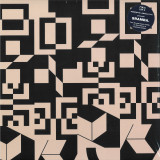
Tom Zé and Faust collide in Domenico Lancellotti's "machine samba"
Domenico Lancellotti's SRAMBA reaches back to the roots of samba whilst completely revamping its blueprint, indoctrinating guitar and percussion-led rhythms with analogue synthesisers, courtesy of album producer Ricardo Dias Gomes.
The majority of SRAMBA was recorded over two months in The Cave - Domenico's home studio in Lisbon, the city both Brazilian ex-pats reside in, where the arrival of a couple of Russian-designed synths purchased by Ricardo influenced the direction of their initial experimentation: "Ricardo had these instruments, modular machines" remembers Domenico, "and I had my guitar, some percussion instruments. On the first day we started making sounds and recording them, and songs started to appear, sambas started to appear."
The son of a renowned samba songwriter, at home Domenico would watch his father play and compose. At parties, the adults would hand his father a tamborim (a small tambourine) and ask him to play along. "I grew up inside samba, it's my roots", he says. "For me, everything is samba, I bring it into whatever style of music I am making".
Domenico and Ricardo instantly saw how the synthesisers were not at odds with the sambas they were playing, instead they had a similar sound to its typical percussion instruments (ganza, repinique, surdo, tarol). What's more, they saw a connection with roots samba, the samba that existed before bossa nova and samba jazz came along. This was rhythmic samba, with grooves that could go on ad infinitum. "It's samba de clave, geometrically structured" says Domenico. "It's ostinato samba", adds Ricardo.
"Diga" is a great example of what their proposal is capable of, as what begins as a glitchy machine whirring into action soon turns into a glorious samba in which the gurgles and scratchy beats coming from the analogue equipment only add to the arrangement. Likewise, on "Tá Brabo" it's an aching melody from one of the synths that gives the guitar rhythm its needed counterpoint, and shows how the duo's greatest accomplishment is not in invention alone, but in creating a great samba album. It's an album that can go from the opening track "Ere" with its reverberant bass thud, mantra-like vocals and staccato rhythms to the string-accompanied "Nada Sera de Outra Maneira", a swooning samba that pays tribute to the Brazilian ensemble Tamba Trio, who along with Tom Zé's Estudando O Samba, Domenico names as the biggest influence on their treatment of samba.
Other important reference points are made clear on "Um Abraço No Faust". One of three instrumentals on the album its title riffs off a JoãoGilberto song, "Um Abraço no Bonfá", but whereas JoãoGilberto was giving a hug (um abraço) to bossa nova guitarist Luiz Bonfá, Domenico and Ricardo are giving theirs to the German avant-gardists Faust. "Quem Samba", with its horn section and dramatic melody give a whiff of Domenico's Italian ancestry, while "Descomunal" is devoid of rhythm whatsoever, guest vocalist Tori singing over a bed of electronic drums, cello and swirling synths, that highlights the duo's unwillingness to stick to a particular formula.
Both Domenico Lancellotti and Ricardo Dias Gomes are revered names within Brazilian music over the past 20 years. As a member of the +2's, with Moreno Veloso and Kassin, Domenico released a trio of albums on Luaka Bop in the early 00s that pioneered a new Rio samba sound with elements of funk and psychedelia. With Veloso and Kassin he would later form Orquestra Imperial, a big band intent on reviving ballroom (gafieira) samba, and that has worked with guest vocalists such as Seu Jorge, Elza Soares and Ed Motta. SRAMBA is his fourth solo album. Multi-instrumentalist Ricardo Dias Gomes first came to notice as a member of Caetano Veloso's band Cê which helped reinvigorate Caetano's career with a sound influenced by British new wave. As well as collaborations with Lucas Santtana, Negro Leo and Thiago Nassif, and work with his own group Do Amor, he has released a series of acclaimed solo albums that reveal a restless music-maker.
SRAMBA is a glorious showcase of the duo's style, uniting Domenico's playful lyrics and rhythmic, samba-rooted songs with with Ricardo's assured accompaniment of unorthodox textures and instrumentations. It may be a new language for samba, machine samba (samba de máquina), but as Domenico says, "samba da máquina is samba".
Tidal Waves Music proudly presents the re-issue for Nina Simone's 'A Very Rare Evening'. Originally released on PM records in 1979, featuring Weldon Irvine on organ, Don Allias on drums and Jazz legend Gene Perla on bass. Included on these European sessions from 1969 you'll find Nina classics & rare versions of recordings written by Aretha Franklin, Barry Gibb, Randy Newman & Pete Seeger.
One of the most sought after Nina Simone albums is now back available as a deluxe limited vinyl edition for the first time since 1979. Produced by Gene Perla, officially licensed from PM Records & featuring the original artwork created by A.M. Schnider.
"It's her first LP in years, but was taped back in 1969 in Europe with a confident, impressive organ and rhythm section backup band. Simone is an acquired taste. But, for those who appreciate her singing, these eight tracks will prove welcome." - BILLBOARD
Anything by this lady of song is welcome, especially when she's in front of an adoring audience, as she is in these decade-old, never-released sides. Simone covers all bases from Barry Gibb's "In The Morning," to Pete Seeger's adaptation from the Book of Ecclesiastes, "Turn! Turn! Turn!" She gives special meaning to such tunes as the poignant "The Other Woman," the gospel inflected "Save Me," and "I Think It's Going To Rain Today." But the highlight is her own tune, composed with keyboardist Weldon Irvine, Revolution."- CASH BOX MAGAZINE
Though the Simone catalog overflows with live recordings, this 1969 German concert outranks all others. Focusing almost exclusively on then-contemporary material--the Gibb brothers' "In the Morning" and "To Love Somebody," Randy Newman's "I Think It's Going to Rain Today," Aretha Franklin's "Save Me," the Byrds' "Turn! Turn! Turn!"--Simone is at her most assuredly earthy and intrepidly regal.' - THE JAZZ TIMES