*2025 RE-PRINT - Originally issued in 2013 ** ** No advertisements **
Wax Poetics takes you on a voyage through the music cosmos — from disco’s heyday to the underground scenes that gave birth to house, techno, and hip-hop.
We explore the rise, fall, and rebirth of disco, the backlash that tried to bury it, and the resilient Black and queer communities who kept the scene alive. From Nile Rodgers and Gino Soccio to De La Soul, Slum Village, J Dilla, and Teddy Riley’s genre-blurring New Jack Swing — this issue maps the interstellar lineage of dance music.
Buscar:jac the disco
Planet Trip Records is pleased to present Aqua Terra, the latest EP release from Friedrich Trede and Stephan Braun, the respected Munich-based DJ and production duo better known as Rhode & Brown. Since 2010, they’ve racked up a slew of quality releases through Permanent Vacation, Public Possession, Shall Not Fade, and their own Slam City Jams imprint, while playing well-received DJ sets across Europe. Along the way, the two longtime friends have spent the last fifteen years incorporating influences from electro, italo, synth-pop, breakbeat trance, rave music, and ambient into their blend of uptempo house and techno productions.
Shifting gearspeed, Aqua Terra sees Rhode & Brown trying something completely new and unexpected from them: a record inspired by UK street soul, digi-dub, and transatlantic R&B and boogie from the 1980s and 1990s. Beginning with the Loose Ends slanted synthesiser chords and shuffling machine beat of ‘Heart Attack’ and the glossy new jack swing bounce of ‘Passion Sauce’ (both featuring sultry Berlin-based New York singer Marlena Dae), Aqua Terra quickly reveals itself as a treasure chest of heavy tunes. Steeped in love and lust, ‘Heart Attack’ and ‘Passion Sauce’ are essential sing-along numbers for the warm-up and the warm-down.
The exemplar of a groove that keeps on giving, ‘Aqua Terra (Acid Frog Mix)’ is a note-perfect example of digi-dub redone for the 2020s. Keeping us guessing, Rhode & Brown flip the script on ‘Longo Doggo’ by borrowing elements from sampledelic ‘90s turntablism and blending them with a post-disco/electro beat and a slinky bassline for the ages. From there, ‘Multiflora’ sees our protagonists back in a bassy digi-dub mode, before closing things out with an acid breakbeat slanted demo mix of the title track.
- Manifest/It'll Be Alright In The End
- Ready! Steady! Go!
- Catherine Wheel
- Shaftesbury Avenue
- Two Left Feet
- Love Myself Again
- Not Ready To Go Home
- Lost
- Flower Girl Confetti, Hopeful Fidelity Lasts
- Higher
- Big Of Me (Flight The Bee)
LTD CLEAR VINYL EDITION[23,74 €]
Multi-award winner Jack Garratt makes his very welcomed return with the announcement of third album Pillars - out on Cooking Vinyl. Marking his first full-length project in five years, Pillars is vibrant, emotionally charged and a celebration of love, community, and self-discovery. Pillars is a testament to Jack"s evolution as an artist and individual. Following the release of his 2020 album "Love, Death & Dancing" Jack found himself yearning to reconnect with his fans and his craft. This album is his answer: a bold, unflinching exploration of love in all its forms - romantic, platonic, and self-love - woven into a tapestry of lush melodies, infectious beats, and heartfelt storytelling. Since winning the Brits" Critics" Choice Award and the BBC Sound Of poll in 2016, Jack Garratt has released two critically acclaimed albums, Phase (2016) and Love, Death & Dancing (2020). Known for electrifying live performances and a genre-defying sound, Jack continues to push boundaries with his deeply personal and sonically adventurous music, with Pillars being no exception.
The Vestige is the first fruit of a new intergenerational collaboration between Giuseppe Ielasi, a quietly prolific key contributor to the European experimental music scene for over twenty years, and Jack Sheen, a young composer-conductor-sound artist from Manchester whose recent projects have seen him moving seamlessly from enigmatic chamber music composition and installations to conducting the London Symphony Orchestra. Their materials and working methods differ significantly, with Ielasi having focussed for many years on electro-acoustic techniques alongside his ongoing commitment to the guitar, and Sheen primarily composing for traditional instruments. More important, though, is what they share: a fascination with what Sheen calls “mysterious, liminal musical material,” using irregular repetition and cyclical forms to create structures at once alive with activity and almost static, as well as a rigorous exploration of spatial diffusion and the interaction of sound event and environment. Working individually with a library of acoustic instrument sounds from Sheen’s recent projects and Ielasi’s guitar, the pair eventually met for several days at Ielasi’s home studio in Monza, sculpting the fourteen pieces that make up The Vestige. Like Ielasi and Sheen’s solo works, the record shows an exquisite attention to details of sequencing and pacing, the sound palette and compositional approach consistent throughout while each piece asserts its own identity. The twenty-five seconds of the opening piece serve as an entrée into the record’s distinctive world of sound: repeated chirps fluctuate in volume as they move across the stereo spectrum, woven between strangled snatches of string glissando against a backdrop of percussive ticks, long tones, and white noise. Across the remaining thirteen pieces, Ielasi and Sheen sketch further dimensions of the ambiguous space, where distinctions between pitch and noise, repetition and irregularity, electronic and acoustic remain pointedly unclear. As the record’s title suggests, the origins of the sounds we hear have become remote: while at moments we get flashes of timbres and attacks that could come from wind instruments, bowed strings, or prepared guitar, these remain vestigial traces, glimpsed through a veil of shifting white noise textures. These textures are themselves difficult to trace, suggesting artefacts of the recording process, electronic synthesis, amplified room sound, rubbed instruments or objects. The Vestige shows an unusual degree of attention to frequency range as a compositional tool, something it shares with the hyper-subtle variations of Ielasi’s electroacoustic works and the deliberately ‘unbalanced’ midrange-heavy ensemble of Sheen’s Sub. Here, movement between episodes is as much about adding or removing a frequency band as it is about changes in density, harmonic content, or instrumental texture. Tracks are marked by the sudden appearance of subbass or exaggeration of high frequencies in otherwise similar material, contributing to our sense that these fourteen pieces are like different views on a scene that we can never quite see clearly. While calling up a range of past music, from the early works of Rolf Julius to Simha Arom’s recordings of layered polyrhythms embedded in the background sounds of central African villages to the temporal distortions and layered hiss of DJ Screw, the alluring and disconcerting world of The Vestige is entirely its own.
Born from a virtual encounter in lockdown between two Parisian neighbors, the DJ/producer Prosper and saxophonist Le Marabout, this new playful and joyous project is pulling freely from the Afro, Funk, Disco, Hip-Hop, Oriental and Electro influences of the two artists.
The iconoclastic DJ Romain “Prosper” Coolen, fervent purveyor of no holds barred euphoria on the dance floor, and the versatile saxophonist, composer and jack-of-all-trades Johann “Le Marabout” Guihard offer us a lavish, eclectic, uninhibited, coherent and furiously groovy listening experience.
First single “C’est Vrai“, from their forthcoming album ‘Le Moustache Conspiracy’ (released October 2022) is a banging Electro Afro Funk joint featuring Fou Malade and Niagass, two luminaries of the Senegalese Hip-Hop scene.
Over the bouncing beat and snarling horns, these two juggle lyrics back and forth in Wolof (Senegal’s most widely spoken language), calling out those fake friends who smile in your face before stabbing you in the back.
- A1: The Watson Brothers Band - Justwhistle
- A2: Jim Huxley - Tessa On A Magazine
- A3: Rick Penta - My Story Changes
- A4: Mak - That's Life
- A5: Palm Pizazz! - Silent Letter
- A6: Twice As Nice - Thoughts Of You
- B1: Barracuda - Baby I Love You
- B2: Elderberry Jak - Forrest On The Mountain
- B3: Dennis - Walk With Me
- B4: Jim Ware - Green Eyed Gypsy
- B5: John Lyle - Oh My Wind
- C1: Peter Kraemer - Let The Light Slip
- C2: Brian Freel - Nightrider
- C3: Michael Moore - Holland
- C4: Clete Stallbaumer - John’s Song
- C5: Ronnie White - The Jump
- D1: David Owens - Take Off Your Armour
- D2: The Squad - D L.m.h.i.m.a
- D3: Christoph Spendel Group - Forever
- D4: Awakening - Gotta Do Somethin / Might As Well Cultivate
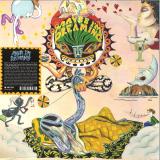
‘Maybe I’m Dreaming’ is the latest collection selected by Mikey Young (Total Control, EddyCurrent Suppression Ring) and Keith Abrahamsson (Founder and Head of A&R at AnthologyRecordings), the mangled minds behind the beloved ‘Follow the Sun’, ‘Sad About the Times’,and ‘…Still Sad’ compilations. The twenty tracks of ‘Maybe I’m Dreaming’ make a conscious(and unconscious) detour from its predecessors, sourced entirely from private press releases,spanning new decades and production modes within homespun folk, soft rock and otherwise70s and 80s FM radio adjacent music. The magic of ‘Maybe I’m Dreaming’ is the untold story of the artists behind these songs; thosewho missed the big time, but whose song craft and unrequited care hit the right notes, bothhigh and low.
Where ‘Follow the Sun’ and ‘Sad About the Times’ introduced us to the fame chasing, ambitioncrashing crooners who missed their shot in the mainstream, ‘Maybe I’m Dreaming’ delvesdeeper into the isolated wilds - a private world where production quirks, late-night tape hiss andone-man studio dreams were not necessarily a choice but the hand that was dealt.
With the parameters set to ‘private press only’, Young and Abrahamsson follow a circuitous trailof invention and emotion, documenting a spirit that’s more homespun, sometimes lonelier andoften a little weirder. The guitars still strum, but the keyboards’ hum is more prevalent andprecious; wistful harmonies brush up against lo-fi drum machines; a bittersweet fog lingeringover even the brightest melodies.
As with their previous collaborations, Young and Abrahamsson weren’t interested inconstructing a museum or drafting a historical survey. ‘Maybe I’m Dreaming’ is a sentimentalmixtape, assembled late at night when the mind wanders and old memories blur with imaginedfutures, those within reach and those far too mysterious to ever encounter. Songs wereunearthed in personal collections, deep YouTube burrows, dilapidated web archives and thedim corners of Discogs, with many selections tied not only to intuition but to personalconnection. Some tracks arrived via friends - Kelley Stoltz, a frequent guide for Young, tipped him off toboth Peter Kraemer’s lost gem ‘Let the Light Slip’ and Awakening’s revelatory closer - addingan unseen but deeply felt thread of camaraderie to the compilation.
The journey takes in a wide, strange sweep: The Watson Brothers Band’s ‘Just Whistle’ opensthe collection with a sigh and a shrug, a song that feels like it’s been waiting for decades to beheard again. Jim Huxley’s ‘Tessa on a Magazine’, rediscovered after a long and winding searchby Young, shimmers with a distinctly Australian melancholia. The heartbreak of Rick Penta’s‘My Story Changes’ and Twice As Nice’s delicate ‘Thoughts of You’ float easily alongside themore buoyant, radio-dream sheen of Barracuda’s ‘Baby I Love You’ and MAK’s sunshinedappled ‘That’s Life’.
Widening the aperture to the late 1970s and early 1980s allows for a deeper exploration intoevolving production techniques and musical technologies. The Squad’s ‘D.L.M.H.I.M.A.’ andChristoph Spendel Group’s ‘Forever’ crackle with the kind of bedroom synth warmth that couldonly come from the analogue age, while the soulful, yearning undercurrent of Awakening’s‘Gotta Do Somethin / Might As Well Cultivate’ caps the collection with a call for action - ormaybe just acceptance - in an accidental Brian Eno ‘Here Come the Warm Jets’ parroting.
While ‘Maybe I’m Dreaming’ moves away from the ‘sad man with guitar’ archetype that hoveredover its predecessors, it remains tethered to a familiar emotional gravity - a balance of longingand lightness that defines this corner of the musical universe. Each track shuffles gentlybetween resignation and hope, sadness and serenity, as if the artists themselves were chasinga dream just beyond reach, recording not for fame but for the simple act of getting it, thatprimal, creative itch, out into the world.
Available on CD and 2LP, featuring the third eye-opening artwork of Dang Wayne Olsen. Thedouble LP set arrives in an outrageous double-wide spine jacket with printed inners and adream journal entry by Pacific Northwest artifactual authority Josh Lewellen.
Originally released in 2019, ‘Heaven’ served as a benchmark for what modern house music is. The essential record from Ben Westbeech and KON’s The Vision project dominated stages around the world, receiving support from a plethora of top house artists; Gerd Janson, Horse Meat Disco, The Blessed Madonna, Groove Armada and Eli Escobar to name just a few.
Now Defected release a special 12” package featuring the most recently released remix from Groove Assassin, where he masterfully combined it with Supernova’s Jackin Mix of Kerri Chandler’s iconic ‘Hallelujah’ for a killer house cut. Also featured on the package is the original in all its glory, as well as Danny Krivit’s heralded edit and an edit from The Vision’s own KON.
- A1: The Chariettes Gospel Singers - Nobody But Jesus
- A2: Allen Gauff Jr - I Don't Want To Be Alone
- A3: The Christian Harmonizers - Troubles Of The World
- A4: The Wearyland Singers - If You See Me Doing Wrong
- A5: Gospel Travelers - Jesus Is Watching You
- A6: Pearl Farano & The High Lites Of Joy - Who's Your Boss
- B1: Gospel Ambassadors - This Little Light Of Mine
- B2: Vocal Aires - Save A Seat For Me
- B3: Birmingham Travelers - Call Me Answer (Feat Henry Burton)
- B4: Zella Jackson - Days Are Just Like People
- B5: The Original Christian Harmonizers - Blackman Keep Doing Your Thing
- B6: Preacherman Isadore Womack - I’ve Got Power In My Mind
Back in again soon. Following on from the success of ‘Greg Belson’s Divine Disco’ series Greg Belson and Cultures of Soul team up again to explore the world of Gospel Funk. Belson is one of the world's leading collectors and DJs of gospel music. You hold in your hands a collection of some of the rarest Gospel funk records from Belson’s amazing collection featuring everything from the laid back breakbeat laced “I Don’t Want to Be Alone" by Allen Gauff Jr to the high octane and socially-on-point take of the Gospel classic ‘This Little Light Of Mine’ by the Gospel Ambassadors to drum break funk of the Wearyland Singers ‘If You See Me Doing Wrong” to the sublime soulfulness of Zella Jackson’s “Days Are Just Like People." Without a doubt though, all of the artists included in this compilation, believed in themselves, the message, and the direction of the Gospel Funk intensity you hear within these grooves. Gettin’ on the Good Foot for God? Listen and decide for yourselves!
The discovery of Doris Dennison's score represents a genuine musicological breakthrough—what once would have been "a tree falling in the woods" thirty years ago now holds the potential to render "a thunderous clap in our minds." While researching Anna Halprin's lesser-known collaborators, scholar Tom Welsh uncovered the archives of AA Leath, one of Halprin's principal dancers. Buried within these materials was Dennison's handwritten score for Earth Interval, dated May 1956. Born in Saskatchewan, Canada, in 1908, and raised near Seattle, Dennison (1908-2009) encountered John Cage while teaching Dalcroze eurythmics at the Cornish College of the Arts. She joined Cage's earliest percussion quartet—alongside Margaret Jansen, the composer and his wife Xenia—in the group widely regarded as having performed the first complete concert of percussion music in the United States. This historic December 1938 concert was followed by tours and the landmark May 1941 performance at the California Club, comprising Cage and Lou Harrison's Double Music, the premiere of Cage's Third Construction, and Harrison's 13th Simfony.
As Bradford Bailey observes in his extensive liner notes, Earth Interval demonstrates "an extraordinary balance of elements that imbues the piece with a sense of clarity, directness, and constraint that is both distinct and ahead of its time." The work's most remarkable innovation lies in its approach to extended techniques, particularly Dennison's notation for the central movement: "In 2nd movement, 1st player lowers + raises a gong into a tub of water while beating." This technique, absorbed from Cage's experimental vocabulary, generates what Bailey describes as "fields of acoustic abstraction that bend and warp time through sustained resonances, beat, and space." The temporal sophistication of these manipulations anticipated Karlheinz Stockhausen's Mikrophonie I (1964) and Annea Lockwood's water-based sound investigations by over a decade. After joining Mills College as dance accompanist, Dennison maintained crucial connections to the Bay Area's experimental scene, collaborating with figures like Merce Cunningham and programming Cage's music throughout the 1950s.
Comprising three movements—Land Form, Air Tide, and Earth Play—Earth Interval is scored for recorder, drums, gongs, maracas, muted gongs, and bowl gongs. In total, the piece is just under eight minutes: "a fleeting glimmer of moment in time, a life spent at the cutting edge, and a singular creative vision that packs a powerful punch." When viewed in historical context, placed in contrast to roughly contemporaneous avant-garde percussion works by Cage, Harrison, Louis Thomas Hardin (Moondog), and Harry Partch, or important precursors like Edgard Varèse's Ionisation (1931) and Henry Cowell's Ostinato Pianissimo (1934), it's clear that Dennison was following her own path. Earth Interval is not derivative. It is a precursor to what was yet to come, alluding to developments of avant-garde and experimental music that wouldn't begin to appear on the cultural landscape until the 1970s and '80s, with the emergence of Post-Minimalism and more idiosyncratic artists and ensembles like Midori Takada, Ros Bandt, Peter Giger, Frank Perry, Christopher Tree, Michael Ranta, Gamelan Son of Lion, and Niagara.
This recording by Chicago's Third Coast Percussion, captured in March 2022, represents the first complete documentation of this pioneering work. The ensemble's interpretation reveals the piece's remarkable contemporaneity while maintaining its historical specificity. Where Cage, Harrison, and Partch employed "self-consciously off-kilter polyrhythms," Dennison's rhythmic sensibility anticipates minimalist developments by nearly a decade, yet integrates "forceful rests, as well as sharp shifts in sonic character, tempo, and meter, that break the momentum and breathe a sense of life into the piece's structure." This positions her work closer to Post-Minimalism decades before its emergence. The architectural approach demonstrates Dennison's understanding that "the composer almost entirely disappears" in favor of phenomenological listening experience, creating what might be called an egoless music that places its realities and meaning entirely in the ear of the beholder. The present recording, realized by Chicago's distinguished Third Coast Percussion ensemble, represents a significant achievement in experimental music scholarship and performance practice. As specialists in the Cage tradition and contemporary percussion repertoire, Third Coast Percussion approached Earth Interval with the historical sensitivity and technical precision required to illuminate Dennison's subtle compositional innovations. The March 2022 recording sessions, engineered by Colin Campbell, capture both the work's intimate chamber music qualities and its bold exploration of extended techniques. The ensemble's interpretation reveals the piece's remarkable contemporaneity—its ability to speak directly to current musical concerns while maintaining its historical specificity.
This recording serves multiple scholarly functions: it provides the first complete documentation of Dennison's compositional voice, offers insight into the broader network of experimental music practitioners surrounding Cage and Harrison, and demonstrates the sophisticated level of compositional thinking that was occurring within the Bay Area's dance-music collaborations of the 1950s. The work's emphasis on phenomenological listening—what might be called an "egoless" approach to musical experience—places it within a lineage of American experimental music that prioritizes perceptual process over compositional personality. The work's original obscurity—limited to AA Leath's performances at venues like the 1957 Pacific Coast Arts Festival at Reed College—paradoxically allowed it to remain "entirely on its own terms," free from the constraints of historical categorization. Drawing on Jacques Derrida's Archive Fever, the argument emerges that "the archive can acknowledge, celebrate, and resurrect" overlooked voices, transforming our understanding of experimental music history. The present Blume edition, featuring Third Coast Percussion's authoritative interpretation, includes a lavishly illustrated 16-page booklet designed by Bruno Stucchi / dinamomilano, containing complete scholarly apparatus, historical photographs, and detailed production notes. This recording enables "cross-temporal intersectionality," allowing Dennison to "belong to a newly formed and more dynamic understanding of the present and past," demonstrating how forgotten voices can reshape entire historical narratives when given proper scholarly attention and performance advocacy.
Chaz Bear (formerly Bundick) was a musician from birth. Growing up, it was normal to hear music across genres, from Michael Jackson to Elvis Costello to The Specials, in the Bundick household. These influences were quite unique for a biracial kid growing up in South Carolina, contributing to the complexity of Chaz’s self-understanding and expression through his own music.
Chaz began playing and recording original compositions in his preteen years, forming multiple indie bands starting in middle school and continuing until his personal project, Toro y Moi, was signed by Carpark Records in 2009. Before getting signed, he was already an incredibly prolific artist, having released over 10 Toro y Moi albums on his own (and undoubtedly retaining a vast compendium of unreleased songs). His personal work drew upon a vaster array of influences than did his full band. Early Toro work called upon Chaz’s childhood exposure to 80’s R&B, pop and electronic music, while also evolving with his discoveries of acts like My Bloody Valentine and J Dilla and his burgeoning interest in French house. Just before his graduation from the University of South Carolina, where he earned a degree in graphic design, Chaz caught the attention of music bloggers and record labels with his dreamy, bedroom recordings.
Outer Peace, was written and recorded in the Bay Area after Chaz’s return from a one year stint in Portland. It is somewhat of a homecoming celebration, filled with features by friends and saturated with a playfulness that had not previously been embraced in past Toro albums. Outer Peace stands in contrast to the more sparse and contemplative Boo Boo, an album recorded while in Portland in relative isolation. With Outer Peace, Chaz showcases his ability to remain on the cutting edge of music’s evolution while not taking himself too seriously. There are contemporary hip hop references mixed in with funk, Eurodance and ambient elements, all interwoven expertly and retaining that quintessential Toro y Moi aesthetic.
- A1: Free Your Mind
- A2: Your Fantasy
- A3: Nursery Rhymes
- A4: Magic
- B1: Funky Bone
- B2: Backup N Funktown
- B3: Bump-A-Rump Ability
- B4: Crisis
In 1979, Record Player privately pressed and issued a solitary 45 on their Gem City Records imprint in Dayton, Ohio. Though they had recorded a host of other songs, and were on the verge of signing to a major label, their trajectory stalled and the band splintered by the early 1980s. In the early 2000s, Record Player principle Charles Jackson surfaced with their unreleased songs. Todate, only two Record Player songs have been reissued, as part of Now-Again's long-running Soul Cal series. Now, the entirety of their oeuvre is presented here as Free Your Mind, and their story detailed in words by Bret Sjerven. This is a special release for us at Now-Again, and will be perfect for any fan of the deep disco scene that birthed the likes of Luther Davis, Edge of Daybreak, Tomorrow's People, Split Decision Band, and so many others issued by us, Numero Group, and other like minded labels.
A1: Chinese Eyes (40th Anniversary Version)
A2: Fly Me High
B1: Chinese Eyes (7’’ Version)
B2: Chinese Eyes (Extended Version)
Dieses Jahr feiert der 80er-Jahre Italo-Disco-Klassiker „Chinese Eyes“ unfassbares 40-jähriges Jubiläum.
Anlässlich dessen erscheint hierzu am 01.08.25 eine strikt auf 1000 Exemplare limitierte Auflage des unkaputtbaren Hits auf einer hochwertigen 10‘‘ rot-transparenten Vinyl.
Fancy war seiner Zeit stets voraus und Pionier in vielerlei Hinsicht. In einer Zeit, in der Anderssein noch
weitaus stärker polarisierte als heute, schaffte er es willensstark und zielgerichtet auf die unterschiedlichsten
Bühnen der Welt.
Als Produzent (von u.a. Siegfried & Roy), Arrangeur, Komponist, Parodist, Zauberer und Buchautor
arbeitete er mit den größten Namen der Pop-Welt, wie z.B. Michael Jackson und den Pet Shop Boys,
zusammen und prägt bis heute nachhaltig unterschiedlichste Szenen und Subkulturen mit seiner Pionierarbeit.
Auf der Re-Edition sind neben der originalen 7‘‘, sowie der partyerprobten Extended Version auch zwei
brandneue Songs mit dabei. Eine, zum Anlass des 40ten Jubiläums, von Fancy selbst produzierte Version
von „Chinese Eyes“, mit überraschendem Intro, sowie der bislang noch nie von Fancy selbst eingesungene,
aber seinerzeit von ihm für Linda Jo Rizzo (The Flirts) geschriebene und produzierte Euro-Disco-Evergreen
„Fly Me High“.
- 1: Coyote
- 2: Amelia
- 3: Furry Sings The Blues
- 4: A Strange Boy
- 5: Hejira
- 6: Song For Sharon
- 7: Black Crow
- 8: Blue Motel Room
- 9: Refuge Of The Roads
Mobile Fidelity's UltraDisc One-Step 180g 45RPM 2LP Set Plays with Authoritative Tonality, Airiness, and Clarity:
Pressed on MoFi SuperVinyl and Strictly Limited to
3,000 Numbered Copies
1/4” / 15 IPS Dolby A analogue master to DSD 256 to analogue console to lathe
Joni Mitchell is the only artist who could’ve made Hejira. The legendary singer-songwriter said as much when discussing the album decades after its release. Yet that fact seemed obvious from the moment the gold-certified effort streeted in fall 1976. An adventurous travelogue, probing narrative, and offbeat homage to freedom, Hejira remains an inimitable entry in the catalog of recorded music — a spare, gorgeous, meditative series of sonic vignettes comprised of floating harmonic pop, cool jazz, soft rock, and sensitive vocal elements that beckon feelings of motion, discovery, and self-examination.
Sourced from the original analog master tapes, pressed at Fidelity Record Pressing on MoFi SuperVinyl, and strictly limited to 3,000 numbered copies, Mobile Fidelity's UltraDisc One-Step 180g 45RPM 2LP set presents the record ranked the 133rd Greatest of All Time by Rolling Stone with definitive detail, richness, accuracy, and directness. Marking the first time the revered LP has received audiophile treatment, it's one of six iconic 1970s Mitchell records Mobile Fidelity is reissuing on vinyl and SACD.
Playing with a virtually nonexistent noise floor, dead-quiet surfaces, and superior groove definition, this collectible reissue reproduces in enveloping fashion the tones, textures, and craftsmanship that help Hejira function as the equivalent of a liberating trip down an open road with nothing but blue sky, natural landscape, and fresh air in the immediate vicinity. Passages bloom, carry, decay as they do amid an acoustically optimized environment. Soundstages extend far, wide, and deep, with black backgrounds and pinpoint images adding to the realism.
The reference-grade immediacy, airiness, and presence put in transparent perspective Mitchell’s dense strings of words, stream-of-conscious-like phrasing, and unhurried albeit forward momentum. Likewise, the instrumental contributions of her A-list support musicians — a cast that includes L.A. Express members John Guerin, Max Bennett and Tom Scott, plus Neil Young, Victor Feldman, and Abe Most — emerges with breathtaking clarity and dimensionality.
While Mitchell, whose intimate vocals and abstract guitar parts center everything, Mobile Fidelity's restoration of Hejira further reveals the visionary breadth of guitarist Larry Carlton and bassist Jaco Pastorius. Though heard on only four tracks, Pastorius' fretless bass epitomizes the fluid, subtle, flexible, roomy, and shape-shifting characteristics of songs that often appear to transpire out of nowhere akin to the formation of a puffy cumulus cloud overhead. In sync with Mitchell’s voice, Pastorius’ fusion hovers and floats, suspended in a fog you want to deeply inhale. The "grace notes" Mitchell desired on Hejira can now be heard in full. Ditto the luxurious tapestries of alinear lines, fills, and supplements unreeled on Carlton’s six-string.
Visually, the packaging of this UD1S set complements its identity as the copy to own. Housed in a deluxe slipcase, the LPs come in foil-stamped jackets with faithful-to-the-original graphics. This version is for listeners who desire to become immersed in everything about Hejira, including the unforgettable album cover — a pastiche of 14 different photos Mitchell used a Camera Lucida to assemble into one image that’s anchored by a portrait of her in a stoic pose — and the interior shots of Mitchell skating on a frozen Wisconsin lake wearing a pair of black skates, black shirt, and fur cape.
The notion of skating, feeling an awakening wind whipping against your face, and losing yourself to the surroundings are extremely apt for Hejira, which Mitchell wrote after a sequence of trips and relationships prompted her to reflect on the complicated conflicts between independence and marriage, success and satisfaction, duty and desire — and, more specifically, “the cost of being a woman.” The Canadian native delved into such themes before. But never as she does on Hejira, whose liberating, running-away aura doubles as another of Mitchell’s rejections of tradition as well as a suggestion of a better alternative.
At once observational and personal, expansive and insular, cheerful and poignant, Hejira spans a sea of human conditions, emotions, and circumstances. It addresses drifting, isolation, pleasure, place, time, and surroundings with strikingly poetic discourse matched with music that, save for the crooned ballad “Blue Motel Room,” forgoes conventional structures and choruses.
The jazz-based arrangements, marked by scaled-down percussion and all manner of bent, rounded, and unsettled notes, hint that Mitchell has no exact destination in mind. Excursions such as the moody “Furry Sings the Blues,” funky “Coyote” and edgy “Black Crow” throw open previously locked doors to possibility and journey. They signal it’s time for a welcome departure from norms and the past, one that leads to a heightened sense of clarity and perspective. Or, as Mitchell said upon choosing the album title, it’s time for “leaving the dream, no blame.”
- A1: Positive Vibration
- A2: Roots, Rock, Reggae
- B1: Johnny Was
- B2: Cry To Me
- B3: Want More
- C1: Crazy Baldhead
- C2: Who The Cap Fit
- D1: Night Shift
- D2: War
- D3: Rat Race
Bob Marley & The Wailers' Rastaman Vibration Analogue Productions' UHQR, the pinnacle of high-quality vinyl! 45 RPM 2LP Ultra High Quality Record release limited to 4,500 copies Mastered from the original tapes by Ryan K. Smith at Sterling Sound Pressed on 180-gram at Quality Record Pressings using Clarity Vinyl® Includes "12 x 12" 8-page booklet featuring new liner notes by musician and Marley biographer Leroy Jodie Pierson (APO Records Direct-To-Disc AAPO 005), plus exclusive photos by Kim-Gottlieb Walker Purest possible pressing and most visually stunning presentation and packaging!
When Rastaman Vibration was first released in America in 1976 it did what some in the music industry considered nearly impossible at the time. It took Bob Marley into the Top Ten alongside disco records and corporate rock, points out Rolling Stone, which rates the album 4 stars. Despite the good cheer of the title track and the upbeat "Roots, Rock, Reggae," Rastaman Vibration contains some of Marley's most intense images of oppression, paranoia and despair. Tracks such as "Who the Cap Fit," "Crazy Baldhead" and "War" are offered by the Wailers with dire urgency as Marley's brutal visions are echoed by his own church choir, the I-Threes.
More than four decades later, neither Marley's music nor his message has lost its sting. Now, Analogue Productions presents perfection — Rastaman Vibration cut at 45 RPM in UHQR format on 180-gram 2LP Clarity Vinyl. This Ultra High Quality Record release will be limited to 4,500 copies, with gold foil individually numbered jackets. For Bob Marley, 1975 was a triumphant year. The singer's Natty Dread album featured one of his strongest batches of original material (the first compiled after the departure of Peter Tosh and Bunny Wailer) and delivered Top 40 hit "No Woman No Cry." The follow-up Live set, a document of Marley's appearance at London's Lyceum, found the singer conquering England as well. Upon completing the tour, Marley and his band returned to Jamaica, laying down the tracks for Rastaman Vibration (1976) at legendary studios run by Harry Johnson and Joe Gibbs.
At the mixing board for the sessions were Sylvan Morris and Errol Thompson, Jamaican engineers of the highest caliber. Of the material on Rastaman Vibration, "War," for one, remains one of the most stunning statements of the singer's career. Though it is essentially a straight reading of one of Haile Selassie's speeches, Marley phrases the text exquisitely to fit a musical setting, a quiet intensity lying just below the surface. Equally strong are the likes of "Rat Race,""'Crazy Baldhead," and "Want More."
These songs are tempered by buoyant, lighthearted material like "Cry to Me," "Night Shift," and "Positive Vibration." Not quite as strong as some of the love songs Marley would score hits with on subsequent albums, "Cry to Me" seems like an obvious choice for a single and remains underrated. This UHQR is remastered at 45 RPM by Sterling Sound's Ryan K. Smith from the original analog master tapes. Each UHQR will be pressed at Acoustic Sounds' industry-leading pressing plant Quality Record Pressings (QRP) using hand-selected Clarity Vinyl® with attention paid to every single detail. These records will feature the same flat profile that helped to make the original UHQR so desirable. From the lead-in groove to the run-out groove, there is no pitch to the profile, allowing the customer's stylus to play truly perpendicular to the grooves from edge to center.
Clarity Vinyl allows for the purest possible pressing and the most visually stunning presentation. Every UHQR will be hand inspected upon pressing completion, and only the truly flawless will be allowed to go to market. Each UHQR will be packaged in a custom clamshell box and will include a booklet detailing the entire process of making a UHQR along with a hand-signed certificate of inspection. This will be a truly deluxe, collectible product. In addition to the UHQR booklet the package will contain a 8-page 12" x 12" booklet containing new liner notes by musican and Marley biographer Leroy Jodie Pierson as well as exclusive photos by Kim-Gottlieb Walker. Pierson is a past performer for Blues Masters at the Crossroads, the two-night historic blues festival at Blue Heaven Studios in Salina, Kansas. He's also recorded a Direct-To-Disc blues album for APO Records. (AAPO 005) Rastaman Vibration — now a landmark production on 180-gram 45 RPM Analogue Productions UHQR Clarity Vinyl!
- The Big E
- The Queen
- What's Wrong
- The Jackhammer
- Another World
- No
- Something Sweet
- Real Fire
- Flesh Debt
- Slight Return
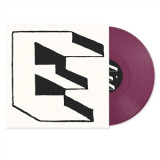
Editrix is a Massachusetts-rooted trio known for their wild, gnarly take on experimental rock. Blending jagged guitar riffs, unpredictable rhythms, and bursts of cartoonish eccentricity, the band creates a sound that's both chaotic and compelling. Composed of singer and guitarist Wendy Eisenberg, drummer Josh Daniel, and bassist Steve Cameron, Editrix thrives on musical risk-taking, often veering into noise-rock territory with a playful edge. On their latest release, The Big E, Editrix unleashes their fangs, resulting in a demonic wall of scuzz. But for as intense as Editrix sounds, the act is convivial and easygoing _ ingrained in deep friendships and speedy, yet jovial recording sessions. Editrix's most pummeling moments seem to be founded on a heartfelt connection, adding emotional resonance to their most feral noise. In the three years since their second LP Editrix II, Eisenberg, Daniel, and Cameron have thrived in individual states of motion _ in and away from music. New York City-based Eisenberg is an accomplished solo artist in the avant-garde realm, receiving recent acclaim for their album Viewfinder (released by American Dreams in 2024). They are also a prolific collaborator, performing in a handful of projects alongside the likes of romantic partner more eaze, Bill Orcutt, David Grubbs, and others. Cameron relocated from Massachusetts to New York City around the same time Editrix II came out, taking a slight step away from music to return to school. Daniel is the only member of Editrix left living in Massachusetts, and performs with the eclectic bands Landowner, Hot Dirt, and The Leafies. Due to Editrix being scattered, the band's new album, The Big E, found them toying with a fresh process. Editrix was quick to write off the idea of collaborating remotely, as the act relishes the warmth of happy accidents that only happen in person. The Big E sparked with Eisenberg, Daniel, and Cameron compiling a list of albums they each admire to establish a self-professed "vibe" up front. King Crimson, My Disco, and Horse Lords were a few key touchstones that shine through, their grounded grooviness balancing erraticism. Eisenberg also found themself infatuated with `70s outlaw country and Van Dyke Parks production. The Big E is titled after a comedic bit between band members, sharing its name with a prominent regional fair in Western Massachusetts, although the title-track aptly features massive E chords. When held up alongside Editrix II _ which found the act toying with Finnish death metal and harsh noise _ The Big E feels settled in its skin. Editrix recorded The Big E with legendary tech death producer Colin Marston (Krallice, Behold_, Dysrhythmia) at his soon-to-be-shuttered studio in Queens. Though these tracks sound toiled over and technical, they are very spontaneous. The majority of The Big E was captured live, with a handful of overdubs added after the fact and came to life over the course of four focused, but rewarding days. Eisenberg uses zen words like "meditative" and "evocative" to describe Editrix's methods, but the end result is crunchy, intricate, and impressively baffling. Easygoing as the band's operation may be, The Big E is a strong jump forward for Editrix inching them towards the center of the avant-rock constellation.
- Glamour Girl
- On The Street Of) New York City
- Independency
- I Want To Apologize
- Ten Thousand Years
- The Clock
- Every Step Of The Way
- Can’t Have Me
- Love That One
- Canadian Sunset
- Midnight Til We Meet
- Forever Crying
- Outcast (Gypsy Girl)
- Yesterday
- Broadway Freeze
- (It’s Too Good) Too Good To Be True
- Trackdown
- Get Down
- Love-Itis
- Don’t You Ever Let It End
- Trying To Survive
- Bump Your Thang
- Rock The World
- Groove On Sexy Lady
- Welcome Home
- Love Thief
- Follow The Disco Crowd
Broadway Freeze Vinyl[42,23 €]
From his early-’60s days as hip shaker Twistin’ Harvey to his late-’70s nights on the light up dance floor in search of a “Disco Lady,” Harvey Scales survived scrapes with the pop charts, bankrupt record companies, walk outs, sit ins, strikes, price hikes, lay offs, and under table payoffs over a 40 year career. Compiled here for the first time are Scales’ Cuca and Magic Touch recordings, 27 slabs of cracker jack R&B, stomping northern soul, divorce-ridden deep soul, feverish funk, and hustling disco spread across 2 LPs and housed in a deluxe gatefold jacket.. Bill Dahl’s in depth notes document the entire sordid affair, with dozens of period photos and ephemeral bits illustrating the accompanying 20 page book. So necessary.
- Glamour Girl
- On The Street Of) New York City
- Independency
- I Want To Apologize
- Ten Thousand Years
- The Clock
- Every Step Of The Way
- Can’t Have Me
- Love That One
- Canadian Sunset
- Midnight Til We Meet
- Forever Crying
- Outcast (Gypsy Girl)
- Yesterday
- Broadway Freeze
- (It’s Too Good) Too Good To Be True
- Trackdown
- Get Down
- Love-Itis
- Don’t You Ever Let It End
- Trying To Survive
- Bump Your Thang
- Rock The World
- Groove On Sexy Lady
- Welcome Home
- Love Thief
- Follow The Disco Crowd
Black Vinyl[39,71 €]
From his early-’60s days as hip shaker Twistin’ Harvey to his late-’70s nights on the light up dance floor in search of a “Disco Lady,” Harvey Scales survived scrapes with the pop charts, bankrupt record companies, walk outs, sit ins, strikes, price hikes, lay offs, and under table payoffs over a 40 year career. Compiled here for the first time are Scales’ Cuca and Magic Touch recordings, 27 slabs of cracker jack R&B, stomping northern soul, divorce-ridden deep soul, feverish funk, and hustling disco spread across 2 LPs and housed in a deluxe gatefold jacket.. Bill Dahl’s in depth notes document the entire sordid affair, with dozens of period photos and ephemeral bits illustrating the accompanying 20 page book. So necessary.
- 1: Versailles (Porte De Versailles) - The Modern Jazz Quartet (3.27)
- 2: Angel Eyes - The Modern Jazz Quartet (3.53)
- 3: Fontessa - The Modern Jazz Quartet (11.16)
- 4: Over The Rainbow - The Modern Jazz Quartet (3.57)
- 5: Bluesology - The Modern Jazz Quartet (.09)
- 6: Willow Weep For Me - The Modern Jazz Quartet (4.52)
- 7: Woody N You - The Modern Jazz Quartet (4.26)
The Modern Jazz Quartet, known for its sophisticated and elegant approach to jazz, consisted of pianist John Lewis, vibraphonist Milt Jackson, bassist Percy Heath, and drummer Connie Kay
Here are Some key points about the album: "Fontessa" is regarded as one of the Quartet's essential recordings, praised for its elegant performances and refned compositions. The album refects the commitment to creating jazz that is both accessible and artistically ambitious. Critics and jazz enthusiasts often highlight the interplay between Milt Jackson's vibraphone and John Lewis's piano, supported by the solid rhythm section of Percy Heath and Connie Kay. The title track "Fontessa" is a suite in several movements, showcasing the band's ability to merge different musical themes seamlessly; the album includes notable covers such as "Angel Eyes," "Willow Weep for Me," and "Over the Rainbow" all of which are given the Modern Jazz Quartet unique treatment with a mix of lush harmonies and sophisticated improvisation. The album, released in 1956, signifcantly contributed to the evolution of jazz by demonstrating that it could be a serious, artful genre capable of sophisticated expression. The Modern Jazz Quartet infuence extends beyond jazz to classical and popular music, and "Fontessa" remains a testament to their innovative spirit and enduring appeal, a key album in their discography, exemplifying their unique sound and artistic vision.