Search:jack is back

Styles
All
Millie Jackson - Feelin’ Bitchy LP
  • A1: All The Way Lover
  • A2: Lovin' Your Good Thing Away
  • A3: Angel In Your Arms
  • B1: A Little Taste Of Outside Love
  • B2: You Created A Monster
  • B3: Cheatin' Is
  • B4: If You're Not Back In Love By Monday
  • B5: Feelin' Like A Woman

In the spring of 1977, Millie Jackson was in Muscle Shoals, Alabama, laying down tracks for what became “Feelin’ Bitchy” with co-producer Brad Shapiro. Released in August 1977, the album reached #4 and #34 in America’s Billboard’s R&B and Hot 100, going gold with over 500,000 copies sold. Jackson’s cover of ‘If You’re Not Back In Love By Monday’ – already a hit for Merle Haggard in March 1977 – also reached #5 R&B and #43 in the Hot 100 in August. Although the album did not chart in the UK, “Feelin’ Bitchy” sold strongly to a dedicated fanbase who had voted her the #1 female singer in the Blues & Soul magazine annual poll. Jackson also performed much of the material on her sold-out UK dates in early 1978.

“Feelin’ Bitchy” was not only a commercial success, cementing Jackson’s no-nonsense reputation, but is now considered an all-time classic. Her rap on Benny Latimore’s ‘All The Way Lover’ stretched the original out like chewing gum to 10 minutes. “’Back In Love By Monday’ is a great song an’ that,” she told Black Echoes, “but it didn’t sell the album. ‘All The Way Lover’ sold the album.” Indeed it did, but other tracks like ‘A Little Taste Of Outside Love’ ‘Lovin’ Your Good Thing Away’, ‘Cheatin’ Is’ and ‘Feelin’ Like A Woman’ show that while Jackson’s tongue – front and centre on the LP cover – was always ready to hand out a lashing, it also helped her sing beautifully.

Ace are delighted to reissue “Feelin’ Bitchy’ on vinyl and Millie Jackson spoke to Ian Shirley about the recording of the album. This interview runs on an inner sleeve along with classic photographs of Jackson from this period.

out of Stock

Order now and we will order the item for you at our supplier.

23,49

Last In: 5 days ago
Guilty Razors - Complete Recordings 1977 - 1978

UILTY RAZORS, BONA FIDE PUNKS.


Writings on the topic that go off in all directions, mind-numbing lectures given by academics, and testimonies, most of them heavily doctored, from those who “lived through that era”: so many people today fantasize about the early days of punk in our country… This blessed moment when no one had yet thought of flaunting a ridiculous green mohawk, taking Sid Vicious as a hero, or – even worse – making the so-called alternative scene both festive and boorish. There was no such thing in 1976 or 1977, when it wasn’t easy to get hold of the first 45s by the Pistols or the Clash. Few people were aware of what was happening on the fringes of the fringes at the time. Malcolm McLaren was virtually unknown, and having short hair made you seem strange. Who knew then that rock music, which had taken a very bad turn since the early 1970s, would once again become an essential element of liberation? That, thanks to short and fast songs, it would once again rediscover that primitive, social side that was so hated by older generations? Who knew that, besides a few loners who read the music press (it was even better if they read it in English) and frequented the right record stores? Many of these formed bands, because it was impossible to do otherwise. We quickly went from listening to the Velvet Underground to trying to play the Stooges’ intros. It’s a somewhat collective story, even though there weren’t many people to start it.
The Guilty Razors were among those who took part in this initial upheaval in Paris. They were far from being the worst. They had something special and even released a single that was well above the national average. They also had enough songs to fill an album, the one you’re holding. In everyone’s opinion, they were definitely not among the punk impostors that followed in their wake. They were, at least, genuine and credible.

Guilty Razors, Parisian punk band (1975-1978). To understand something about their somewhat linear but very energetic sound, we might need to talk about the context in which it was born and, more broadly, recall the boredom (a theme that would become capital in punk songs) coupled with the desire to blow everything off, which were the basis for the formation of bands playing a rejuvenated rock music ; about the passion for a few records by the Kinks or the early Who, by the Stooges, by the Velvet mostly, which set you apart from the crowd.
And of course, we should remember this new wave, which was promoted by a few articles in the specialized press and some cutting-edge record stores, coming from New York or London, whose small but powerful influence could be felt in Paris and in a handful of isolated places in the provinces, lulled to sleep by so many appalling things, from Tangerine Dream to President Giscard d’Estaing...
In 1975-76, French music was, as almost always, in a sorry state ; it was still dominated by Johnny Hallyday and Sylvie Vartan. Local rock music was also rather bleak, apart from Bijou and Little Bob who tried to revive this small scene with poorly sound-engineered gigs played to almost no one.
In the working class suburbs at the time, it was mainly hard rock music played to 11 that helped people forget about their gruelling shifts at the factory. Here and there, on the outskirts of major cities, you still could find a few rockers with sideburns wearing black armbands since the death of Gene Vincent, but it wasn’t a proper mass movement, just a source of real danger to anyone they came across who wasn't like them. In August 1976, a festival unlike any other took place in Mont-de-Marsan – the First European Punk Festival as the poster said – with almost as many people on stage as in the audience. Yet, on that day, a quasi historical event happened, when, under the blazing afternoon sun, a band of unknowns called The Damned made an unprecedented noise in the arena, reminiscent of the chaotic Stooges in their early adolescence. They were the first genuine punk band to perform in our country: from then on, anything was possible, almost anything seemed permissible.

It makes sense that the four+1 members of Guilty Razors, who initially amplified acoustic guitars with crappy tape recorder microphones, would adopt punk music (pronounced paink in French) naturally and instinctively, since it combines liberating noise with speed of execution and – crucially – a very healthy sense of rebellion (the protesters of May 1968 proclaimed, and it was even a slogan, that they weren’t against old people, but against what had made them grow old. In the mid-1970s, it seemed normal and obvious that old people should now ALSO be targeted!!!).
At the time, the desire to fight back, and break down authority and apathy, was either red or black, often taking the form of leafleting, tumultuous general assemblies in the schoolyard, and massive or shabby demonstrations, most of the time overflowing with an exciting vitality that sometimes turned into fights with the riot police. Indeed, soon after the end of the Vietnam War and following Pinochet’s coup in Chile, all over France, Trotskyist and anarcho-libertarian fervour was firmly entrenched among parts of the educated youth population, who were equally rebellious and troublemakers whenever they had the chance. It should also be noted that when the single "Anarchy in the UK" was first heard, even though not many of us had access to it, both the title and its explosive sound immediately resonated with some of those troublemakers crying out for ANARCHY!!! Meanwhile, the left-wing majority still equated punks with reckless young neo-Nazis. Of course, the widely circulated photos in the mainstream press of Siouxsie Sioux with her swastikas didn’t necessarily help to win over the theorists of the Great Revolution. It took Joe Strummer to introduce The Clash as an anti-racist, anti-fascist and anti-ignorance band for the rejection of old-school revolutionaries to fade a little.

The Lycée Jean-Baptiste Say at Porte d’Auteuil, despite being located in the very posh and very exclusive 16th arrondissement of Paris, didn’t escape these "committed" upheavals, which doubled as the perfect outlet for the less timid members of this generation.
“Back then, politics were fun,” says Tristam Nada, who studied there and went on to become Guilty Razors’ frontman. “Jean-Baptiste was the leftist high-school in the neighbourhood. When the far right guys from the GUD came down there, the Communist League guys from elsewhere helped us fight them off.”
Anything that could challenge authority was fair game and of course, strikes for just about any reason would lead to increasingly frequent truancy (with a definitive farewell to education that would soon follow). Tristam Nada spent his 10th and 11th unfinished grades with José Perez, who had come from Spain, where his father, a janitor, had been sentenced to death by Franco. “José steered my tastes towards solid acts such as The Who. Like most teenagers, I had previously absorbed just about everything that came my way, from Yes to Led Zeppelin to Genesis. I was exploring… And then one day, he told me that he and his brother Carlos wanted to start a rock band.” The Perez brothers already played guitar. “Of course, they were Spanish!”, jokes their singer. “Then, somewhat reluctantly, José took up the bass and we were soon joined by Jano – who called himself Jano Homicid – who took up the rhythm guitar.” Several drummers would later join this core of not easily intimidated young guys who didn’t let adversity get the better of them.

The first rehearsals of the newly named Guilty Razors took place in the bedroom of a Perez aunt. There, the three rookies tried to cover a few standards, songs that often were an integral part of their lives. During a first, short gig, in front of a bewildered audience of tough old-school rockers, they launched into a clunky version of the Velvet Underground's “Heroin”. Challenge or recklessness? A bit of both, probably… And then, step by step, their limited repertoire expanded as they decided to write their own songs, sung in a not always very accurate or academic English, but who cared about proper grammar or the right vocabulary, since what truly mattered was to make the words sound as good as possible while playing very, very fast music? And spitting out those words in a language that left no doubt as to what it conveyed mattered as well.
Trying their hand a the kind of rock music disliked by most of the neighbourhood, making noise, being fiercely provocative: they still belonged to a tiny clique who, at this very moment, had chosen to impose this difference. And there were very few places in France or elsewhere, where one could witness the first stirrings of something that wasn’t a trend yet, let alone a movement.

In the provinces, in late 1976 or early 1977, there couldn’t be more than thirty record stores that were a bit more discerning than average, where you could hear this new kind of short-haired rock music called “punk”. The old clientele, who previously had no problem coming in to buy the latest McCartney or Aerosmith LP, now felt a little less comfortable there…
In Paris, these enlightened places were quite rare and often located nex to what would become the Forum des Halles, a big shopping mall. Between three aging sex workers, a couple of second-hand clothes shops, sellers of hippie paraphernalia and small fashion designers, the good word was loudly spread in two pioneering places – propagators of what was still only a new underground movement. Historically, the first one was the Open Market, a kind of poorly, but tastefully stocked cave. Speakers blasted out the sound of sixties garage bands from the Nuggets compilation (a crucial reference for José Perez) or the badly dressed English kids of Eddie and the Hot Rods. This black-painted den was opened a few years earlier by Marc Zermati, a character who wasn’t always in a sunny disposition, but always quite radical in his (good) choices and his opinions. He founded the independent label Skydog and was one of the promoters of the Mont-de-Marsan punk festivals. Not far from there was Harry Cover, another store more in tune with the new New York scene, which was amply covered in the house fanzine, Rock News (even though it was in it that the photos of the Sex Pistols were first published in France).
It was a favorite hang-out of the Perez brothers and Tristam Nada, as the latter explained. “It’s at Harry Cover’s that we first heard the Pistols and Clash’s 45s, and after that, we decided to start writing our first songs. If they could do it, so could we!”
The sonic shocks that were “Anarchy in the UK”, “White Riot” or the Buzzcocks’s EP, “Spiral Scratch” – which Guilty Razors' sound is reminiscent of – were soon to be amplified by an unparalleled visual shock. In April 1977, right after the release of their first LP, The Clash performed at the Palais des Glaces in Paris, during a punk night organised by Marc Zermati. For many who were there, it was the gig of a lifetime…
Of course, Guilty Razors and Tristam were in the audience: “That concert was fabulous… We Parisian punks were almost all dressed in black and white, with white shirts, skinny leather ties, bikers jackets or light jackets, etc. The Clash, on the other hand, wore colourful clothes. Well, the next day, at the Gibus, you’d spot everyone who had been at this concert, but they weren’t wearing anything black, they were all wearing colours.”

It makes sense to mention the Gibus club, as Guilty Razors often played there (sometimes in front of a hostile audience). It was also the only place in Paris that regularly scheduled new Parisian or Anglo-Saxon acts, such as Generation X, Siouxsie and the Banshees, the Slits, and Johnny Thunders who would become a kind of messed-up mascot for the venue. A little later, in 1978, the Rose Bonbon – formerly the Nashville – also attracted nightly owls in search of electric thrills… In 1977, the iconic but not necessarily excellent Asphalt Jungle often played at the Gibus, sometimes sharing the bill with Metal Urbain, the only band whose aura would later transcend the French borders (“I saw them as the French Sex Pistols,” said Geoff Travis, head of their British label Rough Trade). Already established in this small scene, Metal Urbain helped the young and restless Guilty Razors who had just arrived. Guitarist for Metal Urbain Hermann Schwartz remembers it: “They were younger than us, we were a bit like their mentors even if it’s too strong a word… At least they were credible. We thought they were good, and they had good songs which reminded of the Buzzcocks that I liked a lot. But at some point, they started hanging out with the Hells Angels. That’s when we stopped following them.”

The break-up was mutual, since, Guilty Razors, for their part, were shocked when they saw a fringe element of the audience at Metal Urbain concerts who repeatedly shouted “Sieg Heil” and gave Nazi salutes. These provocations, even still minor (the bulk of the skinhead crowd would later make their presence felt during concerts), weren’t really to the liking of the Perez brothers, whose anti-fascist convictions were firmly rooted. Some things are non-negotiable.
A few months earlier (in July 1978), Guilty Razors had nevertheless opened very successfully for Metal Urbain at the Bus Palladium, a more traditonally old-school rock night-club. But, as was sometimes the case back then, the night turned into a mass brawl when suburban rockers came to “beat up punks”.

Back then, Parisian nights weren’t always sweet and serene.

So, after opening as best as they could for The Jam (their sound having been ruined by the PA system), our local heroes were – once again – met outside by a horde of greasers out to get them. “Thankfully,” says Tristam, “we were with our roadies, motorless bikers who acted as a protective barrier. We were chased in the neighbouring streets and the whole thing ended in front of a bar, with the owner coming out with a rifle…”
Although Tristam and the Perez brothers narrowly escaped various, potentially bloody, incidents, they weren’t completely innocent of wrongdoing either. They still find amusing their mugging of two strangers in the street for example (“We were broke and we simply wanted to buy tickets for the Heartbreakers concert that night,” says Tristam). It so happened that their victims were two key figures in the rock business at the time: radio presenter Alain Manneval and music publisher Philippe Constantin. They filed a complaint and sought monetary compensation, but somehow the band’s manager, the skilful but very controversial Alexis, managed to get the complaint withdrawn and Guilty Razors ended up signing with Constantin with a substantial advance.

They also signed with Polydor and the label released in 1978 their only three-track 45, featuring “I Don't Wanna be A Rich”, “Hurts and Noises” and “Provocate” (songs that exuded perpetual rebellion and an unquenchable desire for “class” confrontation). It was a very good record, but due to a lack of promotion (radio stations didn’t play French artists singing in English), it didn’t sell very well. Only 800 copies were allegedly sold and the rest of the stock was pulped… Initially, the three tracks were to be included on a LP that never came to be, since they were dropped by Polydor (“Let’s say we sometimes caused a ruckus in their offices!” laughs Tristam.) In order to perfect the long-awaited LP, the band recorded demos of other tracks. There was a cover of Pink Floyd's “Lucifer Sam” from the Syd Barrett era – proof of an enduring love for the sixties’ greats –, “Wake Up” a hangover tale and “Bad Heart” about the Baader-Meinhof gang, whose actions had a profound impact on the era and on a generation seeking extreme dissent... On the album you’re now discovering, you can also hear five previously unreleased tracks recorded a bit later during an extended and freezing stay in Madrid, in a makeshift studio with the invaluable help of a drummer also acting as sound engineer. He was both an enthusiastic old hippie and a proper whizz at sound engineering. Here too, certain influences from the fifties and sixties (Link Wray, the Troggs) are more than obvious in the band’s music.

Shortly after a final stormy and rather barbaric (on the audience’s side) “Punk night” at the Olympia in June 1978, Tristam left the band ; his bandmates continued without him for a short while.

But like most pioneering punk bands of the era, Guilty Razors eventually split up for good after three years (besides once in Spain, they’d only played in Paris). The reason for ceasing business activities were more or less the same for everyone: there were no venues outside one’s small circuit to play this kind of rock music, which was still frightening, unknown, or of little interest to most people. The chances of recording an LP were virtually null, since major labels were only signing unoriginal but reassuring sub-Téléphone clones, and the smaller ones were only interested in progressive rock or French chanson for youth clubs. And what about self-production? No one in our small safety-pinned world had thought about it yet. There wasn’t enough money to embark on that sort of venture anyway.

So yes, the early days of punk in France were truly No Future!

out of Stock

Order now and we will order the item for you at our supplier.

21,43

Last In: 9 days ago
Stephan Eicher - Spielt Noise Boys

2025 Reissue.


Münchenbuchsee, a suburb of Bern, Switzerland. Stephan Eicher is the youngest of three children. His father, a radio and TV repairman, is also a jazz violinist and a sound tinkerer in his spare time. In the family home's converted fallout shelter turned studio, Mr. Eicher experiments with homemade sequencers, tortures handcrafted drum machines, and abuses reel-to-reel tape recorders—all under the fascinated gaze of young Stephan.

The boy quickly develops a musical curiosity, exploring sound through various experiments and wanderings. Alongside his younger brother Martin, Stephan crafts audio plays on a homemade multi-track recorder (essentially several cassette decks hooked together!), which they write, record, add sound effects to, and perform for family and friends. Just a couple of nice kids, really...

Then comes 1972, and Lou Reed's Transformer album changes everything for the Eicher kids. For 13-year-old Stephan, it's a revelation—especially "Vicious", the opening track, which he plays on repeat for months. He convinces his father to buy him an electric guitar. Not stopping there, his father also builds him a tube amp using an old radio.

Then comes adolescence. A rough one. Stephan leaves home at 16 and moves to Zurich. With obvious artistic talent, he persuades his art teacher to help him get into F+F, a radical, alternative art school—despite his young age. Accepted, he starts learning video techniques, determined to become a filmmaker.

At F+F, Stephan organizes Dada-style happenings and concerts with a group of friends known as the Noise Boys. Among them: one of his teachers on bass, Veit Stauffer on drums (who would later found ReR/Recommended Records), his girlfriend Sacha on vocals, and Stephan on guitar. In one of their early performances, they release a remote-controlled mouse covered in dull razor blades into the audience to create panic and chaos. Keeping with this aggressive, confrontational spirit, they once played a concert while wearing headphones blasting Tristan and Isolde, trying to perform their own songs simultaneously—to maximize the cacophony. The goal was always the same: clear the room.

Their “songs,” if you can call them that, followed suit. Take "Hungeriges Afrika", for instance—performed entirely with power drills and some drum feedback.

To make ends meet, Stephan returns to Bern on weekends to work as a waiter at the Spex Club, the city’s main punk venue. On September 16, 1980, during a show by proto-electro group Starter, the police raid the club and arrest everyone. Stephan, who manages to avoid arrest, seizes the opportunity to “borrow” Starter’s gear left behind. He suddenly finds himself in possession of a Roland Promars synth, a Korg MS20, and a gorgeous CR78 drum machine, which he runs through a Big Muff distortion pedal to get that perfect gritty sound.

He then sets out to reinterpret some Noise Boys tracks, reworking them during impromptu sessions recorded on a dictaphone (yes, a dictaphone—now the lo-fi sound makes more sense, doesn’t it?). He ironically titles the resulting cassette "Stephan Eicher spielt Noise Boys" ("Stephan Eicher plays Noise Boys"). This gem features seven tracks, which are the ones reissued here.

Back in Zurich, he visits his friends Andrew Moore and Robert Vogel, who have a DIY cassette duplication setup. They make 25 copies of Stephan Eicher spielt Noise Boys for Stephan and his friends. Robert encourages him to visit Urs Steiger of Off Course Records and play him the tape.

Without much hope, Stephan shows up at Urs’s office. But Urs is instantly hooked and suggests releasing a 7” single. Due to space constraints, they reluctantly drop two of the seven tracks ("Hungeriges Afrika" and "One Second"). As for the musical score featured on the cover—it was randomly chosen and remains a mystery to this day. Calling all music theory nerds!

The 7-inch is pressed in 750 copies and released in the first week of December 1980—a date Stephan remembers well, as it’s the same week John Lennon was killed. Smartly, Urs sends a promo copy to François Murner, Switzerland’s answer to John Peel, who hosts a show on alternative station Sounds. Murner falls in love with the record and starts giving it airtime. To Stephan’s surprise, sales follow—and people actually seem interested in his music.

Even this modest underground success scares Stephan a bit. He stops making music for a year and moves to Bologna, where he works as a programmer at Radio Città, a feminist radio station.

Meanwhile, Stephan’s younger brother Martin, who’s also involved in the punk scene, joins the band Glueams as a singer and guitarist. Glueams, named after the fanzine run by two of its members (drummer Marco Repetto and bassist GT), eventually rebrands as Grauzone. Stephan is invited to their shows to project hacked Super 8 visuals live on stage.

Urs Steiger, now working on a compilation titled Swiss Wave – The Album, asks Grauzone to contribute alongside bands like Liliput, Jack and the Rippers, The Sick, and Ladyshave (Fall 1980).

For the album, Martin tasks Stephan with producing their recording sessions. Under Stephan's artistic direction, two tracks emerge: "Raum" and "Eisbär". During "Eisbär", Martin plays a minimalist bass line borrowed from post-punk band The Feelies (just an open string). Drummer Marco Repetto struggles to keep time. Later that evening, unhappy with the takes, Stephan builds a four-bar drum loop from a ¼-inch tape and uses it instead of the flawed original. He then adds bleepy synths and wind sounds to complete the track’s icy vibe before handing it over to Urs.

The Swiss Wave – The Album compilation is released quietly at first, but things snowball thanks to "Eisbär", which eventually becomes a smash hit—selling over 600,000 singles.

Meanwhile, Stephan plays in a rockabilly band called SMUV (named after Switzerland’s social security agency) and begins producing artists, including the debut album of Starter (1981), which includes a more pop-oriented version of "Minijupe".

By early 1982, Stephan starts spending time with the post-punk girl band Liliput (formerly Kleenex). They’re older than him, and he happily drives them around in his Renault Major, acting as their roadie.

By 1983, Grauzone—signed to the major label EMI, which turned out to be a misstep—is falling apart. Stephan begins to pivot toward a more mainstream pop sound with his debut solo album Les Chansons Bleues.

But that... is already another story.

out of Stock

Order now and we will order the item for you at our supplier.

23,11

Last In: 9 days ago
The Appetizers - Keep Your Step LP
  • 01: Feel Like Dancing
  • 02: Thicker Than Water
  • 03: A Message From The Meters
  • 04: Catch This
  • 05: Fussy Girl
  • 06: Cool And Deadly
  • 07: The Life
  • 08: Keep Your Step
  • 09: Make It Reggay
  • 10: Behind My Shoulders
  • 11: Stormy Weather
  • 12: We Shall Overcome

Killer Groove Records proudly presents "Keep Your Step", the explosive comeback by Italian rock steady & early reggae ambassadors The Appetizers, a soulful celebration of reggae's timeless spirit.


"Keep Your Step" marks the band's much-awaited return, landing April 10th on limited edition LP, CD digipack and digital format featuring two exclusive bonus tracks.

The Appetizers deliver a masterclass in roots reggae music with their highly anticipated second studio album, bridging Jamaica's golden age with contemporary relevance. "Keep Your Step" is a heartfelt sonic journey where the band blends rocksteady and early reggae with funk and soul influences to create a sound that's both genuine and refreshingly modern.

The fourteen tracks move fluidly between infectious dancefloor fillers and socially conscious lyrics. From the laid-back swing of "Feel Like Dancing" to the hypnotic rhythm of "Thicker Than Water", the band demonstrates their versatility while remaining true to the roots of Jamaican sound. "A Message from The Meters" pays tribute to the legendary funk pioneers, while the instrumental "Catch This" and "Make It Reggay" highlight the band's musical prowess and the deep connections between reggae and funk.

Meanwhile, tracks like "Fussy Girl" and "Behind My Shoulders" explore love's complexities with humor and soul. The album's heart lies in its social consciousness. "Cool and Deadly", "The Life", "Stormy Weather" and the album title track "Keep Your Step" tell stories of perseverance through life's struggles.

With the hopeful anthem "We Shall Overcome," The Appetizers deliver a timely message about genuine human connection in a social media-dominated era. The digital edition closes with "Get Some Rollin'" and "Swing and Sway," rounding out the journey with two additional gems.

"Keep Your Step" pays homage to Jamaican music legends, from Jackie Mittoo and Tommy McCook to Toots & the Maytals, while carving out The Appetizers' own distinctive sound. This is a groove made for both the dance floor and the soul, proving that reggae's power to inspire, unite, and uplift remains as vital as ever.

The production stays true to The Appetizers' signature sound: organic tones, deep groove, and that live-room vibe you only get when real musicians are locked in together. Luca Monza and Claudio Mambrini, the band's core members, handled the artistic production. Mastering came courtesy of the great JJ Golden (Black Pumas, Sharon Jones & The Dap-Kings, Jr. Thomas & The Volcanos, The Frightnrs) at Golden Mastering in Ventura, California. JJ is one of the most trusted engineers working in this sound, ensuring every ounce of warmth and authenticity came through.

The Appetizers are a rocksteady and early reggae band formed in Milan in 2020 by musicians deeply embedded in the Italian and international reggae scene. Musicians from different paths united by a shared vision: recreating that vintage Caribbean and American sound with authenticity, respect and a forward-thinking edge.

Drawing inspiration from Jamaica's golden era and channeling the soul of Delroy Wilson, Alton Ellis, the early Wailers, and The Upsetters, The Appetizers carry forward the essence of bass culture with a pure, fully organic approach.

Their debut album Listen Up! (2022), released via Belgian imprint Badasonic Records (home to The Slackers, The Aggrolites, David Hillyard & Victor Rice), featured ten original tracks and a dub cut by Victor Rice. Distributed across Europe, the UK, the US, and Japan, it quickly earned international recognition among reggae connoisseurs and selectors worldwide.

Following extensive touring, including shows with The Slackers, Black Uhuru, Skip Marley, and more, the band returned to the studio to record "Keep Your Step", their second album produced by Killer Groove Records. Here the band expands its musical language, weaving together the spirit of historic Jamaican labels like Studio One and Treasure Isle with '60s funk, arriving at a warm, organic, and timeless sound: soul, Jamaican roots, and modern sensibility in perfect balance. Their lyrics explore heartbreak, social issues, and reflections on life and music, performed with dedication and respect for tradition while always pushing forward.


If you're into The Skatalites, The Ethiopians, and those classic Caribbean rhythms, this one's for you.

pre-order now10.04.2026

expected to be published on 10.04.2026

23,32
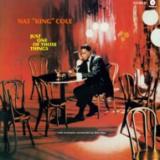
Nat King Cole - Just One Of Those Things LP
  • When Your Lover Has Gone
  • A Cottage For Sale
  • Who's Sorry Now
  • Once In A While
  • These Foolish Things
  • Just For The Fun Of It Can't
  • I Lover Come Back To Me
  • Don't Get Around Much Anymore
  • I Understand
  • Just One Of Those Things
  • The Song Is Ended
  • I Should Care
  • The Party's Over
  • Angel Eyes
  • Teach Me Tonight

By the time Just One of Those Things was recorded, Nat "King" Cole was already considered by the general public as more of a singer and entertainer than a jazz pianist. Cole did his first sessions with the more jazz-oriented Billy May in 1951, but it wasn't until 1957 when they collaborated on this first LP - Just One of Those Things, a memorable album in which all 12 songs fit seamlessly together perfectly. It wasn't just May's arrangements that created such swinging music behind Cole's vocals though, it was also the band, which included many illustrious soloists: Harry "Sweets" Edison, Willie Smith, Pete Candoli, Jimmy Rowles and Lee Young, along with John Collins and Jack Costanzo, members of the celebrated Nat "King" Cole Trio.

pre-order now10.04.2026

expected to be published on 10.04.2026

21,43
Skylar Spence - Prom King LP 2x12"

Skylar Spence

Prom King LP 2x12"

2x12inchCAK107X
Carpark Records
03.04.2026out soon
 
11

When Ryan DeRobertis announced the name change of his project from Saint Pepsi to Skylar Spence, there was no indication of any stylistic departure, though the change arrived with a musical shift toward faster tempos and more pristine production. Whereas Saint Pepsi had often used decades-old boogie, disco, and new wave as grist for the sampling mill, Skylar Spence is intent on trafficking more overtly in those genre aesthetics through his own production techniques and vocal contributions. With Prom King, DeRobertis reorients his music for his new full-band live act and winds up with an album full of tight and enveloping dance tunes.

Working with Carpark Records 'gave me the confidence to 'go big' with the new material: to write pop songs with universal messages in the sonic wrapping paper that I've grown accustomed to,' DeRobertis says. 'A few songs on Prom King are about specific events in my life—a party where I got too messed up, watching a friend's life spiral out of control and trying to help—but I tried hard not to be too autobiographical because I want my music to unite, above all else. I'm much more interested in connecting with the listener than mystifying my personality.'

While DeRobertis' previous long-players have been more amorphous collections in the style of beat tapes, Prom King is compact and cohesive, with the album's varied stylistic references (new wave, UK garage, boogie) united through strong guitar melodies and Todd Edwards-ian cobblings-together of tiny vocal samples. 'I slowed some music down and called myself an artist,' DeRobertis sings on lead single 'Can't You See,' acknowledging in his lyrics what is already apparent in the music's tone—he can maintain fidelity to his vision while working in more uptempo, disco-based song structures.

'Ridiculous!' and 'Bounce Is Back' are big groovers that capitalize on jacking hi-hats and hand drumming, respectively, and both have an air of Balearic warmth and smoothness. On the title track, DeRobertis entwines a chorus of unintelligible but expressive samples with his own vocals—what feels like a synthesis of two approaches—and the result is an affecting pattern of build and release. More contemplative sophisti-pop numbers like 'Fall Harder' and 'Affairs' add a realist's breadth of scope: thoughts of past foibles bleed into present-dwelling and dancing.

Prom King is DeRobertis making sense of missed opportunities. His high school did not have a prom king; he has filled the position with an imaginative album of personal and musical revisionism.

pre-order now

This item has not yet been released. You can pre-order the product now.

28,36
Lebanon Hanover - Besides The Abyss

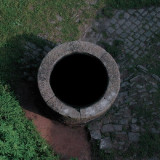
The album opens with the ominous guitar-driven Hollow Sky, accompanied by its haunting music video's verdant vistas. The song, with Iceglass ghostly vocals, shimmers with that sounds like an Omnichord flittering like sonic firefly lights and brooding bass. This perfectly scores the less traveled wanderings through the dark wooden path of Dante's perdition, leading to the titular well that graces the album cover. The Crater opens with an unsettling riff and bass, with low, repetitive frequencies on the synth create a sense of unease. Here, Iceglass recounts a fatalistic requiem for the king of romance that is cataclysmic and leaves a scar upon the earth. With Fall Industrial Wall, once again, Iceglass channels a silky and Nico-like emotive deadpan; against a dirgelike melody backed by minimal synth, bass, and drum. Almost medieval and plaintive, with its folk droning horns, deep and shallow in their resonance. This song is anachronistic, setting the scene of ruins centuries-old with crumbling edifices strewn about like memories lost in time. With the poetic lyrics of The Chamber do we find the eponymous abyss. Here, dualities are laid bare; besides love, there is heartbreak, and without this sorrow, what meaning would there be to love if one knows not what it is to lose? This song encapsulates the idea that love is heartbreak, and love lost is reaching the deepest chamber of the heart. This is carried through a sombre horn, minimalist drum machine, and deliberate bassline overlaid with Iceglass german and english lyrics. The Well is led in with a softly distorted bassline overlaid with eerie banshee howls give way to Iceglass otherworld vocal refrain, echoing through time as if emanating from a hole in the ground, and encircling that hole is a garden of woe and despair. The sinfully seductive song The Moor features a captivating SAX SOLO courtesy of Perseas; a welcome shift in tone, juxtaposed well with the intensity of Iceglass tenebrous vocal purr. This hitherto unexplored foray into dark sensuality takes the song into sordid mid 80s territory, bringing to mind a dusky drive along a serpentine road, with equally haunting instrumentations straddling time with icy fire. Broken Characters is an acoustic folk interlude featuring Selofan's Dimitris Pavlidis on guitar. Here we find a more gentle approach with its earnest and romantic lyrics. The song's melodic hook is a soft caress along with the forlorn horn elements highlighting Iceglass at her most Nico-sounding vocal yet, singing the sorrowful truth that most artists are indeed broken characters. Chimerical opens with dirgelike synth organs. The chill of winter has befallen the lamentations sung by Iceglass carried by haunting chord progressions and minimal percussion, plaintively beseeching the song's subject to remain elusive, idealistic, and a dreamer. After an album highlighting more Jill than Jack, our male protagonist finally makes his ascent in the sonorous and breathtaking Dark Hill, a masterful march of sweeping synth horns, and trepidatious drum machine with William Maybelline's bellowing voice cracking like thunder, rattling the atmosphere like his heart against his ribs. Spirals swirls in a cautionary knell of cathedral-esque droning synth dirge, with Icarian lyrics shining like a sombre ray of hope; like the sun's rays creeping into the darkest of places. The song, minimalist in its tight percussion, echoes with the solace of Larissa Iceglass vocal litany; invoking elements of the supernatural, almost like a Casio preset sequenced to the beating of an angel's wings.

pre-order now03.04.2026

expected to be published on 03.04.2026

21,43
Collateral Intelligence - Butterflies In Funerals

Restock

Collateral Intelligence's Butterflies in Funerals is widescreen, sometimes dark, often hopeful electronica with one eye on the stars, but grounded in the sheer cathartic necessity of its creation.

The new moniker from Maltese wunderkind Neil "Acidulant" Hales, the album was formed during a turbulent period in the artist's life, when his father was seriously ill in hospital. Butterflies in Funerals is his way of expressing the complexity of emotion he was going through at the time.

"To me it all looked like a very dark movie," he says. "That's why the tracks are are at times cold or have a sad, emotional, or hopeful feeling."

Drawing on his impressive background in acid house and electro – with releases on Balkan Vinyl and Jack Trax – the album takes in mutant breakbeat, battle-scarred ambient, and tripped out 303 grooves, but pushes his sound further and deeper than ever before.

The album cover features specially designed artwork by rising star Fei Meng, who will be exhibiting at the Royal Society of British Artists later this year.

So in 2021 join Collateral Intelligence on a journey into the recesses of the soul, and emerge, purified, and ready for the rest of the trip.

out of Stock

Order now and we will order the item for you at our supplier.

13,40

Last In: 11 days ago
PARIAH - Blaze of Obscurity Re-Issue
  • 1: Missionary Of Mercy
  • 2: Puppet Regime
  • 3: Canary
  • 4: Blaze Of Obscurity
  • 5: Retaliate!
  • 6: Hypochondriac
  • 7: Enemy Within
  • 8: The Brotherhood

Pariah’s cult album re-issued! “Blaze of Obscurity” brings you pure Thrash Metal fury! Satan changed their name to Pariah in 1988-1989. There’s Heavy Metal, Power Metal, Thrash Metal, Death Metal, the list seems almost endless. Sub-genres are important in metal and bands are quickly classified and labeled. Pariah (the last re-incarnation of Satan) is one of few bands that are difficult if not impossible to classify. Is it Heavy metal? NWOBHM? Thrash Metal? Pariah did not make it easy to describe their sound. It might be too sophisticated to simply label it Heavy Metal, which in its infancy was a rather simple affair.

They don’t sound like any Metal band out there, perhaps discounting some of the more aggressive and technical ones, and then the signature NWOBHM sound is added. The guitar playing by Russ Tippins and Steve Ramsey is undeniably what defines Pariah as well as Satan in the past. Undeniably, Satan has gone a long way; from humble NWOBHM beginnings, to Experimental/Melodic Mettal (in Blind Fury) and something that could be described as a NWOBHM/Thrash Metal hybrid (“The Kindred”). It’s as if they’ve been experimenting trying to find their identity, and theyfinally found it. Stylistically, “Blaze of Obscurity” could be seen a step back to “Suspended Sentence”, but this time around they got everything right, down to the last note. Those who have heard Satan know what to expect: great guitar playing.

And sure enough, “Blaze of Obscurity” is a demonstration of guitar mastery and is overall a very guitar-driven album, with plenty of mind-boggling riffs and solos are all over the place, but more importantly, it’s a demonstration of some amazing songwriting as well. This is easily Pariah/Satan’s creative peak and one of the most consistent albums I’ve ever heard, featuring eight great and conceptually perfect songs with lyrics that come across as sophisticated and thought-provoking. It is not fair to put the entire spotlight on Tippins and Ramsey though since the drumming and bass work from Sean Taylor and Graham English really shines. The rhythm is fast and tight, keeping it focused, aggressive and intense till the end. Vocalist Michael Jackson (yes, that’s his name) has to be commended too as this is easily his careers best performance.

The verdict: “Blaze of Obscurity”: the level of musical genius expressed here, along with near flawless songwriting, is more than enough to skyrocket it to heights reserved only for classics. Probably not your choice for some light listening those quiet Sunday evenings, but those who take a more serious, intellectual approach when selecting their music will find very much to appreciate here.
Tracklisting

pre-order now27.03.2026

expected to be published on 27.03.2026

28,99
The Pale White - Inanimate Objects of the 21st Century LP
  • A1: Moth In The Headlights
  • A2: Float Away
  • A3: Göbekli Tepe
  • A4: Absolute Cinema
  • A5: Oh Brother
  • A6: Medusa
  • B1: Carpe Diem
  • B2: Mannequin
  • B3: This Fascination
  • B4: Disappoint Me
  • B5: All I Have To Do Is Dream

With their third album, Inanimate Objects of the 21st Century, Newcastle’s The Pale White prove once again that there’s no slowing them down. Following the success of their introspective sophomore album The Big Sad, brothers Adam (vocals/guitar) and Jack Hope (drums) return louder, sharper, and more defiant than ever. This third full-length is their most expansive yet: a record that blends the anthemic punch of classic rock with the urgency and edge of modern alternative.The title, Inanimate Objects of the 21st Century, is a nudge to the uncomfortable irony of our time – as technology accelerates, humanity feels increasingly frozen in place. Lead singer Adam Hope says: “Technology is moving, but we are not. Human civilization entered the 21st century wide-eyed and naive with mobile phones that would barely fit in our pockets. Fast forward a few decades and we’re so far from where we were that it almost looks like a bad 80’s sci-fi movie. Back then, that film would be watched in packed-out cinemas after an eagerly anticipated release, but now they stand emptier than they once were, attended mainly as a nostalgic experience in the age of Netflix and doomscrolling.

The birth of AI, algorithms, cryptocurrency, drones, holographic concerts, autonomous cars… we’re living in a strange transitional period which is both fascinating and terrifying in equal measure. We humans have now in fact become the inanimate objects - mannequins.After our softer, melancholic second album ‘The Big Sad’, we felt it was only right to move as fast as our world is moving and release our next within the year. ‘Inanimate Objects of the 21st Century’ is the evil twin, the Yin to The Big Sad’s Yang.”

pre-order now27.03.2026

expected to be published on 27.03.2026

25,17
Bill Converse - Zone Zone LP 2x12"

Bill Converse should be a household name in every head’s abode. He’s been DJing live with 3+ turntables since he was a teenager, always under the same name. Unfathomably envious record collection. Your favorite DJ’s as well as very likely your favorite DJ. Whether it is DJing or a live set, his presentation is head-spinning, hard-edged but hypnotic. His avalanching drum programming is as recognizable as Coltrane’s timbre. His records have been released on Dark Entries, Fit Sound, Texas Recordings Underground, Tabernacle Records, Immortal Sin, Acid Test, Feral Colony and Obsolete Future. Now Fixed Rhythms presents a 2×12” pack of Bill’s characteristically bewildering excellence.

The first 12” has four cuts. Woozy, heavy, bombastic machine workout opener “Stress Test” followed by the tension peaking sustainer “ZoneZone” on the A side. On the B side, “770” brings us to a new place of plucky bass lines and unconventionally tuned drum workouts, with “lure me” closing the first 12” with flexing low-end, percussive stabs syncopated with heavy snaredrum riffing.

Where does this music come from? Although you hear the decades of Midwest techno, jacking Chicago house, brain-tickling Warp Records cuts, and his dizzying skills as a DJ in the brew, his sound is uniquely Bill’s. The second 12” peels back the curtain a bit more, as the C and D side are two extended cuts from his live set at 2024’s Jackie O’Body Vol. 2 in Denton, Texas. We here at the label were at that gig. Pure energy. Sexy distortion. Rhythms that made you scream. After the set, the room erupted in a chant of “BILL! BILL! BILL!”. Dear reader, witness the power of Bill Converse’s raw, overdriven, drummy, jack house tech madness!

stock from22.04.2026

23,32

Last In: 6 days ago
Marter & Yony - Rhythm Matter LP

Marter & Yony

Rhythm Matter LP

12inchPALP-001
Personal Affair
25.03.2026

It started in a Brooklyn studio back in 2011. A raw demo, a shared vision, and a deep reverence for the echoes of Basic Channel and King Tubby. After years of meticulous overdubbing and sonic layering, Marter (Bass) & Yony (Drums) have finally completed their masterpiece. Originally licensed to Bill Laswell’s label for digital release, this warm, lo-fi journey is finally available in its truest form. Recorded on 4-track and 8-track tape before meeting ProTools, every frequency breathes with analog soul.

This album sold out immediately upon its initial release in 2018. Due to overwhelming demand, a highly limited number of copies have been repressed with sticker on black jacket.

2nd album is on the way!

out of Stock

Order now and we will order the item for you at our supplier.

23,95

Last In: 25 days ago
VARIOUS - ANTIKHRIST VISIONS VOL. III EP

INDUSTRIAS MEKANIKAS is back with the third instalment of the ANTIKHRIST VISIONS saga. This release is particularly symbolic: it’s the ninth in the catalogue, marked by the infernal numerology that runs right through the whole series. It’s a descent into a sonic underworld, where noise becomes ritual and pleasure is just pure agony.

The artist tasked with opening this new chapter of the saga is the mighty Óscar Mulero, an essential figure on the national electronic scene and one of our biggest international ambassadors, whose career has left a deep mark on contemporary music. Here, with Faceless, he delves into dark, precise, and devastating electro territory; a spiritual machine that dictates the pulse of chaos.

Next up, we’ve got Pressurized Modulator with Reddrum: hard, crunchy, industrial electro, absolutely buzzing with electrical tension and twisted sonic matter.
Closing out the A-side is Jacko Volvone (aka Hoax Believers) with Quieren Cerrar Las Fábricas: a track that expertly blends electro, techno, and post-punk echoes, resulting in a tense, distorted, and combative sound, like a working-class echo shouting from the abyss.

Flipping over, the B-side opens with Hanging Nuts (made up of Waje Martín, Fake Robotik, and Ruben Montesco). They unleash a murky descent of filthy, distorted, primal electro, slashed through with guitars and raw, guttural vocals: a genuine chant from beyond the grave. The second cut marks the debut of Techselektah & Phil Fork with Champagne No Potable: a raging street anthem packed with fury, energy, and social criticism, where Spanish vocals emerge amidst EBM structures that have that ‘80s spirit, reinterpreted with today’s raw edge. And the big finish is down to HBK1 alongside Rigor Mortis, with Instinto Caníbal: a full-on explosion of electro-industrial and EBM that awakens the body’s most primitive urges.

Antikhrist Visions Vol. III is a sonic summoning from the lands of Hades: ritualistic matter, organic sound, and primal force. A testament to pleasure and torment—Tormento do Gostar—etched into the vinyl as if it were molten iron.

Memento Mori.

out of Stock

Order now and we will order the item for you at our supplier.

16,77

Last In: 27 days ago
DAVID RUFFIN - DAVID LP 2x12"
  • 1: Each Day Is A Lifetime
  • 2: I Want You Back
  • 3: Out In The Country
  • 4: You Can Come Right Back To Me
  • 5: I Can't Be Hurt Anymore
  • 6: Rainy Night In Georgia
  • 7: I've Got A Need For You
  • 8: Anything That You Ask For
  • 9: Let Somebody Love Me
  • 10: For The Shelter Of Your Love
  • 11: Dinah
  • 12: Don't Stop Lovin' Me
  • 1: It's Gonna Take A Whole Lot Of Doin
  • 2: I Want Her To Say It Again
  • 3: Your Heartaches I Can Surely Heal
  • 4: Get Away Heartbreak (Keep On Moving)
  • 5: You Make Me Do Things I Don't Want To Do
  • 6: Mountain Of Memories
  • 7: Heaven Help Us All
  • 8: Each Day Is A Lifetime
  • 9: Don't Stop Lovin' Me
  • 10: You Can Come Right Back To Me
  • 11: Dinah

Motown Records: The Supremes, Stevie Wonder, The Miracles, Marvin Gaye, Martha Reeves and The Vandelas and, of course, The Temptations. It is antithetical to mention any of those without the others. The community of artists started as the Sound of Young America, but as history has proven, it became the sound, the look and the inspiration of so much more. And now, little nuggets of Motown's influence can be found the world over. David Ruffin, founding member of Motown superstars The Temptations, went on to become a successful solo artist even after he left the group. In 1969, Ruffin released two fantastic solo records, My Whole World Ended and Feelin' Good. Between 1970 and 1971 he recorded what was to be his third long playing solo record. However, his career was suddenly put on hold when Motown, for reasons unclear, shelved the album that had been dubbed David. The record had even been assigned a catalog number and final artwork. Ruffin returned in 1973 with a brand new LP titled David Ruffin (treated officially as his third LP) and the previously recorded album David sat on the shelves, unheard for decades. This deluxe 2xLP set features the original, rare David LP, plus an LP of bonus tracks and mono single mixes all packaged in a beautiful gatefold jacket, featuring extensive liner notes and striking color photographs of Ruffin. His red and yellow suede suit featured in the interior gatefold LP jacket is an absolute must-see! The record was cut and pressed at Third Man's Detroit HQ, just a couple miles away from the original Motown HQ. For the first time ever on vinyl, Third Man is proud to present the essential, true third LP from the Temptations' mighty David Ruffin.

pre-order now20.03.2026

expected to be published on 20.03.2026

28,53
Darwin Chamber - Can You Pass The Acid Test? (feat DJ Spun mix)

This new EP from 30-year US progressive veteran and master sound engineer Darwin Chamber was written with the idea of a San Francisco acid trip in mind, from the initial dose to the first onset of weirdness, then on to peak time mind melting. A DJ Spun remix of 'The Acid Test' is jacked deep house with hints of strangeness hidden in the background, then things really get liquid and trippy on 'Never Coming Down', 'The Acid Test' in original form is pure 303 aquatics and '25th Century Acid Cat' is an explosion of colour. 'Get Down' brings a bit more tension and anxiety as things begin to unravel.

out of Stock

Order now and we will order the item for you at our supplier.

21,64

Last In: 20 days ago
Billy Preston - Encouraging Words

„Encouraging Words“ ist als limitierte Goldvinyl-Edition erhältlich. Billy Preston ist vor allem für seine
Arbeit mit den Beatles am Album „Let It Be“ bekannt und spielte eine wichtige Rolle in Peter Jacksons
Dokumentarfilm „Get Back“. Der neue, abendfüllende Dokumentarfilm „Billy Preston: That’s the Way
God Planned It“ kommt im Februar 2026 in die Kinos und enthält Interviews mit Ringo Starr, Eric Clapton
und anderen.

pre-order now13.03.2026

expected to be published on 13.03.2026

28,53
Various - Y2K25: The Music That Made The Millennium
  • A1: Britney Spears - Oops!... I Did It Again
  • A2: Christina Aguilera - Genie In A Bottle
  • A3: Backstreet Boys - I Want It That Way
  • A4: *Nsync - Bye Bye Bye
  • A5: Wheatus - Teenage Dirtbag
  • A6: Jennifer Lopez - Waiting For Tonight
  • B1: Mariah Carey Feat. Jay-Z - Heartbreaker
  • B2: Ricky Martin - Livin' La Vida Loca
  • B3: Outkast - Ms. Jackson
  • B4: Tlc - No Scrubs
  • B5: P!Nk - There You Go
  • B6: Santana Feat. The - Maria Maria

Y2K25: The Music That Made The Millennium (Various Artists) - VinylOops!we did it, again! Get ready to relive the magic of the millennium with Y2K25: The Music That Made the Millennium. Say Bye Bye Bye to your playlistthis is the way you want your music. Featuring pure nostalgic bliss from NSYNC, Backstreet Boys, Britney Spears, Christina Aguilera, Mariah Carey, TLC, P!nk, Ricky Martin, and so many more. Let that genie out of the bottle, grab your Tamagotchi, flip phone, and CD player to enjoy the biggest anthems from the biggest stars. Order now and escape the everyday existential dread for 78 minutes and 48 seconds of pure nostalgic bliss. 20 chart-topping hits on 1 unforgettable CD (or 12 hits on 1 totally awesome vinyl!) Dont Wait for Tonight. Dont be a Teenage Dirtbag. Celebrate Y2K, 25 years later.

out of Stock

Order now and we will order the item for you at our supplier.

25,17

Last In: 38 days ago
Various - NOW – Yearbook 1983

Various

NOW – Yearbook 1983

3x12inchLPYBNOW83
Universal UK
11.03.2026
  • A1: Orchestral Manoeuvres In The Dark– Telegraph
  • A2: Blancmange– That's Love, That It Is
  • A3: China Crisis– Tragedy And Mystery
  • A4: Adam Ant– Strip
  • A5: Divine– Love Reaction
  • A6: Yello – I Love You
  • A7: Talk Talk– My Foolish Friend
  • A8: Japan– Canton (Live)
  • B1: Fun Boy Three– The More I See (The Less I Believe)
  • B2: Tracie*– Give It Some Emotion
  • B3: The Teardrop Explodes– You Disappear From View
  • B4: Xtc– Love On A Farmboy's Wages
  • B5: The Stranglers– Midnight Summer Dream
  • B6: The Kinks– Don't Forget To Dance
  • B7: Mari Wilson– Cry Me A River
  • C1: Bauhaus– Lagartija Nick
  • C2: Marc And The Mambas– Black Heart
  • C3: The Glove– Like An Animal
  • C4: Freur– Doot Doot
  • C5: The B-52'S– Song For A Future Generation
  • C6: Wall Of Voodoo– Mexican Radio
  • C7: Joe Jackson– Breaking Us In Two
  • D1: Oliver Cheatham– Get Down Saturday Night
  • D2: Rockers Revenge– The Harder They Come
  • D3: Freeez– Pop Goes My Love
  • D4: Malcolm Mclaren– Soweto
  • D5: Culture Club– I'll Tumble 4 Ya
  • D6: The Belle Stars– Indian Summer
  • D7: Level 42– Out Of Sight Out Of Mind
  • D8: Daryl Hall & John Oates– One On One
  • E1: Sparks & Jane Wiedlin– Cool Places
  • E2: The Romantics– Talking In Your Sleep
  • E3: The Fixx– Saved By Zero
  • E4: The Motels– Suddenly Last Summer
  • E5: Modern English– I Melt With You
  • E6: Missing Persons– Walking In L A
  • E7: Naked Eyes– Always Something There To Remind Me
  • E8: Taco– Puttin' On The Ritz
  • F1: Electric Light Orchestra– Secret Messages
  • F2: Men At Work– Overkill
  • F3: Pat Benatar– Little Too Late
  • F4: Journey– Separate Ways (Worlds Apart)
  • F5: Styx– Mr Roboto
  • F6: Giorgio Moroder & Joe Esposito– Lady, Lady
  • F7: Stephen Bishop– It Might Be You

Celebrating the first year of ‘NOW That’s What I Call Music’ – 1983. ‘Now Yearbook’ presents a stellar selection of 1983’s biggest and best hits… 80 huge chart hits from the year, alongside enduring and well-loved classics on 4 CDs. 1983 saw British artists achieving unprecedented success across the world with ‘Every Breath You Take’ from The Police being the year’s biggest seller in the U.S., and ‘Karma Chameleon’ from Culture Club being the top seller in the U.K. Breakthrough acts, achieving their first big hits – all here – include a staggering line-up of future superstars: U2, Eurythmics, Wham!, Paul Young, The Style Council, Marillion and Thompson Twins, to name a few..' Released on a LTD 4CD SET: This will be a limited run of 5000 4CD units housed in ‘hard-back book’ packaging and featuring a 28-page booklet that includes an overview of the chart music of 1983, a track by track guide including chart stats and fun facts, a selection of original picture sleeves and a quiz. 2CD Standard set and also a limited edition of 3000 units, pressed on 3LP translucent red vinyl...

out of Stock

Order now and we will order the item for you at our supplier.

28,78

Last In: 39 days ago
ALEXANDER HACKE - BLAST - DISTORTED MEMORIES

Alexander Hacke became obsessed with classical music at an early age, but ended up dropping out of school and hanging out with punks, squatters, and bohemians in the West Berlin underground scene. After his first music projects under the pseudonym Alexander von Borsig, he joined the newly formed EinstuIêrzende Neubauten in 1980. While the Neubauten became a groundbreaking and hugely successful band, Hacke not only experimented with all kinds of stimulants, but also continued to develop musically: whether as an internationally successful solo artist, collaborating with Crime & the City Solution, as a film composer, or together with his wife, the artist Danielle de Picciotto, with whom he has been roaming the world since 2010. "Blast" is a dazzling testimony to the wild West Berlin before the fall of the Wall, the rise of EinstuIêrzende Neubauten, and the thrilling life story of a jack-of-all-trades. Hacke recounts international tours and surprising collaborations, as well as his cinematic soundscapes, and offers personal reflections on art and society. He looks back on an artistic career that uniquely combines avant-garde art, pop success, and creative freedom.

pre-order now06.03.2026

expected to be published on 06.03.2026

22,06
Rick James - Street Songs LP 2x12"
  • A1: Give It To Me Baby
  • A2: Ghetto Life
  • B1: Make Love To Me
  • B2: Mr. Policeman
  • C1: Super Freak
  • C2: Fire And Desire
  • D1: Call Me Up
  • D2: Below The Funk (Pass The J)

Rick James Blends Brazen Attitude, Fearless Sexuality, and Shrewd Charisma on Street Songs:

Punk-Funk Album Aims for the Hips and Head, Includes the Timeless Hit “Super Freak”
Sourced from the Original Master Tapes and Strictly Limited to 4,000 Numbered Copies:

Mobile Fidelity’s 180g 45RPM 2LP Set Presents 1981 Smash in Audiophile Sound for the First Time
1/4” / 30 IPS analogue master to DSD 256 to analogue console to lathe


“Punk funk” was a relatively unknown concept before 1981. But once Street Songs took the charts by storm that year, the world soon knew about what became Rick James’ signature style. And how. True to its name, Street Songs blends outspoken sexuality, brazen attitude, and edgy commentary amid contagious R&B-fueled arrangements that simultaneously aim for the hips, head, and various nether regions. And it’s never sounded better.

Sourced from the original master tapes, strictly limited to 4,000 numbered copies, pressed at Fidelity Record Pressing, and housed in a Stoughton gatefold jacket, Mobile Fidelity’s 180g 45RPM 2LP set presents James’ platinum-certified effort in audiophile quality for the first time. Playing with crisp dynamics, lively textures, airy headroom, and revealing clarity, this collectible edition of the record that stayed at the No. 1 spot on the R&B Album Charts for 20 weeks invites you to get closer to music that beckons you to turn your space into a private dance floor.

Then again, you’ll likely be so taken by how the taut bass lines, snappy rhythms, and four-on-the-floor beats — all rendered in stunning detail and with full-bodied architecture — come across with such accuracy and presence, you might stay pinned to your seat. On this pressing, the soundstaging, imaging, and lit-fuse energy of Street Songs reach new heights. Everything from the rubbery feel of the guitar lines to the depth of James’ temperature-raising vocals to the scale of the horn charts emerges as if James and his ace session crew set up in your room.

The Buffalo native and his ensemble waste no time getting their message across. On the album-opening “Give It to Me Baby,” James and company lay down a mix of sleek funk and pulsing disco that practically activates the bright lights of a discotheque and stimulates the libido of anyone within earshot. Having reached No. 1 on the Billboard Hot Soul charts, the song is pure sex — and just one of the carnal delights on a record that embraces the subject as fearlessly as James does his identity.

Of course, the most famous of James’ erotic excursions — the timeless “Super Freak” — hit No. 1 on Hot Dance Club Play charts, No. 16 on the Hot 100, and, later, No. 153 on Rolling Stone’s list of the Top 500 Songs of All Time. Bolstered by a quavering keyboard theme and electro riffs, the much-sampled track worms itself inside your muscles with smile-inducing subject matter, gliding vocals, nimble movements, a hot tenor-saxophone solo, and backing vocals by the Temptations.

The iconic Motown group isn’t the only celebrated guest artist on the Grammy-nominated Street Songs. James’ then-labelmate, Stevie Wonder, lends harmonica to the frank sociopolitical narrative on “Mr. Policeman,” a protest tune that also manages to stroll ’n’ strut via simmering organ, staggering brass accents, and James’ gritty vocal performance. In addition to contributing backing vocals on several cuts, Teena Marie turns in one of the album’s signature moments on “Fire and Desire,” a romantic old-school duet with James that impresses with smoothness, sensitivity, and smokiness.

High-profile colleagues aside, James remains the undisputed star, a figure whose leather-and-latex attire, braided hair, and natural swagger made him misunderstood by some in the mainstream and embraced by everyone in the know as a true original. As a testament to his magnetism and skills, his charisma and rawness seemingly seep through every note, whether on the balladic sweep of the risqué “Make Love to Me” or strident, poke-and-prod persuasion of the moonwalking “Call Me Up.”

On the closing “Below the Funk (Pass the J),” an uptempo autobiographical tale that addresses the visionary musician’s second-favorite love, the singer acknowledges his upbringing and inseparable connection with his roots — an homage to where he began and a toast to where he’s gone.

Rick James, keepin’ it real on Street Songs, still as real as it gets.

out of Stock

Order now and we will order the item for you at our supplier.

88,19

Last In: 53 days ago
Items per Page:
N/ABPM
Vinyl