Das UK-Pop-Punk-Quartett As December Falls blieb stets seiner unabhängigen Selbstvermarktung treu. Angefangen bei dem selbstbetitelten Debütalbum (2019) über den von John Mitchell (Enter Shikari, You Me At Six, Architects) produzierten Nachfolger 'Happier' (2020) bis zu 'Mayday', der ersten Single aus dem neuen Album 'Join The Club'. Es ist ihr bislang ehrgeizigster Track mit einer härteren Soundrichtung, die man von der Band bisher nicht kannte. Produziert von Alex Copp (Frank Carter & The Rattlesnakes), abgemischt von Stevie Knight (Stand Atlantic, Yours Truly) und gemastert von Grant Berry (All Time Low, Hot Milk, Deaf Havana) leitet 'Mayday' das dritte As December Falls-Album ein, mit dem die Band einen weiteren Riesenschritt nach vorne macht.
- "As December Falls are an exciting prospect for the future of British Rock." - Jack Saunders, BBC Radio 1
quête:jack quartet
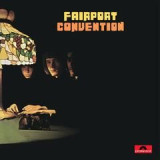
These records contain some of the most storied names not just in British, but world music. From a bunch of school friends setting out to be 'the British Jefferson Airplane', over the course of their first quartet of releases, the group metamorphosed into the leading exponents of British folk rock. In the way American folk and blues had looked back to gospel songs and spirituals, Fairport mined a seam a traditional English folk song, and then combined them with rock rhythms to create something ground- breaking and quickly emulated.
For many, this is the first time the considerable talents of Richard Thompson, Sandy Denny, Ashley Hutchings, Ian Matthews, Dave Swarbrick and Dave Mattacks would have been heard on record.
- A1: Herbie Mann With The Wessel Ilcken Combo - Afro Blues
- A2: The Diamond Five - Amsterdam Blues
- A3: Kwartet Leo Meyer - So Why
- A4: The Jacobs Brothers - Two Brothers
- A5: Kwartet Martin Verlinden - Four On Six
- B1: The Rhythme All Stars - Relaxin' With Rhythme
- B2: Martien Beenen And The Orchestra Featuring Sandy Fort - Golden Earrings
- B3: Tony Vos Quartet - Lady Elisabeth
- B4: Herman Schoonderwalt - Theme From The Movie 'Mensen Van Morgen
- C1: The Diamond Five - Les Halles
- C2: The Red And Brown Brothers - Blues For Eddy
- C3: Frans Elsen Quintet - Sem
- C4: Leddy Wessel With Jack Van Poll And His Tree-Oh - Sing Sing Sing
- C5: Boy's Big Band - Blues Minor
- D1: The Frans Wieringa Trio Featuring Eduard Ninck Blok - Work Song
- D2: Rita Reys And Oliver Nelson - Wives And Lovers
- D3: Herman Schoonderwalt Septet - My Plea
- D4: Trio Tony Vos - Comin' Home Baby
Limited Vinyl[25,42 €]
Delve into the Dutch jazz scene of the 1950s and 1960s with a selection of classic and rare hard bop and cool jazz tracks from artists like Herman Schoonderwalt, the Diamond Five, Wessel Ilcken and Tony Vos. Holland never sounded this hip before!
"Jazz is garbage and a caricature of the modern orchestra; it is garbage arranged by half-grown musicians for the benefit of common entertainment." In spite of the Dutch cultural establishment's attempts to preclude jazz - as illustrated by this citation from the October 1926 issue of music magazine De Muziek - The Netherlands was one of the earliest adopters of the new music style as it came over to the Old Continent at the end of World War I.
- A1: Herbie Mann With The Wessel Ilcken Combo - Afro Blues
- A2: The Diamond Five - Amsterdam Blues
- A3: Kwartet Leo Meyer - So Why
- A4: The Jacobs Brothers - Two Brothers
- A5: Kwartet Martin Verlinden - Four On Six
- B1: The Rhythme All Stars - Relaxin' With Rhythme
- B2: Martien Beenen And The Orchestra Featuring Sandy Fort - Golden Earrings
- B3: Tony Vos Quartet - Lady Elisabeth
- B4: Herman Schoonderwalt - Theme From The Movie 'Mensen Van Morgen
- C1: The Diamond Five - Les Halles
- C2: The Red And Brown Brothers - Blues For Eddy
- C3: Frans Elsen Quintet - Sem
- C4: Leddy Wessel With Jack Van Poll And His Tree-Oh - Sing Sing Sing
- C5: Boy's Big Band - Blues Minor
- D1: The Frans Wieringa Trio Featuring Eduard Ninck Blok - Work Song
- D2: Rita Reys And Oliver Nelson - Wives And Lovers
- D3: Herman Schoonderwalt Septet - My Plea
- D4: Trio Tony Vos - Comin' Home Baby
Standard Vinyl[23,49 €]
Delve into the Dutch jazz scene of the 1950s and 1960s with a selection of classic and rare hard bop and cool jazz tracks from artists like Herman Schoonderwalt, the Diamond Five, Wessel Ilcken and Tony Vos. Holland never sounded this hip before!
"Jazz is garbage and a caricature of the modern orchestra; it is garbage arranged by half-grown musicians for the benefit of common entertainment." In spite of the Dutch cultural establishment's attempts to preclude jazz - as illustrated by this citation from the October 1926 issue of music magazine De Muziek - The Netherlands was one of the earliest adopters of the new music style as it came over to the Old Continent at the end of World War I.
- A1: African Village (Side A)
- A2: Little Madimba (Side A)
- A3: May Street (Side B)
- B1: I Didn't Know What Time It Was (Side B)
- B2: The Surrey With The Fringe On Top (Side B)
- B3: I’ve Grown Accustomed To Your Face (Side B)
On his third Blue Note album pianist McCoy Tyner assembled a quartet with vibraphonist Bobby Hutcherson, bassist Herbie Lewis & drummer Freddie Waits for an album rich in ethereal textures that delivers visceral performances of three expansive Tyner originals and three radically reinvented standards.
This stereo Tone Poet Vinyl Edition was produced by Joe Harley, mastered by Kevin Gray from the original analog master tapes, pressed on 180g vinyl at RTI, and packaged in a deluxe gatefold tip-on jacket.
Kenny Wheelers sensationelles ECM-Leader-Debüt als Vinyl-Wiederveröffentlichung in unserer neuen audiophilen Luminessence-Reihe für. Das 1975 in New York aufgenommene und von Manfred Eicher produzierte Album ”Gnu High” brachte dem kanadischen Trompeter Wheeler sowohl für sein leidenschaftliches Spiel als auch für seine lyrischen Kompositionen ein neues Level an internationaler Anerkennung ein.
Hier steht Kenny Wheeler an der Spitze eines außergewöhnlichen Quartetts mit Keith Jarrett, Dave Holland und Jack DeJohnette, allesamt meisterhafte Improvisatoren, die ihr intuitives kollektives Verständnis als Mitglieder der Gruppen von Miles Davis geprägt hatten. ”Was man hört”, sagt Jack DeJohnette, ”ist die Spontaneität des Augenblicks.” Dave Holland merkt an, dass Gnu Hugh ”diese wunderbare Kombination von Form, Gestalt und Harmonie von Kennys Stücken hatte, aber auch diese wirklich freie Art, sie zu interpretieren.” Das Klappcover des Albums enthält neue Linernotes von Kennys Freund, Kollegen und Biografen Nick Smart.
ECMs neue audiophile Vinyl-Serie ( Luminessence Series ):
Schätze aus dem renommierten Label-Katalog, die lange vergriffen oder noch nie auf Vinyl erhältlich waren, in eleganten, hochwertigen Editionen präsentiert. Von den originalen Masterbändern geschnitten
Herstellung in Europa und analog, wo möglich.
“Shambly Television Personalities/Swell Maps style earworm indie rock.” Brooklyn Vegan
“RIPPER! Melbourne’s TERRY return to complete a hat trick of three albums in three years (TERRYilogy?) that leaves the piss streak that is the rest of indie pop in 2018 dribbling down its own leg in the dust.” 8/10 CLASH
Call me Terry! It’s been a hot minute since we last heard from Terry, what’s he been up to? Five years on from their last album, ‘I’m Terry’, the Australian post-punk quartet proudly present their new record, ‘Call Me Terry’, for release on April 14th 2023.
Terry is made up of pairs Amy Hill & Al Montfort, and Xanthe Waite & Zephyr Pavey who started playing together for the fun of it in 2016. Seven years, four albums and three EP’s later, Terry is ready to pick up the phone again. Over the past few years Terry have kept themselves busy - but not only with Terry things. On top of numerous releases with alternating side projects (Constant Mongrel, The UV Race, Primo!, Sleeper & Snake, Chateau, Rocky, the list goes on… ) members of Terry have moved interstate, undertaken studies, had children and started new fields of work.
Terry began sharing the demos for ‘Call Me Terry’ online with each other in 2020 - as we all did - before getting together in 2021 at their trusty rehearsal space to record the beds. Overdubs were completed at Terry’s homes over the following year. Lyrically, in true Terry fashion, the record wastes no time in scrutinising Australia’s corrupt, colonial history. They sing it loud and sprawl it across the jacket of this record, highlighting the greed, privilege and entitlement of white, wealthy “Australia” which they won’t stand a second for.
Musically, ‘Call Me Terry’ still has the classic Terry sound; the four vocals singing as one gang, sharp guitars and quirky, burbling synths, the rolling bass and drums, all amidst their clever, dancey pop songs. Since day dot it’s been hard to reference a band that really sounds like Terry, which is always amazing. Truly a sound of their own!
But the sugar on top here may just be some of their finest horn, string and piano performances to date - all of which never feel crowded, cluttered or over-involved. More just excellent, necessary melodies. Rest assured Al still gives his famed Fuzz Factory a workout - and throws his tremolo into the pedal chain. It goes off. Tremolo is the order of the day for Amy and Xanthe too who also embrace the wobble, whilst Zephyr keeps the pulse of their politico-pop anchored.
Terry isn’t afraid to call the shots and Terry isn’t afraid to point the finger. Listen to what Terry has to say.
Red Vinyl
“Shambly Television Personalities/Swell Maps style earworm indie rock.” Brooklyn Vegan
“RIPPER! Melbourne’s TERRY return to complete a hat trick of three albums in three years (TERRYilogy?) that leaves the piss streak that is the rest of indie pop in 2018 dribbling down its own leg in the dust.” 8/10 CLASH
Call me Terry! It’s been a hot minute since we last heard from Terry, what’s he been up to? Five years on from their last album, ‘I’m Terry’, the Australian post-punk quartet proudly present their new record, ‘Call Me Terry’, for release on April 14th 2023.
Terry is made up of pairs Amy Hill & Al Montfort, and Xanthe Waite & Zephyr Pavey who started playing together for the fun of it in 2016. Seven years, four albums and three EP’s later, Terry is ready to pick up the phone again. Over the past few years Terry have kept themselves busy - but not only with Terry things. On top of numerous releases with alternating side projects (Constant Mongrel, The UV Race, Primo!, Sleeper & Snake, Chateau, Rocky, the list goes on… ) members of Terry have moved interstate, undertaken studies, had children and started new fields of work.
Terry began sharing the demos for ‘Call Me Terry’ online with each other in 2020 - as we all did - before getting together in 2021 at their trusty rehearsal space to record the beds. Overdubs were completed at Terry’s homes over the following year. Lyrically, in true Terry fashion, the record wastes no time in scrutinising Australia’s corrupt, colonial history. They sing it loud and sprawl it across the jacket of this record, highlighting the greed, privilege and entitlement of white, wealthy “Australia” which they won’t stand a second for.
Musically, ‘Call Me Terry’ still has the classic Terry sound; the four vocals singing as one gang, sharp guitars and quirky, burbling synths, the rolling bass and drums, all amidst their clever, dancey pop songs. Since day dot it’s been hard to reference a band that really sounds like Terry, which is always amazing. Truly a sound of their own!
But the sugar on top here may just be some of their finest horn, string and piano performances to date - all of which never feel crowded, cluttered or over-involved. More just excellent, necessary melodies. Rest assured Al still gives his famed Fuzz Factory a workout - and throws his tremolo into the pedal chain. It goes off. Tremolo is the order of the day for Amy and Xanthe too who also embrace the wobble, whilst Zephyr keeps the pulse of their politico-pop anchored.
Terry isn’t afraid to call the shots and Terry isn’t afraid to point the finger. Listen to what Terry has to say.
In the finest tradition of BBE Music’s J Jazz Masterclass Series, we have a real obscurity of quality to savour. Taken from the rare 1978 private press album ‘Introducing’ by the Hideyasu Terakawa Quartet featuring Hiroshi Fujii, this private press gig recording was originally released in less than 100 copies. This BBE Music edition is the first time this very rare album has ever been reissued.
Led by saxophonist Hideyasu Terakawa alongside bassist Tetsuo Miura and drummer Akihiro "Thunder" Nakaya, the album was recorded live in concert as Terakawa stopped by at the jazz spot DIG in Masuda City, Japan, on the first of a seven-day regional tour in October 1978. Joining the trio was the featured guest, vibist Hiroshi Fujii.
According to Fujii, “a special label, Red Horison, released only this one album and it was sold at a few local record stores and available for sale when we played live. After this live recording, I did not perform with Terakawa again.” The current whereabouts of saxophonist Hideyasu Terakawa remain a mystery but we are delighted to be able to present this wonderful album to a new audience.
Unlike previous J Jazz Masterclass releases, the album contains no original compositions but rather fascinating interpretations of material by leading American jazz composers such as Wayne Shorter (Black Nile, as featured on J Jazz vol 3), Frank Foster (Simone) and Milt Jackson and Jimmy Heath (Rerev).
- A1: The Edwin Hawkins Singers - "Oh Happy Day
- A2: Elvis Presley - "Take My Hands Precious Lord
- A3: The Staple Singers - Silent Night
- A4: The Harmonizing Four - "Motherless Child
- A5: The Argo Singers - "Stand Up For Jesus
- A6: The Golden Gate Quartet - "White Christmas
- A7: Evelyn Freeman & The Exciting Voices Chorus - "Didn't It Rain
- B1: Aretha Franklin - "God Bless The Child
- B2: Louis Armstrong - "When The Saints Go Marching In
- B3: Nat King Cole - "O Little Town Of Bethlehem
- B4: Louis Prima & Keely Smith - "Shadrack" (Feat Sam Butera & The Witnesses)
- B5: Johnny Mathis With Percy Faith & His Orchestra - "What Child Is This?
- B6: Little Richard - "Just A Closer Walk With Thee
- B7: Johnny Cash - "My God Is Real
- B8: Mahalia Jackson - "Joshua Fit The Battle Of Jericho
re-release Typische Weihnachtslieder wie "Stille Nacht" haben die Meisten wahrscheinlich schon so oft gehört, dass sie zu beiden Ohren raushängen. Deswegen muss man in der Adventszeit trotzdem nicht auf die bewährten Weihnachtsklassiker verzichten. Denn mit "Noël Gospel" bringt das französische Label Wagram eine Kompilation heraus, die 15 ergreifende Gospelversionen bekannter, und auch einiger weniger bekannter Weihnachtstitel versammelt, zum Beispiel "Oh Happy Day", "Silent Night" oder "White Christmas". So ist für besinnliche Stimmung und ein aufregend neues Hörerlebnis gesorgt. Mit auf der LP vertreten sind die Superstars des Gospels wie Aretha Franklin, Mahalia Jackson, The Edwin Hawkins Singers, Elvis Presley, The Staple Singers, Johnny Cash und The Golden Gate Quartet. Hinzu kommen mit Louis Armstrong, Nat "King" Cole und Little Richard stimmgewaltige Sänger, die man auch unterm Tannenbaum immer wieder gerne hören mag.
- 1: Runner: I. Sixteenths
- 2: Runner: Ii. Eighths
- 3: Runner: Iii. Quarters
- 4: Runner: Iv. Eighths
- 5: Runner: V. Sixteenths
- 6: Music For Ensemble And Orchestra: I. Sixteenths
- 7: Music For Ensemble And Orchestra: Ii. Eighths
- 8: Music For Ensemble And Orchestra: Iii. Quarters
- 9: Music For Ensemble And Orchestra: Iv. Eighths
- 10: Music For Ensemble And Orchestra: V. Sixteenths
‘Runner is a calmly luminous orchestral piece with the pulsating, propulsive
rhythms that animate much of Mr. Reich’s music.’ – New York Times
‘Reich interweaves the two groups to create a dense textural tapestry that sounds like his most native orchestral thinking to date. A beautiful and dramatically charged masterpiece.' – San Francisco Chronicle
Nonesuch Records releases the first recordings of Steve Reich’s Runner (2016) and Music for Ensemble and Orchestra (2018), performed by the Los Angeles Philharmonic and conducted by Susanna Mälkki.
Reich says Runner is written “for a large ensemble of winds, percussion, pianos, and strings. While the tempo remains more or less constant, there are five movements, played without pause, that are based on different note durations. First, even sixteenths, then irregularly accented eighths, then a very slowed-down version of the standard bell pattern from Ghana in quarters, fourth a return to the irregularly accented eighths, and finally a return to the sixteenths but now played as pulses by the winds for as long as a breath will comfortably sustain them. The title was suggested by the rapid opening and my awareness that, like a runner, I would have to pace the piece to reach a successful conclusion.”
“Music for Ensemble and Orchestra is an extension of the Baroque concerto grosso where there is more than one soloist,” the composer continues. “Here there are twenty soloists – all regular members of the orchestra, including the first stand strings and winds, as well as two vibraphones and two pianos. The piece is in five movements, though the tempo never changes, only the note value of the constant pulse in the pianos. Thus, an arch form: sixteenths, eighths, quarters, eighths, sixteenths. Music for Ensemble and Orchestra is modeled on my Runner, which has the same five movement form.”
Nonesuch has recorded every new piece of music by Steve Reich since 1985, beginning with The Desert Music and continuing through 2018’s Pulse/Quartet, resulting in 22 albums and the two box sets Phases in 2006 and Works: 1965-1995 in 1997. Most recently, the label released his Reich/Richter, performed by Ensemble intercontemporain and conducted by George Jackson, in June 2022. The Times said, ‘What a delight to be able to focus on the music, delivered here with a clever mix of pinprick precision and reverberant haze by 14 members of Ensemble Intercontemporain. The more intently you listen, the more subtleties emerge among the shifting, criss-crossing textures and phrases, sometimes coloured with gentle melancholy but decisively upbeat by the end. Reich/Richter is an ear-tickling tonic and a happy companion to Reich’s newly published book, Conversations.’ Nonesuch will put out a collection of Reich’s complete works in 2023.
Reich released a book earlier this year, Conversations, that includes dialogues with past collaborators, fellow composers, musicians, and visual artists who have been influenced by his work, including: David Lang, Brian Eno, Richard Serra, Michael Gordon, Michael Tilson Thomas, Russell Hartenberger, Robert Hurwitz, Stephen Sondheim, Jonny Greenwood, David Harrington, Elizabeth Lim-Dutton, David Robertson, Micaela Haslam, Anne Teresa de Keersmaeker, Julia Wolfe, Nico Muhly, Beryl Korot, Colin Currie, and Brad Lubman. The Wall Street Journal called the book ‘a testament to the influence of an idea – one that triggered a cultural turning point,’ and the New York Times said, ‘The joy of the book is to hear artists from a variety of disciplines and backgrounds rhapsodizing about their relationship to Reich’s music and how it influenced their own creative processes.’
Steve Reich has been called ‘America’s greatest living composer’ (Village Voice), ‘the most original musical thinker of our time’ (New Yorker), and ‘among the great composers of the century’ (New York Times). His music has influenced composers and mainstream musicians all over the world. Music for 18 Musicians and Different Trains have earned him two Grammy Awards, and in 2009, his Double Sextet won the Pulitzer Prize. Reich’s documentary video opera works – The Cave and Three Tales, done in collaboration with video artist Beryl Korot – have been performed on four continents. His recent work Quartet, for percussionist Colin Currie, sold out two consecutive concerts at Queen Elizabeth Hall in London shortly after tens of thousands at the Glastonbury Festival heard Jonny Greenwood (of Radiohead) perform Electric Counterpoint followed by the London Sinfonietta performing his Music for 18 Musicians.
In 2012, Reich was awarded the Gold Medal in Music by the American Academy of Arts and Letters. He has additionally received the Praemium Imperiale in Tokyo, the Polar Music Prize in Stockholm, the BBVA Award in Madrid, and the Golden Lion at the Venice Biennale. He has been named Commandeur de l’Ordre des Arts et des Lettres and has been awarded honorary doctorates by the Royal College of Music in London, The Juilliard School, and the Liszt Academy in Budapest, among others. ‘There’s just a handful of living composers who can legitimately claim to have altered the direction of musical history and Steve Reich is one of them,’ states the Guardian.
Redefining what an orchestra can be, the Los Angeles Philharmonic (LA Phil) is as vibrant as Los Angeles, one of the world's most open and dynamic cities. Led by Music & Artistic Director Gustavo Dudamel, this internationally renowned orchestra harnesses the transformative power of live music to build community, foster intellectual and artistic growth, and nurture the creative spirit. This is the third recent recording by the orchestra on the label; the others were the Louis Andriessen pieces The only one and Theatre of the World. Additionally, the Los Angeles Philharmonic’s recordings of The Gospel According to the Other Mary and Must the Devil Have All the Good Tunes?, with Yuja Wang, released on Deutsche Grammophon, are included in this year’s John Adams Collected Works boxed set. Nonesuch also released an LA Phil recording of Adams‘ Naïve and Sentimental Music in 2002.
Susanna Mälkki is sought-after at the highest level by symphony orchestras and opera houses worldwide. About to embark on her final season as Chief Conductor of the Helsinki Philharmonic Orchestra, she concludes a seven-year tenure with a distinctive dynamism and imaginative flair to her programming. In addition to a full season in Finland, she will lead the Helsinki orchestra on tour to the prestigious Lucerne and Edinburgh festivals, New York’s Carnegie Hall, and Washington’s Kennedy Centre this season.
For over two decades Bjørke has cut his own path, as a solo artist and enthusiastic collaborator. Bjørke’s Copenhagen home may be one of Europe’s great cultural hubs, and he’s certainly added a paragraph or two to that story, but his music is distinctly international. Even a cursory listen exposes an impressive, ever-evolving career. However, few expected him to initiate the collaborative ambient / neo-classical project Kasper Bjørke Quartet. In 2018 The Fifty Eleven Project was released on Kompakt Records, a deeply personal record that musically documents Bjørkes encounter with, and triumph over, cancer. The album topped many critics' lists, and was included among The Guardian’s Best Contemporary Albums of the year.
Mother, which will be released on October 28th, represents a quantum leap forward. Literally, when you consider the terrestrial shifts that informed it. Six compositions explore what the evolution of our planet sounds like. While Holst may have gotten there first, Mother singularly focuses on the orb where we reside, from its formation, to its likely conclusion. Other artists have tackled song cycles that parallel a day, a year, or even a lifetime. Mother spans a timeframe from 4.5 billion years ago up to humankind’s impending demise. It hints at how that may be sooner than we think, as well as the earth’s resilience, and the promise of another chapter.
Additional gravity comes courtesy of evocative choir arrangements - - and marimba recorded at the Copenhagen Opera House. “Formation” condenses 20 million years of runaway accretion into 20 minutes. It is sublimely padded by feature artist Sofie Birch’s gentle synths. “Abiogenesis” intimates a different type of emergence: the first life to inhabit our nascent planet. The entire cosmos is condensed into the layered vocals of Philip|Schneider. Birch returns on “Miocene,” which signals the divergence of proto-humans from primates not with foreboding, but rather cascaded notes and swells adumbrating a pure and curious being, revealing nothing of what the Catch-22 of knowledge will bring. That’s addressed in the diptych of “Anthropocene” and “Tipping Points,” respectively marking the dawn and foreshadowing the probable downfall of homosapians, through wondrous advancements and their climate damaging byproducts. It’s tempting to think the album’s finale, “Requiem,” implies only a dark conclusion, owing to its sparkling verrillon’s coronach, and the return of Philip|Schneider’s empyrean vocals, but its juxtaposition with revolving, enigmatic piano chords infers the earth will enter its next act.
Mother is a staggering achievement, encouraging contemplative thought. The album is released October 28th on Kompakt Records, both digitally and on limited edition double vinyl. The atwork is designed by multidisciplinary artist Trevor Jackson.
Seit mehr als zwei Jahrzehnten folgt Kasper Bjørke seinem ganz eigenen Weg, sowohl als Solokünstler als auch als umtriebiger Kollaborateur, während er gleichzeitig das Beste aus Techno, Pop, Elektro, New Wave, House, Ambient, Italo und klassischer Disco aufgreift und in seinen Produktionen zusammenfügt. Bjørke’s Heimat Kopenhagen gilt als eines der großen kulturellen Zentren Europas, und die Stadt hat dieser Geschichte sicherlich den einen oder anderen Absatz hinzugefügt, aber Kasper’s Musik ist eindeutig international. Schon ein flüchtiges Hineinhören gibt den Blick frei auf eine beeindruckende, sich ständig weiterentwickelnde Karriere. Nur wenige hätten jedoch erwartet, dass dieser Werdegang 2018 in der Gründung eines neoklassischen Quartetts gipfeln würde. In diesem Jahr wurde “The Fifty Eleven Project” auf KOMPAKT veröffentlicht. Ein sehr persönliches Album, das musikalisch dokumentierte, wie Bjørke seinen Kampf gegen den Krebs gewonnen hatte. Es wurde unter anderem in die Liste der besten zeitgenössischen Klassik-Alben des Jahres von The Guardian aufgenommen.
“Mother”, das am 28. Oktober erscheint, ist ein Quantensprung für das Kasper Bjørke Quartett. Im wahrsten Sinne des Wortes, wenn man die tektonischen Bewegungen bedenkt, die dem Album zugrunde liegen. Sechs Kompositionen erforschen, wie sich die Evolution unseres Planeten anhört. Gustav Holst (englischer Komponist, dessen bekanntestes Werk die Orchestersuite “Die Planeten” darstellt; Anm. des Übersetzers) war vielleicht zuerst da, aber “Mother” konzentriert sich ausschließlich auf die Erdkugel, auf der wir uns befinden, von ihrer Entstehung bis zu ihrem wahrscheinlichen Ende. Andere Künstler haben sich mit Songzyklen beschäftigt, die einen Tag, ein Jahr oder sogar ein ganzes Leben abdecken. “Mother” umfasst etwa 4,5 Milliarden Jahre, vom Anfang aller Zeit bis zum bevorstehenden Untergang der Menschheit. Das Werk deutet an, dass dies schneller geschehen könnte, als wir alle denken, aber auch die Widerstandsfähigkeit der Erde und das Versprechen auf ein neues Kapitel.
Für zusätzliche Erdanziehung sorgen stimmungsvolle Chor Arrangements und eine Marimba-Sektion, die im Kopenhagener Opernhaus aufgenommen wurde. "Formation" verdichtet 20 Millionen Jahre unkontrollierter Akkumulation in 20 Minuten, subtil untermalt von den sanften Klängen der Ambient-Künstlerin Sofie Birch. "Abiogenesis" beschreibt das erste Leben, das entsteht und unseren Planeten besiedelt. Der gesamte Kosmos verdichtet sich hier in den vielschichtigen Vocals von Philip|Schneider. Birch taucht erneut im Track "Miocene" auf, in dem das evolutionäre Streben des Proto-Menschen weg vom Primaten noch keine böse Vorahnung enthält, sondern mit kaskadenartigen Sounds und langsam anschwellenden Klängen musikalisch vom reinen und neugierigen Wesen des Menschen erzählt, in dem noch nichts von der Zwickmühle zum Vorschein kommt, in die ihn sein Wissen bringen wird.
Das wird im Diptychon "Anthropocene" und "Tipping Points" thematisiert, die den Anfang vom Ende, den Beginn des wahrscheinlichen Untergangs des Homo sapiens durch die Folgen des Fortschritts und seiner klimaschädlichen Nebenprodukte vorhersagen. Es ist naheliegend zu denken, dass das Finale des Albums, "Requiem", nur das düstere Ende von allem darstellt. Doch as funkelnde Glockenspiel und Philip|Schneiders eindringlicher Gesang in Gegenüberstellung mit sich windenden und erratischen Klavierakkorden deuten an, dass die Geschichte der Erde ein neues Kapitel aufschlagen wird.
Mother ist eine beeindruckende Performance, die zum Nachdenken anregt.
12 track vinyl LP and 18 track CD including bonus single and demo recordings. The Daggermen all went to Rede Secondary School in Medway, Kent. It was a school for those that failed their 11 plus, or who passed it but decided to go there anyway (as Jon pretends). Being in some of the same classes we became friends and found we liked the same music; The Who, The Small Faces, The Kinks, The Beatles and The Jimi Hendrix Experience. We started going to Carnaby Street, wearing Beatle boots and generally being a bit Moddy. Dave’s older brother, James Taylor, played organ in The Prisoners and we’d listen to cassette tapes of them along with other local band, The Milkshakes as we bounced on the trampoline during P.E. After watching both bands play live in local venues such as the M.I.C. club in Chatham we formed The Daggermen, working out who was going to play which instrument as we stood next to the now demolished school sports hall. No one can quite remember who thought of the name, The Daggermen (it was me) or how comes Jon was playing bass on a guitar in the band at the very start and then Terry took over when we started gigging (it was because he had a real bass guitar and a car). But the next thing was that we were supporting The Prisoners both in Medway and places such as the 100 Club in Oxford Street. Then, one sunny day at around the age of 17, I bumped into Billy Childish walking across a field. I formally introduced myself and told him that he should definitely come and see our band that night because we were “fucking brilliant”. He did turn up and bought us a tray of whiskies whilst we were on stage, a sure sign that he had liked it. This led to him and Russ Wilkins, bass player in The Milkshakes alongside Billy, asking us if we wanted to record an E.P. for Russ’s label, Empire Records. This was our first ever recording called Introducing The Daggermen which was made in a brick arch under Rochester bridge that we rented for £2 a week to rehearse in and lovingly referred to as ‘The Hole’. We got ourselves a “manager” (our mate, Vic Templar) and started playing up and down England, drinking as much as possible in the van on the way to each gig, often paralytic by the time we went on stage. Our musical style was a sort of mixture of punk and mod and we played covers such as ‘Heatwave’ (The Who’s version) and ‘Get Ready’ by the Temptations, along with Dave and Terry’s originals. Then came a change of line up when Jon resumed his position as bass player and Terry left for America. We started wearing military jackets thanks to Jimi Hendrix and made our first long player, Dagger In My Mind (I got the title off an episode of Star Trek, although I remembered it wrong and it should have been ‘Dagger Of The Mind’). The album was produced by James Taylor and Allan Crockford of The Prisoners at Woolly Studios on the Isle of Sheppey in 1986. This line-up played together for a couple of years up and down the country (also with a few gigs in France) before we called it a day and sailed off into the future in bands such as The James Taylor Quartet, The Kravin’ “A”s, The Solarflares and Billy Childish and The Buff Medways. As energetic youths we had a lot of fun and I am very proud to have been part of The Daggermen. We hope you enjoy these recordings, now all gathered together for the first time. Sincerely yours, Wolf Howard, Cafe Mozart, Chatham CD TRACKLISTING 1 – It’s You I See 2 – What Do I Do For You 3 – There’s No Escaping 4 – I’ve Been Hurt 5 – I Have Lost Heart 6 – You Were Meant To Be 7 – Every Moment 8 – Dagger In My Mind 9 – That Girl 10 – D’you Think Of Me 11 – I Feel The Regret 12 – I’ve Been Searching 13 – Now It’s You I Need 14 – Ivor 15 – One More Letter 16 – I Wish You Were Mine 17 – Bundle 18 – No Reason LP TRACKLISTING 1 – It’s You I See 2 – What Do I Do For You 3 – There’s No Escaping 4 – I’ve Been Hurt 5 – I Have Lost Heart 6 – You Were Meant To Be 7 – Every Moment 8 – Dagger In My Mind 9 – That Girl 10 – D’you Think Of Me 11 – I Feel The Regret 12 – I’ve Been Searching
- 1: The Edwin Hawkins Singers - Oh Happy Day
- 2: Louis Armstrong - Go Down Moses
- 3: Ella Fitzgerald - Oh, Doctor Jesus
- 4: The Golden Gate Quartet - Joshua Fit The Battle Of Jeri
- 5: The Staple Singers - Will The Circle Be Unbroken
- 6: Nina Simone - He's Got The Whole World In His Hands
- 7: The Dixie Hummingbirds - Nobody Knows The Trouble I See
- 8: Mahalia Jackson & Duke Ellington - Come Sunday
- 9: Sam Cooke & The Soul Stirrers - Touch The Hem Of His G
- 10: Aretha Franklin - God Bless The Child
- 11: The Blind Boys Of Alabama - Mother's On The Train
- 12: The Harmonizing Four - I Shall Not Be Moved
- 13: Sister Rosetta Tharpe, Marie Knight & Sam Price Trio
The best selection of Gospel music anthems ! Including the iconic " Oh Happy Day " by The Edwin Hawkins Singers ! Originals Versions Remastered
Finnish Disco and Electronic Music from Private Pressings and Unreleased Tapes 1980–1991
Hot on the sold-out heels of the three previous Svart-issued early 80’s synth pop and underground electronic music compilations (Satan in Love, Dance For Your Life, Cold War On The Rocks comes the last part of the quadrilogy: Black Hole, that reaches the final frontier of collectable cult synth disco music: privately released and completely unreleased music from 40 years ago. Black Hole has been again compiled by Mikko Mattlar, whose encyclopedic knowledge in the field of Finnish electronic music produces 20 cuts of electro-cult has helped him dig up 20 cuts of rare groove from obscure regional compilation records, seven inches of which only a test pressing exists, demo tapes and privately financed singles. Stylistically the compilation moves from 1979 disco funk as performed by Peak Funktion on their unreleased record to homebrewed synth visions by late 80’s bedroom wizards. Interesting curiosities among the 20 tracks include the riveting dance number by Jarkko Väljä, who received some fame back in the day as a Michael Jackson impersonator, and released one 7” single, that has become an expensive rarity. Another thing you wouldn’t believe existed at all if it wasn’t included here is “Israel Is Real” by We, a short-lived gospel vocal quartet, accompanied here by a drum machine and a synthesizer, which makes for an unforgettable and surprisingly catchy four minute piece of underground gospel disco from 1983. The compilation Black Hole – Finnish Disco and Electronic Music From Private Pressings and Unreleased Tapes 1979-1991 will be released by Svart Records on double vinyl and CD on October 14th.
THE BOBBY LEES, fresh off an extensive European tour that
included the Woodstock, NY-based band’s first stint in the UK,
wowing audiences and critics alike (“screaming feedback,
howling vocals, and a thumping beat suggest that rock’n’roll is
still very much alive” - The Arts Desk), the Sam Quartin-led
quartet announce the release of their Ipecac Recordings’ debut
album, ‘Bellevue’.
The 13-song album, which was recorded live in-studio, was
produced by Vance Powell (Jack White, Chris Stapleton, The
Raconteurs).
Iggy Pop, Debbie Harry, Henry Rollins… these are just a few of
the punk icons who have shown support for the band. Sam
Quartin (vocals, guitar), Macky Bowman (drums), Nick Casa
(guitar) and Kendall Wind (bass) make music that is punk in
spirit and soul; unfettered and resolutely honest. To say their
sound is wild and untethered is an understatement. It’s the kind
of aural exorcism any listener can tap into, something that
struck a chord with Henry Rollins who brought them to Ipecac
Recordings where Mike Patton and Greg Werckman signed
them.
Two European tours in the past year plus their first ever UK tour
in Summer 2022.
“THE BOBBY LEES’ music, with its Sonic Youth-ian freakouts
and barebones grit, is kind of like the best bad trip ever.” -
Consequence
“... deliciously sleazy garage rock ‘n’ roll. It’s an old-school
adrenaline rush, overrun with jagged guitar work and vocals that
recall the spit and vigor of CBGB’s in the ’70s.” - Guitar World
- A1: Sky High Balloons
- A2: Intriguing Cables
- A3: Bittersweet Reflections
- A4: Affections For String Quartet (Unknown Studio String Quartet)
- A5: Chemical Dreams (Voice Bridget St. John)
- A6: Blitzful Memories
- A7: Piccadilly Bustle
- A8: Motoring Sparkle (Second Gtr: Bridget St. John)
- A9: Wayward Balloons
- B1: From The Soundtrack Of ‘Viv’ - War Of The Willow
- B2: Slo-Mo Bowl
- B3: Through Loud Bamboo
- B4: Antiguan Stroll
Sublime unreleased soundtrack by Ron Geesin, to one of the most important and controversial films in British cinema history.
Standard black vinyl (750 Copies) with sleeve art taken from the 1971 film poster. Cool as fuck.
Side One is the score for Sunday Bloody Sunday, the controversial 1971 drama directed by John Schlesinger. Starring Peter Finch, Glenda Jackson and Murray Head, it tells the story of an open love triangle between a gay Jewish doctor, a divorced woman and a bisexual young male artist who makes glass fountains. Daniel Day Lewis also makes his uncredited screen debut as a yobbo scratching up posh cars. The films significance at the time of release lay in the depiction of a mature gay man who was both successful, well adjusted and at peace with his sexuality.
The music on Side Two comes from two different sources: tracks one to four are from the 1985 Channel Four documentary about Viv Richards. Simply called “Viv” it was directed by Greg Lanning, with words and narration by Darcus Howe. It was (and still is) a fascinating film recounting Richards’ rise from young talented Antiguan to global cricket superstar. It also explored the long history of West Indian players through the English game. Howe later recalled how seeing Viv Richards walking out to bat at the Oval (just down the road from where Howe lived in Brixton) without a helmet on no matter how fast the bowler was - and wearing his Rasta sweatbands of gold, green and red, was inspirational. The documentary was later re-titled ‘Viv Richards - King Of Cricket’ for the video market, and let’s face it, that’s a more commercial title. I’d strongly recommend trying to track it down to spend an hour or so in the company of Viv and Darcus. As I write this it’s still up on a popular online streaming site for free.
The last six cues of Side Two are from a 1970 BBC Omnibus film ‘Shapes In A Wilderness’. Directed by Tristram Powell this was a documentary about the importance and influence of art therapy in mental hospitals, tracing its origins from a painting hut in a wartime military hospital to its successful and widespread incorporation in institutions. It featured fascinating medical insights, disturbing imagery and Ron’s finely tuned accompaniment. On its original transmission John Schlesinger saw it and was heard to say “I must have that composer for my new film!”. And he got his way.
I could spend another paragraph analysing the music and stuff like that but you can listen and work all that out for yourself. But I will say that all the music just confirms the fact that Ron Geesin is one of the most underrated, inventive and versatile composers (and musicians) we have.
Deep-listening organ piece from Malaysia-born, Berlin-based composer Rishin Singh, performed by Martin Sturm on the Lizst organ in Thuringia, Germany. RIYL: Kali Malone, Anna von-Hausswolff - "An endless and captivating exploration of one organ's timbres and tones. Both whispered and shouted, large and small, close and far, Singh's work is both unsettling and a balm, and has invited me to reconsider pitch, consonance, dissonance, tension and release." – Clarice Jensen, artistic director of the American Contemporary Music Ensemble (ACME) In the 1850s the influential composer Franz Liszt, who was living in Weimar, Germany at the time, carried out, with the famous cantor Alexander Wilhelm Gottschalg, a series of “ländlichen Orgelexperimente” (rural organ experiments) in Thuringia – investigating various instruments and their capabilities for contemporary music. They eventually settled on the organ in Denstedt because of its high quality. Many years later, award-winning organist Martin Sturm would invite the Berlin-based composer Rishin Singh to repeat these “ländlichen Orgelexperimente” with him and they again chose the organ at Denstedt, now named in honour of Liszt, as the best instrument – the most flexible and expressive – to perform and record Singh's music for organ. mewl infans is a contemporary classical piece that invites modern listeners to ponder the enduring pull of an instrument that was first conceived more than 2,000 years ago and has, in recent years, been rediscovered by a new generation of composers and listeners. Throughout the larger architecture of the four movements, melodic motifs return over and over, fractured by noise, fragmented by carefully calibrated alternate tunings, dissolving into thin air, and generating drones which then transform into new melodic variations. Over the 44 minutes of the piece the organist at times attempts to exert complete control over the instrument, and at other times relinquishes all control entirely. Conceptually rigorous and emotionally charged, mewl infans rewards deep listening and patience. At times conjuring a sense of doom, at other times suspense, pastoral drift, or aquatic submersion, the album is a universe of tiny details comprised of noise and air, of the journey each tone takes from birth to expiration. HIGHLIGHTS: – Singh has been commissioned by the GRAMMY-nominated JACK Quartet. Premiere in NYC Spring 2023 – Collaborations between Singh and Sturm are ongoing: Sturm will premiere Singh’s concerto for organ, timpani, and string orchestra later this year – Sturm is the youngest professor of organ in German history – The debut album from Singh‘s ensemble Leider, A Fog Like Liars Loving, was released by Beacon Sound in May of 2021 Bios: Martin Sturm, born 1992 in South Germany, in an International award-winning organist (ION, Schwäbisch Gmünd, Festival St Albans, Haarlem, Bavarian Culture Prize, and Keck-Köppe Foundation). He performs regularly as an interpreter and organ improviser at festivals, churches, and concert halls around the world. In 2019 he was appointed Professor for Organ and Organ Improvisation at the University of Music “Franz Liszt” in Weimar (Germany), after teaching at the Universities of Music in Würzburg and Leipzig. Rishin Singh (b. Kuala Lumpur, Malaysia) is a composer and trombonist living in Berlin. He has been commissioned to compose for the JACK Quartet (US), Piano+ (US), Claire Edwardes (AUS), DNK Ensemble (NL), Prof. Martin Sturm (DE), the Amsterdam Wandelweiser Festival (NL), Quiet Music Ensemble (IE), and others. Upcoming premieres include “every day” a concerto for organ, timpani, and string orchestra (Martin Sturm, Thuringia, 2022), and “melancholy objects” a string quartet (the JACK Quartet, New York, Spring 2023). He is currently working on his first chamber opera and is the composer and lyricist for the art song ensemble Leider.
The members of Szun Waves may not have been collectively in the same country, let alone room, for over two years, but that hasn't prevented them from realising their third album, Earth Patterns. The trio - comprised of producer Luke Abbott, saxophonist Jack Wyllie (Portico Quartet) and drummer Laurence Pike (Triosk/PVT/Liars) - recorded the album sessions together at the tail end of their 2019 European tour, locking themselves away in the studio for three days of improvisation. They emerged with hours of music, some inspired by their live shows, most born fresh in the studio itself, ready to be moulded into the group's third album in five years.
- A1: Sclavis Romano Texier - Soweto Sorrow
- A2: Roy Hargrove The Rh Factor - Ill Stay
- A3: Lalo Schifrin - Panamericana
- A4: La Banda De Santiago De Cuba - Chan Chan
- B1: Mccoy Tyner Sextet - Manalyuca
- B2: Milt Jackson Hank Jones All Stars Quartet - Delilah
- B3: Gilberto Gil - Toda Menina Baiana
- C1: Abraham Reunion - Tryin Times
- C2: Leon Phal Quintet - Soulful
- C3: Arnaud Dolmen Quartet - On Dimanch Maten
- C4: Jasual Cazz - Baby Rover
- D1: Emile Londonien - Strength
- D2: Ishkero - Oliloqui Valley
- D3: Gin Tonic Orchestra - Do You Have
Not every day do you celebrate a 40th birthday. That’s why, the most famous French Jazz Festival, “Jazz at Vienne” is marking the four-decade – emerald – anniversary of France’s signature jazz and blues event not once, but twice. After a truncated 2021 edition, the festival’s storied history, dating back to 1981, is being celebrated with a full concert schedule this year, alongside a compilation album, Past & Future in collaboration with Heavenly Sweetness. The album - an amalgam of stories, emotion and resonant echoes – captures the festival’s essence. Listen in closely, then once again.
PAST
Listen to the best moments of live music in Vienne Antic Theater. With prestigious names of jazz : McCoy Tyner, trio Romano / Sclavis / Texier, Hank Jones, Milt Jackson, Lalo Schiffrin, Roy Hargrove and world music Gilberto Gil, Banda de Santiago de Cuba.
FUTURE
A selection of the best young artists of the French jazz scene, chosen following a call for candidates of several months ! 7 unreleased tracks specially recorded for this album. The young talents who will hopefully be part of the festival in the coming
Jazz organist ‘Brother’ Jack McDuff (born Eugene McDuffy in 1926 September 17, 1926 – January 23, 2001) was second only to the infamous Jimmy Smith in terms of fame and the impact he made with the King of keyboard instruments - the Hammond B-3 Organ. Self-taught on the organ, he recorded with Willis Jackson & Roland Kirk in the late ’50s and early ’60s, cutting high calibre souljazz dates for Prestige Records, and later Argo / Cadet. Blue Note and Verve Records. McDuff can also take the credit for launching the career of a particularly gifted young jazz guitarist when he recruited George Benson to his own quartet, which resulted in Benson's first solo deal in the mid 1960’s.
‘Live At Parnells’ is made up of 15 tracks selected from a week-long engagement in June 1982, featuring Danny Wollinski on sax, guitarist Henry Johnson and Garrick King on the drums. Stylistically, Jack and his group cover a lot of ground, especially for an organ quartet – from beautifully old school funky, gritty blues with tracks like Walkin’ The Dog & Blues 1 & 8, jazz standards like April In Paris, and A Night In Tunisia through to some frenetic and distinctly edgy fast paced jazz fusion type numbers - Make It Good and Untitled D Minor - and this reflects how Jack's ears were open to the newer, freer sounds that had developed in jazz and reflected in some of his recordings as ‘The Heatin’ System’ – as several tracks have modal and fusion touches that sound remarkably current. Soul Bank’s Greg Boraman explains the 23 year old back story to how this amazing release of previously unreleased music by a bona fide jazz legend came about.
“I first heard these live recordings in 1999, when I came across Scott Hawthorn’s ’s jazz organ website, where he had made available his personal recordings of Jack and his band playing at Parnell’s in Seattle in 1982. It was amazing to have this music to check out – despite the obvious shortcomings with the condition of the recordings themselves”.
‘Reich’s music expands from minimalist austerity to more full-bodied passages and back again. Reminiscent of his earliest work, it is very beautiful.’ – Financial Times
‘The music has tender energy, and an undercurrent of melancholy. Its droning tones sometimes seem to be pulling apart – like taffy, or like Richter’s stretching spaghetti stripes of color.’ – New York Times
Nonesuch Records releases the first recording of Steve Reich’s Reich/Richter, performed by Ensemble intercontemporain and conducted by George Jackson. The composition was originally written to be performed with German visual artist Gerhard Richter and Corinna Belz’s film Moving Picture (946-3).
Reich describes Richter’s book Patterns, which served as source material for the film: “It starts with one of his abstract paintings from the ’90s. He scanned a photo of the painting into a computer and then cut the scan in half and took each half, cut that in half and two of the four quarters he reversed into mirror images. He then repeated this process of ‘divide, mirror, repeat’ from half to quarter, eighth, sixteenth, thirty-second, all the way up to 4096th. The net effect is to go from an abstract painting to a series of gradually smaller anthropomorphic ‘creatures’ (since the mirroring produces bilateral symmetry) to still smaller very fine stripes.
“Belz described the film in terms of ‘pixels’. It begins with two-‘pixel’ stripes and the music begins with a two-sixteenth note oscillating pattern. When the film moves to four ‘pixels’, the music moves to a four-sixteenth note pattern, then to eight, and sixteen,” the composer continues. “After that, I began introducing longer note values – initially eighth notes, and later to quarter notes. By the middle of the film, when the images move from 512 to 1064 pixels, the music really slows to dotted half notes. Finally, as the ‘pixel’ count begins to diminish, the music moves back into more rapid eighths and then ending with the most intense rapid sixteenth movement.”
After more than one hundred performances of Reich/Richter at The Shed in New York in 2019, it was performed in London at the Barbican by the Britten Sinfonia conducted by Colin Currie and then in Paris at the Philharmonie, where this recording was made. The Austrian ensemble Windkraft Tirol, led by Kasper de Roo, will perform Reich/Richter on September 8 at Szentrum, Silbersaal in Schwaz, and the LA Phil New Music Group, led by Brad Lubman, performs the piece, accompanied by Richter and Belz’s film, at Walt Disney Concert Hall in Los Angeles on April 1, 2023.
Nonesuch has recorded every new piece of music by Steve Reich since 1985, beginning with The Desert Music and continuing through 2018’s Pulse/Quartet, resulting in twenty-two albums and the two box sets Phases in 2006 and Works: 1965-1995 in 1997. The label will put out a collection of his complete works in 2023.
Reich released a book last month, Conversations, that includes dialogues with past collaborators, fellow composers, musicians, and visual artists who have been influenced by his work, including: David Lang, Brian Eno, Richard Serra, Michael Gordon, Michael Tilson Thomas, Russell Hartenberger, Robert Hurwitz, Stephen Sondheim, Jonny Greenwood, David Harrington, Elizabeth Lim-Dutton, David Robertson, Micaela Haslam, Anne Teresa de Keersmaeker, Julia Wolfe, Nico Muhly, Beryl Korot, Colin Currie, and Brad Lubman. Booklist said in its review, ‘Iconoclastic American composer Steve Reich is singular in his own right, and when he is in conversation with other equally iconoclastic composers, conductors, sculptors, musicians, percussionists, and video artists, sparks not only fly, they sparkle. Reich and his colleagues conduct lovely give-and-takes during which they share stories, creative approaches, and viewpoints. Reich's Conversations is the best kind of eavesdropping.’
Steve Reich has been called ‘America’s greatest living composer’ (Village Voice), ‘the most original musical thinker of our time’ (New Yorker), and ‘among the great composers of the century’ (New York Times). His music has influenced composers and mainstream musicians all over the world. Music for 18 Musicians and Different Trains have earned him two Grammy Awards, and in 2009, his Double Sextet won the Pulitzer Prize. Reich’s documentary video opera works – The Cave and Three Tales, done in collaboration with video artist Beryl Korot – have been performed on four continents. His recent work Quartet, for percussionist Colin Currie, sold out two consecutive concerts at Queen Elizabeth Hall in London shortly after tens of thousands at the Glastonbury Festival heard Jonny Greenwood (of Radiohead) perform Electric Counterpoint followed by the London Sinfonietta performing his Music for 18 Musicians.
In 2012, Reich was awarded the Gold Medal in Music by the American Academy of Arts and Letters. He has additionally received the Praemium Imperiale in Tokyo, the Polar Music Prize in Stockholm, the BBVA Award in Madrid, and the Golden Lion at the Venice Biennale. He has been named Commandeur de l’Ordre des Arts et des Lettres and has been awarded honorary doctorates by the Royal College of Music in London, The Juilliard School, and the Liszt Academy in Budapest, among others. ‘There’s just a handful of living composers who can legitimately claim to have altered the direction of musical history and Steve Reich is one of them’, states the Guardian.
Pierre Boulez founded the Ensemble intercontemporain in 1976 with the support of Michel Guy (who was France’s Minister of Culture at the time) and the collaboration of Nicholas Snowman. The Ensemble’s thirty-one soloists share a passion for twentieth and twenty-first century music. Under the artistic direction of Matthias Pintscher, the musicians work in close collaboration with composers, exploring instrumental techniques and developing projects that interweave music, dance, theater, film, video and visual arts. In collaboration with IRCAM (Institut de Recherche et Coordination Acoustique/Musique), the Ensemble intercontemporain is also active in the field of synthetic sound generation. New pieces are commissioned and performed on a regular basis. Resident of the Cité de la musique – Philharmonie de Paris, the Ensemble performs and records in France and abroad, taking part in major festivals worldwide.
George Jackson, winner of the 2015 Aspen Conducting Prize, came to attention after stepping in at short notice with Orchestre de Paris, where he stepped in for Daniel Harding. Recent highlights include leading Ensemble intercontemporain at Festival Romaeuropa, the Rainy Days Festival in Luxembourg, and Festival D’Automne in Paris, as well as conducting the RTÉ National Symphony Orchestra, the orchestra of Opéra de Rouen and the world premiere of Tscho Theissing’s Genia with Theater an der Wien. His varied operatic experience includes performances at Opera North, Hamburg State Opera and Opera Holland Park, as well as conducting a new production of Hänsel und Gretel at Grange Park Opera.
The members of Szun Waves may not have been collectively in the same country, let alone room, for over two years, but that hasn't prevented them from realising their third album, Earth Patterns. The trio - comprised of producer Luke Abbott, saxophonist Jack Wyllie (Portico Quartet) and drummer Laurence Pike (Triosk/PVT/Liars) - recorded the album sessions together at the tail end of their 2019 European tour, locking themselves away in the studio for three days of improvisation. They emerged with hours of music, some inspired by their live shows, most born fresh in the studio itself, ready to be moulded into the group's third album in five years.
- A1: Deliver Us
- A2: For Other Eyes
- A3: Swine
- A4: Expert Rites
- A5: Dead Letter
- A6: I Almost Had A Weakness
- A7: Why?
- A8: Who Do You Think You Are?
- A9: Taking My Life In Your Hands
- A10: This Offer Is Unrepeatable
- A11: Dear Sweet Filthy World
- A12: The Letter Home
- B1: Jacksons, Monk And Rowe
- B2: This Sad Burlesque
- B3: Romeo’s Seance
- B4: I Thought I’d Write To Juliet
- B5: Last Post
- B6: The First To Leave
- B7: Damnation’s Cellar
- B8: The Birds Will Still Be Singing
• 180 GRAM AUDIOPHILE VINYL
• INCLUDING INSERT
• FEATURING THE BRODSKY QUARTET
• LIMITED EDITION OF 2500
INDIVIDUALLY NUMBERED COPIES ON PURPLE COLOURED VINYL
The Juliet Letters is the 14th studio album by singer and songwriter Elvis Costello. Originally released in 1993, the critically acclaimed album peaked at No. 18 on the UK album chart. The entire instrumental backing for The Juliet Letters is provided by The Brodsky Quartet. Costello had become interested in classical music around the time of Spike and began attending classical concerts. One of the ensembles he enjoyed most was the Brodsky Quartet. Once Costello and the Quartet got to know each other, they were keen on working together, eventually resulting in a full length album.
Costello described The Juliet Letters as “a song sequence for string quartet and voice and it has a title. It’s a little bit different. It’s not a rock opera. It’s a new thing.”
The album is available as a limited edition of 2500 individually numbered copies on purple coloured vinyl and includes an insert.
- A1: Mari Norleen - Knock Me A Kiss
- A2: Jack Carson Combo - Wildwood Jc
- A3: John Lemons Quartet - Ain't It The Truth
- A4: Macy & Company - Sixteen Tons
- A5: Jimmy Wilkins Orchestra - Snatchin' It Back
- B1: Rosie & Eddie - Undun
- B2: Vince Mance Trio - Big Boy
- B3: Junkyard Angels - See How You Are
- B4: Phil Palumbo & Pals - Sidewinder
- B5: Dianne Elliott - When He Speaks
- C1: Rudy Gutierrez & Orchestra - Viva Tirado
- C2: Bill Beau Trio - Blue Jamaica
- C3: Al Duncan - Bawana Jinde
- C4: Sleepy Carrethers - The Creeper
- D1: Reunion - A Brighter Day
- D2: Antelon - Real Life
- D3: Harry Hann - Syrene
- D4: Natral Ridum - Breezy
- E1: Al White & The Hi-Liters - Noise With The Boys
- F1: Al White & The Hi-Liters - Thread The Needle
MOVEMENTS Vol.11 – A bag full of rare rhythm & blues, mod-jazz, soul, and mid 70s funk.
Side A starts with rhythm & blues and jazz from the 1960s. The first three tracks were pulled from hopelessly obscure 7" singles. Macy & Company are responsible for the first 'aha' moment. Their version of "Sixteen Tons" would have certainly astouned even Tennessee Ernie Ford. A truely fantastic version indeed! "Snatchin' It Back" completes the first side with a furious bigband jazz cut.
Side B is all about mod-jazz. "Undun" is just like "Big Boy" a sure-shot for any dancefloor. Rare Groove DJs will have a lot of fun spinning these tunes in a club. Admittedly, the next one is a strange cut. "See How You Are" was recorded on a whim when they two composers were spontaneously pulled into a studio. High time for 'aha' effect #2. Many bands have tried their hands on a cover version of the Lee Morgan jazz classic, one of them being Mr. Palumbo. Listen closely to Dianne Elliott's contribution as it is a highlight for sure despite the fact von Frau Elliott.
Side C begins with 'aha' effect #3 and a fantastic cover version of Gerald Wilson's "Viva Tirado". "Blue Jamaica", is the second track on Movements 11 were a vibraphone is the lead instrument. "Bawana Jinde" is a wild, wailing blast of percussive instrumental explosion while "The Creeper" is the perfect choice to finish this side.
Side D is reserved for proper 1970s funk. The flip side of Reunion's sole 45rpm single was included on a previous Tramp compilation album. "A Brighter Day" has not been compiled yet. "Real Life", "Syrene" and "Breezy" are all prime examples how mid 70s funk has to sound . A dream for B-Boys and B-Girls.
Those of you who have been enjoying the detective work of the people behind the label over the past 18 years know that the Movements series can be easily considered as the flagship compilation series on Tramp. So, after having listened to the entire selection of this brand new volume we sincerely hope that we will have achieved our aim to surprise, delight, and enlighten you once again!
Limited Edition 180g Vinyl LP! All-Analogue Mastering by Kevin Gray!
Pressed at RTI!
This mid-period masterwork from jazz piano's most uncommon voice finds Monk and his quartet (Charlie Rouse on tenor, Ben Riley on drums and Larry Gales on bass) exploring every texture, tone and melodic turn of seven expansive tracks. This group was subtle, mature and confident, easily supporting Monk's more idiosyncratic side-tracks (check out the solo on "Locomotive" or the restless exposition on "Japanese Folk Song") while allowing listeners freedom to move through or contemplate all the sublime subtexts Monk conjures from the endless well of his inspiration.
This emphasis on laid back and mature presentation aided the recording as well. These master tapes sound amazing and getting them to disc was a pure pleasure. Subtle changes in atmosphere, tone and melody fill the space between the speakers, a wide soundstage and expansive dynamics the gift of music indelibly played. This is one sonic powerhouse for the ages.
Available for the first time on 180-gram 2-LP with the full performances of the original tracks and including two bonus tracks, this new Impex release gets you closer to Monk's genius than ever before. Kevin Gray and Robert Pincus used analogue master tapes and minimal processing to great effect, while original session and jacket images were culled to create the deluxe gatefold jacket. Add in the sound-of-silence pressings from RTI and you have a can't miss jazz disc ready to delight and inspire every time it spins on your turntable. Impex has pulled out all the stops on this mesmerizing Monk classic. All you have to do is get one and enjoy before they're all gone.
Mastered by Bernie Grundman from the Original Analog Master Tapes & Pressed at Gotta Groove!
Numbered Deluxe Laminated Gatefold Jackets!
Only 2500 Numbered Limited Edition Copies Worldwide!
John Coltrane returns to his roots using the Blues to explore the boundaries of Jazz! Features McCoy Tyner, Steve Davis and Elvin Jones! Recorded in 1960 during the My Favorite Things sessions, Coltrane Plays The Blues features "Blues To Bechet," "Blues To Elvin" and "Blues To You" in addition to three other tracks.
"Coltrane's sessions for Atlantic in late October 1960 were prolific, yielding the material for My Favorite Things, Coltrane Plays the Blues, and Coltrane's Sound. My Favorite Things was destined to be the most remembered and influential of these, and while Coltrane Plays the Blues is not as renowned or daring in material, it is still a powerful session. As for the phrase "plays the blues" in the title, that's not an indicator that the tunes are conventional blues (they aren't). It's more indicative of a bluesy sensibility, whether he is playing muscular saxophone or, on "Blues to Bechet" and "Mr. Syms," the more unusual sounding (at the time) soprano sax. Elvin Jones, who hadn't been in Coltrane's band long, really busts out on the quicker numbers, such as "Blues to You" and "Mr. Day." - Richie Unterberger
"The Coltrane Quartet, three-fourths complete at the time of this recording, had begun its historic rise and had also turned the corner in Coltrane's music, transitioning from the expressive verticality of Giant Steps to the more elongated, long-limbed lyricism that would define his role in the avant-garde. It can come as no surprise that to do so, he engaged the material he'd known longest and best - the blues." - Neil Tesser, author of The Playboy Guide To Jazz
Single sleeve, 12” 45rpm EP. 'Avocet Revisited' is a four track EP, commissioned by Earth recordings as a companion piece to Bert Jansch’s 1979 avian-themed masterstroke ‘Avocet’. Again drawing inspiration from the resplendence of birds native to British waters (Bert himself was a keen ornithologist), Earth invited this quartet of artists to each choose a species that particularly speaks to them, and base a track around it. The results have been universally graceful, evocative, and majestic - much like the creatures themselves. Fulmar - Drifting low and gliding high, the flight patterns of this gull-like creature are echoed in Edwyn Collins and Carwyn Ellis’s paean to the bird that spends most of its life airborne. Part waltz, part lullaby, ‘Fulmar’ is exquisite in its simplicity, with Carwyn’s elegant arrangements providing the perfect foil for Edwyn’s unmistakeable intonation. // Curlew - The opening of Modern Studies’ track - the call of the Curlew itself - is as recognisable as the looping feathered frame of its namesake. Perfectly showcasing the handsome orchestral arrangements that have become the group’s signature style, there is a lightness of touch here that evokes Virginia Astley’s ‘From Gardens Where We Feel Secure’. // Goosander - Another Scottish resident, both artist and avian. Unmistakably Alasdair Roberts, ‘Goosander’ is at once refined and somewhat feral; Alasdair’s picking supplemented by sighing organ drones and spartan electric guitar. // Golden Plover - Playing us out, Trembling Bells’ contribution has a Harvest feel - the last days of summer invoked by the warm refrain and gentle orchestration found on 'Golden Plover’. In another lifetime, this song - infused with the sounds of yesteryear - could very easily have made it onto the Wicker Man soundtrack… which should tell you all you need to know. A pagan hymn reimagined for the Scarfolk era! The band is joined by Callum Calderwood (violin), Rory Haye (vocals), Andrew Pattie (vocals) and Belle & Sebastian’s Stevie Jackson (12 string guitar). // Notes come courtesy of musician and keen twitcher, Karine Polwart, whose lyrical, prosaic turn of phrase brings the creatures here to life, as effortlessly as the songs themselves. Artwork again comes from Earth collaborator Hannah Alice (recently nominated for the Art Vinyl 2016) who has gifted each bird magnificent new plumage in her unique style.
RIYL: David Byrne, Guy Clark, Bob Dylan, The Flatlanders, Randy Newman, John Prine, Lucinda Williams, Townes Van Zandt. The first-ever vinyl reissue of Allen’s manifold, moving fourth album, remastered from the original analog tapes. Deluxe LP edition features 140g virgin vinyl; a gatefold jacket, inner sleeve with restored, new, and alternate art and photos by Terry and Jo Harvey Allen and friends, insert with lyrics and original notes & DL. Deluxe CD edition features a trifold jacket & inner sleeve. On his manifold fourth album, acclaimed songwriter and visual artist Terry Allen contemplates kinship the ways sex and violence stitch and sever the ties of family, faith, and society with skewering satire and affection alike. Bloodlines compiles thematically related but disparate recordings from miscellaneous sources both theatrical and historical: two songs written for plays; two full-band reprises of selections from Juarez; the irreverent hellfire-hitchhiker-on-highway ballad “Gimme a Ride to Heaven Boy” (featuring Joe Ely); and the poignant eponymous ode to the arteries of ancestry and landscape (the debut recording of eight year-old Natalie Maines, later covered by Lucinda Williams). Since 1970, when they met in Allen’s studio in his hometown of Lubbock, Texas, one of songwriter and visual artist Terry Allen’s great foils and friends was the sometimes cantankerous but always brilliant art critic and writer Dave Hickey, with whom he sparred on topics musical, visual, and beyond (and to whom this reissue is dedicated in memoriam, in the wake of his passing in 2021.) Hickey, a fellow Texan paddling against the currents of the hermetic New York centric art world, was an accomplished songwriter in his own right, and he and Terry pushed each other to refine their respective practices. In 1983, the two were thick as thieves brothers in blood and Hickey’s wry but big-hearted presence haunts the history and periphery of Bloodlines, the album Terry released in June of that year. Hickey’s commercial doubts notwithstanding, critical recognition was not in short demand. In a 1984 review of Bloodlines, the L.A. Herald Examiner called Allen “one of the most compelling American songwriters working today … making the most unique art-pop of our time,” elsewhere comparing him not only to Moon Mullican and Jerry Lee Lewis, but also to the Velvet Underground and Philip Glass (probably the first time that unlikely quartet ever appeared together in one sentence). In 1983, against all odds, such sentiments were growing in underground prominence, as Allen’s records gained a fanatical word-of-mouth following they weren’t easy to find in those days. Recorded piecemeal at Caldwell Studios in Lubbock, in sessions spanning August 1982 through January 1983, Terry self-released it, like all his previous records, on his own Fate Records imprint. Despite his frustration with the protracted timeline and some anxiety about the correspondingly higher budget, the production on Bloodlines courtesy, once again, of master guitarist Lloyd Maines is slicker, cleaner, and more dynamic than prior efforts, and it reached a broader audience than ever before. UK label Making Waves reissued it in 1985, facilitating semi-reliable European distribution for the first time as well as a 1986 UK tour, on which the great BJ Cole filled in for Lloyd on pedal steel. No veteran country songwriter sounds more attuned to the national mood. His songs still feel like little guidebooks for staring down a harsh universe. – The Washington Post // It has always been a fool’s errand to frame Allen in terms of other artists there was nobody like him before he showed up, and the subsequent 40 years have been equally light on plausible peers. Uncut
- 01: Tony Hall&Apos;S &Quot;Hallstars&Quot; - Hi-Ya Mr. Jackson
- 02: Wilton Gaynair - Wilton&Apos;S Mood
- 03: Ronnie Scott &Amp; Dizzy Reece Quartet - Out Of Nowhere (You Came Along From)
- 04: Don Rendell - You Stepped Out Of A Dream
- 05: Tony Kinsey Trio &Amp; Joe Harriott - It Don&Apos;T Mean A Thing If It Ain&Apos;T Got That Swing
- 06: Eddie Thompson - Nelson&Apos;S Column
- 07: Ginger Mofolunsho Johnson &Amp; His Afro-Cuban Band - Egyptian Bint Al Cha Cha
- 08: Johnny Dankworth - Treasure Drive
- 09: The Joe Harriott Quintet - Spiritual Blues
- 10: The Jazz Five, Vic Ash &Amp; Harry Klein - Hootin&Apos;
- 11: Shake Keane Quintet - Morning Blue
- 12: Dizzy Reece - I Had The Craziest Dream
A survey of the modern jazz & hard-bop scenes that emerged in the new cultural melting pot of post war London, with recordings from the end of the 1940s through to the early 1960s.
Featuring representations from players whose roots lay in the East-End's jewish community, such as Ronnie Scott, Vic Ash & Harry Klein, alongside a wealth of talent of Caribbean and African descent playing and recording in post war London during this period, incl. Dizzy Reece, Wilton Gaynair, Joe Harriott, Shake Keane & Ginger Johnson.
Made in partnership with the Barbican to coincide with the exhibition Postwar Modern: New Art in Britain 1945-1965.
Re-mastering by: Ray Staff at Air Mastering, Lyndhurst Hall, London
Charles Tolliver / Music Inc ‘Live In Tokyo 1973’ 180g Vinyl (Pure Pleasure) 5/5
It’s incredible to witness this resurgence of Strata-East’s recordings over the last few years – an appreciation for the label’s ground-breaking approach to music-making, backed by a phenomenal catalogue, continues to attract listeners both new as well as its devoted faithful once again giving rise to its revered and cult-like status. The label’s return to prominence and its subsequent reintroduction to new audiences has been aided, in no small part, by reissues like these – Pure Pleasure as a prime example of a label that lovingly curates these treasured releases, repackaging them for vinyl enthusiasts the world over.
There’s certainly a keen eye that goes into the joyous task of plunging through the Strata-East vaults and although Charles Tolliver and Music Inc’s ‘Live in Tokyo 1973’ isn’t as forgotten a treasure as previous Pure Pleasure reissues of projects like Stanley Cowell’s ‘Such Great Friends’ may be, it’s no less of an incredible project to revisit in this way.
Recorded 7th December 1973, the fifth album by trumpeter Charles Tolliver and his quartet of musicians comprising Music Inc performed a 50-minute set in Tokyo’s Yubinchokin Hall. The performance was initially released through Strata-East the following year and would even be revisited a further time by Mosaic Records in 2005 as part of a three-disc box set – all of this a true testament to the masters of the craft gracing the stage on this night.
Despite the slew of releases with Music Inc, Tolliver boasts an incredible resume that has seen him perform alongside luminaries including Horace Silver, Andrew Hill, Roy Ayers, Gary Bartz amongst others. Born in Jacksonville, Florida, and raised in New York from the age of 10 years old, Tolliver’s inspired contributions to jazz couldn’t be celebrated enough – from his innumerable successes as a musician in his own right to his achievements as co-founder of Strata along with Stanley Cowell. Despite neither having any formal or business training, Tolliver and Cowell’s pioneering efforts positioned them as beacons for being an independent, black-owned success story.
With the Music Inc quartet comprised of bassist Clint Houston, drummer Clifford Barbaro and Stanley Cowell on piano, Tolliver and company present a set of five compositions including tracks from the pen of the trumpeter himself (‘Drought’ and ‘Stretch’) as well as a heralded rendition of ‘Round Midnight’ initially composed by Thelonious Monk. Kicking the project off with the exquisite slow build of ‘Drought’ which starts with Tolliver’s trumpet holding court on centre stage while the glorious crescendo builds around him. ‘Stretch’ eschews in another high-energy number before making way to the sublime lament of ‘Truth’.
‘Live in Tokyo 1973’ is certainly a project that has been afforded its due reverence over the years but once again, an exceptional performance from Charles Tolliver and Music Inc benefits from an unrivalled presentation at the hands of Pure Pleasure. By Imran Mirza/ukvibe.org - est.1993
Portico Quartet announce Monument, the electronic driven follow-up to their acclaimed ambient-minimalist suite Terrain, presenting the band at their most direct
It's rare that a band releases two albums within six months of each other, rarer too that while both are so different, they are both as epochal in terms of the band's output as Terrain and Monument are to Portico Quartet. The irony is that Monument, a stripped-back, intentionally direct album, was the album that the band set out to write in May 2020, before the dream like long-form Terrain came into focus. Briefly they were two halves of the same record, but the band ended up developing these two distinct bodies of work concurrently. And although they were written side-by-side and recorded at the same sessions, they are records best understood as distinct from each other, each with opposing ideas and forms.
Monument is one of Portico Quartet's most accessible, direct records to date. If Terrain addressed the darker side of how Duncan Bellamy and Jack Wyllie made sense of the pandemic, then Monument resonates as an ode to better times. If not quite a dance record, it nonetheless pulses with an energy, radiance and a scalpel sharp focus. Jack Wyllie explains: "It's possibly our most direct album to date. It's melodic, structured and there's an economy to it that is very efficient. There's not much searching or wastage within the music itself, it is all finalised ideas, precisely sculpted and presented as a polished artefact."
Bellamy expands "Monument sits somewhere between our albums Portico Quartet and Art in the Age of Automation. It has perhaps a more overtly electronic edge to its sound – there are more synthesisers and electronic elements than we have used before and the music is often streamlined and rhythmic".
After the ethereal, stage-setting of Opening, the album kicks into overdrive with Impressions, a short energetic track that pairs a club influenced groove with hang drum and close, delicate saxophone. It's the balance between these elements that push and pull the track through a selection of melodic and rhythmic re-configurations, contrasting human touch with a machine-like focus. Ultraviolet is a kaleidoscopic, krautrock inspired track with a haunting introduction and an insistent pulse. The wistful Ever Present builds from a simple piano refrain; a nostalgic melody line floats over the top as drums and bass groove insistently underneath, before reaching a euphoric peak. The title track Monument builds around a looping vocal sample, drums and an enigmatic melody, the ending giving way to a gauzy, weaving synth line. The power here is in its economy and luminosity. AOE flips back and forth, like a dial that's been switched. Mining the tension between a pastoral inflected cello and saxophone melody, with an abrupt shift to jilted live drums, wailing delayed saxophone and a flickering synth line. Warm Data comes straight from the same Portico Quartet tradition as older tracks like Current History and Laker-Boo. It's a marriage of instrumental minimalism with drum machines and synths. Finally, the album closes with On The Light, a track that transmits a sense of suspense and freedom, driven by the twitching drums of Bellamy and evocative sax of Wyllie. It offers the perfect bitter-sweet and evocative ending to Portico Quartet's latest Monument.
Portico Quartet announce Terrain, a three-part suite drawing on American minimalism and ambient music alongside their own rich heritage as they explore new musical vistas
When Duncan Bellamy and Jack Wyllie – the driving force behind Portico Quartet got together in their East London studio in May 2020 and started work on the music that would become their new album, the world, or most of it, was in the midst of the first lockdown. The unique impact of the events of 2020 became the backdrop to their time composing and recording; causing them to take stock, re-think, and plot a new musical path.
Indian novelist Arundhati Roy expressed the sense of grief and rupture from the pandemic as "a portal, a gateway between one world and the next", and as they created the music that would become Terrainthey were drawn towards longer, slowly unfolding pieces, which are perhaps the most artistically free and also the most beautiful they have ever made.
These are compositions more in the lineage of Line and Shed Song (Isla/2009), Rubidium (Portico Quartet/2012) and Immediately Visible (Memory Streams/2019). Wyllie expands: "We've always had this side of the band in some form. The core of it is having a repeated pattern, around which other parts move in and out, and start to form a narrative. We used to do longer improvisations not dissimilar to this around the time of our second record Isla. On Terrain we've really dug into it and explored that form. I suppose there are obvious influences such as American minimalism, but I wasparticularly inspired by the work of Japanese composer Midori Takada. Her approach, particularly on 'Through the Looking Glass', where she moves through different worlds incorporating elements of minimalism with non-Western instruments and melodies were at the front of my mind when writing this music".

Terrain I, II & III are all subtly different, but a short rhythmic motif that repeats is the starting point in all three movements. There is a sense of a shared journey to all these pieces, they move throughdifferent worlds, with a sense of horizontal movement that lends the music real momentum. Terrain I was the first piece they worked on and it started with a hang drum pattern, improvised by Bellamy, who added cymbals and synthesiser. From there on it grew, Wyllie adding saxophone, another synthesiser section, strings. For Bellamy "It felt more like filmmaking than music making, a bricolage of conflicting, shifting signs, subtle tension and multiple narratives. Andrei Tarkovsky's 'Mirror' and British artist John Akomfrah's incredible 'Handsworth Songs' were pivotal points of reference for me." Wyllie expands the point. "There is a sense of conversation between us both, in that someone presents a musical idea, the other person responds to it with something else, which would then be responded to again... until it feels finished. These responses are often consonant with each other but there is also a dissonance to some of this work. The music slowly evolves through these shared conversations."
It is this sense of dialogue, both between the composers, and between tranquillity and a subtly unsettling melancholy, that makes Terrain such a powerful statement. One that speaks to both our interior and exterior worlds, to our own personal landscape, to our Terrain.
- A1: Dave Porter - Breaking Bad Main Title Theme (Extended)
- A2: Rodrigo Y Gabriela - Tamacun
- A3: Working For A Nuclear Free City - Dead Fingers Talking
- A4: Glen Phillips - The Hole
- A5: Darondo - Didn't I
- B1: Mick Harvey - Out Of Time Man
- B2: The In Crowd - Mango Walk
- B3: Ticklah - Nine Years
- B4: Fujiya & Miyagi - Uh
- B5: The Silver Seas - Catch Yer Own Train
- C1: The Walkmen - Red Moon
- C2: The Be Good Tanyas - Waiting Around To Die
- C3: Los Cuates De Sinaloa - Negro Y Azul: The Ballad Of Heisenberg
- C4: Calexico - Banderilla
- D1: Far East Movement - Holla Hey
- D2: The Black Seeds - One By One
- D3: Blue Mink - Good Morning Freedom
- D4: Yellowman - Zungguzungguguzungguzeng
- E1: Chuy Flores - Pollos Hermanos Veneno
- E2: Los Zafiros - He Venido
- E3: Vince Guaraldi & Bola Sete - Ginza Samba
- E4: Teddybears Feat. Eve - Rocket Scientist
- F1: Prince Fatty - Shimmy Shimmy Ya
- F2: Son Of Dave - Shake A Bone
- F5: America - A Horse With No Name
- G1: Alexander - Truth
- G2: Ana Tijoux - 1977
- G3: Bang Data - Bang Data
- G4: Fever Ray - If I Had A Heart
- H1: Apparat - Goodbye
- H2: Thee Oh Sees - Tidal Wave
- H3: Taalbi Brothers - Freestyle
- I1: Whitey - Stay On The Outside
- I2: The Peddlers - On A Clear Day You Can See Forever
- I3: Knife Party - Bonfire
- J1: Tommy James & The Shondells - Crystal Blue Persuasion
- J2: The Limeliters - Take My True Love By The Hand
- J3: Marty Robbins - El Paso
- J4: Badfinger - Baby Blue
- F3: The Association - Windy
- F4: Quartetto Cetra - Crapa Pelada
First time on vinyl
10th Anniversary of the Breaking Bad TV Series
5 x 10' vinyl in 5 different jackets, 1 relating to each season
Each 10' is the same colour, Strictly Limited Edition Albuquerque Crystal Coloured (transparent with a hint of turquoise) Vinyl!
Lift off box-set with Breaking Bad logo on front with special drip-off varnish
Exclusive Breaking Bad Poster & Pollos Hermanos plastic ID badge
Booklet with exclusive pictures and extensive liner notes by Thomas, the musical supervisor of Breaking Bad
One run only of this very exclusive BOX-SET
Individually numbered the manufacturing qty for Worldwide is est 4000 with 800 for the UK - we could get some more
PLEASE ORDER BY 12.00 TUESDAY 25 SEPT TO BE GUARANTEED YOUR QTY
Available worldwide
Weight ESTIMATED 950g
All the essential Breaking Bad songs by Badfinger, Calexico, Far East Movement, America, Fever Ray, Apparat, Whitey, Knife Party, The Peddlers and others
Various dialogies by Walter, Jesse, Skyler, Mike, Gus, Saul and many more
This release will be heavily promoted on social media, including the social media accounts of Breaking Bad (facebook, over 11 million followers!!!).
MOV proudly presents the OST - BREAKING BAD (MUSIC FROM THE ORIGINAL SERIES) 5 x 10' BOX-SET!
A TOP PRIORITY RELEASE with WORLDWIDE RIGHTS!
So far only the score music has been released on vinyl and now finally, for the very very first time, the original soundtrack music is released on vinyl!
Breaking Bad is widely regarded as one of the greatest television series of all time and celebrates its 10th anniversary in 2018.
The legion of fans have been waiting for this to be released for a long time. There will be a huge demand for this exclusive BOX-SET!
This release was never released in any other format (CD, vinyl, digital) before and will only be available on vinyl!
OST - BREAKING BAD (MUSIC FROM THE ORIGINAL SERIES) is presented in a beautiful Lift off box-set with Breaking Bad logo on front with special drip-off varnish. The box-set includes a selection of defining songs, devided in five 10' records on coloured vinyl, each representing a season with accessory artwork. The numbered box-set also includes a booklet, poster and Pollos Hermanos plastic ID Badge. Next to all essential Breaking Bad songs by Badfinger, Calexico, Far East Movement, America, Fever Ray, Apparat, Whitey, Knife Party, The Peddlers and others, the 10' records also include various dialogies by Walter, Jesse, Skyler, Mike, Gus, Saul and many more. The box-set is a ONE-RUN-ONLY and is STRICTLY LIMITED!
Breaking Bad is an American neo-western crime drama television series created and produced by Vince Gilligan. The show originally aired on the AMC network for five seasons, from January 20, 2008 to September 29, 2013. The series tells the story of Walter White (Bryan Cranston), a struggling and depressed high school chemistry teacher diagnosed with lung cancer. Together with his former student Jesse Pinkman (Aaron Paul), White turns to a life of crime by producing and selling crystallized methamphetamine to secure his family's financial future before he dies, while navigating the dangers of the criminal world. The title comes from the Southern colloquialism "breaking bad", meaning to "raise hell" or turn toward crime. Breaking Bad is set and filmed in Albuquerque, New Mexico.
Walter's family consists of his wife Skyler (Anna Gunn) and children, Walter, Jr. (RJ Mitte) and Holly (Elanor Anne Wenrich). The show also features Skyler's sister Marie Schrader (Betsy Brandt), and her husband Hank (Dean Norris), a Drug Enforcement Administration (DEA) agent. Walter hires lawyer Saul Goodman (Bob Odenkirk), who connects him with private investigator and fixer Mike Ehrmantraut (Jonathan Banks) and in turn Mike's employer, drug kingpin Gus Fring (Giancarlo Esposito). The final season introduces the characters Todd Alquist (Jesse Plemons) and Lydia Rodarte-Quayle (Laura Fraser).
Breaking Bad is widely regarded as one of the greatest television series of all time. By the time the series finale aired, it was among the most-watched cable shows on American television. The show received numerous awards, including 16 Primetime Emmy Awards, eight Satellite Awards, two Golden Globe Awards, two Peabody Awards, two Critics' Choice Awards and four Television Critics Association Awards. For his leading performance, Cranston won the Primetime Emmy Award for Outstanding Lead Actor in a Drama Series four times, while Aaron Paul won the Primetime Emmy Award for Outstanding Supporting Actor in a Drama Series three times; Anna Gunn won the Primetime Emmy Award for Outstanding Supporting Actress in a Drama Series twice. In 2013, Breaking Bad entered the Guinness World Records as the most critically acclaimed show of all time.
Repress!
Portico Quartet / Hania Rani brings the singular Polish pianist and composer, Hania Rani, and East-London based widescreen minimalists, Portico Quartet, together for a unique collaboration.
Label mates, they met when Hania Rani performed at the Gondwana 10 event at the Roundhouse in October 2018, an event that Portico Quartet headlined and which marked Rani's UK debut ahead of the release of her breakthrough album, Esja.
The idea was simple, each artist would select and then rework one of each other's tunes. The result is a beautiful collaborative work that feel less like a pair of straight forward remixes and more like a new recording that brings the two acts distinctive sound worlds to a new place.
The first track is Hania Rani - Nest (Portico Quartet remix), which finds Portico Quartet reworking a track from Rani's most recent album Home. Portico Quartet saxophonist and keyboardist Jack Wyllie says:
'We've been fans of Hania since her first album album Esja, so it was a pleasure to get to work with her. Our remix took fragments of her voice and piano, and from that we extrapolated and composed an almost entirely new piece of music. The result was (hopefully) that her sound world became another instrument in the band…'
On the flip is Portico Quartet – With, Besides, Against (Hania Rani remix), which Rani recrafts with the addition of piano and her own unique vocals.
"Imagine being asked to make a remix for one of your favourite bands? I felt excitement and… mild panic. The idea for this one little rework took me a couple of months! I chose the track With, Beside, Against, which is a beautiful peaceful and broad piece of music with an energetic movement in the middle part. I tried to add a vocal line to it, reminding me of one of Portico's tracks called "Steepless" from their album released back in 2011. The result turned out to be satisfying. I felt it worked really nicely, matching the music in a natural way"
Airplay from Mary Ann Hobbs, Liz Alker and Tom Ravenscroft and beyond
Reviews in Mojo, The Wire, Quietus, Uncut and more
On October 9ththe multi-instrumentalist Jack Wyllie (Portico Quartet/Szun Waves) presents his new project Paradise Cinema. It was recorded in Dakar, Senegal in collaboration with mbalax percussionists Khadim Mbaye (saba drums) and Tons Sambe (tama drums).
The impressionistic and dream-like quality of 'Paradise Cinema' is a stunningly effective realisation of Wyllie's experience, in ahypnagogic state of aural consciousness:
"I had a lot of nights in Dakar, when the music around the city would go on until 6am. I could hear this from my bed at night and it all blended together, in what felt like an early version of the record."
Atmospherically 'Paradise Cinema' is vaporous and enigmatic, but also percussive; existing in a paradoxical sound-space that's amorphous,yet still purposeful, serene, but propulsive and aesthetically sharp.
Khadim Mbaye and Tons Sambe, provide the rhythmic backbone of the record. There are traditional elements of mbalax rhythm, but it is often deconstructed or played at tempos outside of the tradition, so while it hints at a location it occupies a space outside of any specific region.
'Paradise Cinema' is also informed by notions of hauntology – a philosophical concept originating in the work of French philosopher Jacques Derrida– on possible futures that were never realised andhow directions taken in the past can haunt the present.
On the album's title Wyllie comments, "there are a handful of old cinemas in Dakar – these big modernist buildings dotted around the city built around independence. They're old and derelict now, but feel to me like monuments to that period, when the city was flooded with utopian ideas about its potential futures."
As such it sits closely to 4thworld music – situated in an imagined culture and time that never came to pass. And while it contains rhythmic references to Senegal it combines these elements with ambient and minimalist music to produce a sound that sits outside of any tradition.
Setting the tone for the long-player's themes is the optimism-driven, balmy beauty of 'Possible Futures', where rich-toned drums throb and levitate in a stratospheric ether.
Like a time-lapse video of plants in bloom, 'It Will Be Summer Soon' is the sound of anticipation and growth. Rhythmically it flickers and flutters, evoking rainfall, or the blurred wings of a bird in in flight.
Casamance moves through field recordings drifting in and out of focus, beats pitched-down low and unfurling saxophone, whilst the ambient 'Utopia' was made mainly with processed saxophone and suggests a longing for a perfect world.
Galloping percussion juxtaposes with a wistful mood on 'Liberté' – a title that referencesa derelict modernist cinema in Dakar of the same name– a hauntological landmark, made more poignant by the its name being part of the French national motto.
Tying into the cover artwork, Jack explains, "the 'Digital Palm is a telecommunications mast disguised as a palm tree in central Dakar. As a modern piece of technology that on first glance looks natural, it mirrors the combination of modern and acoustic elements."
Perhaps eliciting a time that never came, or maybe still in hope of it yet to come, 'Eternal Spring' concludes the LP's otherworldly beauty with hypnotic drums powering a subtly-building, sparkling and powerful crescendo.
Jack Wyllie is a musician, composer, electronic producer who draws on influences of jazz, ambient, and the trance-inducing repetition of minimalism.
Wyllie performs and records in Portico Quartet, Szun Waves (withLuke Abbott and Laurence Pike)and Xoros. He has also collaborated with Charles Hayward, Adrian Corker and Chris Sharkey and released on Ninja Tune, Babel, Leaf, Real World and Gondwana.
Khadim Mbaye and Toms Sambe play in various mbalax groups in Dakar. Khadim has also toured internationally with Cheikh Lo.
Nonesuch Records releases an album of songs written and performed by Caroline Shaw and Sō Percussion, Let the Soil Play Its Simple Part. The musicians, who have known each other since their student days, were presented with three days of gratis studio time and decided to experiment with ideas they had begun putting to tape during the sessions for their January 2021 Nonesuch release Narrow Sea. With Shaw on vocals and Sō – Eric Cha-Beach, Josh Quillen, Adam Sliwinski, and Jason Treuting – filling out this new band, they developed songs in the studio, with lyrics inspired by their own wide-ranging interests: James Joyce, the Sacred Harp hymn book, a poem by Anne Carson, the Bible’s Book of Ruth, the American roots tune ‘I’ll Fly Away’, and the pop perfection of ABBA, among others. The album is co-produced by Shaw, Sō Percussion, and the Grammy Award–winning engineer Jonathan Low (The National, Taylor Swift).
Shaw, who won a Pulitzer Prize for her vocal composition Partita for 8 Voices, written for and performed with Roomful of Teeth, makes her solo vocal debut with Let the Soil Play Its Simple Part. The album’s first track, ‘To the Sky’, from the Sacred Harp, takes its lyrics from Anne Steele. “I love the songs about death, and going home, and looking toward a time that is better or brighter, which, if there’s one thing to think about in the world, maybe that’s the thing,” Shaw says. “This one I love in particular. There’s a line, ‘Frail solace of an hour / So soon our transient comforts fly / And pleasure blooms to die.’ It’s meditation on the ephemeral, and I love it.”
“I hadn’t written very many songs, but I have certainly loved many in my life. I’ve been thinking of making a solo album for seven or eight years, but it takes having the right friends and community in the room,” Shaw says. “The prompt for all of us was: What would we make in the room together with no one person in charge, like a band writes in the studio?”
Cha-Beach recalls of the early test run during the Narrow Sea session: “It had that capturing-lightning-in-a bottle feeling.” When the opportunity to have three days in their friends’ studio, Guilford Sound, came up, the five musicians decamped for Vermont with engineer/co-producer Jonathan Low. “Jon is an amazing editor,” Cha-Beach says. “He is so helpful in thinking about: ‘We have these ideas: how do we shrink those and make them come across on an album?’”
One such idea was for Shaw to do a duet with each member of Sō. She sings with Josh Quillen on steel drums on the title track, which she wrote in under an hour in a “free-writing zone, very inspired by James Joyce, taking on that brain space,” she says. Lyrically, the song is “related to some math bits that I love, but also memory, and love songs of somebody who’s gone or passed away, or that you’re no longer with: what is the sound of that kind of devastation or confusion or love?” They recorded the song only twice, and the first take is on the album. “It’s very spare. The playing is very Josh; it’s so sensitive,” Shaw says.
Adam Sliwinski’s marimba duet with Shaw is an interpretation of the ABBA song ‘Lay All Your Love On Me’. She explains, “It’s really a Bach chorale. Also, the idea of someone singing ‘Don’t go wasting your emotion / Lay all your love on me / Don’t go sharing your devotion / Lay all your love on me,’ over and over again very slowly, there’s a certain tragedy in it. And then Adam did some absolutely exquisite layering that built this stunning world from the marimba.”
Jason Treuting on the drum kit joined Shaw for ‘Long Ago We Counted’. She suggested, “Why don’t we start with the voice and the kit having a weird conversation, sort of like two babies talking to each other? And then we built this loop, and we go from this place that’s totally uncomfortable and nonsensical to something that’s rich and rolling and satisfying.” For ‘Some Bright Morning’, the duet with Cha-Beach – who here plays electronics, piano, and Hammond organ – Shaw drew upon a twelfth century liturgical hymn she had sung regularly in church during her college years: ‘Salve Regina’.
“Some songs on Let the Soil… were very specifically composed by Caroline,” Cha-Beach says. “But others were this assemblage of ideas: finding words, an idea for how a melody could work, a harmony, and then tossing it in a blender and trusting each other.” Shaw adds, “What I love about Sō is the curiosity about how objects make sounds and how they speak to each other. There was an underlying thread of thinking about what goes into soil, how we take care of it, how we allow it to be itself, how we contain it, and what can come out of it if you cultivate the right environment, which for me is always this wonderful metaphor for creativity and collaboration: let people be themselves and see what happens,” she concludes.
Caroline Shaw is a New York–based musician – vocalist, violinist, composer, and producer – who performs in solo and collaborative projects. She was the youngest recipient of the Pulitzer Prize for Music in 2013 for Partita for 8 Voices, written for the Grammy–winning Roomful of Teeth, of which she is a member. Shaw’s film scores include Erica Fae’s To Keep the Light and Josephine Decker’s Madeline’s Madeline as well as the upcoming short 8th Year of the Emergency by Maureen Towey. Hailed for ‘astonishing both the pop and classical music worlds’ (Guardian), she has produced for Kanye West (The Life of Pablo; Ye) and Nas (NASIR), and has contributed to records by The National and by Arcade Fire’s Richard Reed Parry. Shaw currently teaches at NYU and is a Creative Associate at The Juilliard School. Her 2019 Nonesuch/New Amsterdam album Orange won a Grammy Award.
Through its interpretations of modern classics, innovative multi-genre original productions, and ‘exhilarating blend of precision and anarchy, rigor and bedlam’ (New Yorker), Sō Percussion has redefined the scope and role of the modern percussion ensemble. Sō’s repertoire ranges from twentieth century works by John Cage, Steve Reich, and Iannis Xenakis, to commissioning and advocating works by contemporary composers such as David Lang, Julia Wolfe, and Steven Mackey, to collaborations with artists who work outside the classical concert hall, including Shara Nova, choreographer Susan Marshall, The National, Bryce Dessner, and many others. Sō has recorded more than twenty albums, including a performance of Reich’s Mallet Quartet on the Nonesuch record WTC 9/11; appeared at Carnegie Hall, Lincoln Center, Walt Disney Hall, the Barbican, the Eaux Claires Festival, MassMoCA, and TED 2016; and performed with Jad Abumrad, JACK Quartet, the Mostly Mozart Festival Orchestra, and the LA Phil and Gustavo Dudamel, among others.
Recent Church Road Records signees, Outlander have today announced
their upcoming EP Sundowning / Unconditional.
The Birmingham based quartet’s latest release follows their well received 2019
debut album, The Valium Machine, and expands upon their established slowcore foundations with richly layered shoegaze and doom.
Recorded and mixed over a four day period by Neil Kennedy at the well revered
The Ranch Production House and mastered by Jack Shirley at The Atomic Garden, Sundowning / Unconditional shines in it’s chameleonic shifts between altrock sensibilities in the vein of Nothing and the languor of Hum and Holy Fawn
at their most oppressively dreamlike.
The marriage of shoegaze and doom has proved fruitful in recent years, in part
due to it’s fatalistic capturing of 21st century ennui, and Outlander have undoubtedly added themselves to the burgeoning list of exciting new acts that
are tapping into the zeitgeist’s current listlessness.
- A1: The John Coltrane Quartet — Africa 16:27
- B1: Max Roach — Garvey's Ghost 7:52
- B2: Quincy Jones And His Orchestra — Hard Sock Dance 3:20
- B3: John Coltrane — Up 'Gainst The Wall 3:14
- B4: Elvin Jones/Jimmy Garrison Sextet — Just Us Blues 5:55
- C1: John Coltrane — Alabama 5:09
- C2: Charles Mingus — Better Get Hit In Yo' Soul 6:31
- C3: Shirley Scott Trio — Freedom Dance 4:50
- C4: Yusef Lateef — Sister Mamie 5:27
- D1: Archie Shepp — Malcolm, Malcolm—Semper Malcolm 4:48
- D2: Stanley Turrentine — Good Lookin' Out 5:21
- D3: Earl Hines — Black And Tan Fantasy 5:11
- D4: Oliver Nelson — The Rights Of All 3:58
- E1: Pharoah Sanders — The Creator Has A Master Plan (Edit) 9:08
- E2: John Coltrane & Alice Coltrane — Reverend King 11:03
- F1: The Ahmad Jamal Trio — The Awakening 6:22
- F2: Albert Ayler — Music Is The Healing Force Of The Universe 8:41
- F3: Charlie Haden — We Shall Overcome 1:19
- G1: Alice Coltrane — Blue Nile 7:02
- G2: Pharoah Sanders — Astral Traveling 5:50
- G3: Archie Shepp — Blues For Brother George Jackson 3:52
- G4: Michael White — Lament (Mankind) 2:28
- H1: Dewey Redman — Imani 7:09
- H2: Marion Brown — Bismillahi 'Rrahmani 'Rrahim 6:02
- H3: John Handy — Hard Work 6:58
Orange and black. Fire and ebony. Fury and pride. Wearing its signature colors proudly and raising its exclamation point high, Impulse! Records was the go-to label for music that harnessed the searching and political stand-taking of the Sixties. Launched in 1961, Impulse grew to become an inherent part of the era’s velocity as well as its volume, pulling jazz into the age of Black Power, Afrocentricity, and Spiritual Expansion. In its balance of tradition and transition, it bridged the golden age of jazz, that brief window from the late Fifties to the Seventies when players representing every jazz era were alive and active—from Louis Armstrong to Albert Ayler, from the legends of lore to a new generation of energy players. Impulse treated all its musicians as innovators, revolutionaries even—from swing and bebop, to free and Afrofuturist. The performances on Impulse Records: Music, Message and the Moment draw their staying power from a wide embrace of styles and sounds, as well as a tight focus on a historic moment when the promise of change was in the air and the message of racial harmony was in the music. Today that music has lost none of its relevance: the promise still deferred, the message still on time.
Tenor saxophonist Barney Wilen was not quite 21 years old at the time of this meeting with Milt Jackson, Percy Heath, and Kenny Clarke, three veterans of the Modern Jazz Quartet. But the young man is surprising mature and confident throughout the session, interpreting several of Django Reinhardt's compositions, along with a few by his French contemporaries and a pair of his own works. What's surprising about this session is the rare opportunity to hear Jackson exclusively as a pianist, as his playing is a bit more reserved than on vibes. The leader digs into his rhythm section's element with his original "B.B.B. (Bag's Barney Blues)", giving them a full chorus before making a convincing statement himself. The quartet's fluid arrangement of Thelonious Monk's "Epistrophy" swings. Percussionist Gana M'Bow is added for both "Swing 39" and "Minor Swing" to add an exotic touch. Barney Wilen easily holds his own on his first major meeting on a record date with major American jazz stars.
Miles Davis recruited Wilen for his European tour dates at this time (1957), a measure of Davis’s estimation of the young Barney.