Cerca:jam for real

Generi
Tutto
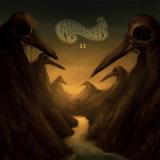
WEEDPECKER - II

WEEDPECKER

II

12inchHPSLP377
HEAVY PSYCH SOUNDS
27.02.2026
  • Reality Fades
  • Flowering Dimensions
  • Fat Karma
  • Nothingness
  • Into The Woods
  • The Vibe
  • Already Gone
disponibile anche

LTD. HIGHLIGHTER YELLOW VINYL[24,58 €]


Repress. "Across its rather considerable span, II demonstrates there's still room for growth in the realm of post-Colour Haze heavy psych, and more than the debut, Weedpecker leave an individual impression here in songs like "Reality Fades" and the peaceful, patient closer, "Already Gone," tapping into Elder-style riffing on "Flowering Dimensions" as they did the first time out, but elsewhere taking on a similar low-key mindset that drove Sungrazer's second LP toward such expansive jamming. They can be quite heavy at times!" - JJ Koczan

pre-ordina ora27.02.2026

dovrebbe essere pubblicato su 27.02.2026

23,32
WEEDPECKER - II

WEEDPECKER

II

12inchHPSLTD377
HEAVY PSYCH SOUNDS
27.02.2026

Repress. Highlighter yellow vinyl, limited to 300 copies. "Across its rather considerable span, II demonstrates there's still room for growth in the realm of post-Colour Haze heavy psych, and more than the debut, Weedpecker leave an individual impression here in songs like "Reality Fades" and the peaceful, patient closer, "Already Gone," tapping into Elder-style riffing on "Flowering Dimensions" as they did the first time out, but elsewhere taking on a similar low-key mindset that drove Sungrazer's second LP toward such expansive jamming. They can be quite heavy at times!" - JJ Koczan

pre-ordina ora27.02.2026

dovrebbe essere pubblicato su 27.02.2026

24,58
TRYPHEME - ODD BALADE LP

TRYPHEME

ODD BALADE LP

12inchIMPTNC09
IMPATIENCE
27.02.2026

French artist Trypheme debuts on Impatience with “Odd Balade”, a darkly-hued collection of songs drawn from human delicacy and dreamworld mythology.

“Odd Balade” is Trypheme’s most ambitious and boldest record to date - both lyrically and musically. The album’s thirteen tracks resist rigid genre boundaries and flutter from medieval folk realms, sprawling synths, gothic 80s wave, leftfield pop, haunted vocals, mutant electronica to reverbed guitars - all reflected through her own shadowy prism. Especially album closer “A Walk In The Vercors” evokes a soothing serenity that echoes the sonic balm of Julee Cruise.

Trypheme’s musical repertoire trends heavily electronic and somewhat abstracted, but on “Odd Balade”, the artist slips into the role of the modern troubadour with a shift to a more poetically and personal songwriting that is infused with symbolism and dreamlike fantasies. The connective tissue of the album is the audacity to love and the vulnerability that ensues. As intimate and introspective as the lyrics are, the themes remain universal and human to the core: the fear of losing a loved one, the melancholia of leaving places and t“the fear of losing a loved one, the melancholia of leaving places and the cycles of life. The record was largely composed in Chars, stirred by the French village’s eerie atmosphere and frequent trips to the seaside in Brittany, where Trypheme resides. Drawing inspiration from the rugged terrain of the seaside landscapes, the writings of Allen Ginsberg and Mark Fisher and the hyperrealist art of Scott Prior, Trypheme uses her songs to depict life with broad strokes of rhythm.

On “Odd Balade” Trypheme consolidates herself as a gifted, nimble songwriter, masterly producer and subtly powerful vocalist. The record combines her skill for crafting lush, alien sound worlds and efficient, alluring arrangements with stealthily devastating songs. Belin’s voice becomes a key ingredient, appearing on eleven of Odd Balade’s thirteen tracks, by turns heavily manipulated, sampled and replayed as a form of percussion, or basically bare.

“Odd Balade” is the manifestation of Trypheme’s roving artistic practice, a ceremonial-grade sacrament cast in a rich nocturnal glow. Pairing the mundane with the mythic, the album stays true to its core: odd and strangely familiar.

RIYL - Riding off into the sunset to an unknown destination, hauntology, present, tales told by the fireside, hot summer rain, adventures, to feel a warm presence when you are walking in the forest or in the mountain, coastal landscapes, sailor’s stories, slow motion, vitesse, heavy blossoms, colors, the warmth of the sun, the tenderness of the moon, getting lost in unfamiliar streets, city’s lights, motorway rest area by night, magic numbers, rendez-vous, picnic, serendipity, poetry, the smell of old records and old books.

Tiphaine Belin has been releasing music as Trypheme since 2016. Odd Balade was written and produced by Belin, and mixed by Belin and Abel Roux. It was mastered by Amir Shoat. Cover art photography is by Ariane Kiks, with art direction by Ariane Kiks in collaboration with Mathilde Chaize.

non in magazzino

Ordina ora e ordineremo l'articolo per te presso il nostro fornitore.

22,90

Last In: 48 days ago
shinetiac - Infiltrating Roku City

West Mineral returns with lushly amorphous actions by Shiner, Pontiac Streator & Ben Bondy aka Shinetiac; together fused for an immersive flux of vapoured dub, chopped and droned Billie Eilish, and fidgety algorithmic jams.

There's not a single, specific sound you can peg to the West Mineral axis at this stage in the label’s evolution - it's rather a set of shared aesthetics that freely bend into various interconnected shapes. Shinetiac's contemptuous, critic-baiting gear is the ideal example; on their last album, 2023's 'Not All Who Wander Are Lost', skittery, ketamized IDM sparkled over Spice Girls samples and the Foo Fighters' 'Everlong' was transmuted into Sneaker Pimps-style trip-hop. 'Infiltrating Roku City' might be a little less blatant with its out-and-out poptimism, but it takes a similarly dim view of conservative "big ambient" snobbishness. Just a few minutes of 'Bluemosa' should be enough to let you know what's up; the overall character of the sound is hazed, with frozen pads and garbled, dubbed-out voices smudged into a mess of effects and samples. But it sups up different nuances as it wriggles, absorbing scampering breaks, dizzy acoustic guitar strums and half-heard wordless vocals, flipping in the third act to emerge from its shell as minimalist balearic folk-pop - something like Bon Iver doing 'Electric Counterpoint'.

Brooklyn's Shiner, Philly's Pontiac Streator and Berlin-based Ben Bondy navigate the labyrinthine streaming landscape, guided by their own private experiences of mindless doom-scrolling and cruising the darkest corners of YouTube. They formulated 'Infiltrating Roku City' while they were rehearsing last year and spent the winter stitching together various recordings and jams into a layered, dry-witted commentary on our algorithmic reality. Laden with inside jokes and refried memes, it's surprisingly elegant gear; handling the most unseemly elements like sonic recyclers, earnestly repurposing pop and nostalgia to create an atmospheric echo of contemporary reality.

Screwing Chief Keef's enduring 'Citgo', 'Clublyfe (hulu)' emphasises the original's AFX-pilled euphoria with Robert Miles-style piano hits, replacing Young Ravisu's brittle 128kbps trap rhythm with a glitchy rattle that picks up dembow spikes as it rolls. 'I Hate Being Sober' vaporises the Chicago drill pioneer's 'Hate Bein' Sober', blocking out his voice with glitchy, downsampled interference and elasticated Rhodes. The trio team up with Orange Milk's goo age on the sublime 'Crisis Angel', catching a ray of Malibu's sunshine in the process, and reduce Billie Eilish's voice to a Romance-does-Celine cinder on 'Billie', stretching it to fit next to gassed Future ad-libs and swooping 808 Mafia sub womps. And although the album takes a murky diversion on 'Roku Axes Ultra’, and a cloud-stepping centrepiece ‘Purelink’ in homage to the eponymous dubbed ambient dynamos, it's back on course with 'Jiafei (NETFLIX)', taking aim at TikTok bot videos and welding screams from Florida metal band Underoath to AI-strength vocal curlicues.

non in magazzino

Ordina ora e ordineremo l'articolo per te presso il nostro fornitore.

32,98

Last In: 51 days ago
FRQNCY LDN - The White Edition LP
  • 1: And In 02:50
  • 2: Pouring Elixir 08:0
  • 3: Imbrication 04:41
  • 4: Skin Contact 08:21
  • 5: Unwitches 09:42
  • 6: Everything I Never Asked Him Ft. Nikita Gill 08:29
  • 7: Incandescent Strings 0:00
  • 8: Icarus And Lucifer 03:31
  • 9: Matthias' Wajd 04:55
  • 10: Circles 05:12
  • 11: Soaring Above The Nave 06:45
  • 12: And Out 01:50

FRQNCY LDN, the new project from Alex Lavery and James Ford (producer du jour and one half of Simian Mobile Disco), are releasing their debut album ‘The White Edition’ on 5 September via PRAH Recordings. Alongside the news of their debut album, the duo are sharing the first taste in ‘Matthias’ Wajd’, which they describe as “a rousing, instrumental piece from the middle of the set where the whole ensemble became balanced providing moments where Raven played violin with haunting yet uplifting melodies within the cavernous reverb of the church. Interestingly, at this moment, most of the audience who had been laying down rose to watch the performance like a gig, like an awakening.”

Initially conceived as a live project with earlier performances at churches in London and at Glastonbury, FRQNCY LDN’s music is a mix of strings, gongs, oscillators, FX, and spoken word, and the result is a musical experience unlike any other. Now that immersive magic has been captured on their debut release through Prah Recordings.

The music that FRQNCY LDN are releasing as their debut album is from an extraordinary live take from a performance at St Matthias Church in Stoke Newington last year, and thanks in no small part to the serendipitous bunch of musicians they assembled: composer and violinist Raven Bush, clarinettist Arun Ghosh, cellist Satin Beige Chousmer, and harpist Chloe Chousmer-Kerr. Alongside Lavery and Ford and assisted by engineer Animesh Ravel, they were able to capture the music to a world class level.

FRQNCY LDN has its roots in a supermoon that occurred three summers ago, after the hottest day of the year. Two of Lavery’s friends gave a sound bath that evening. “I’m not overly into astronomy or anything but the experience was nuts,” he says. “I had to find out what had just happened. What felt like forty minutes was actually two and a half hours. We were all out. It was so profound that I was hooked.”

He immediately signed up for a sound therapy course where he learned about what he calls a “brain hack” to meditation. “The thing about sound therapy is there’s a lot that’s meditation-based, and I find meditation really difficult. I’ve got a very busy brain. What was alluring about this process of sound immersion, a sound bath, whatever you want to call it, is it’s basically a hack to making your brain get into a meditative state.”

FRQNCY LDN’s early shows crystallised their ideas into a project, and Lavery brought poet Nikita Gill on board as a vocalist. “One of the first poems she gave to me, ‘Unwitches’ was in response to me explaining that I’d love this project to be perceived as something anyone could access. It’s not just for the sound meditation or the yoga, or the mushroom crowd. No one should be turned off by connotations from where the music comes from, I love music but I’d never be into that because it’s too woo-woo. Nikita said she’d had this poem for a long time but she’d never found the right home for it.”

And in an increasingly busy and fraught world, the need to tune out for an hour or so, and maybe tune in to something more profound, is only going to get bigger.

pre-ordina ora20.02.2026

dovrebbe essere pubblicato su 20.02.2026

27,69
Sylvain Chauveau - Politique du silence LP 3x12"
  • A1: Des Plumes Dans La Tête (Variation 1) 1:15
  • A2: Situation Initiale 1:20
  • A3: Pour Les Oiseaux 1:16
  • A4: Feu 0:24
  • A5: Le Brasier De Tristesse 3:36
  • A6: Ferme Les Yeux 1:08
  • A7: Des Plumes Dans La Tête (Variation 2) 1:15
  • A8: Les Débutants 1 1:50
  • A9: Pour Les Oiseaux (Variation 1) 1:17
  • B1: Anthracite 1:28
  • B2: Nocturne Urbain 2 0:59
  • B3: Pour Les Oiseaux (Variation 2) 0:39
  • B4: Sinon Le Vent Qui Passe 0:41
  • B5: Noir 1:19
  • B6: Ferme Les Yeux (Variation) 0:42
  • B7: Les Débutants 2 1:16
  • B8: Pour Les Oiseaux (Variation 3) 0:36
  • B9: Blanche Comme L'infini 1:58
  • B10: Situation Finale 2:02
  • B11: Des Plumes Dans La Tête 1:20
  • Un Autre Décembre Lp
  • C1: Minéral 3:28
  • C2: Sous Tes Yeux Probablement 1:16
  • C3: Granulation 1 1:38
  • C4: Neuf Cents Lunes 3:56
  • C5: Alors La Lumière Vacille 1:07
  • C6: Granulation 2 0:56
  • D1: Il Fait Nuit Noire À Berlin 2:12
  • D2: La Lettre Qu'il N'envoya Jamais 2:00
  • D3: Granulation 3 1:35
  • D4: Un Autre Décembre 2:24
  • D5: Granulation 4 1:26
  • D6: Du Rève Dans Les Yeux 1:30
  • Nocturne Impalpable Lp
  • E1: Blanc 2:23
  • E2: Cet Enfer Miraculeux 2:59
  • E3: Radiophonie N°1 2:54
  • E4: Doucement, Le Grain De Sa Peau 3:41
  • E5: 0:36
  • E6: Ocre 2:47
  • E7: 0:35
  • E8: Radiophonie N°2 3:15
  • E9: Adieu Miséricorde 1:14
  • E10: 0:31
  • E11: Léger 2:25
  • E12: 0:40
  • F1: Le Monde Intérieur 4:01
  • F2: Arachnéenne Encore 1:29
  • F3: 0:27
  • F4: Je Me Suis Bâti Sur Une Colonne Absente 4:04
  • F5: 0:33
  • F6: Radiophonie N°3 2:07
  • F7: Nocturne Urbain 4:56

Minority Records is releasing a unique boxset Politique du silence with three early albums from Sylvain Chauveau, French composer of minimalist neoclassical music.
“When I made my first albums as a composer, I was obsessed with minimalism, and this quote from the film director Robert Bresson summed up my state of mind. I set myself three principles: 1) Use silence as a starting point, 2) Only add sound when it's absolutely essential, 3) Don't imitate the Anglo-Saxon musicians I admired, but draw on the musical culture of my country, France which lead me to listen intensively to Satie, Debussy and Ravel.” Chauveau explains the background to his work.

The collection Politique du silence contains the recordings of Des plumes dans la tête (2004), Un autre Décembre (2003) and Nocturne impalpable (2001) on coloured 180 gram vinyls. The cover features artwork by French photographer Valéry Lorenzo.

“When I discovered the simple and powerful black and white pictures by Valéry Lorenzo, in the 90s, I immediately fell in love with them. We became good friends and since then I ask him to let me use one of his photos for most of my album covers, or to make my portrait for press shots. It has become a real collaboration, music and images, for more than 25 years. It was then logical to ask him again for the cover of this boxset, like a gentle reflection on my piano and strings era. It's a true honour for me to see my early music recollected, repackaged, remastered after all this time. Which gives me hope that this music, in which I've put all my soul and heart during the years 2001 to 2003, is maybe not forgotten yet.” Chauveau himself adds of his collaboration with Valéry Lorenzo.
Nocturne impalpable and Un autre Décembre were re-issued by Minority Records in 2014 and 2015 and both titles completely sold out. This year’s release also includes the album Des plumes dans la tête in its world premiere on vinyl.

Nocturne Impalpable is a world of minimalism, abstraction, and contemporary rendition of classical music with variations for the piano, clarinet, strings, and accordion which are often compared to the compositions of composers Harold Budd and Claude Debussy. Here, Chauveau partially reveals his versatility as a composer by connecting electronic elements, noises, and ambient planes with monumental strings and piano preludes. The
album of piano variations Un autre Décembre is interspersed with field recordings and electronic noises. The inspiration for the recording of the album and for its name was the song Jaurès by the Belgian singer and composer Jacques Brel. This song tells the story of the grandparents’ generation who toiled in the mines. “Comfort and health won’t protect our generation from sadness and discontent. We also live through winter times, even if these are slightly warmer due to the current climate.” An album of 20 short instrumental sketches with several delicate intermezzos for the piano, string quartet, and the clarinet, Des plumes dans la tête, was composed for the eponymous film by director Thomas de Thier.
Sylvain Chauveau was born in 1971 in the French town of Bayonne and currently lives in Barcelona. His extensive discography of mainly meditative neo-classical recordings for the music labels FatCat, Sub Rosa, Sonic Pieces, and Flau is enriched by several collaborations and his participation in the Ensemble 0, Arca, and On projects. Chauveau has also composed many film soundtracks as well as music for the theatre. He has presented his works in Prague several times, most recently in the spring of 2024 at the Spectaculare festival. His compositions get tens of millions of streams on streaming services, and he’s been called the French king of minimalism.

pre-ordina ora19.02.2026

dovrebbe essere pubblicato su 19.02.2026

105,84
King Tubby - The Roots Of Dub

“Tubby did three original dub albums, ‘Dub From The Roots’. ‘The Roots of Dub’ and the third is ‘Brass Rockers’ with Tommy McCook ‘pon the flying cymbals. Where he mixed it with the horn going in and out in a dub way and one named ‘Shalom Dub’ you can call Tubby’s too because he mixed the versions as they were off forty fives’’

Bunny ‘Striker’ Lee

King Tubby and Producer Bunny ‘Striker’ Lee are intertwined in the birth of Dub Music. After discovering a mistake that made a ‘serious joke’ (more of which later...) they went on to release the first pressings of this new musical genre namely ‘Dub Music’. Tubby’s vast knowledge of electronics and Bunny’s vast catalogue of rhythms would lay the foundations of what today is taken as a standard... the Remix / Version cuts to an existing vocal tune.

Osbourne ‘King Tubby’ Ruddock was born in Kingston, Jamaica on 28th January 1941 and grew up in the High Holborn Street area of downtown Kingston. He studied electronics at Kingston’s National Technical College and also on two correspondence courses from the U.S.A... When he had qualified Tubby began repairing radios and other electrical appliances in a shack in the back yard of his mother’s home. His work in the early days included winding transformers and building amplifiers for Kingston’s Sound Systems. Tubby built his first Sound System in 1957 playing jazz and Rhythm & Blues at local weddings and birthday parties. His reputation as a man who knew and understood both electronics and music grew steadily and as the sixties drew to a close. Tubby
purchased his own basic two track equipment. He installed this alongside his dub cutting machine, a home-made mixing console, and his impressive collection of jazz albums in the back bedroom of his home at 18 Dromilly Avenue which he christened his music room.

Tubby and Striker were at Treasure Isle Studio’s one day while Ruddy from Spanish Town was working with the engineer Byron Smith....

“Tubby and myself was talking when Ruddy was cutting some dub but Smithy (engineer) made a mistake through we were talking and forgot to put in the voice. It was two track recording in those days. Ruddy said ‘No Man! Make it stay! and so they cut the rhythm. When I went over to Ruddy’s that Saturday night a dance was in progress and when they played the vocal to the tune... then he said we’re going to play ‘Part Two’. They never called it ‘Version’..and then he played the rhythm track. The song was a catchy song and everybody started to sing along and the deejay started to toast so everything went down well. On Monday morning I went up and I said ‘Tubbs the mistake we made was a serious joke.It mash up Spanish Town! The people went wild. So you have to start to do that now ‘cause when the man put on the ‘Part Two’ everyone start singing this song. It played about twenty times. I said you try Tubbs!’...Well the next Saturday night now when Tubby strung up down the farm U Roy said he’s going to play ‘Part Two’ but Tubby did it different now. He started with the voice then dropped it out and let the rhythm run and then he brought in the voice in the middle and from there Tubby started to get really popular.’’
Bunny ‘Striker’ Lee

Dynamic Sounds upgraded to sixteen track recording in 1972 and Tubby purchased, again with the help of a deal brokered by Bunny Lee. The old four track equipment and the MCI console from their Studio B. The four tracks now gave him far wider scope to work with and he began to create a new musical form where the bass and drum parts were brought up while the faders allowed Tubby to ease the vocal and rhythm in and out of the mix. It was only a matter of time before Tubby’s dub plate experiments began to make it on to vinyl and the first ever long-playing King Tubby releases would feature a collection of his mixes to a selection of Strikers rhythms. So please sit back and enjoy this historic set of sounds. Lovingly restored and with a few extra gems added to the CD Editions. These releases were the first to carry the name of King Tubby and the first to credit the great musicians that contributed so much to the rhythms that made these albums possible.

non in magazzino

Ordina ora e ordineremo l'articolo per te presso il nostro fornitore.

13,24

Last In: 56 days ago
Hyunhye Seo - Continuation

Hyunhye Seo

Continuation

12inchUBK002
Ubi Ku
13.02.2026

For over a decade, Hyunhye Seo a core member of Xiu Xiu, in her solo work navigates the precarious edges where composition dissolves into pure gesture. Through ecstatic piano improvisations, restless percussive attacks and an expansive use of acoustic space, she constructs layered sonic environments that move across the boundaries of noise, avant-garde jazz, ambient and contemporary classical music. Her performances reveal an unfiltered process of listening and creation - a practice in which thinking becomes the enemy, and surrender the only viable strategy.

Continuation captures one such surrender. Recorded live at MAO - Museo d'Arte Orientale in Turin during the exhibition Rabbit Inhabits the Moon – The Art of Nam June Paik in the Mirror of Time, this cascading piano improvisation unfolds as a dialogue between performer, space and the particular acoustics of a museum built to house contemplative objects. Jamie Stewart processes the sound in real time; Giuseppe Ielasi shapes the final mix. What emerges is a work of charged immediacy - restless gestures giving way to passages of unexpected tenderness, noise and silence trading places in continuous exchange. The title is precise: this is music that refuses conclusion, that exists in a state of perpetual becoming. On Side B, Continuous Extension offers an unprecedented response. Phew - the pioneering figure of Japanese avant-garde music since the late 1970s - was invited by curators Chiara Lee and Freddie Murphy to reinterpret Seo's performance. Working with synthesizer and subtle processing, Phew distills the resonances of Continuation into a new electronic landscape - waves of abstraction that echo like reflections in sound, tracing the harmonic tensions of Seo's playing into territories she herself did not visit.

The accompanying booklet includes an essay by Bruno Lo Turco exploring the deep connections between improvisation and Buddhist thought, and a written reflection by Seo on her own practice of surrender and listening.

Continuation is released on Ubi Kū, the record label of the Unione Buddhista Italiana. The cover reproduces Avalokitesvara "Water and Moon" from the Museo d'Arte Orientale "E. Chiossone" in Genoa - the bodhisattva of compassion gazing at the reflection of the moon in water. Like that reflection, this music exists fully in the present, complete and unrepeatable.

pre-ordina ora13.02.2026

dovrebbe essere pubblicato su 13.02.2026

31,72
Timo Lassy & Teppo Mäkynen - Live Recordings 2019-2020

The dynamic duo of tenor saxophonist Timo Lassy and drummer Teppo Mäkynen return with a double LP of live recordings captured in 2019 and 2020. The We Jazz Records release "Live Recordings 2019-2020" follows the duo's 2019 LP which was shortlisted for "Jazz Album Of the Year" at Gilles Peterson's Worldwide Awards. While the studio album versions were studies in improvisational brevity, the live album lets the long-time collaborators really let loose and build memorable sonic narratives around the compositions. The album is produced and edited by Teppo Mäkynen, also known as a sought-after producer with the knack for looking at the big picture.

From the subtle minimalism of "Fallow" via the ambient of "Aero" to the riff-heavy groove of "Calling James", Timo Lassy & Teppo Mäkynen breathe their music as one unit, building it based on a mutual trust as fellow musicians. Their duo shows have quickly become celebrated examples of what a long history of playing together can enable on stage when paired with the right mindset and a shared musical goal. This live album follows the ethos of both documenting what's happening and expanding on what was captured in the studio earlier.

Double LP gatefold on WHITE or BLACK vinyl.

pre-ordina ora06.02.2026

dovrebbe essere pubblicato su 06.02.2026

23,49
Timo Lassy & Teppo Mäkynen - Live Recordings 2019-202014

The dynamic duo of tenor saxophonist Timo Lassy and drummer Teppo Mäkynen return with a double LP of live recordings captured in 2019 and 2020. The We Jazz Records release "Live Recordings 2019-2020" follows the duo's 2019 LP which was shortlisted for "Jazz Album Of the Year" at Gilles Peterson's Worldwide Awards. While the studio album versions were studies in improvisational brevity, the live album lets the long-time collaborators really let loose and build memorable sonic narratives around the compositions. The album is produced and edited by Teppo Mäkynen, also known as a sought-after producer with the knack for looking at the big picture.

From the subtle minimalism of "Fallow" via the ambient of "Aero" to the riff-heavy groove of "Calling James", Timo Lassy & Teppo Mäkynen breathe their music as one unit, building it based on a mutual trust as fellow musicians. Their duo shows have quickly become celebrated examples of what a long history of playing together can enable on stage when paired with the right mindset and a shared musical goal. This live album follows the ethos of both documenting what's happening and expanding on what was captured in the studio earlier.

Double LP gatefold on WHITE or BLACK vinyl.

non in magazzino

Ordina ora e ordineremo l'articolo per te presso il nostro fornitore.

23,49

Last In: 4 years ago
Ini Kamoze - Ini Kamoze

Ini Kamoze

Ini Kamoze

12inchTXILP0025
Taxi Records
06.02.2026

Repress!

A true hot stepper and one of the best of its kind, this 1984 masterpiece from Ini Kamoze is heavy, real and authentic. It was actually Jamaican born artist Cecil Campbell's debut album and features spacious, slow motion dubs that invite you deep within their cavernous drums. The chattery percussion, echoing hits and loose percussion all make a real mark. "World-A-Music" has a beat fans of Damien Marley will recognise, and "General" features some of Campbells more vulnerable vocal work. For fans old and new, this is a perfect roots album with a unique perspective.

non in magazzino

Ordina ora e ordineremo l'articolo per te presso il nostro fornitore.

23,11

Last In: 2 years ago
Lily Rae Grant - Poison Ivy / Forget About (7")
  • A1: Poison Ivy
  • B1: Forget About

Her natural command on stage, paired with a voice that feels quietly seasoned, has made her one of the most exciting young live musicians emerging from the region. Now, with her first release, a double single featuring the raw, one-take folk recording 'Poison Ivy' and the dreamlike, psychedelic shimmer of 'Forget About' -- Grant introduces the full spectrum of her sound. One track close to the bone, the other lost in a dream, both unmistakably hers. 'Poison Ivy' was recorded when Grant was just 16, in a spontaneous midnight session after finally playing her songs to her dad. With only one microphone, no click, and a single take, the track became a time capsule of her earliest songwriting voice -- fragile, real, and impossible to recreate.

Now featuring Dan Bridgewood-Hill's evocative violin, it stands as a folk recording filled with warmth, instinct and unfiltered emotion. "I tried re-recording it," she says, "but nothing touched the magic of that first take." In contrast, 'Forget About' showcases Grant's emerging production instincts. Influenced by Zero 7, the song began as a kitchen jam before evolving into a lush mix of psychedelic keys, airy electronics and indie- rock textures. Self- recorded in Logic, the track reveals a new dimension to her writing, cinematic and rhythmically hypnotic

pre-ordina ora06.02.2026

dovrebbe essere pubblicato su 06.02.2026

14,71
The Temprees - Lovemen LP

The Temprees

Lovemen LP

12inchLPRGM2049C
REAL GONE MUSIC
06.02.2026
  • A1: Explain It To Her Mama
  • A2: If I Could Say What's On My Mind
  • A3: (Girl) I Love You
  • A4: I Love You, You Love Me
  • A5: We've Only Just Begun
  • B1: Dedicated To The One I Love
  • B2: My Baby Love
  • B3: I'm For You, You For Me
  • B4: Love... Can Be So Wonderful
disponibile anche

black vinyl[28,15 €]


Produced by Josephine ''Jo'' Bridges and signed to her We Produce imprint, The Temprees were a Memphis soul vocal trio powered by one of the great falsettos in pop music, that of Jasper ''Jabbo'' Phillips. Their 1972 debut Lovemen is aptly named; this is one of the greatest make-out R&B albums ever made, with one smoldering slow jam after another. Their take on ''Dedicated to the One I Love'' is rightly considered the greatest version ever made, but ''If I Could Say What's on My Mind,'' ''Love... Can Be So Wonderful,'' and ''I Love You, You Love Me,'' will get you and your partner's hips swaying (and patch up any lovers' quarrels tout suite, too). Stax didn't really know what to do with soul this sweet (We Produce was a Stax imprint), so Lovemen languished commercially, but nowadays it's recognized as a model of its kind. For its first-ever LP reissue, we've cut Lovemen ALL-ANALOG straight from the original two-track album master, and pressed it up in two versions, one in black vinyl, the other in eco-friendly, sonically superior valentine red PET plastic. The heart on the front cover sums this one up...

pre-ordina ora06.02.2026

dovrebbe essere pubblicato su 06.02.2026

28,15
The Temprees - Lovemen LP

The Temprees

Lovemen LP

12inchLPRGM2042
REAL GONE MUSIC
06.02.2026

Produced by Josephine ''Jo'' Bridges and signed to her We Produce imprint, The Temprees were a Memphis soul vocal trio powered by one of the great falsettos in pop music, that of Jasper ''Jabbo'' Phillips. Their 1972 debut Lovemen is aptly named; this is one of the greatest make-out R&B albums ever made, with one smoldering slow jam after another. Their take on ''Dedicated to the One I Love'' is rightly considered the greatest version ever made, but ''If I Could Say What's on My Mind,'' ''Love... Can Be So Wonderful,'' and ''I Love You, You Love Me,'' will get you and your partner's hips swaying (and patch up any lovers' quarrels tout suite, too). Stax didn't really know what to do with soul this sweet (We Produce was a Stax imprint), so Lovemen languished commercially, but nowadays it's recognized as a model of its kind. For its first-ever LP reissue, we've cut Lovemen ALL-ANALOG straight from the original two-track album master, and pressed it up in two versions, one in black vinyl, the other in eco-friendly, sonically superior valentine red PET plastic. The heart on the front cover sums this one up...

pre-ordina ora06.02.2026

dovrebbe essere pubblicato su 06.02.2026

28,15
VOKA GENTLE - Domestic Bliss LP
  • 1: Cheddar Man
  • 2: Creon I
  • 3: Torpedo Mike
  • 4: Battle Sequence (I'm Atomic)
  • 5: You Deserve It!
  • 6: Kinema
  • 7: The Creature
  • 8: K Sees The Deal Go Down
  • 9: Jude Law For Vogue (15)
  • 10: Ultra Aura Glow Feat. Hamish Hawk

Vintage recording equipment has long been a bit of a fetish, but to sound pioneers Voka Gentle, even the most magical machines are a means to an end. The band, made up of twins Ellie and Imogen Mason, along with Imogen’s husband, William J Stokes, are a family band in the truest sense. Whilst they started as a folk trio, their new album Domestic Bliss is an album of throat-grabbing, avant-garde indie rock songs studded with eccentric choices: a synth with its keys jammed, playing a tune of its own making; field recordings – Morris dancers, motorbikes – captured on binaural headphones.

Domestic Bliss is concerned with power: the abuse of it, being on the cusp of it, and what it really means. The album is
teaming with imaginary people in picaresque scenes that reveal the band’s rich cultural storehouse. The songs draw on history, literature, everyday life and pop culture references (specifically Jude Law’s 1995 Vogue cover), with tracks like Cheddar Man reflecting on climate change and prehistory and Creon I tracing the unease of authority through the lens of Greek mythology.

Recorded in the orchestral studios of City University, the album folds intimacy into scale, from phone-recorded vocals and samples of breath to heavy, tribal electronics in grand acoustic spaces. The result is by far their most refined record yet, where the band treat the recording studio like an instrument.

pre-ordina ora06.02.2026

dovrebbe essere pubblicato su 06.02.2026

24,58
Earl Sixteen & The 18th Parallel - My Son

With a career spanning over 50 years, Earl Sixteen is one of the major artists in the history of Jamaican music. He has been produced by some of the biggest names in the business, from Studio One to Jah Shaka, Lee ‘Scratch’ Perry and Mad Professor. Earl Sixteen has always stood out for the accuracy of his performances and the smooth depth of his voice.

Today, in collaboration with Switzerland most active studio group of the last decade, The 18th Parallel, he presents his new single ‘My Son’, written by the genius lyricist Marc Ismail. The lyrics touch on the harsh reality of the younger generations in Jamaica who grow up in precarious conditions and, in some cases, have no choice but to turn to crime. Here, the elder's voice urges young listeners to take a hard look at themselves and weigh the consequences of their decisions.

The message is enhanced by Earl Sixteen's performance and the extraordinarily powerful rhythm section of The 18th Parallel. B side features a scorcher dub by Westfinga: 'Hear My Dub'. A masterpiece of contemporary roots reggae!

pre-ordina ora06.02.2026

dovrebbe essere pubblicato su 06.02.2026

12,56
Tha God Fahim - Hyperbolic Time Chamber Rap III LP
  • A1: The Intent Of Vengeance
  • A2: Bullet Proof Confidence
  • A3: Senzu
  • A4: Not For Sale
  • B1: Heavy Handed
  • B2: Kumite
  • B3: Makankosappo
  • B4: A Step Further

With an ever-growing horde of rappers clamoring for attention, manifesting a successful long-term career in hip-hop has become an almost supernatural achievement, reserved for artists with near-mystical talents. Atlanta emcee Tha God Fahim embraces this role, positioning himself as a divine warrior with lyrical powers transcending this earthly realm, battling dark forces with tactical ingenuity and relentless dedication. This artistic vision has become even more vivid in recent years, culminating in the wildly creative series Hyperbolic Time Chamber Rap with acclaimed producer Nicholas Craven. Inspired by the anime phenomenon Dragon Ball and its conception of a dimension unconstrained by the rules of time, Fahim and Craven just concluded the ambitious endeavor with a staggering fifteen volumes released in only eight months. Taken collectively, Hyperbolic Time Chamber Rap forms a vital entry in Tha God Fahim's catalog, blending gritty narratives of hustle and hardship with intergalactic rhyme wizardry. Fahim's stratospheric ambitions are elevated by exquisite production from Nicholas Craven, known for his work with Roc Marciano, Mach-Hommy, Westside Gunn, Conway, Boldy James, Pink Siifu, and more. This first ever vinyl pressing of volume 3 contains

non in magazzino

Ordina ora e ordineremo l'articolo per te presso il nostro fornitore.

26,68

Last In: 71 days ago
Various - Wizzz! French Psychorama Volume 5 (67-75)

The journey through French-speaking pop archives continues with this fifth volume, packed with fuzz, gimmicks, and dissent. Far from the charts, the selected tracks display a great creative freedom, often backed by corrosive humor. Welcome to the surprising, kaleidoscopic, and colorful world of the late sixties and early seventies, Wizzz!
Born in Montauban, Robert Pico stumbled into music by chance when he met René Vaneste, then artistic director at Pathé-Marconi. René brought him to Paris to record his first 45 RPM EP in 1964. A year later, Pierre Perret introduced him to Vogue, where he recorded his second album with Claude Nougaro’s orchestra. Sylvie Vartan then introduced him to RCA, where he recorded four singles, including the astonishing "Chien Fidèle," a track backed by a hair-rising fuzz guitar. Alongside his solo career, he also composed for other artists like Alain Delon (the song was recorded but remains unreleased), Magali Noël, Bourvil, and Georges Guétary. In the Paris of the sixties, he mingled with Mireille Darc, Elsa Martinelli, Marie Laforêt, France Gall, Françoise Hardy, Petula Clark, Régine, Dani, Serge Gainsbourg, Joe Dassin, Franck Fernandel, Charles Level, and Roland Vincent. Despite his efforts and winning a Grand Prix Sacem for his final record, Robert Pico didn’t achieve the expected success in show business and decided to leave Paris and return to the Southwest, where he devoted himself to writing. He is the author of 23 books (including Delon et Compagnie, Jean-Marc Savary Editions 2025, a memoir about his youth and his many encounters). Today, he is relieved to never have become a celebrity and devotes himself to his work with passion.
In 1969, the Franco-Italian movie Erotissimo was released, directed by Gérard Pirès (who later directed Taxi in 1998, written and produced by Luc Besson). This pop comedy features Annie Girardot, Jean Yanne, Francis Blanche, Serge Gainsbourg, Nicole Croisille, Jacques Martin, and Patrick Topaloff. The soundtrack was written by Michel Polnareff and William Sheller, with lyrics by Jean-Lou Dabadie. "La Femme Faux-cils," performed by Annie Girardot. It recounts the feelings of a rich CEO's wife who seeks to develop her sex appeal under the influence of advertisement and magazines. Groovy, sparkling and light, this track, with ITS lush arrangements humorously critiques consumer society and feminine beauty standards.
“Je suis l’Etat” (1967) is the flagship track of the first EP by singer-songwriter Spauv Georges, aka Georges Larriaga, better known as Jim Larriaga (1941-2022). Born into a family of bakers, the young man was initially planning to become a hairdresser when he discovered English-speaking music through Elvis Presley and the Beatles. After this revelation, he decided he would become a songwriter and gave himself five years to succeed. He recorded his first two EP’s independently for RCA under the pseudonym Spauv Georges; meaning “that poor George”, a nickname given to him by the mother of her friend Jean-Pierre Prévotat (future drummer of the Players, Triangle, or Johnny Hallyday). Portraying a depressed and eccentric young man, Spauv Georges created corrosive and amusing songs that didn’t reach a wide audience, despite a TV appearance with Jean-Christophe Averty.
Supported by his loyal friend and fellow songwriter Jean-Max Rivière, Georges Larriaga met the future singer Carlos in the early '70s, then Sylvie Vartan’s assistant. He wrote songs for Carlos, including the popular "La vie est belle," "Y’a des indiens partout," and "La cantine", which went onto become a huge hit in 1972. He also composed for Claude François (“Anne-Marie”, 1971), Charlotte Julian (“Fleur de province”, 1972), helped launch child singer Roméo (who sold 4 million records), and later wrote the hit "Pas besoin d’éducation sexuelle" (1975) for the young Julie Bataille. In 1971, Jim recorded an album for Disc'Az: “L’univers étrange et fou de Jim Larriaga”, which featured pop gems like “La maison de mon père”.
The story of the song "Zoé" began when Pierre Dorsay, artistic director at Vogue Records, asked Swiss singer and musician Pierre Alain to write a song for a new female singer. The inspiration came when he realized that Zoé (the artist's name) was also the name of France's first atomic battery, created in 1948, which consisted of uranium oxide immersed in heavy water! The lyrics reflect a bubbling energy that must be handled with caution, while the instrumentation echoes this atomic theme, notably with the use of a theremin.
Zoé’s career lasted only as long as a single 45 RPM, but it seems Christine Fontane was the vocalist behind this pseudonym, who is known for several EPs, a good "popcorn" album in 1964, and a handful of children’s singles in the '70s. Regardless, the photograph on the cover is of a different girl entirely.
Later, Pierre Alain continued his career, writing songs for himself, Marie Laforêt, Danièle Licari, Alice Dona, Arlette Zola (3rd place in Eurovision 1982), and achieving multiple gold and platinum records in Canada. Also an inventor with several patents, president of the Romande Academy, and head of the French Alliance in Geneva, he now composes atonal music, books, and poetry. Moreover, he is also the host of "Les Mardis de Pierre Alain" at "Le P'tit Music'Hohl" in Geneva.
Filled with oriental choruses and fuzz guitar, "Fou" is from Jacques Da Sylva's only EP released by Vogue in 1967. Despite the quality of this recording, all traces of this singer disappear after this first effort.
Valentin is a baroque pop singer born in Belgium. He is the songwriter and composer of most of the tracks on his three singles released in the late 60s in Canada. A legend says that he reincarnated himself as Jacky Valentin during the 1970s for a rock'n'roll revival career in Belgium, but his older brother sadly debunked this story. Valentin's first two singles were arranged by Claude Rogen, a Parisian session pianist who had come to Canada to promote the song “Mister A Gogo”, a cover of David Bowie’s “Laughing Gnome”, adapted by singer Delphine, his wife at the time. Far from his usual network, Claude Rogen arranged music for Polydor, including the arrangements for “Je suis un vagabond” in 1969, a jerk tune with string arrangements and a furious optimism.
Jacques Malia wrote, composed, and recorded his only 45 EP for Festival in 1966. “Histoire de gitan” is an incredible beat track with bohemian scat that tells the story of a gypsy musician who came to Paris to make it in the Music-Hall, to no avail. The hero of the song and its author probably shared a similar fate, as Jacques Malia faded into anonymity after this remarkable attempt.
Bernard Jamet recorded two EPs for Barclay in the late sixties and co-wrote several songs with Christine Pilzer, Pascal Danel, and prolific songwriters Michel Delancray and Mya Simile. The track “Raison Légale” (1968), his masterpiece, immerses the listener in a courtroom right when a murderer is being judged, with jerk rhythm and free arrangements. A unique, paranoid, judicial, and psychedelic oddity.
Jean-Pierre Lebrot-Millers started his career in show business in 1967 as a singer and songwriter for the Philips label. After three singles, he wrote several songs of a new kind with his friend Pierre Halioche, in the midst of the sexual liberation movement and the democratization of drugs. With provocative lyrics, “Les filles du hasard” and “Barbara au Chapeau Rose” were released on a Philips singles in 1968. The character of Barbara was inspired by a queen of Parisian nightlife during the psychedelic years: model Charlotte Martin, who dated Eric Clapton from 1965 to 1968, then Jimmy Page from 1970 to 1983. Jean-Claude Petit’s arrangements, with a table-filled intro, soul brass, and Hendrixian guitar, emphasize the flamboyance of a hedonistic and sexy character, whose dog is named Junkie because “Junkie est un nom exquis”! The track was recorded live in three takes with a full orchestra.
Upon its release, the record was censored by Europe 1 and RTL due to its references to drug use. Jean-Pierre Lebrot was then banned from the airwaves and later dismissed by his record label. He changed his artist name to Jean-Pierre Millers, while his companion Pierre Halioche became D. Dolby for a new dreamy composition, “Chilla”, which Jean-Pierre produced himself with arrangements by Jean Musy. Once again, the song was immediately censored everywhere. After this setback, he decided to stop singing and started taking on odd jobs to support his Swedish wife and their son until the day he met Jean-Pierre Martin, then production manager at Decca, who had worked with Manu Dibango. Martin offered Jean-Pierre Lebrot-Millers, then employed at Rank Xerox, the position of artistic director at Decca. He accepted and became, a year later, promotion director (radio, press, TV). He worked on Julio Iglesias’s first album for Decca, which became a massive hit and allowed him to meet Claude Carrère. The latter asked him to write new songs and find their performers, much like a “talent scout.” It’s through him that Jean-Pierre discovered Julie Pietri and Corinne Hermès. He composed “Ma Pompadour” for Ringo, Sheila’s husband, and took the microphone again for the syncope hit “Rendez-Vous” in 1982.
That same year, Jean-Pierre Lebrot-Millers tried to release a track for which he had heavily gone into debt: “Si la vie est un cadeau”. Having recorded it in London, he presented it to numerous professionals, all of whom refused to get involved. The same thing happened with Antenne 2 and the Sacem when he proposed the song as France’s entry for Eurovision. He then met Haïm Saban, who was producing cartoon soundtracks and had just launched the Goldorak theme song. Saban, having listened to the song, declared it had the potential to become a hit. He sent Jean-Pierre and Corinne Hermès to meet the CEO of the Luxembourg radio and television network. The latter received them, asked to hear a verse and chorus a cappella in his office, and immediately hired them to represent Luxembourg at Eurovision 1983. They reworked the arrangements and recorded a new version with Haïm Saban as co-producer. The song ended up winning Eurovision 1983, a great comeback for our hero. He continued producing and hung out with the band Nacash in Belgium when a couple came to introduce their daughter for an impromptu audition in a hotel room. The girl sang “Les démons de minuit” while dancing to a radio cassette. Impressed, he had her take singing lessons for a year and composed a song for her (for which he had the melody and title, but no lyrics). This required him to go on the hunt for a lyricist, who ended up being Guy Carlier. They recorded the song, which was initially a ballad, at Bernard Estardy’s CBE studio, and gave the singer a new name: Melody. They showed the song around their industry network without success. Later, Estardy called Jean-Pierre to suggest changing the rhythm and making it pop-rock. Orlando, Dalida’s brother, liked the result and decided to co-produce the track. “Y’a pas que les grands qui rêvent » became a classic hit. The song has since been covered by Juliette Armanet (as a ballad, like the original) and Valentina.

Born into an aristocratic Breton family, Hervé Mettais-Cartier worked as a DJ at Queen Kiss, a nightclub in Poitiers, where he formed the band Les Concentrés with Michel (an actor) and Christian (a radio technician). Together, they created a repertoire of whimsical songs (“Ma bique est morte”, “J’suis un salaud”, “Fils de dégénéré”...) that they performed on stage dressed in white (in homage to “concentrated milk”). They performed at Bliboquet and Olympia in 1968 for the 10th edition of the “Relais de la chanson Française” organized by L’Humanité-Dimanche and Nous les Garçons et les Filles, sponsored by Pepsi Cola. Winners in the author-composer category, alongside Danish singer Dorte, their visibility allowed them to record a 45, and appear on television in Jean-Christophe Averty’s show. The A-side of the disc features Bruno le ravageur, a casatchok dedicated to Bruno Caquatrix, the director of Olympia, nicknamed in the song “Coq Atroce” or “croque-actrices”. The B-side is dedicated to “Fils de dégénéré”, a quirky tribute to Hervé's aristocratic roots, mixing absurdity with sophisticated vocal harmonies.
After Les Concentrés, Hervé Mettais-Cartier formed the duo La Paire et sa Bêtise with his friend Olivier Robert. They performed in Parisian cabarets and toured with Pierre Vassiliu. In the late 1970s, Hervé began a solo career. He recorded two albums for the Motors label in 1978 and 1979, which did not achieve their anticipated success due to lack of promotion. In 1980, he met Bernadette, with whom he started a family and created a “Chansons à voir” (songs to see) show that he performed until his death at the end of 2024.

Publicité comes from the final EP by the Missiles (Ducretet Thomson, 1966), a disc that also includes “La (nouvelle) guerre de cent ans”, featured on Volume 4 of our Wizzz! series. Please refer to the booklet for the story of the band.

“He’s 1.82 meters tall, 28 years old, weighs 135 kg, is black and Belgian”: this is the description of singer Hegesippe on the back of his sole single (Decca, 1967). He appears on the album cover wearing a Greek toga, like a hippie gag – we are at the end of the year 1967. In “Le crédo d’Hegesippe”, this former bodyguard of Antoine and the Charlots plays the delightful card of the thick brute converted to Flower-Power and non-violence, with arrangements by Jean-Daniel Mercier, aka Paul Mille.
“Ethéro-disco” was released on a promotional record for clients of the Maréchal company (Liège, Belgium) for the New Year 1979. Over a funky rhythm, celebrity impersonations (Brigitte Bardot, Jacques Dutronc, Fernandel…) deliver an enigmatic text about pharmaceutical products like ether, bismuth, and aspartate. The track was composed by Dan Sarravah (responsible for Joanna's “Hold-up inusité” featured on Wizzz! Volume 3) and Tony Talado, who was also a singer (one 45 in 1967), songwriter (with over a dozen credits between 1964 and 1985 in various styles from surf music to disco), author (Devenez Végétarien, Dricot Editions, 1985), ad designer, and psychologist.

Décollez-les is on the A-side of Mamlouk's only single, a pseudonym for Marsel Hurten, who is known for his work on several EPs in the late sixties, as well as composing music for Hervé Vilard’s “Capri, c’est fini”, Claude Channes' “La Haine”, Annie Philippe’s “On m’a toujours dit”, and Nancy Holloway’s “Panne de Cœur”.
This strange song, with Afrobeat horns and absurd dialogues between a chef and his kitchen staff, is the result of a collaboration between Marsel Hurten and one of his neighbors, a photographer from Pavillon-sous-Bois (93), where the musician settled after returning from the Algerian War. A music video was shot to promote the record.
Marsel Hurten was born in Tourcoing (59) into a musical family. At a young age, he joined the brass band founded by his grandfather, playing the piston before studying trumpet at the conservatory, as well as teaching himself how to play the guitar. As an orchestra musician, he toured in France, Belgium, Germany, and England. He released a series of solo 45’s between 1965 and 1968 for the DMF and Az labels before stopping recording to focus on working for other artists (Gilles Olivier, Noëlle Cordier…).
“L’amour nu” (Vogue, 1971) is the work of the short-lived Belgian band Mozaïque. The track, written by singer Jacques Albin, closely resembles another of his compositions, “Carré Blanc”, which he recorded in 1969 for Disc’AZ.
Represented by the Lumi Son micro-label based in Marignane (Côte d'Azur), Jean-Marc Garrigues released two 45 RPMs in the late sixties, defending the French jerk sound. The song “Je dis Non” is a short, joyful ode to youth, pop music, and rebellion.
Songwriter and performer Jacques Penuel released three singles. The first one, “Astronef 328” (Fontana, 1969), features a dizzying series of chords punctuated by sound effects, a sci-fi story, and arrangements by Jean-Claude Vannier.

We would like to sincerely thank Pierre Alain, Moon Blaha, Marsel Hurten, Bastien Larriaga, Jean-Pierre Lebrot-Millers, Bernadette Mettais-Cartier, Robert Pico, Olivier Robert, Claude Rogen, Micky Segura.
non in magazzino

Ordina ora e ordineremo l'articolo per te presso il nostro fornitore.

23,11

Last In: 76 days ago
BUNDLE OF HISS - AUDIO DESIGN SESSIONS: 1987-1988
  • Swamp
  • Sleep No More
  • Amphetamine
  • White
  • Drown
  • What Dreams May Come
  • Rabies
  • Strobe
  • 12: Gauge

This release resurrects a long-lost cornerstone of Seattle's early grunge history, showcasing Bundle of Hiss, featuring future Mudhoney and TAD guys and singer Jamie lane, one of the genre's missing links. Between 1986 and 1988, when Seattle was still a circuit of small clubs, four-track tapes and bands sharing drummers and singers, Jack Endino went in to record one of the most solid - and most unfairly invisible - outfits of that scene: BUNDLE OF HISS. Two sessions (1986 at Reciprocal and 1987/88 at Audio Design) fell into limbo, stored in the basement of Mudhoney-Drummer Dan Peters and for years they were a kind of pre-grunge legend, everyone knew they existed, but there was no record, until Loveless Records from NYC released both on CD. The second one, Audio Design Sessions, now sees the light of vinyl for the first time, just as it should have come out in the late '80s: a basement document turned into a collectible artifact. For those who want real grunge, not the domesticated version. It gathers the core of those 1987-1988 recordings done by Endino: the moment when the band is tighter, darker and closer to what the press would later call the "Seattle sound": minor-key melodies, thick fuzz, vocals on the edge, and that mix of hard rock, punk and Sabbath-like heaviness we'd later hear in Mudhoney, TAD or early Soundgarden. And Jack Endino himself summed up these sessions: "Vintage Seattle grunge from one of the original practitioners_ I always felt sad that this hard-working band never managed to get a record out and was almost lost to history. It was a pleasure -and a technical pain!- to resurrect all this." Kinda key release of the early grunge days, first-generation material, recorded by the scene's producer, at the exact moment Seattle was shifting from noisy punk to that heavy, shadowy rock that later blew up. It sounds raw, young and dangerous: this is not a polished compilation, it's a snapshot of the scene.

pre-ordina ora30.01.2026

dovrebbe essere pubblicato su 30.01.2026

23,49
Billy Branch and the Sons of Blues - The Blues Is My Biography (2x12")
  • 1: Hole In Your Soul (With Bobby Rush)
  • 2: Dead End Street
  • 3: Begging For Change (With Shemekia Copeland & Ronnie Baker Brooks)
  • 1: Call Your Bluff
  • 2: The Blues Is My Biography
  • 3: The Harmonica Man
  • 1: Real Good Friends
  • 2: How You Living?
  • 3: Ballad Of The Million Men
  • 1: Toxic Love
  • 2: Return Of The Roaches
  • 3: The Harmonica Man (Instrumental)

Featuring special guests Bobby Rush, Shemekia Copeland, Ronnie Baker Brooks, and The Sons of Blues, the record reflects Billy's lifelong journey through the music he loves. "Every song on this album has special meaning to me," Billy says. "This is the most important work I've ever done - and the best work I've ever done as well." Over his remarkable 50-year career, he has earned numerous awards and accolades, including an Emmy award, three GRAMMYr nominations, and induction into the Blues Hall of Fame. His career reads like a "Who's Who" of the Blues world. Mentored by legends such as James Cotton, Junior Wells, Willie Dixon, and Big Walter Horton, Branch has built an enduring legacy both as a performer and a teacher. In addition to releasing 15 albums with his acclaimed band, The Sons of Blues, he has contributed harmonica to more than 300 recordings by artists including Koko Taylor, Willie Dixon, Eric Bibb, Johnny Winter, Taj Mahal, Keb' Mo', Son Seals, and Big Head Todd, among many others.

pre-ordina ora30.01.2026

dovrebbe essere pubblicato su 30.01.2026

59,03
Articoli per pagina:
N/ABPM
Vinyl

