LP im Klappcover mit bedruckter Innenhülle. Nach zwei Jahren ist Coyote Butterfly das erste Album mit neuen Songs von Simon Joyner, dem Singer-Songwriter aus Omaha, NE. Zwei Jahre, nachdem sein Sohn Owen im August 2022 an einer Überdosis gestorben war. Das bekenntnissreiche Album ist zunächst eine Hommage an Owen, aber was Joyner hier ebenso großzügig wie berührend teilt, ist ein intimer Einblick in den Versuch, Unfassbares zu begreifen. "Wie geht es jetzt weiter?" Diese Frage hat Simon Joyner auf nahezu all seinen Alben als Ausgangspunkt seiner Songs versucht zu beantworten. Er schrieb über das menschliche Dilemma im Allgemeinen. Um schwierige Wahrheiten zu erzählen nutze er die Fiktion seiner Charaktere, die sich durch persönliche Krisen in einer unzureichenden amerikanischen Gesellschaft kämpfen. Etwas durchgängig düsteres lag über den Erzählungen, die im Wesen allerdings nie nihilistisch waren. Das Brüchige, das auch Stilmittel seiner Musik, vor allem seiner Stimme ist, war etwas, das es anzunehmen und auszuhalten galt. Um die Eingangsfrage zu beantworten, um im Leben zu Bestehen, um zu überleben, müssen wir wissen, wo wir stehen. Auf seinem neuen Album Coyote Butterfly fehlt erstmals dieser fiktive Charakter. Es ist sicher sein persönlichtes Werk. Dennoch bietet es einen universellen Aspekt und die Antwort auf Frage, wie es weiter geht, ist diesmal die Platte und der Prozess des Songwritings und der Aufnahmen selbst. Coyote Butterfly wurzelt im Schmerz des Vaters Simon Joyner über den Tod des Sohnes, der sich überraschend kurz nach Veröffentlichung seines 2022er Albums "Songs From A Stolen Guitar" ereignete. Zwei Jahre hat es gedauert, bis sich seine Trauer zu Liedern formen konnte. Joyner fand so ein Ventil für seinen Schmerz und einen Kanal, um die unzähligen Emotionen zu verarbeiten, die seine Erfahrung umkreisen. Umgeben von einer Reihe enger Freunde, darunter David Nance, James Schroeder, Kevin Donahue, Ben Brodin und Michael Krassner, ist das Album sparsam, aber nicht karg. Eingerahmt wird es von zwei field recording-artigen Instrumentals. Dazwischen setzt sich Joyner in acht Songs mit Trauer, Angst, Scham und Liebe auseinander, legt die Kämpfe derjenigen offen, die im Kielwasser einer persönlichen Katastrophe zurück bleiben. Mit einem Album von solcher Intimität erinnert uns Joyner daran, wie wichtig es ist, Kunst zu nutzen, um das zutiefst Persönliche, auch vermeintlich Unfassbare in Schönheit umzuwandeln. Der Hörer ist eingeladen, sich mit ihm in solch eine Situation zu denken und das eigene Herz zu öffnen. Coyote Butterfly ist eine ehrliche, somit wunderschöne Beschwörung der Trauer eines Vaters, aber auch ein universelles Zeugnis für die Liebe und für das Leben, das nach einem Verlust weitergeht.
Поиск:james t
Все
Nosferatu (1922) is still one of the most highly regarded horror films of all time, F.W. Murnau’s unauthorised adaptation of Bram Stoker’s Dracula, it remains an Expressionist masterpiece of the silent era.
Much of the original score by Hans Erdmann (meant to be played live by an orchestra) was lost, leading Nosferatu to inspire several subsequent soundtracks, the best known of which is by Hammer Horror composer James Bernard, written for the Tanis Film video reissue of the film in 1997. The world premiere of the score was performed by Nic Raine and the City of Prague Philharmonic Orchestra at the London Film Festival the same year and now, almost twenty years later, the score is being pressed on vinyl for the first time.
James Brown had several incredibly talented funky divas in his late 60s and early 70s stable, including Vicki Anderson and Marva Whitney. But as great as those two powerhouse singers were, Lyn Collins was the strongest hitmaker of that funky JB era. Her strong voice and commanding stage presence - which earned her the nicknames The Female Preacher and Mama Feelgood - quickly proved to be a potent addition to the People Records universe. In the spring of 1972 her second single, the driving and ridiculously funky “Think (About It)” hit the R&B music world like a ton of bricks. As fans young and old know, thanks to its timeless, relentless groove and powerful vocals, “Think” gained a powerful second life in the 1980s thanks to the hip-hop generation, fueling the platinum smash “It Takes Two,” by Rob Base & DJ E-Z Rock in 1988 and additionally sampled by dozens of hip-hop and dance music artists up to the present day. But Collins was far from a one hit wonder: she was as vocally adept on ballads as she was with full-blown funk. She proves this throughout her debut album, which was released in 1972 on James Browns new People Records - the imprint's second full-length release. To wit, aside from the title smash: a powerful and emotional cover of Bill Withers "Ain’t No Sunshine"; the socially progressive "Women’s Lib"; the Gamble & Huff-penned "Never Gonna Give You Up" (originally done by Jerry Butler); and even a daring, muscular take on the song “Fly Me To The Moon,” made famous by, among others, Frank Sinatra. Throughout Think (About It), Collins shows that she was a vocal force to be reckoned with. Backed by a James Brown assembled musical crew that included Pee Wee Ellis, Fred Wesley and, of course, James Brown himself, the platter was bound to impress and succeed. And that it did.
Leon Dinero returns with "One Way Love", another magical rendition from the James Hunter catalogue. Dinero, along with the Inversions and produced by Victor Axelrod, transforms the uptempo R&B classic into a rocksteady mover whose relaxed groove and soulful vocal give the track an authenticity that may have folks scratching their head as to which version came first. A testament to the incomparable songwriting savvy of Mr Hunter, "One Way Love" is a track that defies the constraints of genre labelling with unfettered elegance and lyrical prowess.
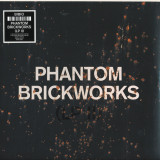
Ursprünglich 2017 veröffentlicht, ist PHANTOM BRICKWORKS ein fortlaufendes Ambient/Drone-Projekt von Stephen James Wilkinson aka Bibio. Das Werk erforscht die menschlichen Echos, die noch immer an verschiedenen Orten in Britannien vorhanden sind. Wilkinson hat diese Orte besucht, ihren allmählichen Niedergang beobachtet und mit improvisierter und komponierter Musik reagiert. Neu im Jahr 2024 ist eine Fortsetzung mit dem Titel PHANTOM BRICKWORKS (LP II), eine 10-Track-LP, gemastert von Guy Davie mit einem Vinylschnitt von Hendrik Pauler. Die neue Platte lenkt die Aufmerksamkeit auf neue Orte – einige sind faszinierende, riesige Narben in der Naturlandschaft, andere überleben nur in lokalen Erinnerungen, historischen Clips und Fotografien. Einige bleiben aus dem alltäglichen Blickfeld verschwunden, während andere nur als Legenden und Geschichten existieren.
Black[28,99 €]
Die Londoner Experimentalisten Kinkajous releasen ihr neues Album auf dem Nottinghamer Label Running Circle. "Nothing Will Disappear" ist Ambient-Maximalismus in seiner subtilsten und zartesten Form. Anklänge an Floating Points und subtile Klangfarben-Shifts á la Jon Hopkins und James Holden sind deutlicher zu erkennen als bei anderen zeitgenössischen Jazzacts. Die beiden Vorgänger "Hidden Lines" (2019) und "Being Waves" (2021) sind Paradebeispiele für ihre Mischung aus analoger, akustischer und orchestraler Instrumentierung und schafften es beide in zahlreiche Jahresendlisten.
Von CLASH als "ein wichtiger Teil der britischen Musiklandschaft" beschrieben, beziehen Kinkajous ihre Inspiration aus Orchester-, Instrumental- und elektronischer Musik und sind für ihren fesselnden und filmreifen Sound bekannt. Angeführt von Schlagzeuger/Produzent Benoît Parmentier und Saxophonist Adrien Cau, können sie mit einer beeindruckenden Besetzung aufwarten, zu der auch Keyboarder Jack Doherty und Bassist Andres Castellanos gehören. Die mutigen neuen Räume, in die Kinkajous vorgedrungen ist, kommen gut an, mit ausverkauften Headliner-Shows im Londoner Jazz Café und King's Place, neben einer gigantischen Zusammenarbeit im letzten Winter mit dem London Contemporary Orchestra im Londoner Earth Theatre und Auftritten bei den Bluedot und EFG London Jazz Festivals.
On her new album, ‘Almost in Your Arms’, Claire returns to a previous successful formula: her highly experienced Swedish trio of pianist, Martin Sjöstedt, double bass player, Niklas Fernqvist and drummer, Daniel Fredriksson accompanied by several superlative guest musicians. The songs Claire has chosen for the trio indicate her wide-ranging interest and knowledge in the many sub-genre areas of popular music and jazz. Claire’s innate enthusiasm for fresh stimulus and intriguing contrasts was invested in assembling a selection of material which she, with the assistance of James McMillan, found strong personal resonance with. Claire Martin is one of the most accomplished and inspired jazz singers in the world today. Full stop. This is a statement that would find virtually universal agreement with jazz writers, reviewers, broadcasters, listeners and live-performance audiences.
The only album to soundtrack both late-'70s Minneapolis lounges and a Travis Scott x Dior fashion show. Recorded in a host of living rooms with only a Fender Rhodes piano, a Donca Matic Mini Pops drum machine, and Senrick's wide-eyed, 20-year-old voice, the 1977 LP disappeared into the wild and joined the Wendigo in Minnesota lore. A provocative mix of marina soul, easy listening, and loner folk, Dreamin' is a sanguine sliver of the American private mind garden. Harsh winters coupled with a relative lack of interest amongst siblings allowed Chuck Senrick years of unfettered access to the family piano in their Farmington, Minnesota, home. Learning both by ear and by instruction, Senrick began gigging professionally at age 15, joining John Zimmer and the CR4 for a weekly rundown of Allman Brothers, Blind Faith, and Cream covers at the Sea Girt Inn in Lake Orchard. Tapping into James Taylor's pop-chart achievements in songwriting and enunciation, Senrick composed the bulk of the songs featured on Dreamin' before graduating from Farmington High School. At 20, Senrick migrated 30 miles north to the Twin Cities to pursue music full-time. Using borrowed equipment and borrowed living rooms, a string of informal recording sessions generated the quarter-inch tape for Dreamin'. "I didn't know how to do it," Senrick says about producing an album. "I just knew it could be done." Constructed with vocals, Fender Rhodes, and an assortment of rhythm presets on his Donca Matic Mini Pops drum machine, a mere 200 copies of the private-press masterpiece were stamped and sleeved and sold hand-to-hand at performances. Chuck's wife Lesli illustrated the album cover_a pen-to-paper portrait of her husband against the backdrop of the Minneapolis Skyline, she and their newborn son situated on a nearby knoll. Any plans for a re-press were quashed when producer Bruce W. Hansen lost the reels during a messy divorce. "I was a kid with big ideas and not much hope to do anything but play," Senrick said of the Dreamin' era. "It still amazes me that people are interested in it."
DJ Marky, Makoto & Nookie reboot Adam F’s revisited rework of 1997 hit, ‘Music In My Mind’
Adam F enlists jungle royalty to modernise his 1997 track, ‘Music In My Mind’, from his anticipated forthcoming rework album, ‘Colours Revisited’
Legendary drum ‘n’ bass producer Adam F announces the ‘Music In My Mind Revisited Reboots’ EP, out digitally on 20th September via 181 Recordings, featuring reworks of his acclaimed 1997 track by DJ Marky & Makoto and Nookie.
Further launching this underground dance classic into new dimensions is Brazil’s DJ Marky and expertly selected Japanese producer Makoto. Together, they effortlessly bring the jazz-infused track to the attention of today’s ravers with re-jigged, amplified drums. Certified 90s jungle veteran Nookie goes more liquid with his version, heightening the vibes and setting the scene with immense violin strings.
‘Music In My Mind’ was originally featured on Adam F’s 1997 album, ‘Colours’. Now, as part of the Liverpool-born producer’s much-anticipated ‘Colours Revisited’ album, out in 2025, the jazzy, vocoder-loaded track inspired by Bob James, Lalo Schifrin and Chick Corea, has been given a modern reshape.
“‘Music In My Mind’ speaks to the power of music to transport, heal, and uplift our spirits,” says Adam F. “This song resonates with those who find solace and freedom in the melodies and rhythms that exist in their own minds and bring back memories of a time when I felt an overwhelming connection to music.”
“This song holds a special place in my heart, and I believe it carries a deeper meaning that resonates with anyone who can relate to finding consolation and liberation in the power of music.”
There’s no better time to keep an eye on Adam F, as he uncovers yet more gold from his elegant and timeless back catalogue. Adam F is as fertile and contemporary as ever with more new production ready to launch unto the legions of listeners hungry for great music as his creativity flows brighter than ever.
Continuing our quest to get all of the classic early AMT albums released on vinyl, we turn to 2004’s 'Mantra Of Love’, and with the help of Makoto Kawabata’s studio wizardry, we’ve made it possible.
This latest instalment in the ‘Acid Mothers Temple Vinyl Archives - First Time On Vinyl’ series (as with the three previous SOLD OUT releases in the series) have all been meticulously put together with the help of Makoto Kawabata with the original CD artwork recreated for these vinyl editions from archive photos stored in the vaults at the Acid Mothers Temple in Osaka, Japan and the original audio remastered by James Plotkin.
Here’s what others had to say upon it’s original CD only release back in 2004 …
“Acid Mothers are strong folk. You'd think they'd tire quickly, all tucked away on their island, strewn about on tree roots while baking their lungs and throats to a knotty green tinge. But instead of waltzing through life like hippies, they manage to not only tour and put out records every year, but also to fill those albums with 30-minute jams and assorted freakouts. And while evil jam bands would fill that space with guitar work taken from the Classic Rock Manual of Clichés, Makoto Kawabata and company assault listeners with frighteningly dense walls of white noise, psychedelic swirl effects and, yes, even guitar solos-- albeit ones that are more Merzbow or Keiji Haino than Gary Rossington. Truly, AMT's endurance and threshold for cosmic lashings are both worthy of admiration.
But how much AMT can you take in one sitting? If there's anything this band has taught us-- via records such as 2002's Electric Heavyland and the ferocious Acid Mothers Temple & the Melting Paraiso U.F.O-- it's that they're not afraid to reach for the upper regions of consciousness. On Mantra of Love, they offer two titles over the course of one hour, never faltering along the way, and it's as if we listeners are just brief visitors passing through a never-ending, spontaneous group trip. For all I know, Kawabata has hundreds of hours of this stuff on his hard drive-- at any single moment, this record's sheer volume of sound is a clamor to behold. However, if you aren't dialed into that the particular space AMT inhabits (for me, it's the mystical fire-baptism standby), you might not hear their glorious noise for all the, well, glorious noise.
"La Le Lo" begins as a lengthy psychedelic ballad sung by Cotton Casino (who doubles on "beer & cigarettes"), who is accompanied by her own ghostly backing vocals. The band is playing a mantra as Casino waxes earth-mother stylings to the moon. The serenity is broken by a patented AMT rave led by Kawabata's electric sitar (!) solo. Ace rhythm section Tsuyama Atsushi ("monster bass") and Koizumi Hajime hold things together, as does the generally decent recording quality (not a given for these guys), but the real money is in effects-- lots and lots effects. Much like France's Richard Pinhas or AMT's countrymen in Les Rallizes Denudes and High Rise, the band understands the collaborative power of solo + overdriven Moog sirens and screams. And, also like those artists, Acid Mothers can go on all night if need be. About 25 minutes into this piece, any hell that hadn't already broken loose gets its due, and the band speeds to a fiery climax before winding down into glimmering astro-ambience.
The second track, "L'Ambition dans le Miroir", also begins as a minor ballad featuring Casino's haunting solo vocal. The Mothers set her up with a faux-blues drag and a thick buffer of synth-rays; when Casino actually enters, she fights for airtime with an array of falling stars and cosmic dust. However, this time there is no overwhelming solo to power the comedown. Casino intermittently coos in the background while droning horns keep the auxiliary pixie haze from evaporating. As they showed on In C and La Novia, AMT are more than adept at creating calmer storms-- listeners just have to catch them in the right light. Mantra of Love doesn't necessarily capture the most inspired moments in their canon but as usual with this band's records, it's rarely at a loss for moments of horror or grandeur.”
Acid Mothers Temple & The Melting Paraiso U.F.O. : Cotton Casino - Vocal, Beer & Cigarettes - Tsuyama Atsushi - Monster Bass, Vocal, Cosmic Joker - Higashi Hiroshi - Synthesizer, Dancin' King - Koizumi Hajime - Drums, Percussion, Sleeping Monk - Kawabata Makoto - Guitar, Bouzouki, Electric Sitar, Violin, Hammond Organ, Speed Guru
Black Vinyl. A trio of Kansas City soul sweepers, from the sprawling midwest burg's storied Cavern, Damon, and Forte concerns. Bump and the Soul Stompers' 1970 sweet soul double sider "I Can Remember" was a tail pipe-dragging, low rider classic in the making, had it ever been released. A few years later Jerald "Bump" Scott took his new group to Cavern's subterranean confines to cut the group harmony masterpiece "Living In The Past," but remained unissued prior to Numero's discovery of the Cavern tapes. As disco was cresting at the top of the next decade, Sharon Revoal tracked her James Brown meets James Bond stepper "Reaching For Our Star"_ the last 45 released on Marva Whitney's peerless Forte label.
Coke Bottle Clear Vinyl. A trio of Kansas City soul sweepers, from the sprawling midwest burg's storied Cavern, Damon, and Forte concerns. Bump and the Soul Stompers' 1970 sweet soul double sider "I Can Remember" was a tail pipe-dragging, low rider classic in the making, had it ever been released. A few years later Jerald "Bump" Scott took his new group to Cavern's subterranean confines to cut the group harmony masterpiece "Living In The Past," but remained unissued prior to Numero's discovery of the Cavern tapes. As disco was cresting at the top of the next decade, Sharon Revoal tracked her James Brown meets James Bond stepper "Reaching For Our Star"_ the last 45 released on Marva Whitney's peerless Forte label.
Detroit native Jackie Wilson aka "Mr. Excitement," left jump blues and R&B group The Dominoes in 1957 to pursue a solo career. The following year he released this, his debut LP, a rollicking collection of orchestrated pop R&B of the highest caliber. Including the hit "Reet Petite," half the songs on this LP were written by Berry Gordy, Jr. nearly two years before he founded Motown, which was partially funded by songwriting royalties Gordy earned writing hits for Wilson. A fine debut from one of the great soul and R&B singers of the late '50s/early '60s, a man who counted among his fans and followers no less than James Brown, Michael Jackson, and The King himself, Elvis Presley.
Here we have the third LP by the excellent Guy Hamper Trio, featuring James Taylor on Hamond organ, and Guy Hamper on guitar (sometimes called Childish) and what a first-class LP this is! 'Instrument of Evil' in particular has a very eerie vibe. We asked the man himself what was the inspiration for it? G.H. The track is the sequel to '7% Solution', which featured on the last Guy Hamper Trio LP (with Thee Headcoats standing in as rhythm section). A 7% Solution being the amount of morphine Dr Watson administered to Sherlock Holmes. For 'Instrument of Evil' I took Sherlock Holmes' later designation of his syringe as "an Instrument of Evil". This is originally a quote from the bible- "Wicked men do at times reject God's purpose for the state, transforming the good of civil government into an instrument of evil." Point of interest: Morphine addiction happens to tie in with another aspect of the song. In the section that nods to Elmer Bernstein's main title theme to the film of the book The Man With the Golden Arm, in which the main character is also a morphine addict. Another ingredient - we added six-string bass to that section in tribute to Jet Harris - he formerly of top group The Shadows, who recorded a great version of Bernstein's classic. To top it all off the record sleeve references the fine graphics of the great Saul Bass. The track also features contributions from Tom Morley (trumpet) and Anna Jordanous (sax) . Both Were a pleasure to work with. My job at the wheel is to basically make a playground and let Jamie, Anna and Tom loose in it with very little direction, apart from pointing out the swings and location of the roundabout. I told Tom "you're a Spanish trumpeter stood on a hill in Spain." For Anna, I think we said "go low and nasty." Other titles are taken from early poetry chapbooks I made in my youth. 'The First Creature is Jealousy' and 'Dog Jaw Woman' being examples. The title 'Incense Rising From a Censer' comes from Dostoevsky's The Brothers Karamazov, a book I really recommend. Prayer rises to God on the smoke of the incense burning in the censer. I imagine this track being some kind of antidote to 'Instrument of Evil'. They are all excellent tracks. I imagine film companies will be queuing up to use many of them.
Lily Seabird is a perceptive songwriter who can channel moments when everything feels raw and overwhelming into something healing and galvanizing. With Alas, the Burlington, VT-based artist's sophomore album, she confronts grief with palpable clarity on tracks that careen from delicate folk to blistering indie rock. While it's her second LP, it serves as a proper introduction to an undeniable and idiosyncratic voice. "Alas, sounds way more like me," she says. "This is the album I wanted to make in the first place." Though Seabird is now known as a solo artist and collaborator in Burlington's vibrant music community as the bassist for Greg Freeman and other acts, her journey started in Pennsylvania when she picked up the saxophone as a kid. At 14, she learned guitar and started performing as Lily Seabird. After a brief stint in New York City playing in bands, she moved to Vermont, which has been her home since 2018. "When I came to Vermont, I was playing solo a lot but then I started a band with Greg Freeman," she says. "Since 2018, it's been me and Greg and a bunch of different casts of characters have been in the band since then it's an ever-evolving thing. It's just us playing my songs."The songs on Alas, came from a particularly unmoored period for Seabird. "I wrote this album in 2021 and 2022 on the road, trying to figure out who I am," she says. "A lot of them also deal with the time when my close friend passed away. The title Alas, meant a lot to her." Even if the songs don't always directly tackle this specific loss, there's a sense of mourning in how relationships change and dissolve. Take "Grace," a reflection on female friendship, which features the lines, "I hope she's happy now she should be 25 / She taught me something that I thought I'd always hide." Elsewhere, the knotty and unpredictable "Dirge" finds her singing, "I don't know if I believe in god / I don't know if I know how to go on." Seabird and Benny Yurco produced Alas, which was recorded at Burlington's Little Jamaica Studios with Freeman and drummer Zack James (Benny Yurco). It's a quietly expansive album full of subdued, organic textures and moods. Songs like "Cavity" are lush and inviting with silky guitar and Seabird's expressive saxophone playing. The 10 songs on Alas, stretch out and leave space for introspection and deep listening with some tracks taking nearly seven minutes to mesmerizingly unfold. It's a remarkably assured and vital statement from one of the most promising new songwriters alongside peers Merce Lemon, Squirrel Flower, and Allegra Krieger."The album is about loss, coming of age, and sadness but there are also all these moments where happiness takes over," says Seabird. "It can be two things at once: life isn't just pain and sadness, there's also joy. They can all exist at the same time. Alas, is an expression of grief but it's also for letting go."
Paquito D’Rivera's - NEA Jazz Master, multiple Gramm winner, Downbeat Hall of Fame Inductee - gained worldwide attention as member of the Grammy Award winning Cuban group Irakere, a revolutionary ensemble co-founded with Chucho Valdés in the early 1970s. Blending Afro-Cuban rhythms and jazz, the band was a seminal force and marked a new era in Cuban music. His defection to the United States in 1980 was a turning point, as he became an ambassador of Latin jazz around the world, fusing cultures and genres effortlessly.
A decade into his new status, D’Rivera entered a New York studio to record an homage to Bebop.
He enlisted Grammy award winner and Dizzy Gillespie alum James Moody, distinguished straight ahead jazzers Mark Morganelli, Harvey Swartz and Al Foster, and major Latin-jazz players of the day Claudio Roditi, Danilo Perez, and Pedrito Lopez. While his intentions may have been to make an album like “Monk, Bird, and Dizzy” as he states in the liner notes, the results here are undeniably in D’Rivera’s signature style.
The album features a mix of original compositions from featured players, alongside the ensembles take on Coltrane’s “Giant Steps”, and Monks “I Mean You,” all delivered with D’Rivera’s unique perspective and deep understanding of traditional jazz and Latin music traditions.
The Prisoners were a regular live act in London’s psychedelic and mod revival scene of the early 1980s. They recorded some fantastic material blending garage-punk, soulful vocals, and electrifying Hammond organ, but never quite made it. They called it a day in 1986, and most band members went on with new musical projects, including The Prime Movers and The James Taylor Quartet. The love of the Prisoners’ music has grown ever since though, and the original four members have done several re-unions over the years on stage and released a long-awaited comeback album this year. Their lasting influence can be detected on subsequent generations of musicians, including many of the Madchester bands of the early 90s, notably the Charlatans and the Inspiral Carpets, and serves as a blueprint for Britpop and beyond. Now we release The Prisoner’s best songs on the LP Hurricane with great packaging, liner notes and rare photos.
"Perhaps best known for his long association with the legendary Muddy Waters, Otis Spann is largely recognized as one of the greatest blues pianists of all time, if not the greatest.
Although Spann made a name for himself in Chicago by the mid 1940s, it wasn’t until 1960 that he got the opportunity to record an album of his own. The sessions Spann did with Candid Records co-founder Nat Hentoff that year resulted in the legendary album Otis Spann Is The Blues. (Incidentally, this was also the first album ever recorded for the fledgling New York City based label.)
The tracks on Walking The Blues were recorded during those same sessions in August of 1960 in New York City.
Left on the cutting room floor, they would not be officially released until 1972, two years after Spann’s untimely death.
Robert Lockwood Jr., also from Muddy Water’s group, accompanies Spann on guitar here as he does on the Is The Blues album. But Walking The Blues also features Spann’s close friend, veteran singer and composer James Oden, better known to blues fans as St. Louis Jimmy.
Stripped down to just the these musicians, this magnificently performed and produced set showcases Spann’s voice as well as piano. Spann stretches out with his pulsing two-handed rhythmic attack, and brings the barrelhouse piano style of his youth in line with the modern Chicago style he embodied."
- Dark Omens (Latin Speech By Mario "The Black" Di Donato)
- Last Christmas I Gave You My Death
- Once Upon The Fireflies (Organ And Strings By Il Diavolo Misterioso)
- Profondo Nero/Life In Black (Guitar Solo By James Murphy)
- Cold Grave Marble (Winter Moon) (Desperate Scream By Veronica G.)
- Without A Shadow
- The Great Void
- Filthy Shades Of Death (Storytelling Intro By Nequam)
- Continuum Pt. 2&3 (Ultima Luce)
- Buio
MARBLED VINYL[25,00 €]
In the beginning, THERE WAS DOOM. The five piece gathers its forces together with the clear intention of celebrating in music one of the first raw appearances of metal: Doom! After a year or so of songwriting and the usual lineup setups, the 5-piece throws in what will become their first studio effort in 2005: a Heavy, Drunken, Doom, Metal demo (with their 700 sold-out copies, now fully downloadable due to popular demand), where the title "Heavy Drunken Doom" clearly and quickly reveals the attitude of the band. Cold Grave Marble, the 6th Doomraiser full doom length, is a frozen view in the darker side of life: Death, the Omega of our earthly dimension. The album is made up of raw riffing seasoned up in heavy, dark and gloomy dreaming atmospheres, and explores a plethora of styles with different sounds and solutions. The songwriting approach is rougher than before, experimental, suggestive, still preserving the classic Doomraiser characteristic sound.
- Dark Omens (Latin Speech By Mario "The Black" Di Donato)
- Last Christmas I Gave You My Death
- Once Upon The Fireflies (Organ And Strings By Il Diavolo Misterioso)
- Profondo Nero/Life In Black (Guitar Solo By James Murphy)
- Cold Grave Marble (Winter Moon) (Desperate Scream By Veronica G.)
- Without A Shadow
- The Great Void
- Filthy Shades Of Death (Storytelling Intro By Nequam)
- Continuum Pt. 2&3 (Ultima Luce)
- Buio
Black Vinyl[23,32 €]
Ltd. Marbled Vinyl. In the beginning, THERE WAS DOOM. The five piece gathers its forces together with the clear intention of celebrating in music one of the first raw appearances of metal: Doom! After a year or so of songwriting and the usual lineup setups, the 5-piece throws in what will become their first studio effort in 2005: a Heavy, Drunken, Doom, Metal demo (with their 700 sold-out copies, now fully downloadable due to popular demand), where the title "Heavy Drunken Doom" clearly and quickly reveals the attitude of the band. Cold Grave Marble, the 6th Doomraiser full doom length, is a frozen view in the darker side of life: Death, the Omega of our earthly dimension. The album is made up of raw riffing seasoned up in heavy, dark and gloomy dreaming atmospheres, and explores a plethora of styles with different sounds and solutions. The songwriting approach is rougher than before, experimental, suggestive, still preserving the classic Doomraiser characteristic sound.