quête:jane oak

Genres
Tout
  • 1
Jane Oak - Low Pressure Zone

Jane Oak is a Paris-based DJ and techno producer. She grew up listening to Detroit pioneers; Jeff Mills, Robert Hood and Blake Baxter whom greatly influenced her work. In her first EP Low Pressure Zone with Caduceus records, she unveils a dark minimalistic universe, intensified by sharp beats and hypnotic melodies. An audacious EP for this young Belgian producer.

pas en stock

Commandez maintenant et nous commanderons l'article pour vous chez notre fournisseur.

7,77

Last In: 7 years ago
Too Short - Short Dog's In The House
  • A1: Short Dog’s In The House
  • A2: It’s Your Life
  • A3: The Ghetto
  • A4: Short But Funky
  • A5: Dead Or Alive
  • B1: Punk Bitch
  • B2: Ain’t Nothin But A Word To Me Feat Ice Cube
  • B3: Hard On The Boulevard
  • B4: Paula & Janet
  • B5: Rap Like Me

“In my category, I’m the one and only,” proclaimed Oakland legend Too $hort on his 1990 single “Short But Funky.” Few disagreed then, and even fewer would do so decades later. First appearing in the mid-1980s, slinging homemade tapes out of his car trunk, the man born Todd Shaw has always stayed true to himself. Although he is known more for the dirty side of his rap game, on “Short But Funky,” he also reminds listeners of an important fact: “There’s a serious side to everything I say.” Short Dog’s In The House, was $hort’s sixth studio album, and his second for the Jive label. By the time it hit, he was a West Coast legend, but his rep was growing Eastwards, as the rest of the country started opening its ears to new sounds. Peaking at #20 on the national Billboard 200 chart, the album was exactly what his dedicated fans expected funky, 70s drenched beats made for cars on the boulevard, and no nonsense lyrics that made more sense and dropped more knowledge than he was ever given credit for. For examples of his conscious side, look no further than the P-Funk fueled “It’s Your Life” or the album’s lead single, “The Ghetto.” The album’s second single “Short But Funky” landed somewhere in the middle of $hort and Todd Shaw, talking about where he was at as the new decade broke, and making it clear that he wasn’t going anywhere. His mortality was mainly on his mind after rumors had surfaced the year before that he had died in a crack house. He speaks directly to this crazy episode on “Dead Or Alive.” And although it’s mostly a solo affair, he brings in some heavy artillery and a lot of not for the kids profanity on “Ain’t Nothin’ But A Word To Me,” featuring none other than Ice Cube In between, $hort distributed plenty of tales and charisma for fans to eat up, continuing to build his legendary status as one of the rap trailblazers of the era. Get On Down has repressed this 1990 Bay Area classic album on Blue and Ruby Color-In-Color vinyl

pré-commande16.05.2025

il devrait être publié sur 16.05.2025

30,21

Last In: 2026 years ago
VARIOUS - WAYFARING STRANGERS: COSMIC AMERICAN MUSIC 2x12"

Over 19 tracks, Wayfaring Strangers: Cosmic American Music mines gold from dollar bin country-rock detritus to reconstruct events as seen from the genre's wild west - Americana's vast private press substructure. As progenitor and contemptuous poster boy for the music that came to be Cosmic American, Gram Parsons found himself mired in a recording career spent mostly in scouting the perimeters of chart success. "He hated country-rock," Parsons collaborator Emmylou Harris would later reflect. "He thought that bands like the Eagles were pretty much missing the point." Parsons had been orbiting the idea of Cosmic American Music for some time. In 1968 he'd parted ways with the Byrds and was looking to take air with a new project. "It's basically a Southern soul group playing country and gospel-oriented music with a steel guitar" he told Melody Maker, on the subject of The Flying Burrito Brothers. So it was that when A&M's Burrito Brothers debut The Gilded Palace of Sin made it to shelves in February of 1969, early adherents to the Cosmic American gospel were already echoing its message from areas flanking Gram Parsons' Southern California hills and canyons. There was F.J. McMahon in coastal Santa Barbara, Mistress Mary further inland in Hacienda Heights, and Plain Jane of Albuquerque, New Mexico, each responding by committing their own private readings to tape before day one of the 1970s. Parsons himself might've disdained them, had he even been aware of such minor ripples, shimmering at the edges of his desert oasis. But these were true believers all the same, given over fully to his roots music concept, each filling vinyl grooves with non-rock instrumentation like fiddle, banjo, and pedal steel guitar, the last undoubtedly Cosmic American Music's most distinguishing stringed signifier. Only too predictably, big labels did the grunt work of confining and defining the movement, as ABC, United Artists, RCA, and more played catch-up with Asylum's raptor rock juggernaut, via backwoods crossover also-rans with names like Gladstone, American Flyer, and Silverado. Twang reigned, the shitkickers kicked shit, and the vaguely western-sounding guitar records piled up. Country-rock became "the dominant American rock style of the 1970s," as Peter Doggett's comprehensive Are You Ready for the Country put it much later. Wayfaring Strangers: Cosmic American Music picks up and dusts off golden ingots from the dollar-bin detritus of that domination, to reconstruct events as seen from the genre's real Wild West-America's one-off private press label substructure.

pas en stock

Commandez maintenant et nous commanderons l'article pour vous chez notre fournisseur.

25,17

Last In: 14 months ago
ZION TRAIN - Dissident Sound

New studio album from Zion Train, featuring the world renowned Zion Train brass section, along with three passionate, politically aware songs from singer Cara Jane Murphy, and featuring Paolo Baldini playing guitar and bass on several tracks - alongside veteran musicians Trinny Fingers, Blacka Wilson, Dreada One and (from Crete) Professor Skank. For this album Zion Train return to their roots, with copious amounts of analogue Dub mixing performed by producer Neil Perch on his vintage TAC Scorpion desk. Artwork is by the acclaimed anarchist artist Marko Gin from Croatia.One of the most unique and enjoyable live dub acts on the planet, their use of dynamic onstage dub mixing whilst performing alongside acoustic instruments and exceptional vocalists, make Zion Train one of a kind.

pré-commande30.06.2023

il devrait être publié sur 30.06.2023

25,63

Last In: 2026 years ago
Rosali - No Medium

Rosali

No Medium

12inchSIS0007LP
Spinster Sounds
14.05.2021

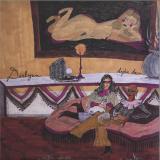
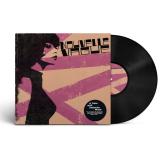
Backed by members of the David Nance Group, Rosali (Long Hots, Wandering Shade, Monocot) wades through the emotional mire with infectious, earworm melodies led by her luminous voice. With their rich, raw instrumentation, these rock ballads sound like the resilience discovered in facing one’s darkest moments, the assurance of the calm and clarity that comes after the storm. As she sings on the second track, “Bones,” “Through the darkness of the field / I walk through without yielding / To the rest of the feelings / I’m carrying.” With her confident song craft, Rosali illustrates the ability to push through, moving toward something greater without being destroyed by the weight of trauma.

Engineered by James Shroeder and featuring Kevin Donahue (Simon Joyner), James Shroeder (Simon Joyner, DNG, Connor Oberst), David Nance, Noah Sterba, Colin Duckworth, and Daniel Knapp, the album was recorded in ten days and the raw immediacy of the music is palpable across these ten tracks. Added adornment was contributed by Philadelphia's Robbie Bennett (War on Drugs) on organ and keys, and Matt Barrick (The Walkmen, Jonathan Fire Eater, Muzz) makes a percussion cameo on “Whisper,”which was tracked at Philly’s Silent Partner Studio, where No Medium was mixed by Quentin Stoltzfus (Mazarin, Light Heat). The open creative collaboration elevated the songs, resulting in the exciting, vibrant sound of the album.

Rosali wrote the bulk of these songs in January of 2019 while on a self-imposed two week residency in the hills of South Carolina. Alone in an old farmhouse, she experienced supernatural events and faced her own demons in the deepest darkness. Perhaps as a result, there is a boldness that permeates the album, a daring vulnerability in both the lyrical themes and their musical accompaniment. Rosali says, “I approach guitar playing the same intuitive way I sing, which is profoundly spiritual for me. Where words fail, the guitar becomes the conduit for raw feelings, providing a direct connection to them. I’m constantly working on being fearless in my work, which means showing the rough side, the mistakes along with the triumphs.”

While writing No Medium, Rosali was inspired by harmonographs—swinging pendulums that create beautiful illustrations of the mathematics of music—considering how the mind, too, creates images through song. She imagined herself as the swinging pendulum—“a body suspended from a fixed point” (Encyclopedia Britannica), governed by the forces surrounding her. She thought about the pendulum’s relationship to time, movement, and even its use in divination practices. The album’s title, lifted from Charlotte Brontë’s, Jane Eyre, resonated with this vision: “I know no medium: I never in my life have known any medium in my dealings with positive, hard characters, antagonistic to my own, between absolute submission and determined revolt. I have always faithfully observed the one, up to the very moment of bursting, sometimes with volcanic vehemence, into the other.” With the multiple meanings of “medium”—as middle ground, a term for psychics, and as the material of artistic expression—No Medium felt like the appropriate name, describing how the self is shaped by the patterns of life .

The influences for the sound of No Medium reflect this pairing of assured vulnerability, in the stylistic coherence of Bob Dylan’s Desire, the tender delivery in Iain Matthews’ Journey From Gospel Oak, the strut and swagger of Bowie’s Hunky Dory, the ambition and beauty of Gene Clark’s No Other, and the playful catharsis of Harry Nilsson’s Nilsson Schmilsson. The Richard and Linda Thompson-esque album opener “Mouth,” places Rosali within both a physical and emotional space. “East of the river I was travelling on / watch me lie, undone / rest me in a forest, overgrown / until I am free of all that I’ve known,” she sings. There is movement, both within a cityscape, and in her outlook on love. Speaking of her thought process when writing the song, she says, “I imagine confidently walking away from the past, toward a new approach to love and intimacy to achieve a closer relationship with myself.”

In “Pour Over Ice,” Rosali explores her relationship with alcohol and her former reliance upon it as a social lubricant to quell her social anxiety, an energizer to keep moving, a means to cope and self-medicate, and most addictively, to lure out her wild side as a free flowing, good time girl. While drinking helped her through some shitty times, it eventually got the upper hand and became an insatiable hole within. She says, “The ‘you’ in the song is really me, talking to that component of myself struggling with drinking and self-sabotage, caught up in the cycle, and all the bad choices I made.” She sings, “Maybe I didn’t care enough / or can’t remember / chasing small pleasures / making fire from embers.” Rosali wanted her lead guitar on this track to simultaneously sound like a slow motion car crash propelling her through the day, and the sound of a gnawing hunger for something more.

Rosali’s alliance with the Omaha musicians that orbit David Nance Group (including Nance himself) came about while on a Long Hots / DNG tour in the summer of 2019. Great friendships formed and one night after playing in Detroit, Dave suggested they be her backing band. The pairing was effortless and natural, and in November of the same year, they were recording No Medium in a basement in Omaha.

pré-commande14.05.2021

il devrait être publié sur 14.05.2021

19,29

Last In: 2026 years ago
  • 1
Articles par page:
N/ABPM
Vinyl