Search:japan
Including soundtracks of : "GOEMON" Chivalrous Robber Story / "GOEMON" 2 / Dragon Scroll "The Rebirth of the Evil Dragon" / Idol no Yōsei Densetsu
Including soundtracks of : Konami Wai Wai World / Ai Senshi Nicol / Konami Wai Wai World 2 SOS!! Paseri Castle
Including soundtracks of : Castlevania / Castlevania II: Simon's Quest / Moai kun / Akumajō Special: Boku Dracula-kun!
Including soundtracks of : Ganbare Goemon Gaiden: Kieta Ōgon Kiseru / Ganbare Goemon Gaiden 2: Tenka no Zaiho
Including soundtracks of : Meikyū Jiin Dababa / Exciting Billiard / GetsuFumaDen: Undying Moon / Arumana no Kiseki
Including soundtracks of : Crackout / Exciting Soccer: Konami Cup / The Adventures of Bayou Billy / Yie Ar Kung-Fu / Knightmare II: The Maze of Galious / Bio Miracle Bokutte Upa
Japanese jazz, rare groove masterpiece re-released on clear lime yellow color vinyl!
The pleasure of feeling numb all over your body with a single drum beat. Akira Ishikawa, the super funky drummer born in Japan, runs through a wonderland of grooves!
Akira Ishikawa is a super funky drummer born in Japan. His ability to freely explore and fuse jazz, rock, and African music to create a unique musicality has been highly praised in many fields. His career includes masterpieces from jazz rock to rare groove, but this work is especially beloved for its outstanding song selection and exciting musicality. "Let's Start" is a tight cover of Fela Kuti's Afro-funk, "Bongo Rock" is a dynamic song with drum breaks, and "Pick Up The Pieces" is a jazz-funk version of the Average White Band's classic song. It is full of amazing monster tunes that are hard to believe were recorded in 1975. Support from masters such as Kiyoshi Sugimoto, Hiromasa Suzuki, and Takeru Muraoka also shines.
text by Yusuke Ogawa (universounds/Deep Jazz Reality)
Original released in 1979
Passion and perspective permeate the sound of this legendary record! Ryusei Tomoyose, a famous tenor saxophonist from Okinawa, pours his whole life into this, the only leader's work.
Ryusei Tomoyose is a tenor saxophonist from Okinawa. At the end of the 1960s, he studied under Sadao Watanabe in Tokyo, and after returning home, he devoted himself to nurturing young musicians and became a leader in the Okinawa jazz world. This work, recorded in 1979, is Tomoyose's first and only leader work. The title "Dana" is an exclamation in the Okinawan dialect that has the meanings of "ah" and "finally." Tomoyose was 43 years old at the time of recording, and had already had a career spanning more than 20 years. He is captivated by the vivid and lustrous tenor saxophone in songs such as the vibrant "Movement," the dignified exoticism of "Kirisame," and the motif of the sandy beaches of Yoron Island in "Merabi Samba." It is a valuable record of Okinawan jazz and a masterpiece that shows the depth of Japanese jazz.
Japanese jazz and big band masterpieces re-released on clear green color vinyl!
Nio dances and pigeons dance. A mysterious melody that flows in a strong groove. Pursuing the possibilities of big band sound, this is the true essence of new hard and its climax.
New Hard, led by Toshiyuki Miyama, is one of Japan's leading big bands. Since the release of ``Perspective'' in 1969, they have opened up new horizons in big band jazz with their cutting-edge sound. This work "Niou to Hato" is one of the representative works of new hard released in 1972. Kozaburo Yamaki was in charge of the entire composition and arrangement, and deeply pursued one of his long-standing themes: "Japan." Japanese features, traditions, and scenes expressed through elaborate, multi-layered arrangements and performances. A profound and dynamic melody with a Japanese atmosphere that can be described as mysterious. Starting with "Seijinshiki," which is led by a strong groove, the album is lined up with songs full of deep flavor and great excitement. This is the true essence of new hard work and its climax.
text by Yusuke Ogawa (universounds/Deep Jazz Reality)
- A1: Time (Part 2)
- A2: Interlude One
- A3: How My Man Went Down In The Game
- A4: Interlude Two
- A5: Hellavision
- A6: Interlude Three
- A7: Raise Up
- B1: Interlude Four
- B2: Looking At The Front Door (Uncut)
- B3: Interlude Five
- B4: Fakin' The Funk (Previously Unreleased)
- B5: Interlude Six
- B6: Bootlegging
- B7: Time
- B8: Outro Interlude
- B9: Fakin' The Funk (Soundtrack Version - Bonus Track)
black LP[37,61 €]
Anyone who takes their old-skool hip-hop seriously knows Main Source were the real deal, and their 1991 album Breaking Atoms remains one of the greatest albums in the genre. While there was an eventual follow-up in 1994, hip-hop folklore has often spoken of their shelved 1992 LP The Science.
Bar the odd bootleg single or demo here and there, the album has never been heard but now a major missing piece in the story of early 90s rap is being put back into its rightful place, as P-Vine present the first ever release of The Science, cut from the group's own master tapes and guaranteed to be a new favourite for anyone who values the golden age of beats and rhymes.
The Three of Us is a name you might not know even if you are something of a jazz lover. It was the name that jazz keyboardist Hilton Felton - who will be much more well known to those with an ear for rare groove - used for this one groovy soul-jazz album. It arrived in super limited quantities back in 1971 and is now hugely sought after and therefore also rather expensive on the second-hand market. Joining Felton for these sessions were bassist Joe Harris and stickman Johnathan Setell, but it is Hilton's touch that really elevates the music - his free melodies and deep grooves really make their mark. This one has never been reissued before.
Jackie Ross had a storied career that began when the great Sam Cooke recruited her for his SAR label in 1962. After that, she went on to sing with Syl Johnston's band and sign with the notorious Chess label in 1964. It was there she dropped her biggest hit 'Selfish One', which reached number 11 on the U.S. Billboard Hot 100, before many more tunes came on the likes of Brunswick and others.
Her 1980 album A New Beginning For was produced by Chicago soul scene mainstay James Van Lear and now gets its first reissue courtesy of P-Vine. It shows the range and depth of emotion Jackie could tap into with a mix of slow motion stirrers and more funky and upbeat numbers.
Southside Movement was a Chicago funk band that was busy during the mid 70s releasing a total of three albums between 1973 and 1975 on Wand and 20th Century Records. They also collaborated with the lush tones of soul singer and fellow Chicagoan Jackie Ross on records for Chess and Brunswick that have long since been forgotten. Until now, that is, because P-VINE has put together this great reissue of the music that was only released in limited test presses back in the day, and has added to it some previously unreleased tracks. The standout here is 'You Are The One That I Need' with its tropical funky vibes.
.
At one time participating in ground-breaking medical scientific research, in another a relentless road-trip, hoovering up rare records and tapes, in the nooks and crannies of France, Algeria, or any country that he happens to land in. And then there’s his long standing show for Rinse France.
Following his slamming mix for the Japan Blues show on NTS last year, he kindly offered up a selection for Japan Blues’ first tape release. Algeria is the focus of this tape, taking a brief dip into Sameer’s broad collection, coinciding with his research for his documentary film about the social history of Rai music, "Rai is not Dead" for Arte.
Words from the Hadj: “The medehates are traditional vocal formations of women from western Algeria. Their main role is to give some compliments to the future wife during a wedding, and pray to all the saints through long songs which could last for hours, until reaching a sort of transcendental state amplified by looped percussions, traditional flute, and violon notes. Exclusively for women, no men (including young boys) admitted. This ceremonial tradition gave an intimate space for women to speak out about taboo topics like men-women relationships, love, sins like alcohol consumption etc. Since then, some of them started freely to mention all of that in this small circle and some of them have been recorded live for release on 7″. I picked up a few from my collection in order to make this mix. They represent one of the most powerful and wildest roots of the raw traditional form of rai which appeared in the 50/60s in Algeri
The Mighty Riders were an American funk group whose 1978 album Help Us Spread The Message is a stone-cold classic for rare groove lovers. It has been famously sampled by De La Soul and now this new 10" release includes the original version of the track the pillaged, namely 'Evil Vibrations'. It comes as an original, an instrumental edit version of the song, and an extended edit. This is a must cop for funk fans as well as hip-hop historians and a standalone tune that still gets the floor going so do not sleep.
Hilton Felton's Family & Friends is a rare groove classic that now gets reissued for the first time ever courtesy of P-Vine. The master keyboardist has a cult following thanks to his magically mellow and sophisticated playing style. He was prolific, too, recording several great albums but none as definitive as this one, which is a sought after and pricey gem if you want an original. It has many highlights such as the fantastic jazz-funk cover of the Delfonic's classic 'La, La Means I Love You', groove-laden soul in 'The Power Of Love (It's In My Heart)' and the lively arrangement of 'Family Reunion.'
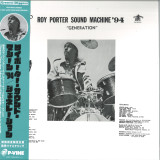
Roy Porter's classic 1975 album Inner Feelings has long been a treasure trove of sample sources for hip-hop artists over the years. DJ Spine is one of those who made use of parts of the album's opener 'Party Time' in his own tune 'Rock.'
Now for the first time that single gets reissued on 7" along with DJ Spinna's edited version on the flip. The original is a real funk classic with fat bass grooves and hefty drum breaks. This track was once released on the famous tax scam label with the artwork which is presented here. It makes for a package with a great backstory and an even better sound for lovers of rare grooves and hip-hop.
- A1: Time (Part 2)
- A2: Interlude One
- A3: How My Man Went Down In The Game
- A4: Interlude Two
- A5: Hellavision
- A6: Interlude Three
- A7: Raise Up
- B1: Interlude Four
- B2: Looking At The Front Door (Uncut)
- B3: Interlude Five
- B4: Fakin' The Funk (Previously Unreleased)
- B5: Interlude Six
- B6: Bootlegging
- B7: Time
- B8: Outro Interlude
- B9: Fakin' The Funk (Soundtrack Version - Bonus Track)
orange LP + 7"[50,21 €]
Anyone who takes their old-skool hip-hop seriously knows Main Source were the real deal, and their 1991 album Breaking Atoms remains one of the greatest albums in the genre. While there was an eventual follow-up in 1994, hip-hop folklore has often spoken of their shelved 1992 LP The Science.
Bar the odd bootleg single or demo here and there, the album has never been heard but now a major missing piece in the story of early 90s rap is being put back into its rightful place, as P-Vine present the first ever release of The Science, cut from the group's own master tapes and guaranteed to be a new favourite for anyone who values the golden age of beats and rhymes.
With J Jazz volume 4, the BBE J Jazz Bullet Train continues its journey traversing the expansive landscape of modern Japanese jazz. Volume 4 is the latest in the universally praised compilation series exploring the best, rarest and most innovative jazz to emerge from the Far East. Please take your seats for a first-class ticket to J Jazz central. This latest station stop off is with the famed Nippon Columbia label, one of the biggest labels in Japan, whose jazz output embraces every possible style imaginable. Focussing on the key years 1968-1981, J Jazz volume 4 sees compilers Tony Higgins and Mike Peden dig even deeper into their record collections and pull-out tracks that span styles ranging from solo to big band, jazz classical interpretations and heavy jazz rock, to febrile post-bop, white hot samba fusion, and modal psychedelic wig-outs. J Jazz volume 4 features icons such as drum master Takeo Moriyama, keyboard magi Hiromasa Suzuki, Fumio Itabashi, and Masahiko Satoh, and guitar wizards Kazumi Watanabe and Kiyoshi Sugimoto, alongside big band maestros and innovators Nobuo Hara and his Sharps and Flats, and Toshiyuki Miyama’s New Herd. Thunderous basslines nestle alongside glistening runs of electric piano, bubbling synths and air-tight drumming as the heavy psychedelic modal blues of Jiro Inagaki flows with the infectious samba grooves of Takashi Mizuhashi featuring Herbie Hancock; Shigeharu Mukai’s fusion funk epics take the music to another level and Mikio Masuda’s driving keyboard rhythms brings the heat to an incendiary dancefloor zone.
- A1: The Vamp
- A2: Twenty One
- A3: Spoonful
- B1: Back To Rack
- B2: High Jack
- B3: The Ground For Peace
- B4: Head Rock
From the opening “The Vamp” to the final “Head Rock”, this is a dazzling jazz rock showcase with dreadnought songs that are filled with ideas and passion you can hold. A masterpiece that has an overwhelming presence in the history of jazz in Japan, as a heresy left on the prestigious jazz label Tact.
Bass – Yasuo Arakawa
Drums – Sadakazu Tabata
Guitar – Ryo Kawasaki
Organ – Masaru Imada
Tenor Saxophone, Soprano Saxophone – Jiro Inagaki
Trumpet – Tetsuo Fushimi
- A1: Isolation I
- B1: Isolation Ii
Music from the movie “Abbreviated Serial Killer”. In this soundtrack Masahiko Togashi and Motoki Takagi challenged “the limit of improvisational performance”.
The film was directed by Masao Adachi. This is a so-called “landscape film” about Norio Nagayama, a serial killer. Masahiko Togashi, who was asked to compose the music, recorded three songs as a duo with Motoki Takagi. Togashi said, “I thought it was strange to compose the human heart,” and the recording was done with “total improvisation.”
Recorded in December 1969. This year is the beginning of the Japanese free jazz trend.This album is an important work that Togashi, who was the central figure of the scene, and Takagi, who also had a strong presence at the core, said, “I challenged the limits of improvisation.” The soundtrack is one of the best free jazz albums in Japan.
- A1: Theme~Mustache
- A2: Tak's Tune
- A3: Joint
- B1: Monster
- B2: Lullaby For Yuh
- B3: Scotland Scene
- B4: Theme
Clear Vinyl[38,24 €]
The drums of fire scorch the age. With his young and talented Sound Limited, Takeshi Inomata heralds the arrival of the golden age of jazz rock in high spirits. Drummer Takeshi Inomata, who led the Japanese jazz scene with his precise stick work and musicality with an eye on the times, formed Sound Limited at the end of the 1960s, influenced by the brass rock music that was flourishing at the time. He said, “I wanted to fuse jazz and rock and bring together young musicians to play music with vitality. I want this group to be a group with a large scale that is not confined to the small frame of modern jazz,” he said, launching a new axis. Their first album, “The Sound of Sound Limited” (1970), became their masterpiece. It is a masterpiece that is full of energy and enthusiasm throughout the album, starting with “Theme~Mustache,” which has become one of the most beloved and iconic songs of the band.
Drums, Music Director – Takeshi Inomata
Electric Bass – Jun Suzuki
Electric Guitar – Ryo Kawasaki, Shigenori Kamiya
Flute – Toshiaki Yokota
Mixed By – Eiji Uemura
Organ – Yusuke Hoguchi
Tenor Saxophone – Takao Uematsu
Trombone – Shigemichi Domoto, Takashi Imai
Trumpet – Shunzo Ohno, Takashi Kumagai
- A1: The Cougar
- A2: I'm Gonna Make You Love Me
- A3: Michelle
- A4: Green Sleeves
- A5: The Sandpiper
- B1: No More Than A Drop
- B2: Hey Jude
- B3: Deep River
- B4: Mago-Uta
Introducing Count Buffalo! An ambitious work that explores the sound of the next generation with innovative arrangements and outstanding performances. A new era opens here.
Akira Ishikawa, a drummer who led groups such as Midnight Sons, Genchers, and Count Buffaloes and has released countless works to the world. This work, the earliest recording under the name of Count Buffalo, features Ken Muraoka, Hiromasa Suzuki, Kiyoshi Sugimoto, Masahiko Sato, and others. Hip jazz-rock “Cougar” led by disquieting strings, “Greensleeves” with a hint of avant-garde, his own interpretation of “Hey Jude”, and a dry jazz-rock version of a folk song such as “Makouta”. , so dense that you don’t even have time to breathe. It is one of the most important works in the history of Japanese jazz-rock, not only in content, but also considering the era of 1969.
text by Yusuke Ogawa (UNIVERSOUND/DEEP JAZZ REALITY)
Keyboardist Hilton Felton's 'The Power Of Love (It's In My Heart)' has never been available on standalone 7", until now. It has been newly remastered for the occasion and finds the talented Felton at his best as he lays down his signature mellow grooves. For proof look no further than the groovy soul of 'The Power Of Love (It's In My Heart)' has Angela Winbush as a youth on vocals and features great musical depth, while s 'The Power Of Love (It's In My Heart)', which has never been released as a single, and 'Spreading Fever (Part 1)' is as smooth as they come with its silky and seductive lead sax.
The sound that swallows jazz rock, mode jazz, and free jazz is serious and profound.
A magnificent concept album that will remain in the history of Japanese jazz with the theme of global anti-war and peace
Hiromasa Suzuki, a rare pianist/composer/arranger who showed his skills in the groups of Terumasa Hino and Akira Ishikawa. Collaborating with Big Soul Media, led by Jiro Inagaki, one of the best jazz rock groups of our time, this work is unusual for a Japanese jazz work, and the concept is based on the theme of “global anti-war and peace.”
The sound that swallows jazz rock, mode jazz, and free jazz is serious and solid, but at the same time, it is full of overwhelming dynamism.
Suzuki’s ability to manage a big band and create a masterpiece sound is also splendid, and Big Soul Media, which listened to Suzuki’s intentions and responded to his request, is also splendid.
Both Suzuki and Inagaki’s activities in the jazz-rock era are at their peak, and this work is also important in that it captures the overlap.
text by Yusuke Ogawa (universounds/Deep Jazz Reality)
Composition/Arrangement/Conductor: Hiromasa Suzuki
Performed by Jiro Inagaki and Big Soul Media
Jiro Inagaki (S.Sax, T.Sax)
Shigeo Suzuki (A.Sax)
Tadayuki Harada (B.Sax)
Takehisa Suzuki (Trumpet)
Tetsuo Fushimi (Trumpet)
Takeshi Nomura (Trumpet)
Shigemichi Domoto (Trombone)
Tadataka Nakazawa (Trombone)
Kazuo Usui (Trombone)
Tsunehide Matsuki (Guitar)
Masaru Imada (Piano, Organ)
Hiromasa Suzuki (Piano, Organ)
Yasuo Arakawa (Bass) / Gen Ishimatsu (Drums)
Pianist and composer Ricardo Marrero and The Group's A Taste is as rare as an honest politician. Now the magical Latin sounds are available for all once more as P-Vine serves up a special edition 7" with 'Babalondia' and 'And We'll Make Love' making this a must-cop. They are taken from a debut album that is as good as it gets and originally came on the famed tax scam label TSG. The a-side here brings the funk with floor-filling grooves to spare while on the flip it's more of a mellow outing with vibrant female vocals getting you in the mood and the groove.
Takeo Moriyama, Japan’s leading jazz drummer, loved by many new and old fans. Since the late 1960s, he has swept the free jazz world with the Yosuke Yamashita trio. After leaving the group, the radiating heat was condensed into an ensemble, evolving and deepening the musicality in a more melodic and rhythmic direction. And that activity will reach a peak in this work “Smile”.
Man With A Gun is the debut long player from Singaporean prog and funk group Funkgus. It has a famously enigmatic toxic blue jacket that lurks you in and musically it is no less intriguing. As well as a passionate cover of King Curtis's 'Memphis Soul Stew' there are plenty of supremely psychedelic sounds. The opener is steeped in funky bass riffs with rock-tinged drum breaks and plenty of raw vocals and from there the grooves come thick and fast, often with plenty of texture and charismatic vocals such as on 'Spill The Wine' and the leggy, expressive sounds of 'Everyday People' with its twisted wah wah guitars.
Marcus Belgrave's Gemini II album has never been reissued before with the original artwork, but here it comes with a Japanese Obi-strip and featuring prominent musicians and legends like Wendell Harrison, Phil Ranelin, Roy Brooks and Harold McKinney. This is a diverse record with plenty of spirituality and a loud and proud sense of blackness. The standout tune 'Space Odyssey' is the best known, not least because it was later covered by pioneering Detroit techno talent Carl Craig. Next to that tense cosmic workout are two parts of 'Gun Finger' which are both horn led and upbeat grooves, the seductive sounds of the title tune and free-bop jam 'Marcia's Opal'. 'Odoms Cave' is a tender and introverted closer.
Jamaican reggae heavyweight and his celebrated band The Wailers had some of their best cuts compiled onto this Welcome To Dub Rock collection a few years ago. It's an 18-track collection of dubplate recordings and also rare tracks that are the ultimate for fans of the band as well as dub in general. Some of these were made specifically for sound systems so have some seriously meaty low ends and there are also dub versions of classics like 'Concrete Jungle' and 'Soul Rebel' all packaged up in a picture sleeve and with an obi-strip. Superb stuff by all.
- A1: Kaze No Toorimichi (My Neighbor Totoro)
- A2: Haretahini (Kiki's Delivery Service)
- A3: Sanpo (My Neighbor Totoro)
- A4: Sora Kara Futtekita Shoujyo (Castle In The Sky)
- A5: Meguru Kisetsu (Kiki's Delivery Service)
- A6: Ashitaka Sekki (The Princess Mononoke)
- B1: Ai Ha Hana Kimi Ha Sono Syushi (Only Yesterday)
- B2: Teru No Uta (Legend Of Earthsea)
- B3: Ano Natsu He (Spirited Away)
- B4: Itsumo Nandodemo (Spirited Away) )
- B5: Arrietty's Song (Arrietty The Borrower)
- B6: Sekai No Yakusoku (Howl’s Moving Castle)
- A1: Kimi Wo Nosete (Castle In The Sky)
- A2: Umi No Mieru Machi (Kiki's Delivery Service)
- A3: Yasashisa Ni Tsutsumaretanara (Kiki's Delivery Service)
- A4: Kaze No Torimichi (My Neighbor Totoro)
- A5: Tonari No Totoro (My Neighbor Totoro)
- A6: Jinsei No Merrygoround (Howl's Moving Castle)
- B1: County Road (Whisper Of The Heart)
- B2: The Princess Mononoke (The Princess Mononoke)
- B3: Nausicaa Of The Valley Of The Wind (Nausicaa Of The Valley Of The Wind)
- B4: Nausicaa Requiem (Nausicaa Of The Valley Of The Wind)
- B5: Tokiniwa Mukashino Hanashi Wo (Porco Rosso)
- B6: Gake No Ue No Ponyo (Ponyo)
You’d be forgiven for not knowing about these Studio Ghibli-commissioned jazz reworkings of much-loved classic soundtracks with the three-piece All That Jazz being one of Japan’s best kept secrets until now. Originally put together by the power-house animation studio for a series of jazzed-up covers, the group took off with their simple yet moving set-up of piano, bass and drums, and afterwards went on to do another record of anime classics. Sprinkled with complementary instruments, the project is tied together by the soothing vocals of Yukiko Kuwahara. On this first record you can find the hard-hitting main themes from My Neighbour Totoro, Princess Mononoke, Kiki’s Delivery Service and Nausicaa of the Valley of the Wind among other carefully curated tracks.