Matt Berry releases a unique collaboration with esteemed Library Music label KPM. KPM is renowned for providing the musical bedrock for so many classics of British TV and international cinema, using the best British composers such as Keith Mansfield, Alan Hawkshaw, John Cameron and Alan Moorhouse to do so. ‘Simplicity’ follows in the footsteps of these giants and is a worthy successor to them. Alongside his formidable acting career, Matt Berry has released a series of acclaimed albums on the Acid Jazz label. Ranging from the folk stylings of ‘Kill The Wolf’, the ambient electronica of ‘Music For Insomniacs’, to the psych rock of ‘Blue Elephant’, these have marked Berry out as an impressive musician and recording artist in his own right. Embodying the form of KPM’s original LPs geared towards film and television pitching, the album consists of 11 sharp and vibrant instrumentals, which will no doubt be heard in productions for many years to come. Released in special collaboration with Acid Jazz, the album is presented in a beautiful graphic sleeve, with notes that allude to the original KPM releases, for something that is instantly hip and familiar, yet unmistakably new.
Поиск:jazz co
Все
Am 15. Mai 1953 trafen sich fünf der einflussreichsten Jazzmusiker - Charlie Parker, Dizzy Gillespie, Charles
Mingus, Max Roach und Bud Powell - in der Massey Hall in Toronto, um ihre erste und einzige bekannte Aufnahme als Quintett zu machen. Obwohl nur ein kleines Publikum die Gelegenheit hatte, diesen
historischen Abend persönlich mitzuerleben, wurde er auf Tonband festgehalten. Das daraus entstandene
Album ”The Quintett: Jazz at Massey Hall”, wurde zu einer der wichtigsten und meist gefeierten Veröffentlichungen des Genres.
”Hot House - The Complete Jazz at Massey Hall Recordings”, beinhaltet das gesamte von den Mitgliedern
des Quintetts aufgenommene Material des Abends und bietet eine sorgfältige 24-Bit-Audio-Restaurierung
und ein Remastering durch den GRAMMY®-prämierten Toningenieur Paul Blakemore.
Verfügbar ab dem 17.11.2023 als 3LP.
Repress!
Veteran Drum & Bass producer Zero T returns to The North Quarter as he teams up with blind jazz pianist Andre Louis (PKA Onj) on their conceptual album Kilburn.
Having fortuitously discovered that they are neighbours in autumn 2021, Zero T & Onj began writing music together almost immediately. The duo's chemistry was undeniable as Kilburn was written over the course of just three months. With Kilburn being historically known for its large Caribbean and Irish communities, and Zero T being Irish and Onj of Caribbean heritage, it felt undeniable to dedicate the album after the London area it was written in.
The result is a rich, versatile collection of tracks, showing off intricate rhythms along with smooth chord progressions, perfectly marrying the worlds of both artists and their Jazz, R&B and Jungle influences. The darker, heavy side of Zero T’s sound is present on 'Some Type of Way' and 'We Juggle Different', both featuring Neo Soul singer Terrell King. More delicate, soulful tracks include “Everyday Struggles” featuring Jordan Max, “Rodeo Drive” featuring Mercy's Cartel and “Darkness” featuring Steo. Other featured vocalists are the iconic Ursula Rucker, Manchester's T-Man and Ms Nayé. The album also includes a collaboration with Nu Jazz duo Unitsouled, who previously appeared on Zero T’s debut release on The North Quarter Baby Grand.
- A1: The Vamp
- A2: Twenty One
- A3: Spoonful
- B1: Back To Rack
- B2: High Jack
- B3: The Ground For Peace
- B4: Head Rock
From the opening “The Vamp” to the final “Head Rock”, this is a dazzling jazz rock showcase with dreadnought songs that are filled with ideas and passion you can hold. A masterpiece that has an overwhelming presence in the history of jazz in Japan, as a heresy left on the prestigious jazz label Tact.
Bass – Yasuo Arakawa
Drums – Sadakazu Tabata
Guitar – Ryo Kawasaki
Organ – Masaru Imada
Tenor Saxophone, Soprano Saxophone – Jiro Inagaki
Trumpet – Tetsuo Fushimi
Limitierte Reissue zum 15-jährigen Jubiläum des legendären Albums der UK Mod-Jazz-Funk-Supergroup TRIO VALORE mit Steve White (Style Council), Damon Minchella (Ocean Color Scene) und Seamus Beaghen (Madness) auf kristallklarem Vinyl. Ursprünglich 2008 veröffentlicht, erreichten die 12 Tracks voller erschütternder Hammond-Grooves, heavy Deep-Funk und super Dancefloor-Mod-Jazz-Melodien schnell Kultstatus. Zu den Highlights zählen die hippen Versionen von 'Rehab' (Amy Winehouse), 'Fire' (Jimi Hendrix), 'Paint It Black' (The Rolling Stones) und groovige Eigenkompositionen wie die Boogaloo-Soul-Nummer 'Dam Square' oder der Dancefloor-Jazz-Titeltrack.
Ancient Infinity Orchestra is a 14-member jazz ensemble led by double-bassist and composer Ozzy Moysey, based in the bustling creative city of Leeds in the North of England – home to one of the most innovative and community-based jazz scenes in the UK. Saxophonist Matt Cliffe who also performs with Matthew Halsall is a key member and the rotating line-up which includes drums, two bassists, keyboards, harp, violin, cello, two tenors, alto, oboe, flute and percussion. "River of Light’ drinks deep from the well of spiritual jazz and is especially inspired by the soulful sounds of Pharoah Sanders, Alice and John Coltrane but also channels a certain Northern sensibility that can be heard in the music of Matthew Halsall or Alabaster de Plume. Melodic, warm and honest this is music that is happy to wear its heart on its sleeve.
Brooklyn-based bassist/composer Kenneth Jimenez presents his new work Sonnet to Silence on We Jazz Records. Consisting of 7 original compositions by Jimenez performed by his quartet including pianist Angelica Sanchez, drummer Gerald Cleaver and saxophonist Hery Paz, Sonnet to Silence echoes the original fire of New York free jazz while stepping into a terrain of its own, boldly forward-thinking.
"I call the album Late Jazz not only in honour of 'that jazz time of night' but also because, unlike all my other ASC releases, these are not historic recordings from the 1970s but new ones, often based around my One Man Show, in which most of them featured. So they're late-period Runswick. The compositions too are recent (except of course the standards), all but one written since the Millennium.
(Sulkin is from the 1990s.)”
Faitiche releases the album Improvisations And Edits, Tokyo 26.09.2001 on vinyl for the first time. For the original 2002 CD on Soup-Disk and Sub Rosa (Audiosphere), Jan Jelinek and the Japanese trio Computer Soup (Satoru Hori – trumpet, Osamu Okubo - toys & electronics, Kei Ikeda - toys & electronics) presented eight tracks all recorded one afternoon in the trio’s living room in Tokyo. They are excerpts from a joint group improvisation that subsequently underwent rudimentary editing, on which Jelinek and Computer Soup worked separately.
Jelinek met the three musicians at his first concert in Japan in 2001, at Tokyo’s Yellow club, where Computer Soup performed as the support act. Delighted by their free improvisation on pocket-sized electronic toys, trumpet and oscillators, he arranged to meet Hori, Okubo and Ikeda a few days later for a session at their apartment. The resulting three-hour recording, made on their living room floor, formed the basis for Improvisations and Edits. A few days later, Jelinek returned to Berlin. Over the following months, they separately chose passages from the recording that were then edited and assembled into an album.
Formed in Tokyo in 1996 as a quintet (including Shusaku Hariya and Daisuke Oishi), Computer Soup began by performing with acoustic instruments on the streets of Shibuya. Ikeda und Okubo soon switched instruments, and from then on the group’s minimalistic but densely woven sound was defined by electronic toys, oscillators and Satoru Hori’s trumpet. Their first album was released in 1997 on the Japanese label Soup Disk. Eight further releases followed.
From the reviews of Improvisations and Edits, Tokyo 26.09.2001 in 2003:
"The mind-blowing first track Straight Life is perhaps the best example of what the album has to offer. Jelinek's trademark smears and washes occupy the midrange, like ghosted images of Joe Zawinul's electric piano floating quietly in the wind. DSP jazz modes are set against a walking bassline (possibly computer generated) and a gently tooted trumpet complete with Harmon mute, a dead ringer for Miles Davis' Prestige-era ballads. The effect is something like a three-dimensional film, with different realities on each layer; images of what jazz was manage to interact with a real-time demonstration of all it could be."
pitchfork, 2003
"Improvisations and Edits is a warm and mellow Ambient release with beautiful glitch fragments, static noise bursts and real trumpet intersections. However, there are times where it is the exact opposite, mainly effect-laden, overdriven and bouncy with a lack of melodies and focus, so be aware of these specific tracks."
ambientexotica, 2003
"Often deliciously dreamy and hazy, Improvisations and Edits is like listening to an exceptional instrumental jazz performance while half-conscious or under some sort of chemical influence. Computerised blips and bleeps, loops and treatments and murky sonic skips curl up around desolate horn notes and scattered instrumental noises that culminate in elegant music."
exclaim.ca, 2003
On The Incredible Jazz Guitar of Wes Montgomery, one of the guitarist's best LPs ever, Wes was backed by Tommy Flanagan on piano, Percy Heath on bass, and Percy's brother Albert "Tootie" Heath on drums (the third famous Heath brother, not heard here, is tenor saxophonist Jimmy Heath). The album was highly praised as soon as it was released and received a ***** rating in Down Beat magazine. It includes such classics as "West Coast Blues", "D-Natural Blues", and "Four on Six". 180-GRAM COLORED BLUE VINYL - THE COMPLETE ALBUM + 1 BONUS TRACK.
KOU is the new project by Apolline Schöser (half of Nina Harker) & Thomas Coquelet.
Apolline & Thomas have been performing since 2022 under the KOU guise with 24 electronic harmoniums. Producing dense layers of tones & overtones. On their debut album KOU steers in another direction. The harmonium appears occasionally, but more prominent are delicate guitar pluckings, distant vocal effects, synths, flutes, piano strokes, a touch of musical magic and Apolline’s jazz not jazz vocals.
As soon as the needle drops it’s clear we are jump-cutting straight to the other side of the mirror. Cats purr, a woman sings as if asleep, drum machines stutter and warp and Alvin Lucier is not 'sitting in a room that is not different to the one you are not in now’. If you’re already confused, join the club. But, it’s the good kind of confused, a bewildering experience akin to the first time hearing the Faust Tapes or watching Inland Empire. Wait though, as pigeons coo and the tape machine clunk-clicks a gorgeous weirdo version of Roger's and Hart’s Blue Moon emerges to let you know this isn’t just dada splurge, there’s a genius pop sensibility at work here too. Side two takes us further into the murk with mournful detuned brass, stoned Joan La Barbara-esque vocalese and a droning Farfisa hymn, before ending with another too-tempting snatch of DIY pop. Some of the references are recognisable. All kinds of 70s/80s European art prog - think early Battiato, Pierot Lunaire’s Gudrun, Lucia Bosè and Gregorio Paniagua's Io Pomodoro etc etc. There’s a strong whiff of 90s us goof-off surrealism too- Bongwater, Siltbreeze, Royal Trux’s Twin infinitives, the damaged folkier side of Alastair Galbraith, Half-Japanese, early Beck even all feel relevant.
Like an oddball group of friends you might meet by chance and end up weirding-out with for days, the minds behind this deliciously odd music allow you to stay for a while in their strange subcultural world. You might not want to live here forever but a short trip, while it lasts, rewires your brain for the better.
- A1: Isolation I
- B1: Isolation Ii
Music from the movie “Abbreviated Serial Killer”. In this soundtrack Masahiko Togashi and Motoki Takagi challenged “the limit of improvisational performance”.
The film was directed by Masao Adachi. This is a so-called “landscape film” about Norio Nagayama, a serial killer. Masahiko Togashi, who was asked to compose the music, recorded three songs as a duo with Motoki Takagi. Togashi said, “I thought it was strange to compose the human heart,” and the recording was done with “total improvisation.”
Recorded in December 1969. This year is the beginning of the Japanese free jazz trend.This album is an important work that Togashi, who was the central figure of the scene, and Takagi, who also had a strong presence at the core, said, “I challenged the limits of improvisation.” The soundtrack is one of the best free jazz albums in Japan.
As the title suggests, the recording Tenorlee finds Lee Konitz, the great American saxophonist,
playing exclusively on tenor. It was a spontaneous decision, and a tribute to his dear friend,
Lighthouse All-Star saxophonist Richie Kamuca, who had passed away just days before Konitz
entered the studio for these sessions. Konitz classically trained on the clarinet, but switched to jazz
saxophone after being enamored by Lester Young. By 1945 the 18 year old Konitz was performing
professionally. He made a staggering 150 albums as a band leader over the course of his long and
storied career. He played and recorded with everyone from Dave Brubeck, Charles Mingus, Ornette
Colman, Elvin Jones, and Gerry Mulligan, to Elvis Costello, Brad Mehldau and Charlie Haden.
Between 1948 and 1950, he was a member of Miles Davis’ group, and participated in the recordings
that would eventually be collected and released as Birth of The Cool. With a trio featuring Lighthouse
All-Star alum Jimmy Rowles on piano and Michael Moore on bass, Kontiz called out old and familiar
songs. The intention was to “let the tunes happen” as only finely tuned jazz musicians of certain
experience can. Of note is “Lady Be Good” which finds Konitz and Rowles quoting Lester Young’s
solo from the 1936 recording with Count Basie. From 1978, originally on the Choice label, this album
has been remastered and is presented here as the artist intended, with its original title, track order and
album artwork, for the first time since its original release. Remastered by Alex McCollough at True
East Mastering. Vinyl cut by Jeff Powell at Take Out Vinyl.
Orange Vinyl[13,40 €]
Berlin party series and label AWAY Music continues its limited vinyl series called "Reissued", dedicated to re-releasing iconic cuts from the vast collaborative catalog of Move D & Pete Namlook. The third installment "Reissued 3", which follows the series' first two EPs from previous years, features again some exceptional pieces that were previously only available on CD. Move D and Pete Namlook are electronic visionaries whose 26-album relationship explored and intertwined psychedelic synthscapes, deep house and techno, future jazz, and downtempo on Namlook's cult imprint Fax Records. Their innovative and influential works keep inspiring electronic music producers today, showcasing their willingness to collaborate and push the boundaries of electronic music. First up on the A side, “Der Strahlender Verlierer”, from the 2006 Album “Let the Circle Not Be Broken”, begins atmospherically before pushing subtly into open filter and undulating synth territory. Introspective and accepting, the piece gradually lets the sum of its parts coalesce into a peaceful whole with sustained chords and the flicker of played steel strings.
“Hardwired Tangent” from the 2001 Album “Wired” rounds out the first side with edgier and more ominous tones. Brooding and bubbling its way through artificial textures absorbed by carefully weighted rhythmic tension. Shuffling jazz electronics. The moody low-mid hum providing buoyancy throughout. Also from the 2001 album, the B side’s “Hardwired Hypotenuse + Asymptote” is a synthetic journey. Textural, pseudo-organic, pulsating with urgency. The motoric percussion imparting structure to the sonic alchemy. Tactile yet integrated components offer the listener (or dancer) multiple entry points into the music. This is both artful and kaleidoscopic — a treatise on contemplative and psychoactive house music.
"Reissued 3" is a true testament to the innovative spirit and pioneering work of Move D and Pete Namlook. With these tracks now available on vinyl for the first time, AWAY's limited series is a must-have for old and new fans alike.
Black Vinyl[12,14 €]
Berlin party series and label AWAY Music continues its limited vinyl series called "Reissued", dedicated to re-releasing iconic cuts from the vast collaborative catalog of Move D & Pete Namlook. The third installment "Reissued 3", which follows the series' first two EPs from previous years, features again some exceptional pieces that were previously only available on CD. Move D and Pete Namlook are electronic visionaries whose 26-album relationship explored and intertwined psychedelic synthscapes, deep house and techno, future jazz, and downtempo on Namlook's cult imprint Fax Records. Their innovative and influential works keep inspiring electronic music producers today, showcasing their willingness to collaborate and push the boundaries of electronic music. First up on the A side, “Der Strahlender Verlierer”, from the 2006 Album “Let the Circle Not Be Broken”, begins atmospherically before pushing subtly into open filter and undulating synth territory. Introspective and accepting, the piece gradually lets the sum of its parts coalesce into a peaceful whole with sustained chords and the flicker of played steel strings.
“Hardwired Tangent” from the 2001 Album “Wired” rounds out the first side with edgier and more ominous tones. Brooding and bubbling its way through artificial textures absorbed by carefully weighted rhythmic tension. Shuffling jazz electronics. The moody low-mid hum providing buoyancy throughout. Also from the 2001 album, the B side’s “Hardwired Hypotenuse + Asymptote” is a synthetic journey. Textural, pseudo-organic, pulsating with urgency. The motoric percussion imparting structure to the sonic alchemy. Tactile yet integrated components offer the listener (or dancer) multiple entry points into the music. This is both artful and kaleidoscopic — a treatise on contemplative and psychoactive house music.
"Reissued 3" is a true testament to the innovative spirit and pioneering work of Move D and Pete Namlook. With these tracks now available on vinyl for the first time, AWAY's limited series is a must-have for old and new fans alike.
Celebrating her 60th birthday, Nikki Iles, one UK's most unsung jazz virtuoso, is set to release "Face to Face," collaboration with the illustrious NDR Bigband. This highly anticipated album stands as a resounding testament to the unmatched quality, meticulous artistry, and virtuosity of these extraordinary musicians. "Face to Face" marks a transformative turning point, propelling her artistry onto a grand stage where it rightfully belongs. Her piano compositions bear an unparalleled emotional depth, captivating listeners with each exquisite note.
Joined by the NDR Bigband, known for their impeccable performances and musical prowess, this album delves into the heart of contemporary jazz. Together, they craft a sonic tapestry that redefines the genre and transcends conventions. Beyond a mere celebration, "Face to Face" is a revelation of Nikki Iles' genius and a testament to her impact on the music world. It offers an intimate encounter with her raw talent and undeniable charisma. . With each listen, "Face to Face" unravels the layers of Nikki Iles' musical brilliance, perfectly complemented by the grandeur of the NDR Bigband. This album invites us into the magic of true artistry.
180g virgin vinyl pressing, limited edition of 1000 copies only - the complete album + 1 bonus track With her intriguing, smoky voice and her graceful, behind-the-beat phrasing and ironic interpretations of song lyrics, Carmen McRae (1922-1994), who started her career as a pianist, became one of the most memorable vocalists in jazz. McRae sang in jazz clubs throughout the United States - and across the world - for over fifty years. 'After Glow' presents Carmen accompanying herself on piano on four tracks backed by a trio that includes her husband Ike Isaacs on bass, and Specs Wright on drums. For the remaining tracks, Carmen gives way to pianists Ray Bryant and Ronnell Bright joining the trio, each taking four songs apiece
180g virgin vinyl pressing, limited edition - the complete album
''Ella and Louis' is some of the most fascinating and commercially successful
jazz music ever produced. This was the first of the three LPs Ella Fitzgerald and
Louis Armstrong made for jazz producer Norman Granz between 1956 and 1957
(the other two were the sequel Ella & Louis Again and a selection of tunes from
George Gershwin's folk opera Porgy & Bess).
While the latter utilised a big orchestra conducted by Russell Garcia, the first two
albums were made in a small group format. And what an incredible small group!
The Oscar Peterson Trio, featuring Herb Ellis, Ray Brown (who had been Ella's
husband) and Buddy Rich (on the second album the drum chair was covered by
Louie Bellson).
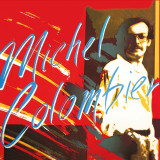
Remasterte Neuauflage einer der seltenen Platten des französischen Filmkomponisten (Emmanuelle, Purple Rain, Against All Odds) und Meisterarrangeurs (Serge Gainsbourg, Charles Aznavour): Auf seinem selbstbetitelten Album von 1979 bot Michel Colombier eine außergewöhnliche wie geniale Fusion aus Jazz, Pop, Klassik und Funk, begleitet von Top-Musikern wie Jaco Pastorius, Herbie Hancock, Steve Gadd, Larry Carlton und Michael Brecker, aus denen er das Beste herausholte.
■ Das Album "Spiral" wurde ursprünglich 1973 von der Harry Roche Constellation veröffentlicht.
Angeführt von Posaunist und Musikdirektor Harry Roche, mit ein wenig Unterstützung von einer
Gruppe von Arrangeuren, darunter Pete Moore (der Mann, der für das unvergessliche Pearl &
Dean-Jingle verantwortlich war), Don Lusher und sogar Stan Tracey, war die Constellation eigentlich
nie eine fest arbeitende Band, sondern eher eine Gruppe führender Session-Musiker.
"Spiral" bietet jazzige, funkige und verrückte, aber entspannte Instrumental-Neuinterpretationen von
Stevie Wonder, The Who und Bob Dylan. Der Titeltrack enthält den Gesang von Claire Torrey, die
auch zu Pink Floyds "The Dark Side of the Moon" beigetragen hat. Das Album wurde bei seiner
Erstveröffentlichung völlig übersehen und schnell aus dem Verkauf genommen. Es findet seinen Platz
in der Jazz-Lounge-Szene, wo "Spiral" auf Augenhöhe mit Roy Budds Get Carter Score steht.
Zur Feier seines 50. Jubiläums ist das Album als limitierte Edition von 1000 einzeln nummerierten
Copies auf White Vinyl erhältlich.