Suche:jean bach
- 1


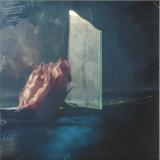
‘In Virus Times’ is an acoustic instrumental piece by Lee Ranaldo.
Composed during the pandemic, ‘In Virus Times’ is released as a onesided LP with an etching on Side B. The cover is a beautiful photo by
Lee’s friend, the great Brazilian photographer Anna Paula Bogaciovas.
Originally released as one track as part of a collaboration with Lucien
Jean for Le Presses du Reel, the music was featured on a mini CD that
accompanied a book that featured two short stories.
‘In Virus Times’, released by Mute, sees the track transformed into 4
pieces and is available on transparent turquoise vinyl with digital
download and an exclusive poster, designed, signed and individually
numbered by Lee Ranaldo. The poster design is based on an electron
microscope photo of the COVID-19 molecule.
Lee has written some of his own ‘loner notes’ for the release:
“This recording began on an evening in September 2020, stuck at home
in lower Manhattan during the dark days of the Covid-19 pandemic as
we came out of a deadly summer. A heightened sense of anxiety
stemming from the then-upcoming US Presidential elections as well as
the virus seemed to pervade all aspects of life, for myself and everyone I
knew. Its minimal quality reflects the sense of ‘motionless time’ that
many of us felt. I set up some microphones in our darkened living room
(studios being closed due to Covid restrictions), coaxing out one simple,
repetitive phrase, and then another, sounding them out into the air. The
casual home ambience - a siren or truck rumbling down the street out
the window; someone talking around the table in another part of the loft;
water running - intrudes at points. I worked to develop a few simple
thematic elements, but mostly I wanted to hear the notes and chords
ringing out, hanging in the air for a long time on that evening when the
world seemed close to stopped on its axis.
“I’d been listening closely to Morton Feldman’s catalog throughout the
pandemic. His sparse, long-duration music could often be heard playing
on repeat as we spent endless days locked inside. His willingness to do
very little, with very simple elements, and to such profound effect, has
been inspirational. I found the vast open spaces in his works thrilling,
miraculous, and comforting in those empty times. Additionally, the Drop
D guitar tuning used here has prompted my own variations on Bach’s
works for solo cello, open strings droning against melodic lines, so
simple and perfect…” - Lee Ranaldo, New York City, August 2021
- 05: Mabo Maboe (Traditionnel) + Gigue De La Quatrième Suite En Mi Bémol Majeur Pour Violoncelle
- 06: Bombé (Extrait) + Ruht Wohl, Ihr Heiligen Gebeine
- 08: Mamoudo Na Sakka Baya Boudouma Ncombi (Traditionnel) + Prélude N°14 Bwv 883
- 12: Okoukoué (Traditionnel) + Cantate 147
- 01: Cantate 147 (Extrait)
- 02: Sankanda (Traditionnel) + Lasset Uns Den Nicht Zerteilen
- 03: Mayingo (Traditionnel) + Fugue Sur Mayingo
- 04: Herr, Unser Herrscher (Passion Selon St. Jean, Chorus N°1)
- 07: Pepa Nzac Gnon Ma (Traditionnel) + Prélude De La Partita Pour Violon N°3
- 09: Agnus Dei (Messe En Si, Bwv 232)
- 10: Ikokou (Traditionnel)
- 11: Inongo (Traditionnel) + Invention À Trois Voix N°3 En Ré Majeur Bwv 789
- 13: Was Mir Behagt, Ist Nur Die Muntre Jagd (Chorus Dit &Quot; La Chasse &Quot;)
- 14: Cantate 7, Jésus Que Ma Joie Demeure
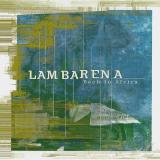
Combining Bach with traditional Gabonese music, Lambarena pays tribute to Albert Schweitzer, a doctor and musician who settled in Lambaréné in 1913. Conceived by Hughes de Courson and Pierre Akendengué, this extraordinary project brings together more than 250 artists and blends organ, baroque choirs, and African percussion in a musical celebration of rare intensity. A true timeless classic, it is now available for the first time on double vinyl, accompanied by a 4-page bilingual booklet (English/French) recounting the history of this unique album.
b 02: Sankanda (traditionnel) + Lasset uns den nicht zerteilen [Passion selon St. Jean]
[e] 05: Mabo Maboe (traditionnel) + Gigue de la quatrième suite en mi bémol majeur pour violoncelle [extrait]
[f] 06: Bombé (extrait) + Ruht wohl, ihr heiligen Gebeine [Passion selon St. Jean, mouv. 62]
[h] 08: Mamoudo Na Sakka Baya Boudouma Ncombi (traditionnel) + Prélude n°14 BWV 883 [extrait]
[l] 12: Okoukoué (traditionnel) + Cantate 147 [extraits]

- A1: Human Universe (6 21)
- A2: Jesus Joy Of Man's Desiring (3 26)
- A3: Ground In C Minor (2 41)
- A4: In Paradisum (3 27)
- B1: Nocturne I Pre Rain (3:29)
- B2: Nocturne Ii After Dawn (3:22)
- B3: Nocturne Iii Once In A Blue Moon (3:57)
- B4: Pavane Pour Une Infante Defunte (6 07)
- C1: Nocturne In C Minor (5:44)
- C2: Recollection (4 36)
- C3: Clair De Lune (2 49)
- C4: Solari (2 42)
- D1: Day One" (From Interstellar) (3:18)
- D2: New Birth (3 36)
- D3: Bolero (8 39)
- D4: 7 Variations On Twinkle Twinkle Little Star (3 50)
Auf seinem Sony Classical Debut-Album "Human Universe" zeigt der außergewöhnliche japanische Pianist und Komponist Hayato Sumino seine facettenreichen musikalischen Einflüsse in einer vielfältigen Auswahl an Stücken klassischer Komponisten wie Bach, Händel, Purcell, Chopin, Fauré und Debussy, ikonischer Filmmusik von Hans Zimmer und Ryūichi Sakamoto sowie seinen eigenen Kompositionen und Arrangements.Die Besonderheit an Hayato Suminos Klavierspiel ist sein einzigartiger, souverän-virtuoser Stil, bei dem er eine präzise klassische Technik mit dem feinen Gespür eines Arrangeurs und ausgeprägten Improvisationsfähigkeiten verbindet. So lässt er beständig Eindrücke aus Genres wie dem Jazz oder der Popmusik, in denen er ebenso aktiv ist, in seine fundierten klassischen Interpretationen einfließen."Für `Human Univers' habe ich mich von den antiken Vorstellungen des Universums und dem Zusammenhang zwischen Kunst und Wissenschaft inspirieren lassen. Die alten Griechen glaubten, dass Himmelskörper im Universum Töne aussenden und dass das gesamte Universum Harmonie und Musik erzeugt, die sogenannte 'Musik der Sphären'."Hayato Sumino ist ein außergewöhnliches Phänomen: Bereits als Teenager begeisterte der 1995 in Tokio geborene Pianist und Komponist unter dem Namen "Cateen" mit virtuosen Videos klassischer Klavierdarbietungen und emotionalen Klavierarrangements von Anime- und Games-Soundtracks ein Millionen Publikum bei YouTube. Bis heute hat über 200 Millionen Aufrufe erzielt und über 1,5 Millionen Follower bei YouTube und Instagram gewonnen. Wenngleich Hayato Sumino bereits seit seinem 2. Lebensjahr Klavier spielte und Unterricht erhielt, studierte er bis zu seinem ausgezeichneten Master-Abschluss im Jahr 2020 Informationswissenschaft und -technologie an der Universität Tokio. Noch vor Abschluss seines Studiums gewann er 2018 als Außenseiter völlig überraschend den Grand Prix bei einem der wichtigsten Klavierwettbewerbe Japan - dem PTNA-Wettbewerb. Der Gewinn war der Startpunkt seiner Karriere als professioneller Pianist. Im Anschluss nahm er für ein halbes Jahr Klavierunterricht bei Jean-Marc Luisada in Paris und avancierte seitdem auf einer Welle der Begeisterung zum Klavier-Superstar in Japan. So spielt er am 14. Juli 2024, seinem 29. Geburtstag, ein Klavierrecital vor 14.000 Menschen in der ausverkauften Tokioter Konzerthalle Nippon Budōkan.Internationale Aufmerksamkeit erregte er 2021 beim Internationalen Chopin-Wettbewerb, wo er mit seiner hervorstechenden Interpretationen das Halbfinale erreichte. Im April 2024 feierte Hayato Sumino sein spektakuläres Debüt in der Royal Albert Hall mit seiner Aufführung von Gershwins "Rhapsody in Blue", die sowohl online als auch im Konzertsaal für Aufsehen sorgte. Als Solist tritt er mit zahlreichen Orchestern auf der ganzen Welt auf, darunter die Hamburger Symphoniker, das NHK Symphony Orchestra, das Boston Pops Orchestra, das Chicago Symphony Orchestra, das Baltimore Symphony Orchestra, das Tokyo Philharmonic Orchestra, das Japan Philharmonic Orchestra und das Polish National Radio Symphony Orchestra. Sein Debüt in der Elbphilharmonie gibt Hayato Sumino im Januar 2025.

Solaire, Siegfried Kessler, that is the least we can say! Aged 4: learns piano. Aged 6: his first concert. After this: studies classical music like everyone else... until the jazz of Jack Diéval and Stan Kenton turned everything upside down. So it was goodbye to Bach...
...And hello to Dexter Gordon, Joe Henderson, Ted Curson and Archie Shepp (who he would accompany over a long period). In 1969, with Yochk’o Seffer, Didier Levallet and Jean-My Truong, he formed a group which would mark history and create a sensation: Perception. If French free jazz exists, its thanks to Kessler (and company).
The following year, the pianist recorded his first album: Live at the Gill’s Club. On this one-night concert date can also be heard Barre Phillips and Steve McCall. But it was in 1971 that Kessler would record his greatest album; still in a trio setting, but this time with bassist Gus Nemeth and percussionist Stu Martin: Solaire. Five tracks of extraordinary music, moving back and forth between modal jazz and contemporary music.
Let’s begin at the end, with the title track Solaire, on which Kessler plays a melody on flute and piano which resists all onslaughts. It sends out powerful waves, Kessler’s jazz, bubbling like hot oil (Persécution, Drum), shaking modal jazz to its roots (De l’Orient à Orion) or upsetting the memory of a cantata (Bach Hcab). The piano is an instrument which can provide a tendency towards, demonstrative technique; with Kessler, it is something else: a joyful persecution!

- A1: Raymond Guiot - Quintett Flash
- A2: Herve Roy - Repetition Echo
- A3: Raymond Guiot - Primitive Spirit
- A4: Jean-Pierre Martin - Jelly Roll Dance
- A5: Pierre Dutour - Savage Trumpet
- A6: Pierre-Alain Dahan & Slim Pezin - Slim Bertha
- B1: Jean-Pierre Martin - Sesame
- B2: Sauveur Mallia - All The Bass
- B3: Michel Gonet - Cuica-Racas
- B4: Pierre-Alain Dahan & Mat Camison - Baby Rider
- B5: Pierre Bachelet & Mat Camison - Miami Blues
- B6: Guy Pedersen - Bass Session
- C1: Andre Arpino & Maurice Plessac - Pop Drums
- C2: Guy Pedersen - Indian Pop Bass
- C3: Michel Gonet - Nuclear Tension
- C4: Michel Gonet - Red Sunset
- C5: Pierre-Alain Dahan & Mat Camison - Rythmiques No. 10
- C6: Pierre-Alan Dahan & Slim Pezin - Soul Car
- C7: Pierre-Alain Dahan - Slowrama
- D1: Sauveur Mallia - Double Polygone
- D2: Pierre-Alain Dahan & Mat Camison - Long Time Playing
- D3: Michel Gonet - Devil Dance (Version B)
TELE MUSIC is a label of Éditions Musicales Sforzando now owned by BMG Production Music. It is entirely devoted to the music library, that is to say, music for sound illustration used in audiovisual productions. Created in 1966 by Roger Tokarz,
just before advertising was allowed on French television, Editions Sforzando specialized from the outset in sound illustration for radio and television.
This collection, soberly entitled “Volume 2”, is the sequel to “Volume 1”, produced with equal care, passion and fervour by Lord Funk & DJ L.C. In the mid-90s, Tele Music vinyl was sold at ridiculously low prices. Often disparaged by collectors and record shops, considered by some as lift music or vulgarly called “music by the meter”, the music store was only of interest to fans of instrumental music! But in the 2000's, it had a second life and saw its prices soar on Discogs, thanks to sampling and digging in Hip-Hop mainly. This advent of the library is an era that Lord Funk, curator of this compilation, experienced when he brought several music library collections to New York City (NYC) to his A1 Records stronghold in 1997.
In this 2nd volume, Lord Funk & DJ L.C. have chosen a range of music from 1969 to 1983, from psychedelic jazz to electro funk via rnb, soul and jazz-funk. Most of the titles in this collection were recorded in the magic place that was the famous CBE recording studio set up by Georges Chatelain, Janine Bisson and Bernard Estardy. Bernard, nicknamed the giant, was a sound genius and a mixing perfectionist. Georges Chatelain was an electronic engineer. Together, they brought a sound,
a colour, a trademark. Bernard Estardy was also considered as one of the greatest French sound engineers and an energetic organist for Nino Ferrer or Nancy Holloway. We warmly thank Julie Estardy for her total and unreserved involvement in these reissue and compilation projects.
The combination of all these prodigies has given TELE MUSIC a phenomenal and unique sound colour in the service of a sound repertoire that is now part of the French heritage.

Something's happening in country music. Newer artists and younger audiences are embracing instrumentation, vocal stylings and song structures long thought drowned in the ocean of slick, snap-track productions. Not easily dismissed as merely regional or a novelty throwback, the trend could be on its way to full-blown movement. If so, Kimberly Kelly's Show Dog Nashville debut album may prove to be the clarion call. Either way ... she's not asking. I'll Tell You What's Gonna Happen is more than her (abbreviated) album title, more than a reference to her connection with a Country Music Hall of Famer, and much more than a historical footnote. Rather, it's a statement of musical confidence earned the only way that happens: talent, work ethic, experience, vulnerability, and courage. For Kelly, it's all of a piece. "I like to think of it as a sub-genre of country music called 'country music,'" she says with a wink. A native of Lorena, Texas, Kelly has multiple connections to the Nashville industry. She has also been unafraid to defy convention. "This is not my first rodeo," she says of her label debut. "I worked really hard in Texas before I came to Nashville. I wrote songs, put out records, did a radio tour, and played every weekend while earning a Master's degree. They say don't have a 'plan B,' but I watched my mom struggle to get that next level of pay. My mom earned her bachelor's degree when she was 60, so school was important to me to know I could take care of myself.

Catalina Matorral is a duo; Marion Cousin and Borja Flames make up its double head and four hands. At the beginning of the 2010s, they were called June et Jim -- they released some disturbing EPs before joining the label Le Saule (a small, chivalrous table whose holy grail is everything unheard, where folk- singing is avant-garde and avant-garde is synonymous with enchantment). Their first LP, Les Forts (2012), evoked the songwriting of indie-hobos inspired by Latin America, contributing to the rejuvenation of French music. Noche Primera (2013) went even further by vibrating in various reveries, from African songs to Spanish medieval music, from Purcell to Bach. It blew hot and cold under a psychedelic candlelight. The record in question has been maturing for seven years in eccentric barrels, marinating in the shadow of Marion and Borja's respective evolutions, nourished by their individual obsessions. Marion fixated on songs and dances from the Iberian Peninsula. This gave birth to a minimalistic, organic record featuring the cellist Gaspar Claus, where humming trembles among frowning pizzicatos, thin drones and throbbing arpeggios. She went on to release another album with the electronic duo Kaumwald, an oeuvre at the crossroads of vernacular narratives and experimental music, simmering everyday songs in an insolently modern production. Meanwhile, Borja leaned towards an intellectual, synthetic and furious pop; made two albums to awaken the dead, somewhere between Moondog and Battiato. They are two conceptual, electrifying and dance-inducing recordings for the phosphorescent masses. ...chimeric narration, heady verses, pop fragments, horizontal synths, distorted technologies. One would think they're listening to an opera composed by Robert Ashley or Laurie Anderson, based on an improbable libretto written by anthropologist Jeanne Favret-Saada, and performed by holograms of Brigitte Fontaine and Areski -- who unexpectedly regurgitate bits of blunt folk, binary jazz, baroque songs and ghostly madrigals. Micro-events, great enchantments. This record was written and recorded by two people, tinkering feverishly for seven years. It was blessed with the furtive appearances of faithful friends: Gaspar Claus played the cello; Igor Estrabol the clarinet, trumpet and flugelhorn; Renaud Cousin the drums; Ernest Bergez played the violin and whimsically mixed the tracks like a bonesetter-scientist. At the crossroads of worlds, eras and moods, Catalina Matorral invents a curiously rural science fiction that confounds poetry with white magic and puts French music in a permanent tension between the cosmos and manure...
- 1
