Heute kündigt die mitreißende Pfeiferin Molly Lewis ihr Debütalbum „On The Lips“ an, das am 16. Februar über Jagjaguwar erscheint. Im vergangenen Jahr hat Molly an der Seite von Mark Ronson und Andrew Wyatt eine der emotionalsten Szenen des Hollywood-Hits „Barbie“ vertont, Modehäusern wie Chanel, Gucci und Hermes ihr einzigartiges Talent geliehen und Weyes Blood auf Tour unterstützt. Auf ihrem kommenden Debütalbum lädt sie ein ins Café Molly, eine Lounge-Bar, wie es sie nicht mehr gibt. Das Licht ist gedämpft, die Martinis sind eiskalt, die Bänke sind aus Samt, und die Bühne ist bereit für das elektrisierende Talent der Pfeiferin Molly Lewis. Nach dem exotischen Stil der „The Forgotten Edge“ EP und der an Tropicalia angelehnten „Mirage“ EP wollte sie den Sound des Café Molly für ihr Debütalbum „On The Lips“ einfangen, eine verträumte Hommage an klassische Stimmungsmusik, die neblige Visionen von Hollywood-Jazzclubs, italienischen Kinosoundtracks und anhaltenden Umarmungen zwischen Liebenden heraufbeschwört. Ziehen Sie sich also einen Stuhl heran, bestellen Sie Ihren Lieblingsdrink und machen Sie sich bereit, sich zu verlieben. „On The Lips“ wurde mit dem Produzenten Thomas Brenneck (Menahan Street Band, Charles Bradley, Amy Winehouse) in den Diamond West Studios in Pasadena aufgenommen. Während der Sessions wurde Molly auf den 10 Tracks des Albums von einer Reihe gefeierter Musiker unterstützt, darunter Nick Hakim, der für den Latin Grammy nominierte brasilianische Gitarrist Rogê, Leland Whitty und Chester Hansen von Badbadnotgood, die Chicano-Soul-Gruppe Thee Sacred Souls auf dem melancholischen "Crushed Velvet", der experimentelle Jazz-Pianist Marco Benevento und Leon Michels von El Michels Affair. Das Album enthält zwei Coverversionen: Dave Berrys Pop-Standard "The Crying Game" aus den 1960er Jahren und Jeanettes "Porque Te Vas" von 1974. Gleichzeitig mit der heutigen Ankündigung wird die Single "Lounge Lizard" mit Musikvideo veröffentlicht, inspiriert von Julie Londons Erscheinung im Film The Girl Can't Help It von 1956.
Search:jean michel
Contradictory accounts of Miles Davis’ creation of the soundtrack to Louis Malle’s film noir Ascenseur pour l'Échafaud have all become part of its legend. Rarely has a soundtrack been so decisive. Nearly seventy years on, beyond the myth, this taut, feverish recording, imbued with extreme dramatic tension, remains one of the Miles’ finest records. The basic outline remains: Jean-Paul Rappeneau suggested to Malle asking Miles Davis to create the film's soundtrack who agreed to record the music after attending a private screening. Davis was performing at the Club Saint-Germain in Paris in November 1957 and on December 4, he brought his four sidemen to the recording studio without having had them prepare anything. Davis only gave the musicians a few rudimentary harmonic sequences he had assembled in his hotel room, and, once the plot was explained, the band improvised without any precomposed theme, while edited loops of the musically relevant film sequences were projected in the background. Bassist Pierre Michelot recalled in 1988 that “Miles just asked us to play two chords, D minor and C7, 4 bars of each, ad lib.” Typically, Miles planned very little but know exactly what he wanted. François Leterrier, the film’s Second Assistant Director picks up the story: “The session started at around ten o’clock and went on until dawn. The screen in the auditorium was showing the scenes for which Miles had devised some harmonies, and they were edited into a loop. And that’s what makes this music unique: it was entirely improvised in conditions that went back to the days of silent films, while watching frames shot in black and white by cinematographer Henri Decaë: tracking shots of Jeanne Moreau wandering down the Champs-Elysées at night, passing in front of lit window displays or going into bars, while looking for her lover/murderer alias Maurice Ronet … All of us there in the dark auditorium were aware that something extraordinary was taking place, something that had definitely never happened before. … In the small hours we all met up again at the Pied de Cochon in Les Halles, and Louis was looking at Miles with the disbelieving eyes of a child … as if he couldn’t believe the gift he’d just received. Even in his wildest dreams he had probably never imagined what his film would be like once it had been as if illuminated by the trumpet of Miles, incisive or wrapped softly in cotton.” The music was released on 10” by Fontana and received the Grand Prix from France’s Académie Charles Cros. It was released in the USA on Columbia as the A-side of the 12” LP Jazz Track, which received a 1960 Grammy nomination for Best Jazz Performance, Solo or Small Group. This beautiful re-issue of the original recording is pressed on 180g vinyl at GZ, and packaged in a deluxe gatefold tip-on jacket with Boris Vian’s original liner notes and Jean-Pierre Leloir’s iconic studio photo of Miles and Jeanne Moreau, and an essay on the circumstances that led to this out-of-the ordinary music by Franck Bergerot.
Claude Sicre ist einer der Pioniere der Verteidigung und Anerkennung der okzitanischen Kultur, französicher Chansonier, auch bekannt als Mitglied der Fabulous Trobadors, und positiver Mensch. Es ist ein Projekt, das Francis Cabrel sehr am Herzen lag. Er wollte ein Lied als Hymne an seine Stadt, seine Region komponieren. Neben dem musikalischen Aspekt hat Francis auch das Cover gemalt, das Video gezeichnet und produziert. Mit der gleichen Logik wird dieses Sammlerstück natürlich auch in einer unabhängigen Struktur (u.a. Label/Vertriebe) veröffentlicht. Hier ein paar Worte von Francis Cabrel: "Das Wortspiel ist so klein, wie die Figur groß ist. Ein Stück von Sicre (Claude), oder "sucre" (Zucker), also Positivität, Wohlwollen, Humor, Gelehrsamkeit all das in deinem schwarzen Kaffee.....ein Tag in Toulouse beginnt." Es ist eine Hommage an diese Stadt, die mir sehr am Herzen liegt. Zwischen der Rue Caraman und der Rue Matabiau habe ich dort meine ersten Lieder gesungen und aufgenommen. Da der Platz nicht ausreicht, möchte ich ihnen hier danken, insbesondere Richard und Daniel Seff, Jean-Pierre Mader, Michel Art Mengo, Émile, Images und Gold, all denen, die das Chanson aus der Region Toulouse so groß gemacht haben, nach dem großen Claude, dem alle folgen. Einseitig bespielte 7'-Vinyl-Single mit dem Titel Une Morceau De Sicre, die Farbe der Platte hier ist Ozean-Blau.
SOARS is the solo project of Kristian Karlsson, synth player in CULT OF LUNA and bass player/vocalist in PG.LOST - and yes, `Repeater', a truly epic instrumental rock album bustling with delay-drenched drama and joyful yet melancholic melodies will make every PG.LOST fan very, very happy. Why is it not a PG.LOST album then? "I got tired of discarding ideas I've written that didn't ft PG.LOST, but at the same time were too good for my ears to throw away. PG.LOST as a collective works at a relatively slow pace, while I by default write music all the time_ so eventually it became clear to me that I needed a new outlet for all those ideas". Karlsson released his debut solo album `Enfold' under the Soars moniker in 2021. Recorded and released all by the artist himself, `Enfold' made waves in the post rock world and the vinyl pressing sold out quickly. Repeater connects seamlessly with the debut album: propelled by the powerful drumming of Christian Augustin (Stiu Nu Stiu, live drummer of Cult of Luna) and Karlsson's charismatic synths melodies, these eight tracks share a distinct reference to the cinematic works of artists like Vangelis and Jean-Michelle Jarre, as well as post rock acts like God is An Astronaut, Caspian and Mogwai. "Soars is a personal journey and expression of a sound that has been developed over the years," explains Karlsson. And this long-term development of his artistry ensures that while painting with a familiar palette of tones and textures as the aforementioned artists, Karlsson always paints a picture that is very much his own. Title track «Repeater» comes saturated with orchestral grandeur and melancholy, and yet somehow exudes a sense of hopefulness which lingers throughout the album. Driven by layers of processed vocals and glorious melodies, «Uprise» literally gives rise to waves of exalted joy, while tracks like «The Waiting» or «Grow» demonstrate that Repeater shines through sheer strength of composition. Wrapping his retro synth sounds into a fat modern production, Repeater is stuffed with stunning dynamic arcs, catchy melodies and atmospheric density. The recording and mix are fawless and, in a sense, timeless. "The recording process was pretty simple," explains Karlsson matter-of-factly. "A lot of the ideas was formed at home in my kitchen and took its fnal form in the studio." With Soars, Karlsson is proving his innate ability to convert his blithe spirit into sound waves. Repeater is a manifestation of a man who lives and breathes music - an album that grabs you and carries you away.
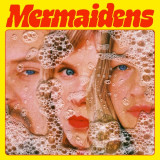
New Zealand indie trifecta Mermaidens, are set to make a resounding splash in the music scene yet again with the announcement of their fourth self-titled album and release of the project's first single ‘I like to be alone’. The trio, comprising of Gussie Larkin (guitar/vocals), Lily West (bass/vocals), and Abe Hollingsworth (drums), has been on an impressive journey of musical excellence, boasting three critically acclaimed albums, international tours, and a slew of accolades to their name. With a sound that is both bold and adventurous, Mermaidens' music is a testament to their unwavering creativity and relentless work ethic. Their upcoming self-titled album, a product of the band's tireless efforts between 2019 - 2022, promises to be a captivating sonic journey, delving into themes of self-awareness, introspection, long-term love, and even channelling political anger and frustration. Recorded mainly at Surgery Studios in Wellington, with the engineering prowess of Lee Prebble and produced by Samuel Flynn-Scott of The Phoenix Foundation fame, the album also saw the band stepping up their production game with Gussie and Lily working their magic with Protools in their DIY home studios, showcasing their growth and versatility as artists. “Working with Sam has really been a round-trip in our creativity,” as Lily explains, “we grew up listening to Sam’s early records and here we are getting the inside scoop on how to make that kind of magic. Listening to Pegasus today still transports me to a time when I listened to music on a Walkman. In the best possible way - sometimes it felt like we’d added an evil genius to the mix, we’d be working on a song and he’d come in like a mad scientist with fresh ideas to try.” To give fans a taste of the upcoming album's brilliance, Mermaidens have released new single 'I like to be alone.' The song has been part of the band's live repertoire for a while and explores the fulfilling contentment of being alone and the struggle to convey this sentiment to a partner. Its relatable lyrics capture the essence of cherishing solitude while navigating the complexities of human connections. Gussie's candid and honest approach to self-discovery is complemented by the song's, Michel Gondry inspired video, as Gussie explains: “The giant jean pocket and denim world were created by Hannah Webster, a textile designer and illustrator based in Wellington. Hannah took all the wild ideas for props and made them come true! I’m still in awe of how she managed to sew a 6x6 metre backdrop for the denim world out of whatever scraps she could find. The video captures our playfulness and sense of humour, and is a hint of what’s to come for the rest of the music videos. I love the way the story wraps up with the three of us together, literally playing “in the pocket”. Mermaidens' self-titled album will be released on Friday 3 November 2023 and is available for pre-order now. UK listeners will be able to pick up an exclusive Rough Trade vinyl pressing in transparent red, along with an A3 poster and jumbo bumper sticker. Having released their last two albums through iconic local label Flying Nun, Mermaidens will be released independently. Creative control is an important pillar for the band, who are hands on in every facet of their projects. Mermaidens gather their community close via their hugely popular multi-city boutique festival Mermgrown, hosting peers including Womb, Hans Pucket, Vera Ellen (Girl Friday) and Kōtiro from 2021 onwards. They've been invited to share the stage with Death Cab For Cutie, Sleater-Kinney, Gang of Four, Parquet Courts, Lorde and The Veils, and have toured extensively in Europe, the UK, and Australia.
- 1: Ángel Cabral (Sung By Edith Piaf) La Foule
- 2: Georges Bizet Carmen: "Habanera
- 3: Mike Wilsh Et Mike Deighan (Sung By Joe Dassin)
- Waterloo Road (Les Champs-Elysées)
- 4: Franz Lehár La Veuve Joyeuse: "Heure Exquise
- 5: Joseph Kosma Les Feuilles Mortes
- 6: Jean- Philippe Rameau Les Indes Galantes: Danse Des
- Sauvages
- 7: Michel Legrand Un Été 42
- 8: Georges Brassens Les Copains D'abord
- 9: Charles Gounod Romeo Et Juliette: "Ah, Je Veux Vivre!
- 10: Francis Lai Un Homme Et Une Femme
- 11: Jean-Jacques Goldman , Arr. Gautier Capuçon/Jérôme
- Ducros Pense À Nous
- 12: Ennio Morriconne Chi Mai
- 13: Maurice Ravel Pavane Pour Un Infante Défunte
- 14: Charles Aznavour La Bohème
- 15: Claude Debussy , Arr. Jérôme Ducros After Jascha
- Heifetz Beau Soir
- 16: Richard Cocciante Belle (Notre Dame De Paris)
- 17: Jean-Jacques Goldman Envole Moi
- 18: Philippe Sarde La Chanson D'hélène, From "Les Choses
- De La Vie" Soundtrack
- 19: Jacques Offenbach Les Contes D'hoffmann: Barcarolle
- 20: Georges Delerue Le Mépris
- 21: Gabriel Fauré Sicilienne
- 22: Vladimir Cosma , Arr. V. Cosma La Boum
Place of longing Paris - with the cellist Gautier Capuçon "Gautier Capuçon is like a diamond in a ring and sparkles on its setting", with enthusiasm the New York Times resorted to figurative comparisons. With such effusive praise, it is no wonder that the famous cellist's albums are also absolute bestsellers.
Intuition, Emotions and Sensations are now followed by his next album with a ravishing program: Destination Paris is dedicated to atmospheric evergreens and ranges from popular film music to French chansons and classical works.
Synthesizer king J.B. Banfi, a.k.a. Giuseppe 'Baffo' Banfi, hit the record market with the great italian prog rock outfit Biglietto per l'Inferno who released a legendary LP in 1974 on Trident and have been reivindicated in several occasions since with the release of lost recordings from the era as well as unearthing an unreleased 1974 live album. The band existed between 1972 and 1975, and had both Pilly Cossa on Hammond doing the virtuoso work and Baffo's keyboard explorations adding sound texture and atmosphere. Their second LP was recorded and mixes were to be produced by Klaus Schulze, but it remained unissued due to the Trident label flop. The band split shortly after this, but Baffo continued his experiments with electronic keyboards.
In 1978 Baffo released his first solo LP 'Galaxy My Dear', credited to J.B.Banfi and echoing huge influences from his friend and master Klaus Schulze, who would also produce his two next releases. A total DIY domestic home recording, with all the limitations implied but also with all its warmness within, 'Galaxy My Dear' is entirely played by Banfi and shows an accurate taste in his use of the synths, plus of course a strong kraut / cosmiche appeal that links the album's sound to that of the early Tangerine Dream or Ash Ra Tempel, but also brings a hint of Jean-Michel Jarre or even a certain reminiscence of the early electronic experiments by Franco Battiato and is a good contender to be filed along other Wah Wah reissues like those of Roberto Cacciapaglia or Franco Leprino.
Comes in original artwork with notes written by Baffo Banfi himself in a limited edition of 500 copies only.
Experimental Rock / Abstract Hip-Hop / Post Industrial music Pascal Bouaziz used to be the singer and leader of French rock band Mendelson, and "Bruit Noir" (Black Noise) is his side project. This is a completely new venture, a departure from everything he's done over the last 20 years, bringing together hard-hitting lyrics and biting sounds. Boaziz has improvised lyrics over music by drummer Jean-Michel Pirès, who has played with Bed and Married Monk, a blend of the stripped-down clarity of Pérec's A Man Asleep and the stormy punk of Suicide. Crossing the boundaries of the politically incorrect, Bruit Noir offers a raw, hard-hitting album, where the sincerity of the words blends with the intensity of the compositions.
French Psych-JAZZ-Soul-FUNK original soundtrack for initial soft erotic drama from 1973, later re-edited into "Sex Revolution" hardcore! "Jeu de Dames, la libération des femmes" (1973), a film by director Christian Lara, is a vaguely subversive charm flick that won't be remembered for a long time. An amusing detail, however, is that Georges de Caunes, father of Antoine de Caunes, the famous French TV personality, plays the lead role alongside Danielle Palmero. It's just one of a number of naïve films that, without being erotic, is sufficiently olé-olé that it failed to find a place in theaters on the traditional circuit. Faced with this commercial failure, the unscrupulous producer at the time, anxious to save his investments, decided to re-edit the film so that it could be screened in the X-rated circuit. He rechristened the film "Sex Revolution" in a more racy style, inserting more hardcore scenes to appeal to fans of the genre. Although Georges de Caunes is no longer credited on the poster or in the credits of "Sex Revolution", he finds himself, in spite of himself, promoted to lead actor in a porn movie, much to the delight of his son Antoine de Caunes, who is still dreaming 50 years later of finally being able to watch this forgotten masterpiece of the 7th art. The film seems to be a dud (pn: the author haven't seen it), but as for the music, Jean Claudric is particularly inspired and offers us one of the best French jazz funk soundtracks, which would not blush at the comparison with the best of the genre, such as Michel Legrand's "Un homme est mort", or Jean-Pierre Mirouze's "Le mariage collectif", previously released by Born Bad. Four short tracks, one with pyschedelic touches, the secomd more funky, the third a bit soul-jazzy, the fourth a French typical melancholic-melodic one makes a hot 7"-EP.
Experimental Rock / Abstract Hip-Hop / Post Industrial music Pascal Bouaziz used to be the singer and leader of French rock band Mendelson, and "Bruit Noir" (Black Noise) is his side project. This is a completely new venture, a departure from everything he's done over the last 20 years, bringing together hard-hitting lyrics and biting sounds. Boaziz has improvised lyrics over music by drummer Jean-Michel Pirès, who has played with Bed and Married Monk, a blend of the stripped-down clarity of Pérec's A Man Asleep and the stormy punk of Suicide. Crossing the boundaries of the politically incorrect, Bruit Noir offers a raw, hard-hitting album, where the sincerity of the words blends with the intensity of the compositions.
Already bandmates within IDALG, Jean-Michel Coutu and Yuki Berthiaume-Tremblay have been working on new material for some time, from which a distinct identity emerges: the echoes of exotic post-punk, the polychrome and nervous plot of an art rock space opera. YOCTO, in addition to the name given to this new project, is a micro unit of measurement that reflects well this mini-cyclic and fractional music, drawing its DNA from mid-70s underground rock (Television / Talking Heads / Devo) and sci-fi series opening credits. As a leader of this band, Yuki Berthiaume-Tremblay (Jesuslesfilles, IDALG) sings rebellion anthems alongside Jean-Michel Coutu (IDALG) on guitar, Emmanuel Éthier (Chocolat) on bass, Félix-Antoine Coutu on drums, and Carl Matthieu Neher on v-organ. The first album, Zepta Supernova, co-produced by Emmanuel Éthier (Corridor, Pierre Lapointe, P'tit Belliveau) and Jean- Michel Coutu (Jesuslesfilles, CRABE, PYPY), is released on Canadian label Duprince and French label Requiem pour un Twister. An incisive odyssey where fatal obsession, pernicious pride, chained star, and judgment day are at issue. In this series of science-fiction fables, Yocto speaks to a completely megalomaniacal antagonist. The latter has a predisposition to indulge in his own vices - which Yocto has understood well and will makegood use of: through her cunning and pure ingenuity, she will undermineherrival untilhis lucky starbecomes asupernova
The EP also includes a remix of the popular single ‘SAMO’, which
spent four weeks on the BBC 6 Music playlist, accompanied by an
animated lyric video paying homage to the graffiti tag it was named
after by Al Diaz and American artist and wunderkind, Jean-Michel
Basquiat. The final track on the EP is a remix of ‘Waiting on a Train’,
presenting a new and special version of the original song, with the
presence of featuring artists Ellen Beth Abdi and Chunky remaining
strong.
Formed in 1978 with a core line-up of Jez Kerr, Martin Moscrop and
Donald Johnson, A Certain Ratio emerged from the hallowed grounds
of the late 1970s punk scene, and from that day on they’ve moved
forwards with gleeful disregard for the boundaries of style and genre,
their eye fixed firmly on constant progression.
- A1: I Wasn't Always A Thief
- A2: Finding Zia
- A3: Thick As Thieves
- A4: Korrin's Keep
- A5: Escape The Tower
- A6: Dungeons & Dragons
- A7: Journey To Neverwinter
- A8: Reunited With Kira
- A9: Forge Begins
- A10: Sofina Starts
- A11: That's Why You Came Back
- A12: Into The Floor
- A13: Execution Escape
- A14: Be Gone
- A15: Magic Show Melee
- A16: Owl Bear
- A17: Doric's Story
- B1: Szass Tam's Story
- B2: Wizardry
- B3: Gwynn
- B4: Down At The Cemetery
- B5: Xenk
- B6: Thayan Flashback
- B7: Swear To It
- B10: The Ruckus
- B11: Themberchaud
- C1: Trapped
- C2: Swim To The Beach
- C3: Goodbye Xenk
- C4: Helmet Attuning
- C5: Remembering You
- C6: Never Stop Failing
- C7: The Heist
- C8: Forge's Speech
- C9: Into The Castle
- C10: Simon Does It
- C11: Sofina's Trickery
- C12: Entering The Arena
- D1: The Maze
- D2: Beneath The Maze
- D3: Sorry Forge
- D4: Turn The Ship Around
- D5: Final Battle
- D6: Fallen Foe
- D7: A Red Wizard's Blade
- D8: The Reawakening
- D9: Forge's Tale
- B8: The Underdark
- B9: Unlock The Helmet
Black Vinyl[37,77 €]
Ein charmanter Dieb und eine Gruppe ungleicher Abenteurer unternehmen einen epischen Raubüberfall, um ein verlorenes Relikt zu bergen.
Mit ”Dungeons & Dragons: Honour Among Thieves” kommt die vielschichtige Welt des legendären Rollenspiels in einem unterhaltsamen und actiongeladenen Abenteuer auf die große Leinwand. Chris Pine, Michelle Rodriguez, Regé-Jean Page, Justice Smith, Sophia Lillis, Chloe Coleman, Daisy Head und Hugh Grant spielen die Hauptrollen in diesem epischen Fantasyfilm, der auf dem kultigen Hasbro-Tischspiel Dungeons & Dragons basiert.
Der Soundtrack stammt aus der Feder des Grammy und Emmy Gewinners Lorne Balfe, der auch die Musik von Blockbustern wie Mission Impossible Fallout oder preisgekrönten Serien wie The Crown geschrieben hat. Mit rasanten Orchesterarrangements und starken Melodien erweckt der schottische Komponist diesen Film zum Leben.
Über die Musik selbst sagt Balfe: ”Ich bin so glücklich, der Komponist für ’Dungeons & Dragons: Honour Among Thieves’ zu sein. Ich habe mit diesem Spiel begonnen, als ich 7 Jahre alt war, und ich bin begeistert, dass eine neue Generation das Spiel entdeckt, mit dem ich aufgewachsen bin. Die Musik ist voll von zarten, mystischen, keltischen Reisen, gemischt mit einem großen, üppigen Kino Orchester. Mit diesem Werk konnte ich meine schottischen Wurzeln richtig ausleben!”
- A1: I Wasn't Always A Thief
- A2: Finding Zia
- A3: Thick As Thieves
- A4: Korrin's Keep
- A5: Escape The Tower
- A6: Dungeons & Dragons
- A7: Journey To Neverwinter
- A8: Reunited With Kira
- A9: Forge Begins
- A10: Sofina Starts
- A11: That's Why You Came Back
- A12: Into The Floor
- A13: Execution Escape
- A14: Be Gone
- A15: Magic Show Melee
- A16: Owl Bear
- A17: Doric's Story
- B1: Szass Tam's Story
- B2: Wizardry
- B3: Gwynn
- B4: Down At The Cemetery
- B5: Xenk
- B6: Thayan Flashback
- B7: Swear To It
- C1: Trapped
- C2: Swim To The Beach
- C3: Goodbye Xenk
- C4: Helmet Attuning
- C5: Remembering You
- C6: Never Stop Failing
- C7: The Heist
- C8: Forge's Speech
- C9: Into The Castle
- C10: Simon Does It
- C11: Sofina's Trickery
- C12: Entering The Arena
- D1: The Maze
- D2: Beneath The Maze
- D3: Sorry Forge
- D4: Turn The Ship Around
- D5: Final Battle
- D6: Fallen Foe
- D7: A Red Wizard's Blade
- D8: The Reawakening
- D9: Forge's Tale
- B8: The Underdark
- B9: Unlock The Helmet
- B10: The Ruckus
- B11: Themberchaud
Color Vinyl[47,27 €]
Ein charmanter Dieb und eine Gruppe ungleicher Abenteurer unternehmen einen epischen Raubüberfall, um ein verlorenes Relikt zu bergen.
Mit ”Dungeons & Dragons: Honour Among Thieves” kommt die vielschichtige Welt des legendären Rollenspiels in einem unterhaltsamen und actiongeladenen Abenteuer auf die große Leinwand. Chris Pine, Michelle Rodriguez, Regé-Jean Page, Justice Smith, Sophia Lillis, Chloe Coleman, Daisy Head und Hugh Grant spielen die Hauptrollen in diesem epischen Fantasyfilm, der auf dem kultigen Hasbro-Tischspiel Dungeons & Dragons basiert.
Der Soundtrack stammt aus der Feder des Grammy und Emmy Gewinners Lorne Balfe, der auch die Musik von Blockbustern wie Mission Impossible Fallout oder preisgekrönten Serien wie The Crown geschrieben hat. Mit rasanten Orchesterarrangements und starken Melodien erweckt der schottische Komponist diesen Film zum Leben.
Über die Musik selbst sagt Balfe: ”Ich bin so glücklich, der Komponist für ’Dungeons & Dragons: Honour Among Thieves’ zu sein. Ich habe mit diesem Spiel begonnen, als ich 7 Jahre alt war, und ich bin begeistert, dass eine neue Generation das Spiel entdeckt, mit dem ich aufgewachsen bin. Die Musik ist voll von zarten, mystischen, keltischen Reisen, gemischt mit einem großen, üppigen Kino Orchester. Mit diesem Werk konnte ich meine schottischen Wurzeln richtig ausleben!”
Following on from the Bergisch-Brandenburgisches Quartett’s anarchic Live ’82 (BT095), Black Truffle continues its deep dive into the archives of legendary drummer/accordionist/photographer/composer/conceptual prankster Sven-Åke Johansson with Scheisse ’71. Recorded in November 1971 during the Berliner Jazztage at a heavy-hitting concert that also included the Spontaneous Music Ensemble and groups led by Peter Brötzmann, Manfred Schoof, and Masahiko Sato, Scheisse ’71 is the only document of a wild, otherwise unrecorded quintet featuring Johansson on drums, accordion and oboe d’amore, legendary free jazz vocalist Jeanne Lee, her husband Gunter Hampel on vibes, flute and bass clarinet, live electronics pioneer Michael Waisvisz on modified Putney (VCS 3) synthesizer, and the unknown Freddy Gosseye on electric bass. Part of a festival centred on giants of jazz like Duke Ellignton and Dizzy Gillespie, the radical performance shocked its audience, who can be heard heckling and yelling abuse at points, including the titular exclamation of ‘Scheiße!’ Clocking at just over half an hour and recorded in raw but detailed stereo by Johansson himself, the music burns with intensity while also making room for spacious passages and frequent dynamic movement. Beginning with Lee’s voice, Hampel on flute and Johansson on oboe d’amore in a bird-like game of call and response, the unexpected entry of Waisvisz’s tortured, squelching synth bursts prompts the first of many changes in energy and instrumentation, as Gosseye’s busy, roving bass enters and Johansson moves to the kit, his swinging cymbal work and juddering toms extending the approach of Sunny Murray or early Milford Graves. The presence of synthesizer, electric bass, and Lee’s highly amplified voice moves the quintet away from conventional free jazz textures, at times pushing into zones of abstract free sound reminiscent of what groups like MEV, AMM or Johansson’s MND were exploring in the same years. But the energy and joyful melodicism of the music keep it rooted in the tradition of American fire music and its European inheritors. Capable of changing gears in an instant from ferocious blow outs to fragile tapestries of chiming vibes and fizzing synth, the music finds space for Lee’s post-bop free scat (which integrates shrieks and howls just as a post-Ayler saxophonist might), Gosseye’s virtuosic bass runs (a rare attempt to apply the classic free jazz style of players like Alan Silva or Henry Grimes to the electric instrument), Johansson’s folkish accordion interjections, and even a sustained passage of unison bass clarinet and electric bass riffing in its second half. Special mention should be made of Waisvisz’s Putney performance, one of the earliest documents of this under-recorded instrument inventor and player, here playing a major role in giving the music its wildly exploratory, primordial air, his buzzing glissandi and bubbling filter sweeps at times howling like a distressed monkey. Arriving in an austerely stylish sleeve with beautiful black and white photographs by Johansson, Scheisse ’71 is an essential recording that adds yet another layer to our appreciation of this golden era of radical free music.
After an international tour of over 100 dates, French 79 is ready to unveil his third album entitled TEENAGERS. This opus gives us such unique and strong sensations, partly because the synths were recorded at Jean-Michel Jarre's studio in Paris and the tracks were mixed and mastered by Damien Quintard a Miraval studios.
TEENAGERS alternates between signature songs like the masterful opening song, as well as unsuspected romantic and nostalgic songs, epic and flamboyant
tracks, tracks with liberating harmonies, sensational electronic swirls, pop gems ("You Always Say" feat. Prudence, the singer of The Dø) and sumptuous introspective tracks ("Walking on Mars"). Not only does this opus reflect his wide range of talents as a songwriter and producer, but also it definitely takes us on a very powerful sensorial and introspective journey.
Romano, bassist Jean-François Jenny-Clark and pianist Joachim Kühn.
They hadn’t rehearsed anything, as if entering the studio to record an
album without any plan was something normal. The musicians were
obviously very used to playing with each other, as the five tracks on
Our Meanings And Our Feelings seem to flow perfectly without any
hint of improvisation. The zokra, an oriental clarinet that Michel Portal
plays on “Walking through the land” and “Dear old Morocco” brings a
singular touch to this album. This singularity is transcended by
Joachim Kühn’s ability to easily go from the piano to the saxophone
alto, from supporting to soloing, before playing the bells, then the
tambourine, opening the soundscape. Our Meanings And Our
Feelings may not be the first French free jazz record – as it was
preceded by the fantastic Free Jazz by François Tusques, released in
1965 and on which Michel Portal plays as well - but it remains one of
the most important. Its incredible outburst of sounds and melodies is
completely free yet never turns into cacophony. 44 years after its
release, it is still urgent to listen to Our Meanings And Our Feelings
and what these five talented musicians had to tell us.
On June 27th, 1969, Michel Portal pushed the door of the Pathé
Marconi studios. With him were drummers Jacques Thollot and Aldo
Cult album of Brazilian music finally reissued || Official reissue of this real tour de force of Brazilian creativity, where the mighty Naná Vasconcelos is joined by his friends Nelson Angelo and Novelli (both members of the legendary Clube da Esquina) to create one of the greatest Brazilian albums ever recorded outside of Brazil.
The three musicians grasp here for the kind of musical freedom that could then only be achieved outside of their country. A boundary-pushing experimentation that makes your soul flow and is to be enjoyed at large.
Recorded in 1975 and released in Pierre Barouh's label Saravah. Artwork by the great Belgian artist Jean-Michel Folon.
Cult album of Brazilian music finally reissued || Official reissue of this real tour de force of Brazilian creativity, where the mighty Naná Vasconcelos is joined by his friends Nelson Angelo and Novelli (both members of the legendary Clube da Esquina) to create one of the greatest Brazilian albums ever recorded outside of Brazil.
The three musicians grasp here for the kind of musical freedom that could then only be achieved outside of their country. A boundary-pushing experimentation that makes your soul flow and is to be enjoyed at large.
Recorded in 1975 and released in Pierre Barouh's label Saravah. Artwork by the great Belgian artist Jean-Michel Folon.