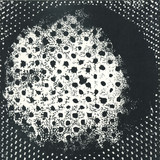
Contemporary pianist and composer James Heather announces his
second album, ‘Invisible Forces’, via Ahead of Our Time, Ninja Tune
founders Coldcut’s first record label.
An album influenced by the sensibility of electronic, ambient, orchestral
and post-rock music but channelled through solo piano and Heather’s
classical and jazz grounding.
With regards to his “superb” (Crack Magazine) and “masterful”
(Electronic Sound, Dummy) debut, ‘Stories From Far Away On Piano’,
the songs are grander, deeper and broader in emotional range and are
developed through a series of improvisation techniques. Heather
describes it as ‘pulse music’, with each track performed in a single take
and with their roots in this live improvisation, often honed on the road
where he moves between tender to more propulsive, trance-inducing
dynamics.
For fans of Jean-Michel Blais, Sarah Davachi, John Carroll Kirby, Otto A.
Totland, Ólafur Arnalds, Nils Frahm, The Cinematic Orchestra.
CD in slipcase with printed inner.
140g violet vinyl with holofoil detail sleeve.
“The sound Heather makes is captivating.” - Electronic Sound
“Masterful contemporary piano.” - Dummy
“A remarkable piece of music that yields more secrets the more it’s
played” - Clash
Featured in Coldcut’s ambient compilation ‘@0’ alongside Suzanne
Ciani, Ryuichi Sakamoto, Kaitlyn Aurelia Smith, Helena Hauff, Skee
Mask, Julianna Barwick, Steve Roach, Laraaji and Mira Calix.
Notable supporters of Heather’s music include James Lavelle (UNKLE),
Nils Frahm, Cillian Murphy, Flying Lotus’ Brainfeeder (via the live
session he did for them in 2021), The Cinematic Orchestra, The Bug,
Leandro Taub, Actress, Bicep, Martyn and Tim Noakes (Dazed).
James has collaborated with the likes of Dawn Richard, Coldcut,
Mumdance and Roger Robinson (King Midas Sound).
Buscar:jean michel
re-release "Deutsche Wertarbeit" ist das einzige Soloalbum der Düsseldorfer Keyboarderin und Komponistin Dorothea Raukes und ein lang vergessenes Juwel deutscher elektronischer Musik. Raukes, Mitglied der Rockband Streetmark, versammelte darauf sechs Synthesizer-Kleinode - mal hypnotisch, mal hymnisch, mal kosmisch. Erschienen 1981 auf Sky Records führt das Album mit seinem markigen Titel in die Irre. Statt teutonischer Stampfmusik ertönen sechs wunderschöne Synthesizer-Kleinode, welche die sogenannte Düsseldorfer Schule (Kraftwerk etc.), die Berliner Schule (Tangerine Dream etc.) sowie Anleihen an die Musik von Jean Michel Jarre kunstvoll mit Klängen der beginnenden 80er-Jahre vereinen. Manchmal hypnotisch, manchmal zuckersüß-melancholisch, manchmal treibend, manchmal kosmisch. Auch das kalt anmutende Artwork will irgendwie nicht so recht passen zu der warmen, einfühlsamen Musik, die ein wenig an die von Raukes' Streetmark-Bandkollegen Wolfgang Riechmann erinnert, etwa auf dessen Soloalbum "Wunderbar".
2LP with a 4-page colour insert
As Guadeloupean vocalist and composer Marie-Line Dahomay writes in her liner notes to the compilation, gwoka is more than a style of music, it is “a way of living and thinking.” Rooted in the social, musical and ritual practices of enslaved African people and their descendants on Guadeloupe, gwoka has always sought to express the spirit of independence and resistance authentic to the island.Building on its traditional call-and-response form and the ideas of pivotal figures like Gérard Lockel and Christian Laviso, modern gwoka evolved throughout the second half of the twentieth century to include funk, jazz and electronic influences.
Defined by its propensity for innovation and experimentation, this compilation charts the most radical changes to modern gwoka, capturing a sensory riot of traditional répertoires, rhythms and makè techniques fused with genre-defying experimentation.Whether heard in the deeply cosmic, spiritual music of Dao, Freydy Doressamy and Gaoulé Mizik, or the jazz funk inflections of Gui Konket and Horizon, the music here is united by the feeling of santiman ka, crucial not only to gwoka music but the identity of Guadeloupe at large.
As co-curator Cédric Lassonde (Bueaty & The Beats) writes: “What unifies these selections is the depth of the compositions, the experimentation around the santiman ka, and the spirit of resistance and liberation against slavery, be it modern or ancestral. With a thirst for innovation typical of the island’s creole culture, the ka spirit is deeply rooted in collective history and in a quest for identity.”
Co-curator Brandon Hocura (Séance Centre) continues: “The creative energy of these musicians is powerful and demonstrates a universal pursuit of resistance, freedom and identity. Their voices are distinct, but the chorus rises high and carries their message far across the sea.”
Lèsprit Ka: New Directions in Gwoka Music from Guadeloupe 1981-2010 is the first compilation of its kind to bring the sound of modern gwoka to a wider audience, with many of the featured musicians still active today. Presented as a double LP, the release features a specially commissioned essay by Guadeloupean musician Marie-Line Dahomey, and extensive liner notes from Cédric Lassonde and Séance Centre’s Brandon Hocura.
True to the hybrid nature of the music, the compilation seeks not to provide a definitive sound, but express the variety of contemporary forms that have evolved from gwoka. Just as Guadeloupean trailblazers Kassav fused gwoka with funk and cadence to create zouk, so did the musicians on this collection push gwoka in new directions rarely heard beyond its shores.
In the words of Gérard Lockel, “gwoka is the soul of Guadeloupe”
Collection of ten unreleased demos written for the ninth PJ Harvey studio album The Hope Six Demolition Project, including demos of ‘The Wheel’ and ‘The Community Of Hope’. Features brand new artwork with cover art based on a drawing by Polly Jean Harvey, plus previously unseen photos by Maria Mochnacz and Seamus Murphy. Artwork is overseen by Michelle Henning with Rob Crane. Mastering by Jason Mitchell at Loud Mastering, under the guidance of long time PJ Harvey producer John Parish.
- A1: Alex North - Main Title
- A2: Duke Ellington - Main Title And Anatomy Of A Murder
- A3: Elmer Bernstein - Breakup
- A4: Miles Davis - Florence Sur Les Champs-Élysées
- A5: Adolph Deutsch - Randolph Street Rag
- A6: Henry Mancini And His Orchestra - Hub Caps And Tail Lig
- A7: John Barry - Car Chase - Night Chase
- B1: Barney Wilen - Témoin Dans La Ville
- B2: Jean Wiener - Grisbi Blues
- B3: Martial Solal - Duo
- B4: Michel Legrand - Juke-Box
- B5: Claude Bolling - Poursuite
- B6: Serge Gainsbourg, Alain Goraguer - Black March
- B7: Georges Delerue - Rock
- B8: Michel Magne - China Jazz Hot
- C1: Duke Ellington - Mood Indigo
- C2: Charlie Parker - Parker's Mood
- C3: Irving Berlin / Fred Astaire - Cheek To Cheek
- C4: Louis Armstrong And Ella Fitzgerald - Love Is Here To S
- C5: Dean Martin - Ain't That A Kick In The Head
- C6: Duke Ellington / Ella Fitzgerald - Drop Me Off In Harle
- D1: Irving Berlin - Blue Skies
- D2: Duke Ellington - Jubilee Stomp
- D3: Fats Waller - I Ain't Got Nobody
- D6: Ray Charles - What'd I Say
- D4: Frank Sinatra - Come Fly With Me
- D5: Billie Holiday - I Can't Give You Anything But Love
Biosphere is the main recording name of Geir Jenssen (born 30 May 1962),(1) a Norwegian musician who has released a notable catalogue of ambient electronic music. He is well known for his works on ambient techno and arctic themed pieces, his use of music loops, and peculiar samples from sci-fi sources. His 1997 album Substrata was voted by the users of the Hyperreal website in 2001 as the best all-time classic ambient album.
Patashnik was originally released by R&S Records/Apollo in 1994. It was number 1 in NME´s Independent Chart in March 1994 and reached number 50 in the UK official album chart.
The track Novelty Waves was used in Michel Gondry's Levi's 501 Jeans "Drugstore" spot, and holds - according to the Guinness World Records 2004, the record for "Most awards won by a TV commercial".
One reason why Jenssen's work stands out from the flood of early '90s ambient/techno releases is his strong sense of the quirkily creepy -- not in an Aphex Twin mode, but in his own particular way. The contrasting samples of a child quaveringly saying, "We had a dream last night," followed by a rougher sample saying, "We had the same dream," gives opening number "Phantasm" an unsettling feeling. Intensified by the, on the one hand, pretty, on the other, disturbing music, buried synth strings and a soft pulse accentuated by clattering noises deep in the mix, it kicks off the striking Patashnik very well. Though not as openly dark as acts like Lull, for instance, Biosphere still has an edge which isn't just melancholic, it's downright ominous at point. There's the slow crawl of "Startoucher," for instance, with its buried vocal snippets and deep bass drone, or the blend of the space signal atmospheres of "Mir" into the low, brooding intro to "The Shield." Not everything is so shadowy, though, Patashnik is primarily a relax and chill listening experience, but not without its gentle high points. "Novelty Waves," which became a crossover single in some quarters, has a good dancefloor sharpness to it even as Jenssen slyly sneaks in odd drones and samples through the mix. The opening snippet talking about an extraterrestrial disc jockey on "SETI Project" is good for a smile, as well as acting as a sharp lead-in to a fast rhythm track. Mostly, though, things continue on a deliciously unnerving pace throughout, gentle enough to go down easy but still just off enough to ensure you can't call this new age folderol for the rave generation.
"Bobby Ro$$" is the debut full-length from Perry Porter. It's a vibe-heavy hustle through the landscape of art, blackness, and self-love. Porter inhabits the alter ego of Bobby Ro$$, a trap music avatar of the much-beloved PBS painter, rapping alongside a who's who of the top up and coming music producers from the Northwest. The album also incorporates snippets of interviews with cultural luminaries such as Kara Walker, Jean-Michel Basquiat, Kerry James Marshall, and Maya Angelou into a narrative lattice, with Porter painting himself into the canon of black art. The Seattle Times describes the album’s many opposing moods, from "annihilating a trap beat on a breathless five-alarm banger (“Sink or Swim”) to cooling down with beatific cuts like album closer “Watercolor”... Porter does equally beautiful things with 808s and acrylics." Indeed, in addition to rapping and music, Perry Porter is also an acclaimed visual artist. His dreamlike watercolor portraits and lush murals have been shown in art galleries across the nation. His music has appeared in several major video game releases, including Cyberpunk 2077 and
- A1: Marie Laforet - Saint-Tropez Blues
- A2: Dalida - Love In Portofino (A San Cristina) (A San Cristina)
- A3: Anny Gould - Loin De Vous (Only You) (Only You)
- A4: Jacqueline Francois - Lola (La Legende Du Pays Aux Oiseaux) (La Legende Du Pays Aux Oiseaux)
- A5: Michele Arnaud - La Femme Des Uns Sous Le Corps Des Autres
- A6: Sylvie Vartan - Le Locomotion
- A7: Magali Noel & Boris Vian - Fais-Moi Mal Johnny
- A8: Line Renaud - Sexe (Live Au Casino De Paris)
- B1: Francoise Hardy - Le Temps De L'amour
- B2: Isabelle Aubret - Un Premier Amour
- B3: Jeanne Moreau - Le Tourbillon
- B4: Juliette Greco - Jolie Mome
- B5: Jacqueline Taieb - Le Printemps A Paris
- B6: Sheila - On A Juste L'age
- B7: Olivia - Les Yeux Doux
- B8: Stella - Pourquoi Pas Moi
- B9: Nancy Holloway - Fich' Le Camp Jack
- C1: Brigitte Bardot & Sacha Distel - Le Soleil De Ma Vie
- C2: Nicole Croisille - Parlez-Moi De Lui
- C3: Christine Pilzer - Cafe Creme
- C4: Clothilde - Fallait Pas Ecraser La Queue Du Chat
- C5: Isabelle De Funes - La Journee D'isabellec6 | Delphine Desyeux - Je Suis La Tigresse
- C7: Vladimir Cosma - Christine (Feat Teka)
- D1: Lio - Amoureux Solitaires
- D4: The French Mademoiselles - Dix Sur Dix
- D5: Geraldine Nakache & Leila Bekhti - Chanson Sur Une Drole De Vie
- D6: Brigitte - Battez-Vous
- D2: Bibi Flash - Histoire D'un Soir (Bye Bye Les Galeres) (Bye Bye Les Galeres)
- D3: Lorene - Oh La La Comme Ci Comme Ca !
In November 1976, Jef Gilson’s phone rang. What a surprise! It was Serge Rahoerson, one of the musicians he had met in Madagascar at the end of the 60s and who had played on his first album “Malagasy”. Rahoerson announced that he was in Paris for a few days.
Immediately, Jef wanted to organise a recording session, starting the next day. He thought of a trio including Serge, Eddy Louiss on organ and cellist Jean-Charles Capon, who had also been on one of the trips to Tananarive and so had also known Rahoerson there. Unfortunately, Eddy Louiss –who had already played with Gilson and Capon on the album “Bill Coleman Sings And Plays 12 Negro Spirituals” in 1968- had to drop out at the last minute: he was delayed by a session with Claude Nougaro. Jean-Charles Capon had also become a sought-after studio musician since his trip to Madagascar in 1969. He appeared on several key albums on the Saravah label including the now famous “Comme À La Radio” by Brigitte Fontaine, “Un Beau Matin” by Areski and “Chorus” by Michel Roques, without mentioning the album by his own Baroque Jazz Trio. He was also to be found with Jef Gilson for his album on Vogue with the ex-drummer from Miles Davis’ first great quintet, Philly Joe Jones, or also in the orchestra led by Jean-Claude Vannier for the album “Nino Ferrer & Leggs”. He also played regularly on albums by Georges Moustaki.
Jean-Charles Capon and Serge Rahoerson found themselves thus in the studio, with Jef at the controls. He had decided to record the rhythmic structure right away. He would find the soloists later, that didn’t worry him. Serge Rahoerson was on drums. Though a saxophonist by training, Jef remembered that Serge was also capable of great things behind a drum kit: he was the improvised drummer on their cover of “The Creator Has A Master Plan” on the album “Malagasy”... The great memories came flooding back (the nod on the title “Orly - Ivato”), and the old magic worked again.
Brought in momentarily from Europamerica, Gilson’s new big band, in which JC Capon also played, the saxophonists Philippe Maté, from France (another Saravah stablemate) and the American Butch Morris (soon to be a key member of David Murray’s band) were invited to record their parts later and Gilson mixed it all as if it had been one single session (as he had already done on other albums, with the tracks by Christian Vander recorded before the creation and success of Magma).
The album would not appear until 1977, on Palm, Jef’s own label, and was dedicated to the memory of Georges Rahoerson, Serge’s father, who had also played on the album “Malagasy” and who had died prematurely at the age of 51 in 1974.
“I only received my own copy of the album in 1981 when I came to live in France definitively”, a still-moved Serge Rahoerson told us in 2013. “I was playing in a club one night and Jef turned up by surprise with a copy of the album for me, I was so pleased to see him again. When I arrived in France, I told everyone that I had played with Jef Gilson a few years previously, and I was surprised to learn that so few people knew of him. For us, he was of one of the great jazz visionaries.” (Jérôme "Kalcha" Simonneau)
- 01: Kanephoros
- 02: Up Down
- 03: Watch Devil Go
- 04: In Extenso
- 05: Go Mind
- 06: Tryptique Pour La Foire Des Tenebres
- 07: Le Ciel Manque De Genealogie
- 08: Kamikazes Nightmare
- 09: Entre Java Et Tombok
- 10: Eddy G. Always Present
- 11: Before In
- 12: Eleven
- 13: La Dynastie Des Wittelsbach
- 14: 1883-1945, Heavens
- 15: Au Stylo Feutre, Un Paysage
- 16: Canephore
To write these few lines, we spoke to saxophonist François Jeanneau, an old friend of Jacques Thollot who also played on several of his albums, including the “Watch Devil Go” which interests us here. He told us a story which, according to him, sums up the personality of Thollot. A noted studio had reserved three days for a Thollot recording session. The first morning was devoted to sound checks and putting some order in the score sheets which Jacques would hand out in a somewhat anarchic manner. Then everyone went for lunch. When the musicians returned to the studio, Thollot had disappeared. He wasn’t seen again for the three days. When he reappeared, he had already forgotten why he had left, The music of Jacques Thollot is in the image of its’ author: it takes you somewhere, suddenly escapes and disappears, returning in an unexpected place as if nothing had happened.
Four years after a first album on the Futura label in 1971, Jacques Thollot returned, this time on the Palm label of Jef Gilson, still with just as much surrealist poetry in his jazz. In thirty-five minutes and a few seconds, the French composer and drummer, who had been on the scene since he was thirteen, established himself as a link between Arnold Schoenberg and Don Cherry. Resistant to any imposed framework and always excessive, Thollot allows himself to do anything and everything: suspended time of an extraordinary delicacy, a stealthy explosion of the brass section, hallucinatory improvisation of the synthesisers, tight writing, teetering on the classical, and in the middle of all that, a hit; the title-track - that Madlib would one day end up hearing and sampling.
“Watch Devil Go” was in the right place in the Palm catalogue, which welcomed the cream of the French avant-garde in the 70s. But it is also the story of a long friendship between two men. Jacques Thollot and Jef Gilson had known and respected one another for a long time. Though barely sixteen years old, Thollot was already on drums on the first albums by Gilson starting in 1963 and would play in his big band (alongside François Jeanneau once again), ‘Europamerica’, until the end of the 70s.
In a career lasting half a century and centred on freedom Jacques Thollot played with the most important experimental musicians (Don Cherry, Sonny Sharrock, Michel Roques, Barney Wilen, Steve Lacy, François Tusques, Michel Portal, Jac Berrocal, Noël Akchoté...) and they all heard in him a pulsation coming from another world. (Jérôme "Kalcha" Simonneau)
Could the missing link between Eric Dolphy and Albert Ayler be the Michel Portal of 1970? After having worked alongside François Tusques defending a free jazz “made in France”, we find him here, heading up an international quintet of which each member is on fire: John Surman, Barre Phillips, Stu Martin and Jean-Pierre Drouet. The quintet had full leeway to break out the free-form in long ambient tracks to compose this Alors!!! which leaves listeners with just one word to say: More!
Do we still need to present Michel Portal?... Clarinetist destined for the classical and contemporary world after his passage in the Paris Conservatory, he decided to try his hand at jazz, with an incendiary flamboyance! After his first experience with André Hodeir and Pierre Michelot, he would break all the codes with François Tusques (Free Jazz, in 1965) before starting the emblematic Michel Portal Unit. It is the Portal of those years that Alors!!! offers us the chance to listen to again.
“There are periods of insolence”, the musician declared and the year 1970 was one all on its own. Heading up an impetuous international troupe, a quintet consisting of John Surman (saxophones, bass clarinet), Barre Phillips (double-bass), Stu Martin (drums) and Jean-Pierre Drouet (percussion), Portal moves from alto sax to clarinet in the compositions shared with his partners.
From the off, the group sparks an explosion with the sound of “OO Bam Ba Deep” battered by the horns and percussion. Next up is the fabulous free jazz of “Yes, Oh Yes, You Wonderous Sun Kissed Maiden!” and the fantastic disjointed march of “Ça Boom?” which shakes up the musicians every which way. The quintet imagined that listeners would need to catch their breath, and thoughtfully added: “Billie the Kid” and “Undercurrent”, marvelous moments of ambient mystery.
Audacious from beginning to end, including the sleeve – the bird-man and his quintet brain designed by Avoine, –, the album is a fabulous object, to which the label Futura gave wings at the time. And as it is being reissued today there is just one word to use: the French translation of the title, So!!!
Un Singe En Hiver (“A Monkey in Winter”) starred the greatest name of the
time in French Cinema, Jean Gabin and a “rising newcomer”,
Jean-Paul Belmondo.
This is popular early 60s mainstream French cinema, with a certain ‘quality’
that would not be to the taste of the nouvelle vague aficionados. In fact this
film is nothing less than the reflection of a certain Gaullist spirit of rebellion,
fiercely individualistic and disabused of all ideologies.
The music of Michel Magne outlines the nostalgic wanders of Albert Quentin
(Jean Gabin) who after an adventurous youth on the Yang-Tse-Kiang now lives
a quiet life with Suzanne (Suzanne Flon) whom he met at the Bourboule and
manages the Stella hotel at Tigreville (actually Villerville in the Normand Calvados) and takes care of Gabriel Fouquet (Jean-Paul Belmondo), a young adman
whose heart was broken in Madrid.
The genius of Magne is found in his evocations of Spain and China not as they
were at the time but as the two main characters picture them with the help
of not just a few drinks. Here is a jolly good record you will want to go back to
every time the right-minded ones try to mess with your basic rights.
- A1: Rita « Erotica »
- A2: Francoise «Hum ! Hum ! Love Is Strange»
- A3: Armando Travaioli « Sesso Matto »
- A4: Monsieur Goraguer « Sexy Dracula »
- A5: Jacques Frençay & Sonia Reff « Top Secret »
- A6: Geraldine « Les Chattes»
- A7: Jean Yanne « Coït »
- B1: Prince Buster « Big Five »
- B2: Bourvil Et Jacqueline Maillan « Ça (Je T’aime Moi Non Plus »
- B3: Philippe Nicaud « C’ex »
- B4: Noelia Noel « Encuentro »
- B5: Jean-Benard De Libreville « Sex-Phone »
- B6: Mchele Mercier « Six-Huit»
- B7: The Afro-Rhythm Group « African Love »
What a relief to escape the humdrum, to conquer one’s ennui, to spice up the too-long evenings stuck at home... Here’s a proposition: SEX-O-RAMA!!! Oh la la, such an aptly named compilation! Rascally El Vidocq this time dares to sway outside his comfort zone. Here humanity’s oldest obsession is tackled tastefully, with class. The selection is amusing, but ever well-meaning, for these songs are as stimulating to listen to as they are to dance to! Naturally, our intrepid collector had to roam beyond his habitual ‘50s and ‘60s, for the real sexual revolution did occur a tad later... A few seductive caresses of varying insistence (Michele Mercier, Geraldine), a few advances “in due and proper form” (naughty Prince Buster!), an eloquent series of moans and groans (Rita, Armando Travaioli, Noelia Noel), chance encounters (intransigent Jean Yanne)... not to mention a few exquisite parodies (Jacqueline Mayand and Bourvil, as drole as they are tender)... So hesitate no longer! Stop biting your lip! The sap is rising, as they say, so time for a change of ambiance... Time to slip on some SEX-O-RAMA!
"The definition of a hidden gem" - John Peel / "The world seems finally to be catching up to Leslie Winer, whose startling intelligence and singular vision shine through her copious recording life." - Max Richter / "She might just be the coolest woman on the planet!" - Boy George "When I Hit You - You'll Feel It" is a 16-track anthology that celebrates the extraordinary work of musician, poet, and author, Leslie Winer. The collection spans Winer's three-decade-long musical career: from her groundbreaking solo work in the early '90s to her latest inspired projects. Featuring musical contributions from Jon Hassell, Helen Terry, Jah Wobble, Renegade Soundwave's Karl Bonnie, and others, the collection also spotlights Winer's diverse collaborations, unearths previously-unreleased recordings and was newly remastered by the GRAMMYr-nominated engineer John Baldwin. The album includes a new interview with Winer, captured by the compilation's co-producer, acclaimed author and critic Wyndham Wallace. Rounding out the package is an insightful essay by the award-winning writer and scholar Louis Chude-Sokei and an original cover collage by the renowned British photographer and artist, Linder, featuring photography by Mondino, and design by designer Christopher Shannon. Musician, poet, iconoclast, model, artist, enigma. Leslie Winer is many things. She grew up in Boston with a voracious appetite for music and the written word and embraced the city's lively jazz and folk scene in the '70s. Moving to New York for art school, she formed an unlikely friendship with writer and artist William S. Burroughs and lived on-and-off with Jean-Michel Basquiat. In London, where Winer began her musical ventures in earnest, she was a regular at Leigh Bowery's underground club Taboo, where she met many of her collaborators, including filmmaker John Maybury, Kevin Mooney (of Adam and the Ants), and Boy George. Winer's striking looks also attracted fashion designers and photographers. Throughout the early '80s, she was an in-demand model-appearing in campaigns for Valentino, Christian Dior, and Yohji Yamamoto, and serving as a muse for a young Jean-Paul Gaultier, who later dubbed Winer "the first androgynous model." She posed for Helmut Newton, Irving Penn, and Pierre et Gilles, and graced the covers of The Face, French and Italian editions of Vogue, and Mademoiselle. But music was Winer's true passion and, at the turn of the '90s, she would unknowingly help invent the massively popular genre known today as trip-hop. On her debut, Witch, Winer masterfully blended the uninhibited sampling of early hip-hop with dancehall basslines and programmed beats, while weaving mesmerizing - and coolly-detached - spoken-word vocals into her ambient tracks. It was unorthodox in the most delicious ways. While Witch was finished in 1990, it wouldn't be released for three years, due to the whims of Winer's label. By the time the album saw the light of day (released under the pseudonym "c"), trip-hop was gaining mainstream traction via acts like Portishead, Massive Attack, and Madonna. Although Winer eventually gained wider acknowledgment (prompting the NME to give her the dubious distinction of "The Grandmother of Trip-Hop"), Witch initially went sorely unnoticed. Winer continued to record, undeterred by the elusive nature of mainstream success in the modern music business. Her network of inspired collaborators continued to grow and expand, yet her influence remained largely a secret except to those in the know, such as Grace Jones and Sinead O'Connor, who would cover her songs. In the modern era, one is hard-pressed to find an artist who continues to push the creative envelope as much as Winer does. And yet, three decades after her revolutionary debut, her work remains just as startling and fresh.
2021 Repress
Erstmals auf Vinyl erhältlich: das hochgelobte Debütalbum "Spanish Breakfast" aus 2009 des französischen Produzenten Rone, u.a. auf #17 in den "Top 25 Records of 2009" bei Electronic Beats. Eine fantastische Melange aus Electronica, Ambient und Techno, gemastered von Rashad Becker, Dubplates & Mastering (Berlin), die massiven Support von Laurent Garnier, Optimo, Jean-Michel Jarre und Sasha erfuhr.
The album features a notable line-up of musician such as: Sami Yaffa (New York Dolls/Joan Jett), Dave Richmond (Serge Gainsbourg/Elton John), Christophe Deschamps (Jean-Michel Jarre), Kath Guifford (Stereolab), Will Crewdson (Adam & The Ants/The Selecters), Danny Ray (Bo Diddley/Brian Setzer)...Mastered at the legendary Abbey Road Studios and cut to vinyl across a 180g LP in a gatefold sleeve with booklet. L'homme de l'ombre immerses you from start to finish in a sonic and lyrical journey that rewards your mind and emotions. Here you will find the glamorous rock attitude of Marc O's musicianship colliding brilliantly with the wise and witty writing of french philosopher Bruno Pons Levy. The result is not so much a double identity, but an intangible and powerful third element, much like the mathematical equation described in the song The triangle squared (Le triangle au carré). This song is emblematic of Marc O's persona: a musician of style and vision, crossing cultures and decades to collaborate with a remarkable team and create this, his most personal album. Press quotes: Ten well realised, vintage aesthetic fantasies ****" MOJO "Singular debut set that lurches from glam-punk to Air-meets-Gainsbourg purr, infectiously Pulp-ish electro-rock and gauche, Bowie-esque panther strut. Formidable! 8/10" UNCUT "Never less than fascinating, this is an important and hugely enjoyable work ****" RECORD COLLECTOR "Propelled by his core rhythm section and lyricist collaborator, they address some weighty subjects with passion ****" SHINDIG! "Blends aggressive and powerful textures and melancholic soundscapes to break down language barriers and deliver a powerful, evocative and stunning album" LOUDER THAN WAR "The music is as strong as Pons Levy's lyrics, mingling melodic rock with chanson in the grand tradition ****" RNR
- A1: La Vie En Rose - (Louiguy/Piaf, E )
- A2: Non, Je Ne Regrette Rien - (Dumont, Charles/Vaucaire, Michel)
- A3: Milord - (Monnot, Marguerite/Moustaki, Georges)
- A4: Sous Le Ciel De Paris - (Drejac, Jean/Giraud, Hubert)
- A5: Padam, Padam - (Contet, Henri/Glanzberg, Norbert)
- A6: Mon Dieu - (Dumont, Charles/Vaucaire, Michel)
- A7: Paris - Mèditerranèe - (Cloerec/Asso)
- B1: Les Trois Cloches - (Villard, Jean/Herrand, Marc)
- B2: Adieu Mon Coeur - (Contet, Henri/Monnot, Marguerite)
- B3: Un Coin Tout Bleu - (Monnot/Piaf)
- B4: Tu Es Partout - (Piaf, E /Monnot, M )
- B5: Le Petit Homme - (Contet, Henri/Monnot, Marguerite)
- B6: Hymne A L‘amour - (Monnot, Marguerite/Piaf, E )
- B7: Le Vagabond - (Loviguy/Piaf, E )
All music improvised by Michael Wollny, Emile Parisien, Tim Lefebvre
and Christian Lillinger (except ‘Nostalgia for the Light’, written and
arranged by Michael Wollny).
The music we hear doesn’t fit into any category. We’re in uncharted
territory, so a good way to capture its essence might be to break it
down into its four component parts. First there’s Michael Wollny, here
for the very first time playing only on electronic keyboard instruments.
He creates a characterful world of retro-futuristic sounds that is very
much his own. We find the occasional nod to early Jean-Michel Jarre,
references to science fiction and horror movies and also vivid
memories of the sounds of avant-garde Krautrock: Can and Irmin
Schmidt and Klaus Schulze.
As for Tim Lefebvre, here is a musician who has plied his very great
craft with stars such as David Bowie, the Tedeschi Trucks Band, John
Mayer, Knower, Steely Dan, Elvis Costello and Wayne Krantz. Here
he is like a rock in a tempestuous sea. He propels the music forward
with a combination of bass and effects. He builds structures and
tames unruly elements. The way he lays down a groove is
overwhelming.
As a counterbalance we find the explosive yet highly sensitive playing
of drummer Christian Lillin-ger. He stacks layer upon layer of rhythms
and textures.
And the melodic lines of Emile Parisien on soprano saxophone
always have an astonishing springy inventiveness. Such is Parisien’s
latent energy, it seems as if at any moment he could suddenly
become airborne.
The players’ eager curiosity as to what the next turn, the next
impulse, the next push will be is palpable to the listener. One can
sense the tension between the urge to construct forms, lines,
grooves, harmonies, textures, versus the illicit joy of tearing such
fragile structures apart before they have even been heard. There are
beats and patterns from the 90s, 80s and 70s, all coalescing into
cinematic bacchanalia of sound. These four master improvisers and
composers all have the urge to rewrite the rules of their musical world
- and to do so in real time.
LP pressed on 180g vinyl with digital download code.