The album features tracks "Ode to a Conversation Stuck in Your Throat" (performed on Late Night with Seth Meyers), "Perfume" (Top #8 Most Spun at SiriusXM), "Sorry I Am" (Triple J's Best New Music)" and more.
In addition to a run of sold out headline dates in the US and UK/ EU, Del Water Gap has recently been on the road with Maggie Rogers, Arlo Parks, girl in red and Jeremy Zucker. His sophomore album I Miss You Already + I Haven't Left Yet will be out this fall.
quête:jeremy
hot offer !
The cold, hard facts: Morgan Geist's last solo 12" was four years ago, and his last (and only) solo album was nine years ago. So it is a bit of an understatement to say that a new solo undertaking from the Environ bossman is overdue. Well, better late than never: we present to you the new 12" from the Mr. Geist, MOST OF ALL, featuring Jeremy Greenspan from Junior Boys
Woods are in bloom again, inviting you to disappear into a new spectrum of colors and sounds and dreams on Perennial. Formed in Brooklyn in 2004, Woods have matured into a true independent institution, above and below the root, reliably emerging every few years with new music that grows towards the latest sky. Operating the Woodsist label since 2006 and curating the beloved homespun Woodsist Festival for the musical universe they’ve built, Perennial is the sound of a band on the edge of their 20th anniversary and still finding bold new ways to sound like (and challenge) themselves. Perennial grew from a bed of guitar/keyboard/drum loops by Woods head-in-chief Jeremy Earl, a form of winter night meditation that evolved into an unexplored mode of collaborative songwriting. With Earl’s starting points, he and bandmates Jarvis Taveniere and John Andrews convened, first at Earl’s house in New York, then at Panoramic House studio in Stinson Beach, California, site of sessions for 2020’s Strange To Explain. With a view of the sparkling Pacific and tape rolling, they began to build, jamming over the loops, switching instruments, and developing a few dozen building blocks. The album’s resulting 11 songs, 4 of them instrumental, are in the classic Woods mode--shimmering, familiar, fractionally unsettling--but with the half-invisible infinity boxes of Earl’s loops burbling beneath each like a mysterious underground source. From source to seed to bloom, each loop unfolds into something unpredictable, from the jeweled pop of the aching “Little Black Flowers” to the ecstatic starlit freak-beat of “Another Side.” They are blossomings both far-out and comforting, like the Mellotronic cloud-hopping of “Between the Past,” or sometimes just plain comforting, like the widescreen snowglobe fantasia of the instrumental “White Winter Melody,” touched by Connor Gallaher’s pedal steel. Woods have long used the studio as a place of songwriting, naming 2007’s At Rear House after their shared dwelling and recording space. But Perennial also carries with it an even longer view of Woods. Emerging from the process alongside the music was Earl’s reflection that “perennial plants and flowers are nature’s loops,” an idea rolling under the album’s lyrics like the loops themselves. It certainly applies to the band, too, who have quietly tended to a long, committed project of being a band in the weird-ass 21st century, both individually and communally. Though separated by coasts, the communal sprit carries through Earl, Taveniere, and Andrews’ collaboration, a living embodiment of the freedoms rediscovered every time a new collectively created piece of music emerges. For nearly two decades, Woods have survived subgenres, anchored in the fertile soil below hashtags like lo-fi and freak-folk and psychedelic and indie, and built a shared history that’s something to marvel at. As the flagship band for Woodsist, they’ve accumulated a striking extended family of collaborators (and Woods alum) that have made the label one of the most dependable imprints in the kaleidoscopic low-key underground. It’s a glow that’s transferred whole to the blissed-out Woodsist Fests held in Accord, New York in recent years, which have folded in a wide range of diverse sounds, from the the jazz cosmoverse of the Sun Ra Arkestra and adventurous legends Yo La Tengo, to a hard-to-even-count family tree of contemporaries, like Kevin Morby (who served a few tours of duty as Woods bassist) and Kurt Vile (who released his 2009 debut on Woodsist), a living community in sound. Perennial carries all of this, shaped by decades, but made in the moment, and here right now. The smell of the flowers doesn’t remain, but sometimes the flowers do. Jesse Jarnow Recorded and mixed by Jarvis Taveniere at Panoramic House in Stinson Beach, CA with additional recording at The Ship in Los Angeles, CA and Cottekill Bird Sanctuary in Stone Ridge, NY. Produced by Jarvis Taveniere and Jeremy Earl. Mastered by Timothy Stollenwerk at Stereophonic Mastering in Portland, OR. Jeremy Earl - vocals, guitars, drums, percussion, sk-5, mellotron, vibraphone, autoharp, loops Jarvis Taveniere - guitar, bass, upright bass, hammond, vocals John Andrews - piano, organs, mellotron, drums, vocals Connor Gallaher - Pedal Steel Kyle Forester - sax, wurlitzer
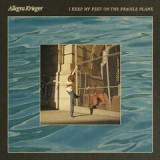
It contains all the signatures of her best lyricism: delicate and precise phrasings, moments that flicker between beauty and banality, meaning that forms through the accretion of observations, memories, and unexpected adages. This is an album that is at once post-theistic and devoted to a relationship with the divine, each song blinking in and out of "the fragile plane," a place Krieger describes as "a middle ground in the universe," both abstract and peaceful, where time, bodies, and names don't exist.
Krieger initially collaborated with Luke Temple and Jeremy Harris to record her vocals and guitar to tape at Panoramic Studios in West Marin, CA. As the album continued to form, Krieger envisioned instruments - like the French and English horn (Nancy Ranger and Priscilla Reinhart), electric guitar (Jacob Drab), and pedal steel (Kevin Copeland) - as characters which would walk in and out of the soundscape. What emerged from conversations with composer Sammy Weissberg, are brass parts that have a dark, almost surreal logic: horns arise to emphasize a word or phrase, fall out completely, only to rush back with dissonant orchestrations that gesture simultaneously toward deterioration and generation.
While Krieger takes inspiration from Elliot Smith's honesty, Judee Sill's cosmic reaching, and Joni Mitchell's sharp noticing, the dream-like association, harmonic dissonance, and angular melodic ascensions in each song are singularly and delightfully Krieger's.
"I Keep My Feet on the Fragile Plane" is a daring collection of songs by an artist who scries with both the cold glass eye of truth and the beating heart of empathy; who portrays life in all its twisted complexities.
- A1: Earthen Sea - Gleaming Beach
- A2: John Beltran – Elevate It
- A3: Jeremy Wentworth – Relaxed
- B1: Arthur Robert – Remember Me
- B2: Kmru - In A Distance
- C1: The Album Leaf - Md 10
- C2: Len Faki – Flew Away
- D1: Wata Igarashi – Our Place
- D2: Laraaji – Beloved
- E1: Can Love Be Synth – Marzipan
- E2: Biri - Neverending Celestial Dance
- F1: Exos - Shifting In The East
- F2: Future Beat Alliance – Memory Sketch
- F3: Max Cooper – Contour
A year after its first edition, the Open Space series returns in order to keep exploring what ambient music might mean nowadays.
A breadth of fresh artists, some new to the label and others renowned for their more dance-centric works, the compilation aims to give each individual artist their creative freedom to explore the space.
Techno producers such as Arthur Robert or label head Len Faki himself keep the beats present but this time focus on evoking states of introspection rather than the shuffle of dancefloors.
On the other end of the spectrum, we find seasoned multi-instrumentalist Laraaji, who has been crafting deeply meditative soundscapes since the 80’s. Using the special opportunity, the label reaches outside its usual sphere, inviting artists like the modular synth expert Jeremy Wentorth or Jimmy LaValle’s band project The Album Leaf. All while still featuring some well known veteran producers the likes of John Beltran or Exos.
No matter their respective scene or background, all artists are using their unique approach to display something deeply emotive. Be it the warm, expansive electro of Future Beat Alliance or a bubbly cosmic arpride by Hamburg Duo Can Love Be Synth.
Truly living up to its name, the Open Space series aims to open up possibilities for artists to freely pursue their creativity in a completely undefined area, a space for exploration and connection.
- A1: Senza Motivo Apparente
- A2: Sospensione Folle
- A3: Il Movente
- A4: Ricerca
- A5: In Pieno Petto
- B1: Senza Motivo Apparente Version 2
- B2: Ricerca Version 2
- B3: Senza Motivo Apparente Version 3
- B4: Sospensione Folle Version 2
- B5: Senza Motivo Apparente Version 4
- B6: In Pieno Petto Version 2
- B7: Il Movente Version 2
- B8: Senza Motivo Apparente Version 5
Wewantsounds is delighted to present one of Ennio Morricone's best and least known soundtracks for the 1971 cult French crime film 'Sans Mobile Apparent' directed by Philippe Labro. This superb soundtrack featuring Morricone's classic sound has never been widely available on vinyl save for a small limited edition released under the film's italian title. The set has been remastered from the original tapes with lacquer cut by Frederic Alstadt (Mont Analogue) and gatefold sleeve designed by Eric Adrian Lee. Last but not least Philippe Labro himself has shared his experience in an exclusive interview with Jeremy Allen, discussing the making of the film, working with the Maestro (at only 34 years old) and his amazing career crossing path with Jean Luc Godard, Serge Gainsbourg and Jean-Pierre Melville.
Der renommierte Troubadour aus Illinois erweitert seine musikalische DNA mit Covers Vol. 2, die tiefgreifendste persönliche Musikreise, die er je unternahm. Zuhörer werden mit mitreißenden Interpretationen von Klassikern von Billy Joel (Vienna), Bruce Springsteen (Streets Of Philadelphia), James Taylor (Fire And Rain) und Peter Gabriel (In Your Eyes) sowie Indie-Perlen von Radiohead (Weird Fishes), JP Saxe (A Little Bit Yours) und Manchester Orchestra (Sleeper 1972) verwöhnt. Ebenfalls enthalten sind einige unerwartete Darbietungen wie Jeremy Zucker (Scared), Del Amitiri (Tell Her This) und Go West (King Of Wishful Thinking). William Fitzsimmons: 'Leute, die meinen Katalog kennen, wären wahrscheinlich überrascht zu erfahren, dass ich tatsächlich ein ziemlich großer Fan von Popmusik bin. Von der Brillanz der Beatles und den Beach Boys bis hin zu den moderneren Stilrichtungen von Harry Styles, Beyoncé und Taylor Swift – ich genieße eine eingängige Melodie genauso wie jeder andere.'
On 'Love Hallucination' Jessy Lanza is in control as a songwriter and producer, flexing her skills in the studio and rebuilding her sound, taking chances with production and energy in all directions, from club-ready, to downbeat and sultry, with the theme of trusting yourself in the moment and using intuition as a compass driving the record forward. ‘Love Hallucination’ is the sound of an artist in bloom, an album of big emotions and big songs, with direct, personal lyrics, such as the upbeat but panicked opener 'Don't Leave Me Now' and the 2-step drama of 'Midnight Ontario', or 'Limbo', an ear worm disco stomper about produced with Marco 'Tensnake' Niermeski. Also featured as co-producers are David Kennedy (Pearson Sound), adding slick arrangements for the club, long-time collaborator Jeremy Greenspan (Junior Boys), and Paul White. ‘Love Hallucination’ is a bold and immediate record from Jessy Lanza, her most clear, authentic and best to date.
The Waterboys’ ninth studio album is made available on vinyl for the first time, in limited edition ‘sunrise’ yellow. Originally released in 2007, ‘Book Of Lightning’ was mostly recorded at the former Island Studios in West London. Alongside Mike Scott and Steve Wickham, the album features contributions from pianist Richard Naiff, keyboard mystic Thighpaulsaandra, guitar ace Leo Abrahams and two killer drummers, Jeremy Stacey and Brady Blade. Selections include the understated country rock epic She Tried To Hold Me, the beautiful Sustain, recorded with members of Canadian band Great Aunt Ida, and two songs written for but not recorded during the classic Fisherman's Blues album sessions: Everybody Takes A Tumble and The Man With The Wind At His Heels. Reviewing the album in The Guardian, Dave Simpson said that Scott's songs, “feel like they have been handed to him from a crack in the clouds”. The vinyl format is 180g Sunrise yellow coloured vinyl. The CD format is packaged in a jewelcase with 16 page booklet.
- 1: Voice From A Mountain (Prelude)
- 1: 2 Cello Song
- 1: 3 Hazey Jane Ii
- 1: 4 Saturday Sun
- 1: 5 Road
- 1: 6 From The Morning
- 1: 7 Place To Be
- 1: 8 Three Hours
- 1: 9 Parasite
- 1: 0 Time Has Told Me
- 1: One Of These Things First
- 1: 2 Northern Sky
- 1: 3 Black Eyed Dog
- 2: 1 Road (Reprise)
- 2: Poor Boy
- 2: 3 Which Will
- 2: 4 Harvest Breed
- 2: 5 I Think They're Leaving Me Behind
- 2: 6 Pink Moon
- 2: 7 Time Of No Reply
- 2: 8 River Man
- 2: 9 Free Ride
- 2: 10 Fly
- 2: 11 Day Is Done
- 2: 1 Voice From A Mountain
The Endless Coloured Ways is a collection of songs by legendary singer/ songwriter, Nick Drake, performed and recorded by over 30 incredible artists from a range of different backgrounds, genres, age groups and audiences From Fontaines D.C. to Guy Garvey, Aurora to Feist, and Self-Esteem to David Gray, each artist has offered their own incredible take on a timeless classic "Nick Drake was not that concerned with promoting himself as an artist but I think he would have been overjoyed to hear his art promoted by so many vibrant and talented artists such as the ones we approached. Each track is an example of a fellow artist adopting Nick's art as if it was their own, submitting to the song, and the results prove to me that talent can so often win out over mere skill or 'personality'. We are honoured and so grateful to all our friends, old and new, who took part in the making of this set." - Cally Calloman, Bryter Music "Having initially exchanged a list of our favourite artists and realised how much our tastes overlapped, Cally and I set out on this venture with one simple brief - to ask the artists to ignore the original recording of Nick's in terms of arrangement, production and singing style; basically, we were asking them to reinvent the song. First of all, it was humbling to hear so many similar responses, saying how important Nick's music was to them, and how much they wanted to be part of this project. But as the results came in one by one, we were staggered by the brilliance and invention that each artist had shown. They had done what we asked - they had made the song their own." - Jeremy Lascelles, Chrysalis Records
- 1: Voice From A Mountain (Prelude)
- 1: 2 Cello Song
- 1: 3 Hazey Jane Ii
- 1: 4 Saturday Sun
- 1: 5 Road
- 1: 6 From The Morning
- 1: 7 Place To Be
- 1: 8 Three Hours
- 1: 9 Parasite
- 1: 0 Time Has Told Me
- 1: One Of These Things First
- 1: 2 Northern Sky
- 1: 3 Black Eyed Dog
- 2: 1 Road (Reprise)
- 2: Poor Boy
- 2: 3 Which Will
- 2: 4 Harvest Breed
- 2: 5 I Think They're Leaving Me Behind
- 2: 6 Pink Moon
- 2: 7 Time Of No Reply
- 2: 8 River Man
- 2: 9 Free Ride
- 2: 10 Fly
- 2: 11 Day Is Done
- 2: 1 Voice From A Mountain
The Endless Coloured Ways is a collection of songs by legendary singer/ songwriter, Nick Drake, performed and recorded by over 30 incredible artists from a range of different backgrounds, genres, age groups and audiences From Fontaines D.C. to Guy Garvey, Aurora to Feist, and Self-Esteem to David Gray, each artist has offered their own incredible take on a timeless classic "Nick Drake was not that concerned with promoting himself as an artist but I think he would have been overjoyed to hear his art promoted by so many vibrant and talented artists such as the ones we approached. Each track is an example of a fellow artist adopting Nick's art as if it was their own, submitting to the song, and the results prove to me that talent can so often win out over mere skill or 'personality'. We are honoured and so grateful to all our friends, old and new, who took part in the making of this set." - Cally Calloman, Bryter Music "Having initially exchanged a list of our favourite artists and realised how much our tastes overlapped, Cally and I set out on this venture with one simple brief - to ask the artists to ignore the original recording of Nick's in terms of arrangement, production and singing style; basically, we were asking them to reinvent the song. First of all, it was humbling to hear so many similar responses, saying how important Nick's music was to them, and how much they wanted to be part of this project. But as the results came in one by one, we were staggered by the brilliance and invention that each artist had shown. They had done what we asked - they had made the song their own." - Jeremy Lascelles, Chrysalis Records
"And Justice for None" ist das siebte Studioalbum der amerikanischen Heavy-Metal-Band Five Finger Death Punch. Es wurde am 18. Mai 2018 veröffentlicht und wurde von zwei Singles vorausgegangen, die im Dezember 2017 auf ihrem ersten Greatest Hits Album veröffentlicht wurden. Es ist das letzte Album, auf dem der Gründungsschlagzeuger Jeremy Spencer, der die Band im Dezember 2018 verließ. Re-Issue auf weissem Vinyl.
Original, unreleased session recordings from Seth Lakeman featuring Ethan Johns, Jeremy Stacey, John Smith, Nick Pini and Alex Hart. Recorded in just 10 days in late 2020 at the Bert Jansch Studio in Frome.
* Classic roots / dub from 1992 produced by Nick `Manasseh’ and Jeremy `The Equalizer’ Armstrong, with vocals from reggae legend Earl Sixteen known for his work with the likes of Lee Perry, Augustus Pablo, Mikey Dread and Leftfield.
* Originally released on the Riz label, `Natural Roots’ gained popularity in sound system circles, with play from the likes of Jah Shaka. The original 12” cause distress on the collectors market
* Features one previously unreleased mix: `Natural Dub’.
* Rare cuts from the vaults of Nick Manasseh and Jeremy The Equalizer in the shape of `The Next Step’ and `Next Dub’, dating from 1998, backed with `The Ark’ and `Conspiracy Dub’, alongside The Equalizer on production duties, with two tracks dating from the early 90’s.
* All these tunes are tried and tested sound system classics and appear on vinyl for the first time.
Gatefold Green Vinyl Double LP with design by Dian Vandermeulen, the popular Canadian visual artist
(limited edition cassette version will be released by Not Not Fun).
Between December 2018 and 2019, Stefana Fratila embarked on a series of research trips across North America (including to NASA Jet Propulsion Laboratory and NASA Goddard Space Centre), meeting with astronomers and scientists in order to address a complex question: “If each planet in our solar system were a different room, what would each room sound like?”
Her ongoing creative research culminated in Sononaut, eight open-source VST plug-ins created for digital audio workstations (DAWs) that emulate the atmospheric conditions of the planets in our solar system (made in collaboration with artist and coder Jen Kutler, using calculations by NASA astronomer and planetary scientist Dr. Conor Nixon).
Her forthcoming album I want to leave this Earth behind is the sonic extension of her creative research.
In her own words: “The album is conceptual, in that it centres on outer space exploration and my understanding of 'Crip futurity'. My vision is for the album to engage listeners in an exercise of imagining the sounds of interplanetary atmospheres– conditions which are inherently unlivable, unbreathable, converting all human body-minds into disabled-bodied-ness. Since I identify as Crip, or disabled, this idea deeply resonates with me. I am the first artist (a disabled producer/musician, no less) to have worked with NASA researchers on a sonic imagining of the solar system’s atmospheres that incorporates real scientific data. If we are all 'disabled' in (or by) outer space, my music is concerned with propelling all listeners into space, leaving Earth behind them, through my music.”
The solar system’s planetary bodies are inherently prohibitive even in regards to Earth’s most ‘able-bodied’ subjects. Her project seizes upon a form of radical agency and science-fictive ambition, placing all human subjects within new worlds, into the interplanetary bodies of our solar system, through her own sonic imaginings.
The album will be released by Toronto-based label Halocline Trance (Casey MQ, myst milano, ACT!).
During a 2019 residency at CMMAS (Centro Mexicano para la Música y las Artes Sonoras) in Morelia, Mexico, Fratila began writing the album on an octophonic sound system (8 planets = 8 speakers).
Afterwards, from her home studio in Toronto, she recorded additional synthesizer parts, finalized arrangements, and incorporated Sononaut (her 8 solar system VST plug-ins) into the album’s production. The album was recorded, written, and produced by Fratila. She worked with mixing engineer Jeremy Greenspan (Jessy Lanza, Caribou, Junior Boys), as well as mixing engineer Lisa Conway and mastering engineer Sage Kim.
Underlining each track is a five-minute soundscape representing the weather on that planet, based on Fratila’s research at NASA. The weather patterns are interwoven with layers of synths and time-stretched samples.
There are very few disabled femme electronic artists gaining exposure in Canada today.
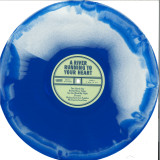
Eric D. Johnson rarely lingers at one location too long. As a kid growing up in the Midwest, Johnson's family moved around a lot, but it wasn't until he became a touring musician years later that motion became a central part of his identity. That transient lifestyle stoked an enduring reverence for the world he watched pass by through a van window. A sense of place is a unifying theme he's revisited with Fruit Bats throughout its many lives. From the project's origins in the late '90s as a vehicle for Johnson's lo-fi tinkering to the more sonically ambitious work of recent years, Fruit Bats has often showcased love songs where people and locations meld into one. It's a loose song structure that navigates what he calls "the geography of the heart." "The songs exist in a world that you can sort of travel from one to another," says Johnson. "There are roads and rivers between these songs." Those pathways extend straight through the newest Fruit Bats album, aptly titled A River Running to Your Heart . Self-produced by Johnson_a first for Fruit Bats_with Jeremy Harris at Panoramic House just north of San Francisco, it's Fruit Bats' tenth full-length release and one that finds the project in the middle of a creative resurgence. After two decades of making music, hard-earned emotional maturity has seeped into Johnson's songs, resulting in a more complex sound that's connected with audiences like no other previous version of Fruit Bats. A River Running to Your Heart represents the fullest realization of that creative vision to date. It's a sonically diverse effort that largely explores the importance of what it means to be home, both physically and spiritually. And while that might seem like a peculiar focus for an artist who's constantly in motion, for Fruit Bats, home can take many forms_from the obvious to the obscure. Lead single "Rushin' River Valley" is a self-propelled love song written about Johnson's wife that clings to the borrowed imagery of the place where she grew up in northern California. Then, there's the gentle and unfussy acoustic ballad "We Used to Live Here," which looks back to a time of youthful promise and cheap rent. But the wistful "It All Comes Back" is perhaps the most stunning and surprising track on the album, Johnson's production skills on full display. Built upon intricate layers of synths, keyboards, and guitars, it's a pitch-perfect blend of tone and lyricism that taps into our shared apprehensions and hopes for a post-pandemic life. "We lost some time / But we can make it back / Let's take it easy on ourselves, okay?" sings a world-weary but ultimately reassuring Johnson in the song's opening lines. It's the kind of performance that makes you hope Fruit Bats stays in this one place, at least for a little while longer.
BLUE & BONE VINYL
Eric D. Johnson rarely lingers at one location too long. As a kid growing up in the Midwest, Johnson's family moved around a lot, but it wasn't until he became a touring musician years later that motion became a central part of his identity. That transient lifestyle stoked an enduring reverence for the world he watched pass by through a van window. A sense of place is a unifying theme he's revisited with Fruit Bats throughout its many lives. From the project's origins in the late '90s as a vehicle for Johnson's lo-fi tinkering to the more sonically ambitious work of recent years, Fruit Bats has often showcased love songs where people and locations meld into one. It's a loose song structure that navigates what he calls "the geography of the heart." "The songs exist in a world that you can sort of travel from one to another," says Johnson. "There are roads and rivers between these songs." Those pathways extend straight through the newest Fruit Bats album, aptly titled A River Running to Your Heart . Self-produced by Johnson_a first for Fruit Bats_with Jeremy Harris at Panoramic House just north of San Francisco, it's Fruit Bats' tenth full-length release and one that finds the project in the middle of a creative resurgence. After two decades of making music, hard-earned emotional maturity has seeped into Johnson's songs, resulting in a more complex sound that's connected with audiences like no other previous version of Fruit Bats. A River Running to Your Heart represents the fullest realization of that creative vision to date. It's a sonically diverse effort that largely explores the importance of what it means to be home, both physically and spiritually. And while that might seem like a peculiar focus for an artist who's constantly in motion, for Fruit Bats, home can take many forms_from the obvious to the obscure. Lead single "Rushin' River Valley" is a self-propelled love song written about Johnson's wife that clings to the borrowed imagery of the place where she grew up in northern California. Then, there's the gentle and unfussy acoustic ballad "We Used to Live Here," which looks back to a time of youthful promise and cheap rent. But the wistful "It All Comes Back" is perhaps the most stunning and surprising track on the album, Johnson's production skills on full display. Built upon intricate layers of synths, keyboards, and guitars, it's a pitch-perfect blend of tone and lyricism that taps into our shared apprehensions and hopes for a post-pandemic life. "We lost some time / But we can make it back / Let's take it easy on ourselves, okay?" sings a world-weary but ultimately reassuring Johnson in the song's opening lines. It's the kind of performance that makes you hope Fruit Bats stays in this one place, at least for a little while longer.
- A1: Court Is Closed
- A2: Inside Black America
- A3: Times Are Hard, Friends Are Few
- B1: Prelude To Hell
- B2: Needle N' Spoon
- LP 2: Del Jones’ Positive Vibes (1973)
- C1: Vibe-Ing Theme
- C2: Prelude Ta Hell
- C3: Needle 'N Spoon
- C4: Cold Turkey
- D1: Soul Of Black Folks
- D2: Court Is Closed
- D3: Inside Black America
- D4: Times Are Hard, Friends Are Few
Del Jones, a poet, and proto-rapper, recorded Court is Closed in 1973. It was underground Philadelphia’s response to Amiri Baraka’s and Gil Scott-Heron’s indictments of the Black American experience - a call to action not just for his city, but for the nation. The set includes an oversized 10 page booklet by Jeremy Cargill, with contributions by Now-Again founder Eothen “Egon” Alapatt which delves into Jones’ music, milieu and life as an author, activist and orator, shining a light not only on his prescient awareness of hip-hop, but also on the struggles he confronted, and his urgent, current mandate. Court is Closed, equal parts psychedelic rock and deep funk, had a limited release of 500 copies and was rarely heard before Jones overdubbed horns on the album, remixed and augmented it with additional music, and issued it as the better-known Positive Vibes. Here we present both versions of the album on the 23rd release in the deluxe Now-Again Reserve Edition series. Jones’ story, and that of his family, is like his music: a loud, vital voice long silenced. Understanding it now is not just a visceral musical experience, but an essential dissection of racism and classism in America.