
pré-commande20.06.2025
il devrait être publié sur 20.06.2025
90,97€
il devrait être publié sur 20.06.2025

ROUND RECORDS IS PROUD TO REINTRODUCE THE RECORDINGS OF DAVID GRISMAN & JERRY GARCIA AT RETAIL WITH THE DEBUT OF BARE BONES, a collection of duo performances exploring the foundation of their beloved studio recordings. After over 30 years, Grisman has opened the Dawg Vault to curate a collection honoring the magic of their studio works. They are presented for the first time in their original unadorned state as part of a vinyl series.
il devrait être publié sur 13.12.2024
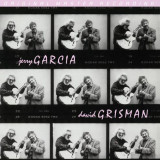
Unadorned with any post-production tricks or overdubs, Garcia/Grisman breathes with naturalism and presence. You will effortlessly detect the full body of the instruments, witness the woody grain textures, and get lost in the surprisingly velvety qualities of Garcia's lullaby-like singing. Our pressing also marks the first time this delightfully joyous affair has been issued in analogue form. You will never hear a better-sounding Americana-styled recording.
Pals since the mid-1960s, Garcia and Grisman bonded over their love for traditional folk and bluegrass. The two teamed up amidst what became a gold rush of top-notch productivity and creativity for Garcia. Partnering with bassist Jim Kerwin and percussionist/fiddler Joe Craven, the pair approaches every passage with innate ease, as if either musician could finish the others sentence. The affable chemistry and soothing interplay wash over a selection of songs as notable for their diversity as the way Garcia and "Dawg" turn them into the equivalent of old friends you haven't seen in years.
Exquisite melodies and jewel-shaped notes decorate the simple, convivial structures of tunes that hop, jump, skip, skitter, and bop. The atmosphere is reminiscent of the legendary gypsy-jazz exchanges between Django Reinhardt and Stephane Grappelli, and equally sharp. Swirling with Middle Eastern modality, the closing 16-minute-plus rendition of Grisman's rippling "Arabia" – complete with a section based on a Cuban fold theme - is alone enough worth the price of admission to this sensational session. But there's so much more.
The quartet delves into Celtic themes ("Two Soldiers"), jazz-grass ("Grateful Dawg"), old-world ballads ("Russian Lullaby"), and Appalachian flavours ("Walkin' Boss") with nonpareil skill and soulfulness. Garcia and Grisman's tandem picking throughout epitomize sublime. And for many listeners, the duo's revised version of the Grateful Dead staple "Friend of the Devil" ranks as the finest-ever recorded, the pace patient, the narrative vocals heartfelt, and the synchronous solos tailor-made for the enveloping progression. Better yet, it's all captured in astonishing fidelity.
il devrait être publié sur 31.05.2024

Unadorned with any post-production tricks or overdubs, Garcia/Grisman breathes with naturalism and presence. You will effortlessly detect the full body of the instruments, witness the woody grain textures, and get lost in the surprisingly velvety qualities of Garcia's lullaby-like singing. Our pressing also marks the first time this delightfully joyous affair has been issued in analogue form. You will never hear a better-sounding Americana-styled recording.
Pals since the mid-1960s, Garcia and Grisman bonded over their love for traditional folk and bluegrass. The two teamed up amidst what became a gold rush of top-notch productivity and creativity for Garcia. Partnering with bassist Jim Kerwin and percussionist/fiddler Joe Craven, the pair approaches every passage with innate ease, as if either musician could finish the others sentence. The affable chemistry and soothing interplay wash over a selection of songs as notable for their diversity as the way Garcia and "Dawg" turn them into the equivalent of old friends you haven't seen in years.
Exquisite melodies and jewel-shaped notes decorate the simple, convivial structures of tunes that hop, jump, skip, skitter, and bop. The atmosphere is reminiscent of the legendary gypsy-jazz exchanges between Django Reinhardt and Stephane Grappelli, and equally sharp. Swirling with Middle Eastern modality, the closing 16-minute-plus rendition of Grisman's rippling "Arabia" – complete with a section based on a Cuban fold theme - is alone enough worth the price of admission to this sensational session. But there's so much more.
The quartet delves into Celtic themes ("Two Soldiers"), jazz-grass ("Grateful Dawg"), old-world ballads ("Russian Lullaby"), and Appalachian flavours ("Walkin' Boss") with nonpareil skill and soulfulness. Garcia and Grisman's tandem picking throughout epitomize sublime. And for many listeners, the duo's revised version of the Grateful Dead staple "Friend of the Devil" ranks as the finest-ever recorded, the pace patient, the narrative vocals heartfelt, and the synchronous solos tailor-made for the enveloping progression. Better yet, it's all captured in astonishing fidelity.
il devrait être publié sur 14.08.2023

For any other artist, an album like Asher White’s Love Aggregates might come out of a conscious push to treat no idea as off-limits, to make something bold and new. Jubilant art-funk about cocaine addiction—absolutely. Swooning orchestral pop about Jerry Garcia—why not? Rippling electronic noise, jazzy brushed drums, an elderly motorcyclist with dementia, a profoundly emotional bass solo—put them all in one song. There are threadbare folk tunes, glammed-up power-pop bangers, “Sir Duke” horn charts, Morton Feldman string arrangements, layers of guitar feedback like violins made of liquid chrome. Yes, for another artist, Love Aggregates might be the most adventurous album in their catalog. For Asher White, it’s what passes for settling down.
White is 25 years old and has been making records—writing, recording, producing, and playing almost everything herself—for over a decade. She’d released two dozen of them on Bandcamp before catching the indie-rock industry’s attention with 2024’s Home Constellation Study and last year’s 8 Tips for Full Catastrophe Living. The latter album’s dizzy eclecticism and formidable craft landed her on Rolling Stone’s Future 25 list with the likes of xaviersobased and Oklou, along with a slew of other accolades. That came as something of a surprise to White, who didn’t craft the chaotic 8 Tips with a breakthrough in mind. Love Aggregates feels like a chance, for one of the most thrilling musical talents of her generation, at a more deliberate introduction.
She wrote and recorded her new album while her previous one was gathering
momentum, tinkering in the DIY recording studio where she always works, acutely conscious now that people would be listening to whatever she came up with. At around the same time, her years-long romantic relationship ended in a flurry of betrayal and addiction, her first experience of devastating heartbreak. Even so, Love Aggregates is not a bitter album about wallowing or seething, but instead making use of those impulses as raw materials in work that transcends the specificity of its origins, fashioning them into something surprising and new.
il devrait être publié sur 28.08.2026

Bitter Honey is the new album by Eric Silverman. Produced in collaboration with Damien Lewis, the album finds Silverman leaving behind the acid-fried desert rock of 2023’s Stay In It for something far more lush and expansive—a collection of ten psychedelic rock, pop, and folk tracks inspired by Peter Gabriel, John Cale, and Jeff Tweedy. Fittingly, the album is named after the “mad honey” of the rhododendron flower, a rare and potent hallucinogenic found high in the Himalayas.
The process of writing and recording the album started in early 2023, when Silverman and longtime collaborator Lewis retreated to a cabin near Nevada City, CA. Over the course of a week they sketched out the bones of nearly half the album, with Silverman recording the guitar solo for album opener “Anthropocene” live in one take during a particularly inspired moment. Meanwhile, “Get In Where You Fit In”, inspired by a bumper sticker Silverman saw heading up the mountain, was recorded on Jerry Garcia’s old 8-track tape machine and features pedal steel by Jake (Freeman) DeJongh. While at the cabin they also captured the field recordings that bookend the album, starting with the intro of “Anthropocene” and ending with the outro of “Bitter Honey” - an infinite loop.
Later on they decamped to Palomino Sound in LA for a round of sessions – tracking “Light Me Up” and “Trapped In Reverse” while making use of the prodigious assortment of vintage instruments at their disposal, including a 65’ Wurlitzer electric piano that became the centerpiece of a number of tracks. Eventually the pair ended up at 2200 Studios (formerly The Record Plant) in Sausalito, CA—a legendary studio where Prince, The Grateful Dead, and Fleetwood Mac made classic records. It was there that they tracked “New Light”, featuring strings by brothers Graham and Lewis Patzner; recorded all of Adam MacDougall’s (The Black Crowes, Circles Around the Sun) overdubs, including his synth leads on “Living the Dream”; and mixed the album in Studio A.
In a lot of ways Bitter Honey is Silverman’s first proper studio album. It’s also the first time Silverman has sat in the producer’s chair, this time around sharing the credit with Lewis. While his debut album was a product of its environment, all first takes and raw energy, Bitter Honey is thoughtful and focused, the best work Silverman has done and the culmination of his decade plus creative partnership with Lewis.
Highly anticipated sophomore album from Eric Silverman. Press coverage includes reviews and features in Raven Sings the Blues, and more.
“...threading the quicksilver needle of psych, AOR, and ‘70s Cocaine Cowboy territory.” - Raven Sings the Blues.
il devrait être publié sur 26.06.2026
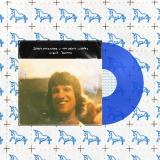
Jeffrey Alexander and the Heavy Lidders return with their best album yet, and a UK tour this August. Press by Silver PR
‘’On the alternate timeline where the Meat Puppets inherited the bulk of the Grateful Dead’s tourheads when Jerry Garcia died in 1995, none of this would be necessary, because Jeffrey Alexander and the Heavy Lidders are a household name for evolving their own musical space that overlays dusty folk, cosmic jazz, deep psych, free improv, and even (gasp!) indie rock, building an audience that ranges from open-eared curiosity seekers to deep committed music weirdos that’s also yielded the Heavy Lidders, an infamous sub-cult of concert tapers that you’re already sick of hearing about. A lot of other things are better over on that timeline, too.
But in this consensus reality (and probably the other one, too), Liquid Donnon catches the Lidders at their heaviest, “heavy” in the Lidderverse being far from a monolithic musical idea. There’s heavy like the album-opening “From Loch Raven to Fells Point,” one of several tracks with elegant and gnarled conversational jams featuring the core Lidders lineup of Alexander alongside guitarist Drew Gardner and bassist Jesse Sheppard (both of Elkhorn) and drummer Scott Verrastro. But there’s heavy, too, like “Calliope Walker” and “Tightroping,” featuring Gardner shifted to dream-space vibraphone, the former with saxophonist Tacuma Bradley, the latter with Christina Carter of Texas noise-psych legends Charalambides on veil-crossing wordless vocals, her first collaboration with Alexander in some 20 years.
But then there’s also heavy like the cover photo of Alexander’s late friend and album namesake Donnon, taken at a Dead show at Rich Stadium in Buffalo in 1989, a spirit threading through the songs and weaving unexpectedly into Alexander’s life decades later, emerging especially when Alexander passed through a near-death experience of his own. But, taken together, the different heavies of Liquid Donnon add up into a state of musical grace, where all the Heavy Lidders from all the universes come together as one. Just, like, imagine.
Convened in 2019 on Alexander’s relocation back to his native east coast, the Heavy Lidders are the latest hard-touring expression for the guitarist’s music, joining a vast and tangled discography (and tape list) that includes the beloved long-running west coast Dire Wolves Just Exactly Perfect Sisters Band and, before them, the Iditarod and Black Forest/Black Sea, as well as a bushel of solo play-all-the-instruments projects, a stint with Jackie-O Motherfucker, sessions with Kemialliset Ystävät and Avarus and others, and you’ll have to keep digging for the rest.
And while it’s not hard to find tapers at Lidders gigs (and they encourage you to be one), or to track themes and songs over Alexander’s many live releases, Liquid Donnon makes a new primary text, the original versions of six new pieces for the repertoire. The album closes with a devastating pairing of “Reservoir Drop” into “The Summer Song,” floating into a duo between Alexander’s guitar and Carter’s voice. Catch a half-dozen Lidders shows this summer, and you might not ever catch them playing it like that again, but you just might open the doorway back to that better place." - Jesse Jarnow (writer, WFMU DJ, producer and host of The Good Ol’ Grateful Deadcast)
il devrait être publié sur 12.06.2026

After finding fame with the Hollies and Crosby, Stills, Nash & Young, expatriate Englishman turned West Coast rock icon Graham Nash made an auspicious solo debut on this 1971 disc. It's an exemplary singer-songwriter effort, striking a vital balance between graceful introspection and political fervor — and while it's deeply personal, it still carries the harmonies, heart and politics that made CSN(Y) so essential.
With assistance from the likes of David Crosby, Jerry Garcia, and Dave Mason, highlights include the sensitive internal explorations "I Used to Be a King" and "Man in the Mirror" and the impassioned protest anthems "Chicago" and "Military Madness."
If Déjà Vu was a wild canyon party with four competing egos, Songs for Beginners is Nash's introspective morning after — a mix of heartbreak, hope, and a little bit of righteous protest. He recorded it while reeling from his split with Joni Mitchell, and you can feel that melancholy seeping through the grooves.
But don't mistake this for a wallowing breakup album — it's also a call to action, packed with the kind of folk-rock anthems that made Nash an indispensable voice of his era. If you love CSN's folk-rock harmonies but also crave a more personal, raw touch, this is a must-listen.
This Analogue Productions (Atlantic Series) reissue of Pain in My Heart is a standout for your collection. First, we turned to Bernie Grundman to cut lacquers from the original master tape. Pressing on 180-gram vinyl is by Quality Record Pressings, and the album is housed in a tip-on old style gatefold double pocket jacket by Stoughton Printing.
Cet article n'a pas encore été publié. Vous pouvez pré-commander le produit maintenant.

This deluxe 2025 vinyl edition of The Grateful Dead's Grayfolded was pressed at Optimal in Germany, known for their high end audiophile pressings.In 1993 Canadian composer John Oswald was invited by Phil Lesh to transform historical recordings of the Dead into something new, along the lines of what they had attempted in their Anthem of the Sun album.
Oswald chose to focus on the Dead’s Dark Star, which, over the courseof a quarter century, they had expanded and transformed in myriad waysin live performances. Oswald was given access to the Vaults, whereover the course of a month, with the guidance of the Dead's resident archivist Dick Latvala, he collected 105 performances, which throughthe following year he formed, folded, fondled, and finessed into a kaleidoscopic unstuck-in-time documentary of the Grateful Dead in someof their most psychedelic, symphonic, and rocking excursions— asingular 110-minute fantasy performance.Here it is, Deadheads, the ultimate Dark Star is now on vinyl. Deluxe audiophile pressing cut in Toronto under the watchful ears of John Oswald. Elaborately printed packaging in a heavy duty triple gatefold jacket includes liner notes by musicologist Rob Bowman featuring interviews with Jerry Garcia, Phil Lesh, and Robert Hunter plus six"time maps" which chart the source concerts of Dark Star.Music performed by The Grateful Dead (c) Grateful Dead Productions Inc. & Ice Nine Publishing Inc.
Taken from over 100 performances of Dark Star recorded between 1968 and 1993. Built, layered and "folded"to produce one large, new re-composed Dark Star.John Oswald is best known as the the creator of the music genre Plunderphonics, an appropriative form of recording studio creation which he began to develop in the late sixties. This has got him in trouble with, and also generated invitations from major record labels and musical icons. Meanwhile, in the í90ís he began, with several commissions from the Kronos Quartet, to compose scores for classical musicians and orchestras, the latest of which is an orchestral work,commissioned by the BBC, combining aspects of The Beatles, Gyˆrgy Ligeti, and Terry Riley. He also improvises on the saxophone in various settings, dances, and is a successful visual artist, best known for the chronophotic series Stillnessence
il devrait être publié sur 12.09.2025

il devrait être publié sur 20.06.2025

An album for sleeping and waking, walking and driving, hunting and fishing, for loitering outside a roadhouse on the haunted tundra. Okay in elevators, not great for dinner. On Caveman Wakes Up, Friendship’s new album and second for Merge Records, the band’s historically capacious definition of country music grows wider still. Shambolic guitars are offset by flute pads, bleary poetry is set against a Motown rhythm section, a song about Jerry Garcia and First Lady Betty Ford fades out with a drum solo, like if Talk Talk came from a dingy Philadelphia basement and was fronted by James Tate. Songwriter Dan Wriggins’ ragged baritone cuts through eleven murky, swirling country-rock songs with profound lyrical substance and sincerity. Like an alarm clock incorporated into the edge of a dream, Caveman Wakes Up belongs equally to the conscious and subconscious mind, fraught with background, steeped in reference and experimentation, delivered casually and as a dire warning, dedicated, above all, to music’s creative soul. Over the years, dedication has paid off. Friendship has become a kind of reverse supergroup,
wherein the band itself and each individual member are located centrally in an increasingly prominent scene of young folk and country musicians and songwriters. Drummer Michael Cormier O’Leary leads the instrumental collective Hour and, along with bassist Jon Samuels, runs Dear Life Records, home to friends and peers who count Friendship as a major influence including MJ Lenderman, Florry, and Fust. (Samuels also plays lead guitar in MJ Lenderman and the Wind). Guitarist Peter Gill’s band 2nd Grade records prolifically. Wriggins began writing the songs of Caveman Wakes Up on a downtuned classical guitar of Lenderman’s and finished on a barely tuned piano in an apartment he shared with Sadurn’s G DeGroot.
In the summer of 2023, Wriggins had just left the Iowa Writers’ Workshop, where his love for poetry and mistrust for the academic poetry world grew in tandem. A relationship fell apart, and Wriggins crashed for several weeks at Lenderman and Wednesday’s Karly Hartzman’s home in North Carolina, where he recorded the first demos of “Resident Evil,” “All Over the World,” and “Love Vape.” Wriggins returned to Philadelphia, and the band got to work on new ideas, finally tracking the album in five days with engineer Jeff Ziegler (Mary Lattimore, War on Drugs). Wriggins recorded vocals with Love the Stranger engineer Bradford Kreiger, and organ, violin (Jason Calhoun), and flute (Adelyn Strei) were recorded by Lucas Knapp in a West Philadelphia church.
il devrait être publié sur 16.05.2025

Ein Album zum Schlafen und Wachen, zum Gehen und Fahren, zum Jagen und Fischen, zum Herumlungern vor einer Raststätte in der verwunschenen Tundra. In Fahrstühlen okay, zum Abendessen nicht so toll. Auf Caveman Wakes Up, dem neuen Album von Friendship und ihrem zweiten für Merge Records, wird die historisch weit gefasste Definition von Country-Musik noch weiter gefasst. Shambolische Gitarren werden durch Flötenpads ausgeglichen, trübe Poesie trifft auf eine Motown-Rhythmusgruppe, ein Song über Jerry Garcia und die First Lady Betty Ford wird mit einem Schlagzeugsolo ausgeblendet, als käme Talk Talk aus einem schmuddeligen Keller in Philadelphia und würde von James Tate gespielt. Der zerklüftete Bariton des Songwriters Dan Wriggins schneidet durch elf düstere, wirbelnde Country-Rock-Songs mit tiefgründiger lyrischer Substanz und Aufrichtigkeit. Wie ein Wecker, der am Rande eines Traums eingebaut ist, gehört "Caveman Wakes Up" gleichermaßen zum bewussten und zum unterbewussten Verstand, voller Hintergründe, durchdrungen von Referenzen und Experimenten, beiläufig und als düstere Warnung vorgetragen und vor allem der kreativen Seele der Musik gewidmet. Im Laufe der Jahre hat sich diese Hingabe ausgezahlt. Friendship ist zu einer Art umgekehrter Supergroup geworden, in der die Band selbst und jedes einzelne Mitglied im Zentrum einer zunehmend prominenten Szene junger Folk- und Country-Musiker und Songwriter steht. Der Schlagzeuger Michael Cormier O'Leary leitet das Instrumentalkollektiv Hour und betreibt zusammen mit dem Bassisten Jon Samuels das Label Dear Life Records, das Freunde und Kollegen beherbergt, die Friendship zu einem wichtigen Einfluss zählen, darunter MJ Lenderman, Florry, und Fust. (Samuels spielt auch die Leadgitarre bei MJ Lenderman and the Wind). Die Band 2nd Grade des Gitarristen Peter Gill ist ebenfalls aktiv und macht zahlreiche Aufnahmen. Wriggins begann mit dem Schreiben der Songs von "Caveman Wakes Up" auf einer verstimmten klassischen Gitarre von Lenderman und beendete es auf einem kaum gestimmten Klavier in einer Wohnung, die er mit G DeGroot von Sadurn teilte. Im Sommer 2023 hatte Wriggins gerade den Iowa Writers' Workshop verlassen, wo seine Liebe zur Poesie und sein Misstrauen gegenüber der akademischen Poesiewelt gleichzeitig wuchsen. Eine Beziehung ging in die Brüche, und Wriggins übernachtete mehrere Wochen in North Carolina im Haus von Lenderman und Karly Hartzman (von Wednesday ), wo er die ersten Demos von "Resident Evil", "All Over the World" und "Love Vape" aufnahm. Wriggins kehrte nach Philadelphia zurück, und die Band machte sich an die Arbeit, um neue Ideen zu entwickeln. Schließlich nahmen sie das Album in fünf Tagen mit Tontechniker Jeff Ziegler (Mary Lattimore, War On Drugs) auf, den Gesang mit Bradford Kreiger, dem Techniker von Love the Stranger. Orgel, Geige (Jason Calhoun) und Flöte (Adelyn Strei) wurden von Lucas Knapp in einer Kirche in West Philadelphia aufgenommen. Textlich bewegt sich "Caveman Wakes Up" auf vertrautem Friendship Terrain - das Heilige wird profaniert und das Profane geheiligt. "Caveman Wakes Up" zeigt Friendships besonderes Genie für visionäre Arrangements, die über Generationen hinweg dem Folk-Rock-Kanon von Neil Young, Joni Mitchell und Emmylou Harris ebenso verpflichtet sind wie Indie-Größen wie Yo La Tengo und den Merge-Labelkollegen Lambchop oder Zeitgenossen wie Lomelda und ML Buch. Mehrere der Songs verwenden Fade-Outs, die im Text von "Love Vape" scherzhaft erwähnt werden, und es gibt andere Elemente, die von Motown und 70er-Jahre-Balladen übernommen wurden: festgefahrene Schlagzeugmuster, Bassintervalle, gefühlvolle Streicherarrangements. Jede Referenz wird über das Genre hinausgeschoben, verwirbelt und wiederholt, zu etwas Neuem, das eindeutig zum Friendship-Sound gehört. Bei "Free Association", "Artex" und "Wildwood in January" ist der Groove so festgelegt, dass andere Klänge nahtlos kommen und gehen können: Mellotron-Flächen, Klavierwirbel und -stiche und klare Gitarrenmelodien, wimmelnde Texturen, die sich als Einheit tarnen. "Caveman Wakes Up" das bisher am weitesten fortgeschrittene Werk von Friendship, ein weiterer Beweis für die Hingabe und Sorgfalt der Band.
il devrait être publié sur 16.05.2025

Grateful Dead archivist Dick Latvala considered this show to be the finest outing on the entire Spring 1977 tour, and, as any Dead Head knows, that is high praise indeed! At the time this was released on CD, the Dead weren’t sure a market existed (ha!) for three and four-CD packages, so this four-LP set leaves off eight songs from the show, but consider what songs are here: a phenomenal “Help on the Way”/”Slipknot!”/”Franklin’s Tower” comes after one of the definitive renditions of “Sugaree” and a terrific “The Music Never Stopped,” with Phil Lesh’s slithering bass leading the way in recording engineer’s Betty Cantor-Jackson’s mix.
But sides E, F & G offer one of those sublime (and, in this case, never to be repeated) sequences of songs that only the Dead could pull off in concert; after the rarely-performed “Sunrise,” a medley of “Estimated Prophet”/”Eyes of the World”/”Wharf Rat”/”Terrapin Station” (a truncated version two months before its official release)/”Morning Dew” brings the show home, as Jerry Garcia’s soloing on “Morning Dew” reaches heights seldom attained even by him. This was a knockout release on its first very limited vinyl run (check out those resale prices), and we’ve improved on it with a fresh mastering job by Jeffrey Norman (in his own words, “the sound is better than the original heard on the Brookvale release”), and lacquer cutting by Clint Holley and Dave Polster at Well Made Music.
Pressed on 180-gram black vinyl at the plant we’ve been using to great acclaim for all of our Grateful Dead releases, Gotta Groove Records, and limited to 2000 hand-numbered copies!
il devrait être publié sur 31.01.2025

This led to her immediate recognition as a banjo pioneer and to her win in 1991 of the Banjo Player of the Year award from the International Bluegrass Music Association (the first female to win an Instrumentalist of the Year award). For the 2024 reissue, the original 8- track, 1" multitrack tapes were transferred at a resolution of 192kHz/36- bit, and remixed and mastered by Matt Coles at
Compass Sound Studio in Nashville.
The album was produced in 1989 by acoustic music icon and frequent Jerry Garcia cohort David Grisman (architect of "Dawg Music," the jazz- influenced breakout fringe of the bluegrass genre) and recorded with a cast of all- star musicians at Dawg Studio in Marin, CA. Players on the sessions included Alison Krauss (fiddle), David Grisman (mandolin), Mike Marshall (guitar, fiddle, mandolin), Matt Eakle (flute), Joe Craven (percussion) and Jim Kerwin (bass).
The album's 12 tunes were all written by Alison and include the first recorded versions of some of her most well- known compositions, including "Mambo Banjo," "Leaving Cottondale," and "Weetabix."
REMIXED AND REMASTERED from 192kHz/36-bit transfers of the original multitrack tapes. LP – features LIMITED EDITION BLACK & WHITE SWIRL + album download code with 3 never- before- released bonus tracks Includes a 4- COLOR BOOKLET with liner notes from Alison Brown, Dave Dennison, and Mike Marshall, plus ARCHIVAL PHOTOS and SESSION DOCUMENTS
il devrait être publié sur 09.08.2024

Black Vinyl[23,95 €]
Crack Cloud has always been something beyond a rock band: both profound and grand, vaporous and elusive. The first iteration of Crack Cloud was formed nearly a decade ago as a proxy-rehab outlet on the fringes of Calgary. Over time, two EPs and accompanying visual pieces were produced out of the residence known as Red Mile. By 2017, several members had relocated to Vancouver, working out of harm reduction centers and low-barrier shelters. Sobriety, self-reformation and the idealism of their work further formed an ethos for Crack Cloud. It was during these years that the band produced their astounding 2020 album Pain Olympics. At once, their vision became expansive, cinematic. Now, Red Mile is a bit of a homecoming. Members have returned to Calgary. But Calgary/home has become a liminal space, a place of flux. After a decade of personal and collective growth, what does home even mean? Red Mile is, for them, something like samsara: a return and a rebirth. Red Mile's sound breathes expansive energy into the circuitous, street bound sonics of Crack Cloud's prior material. Fizzling synths intertwine with chiming pianos. Songs layer like Russian nesting dolls; one may find a Ramones chorus set within a desolate Western prog soundtrack only to watch it erupt into a joyous anthem. Real-ass guitars _ alternately lilting, scuzzy and soaring _ ring out across wide sun-bleached spaces. In 2024, the cumulative effect is (in rock instrumentation terms) naturalistic. Any whiff of embalmed nostalgia is absent. Even the close of the album - a winding, almost Jerry Garcia guitar noodle that leads us out of Red Mile - is delivered without sentimentality. Principal songwriter Zach Choy's lyrics are cutting but merciful, with a sharp self-awareness that never slides into self-satisfaction. Crack Cloud as artists are critical _ and ultimately as forgiving _ of themselves as they are the melting world around them. The songs balance an easy charm and cathartic power: affirming life without denying death. Recorded predominantly between the outskirts of Joshua Tree California, and Calgary, Alberta, this record is informed by a bittersweet mélange of old and new. The sprawling, novelistic structures of their previous albums are condensed and sharpened, while maintaining their refusal to delve into superficiality. Through playful melodies and elliptical guitar soliloquy, they deliver a final product of exceptional depth and distinctly unprecious warmth. Crack Cloud have produced a mature, vital work that interrogates the platitudes of the rock-n-roll lifestyle, but ultimately exalts its sacredness. Red Mile's de facto thesis statement "The Medium" is itself a rock song meditation: an ode to the form and its practitioners. This genre that _ typical, repeatable, corporatized as it can be _ somehow still has the power to help us live through life. We see the dusty sentiment of "I love rock and roll" exhumed, taken apart, and stitched back together. It's a song guided by faith _ if the medium helps us proclaim our love today, it's worth protecting from derision tomorrow. We live in an era where music seems to love hitting its head against the wall. Crack Cloud's Red Mile is the sound _ the feeling! _ of the bricks giving way.
il devrait être publié sur 26.07.2024

Freefall Blue Vinyl[26,26 €]
Crack Cloud has always been something beyond a rock band: both profound and grand, vaporous and elusive. The first iteration of Crack Cloud was formed nearly a decade ago as a proxy-rehab outlet on the fringes of Calgary. Over time, two EPs and accompanying visual pieces were produced out of the residence known as Red Mile. By 2017, several members had relocated to Vancouver, working out of harm reduction centers and low-barrier shelters. Sobriety, self-reformation and the idealism of their work further formed an ethos for Crack Cloud. It was during these years that the band produced their astounding 2020 album Pain Olympics. At once, their vision became expansive, cinematic. Now, Red Mile is a bit of a homecoming. Members have returned to Calgary. But Calgary/home has become a liminal space, a place of flux. After a decade of personal and collective growth, what does home even mean? Red Mile is, for them, something like samsara: a return and a rebirth. Red Mile's sound breathes expansive energy into the circuitous, street bound sonics of Crack Cloud's prior material. Fizzling synths intertwine with chiming pianos. Songs layer like Russian nesting dolls; one may find a Ramones chorus set within a desolate Western prog soundtrack only to watch it erupt into a joyous anthem. Real-ass guitars _ alternately lilting, scuzzy and soaring _ ring out across wide sun-bleached spaces. In 2024, the cumulative effect is (in rock instrumentation terms) naturalistic. Any whiff of embalmed nostalgia is absent. Even the close of the album - a winding, almost Jerry Garcia guitar noodle that leads us out of Red Mile - is delivered without sentimentality. Principal songwriter Zach Choy's lyrics are cutting but merciful, with a sharp self-awareness that never slides into self-satisfaction. Crack Cloud as artists are critical _ and ultimately as forgiving _ of themselves as they are the melting world around them. The songs balance an easy charm and cathartic power: affirming life without denying death. Recorded predominantly between the outskirts of Joshua Tree California, and Calgary, Alberta, this record is informed by a bittersweet mélange of old and new. The sprawling, novelistic structures of their previous albums are condensed and sharpened, while maintaining their refusal to delve into superficiality. Through playful melodies and elliptical guitar soliloquy, they deliver a final product of exceptional depth and distinctly unprecious warmth. Crack Cloud have produced a mature, vital work that interrogates the platitudes of the rock-n-roll lifestyle, but ultimately exalts its sacredness. Red Mile's de facto thesis statement "The Medium" is itself a rock song meditation: an ode to the form and its practitioners. This genre that _ typical, repeatable, corporatized as it can be _ somehow still has the power to help us live through life. We see the dusty sentiment of "I love rock and roll" exhumed, taken apart, and stitched back together. It's a song guided by faith _ if the medium helps us proclaim our love today, it's worth protecting from derision tomorrow. We live in an era where music seems to love hitting its head against the wall. Crack Cloud's Red Mile is the sound _ the feeling! _ of the bricks giving way.
il devrait être publié sur 26.07.2024

The late, great guitarist Tony Rice grew up in a bluegrass family and learned to play at the feet of Kentucky Colonel and Byrd Clarence White. In the mid-‘70s, he joined J.D. Crowe’s seminal newgrass group The New South, thus launching one of the most celebrated careers in modern bluegrass, folk, and acoustic string band music. Along the way, Rice collaborated with David Grisman, Jerry Garcia, Bela Fleck, Alison Krauss, Chris Hillman, Doyle Lawson, Norman Blake…the list goes on. This record, 1988’s Native American, is one of his most beloved, a beautiful blend of bluegrass, jazz, and folk featuring soaring interpretations of some of his favorite songwriters, like Gordon Lightfoot (“Shadows”), Joni Mitchell (“Urge for Going”), Phil Ochs (“Changes”), and Ian Tyson (“Summer Wages”). And on the more contemporary side, Mary Chapin Carpenter sings on the record and contributes a song (“John Wilkes Booth”) about the Lincoln assassination, long an obsession of Rice. That’s the great Vassar Clements on fiddle and Jerry Douglas on dobro, too…first-ever vinyl reissue, pressed in “root beer” vinyl and limited to 750 copies!
il devrait être publié sur 12.07.2024

The vinyl os the first release in archival series celebrating the legacy of Robert Hunter, primary lyricist for Grateful Dead and main collaborator/songwriting partner for Jerry Garcia. Deluxe reissue of 1974 debut solo album. This Deluxe Edition introduces a freshly remastered version of the original album alongside 16 previously unreleased recordings, including alternate versions of album tracks and several session outtakes. All the music has been remastered from the original master tapes by GRAMMY® Award-winning engineer David Glasser using Plangent Processes tape restoration and speed correction.
il devrait être publié sur 07.06.2024

Django Reinhardt gilt als einer der größten Gitarristen aller Zeiten und als erster Jazzgitarrist Europas, der Einfluss auf Kollegen wie Barney Kessel, Charlie Byrd, Wes Montgomery, Jeff Beck, Jerry Garcia, Tony Lommi und Willie Nelson hatte. Aufgrund seiner körperlichen Behinderung spielte er hauptsächlich mit Zeige- und Mittelfinger und erfand so einen einzigartigen Gitarrenstil. Seine Virtuosität, geprägt von der Musik der Roma, wurde von einem hervorragenden Gespür für melodische Erfindungsgabe, Musikalität, Timing, Swing und Dynamik begleitet. Django spielte ausschließlich nach Gehör, da er weder Noten lesen noch schreiben konnte. Die Swing-Compilation "Golden Classics" enthält eine Auswahl seiner besten Aufnahmen, alle sorgfältig remastered.
il devrait être publié sur 12.04.2024
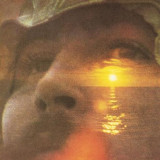
If I Could Only Remember My Name was the debut solo record from David Crosby. Recorded in 1970 after the passing of his girlfriend Christine and released in February of 1971, the album explores themes including loss and disorientation. The album features a who's who of contributors from the San Francisco Bay area including Paul Kantner and Grace Slick of Jefferson Airplane, Jerry Garcia of the Grateful Dead, and Santana, and his cohort from Los Angeles including Graham Nash, Neil Young, and Joni Mitchell.
The album has attained a cult status throughout the last 50 years, hailed for its spooky, psychedelic, and truly unique sounds.
AllMusic gave the album 4.5 stars, with reviewer Stanton Swihart writing: "With his ringing, velvety voice — the epitome of hippie crooning — and inspired songwriting, he turns If I Could Only Remember My Name into a one-shot wonder of dreamy but ominous California ambience."
All the hallmarks of a top-notch Analogue Productions reissue are here for you to savor: Mastered directly from the original master tape by Bernie Grundman and cut at 45 RPM. Pressed on 180-gram vinyl at Quality Record Pressings, and housed in tip-on old style gatefold double pocket jackets with film lamination by Stoughton Printing.
il devrait être publié sur 29.02.2024

To celebrate the 50th anniversary of JJ Cale’s solo career, his first eight, iconic, albums (Naturally, Really, Okie, Troubadour, 5, Shades, Grasshopper, #8) are presented in this limited edition vinyl boxset. Remastered at Abbey Road studios, each album is pressed on 180g colour vinyl. Also included is a bonus 12″ ‘The Early Years’, a collection of his 1960’s singles. The package will contain a 40 page hardback book featuring rare and unseen images, essays, memorabilia and a foreword from legendary guitarist Mark Knopfler of Dire Straits. This is a high quality and extremely influential body of work from a singular singer-songwriter. Cale’s influence is immeasurable, a point reinforced by the fact that a genre-spanning list of stars including Neil Young, Eric Clapton, Lynyrd Skynyrd, John Mayer, Johnny Cash, Captain Beefheart, Santana, The Allman Brothers, Jerry Garcia, The Band, Chet Atkins, Freddie King, Beck, Band of Horses, Waylon Jennings, Tom Petty, Dan Auerbach, and many more have covered his timeless music.
il devrait être publié sur 06.10.2023

Eine aufregende Entdeckung für alle Fans der irischen Musikgiganten The Chieftains: zwei amerikanische Livemitschnitte der Band erstmals auf 2-CD und LP, aufgenommen in San Francisco im Boarding House
am 1. Oktober 1973 und der Great American Music Hall am 5. Mai 1976.
Die 2-CD-Variante beinhaltet als Bonusmaterial das letzte Interview mit Paddy Moloney vor seinem Tod im Jahr 2021 und eine Einschätzung der irischen Wurzeln in der Bluegrass-Musik von Jerry Garcia (The
Grateful Dead).
Ausstattung 2-CD: Hardcover-Digipak mit 36-seitigem Booklet mit ausführlichen Linernotes der Owsley Stanley Foundation und von Bluegrass-Legende Ricky Skaggs
il devrait être publié sur 17.08.2023

Reverend Gary Davis was a master musician whose remarkable guitar
playing created a unique brand of gospel, blues and ragtime
These beautifully remastered 1935 recordings are seminal performances which
demonstrate why he influenced so many great guitarists including Jerry Garcia,
Ry Cooder and Jorma Kaukonen.
il devrait être publié sur 31.05.2023

It's a cohesive song cycle purpose-built for pit stops at points beyond along the California country corridor. Sonically, Stay In It feels equally at home in 2022 as it might in 1972, evidenced by nods to "After The Gold Rush"- era Neil Young, Jonathan Wilson,and The War on Drugs.
The singer-songwriter trucked Jerry Garcia's old console to the desert to embrace the analog. The kind where if you want to rip a guitar solo at 3am with the windows open, you go for it, cowboy. A flurry of calls reverberated back and forth until Eric and his producer Damien Lewis (Kevin Parker, JamesBay), crash-landed in the tiny high desert outpost of Landers, California...in August.
"Stay In It" is a way of saying be present, it's "Be Here Now" says Silverman, an accomplished veteran of the Bay Area live music scene (with appearances at festivals such as Outside Lands and Noise Pop under his belt). "So the record is really about just finding that moment where it all locks in and flows. Get there and stay there."
This is music that picks up influences and imagery and shapes and colors as it encounters them on Interstate 62, before dropping them off as they turn into specks of dust on the horizon. There's the two-step lilt of "Better Days", where we start awash in melancholy synths but end up hopeful for possibility. There's the synthesizer summoning courtesy of first- call session keyboardist Adam MacDougall (Black Crowes, Circles Around The Sun) on "All In My Head" where
things get fully cosmic.
But no matter the track, there's something bigger happening here.
il devrait être publié sur 26.05.2023

Presenting the third volume of Keroxen's annual series of Radar compilations, joining the musical dots between restless and free-spirited artists working across the Canary archipelago.
With volume 1 loosely based around the indie and shoegazing art rock sounds made in the Islands, and a second volume exploring the experimental electronic music of Tenerife, we now welcome Volume 3, with a special showcase of Canary artists working from the diaspora.
Meet the hallucinatory acid folk from Tarragona based artist Transistor Eye, Amsterdam’s trio Halli Crigi raw, jazz/noise guitar improvisation, the glitchy and abstract piano minimalism by Sweden based Hara Alonso and the custom made midi based electronic orchestral compositions by Berlin based visual artist Arístides García aka Anisotrópico. Each artist delivers approximately 10 minutes of unique music which mixed together creates a weird and surprisingly fluid psychedelic journey, wrapped up as it’s always the case with these series in the pastoral retro-futurist collage artwork by Canarian artist Pura Márquez.
Another document showcasing the other side of this holiday destination, it’s not just hotel resorts and poolside lounging here, enter the wonderful and weird world of Keroxen.
il devrait être publié sur 13.01.2023

Many of you will be aware of the band Homegrown Syndrome (we released the single a few years ago). They were also known locally as Homegrown Funk & the band Memphis that put out one extremely rare two sider. A party Side 'Shake and Rock' flipped with a top of the rung ballad 'Inside My Love', it has everything collectors want, Rarity & Quality so sells for 500+ all day long, below Robert Garcia gives us the history....
"Memphis" were members of the Memphis based group "Home Grown Funk." Home Grown Funk was also known as "Homegrown Syndrome," a controversial name bestowed to them. Before heading to LA they gigged all over Memphis. Some of the members were from an earlier 70s group called "Brothers Unlimited" and had earlier ties during the 60s with the "Memphis Invaders" (a peaceful civil rights activist group).
With aspirations of pushing Homegrown further, a few members including Jerry Jones made the move out west. It was LA 1977 when they were introduced to Ike Tuner through a mutual friend "Ricky G". It was a casual meetup. Then one night Ike had his son Ike Jr. go check them out while performing at the Soul Train hangout spot "Maverick Flats". Ike Jr. praised their performance to Ike and he had them come out to his Inglewood studio. The group walked into the studio with a funky track already playing and that's when Jerry Jones improvised this opportunity and started singing. Ike then turned and said… "Who is that singing?" Jerry said, "Thats me." Then Ike replied " YOU BIG MUTHAF***A! You could be my new Tina." From that point the group cut bunch of tracks with Ike over the years up until they're feature on his 1980 album "The Edge."
In 1981 Perry Kibble (Keyboardist for Taste Of Honey) was at "Concerts In The Park" and heard Home Grown Funk performing. He linked up with the group and got them a deal with Arista. During this time they recorded their hit track " Confrontation." Perry suggested that the group change their name because he didn't want another group with the work "Funk" in it and hence "Homegrown Syndrome." They also use the Arista studio to cut an unreleased acetate with tracks "Got the love" and "Party Vibes" soon to be reissued on ATON.
Around the same time they were introduced to a fella named Roger Green. Green asked the group to come over to his home studio to cut the track "Inside My Love." Upon naming the record Roger Green suggested to go by "Memphis" since they were all from there. This record was eventually pressed in 1982 as small run becoming extremely hard to find.
Words by: Robert Garcia
il devrait être publié sur 28.01.2022

Many of you will be aware of the band Homegrown Syndrome (we released the single a few years ago). They were also known locally as Homegrown Funk & the band Memphis that put out one extremely rare two sider. A party Side 'Shake and Rock' flipped with a top of the rung ballad 'Inside My Love', it has everything collectors want, Rarity & Quality so sells for 500+ all day long, below Robert Garcia gives us the history....
"Memphis" were members of the Memphis based group "Home Grown Funk." Home Grown Funk was also known as "Homegrown Syndrome," a controversial name bestowed to them. Before heading to LA they gigged all over Memphis. Some of the members were from an earlier 70s group called "Brothers Unlimited" and had earlier ties during the 60s with the "Memphis Invaders" (a peaceful civil rights activist group).
With aspirations of pushing Homegrown further, a few members including Jerry Jones made the move out west. It was LA 1977 when they were introduced to Ike Tuner through a mutual friend "Ricky G". It was a casual meetup. Then one night Ike had his son Ike Jr. go check them out while performing at the Soul Train hangout spot "Maverick Flats". Ike Jr. praised their performance to Ike and he had them come out to his Inglewood studio. The group walked into the studio with a funky track already playing and that's when Jerry Jones improvised this opportunity and started singing. Ike then turned and said… "Who is that singing?" Jerry said, "Thats me." Then Ike replied " YOU BIG MUTHAF***A! You could be my new Tina." From that point the group cut bunch of tracks with Ike over the years up until they're feature on his 1980 album "The Edge."
In 1981 Perry Kibble (Keyboardist for Taste Of Honey) was at "Concerts In The Park" and heard Home Grown Funk performing. He linked up with the group and got them a deal with Arista. During this time they recorded their hit track " Confrontation." Perry suggested that the group change their name because he didn't want another group with the work "Funk" in it and hence "Homegrown Syndrome." They also use the Arista studio to cut an unreleased acetate with tracks "Got the love" and "Party Vibes" soon to be reissued on ATON.
Around the same time they were introduced to a fella named Roger Green. Green asked the group to come over to his home studio to cut the track "Inside My Love." Upon naming the record Roger Green suggested to go by "Memphis" since they were all from there. This record was eventually pressed in 1982 as small run becoming extremely hard to find.
Words by: Robert Garcia
Commandez maintenant et nous commanderons l'article pour vous chez notre fournisseur.

Before there was Rimarimba, Suffolk-born, Felixstowe-based musician and home recording enthusiast Robert Cox assembled a cast of friends, some musicians and some not so much, for an experiment in group exploration and ecstatic expression under the name The Same. Sonically and gravitationally defined by Cox’s collaboration with guitarist Andy Thomas (a partnership which formed in 1976 to record as General Motors), Sync or Swim, The Same’s one and only album, also featured keyboards by Florence Atkinson and Paul Ridout, and vocals by Robert’s sister Rebecca.
Originally released in small cassette and vinyl quantities on Unlikely Records, Cox’s imprint and a meeting point for many other musicians found at the fringe, the back cover of the original album jacket is as much a map of the personnel, place, and process
fundamental to Sync or Swim as it is a table of contents for DIY music-making at the beginning of the 80s: “Recorded in peaceful Wiltshire between September 18th and October 6th 1981 (using a miscellany of home made devices) onto a Teac A-3300SX via a Teac A-3440. No noise reduction systems were used.”
The additional equipment listed – a combination of consumer technology and DIY innovation – speaks to an unpretentious, improvisational ethos that pilots Sync or Swim, and Cox’s career as a whole. Rimarimba, whose near complete discography Freedom To Spend made available again in 2019, showcased Cox’s simultaneously hermetic and prolific creative process, while The Same celebrates making sound for sound’s sake and the serendipity surrounding those moments.
Wiltshire, home to the Stonehenge stone circles and a county of empty plains in the southwest of England, is worlds away from the commerce and industry of Glenn Branca’s New York City or Neu’s Düsseldorf. While The Same may feel in some ways like a British blend of these minimalist and motorik machinations, Cox and Thomas were curiously fascinated with The Grateful Dead and Frank Zappa’s brand of psychedelic music.
Cox’s own definition of British psychedelia is “folk music meeting technology and going bonkers.” It’s by this definition that Sync or Swim takes unexpected forms, from tape-speed tomfoolery, concrète sound collage and analog delayed marimbas, to the colorful spectrum of interwoven guitar play between Cox and Thomas reminiscent of Ghanaian Highlife but more accurately indebted to Jerry Garcia.
il devrait être publié sur 16.07.2021

Before there was Rimarimba, Suffolk-born, Felixstowe-based musician and home recording enthusiast Robert Cox assembled a cast of friends, some musicians and some not so much, for an experiment in group exploration and ecstatic expression under the name The Same. Sonically and gravitationally defined by Cox's collaboration with guitarist Andy Thomas (a partnership which formed in 1976 to record as General Motors), Sync or Swim, The Same's one and only album, also featured keyboards by Florence Atkinson and Paul Ridout, and vocals by Robert's sister Rebecca. Originally released in small cassette and vinyl quantities on Unlikely Records, Cox's imprint and a meeting point for many other musicians found at the fringe, the back cover of the original album jacket is as much a map of the personnel, place, and process fundamental to Sync or Swim as it is a table of contents for DIY music-making at the beginning of the 80s: "Recorded in peaceful Wiltshire between September 18th and October 6th 1981 (using a miscellany of home made devices) onto a Teac A-3300SX via a Teac A-3440. No noise reduction systems were used." Cox's own definition of British psychedelia is "folk music meeting technology and going bonkers." It's by this definition that Sync or Swim takes unexpected forms, from tape-speed tomfoolery, concrète sound collage and analog delayed marimbas, to the colorful spectrum of interwoven guitar play between Cox and Thomas reminiscent of Ghanaian Highlife but more accurately indebted to Jerry Garcia. On the album's culminating final track, "E Scapes," all of these elements are brought together in twenty-minute journey through layers of chiming guitar loops and spritely solos, keyed percussion, and tape experiments, all played as though the sun were rising over the standing stones of Salisbury Plain. Cox would later go to similarly greath lengths with certain solo sound endeavors, but the confluence of musicians on "E Scapes" pushes the piece to exceptional, unforgettable heights. Transferred and remastered from the original tapes, The Same's Sync or Swim arrives on LP July 16th, 2021 on Freedom To Spend, just in time for the album's 40th anniversary.
Commandez maintenant et nous commanderons l'article pour vous chez notre fournisseur.

The band’s most experimental album, Anthem Of The Sun was an unprecedented mix of studio and live recordings stitched together to create a hybrid. More than fifty years later, it remains a pinnacle of psychedelic music. It also marked a departure for the band, as they began to channel their creativity into longer jams on songs like “Alligator” and “Caution (Do Not Stop On Tracks)” – two live staples of the Dead’s early days. During this period, the band included: Jerry Garcia, Bob Weir, Ron “Pigpen” McKernan, Phil Lesh, Mickey Hart, and Bill Kreutzmann. The LP features a remastered version of the 1971 mix, mastered by Grammy®-winning engineer David Glasser from the original analog master tapes.
il devrait être publié sur 28.05.2021

Occasionally prodigal, but ever-prodigious, Elliot Thomas AKA Etbonz weaves an 80-s/early 90's sci-fi cinema sound into a total recall of scattered memories.
Childhood play with starcom and Gobots. Soaking in cult classics like Robocop, Predator, and Big Trouble in Little China on VHS. DJing in spacey laser-lit rooms draped with sound-dampening curtains.
Side A leads with 'Blue Drink,' which is carried perfectly on melodic motifs designed for trance inducing, with a steadily crescendoing & irresistible rhythmic mantra.
Following this, 'Curtainbox Space World' flips the 'Jerry Garcia finds a 303' switch and accidentally opens a portal to some deep shamanic release.
Commandez maintenant et nous commanderons l'article pour vous chez notre fournisseur.

The Grateful Dead forged its legend on the road, traveling countless miles between 1965 and 1995 to perform a world record 2,318 shows for millions of devoted fans. The band's refusal to ever play a song the same way twice has endeared generations of fans, many of whom prefer certain live versions of songs over their studio counterparts, and garnered the popular phrase among Dead Heads: There is nothing like a Grateful Dead concert.'
The live albums the band released during its 30-year career are the primary source for the collection, including tracks like Bertha' from Grateful Dead (Skull & Roses) (1971), Fire On The Mountain' from Dead Set (1981), and The Music Never Stopped' from One From the Vault (1991). A testament to its ongoing popularity, the revered double-album Europe '72 (1972), is represented by no less than five tracks, including Sugar Magnolia,' Jack Straw' and a searing rendition of Morning Dew.'
Other performances on the set were selected from the growing number of live releases that have emerged since the death of founding member Jerry Garcia in 1995. Some of those recordings include Touch Of Grey' from Truckin' Up To Buffalo (2005), a 1990 version of Eyes Of The World' with saxophonist Branford Marsalis featured on Wake Up To Find Out (2014), and Estimated Prophet,' which debuted earlier this year as part of Cornell 5/8/77, a recording of the Grateful Dead's mythic show at Cornell University in 1977, thought by many to be the band's greatest live performance.
Made for die-hard Dead Heads and new fans alike, The Best Of The Grateful Dead Live Vol. 1 1969-1977 will be available as a on 180-gram vinyl as a 2-LP set, covering the first half of the album, on March 23rd. The music will be available through digital and streaming services as well.
il devrait être publié sur 23.03.2018
