With his 1981 solo debut album The Red and the Black, Jerry Harrison proves his formidable talent as a multi-instrumentalist and songwriter. Dense, abrasive and focused, The Red and the Black’s complex and funky musical style was ahead of its time. Harrison's observations throughout the album on the modern condition ring all the more true in our digital age. This limited edition 2LP edition features the 1981 album recut from the original tapes plus a bonus LP of previously unreleased outtakes and alternate mixes.
Buscar:jerry harrison
- 1
- A1: Chuck "Big Guitar" Ernest - "Blue Oasis" (With The Satellite Band)
- A3: The Wailers - "Driftwood
- A4: Lenny & The Thundertones - "The Moon Of Manakoora
- A5: Biscaynes - "Midnight In Montevideo" (With Co-Encidentals)
- A6: Red Harrison & His Zodiacs - "Chant Of The Jungle
- A7: The Palatons - "Jungle Guitar
- A8: Chayns - "Live With The Moon
- C1: Bailey's Nervous Kats - "Cobra" (Feat James Mills)
- C2: The Blazers - "Sound Of Mecca
- C3: The Gems - "Slave Girl
- C4: Jerry & The Catalinas - "The Arabian Knight
- C5: The Jaguars - "Night Walker
- C6: The Shelltones - "Blue Castaway
- C7: The Blue Bells - "Atlantis
- C8: Bill & Jean Bradway - "Paradise Isle
- D1: The Melody Mates - "Enchantment
- D2: Don Reed - "Nature Boy" (Feat The Voice Of Love)
- D3: The Baton Of Andre Brummer - "Tumba
- D4: Darla Hood - "Silent Island
- D5: Martha Raye - "Lotus Land" (With Phil Moore Orchestra)
- D6: Baha'i Victory Chorus - "Nightingale Of Paradise
- D7: Carmen - "Isle Of Love
- D8: The Monzas - "Forever Walks A Drifter
- E1: Akim - "Voodoo Drums
- E2: Don Sargent & His Buddies - "Voodoo Kiss
- E3: Joan Joyce Trio - "Captured
- E4: Pony Sherrell - "Tobago
- E5: Jerry Warren & The Valids - "Enchantress
- E6: The Centuries - "Polynesian Paradise
- E7: The Potted Palm - "My House Of Grass
- E8: The Castiles - "Enchantment
- F1: Five Glow Tones - "Quiet Village
- F2: Modesto Duran & Orchestra - "Silent Island
- F3: Ross Anderson Chorus & Orchestra - "Tam-Bu Theme
- F4: Bobby Christian - "Caravan
- F5: Bruce Norman Quintet - "Arabian Rhythm
- F6: The Slaves - "Hari's Harem
- F7: Arnie Derksen & Chise - "Similou
- F8: The Three Bars - "Caribbean Cruise" (Feat Nicky Roberts)
- G1: Robert Drasnin - "Chant Of The Moon
- G2: The Blue Jeans - "Moon Mist
- G3: Artie Barsamian - "The Enchanting Melody
- G4: Eddie Kochak & Hakki Obidia - "Jazz In Port Said
- G5: Gene Sikora & The Irrationals - "Tanganyika
- G6: Bobby Paris - "Dark Continent
- G7: Chico Jose - "Locura (Madness)
- G8: Clyde Derby - "Lost Island
It Was A Musical Cocktail Born In A Marketing Meeting: Two Parts Easy Listening, One Part Jazz, A Healthy Dollop Of Conga Drums, A Sprinkling Of Bird Calls, And A Pinch Of Textless Choir. Serve Garnished With An Alluring Female On The Album Jacket For Best Results. Exotica! The Soundtrack For A Mythical Air Conditioned Eden, Packaged For Mid-century, Tiki Torch-wielding Armchair Safariers. Be It Mosquito-bitten Torch Singers, Landlocked Surf Quartets, Fad-chasing Jazz Combos, Mad Genius Band Leaders, D-list Actors, Or A Middle Aged Loner Programming Bird Calls Into A Hammond, Exotica Was Always More Concerned With What Geography Might Sound Like Over Who Was Conducting. Captured Across Three Albums Are 48 (54 On The Cd) Curious Examples Of The Short-lived Genre's Reach, Each Summoning Their Own Sonic Visions Of Shangri La, Bringing Their Versions Of The Pacific, Africa, And The Orient To The Hinterlands Of America. Technicolor Paradise Is Where One Makes It, After All.
Various Artists - Technicolour Paradise: Rhum Rhapsodies & Others Exotic Delights
This is the eponymous debut studio album by the American Rock band the Modern Lovers, originally released in 1976. Six tracks (“Roadrunner”, “Astral Plane”, “Old World”, “Pablo Picasso”, “She Cracked” and “Someone I Care About”) were produced by John Cale.
The Modern Lovers were formed in 1970 by teenage singer, songwriter, guitarist Jonathan Richman, augmented with Jerry Harrison (keyboards) -later of Talking Heads-, Ernie Brooks (bass) and David Robinson (drums) -later of The Cars-, with Richman’s friend and original band member John Felice joining them occasionally.
The Modern Lovers influenced numerous aspiring punk rock musicians on both sides of the Atlantic, including the Sex Pistols, whose early cover of “Roadrunner” was placed on The Great Rock ‘n’ Roll Swindle. The album was included in Robert Dimery’s 1001 Albums You Must Hear Before You Die. In 2003, the album was listed on Rolling Stone magazine’s list of the 500 greatest albums of all time.
The Modern Lovers is available as a Limited numbered edition of 4000 copies on “Cool Blue” coloured vinyl
- A1: Psycho Killer
- A2: Heaven
- A3: Thank You For Sending Me An Angel
- A4: Found A Job
- A5: Slippery People
- A6: Cities
- B1: Burning Down The House
- B2: Life During Wartime
- B3: Making Flippy Floppy
- B4: Swamp
- C1: What A Day That Was
- C2: This Must Be The Place (Naive Melody) (Naive Melody)
- C3: Once In A Lifetime
- C4: Big Business/I Zimbra
- D1: Genius Of Love
- D2: Girlfriend Is Better
- D3: Take Me To The River
- D4: Crosseyed & Painless
LOS ANGELES—To celebrate the 40th anniversary of the celebrated Talking Heads and Jonathan Demme’s concert film Stop Making Sense, the set will be re-released as a 2LP and 2CD/Blu-ray set this summer.
Released last year, the sold-out Deluxe Edition of the soundtrack will return as a 2-LP black vinyl on Rhino and 2-LP crystal clear vinyl at retail. Both variants feature a 12-page booklet with liner notes from all four band members –Tina Weymouth, David Byrne, Chris Frantz, and Jerry Harrison—and band photos. The 2CD/Blu-ray version includes the entire 28-page booklet from last year’s Deluxe Edition and a Dolby Atmos mix of the complete concert, mixed by Jerry Harrison and E.T. Thorngren, who also mixed the original release. Both will be available on July 26. Pre-order now.
The band appeared together for a sold-out screening and Q&A last night at the Pantages Theater, the same theater at which Stop Making Sense was recorded. They were joined by Blondshell, who performed “Thank You For Sending Me an Angel.” Another special screening with the band will occur in Brooklyn at the King’s Theater on June 13, with the Q&A hosted by Questlove and The Linda Linda’s performing “Found a Job.” The two events cap off a banner year of celebrations for what many consider to be the best concert film of all time.
The inspiration for Stop Making Sense came when director Jonathan Demme saw Talking Heads perform during the band’s 1983 tour for Speaking in Tongues. Afterward, he approached them with the idea of making the show into a concert film. They agreed and worked together over the next few months to finalize the details. Ultimately, Demme filmed three shows at Hollywood’s Pantages Theater in December 1983 to create Stop Making Sense.
The concert film presents a retrospective of the band up to that point, with a performance that weaves together songs from all six of its studio albums. The show progresses methodically, opening with Byrne onstage performing “Psycho Killer” alone with a drum machine. After each song, he’s joined by a new band member until Weymouth, Frantz, and Harrison are all on stage with him. The group continues to grow throughout the concert as members of the stellar touring band are added: keyboardist Bernie Worrell, percussionist Steve Scales, guitarist Alex Weir, and backup singers Lynn Mabry and Ednah Holt.
The band performs 18 songs in Stop Making Sense, including its recent single at the time, “Burning Down The House.” That summer, the song was in heavy rotation on radio and MTV, helping the song become the band’s first top 10 hit in America. It was, however, a different song from Speaking in Tongues that was destined to deliver one of the film’s signature moments. Talking Heads would perform “Girlfriend Is Better” wearing the now iconic, oversized suit inspired by costumes worn in traditional Japanese theater. For good measure, a picture of David Byrne in the suit also graces the album cover.
Stop Making Sense focuses mainly on music by Talking Heads but does include a few songs recorded outside the band: “Genius Of Love” by Tom Tom Club, “What A Day That Was” and “Big Business” from Byrne’s 1981 album, The Catherine Wheel. Limited edition vinyl versions of both of these albums, along with Harrison’s The Red And The Black, were released for this year’s Record Store Day.
When it arrived in September 1984, Stop Making Sense was an artistic and commercial triumph. The film had people dancing in theatre aisles, and the soundtrack sold over two million copies. Just last year, the Library of Congress added Stop Making Sense to the National Film Registry in recognition of its cultural, historical, and aesthetic significance.
Weymouth praises Demme as a collaborator: “…Jonathan was a very enthusiastic, highly adaptive, and imaginative guy who was just as good a listener as he was a talker and collaborator. From the get-go you just got the impression he was as flexible as he was disciplined. Being team players, that boded well for a great relationship and a great film!”
Harrison says the film still holds up today: “To me, Stop Making Sense has remained relevant because the staging and lighting techniques could have been created in a much earlier time period. For example, Vari-Lights, lights with motors to re-aim them, had just come into vogue. Had we used them, there would have been a timestamp on the film, and it eventually would have felt dated...The absence of interviews, combined with the elegant and timeless lighting, created a film that can be watched over and over.”
Byrne says it’s interesting that this album was – for many people – an introduction to Talking Heads. “We had done a live album before this, but coupled with the film, and with the improved mixes and sound quality, this record reached a whole new audience. As often happens, the songs got an added energy when we performed them live and were inspired by having an audience. In many ways, these versions are more exciting than the studio recordings, so maybe that’s why a lot of folks discovered us via this record.”
Frantz recalls the sheer joy surrounding the entire Stop Making Sense experience. “I’m talking about real, conscious, transcendent joy… I’m talking about what the Southern gospel people call ‘getting happy,’ which means ‘to be filled with the Spirit.’ That is what happened to us onstage every night, and from my seat behind the drums, I recognized that this was happening to the audience too. Joy was visible in front of me and all around me every night.”
- A1: Psycho Killer
- A2: Heaven
- A3: Thank You For Sending Me An Angel
- A4: Found A Job
- A5: Slippery People
- A6: Cities
- B1: Burning Down The House
- B2: Life During Wartime
- B3: Making Flippy Floppy
- B4: Swamp
- C1: What A Day That Was
- C2: This Must Be The Place (Naive Melody) (Naive Melody)
- C3: Once In A Lifetime
- C4: Big Business/I Zimbra
- D1: Genius Of Love
- D2: Girlfriend Is Better
- D3: Take Me To The River
- D4: Crosseyed & Painless
LOS ANGELES—To celebrate the 40th anniversary of the celebrated Talking Heads and Jonathan Demme’s concert film Stop Making Sense, the set will be re-released as a 2LP and 2CD/Blu-ray set this summer.
Released last year, the sold-out Deluxe Edition of the soundtrack will return as a 2-LP black vinyl on Rhino and 2-LP crystal clear vinyl at retail. Both variants feature a 12-page booklet with liner notes from all four band members –Tina Weymouth, David Byrne, Chris Frantz, and Jerry Harrison—and band photos. The 2CD/Blu-ray version includes the entire 28-page booklet from last year’s Deluxe Edition and a Dolby Atmos mix of the complete concert, mixed by Jerry Harrison and E.T. Thorngren, who also mixed the original release. Both will be available on July 26. Pre-order now.
The band appeared together for a sold-out screening and Q&A last night at the Pantages Theater, the same theater at which Stop Making Sense was recorded. They were joined by Blondshell, who performed “Thank You For Sending Me an Angel.” Another special screening with the band will occur in Brooklyn at the King’s Theater on June 13, with the Q&A hosted by Questlove and The Linda Linda’s performing “Found a Job.” The two events cap off a banner year of celebrations for what many consider to be the best concert film of all time.
The inspiration for Stop Making Sense came when director Jonathan Demme saw Talking Heads perform during the band’s 1983 tour for Speaking in Tongues. Afterward, he approached them with the idea of making the show into a concert film. They agreed and worked together over the next few months to finalize the details. Ultimately, Demme filmed three shows at Hollywood’s Pantages Theater in December 1983 to create Stop Making Sense.
The concert film presents a retrospective of the band up to that point, with a performance that weaves together songs from all six of its studio albums. The show progresses methodically, opening with Byrne onstage performing “Psycho Killer” alone with a drum machine. After each song, he’s joined by a new band member until Weymouth, Frantz, and Harrison are all on stage with him. The group continues to grow throughout the concert as members of the stellar touring band are added: keyboardist Bernie Worrell, percussionist Steve Scales, guitarist Alex Weir, and backup singers Lynn Mabry and Ednah Holt.
The band performs 18 songs in Stop Making Sense, including its recent single at the time, “Burning Down The House.” That summer, the song was in heavy rotation on radio and MTV, helping the song become the band’s first top 10 hit in America. It was, however, a different song from Speaking in Tongues that was destined to deliver one of the film’s signature moments. Talking Heads would perform “Girlfriend Is Better” wearing the now iconic, oversized suit inspired by costumes worn in traditional Japanese theater. For good measure, a picture of David Byrne in the suit also graces the album cover.
Stop Making Sense focuses mainly on music by Talking Heads but does include a few songs recorded outside the band: “Genius Of Love” by Tom Tom Club, “What A Day That Was” and “Big Business” from Byrne’s 1981 album, The Catherine Wheel. Limited edition vinyl versions of both of these albums, along with Harrison’s The Red And The Black, were released for this year’s Record Store Day.
When it arrived in September 1984, Stop Making Sense was an artistic and commercial triumph. The film had people dancing in theatre aisles, and the soundtrack sold over two million copies. Just last year, the Library of Congress added Stop Making Sense to the National Film Registry in recognition of its cultural, historical, and aesthetic significance.
Weymouth praises Demme as a collaborator: “…Jonathan was a very enthusiastic, highly adaptive, and imaginative guy who was just as good a listener as he was a talker and collaborator. From the get-go you just got the impression he was as flexible as he was disciplined. Being team players, that boded well for a great relationship and a great film!”
Harrison says the film still holds up today: “To me, Stop Making Sense has remained relevant because the staging and lighting techniques could have been created in a much earlier time period. For example, Vari-Lights, lights with motors to re-aim them, had just come into vogue. Had we used them, there would have been a timestamp on the film, and it eventually would have felt dated...The absence of interviews, combined with the elegant and timeless lighting, created a film that can be watched over and over.”
Byrne says it’s interesting that this album was – for many people – an introduction to Talking Heads. “We had done a live album before this, but coupled with the film, and with the improved mixes and sound quality, this record reached a whole new audience. As often happens, the songs got an added energy when we performed them live and were inspired by having an audience. In many ways, these versions are more exciting than the studio recordings, so maybe that’s why a lot of folks discovered us via this record.”
Frantz recalls the sheer joy surrounding the entire Stop Making Sense experience. “I’m talking about real, conscious, transcendent joy… I’m talking about what the Southern gospel people call ‘getting happy,’ which means ‘to be filled with the Spirit.’ That is what happened to us onstage every night, and from my seat behind the drums, I recognized that this was happening to the audience too. Joy was visible in front of me and all around me every night.”
Mango Vinyl. Leon Russell war einer der angesehensten Studiomusiker der Rockgeschichte. Er wirkte an einer überwältigenden Anzahl von Platten von Legenden wie Jerry Lee Lewis, Bobby Darin, Phil Spector, Frank Sinatra, den Byrds und den Beach Boys mit. Russells Solowerke profitierten von seinen erstaunlichen Seilschaften, Koryphäen wie George Harrison, Eric Clapton, Willie Nelson, verschiedene Rolling Stones und andere, verhalfen Russell im Laufe der Jahre seinen Alben den letzten Schliff zu geben. Als "Meister von Raum und Zeit" mischte Russell Südstaaten-Soul, Gospel, Country, Rock und den Piano Singer/Songwriter-Stil. "A Song For Leon" zelebriert Leons Leben und seine Karriere, ikonische Acts wie die Pixies, Orville Peck, Nathaniel Rateliff & the Night Sweats, U.S. Girls featuring Bootsy Collins, Durand Jones & The Indications und andere unglaubliche Künstler sind hier versammelt. "A Song For Leon" zeigt die Wirkung von Leon Russells Liedern in anderen, neuen Versionen seiner Musik.
Well we are going back to Dayton yet again for some more of that 1980's Boogie Funk!!!
PLATYPUS IS: Jerry Johnstone (Lead and Rhythm Guitar), Lloyd “Rok” Jones (Bass Guitar and all Bass), Kerry “Bogart” Rutledge (Vocals/Guitar), Arthur “Hakim” Stokes(Vocals/Percussion), and Curtis Sanford (Drums & Percussion) all from Dayton, Ohio!
Special shout out to former PLATYPUS members Dana Meyers Vocals/Autoharp), since those days, Solar Records, Songwriter, Producer for The Whispers, Shalamar and The Spinners, Floyd “Spoon” Weatherspoon (Vocals), since those days performing with “The Motown Sounds Of TOUCH” and Larry Hines (Lead and Rhythm Guitar extraordinaire) Deceased.
PLATYPUS RELEASED 2 albums for Casablanca Records – “Platypus” (1979) and “Cherry” (1980) and recorded more wonderful unreleased music. Super Disco Edits is proud to be releasing previously Unreleased song Side A “I LIKE YOUR LOVIN” Lead vocals Kerry “Bogart” Rutledge, with Guest Vocals Keith Harrison (Of Faze O and Dazz BandFame), Side B “I NEVER KNEW LOVE (Could Feel This Way)” Lead Vocal Arthur“Hakim” Stokes, written By Dana Meyers, along with Belinda Lipscomb and Jeffrey Cooper (Of Midnight Star Fame)
"Love Is Overtaking Me", originally released in 2008 comprises 21 demos and home recordings of unreleased pop, folk and country songs from Arthur"s vast catalogue. While much critical and popular affection for Russell"s music has come about well after his untimely death from AIDS in 1992, many fellow artists believed in his genius and were drawn to collaborate with him during his lifetime. The legendary producer John Hammond (Billie Holiday, Bob Dylan, Bruce Springsteen) recorded Russell on several occasions; a number of these recordings can be heard on "Love Is Overtaking Me". Alongside songs recorded with various incarnations of The Flying Hearts, a group formed by Russell with Ernie Brooks whose shifting line up included, by turns, Jerry Harrison, Rhys Chatham, Jon Gibson, Peter Gordon and Peter Zummo as well as Larry Saltzman and David Van Tieghem. Several other Russell projects are represented on Love Is Overtaking Me, including The Sailboats, Turbo Sporty and Bright & Early. Compiled from over eight hours of material, "Love Is Overtaking Me" reaches back further to Russell"s first compositions from the early `70s and spans forward to his very last recordings, made at home in 1991. Chris Taylor of Grizzly Bear contributed mixing, restoration and editing to the album, whose tracks were selected by Audika"s Steve Knutson, Ernie Brooks and Russell"s companion, Tom Lee. Several songs feature prominently in Matt Wolf"s film "Wild Combination: A Portrait of Arthur Russell". Extensive "Love Is Overtaking Me" liner notes by Tom Lee provide an intimate perspective on Russell"s diverse catalogue, which spanned an extraordinary diversity of styles and won the love of artistic communities that would seem utterly disparate, from Philip Glass, John Cage and Allen Ginsberg to rock bands like The Talking Heads and The Modern Lovers; the pre-Studio 54 disco-party scene of Nicky Siano"s Gallery and David Mancuso"s Loft; and DJ-producers like Francois Kevorkian and Larry Levan, among others.
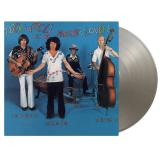
The debut album from Jonathan Richman & The Modern Lovers and featuring the U.S. single tracks, “New England” and “Here Come The Martian Martians” This version of The Modern Lovers included drummer David Robinson (The Cars) and Greg “Curly” Keranen on bass (The Rubinoos) Co-Produced by Beserkley Records founder Matthew King Kauffman and Glen Kolotkin (Jimi Hendrix, Janis Joplin) Available CD & LP. Jonathan Richman formed The Modern Lovers in 1970 in Boston with Jerry Harrison (Talking Heads), Ernie Brooks and David Robinson (The Cars). The band recorded a series of demos, first with John Cale (The Velvet Underground) and later with producer Kim Fowley. Both sets of demos were eventually released, but not until the original group had disbanded. In 1975 Jonathan relocated to California and secured a recording deal with Beserkley Records. By 1976 he had pulled together a new version of The Modern Lovers. This group included the holdover David Robinson from the original band and added, Leroy Radcliffe and Greg 'Curly’ Keranen (The Rubinoos). The self-titled release delivered on Richman’s desire for more acoustic and harmony-based material. Unfortunately, nearly on top of the bands’ debut album release, the earlier demo material drawn mostly from the Cale demo sessions was issued, and Jonathan Richman & The Modern Lovers was overshadowed by “Pablo Picasso,” “Roadrunner,” and their—now classic—“debut.” Shortly after the release of their actual self-titled debut, Robinson departed to join The Cars. Needing a new drummer, the band found D. Sharpe (later of the Carla Bley Band) and this new line-up recorded Rock ’n’ Roll With The Modern Lovers which was released in 1977 and achieved some chart success in Europe with “Egyptian Reggae” making it to #5 on the U.K. Singles Chart. Greil Marcus called it “the purist Rock and Roll album I’ve heard this year.” However, another in the series of personnel changes, Keranen left the group. Modern Lovers ‘Live’ followed in 1977 with new bassist Asa Brebner. While the U.S. might not have caught on to the magic of Jonathan Richman & The Modern Lovers, the U.K. certainly did. Recorded at the Hammersmith Odeon, ‘Live’ features Jonathan and The Modern Lovers performing classics from their first two releases to an enthusiastic crowd. The set included the recent Top 5 U.K. single “Egyptian Reggae,” as well as tracks from The Modern Lovers’ previously releases plus an eight-minute version of “Ice Cream Man.” 1979’s Back In Your Life marked the end of any original versions of The Modern Lovers and closed the Beserkley era with Jonathan stepping back from music for a few years after its release.
- 1