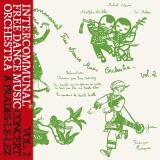
Concert at Prades-le-Lez marks the origins of the Intercommunal Free Dance Music Orchestra. In 1974, François Tusques and his companions (Michel Marre, Jo Maka, Adolf Winkler and Guem), in the spirit of Don Cherry or Chris McGregor, playfully dismantle all borders and all styles of creative music.
On this second volume, the Intercommunal builds unprecedented soundscapes around a song of revolt, a dance tune, or a burst of dissonance. The journey is unforgettable, no question about it. On repeat listening, it even becomes… lunar!
“The music that we make is primarily meant to be listened to live,” warned a leaflet from the Intercommunal Free Dance Music Orchestra. This is precisely why the (restored!) reissue of the two volumes of Concert at Prades-le-Lez, recorded on January 25 and 26, 1974 by François Tusques and his comrades, is such an important event.
In 1971, after recording a series of albums that would leave a lasting mark on French jazz (Free Jazz, of course, with Michel Portal, François Jeanneau, Bernard Vitet, Beb Guérin and Charles Saudrais, but also Le Nouveau Jazz with Barney Wilen, or the solo Piano Dazibao), François Tusques founded the Intercommunal—a grouping whose very name called for the fraternization of the various communities making up the country: Our music will help, we hope, to resolve the contradictions that exist between workers be longing to different communities, by breaking down various forms of national chauvinism, and more particularly the chauvinism of certain French people toward the cultures of Third World countries… Long live the friendship between the peoples of the whole world!
Among the great records made by the Intercommunal Free Dance Music Orchestra, the two volumes of Concert at Prades-le-Lez come first, before L’Inter Communal, Vol. 4, Le Musichien, and Après la marée noire (four titles already reissued by Souffle Continu). François Tusques and his companions (Michel Marre and Jo Maka on saxophones, Adolf Winkler on trombone, and Guem on percussion) performed on January 25 and 26, 1974 at the Moulin de Prades-le-Lez, a few kilometers from Montpellier. It was thus in the southern region of Occitanie that the first echoes of this musical vision of a borderless brotherhood were recorded.
“We’re not among the Colonels,” the Intercommunal reassures us right away, performing a stride piano tune carried by African winds that the audience cannot resist for long. The energy is already striking and it never lets up throughout these two recordings, from start to finish: jazz, blues, traditional music, minimalism, even funk… The musicians of the Intercommunal have heard a lot of great music and now delight in reinventing it by mixing it all together.
“We want the song form to take its place as a weapon in the struggle against capitalist exploitation and all those who oppress us morally and materially,” declared an Intercommunal leaflet, quoting Jean-Baptiste Clément, author of the lyrics to “Le Temps des cerises.” The struggle was therefore serious—but it did not prevent François Tusques and his group from waging it in a festive spirit: each piece on Concert at Prades-le- Lez sends out a call for love and fraternity. Fifty years later, the message remains as relevant as ever—and once again, it is François Tusques who makes it heard.
Suche:jo di
- On N'est Pas Chez Les Colonels
- Intercommunal Blues
- Mazir
- Kan-Ha-Diskan - We Shall Over Come
- African Rythm-N-Logy
2[23,95 €]
Concert at Prades-le-Lez marks the origins of the Intercommunal Free Dance Music Orchestra. In 1974, François Tusques and his companions (Michel Marre, Jo Maka, Adolf Winkler and Guem), in the spirit of Don Cherry or Chris McGregor, playfully dismantle all borders and all styles of creative music.
On this first volume, the Intercommunal takes its audience from New Orleans to Brittany and on to North Africa. The journey was bold, without a doubt—and its memory remains unforgettable.
“The music that we make is primarily meant to be listened to live,” warned a leaflet from the Intercommunal Free Dance Music Orchestra. This is precisely why the (restored!) reissue of the two volumes of Concert at Prades-le-Lez, recorded on January 25 and 26, 1974 by François Tusques and his comrades, is such an important event.
In 1971, after recording a series of albums that would leave a lasting mark on French jazz (Free Jazz, of course, with Michel Portal, François Jeanneau, Bernard Vitet, Beb Guérin and Charles Saudrais, but also Le Nouveau Jazz with Barney Wilen, or the solo Piano Dazibao), François Tusques founded the Intercommunal—a grouping whose very name called for the fraternization of the various communities making up the country: Our music will help, we hope, to resolve the contradictions that exist between workers be longing to different communities, by breaking down various forms of national chauvinism, and more particularly the chauvinism of certain French people toward the cultures of Third World countries… Long live the friendship between the peoples of the whole world!
Among the great records made by the Intercommunal Free Dance Music Orchestra, the two volumes of Concert at Prades-le-Lez come first, before L’Inter Communal, Vol. 4, Le Musichien, and Après la marée noire (four titles already reissued by Souffle Continu). François Tusques and his companions (Michel Marre and Jo Maka on saxophones, Adolf Winkler on trombone, and Guem on percussion) performed on January 25 and 26, 1974 at the Moulin de Prades-le-Lez, a few kilometers from Montpellier. It was thus in the southern region of Occitanie that the first echoes of this musical vision of a borderless brotherhood were recorded.
“We’re not among the Colonels,” the Intercommunal reassures us right away, performing a stride piano tune carried by African winds that the audience cannot resist for long. The energy is already striking and it never lets up throughout these two recordings, from start to finish: jazz, blues, traditional music, minimalism, even funk… The musicians of the Intercommunal have heard a lot of great music and now delight in reinventing it by mixing it all together.
“We want the song form to take its place as a weapon in the struggle against capitalist exploitation and all those who oppress us morally and materially,” declared an Intercommunal leaflet, quoting Jean-Baptiste Clément, author of the lyrics to “Le Temps des cerises.” The struggle was therefore serious—but it did not prevent François Tusques and his group from waging it in a festive spirit: each piece on Concert at Prades-le- Lez sends out a call for love and fraternity. Fifty years later, the message remains as relevant as ever—and once again, it is François Tusques who makes it heard.
- A1: Super Sonic
- A2: This Is Why You Love Me
- A3: Satellite
- A4: Malela
- A5: Salaam
- B1: Whoever You Are
- B2: Sue
- C1: (You Better Love Me) Before I Am Gone
- C2: Not If You Were The Last Dandy On Earth
- C3: # 1 Hit Jam
- D1: Servo
- D2: The Devil May Care (Mom & Dad Don’t)
- D3: Their Satanic Majesties Second Request
REPRESS!
Give It Back! was the sixth studio album by American psychedelic rock band The Brian Jonestown Massacre, originally released in 1997 by record label Bomp!. First time on 180g audiophile vinyl. Notably, this is the only album that features Peter Hayes, who later founded the Black Rebel Motorcycle Club. The sessions for the record were filmed for the documentary Dig!. Though only a couple of minutes of these sessions appear in the film.
- 1: Mojo Jam (Special Guest Dennis Gruenling)
- 2: Baby Hold Tight
- 3: House Full Of Love
- 4: That Smile (Special Guest Sue Foley)
- 5: The Man I Used To Be
- 6: Faith
- 7: Tooth And Nail (Special Guest Rick Vito)
- 8: Fate Is A Train
- 9: This Road (Special Guest Rick Vito)
- 10: What Has Happened Here?
- 11: Without You (Special Guests John Ginty And Mark Johnson
Peter Karp gehört zu den unverwechselbaren Stimmen der amerikanischen Americana-, Blues- und Roots-Szene. Seine Musik verbindet kraftvolle Emotionen, feines Storytelling und eine tiefe Verwurzelung in den Klangtraditionen des amerikanischen Südens. Aufgewachsen zwischen New Jersey, New York City und Alabama, entwickelte er früh ein Gespür für die Energie urbaner Songkultur ebenso wie für die Ursprünglichkeit des Blues. Künstler wie Robert Johnson, Muddy Waters oder Howlin" Wolf prägten ihn ebenso wie die poetische Kraft von John Prine und die erdige Direktheit von Joe Ely. Karp schreibt Songs, die das Leben so zeigen, wie es ist: ehrlich, rau, humorvoll und voller beobachteter Details. Seine markante Stimme, sein expressives Gitarren- und Pianospiel und sein Gespür für melodische Hooks machen ihn zu einem der respektiertesten Songwriter seines Genres. Kritiker loben seine Fähigkeit, Blues, Folk, R&B und Americana zu einem eigenen, zeitlosen Stil zu verbinden. Peter Karp steht für authentische amerikanische Musik - tiefgründig, mitreißend und voller Charakter. Ein Künstler, der die große Tradition des Songwritings fortführt und gleichzeitig seine ganz eigene Handschrift setzt.
Cassette[9,03 €]
PINK-WHITE MARBLE Vinyl[22,65 €]
SEA GREEN/SKY BLUE MARBLE SWIRL Vinyl[22,06 €]
PHOENIX II ED. RED/BLACK/WHITE MERGE Vinyl[22,06 €]
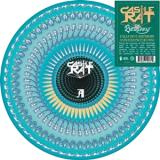
LTD METAL HAMMER PICTURE DISC[22,27 €]
Eines der besten Metal-Alben des Jahres 2025 erhält eine hochwertige Zoetrope Vinylversion. Ein farbenfroh animiertes, detailreiches Sammlerstück für Musikliebhaber. Das Fantasy-Mittelalter-Metal-Phänomen CASTLE RAT präsentiert sein zweites Album! Castle Rat ist die NY Fantasy-Heavy-Metal-Band, die von der Rat Queen angeführt wird, welche die Mission verfolgt, ihr Refugium gegen diejenigen zu verteidigen, die es zerstören wollen. Ihr zur Seite stehen The Count, The Plague Doctor und The All-Seeing Druid. Gemeinsam stellen sie sich mit Heavy Magie dem unerbittlichen Zorn ihrer Erzfeindin - dem Tod in Form von The Rat Reaperess. The Bestiary ist ein riffgeladenes Kompendium mystischer Kreaturen und vorwarnender Erzählungen aus einer vergessenen Welt. Es erzählt 13 allegorische Geschichten von mythischen Bestien und dem Zauberer, der sie beschwört, und verwebt kraftvolle Heavy-Hymnen und dunkle Verzückungen zu einer betörenden und unvergesslichen Heavy-Metal-Odyssee. Als ob Grace Slick mit Black Sabbath ca. 1200 A.D. auf einem Kiss-Konzert Liebe macht. Aufgenommen von Randall Dunn (Sunn O))), Wolves in the Throne Room, Björk) und gemischt von Jonathan Nuñez (Torche, Restless Spirit), bietet das Album episches Heavy-Gemetzel und doomy Hard Rock. Hervorgegangen aus New Yorks abscheulichem, kreaturenverseuchtem Untergrund, schlugen die Fantasy-Heavy-Metaller zunächst mit ihren Live-Auftritten und später mit ihrem Debütalbum "Into The Realm" im Jahr 2024 große Wellen. Seit ihrer Gründung im Jahr 2019 haben CASTLE RAT ein lebendiges Labyrinth aus Erzählungen und Mythen geschaffen, welches sie nun rund um die Welt führt. Zoetrope-Vinyl kommt in durchsichtiger, halbfester PVC-Hülle mit Lasche (semi-rigid transparent PVC sleeve with flap),auch noch auf CD (aufklappbares Digipak), MC (mit gefaltetem Inlay) und auf LP (farbiges Vinyl, inklusive ausklappbarem Lyrics-Insert) erhältlich.
- 1: Bitches Blues
- 2: Kompet Blir
- 3: For A Moment I Thought I Could Hear You
- 4: Limite
- 5: Dynamax
- 6: Recollection Of Sorrow
Clear Vinyl[25,00 €]
"Weejuns is all about interplay,"erklärt Gitarristin Mollestad. ,Bitches Blues besteht aus sechs Instrumentalstücken oder Musikabschnitten mit einer extremen Bandbreite an Dynamik. Einige basieren auf kräftigen Beats, während andere Stücke weitaus lyrischer und rubato sind. Die Bandbreite reicht von riffbasierten rockigen Stücken über lautes Chaos bis hin zu melancholischen Balladen und sogar völlig freien Improvisationen." Mit einem kultivierten und dennoch erfrischend instinktiven Ansatz, Instrumente und Einflüsse miteinander zu verflechten, wechselt Bitches Blues (ein ironischer Verweis auf Miles Davis' Album Bitches Brew) unvorhersehbar zwischen langsamen und sanften, klar gegliederten Songs mit disziplinierten Akkordfolgen und explosiven Ausbrüchen kathartischer und komplexer Strukturen. Weejuns (eine Slang-Abkürzung für ,Norwegians") stellten sich 2023 mit einem selbstbetitelten Doppel-Live-Album vor. Ursprünglich von Mollestad für das Kongsberg Jazz Festival zusammengestellt, wo sie mit dem renommierten Musicians Prize ausgezeichnet wurde, hat sich die Chemie innerhalb von Weejuns als dauerhaft und verlockend erwiesen, auch als Gegenpol zum bisher härtesten Album des Hedvig Mollestad Trios, Bees in the Bonnet aus dem Jahr 2025. Mollestad hat mit ihrem gleichnamigen Trio acht gefeierte Alben veröffentlicht. Das Markenzeichen ihrer 15-jährigen Karriere ist die Verschmelzung von ernsthaftem Können mit einem offensichtlichen Fokus darauf, Spaß am Klang zu finden. Als Tochter eines Jazzmusikers vertiefte sie sich in dessen Plattensammlung und studierte klassische Werke von Miles Davis, Charlie Parker, Joe Pass und Jim Hall, bevor sie in ihren 20ern Riff-gewaltige Titanen wie Led Zeppelin, Black Sabbath und Mahavishnu Orchestra entdeckte. Dies führte zur Gründung des Hedvig Mollestad Trios, dessen unermüdlicher Aufnahme- und Tourneeplan seit Anfang der 2010er Jahre der Gitarristin eine Reihe von Auszeichnungen einbrachte, darunter zwei norwegische Grammys (Spellemannprisen) und die Ernennung durch das DownBeat-Magazin zu einer der 25 Künstlerinnen, die ,den Jazz für Jahrzehnte prägen könnten". Ståle Storlokken (Bass, Synths) ist Gründer und langjähriges Mitglied von Supersilent und Elephant9, seit Mitte der 90er Jahre die ,rechte Hand" von Terje Rypdal und hat mit Motorpsycho auf Platte und auf der Bühne sowie mit unzähligen anderen zusammengearbeitet. Ole Mofjell (Drums) ist das jüngste Mitglied und spielt bei Krokofant, Signe Emmeluths Amoeba und seinem eigenen Free-Jazz-Trio 3 Days Of Maceration.
From Wisdom Teeth’s recent compilation nagoyaka na kaze / 和やかな風 (quiet wind)—which cast a spotlight on the Japanese city of Nagoya—emerges “2++”, a new label launched by abentis, who curated the compilation alongside Facta and K-LONE as a central figure in the scene. Conceived as a series introducing facets of Nagoya’s underground electronic music to the world on vinyl, its inaugural release is abentis’ debut album, Dim Grow.
Across the album, intricately designed electronic mallet sounds—created using Ableton Live’s physical-modeling synthesizer—take center stage. Fresh and percussive like marimba or kalimba, yet simultaneously carrying an otherworldly, unreal quality, these tones form the core of the record’s sonic identity. In moments of near-silence, a crystalline resonance poised between glass and metal shimmers with subtle shifts in temperature, giving the album its distinctive texture.
While resonating with the sonic sensibilities of fellow Wisdom Teeth affiliates such as K-LONE, Tristan Arp, and Salamanda, abentis’ uniquely strange palette can be traced back to one of his strongest influences: Haruomi Hosono. In particular, Hosono’s mid-’70s tropical-infused solo albums — Tropical Dandy (1975), Bon Voyage Co. (1976), and Paraiso (1978) — serve as a key reference point. Symbolically reflected in Hosono’s marimba and vocal performance at a 1976 live show in Yokohama Chinatown, the marimba functioned as a central instrument for constructing imagined exotic landscapes inspired by Martin Denny and Hawaiian music.
For abentis—who worked at a local jazz bar before becoming active as a hip-hop beatmaker—the language of “tension chords,” a harmonic vocabulary rooted in jazz and R&B that hovers ambiguously between brightness and darkness, forms a consistent grammar throughout Dim Grow.
Behind the album’s core theme of “mallets + tension chords” lies a broad musical lineage: the harmonic sensibility of Claude Debussy, who anticipated the tensions of jazz; the proto-minimalist spirit of Erik Satie; the marimba-centered structures of Steve Reich; their continuation in Japan through Mkwaju Ensemble (with Midori Takada and production by Joe Hisaishi); and the subsequent branches into post-rock, electronica, and ambient music.
Growing up in Nagoya—an industrial city where creative independence is deeply valued—and being rooted in punk and hip-hop counterculture scenes naturally fostered abentis’ affinity with these predecessors. His practice between genres, combined with an encounter with the highly cross-pollinated musical perspective cultivated around Wisdom Teeth, provided the framework through which his own musical language crystallized. Dim Grow stands as the natural culmination of that journey.
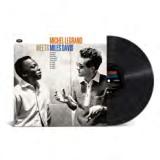
Im Mai 2026 würde Miles Davis seinen 100. Geburtstag feiern. Einen Monat vorher gratuliert ihm bereits
Decca Frankreich mit der LP-Wiederveröffentlichung eines besonderen Albums innerhalb seines Schaffens.
Auf “Michel Legrand meets Miles Davis” treffen ein amerikanisches und ein europäisches Musik-Genie
aufeinander. Zum Jubiläum erscheint das ursprünglich als ”Legrand Jazz“ veröffentlichte Album aufwändig
remastert als 140g-LP im neuen Artwork mit Foto beider Künstler.
1958 war Legrand erstmals in die USA gereist und hatte dort die größten Stars des Jazz zusammengetrommelt: neben Miles Davis waren das John Coltrane, Phil Woods, Bill Evans, Ben Webster, Art Farmer,
Donald Byrd u.v.a. “Legrand Jazz“ präsentierte einige der größten Jazzklassiker aller Zeiten in fantastischen Legrand-Arrangements, gespielt von der damaligen Crème de la Crème des Jazz.
Speziell die Zusammenarbeit von Michel Legrand und Miles Davis auf vier Tracks des Albums gilt als
historisch, da sie kurz vor den Aufnahmen zu Davis’ Meisterwerk ”Kind of Blue“ (1959) stattfand und
bereits die harmonische Tiefe und den orchestralen Ansatz vorwegnahm, den Davis später weiter verfolgte
A new duo and record label based in Madrid lands on the underground techno scene, led by Mike Gómez and José Castillo, the latter known for his aliases Milford and UHF, and also the owner of the electro label Gladio Operations.
Diorama is born with the intention of recovering the soul and essence lost in electronic music, which for some time has become practically homogeneous and predictable. With a timeless, fresh, and warm sound, Diorama produce rhythms close to dub and Detroit techno, mainly influenced by Juan Atkins, UR, and Basic Channel, among others.
This EP, titled Pacific Trak, begins with a nod to the old Scottish school, where they revive a forgotten track by British producer Anthony Scott, adding its imposing main chord to a true sea of melodic textures, bathed in exquisite acid. Spanish techno master Tadeo gives us his vision of Pacific Trak, exploring dub territories that remind us of past pieces released under the incomparable Maurizio label.
The B-side opens with Soul Memories, a manifesto of resistance that vibrates with detuned harmonies and raw bass lines, recalling the origins of Detroit’s primitive sound. The package closes with Polymorphic, a progression of relentless aquatic chords, set among careful and precise minimalist rhythms that oscillate between high-dynamics tech and dub.
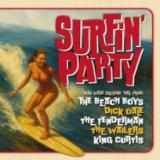
- The Beach Boys - Surfin' Safari
- Duane Eddy His Twangy Guitar And The Rebels - Ramrod
- Johnny & The Hurricanes - Crossfire
- The Fireballs - Bulldog
- The Marketts - Surfer's Stomp
- The Fenderman - Torture
- Joe Jones - California Sun
- The Gamblers - Moon Dawg!
- The Ventures - Lullaby Of The Leaves
- Dick Dale - Surf Beat
- The Tornadoes - Bustin' Surfboards
- Belairs - Mr. Moto
- Johnny Bond - Hot Rod Lincoln
- Dick Dale - Peppermint Man
- Ritche Valens - La Bamba
- Surfmen - El Toro
- The Champs - Tequila
- The Wailers - Tall Cool One
- King Curtis And The Noble Knights - Beach Party
- The Beach Boys - Surfin
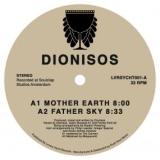
Amsterdam's Dionisos' (also known for his collaborations with Pete Blaker for LL & Hot Biscuit Recordings) debut 12" on his own Lovers Yacht imprint.
Dionisos, the project’s producer, possesses a solid foundation in live music, which is clearly reflected in the way the grooves evolve, resonate, and gradually heighten in intensity. The tracks “Mother Earth”, “Father Sky,” and “Bon Voyage” form an exciting trilogy—a daring journey into the musical universe. Captured in a single take, they were subsequently methodically overdubbed and layered, preserving the essence of musicians interacting in real time.
Instead of pursuing drops or studio glitz, the music focuses on capturing the spirit, interacting only with the original vibrations of the one take. These songs flow with the precision of musicians in a band. They develop organically, demonstrating their strength gradually; music for dancing that relies on emotion rather than spectacle.
- Moonside
- On Our Own Time
- Blum House
- Virtue Signaling
- Help Is On The Way
- High School
- Lay Low
- Selfish Soother
- Poppi
- The Me (I Know)
- Me Time
- Beyond The Thicket
- Fight For Frequency
- Circling The Dream
Winnies Welt war nicht immer einfach. Manche sagen, er hätte berühmt werden können, aber es gab Probleme. Er hatte kurz Erfolg, aber das Leben kam ihm dazwischen. ,Manche Leute kümmern sich zu sehr. Ich glaube, das nennt man Liebe." Also lag es an Winston Hightower, die Chance zu ergreifen, sie festzuhalten und sich Gehör zu verschaffen. Ein Mann, der den Sound des amerikanischen Lofi liebt. Was befindet sich im Aschenbecher von Winston Hightowers "Day in the Life"? 14 Songs, die einem wehmütigen Herzen eine unbeschwerte Tarnung verleihen - es strahlt durch und durch. 33 RPM. Ein Pianist, der kein Klavier spielen kann und seine Melodien auf der Gitarre transponiert. Angenehme Klänge, überlagert von Gesprächen mit sich selbst. Was sieht dieser Ohio Player, wenn er in den Spiegel schaut? Nudge Squidfish? Daniel Johnson? Studio One Oldies Comps? Nach über 126 Songs auf Band sind wir immer noch dabei, das herauszufinden.
- A1: Eastern Wizard - Le Baiser Du Sorcier
- A2: Mashti - Maine Pyaar Kiya
- A3: Fyordh - Kerala Blues
- A4: Gotama - Twilight Echoes
- B1: Jose Solano - Sal De Mar
- B2: Catching Flies – Tides
- B3: Nato – Apae
- B4: Tamer Elderini - Souq
- C1: Aural - Laulu Mustarastaan
- C2: Nairu - Mariposa Azul
- C3: Majnoon - Hatiralar
- C4: Yaensen / Yancouba Diebate - Kora Café
- D1: Rich Vom Dorf - Heartbroke
- D2: Linear / The Saint - Samadu
- D3: The Ab Brothers - Al Saha
- D4: Dj Phellix / Ablozé - Zal
The Buddha Bar collection is the one of the most emblematic electronic compilation series with over several million copies sold over the years. Discover the 27th Buddha-Bar Compilation, Mixed by DJ Ravin. Immerse yourself in the captivating and unique world of Buddha-Bar with this new « haute couture » selection. This latest edition, masterfully mixed by the iconic DJ Ravin, takes listeners on a mesmerizing sonic journey, blending sophisticated electronic beats, worldwide sounds, and deep chill and house vibes. More than just an album, it’s an immersive experience perfect for setting the mood at any gathering or accompanying moments of pure relaxation. With a legacy of globally acclaimed compilations, the Buddha-Bar series has already captivated millions, creating a lifestyle phenomenon like no other. Available on March 28th, Buddha-Bar XXVII is a must-have for fans of lounge and electro music. Give your customers the chance to escape into this musical adventure
- 1: Business On Parade
- 2: Dead Cops/America's So Straight
- 3: Born To Die
- 4: Corporate Deathburger
- 5: Violent Rednecks
- 6: I Remember
- 7: John Wayne Was A Nazi
- 8: Dick For Brains
- 9: I Hate Work
- 10: Kill The Light
- 11: My Family Is A Little Weird
- 12: Greedy & Pathetic
- 13: Church & State
- 14: American Achievements
- A1: The Gathering
- A2: She Wants Me
- A3: Pants On Fire
- A4: War & Peace
- B1: Luva Changer
- B2: Samba
- B3: After Hours (Extended Euro Mix)
In the vibrant, post-millennial landscape of independent hip-hop, few collective names commanded as much respect as the Living Legends. A monumental alliance of some of the West Coast's most respected solo artists—including Murs, The Grouch, Eligh, Aesop, Bicasso, Luckyiam, Sunspot Jonz, and Arata—the crew's 2008 album, The Gathering, served as a powerful declaration of their unity and enduring relevance.
The Gathering was a snapshot of a legendary crew working at the peak of their collaborative power. The project masterfully weaves together the diverse styles of its eight members, moving effortlessly from the conscious storytelling of Murs to the soulful, introspective flow of The Grouch and Eligh, and the abstract lyrical dexterity of Aesop. The production, handled largely within the collective, provides a lush, sample-heavy, and distinctly West Coast soundscape that perfectly complements the lyrical fireworks. Tracks like the anthemic title track "The Gathering" and the legendary posse cut "After Hours" showcase the organic chemistry that made the Living Legends a seminal force in underground music.
For the first time ever, this pivotal album is being officially pressed on vinyl. This highly anticipated Record Store Day 2026 release finally delivers The Gathering to the format its rich, soulful production has always deserved. This limited edition pressing is presented on striking Coke Bottle Clear Vinyl, a perfect visual complement to the album's crisp, refreshing sound.
A crucial artifact of independent hip-hop history, The Gathering on vinyl is an essential addition for fans who have supported the Living Legends for decades and a must-have for vinyl collectors looking to own a tangible piece of the era's best crew collaborations. Don't miss the chance to own this definitive, first-ever vinyl pressing of a true underground classic.
Belgian minimalist, Dutch-language new wave/synth pop, since 1981! The historic album ‘Jonge Helden’ (1981) brought them instant eternal fame, the single ‘Lekker Westers’ (1983) a Belpop classic & the line-up changed wildly with icons such as Luc Van Acker (Revolting Cocks), Dani Klein (Vaya Con Dios), Willy Willy (The Scabs) or Andrew Chi Claes (Stuff) ...
However, MARCEL VANTHILT (lyrics & music) continues to rock the anarcho-Dadaist-electro-super-tronica scene to this day. Side note: Vanthilt often strayed into TV land (BRT, VPRO, MTV-EUROPE, BBC) and is now a DJ at Radio WILLY with the alternative ‘De M-Show’.
AA! is once again performing frequently in the best clubs (Depot, Casino, Macca) and on major stages (Pukkelpop, Villa Pace, Paulus Oostende). This will also be the case in 2026! This is due to the fresh and spicy new album ‘AA!PKPP’ in collaboration with PARKAPARAPLU.
PARKAPARAPLU: New dark wave duo from Antwerp. With ...
> EMMA ROTSAERT, singer and actress. She plays the lead role in the Ensor-nominated TV drama series ‘How To Kill Your Sister’ (2025). And comes from the same absurd planet as Vanthilt.
> GEERT VANBEVER, veteran of Wizards Of Ooze, Rudy Trouvé Septet, Dead Man Ray, Tuff Guac, among others... worked with Hugh Cornwell (The Stranglers) and Budgie (The Banshees), among others. Together, Emma & Geert also have a Sisters Of Mercy tribute band: Body Electric.
- A1: Wasted Time
- A2: Two Dolphins
- A3: Love Me Better
- A4: Make It Work
- B1: Honest
- B2: I Don't Feel The Same
- B3: Repos
- B4: Skyline Serenade
- B5: Friends
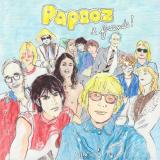
Papooz & Friends ! is a collaborative album where French duo Papooz gather a constellation of kindred artists, including Molly Lewis, Erlend Øye (Kings of Convenience / Whitest Boy Alive), Arto Lindsay, Oracle Sisters, Sacha Got (La Femme), Zé Ibarra and Hugo Hamlet, to create original songs born from true artistic encounters.
Blending elegant indie pop, modern folk and sun-soaked experimentation, the project unfolds as a collective musical journey celebrating friendship and creative dialogue.
- A1: Borinquen
- A2: Con Quien Andas
- A3: Latin Blues
- A4: Ya No Te Quiero
- B1: Negrita Mia
- B2: Telegrama
- B3: M & M
- B4: Sassie
Ghetto Records was Latin music legend Joe Bataan’s way to get over on The Man and out of the ’hood, a bold move by an artist looking for independence and creative control in an industry that had exploited his talents and treated him like chattel.
As Bataan puts it today, “Ghetto Records was part of my journey, a stepping stone to everything else that I’ve done. I learned enough that it enabled me to get out of the box with my thinking, it showed me how to deal with adversity.” Like many dreams and schemes born of the street, this one was audacious, perhaps even reckless to a fault.
Hatched from desperation yet full of hope Ghetto Records came crashing down shortly after its inception. The seven albums in its discography languished out of print - until now.
“III” is an intimate, cinematic and dream-like body of work — written, produced and mixed by Morita Vargas, and recorded in Buenos Aires between 2014 and 2025. The album was mastered by Rafael Anton Irisarri at Black Knoll Studio (NY), adding depth and clarity to its carefully built sonic landscape.
The visual world of the record is an essential part of the release. The cover artwork was crafted by Juliana Guglielmi, Ariadna Aylen Barrios, and Noelia Garreffa, whose combined vision creates a unified visual narrative that reflects the album’s emotional depth and atmospheric essence. The LP layout and full manufacturing realization were carefully executed by Ilja Tulit, translating the complex design ideas into their final tangible form of a vinyl release.
“III” marks a special release for Hidden Harmony Recordings. Morita Vargas was among the first artists released when the label began in 2020–2021, and her work played an important role in shaping the spirit and direction of Hidden Harmony.