Diffuse Reality presents TOBAS 004. Four tracks crafted by Obscur. Deep, intense techno that invites reflection from the very first beat. Each sound wraps around you with subtle precision, shaping a unique atmosphere with a minimalist spirit that breathes through every bar. Prepare yourself for a journey with no return. A sonic landscape unfolding in the shadows, guiding you through until the last pulse. Released on vinyl and digital, this edition captures a world of shadows and tension. There will be no repress. A single, definitive cut.
Search:jo di
DeepLabs opens 2026 with an exciting new release, “Förvandling,” from Tarik Hensen—the collaborative project of two exceptional producers, Martinou & Ben Kaczor.
This release completes a full-circle journey: rooted in Detroit techno, traveling through Malmö, and landing in Basel, where these influences converge into a singular, immersive statement.
Longtime admirer of both artists’ solo works, Luke Hess joins the project with his own interpretation of Förvandling, bringing his distinct Detroit-informed perspective to the release.
Förvandling is the Swedish word for “transformation,” describing the metamorphosis of a caterpillar into a butterfly.
The title reflects the evolution of techno itself—how it shifts and reshapes across cities, communities, and eras while retaining its core spirit.
Varp refers to the vertical warp threads in woven fabric—essential structural lines that hold everything together.
The track mirrors this concept: hypnotic percussion and immersive ambience interlace with melodic tones, unified through Tarik’s live dub mixing approach, creating a rich, fluid tapestry of sound.
Malm translates to raw ore, the unrefined material that, when forged with alloys, becomes durable metal.
True to its name, the track channels a deep, raw warehouse energy—refined into a functional gem through harmonious stabs, textured layers, and driving momentum.
Closing the EP, Luke Hess’s remix of Förvandling draws from elements across the original works while incorporating new audio stems from the DeepLabs studio.
The result is a seamless transformation of Tarik Hensen’s aesthetic into Luke’s unmistakable Detroit sound—an adventurous, atmospheric journey crafted for extended DJ sets and immersive dancefloor moments.
Tarik Hensen and Luke Hess invite you to weave these tracks into your curated selections and allow them to transform the dancefloor in unexpected ways.
- 1: Twenty Circles To The Ground
- 2: All Falls Together
- 3: All Gone, All Gone
- 4: Almost Let You In
- 5: In The Avalon/Little Killer
- 6: Don't Take My Night From Me
- 7: Each Star Marks A Day
- 8: Lenore's Lullaby
- 9: The Lily And The Brakeman
- 10: Now, Divide
- 11: What You Reckon, What You Breathe
- 12: For As Long As It Will Matter
- 1334: Blues
- 14: Wooden Heart
Nehmt Euch einen Moment und lässt Euch die Kataloge dieser Meister des amerikanischen Folk auf der Zunge zergehen: MAGNOLIA ELECTRIC CO., CENTRO-MATIC, SONGS: OHIA, SOUTH SAN GABRIEL. Und lasst uns ganz ehrlich sein: Eine Dosis des künstlerischen Egos und ein wenig Eitelkeit können einen höheren Dienst erfüllen. Auf dieser Kollaboration von Jason Molina und Will Johnson scheint der jeweils andere Künstler sein Gegenüber und dessen Talent zu befeuern und sowohl die Performance als auch die Kreativität auf neue Höhen zu befördern. Im brüderlichen Teilen von Ideen werden Molina und Johnson zwei Poeten unter Poeten, die sich in ihrer Werkstatt daran machen, eine einzige, übergeordnete Elegie zu erschaffen. Der einzigartige Stil und die typische Produktion jedes einzelnen Musikers fügen sich hier zu einer gemeinsamen Schnittmenge zusammen. Der dokumentarische Ansatz eines Jason Molina richtet sich ganz häuslich in den subtilen Störungen und Produktionstricks eine Will Johnson ein, während der kräftige Tenor von Molina einen perfekten Tanzpartner in der sanften Reibeisenstimme von Johnson findet. Während die individuellen Performances hier bereits atemberaubend sind, ist die Zusammenkunft beider das, was den Zauber von "Molina&Johnson" ausmacht.
Drei Jahre nach seinem #1-Album „Reparatur“ meldet sich Josh. mit seinem vierten Studioalbum zurück. Auf „Wer singt dann Lieder für dich“ beweist der Wiener Singer-Songwriter und fünffache Amadeus-Preisträger erneut, wie er aus persönlichen Geschichten packende Popmusik schafft – mal leicht, mal melancholisch, immer mit einem Gespür für Timing, Humor und Gefühl. Seit seiner Kindheit spielt Josh. klassische Gitarre und war in Schulbands aktiv. Später studierte er sieben Jahre lang Jazz und Popularmusik, brach das Studium jedoch aus wirtschaftlichen Gründen ab – seine Liebe zur Musik blieb davon unberührt. Heute spiegelt sich diese Erfahrung in einem Sound, der organisch, warm und zugleich überraschend facettenreich ist. Für „Wer singt dann Lieder für dich“ hat Josh. so viele Instrumente wie nie zuvor selbst eingespielt – von Gitarre über Bass bis zur Pedal-Steel – und damit jedem Song eine unmittelbare Nähe verliehen. „Es war das bisher entspannteste und lustigste, gleichzeitig aber auch das arbeitsintensivste Album“, sagt er über die Aufnahmen, die erneut in kongenialer Zusammenarbeit mit Produzent Florian Koch entstanden sind. Seit „Teilzeitromantik“ (2021) ist Koch stetiger kreativer Partner, musikalischer Direktor und Schlagzeuger der Band – eine bewährte Konstellation, die für klare Strukturen und kreative Freiheit sorgt. „Ich glaube, dass es ein Album ist, das wieder die Leichtigkeit des Nonsens gefunden hat“, so Josh., „Momente, in denen man lachen, feiern oder einfach man selbst sein kann, treffen auf nachdenkliche, melancholische Songs.“ Es ist die Momentaufnahme eines 39-Jährigen, der reflektiert – und dabei stets offen für das Absurde und Komische in den kleinen Dingen bleibt.
„Ich habe mir beim Schreiben der Songs keine Grenzen gesetzt“, sagt Josh. „Das spiegelt meine Persönlichkeit ziemlich gut wider: Ich bin jemand, der gern einen Schmäh macht, wie wir hier in Wien sagen – aber gleichzeitig auch immer wieder kämpfen muss und viel über Gefühle, Schmerz und all das nachdenkt.“ Das zeigt sich auf „Wer singt dann Lieder für dich“ in jedem Detail, sei es bei humorvollen Beobachtungen, nostalgischen Rückblicken oder in Songs über das Älterwerden und die kleinen Lebenskrisen („Was hat uns bloß so müde gemacht?“). Nach einem Livejahr 2025, das eine Tour durch Österreich und Deutschland, einen Headliner-Gig auf dem Donauinselfest vor 100.000 Fans sowie eine Support-Show für Robbie Williams umfasste, hat „Austropop-Darling“ (TZ) Josh. in diesem Jahr wieder viel vor: Im April und Mai ist er auf komplett ausverkaufter Solotour in Österreich zu erleben, im Anschluss folgen Konzerte in Deutschland und der Schweiz. Im Sommer geht es gemeinsam mit Rian auf Open-Air-Tour durch Österreich.
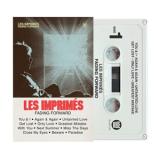
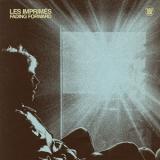
Big Crown Records freut sich, das zweite Album von Les Imprimes, ,Fading Forward", zu präsentieren. Unter der Leitung des autodidaktischen Multi-Instrumentalisten und Produzenten Morten Martens beschäftigt sich dieses Album mit Sterblichkeit, Realitätsflucht und einer Vielzahl von Erfahrungen, die mit Liebe verbunden sind. Martens hinterließ mit seinem hochgelobten Debütalbum ,Rêverie" aus dem Jahr 2023 einen bleibenden Eindruck Rêverie einen enormen Eindruck und hat sich seitdem eine treue Fangemeinde aufgebaut, deren Demografie ebenso vielfältig ist wie die Einflüsse, die seine Musik prägen. Er mischt Klänge aus dem Soul der 60er und 70er Jahre mit Anspielungen auf Doo-Wop-Platten, übernimmt die Energie der Hip-Hop-Drums und überzieht das Ganze mit Gesangsstilen aus den 90ern und 2000ern . Aber es sind Martens' Texte, Emotionen und Darbietung, die wirklich alles zusammenbringen und ihm helfen, sich von seinen Kollegen abzuheben. Seine Texte sind ansteckend und poppig und werden mit höchster Klasse und Geschmack umgesetzt, was Les Imprimés die seltene Eigenschaft verleiht, sofort anzusprechen und mit jedem Hören noch besser zu werden. Der aus Kristiansand, Norwegen, stammende Martens spielt fast alle Instrumente auf Fading Forward, produziert und arrangiert das Album und singt natürlich auch. ,Es ist Soulmusik, aber ich habe nicht gerade eine Soulstimme", erklärt Morten bescheiden. ,Aber ich mache es auf meine eigene Art und Weise, auf eine Art, die mir eigen ist." Der Album-Opener ,You & I" ist Mortens Hommage an seine Partnerin, die ,durch das Chaos und die Fehler" mit ihm durchhält. Kraftvolle Drums und kaskadenartige Klaviere machen diesen Song zu einem richtigen Two-Stepper und einer Hymne für diejenigen, die das Glück haben, jemanden zu finden, der sie versteht und ihnen in den Bereichen des Lebens hilft, in denen sie es brauchen. ,Again & Again" verlangsamt das Tempo und beschäftigt sich mit der schwereren Seite der Liebe und des Lebens, während Martens seine Widerstandsfähigkeit angesichts der Missgeschicke, des Herzschmerzes und der Enttäuschungen gescheiterter Liebesbeziehungen bekundet. ,Untainted Love" rückt die süße Seite der neuen Liebe in den Mittelpunkt, mit einer Melodie, die auf den Titel des Klassikers von Gloria Jones anspielt. ,Get Lost" neigt zum Metaphysischen mit der Einladung, die Realität hinter sich zu lassen und Zeit mit Les Imprimés zu verbringen, wo es Raum zum Träumen gibt. ,Only Love" baut auf einem kraftvollen Drum-Break auf, mit einem Refrain, der einfach, aber tiefgründig ist, und das Arrangement verleiht ihm die Energie eines Mantras. Sie wenden sich dem Tanz ,Only Love" baut auf einem kraftvollen Drum-Break auf, mit einem Refrain, der einfach, aber tiefgründig ist, und das Arrangement verleiht ihm die Energie eines Mantras. Sie wenden sich dem Tanz zu in ,With You", einem schnellen, beschwingten Song über eine zufällige Begegnung, die Lust auf mehr macht. Martens sehnt sich nach ihr, aber freudig, als ob allein die Erinnerung daran, dass eine solche Verbindung möglich ist, genau das ist, was er wirklich braucht. ,Fading Forward" endet mit einer völlig düsteren Note mit ,Miss The Days", einer langsam brennenden Ballade, die an einfachere Zeiten erinnert, als die Liebe noch besser war. Martens wird von der Gastsängerin Ama Li in ,Miss The Days" begleitet, einer langsam brennenden Ballade , die an einfachere Zeiten erinnert, als die Liebe noch an einem besseren Ort war. Fading Forward endet mit einer ganz und gar düsteren Note mit ,Paradise", einem Lied, das einem verstorbenen Freund Freiheit und Frieden wünscht. In der kleinen Stadt Kristanland in Norwegen lebt ein großes Talent, das den größten Teil seines Lebens damit verbracht hat, sich zurückzuhalten und im Hintergrund zu bleiben. Der Vertrag mit dem New Yorker Label Big Crown Records inspirierte Morten Martens dazu, seine eigene Musik zu veröffentlichen. Die Reaktionen auf sein Debütalbum ,Rêverie" veranlassten ihn, das Studio zu verlassen und auf die Bühne zu gehen, und all dies diente ihm als Inspiration, um seine Kunstfertigkeit auf ein neues Niveau zu heben. Neue Höhen, die auf Fading Forward voll zur Geltung kommen.
- 1: You & I
- 2: Again & Again
- 3: Untainted Love
- 4: Get Lost
- 5: Only Love
- 6: Greatest Mistake
- 7: With You
- 8: Next Summer
- 9: Miss The Days
- 10: Close My Eyes
- 11: Beware
- 12: Paradise
Big Crown Records freut sich, das zweite Album von Les Imprimes, ,Fading Forward", zu präsentieren. Unter der Leitung des autodidaktischen Multi-Instrumentalisten und Produzenten Morten Martens beschäftigt sich dieses Album mit Sterblichkeit, Realitätsflucht und einer Vielzahl von Erfahrungen, die mit Liebe verbunden sind. Martens hinterließ mit seinem hochgelobten Debütalbum ,Rêverie" aus dem Jahr 2023 einen bleibenden Eindruck Rêverie einen enormen Eindruck und hat sich seitdem eine treue Fangemeinde aufgebaut, deren Demografie ebenso vielfältig ist wie die Einflüsse, die seine Musik prägen. Er mischt Klänge aus dem Soul der 60er und 70er Jahre mit Anspielungen auf Doo-Wop-Platten, übernimmt die Energie der Hip-Hop-Drums und überzieht das Ganze mit Gesangsstilen aus den 90ern und 2000ern . Aber es sind Martens' Texte, Emotionen und Darbietung, die wirklich alles zusammenbringen und ihm helfen, sich von seinen Kollegen abzuheben. Seine Texte sind ansteckend und poppig und werden mit höchster Klasse und Geschmack umgesetzt, was Les Imprimés die seltene Eigenschaft verleiht, sofort anzusprechen und mit jedem Hören noch besser zu werden. Der aus Kristiansand, Norwegen, stammende Martens spielt fast alle Instrumente auf Fading Forward, produziert und arrangiert das Album und singt natürlich auch. ,Es ist Soulmusik, aber ich habe nicht gerade eine Soulstimme", erklärt Morten bescheiden. ,Aber ich mache es auf meine eigene Art und Weise, auf eine Art, die mir eigen ist." Der Album-Opener ,You & I" ist Mortens Hommage an seine Partnerin, die ,durch das Chaos und die Fehler" mit ihm durchhält. Kraftvolle Drums und kaskadenartige Klaviere machen diesen Song zu einem richtigen Two-Stepper und einer Hymne für diejenigen, die das Glück haben, jemanden zu finden, der sie versteht und ihnen in den Bereichen des Lebens hilft, in denen sie es brauchen. ,Again & Again" verlangsamt das Tempo und beschäftigt sich mit der schwereren Seite der Liebe und des Lebens, während Martens seine Widerstandsfähigkeit angesichts der Missgeschicke, des Herzschmerzes und der Enttäuschungen gescheiterter Liebesbeziehungen bekundet. ,Untainted Love" rückt die süße Seite der neuen Liebe in den Mittelpunkt, mit einer Melodie, die auf den Titel des Klassikers von Gloria Jones anspielt. ,Get Lost" neigt zum Metaphysischen mit der Einladung, die Realität hinter sich zu lassen und Zeit mit Les Imprimés zu verbringen, wo es Raum zum Träumen gibt. ,Only Love" baut auf einem kraftvollen Drum-Break auf, mit einem Refrain, der einfach, aber tiefgründig ist, und das Arrangement verleiht ihm die Energie eines Mantras. Sie wenden sich dem Tanz ,Only Love" baut auf einem kraftvollen Drum-Break auf, mit einem Refrain, der einfach, aber tiefgründig ist, und das Arrangement verleiht ihm die Energie eines Mantras. Sie wenden sich dem Tanz zu in ,With You", einem schnellen, beschwingten Song über eine zufällige Begegnung, die Lust auf mehr macht. Martens sehnt sich nach ihr, aber freudig, als ob allein die Erinnerung daran, dass eine solche Verbindung möglich ist, genau das ist, was er wirklich braucht. ,Fading Forward" endet mit einer völlig düsteren Note mit ,Miss The Days", einer langsam brennenden Ballade, die an einfachere Zeiten erinnert, als die Liebe noch besser war. Martens wird von der Gastsängerin Ama Li in ,Miss The Days" begleitet, einer langsam brennenden Ballade , die an einfachere Zeiten erinnert, als die Liebe noch an einem besseren Ort war. Fading Forward endet mit einer ganz und gar düsteren Note mit ,Paradise", einem Lied, das einem verstorbenen Freund Freiheit und Frieden wünscht. In der kleinen Stadt Kristanland in Norwegen lebt ein großes Talent, das den größten Teil seines Lebens damit verbracht hat, sich zurückzuhalten und im Hintergrund zu bleiben. Der Vertrag mit dem New Yorker Label Big Crown Records inspirierte Morten Martens dazu, seine eigene Musik zu veröffentlichen. Die Reaktionen auf sein Debütalbum ,Rêverie" veranlassten ihn, das Studio zu verlassen und auf die Bühne zu gehen, und all dies diente ihm als Inspiration, um seine Kunstfertigkeit auf ein neues Niveau zu heben. Neue Höhen, die auf Fading Forward voll zur Geltung kommen.
66 pages, 175 x 129mm paperback w/ litho printed cover & french flaps.
The second outing for our short run book publishing imprint, The End books, takes the form of a reprint of Spanish Cante Jondo and Its Origin in Sindhi Music, originally published in Spanish in 1955 under the name Cante Jondo: Su Origen y Evolución and later in this English translation.
Aziz Balouch here presents his theory on the roots of flamenco's 'deep song' in modern-day Pakistan, a cultural journey that mimics the routes of his own life, having been brought up among the Islamic mysticism and devotional songs of Sindh before travelling to Gibraltar in the early 1930s and becoming transfixed with the cante jondo across the border in southern Spain. Positing this concept through personal accounts rather than solid theoretical backing, this text provides a valuable account of an extraordinary existence that crossed remarkable geographical, musical, and spiritual boundaries. Issued here with a new introduction from anthropologist of sound, the senses and Islam, Stefan Williamson Fa.
"It would be easy to place Balouch on the fringes, as an eccentric footnote in flamenco history. But that misses the shape of his life and work. He was a figure who moved intuitively across boundaries that our present categories of nation, genre, discipline tend to fix in place. His work predates the founding of the academic discipline of ethnomusicology, the global circuits of world music, and the marketplace logic of fusion projects by decades. He was not an ethnographer or a proto–world musician, but someone for whom the deep song of Andalusia and the devotional song of the subcontinent resonated along the same fault lines of feeling, and who spent his life trying to trace them.
This book is one of the few surviving traces of that attempt. To read it now is to encounter a perspective that resists tidy narratives of influence or origin, despite its title and what he claims to do. It stands instead as evidence of an idiosyncratic musical imagination, one that relied less on proof than on listening, and on the belief that certain echoes carry farther than history can easily explain."
— Stefan Williamson Fa
- 1: Baltimore
- 2: Easy Money
- 3: By Sunday
- 4: Dead Dillo
- 5: Lee's Dream
- 6: Bad Luck
- 7: Lone Star
- 8: Seeing Spots
- 9: Fool's Gold
- 10: Valentine
Über Jahre hinweg hat Cactus Lee still und leise ein einzigartiges Werk geschaffen, indem er in Honky-Tonks rund um Austin auftrat und gleichzeitig in einem gleichmäßigen, selbstbestimmten Tempo Alben veröffentlichte. Lee's Dream, sein zweites Album für Western Vinyl, wirkt wie die natürliche Essenz dieser Reise - unterwegs geschrieben, zu Hause verfeinert und geprägt vom Spannungsfeld zwischen der Hingabe zur Musik und der Hingabe zur Familie. Die Songs entstanden während einer einmonatigen Solotournee durch den Mittleren Westen und den Süden und begannen als Skizzen, die in Transportern und Motelzimmern geschrieben wurden, teilweise inspiriert durch einen Besuch in Guy Clarks rekonstruiertem Keller in der Country Music Hall of Fame. Die Songs entstanden während einer einmonatigen Solotournee durch den Mittleren Westen und den Süden und begannen als Skizzen, die in Transportern und Motelzimmern geschrieben wurden, teilweise inspiriert durch einen Besuch in Guy Clarks rekonstruiertem Keller in der Country Music Hall of Fame. Die Songs entstanden während einer einmonatigen Solo-Tournee durch den Mittleren Westen und den Süden und begannen als Skizzen, die in Transportern und Motelzimmern geschrieben wurden, teilweise inspiriert durch einen Besuch in Guy Clarks rekonstruiertem Keller in der Country Music Hall of Fame. Als Kevin Dehan nach Hause zurückkehrte und dort persönliche Umbrüche erlebte, wandte er sich nach innen und schrieb Songs, die Unruhe mit Entschlossenheit, Sehnsucht mit Verantwortung in Einklang bringen. ,Lee's Dream" wurde in den Fort Horton Studios mit Produzent Billy Horton aufgenommen und lehnt sich an klassische Country-Formen und die Sensibilität der Sun-Ära an, geleitet von Vorbildern wie John D. Loudermilk, Glen Campbell und dem frühen Gordon Light Aufgenommen in den Fort Horton Studios mit Produzent Billy Horton, lehnt sich Lee's Dream an klassische Country-Formen und die Sensibilität der Sun-Ära an, geleitet von Vorbildern wie John D. Loudermilk, Glen Campbell und dem frühen Gordon Lightfoot. Das Album, das mit Beiträgen eines engen Kreises von Mitwirkenden fertiggestellt wurde, wirkt gemeinschaftlich und lebendig - gleichermaßen fröhlich und melancholisch. Verwurzelt in texanischen Bildern und Country-Folklore, wirkt Lee's Dream wie ein vertrauter Fiebertraum, der die Tradition ehrt und sie gleichzeitig leise an Dehans unverwechselbare Stimme anpasst.
- 1: Distant Man
- 1: 2 White Tee
- 1: 3 If Time Could Talk
- 1: 4 Pluto Baby
- 1: 5 Quicksand
- 1: 6 Peace Of Mind (Feat. Danny Brown)
- 1: 7 Blinded
- 1: 8 July (Feat. Jorja Smith)
- 1: 9 Seasick
- 1: 0 Manuka
- 1: Mind Games
- 1: 2 Shadow Puppet
- 1: 3 00 Miles
Ungeschützt, vollkommen verwirklicht und ganz und gar sein Eigen - Wesley Josephs lang erwartetes Debütalbum zeigt den Sänger, Songwriter, Produzenten und Regisseur von seiner selbstbewusstesten und verletzlichsten Seite und bringt die vielen Facetten seines kreativen Lebensweges zum Ausdruck. Das Ergebnis ist ,Forever Ends Someday": 13 Tracks voller Selbstreflexion und weitreichender Realitätsflucht. Auf dem Danny Brown-Feature ,Peace of Mind" hingegen überwindet Joseph seine Ängste und liefert eine basslastige Hymne voller Selbstvertrauen und Zuversicht. Auf ,July" arbeitet Joseph mit Jorja Smith zusammen, und die beiden performen einen freudigen Rückblick, aufgenommen in ihrer Heimatstadt Walsall, in dem sie sich daran erinnern, wie weit sie gekommen sind und was sie alles verloren haben. Joseph nahm sich drei Jahre Zeit, um sich aus dem Rampenlicht zurückzuziehen und seine Geschichte zu finden. Er entschied sich dafür, der Ehrlichkeit seiner Kunst nachzugehen, anstatt aus seiner Karriere Kapital zu schlagen - mit Höhepunkten wie einem ausverkauften Headliner-Konzert im Londoner KOKO und einer ausverkauften Nordamerika-Tournee. ,Ich habe das Album einfach wie ein Gefäß behandelt und ständig Dinge aus meinem Leben hineingeworfen", sagt er. Der Titel ,Forever Ends Someday" bezieht sich auf die vergängliche Schönheit des gegenwärtigen Augenblicks - ,die Vorstellung, dass Dinge, wenn man jung ist, ewig währen, aber dann wird man erwachsen und erkennt, dass die Jugend nur geliehen ist", erklärt Joseph. Die Titel des Albums spiegeln ehrlich die menschlichen Erfahrungen wider, sowohl die hellen als auch die dunklen Seiten. Aufgenommen in London, Walsall, Los Angeles und ,auf halber Höhe eines Berges in der Schweiz", holte Joseph ein Kernteam von Mitarbeitern und Co-Produzenten an Bord, um seine Vision während der drei Jahre des Schreibens umzusetzen. Er arbeitete eng mit dem Komponisten Nicholas Jaar (The Weeknd, FKA Twigs), der mehrere Tracks mit seiner Sensibilität für Soundscapes bereicherte, dem Produzenten Harvey Dweller (Loyle Carner, Joy Crookes), dem für den Mercury Prize nominierten Tev'n (Rina Sawayama, SBTRKT), A. K. Paul (Nao, Fabiana Palladino), Al Shux (JAY Z, Kendrick Lamar, SZA), Ryan Raines (Paul McCartney, Dominic Fike) und dem Produzenten Romil Hemnani (Brockhampton) zusammen. Von Walsall in die Welt hinaus zeigt ,Forever Ends Someday", dass Josephs Vermächtnis gerade erst begonnen hat.
- Get A Kick Out Of You
- Blue Gardenia
- Easy Living
- You Don't Know What Love Is
- If I Had You
- This Can't Be Love
- My Old Flame
- I Could Write A Book
- Make The Man Love Me
- Ask A Woman Who Knows
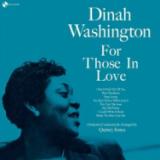
Classic album by Dinah Washington, one of America's most versatile singers of the 1950's who moved effortlessly between pop to gospel to jazz to blues. She teamed with the great Quincy Jones , For Those in Love is an essential album for any collection. Dinah Washington (1924-1963) recorded many albums for EmArcy Records and during the period 1954 to 1961 she worked with Quincy Jones, including the release presented here, For Those in Love, which was the first of their recorded collaborations. Featuring three brilliant small group sessions, taped on three consecutive days in March of 1955, the arrangements were by Jones, who also conducted the band and played a trumpet solo on 'Ask a Woman Who Knows'. The group of heavyweight players includes such stars as Clark Terry, Jimmy Cleveland, Paul Quinichette, Cecil Payne, Wynton Kelly, and Jimmy Cobb.
- Uncanny Valley Girl
- Björk's Alarm Clock
- Awhile Ago, Alone
- Last Night In The Kitchen
- Nowhere Faster
- You Against You
- Formerly Fresh
- So It Goes
Wir denken gerne, dass unser Leben zu Geschichten geformt werden kann - klare Bögen, verständliche Bedeutungen, aber das Leben lässt sich nicht in Schubladen stecken. Stattdessen geht es unverblümt und ohne Entschuldigung weiter, ohne Rücksicht auf unser Ordnungsgefühl. El Ten Elevens ,Nowhere Faster", das 16. Album des Duos, entstand in diesem Unbehagen. In acht Tracks geht es nicht nur um das Nichts, sondern auch um Geschwindigkeit - diese seltsame Dringlichkeit, die uns vorantreibt, auch wenn das Ziel unklar bleibt. Das 33-minütige Album verlangsamt sich gerade so lange, um die schwierigen Fragen zu stellen: Wovor laufen wir weg und was glauben wir, überholen zu können? ,Nowhere Faster" entstand während der längsten Pause, die Kristian Dunn und Tim Fogarty in ihren 23 gemeinsamen Jahren von Tourneen und Aufnahmen gemacht haben, obwohl ,Pause" eigentlich nicht ganz richtig ist. Dunn ist bekannt dafür, dass er immer kreativ am Werk ist, und das hat er auch hier nicht aufgegeben. Stattdessen fing er an, nicht nur für einen, sondern für zwei Schlagzeuger zu schreiben, was Fogarty vor eine der größten Herausforderungen seiner Karriere stellte. Das Album ist auch eine Premiere für die Band, da es durchgehend echte Streicher und Klavier einbindet und damit die Klangpalette eines ihrer vielschichtigsten Werke noch erweitert. Nowhere Faster ist kein Rückzug in Nostalgie. El Ten Eleven setzt weiterhin auf Risiko und Neuerfindung. Das Album konzentriert sich weiterhin auf Fogartys treibendes Schlagzeugspiel und Dunn's bassgetriebene Experimente: Die ersten vier Tracks (,Seite A") zeichnen sich durch E-Bass aus, während die zweite Hälfte (,Seite B") zu akustischem Bass wechselt, der durch Pedale verarbeitet wird und so die emotionale Schwere des Albums subtil verändert. Letztendlich ist ,Nowhere Faster" ein Album über das Abrechnen - über Zeit, Ausdauer und die Ungewissheit, wie lange eine Band oder ein Leben dauern kann. Wir alle tasten uns an die Endlichkeit heran. Die Frage ist nicht, ob wir dort ankommen, sondern was wir auf dem Weg dorthin hören wollen. Zu welcher Musik werden wir tanzen, wenn sich der Boden unter uns zu verschieben beginnt? Wenn schon nichts anderes, dann vielleicht zu etwas, das wie ,Nowhere Faster" klingt.
- 1: Dig!
- 2: Food For The Flames
- 3: Living On Mercy
- 4: Wings
- 5: First Time (In A Long Time)
- 6: Hardest Yards
- 7: The Proof
- 8: Had Me At Goodbye
- 9: Rooftops
- 10: Phantom Love
- 11: Joy
DIG! is the 6th studio album by UK 5-piece band Mamas Gun, a rare creative brotherhood of passionate musicians making soul music that sounds and feels timeless. Recorded by engineer Neil Innes straight to 16-track analogue tape at All Things Analogue Studios in Leeds, the album captures the sound of five musicians at the very top of their game, coming together to bring 11 lovingly crafted songs to life. The result is intimate performances that put you in the room with the band as the music unfolds.
Andy Platts’ golden falsetto leads songs that explore universal themes of love, family, hope, and redemption, finding uplift in times of downturn. Drummer Chris Boot provides grooves with jazz-like lightness, Cameron Dawson’s melodic bass echoes the spirit of James Jamerson, Terry Lewis brings warm, old-school guitar authenticity, and Dave Oliver connects jazz, gospel, and soul with piano, Wurlitzer, and Hammond organ.
The album features a standout collaboration with legendary Brian Jackson on the jazz-funk title track “DIG!”, as well as fan favourites like “Food For The Flames”, “The Proof”, and “Joy.” Deeply soulful and authentic, DIG! is Mamas Gun at their most accomplished.
2025 Reissue.
Münchenbuchsee, a suburb of Bern, Switzerland. Stephan Eicher is the youngest of three children. His father, a radio and TV repairman, is also a jazz violinist and a sound tinkerer in his spare time. In the family home's converted fallout shelter turned studio, Mr. Eicher experiments with homemade sequencers, tortures handcrafted drum machines, and abuses reel-to-reel tape recorders—all under the fascinated gaze of young Stephan.
The boy quickly develops a musical curiosity, exploring sound through various experiments and wanderings. Alongside his younger brother Martin, Stephan crafts audio plays on a homemade multi-track recorder (essentially several cassette decks hooked together!), which they write, record, add sound effects to, and perform for family and friends. Just a couple of nice kids, really...
Then comes 1972, and Lou Reed's Transformer album changes everything for the Eicher kids. For 13-year-old Stephan, it's a revelation—especially "Vicious", the opening track, which he plays on repeat for months. He convinces his father to buy him an electric guitar. Not stopping there, his father also builds him a tube amp using an old radio.
Then comes adolescence. A rough one. Stephan leaves home at 16 and moves to Zurich. With obvious artistic talent, he persuades his art teacher to help him get into F+F, a radical, alternative art school—despite his young age. Accepted, he starts learning video techniques, determined to become a filmmaker.
At F+F, Stephan organizes Dada-style happenings and concerts with a group of friends known as the Noise Boys. Among them: one of his teachers on bass, Veit Stauffer on drums (who would later found ReR/Recommended Records), his girlfriend Sacha on vocals, and Stephan on guitar. In one of their early performances, they release a remote-controlled mouse covered in dull razor blades into the audience to create panic and chaos. Keeping with this aggressive, confrontational spirit, they once played a concert while wearing headphones blasting Tristan and Isolde, trying to perform their own songs simultaneously—to maximize the cacophony. The goal was always the same: clear the room.
Their “songs,” if you can call them that, followed suit. Take "Hungeriges Afrika", for instance—performed entirely with power drills and some drum feedback.
To make ends meet, Stephan returns to Bern on weekends to work as a waiter at the Spex Club, the city’s main punk venue. On September 16, 1980, during a show by proto-electro group Starter, the police raid the club and arrest everyone. Stephan, who manages to avoid arrest, seizes the opportunity to “borrow” Starter’s gear left behind. He suddenly finds himself in possession of a Roland Promars synth, a Korg MS20, and a gorgeous CR78 drum machine, which he runs through a Big Muff distortion pedal to get that perfect gritty sound.
He then sets out to reinterpret some Noise Boys tracks, reworking them during impromptu sessions recorded on a dictaphone (yes, a dictaphone—now the lo-fi sound makes more sense, doesn’t it?). He ironically titles the resulting cassette "Stephan Eicher spielt Noise Boys" ("Stephan Eicher plays Noise Boys"). This gem features seven tracks, which are the ones reissued here.
Back in Zurich, he visits his friends Andrew Moore and Robert Vogel, who have a DIY cassette duplication setup. They make 25 copies of Stephan Eicher spielt Noise Boys for Stephan and his friends. Robert encourages him to visit Urs Steiger of Off Course Records and play him the tape.
Without much hope, Stephan shows up at Urs’s office. But Urs is instantly hooked and suggests releasing a 7” single. Due to space constraints, they reluctantly drop two of the seven tracks ("Hungeriges Afrika" and "One Second"). As for the musical score featured on the cover—it was randomly chosen and remains a mystery to this day. Calling all music theory nerds!
The 7-inch is pressed in 750 copies and released in the first week of December 1980—a date Stephan remembers well, as it’s the same week John Lennon was killed. Smartly, Urs sends a promo copy to François Murner, Switzerland’s answer to John Peel, who hosts a show on alternative station Sounds. Murner falls in love with the record and starts giving it airtime. To Stephan’s surprise, sales follow—and people actually seem interested in his music.
Even this modest underground success scares Stephan a bit. He stops making music for a year and moves to Bologna, where he works as a programmer at Radio Città, a feminist radio station.
Meanwhile, Stephan’s younger brother Martin, who’s also involved in the punk scene, joins the band Glueams as a singer and guitarist. Glueams, named after the fanzine run by two of its members (drummer Marco Repetto and bassist GT), eventually rebrands as Grauzone. Stephan is invited to their shows to project hacked Super 8 visuals live on stage.
Urs Steiger, now working on a compilation titled Swiss Wave – The Album, asks Grauzone to contribute alongside bands like Liliput, Jack and the Rippers, The Sick, and Ladyshave (Fall 1980).
For the album, Martin tasks Stephan with producing their recording sessions. Under Stephan's artistic direction, two tracks emerge: "Raum" and "Eisbär". During "Eisbär", Martin plays a minimalist bass line borrowed from post-punk band The Feelies (just an open string). Drummer Marco Repetto struggles to keep time. Later that evening, unhappy with the takes, Stephan builds a four-bar drum loop from a ¼-inch tape and uses it instead of the flawed original. He then adds bleepy synths and wind sounds to complete the track’s icy vibe before handing it over to Urs.
The Swiss Wave – The Album compilation is released quietly at first, but things snowball thanks to "Eisbär", which eventually becomes a smash hit—selling over 600,000 singles.
Meanwhile, Stephan plays in a rockabilly band called SMUV (named after Switzerland’s social security agency) and begins producing artists, including the debut album of Starter (1981), which includes a more pop-oriented version of "Minijupe".
By early 1982, Stephan starts spending time with the post-punk girl band Liliput (formerly Kleenex). They’re older than him, and he happily drives them around in his Renault Major, acting as their roadie.
By 1983, Grauzone—signed to the major label EMI, which turned out to be a misstep—is falling apart. Stephan begins to pivot toward a more mainstream pop sound with his debut solo album Les Chansons Bleues.
But that... is already another story.
- 1: Reichpop
- 2: Lady Blue
- 3: A Woman's Wisdom
- 4: Japanese Alice
- 5: Life Of Pause
- 6: Alien
- 7: To Know You
- 8: Adore
- 9: Tv Queen
- 10: Whenever I
- 11: Love Underneath My Thumb
White vinyl. Signed Print Edition. When Jack Tatum began work on Life of Pause, his third full-length to date, he had lofty ambitions: Don't just write another album; create another world. One with enough detail and texture and dimension that a listener could step inside, explore, and inhabit it as they see fit. "I desperately wanted for this to be the kind of record that would displace me," he says. "I'm terrified by the idea of being any one thing, or being of any one genre. And whether or not I accomplish that, I know that my only hope of getting there is to constantly reinvent. That reinvention doesn't need to be drastic, but every new record has to have its own identity, and it has to have a separate set of goals from what came before." What came before: a rightfully acclaimed, much beloved display of singular pop craftsmanship. Tatum's dreamy, unexpected 2010 debut, Gemini, was written while he was still a student at Virginia Tech University. Its equally disarming follow-up, 2012's Nocturne, marked the first time he'd been able to bring his bedroom recordings into a studio, to be performed and fully realized with the help of other musicians. There has been a set of wonderfully expansive EPs in between_each hinting at new directions and punctuating previous ideas_but with Life of Pause, Tatum delivers what he describes as his most "honest" and "mature" work yet, an exquisitely arranged and beautifully recorded collection of songs that marry the immediate with the indefinable. "I allowed myself to go down every route I could imagine even if it ended up not working for me," he says. "I owe it to myself to take as many risks as possible. Songs are songs and you have to allow yourself to be open to everything." After a prolonged period of writing and experimentation, recording took place over several weeks in both Los Angeles and Stockholm, with producer Thom Monahan (Devendra Banhart, Beachwood Sparks) helping Tatum in his search for a more natural and organically textured sound. In Sweden, in a studio once owned by ABBA, they enlisted Peter, Bjorn and John drummer John Ericsson and fellow Swedish Radio Symphony Orchestra veteran Pelle Jacobsson, to contribute drums and marimba. In California, at Monahan's home, Tatum collaborated with Medicine guitarist Brad Laner and a crew of saxophonists. From the hypnotic polyrhythms of "Reichpop" to the sugary howl of "Japanese Alice" to the hallucinogenic R&B of "A Woman's Wisdom," the result is a complete, fully immersive listening environment. "I just kept things really simple, writing as ideas came to me," he says. "There's definitely a different kind of `self' in the picture this time around. There's no real love lost, it's much more a record of coming to terms and defining what it is that you have_your place, your relationships. I view every record as an opportunity to write better songs. At the end of the day it still sounds like me, just new."
This is the Dahmers third album “Creature Feature” and the band continues to dig deeper in to a world of dark things, the things that don't belong, provokes, gives you the creeps or just makes you want to look away. “Our vision has been to explore and develop the bands sound but also to maintain the bands profound and colorful essence. “We want people to get excited when they hear the album, take them with us to another planet and make 'em forget about all the trouble in the world for a while” - Christoffer Karlsson (Lead singer/guitar)
The album was recorded and co-produced by Johan Gustafsson aka “The Johan and only” from the Hives in studio Ingrid in Stockholm. There's a new level and feel to the production with guest musicians on some tracks. With instruments like brass, cello, flute and piano the songs reaches their full true potential, along with added synth elements this gives the band a fresh feel. There's a wide variety of songs on the album where every track has it's very own theme, sound and characteristics. Where deep subjects like darkness, sorrow and alienation are being explored along with the bands continuing homage to the classic slasher and giallo flicks of the 70's and 80's, but also songs about a Swedish fakir, cults, rats and creatures from outer space. This album is a celebration to trash culture and to the underdogs, all delivered with a catchy uplifting chorus that The Dahmers is known for.
Creature Feature will be released on the bands own label Eerie sounds and will be out on February Friday the 13th.
- 1: It All Depends On The Pleasure Man
- 2: Watching Heroes Come And Go
- 3: Slide On
- 4: So It Goes
- 5: Let's Start Over Again
- 6: Taoist Tale
- 7: Welcome To Mass Media
- 8: Song
- 9: Advertisement For Amerika
Orange Vinyl with exclusive illustrated notes/lyric insert ltd to 300 w/w.“Zimmerman conjures up a kind of Arcadian folk surrealism that is utterly his own” MOJO Never released before collection featuring Ian A Anderson & Maggie Holland recorded 72-80 is among Tucker’s finest - Free-ranging, Playful, Intimate - his Songpoet imagination unbound and in full bloom now on colour Vinyl for first time with (exclusive to this version) illustrated lyric insert with notes from Tucker.Recorded between 1972-80 this is the first ever release for ‘I Wonder If I’ll Ever Come True’ a stunningly beautiful, homegrown collection by Songpoet Tucker Zimmerman and friends. The range and depth is astonishing. From the heady surreal journey of ‘It All Depends’ Upon the Pleasure Man’, to the uplifting Gene Clark-esque 'So It Goes’, to some of his most beautiful & touching love songs in ‘Let’s Start Over Again’ & ‘Song’. Only one song has seen the the light of day before now - ‘Taoist Tale’ from his 1984 album ‘Word Games’. This recording from a decade earlier loses no power in its folkier stripped down style driven by Tucker’s strong narrative.
While living in bucolic seclusion in Belgium with Marie-Claire, Tucker invited visiting musicians (Derroll Adams, Wizz Jones, Maggie Holland, Dave Evans, Ian Anderson) into his home studio to play and live tape whatever songs he had at hand. Maggie Holland and Ian A Anderson feature, while Tucker found a freeing simplicity in just guitar, ’70s organ, bass and piano. We are so grateful to Ian A Anderson, who carefully kept and curated these recordings from 50 years ago. “Every time I would leave, Tucker would hand me another tape full of songs”. Ian worked with Tucker and ourselves to present this wonderful album. The collection is among Tucker’s finest - free-ranging, playful, intimate - his Songpoet imagination unbound and in full bloom. The ethos, the playing, the freedom, feels like Ronnie Lane’s time in the Welsh Borders. Unhurried, liberated, down-home and cosmic. Extraordinary music made among friends.
"Startling collection of intimate, home-recorded songs from the cult singer-songwriter adored by David Bowie and Big Thief alike.
When I first interviewed Tucker Zimmerman back in 2015 neither of us had any idea that, a decade later, he would be venerated by a new coterie of young fans, touring with maximal folk-rockers Big Thief and recipient of a concerted reissue campaign by the wonderful Big Potato Records. Last year I eulogised the “Arcadian folk surrealism” of his 1974 LP *Over Here In Europe but, if anything, this informal collection of intimate home-studio recordings is even better. Recorded between 1973 and 76 whilst living in Belgium and hosting such visiting folk musicians as Derroll Adams, Wizz Jones, Maggie Holland, Dave Evans, and Ian A. Anderson this is the kind of assured, organic freewheeling folk music that has the mellow, introspective rough-edged feel of some lost private-press LP, the kind rightly revered by Endless Boogie’s Paul Majors as “real people” music. A true find.” Andrew Male MOJO 4/5
“Here's a charming oddity: an unreleased album dating from the mid-Seventies by an American-born songwriter beloved of David Bowie and, more recently, Adrianne Lenker of the folk-rock band Big Thief. Zimmerman's a bohemian type who eschewed the big time for a life of gigging around Europe. He, his wife, Marie-Claire, and a handful of friends recorded these songs in seclusion in the Belgian countryside, and what songs they are. Slide On could have come from the Byrds when they discovered country music, Let's Start Over Again captures the dreamlike experience of being in love with unsettling clarity. This is a real unearthed gem.” 4/5 The Times
UILTY RAZORS, BONA FIDE PUNKS.
Writings on the topic that go off in all directions, mind-numbing lectures given by academics, and testimonies, most of them heavily doctored, from those who “lived through that era”: so many people today fantasize about the early days of punk in our country… This blessed moment when no one had yet thought of flaunting a ridiculous green mohawk, taking Sid Vicious as a hero, or – even worse – making the so-called alternative scene both festive and boorish. There was no such thing in 1976 or 1977, when it wasn’t easy to get hold of the first 45s by the Pistols or the Clash. Few people were aware of what was happening on the fringes of the fringes at the time. Malcolm McLaren was virtually unknown, and having short hair made you seem strange. Who knew then that rock music, which had taken a very bad turn since the early 1970s, would once again become an essential element of liberation? That, thanks to short and fast songs, it would once again rediscover that primitive, social side that was so hated by older generations? Who knew that, besides a few loners who read the music press (it was even better if they read it in English) and frequented the right record stores? Many of these formed bands, because it was impossible to do otherwise. We quickly went from listening to the Velvet Underground to trying to play the Stooges’ intros. It’s a somewhat collective story, even though there weren’t many people to start it.
The Guilty Razors were among those who took part in this initial upheaval in Paris. They were far from being the worst. They had something special and even released a single that was well above the national average. They also had enough songs to fill an album, the one you’re holding. In everyone’s opinion, they were definitely not among the punk impostors that followed in their wake. They were, at least, genuine and credible.
Guilty Razors, Parisian punk band (1975-1978). To understand something about their somewhat linear but very energetic sound, we might need to talk about the context in which it was born and, more broadly, recall the boredom (a theme that would become capital in punk songs) coupled with the desire to blow everything off, which were the basis for the formation of bands playing a rejuvenated rock music ; about the passion for a few records by the Kinks or the early Who, by the Stooges, by the Velvet mostly, which set you apart from the crowd.
And of course, we should remember this new wave, which was promoted by a few articles in the specialized press and some cutting-edge record stores, coming from New York or London, whose small but powerful influence could be felt in Paris and in a handful of isolated places in the provinces, lulled to sleep by so many appalling things, from Tangerine Dream to President Giscard d’Estaing...
In 1975-76, French music was, as almost always, in a sorry state ; it was still dominated by Johnny Hallyday and Sylvie Vartan. Local rock music was also rather bleak, apart from Bijou and Little Bob who tried to revive this small scene with poorly sound-engineered gigs played to almost no one.
In the working class suburbs at the time, it was mainly hard rock music played to 11 that helped people forget about their gruelling shifts at the factory. Here and there, on the outskirts of major cities, you still could find a few rockers with sideburns wearing black armbands since the death of Gene Vincent, but it wasn’t a proper mass movement, just a source of real danger to anyone they came across who wasn't like them. In August 1976, a festival unlike any other took place in Mont-de-Marsan – the First European Punk Festival as the poster said – with almost as many people on stage as in the audience. Yet, on that day, a quasi historical event happened, when, under the blazing afternoon sun, a band of unknowns called The Damned made an unprecedented noise in the arena, reminiscent of the chaotic Stooges in their early adolescence. They were the first genuine punk band to perform in our country: from then on, anything was possible, almost anything seemed permissible.
It makes sense that the four+1 members of Guilty Razors, who initially amplified acoustic guitars with crappy tape recorder microphones, would adopt punk music (pronounced paink in French) naturally and instinctively, since it combines liberating noise with speed of execution and – crucially – a very healthy sense of rebellion (the protesters of May 1968 proclaimed, and it was even a slogan, that they weren’t against old people, but against what had made them grow old. In the mid-1970s, it seemed normal and obvious that old people should now ALSO be targeted!!!).
At the time, the desire to fight back, and break down authority and apathy, was either red or black, often taking the form of leafleting, tumultuous general assemblies in the schoolyard, and massive or shabby demonstrations, most of the time overflowing with an exciting vitality that sometimes turned into fights with the riot police. Indeed, soon after the end of the Vietnam War and following Pinochet’s coup in Chile, all over France, Trotskyist and anarcho-libertarian fervour was firmly entrenched among parts of the educated youth population, who were equally rebellious and troublemakers whenever they had the chance. It should also be noted that when the single "Anarchy in the UK" was first heard, even though not many of us had access to it, both the title and its explosive sound immediately resonated with some of those troublemakers crying out for ANARCHY!!! Meanwhile, the left-wing majority still equated punks with reckless young neo-Nazis. Of course, the widely circulated photos in the mainstream press of Siouxsie Sioux with her swastikas didn’t necessarily help to win over the theorists of the Great Revolution. It took Joe Strummer to introduce The Clash as an anti-racist, anti-fascist and anti-ignorance band for the rejection of old-school revolutionaries to fade a little.
The Lycée Jean-Baptiste Say at Porte d’Auteuil, despite being located in the very posh and very exclusive 16th arrondissement of Paris, didn’t escape these "committed" upheavals, which doubled as the perfect outlet for the less timid members of this generation.
“Back then, politics were fun,” says Tristam Nada, who studied there and went on to become Guilty Razors’ frontman. “Jean-Baptiste was the leftist high-school in the neighbourhood. When the far right guys from the GUD came down there, the Communist League guys from elsewhere helped us fight them off.”
Anything that could challenge authority was fair game and of course, strikes for just about any reason would lead to increasingly frequent truancy (with a definitive farewell to education that would soon follow). Tristam Nada spent his 10th and 11th unfinished grades with José Perez, who had come from Spain, where his father, a janitor, had been sentenced to death by Franco. “José steered my tastes towards solid acts such as The Who. Like most teenagers, I had previously absorbed just about everything that came my way, from Yes to Led Zeppelin to Genesis. I was exploring… And then one day, he told me that he and his brother Carlos wanted to start a rock band.” The Perez brothers already played guitar. “Of course, they were Spanish!”, jokes their singer. “Then, somewhat reluctantly, José took up the bass and we were soon joined by Jano – who called himself Jano Homicid – who took up the rhythm guitar.” Several drummers would later join this core of not easily intimidated young guys who didn’t let adversity get the better of them.
The first rehearsals of the newly named Guilty Razors took place in the bedroom of a Perez aunt. There, the three rookies tried to cover a few standards, songs that often were an integral part of their lives. During a first, short gig, in front of a bewildered audience of tough old-school rockers, they launched into a clunky version of the Velvet Underground's “Heroin”. Challenge or recklessness? A bit of both, probably… And then, step by step, their limited repertoire expanded as they decided to write their own songs, sung in a not always very accurate or academic English, but who cared about proper grammar or the right vocabulary, since what truly mattered was to make the words sound as good as possible while playing very, very fast music? And spitting out those words in a language that left no doubt as to what it conveyed mattered as well.
Trying their hand a the kind of rock music disliked by most of the neighbourhood, making noise, being fiercely provocative: they still belonged to a tiny clique who, at this very moment, had chosen to impose this difference. And there were very few places in France or elsewhere, where one could witness the first stirrings of something that wasn’t a trend yet, let alone a movement.
In the provinces, in late 1976 or early 1977, there couldn’t be more than thirty record stores that were a bit more discerning than average, where you could hear this new kind of short-haired rock music called “punk”. The old clientele, who previously had no problem coming in to buy the latest McCartney or Aerosmith LP, now felt a little less comfortable there…
In Paris, these enlightened places were quite rare and often located nex to what would become the Forum des Halles, a big shopping mall. Between three aging sex workers, a couple of second-hand clothes shops, sellers of hippie paraphernalia and small fashion designers, the good word was loudly spread in two pioneering places – propagators of what was still only a new underground movement. Historically, the first one was the Open Market, a kind of poorly, but tastefully stocked cave. Speakers blasted out the sound of sixties garage bands from the Nuggets compilation (a crucial reference for José Perez) or the badly dressed English kids of Eddie and the Hot Rods. This black-painted den was opened a few years earlier by Marc Zermati, a character who wasn’t always in a sunny disposition, but always quite radical in his (good) choices and his opinions. He founded the independent label Skydog and was one of the promoters of the Mont-de-Marsan punk festivals. Not far from there was Harry Cover, another store more in tune with the new New York scene, which was amply covered in the house fanzine, Rock News (even though it was in it that the photos of the Sex Pistols were first published in France).
It was a favorite hang-out of the Perez brothers and Tristam Nada, as the latter explained. “It’s at Harry Cover’s that we first heard the Pistols and Clash’s 45s, and after that, we decided to start writing our first songs. If they could do it, so could we!”
The sonic shocks that were “Anarchy in the UK”, “White Riot” or the Buzzcocks’s EP, “Spiral Scratch” – which Guilty Razors' sound is reminiscent of – were soon to be amplified by an unparalleled visual shock. In April 1977, right after the release of their first LP, The Clash performed at the Palais des Glaces in Paris, during a punk night organised by Marc Zermati. For many who were there, it was the gig of a lifetime…
Of course, Guilty Razors and Tristam were in the audience: “That concert was fabulous… We Parisian punks were almost all dressed in black and white, with white shirts, skinny leather ties, bikers jackets or light jackets, etc. The Clash, on the other hand, wore colourful clothes. Well, the next day, at the Gibus, you’d spot everyone who had been at this concert, but they weren’t wearing anything black, they were all wearing colours.”
It makes sense to mention the Gibus club, as Guilty Razors often played there (sometimes in front of a hostile audience). It was also the only place in Paris that regularly scheduled new Parisian or Anglo-Saxon acts, such as Generation X, Siouxsie and the Banshees, the Slits, and Johnny Thunders who would become a kind of messed-up mascot for the venue. A little later, in 1978, the Rose Bonbon – formerly the Nashville – also attracted nightly owls in search of electric thrills… In 1977, the iconic but not necessarily excellent Asphalt Jungle often played at the Gibus, sometimes sharing the bill with Metal Urbain, the only band whose aura would later transcend the French borders (“I saw them as the French Sex Pistols,” said Geoff Travis, head of their British label Rough Trade). Already established in this small scene, Metal Urbain helped the young and restless Guilty Razors who had just arrived. Guitarist for Metal Urbain Hermann Schwartz remembers it: “They were younger than us, we were a bit like their mentors even if it’s too strong a word… At least they were credible. We thought they were good, and they had good songs which reminded of the Buzzcocks that I liked a lot. But at some point, they started hanging out with the Hells Angels. That’s when we stopped following them.”
The break-up was mutual, since, Guilty Razors, for their part, were shocked when they saw a fringe element of the audience at Metal Urbain concerts who repeatedly shouted “Sieg Heil” and gave Nazi salutes. These provocations, even still minor (the bulk of the skinhead crowd would later make their presence felt during concerts), weren’t really to the liking of the Perez brothers, whose anti-fascist convictions were firmly rooted. Some things are non-negotiable.
A few months earlier (in July 1978), Guilty Razors had nevertheless opened very successfully for Metal Urbain at the Bus Palladium, a more traditonally old-school rock night-club. But, as was sometimes the case back then, the night turned into a mass brawl when suburban rockers came to “beat up punks”.
Back then, Parisian nights weren’t always sweet and serene.
So, after opening as best as they could for The Jam (their sound having been ruined by the PA system), our local heroes were – once again – met outside by a horde of greasers out to get them. “Thankfully,” says Tristam, “we were with our roadies, motorless bikers who acted as a protective barrier. We were chased in the neighbouring streets and the whole thing ended in front of a bar, with the owner coming out with a rifle…”
Although Tristam and the Perez brothers narrowly escaped various, potentially bloody, incidents, they weren’t completely innocent of wrongdoing either. They still find amusing their mugging of two strangers in the street for example (“We were broke and we simply wanted to buy tickets for the Heartbreakers concert that night,” says Tristam). It so happened that their victims were two key figures in the rock business at the time: radio presenter Alain Manneval and music publisher Philippe Constantin. They filed a complaint and sought monetary compensation, but somehow the band’s manager, the skilful but very controversial Alexis, managed to get the complaint withdrawn and Guilty Razors ended up signing with Constantin with a substantial advance.
They also signed with Polydor and the label released in 1978 their only three-track 45, featuring “I Don't Wanna be A Rich”, “Hurts and Noises” and “Provocate” (songs that exuded perpetual rebellion and an unquenchable desire for “class” confrontation). It was a very good record, but due to a lack of promotion (radio stations didn’t play French artists singing in English), it didn’t sell very well. Only 800 copies were allegedly sold and the rest of the stock was pulped… Initially, the three tracks were to be included on a LP that never came to be, since they were dropped by Polydor (“Let’s say we sometimes caused a ruckus in their offices!” laughs Tristam.) In order to perfect the long-awaited LP, the band recorded demos of other tracks. There was a cover of Pink Floyd's “Lucifer Sam” from the Syd Barrett era – proof of an enduring love for the sixties’ greats –, “Wake Up” a hangover tale and “Bad Heart” about the Baader-Meinhof gang, whose actions had a profound impact on the era and on a generation seeking extreme dissent... On the album you’re now discovering, you can also hear five previously unreleased tracks recorded a bit later during an extended and freezing stay in Madrid, in a makeshift studio with the invaluable help of a drummer also acting as sound engineer. He was both an enthusiastic old hippie and a proper whizz at sound engineering. Here too, certain influences from the fifties and sixties (Link Wray, the Troggs) are more than obvious in the band’s music.
Shortly after a final stormy and rather barbaric (on the audience’s side) “Punk night” at the Olympia in June 1978, Tristam left the band ; his bandmates continued without him for a short while.
But like most pioneering punk bands of the era, Guilty Razors eventually split up for good after three years (besides once in Spain, they’d only played in Paris). The reason for ceasing business activities were more or less the same for everyone: there were no venues outside one’s small circuit to play this kind of rock music, which was still frightening, unknown, or of little interest to most people. The chances of recording an LP were virtually null, since major labels were only signing unoriginal but reassuring sub-Téléphone clones, and the smaller ones were only interested in progressive rock or French chanson for youth clubs. And what about self-production? No one in our small safety-pinned world had thought about it yet. There wasn’t enough money to embark on that sort of venture anyway.
So yes, the early days of punk in France were truly No Future!
Gregory Hutchinsons "Kind of Now - The Pulse of Miles Davis" ist eine innovative wie neue All-Star-Hommage an Miles und seine Musik entstand unter der Leitung von Gregory Hutchinson, „dem Schlagzeuger seiner Generation“ laut Jazz Magazine. Jetzt erscheint das Album pünktlich zum 100. Geburtstag der Ikone.
Es ist ein faszinierendes und äußerst lohnendes Album, das einigen unsterblichen Klassikern aus Miles Davis’ Repertoire neues Leben einhaucht, wie etwa Charlie Parkers „Ah-Leu-Cha“ oder Miles’ eigenem „Seven Steps To Heaven“, wobei stets das Offensichtliche außer Acht gelassen und stattdessen die „deep cuts“ hervorgehoben werden. Die Schlagzeug-Interludes des Bandleaders verweben dieses über einstündige Programm eng und verleihen ihm eine futuristische Neuheit, ganz in Hutchs Sinn von Zeit. Kind of Now.
Mit Ambrose Akinmusire, Ron Blake, Jakub Bro, Emmanuel Michael, Gerald Clayton & Joe Sanders


![WILD NOTHING - LIFE OF PAUSE (LENTICULAR SLEEVE) [SIGNED PRINT ED]](https://www.deejay.de/images/l/9/4/1227394.jpg)