Coladera is a merge of friendship and talent formed by Vitor Santana from Brazil and Joao Pires from Portugal. Both artists were eager to create a sound which they felt was missing in the Lusophone world: a true refelection between Portugal, Brazil and West Africa, especially Cape Verde and Angola.
With their latest Album "Lá Dôtu Lado" ("There on the other side") they created an authentic example of their dream, featuring songs which emphasizes the close musical and cultural ties within the Atlantic triangle. An epiphany on both sides of the Atlantic were the goddess called Yemajá on one side and Kianda on the other side. both are associated with the water and feminine mysteries.
Suche:joao
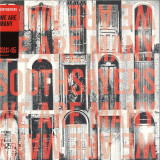
Two things become immediately clear when you hear “Body Electric”, the third original album by White Haus, João Vieira (X-Wife / Dj Kitten)’s solo project. The first is that we’re faced with an insatiable music lover, with an exemplary historical awareness. The second is that is music, although it channels all that passion, does it in such a way that is increasingly all his own. The thing is, that if on one hand, in these twelve new tracks, we’re assailed by the presence of the tutelary Talking Heads and their satellite projects, by Vivien Goldman, Sexual Harrassement or Konk’s New York No Wave, by the electronic pop of Soft Cell or New Order, by the hybrid funk of Prince and his Minneapolis accollites, by the Italo-Disco inspired by Giorgio Moroder or Patrick Cowley or the Acid House of Adonis or Maurice.
Following the release of Milton Nascimento’s Maria Maria, Far Out Recordings proudly presents Nascimento’s 1980 follow up. With the success of Maria Maria in 1976 behind them, Nascimento reunited with his writing partner Fernando Brant in 1980 to produce another ballet, ‘Ultimo Trem (Last train)’. This time, they chose to tackle a more contemporarily relevant subject, the impact of the closure of a train line that connected certain towns and cities in the North East of Minas Gerais to the coast. “The military government shut down the route and the whole region began to fade away,” explains Milton. “I love train rides” adds the composer, “But today there are almost no trains to Brazil. So when I go to the US and Europe, any time I can, I go by train. The longer the journey the better.”
Featuring much of the same all-star line-up as Maria Maria – including legendary Brazilian musicians Naná Vasconcelos, João Donato, Paulinho Jobim and members of Som Imaginário, amongst many others, like Maria Maria, the album holds what Milton himself considers to be the definitive versions of some of his most beloved tracks, including 'Saídas E Bandeiras' and 'Ponte de Areia'.
The title track, ‘Ultimo Trem’ – performed exquisitely by Zezé Mota with a choir and piano – is a mournful lament about the human consequences of the axed line. The ballet brought great media attention to the campaign against closure. “Most of Fernando’s lyrics have some political tone,” says Milton, “This one helped the area a lot because the politicians grew concerned about the subjects.”
Fernando’s and Milton’s shared passion for the sounds, smells and memories of trains, inspired the soundtrack for the production which premièred in 1980. ‘A Viagem (The trip)’, launched with a train’s steam whistle, sees Milton’s guitar moving to a train’s rhythm. In contrast to the usual lyricism, ‘Bicho Homen (Beastly man)’ and ‘Decreto (Degree)’ are atypically upbeat and funky, their vocals a mesh of wordless male voices resembling the then fashionable Swingles Singers’ renderings of Bach. ‘E Daí? (And so what?)’, and ‘Olho d’Agua (Water’s Eye)’ were both drawn from ‘Clube Da Esquina’. ‘Olho d’Agua’ is mellow and delicate and Milton’s homage to the great voices of Brazil whilst ‘E Daí? (And so what?)’ is a stunning mosaic of voices. The unusual ‘O Velho (The Old Man)’ conjures up an image of an old shaman singing alone into the wind against the cries of nature. Perhaps the most affecting songs are Nascimento’s ‘Itamarandiba’ and ‘Oração (Prayer)’. The latter is a cry for a change in the situation whilst ‘Itamarandiba’ ends with an upbeat, whirling Hammond organ and guitar timepiece. The closing track ‘Ponta de Areia (Sand Edge)’, was based on one of Fernando’s newspaper stories and became one of Milton’s most famous pieces, covered by musicians across the planet, including Wayne Shorter and Earth, Wind and Fire. It reappeared as a ghostly 45-seconds memory on the ‘Milton e Gil’ album, his millennial collaboration with Gilberto Gil.
After 27 years of being locked inside contracts and record company legalities, these sublime songs were finally released in 2003 as a double CD package, along with Maria Maria. Set for its first ever vinyl release for this year’s Record Store Day, on limited edition red vinyl, Ultimo Trem sounds as fresh and relevant now as when Brazilian music was still a South American secret.
The outstanding 1971 debut by piano player and arranger Osmar Milito features his amazing cover of Herbie Hancock's Cantaloupe Island plus several classic Brazilian songs by Marcos Valle, Jorge Ben and Ivan Lins among others. Fierce samba jazz and bossa all the way through! The line-up of performing artists could hardly be more impressive: Quarteto Forma on vocals, Luis Ea, Marcos Valle, Pascoal Meirelles. This brilliant album is up there with the best work of Arthur Verocai and Marcos Valle. Presented in facsimile artwork and pressed on 180g vinyl
During the 90s, a walk around London’s Camden Market inevitably meant listening to the music with groove that the most popular DJs had made fashionable at the time: soul jazz instrumentals and Brazilian music targeting the club dancefloors. Among all those songs that ended up becoming classics of the scene was the amazing cover version of Herbie Hancock’s ‘Cantaloupe Island’ that Osmar Milito had recorded in 1971. This song was probably the main reason that made his LP for Som Livre one of the most sought after Brazilian records by collectors from all over the world. Now we finally have a new opportunity to enjoy this album, reissued on vinyl for the first time.
Along with the aforementioned version of Herbie Hancock’s song, this first album by piano player and arranger Osmar Milito is full of versions of Brazilian classics, from Marcos Valle to Jorge Ben or Ivan Lins. Fierce samba jazz and bossa all the way through! Note that Milito spent the first years of his career as a member of the backing band of big artists such as Elis Regina, Jorge Ben, Nara Leão... and after two years working with Sergio Mendes in the United States, he returned to Brazil and recorded his first LP.
The line-up of performing artists on this album could hardly be more impressive: Quarteto Forma on the vocals, Luis Eça, Marcos Valle, Pascoal Meirelles (what an amazing drummer he is!)... and both sides of the record hide a seamless sequence of solid tune after solid tune with similar doses of instrumental and vocal tracks. Just listen to the magnificent ‘Garra’, ‘Que bandeira’ or ‘Rita Jeep’, or the sweet samba that gives its name to the record, and you will see why this LP should be up there, next to the best works of Arthur Verocai and Marcos Valle.
Shcuro is the alias of João Ervedosa a DJ, producer and graphic designer based in Lisbon. He also runs the record labels Sombra and Paraíso, makes music as Jose Acid and hosts a show on Rádio Quântica. His first contact with a DJ setup happened at age 15, and that’s when Shcuro decided to buy his own turntables and mixer; and started producing his own beats, too. He’s since released music on Basal, Circus Maximus, Obscuur Techno, Golden Mist Records and his most recent collaboration with Photonz for Future Déjà Vu.
‘Particle of Memory’ is a hypnotic 6-track EP that explores new territories in contemporary dance music. Sonically Shcuro paints his sounds blending moody techno with industrial noises alongside fast, apocalyptic electro and breakbeat. He is influenced by Portuguese rave culture that was born in the mid-90s at Lisbon clubs Alcântara-Mar and Kremlin and the country’s first electronic label Kaos Records. Shcuro continues to expand and morph this rich dance heritage to create something entirely different. The bouncy, lead track “Afterlife” features vocals and lyrics by London's ELLES followed by a Decadent Dub rework. All songs have been mastered by George Horn at Fantasy Studios. Housed in a die-cut jacket designed by Eloise Leigh reminiscent of ‘90s escape/sci-fi films with futuristic bright pink pop flourishes
Meda Fury are buzzing to welcome Silvestre to the fold for a 6 track EP of low-slung party starters. This Lisbon native and London resident has been on several tastemakers lips for the last year now, serving up no-nonsense but seriously fun dance music, comparable to the spirit of mighty Portuguese scene labels Principe and Naive. Joao’s tracks are mind bending hybrids of breakbeat, reggaeton, R&B, rave and house. His recent artilary coming via Seceretsundaze, Diskotopia and his own Padre Himalaya, he now adds the Yeah EP to his weaponry.
The EP's title track has been the soundbed for the recent Boiler Room Festival 2019 promotional videos, sparking a huge amount of interest and ID requests, its remained secret until now. Add to this another 5 tracks of slow rave-tinted kuduro and faster baile funk blends for a truly monsterous set of club heaters!
ANAMAI is the experimental folk project of Anna Mayberry and David Psutka - soft sounds to dent skin and flesh. The music is naked and exquisitely personal, threatening banality, but mainly an embrace of the commune. Dramatic and confidential anthems of divine insignificance. Across three studio albums the project has explored the nature of intimacy with tiny confessions released into vast lakes of sound. Simple songs punctuated by clusters of detail. The project is built on contradictions: traditional yet modern; miniscule yet infinite; proud but deflated. Something for everyone and nothing to no one. A search for peace?
ANAMAI will release their third album, Dream Baby, on Halocline Trance this fall. Listeners will hear residue from Psutka and Mayberry’s other projects - the scratchy expression of HSY + the functionality of EGYPTRIXX + the baroque digitalia of ACT! but ultimately the record breaks new ground in a long-running series of collaborations.
9 tracks of liquid sonics suggest an antecedent in early Harold Budd or a spiritual homage to the performative intimacy of Bossa Nova artists Joao Gilberto and Gal Costa. Drips of colour across an axis of sound, dimension and human experience.
Sometimes you know it’s coming, sometimes it’s unexpected, but the time to hang your boots will always come. It’s better when you have total control, even better if you end up on a high (or on a low). After seven years of sonic interferences, calibrating the soundscape of field recordings and helping to recreate the old sounds of today, Gonzo is retiring from music. It’s a goodbye, yeah, and a well-crafted one.
But “Ruído(s)” doesn’t sound like an intentional one. You won’t listen to it on any of the thirteen tracks that scavenge for a solution in the space between ambient music and field recordings. You won’t feel it in the intense connection between human and natural sounds and how sometimes everything oscillates in opposite states of mind. You won’t even read it in the intense, but subtle, humor present in some of the pieces. You won’t, because it’s not an intentional goodbye. You only know it is, because you’re reading this.
What is it then? It’s a celebration of random sound. How can you experience something scholastic and, simultaneously, deeply hilarious? Just think about the amazing triad formed by “A Fuga dos Grilos”, “Degredado(s)” and “Cantiga Parva”. First, you’re blessed with six minutes that build up on the idea that sound can be an intense religious experience, echoes going back and forth to create a fantastic Boiler Room feeling (one populated with raving Gonzos doing dabs in front of the camera) that eventually ends up with a cinematic touch: someone saying the title of the song out loud. One second after we are into the Flying Lizards world, with two songs that shake any pretentious seriousness of the previous track.
Is it serious or not? It is. But it doesn’t have to be. In “Ruído(s)” Gonzo recounts pop/electronic history through field recordings and weird-soft beats. More than compiling his seven-year history, Gonzo is more worried to understand where he’s leaving his ideas, Caretaker style. Speaking of Caretaker, Leyland Kirby should think about reviving Caretaker and do a whole album around “Brilhante Cortejo”: it’s haunted ballroom in a ‘cracked’ nutshell.
As the album progresses and the need to revisit it grows, it becomes clearer(?) that “Ruído(s)” is more than an artist self-indulging on his work – in a very good manner. It’s also a condensed catalog of Portuguese music and its sounds, a circular trip down the memory lane of a forgotten country and its landscape. “Ruído(s)” is a goodbye to a country and its traditions. It does it without sulking but with the most respectful loud laugh - the Gonzo way.
- A1: Ferro Na Boneca
- A2: Eu De Adjetivos
- A3: Outro Mambo, Outro Mundo
- A4: Colégio De Aplicação
- A5: A Casca De Banana Que Eu Pisei
- A6: Dona Nita E Dona Helena
- A7: Se Eu Quiser Eu Compro Flores
- B1: E O Samba Me Traiu
- B2: Baby Consuelo
- B3: Tangolete
- B4: Curto De Véu E Grinalda
- B5: Juventude Sexta E Sabado
- B6: De Vera
Originally released by RGE in 1970 in Brazil, ‘É Ferro Na Boneca!’ features 13 songs composed by Luiz Galvão and Moraes Moreira. This record shows the roots of the group, moving through psychedelics, edgey pop, rock and Tropicália.
After writing ‘É Ferro Na Boneca!’ their music began to move towards MPB due to the influence of João Gilberto, who began working with the group. In 1972 they released their incredible ‘Acabou Chorare’ LP, which came top of Rolling Stone Magazine’s list of 100 Greatest Brazilian Records (published in 2007).
- A1: Airto – Samba De Flora
- A2: Duke Pearson And Flora Purim – Sandalia Dela
- A3: Sérgio Mendes & Brasil '66 – Batucada (The Beat)
- A4: Deodato – Skyscrapers
- B1: Milton Nascimento – Catavento
- B2: Airto – Tombo In 7/4
- B3: Luiz Bonfá – Bahia Soul
- B4: Dom Um Romao – Braun-Blek-Blu
- C1: Moacir Santos – Kathy
- C2: João Donato – Almas Irmãs
- C3: Sivuca – Ain't No Sunshine
- C4: Milton Nascimento – Rio Vermelho
- D1: Tamba 4 – Consolation (Consolação)
- D2: Flora Purim – Moon Dreams
- D3: Dom Um Romao – Escravos De Jo
- D4: Airto – Andei (I Walked)
All of the music featured here on this new Soul Jazz Records collection was created by Brazilian
artists in the USA in the 1970s.
In the early 1970s North American jazz musicians were eager to work with upcoming Brazilian
musicians. Miles Davis invited Airto Moreira to join his new ‘electric’ band, Dom Um Romao (part of
Sérgio Mendes’ legen
dary Brazil ‘66 in the 1960s) joined the fusion group Weather Report, Flora
Purim and Airto both became a part of Chick Corea’s new project Light As A Feather, Wayne Shorter
collaborated with Milton Nascimento, George Duke recorded Brazilian Love Affair, and so on.
With all the attention placed on them from these important jazz artists, North America became the
new musical playground for a large number of these Brazilian artists – Airto Moreira, Flora Purim,
Sérgio Mendes, Luiz Bonfá, Eumir Deodato, João Donato and many others.
Most of these musicians had already experienced success through the earlier popularity of bossa
nova in the 1960s, either at home in Brazil or in the USA. But by the end of the 1960s many
Brazilian artists had left their own country, as the military dictatorship became progressively more
authoritarian and repressive. In the USA, through their critically acclaimed work for Miles Davis,
Weather Report, Lightj As A Feather etc., all of these artists were now given reign to explore new
musical terrains away from the restrictions of both a musical genre and a state censor back in Brazil.
This collection brings together some of these finest works and comes complete with extensive notes
that explains the path these musicians took from Brazil to the USA and shows the political and
musical links between Brazil and the USA that created the conditions for this unique fusion of these
two distinct cultures, North American Jazz and Brazilian music, that occurred in the 1970s.
The album comes as a deluxe gatefold double vinyl LP, complete with download code, full sleeve
notes, exclusive photography, double inner sleeves.
Killer samba soul from Ronie's last album.. Smooth songs that are reminscent to João Donato's work in the 70's.. Whole album is GREAT!
Hive Mind Records are delighted to present Congo, the debut album from Brazilian guitarist and composer Rodrigo Tavares.
Maintaining a meditative mood across it's nine instrumental pieces, Congo blends composition and improvisation with subtly experimental yet sophisticated arrangements that evoke the mood and rhythms of classic Brazilian artists such as João Gilberto, Dorival Caymmi, Tom Jobim, Milton Nascimento and Caetano Veloso.
Rodrigo's work draws on elements of jazz, post rock, minimalist composition and disparate global sounds to create a deep listening experience that falls between genres and wilfully defies categorisation. Congo is a lush soundworld that rewards exploration and will appeal to fans of music as diverse as Joshua Abrams and Natural Information Society, Collocutor, BadBadNotGood, Slint or late Talk Talk, as much as it does to lovers of classic Brazilian music.
Hive Mind Records are proud to be releasing Congo on vinyl in gatefold sleeve designed by Brazilian graphic artist, Andrea Gomes, and featuring the original painting of celebrated Brazilian artist, Cristiano Lenhardt.
- A1: Paula, Mi Habitación
- A2: Salomé, Soy Muy Poca Cosa
- A3: Cocky Mazzetti, ¿Por Qué ¿Por Qué
- A4: Elsa Baeza, Guapa
- A5: La Nueva Generación, Tim Dom Dom
- A6: Bruno Lomas, Nuestro Momento
- A7: Seison Show, La Muchacha Del Week-End
- B1: Antonio González, Notarás Que Aún Te Quiero
- B2: Antonio Prieto, Chove Chuva
- B3: Los 3 Sudamericanos, Un Hombre Y Una Mujer
- B4: Los Aguacates, Agua De Beber
- B5: Hermanas Benítez, Nada, Nada
- B6: Los Millonarios, Más Que Nada
- B7: Richard Y Sus Bambucos, Música En La Bahía
Mid last century. Commercial Music is a machine that generates dances that run each other over in the urge to reach the audiences and mark their place in time and history.
A never-ending list of choreographies co-habit: hully gully, madison, rock, limbo, twist and a long etcetera, until a new dance, bossa nova takes over the dance floors. Joao Gilberto, Tom Jobim or Vinicius de Moraes reach stardom in Brazil with this mix of samba and jazz, but the genre doesn't explode internationally until a few American jazzmen decide to import it. From there it reaches Europe, via France, thanks to Sacha Distel, the first on the continent to record an EP completely dedicated to this phenomenon.
It is 1962.
Shortly after in Spain, the number of artists including original or adapted tracks in their albums, escalate: Tony Vilaplana, Mina, Duo Dinámico, Latin Combo, Los 4 Brujos, Gina Baró, Grau Carol, Salomé or Marisol, who popularizes the new trend by recording 'Marisol rumbo a Río', a blockbuster film partially filmed in Brazil. The maestro Augusto Algueró writes the films soundtrack.
For this compilation we have consciously dug into the archives of three Barcelona based labels like Belter, Discophon and Olympo to serve Spanish sung bossa nova songs that have never, inexplicably, been released on vinyl, all songs are recorded during those two (musically speaking) prodigious decades: the twentieth centuries sixties and seventies.
Ursa's Reef is a late 80's traveller and surfer wandering endlessly in the secluded raves of Goa, searching for his own soul while dancing in abandon to the proto-Trance journeys of Goa Gil. Brought up in Sintra, Portugal, by a family of uptight catholic hypocrites, UR goes rogue in his early 20's, seduced by the esoteric teachings of Levi, Pessoa, Crowley and Israel Regardie while keeping an unhealthy obsession with Roxy Music. He is also a fictional, made up persona - a musical heteronym - of Lisbon-based DJ and producer Marco Rodrigues, mostly known for his work under the name Photonz. Together with his friend Jose Acid - a musical heteronym of Joao Ervedosa AKA Shcuro - he makes one last trip to Goa that could prove fatal.
- A1: Abayomy - Obatala (Pd)
- A2: Zebrabeat_Zebrabeat Afro - Amazônia Orquestra (Zebrabeat)
- A3: Burro Morto - Lúcifer Colômbia (Daniel Jesi/Burro Morto)
- A4: Ive Seixas - Cervejas Populares (Ive Seixas)
- B1: Iconili - O Rei De Tupanga (Iconili)
- B2: Zulumbi - Zulumbi (Rodrigo Brandão / Lúcio Maia / Pg / Dengue)
- B3: Passo Torto - Faria Lima Pra Cá (Kiko Dinucci / Rodrigo Campos)
- B4: André Sampaio E Os Afromandinga - Ecos De Niafunke (André Sampaio)
- B5: Fabrício - Feito Tamborim, Pará Céu (Fabrício.)
Over the past few decades, there has been a seismic shift in Brazil's musical landscape. A plethora of varying musical undergrounds has developed across the nation. While Rio and São Paulo have been overwhelmed with networks of talented musicians for a long time, creative life is now bursting all over the country. Amplificador exists to document and propagate the wonderfully diverse music currently blossoming from Brazil's vivacious and geographically varied musical undergrounds. Presenting an up-to date insight into Brazilian music, this compilation draws together some of the components of 'Novíssima Música Brasileira' (brand new Brazilian music), ranging from afro-grooves to rock, to modern samba and MPB. The music reaches back across Brazil's incredibly rich musical and cultural traditions, while also taking in influence from other movements around the globe.
Having begun life in 2012 as a Brazilian music blog run by Marcelo Monteiro, Eduardo Rodrigues, Mateus Campos, and Ricardo Calazans, the aim of Amplificador is to document and propel to wider audiences, Brazilian music of the '00s and '10s generation. This is a task made more significant by obvious changes in the way music is consumed. 'People are no longer obliged to listen to what the radio and TV are presenting. There is a whole new generation that wants to listen to new bands and new sounds and we try to connect those bands with other bands, producers, fans and even the mainstream.' These changes in technology and the way music is discovered and shared have developed parallel to the proliferation of these emerging scenes. The ostensible decentralization of the music industry means the promoting and filtering work of journalists and blogs, like Amplificador, have become increasingly important, as people try to keep up with the tsunami of new music and media flooding the country on a daily basis.
Marcelo uses the example of the Mangue Beat movement to explain a trend in contemporary Brazilian music that looks both inwards, to Brazil's own musical traditions and outwards, to movements around the world to create a novel, localised identity: 'The 90's Pernambuco art-social movement was inspired by Coco, Maracatu and Forró all mixed with modern riffs and grooves. The mythical
revolutionary Chico Science, his Nação Zumbi, Mundo Livre, Siba, and many others do this blend perfectly. There are also the references to the older generations and masters - Gil, Caetano, Luiz Gonzaga, João Gilberto, Tim Maia, Jorge Benjor - as a constant inspiration for all bands.' This is very much the case for the Brazilian artists of today.
Music is unquestionably informed by place. Brazil has always been famed for its regional differences in this sense. Indeed there are still pronounced variations between the scenes of Rio, Sao Paulo, Natal, Goiânia, Belo Horizonte and Belém for example, there are also great divergences within cities and while technology has brought changes to the way musical influences are shared, there are cultural differences, rooted in folkloric traditions, that aren't going away. Expressing his appreciation for this fact, while highlighting the potential of Brazil's spread of musical flavours, Marcelo explains that 'what we have now is new ingredients to make an even better mixture.'
This compilation heavily features music from a scene in Brazil's current musical make-up, which draws inspiration from African music, particularly Afro-beat music. Abayomy Afrobeat Orchestra from Rio formed because of their shared love of the music of Fela Kuti, uniting initially in 2009 for a jam session in his honour. But what sets Abayomy apart from other groups of a similar nature, is the fact that their sound also brings with it the songs and rhythms of candomblé. In this sense, Abayomy was the first band of its kind. The thirteen members of the orchestra have a palpable current of Rio's musical heritage - its rhythms and culture - running through them. So while their sound is distinctly African, it is also inherently Brazilian. Similarly, Zebrabeat Afro-Amazônia Orquestra draw upon traditional guitarradas and carimbos from the state of Pará and fuse these with the poly-rhythms of Afrobeat to create another regional hybrid, which stays true to both its Amazonian and African roots, yet which results in a very fresh, Brazilian sound. From Belo Horizonte (capital of Minas Gerais), Iconilli are another key band on Brazil's Afro-groove scene. With influences as varied as funk, jazz and psychedelic rock, congado, mining harmonies, maracatu, coco, ijexá, carimbó, Iconilli somehow manage to balance all of these sounds in such a way that makes it impossible to pin them down. From the Northeastern city of Joao Pessao, Parayba, Burro Morto's pshychadelic afro sound leans more towards rock and funk influences, with hint of regional Brazilian rhythms such as frevo and forro. They add another flavour to the Brazilian afro-groove scene: just one of the many exciting facets of Novíssima Música Brasileira.
While African-inspired music features heavily on the compilation, it is just one of the many styles within. Ive Seixas has a fresh approach to MPB, based on traditional rhythms and instrumentation, punctuated by a pop sensibility, coupled with a powerful female vocal. As an artist she is a product of a 'Do It Yourself' outlook to creativity, taken from her love of rock growing up. In 2013 she embarked on a project of street performance: wandering, like a lonely troubadour with just her guitar. Ive and her project began to gain notoriety and shortly after, her first EP was recorded, featuring some important names of South Rio's underground scene. 'Cervejas Populares' taken from the EP, is a beautiful, sombre piece of modern Brazilian pop, with a traditional samba rhythm. Another artist of the new MPB scene is Fabricio, from the city of Vitoria, who's 'Feito Tamborim' melds rock and funk and is also clearly reminiscent of the old Brazilian masters. It's an appreciation for the national musical heritage, alongside a keen ear for melody and an acceptance of foreign influences that results in these promising new sounds of Brazilian MPB.
Sao Paulo's super group of the underground 'Passo Torto' have been at the helm of an emerging scene in the city: an innovative approach to samba which draws in and experiments with afro grooves, jazz melodies and rock structures. Their sound is naturally very Brazilian, but the nylon twang of Faira Lima Pra Ca, interspersed with ominous strings and light rolling percussion, seems reminiscent of Captain Beefheart or Tom Waits, as the band lament their frustrations with their native city through their music.
The Future of Novíssima Música Brasileira looks very bright. The main challenge (and purpose of this album) is to get the music beyond Brazil's underground and into view of international audiences. In the last 10 years this goal has become somewhat more attainable, as the Brazilian government has begun to see the internationalisation of the nation's culture as a strategic objective, with public projects gaining increased investment and backing. The continuing project of Amplificador is to reinforce this international bridge by writing, filtering and promoting the scene as a whole. There is a wealth of great music currently blooming in Brazil and using new media tools, Marcelo and the team, alongside many others, will passionately continue to get the voices of Brazil's underground heard.