Buscar:joe volk

Estilos
Todo
  • 1
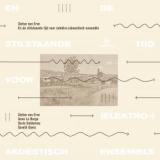
SIETSE VAN ERVE - EN DE STILSTAANDE TIJD VOOR (ELEKTRO-)AKOESTISCH ENSEMBLE

This autumn sees the release of ‘En de stilstaande tijd voor (elektro-)akoestisch ensemble’ (And Stationary Time for (electro-)acoustic ensemble), the new album by composer and musician Sietse van Erve. With this release, Van Erve marks a definitive turning point in his artistic career: bidding farewell to his long-standing pseudonym Orphax to continue under his own name.

From Rewire to the Studio
The foundations for this album were laid during a memorable live performance at the Rewire Festival 2025 in Den Haag (The Hague). There, Van Erve presented the composition for the first time with an ensemble featuring Anne La Berge (flute), Gareth Davis (bass clarinet), and Dario Calderone (double bass). The leading Dutch newspaper De Volkskrant praised the performance as "incomprehensibly still", drifting on a single, drone-like tone through which the instruments softly float.
Van Erve recalls the intensity of that debut: “I don’t think I’ve ever been as nervous for a performance as I was for Rewire. A packed hall in Amare, during such a major festival”. Following a second successful performance at Festival Musica in Strasbourg, the decision was made to capture the work permanently in the studio.

A New Vision of Nostalgia
The composition originates from Van Erve’s fascination with time and nostalgia, inspired by a 1960s postcard of a Spanish village where time seemed to freeze. While based on a solo piece from 2020, the (electro-)acoustic instrumentation provides a completely new interpretation. The transition from solo electronics to an ensemble brought unique challenges. Van Erve explains: “Certain effects can be triggered with a single knob on a synthesizer, but they result in almost unplayable parts for other instruments. In those situations, I presented the challenge to the group and we searched for a solution together.’’

Identity and Evolution
The album also marks a personal transition for the artist. Regarding the departure from his moniker, he states: “I was looking for the right moment, and now it feels right. With this project, I have finally been able to do what I’ve had in my head for a long time... I feel I have achieved something, and that is why I think it is a good time to initiate the name change."

Realisation through Crowdfunding
Recorded in the spring of 2026 at Studio 150—located in a former church in Amsterdam-Noord known for its exceptional acoustics—the album was captured by Joeri Saal. The production of the deluxe vinyl LP and CD was made possible through a successful crowdfunding campaign via Dutch platform Voordekunst, where supporters contributed to the studio and production costs.

Reservar20.11.2026

debe ser publicado en 20.11.2026

20,59 €
Various - Tchic Tchic: French Bossa Nova 1963-1974  Colored Edition LP 2x12"
 
22

Ever since the late 1950s bossa-nova revolution, Brazil’s influence on French music has been undeniable. Pierre Barouh, Georges Moustaki and a vast array of lesser known artists, all made the Musica Popular Brasileira (MPB) an axis of promotion at the service of a cool and metaphysical, modern and mixed Brazilian lifestyle. Some were seduced by the poetic languors of the bossa, some were looking for fun, and others just loved the American hybridization of jazz-bossa, jazz-samba.


What is bossa nova? One of its creators, Joao Gilberto said: "Its style, cadence, everything is samba. At the very start, we didn't call it bossa nova, we sang a little samba made up of a single note - Samba de uma nota so .... The discussion around the origins of bossa nova is therefore useless”. It is nevertheless useful to remember that these magnificent Brazilian songs, which the guitarist describes as samba, were shifted and balanced around improbable chords. "I like things that lean, the in-betweens that limp with grace," said Pierre Barrouh, quoting Jean Cocteau.


With emotion, arrangements for violin and supple guitar licks, bossa nova rapidly changed. A transformation that can be heard in the Tchic, tchic, French Bossa Nova 1963-1974 compilation, the result of a cultural reappropriation, which traveled through the United States and supplemented itself in France.

A musical revolution that has remained significant, bossa nova was born in Rio. From 1956 to 1961, Brazil lived through its golden years. In five years, the country had invented its modernist style. Elected president in 1956, Juscelino Kubitschek de Oliveira, an elegant man with a broad forehead, brandished a promising slogan: "Fifty years of progress in five years". He quickly got to work. Not worried about increasing debt, he launched the project for a new federal capital, Brasilia, designed by the communist architect Oscar Niemeyer. Volkswagen opened state-of-the-art factories and created the “fusquinha”, the Beetle. In Rio, the Vespa made its first appearance. The Arpoador Surf Club crew run into the “girl” from Ipanema, Helô Pinheiro - the tanned garota ("chick"), between a flower and mermaid, who at 17 walked by the Veloso bar, where the fiery author and composer, Tom Jobim and Vinicius de Moraes, were getting drunk on whiskey. From then on, bossa symbolized cool.

In 1958, Joao Gilberto recorded Chega de Saudade, which the directors of Philips denied, calling it "music for fagots". The marketing director, who believed in it, secretly pressed 3000 78-inch vinyls and distributed them at schools around Rio, creating a tidal wave.

American jazzmen then took over. In particular, trumpeter Dizzy Gillespie and guitarist Charlie Byrd. In November 1962, the Brazilian Ministry of Foreign Affairs funded a "Bossa-Nova" concert at Carnegie Hall in New York, inviting the genre’s pioneers. Unprepared, the show soon turned to disaster. But the troupe was invited to the White House by Jackie Kennedy. The first lady loved "the new beat" and in particular Maria Ninguem, a song by Carlos Lyra, later covered by Brigitte Bardot.

In Brazil, the 1964 military coup quickly ended this euphoria. The destructive atmosphere that ensued pushed many Brazilian musicians to leave, if not to exile. Thus, Tom Jobim, Sergio Mendes and Joao Gilberto arrived to the United States. In New York, Joao Gilberto met saxophonist Stan Getz. At the time, he was married to the Bahianese Astrud Weinert Gilberto, who had a German father. She had never sung before, but she knew how to speak English. Getz therefore asked her to replace her husband on The Girl From Ipanema. The Getz/Gilberto record with Tom Jobim on piano, was released in March 1964. Phil Ramone, the "pope of pop" was in charge of sound.

Bossa nova arrived in Paris through the classic “guitar-voice” channel (Pierre Barouh, Baden Powell, Moustaki…) But France loved jazz and Paris had already welcomed its American contributors. All these good people were to pass through Saint-Germain-des-Prés. The cabaret l'Escale became the Mecca of Latin American sound where one could find Pierre Barrouh and his friends, such as the Camara Trio, samba-jazz aces, whose only record was published by the Saravah label. With a band strangely called Les Masques (a band that included Nicole Croisille and Pierre Vassiliu, among others), the Camara Trio recorded an interesting Brazilian Sound, including the track Il faut tenir which is present on this tasty compilation of rarities.

Other enlightened musicians can also be found on the compilation, such as Jean-Pierre Sabar (songwriter for Hardy, Auffray, Leforestier ...) and the French pop rock organist Balthazar. In 1975, Sabar recorded Aurinkoinen Musiikkimatka on a Finnish label, which featured the crazy Vai, Vai, included on this record. We are now following the footsteps of Brazilian electronic musicians such as Sergio Mendes, Eumir Deodato or Marcos Valle who created funk and disco sounds on their keyboards and synthesizers. A style that influenced Véronique Sanson when she wrote Jusqu’à la Tombée de la nuit in 1969 for Isabelle de Funès, the niece of Louis and a great friend of Michel Berger - Sanson did end up singing this track on her 1992 Sans Regret record.


The pinnacle of exoticism and travel, Sylvia Fels’ Corto Maltese includes bongos, sea mist and ocean sounds. The title was taken from Jacky Chalard’s concept album written in 1974, Je suis vivant, mais j’ai peur (I am alive, but I am scared), based on Gilbert Deflez’s science fiction novel.


However, bossa nova extended the scope of popularity. "In the 1970s, I was a fan of Sergio Mendes, Getz / Gilberto. I fell in love with this music that I knew because I had been an orchestral singer, " explained Isabelle Aubret, who in 1971 delivered a composite record of covers by the very funky Jorge Ben, Orfeu Negro, Tom Jobim, Vinicius de Morais and Jean Ferrat. "I recorded this album for Meys Records in Paris, far from Brazil, with wonderful musicians, François Raubert, Roland Vincent, Alain Goraguer...". The latter wrote the arrangements for Casa Forte, a very percussive title borrowed from Edu Lobo, one of the initiators of the bossa who spent time in California. "Jazz and bossa came together and produced very rhythmic music. I love singing, it allows me to dream, to have fun, to feel a high on stage, and these songs brought me joy, made me swing, my singing felt like a dance.”


The world tours of French singers and their desire for the tropics, often brought them to Rio with its hills, forests, caipirinhas and tanned bodies. There are surprises though, like this Iemenja (Iemenja is the goddess of the sea in the Afro-Brazilian candomblé religion). Not unlike the composer and musician Jean-Pierre Lang, based in Sao Paulo, Claire Chevalier taught Brazil to Brazil. In 1970, the singer and painter published a 45-inch vinyl, Mon mari et mes amants (My husband and my lovers), under the improbable pseudonym of Clarinha (little Claire). She was then living in Rio, with her husband, Joël Leibovitz, who founded a band called Azimuth, and who owned a record label specialized in "sambas enredos" songs for samba school parades.


For its B side, she asked Pierre Perret to come up with lyrics for a song composed by Carlos Imperial: "Oh goddess of the sea, o goddess Iemenja, I bring a white rose to adorn your long hair ..." . "Perret came to see us, and we had fun, remembers Joël Leibovitz. We wrote Lemenja for fun, we recorded it at the Havaí studio, behind the Central do Brasil the central station. Erlon Chaves, the arranger who worked with Elis Regina, joined us" adding his share of Afro-Brazilian percussions and funky brass to the mix.

There is a common misunderstanding in Franco-Brazilian history: that bossa, admittedly hedonistic, is perceived as funny, even though the poets who wrote the texts are often philosophizing on the human condition. Its French interpreters pull it towards a carnival inspired universe, far removed from its fundamental essence. Thus, Jean Constantin covered the famous Samba da minha terra, an ode to the art of samba written by the classic Bahian composer Dorival Caymmi, renaming it with the enticing title of Pas tant de tchi tchi pompon: "On your pier there is no tchi tchi / when you arch your back, you know everything is alright ”(lyrics by Gérard Calvi). This expedited bossa aims for the absurd, but retains a certain elegance.

Indeed, Jean Constantin was not an idiot, the rather large man had a huge mustache and liked fantasy, (Les pantoufles à papa, Le pacha, inspired by cha-cha-cha-cha, salsa and jazz) but he was also the lyricist of Mon manège à moi interpreted by Edith Piaf, the composer of Mon Truc en plume by Zizi Jeanmaire and the soundtrack of François Truffaut’s 400 Blows. Le Poulpe, published in 1970, from which this bossa is extract, was arranged by Jean-Claude Vannier, an accomplice of Serge Gainsbourg’s Melody Nelson. In short: "There is enough of samba / By looking at the parasol / Because my poor cabeza / Is going to die in the sun".

Even the American actress Marpessa Down, who was at the heart of the bossa nova revolution with her role as Euridyce in Marcel Camus’ film Orfeu Negro, winner of the 1959 Cannes Palme d'or, fed the clichée with Je voudrais parler au petit cuica - "Tell me how you manage to always make people want to dance / It's true, I must admit that I cannot resist your magic" - in consequence, once can hear the cuica, a little drum inherited from the Bantu.


But bossa nova had many angles. Societal, of course, pushing actresses who were symbols of women's liberation like Brigitte Bardot, Jeanne Moreau, or Sophia Loren to engage in the exercise of accelerated bossa. In February of 1963, Sophia Loren made a record in French in Rome, Je ne t'aime plus, featuring the song De jour en jour, a bossa written by two Italians, Armando Trovajoli and Tino Fornai, which was released a little later by Barclay. Bossa accompanied the 1960s, a decade of moral liberation. Ann Sorel, who interpreted La Poupée des favellas, caused a sensation with L’amour à plusieurs, a provocative song written by Frédéric Bottom and Jean-Claude Vannier. As for the actress Andrea Parisy, she displayed her bourgeois cheekiness in Marcel Carné's Les Tricheurs before interpreting Les mains qui font du bien. And Magalie Noël, the friend of Boris Vian, who sung Johnny fais-moi mal, was hired to sing Une énorme Samba, composed by Alain Goraguer (arranger to Gainsbourg, Bobby Lapointe and Jean Ferrat) with lyrics by Frédéric Botton.

But in the end, of what wood is bossa nova made of? The answer is given by Christianne Legrand, daughter of Raymond the conductor, and sister to Michel the composer: "With me, with jà" - jà means "immediately" in Portuguese. In 1972, the singer, an expert in vocal jazz and a member of the Double Six, published Le Brésil de Christianne Legrand. Two songs included on the Tchic Tchic compilation that demonstrate how bossa, jazz, funk, rock, etc. work like a swiss army knife: the music is used to denounce broken systems, or miracles, HLM et ciné roman, Cent mille poissons dans ton filet, two songs from the O Cafona soundtrack, a successful telenovela broadcast, at the time in black and white, on TV Globo. The first was adapted in French by the fighter and friend of the Legrand tribe, Agnès Varda. The second is content with a play on words, jostling them into a summer fun.


Véronique Mortaigne
No en stock

Haga su pedido ahora y le encargaremos el artículo en nuestro proveedor.

Ültimo hace: 3 Meses
27,31 €
AMBROS, TAUCHEN, PROKOPETZ - DER WATZMANN RUFT

AMBROS, TAUCHEN, PROKOPETZ

DER WATZMANN RUFT

12inchBELLA9668973
BELLAPHON
12.12.2025
  • VOLKSCHOR: HOLLARÖHDULLIÖH OUVERTURE PROLOG
  • LIED: HOLLARÖHDULLIÖH GESPRÄCH DER KNECHTE, 1. TEIL
  • LIED: HOLLARÖHDULLIÖH, 2. TEIL SZENE: DAS RUFEN
  • LIED: DER BERG
  • SZENE: DIE JAGD
  • LIED: OH ST. HUBERTUS GESPRÄCH DER KNECHTE, 2. TEIL
  • LIED: DIE GAILTALERIN, 1. TEIL SZENE: DIE GAILTALERIN
  • LIED: DIE GAILTALERIN, 2. TEIL SZENE: DER KAMPF
  • LIED: AUFI, AUFI! SZENE: DER BERG HOLT SICH DEN BUBEN
  • LIED: ER FALLT SZENE: DAS MAß IST NOCH NICHT VOLL

Eine der erfolgreichsten Aufnahmen der österreichischen Musikszene ist zurück auf Vinyl! Dieses Alpendrama ist das erste gemeinsame Konzeptalbum der Jugendfreunde Wolfgang Ambros, Manfred Tauchen und Joesi Prokopetz. (die Autoren nennen es "Rustical", abgeleitet von Musical und rustikal) Es beschreibt das ewige Gerufen-Sein vom bösen Berg Watzmann, von den Männern, die aus Imponiersucht "auffi" wollen und oft ihr Leben lassen müssen, sowie von der Gailtalerin, die ihre Macht über die Männer missbraucht und diese damit ins Verderben stürzt. Das Stück wurde 1972 von Manfred Tauchen als Bergbauerndrama-Parodie geschrieben und von W. Ambros zu Liedtexten von J. Prokopetz vertont. Mit bis heute über 250.000 verkauften Exemplaren ist dieses deutschsprachige Konzeptalbum eine der erfolgreichsten Aufnahmen der österreichischen Musikszene.

Reservar12.12.2025

debe ser publicado en 12.12.2025

26,01 €
THE BLUEBELLS - Sisters (Expanded Edition) (LP 2x12")
  • A1: Everybody's Somebody's Fool (Alternative Version)
  • A2: Young At Heart
  • A3: I'm Falling
  • A4: Will She Always Be Waiting
  • A5: Some Sweet Day
  • A6: Cath
  • A7: H.O.L.L.A.N.D
  • B1: Red Guitars
  • B2: Syracuse University
  • B3: Learn To Love
  • B4: The Patriot Game
  • B5: South Atlantic Way (Full)
  • B6: Aim In Life
  • C1: Forevermore
  • C2: Cath (Extended Version)
  • C3: All I Ever Said
  • C4: Fall From Grace
  • C5: Sugar Bridge
  • C6: Happy Birthday (Turn Gold)
  • C7: Everybody's Somebody's Fool (Original Album Version)
  • D1: Young At Heart (Extended Version)
  • D2: Tender Mercy
  • D3: All I Am (Is Loving You)
  • D4: The Ballad of Joe Hill
  • D5: Goodbye And Good Luck (BBC Session, 29th Nov '81)
  • D6: Young At Heart (Club Remix '93)

The Bluebells' Sisters is a perfect snapshot of early '80s "Sound of Young Scotland": Glasgow indie pop with bittersweet spirit, sharp hooks, and heartfelt harmonies. Signing to the then-nascent London Records, and working with a procession of esteemed producers (including Elvis Costello who became a mentor and teacher to the band), The Bluebells enjoyed three UK hits in the 1980s ('Cath', 'Young at Heart' and 'I'm Falling') before touring widely throughout Europe and North America, developing their live sound and signing to Seymour Stein's Sire Records in the U.S.

A decade later in 1993 that 'Young at Heart' hit the U.K. No 1 spot following its use as a T.V. advert for Volkswagen. Fast forward to this decade The Bluebells have reformed with a flurry of shows across the past two years including a triumphant return to Glasgow at Barrowlands for Celtic Connects, and just announced for the Acoustic Stage for Glastonbury Festival 2025.

This new edition of Sisters has been remastered and produced in consultation with the band, using the best audio sources available, including non-album singles and B-sides, bonus tracks from the original cassette edition and new liner notes from Will Hodgkinson.

Reservar27.06.2025

debe ser publicado en 27.06.2025

31,51 €
RYUICHI SAKAMOTO - Better Days Of Ryuichi Sakamoto
  • A1: Das Neue Japanische Elektronische Volkslied, Percussion – Tatsuro Yamashita, Synthesizer – Hideki Matsutake; Synthesizer, Piano, Marimba – Ryuichi Sakamoto
  • A2: Plastic Bamboo; Percussion – Shigeya Hamaguchi*; Synthesizer – Hideki Matsutake; Synthesizer, Piano, Marimba – Ryuichi Sakamoto
  • B1: Thousand Knives; Guitar – Kazumi Watanabe; Percussion – Haruomi Hosono; Synthesizer – Hideki Matsutake ;Synthesizer, Drums – Shigeya Hamaguchi*; Synthesizer; Piano, Marimba – Ryuichi Sakamoto
  • B2: Tokyo Joe; Bass – Rei Ohara*; Drums, Vocals – Yukihiro Takahashi; Guitar, Vocals – Kazumi Watanabe; Keyboards, Synthesizer – Ryuichi Sakamoto; Percussion – Shigeya Hamaguchi*, Pecker
  • B3: E-Day Project; Bass – Rei Ohara*; Drums – Yukihiro Takahashi; Electric Piano, Synthesizer – Ryuichi Sakamoto; Guitar – Kazumi Watanabe; Percussion – Pecker; Piano – Akiko Yano
  • C1: Kylyn; Bass – Rei Ohara*; Drums – Yukihiro Takahashi; Electric Piano – Akiko Yano; Guitar – Kazumi Watanabe; Percussion – Pecker; Piano, Synthesizer – Ryuichi Sakamoto
  • C2: 在広東少年; Alto Saxophone, Soprano Saxophone, Chorus – Toshiyuki Honda; Bass, Chorus – Rei Ohara*; Drums – Shuichi Murakami; Guitar – Kazumi Watanabe; Keyboards, Vocals – Akiko Yano; Percussion, Vocals – Pecker; Piano, Synthesizer, Chorus – Ryuichi Sakamoto; Tenor Saxophone, Chorus – Yasuaki Shimizu; Trombone, Chorus – Shigeharu Mukai
  • C3: I'll Be There; Bass – Rei Ohara*; Drums – Yukihiro Takahashi; Electric Piano, Vocals – Akiko Yano; Guitar – Kazumi Watanabe; Percussion – Pecker; Piano, Synthesizer – Ryuichi Sakamoto
  • D1: ぼくのかけら; Arranged By – Yoshiharu Kawaguchi; Performer – Danceries, Ryuichi Sakamoto
  • D2: Grasshoppers; Piano – Yuji Takahashi; Piano, Synthesizer, Marimba – Ryuichi Sakamoto; Synthesizer – Hideki Matsutake
  • D3: Mother Terra; Bass – Rei Ohara*; Drums – Yukihiro Takahashi; Electric Piano, Synthesizer – Ryuichi Sakamoto; Guitar – Kazumi Watanabe; Percussion – Pecker
  • D4: The End Of Asia; Guitar – Kazumi Watanabe; Piano, Synthesizer, Marimba – Ryuichi Sakamoto; Synthesizer – Hideki Matsutake
Reservar16.06.2025

debe ser publicado en 16.06.2025

53,82 €
Lori Goldston & Stefan Christoff - A Radical Horizon (TAPE)

A RADICAL HORIZON is comprised of a series of duets between cellist Lori Goldston and pianist Stefan Christoff, recorded on a late Fall afternoon in Brooklyn, NY. A conversation between friends, these improvised excursions reflect a willingness to be open to the spirits in the space and between the notes; a spirit of communion that, as Stefan writes, "guides and dances with our dialogue together".

Stefan Christoff is a Canadian musician, community organizer, and journalist based in Montreal, Quebec. He has collaborated with artists such as Sam Shalabi and Adriana Camacho, performs with his brother Jordan as a duo in Anarchist Mountains, and has released music on labels such as Moon Villain, Shimmering Moods, and Aural Canyon.

A lifelong community activist, he helped establish the Musicians For Palestine project and has engaged in street-level solidarity work in Lebanon and The Philippines as well as closer to home in Montreal. This is his second appearance on Beacon Sound after 'In Sofia', an album of piano improvisations recorded in Bulgaria, was released on the label in 2023.

Classically trained and rigorously de-trained, possessor of a restless, semi-feral spirit, Lori Goldston is a cellist, composer, improvisor, producer, writer and teacher from Seattle. Her voice as a cellist, amplified or acoustic, is full, textured, committed and original. A relentless inquirer, her work drifts freely across borders that separate genre, discipline, time and geography.

Current and former collaborators and/or bosses include Earth, Nirvana, Mirah, Jessika Kenney, Ilan Volkov, Eyvind Kang, Stuart Dempster, David Byrne, Terry Riley, Jherek Bischoff, Malcom Goldstein, Steve Von Till, Lonnie Holley, Cat Power, Ellen Fullman, Maya Dunietz, Mik Quantius, Embryo, O Paon, Tara Jane O’Neil, Natacha Atlas, Broken Water, Ed Pias, Christian Rizzo and Sophie Laly, Threnody Ensemble, Cynthia Hopkins, 33 Fainting Spells, Vanessa Renwick, Mark Mitchell, Lynn Shelton, and many more.

Her work has been commissioned by and/or performed at the Kennedy Center, Sydney Festival, Cineteca Nacional de México, Tectonics Festival, Frye Art Museum, Time Based Art Festival (TBA), WNYC, The New Foundation, Paris Fashion Week, Northwest Film Forum, On the Boards, Seattle International Film Festival, Seattle Jewish Film Festival, Bumbershoot, Crossing Border Festival, Boston’s Museum of Fine Arts, Joe’s Pub, the Stone, University of Chicago, and venues large and small throughout North America, Mexico, Australia, and Europe.

Reservar25.10.2024

debe ser publicado en 25.10.2024

12,82 €
Joel Baylis - CASSETTE BEASTS LP 2x12"

Das Role-Playing-Game "Cassette Beasts" liefert einen mitreißenden 80er-Synthie-Rock-trifft-auf-britischen-Indie-Soundtrack, der vom Briten Joel Baylis komponiert wurde und bei dem die Newcomerin Shelby Harvey, den Gesang übernimmt. Der Soundtrack nimmt seine Hörer mit auf die mysteriöse Insel New Wirral und bietet alles: Von Lo-Fi Akustikballaden bis hin zu stadiontauglichen Hymnen. Apropos, willkommen in New Wirral, einer abgeschiedenen Insel, die von mysteriösen Kreaturen bewohnt wird, die man sonst nur aus den Albträumen kennt, die man niemandem wünschen möchte. Die Insel wird aber auch von einem tapferen Völkchen, das Kassetten benutzt, um gegen diese Monster in die Schlacht zu ziehen. Um wieder nach Hause zu finden, gilt es, die Insel bis in die letzte Ecke untersuchen und Monster auf Tape zu bannen, um ihre Eigenschaften zu erlangen! Joel Baylis gibt einen kurzen Einblick in seine Vision hinsichtlich des Soundtracks dem Resultat seiner Arbeit: "Mein Ziel war es, als ich die Musik für Cassette Beasts gemacht habe, etwas zu erschaffen, dass irgendwo zwischen einem Rollenspiel-Soundtrack und einem 80er Synthie-Rock-Album liegt. Ich denke, selbst wenn man diese Einflüsse in Betracht zieht, ist etwas höchst Eigenständiges entstanden. Es fällt schwer, den einen Genre-Stempel aufzudrücken, dafür versammelt die Musik zu viele Stimmungen und Stile." Darüber hinaus könnte die Freude bei Baylis über die Veröffentlichung des Soundtracks auf wunderschönem lila und mintgrünem Vinyl sowie natürlich auch auf limitiertem Tape kaum größer sein: "Die Stücke für den physischen Release wurden mit viel Bedacht ausgewählt und zusammengestellt, so dass alle Aspekte des Soundtracks perfekt in Szene gesetzt werden und das Produkt einfach großartig in jeder Sammlung aussehen sowie unter der Nadel klingen wird." Und da sich bei "Cassette Beasts" alles um die legendären Tonbänder dreht, haben sich Black Screen Records natürlich ebenfalls um eine limitierte Auflage von Tapes gekümmert. Alles bereit für die Monsterjagd! Der "Cassette Beasts"-Soundtrack ist nicht nur für Indie-Gamer ein Muss, sondern auch für Fans von Künstlern wie CHVRCHES oder Liebhaber des 80er Synthie-Sounds.

Reservar28.07.2023

debe ser publicado en 28.07.2023

31,89 €
Joel Baylis - CASSETTE BEASTS

Das Role-Playing-Game "Cassette Beasts" liefert einen mitreißenden 80er-Synthie-Rock-trifft-auf-britischen-Indie-Soundtrack, der vom Briten Joel Baylis komponiert wurde und bei dem die Newcomerin Shelby Harvey, den Gesang übernimmt. Der Soundtrack nimmt seine Hörer mit auf die mysteriöse Insel New Wirral und bietet alles: Von Lo-Fi Akustikballaden bis hin zu stadiontauglichen Hymnen. Apropos, willkommen in New Wirral, einer abgeschiedenen Insel, die von mysteriösen Kreaturen bewohnt wird, die man sonst nur aus den Albträumen kennt, die man niemandem wünschen möchte. Die Insel wird aber auch von einem tapferen Völkchen, das Kassetten benutzt, um gegen diese Monster in die Schlacht zu ziehen. Um wieder nach Hause zu finden, gilt es, die Insel bis in die letzte Ecke untersuchen und Monster auf Tape zu bannen, um ihre Eigenschaften zu erlangen! Joel Baylis gibt einen kurzen Einblick in seine Vision hinsichtlich des Soundtracks dem Resultat seiner Arbeit: "Mein Ziel war es, als ich die Musik für Cassette Beasts gemacht habe, etwas zu erschaffen, dass irgendwo zwischen einem Rollenspiel-Soundtrack und einem 80er Synthie-Rock-Album liegt. Ich denke, selbst wenn man diese Einflüsse in Betracht zieht, ist etwas höchst Eigenständiges entstanden. Es fällt schwer, den einen Genre-Stempel aufzudrücken, dafür versammelt die Musik zu viele Stimmungen und Stile." Darüber hinaus könnte die Freude bei Baylis über die Veröffentlichung des Soundtracks auf wunderschönem lila und mintgrünem Vinyl sowie natürlich auch auf limitiertem Tape kaum größer sein: "Die Stücke für den physischen Release wurden mit viel Bedacht ausgewählt und zusammengestellt, so dass alle Aspekte des Soundtracks perfekt in Szene gesetzt werden und das Produkt einfach großartig in jeder Sammlung aussehen sowie unter der Nadel klingen wird." Und da sich bei "Cassette Beasts" alles um die legendären Tonbänder dreht, haben sich Black Screen Records natürlich ebenfalls um eine limitierte Auflage von Tapes gekümmert. Alles bereit für die Monsterjagd! Der "Cassette Beasts"-Soundtrack ist nicht nur für Indie-Gamer ein Muss, sondern auch für Fans von Künstlern wie CHVRCHES oder Liebhaber des 80er Synthie-Sounds.

Reservar28.07.2023

debe ser publicado en 28.07.2023

13,87 €
LALO SCHIFRIN - MAN ON A SWING OST

By the time Lalo Schifrin composed the soundtrack for Frank Perry's psychological thriller in 1974, starring Cliff Robertson and Joel Gray (who'd just won an Oscar for his role in Bob Fosse's Cabaret) he was Hollywood royalty having worked on such iconic films as Bullitt and Dirty Harry. Perry on his side, had caused a stir with The Swimmer in 1968 starring Burt Lancaster (although he would dismiss the film after being fired from the production) and followed up with a string of great cult movies including ‘Last Summer’ (1969), Diary of a Mad Housewife (1970) starring Carrie Snodgress - whom Neil Young famously fell in love with upon seeing the film and "Play It as It lays" in 1972, adapted from Joan Didion's eponymous novel.

Breaking from the social dramas from of his previous films, Perry decided to shoot a thriller based on journalist William Arthur Clark's book "The Girl on The Volkswagen Floor." The film follows a police officer investigating a murder with the help of a strange ambiguous clairvoyant played by Gray. For the score Perry went to Lalo Schifrin who'd just come out of a bad experience on The Exorcist working with William Friedkin who'd rejected his music in favour of Tubular Bells by Mike Oldfield! The score was recorded in LA with the Wrecking Crew and, although the full line up is not known, it included Emil Richards, Howard Roberts, Bud Shank and of course Schifrin on piano.

'Man on a Swing' is pure undiluted Schifrin from the early 70s. The score plays like a long suite alternating Bossa Nova ("Juke Box Source"), Lounge Jazz ("Trip to LA") and groove ("FM Groove") with superb "suspense” soundscapes like "Rosehaven Hotel". The label has gone back to the Paramount 3-track tape transfers and come up with an updated tracklist (a CD version briefly appeared in the 2010s) - re-sequenced and augmented with a handful of bonus tracks and alternate takes. A highlight is certainly "Radio Source Rhythm" which, losing the guitar and organ, reveal a jaw dropping funk breakbeat that is in the league of Dirty Harry and Enter the Dragon. This and the whole soundtrack, will ravish all the funk diggers and Lalo Schifrin fans around the world.

Reservar17.03.2023

debe ser publicado en 17.03.2023

32,31 €
TV Sound & Image - British TV, Film & Library Composers 1956-80 RECORD B

The 36 track 2CD album comes with 50-page book featuring text, biographies and photography. It also comes in a limited run two volume double-vinyl super-loud super-heavy gatefold sleeve editions. Compiled by Stuart Baker (Soul Jazz Records) and sleevenotes biographies by Jonny Trunk (Trunk Records).

TV Sound and Image features British composers who worked in television, film and music libraries the second half of the 20th century.

Aside from John Barry, whose work on the James Bond films made him a household name, or Tony Hatch and Laurie Johnson, the majority of composers featured here - Simon Park, Keith Mansfield, Reg Tilsley, Syd Dale, Keith Papworth – remain relatively unknown. And yet ironically they have created some of the most recognisable songs in British popular culture, their music widely disseminated on television.

A quick role call of these would include Neil Richardson (who composed the theme tune to Mastermind) and Barry Stoller (who wrote Match of the Day). The Simon Park Orchestra’s Eye Level, theme song to the BBC series Van der Valk, reached number one in 1973. CCS’s cover of Led Zeppelin’s Whole Lotta Love was the theme tune to Top of the Pops. And so on.

This album is not however a stroll through the TV memories of the mind, but an exploration of the serious contribution that these creative musicians have on the landscape of popular music in Britain.

Here then is a guide to the amazing music of many of the composers (both well-known and obscure) responsible for some of the most widely known music ever to come out of Britain in the second-half of the 20th century.

Reviews:

Quietus

Der Spiegel: "spannende Klänge ... die oft funky und immer lässig klingen"

"thrilling sounds.... often funky and always chilled"

New Zealand Herald: ***** "Every track is a killer... This is more than just music to mooch too."

Irish Times: **** "downright funky"

Volkskrant: "Ze leverden spanning op maat, die onbekende makers van fenomenale Britse film en tv-muziek. Door de cd TV Sound and Image opnieuw in de aandacht"

Evening Standard: "deeply funky"

Uncut Magazine "excellent 36 track set ... welcome additions to your collection"

Q Magazine: ****

No en stock

Haga su pedido ahora y le encargaremos el artículo en nuestro proveedor.

32,56 €
  • 1
Artículos por página

Language