LEGENDO is a work of sonic weird fiction. A pulp fantasy. A descent through the cracks in reality, punctuated by bizarre encounters and freaky transformations. It oozes an odd mixture of wonder and fear, a fascination with whatever might be lurking around the next unlit corner, met with relentless excitement and leading towards ghastly discoveries. Like a vision of a new mythological age, one that aims more at subverting and making fun of itself than educating towards any kind of morality. Or a self-conscious fantasy RPG turning into a full-on immersive experience. The author, Lubomir Grzelak AKA Lutto Lento, arranged this eccentric narrative as a follow up to his previous LP, the ominous Dark Secret world, while also settling out to subvert the atmosphere of that record. In his Haunter debut he embraces his own quirkier side, delving further into eerie derision and surreal trickery. He achieves that by remodeling his penchant for heavy bass and gloomy dub into a kind of otherworldly folk music, drawing in deterritorialized string instruments, cheeky digital sound design, Coil-ian horror synths, and drums that remind as much of heavy metal as of Hollywood neo-classicism. It is by pushing the envelope on the most contradictory elements that LEGENDO ascends to a form of mocking poetry. Many weird characters are encountered through the narrative: from the various musicians that contributed to the music (such as vocalist John Glacier, guitarist Adam Repucha and koto player Katarzyna Karpińska), but also many fringe fascinations that hail from Grzelak’s native Poland: from the 1897 painting ‘Skarby Sezamu' by Stanislaw Wyspiański that inspired the track of the same name, to the delirious paganism of outsider artist Stanislaw Skukalski, to the lullaby referenced in ‘Iskiereczka’. These entities all dwell inside LEGENDO and conduct its chapters, rendering the liminal dimension of its sound as real as it is in its creator’s mind.
Search:john disco
s Luminessence, ECM's new audiophile vinyl-reissue series, is a kaleidoscope, shedding light on the jewels of the label's deep catalogue in elegant, high-quality editions - audiophile vinyl pressing, high-grade tip-on gatefold sleeves that include new liner notes Recorded in 1977 and now reissued in ECM's audiophile Luminessence vinyl series, the debut album of the Azimuth trio was truly ahead of its time. Formed by adding Canadian-born trumpeter Kenny Wheeler to the British duo of pianist John Taylor and vocalist Norma Winstone, the group's futuristic musical palette embraced hypnotic, minimalistic pulse patterns, otherworldly synthesizer sounds, songs, collective improvisation and solo flights. In recent seasons, the number of listeners under Azimuth's sway has grown exponentially, as the music has adapted itself to new contexts. The vast international audience that has heard fragments of Azimuth's "The Tunnel" as part of a major rap hit by Drake in 2023 (on his 200M+ streaming "IDGAF"), can now discover the original in its pristine form, still magical after all these years - as is the whole album.
- John Conquest
- Sacramento & Polk
- Bury Me
- Everybody Loves Me
- Too Many Tears
- Castanuelas
- Outside Your Door
- Sensitive Boys
- Thought I D Let You Know
- Swallows Of San Juan
- Last To Know
- Mc Overload
- Inside This Dance
- Wave
- John Conquest
- Sacramento & Polk
- Bury Me
- Everybody Loves Me
- Too Many Tears
- Castanuelas
- Outside Your Door
- Sensitive Boys
- Thought I D Let You Know
- Swallows Of San Juan
- Last To Know
- Mc Overload
- Inside This Dance
- Wave
“This record breathes a second life into these songs,” says Alejandro Escovedo of Echo Dancing, the Americana pioneer’s new album where he reconceptualizes the songs of his storied career. The variety of songs range from his short-lived rock quartet Buick MacKane, rarities from his ‘80s alt-country outfit The True Believers, to the celebrated songs of his solo discography from his debut album all the way to his most recent sprawling masterpiece, The Crossing. Highlights include a reimagined trip-hop-funk hybrid of Escovedo’s “Castanets” (retitled here as “Castañuelas''), a blistering version of “Bury Me” that finds that songwriter now older than the characters he was singing about, as well as songs co-written with trailblazers such as Chuck Prophet, Peter Buck, Scott McCaughey and J. Steven Soles. At age 73, Escovedo continues to reshape his ever-changing sound and experiment with the boundaries of Americana music. The 2xLP vinyl edition of Echo Dancing is pressed on gold vinyl and arrives in a gatefold jacket.
Echo Dancing by Alejandro Escovedo, released 29 March 2024, includes the following tracks: "Bury Me", "Too Many Tears", "Outside Your Door", "Thought I’d Let You Know" and more.
This version of Echo Dancing comes as a 1xCD.
An R&B band formed in Milwaukee, Wisconsin, USA, in 1961. The members were lead vocalist and guitarist Harvey Scales (b. 1941, Arkansas, USA), Monny Smith, Bill Purtie, Rudy Jacobs, Al Vance, Bill Stonewall and Ray Armstead. Superstar James Brown was sweeping the charts in the late 60s with his new kind of hard soul called ‘funk’, and under his influence, Harvey Scales And The Seven Sounds, like numerous other groups at that time, made their presence felt recording new funk sounds. The group’s one hit, ‘Get Down’ (number 32 R&B, 1967), was recorded on Lenny LeCour’s Magic Touch label. The b-side, ‘Love-itis’, was later recorded by the rock group J. Geils Band. After signing with Chess Records, Scales and his group had a regional hit with the LeCour-produced ‘The Yolk’ in 1969. Later, under the aegis of Detroit producer Don Davis, the group recorded for Stax Records with little success. In 1976, for southern soul hit-maker Johnnie Taylor, Scales co-wrote the massive hit ‘Disco Lady’. That success secured Scales a recording contract with Casablanca, with whom the artist released two albums. Scales was still recording in the early 90s.
- A1: Sahar - Soul Work (Aera Remix) Mp3
- A2: Sahar - Different Days (Hardt Antoine Remix)
- B1: Presia - To Love (John Falke Remix)
- C1: Mironas - Get Movin (Tom Peters Remix)
- C2: Mironas - Adam (Argia Remix)
- D1: Ivory - Hyper (Upercent Remix)
- D2: Imeïa - Aleph Mim Iane (Auggië Remix)
- E1: Clavis - Art Of Duplicity (Dj Counselling Remix)
- E2: Alican- Floridiana (Gunce Aci Remix)
- F1: Alican - Stronger (Edone Remix)
- F2: Aldebaran - Volo Onirico (Colossio Remix)
As the beats echo through time, Isolate proudly marks its fifth anniversary with a resounding celebration of creativity. Five years of great music, unforgettable events, and unwavering support from our dedicated community have brought us to this momentous occasion.
With gratitude for the boundless talents of our artists, the steadfast support from our community, and the dedication of our team, Isolate reflects on this joyful journey. Building on the anticipation we shared earlier this year, we are excited to unveil the grand finale—a remix compilation that breathes new life into some of our most cherished tracks.
This compilation isn't just a retrospective; it's a heartfelt exploration of Isolate's history. From melodic transformations to rhythmic reinterpretations, this remix compilation stands as a tribute to the nuanced fusion of emotions and relationships intricately woven into the fabric of our musical community.
Isolate's fifth anniversary transcends being a mere marker of our past; it stands as a promise for the future. It's a strong affirmation of our dedicated commitment to supporting emerging talent, offering a platform for them to share their distinctive musical stories. In this celebration, we see not just where we've been, but where we're heading—a future that echoes with the distinct voices of those yet to be discovered.
Stay curious, join the rhythm, and come celebrate with us
My Back Was A Bridge For You To Cross, ANOHNI"s sixth studio album, expresses a world view by shape-shifting through a broad range of subject matter. Through a personal lens, ANOHNI addresses loss of loved ones, inequality, alienation, acceptance, cruelty, ecocide, devastation wrought by Abrahamic theologies, Future Feminism, and the possibility that we might yet transform our ways of thinking, our spiritual ideas, our societal structures, and our relationships with the rest of nature. On her first full album since 2016"s HOPELESSNESS, she explains the creative process was painstaking, yet also inspired, joyful, and intimate, a renewal and a renaming of her response to the world as she sees it. "Some of these songs respond to global and environmental concerns first voiced in popular music over 50 years ago." ANOHNI"s approach since her last record has shifted from someone tasked with challenging global denial, to an artist seeking to support others on the front lines. "I learned with HOPELESSNESS that I can provide a soundtrack that might fortify people in their work, in their activism, in their dreaming and decision-making. I can sing of an awareness that makes others feel less alone, people for whom the frank articulation of these frightening times is not a source of discomfort but a cause for identification and relief. On "It Must Change," ANOHNI soulfully describes systems in collapse with a note of compassion for humanity: "The truth is I always thought you were beautiful in your own way // That"s why this is so sad." ANOHNI"s voice is sensual and smoothed, selectively reaching to the edges of what it can contain. "We"re not getting out of here // No one"s getting out of here // This is our world," she murmurs. A portrait of legendary human rights activist Marsha P. Johnson taken by Alvin Baltrop features on the cover, reflecting a 25-year relationship with the memory of Johnson that ANOHNI has held space for in the presentation of her own work. Elsewhere, the album artwork states "IT"S TIME TO FEEL WHAT"S REALLY HAPPENING". In some ways it feels as if she is reaching across her life"s expression, and has found a moment of unique composure, wearing her long exploration of disarming intensity, with the maturity of a painter carefully choosing her colors. "I want the work to be useful, to help others move through these conversations we are now facing, to move with dignity and resilience through this bitter dawning."
Repress!
Presenting a collection of deep spatial gems mined from the ever impressive TK Disco vaults for your playback listening pleasure!
The TK Disco music empire has blessed our ears and minds with an endless stream of music since it's late 1960's inception. Countless soul and funk sides were produced, cut and released by label founder Henry Stone and his associates, in turn changing the face of contemporary black music in the USA and across the world forever. It is true that the TK story originated on America's 'Space Coast', the modern frontier of lunar exploration and galactic travel, the home of NASA and countless missions beyond the stars nestled on the East Coast of the United States.
'Moon Ride' - The compilation you hold in your hands, is merely one strand of the incredible music that was beamed out of Hialeah, FL over the decades. The focus on this collection is the idea of the 'cosmic' from the Disco era. These are records that emit a spacey vibe, either from their lyrical content or equally from their sonic qualities, imbibing synths and electronics to create otherworldly grooves. These records were big hits on underground music scenes such as Daniele Baldelli's cosmic movement in the 70's and 80's in Lake Garda, they were vehicles of escapism and hedonism on the discerning dancefloors of NYC in the hands of progressive DJs like David Mancuso and Nicky Siano and they were also essential building blocks in the creation of House and Techno music in the Midwestern cities of Chicago and Detroit, inspiring legendary artists such as Mr Fingers and Jeff Mills and countless others. An essential collection of music for listening, dancing, loving and travelling!
TK Disco's influence is still felt today and this carefully curated selection of tracks showcases some absolute classics, overlooked nuggets and rarities from the label's huge output. Mastered with love by Optimum Mastering, Bristol UK. Brought to you by TK Disco / Henry Stone Music & Above Board Distribution 2021.
ORANGE VINYL
Daniel Boeckner understands the grit and gravel that accumulates in the heart and that it takes an unwavering courage to crack through that clutter and burrow to the other side. And in Boeckner's hands, that quest comes via post-apocalyptic synth and guitar heroism, a rallying cry for those always coming home through the scorched clouds. Throughout his work with Wolf Parade, Handsome Furs, Divine Fits, Operators, Atlas Strategic, and more, the iconic Canadian indie rocker recognizes that few feelings are more gratifying-more memorable, more generative, more abundant-than hope. But it takes getting the hell out of your own way. A culmination of that deep library of musical reference, Boeckner is set to release his first album under his own name: Boeckner! No matter where his genre exploration has taken him, there's something about growing up in punk and DIY spaces that puts collaboration in Boeckner's blood. Composed of a collection of intimately familiar elements, Boeckner! elicits the same thrill of young passion and discovery. It's a jet-powered chase through a tech-noir cityscape-fueled by a dream and that special someone in the passenger seat. That urgency and passion have always been a trademark of Boeckner's, and writing on his own pushes those feelings further into the center of the scope. But while Boeckner may be the clear driving force behind the album, he's not without collaborators for his solo debut. After meeting producer Randall Dunn while contributing to the soundtrack to the Nicolas Cage-starring psychedelic horror film Mandy, Boeckner knew he'd found the perfect counterpart for his solo debut. "I'd been a fan of his forever, especially the Sunn0))) records he produced," Boeckner says. "Working with Randall really unlocked some suppressed musical urges, things that I enjoy in my private life but don't normally weave into what I'm releasing-like occult synth, pseudo-metal, krautrock, and heavy psych influences." That base allows Boeckner to thoughtfully weave between emotional imagism and more grounded storytelling. Throughout the record, his imagery delves into science fiction, but it's charged first and foremost by experience. The trio of Boeckner, Dunn, and drummer Matt Chamberlain (Pearl Jam, David Bowie, Fiona Apple) formed a sort of dark engine for the album, and Chamberlain's ingenious approach of triggering a vintage Arp synthesizer simultaneously with each drum track helped Boeckner shape the record's atmosphere. That tense futurism was influenced by Boeckner's time staying in Dunn's Circular Ruin studio, a dusky, electronic aura burned into every track. By the end of the album, Boeckner! eases from sci-fi epic into something more akin to a torched VHS copy of a John Cassevetes film, the chemtrails and nuclear fallout fading long in the distance. Like all good sci-fi, the emotion and pain hits home for the author and listener alike, and the genre flourishes bolster the human experience. In revealing more than ever before, Boeckner! ratchets up the musical intensity to unforeseen levels and hopes to find some peace at the end of the journey.
Before coming to Europe, in 1970, pianist Manuel Villarroel was a vet in his native Chilli. A few years later, as leader of the Machi Oul Big Band, he returned to the animal kingdom. A very specific kind of animal, for sure, the Quetzalcoatl, also known as the Feathered Serpent. What is behind this title (also the name of one of the three original compositions on this album released on the Palm label in 1976), is first and foremost a sort of homecoming...
After discovering the jazz of Herbie Hancock, McCoy Tyner, Miles Davis and John Coltrane, Villarroel was taken by the free jazz which was all the rage at the time in America and Europe, and this would inspire the first version of his Machi-Oul, project. This was a septet, with which the pianist would record, in 1971, the tremendous Terremoto (re-released by Souffle Continu FFL085). After this masterstroke Villarroel was invited to record with Perception (Perception & Friends) and with Baikida Carroll (Orange Fish Tears). While these were notable contributions, Villarroel was already looking into other combinations.
“I had to deal personally with my situation as an expatriate, without disavowing it. I tried not to betray my roots, I tried to translate into my music what was essential to me, to reflect my origins – Latin America, its musical and above all human feelings – while remaining faithful to jazz, which is the mode of expression of the musicians in the group”. This then is the ‘homecoming’ we mentioned, which would incite Manuel Villarroel to compose what he would call “structured free music”. In January 1972 the pianist enlarged his formation to reach the size of a real big band: the Septet became the Machi-Oul Big Band. Three years later in January 1975, with producer Jef Gilson at the helm, fifteen musicians including those from the old Septet (Jef Sicard, François and Jean-Louis Méchali, Gérard Coppéré) worked on a rare form of jazz. From togetherness to dissonance, we danse to it “Bolerito” then shake it up on “Leyendas De Nahuelbuta”. As for the concluding serpent, it is a piece which is impossible to pin down: “Quetzalcoat” is as impressive as it is difficult to grasp. To remind ourselves of this, lets listen to it again.
For a few years Leo Robinson was the sort of hidden secret you sometimes come across in local music scenes. First in Manchester and now in Glasgow, he’d pop up regularly on DIY bills or as local support to a touring act, quietly blowing them off stage with his rich baritone vocal and homespun lo-fi tales of folklore and animism. With The Temple – his debut on PRAH Recordings – he looks set to cross over from being a cult concern.
“There's a spectrum within the album between fully mythologising or symbolising my lived experience, and just stating it in very matter of fact terms - that push and pull between the need to abstract and the need to break through the abstraction and have an honest moment with oneself” he explains. “This is one of the themes of the album as well as part of the process. The aim was to take all these anecdotal or symbolic elements and merge them into one narrative and one world, in a way that you can find your way through the record as if it were a landscape or language with its own logic.”
The record takes on a pastoral, slightly baroque nature that Robinson partly attributes to a friend screening a lot of ‘70s BBC material in his book shop that they used to hang out at. There are also elements of jazz, flickering to life in “The Spring”’s piano-led finale and coda.
Thematically, Robinson likens it to a Jungian ‘Hero's Journey’, his voice possessing a character who goes through several defined stages of consciousness. From conception and the beginning of an earthly life, the first half of the album recognises the development of the protagonist’s narrative and identity, before “The Pink Light”’s freeform departure from the hitherto more song-based suite devastatingly shatters this. The second half of the album then sees the protagonist witness “the uncontainable” water; learning that true divinity lies not in the individual self or lofty notions of gods and temples, but in the unremarkable nettles, insects and dogs on the roadside riverbank - referenced on tracks “The Cormorant” and “The Spring”.
Although now residing north of the border, The Temple was written while Robinson was finding his feet in Manchester, having moved there to go to art school as a teenager (as a visual artist, he has exhibited at the Tiwani Contemporary in London and Cardiff’s Chapter Arts Centre). As a result, many of the tracks bear out the shadows of his experiences in the northern city – at their most visible and explicit on the beautifully fragile storytelling of “The Pavement”. Written the day after the Manchester Arena Bombings, it recalls Robinson waking up to go to work on a hot summer’s day to discover that his street had been blocked off for terrorism investigations; it then progresses through the rest of his day, amidst the grimly surreal aftermath of the previous night.
Having written the chords, melodies and lyrics to the album, Robinson fleshed out the tunes by scoring out parts for the additional instrumentation, but it was only when a friend sent a demo to PRAH that he was able to fund its full recording. Guitars, vocals, piano and French Horn (the latter recorded by Lauren Reeve-Rawlings) were put down at Green Door Studios in Glasgow. Microphones were placed around the room and the sound of the musicians stepping on creaky floorboards and opening creaky doors were left audible to further the record’s live feel. The harpsichord heard on “The Serpent”, meanwhile, came from University of Glasgow lecturer David McGuinness. Strings were then recorded at PRAH Studios by Francesca Ter-Berg and Raven Bush, the Social Singing Choir adding their choral vocals to “Temple II”.
The result is an album that feels both luscious and yet intimately raw; as grand as Richard Dawson at his most panoramic but containing the rough edges and skeletal looseness of a Calvin Johnson work. At times Robinson lyrically moves towards the surreal, but ultimately this is a record grounded in reality; a true showcase of Robinson’s skill as a lyricist and songwriter.
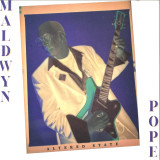
Starting his career with appearances on BBC Radio 1 and signing with Elton Johns label as a teenager, Maldwyn Pope's presence in music has been rich and productive from an early age eventually leading to working with people like Cliff Richards, Art Garfunkel and Bonnie Taylor. However, his presence in Italo-Disco has been quite scarce, but completely on point. "Altered State" is a masterpiece amongst enthusiasts and collectors of dancefloor sleaze and downtempo wellness. Heavy rock influence meets Rimini with this one off experiment from the seasoned multi instrumentalist. Original instrumental remix done by none other than Alessandro Novaga, the entity responsible behind one of Ron Hardy's favorite DJ tools (Faces Drums). B-side features an 11 minute excursion into a completely new altered state of dubby delayed trance, for special cosmic holes only. Re-issued with new full artwork.
- A1: Tina Turner - Let's Stay Together
- A2: Jocelyn Brown – Somebody Else’s Guy
- A3: Gwen Guthrie – Ain’t Nothin’ Goin’ On But The Rent
- A4: Womack & Womack - Teardrops
- A5: Joyce Sims - Come Into My Life
- A6: Princess - Say I’m Your Number One
- A7: Loose Ends - Hangin' On A String (Contemplating)
- A8: Will Downing - A Love Supreme
- B1: Whitney Houston - How Will I Know
- B2: Alexander O'neal – Criticize
- B3: Aretha Franklin - Who's Zoomin' Who?
- B4: Lionel Richie - Dancing On The Ceiling
- B5: Laura Branigan - Self Control
- B6: Imagination - Body Talk
- B7: Hi-Gloss - You’ll Never Know
- C1: Ashford & Simpson – Solid
- C2: Irene Cara - Fame
- C3: Diana Ross - My Old Piano
- C4: Donna Summer - Love Is In Control (Finger On The Trigger)
- C5: Odyssey - Inside Out
- C6: Terri Wells - I'll Be Around
- C7: Daryl Hall & John Oates - I Can't Go For That (No Can Do)
- C8: Fat Larry’s Band - Zoom
- D1: Rufus And Chaka Khan - Ain't Nobody
- D6: Billy Ocean - Caribbean Queen (No More Love On The Run)
- D7: Sister Sledge - Thinking Of You
- D2: Womack & Womack – Love Wars
- D3: Steve Arrington - Feel So Real
- D4: Miami Sound Machine - Dr. Beat
- D5: Jermaine Stewart - We Don't Have To Take Our Clothes Off
NOW Music is proud to present the third in our ongoing series of vinyl compilations, NOW That’s What I Call 80s Dancefloor. Each edition features an essential collection of tracks representing key genres of 1980’s Dance music. This volume, featuring 30 tracks across 2 LPs pressed on flaming yellow and orange vinyl, presents the best from the era of Soul and Disco.
The first LP kicks off with Tina Turner's landmark remake of ‘Let's Stay Together,’ a testament to her timeless vocal prowess. Jocelyn Brown’s ‘Somebody Else’s Guy’, brings a fabulous fusion of Funk and Soul, followed by Gwen Guthrie’s anthem ‘Ain’t Nothin’ Goin’ On But The Rent. Womack & Womack's ‘Teardrops’ blend of captivating lyrics and rhythm, leads into Joyce Sims' ‘Come Into My Life’, before the Stock Aitken Waterman written & produced ‘Say I’m Your Number One’ from Princess. Loose Ends' ‘Hangin' On A String’ offers a smooth, jazz-infused sound, echoed by Will Downing's very first hit, ‘A Love Supreme’, which closes this side.
Side B takes you on a whirlwind trip around the dancefloor with Whitney Houston's ‘How Will I Know,’ showcasing her stellar vocal range. Alexander O'Neal’s ‘Criticize’ and Aretha Franklin's ‘Who's Zoomin' Who?’ bring a blend of irresistible beats. Lionel Richie's ‘Dancing On The Ceiling’ makes you want to move, and Laura Branigan’s ‘Self Control’, alongside Imagination's debut single, ‘Body Talk’, offers a cross of Hi-NRG Disco with a sensual groove. Hi-Gloss's ‘You’ll Never Know’ is a gem of smooth, elegant Soul to finish the first LP.
Side A of LP 2 begins with the iconic duo Ashford & Simpson's ‘Solid,’ a celebration of enduring love. Up next is the #1 Disco anthem ‘Fame’ from Irene Cara, and Diana Ross's ‘My Old Piano’ - showcasing her unique ability to blend Pop with Soul on this Chic-produced classic. Donna Summer's Grammy-nominated single ‘Love Is In Control (Finger On The Trigger)’ fuses Disco with a Funk edge, while Odyssey's ‘Inside Out’ provides a smooth, and melody filled dance. Terri Wells's ‘I'll Be Around’ is a soulful delight, and Hall & Oates' ‘I Can't Go For That (No Can’t Do)’ mixes Rock with Soul, and became a hugely sampled and influencial track. The side ends on a romantic note with Fat Larry’s Band's ‘Zoom’.
The final side opens by showcasing Rufus and Chaka Khan’s ‘Ain’t Nobody,’ a masterpiece of Funk and Soul synergy. Womack & Womack make their second appearance with ‘Love Wars’, followed by Steve Arrington's ‘Feel So Real’ - a true example of the era's crossover with Disco and Soul. Miami Sound Machine's ‘Dr. Beat’ injects Latin-infused Pop rhythms, while Jermaine Stewart's biggest hit ‘We Don't Have To Take Our Clothes Off’ became a global dance-floor smash hit. Billy Ocean's Grammy award winner, ‘Caribbean Queen (No More Love On The Run)’, blends Soul, Disco and Pop, and Sister Sledge's ‘Thinking Of You’ is the perfect closer, uplifting and full of joy.
A Limited edition pressing, and an essential addition to any collection. Perfect for collectors, DJs, and anyone who loves to get down to the greatest dance-floor-fillers of the ‘80s. NOW That’s What I Call 80s Dancefloor: Soul & Disco is released on February 23rd 2024.
- A1: Moon's Milk Or Under An Unquiet Skull (Part One)
- A2: Moon's Milk Or Under An Unquiet Skull (Part Two)
- B1: Bee Stings
- B2: Glowworms/Waveforms
- B3: Summer Substructures
- B4: A Warning From The Sun (For Fritz)
- C1: Regel
- C2: Rosa Decidua
- C3: Switches
- C4: The Auto-Asphyxiating Hierophant
- C5: Amethyst Deceivers
- D1: A White Rainbow
- D2: North
- D3: Magnetic North
- D4: Christmas Is Now Drawing Near * Featuring – Robert Lee, Rose Mcdowall
- E1: Copal
- E2: Bankside
- F1: The Coppice Meat
- F2: Ü Pel (Insense Offering)
Red in Clear Vinyl[57,35 €]
First compiled as a double CD in 2002, Moon's Milk (in Four Phases) is a suite of four EPs that Coil released seasonally via their in-house Eskaton imprint across 1998. The line-up for these sessions were John Balance, Peter "Sleazy" Christopherson, Drew McDowall, and William Breeze. Recorded primarily at their home studio in Chiswick, London on the eve of a permanent relocation to the small seaside town of Weston-Super-Mare, the collection has long loomed as a pivotal and pinnacle work in the group's discography, but has never been officially reissued, or repressed on vinyl. Time has only ripened its tapestry of regal strangeness. Arranged sequentially in tribute to the equinoxes and solstices, Moon's Milk captures Coil at a revelatory crossroads, leaning deeper into improvisation, spontaneity, and sound design. "Moon's Milk or Under an Unquiet Skull" initiates the proceedings on Spring Equinox, a two-part netherworld organ séance woven from vocal drones, cathedral keys, seasick strings, and opiated undertow. From there, Summer Solstice skews lighter but no less incantational, with Balance embracing his voice-as-instrument across lucid dream torch songs ("Bee Stings"), purgatorial spoken word ("Glowworms/Waveforms"), sultry chamber pieces ("Summer Substructures"), and falsetto ravings ("A Warning From The Sun (For Fritz)"). Autumn Equinox exudes more of a pensive and twilit mood, from the Rose McDowall-sung folk ballad "Rosa Decidua" ("I hear your voice sing near to me / I've put away the poisoned chalice (for now) / And lie down amongst the flowerbeds") to hall-of-lords hallucination "The Auto-Asphyxiating Hierophant" to the liminal string-plucked classic "Amethyst Deceivers," featuring excellent alien guitar by Breeze layered with Balance's oft-quoted couplet: "Pay your respects to the vultures / For they are your future." The album's final chapter, Winter Solstice, is its most swooning, remote, and ceremonial. Opener "A White Rainbow" stirs strings, layered choral vocals, and shivering rhythm into an imploding burial hymn. "North" oscillates bleakly, a ghost in the machine murmuring opaque prophecy ("This black dog has no owner / This black dog has no odour"), while "Magnetic North" is its inverse, a guided meditation of gently flickering software and surreal chakra poetics ("Red rose filling the skull / Yellow cube in the lower pelvis / Silver moon crescent below the navel"). The suite fades to grey with a traditional English carol ("Christmas Is Now Drawing Near"), rendered like an executioner's song by Rose McDowall's doomed, beautiful voice. The Dais box set includes the entirety of the rare Moon's Milk Bonus Disc CD-R / 2019 Threshold Archives Copal CD, which includes three collaborations with Thighpaulsandra. This material is as rich and intoxicating as the previous four phases, ranging from electro-acoustic singing bowl rituals ("Copal") to dissonant electronic recitations of visionary Angus MacLise poetry ("The Coppice Meat") to ominous classical melancholia ("Bankside"). Once again, Coil confirm the vastness of their confounding, infinite alchemy, explored and refined across decades of experimentation - both sonic and bodily. From postindustrial to post-everything, theirs is an art untethered, in the wilds of its own design.
Blending sounds of early 70s Funk & Soul, Latin-Jazz, and Afrobeat, Mestizo Beat kicks the year off with a heavy dose of new material. First up is “She’s A Rose b/w Lotsapapa,” their next 45, offering two sides of masterful instrumental soul music written & produced by The Magaña Brothers out of their hillside studio, Spc 166 in Topanga, CA. Side A’s “She’s A Rose” takes us back to the golden years of the Blaxploitation film genre and the soundtracks we have grown to love. This song was inspired by the compositional and orchestral arrangements from the greats, such as Curtis Mayfield’s “Superbad,” Johnnie Pate’s “Shaft in Africa,” and Bobby Womack’s “Across 110 Street.” Featuring Tim Felten of Surefire Soul Ensemble on keys, with horns written and arranged by Jesse Audelo, Mestizo Beat takes the listener on an evolving journey, exploring the mood and cinematic elements of flute, saxophone, and wha’d-out guitar, topped off with a funky drum and percussion break. On the flip, “Lotsapapa” rounds out the B-Side, blending the musical styles of Latin and Nigerian disco-funk into a track that’s perfect for the dancefloor and those late nights out. Written about Bernard “Lotsapapa” Crowe, a notorious drug dealer who survived an attempted murder by Charles Manson, this side is sure to get the body moving with the afro-disco rhythms and chant vocals, dubbed out around a tightly arranged horn section written and arranged by Jesse Audelo and Jason Cressey. “Lotsapapa” features guests Steve Haney from Jungle Fire on Percussion and Cressey of the True Loves on trombone.
With each side highlighting the various talents of the ensemble, Mestizo Beat always stays true to their sound and recording techniques. Both tracks are mixed by Sergio Rios at Killion Sound and are featured on the forthcoming LP, Jaraguá, coming mid-2024.
Albert Hammond is one of the most prolific, versatile songwriters and performers of his or any generation. His earliest solo hits include “It Never Rains in Southern California” and “The Free Electric Band.” His contributions to popular music (writing and and/or contributing to hit songs by Tina Turner, Whitney Houston, Willie Nelson and Julio Iglesias, Diana Ross, Starship, The Hollies, Joe Cocker, Johnny Cash, Aretha Franklin) cross genres and generations. Body of Work is an all-new, original, and essential addition to this iconic canon. Written during a time of tumultuous change, Body of Work is the moment a master songsmith takes a step back to reflect on the world, “This is the first step I had to take and the album is what I discovered about me and all of us once I started here,” says Albert. “I can feel the discomfort and impatience in it. That’s just the honest feeling when the world changes for you from oasis to desert, from beauty to chaos… freedom to fences.” From gutsy opener “Don’t Bother Me Babe” through the wistful “Looking Back” and closing with the reflective “Goodbye LA,” Body of Work is an album for the ages, crafted with 50 years of words, experience, and wisdom.
Released in 1960, Giant Steps was a watershed album for John Coltrane, solidifying the saxophone legend's reputation as one of the most influential and innovative musicians in jazz history, as well as delivering jazz to an increasingly mainstream audience, while garnering significant critical acclaim.
Although this was John Coltrane's debut for Atlantic, he was concurrently performing and recording with Miles Davis. Within the space of less than three weeks, Coltrane would complete his work with Davis and company on another genre-defining disc, Kind of Blue, before commencing his efforts on this one.
Coltrane (tenor sax) is flanked here by essentially two different trios. Recording commenced in early May of 1959 with a pair of sessions that featured Tommy Flanagan (piano) and Art Taylor (drums), as well as Paul Chambers — who was the only bandmember other than Coltrane to have performed on every date. When recording resumed in December of that year, Wynton Kelly (piano) and Jimmy Cobb (drums) were instated — replicating the alternate non-Bill Evans lineup featured on "Freddie the Freeloader" on Kind of Blue, sans Miles Davis of course. At the heart of these recordings, however, is the laser-beam focus of Coltrane's tenor solos.
All seven pieces issued on the original Giant Steps are Coltrane compositions. He was, in essence, beginning to rewrite the jazz canon with material that would be centered on solos — enabling the solo to become infinitely more compelling. This would culminate in a frenetic performance style using melodic phrasing that noted jazz journalist Ira Gitler accurately dubbed "sheets of sound."
The Giant Steps chord progression consists of a distinctive set of chords that create key centers a major third apart. Jazz musicians ever since have used it as a practice piece, its difficult chord changes presenting a "kind of ultimate harmonic challenge", and serving as a gateway into modern jazz improvisation. Several pieces on this album went on to become jazz standards, most prominently "Naima" and "Giant Steps."
The Penguin Guide to Jazz selected this album as part of its suggested "Core Collection" calling it "Trane's first genuinely iconic record." In 2003, the album was ranked No. 102 on Rolling Stone magazine's list of The 500 Greatest Albums of All Time, 103 in a 2012 revised list, and 232 in a 2020 revised list.
Undeniable music perfection deserves definitive sound and top-notch packaging. This reissue was mastered directly from the original master tape by Ryan K. Smith at Sterling Sound and cut at 45 RPM. Pressed on 180-gram vinyl at Quality Record Pressings, and housed in tip-on old style gatefold double pocket jackets with film lamination by Stoughton Printing.
Overall, Giant Steps is not only a critical triumph but also a defining moment in John Coltrane's career. Its innovative compositions, masterful performances, and profound influence on jazz make it an essential entry in Coltrane's discography and a timeless masterpiece in the history of the genre.
DJ and producer Gratts returns to his own imprint with the third instalment of the "Balearic but bumpin'" trilogy. Here, the Belgian puts forward a captivating piece of organic, Body & Soul NY inspired deep house, assisted by Cata Mansikka-aho on vocals. As always, an instrumental is provided for maximum nightclub daydreaming. On the flipside, British duo Faze Action up the energy levels with an equally musical disco version that hits in all the right spots. Artwork once again by Mads Cooke.
Glenn Underground:
"Bad Ass'd Project, The whole thing"
Laurent Garnier:
"Really cool tracks :) Looking forward to hearing more stuff in the future."
Colleen Cosmo Murphy:
"Great release! I like the original best! I will be supporting on the show once I’m back in February."
Groove Armada:
"Sounds great and Faze remix is great too!"
Severino (Horse Meat Disco):
"Great stuff and amazing remix!"
Kevin Reynolds (Transmat):
"I remember this voice! Both tracks are incredible, has this classic Dinosaur L vibe that is super dope!"
Gareth Sommerville (Athens Of The North):
"Love Gratts’ productions - this is no exception. Spiritual for optimists."
Shane Johnson (Fish Go Deep):
"Really enjoying the original mixes here... such a relaxed, musical groove that perfectly suits that lovely, drifting vocal. Looking forward to playing."
- A1: Los Megatones De Lucho - El Tumbaleque
- A2: Sonora Venezuela - Pero En Caracas
- A3: Los Megatones De Lucho - Muñeca
- A4: Al Ramos Y Su Orquesta - El Candidato
- A5: Orquesta Sonoramica - Oye Como Suena
- A6: Microbanda Marabina - Maracaibo
- B1: Principe Y Su Sexteto - Salsa De Guaguancó
- B2: Genaro Y Sus All Stars - Mambo Tema
- B3: Orquesta Universidad - Atado A Un Recuerdo
- B4: Los Kenya - No Salgas De Tu Barrio
- B5: Nelson Y Sus Estrellas - Disparo Goajira
- C1: Los Kenya - Pa' Puerto Rico
- C2: Principe Y Su Sexteto - Analiza
- C3: Supercombo Los Tropicales - Juana Guaguancó
- C4: Los Satélites - El Tostao
- C5: Johnny Sedes Y Su Orquesta - Algo Diferente
- D1: Los Satélites - Fiesta En Venezuela
- D2: Rodrigo Mendoza - Lija
- D3: La Renovación - Mi Redención
- D4: Los Blanco - Corta El Bonche
- D5: Grupo Yakambu - Si Eres Tú
Established in 1948 by César Roldán, Discomoda is one of the earliest record labels of Venezuela and the oldest family operated label in the country. Home to one of the most complete folkloric and popular music catalogues of Venezuela, the label also invested heavily in Afro-Caribbean and tropical rhythms that became popular in the 60s and 70s.
In the 1960s and before the Salsa era truly kicked off, Venezuela had a significant dance orchestra and big band movement. Unlike local record competitors dedicated to selling foreign productions, Discomoda achieved its leading position by recording the most important national bands, including Los Megatones de Lucho, Orquesta Sonoramica and Super Combo Los Tropicales; all featured in this compilation.
Later on, surrounding the festivities for the 400th anniversary of Caracas in 1967, the word "Salsa", which had been recently coined by famed radio host Phidias Danilo Escalona, was formalized to identify an Afro-Caribbean musical style with growing popularity in Venezuela and beyond. By then, the country was among the top 20 music markets in the world, with the local label Discomoda leading the way, responsible for one out of every five records sold in the country.
With the prolonged celebrations approaching due to the 400 years of the city, Discomoda and other labels began to capitalize on this new musical style by betting on both established and new local bands, such as Nelson y sus Estrellas, Los Kenya, Principe y su Sexteto and Los Satélites. As a result, this would kick off what could be considered a golden era of Salsa in Venezuela and which lasted until the mid-70s.
As we approach the 80s and with the emergence of new musical styles and bigger multi-national record labels funded by larger pockets, a lot of the previously popular bands begin to disband or choose to leave the country. Nonetheless, a few artists, like Rodrigo Mendoza, La Renovación and Grupo Yakambu, were still pushing out quality music.
We are thrilled and honored to celebrate one of Venezuela's and, equally, Latin America's most significant record labels, and to share a slice of their enduring influence in advancing Venezuelan-made Salsa music.
...Finally repressed! No more words needed... Classic!
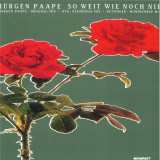
The original version of this gorgeous schlager techno track, released in august 2001 on Kompakt's Total 3, would put a smile on a lot of people's faces. Apart from the reworked original version, you'll get two sensational remixes: The one from Frankfurt's high-aesthete, super hipster, club- and label-owner with a three-letter name: Ata. Since the very beginning, his Playhouse label has always been a guarantee for finest German House music. It's his first (!) remix ever and his first studio work since the legendary first Playhouse release 'Holy Garage' in 1993. The 'Playhouse Mix' turns the original version into a mega-hip, late-night monster and reminds a bit of the great Larry Levan and Metro Area's congenious adaption of early-80s disco music. The 'Robert Johnson' club is going down on its knees. Wonderful. The other remix comes from one of Kompakt's in-house pioneers of pop ambient: it's Olaf Dettinger. Who didn't want to miss this chance and has interrupted his creative pause only for doing this wonderful 'Moonlight Mix'. Dettinger's cosy hi-tech sounds and Sonja Luebke's seraphic voice, both singing a duet to the moon. Very, very beautiful, indeed.
DER SMARTE HIT VON JÜRGEN PAAPE MIT REMIXEN VON PLAYHOUSE'S ATA UND DETTINGER. HERRLICH !
Available on vinyl LP & CD (with extra tracks). Robin Way has been making psychedelic music for decades under the name Oak Acetator. Mostly home recorded, Oak Acetator’s world of sound encompasses an intoxicating mix of psychedelia, punk, space rock and pop, with the emphasis strongly on hallucinogenic psych. ‘Power Trip’ is Robin’s seventh album, his previous six coming out on the hallowed Dig The Fuzz label, though strangely, none of his work appears on Discogs! Robin wrote, produced and played everything on ‘Power Trip’ in his Folkestone attic studio, and it is a work of crazed brilliance. Respected musician and writer Louis Wiggett summed it up succinctly when he said of Power Trip ‘Oh, that bonkers genius from Folkestone, can’t get enough of it. So good, almost sounds like a cosmic Stooges with synths and deadpan humour. Love it!’ And he’s absolutely right. Robin exudes his unique, very British style from the first moment to the last, sounding at times like Johnny Rotten backed by Hawkwind, but with touches of Gong and Krautrock thrown in for good measure, but really just like himself. It’s a total joy to be able to put this deranged masterpiece out on Blue Matter. We adore it, and we hope you will too