. For Fans Of: The Weather Station, Weyes Blood, Adrianne Lenker, Phoebe Bridgers, Joan Shelley, Lana Del Rey, Cass McCombs, Angel Olsen & Neil Young. Camelot, the legendary seat of King Arthur’s court in Early Middle Ages Britain, was probably not a real place. A corruption of the name of a real Romano-Briton city, the word “Camelot” accumulated symbolic, mythic resonances over centuries, until achieving its present usage as a near-synonym of “utopia.” In the mid-20th century alone, Camelot inspired an explosion of representations and appropriations, among them the violent, affectless Arthurian court of Robert Bresson’s 1974 film Lancelot du Lac and the absurdist iteration of Monty Python’s 1975 Holy Grail, both of which feature armoured knights erupting into fountains of blood; the mystical Welsh world of novelist John Cowper Powys’s profoundly weird 1951 novel Porius, with its Roman cults, wizards and witches, and wanton giants; and the nationalist nostalgia of President John F. Kennedy’s White House. Unsurprisingly there are fewer Camelots in more recent memory. Camelot, Canadian songwriter Jennifer Castle’s extraordinary, moving 2024 chronicle of the artist in early middle age, charts a realer, more rooted, and more metaphorical place than the fabled Camelot of the Early Middle Ages (or its myriad depictions), but it too is a space more psychic than physical. In Castle’s Camelot, the fantastic interpenetrates the mundane, and the Grail, if there is one, distills everyday experience into art and art into faith, subliming terrestrial concerns into sublime celestial prayers to Mother Nature, and to the unfolding process of perfecting imperfection in one’s own nature. Co-produced by Jennifer and longtime collaborator Jeff McMurrich, her seventh record is at once her most monumental and unguarded to date, demonstrating a mastery of rendering her verse and melodies alike with crisply poignant economy. For all their pointedly plainspoken lyrical detail and exhilarating full-band musical flourishes, these songs sound inevitable, eternal as morning devotions. “Back in Camelot,” she sings on the lilting, vulnerable title track, “I really learned a lot / circles in the crops and / sky-high geometry.” The album opens with a candid admission of sleeping “in the unfinished basement,” an embarrassing joke that comes true. But the dreamer is redeemed by dreaming, setting sail in her airborne bed above “sirens and desert deities.” If she questions her own agency whether she is “wishing stones were standing” or just “pissing in the wind” it does not diminish the ineffable existential jolt of such signs and wonders. This abiding tension between belief and doubt, magic and pragmatism, self and other, sacred and profane, and even, arguably, paganism and monotheism, suffuses these ten songs, which limn an interior landscape shot through with sunstriped shadows of “multi-felt dimensions” both mystical and quotidian. The epic scale and transport of “Camelot,” with its swooning strings, gives way dramatically to “Some Friends,” an acoustic-guitar-and-vocals meditation in miniature on Janus-faced friends and the lunar and solar temperatures of their promises—“bright and beaming verses” versus hot curses which recalls her minimalist last album, 2020’s achingly intimate Monarch Season. (In a symmetrical sequencing gesture, the penultimate track, the incantatory “Earthsong,” bookends the central six with a similarly spare solo performance and coiled chord progression, this time an ambiguous appeal to … a wounded lover? a wounded saint? our wounded planet?). Those whom “Trust” accuses of treacherous oaths spit through “gilded and golden tooth” cynics, critics, hypocrites, gurus, scientists, doctors, lovers, government, the so-called entertainment industry sow uncertainty that can infect the artist, as in “Louis”: “What’s that dance / and can it be done? What’s that song / and can it be sung?” Answering affirmatively are “Lucky #8,” an irrepressible ode to dancing as a bulwark against the “tidal pools of pain” and the “theory of collapse,” and “Full Moon in Leo,” which finds the narrator dancing around the house with a broom, wearing nothing but her underwear and “big hair.” But the central question remains: who can we trust, and at what cost faith, in art or angels or otherwise? Castle’s confidence in her collaborators is the cornerstone of Camelot. Carl Didur (piano and keys), Evan Cartwright (drums and percussion), and steadfast sideman Mike Smith (bass) comprise a rhythm section of exquisite delicacy and depth. This fundamental trio anchors the airiness of regular backing vocalists Victoria Cheong and Isla Craig and frames the guitars of Castle, McMurrich, and Paul Mortimer (and on “Lucky #8,” special guest Cass McCombs). Reprising his decennial role on Castle’s beloved 2014 Pink City, Owen Pallett arranged the strings for Estonia’s FAMES Skopje Studio Orchestra. On the ravishing country-soul ballad “Blowing Kisses” Pallett’s crowning achievement here, which can be heard in its entirety in the penultimate episode of the third season of FX’s The Bear Jennifer contemplates time and presence, love and prayer and how songwriting and poetry both manifest and limit all four dimensions: “No words to fumble with / I’m not a beggar to language any longer.” Such rare moments of speechlessness “I’m so fucking honoured,” she bluntly proclaims suggest a state “only a god could come up with.” (If Camelot affirms Castle as one of the great song-poets of her generation, she is not immune to the despairing linguistic beggary that plagues all writers.) Camelot evinces a thoroughgoing faith not only in the natural world including human bodies, which can, miraculously, dance and swim and bleed and embrace and birth but also in our interpretations of and interventions in it: the “charts and diagrams” of “Lucky #8,” a daydreamt billboard on Fairfax Ave. in LA in “Full Moon in Leo,” the bloody invocations of the organ-stained “Mary Miracle,” and all manner of water worship, rivers in particular. (Notably, Jennifer has worked as a farmer and a doula.) The album ends with “Fractal Canyon”s repeated, exalted insistence that she’s “not alone here.” But where is here? The word “utopia” itself constitutes a pun, indicating in its ambiguous first syllable both the Greek “eutopia,” or “good-place” the facet most remembered today and “outopia,” or “no-place,” a negative, impossible geography of the mind. Utopia, like its metonym Camelot, is imaginary
Cerca:john paul youn
- A1: Wham! - Young Guns (Go For It!)
- A2: Adam Ant - Goody Two Shoes
- A3: Abc - The Look Of Love - Pt. 1
- A4: Spandau Ballet - Instinction
- A5: Haircut 100 - Love Plus One
- A6: Culture Club - Do You Really Want To Hurt Me
- A7: Duran Duran - Save A Prayer
- B1: Paul Mccartney - Ebony And Ivory
- B2: Elton John - Blue Eyes
- B3: Lionel Richie - Truly
- B4: Marvin Gaye - Sexual Healing
- B5: Bucks Fizz - My Camera Never Lies
- B6: Blondie - Island Of Lost Souls
- B7: Madness - Our House
- B8: Dexys Midnight Runners - Come On Eileen
- C1: Tears For Fears - Mad World
- C2: The Human League - Mirror Man
- C3: Visage - The Damned Don't Cry
- C4: Simple Minds - Promised You A Miracle
- C5: Ultravox - Reap The Wild Wind
- C6: Orchestral Manoeuvres In The Dark - Maid Of Orleans (The Waltz Joan Of Arc)
- C7: Soft Cell - Say Hello, Wave Goodbye
- D1: Survivor - Eye Of The Tiger
- D2: Meat Loaf With Cher - Dead Ringer For Love
- D7: Roxy Music - Avalon
- E1: Abba - The Day Before You Came
- E2: Donna Summer - State Of Independence
- E3: Shalamar - A Night To Remember
- E4: Irene Cara - Fame
- E5: Boys Town Gang - Can’t Take My Eyes Off You
- E6: Rockers Revenge Feat. Donnie Calvin - Walking On Sunshine
- E7: Malcolm Mclaren, The World's Famous Supreme Team - Buffalo Gals
- F1: The Jam - Town Called Malice
- F2: The Clash - Rock The Casbah
- F3: Bow Wow Wow - Go Wild In The Country
- F4: New Order - Temptation
- F5: The Associates - Party Fears Two
- F6: The Stranglers - Golden Brown
- F7: Japan - Ghosts
- F8: Clannad - Theme From Harry's Game
- D3: Pretenders - Back On The Chain Gang
- D4: Steve Miller Band - Abracadabra
- D5: Christopher Cross - Arthur's Theme (Best That You Can Do)
- D6: Foreigner - Waiting For A Girl Like You
NOW Music is proud to present the newest addition to the ‘Yearbook’ series: NOW – YEARBOOK 1982. 3 LPs of 44 defining tracks that ruled the charts in 1982.
Featuring number 1s, including ‘Eye Of The Tiger’ (Survivor), ‘Ebony And Ivory’ (Paul McCartney), ‘Town Called Malice’ (The Jam), and 1982’s biggest seller ‘Come On Eileen’ from Dexys Midnight Runners.
1982 saw the first huge hits from a wealth of new artists including Culture Club, Wham! and Tears For Fears, as well as an incredible line-up from artists who had established their chart presence in the prior 18 months and would produce some of the greatest tracks of the decade; Duran Duran, Spandau Ballet, ABC, Haircut 100, Soft Cell, The Human League, and a newly solo Adam Ant.
‘Fame’ was the TV phenomenon of the year, and Irene Cara’s theme from the original 1980 film enjoyed massive success.
As ABBA released their last singles for nearly 40 years, pure-pop from Bucks Fizz, Blondie, and Madness is celebrated alongside synth-pop gems from New Order, Simple Minds, Visage and Japan.
Leading artists from the punk scene enjoyed continued and renewed success, including The Stranglers, The Clash and Pretenders, whilst Foreigner, Meat Loaf with Cher, and Steve Miller Band provided radio-favourite rock and power ballads.
1982 saw a huge chart presence for dance music – from the hi-NRG of Boys Town Gang, to the electro-infused beats of Malcolm McLaren, and Rockers Revenge, the 1980’s disco of Shalamar, alongside soul classics from Marvin Gaye and Donna Summer… plus stellar ballads from Elton John, Lionel Richie, and Roxy Music.
- A1: Fun 'N' Frenzy
- A2: Revelation
- A3: Crazy To Exist
- A4: It's Kinda Funny
- A5: The Angle
- B1: Forever Drone
- B1: Heart Of Song
- B2: 16 Years
- B4: Citizens
- B5: Sorry For Laughing
- C1: Radio Drill Time
- C2: Romance
- C3: Chance Meeting
- C4: Pictures
- C5: Final Request
- D1: The Missionary
- D2: Heaven Sent
- D3: Heart Of Song
- D4: Applebush
Rarely has there been a better album opener than Fun n' Frenzy, a shimmering yet abrasive mix of Subway Sect dustbin lid guitar, No Wave twitchiness, a hint of psychedelia and a crooning vocalist intoning poetic, abstract lyrics that conveyed existential menace. Continuing with Revelation, Crazy to Exist and single tracks like Sorry for Laughing, The Only Fun In Town was an extraordinary achievement - eclipsed by the groups split. It remains an early 80s high point. Those who haven't heard it should; those who have might tempted by this latest upgrade, which features remastered sound and different extras'. Josef K 'The Only Fun In Town' (Jon Savage - Mojo 2014)
Crepuscule presents a new limited coloured vinyl edition of The Only Fun In Town, the influential debut album by iconic Scottish guitar group Josef K, originally released on Postcard Records in July 1981.
500 copies only of TWI 052 have been pressed for release in 2019, with Disc 1 on black vinyl and Disc 2 on gold vinyl, matching the iconic sleeve artwork by Krysia Klasicki.
Speedily recorded in a small studio in Brussels, The Only Fun In Town was a defiantly abrasive, serrated long-player in the mould of the second Velvets album, Josef K having already shelved a more conventional recording. Sharp-edged pop singles abound - It's Kinda Funny, Sorry for Laughing, Revelation - along with rattling Haig/Ross twin guitar classics such as Fun 'n' Frenzy, Heart of Song, Forever Drone and The Angle.
The Only Fun In Town topped the independent charts on release and remains a canonical post-punk album. This remaster arrives housed in a handsome gatefold sleeve, and by way of bonus tracks also features several Postcard single A and B sides including Radio Drill Time and Chance Meeting. Side 4 features all four tracks from JoKay's celebrated John Peel Session in June 1981, including Heaven Sent and The Missionary.
'Josef K were The Sound of Young Scotland, together with Orange Juice ' (Paul Morley)
Black[28,78 €]
Still just 19-years-old, Toby Lee is already a three-time winner of Young Blues Artist of the Year at the UK Blues Awards - yet the virtuoso guitarist is only getting started. Praised as a remarkable talent by the likes of Jools Holland and Joe Bonamassa, 2024 represents a big breakthrough year as Toby releases his first album of all-original material ‘House On Fire’ on October 4th via 100% Records. As you’d expect from someone that The Times hailed as, “One of the best guitarists in Britain,” his six-string talents dazzle throughout with a rich tapestry of scorching leads, evocative melodies and swaggering grooves. Yet his vocals have come on leaps-and-bounds, his maturity and emotional expression providing a voice strong enough to front a band regardless of his guitar skills. His songs and stylistic scope have expanded too, with a set that moves seemingly effortlessly between classic blues jams, punchy hard rock, intimate acoustic moments and a modernist approach to classic soul and Stax-style R&B. It’s all played with a winning combination of youthful abandon and undeniable accomplishment. Toby Lee’s talents have been recognised by an array of legends. When he was 10, a get well soon video that he made for BB King went viral, leading to an invitation from the blues legend’s family to play at his club in Memphis, while the late Bernie Marsden was an early mentor and champion. He subsequently shared the stage with the likes of Buddy Guy, Joe Bonamassa, Slash, Billy Gibbons and Peter Frampton, while enjoying other high profile moments, such as starring in a West End production of ‘School of Rock’, performing with McFly on ‘Tonight at the London Palladium’ and featuring in ‘The Ellen DeGeneres Show’. Toby has now exceeded 500 million views on social media. His ability has been recognised with numerous endorsements. He has been a Gibson artist since the age of 10, and a recent highlight came when he helped launch Gibson’s custom Jeff Beck ‘YardBurst’ 1959 Les Paul Standard alongside fellow guests including Jimmy Page, Johnny Depp and Graham Coxon. Blackstar Amplification issued his own signature amp, the St James Toby Lee 50 6L6 head and cab, and he is also endorsed by D’Addario Strings.
Blue[28,99 €]
Still just 19-years-old, Toby Lee is already a three-time winner of Young Blues Artist of the Year at the UK Blues Awards - yet the virtuoso guitarist is only getting started. Praised as a remarkable talent by the likes of Jools Holland and Joe Bonamassa, 2024 represents a big breakthrough year as Toby releases his first album of all-original material ‘House On Fire’ on October 4th via 100% Records. As you’d expect from someone that The Times hailed as, “One of the best guitarists in Britain,” his six-string talents dazzle throughout with a rich tapestry of scorching leads, evocative melodies and swaggering grooves. Yet his vocals have come on leaps-and-bounds, his maturity and emotional expression providing a voice strong enough to front a band regardless of his guitar skills. His songs and stylistic scope have expanded too, with a set that moves seemingly effortlessly between classic blues jams, punchy hard rock, intimate acoustic moments and a modernist approach to classic soul and Stax-style R&B. It’s all played with a winning combination of youthful abandon and undeniable accomplishment. Toby Lee’s talents have been recognised by an array of legends. When he was 10, a get well soon video that he made for BB King went viral, leading to an invitation from the blues legend’s family to play at his club in Memphis, while the late Bernie Marsden was an early mentor and champion. He subsequently shared the stage with the likes of Buddy Guy, Joe Bonamassa, Slash, Billy Gibbons and Peter Frampton, while enjoying other high profile moments, such as starring in a West End production of ‘School of Rock’, performing with McFly on ‘Tonight at the London Palladium’ and featuring in ‘The Ellen DeGeneres Show’. Toby has now exceeded 500 million views on social media. His ability has been recognised with numerous endorsements. He has been a Gibson artist since the age of 10, and a recent highlight came when he helped launch Gibson’s custom Jeff Beck ‘YardBurst’ 1959 Les Paul Standard alongside fellow guests including Jimmy Page, Johnny Depp and Graham Coxon. Blackstar Amplification issued his own signature amp, the St James Toby Lee 50 6L6 head and cab, and he is also endorsed by D’Addario Strings.
On Chastity’s upcoming, self-titled fourth record, Williams decided to write a fully non-fiction work. Out Friday, September 13 2024 on Deathwish (US), Dine Alone (Canada), and Big Scary Monsters (UK/E) ‘Chastity’ is a 13-track record about the things that have always run through the band’s records—struggle, death, despair, redemption, darkness, and light—but this time, the songs ascend to new depths of intensity and desperation, new heights of resolution and power. “It’s really about the first nosedive that I did as a young person,” says Williams. “It’s a record about struggle, about the missing years. It’s also a thank you to some people in my life.” The record hurtles through melodic hardcore, shoegaze, and emo, all magnificently and enormously rendered thanks to slick work from John Paul Peters (Propagandhi, Comeback Kid), who engineered and mixed the record. Chastity’s first three full-length records—2018’s Death Lust, 2019’s Home Made Satan, and 2022’s Suffer Summer—formed a trilogy that defined a 4-year arc of the band’s contribution to outsider music. Each record was informed by Williams’ life, but each was also conceptual and interpretive, refracting his experiences through a level of remove. On the self-titled record there’s a beautiful and affirming ending to it’s closer, centered on the band’s first and enduring idea: life is less shitty if we live it together.
Dark Entries and Honey Soundsystem Records have teamed up once more to release the final volume of gay porn soundtracks by San Francisco-based musician and producer, Patrick Cowley. One of the most revolutionary and influential figures in the canon of disco, Cowley created his own brand of Hi-NRG dance music, The San Francisco Sound.' Born in Buffalo, NY on October 19, 1950, Patrick moved to San Francisco in 1971 to study at the City College of San Francisco. He founded the Electronic Music Lab at the school, where he would make experimental soundtracks by blending various types of music and adapting them to the synthesizer.
By the mid-70's, Patrick's synthesis techniques landed him a job composing and producing songs for disco superstar Sylvester, including hits like You Make Me Feel (Mighty Real)', Dance Disco Heat' and Stars.' This helped Patrick obtain more work as a remixer and producer. His 18-minute long remix of Donna Summer's I Feel Love' and his production work with edgy New Wave band Indoor Life were both of particular note. By 1981, Patrick had released a string of dance 12 singles, like Menergy' and Megatron Man'. He also had founded Megatone Records, the label upon which he released his debut album, Menergy'. Around this time Patrick was hospitalized and diagnosed with an unknown illness: that which would later be called AIDS. Throughout 1982, he recorded two more Hi-NRG hits, Do You Wanna Funk' for Sylvester, and Right On Target' for Paul Parker, as well as a second solo album Mind Warp'. On November 12, 1982, he passed away.
In 1979 Patrick was contacted by John Coletti, owner of famed gay porn company Fox Studio in Los Angeles. Patrick jumped on this offer and sent reels of his college compositions from the 70s to John in LA. Coletti then used a variable speed oscillator to adjust the pitch and speed of Patrick's songs in-sync with the film scenes. The result was the VHS collections Muscle Up' and School Daze' released in 1979 and 1980. Afternooners' is the third collection of Cowley's instrumental songs, recorded in May 1982. These recordings were culled from two 23-minute reels in the Fox Studio vaults. All songs were originally untitled, so we've used the titles from Fox Studio's 8mm film loops. This compilation also includes three bonus tracks found in the archives of fellow Megatone Records recording artist Paul Parker and the attic of teenage friend Lily Bartels. Influenced by Tomita, Wendy Carlos, and Giorgio Moroder, Patrick crafted a singular sound from his collection of synthesizers, percussion, modified guitars, and hand-built equipment. The listener enters a world of forbidden vices, evocative of Patrick's time spent in the bathhouses of San Francisco. The songs on Afternooners' reflect the advances of the equipment available at the onset of the 1980s. Cowley's unadulterated electronic forms are stripped down and dubbed up. Lush electronic percussion, soaring synthesizer riffs and low slung funk grooves comingle on these magnificent soundscapes.
Featuring 70 minutes of music never before released on vinyl. All songs have been remastered by George Horn at Fantasy Studios in Berkeley, CA. The vinyl is housed in a gatefold jacket designed by Berlin-based artist Gwenael Rattke, featuring black and white photos of Patrick in his studio that opens to a full color array of x-rated scenes from the Fox Studio vaults. Included is a fold-out poster featuring a handmade collage using photography and xeroxed graphics of classic gay porn imagery and an essay from Drew Daniel of Matmos. For Patrick's 67th birthday, Dark Entries and Honey Soundsystem Records present a glimpse into the futuristic world of a young genius. These recordings shed a new light on the experimental side of a disco legend who was taken too soon.
2024 Repress
180 Gram, Tip On Sleeve RSD version of this classic. One of the rarer records of the mythical Strata East albums is finally reissued for the first time on Heavenly Sweetness!
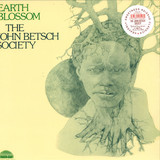
The recording of Earth Blossom, the John Betsch Societys one and only album, seems something of an enigma nowadays. For even though Nashville is clearly one of the towns in the US with the highest number of recording studios, who would have thought that the capital of country music would give birth to one of the forgotten masterpieces of 1970s spiritual jazz. The path leading to the album starts in 1963 when John Betsch, originally from Jacksonville in Florida, arrives in Nashville to study at Frisk University. He is a young drummer and joins Bob Holmes trio. Holmes is one of the towns major jazz organists and pianists; he becomes Betschs mentor and, over the space of two years, John will play alternately with him and with the trumpeter Louis Smiths group. However, in 1965, John leaves town to go to the prestigious Berkeley University in Boston and do a two-year course along with his fellow debutants with names like John Abercrombie, Ernie Watts and Alan Broadbent. Two years later, he is invited by a pianist friend, Billy Chilf, to join the legendary singer/songwriter Tim Hardins group. Just after Woodstock, John Betsch and Tim record a psychedelic album Columbia will never release together with the members of the future group Oregon: Colin Walcott, Glen Moore, Paul McCandles and his friend Billy Chilf. But he soon leaves this group to return to Nashville where he hooks up again with his friend Bob Holmes. Two years later, he is accepted on Archie Shepp and Max Roachs famous course at the University of Massachusetts Amherst (UMASS) and for the next four years he participates in this collective of intellectuals and musicians under the aegis of the two masters.
During this period he returns to Nashville to form his Society whose music is obviously influenced by the Afrocentric ideas of the UMASS student and political movement. However, the album, recorded in one day and in one take, also bears the hallmark of their generations psychedelic experiences, and in the themes and playing of the musicians we can hear a less violent form of music than the radical free jazz of New York or Chicago. Nature and environmental themes are the inspiration behind tracks touched by the spirit of Coltrane but also of Flower Power.
After Amherst, John Betsch joins Marion Browns group in 1976, leaves Tennessee for good and makes his home in New York over the next ten years or so. He plays and records with Dollar Brand, Kalaparusha Maurice McIntyre and many others, before heading off to France. He has lived in Paris for the last twenty years and played in Steve Lacy, Mal Waldron and Archie Shepp bands, as well as forming groups of his own. He now lives in Paris and plays with many musicians/bands.
- A1: Freddie Mercury - Living On My Own
- A2: Pet Shop Boys - Can You Forgive Her?
- A3: New Order - Regret
- A4: Rem - The Sidewinder Sleeps Tonite
- A5: Duran Duran - Come Undone
- A6: Annie Lennox - Love Song For A Vampire (From Bram Stoker's Dracula)
- A7: Lisa Stansfield - Someday (I'm Coming Back)
- B1: Take That - Pray
- B2: Ace Of Base - All That She Wants
- B3: Shaggy - Oh Carolina
- B4: U0 - (I Can't Help) Falling In Love With You
- B5: Deborah Harry - I Can See Clearly
- B6: Orchestral Manoeuvres In The Dark - Stand Above Me
- B7: Tears For Fears - Break It Down Again
- B8: A Ha - Dark Is The Night For All
- C1: Meat Loaf - I'd Do Anything For Love (But I Won't Do That)
- C2: Lenny Kravitz - Are You Gonna Go My Way
- C3: Spin Doctors - Two Princes
- C4: Billy Joel - The River Of Dreams
- C5: 4 Non Blondes - What's Up?
- C6: Tina Turner - I Don't Wanna Fight
- C7: Sting - Fields Of Gold
- D1: Radiohead - Creep
- D2: Suede - So Young
- D7: Paul Weller - Wild Wood
- D8: Paul Mccartney - Hope Of Deliverance
- E1: Whitney Houston - I'm Every Woman
- E2: Snap - Exterminate (Endzeit 7)" (Feat Niki Harris)
- E3: Arrested Development - Mr Wendal
- E4: Swv - Right Here
- E5: Eternal - Stay
- E6: Gabrielle - Dreams
- E7: Dina Carroll - Don't Be A Stranger
- F1: Duran Duran - Ordinary World
- F2: Pet Shop Boys - Go West
- F3: Robin S - Show Me Love
- F4: M People - Moving On Up
- F5: Take That - Relight My Fire (Feat Lulu)
- F6: West End - The Love I Love (Feat Sybil)
- F7: Elton John & Kiki Dee - True Love
- D3: Manic Street Preachers - From Despair To Where
- D4: Leftfield - Open Up
- D5: Jamiroquai - Too Young To Die
- D6: The Cranberries - Linger
In the late 90s, the bands that Mike Badger had been part of vanished in the rear-view mirror. The La’s and The Onset were no more. With a young family and his tin-can sculptures emerging as his primary source of income, the evenings in Allerton (south Liverpool) found him quietly strumming his acoustic guitar, careful not to disturb the sleeping children. Weekends often led to the Penny Lane Wine Bar and later to Henry Epstein’s residence, a haven for revelry after closing time. A place where acoustic guitars adorned the walls, and impromptu musical sessions unfolded. In the midnight hours at Henry Epstein’s house, Paul Hemmings conceived the idea of compiling an album featuring Mike’s new tunes, which seemed to carry a basic “pastoral” theme reflective of settled domestic life. Demos were recorded on a porta-studio, and the album, initially titled “Naked and Beyond,” was crafted with starkness and simplicity, adorned with selected embellishments contributed by associates who shared drinks and stages. Recording took place at “The Lab” studio just north of the city, utilizing a Teac 24 Track machine and the warmth of analogue recording. The studio featured an old Italian “Eko” acoustic guitar, a classical guitar, Louis Johnson’s cello arrangements, and Tommy Scott’s backing vocals. Once the core of the album was laid down, the journey continued to Anglesey, to Henry Priestman’s “Gossamer Dome” Studio, where a baby grand piano, Farfisa organ, and “Parrot” accordion were added to enrich the songs with colors, harmonies, and magic, all against the backdrop of a sea view. The front cover of the album was adorned with an objet d’art created from a spiraled frying implement, part of Mike Badger’s “Lost and Found” exhibition. As the need to release the album arose, Mike Badger and his collaborators established their own label, “Viper,” and secured a distributor. The album, titled “Volume,” reflected its creation – from its initial sound considerations to the organic body of work composed in recent years. The recording process, though thorough, embraced imperfections, as Mike Badger believed that completeness emerged from these flaws, giving the performance its distinct character. The spirit of the performance took precedence over perfection, resulting in a product that felt genuine, unfettered, and honest – created simply because it was meant to be made. Now the album turns 25 it is released on vinyl for the first time via Nine X Nine Records.
Viele von uns werden sich täglich daran erinnern müssen, dass es nicht mehr 1967 ist. "We All Belong" von DR. DOG ist eines dieser Meisterwerke, dass eine Standleitung zu der Quelle hat, an der sich seinerzeit auch Brian Wilson, Neil Young, Robbie Robertson, John Lennon und Paul McCartney gütlich taten, um so erfrischt einige der besten Songs der Geschichte zu schreiben. DR. DOG haben damit einen Klassiker geschaffen, der nicht nur absolut zeitlos, sondern reich an Seele, voll von purem Rock'n'Roll und manchmal auf so unheimliche Weise vertraut ist, dass man sich sofort zu Hause fühlt - trotzdem jedoch bleibt der Sound auf ,We All Belong" einzigartig. Die Produktion steht ebenso in der Schuld von George "The 5th BEATLE" Martin wie auch Jeff Mangum (NEUTRAL MILK HOTEL). Die Songs, die da regelrecht aus der Feder und den Instrumenten von DR. DOG fließen, sind auf der einen Seite eine große Hommage an die Brillanz vergangener Zeiten und auf der anderen Seite der Weckruf einer Generation, der vom müden Indie ihrer Zeit ganz schläfrig zumute ist. An den Trompeten des Weckrufs: DR. DOG, deren Appeal durchaus noch weitere 40 Jahre bestehen könnte.
- A1: The Piper
- A2: Into The Sea
- A3: Big Brass Buttons
- A4: Super Lekker Stoned (Richard Fearless Mix)
- A5: Saturns Pattern (Straightface / Young Fathers Remix)
- A6: Let Me In (Demo)
- B1: I Spy
- B2: Oranges And Rosewater
- B3: Praise If You Wanna
- B4: Mother Ethiopia Pt 1
- B5: We Got A Lot
- B6: I’ll Think Of Something
- C1: Devotion
- C2: Sun Goes
- C3: Alone
- C4: Lay Down Your Weary Burden
- C5: The Olde Original
- C6: Pure Sound
- D1: Landslide
- D2: Dusk Til Dawn
- D3: The Ballad Of Jimmy Mccabe
- D4: Rip The Pages Up (Vocal Version)
- D5: How Sweet It Is (To Be Loved By You)
- D6: Golden Leaves
- E3: I Work In The Clouds
- E4: Portal To The Past
- E5: Hopper (White Label Remix)
- F1: Cosmic Fringes (Pet Shop Boys Triad Mix)
- F2: Alpha
- E1: Birthday
- E2: Serafina
Handpicked by Paul himself, Will of The People is a carefully curated collection of 31 tracks from Weller’s extensive cornucopia of tunes that never quite made it to one of his 9 studio albums since 2002. Here is a collection which reminds us that there has always been a parallel narrative to the main recorded output of Paul’s albums and singles. The B-Side, and the remix, is a space in which to explore, experiment, or to flex a different set of artistic muscles.
The story begins back in the autumn of 2003, when the Fly On The Wall 3LP & 3CD collection brought together a wealth of Paul Weller solo recordings that stretched back to 1991. The B-sides, 12” EP tracks, single remixes and ‘live’ recordings featured all had one thing in common, namely that they hadn’t been included on any of his hugely successful solo albums. Furthermore, in many instances, they’d become highly sought after in their original formats and were fetching significant sums from fans and collectors. Will Of The People follows up Fly On The Wall and takes the listener through a similar mix of rarities, this time spanning the period 2002 to 2021.
From covers to eclectic remixes, Will Of The People delivers a scintillating array of songs which skirt across many genres. Here you will find such gems as Paul’s cover of The Beatle’s “Birthday”, released to celebrate Macca’s 70th, and the sparkling disco-ball banger remix of Cosmic Fringes by none other than the Pet Shop Boys. It also includes Paul’s first foray into film soundtracks with the sublime “Ballad Of Jimmy McCabe” from the film Jawbone. Scattered across the tracks are appearances from the likes of Primal Scream, Simon Tong & Graham Coxon.
Will Of The People is released on triple vinyl and 3CD. The album features sleeve notes written by writer and broadcaster John Wilson.
How do you follow up a work described in the Independent on Sunday as “the best debut album since Marquee Moon”? That’s the question facing singer-songwriter John Canning Yates, twenty years on from the critically acclaimed ‘The First Album’ by his band Ella Guru.
‘The Quiet Portraits’ will appeal to anyone who loves the beautiful melodic soundscapes woven by Brian Wilson, Burt Bacharach, and Tom Waits, while Yates’s unique vocals evoke the emotional fragility and compelling narrative of Neil Young, Paul Buchanan, Mark Linkous and Elliott Smith.
Mastered by Jason Mitchell (PJ Harvey, Robert Forster), and featuring guest contributions from pedal steel maestro BJ Cole and friend and multi-instrumentalist Andy Frizell (Kevin Ayers, Wizards of Twiddly), those dedicated followers of Ella Guru who stayed the path will find their patience very well rewarded. ‘The Quiet Portraits’ is a remarkable achievement from an unassuming, yet hugely talented artist.
It’s a welcome relief amid the rapidly changing musical landscape to find that all that has changed in John’s world is the number of musicians around him. The beautiful storytelling, the art of finding those magical musical moments that will remain with you for years to come: all of that has survived the passing of time intact.
Happiest with headphones on, working alone in the small hours from his Liverpool home, Yates has created another masterpiece.
He explains: “In the wee small hours, with loved ones safely asleep and the busy day done, there comes a hush. Within it, you can breathe and listen. Listen for the infinite possibilities. From those possibilities emerged these portraits. I have sought to find those precious moments: of love and peace in turbulent times, of truth and hope for calmer days ahead. I hope you find them too.”
Entitled ‘The Quiet Portraits,’ the new solo album from John Canning Yates tells tales of people and places, of time, family, history, belonging, forgetting and remembering.
Les Disques du Crepuscule presents a unique anthology by artful Brussels postpunk-funk band Marine, fondly remembered for their dazzling debut single ‘Life In Reverse’ in 1981, and now back with a clutch of brand new studio tracks.
The cover art is by LDDC art director Benoit Hennebert and based on the ‘Same Beat’ single sleeve from 1982. The vinyl edition s of TWI 143 is limited to 500 copies pressed on blue vinyl and includes a digital link. All tracks are newly remastered in 2023.
Formed in late 1980 around charismatic frontman Marc Desmare together with musicians from infamous punk band Mad Virgins, Marine made an early splash supporting Orange Juice and Josef K at the legendary Plan K venue, Postcard Records afterwards keeping tabs on the Sound of Young Brussels.
Snapped up instead by chic boutique label Les Disques du Crepuscule, Marine released their infectious debut single ‘Life In Reverse’ in April 1981, attracting rave reviews in the Belgian and UK press, reaching the giddy heights of #6 on the NME indie chart, and even being invited to record a radio session for John Peel - a world first for a Belgian band.
Soon favourable comparisons were being drawn with The Pop Group, A Certain Ratio, Defunkt, James White and Fire Engines, some pundits even sensing a new Haircut 100. ‘We’re not a fashion band,’ insisted Marc in UK rock weekly Sounds, ‘and it’s not really dance music. But all the same I’m glad people dance to it.’
Alas, artistic differences caused the fast-rising group to part ways in a London studio, when half the band quit to form pop-funk sophisticates Allez Allez. With new Marines on board, Marc and bassist Paul Delnoy went on to release two further singles (‘How to Keep Cool’ and ‘Same Beat’), gigged extensively around France and the Low Countries, and played a headline show at The Venue in London. ‘Fine, disciplined and gleeful rhythm workers,’ enthused Chris Bohn in NME. ‘A happy, contagiously clean aural equivalent to a Serge Clerc cartoon.’
Alas by the summer of 1982 Marine were all washed up, with Marc going on direct films and documentaries as Marco Laguna. Four decades later, finally heeding desperate pleas from Crepuscule that his sensational first band never cut an album, Marc has written and recorded another 6 remarkably authentic sounding Marine songs with help from like-minded friends in Brussels and Paris, once more drawing on a heady mix of supercool funkabilly, jazz and soundtrack influences.
‘It was an incredibly strange experience to revisit my past,’ says Marc, ‘but definitely fun. I’m glad, and I’m proud!’
REMO DRIVE, the longstanding project of brothers Erik and Stephen Paulson, want you to feel something. Following a six-year run of pristine emo-influenced rock "n" roll records comes Mercy, the band"s fourth album and third for Epitaph. It"s the band"s most lyric-focused offering to date, a record about reinvention, trusting yourself, and wearing your heart on your sleeve even when it"s painful or vulnerable. Sonically, Mercy is also a major departure for REMO DRIVE. It"s less indebted to the emo and pop punk that foregrounded the duo"s career and instead invested in thorny, baroque indie pop byway of Father John Misty and Fleet Foxes. It was produced by Phil Ek, a legendary Seattle-based indie rock producer who has previously worked with those two bands as well as the Shins and Band of Horses, among others. REMO DRIVE worked with Ek over the course of ten days. "It was refreshing to work with Phil," says Erik, "It made music feel like how it did when we were younger. He was like fuck it, let"s go, let"s have fun." Mercy is a study in intimacy, in being real with yourself, in entering an exciting new creative chapter where you are making the art you really want to make. That"s where REMO DRIVE is today.
- A1: George Michael - "Praying For Time" (4 34)
- A2: Elton John - "Sacrifice" (4 55)
- A3: The B-52'S - "Love Shack" (4 13)
- A4: Belinda Carlisle - "(We Want) The Same Thing" (4 09)
- A5: Kylie Minogue - "Better The Devil You Know" (3 45)
- A6: Kim Appleby - "Don't Worry" (3 25)
- A7: Roxette - "It Must Be Love" (4 10)
- B1: The Klf - "What Time Is Love" (Live) (3 47)
- B2: New Order - "World In Motion" (4 21)
- B3: Duran Duran - "Violence Of Summer (Love's Taking Over)" (3 23)
- B4: Halo James - "Could Have Told You So" (3 38)
- B5: Julee Cruise - "Falling" (4 02)
- B6: Chris Isaak - "Wicked Game" (4 41)
- B7: Pet Shop Boys - "Being Boring" (4 43)
- C1: Deee-Lite - "Groove Is In The Heart" (3 50)
- C2: Snap! - "The Power" (3 44)
- C3: Whitney Houston - "I'm Your Baby Tonight" (4 04)
- C4: Dusty Springfield - "Reputation" (4 08)
- C5: Go West - "The King Of Wishful Thinking" (3 52)
- C6: Paul Simon - "The Obvious Child" (3 59)
- C7: Sting - "Englishman In New York" (The Ben Liebrand Mix) (4 22)
- D1: Adamaski & Seal - "Killer" (3 41)
- D2: Bass-O-Matic - "Fascinating Rhythm" (4 01)
- D3: Happy Mondays - "Step On" (4 14)
- E4: Lonnie Gordon - "Happenin' All Over Again" (Hip Hop Radio Mix) (3 15)
- E5: Adventures Of Stevie V - "Dirty Cash (Money Talks)" (3 51)
- E6: Blue Pearl - "Naked In The Rain" (3 46)
- E7: Dna & Suzanne Vega - "Tom's Diner" (3 41)
- E8: Vanilla Ice - "Ice Ice Baby" (3 36)
- F1: Sinead O'connor - "Nothing Compares 2 U" (4 54)
- F2: Jon Bon Jovi - "Blaze Of Glory" (5 24)
- F3: Tina Turner - "Steamy Windows" (3 53)
- F4: Alannah Myles - "Black Velvet" (3 54)
- F5: Cher - "Just Like Jesse James" (3 58)
- F6: Maria Mckee - "Show Me Heaven" (3 43)
- F7: Deacon Blue - "I'll Never Fall In Love Again" (2 42)
- D4: The Stone Roses - "One Love" (3 22)
- D5: The Charlatans - "The Only One I Know" (3 53)
- D6: Candy Flip - "Strawberry Fields Forever" (4 04)
- D7: They Might Be Giants - "Birdhouse In Your Soul" (3 13)
- D8: The Beautiful South - "A Little Time" (2 51)
- E1: Pet Shop Boys - "So Hard" (3 56)
- E2: Jimmy Somerville - "You Make Me Feel (Mighty Real)" (3 48)
- E3: Kylie Minogue - "Step Back In Time" (3 00)
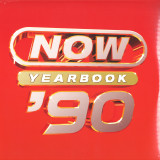
NOW Music is proud to present the next instalment in our ongoing ‘Yearbook’ series – and the second to celebrate the ‘90s, NOW – Yearbook 1990; 79 tracks from a fantastic year in Pop! Available on 4CD deluxe book format with 79 tracks , 4CD std digi with 79 tracks and 44 tracks from a fantastic year in Pop, pressed on gorgeous translucent triple orange vinyl. Disc One includes #1s from New Order, New Kids On The Block, Steve Miller Band, and The Beautiful South, as well as Pop smashes from The KLF, The B-52’s, Kylie Minogue, Whitney Houston Kim Appleby, and concluding with the theme from Twin Peaks, Julee Cruise’s ‘Falling’, Chris Isaak with ‘Wicked Game’ and Pet Shop Boys defining ‘Being Boring’. Dance floor-fillers kick off Disc 2 from Deee-Lite with ‘Groove Is In The Heart’, #1s from SNAP!, and from Adamski & Seal plus club classics from Bass-O-Matic and Adventures Of Stevie V with ‘Dirty Cash (Money Talks)’, plus the unexpected collaboration between DNA & Suzanne Vega. Disc 3 opens with the still-breathtaking interpretation of Prince’s ‘Nothing Compares 2 U’ from Sinéad O'Connor. Up next are film related hits; Maria McKee’s ‘Show Me Heaven’, from the ‘Days Of Thunder’ soundtrack, and the ‘Young Guns II’ track ‘Blaze Of Glory’ from Jon Bon Jovi
An autumnal treasure, East Village’s Drop Out has spent the past thirty years finding new ears to bewitch and new hearts to melt. The only album from this British four-piece, recorded and released in the early nineties, it’s long been considered one of the hidden jewels of its time, and is talked of with hushed reverence by people who know. Bob Stanley of Saint Etienne once called it “an elegy for a particular brand of eighties guitar music, sweet minor chords and Dylanesque lyrics”, which captures what makes it so special; in summarising its era, though, it also effortlessly transcends it.
Like all great guitar gangs, East Village fell together as a four-piece; having relocated from High Wycombe to London in mid ‘80s, brothers Martin and Paul Kelly on bass and guitar, set on forming a group together, were joined by John Wood (guitar) and Spencer Smith (drums). Wood and the Kellys shared writing and vocal duties; it was an ideal combination, and one of the many charms of East Village is their various song writing voices, a tip of the hat, seemingly, to the 60s folk-rock groups who influenced them.
Originally influenced by garage-rock and freakbeat, the band eventually came through via the same scene as groups like Felt, The Go-Betweens, The Weather Prophets, and Primal Scream. They’d formed as Episode Four, releasing an EP, Strike Up Matches, in 1986, which has gone on to become one of most sought after releases of the C86 era. Their first two singles as East Village, ‘Cubans In The Bluefields’ (1987) and ‘Back Between Places’ (1988), were released on Jeff Barrett’s Sub Aqua label.
When it came time to record Drop Out, East Village found a supporter in Bob Stanley, who bankrolled the album sessions until Barrett re-signed the band to his new imprint Heavenly Recordings in 1990. The album that took shape is dusky, heartfelt, lamplit, full of chiming minor chords, close harmonies, rattling organs, all buoyed by a rhythm section that moves as one, steady and elegant. There’s melancholy here, certainly, on songs like ‘What Kind Of Friend Is This’, but also pleasure and freedom, on ‘When I Wake Tomorrow’ and ‘Silver Train’. The group were obsessed with Dylan’s Eat The Document at the time, and the album’s rich with references to the film; Drop Out’s character is also somehow close to the thin wild mercury sound of Blonde On Blonde, and the lambent light of the Byrds’ Notorious Byrd Brothers.
In one of life’s gentler surprises, ‘Silver Train’ became an unexpected radio hit in Australia when released there as a single in 1993. The story of East Village seems marked by such unexpected turns and surprising events. None was more surprising for their fans at the time, though, than their onstage split in 1991, leaving an unreleased album in the can. Encouraged by Jeff Barrett the band revisited the tapes two years on and while mixing the album for its posthumous release in 1993 invited Debsey Wykes (Dolly Mixture, Coming Up Roses, Saint Etienne, Birdie) to sing the quietly devastating album closer, “Everybody Knows”, a perfect, sad-eyed sign-off.
Listening now to Drop Out, its timelessness is clear. It could have been recorded by young folk-pop hopefuls in the late sixties, taking their shot at the big time; but it could just as easily have been recorded yesterday, by a group that’s both reverent to music’s past, but forward looking in spirit and temperament. It’s that kind of album. Drop Out’s pop poetry is fully formed, with a singular charm that takes in wistfulness, romance, and good times, and a clutch of deeply moving songs that are overflowing with melody and gracefulness. It’s pretty much everything you’d want from a guitar pop record.
It's also an album that’s slowly accrued its own legend. From its stunning cover art, photographed by Juergen Teller originally for a Katherine Hammett campaign, to the ten perfectly formed songs within, Drop Out’s significance in the scheme of things is such that, a decade ago, it was given a rare 10/10 rating in Uncut magazine, who called the album “the lost classic of its era”. Drop Out comes round every decade or so, each edition introducing new fans to its understated beauty, and this latest reissue is its most elegant and deluxe yet.
The 30th anniversary edition of Drop Out lands in two formats: an LP with tip-on style jacket and four-page insert, designed to partner with the 2019 vinyl reissue of their singles and rarities compilation, Hot Rod Hotel; and a double CD, featuring an extra disc compiling the group’s early singles and alternative versions. This CD edition previously has only been available in Japan, though it now features a new, superior mix of their second single, ‘Back Between Places’. Both feature new, typically eloquent liner notes from writer Jon Savage.
The members of East Village have all gone on to do inspired things: Martin Kelly joined Jeff Barrett at Heavenly and has managed label mainstays Saint Etienne since 1993; Paul Kelly formed Birdie with Debsey Wykes, and is now a renowned film director and graphic designer; both Paul and Spencer Smith played in Saint Etienne’s live band; John Wood moved to China to teach, and released a lovely, understated folk album, Quiet Storm, in Japan in 2006. But with the hazy perfection of Drop Out, they’ve all already etched their names in the firmament.
- 1: A Letter To Dub
- 2: Champian Dub
- 3: Up And Down Dub
- 4: A Spliffing Dub
- 5: Crucial Dub
- 6: Dance Inna Dub Style
- 7: Aarafat Version
- 8: No Funny Dub
- 9: Next To Version
- 10: Live Good Dub
At the beginning of the eighties reggae music became increasingly in tune with what was happening in Kingston’s dance halls… probably more so than at any time since the sound system operators had started to make their own shuffle and boogie recordings in the late fifties. The international audience and the critics were too busy looking for a new Bob Marley to appreciate what was happening downtown and failed to acknowledge that this was a return to the real, raw roots of the music. Brash, confident, young record producers who were totally in tune with the youth audience stepped forward and seized the moment…
Oswald ‘Ossie’ Thomas began his apprenticeship in the music business at the age of
fourteen and served his time as a record salesman for Bunny ‘Striker’ Lee and Winston ‘Niney The Observer’ Holness before moving on to Miss Sonia Pottinger’s Tip Top Records.
“I ended up working in three record stores on Orange Street from 1976 to 1981… Yeah man! Me deh ‘pon me bicycle till I buy my motorcycle! Them days records were coming out left, right and centre… every day!” Ossie Thomas.
It was during his time with Miss Pottinger that Ossie began to produce records for
himself and in 1979 Ossie and Phillip Morgan began the Black Solidarity label based deep in the Kingston ghetto on Delamere Avenue. Phillip initially inspired Ossie to start the label and soon Triston Palma, Phillip Frazer and “a youth named Gary Robertson” joined in although Gary later left for Canada.
The Soul Syndicate rehearsed in the Delamere Avenue area and Tony Chin gave Ossie a cut of a rhythm that he used for Triston Palma’s ‘A Class Girl’… the label’s inaugural release. The record was a sizeable success and paved the way for hit after hit after hit on Black Solidarity. Ossie worked with just about everybody who was anybody during this critical period of the music’s development including vocalists Robert Ffrench, Little John, Sugar Minott, Frankie Paul and most notably Triston Palma.
For this release we have compiled some of the version sides to those releases. Dub still being an integral part of the Reggae Sound System Sound. So sit back and listen to what Black Solidarity, one of the most important and often overlooked labels were bringing to the dance, dubwise, back in those heady 1980’s times.
With grateful thanks to: Paul Coote, Nick Hodgson & Hasse Huss
In May of this year we invited both Sister John and The Bluebells to
spend a day in Green Door Studios - We also charged them both to cover
one of the others songs
The Bluebells chose "Glasgow Is A Rainbow" from Sister John's "I Am By Day"
whilst the latter chose the formers "Young At Heart" - brave decision ?Both songs
were recorded by Ronan Fay then mastered by Paul McGeechan.
To celebrate the 10th anniversary of Recital, we present Autumn Fair: A group LP comprised of 44 guest players (full list below), curated and edited together by Sean McCann.
Autumn Fair aptly embodies the feeling of Recital as a record label; the infusion of abstract sound art and sentimental beauty – performed by both younger and older generations of artists.
Oren Ambarchi - guitar, Ed Atkins - paper shredder, Jason Bannon - family, Derek Baron - keyboard, Karla Borecky - upright piano, Andrew Chalk - guitar, crys cole - birds, Loren Connors - guitar, Philip Corner - grand piano, Maxwell August Croy - whistle, Sarah Davachi - electronics, Aaron Dilloway - SFX, Delphine Dora - voice, Giovanni Fontana - voice, Scott Foust - trumpet, Peter Friel - impression, Malcolm Green - camera, Judith Hamann - cello / voice, Mark Harwood - speech, Forest Juziuk - voice, Johnny Kay - tapping, Kajsa Lindgren - hydrophone, Rob Magill - guitar, Lia Mazzari - whip, Molly McCann - flute, Sean McCann - editing / voice, Nour Mobarak - voice sampler, Azikiwe Mohammed - interview, Charlie Morrow - MIDI piano, Kiera Mulhern - SFX, Zachary Paul - violin, claire rousay - SFX, Michel Samson - violin, Troy Schafer - strings, Eric Schmid - tone generator, Ben Schumacher - SFX, Tom James Scott - keyboard / SFX, Asha Sheshadri - reading, Patrick Shiroishi - winds, Sydney Spann - voice, Matthew Sullivan - instruments, Flora Sullivan-Kelly - percussion, Connor Tomaka - SFX / synth, Alex Twomey - upright piano.
I won't go into too much detail on the album itself, but after many twists and turns, the album concludes with “Recital Program,” an intense track that manically collages two-second excerpts from every Recital album to date.
I extend a sincere ‘thank you’ for all the incredible support for Recital over the past decade.
Ltd. LP Edition of 350 copies on 175gram black vinyl, gold foil printing, incl. program notes, comes with printed ticket, mechanically numbered.