”How Many Dreams?” ist das mit Spannung erwartete vierte Studioalbum des australischen Dreiergespanns DMA’S. Mit den Singles ”I Don’t Need To Hide” und ”Everybody’s Saying Thursday’s The Weekend” ist das Album ein weiterer Schritt nach vorne für eine Band, die sich auf einem steilen Weg nach oben befindet.
Über die Single ”Everybody’s Saying Thursday’s The Weekend” sagt Gitarrist Johnny Took: ”In diesem Song geht es darum, die Dinge loszulassen, die uns bedrücken, und mit einem Gefühl von Optimismus in die Zukunft zu schauen.” – ein Grundgedanke, der sich durch das gesamte Album zieht.
Teilweise in Großbritannien mit Rich Costey (Sigur Ros, Muse, Foster the People) und Stuart Price (Dua Lipa, The Killers, Madonna) aufgenommen, bevor es in ihrer Heimatstadt Sydney mit Konstantin Kersting (Mallrat, The Jungle Giants) fertiggestellt wurde, ist ”How Many Dreams?” ein ambitioniertes Album mit einer klanglich weiten Landschaft; es gibt Songs zum Raven und Songs zum Weinen.
DMA’S tauchten 2014 mit ihrer Debütsingle ”Delete” auf der Bildfläche auf.
Seitdem hat die Band drei hochgelobte Alben veröffentlicht, wobei ihr letztes Album ”THE GLOW” (veröffentlicht im März 2020) auf Platz 4 in Großbritannien, Platz 1 in Schottland und Platz 2 in Australien in die Charts einstieg.
Suche:johnny future
”How Many Dreams?” ist das mit Spannung erwartete vierte Studioalbum des australischen Dreiergespanns DMA’S. Mit den Singles ”I Don’t Need To Hide” und ”Everybody’s Saying Thursday’s The Weekend” ist das Album ein weiterer Schritt nach vorne für eine Band, die sich auf einem steilen Weg nach oben befindet.
Über die Single ”Everybody’s Saying Thursday’s The Weekend” sagt Gitarrist Johnny Took: ”In diesem Song geht es darum, die Dinge loszulassen, die uns bedrücken, und mit einem Gefühl von Optimismus in die Zukunft zu schauen.” – ein Grundgedanke, der sich durch das gesamte Album zieht.
Teilweise in Großbritannien mit Rich Costey (Sigur Ros, Muse, Foster the People) und Stuart Price (Dua Lipa, The Killers, Madonna) aufgenommen, bevor es in ihrer Heimatstadt Sydney mit Konstantin Kersting (Mallrat, The Jungle Giants) fertiggestellt wurde, ist ”How Many Dreams?” ein ambitioniertes Album mit einer klanglich weiten Landschaft; es gibt Songs zum Raven und Songs zum Weinen.
DMA’S tauchten 2014 mit ihrer Debütsingle ”Delete” auf der Bildfläche auf.
Seitdem hat die Band drei hochgelobte Alben veröffentlicht, wobei ihr letztes Album ”THE GLOW” (veröffentlicht im März 2020) auf Platz 4 in Großbritannien, Platz 1 in Schottland und Platz 2 in Australien in die Charts einstieg.
- A1: Atomic Plant 1 (3:13)
- A2: Atomic Plant 2 (3:16)
- A3: Atomic Plant 3 (1:02)
- A4: Fusion Point 1 (2:45)
- A5: Fusion Point 2 (1:34)
- A6: Fusion Point 3 (1:00)
- A7: Nuclear Radiation 1 (2:46)
- A8: Nuclear Radiation 2 (2:30)
- A9: Nuclear Radiation 3 (1:06)
- B1: Regulators 1 (3:30)
- B2: Regulators 2 (1:54)
- B3: Data Load (2:11)
- B4: Modem (1:07)
- B5: Robot Masters (4:26)
- B6: Digiheart 1 (3:21)
- B7: Digiheart 2 (2:01)
Heads have been after Otakar Olšaník and Jan Martiš's Advanced Process for a long time. That's because "coincidentally-cosmic disco" packed with spaced-out, smacky-synth dynamite tends to become sought-after. Originally slipping out on the mighty Coloursound in 1986, the label described the sound as "contemporary synthesizer underscores played by computers; depicting future technologies in today's process." If they'd just added "acid-drenched", they'd have been closer to nailing it.
The A-Side is totally beatless. It's also totally perfect. "Atomic Plant 1" is a pulsing synth epic and could've easily soundtracked a stylish 80s thriller such as Thief or To Live And Die In LA. It's a narcotically enhanced meeting between John Carpenter and Steve "Lovelock" Moore. "Atomic Plant 2" adds extra squelch and proper early computer synth squiggles. This stuff is addictive and truly ace. The 3 part "Fusion Point" showcases a dramatic and insistent industrial mood via a gripping sequencer pattern mixed with effects and accents. Menacing and magnificent. The trio of "Nuclear Radiation" tracks veer majestically from a hypnotic sequencer pattern with a heavy dramatic tune to hectic patterns without much of a tune, managing nevertheless to maintain a hold on the listener.
The drums enter proceedings on Side B and they're absolutely outstanding. Coming on like a slicker, heavier Johnny Jewel production, 20 years before Italians Do It Better, "Regulators 1" marries the smoothest head-nod beat you can wish for, with a murky mechanical rhythm and phasing effects. After the stunning beatless version ("Regulators 2") the suuuupppper slo-mo "Data Load" sounds like its wading through the heaviest K-Hole and is all the more thrilling for it. "Modem" is a brief and breezy funky bass and synth squiggle wonder, of the beatless variety. "Robot Masters", would you believe, actually sounds like something those Daft Parisians would've sampled on Discovery, over 15 years later. An uptempo, optimistic track with a real strut; propulsive rhythms with dramatic synths, what can only be described as "very-80s sounds" and digi-handclaps. The breathless "Digiheart" double bill rounds things out, one with a dynamic driving rhythm and more slick-as-hell beats and the other without drums. Mental, brilliant and completely essential.
As David Hollander, in Unusual Sounds: The Hidden History of Library Music, states, Coloursound was "founded in 1979 by composer, music lawyer, and vibraphonist Gunter Greffenius. A Munich-based library with a reputation for releasing innovative and ambitious music, it catered largely to the market for experimental sounds, its first release was 1980’s Biomechanoid, an abstract synthesizer excursion by Joel Vandroogenbroeck, of the pioneering kosmische band Brainticket. The record — complete with imposing, anonymous title and unearthly H.R. Giger cover art — set the tone for the label’s progressive leanings. The label’s catalogue stands as a tribute to the unfettered creative license that libraries were able to provide to forward-thinking musicians who, frustrated by the whims and constraints of the commercial scene, found complete freedom in the world of production music."
As with all our library music re-issues, the audio for Advanced Process comes from the original analogue tapes and has been remastered for vinyl by Be With regular Simon Francis. Richard Robinson has brought the original Coloursound sleeve back to life in all its metallic silver glory.
Barely heard in his lifetime (1961-2002) but hailed as an outsider hero of ur-punk since 2009’s ‘Cosmic Lightning’ compilation, J.T. IV strikes back!
15 unheard-of tracks found on an obscure cassette tape make the schizo split in his music - rabid rock & roll fantasy and cold-eyed acoustic introspection - an epic. ‘The Future’ is J.T. IV’s mad magnum opus.
The 2009 comp LP, ‘Cosmic Lightning’, cast his tragic silhouette up on the big screen
for all to see: the lost boy, alone in the world, standing before the mic and releasing
his inner star with glee and vengeance, his antisocial visions flying high atop a raging
funnel of distorted guitars and blunt rhythms. Or couched, childlike, within a heart
breaking billow of acoustic guitars - a schizophrenic split that only magnifies the
display of his deep emotions.
‘The Future’ goes even further, excavating fifteen recordings from a previously
unheard-of cassette entitled ‘The Best Of Johnny Zhivago Retrospective 1979–1993’,
and adding four more uncollected tracks from his slim (and impossible to find
anyway) discography.
Of these nineteen tracks, eight are covers - and J.T. IV’s picks, from Velvets to Mott
the Hoople, Roxy Music, Lee Hazlewood, The Kinks, Eno and Stephen Sondheim,
sharpen our image of the misfit adrift; on the outside looking in, but maybe just a few
steps away from his goal.
‘The Future’ unfolds like an epic, as both sides of J.T.’s persona - the street-smart,
damaged rocker and the heart struck poet of the scene - live on together in the best
performances of his short career.
A punk of the old order, John Henry Timmis IV was born in 1961 into a dysfunctional,
abusive and eventually broken family. By the mid-70s, he was desperate to get out,
running away from his mother’s home several times while still a teenager living in the
greater Chicagoland area. At wit’s end, she had him committed to the Menninger
Clinic for a year or so. Released on his own reconnaissance, he began his meteoric
ascent to the mythic level of self-aggrandizement in which he appears here. Inspired
by the underground, proto-punk sounds in the air (the likes of which any sharp-eyed
young thing might chance upon in the back pages of Creem, Crawdaddy, Trouser
Press, etc.) and desperate to be heard himself, J.T. presented like the scabby
younger brother of Bangs and Laughner: born only to rock, his musical conception a
rabid personality crisis of proselyte elitism and nihilist excess.
Now, 20 years on from his passing, ‘The Future’ is ever farther away from the world
in which he struggled so mightily - but his stinging iconoclasm, whether screamed
from Marshall amps or mic-ed up close, feels ever more powerfully infused with his
unique breadth of illness and essence.
These songs represent the two sides of J.T. - and while they emanate from the 80s,
they find themselves potently renewed in the polarized world of today, making ‘The
Future’ a worthwhile destination for everyone who ever had a heart touched by the
transgression and freedom promised by rock & roll.
Soul Jazz Records are releasing Count Ossie and The Mystic Revelation’s seminal 1975 album Tales of Mozambique in an expanded double album/single CD/digital format, fully remastered and with the inclusion of two bonus rare single-only tracks, full sleevenotes, exclusive photographs and interview.
Count Ossie is the central character in the development of Rastafarian roots music, nowadays an almost mythical and iconic figure. His importance in bringing Rastafarian music to a populist audience is matched only by Bob Marley’s promotion of the faith internationally in the 1970s.
Count Ossie’s drummers performed on the first commercially released single to integrate Rastafarian traditional music with popular music: the vocal group The Folkes Brothers’ groundbreaking song ‘Oh Carolina’, recorded for producer Prince Buster in 1959. In 1966 his drummers greeted the momentous arrival of Haile Selassie at Kingston airport.
His legendary jam sessions up in his Rastafarian compound in the hills of Wareika, Kingston, are famous for the many Jamaican musicians who attended including The Skatalites players – Roland Alphonso, Don Drummond, Johnny Moore, Lloyd Knibbs – and many others.
The Mystic Revelation of Rastafari formed in Kingston, Jamaica, in 1970, a union of Count Ossie’s Rastafarian drummers – variously known as his African Drums, Wareikas or his Afro-Combo – and the saxophonist Cedric Im Brooks’ horns group, The Mystics.
The Mystic Revelation of Rastafari are the defining group in bringing authentic Rastafarian rhythms into the collective consciousness of popular music, their unique music is at once rooted in the deep traditions and rituals of traditional drumming and chanting alongside a forward-thinking, even avant-garde, artistry influenced by the likes of John Coltrane, Sun Ra, Pharoah Sanders and other pioneering African-American jazz artists radicalised and charged by the civil rights movement of the 1960s.
Tales of Mozambique is a truly unique and fascinating ground-breaking album.
Count Ossie and The Mystic Revelation of Rastafari are the central group featured on Soul Jazz Records recent "Rastafari - The Dreads Enter Babylon” a collection showing the influence of Rastafari in Reggae and Jamaican popular culture.
Soul Jazz Records will also be releasing Count Ossie and The Rasta Family 'Man From Higher Heights’ in the near future.
* Bonus tracks
REVIEWS
" All roads in Rastafarian roots music lead to Count Ossie.He’s the lead character in this compelling subplot, the musician who was one of the first to put Rasta tenets into the heart of popular music.
He did so from his camp in the hills above Kingston, Count Ossie and his drummers casting a spell on the musicians who gathered to check him out and then went on to spread the word about the powerful nyabinghi rhythms and mesmerising percussion.
This is a reissue of the 1975 album Count Ossie made with his Rastafarian drummers and saxaphonist Cedric ‘Im’ Brooks’s group The Mystics.
It’s a groundbreaking, majestic work, by turns righteous in tone and joyous in execution. It’s the sound of Ossie and his ensemble narrating a history lesson and you’d be daft not to want to find out more." IRISH TIMES
Headcat is an American rockabilly supergroup formed by vocalist/bassist Lemmy (of Motörhead), drummer Slim Jim Phantom (of The Stray Cats) and guitarist Danny B. Harvey (of Lonesome Spurs and The Rockats).
The band was formed after recording the Elvis Presley tribute album by Swing Cats A Special Tribute to Elvis in July 1999 to which the future bandmates all contributed. After recordings were finished they stayed at the studio and Lemmy picked up an acoustic guitar and started playing some of his old favorite songs by Johnny Cash, Buddy Holly, and Eddie Cochran. The rest of the guys knew them all and joined in. The name of the band was created by combining the names Motörhead, The Stray Cats, and 13 Cats, which resulted in Headcat. In 2006, the band released their first studio album on June 27, Fool's Paradise. It included cover songs from artists such as Buddy Holly, Carl Perkins, Jimmy Reed, T-Bone Walker, Lloyd Price, Elvis Presley, and Johnny Cash. On the recordings, Lemmy played acoustic guitar. In later years, Lemmy began to use his signature Rickenbacker bass in live performances.
The band's second studio album, Walk the Walk...Talk the Talk, was released in 2011. This was the first new material by the band in eleven years, following up from the Lemmy, Slim Jim & Danny B album in 1999. It has two original songs ‘American Beat’ and ‘Eagles Fly on Friday’. While the first album was all acoustic, the second studio was all electric with Lemmy playing bass like he did in Motörhead.
Dreamcatcher is a previously unreleased live concert which was recorded at the Dreamcatcher theatre at the Viejas Casino in Alpine CA on 1st Feb 2008. It was produced by the band and mastered by guitarist Danny B Harvey.
Combining elements of indie-pop, punk, emo and just a little bit of 2009 vintage math-rock for good measure, adults are four pals trying to find their way in a disintegrating world. for everything, always reflects on how we look after ourselves, one another and people in our community; it’s a riotous collision reminiscent of Johnny Foreigner, The Beths or Trust Fund, bursting with crunching guitars, speedy drums and yelping dual vocals. The first single all we’ve got // all we need is a song about individual torments: “having a breakdown on the Megabus to Bristol", and about collective support: “mutual aid, building strong networks of community resistance to the hostile environment, to food insecurity, to the homophobia and transphobia by the state and about trying to look after one another”. the secret song to end side one deals with loss, guilt, rejection and anxiety, exploring the travails of a messy breakup and the masculine urge to bury everything deep down despite the fact that that only hurts people more. tfl has a lot to answer for is a “reflection of drinking way too much in yr mid 20s, staying up too late, burning yrself out and how it impacts on yr relationships and mental health”. Recorded and produced by Rich Mandell (Happy Accidents, ME REX) over a couple of weekends in the summer of 2021, for everything, always is the constantly naive, but optimistic, outlook: always striving for a better future in the face of modern society’s bullshit. lts are a noisy pop band desperately clinging on to the ghosts of 2009. Their songs are a silly, joyful, and occasionally sad, look back at the tail end of their 20s, a way to grapple with breakups, parties, alcohol and loneliness, and looking hopefully into the future. They’ve released singles with Art Is Hard and For The Sakes Of Tapes, and self released an EP (The Weekend Was Always Almost Over), which was subsequently released on vinyl by Caballito records. adults are based in south London. Faster, messier and sillier than they have any right to be, adults are hopeful and joyous, fighting through the existential angst of youth to try and find their place in a world on the brink, as grown ups, as adults. Like the octopus on the artwork says: “we're all we've got, we're all we need”. // “a cacophony of clattering drums and belt-it-out choruses Los Campesinos! or Martha would be proud of evidence that adults seem to have stumbled into something rather marvellous” For The Rabbits // “There’s an ample buoyancy from the vocal work, and the guitars are crunchy, though I like how they’re a bit tempered here; think of Martha having to play at your local library…hooks, but just a little more subdued. There’s just something about this that radiates joy” Austin Town Hall // Tracklist: A1) I Had A Little Snooze & Now I Will Probably Never Arrive At Yr House A2) Janine (JG Forever) A3) All We’ve Got // All We Need A4) Tfl Has A Lot To Answer For A5) 2 Sqs A6) The Secret Song To End Side One B1) Things We Achieve B2) The Nod B3) The Pitch And Yaw Of The 6.12 To Brighton (Plain Wrong) B4) Between Buildings B5) Killing & Dying & Something More Positive B6) The High Watermark (Thoughts Of U) B7) Wasn’t Like That
RUBY THE HATCHET liefern mit "Fear Is a Cruel Master" genau das siedend heiße, eingängige und doch voller roher Energie steckende Killer-Album ab, das sein gefeierter Vorgänger "Planetary Space Child" (2017) versprochen hatte. Fünf lange Jahre hat sich die amerikanische Psych Rock Truppe aus New Jersey nach der Veröffentlichung ihrer letzten Scheibe Zeit gelassen, aber das sehnsüchtige Warten hat endlich ein Ende. RUBY THE HATCHET haben in ihrem kollektiven Songwriting einen neuen Gipfel erklommen. Dies hat sich die Ausnahmetruppe durch zahlreiche Opfer sowie einen eisernen Willen, sich erneut zu steigern, hart erkämpft. Der Albumtitel "Fear Is a Cruel Master" spiegelt die Stimmung der Zeit, in der die neuen Songs geschrieben wurden, perfekt wider. Sängerin Jill Taylor, Gitarrist Johnny Scarps, Schlagzeuger Owen Stewart, Bassist Lake Muir und Organist Sean Hur hatten sich längst daran gewöhnt, als Gruppe zusammenzuarbeiten. Doch während der Arbeit am neuen Album konnten sie nur wenig Zeit miteinander verbringen. "Ich habe während der Pandemie viel gelesen und bin dabei auf den Satz 'Angst ist ein grausamer Meister' "Fear Is a Cruel Master" gestoßen", erklärt Taylor. "In dieser Zeit wurde die Angst sichtbar und wie sie die Menschen zurückhielt. Der Titel hat einen Bezug zur Musikbranche, denn alle waren verunsichert - von den Bands über die Booking-Agenten bis hin zu den Clubs. Angst lag in der Luft". "Fear Is a Cruel Master" wurde zusammen mit Paul Ritchie (THE PARLOR MOB) im New Future in New Jersey aufgenommen und war nicht so akribisch durchgeplant wie RUBYs vorherige Alben. Die Band ließ bewusst mehr Spielraum für Spontaneität und magische Momente. Das Hauptthema von "Fear Is a Cruel Master" ist letztlich die Selbstreflexion. Obwohl die neuen Songs im Schmelztiegel einer weltumspannenden Pestilenz geschmiedet wurden, besitzen sie doch eine Zeitlosigkeit, die weit über den Moment ihrer Entstehung hinausreicht. Alles, was RUBY THE HATCHET zu einem so herausragenden und selbst bei ihren Kollegen äußersten beliebten Act macht, findet sich auf diesem Album - von Jills üppigem Gesang voll rauchigem Honig, über die psychedelischen, aber dennoch knackigen Gitarren, bis hin zum Spirit der Rock'n'Roll-Orgelhelden. "Fear Is a Cruel Master" ist definitiv ein Album, das von einer Band geschrieben wurde, die nach einem Jahrzehnt ohne Bedauern auf all die Momente zurückblickt, die sie gelebt oder nicht durchlebt hat. "Fear Is a Cruel Master" ist sowohl Ergebnis als auch Zeugnis dieser Reise. Es ist Zeit, sich auf den Weg zu machen, um RUBY THE HATCHET in ihrem ebenso beeindruckenden wie mächtigen klanglichen Kielwasser zu folgen.
- A1: Party Time- Dennis Brown
- A2: Fancy Make Up- John Holt
- A3: Can I Change Your Mind- Alton Ellis
- A4: Mean Girl- Jackie Edwards
- A5: Once Upon A Time- Delroy Wilson
- A6: Moving Away- Ken Boothe
- A7: Dancing Mood- Delroy Wilson
- B1: The Love Of A Woman- Horace Andy
- B2: Man Next Door (Got To Get Away)
- B3: Those Guys- Pat Kelly
- B4: I'm Still Waiting- Jackie Edwards
- B5: Why Birds Follow Spring- Cornell Campbell And The Eternals
- B6: Soul And Inspiration- Johnny Clarke
- B7: Riding For A Fall- Delroy Wilson
2022 Repress
The Sound of Studio One can be identified by the great singers that it cultivated along the many great songs that these singers released. But as studio 1's dominance was slowly pulled away by the up and coming new breed of producers many of the artists would inevitably end up working for these new camps and so the songs and singers found a new audience. The reggae sound of the Studio 1 would make a great combination and the man to pull this was together Bunny Lee.
The 1960's in Jamaica was run by two main factions, Coxsonne's Studio 1 and Duke Reid's Treasure Isle. These two leading protagonists saw what some of the other great Sound System men like ' Tom The Great Sebastian' had not taken onboard, that when the tunes they imported began to dry up from the USA, their future lied in producing music. Tunes that suited the musical styles that the people of Jamaica still enjoyed. By the late 1960's thse supremacy was being challenged by the up and coming new producers on the scene, Lee Perry being one, and the other being 'Ghost of the Studios' himself, Bunny Lee. Bunny 'Striker' Lee may have inherited the moniker 'Striker' from his liking of a particular TV show called 'The Hitch-Hiker', but it would soon stand also for the considerable hits he would obtain as he was declared producer of the year in Jamaica in 1969, 1970,1971 and 1972.
For this release, we have compiled many of the great Studio hits that Bunny Lee recorded with the singers that had originally cut at the famed Studio 1. Bunny Lee's sprinkling of magic over some classic tunes....the sound of Studio 1 backed up this time Bunny 'Striker' Lee's set of star musicians The Aggravators. Proving you can't keep a good tune down, or a great producer pushing forward.....Bunny Lee strikes back....
Hope you enjoy the set.....
- A1: Black Summer
- A2: Here Ever After
- A3: Aquatic Mouth Dance
- A4: Not The One
- B1: Poster Child
- B2: The Great Apes
- B3: It's Only Natural
- B4: She's A Lover
- C1: These Are The Ways
- C2: Whatchu Thinkin
- C3: Bastards Of Light
- C4: White Braids & Pillow Chair
- C5: One Way Traffic
- D1: Veronica
- D2: Let 'Em Cry
- D3: The Heavy Wing
- D4: Tangelo
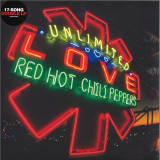
Red Hot Chili Peppers will unveil their new album and twelfth full-length offering, Unlimited Love Warner Records, on April 1, 2022. It notably marks their first recording with guitarist John Frusciante since 2006 and first with producer and longtime collaborator Rick Rubin since 2011. To herald Unlimited Love, the Los Angeles band just shared the first single and music video “Black Summer.”
“Our only goal is to get lost in the music. We (John, Anthony, Chad and Flea) spent thousands of hours, collectively and individually, honing our craft and showing up for one another, to make the best album we could. Our antennae attuned to the divine cosmos, we were just so damn grateful for the opportunity to be in a room together, and, once again, try to get better. Days, weeks and months spent listening to each other, composing, jamming freely, and arranging the fruit of those jams with great care and purpose. The sounds, rhythms, vibrations, words and melodies had us enrapt.
We yearn to shine a light in the world, to uplift, connect, and bring people together. Each of the songs on our new album UNLIMITED LOVE, is a facet of us, reflecting our view of the universe. This is our life’s mission. We work, focus, and prepare, so that when the biggest wave comes, we are ready to ride it. The ocean has gifted us a mighty wave and this record is the ride that is the sum of our lives. Thank you for listening, we hope you enjoy it.
ROCK OUT MOTHERFUCKERS!” - Anthony Kiedis, Flea, Chad Smith, John Frusciante
On lead track “Black Summer,” ethereal guitar underlines introspective lyrics as the rhythm unlocks a hypnotic drum groove highlighted by evocative bass. It quietly inhales only to exhale with a massive refrain, “It’s been a long time since I made a new friend, waiting on another black summer to end,” before a guitar solo echoes to the heavens and back.
Unlimited Love resumes a three-decade partnership with Rick Rubin Johnny Cash, Adele. Their creative collaboration spans legendary albums, including the diamond-selling Blood Sugar Sex Magik 1991, Californication 1999, By The Way 2002, and Stadium Arcadium 2006.
The interplay between the band borders on intergalactic once again—yet elevated to another stratosphere altogether. Unlimited Love represents the united spirit of four individual souls still fearlessly exploring the future of their eternal friendship and musical congregation.
This summer, Red Hot Chili Peppers will launch their first tour in support of Unlimited Love. They’ve invited a dynamic cohort of guests along for the ride at select dates, including Anderson.Paak & The Free Nationals and Thundercat and will be playing stadium dates in the UK in June 2022.
Ex RSD LP on transparent red vinyl, gatefold sleeve with lyric inner sleeve and DL card. Final copies now reduced to £7.99. The tracks on this album have never been officially released before now. The eight songs on this album were recorded in 1978 on a 2-track stereo Revox A77 tape recorder. The recordings are unashamedly analogue, using one microphone and guitars plugged directly into the tape recorder. Bouncing down tracks irreversibly as they went on, forced to make creative decisions that could not be undone. Some hard choices had to be made with the mix, but with no record company meant no record company agenda. TV Smith & Richard Strange could write and record whatever they wanted – and did! It has been an enormous pleasure to rediscover these recordings, the result of a friendship of two artists emerging from broken bands and each about to embark on a lifelong adventure in words and music. TV SMITH - I wasn’t having a lot of fun in 1978 when Richard asked me to collaborate on a song he was writing called “Summer Fun.” I was in the final stages of songwriting for the second Adverts album “Cast Of Thousands,” a project that already seemed doomed to failure given an unenthusiastic record company, a band in the throes of falling apart, and a dwindling audience - but my creative juices were in full flow and I was ready for something different. I already knew Richard, of course, from the Doctors Of Madness, who I’d followed in the years before punk when I was still living in Devon and they were one of the few bands to come and play in the area. I considered them a warped poetic glam band with gothic leanings, and was slightly surprised when the song I’d been invited to work on turned out to be a kind of California surf pastiche. But I was game to get involved, and after we’d finished it and ventured forward with regular writing and recording sessions over the following weeks it soon became clear that “Summer Fun” was just a gateway drug, and the songs that were emerging from our combined forces were going to quickly become much deeper and much darker // RICHARD STRANGE - Watching the remnants of a musical dream being swept away by the juggernaut of corporate punk rock in 1976, I felt a combination of jealousy and resentment towards many of the key players who had been responsible for our demise. The Sex Pistols had supported my band Doctors of Madness early in their career and nicked not only our future but £12.00 from a pair of trousers in our dressing room in Middlesbrough Town Hall! The Jam, who supported us over four shows at London’s fabled Marquee Club, were how I imagined The Who would be if they’d joined the Young Conservatives. Warsaw, our go-to support band in Manchester, had just changed their name to Joy Division, and Johnny and the Self-Abusers, our Scottish flag wavers, had become Simple Minds. All were being feted by the all-powerful music press, while we were being buried. But there was one punk band for whom I never had anything but the greatest affection…The Adverts.
Nile Marr is the son of former Smiths guitarist and current solo artist
Johnny Marr and his wife Angela
He was named for one of his father's musical heroes, Chic's Nile Rodgers. Marr
started out as a solo artist, then as a duo with American singer- songwriter
Meredith Sheldon, and then in the trio Man Made, alongside drummer Scott
Griffiths and bassist Callum Rogers, with future tour manager for Blossoms, Dan
Woolfie, as their sound engineer. They released their debut album TV Broke My
Brain in 2016, although its constituent songs were written over a period of eight
years. Marr released a debut solo album in 2020, titled Are You Happy Now? 'Part
Time Girl' was released as its first single in 2019. 'Are You Happy Now?' followed
in June 2020. An EP, Still Hearts, was released on 24 April, 2020. 'Still Hearts' was
its first single. Aside from the title track, there are two other tracks: 'Hush' and
'The Pusher'. Marr added acoustic guitar and backing vocals on 7 Worlds Collide's
2009 album The Sun Came Out. He has also appeared on two of his father's
albums: on 2013"s The Messenger he plays as a soloist, while on 2014"s Playland
he adds backing vocals. Marr has toured extensively with German film score
composer and record producer Hans Zimmer. His influences include John
Martyn, Fugazi and Elliott Smith.
- A1: Kevin Hays - Yotam Silberstein - Safta
- A2: Kevin Hays - Yotam Silberstein - Limehouse Blues
- A3: Kevin Hays - Yotam Silberstein - Your Song
- B1: Nicole Glover - Alexander Claffy - One For Amos
- B2: Nicole Glover - Alexander Claffy - Spring Can Really Hand You Up
- B3: Nicole Glover - Alexander Claffy - Good Bait
- C1: Johnny O'neal - Paul Sikivie - You Showed Me The Way
- C2: Johnny O'neal - Paul Sikivie - I'll Take Romance
- C3: Johnny O'neal - Paul Sikivie - Just In Time
- D1: David Kikoski - Peter Bernstein - Old Devil Moon
- D2: David Kikoski - Peter Bernstein - Peace
- D3: David Kikoski - Peter Bernstein - Theme For Ernie
Beyond the reference to the « Blue Hours » and to the New York recording studio, these albums are a hymn to life.
The orange colour reminds us of the Sun’s light at dusk, the hopes of dawn, a promise of a new day .
In that regard, we asked each artist to express three wishes for the future.
Kevin Hays-Yotam Silberstein
Nicole Glover-Alexander Claffy
Johnny O'Neal-Paul Sikivie
David Kikoski-Peter Bernstein
Recorded in Brooklyn NYC at Big Orange Sheep Studios -October 2020-
There are records with empathy, records which are your friends and then there's the others... There might be little difference between them, a certain "je ne sais quoi", an "almost nothing but still something" which makes the difference between almost pointless and vital records. Despite, or rather thanks to his cynical despair, Matt Elliott's music never holds up a moralizing mirror to us - on the contrary, it creates a compassionate dialogue with listeners like the rhythm of two steps that synchronize to become as one. In 2016, Matt Elliot brought out his seventh solo album The Calm Before whose obscure title is neither exactly threatening nor comforting... the calm before what? Before the storm for sure but maybe also before the great record, the immediate classic we felt might be coming for a long time in the dual discography of the Bristol-born artist working under his own name and his electronic alias Third Eye Foundation. The elegant details and perspectives of Little Lost Soul (2000) already hinted at the upcoming masterpiece from the English singer-songwriter. The Mess We Made (2003) was Matt Elliott's first solo album and portrayed a universe in a kind of flight towards Balkan horizons made up of visceral despair. With the Songs trilogy, he put aside the electronic side of his work to continue working with a minimalist, stark and lucid style of writing. The Broken Man (2012) was full of tears and long laments sometimes carried by Katia Labèque's piano on a record which painted new shades of grey. On this record Matt began working with the producer, arranger and multi-instrumentalist David Chalmin (La Terre Invisible) who has kept on collaborating with the Bristol-born singer since then. Their partnership continued on Only Myocardial Infection Can Break Your Heart (2013) and The Calm Before (2016). Stéphane Grégoire is the head of the Ici D'Ailleurs label which has accompanied Matt Elliott since 2005 and perhaps he describes this album the best: "This new record by Matt is without a doubt his best album to date, a record that takes him into another dimension where he fully asserts himself as a songwriter and singer of the calibre of artists like Bill Callahan, Leonard Cohen or Johnny Cash." Matt Elliott's other records all seemed like empathic links between each other. Farewell To All We Know is an instant classic based on the sensitive piano and superb arrangements of David Chalmin, the sensitive cello of Gaspar Claus, the subtle bass of Jeff Hallam (who has also played with Dominique A and John Parish). There is a clear form of alchemy in all of this and still we find Matt Elliott's usual atmospheres and scenery, the same Eastern European folk music, long songs that take time to settle over time. Everything is the same but also is transfigured. By making his music stark and purifying and redefining the subject matter, Matt Elliott's work became so much more delicate. However this work is never frail nor really turned in on himself and thus becomes like a vital tune that vibrates and unfolds. The opening song Farewell To All We Know seems torn between the fear of what tomorrow may bring, inevitability and hope for the future in a permanent and progressive dramatic tension expressed by his Spanish guitar, the impressionist style piano and Matt's voice teetering on the edge of whispers. A funereal tribute to endless twilights and the dawns we all dream of seeing. There are touches of Leonard Cohen from Songs from a Room or Thanks For The Dance in The Day After That with Gaspar Claus's counterpoint cello. There is no spirit of resignation in Matt Elliott's work - life's path has to be followed against all odds. We have to follow the river's flow to reach the immense ocean and its infinite freedom. The haunted instrumental Guidance Is Internal harks back to the atmospheres of Howling Songs (2008) with its guitar parts full of scansions and muted threats. The music is transcendental but never seems afraid of the risk of falling. This is also what Bye Now tells us with its quasi-obsolete simplicity and sunburst melancholy reminiscent of the work of Luiz Bonfá, Bill Evans on Peace Piece or laidback crooners of the 50s. In Farewell To All We Know, Matt Elliott incessantly alternates between the dual desires to face up to the world or to protect himself from it. Hating The Player, Hating The Game is a lucid statement about the dullness of our daily lives sometimes, our right to get out of the game and no longer want to be part of it. Matt Elliott is tender but spares no one, particularly himself. Aboulia speaks of the tiredness of living and of looming death while Crisis Apparition says that there is always a time for reconstruction after chaos. This is like initially wearying wandering in the ruins of Aleppo with the slow dilution of the melody into a hallucinated drone. However the smell of great fires always fades and the earth always regenerates. Matt Elliott seems to suggest that the survival instinct is stronger than any cold winds could ever be. Matt Elliott never sings of certainties and prefers possibilities. Possibly the worst is over? Maybe... Maybe the storm has passed and devastated everything, now we just have to rebuild and live again. Farewell To All We Know shows us the distance that still needs to be walked and he walks next to you - right next to you, he is the friend who doesn't spare you the truth like all true friends really do.
When most musicians reach a career milestone they take it on tour. Texas, whose debut album turned 30 last year, had bigger ambitions. Rather than simply perform their old songs, the Scots set out to meet their old selves – the wide-eyed kids who made Southside, their two million-selling, Top 3 debut, and the band who bounced back eight years later with the six times platinum White On Blonde.
The vaults at Universal were raided for recording sessions for both albums, stored on tape and DAT and never digitised. Top of Texas’ list was their first, failed attempt at I Don’t Want A Lover, scuppered by Chic bassist Bernard Edwards.
“Just after we signed, we were in the studio with Bernard and Chic’s drummer Tony Thompson,” recalls guitarist Johnny McElhone. “Bernard got coked up and ended up running away to Mexico before Sharleen even started her vocals. But that’s a whole other story.”
Late in 2018, the aborted version was found, alongside several songs recorded during different sessions which didn’t make their debut. The biggest revelation, however, was a 15-strong batch of tracks from the White On Blonde sessions which both Johnny and Sharleen Spiteri had forgotten existed.
“When we made that album, no one in Britain gave a shit about Texas,” says Sharleen. “We were still doing really well in Europe, but here we couldn’t get arrested.
“No one at our label was asking to hear any music or pushing us, so we just kept writing and recording and trying out new stuff until we felt the record was ready. Hence we ended up with a lot more material than usual.”
So good were the songs that Texas initially planned to release them as a ‘lost’ album, possibly to be called Blonde On White. But working with their old recordings inspired them to start writing new songs.
“Tweaking the old stuff was so much fun,” says Sharleen. “It felt like us, now, collaborating with ourselves of 25 years ago. It was amazing to go back there – my voice was so young! – and to hear how much energy and passion we had. We were fighting for our careers at the time, trying to prove that Texas were still relevant.
“Our excitement at finding this treasure trove of songs collided with our excitement from back then and, unplanned, new songs started coming. You could say we were inspired by ourselves, if that didn’t make us sound insanely big-headed.”
Hi, Texas’ tenth album, is the result of that bonkers journey back but has its eyes firmly fixed on the future. The title track and sensational first single aptly fuses the two. A brand new collaboration with Wu Tang Clan, it finds a soulful Sharleen nestled next to boisterous raps from RZA and Ghostface Killah over a cinematic backdrop of lush beats and acoustic guitar.
It all starts with a great song and “You Baby” has it all! Penned by husband and wife team Barry Mann and Cynthia Weil with the magic touch of Phil Spector – what an awesome trio – and the bedrock of a future classic.
The song was originally produced by Spector for the Ronettes, signed to his Philles label, and appeared on their 1964 breakthrough album ‘Presenting The Fabulous Ronettes’ featuring, of course, his wife to be Veronica Bennett. The song was also recorded in the U.S. by pop/rock band the Lovin’ Spoonful for their 1965 debut album ‘Do You Believe In Magic’.
However, in January 1966 Pye Records unleashed JACKIE TRENT’s epic Northern Soul version produced by her husband Tony Hatch. Heralded by a pounding drum beat and trumpet blast it is no wonder that Jackie’s definitive cover shook the walls at Wigan Casino a decade later. And its popularity has never gone away, hence its current price tag of £300-400! Check out Jackie’s performance on the Morecambe and Wise Show on YouTube, what an intro!
“You Baby” was also recorded in May ’66 by Cameo Parkway’s Lovenotes in a very similar vein and in November ’66 by the legendary Len Barry. Other notable cover’s include Sonny & Cher, the Bubblegum pop group Salt Water Taffy and, in 1975, John Holt’s reggae version.
“Lost Summer Love” was originally recorded in 1964 by U.S. actress Shelley Fabares known for her long-running role as Mary Stone in the sitcom ‘The Donna Reed Show’ and as Elvis Presley’s leading lady in ‘Girl Happy’, ‘Spinout’ and ‘Clambake’. She also scored a No.1 pop hit in 1962 with the teen anthem “Johnny Angel”. But, as with our ‘A-side’, it was reborn as a Northern Soul classic when Pye Records picked the song up in 1965 and recorded it on their latest signing, teenager LORRIANE SILVER. Once again the stomping drum track, percussion and handclaps propel you to the dancefloor where you’re greated with an unforgettably catchy tune, a bevvy of backing vocals and Lorraine’s effervescent vocal.
Two fabulous reasons to make this one of the top reissue 45s of 2020!
- A1: Huey Lewis & The News - The Power Of Love
- A2: Lindsey Buckingham - Time Bomb Town
- A3: The Outatime Orchestra Conducted By Alan Silvestri - Back To The Future
- A4: Eric Clapton - Heaven Is One Step Away
- A5: Huey Lewis & The News - Back In Time
- B1: The Outatime Orchestra Conducted By Alan Silvestri - Back To The Future (Overture)
- B2: Etta James - The Wallflower (Dance With Me Henry) (Dance With Me Henry)
- B3: Marvin Berry & The Starlighters - Night Train
- B4: Marvin Berry & The Starlighters - Earth Angel (Will You Be Mine) (Will You Be Mine)
- B5: Marty Mcfly With The Starlighters - Johnny B Goode
”Back To The Future” - erschienen 1985 ist für Fans klassischer 80er-Jahre-Filme eine feste Größe. Reisen Sie mit dem kultigen Soundtrack mit Songs wie ”Earth Angel”, ”Johnny B. Goode” und Huey Lewis & The News’ ”The Power Of Love” in die Vergangenheit.
Das Album ”Back To The Future” erscheint als LP.
There’s something new under the sun. If you look at it closely,
something new is only (and always) created at crossroads –
when different and signi¦cant traditions are connected and
combined. On their own, these traditions have often existed
for a while. However, in this new form they have never
appeared together. The latest manifestation of something
new can now be found on the album “No Future Dubs”, the
interpretations of “No Future Days” – the most recent album
by German band Messer – by Finnish producer and old
friend of the group Kimmo Saastamoinen aka Toto Belmont.
The intentional traditions that merge on this grand and
digni¦ed album are post-punk, dub and techno. A new
chapter in the culturally constant narrative of dub is written
here. Through their past and parallel activities in hardcore
and post-punk bands, Messer drummer Philipp Wulf met and
befriended Kimmo, originally a drummer too. In their
continuous dialogue discussing their musical journey, Philipp
and Kimmo over the years more and more immersed
themselves in the aesthetic possibilities of dub and reggae.
Indeed, lots of musicians do not listen to the type of music at
home that they write and play in their respective projects
(Take me as an example: House is the music that I produce
and put on as a DJ. On my own, I listen to various stuff,
music by Monk and Messer for example). The same applies
to the protagonists involved here. By discussing dub und
through Toto Belmont’s steadily increasing producingexpertise, the idea of creating dub versions of selected
Messer tracks was born. The Messer album “No Future
Days”, released in 2020, proved to contain the perfect raw
material as the songs on this album are already produced in
a much more transparent way than on previous LPs – and
are hence more suitable for dub. Still, it’s a giant leap from
the originals to the dubs. These add a third dimension to the
described character of the post-punk/dub amalgam: techno.
The result is a sound that hasn’t existed before, especially
not with German lyrics (which scarcely, however, carry
meaning or messages here. Hendrik Otremba’s voice is used
more like an instrument, as if he was the ghostly ¦gure which
he often sings about and which now §oats and screams
through the sound space). The history of mutual contact and
in§uence of (post-)punk and dub (reggae), which Messer
have kept on writing, is glorious and reaches back far in
musical history. Still, it has always been a rather marginal
chapter not only in punk but also in dub history. But already
in the beginnings of punk (the British version, less the
American one), the presence and in§uence of reggae was
obvious in many places as both are united in their resolute
attitude as rebel music. This is how the two genres
recognized each other – especially the punks regarded
reggae as rebellious. As is known, already Johnny Rotten
mainly listened to dub in private. By using the name John
Lydon, he then – together with bass player Jah Wobble –
established the group PiL as one of the most exemplary
bands at the crossroads of dub and punk. The Slits, Pop
Group, Killing Joke, The Ruts and last but not least The Clash
along with the Mick Jones offshoot Big Audio Dynamite –
the thriving British music scene in the early 80s was full of
dub-in§uenced acts. The echoes meandered everywhere. In
the USA, it took longer until the in§uence of dub became
noticeable and it has never been as distinctive as in the UK.
The history of US hardcore, however, cannot be told without
bands like Bad Brains from Washington D.C. who on their
albums occasionally inserted conscious reggae and dub
tracks between breakneck hardcore tracks. Another
important group is Blind Idiot God who similarly included
dub tracks on their LPs – the contrast between densely
droning rock tunes and widely breathing dub versions can be
experienced very vividly here. In the 90s, dub’s in§uence on
post-punk decreased while turning up even more distinctively
somewhere else: Techno was in many respects susceptible
to dub, to say nothing of the music from the so-called British
hardcore continuum (jungle, drum & bass etc.), which directlydeveloped from dub and reggae. But also “pure” techno –
meaning techno without breakbeats – discovered its a¨nity
for the possibilities of dub at an early stage, in England for
instance in projects like Left¦eld or The Orb. In addition, the
project Rhythm & Sound was established in Berlin with close
ties to the Hardwax record store. With regard to this project,
you can’t really say where dub ends and where techno begins
(or vice versa) because of the interconnection of the two
genres here – everything is based on the steppers pulse
which links the two styles like a common DNA. With dub
techno a new genre was created. Until the present day, there
are producers who don’t produce anything else and DJs who
don’t put on any other music. The Messer dubs are
characterized by a grand majestic manner and force that
presumably someone like Mad Professor is able to produce
and that is also inherent in many Scandinavian productions
of the last 15 years; a crystal-clear aesthetic which locates
itself far away from Kingston or Brixton, but features a pulse
referring clearly to Berlin and Helsinki. The songs appear in a
completely new and deconstructed form, the instruments are
exclusively used as particles and raw material, not as riffs;
merely glaring guitar textures ¦ll the wide dub space. There
are many new elements that were added by Toto Belmont,
especially synthesizer sounds and drums. The ¦nal result
creates an enormous aesthetic power and dignity, and an
atmosphere you don’t want to leave anymore. “No Future” is
a well-chosen title as a reference to the protagonists’ punk
association; as a main thrust of the album, however, a
comma between these two words is imaginable as well.
Originally released on Celluloid Lunch (Canada), really excited to do the Euro edition. Drawing influence from the looser end of the Ork records catalogue, the sensitive side of Ohio’s proto-punk scene and the grittiest and most sluggish tangent of 70’s power pop, Itchy Self’s debut 12” is an exploration of fully formed songs treated with spontaneous delivery. The group got together in early 2020 for 3 practices and a recording session and here are the results, laid out in their raw form. This is cross-generational racket n roll music that wears its heart on its loosey goosey sleeve. ‘B what you B’ is a life affirming testament to living against the grain that calls to mind the Modern Lovers’ aggressive positivity. Title track ‘Here’s the Rub’ is a barrage of abstract lyrics and skronky shred. ‘God Bless the Ego’ is an ode to the looseness and blurry eyed lucidity of indie rock’s forbearers such as Chilton, Kilgour, Pollard and Malkmus. ‘Reprobate’ is a Stones style ballad that channels the Saints and Johnny Thunders in equal measures. ‘Playing MTV’ is an audacious end remark to the record, that rips on classic Velvets strut and testifies it’s own ridiculous merit through boastful and catty lyrics. All in all, of course, it’s only Rock n Roll. This record is 1 part follow up to the Protruders “Poison Future” 12” on Feel It records (2019) and 1 part the first chapter of a new and exciting group formed in Canada’s capital of de-proffessionalized rock music. Recorded to 1/4 inch tape by Scott Munro (Preoccupations) and mastered by Mikey Young (Total Control), this record should provide a concise opening statement to anyone with the least bit of concern about Itchy Self. You’re gonna need an ocean of calamine lotion. Sorry State Records
- A1: Sookie - Love Beat
- A2: Give It Up
- A3: Disco Madonna
- A4: Lovers Concerto (Vocal)
- A5: Don't Fight The Feeling
- B1: Play Me Desires/I Wanna Love/You Are Loving Me/Burning (Parts 1-4)
- B2: Midnight
- C1: The Mystery With Me
- C2: Don't Think About It
- C3: Choco Date
- C4: Tonight
- D1: Love Somebody (Part 1)
- D2: Your Love (With Venise)
- D3: Let's Keep It Together
Cameroonian Joe Bisso's earliest musical influences didn't come primarily from his homeland, but more from the neighbouring Congo, where the kind of early 60's Congolese Rumba played by the likes of Franco / TP Ok Jazz, and Tabu Ley Rochereau was establishing itself as a musical force in the region.
Alongside this exuberant, swinging, jazz influenced sound, the growing impact of the all conquering US soul titans became inescapable, and sprinkled with a bit of Johnny Halliday & Co's smooth chanson over the top, we get a snapshot of where Jo Bisso and friends post school musical experimentation was headed in the late 60's.
As that decade drew to a close, the single minded Bisso headed off to France to begin his quest for the future, and by 1972 could afford the journey to the US that he'd long dreamed of.
Enrollment at the Berkeley School of Music in Boston soon lead to a new band coming together, and by 1974 the all conquering, multi faceted approach that marks Bisso's musical career, meant he'd written, produced and sung on his debut single for the mighty Decca Records. 'Flying To The Land Of Soul' drew heavily from James Brown's propulsive dancefloor funk, whilst wearing it's African colours loud and proud via 'African Express' chants, and drums front and centre.
At the same time, Bisso and friends had started to immerse themselves in the fast emerging disco sound pulsing outwards from Downtown NYC into the Boston nightclubs, and by the time his debut album 'Dance To It' was released on France's influential Le Disques Esperance in 1976, it was the driving, 4/4 floor power of disco that was to define Bisso's sound on that, and the following two albums.
Whilst Bisso's immersion in Disco was based around it's energy and musicality (rather than any associated hedonism), 'African Disco Experimentals (1974 to 1978)' paints a picture of an artist dedicated to the underground club side of the scene, rather than focused exclusively on the fast emerging pop potential of the sound at the time.
The album's tone is set by 3.20 mins of building, tribal percussion and rolling rhythms of the opener 'Love Beat', a 'strictly dancefloor' approach mirrored in the near 11 mins of 'Love Somebody', building from soulful keys to deep bass funk, extended percussion breaks, joyous squelchy Moog licks, breathy vocals and more (interesting footnote : Bisso is credited as Producer / Writer / Arranger, but 'Recorded by' is attributed to Joe Chiccarelli, better known in recent years for his work with The White Stripes, Shins, and Broken Social Scene.)
Still clocking in at a healthy 6 mins plus, "The Mystery With Me" (1978) makes a nod towards more radio friendly waters with it's hooky, floaty choruses and tight structures (a then 22 year old Arthur Baker is credited as sole writer on Discogs - Bisso himself doesn't seemed convinced by this idea, but that's another story...)
'Let's Keep it Together' (1977) loops the song title over a slower groove, with free form electric guitar licks adding new textures, whilst 'Disco Madonna' (1976) showcases Bisso at his most playful, combining spoken word Hispanic vocals, rattling percussion and more of the always welcome Moog, switching up keys at the end for an unselfconsciously camp finale.
And if anything sums up the ambition of Bisso's work in the field at the time, 'Play Me' (1978) can lay claim to being the magnum opus. It's presented here as a continuous 16 minute extravaganza (as opposed to the 4 parts it came in originally) : lush strings, hypnotic vocal sections, irresistible basslines, crisp drums, the odd Barry White style interjection, disco moans, the occasional nod to a chorus vocal. None of it seeming in much of a hurry to go anywhere in particular, choosing instead to joyfully revel in the expansiveness of the form.