NYC producer Max In The World returns on his Bliss Point label with The Living Dub, four cuts of breaky, dubbed out house for the club in your head and your future. France’s Sentiments (Light On Earth, Groovedge) joins for a sub-heavy remix with some of the most undeniable acid of the year. Tip!
quête:joi
Melbourne-based violist/violinist and orchestral composer, Tamil Rogeon, returns to his jazz roots on his soaring and celestial new album, Son Of Nyx coming soon on Greg Boramans' new imprint Soul Bank Music (part of the !K7 Music Group). From conducting the Melbourne Symphony Orchestra at the 2500-seated Hamer Hall to writing and co-producing his first full-length album in three years and one of the very few viola-led jazz LPs of our time, Rogeon joins forces with several stars of Melbourne's thriving and acclaimed jazz scene (Allysha Joy, Sam Anning et al.), channeling the cosmic energy of Yussef Lateef, Herbie Hancock and the like. Whilst often not an instrument typically associated with jazz, violin greats from Jean-Luc Ponty, Stéphane Grappelli to Billy Bang, have gone on to become iconic figures in the jazz canon, yet little can be said for the viola. Often considered the older sibling to the violin, the viola is larger in size and the tone is a lot deeper, something Rogeon was keen to make use of on Son Of Nyx. "I didn't want to make a bebop record. I wanted to make a modal jazz record and there just aren't that many on viola. I wanted to speak with a heavier voice, more akin to a tenor saxophone. The viola is darker and thicker. It speaks slower".
“The album title ADELA comes from a song by Rodrigo which constitutes the emotional culmination of our duo’s programme. What counts is not the name, but the person we love and long for. Everyone certainly has such a person, and so we hope that each listener will find something close to his or her heart on our album.
The piano and classical guitar virtually never collaborate in music. However, after our first joint performance with Łukasz Kuropaczewski, we immediately realised that we could create intriguing music worlds together. We followed the same line of thinking in our choice of programme, which derives from both the piano and guitar repertoires, though the spirit of the South that informs most of that music is more typically associated with the guitar tradition. In my arrangements of classical works, I strove to represent the sonic qualities of both instruments, their unique expression, and cultural associations. I reworked Domenico Scarlatti’s famous “Sonata in D Minor (Toccata)” K. 141 so as to bring out its Spanish roots. Titled “Domingo” on our album, it features distinctive flamenco qualities and an improvised layer. The “Aranjuez Concerto BWV 1056” is, as its very name suggests, a fusion of the world’s most famous piece for guitar and orchestra, Joaquin Rodrigo’s “Concierto de Aranjuez”, with Johann Sebastian Bach’s “Keyboard Concerto in F Minor” BWV 1056. Themes from the second, slow movements of both concertos interlink here as in the film cross-cutting technique, and we swap roles, Łukasz leading the Bach theme while I take up Rodrigo’s.
Three of the works on this album have been enriched by the angelic voice of Jakub Józef Orliński. In these three, Egberto Gismonti’s guitar composition “Água e Vinho”, my own “Quarantine Song”, and even the famous “Adela” by Joaquin Rodrigo, the voice has been treated more as an instrument than a lyrical subject. “Quarantine Song” was composed during the COVID-19 quarantine in 2020 specially for Jakub Józef Orliński as its performer. “Pedro” was inspired by the films of Pedro Almodóvar.
[c] A3. Água e Vinho [feat. Jakub Józef Orliński] - Egberto Gismonti
[f] B2. Quarantine Song [feat. Jakub Józef Orliński] - Aleksander Dębicz
[h] B4. Adela [feat. Jakub Józef Orliński] - Joaquín Rodrigo
Brainbox is a Dutch rock group that was initially active from
1968 until 1972, and then reformed in 2009. Brainbox is best described as a progressive blues rock band infused with jazz elements. Their eponymous debut album, released in
1969, is also the only Brainbox record that features founding guitarist Jan Akkerman, who left the band in late 1969 to join Focus. Nevertheless, Brainbox is considered a legendary Dutch band of international allure. Brainbox is now available as a limited edition of only 500 individually numbered copies on purple vinyl.
- A1: Number Nine - Dead Bodies Ecstasy (Edit)
- A2: Number Nine - Zim Boom
- A3: Orbit 48 - Rave On!
- B1: Number Nine - Dodecadarian
- B2: Jean Bruce - Build The Future (French Theory Reshape)
- B3: Men At Werk - A Spanner In The Werk
- C1: French Theory - 2006=1988
- C2: French Theory - 2006=1989
- D1: French Theory - Kids In Belgium
- D2: French Theory - (Lost On The Way To) Destelbergen
- D3: French Theory - Acid Reprise (Edit)
At last, a vinyl re-press of the hard-to-find Classic New Beat tracks from N9 !
For years, the vinyl 12 inches from the French Techno-house & New Beat label N9 were nearly impossible to find, and devoted Oldschool Fans kept asking for represses.
Thanks to a joint venture with fellow Belgian label Fenix Fire Records, the wait is over!
Here’s a deluxe 2x12' compilation, on 180g marbled red vinyl in a beautiful gatefold package.
With 11 tracks spanning from the origins in 1990 to the rebirth since 2005, N9's most wanted releases are here, remastered by French sonic wizard André Dalcan, ready to get turntables at the right 33+8 mood, and get the white glove raised again!
- A1: Transhuman
- A2: Hamburg - Dusseldorf
- A3: Zukunftmusik (Radiophonique) (Radiophonique)
- A4: Specimen
- B1: Clone
- B2: To The Limit
- B3: Zufallswelt
- B4: Plant In Fever
- C1: Shifted Reality
- C2: Kreiselkompass
- C3: Data Landscape
- C4: Transhumanist
- D1: Sexersizer
- D2: Maschinenraum
- D3: Let Yourself Go
- D4: Let Yourself Go (Beatsole Remix)
There are few genres in which German artists play such a central pioneering role as they do in electronic music, be it techno, electropop, trance or rave. At the frontline for many years were Kraftwerk and U96, two absolute trailblazers of this musical direction. While Kraftwerk wrote international music history mainly in the 1970s with cult albums such as Autobahn (1974), Radio-Aktivität (1975), Trans Europa Express (1977) and Die Mensch-Maschine (1978), U96 had a profound influence on the global pop music, rave and techno scene of the 1990s with hits such as ‘Das Boot’, ‘Love Sees No Colour’, ‘Night In Motion’ and ‘Heaven’. Transhuman, scheduled for release on UNLTD Recordings on 30th October 2020, will feature a spectacular collaboration between U96 (Ingo Hauss
& Hayo Lewerentz) and Wolfgang Flür, Kraftwerk’s drummer in the years between 1972 and 1987 and therefore involved in the most seminal albums by the group from Düsseldorf.
This remarkable cooperation was first announced and implemented by two joint numbers on U96’s 2018 offering Reboot. Transhuman sees U96 and Wolfgang Flür develop their creative exchange across a full album, creating fascinating sonic worlds. The title song ‘Transhuman’ and an updated version of ‘Zukunftsmusik (Radiophonique)’ will be released as lead singles, including, as we’ve come to expect from U96, experimental video clips. That New York record label Radikal Records immediately secured the rights to the album for the US and Canada points to major interest in this project, not only on these shores but also across the Atlantic.
“Transhuman is a stylistic mélange of our different histories,” describe Wolfgang Flür and U96 masterminds Hauss and Lewerentz an offering that is spectacular in many respects, featuring, along with typical U96 tracks such as ‘Clone’ and ‘Specimen’, numbers such as ‘Transhuman’, ‘Planet In Fever’ and ‘Sexersizer’ that are inspired by Flür’s past. Notably, the content has been reduced to the sheer basics, in other words: sparingly used associative statements with deep, but at times also playful and mysterious messages that the listener feels rather than consciously registers. The lyrics are about the transformation of people through technology and our massive interference in life on our planet. Hauss: “Pieces like ‘Zukunftsmusik’ and ‘Transhuman’ don’t tell a story in the classic sense, they articulate emotions and associations in very few words, bringing to mind recordings such as Radio-Aktivität, Autobahn and Die Mensch-Maschine. In addition Transhuman, features a number of melodies created on the basis of computer algorithms, in other words fractal music which takes us even further back in history, to Klaus Schulze, Stockhausen, the electronics laboratories of the fifties and sixties and the musique concrete compositional technique.”
VINYL[19,87 €]
Nahawa Doumbia's new album Kanawa concisely captures this current moment in Malian history. The singer, whose storied career spans more than four decades, reflects on the immigration crisis from the Malian perspective in the title of her new album Kanawa. Across eight songs recorded in Bamako with a band including traditional and modern instruments, Doumbia merges her early work that relied on a spare expression of her trademark didadi rhythm with the bombastic range of contemporary Malian pop. The beautifully complex musical accompaniment that results is courtesy of the large ensemble she pulled together with producer and arranger (and day one collaborator) N'gou Bagayoko. The band features two highly expressive Malian string instruments, the ngoni and the slightly smaller kamalé ngoni, as well as a variety of percussion, drum programming, karignan (a metal scraper) and acoustic and electric guitars. Doumbia's daughter, a celebrated singer with her own group and busy concert schedule, Doussou Bagayoko sings on "Adjorobena," a song about patience, tolerance and living in peace. Doumbia weaves together a roadmap of her psyche when it comes to the good and bad life has to offer. She talks about marriage and women leaving home to join another through the metaphor of a tree in the garden; she includes gunshot samples in the song "Foliwilen" to honor the bravery of hunters, soldiers and other courageous people; she uses a bird in "Djougoh" to talk about lazy people; and, in "Ndiagneko" she advises people to ignore critics, just do you. Mali has gone through an intense period of regional strife and terrorist incidents over the last ten years and Doumbia roots the album in tragic local concerns with deep global implications. "The meaning of Kanawa is so simple. We see our children trying to cross the ocean all the time. I said that many of our children die in the ocean and some of them die while crossing the Sahara. But I ask them why do they leave their country? They said that they leave because of the family situation or problems like poverty and unemployment. I ask them to stay and work in their country. I call on the UN and African leaders so that we can coordinate our efforts to find a solution, to create jobs for them so that young people stop leaving. That's why I chose it as the title of my album so that everybody can learn from it and also so that there is a reduction in the number of people emigrating. So that some will hear the message and stay home and grow the land. Leaving is not the only solution. My message is to help the youth find jobs."
Ralph Heidel is one of the young musicians that represent the spirit of Berlin’s new musical ecleticism better than others. He is part of the avantgarde circles that mix modern jazz and contemporary classical music with elements of new electronica and experimental ambient music. This is the vibe of Germany's next generation.
Heidel creates a sonic universe that is unique. He takes the listener into a deep, atmospheric travel that stimulates emotions and feelings on a different level. Heidel brings together two worlds: what he learned at Musikhochschule München, Germany’s leading academy for classical music where he studied saxophon and composition and the moods happening in Germany's new electronic circles.
On „Relief“ Heidel created six songs. Except one, all of them are instrumental music. Partly composed and often improvised these sounds take the listener into Heidel's specific sonic universe. Raw beat structures, emotive horn lines, strong harmonical tensions and dramatic build ups. Heidel’s signature sound.
In fact Heidel is a multiple influenced artist with a strong personality that absorbs whats around him, connects it with his own wide artistic knowledge and fullfills it into magical musical moments.
Relief is the next step in what could become a longtime artistic career.
After a (very composed) debut album for string quartet and rhythm section for Kryptox (Moments of Resonance 2019), it was important for Heidel, to process current feelings of daily life.
Not just his cultural learnings, but also emotions connected to the hard COVID times and a lot of personal experiences.
Relief are six abstract, distorted patterns. Long deep transitions that lead into euphoric parts of sonic greatness. Heidel's sense for sound design and the soft tone of his saxophone phrases, add a personal note that is somehow alone in the current music scenario. Sampling his saxophone (reeds, keys etc.) to create very organic beats is one of the many techniques to create that special „Heidel“ sound. Also his calm and wide harmonies over disquiet, rough drums are part of his unique ambivalent, disrupted moods.
Most of this EP has been played by Heidel alone. For a few parts he was joined by musicians from the local scene. In fact besides his albums on Kryptox Ralph Heidel is very connected in Berlin’s current cultural playground: He creates music for underground performance art happenings in Neukölln as well as for new German theater (Volksbühne, Berliner Ensemble). Also German rapper Tarek from K.I.Z heard about Heidels string debut album, so they collaborated for an album, where Heidel reworked his record for stringquartet, piano, drums and bass.
Repress of the self-titled debut album. Their self-titled debut album is an instrumental bluesy heavy rock with no DOOM taste. A lot of improvised double guitar solo and a very special groovy rhythm section.
The release got a real unexpected awesome response all over the world. All the tracks are 100% original, except the cover of the blues classic "Going Down".
BIOGRAPHY:
"Sonic Flower" were formed as a side project of "Church of Misery" in 2001. Tatsu Mikami (bass) and at that time Church's guitarist Takenori Hoshi (guitar on Church of Misery's 2nd album "The Second Coming"), teamed up to play more bluesy & non Doomy taste instrumental Heavy Rock. They were influenced by famous 70's heavy rock bands like CACTUS, GRAND FUNK RAILROAD, GROUNDHOGS,SAVOY BROWN etc.
Soon female guitarist "Arisa" and drummer Keisuke Fukawa joined the band. In 2003, they released the self titled debut album "SONIC FLOWER" on Japanese Heavy rock label "Leafhound Records". All instrumental bluesy heavy rock and improvised doubleguitar, they got a tons of good response from all over the world. They also played some shows as support for some foreign band's Japan appearance like Electric Wizard, Bluebird (Amen's side project), Acid King etc.
In 2005 they went to studio for new recordings. At that time the band has some problems and after the recording quit. So this recordings were long years sleeping in the vault. Totally unreleased studio materials. In 2018 Tatsu decided to re-form the band. He has already tons of new songs. This time he teamed up with old Church singer and his old friend. A new album is in progress and will be released in 2021.
monstrously rare private pressing from 1973 originally on the deroy imprint, motiffe play twisted king crimson esque progressive rock with dark jazz elements, 99 were pressed with just a handful having hand drawn covers, record deals were offered but musical differences split the band, with the mighty Flux emerging jn the aftermath, before ace guitarist Grimaldi joined Argent to help craft their masterpiece 'Circus'. valued at £2000, this is the first fully authorised legal edition with all members consent and full history written by the band in the inner gatefold. The Gryphon image is also drawn by the band for the cover.
It’s about time that our partner in crime Lostsoundbytes joined us for a ride. Kept on the back burner for a while, the debut album by the Belgium-based producer and Vastechoses label honcho couldn’t have come out at a more convenient time. Keeping with the madness that we all have buried within ourselves, Degenerate Brain sounds like it’s been recorded and corrupted by some artificial intelligence in the grips of mental disorder and paranoia. Frantically exhibiting a wide stylistic palette by means of irradiated kicks laid out on top of distressed electronic modulations; worn out electro bangers and slo-mo keepsakes from imaginary performances to crooked minimal wave ramblings led by a man-machine flying off the handle. A seemingly meaningless stroll orchestrated by a mind that has lost control over some data dump coming in hot — which may fry your brain unless you manage to pull yourself out before it’s too late.
In 1968 Status Quo’s first hit record “Pictures of Matchstick Men” was released and the debut album soon followed. The single reached #7 in the UK, and remains the band’s only major hit single in the US, where it reached #12. Picturesque Matchstickable Messages from the Status Quo features several covers, including “Green Tambourine” by The Lemon Pipers and “Spicks and Specks” by The Bee Gees.
South London members Alan Lancaster (bass) and Francis Rossi (guitar) were the original members and founders of Status Quo. Formerly known as The Spectres and later renamed to Traffic or Traffic Jam they settled for Status Quo as their band name in 1967. The following years they were joined by John Coghlan (drums), Roy Lynes (keyboard) and Rick Parfitt (guitar).
An exploratory record that dances across time and genre, guided by fidgety miniatures and jazz inflected collage. Throughout, the band pool together their instrumental chops, moving from fluid and serpentine R&B to meditative, minimalistic piano, evoking a contrast of virtuosity and self-surrender.
While constructed from the inspiration of soul, funk and film music, BÉE mediate those influences having first digested them through the productions of Madlib & the RZA.
A sticker on the sleeve tells us Self Help “combines jazz-funk and mysticism,” a signpost to where its musical and spiritual concerns align. The jazz-funk component translates to arresting hooks in sideways song forms: echoes of Gainsbourg spooled through Azymuth-style Brazilian jazz and punctuated by the whip and snap of Steely Dan. “The Sound Where My Head Was,” the instrumental centrepiece, exemplifies present-wave jazz but also ancient sounds, giving off the mothballed air of a Hiroshi Yoshimura record in a library-music archive.
Self Help’s mysticism emerges in broad and specific ways, denoting not only a search beyond cliché and intellect but also an inquiry into the beat, the spirit, the one will. This isn’t new territory for them: Turnbull—the artist formerly known as Slim Twig, who writes and performs with U.S. Girls and various other Toronto concerns—named the group’s Nature, Man & Woman EP after the Alan Watts book. Building these songs from his drafts over three weekends at Toronto’s Palace Sound studio, the ensemble was free to tap out of the city and into some other place, taking up residence in a collective mind maze. The album produces, in equal measure, familiar surprises and the surprisingly familiar. Intoxicated jazz riffs swerve left at phantom intersections. Rhythms cut loose and tie you in knots. But wired in to each song is a sense of gentle accumulation, making every featherlight flourish weigh a ton. U.S. Girls’ Meg Remy brings serenity to “Sing a Silent Gospel,” and wears its antic melodies lightly. The soul shimmer of “Unity (It’s Up to You)” lets the players pool their R&B chops into something fluid and serpentine while, on guest vocals, the musical performance artist James Baley issues urgent declaratives: “Water must pool, as a rule, before tasted/Or else the water is wasted.” The words throughout the record complement the ensemble music while riffing on the precarious nature of unity itself. Then, closer “Extinct Commune” finds Turnbull deserted at the piano, playing phrases of meditative minimalism taking after the composer Joanna Brouk.
For all the record’s reach, it is these contrasting quiet moments that bring Self Help’s communal spirit into focus. A note on personnel: Badge Époque Ensemble now has a seventh member in Karen Ng, the saxophonist and sometime collaborator of Do Make Say Think, Feist, and others. In BÉE, Ng joins Chris Bezant and Giosuè Rosati, her bandmates in the Andy Shauf live band, as well as U.S. Girls co-conspirators Turnbull and Ed Squires, and other Torontonian cross-pollinators listed below. Guest vocalists across Self Help include Meg Remy, who sings with Dorothea Paas on the opener, James Baley, and Toronto singer-songwriter Jennifer Castle on the remarkable “Just Space for Light.” Words by: Jazz Monroe
CASSETTE[8,78 €]
Nahawa Doumbia's new album Kanawa concisely captures this current moment in Malian history. The singer, whose storied career spans more than four decades, reflects on the immigration crisis from the Malian perspective in the title of her new album Kanawa. Across eight songs recorded in Bamako with a band including traditional and modern instruments, Doumbia merges her early work that relied on a spare expression of her trademark didadi rhythm with the bombastic range of contemporary Malian pop. The beautifully complex musical accompaniment that results is courtesy of the large ensemble she pulled together with producer and arranger (and day one collaborator) N'gou Bagayoko. The band features two highly expressive Malian string instruments, the ngoni and the slightly smaller kamalé ngoni, as well as a variety of percussion, drum programming, karignan (a metal scraper) and acoustic and electric guitars. Doumbia's daughter, a celebrated singer with her own group and busy concert schedule, Doussou Bagayoko sings on "Adjorobena," a song about patience, tolerance and living in peace. Doumbia weaves together a roadmap of her psyche when it comes to the good and bad life has to offer. She talks about marriage and women leaving home to join another through the metaphor of a tree in the garden; she includes gunshot samples in the song "Foliwilen" to honor the bravery of hunters, soldiers and other courageous people; she uses a bird in "Djougoh" to talk about lazy people; and, in "Ndiagneko" she advises people to ignore critics, just do you. Mali has gone through an intense period of regional strife and terrorist incidents over the last ten years and Doumbia roots the album in tragic local concerns with deep global implications. "The meaning of Kanawa is so simple. We see our children trying to cross the ocean all the time. I said that many of our children die in the ocean and some of them die while crossing the Sahara. But I ask them why do they leave their country? They said that they leave because of the family situation or problems like poverty and unemployment. I ask them to stay and work in their country. I call on the UN and African leaders so that we can coordinate our efforts to find a solution, to create jobs for them so that young people stop leaving. That's why I chose it as the title of my album so that everybody can learn from it and also so that there is a reduction in the number of people emigrating. So that some will hear the message and stay home and grow the land. Leaving is not the only solution. My message is to help the youth find jobs."
The Anticipatory Organization is an energetic EP that could only be the work of The Sun God. There are three rousing tracks to stir the attention. The Things We Don't Know is a mesmerising key driven journey. It features gorgeous keyed sparkles, washing waves of acid and clopped beats. The Disbelief Habit is driven by a strong melody that really grabs you and won't let go. This is accompanied by a strong bassline, focused keys and closely held percussion. The Achievement Factory rounds off the EP with another distinctive musical effort that marches straight into the middle of the dancefloor. Punishing percussion and an in-step cavernous bassline are joined by loose acid and riffing keys. Once more, The Sun God delivers as only he can.
• The Creation was formed in 1966 from beat combo The Mark Four, and was quickly signed to a production deal with Shel Talmy, The Who’s producer. The first release was the urgent “Making Time”, which featured guitarist Eddie Phillips playing his guitar with a violin bow, two years before Jimmy Page started doing so.
• Issued in 1967, “We Are Paintermen” was the only Creation LP released during their original 60s incarnation, and then only in Germany. With the exception of “Making Time” and “Try And Stop Me”, this release features the 2016 stereo mixes of Creation classics “Through My Eyes”, “Biff Bang Pow”, “Can I Join Your Band?” and “Painter Man” (as later covered with huge success by Boney M).
• Pressed on 140 gram clear vinyl, the inner sleeve features 60s photos of The Creation from the collection of designer Phil Smee.
- A1: You Tear Me Up
- A2: Friends
- A3: Operator's Manual
- A4: Isolation
- A5: Running Free
- A6: Reconciliation
- A7: Whatever Happened To?
- B1: I Don't Mind
- B2: You Say You Don't Love Me
- B3: Moving Away From The Pulse Beat
- B4: Strange Thing
- B5: Love You More
- B6: Soul On A Rock
- B7: What Do I Get?
- C1: E.s.p
- C2: Hollow Inside
- C3: Why She's A Girl From The Chainstore
- C4: Speed Of Life
- C5: 369
- C6: No Reply
- C7: Totally From The Heart
- D1: Times Up
- D2: Autonomy
- D3: Promises
- D6: Harmony In My Head
- D7: Orgasm Addict
- D4: Boredom
- D5: Ever Fallen In Love (With Someone You Shouldn't've)
RECORDED LIVE ON THE BAND’S 30TH ANNIVERSARY TOUR. LIVE AT THE FORUM, LONDON, DECEMBER 2006. INCLUDES THE CLASSICS ‘EVER FALLEN IN LOVE’, ‘ORGASM ADDICT’, ‘WHAT DO I GET?’, ‘HARMONY IN MY HEAD’, ‘WHY SHE’S A GIRL FROM THE CHAINSTORE’ AND TRACKS FROM ACROSS THE BAND’S EXTENSIVE BACK CATALOGUE.
NEVER BEFORE ON VINYL.
PRESSED ON RED VINYL.
LIMITED TO 1,000 COPIES WORLDWIDE.
Join Buzzcocks as they celebrate the 30th Anniversary of the band’s formation in front of a ravenous London audience. Recorded in December 2006, and never before released on vinyl, ‘30’ captures the band on excellent form, performing twentyeight songs from across their back catalogue, including the seminal late ‘70s hits and highlights from the rest of their career. Still wired, still buzzing with punk energy and still playing loud, fast and unapologetically, this is the sound of a band on unstoppable form, led, as ever, by the inimitable combination of Pete Shelley and Steve Diggle.
This red vinyl edition promises to be a must-have for die-hards and collectors, and a brilliant primer for those not yet in the know.
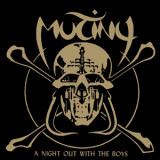
- Rare P-Funk album from 1983 - Funkadelic/Parliament All-Star Line-Up - First ever vinyl reissue - Comes with a repro of the original insert - 180g Black Vinyl Edition - Limited to 500 copies, comes with obi strip // Jerome "Bigfoot" Brailey is an American drummer who started performing in the early 1970s with several R&B groups from the likes of The Unifics, The Chambers Brothers and The Five Stairsteps where he developed his unique style and finesse on drums. Later in 1975 he joined George Clinton's P-Funk collective and has appeared on many of Parliament & Funkadelic's most popular recordings (some of which he also co-wrote). Brailey played on classic albums like `Mothership Connection' and `One Nation Under A Groove'. Samples from that body of work (and his drum arrangements) have since then appeared on hundreds of hip hop and contemporary R&B songs by renowned artists such as Kendrick Lamar and Childish Gambino. Jerome Brailey is a member of the Rock and Roll Hall of Fame (inducted in 1997) and part of their `50 greatest drummers in the Hall' list (stating that his drum style kept Parliament-Funkadelic rooted in the old-school `James Brown-style funk')_next to this achievement, he was proclaimed by Rolling Stone as one of the `100 Greatest Drummers of All Time' for his steady kick drum, shifty hi-hat action and intricately unpredictable snare patterns. Brailey earned numerous Gold and Platinum records with the P-Funk Organization and has worked as a session drummer for many talented artists such as Herbie Hancock, Buddy Miles, Snoop Dogg and Pharoah Sanders. George Clinton's funk empire was not without its disagreements and Jerome Brailey's `Mutiny' project was a direct result of just such a disagreement (as well as one of the more notable offshoots of the P-Funk axis). Mutiny performed in a style not far removed from the classic P-Funk style and with a lot of emphasis on the dual lead guitar work, but what makes them unique compared to their contemporaries is that at times their recordings also emit a darker, more sinister feeling. Besides Brailey on drums (and on most of the lead vocals) Mutiny featured a funk-alumni line-up and released three amazing and collectible albums: `Mutiny On The Mammaship' (CBS, 1979), `Funk Plus The One' (Columbia, 1980) and `A Night Out With the Boys' (J. Romeo, 1983)_these were followed by two comeback albums: `Aftershock' (Rykodisc 1995) and `Funk Road' (Catbone, 2013). The `Mutiny' album we are proudly presenting you today (A Night Out With The Boys) is an underrated gem made by musicians who defined the funk scene of the '70s and '80s! Featuring an all-star line-up that includes Rodney Curtis (Fred Wesley, Maceo Parker), Michael Hampton (Funkadelic-Parliament, Deee-Lite), Kenni Hairston (Cameo) and Maceo Bond of Osiris/Afrika Bambaataa fame! `A Night Out With The Boys' has it all: Jerome's trademark drumbeats, funky bass grooves, driving riffs accented by stinging synth parts, slow spacey (and prominently featured) guitars, top-notch lead vocals and chants that recall Sly Stone's "Loose Booty". The whole album is a hot dance jam with crisp percussion_an extremely infectious, locked-in-the-pocket bass-heavy monster-funk-bomb that any serious self-respecting funk fanatic must have in his/her collection!
Following the 2020 release of RoundAgain, Nonesuch reissues on vinyl Joshua Redman's first album with his own band — pianist Brad Mehldau, bassist Christian McBride, and drummer Brian Blade — originally released in 1994. MoodSwing was Redman’s third recording as a band leader and his first featuring all-original compositions. The young saxophonist sought to change what he believed to be the public perception of jazz — a largely academic and overly intellectualized form of music devoid of the emotional themes that drive many other genres. As he explains in the original liner notes, jazz was seen as, “an elite art form, reserved for a sophisticated intelligentsia who rendezvous in secret.” With MoodSwing, Redman makes the case that jazz can be an accessible musical medium that could evoke basic and visceral emotional reactions.
From the playfully coy ‘Chill’ to the urgent energy of ‘Rejoice’, Redman offers up a communicative and inspired record ofemotional diversity. Joining him in this task was a young band of his peers, all of whom have since become established and esteemed figures in jazz. MoodSwing was one of the first exposures the jazz community had to young pianist Brad Mehldau, then beginning his career in Redman’s quartet. Mehldau anchors these compositions behind Redman’s lyrical playing, occasionally stepping out front to show his talents in ‘The Oneness of Two (In Three)’ and ‘Past in the Present’. The band’s rhythm section has since been recognized as one of jazz’s best, with Christian McBride on bass, and then little-known Brian Blade on the drums.
As the follow-up to his breakout Wish, MoodSwing was universally praised by critics and enjoyed commercial success, selling over 300,000 units worldwide. Entertainment Weekly wrote, ‘saxist Redman finds ingenious ways of creating a modeof acoustic jazz that is both entertaining and enlightening.’ This record continues to provide a cornerstone for Redman’s currentcareer; many of these compositions are still featured in the saxophonist’s live sets today.
Redman’s previously announced European summer 2020 tour dates with Mehldau, McBride and Blade have been rescheduled for 2021, including London’s Barbican, now on July 11.
A folk/bluegrass troubadour from Vermont who delves into shape-note traditions and Appalachian ballads and makes it all beguilingly his own. His guitar lines have the fancy fingerwork of a crack banjo player and his banjo lines have the tugging suspensions of a jazzer.’ – Guardian
‘Amidon is a rare Americana artist whose … signature banjo-strewn style … and disparate mix of influences play into a sound that is at once archaically rootsy and savvily refined.’ – Wall Street Journal
Sam Amidon considers his new self-titled album the fullest realization to date of his artistic vision. It comprises his radical reworkings of nine mostly traditional folk songs, performed with his band of longtime friends and collaborators. Amidon produced the record, applying the sonic universe of his 2017 The Following Mountain to these beloved tunes, many of which he first learned as a child. ‘Pretty Polly,’ for example, was one of the first traditional tunes he learned to play, and ‘Time Has Made A Change’ is a song that his parents – singers who were on the 1977 Nonesuch recording Rivers of Delight with the Word of Mouth Chorus – sang around the house when he was young. Amidon will perform two concerts at Kings Place in London on October 3. A limited number of tickets will be available in the venue, as well as tickets to stream the event from home. Further details are available here.
Amidon and his frequent band of multi-instrumentalist Shahzad Ismaily and drummer Chris Vatalaro were joined in the studio by Belgian guitarist Bert Cools (who played on his last EP), as well as Amidon’s wife, Beth Orton, who adds vocals on three songs. Acoustic bassist Ruth Goller and saxophonist and labelmate Sam Gendel also play on the album, which was mixed by Leo Abrahams. Sam Amidon was mostly recorded live in the studio. Amidon arranged the songs, which are traditional tunes, with the exception of Taj Mahal’s ‘Light Rain Blues’, Harkins Frye’s ‘Time Has Made A Change’, and ‘Hallelujah’, which is an 1835 William Walker shape-note tune using earlier words by Charles Wesley, found in the Sacred Harp collection of early American folk-hymns.
Sam Amidon is Amidon’s fifth recording on Nonesuch and follows the 2019 EP Fatal Flower Garden (A Tribute to Harry Smith). Additional recordings include his 2017 album The Following Mountain and Kronos Quartet’s Folk Songs the same year, on which he was a featured singer along with Rhiannon Giddens, Natalie Merchant, and Olivia Chaney; Lily-O in 2014; and his label debut, Bright Sunny South, in 2013.