Auf Return from the Stars, das in seiner Atmosphäre sowohl energetisch als auch nachdenklich wirkt, geben Mark Turners Kompositionen seiner Gruppe viel Raum für Bewegung. Die Soli fließen organisch aus den Arrangements heraus; neben dem umwerfenden Zusammenspiel von Turners Tenor und Jason Palmers
Trompete können sich Bassist Joe Martin und Schlagzeuger Jonathan Pinson immer wieder frei entfalten.
Obwohl Turner bereits auf diversen ECM Aufnahmen zu hören war – darunter mit dem Billy Hart Quartet, als Teil des Fly Trios, sowie im Duo mit Ethan Iverson – handelt es sich bei Return from the Stars um
sein erstes Quartett Album seit dem vielgelobten Lathe of Heaven von 2014 und um einen unverzichtbaren Beleg seiner außerordentlichen Qualität als Konzeptualist, Instrumentalist und Komponist.
Cerca:jonathan me
- A1: Voigt & Voigt - Why
- A2: Perel - The Hills
- B1: Rebolledo - The Sharper Image
- B2: Jürgen Paape - Le Monde A Changé Feat Bruno
- C1: Matias Aguayo - Cinco Y Rojo
- C2: Jonathan Kaspar - Where Am I
- D1: Eee Gee - All Or Nothing (Michael Mayer Remix)
- D2: Jörg Burger - Crawling Up That Hill (Instrumental Version)
It’s common knowledge that KOMPAKT’s TOTAL series serves as our yearbook, a musical wrap up of the past 12 months. Therefore it doesn’t come as a surprise that this year’s edition is informed by another pandemic year, where dancefloors were still mostly deserted and the devastating developments in Eastern Europe. Kompakt’s A&R team still kept on foot on the imaginary dancefloor, while scouting different realms apart from the big room euphoria. Anyway, brain dance has always been a key ingredient to our catalogue.
The Voigt brothers are opening this years vinyl edition in an unusually romantic fashion. ‘Why’ combines a bubbly FM bassline with lush washes of looped guitars. High off the (presumably high) heels of her recent album ‘Jesus Was An Alien’ she delivers a spanking new excursion into her sonic world, ‘The Hill’. Our Mexican friend Rebolledo makes his first ever solo appearance on TOTAL with his trademark hypnotic desert sound. Jürgen Paape is calling a spade a spade with ‘Le Monde À Changé’ – The world has changed indeed. Our prodigal son, Matias Aguayo, returns to the mothership with ‘Cinco Y Rojo’. An exercise in Chicago-esque groove theory paired with a cheeky visitor from Denmark. Spot the reference and win a pair of hooves. It’s hard to find a quality party around Cologne without Jonathan Kaspar on its bill. Rightly so, as he continues to hone his craft as an impeccable DJ and producer. Michael gives the tremendously talented Danish singer songwriter eee gee a proper Mayer treatment and Kompakt founding member Jörg Burger closes off the festivities with a groovy midtempo chugger that reminisces ‘Blue Lines’ era Massive Attack as much as the late Andy Weatheralls low slung psychedelia.
Es ist allgemein bekannt, dass die TOTAL Reihe eine jährliche Positionsbestimmung des Kölner Labels KOMPAKT darstellt und der Jahrbuch-hafte Charakter war ja auch immer beabsichtigt. So wundert es wenig, dass man TOTAL 22 die Irrungen und Wirrungen des zweiten pandemischen Jahres 2022 deutlich anhört. Die A&R Abteilung des Labels hatte zwar – trotz geschlossener Clubs – weiter mindestens einen Fuss auf dem imaginären Tanzboden, aber man spürt, dass es ein eher verhaltener Jahrgang geworden ist. Dance Tracks brauchen einen entsprechenden Resonanzraum – und der war zumindest bis zur Deadline dieser Platte kaum gegeben. Aber Kopfdisco gehörte schon immer zum kompakten Repertoire. Letztlich entsteht in diesem vom Big Room los gekoppelten Bereich meist die interessanteste Musik.
Die Gebrüder Voigt eröffnen TOTAL 22 auf einer unerwartet romantischen Note. Quirlige FM Bässe schmiegen sich an verhuschte Gitarrenloops, so dass es eine wahre Freude ist. Perel hat gerade ihr fulminantes Album “Jesus Was An Alien” abgeliefert und spurtet bereits mit Siebenmeilenstiefeln (oder vielleicht auch Pumps?) zum nächsten Ziel: ‘The Hills’. Unser mexikanischer Freund Rebolledo ist erstmals solo auf einer TOTAL zu finden und beschwört mit ‘The Sharper Image’ seinen hypnotischen Prärie Sound herauf. Jürgen Paape nennt das Kind direkt beim Namen: Le monde a changé… Die Welt hat sich verändert – ein Kommentar zum Zeitgeschehen, der keiner Erklärung bedarf. Nach längerer Abstinenz hat Matias Aguayo wieder am Mutterschiff angedockt. ‘Cinco Y Rojo’ ist ein Lehrstück in Sachen Chicago-esquen Grooves, kombiniert mit einem frechen Besucher aus dem Dänemark der 80er. Findet die Referenz und gewinnt ein paar nagelneuer Hufen. Es ist derzeit schwer eine qualitativ hochwertige Party im Rheinland zu finden, auf der Jonathan Kaspar nicht spielt. Zurecht, denn er schärft seine Skills als DJ und Produzent wie ein Sushi Chef sein Messer. Michael Mayer dreht die überaus talentierte Singer Songwriterin eee gee auf links und überlässt seinem Weggefährten Jörg Burger das letzte Wort. "Crawling Up That Hill’ ist ein slicker Midtempo Groover, der in seiner behutsamen Psychedelik irgendwo zwischen Massive Attack in der ‘Blue Lines’ Epoche und Andy Weatherall changiert.
Tape
The third LP from the New Zealand quartet houses 12 jewels of tight, guitar-heavy songs that worm their way into your head, an incandescent collision of power-pop and skuzz. With Expert, The Beths wanted to make an album meant to be experienced live, for both the listeners and themselves. They wanted it to be fun -- to hear, to play -- in spite of the prickling anxiety throughout the lyrics, the fear of change and struggle to cope.
Most of Expert was recorded at guitarist Jonathan Pearce’s studio on Karangahape Road in Tāmaki Makaurau, Aotearoa (Auckland, New Zealand) -- and sometimes in the building's cavernous stairwell at 1am -- toward the end of 2021, until they were interrupted by a four-month national lockdown. They traded notes remotely for months, songwriting from afar and fleshing out the arrangements alone, the first time they’d written together in such a way. The following February, The Beths left the country for the first time in more than two years to tour across the US, and simultaneously finish mixing the album on the road. That latter half felt more collaborative, with everyone on-hand to trade notes in real time, until it all culminated in a chaotic three-day studio mad-dash in Los Angeles. There, Expert finally became the record they were hearing in their heads.
Expert is an extension of the same skuzzy palette the band has built across their catalog, pop hooks embedded in incisive indie rock. The album’s title track “Expert In A Dying Field” introduces the thesis for the record: “How does it feel to be an expert in a dying field? How do you know it’s over when you can’t let go?” Stokes asks. “Love is learned over time ‘til you’re an expert in a dying field.”
The rest is a capsule of The Beths’ most electrifying and exciting output, a sonic spectrum: “Your Side” is a forlorn and sincere love song, emotive; while “Silence is Golden,” with its propulsive drum line and stop-start staccato of a guitar line winding up and down, is one of the band’s sharpest and most driving. “When You Know You Know” skews a bit groovier, pure pop and a natural addition to the band’s live set. “Knees Deep” was written last minute, but yields one of the best guitar lines on Expert. There’s a certain chaos across the 12 tracks, the palpable joy of playing music with long-time friends colliding with the raw nerves of pain.
Stokes strings it all together through her singular songwriting lens, earnest and self-effacing, zeroing in on the granules of doubt and how they snowball. Did I do the wrong thing? Or did you? And are we still good people at the end of it? She isn’t interested in villains, but instead interested in just telling the story. That insecurity and thoughtfulness, translated into universality and understanding, has been the guiding light of The Beths’ output since 2016. In the face of pain, there’s no dwelling on internal anguish - instead, through The Beths’ musi
Jonathan Jeremiah veröffentlicht sein 5. Album 'Horsepower For The Streets'! Ein Großteil des neuen Albums wurde auf dem Land in der Nähe von Bordeaux, während der Pausen von Jonathans erster Frankreich-Tournee geschrieben, bevor das Album final in einer monumentalen Kirche in Amsterdam mit einem 20-köpfigen Streichorchester aufgenommen wurde.
Im Grunde ist 'Horsepower For The Streets' ein Konzeptalbum in elf Kapiteln, das von dem bleibenden Schmerz und der Zerbrechlichkeit lebt und uns dabei lehrt, unsere dunkelsten Dämonen zu akzeptieren.
Die Songs darauf fangen einen speziellen Groove früherer Jahrzehnte ein, mit schrammelnden Gitarren, majestätischen Streichern und warmen, nostalgischen Harmonien.
So auch der Titeltrack und erste Single, auf dem Jonathans vibrierende, soulige Stimme und die tiefgründigen Texte auf eine groovige Rhythmusgruppe und Streicher á la Lalo Schifrin, Michael Kiwanuka oder Terry Callier treffen.
London-based British singer songwriter Jonathan
Jeremiah confirms his new album, his second for
PIAS Recordings, ‘Horsepower For The Streets’.
Contains the singles ‘Horsepower For The Streets’
and ‘Restless Heart’.
Much of ‘Horsepower For The Streets’ was written
in Saint-Pierre-De-Côle, the countryside beyond
Bordeaux, during breaks in Jeremiah’s first tour of
France, before the album was recorded in a
renovated monumental church in Amsterdam, with
Amsterdam Sinfonietta, a 20-piece string
orchestra.
For fans of Michael Kiwanuka, Black Pumas,
Villagers, Charles Bradley.
Radio - 6 Music Guy Garvey, Cerys Mathews, Huw
Stephens.
- 1: Out Cont (Out Conte) Chaplin 03:47
- 1: 2 5 A.m. トクマルシューゴ / Shugo Tokumaru 05:48
- 1: 3 July F.l.y. 03:20
- 1: 4 あきのつばめ / Aki No Tsubame わすれろ草 / Wasurerogusa 04:24
- 1: 5 人が生まれる / Hito Ga Umareru ジョナサン・コンディショナー / Jonathan Conditioner 05:39
- 1: 6 或る夕べ / An Evening Litany 中村祐子 / Yuko Nakamura 02:02
- 1: 7 Wedding Song Kama Aina 05:30
- 1: 8 Ginger Yuko Kono 03:52
- 1: 9 つけも / Tsukemo ジョンのサン / Jon No Son 0:0
- 1: 0 ゆうたいりだつ / Yūtai-Ridatsu 森山ふとし / Futoshi Moriyama 06:9
- 1: Blue Mmm 05:9
- 1: 2 夜 / Night てんしんくん / Tenshinkun 0:42
- 2: 1 Origami Daisuke Tanabe 03:1
- 2: 不夜城 / Fuyajo その他の短編ズ / Sonotanotanpenz 01:36
- 2: 3 水 / Water んミィ / Nnmie 0:5
- 2: 4 君のような目にいつかなりたい / Wanna Be Like Your Eyes Someday わびさびくらぶ / Wabisabi Club 03:19
- 2: 5 スミヨシ / Sumiyoshi かきつばた / Kakitubata 07:43
- 2: 6 野球 / Baseball Hose 0:31
- 2: 7 グッモーニン / Good Morning ブラジル / Brazil 0:59
- 2: 8 わんわんのテーマ / The Theme Of Oneone わんわん / Oneone 04:38
- 2: 9 アルペジオ / Arpeggio 王舟 / Oh Shu 01:30
- 2: 10 少年少女 / Boys & Girls 惑星のかぞえかた / How To Count Planets 03:50
- 2: 11 雪がや / Yukiga Ya コントノボ / Contonovo 0:5
- 2: 1 夢が叶った / Yumega Kanatta / My Dream Has Come True 狩生健志 / Kariu Kenji 03:15
- 2: 13 話し方 / How To Speak Fuji||||||||||Ta 04:53
- 2: 14 染め / Dye (Some) 沼田佳命子 / Kanako Numata 03:11
Following the »Minna Miteru« compilation, released in 2020, Morr Music announces a sequel, dedicated to Japanese indie music, overflowing with surprises and welcome discoveries. Like its predecessor, »Minna Miteru 2« is compiled by Saya of Tenniscoats, with the support of Markus Acher (The Notwist). It’s also another part of the Minna Miteru universe, alongside retrospective albums by The Andersens (»There Is A Sound«, 2020) and yumbo (»The Fruit Of Errata«, 2021). Taken together, these albums suggest a scene in rude health, sharing a unique vibration.
If its predecessor circled around Tenniscoats and their close friends, the second volume, though featuring a collaboration between Tenniscoats and Deerhoof as oneone, reaches far further afield, drawing from music old and new, far and wide. Consistent across »Minna Miteru 2« is a sense of wonder and a cheerful unpredictability: you never quite know what you’ll hear next. There are some gorgeous indie pop songs here, like Yuko Kono’s »Ginger« or HOSE’s »Baseball«, but there are other sounds too, like Kariu Kenji’s blue-hued electro-pop, or the wheezing pipe-organ ambient of FUJI||||||||||TA: »Minna Miteru 2« hints at new kinds of beauty.
Some of the more widely known names here contribute typically gorgeous melodies – Kama Aina’s »Wedding Song«, from 2005’s »Hawaii Hawaii« CD, is a reflective tune that combines a country-ish lilt with hints of slack-key guitar. Shugo Tokumaru’s »5 A.M.« is a delirious psychedelic pop mantra, drawn from his excellent 2005 album, »L.S.T.«. Many of the revelations, though, come from artists and groups relatively unknown outside Japan. The lovely, disorienting glitch-folk of Wasurerogusa features Aki Tsuyuko, perhaps best known for her albums on Thrill Jockey and Jim O’Rourke’s Moikai label, collaborating with psych-folk legends Eddie Marcon.
There’s also the delightful synth-pop of Jonathan Conditioner; the electronic dreamscape of Chaplin, whose opening »Out Cont« runs along several parallel paths at once; the twinkling, acoustic jangle at the heart of mmm’s luscious »Blue«; and a curious collection of miniatures, from acts like tenshinkun, Daisuke Tanabe and NNMIE, that embrace a childlike curiosity, essaying a kind of toytown pop-tronica.
The twenty-six songs on »Minna Miteru 2« repeatedly catch you unawares, upending your expectations and signaling both the breadth and depth of the Japanese indie underground. It’s a compilation of play and pleasure, but also of bold experiment smuggled into the everyday through pop music’s welcoming moods, magically creating a new world for the listener, spun out of the air and woven in between your ears.
'Fairy Rust', the new album from Wombo contemplates the spaces inbetween, a meeting of the physicality of the land with the fluidity of the
imagination, to uncanny effect
Across twelve tracks, sharpened guitar work, distorted freakouts and downtempo
musings weave together a tapestry of sound that's both intoxicating and
effortless. Where one minute it's all deadpan post- punk energy, and the next
Stereolab on a mountain top. The music functions as their own localized
language that feels uniquely out-of-body. Conceived over the course of the last
two years, the record is steeped in its own time warp of escapism, and influenced
by fairy tales like the Brothers Grimm and Hans Christian Anderson that blend
surreal situations with the mundane. Flirting with prog, pop and effervescent
post- punk, Wombo's forward- thinking approach set them apart as one of the
most exciting up- and- coming bands right now. Mixed by Dave Vettraino (Dehd,
Deeper, Lala Lala) & Mastered by Jonathan Schenke (Parquet Courts, Snail Mail,
Pottery).
‘Learning To Dissolve’ is the punctuation on a journey that began with 2017’s ‘Sounds of Loss’. From the inception, ORTHODOX were nothing short of a standout, blending together riffs that wouldn’t be out of place on a Slipknot record coupled with Easterling’s blunt, Jonathan Davis-esque howls. But, like their sonic brethren in Knocked Loose or Vein.FM, while the influence of the 90’s/00’s is there, ORTHODOX doesn’t merely pay homage to their influences, it exceeds them. ‘From the beginning, we went in our own direction regardless of what anybody thought,’ states Adam. ‘We didn’t grow up listening to hardcore. We grew up on bands like Linkin Park and System of a Down.’ With ‘Learning to Dissolve’, those influences have refined themselves into a sound that is urgent and unforgettable from the album’s opening track, ‘Feel It Linger’ to the personal and aural meltdown of closer, ‘Voice in The Choir’. ORTHODOX ‘Learning To Dissolve’ is available as: Ltd. CD Digipak, 180g black LP+CD, Digital Album.
- A1: Stephen Brown – Level Steps
- B1: Claude Vonstroke – Moody Fuse
- C1: Denis Horvat – Monomono
- D1: Daniel Avery – Your Future Looks Different In The Light
- E1: Jeroen Search – Subversive Elements
- F1: Marco Bailey – Kanai
- G1: Damiano Von Erckert – 500 People, 500 Hearts, 1 Love
- H1: Yokto – Vision99
- I1: Jonathan Kaspar – Ccc
- J1: The Emperor Machine – The Art Of Electronics
- K1: Carl Finlow – Surface Control
- L1: Defekt – Terraform
Cocoon Recordings presents: Cocoon Compilation T
Limited Vinyl Box Set including 6x blue vinyl & download code
Another year, another expertly curated compilation touches down courtesy of Cocoon Recordings. Somehow, the world keeps turning and with it the Cocoon universe keeps expanding, causing subtle yet persuasive shifts in the sonic soundscape that continue to
capture and captivate the imagination. In time-honored tradition the old guard and the new combine with devastating effect, to define the current state of play…
Veteran Techno producer Stephen Brown makes it clear the compilation series is back with a bang, opening things up in epic fashion with the lucid dreamscape ‘Level Steps’ - a true work of art. Another heavy-weight hitter steps straight up in the form of Claude von Stroke, who adds his own unique swagger to proceedings with those trademark shuffling beats and freaky, hypnotic bleeps scuffling for dominance on ‘Moody Fuse’. Denis Horvat then slows things down on ‘Monomono’, with post-raveNew Release Information
abstractions and disobedient synth-patches causing mayhem before the track finally unfolds in all its terrifying beauty.
Motoring on, the collection wastes no time reaching that familiar tipping point as we enter the techno phase of the journey. A very special appearance from Daniel Avery makes it all the more worthwhile amid a dense forest of chiming melodies and blistering electrical surges on ‘Your Future Looks Different In The Light’, before Jeroen Search’s aptly titled ‘Subversive Elements’ lead us deeper and
deeper, into the matrix.
Marco Bailey then kicks off a triptych of trance with some massive filtered piano action on ‘Kanai’ that’s destined to trigger a serotonin smile with everyone it touches. Revisiting the huge,
ever-growing pulsating brain of planet Orb, Damiano van Erckert continues the loved-up vibe on the gorgeously titled ‘500 People 500 Hearts 1 Love’, expertly complimenting the classic ambience with
some slick 909 snare and cymbal interplay. The melodic pull of ‘Vision99’ then signifies that the party is peaking at just the right moment as YOKTO concocts a glistening, psychedelic groove. The
emotional resonance climbs ever higher with brittle melodies endlessly circling a lush, throbbing bass drone to create the sense of something stirring out of reach.
Just when you think the acid sound is done and dusted, up pops a track like Jonathan Kaspar’s ‘CCC’ that somehow manages to offer an entirely new perspective. Riding in on a wave of expectant
arpeggios, the squelching bass and noise filter go toe to toe before Kaspar gets busy with a freaky tempo excursion that’ll be destroying dance floors all year long. ‘The Art of Electronics’ is, as the title
suggests, another superlative example of pure analogue fire, served up by UK legend, Andrew Meecham aka The Emperor Machine. The funk starts to flow as the bass drops, the machines cut loose and a swarm of cascading bleeps ride the trans-europa express to oblivion.
Electro overlord Carl Finlow, has come to define the UK take on the genre over the last couple of decades. Here, he makes his long overdue label debut, taking us into the closing straight with a
nervous sliver of dystopian futurism, complete with molten basslines and a fuzzy logic that underpins the tight, laser-guided groove on ‘Surface Control’. DeFeKT then draws this great adventure to a close
with the deliciously dark robo-disco overtones of ‘Terraform’ creating a dusky landscape that skillfully seduces the listener before the tension finally breaks in a wash of ecstatic chords.
All in all, it’s a supremely ambitious collection of tracks, generously featuring some of the most inspirational and durable artists of their respective generations. In fact, is this perhaps the best Cocoon
Compilation to date
Renowned German artist Jonathan Kaspar will make an eagerly-awaited return to Kompakt next month via his Umfang EP, with the four-track offering acting as his first full-length solo release on the label since March 2021. “My third Kompakt EP feels particularly special as it is the first time I’m releasing on my home label with dancefloors being open again. The result is four different tracks producing four different vibes, each of which transport my pandemic desires into today’s world.” - Jonathan Kaspar.
The title track leads the way, taking the form of a retro-leaning cut that features whirring synth stabs throughout. Kupfer comes next, a track packed full of emotive chords and a delicate underlying bassline, before Am Raster leads us to the dancefloor and beyond courtesy of minimal-laced kick patterns. Gemach, Gemach Herr Rabe ends proceedings on an incandescent note, as symphonic keys combine with intermittent crow samples to form a slice of wholesome, nature-inspired musical bliss.
Hailing from Bonn, Germany, Jonathan Kaspar is an integral part of the scene in Cologne. He is a resident at the city’s renowned Gewölbe club and also one of the current main figures at the legendary Kompakt label. His discography boasts releases on some of contemporary dance music’s most esteemed labels, including Innervisions, Cocoon Recordings and Crosstown Rebels to name a few, whilst performances at Watergate (Berlin), NDSM (Amsterdam) and Extrema Festival (Hasselt) have brought his sound to global audiences. The Umfang EP proves exactly why he has become one of Germany’s most exciting prospects in recent times and with a highlight year ahead, the future certainly shines bright for Jonathan.
Jonathan Kaspar ist mit einer neuen EP zurück auf KOMPAKT. Die vier Tracks unter dem Titel “Umfang EP” sind seine erste Solo-Veröffentlichung auf dem Label seit März 2021.
"Meine dritte KOMPAKT EP fühlt sich als etwas ganz Besonderes an, weil es das erste Mal ist, dass ich etwas auf meinem Heimatlabel veröffentliche und die Clubs wieder geöffnet sind. Dabei herausgekommen sind vier verschiedene Tracks mit vier unterschiedlichen Stimmungen, die meine pandemischen Sehnsüchte in die Jetztzeit transportieren", so Jonathan Kaspar.
Den Anfang macht der Titeltrack, retro-orientiert und mit flirrenden Synth-Stabs. Es folgt “Kupfer”, ein Track voller gefühlvoller Akkorde und einer zarten Bassline, bevor “Am Raster” uns mit minimalistischen Patterns auf die Tanzfläche und darüber hinaus führt. Mit “Gemach, Gemach Herr Rabe” schließt sich der Kreis, ein Stück glühender musikalischer Glückseligkeit, in dem sich symphonische Keys mit hier und da eingestreuten Samples von Krähen verbinden.
Der aus Bonn stammende Jonathan Kaspar ist fester Bestandteil der Kölner Elektro-Szene. Er ist Resident im renommierten Gewölbe Club und einer der aktuellen Protagonisten des KOMPAKT Labels. Seine Diskographie umfasst Veröffentlichungen auf einigen der angesehensten Labels der zeitgenössischen elektronischen Tanzmusik, darunter Innervisions, Cocoon Recordings und Crosstown Rebels, um nur einige zu nennen. Als DJ ist Jonathan international in den wichtigsten Clubs und auf den renommiertesten Festivals unterwegs, um seinen Sound einem weltweiten Publikum nahezubringen. Die “Umfang EP” ist ein neuerlicher Beweis, warum Kaspar in letzter Zeit zu einem der aufregendsten Produzenten aus Deutschland geworden ist. Dass ihm als Künstler weiterhin Großes bevorsteht, dem sollte nichts entgegenstehen.
MISADVENTURES OF DOOMSCROLLER wurde von Jonathan Wilson (Billy Strings, Father John Misty, Angel Olsen) produziert und stellt eine neue, abenteuerliche Richtung für Dawes dar, die einen ehrgeizigeren und experimentelleren Ansatz bei den Aufnahmen zeigt als je zuvor.
”Wir waren schon immer stolz darauf, Minimalisten zu sein. Mit dieser Platte haben wir uns vorgenommen, MAXIMALISTEN zu sein”, sagt Goldsmith. ”Immer noch ein Quartett. Die Songs sollen sich nicht
hinter irgendwelchen Tricks oder Effekten verstecken. Aber wir lassen die Songs wirklich atmen und sich ausdehnen und leben, wie sie es wollen. Wir haben beschlossen, keine Rücksicht mehr auf kurze Aufmerksamkeitsspannen zu nehmen. Unsere Ambitionen gehen dabei über das Musikalische hinaus. ”Wir wollten auch die traditionelle Länge einer Schallplatte - 40-45 Minuten - respektieren, aber keine Rücksicht auf die Anzahl der Tracks nehmen. So wie es Miles oder Herbie oft getan haben. Die Songs zu dokumentieren ist nur die eine Hälfte des Bildes. Für diese Platte sind sie auch die Plattform, von der aus wir abspringen und uns darin verlieren können. Ich glaube, ich kann es am besten so ausdrücken: Wir wollten, dass diese Platte weniger eine Sammlung von Songs als vielmehr eine Sammlung von Musik ist.”
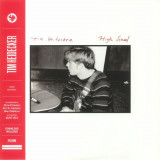
Produced by Heidecker, Drew Erickson, Eric D. Johnson and Mac DeMarco, High School sees Heidecker emerging as an increasingly playful and poignant story teller, infusing childhood tales with new gravity. In conjunction, he announces Tim Heidecker Live! Featuring Tim Heidecker and The Very Good Band, his first two-act tour of comedy and music. Since 2016, Tim Heidecker has chronicled the annals of adulthood on a series of supreme singer-songwriter albums. The crushing devastation of divorce and the existential malaise of middle-age, the minutiae of home ownership and the ritual of family vacation, child rearing and global warming: Heidecker has handled it all with humor and heart. But, there’s one pivotal lodestar of human development he has yet to mine that’s right, High School. First single “Buddy” is a composite of a few woebegone friends, which finds Heidecker reminiscing on the familiar tragedy of the adolescent stoner, manifesting the destiny of undiagnosed depression and parents who didn’t care much. The song itself is a jangly delight, but it’s hard not to mourn for “Buddy,” then re-count whatever blessings you may have. After initial and fruitful sessions with Jonathan Rado, Heidecker started recording tunes with DeMarco and Erickson, who had also worked on 2020’s collaboration with Weyes Blood, Fear of Death. At DeMarco’s studio, they added drum machines and synths and sidewinding solos to Heidecker’s big strummed chords. Johnson (Bonny Light Horseman, Fruit Bats) helped Heidecker finesse the tunes even more, making the music as rich as the feelings. Kurt Vile contributed to one song, as well. Through all those sessions, it slowly became clear: Heidecker was writing not only about the adventures and misadventures of life as a Pennsylvania teen in the early ’90s, but also how it felt to lose a juvenile sense of mystery and possibility as an adult. He was writing about high school and, really, the way it helped shape everything else. Back at Pennsylvania’s Allentown Central Catholic High School, Heidecker dreamed of making it with one of his many rock bands — Time and Other Things, Shaggy’s Beltbuckle, and (incredibly) The Pulsating Libidos. Two years shy of his graduating class’ 30th anniversary, Heidecker admits he had little of substance to say when he was 17, like all but the rarest of precocious minds. In college, though, he found the friends with whom he built his comedy career, largely apart from music and without much thought for his time back at Central Catholic. He was focused on his future. It is fitting, then, that as Heidecker has become such a delightful singer-songwriter and collaborator, he returns to the first scene of his time as a musician. Maybe he’s right — he didn’t have anything to say or sing about life back then. But across the earnest and amusing High School, he finds plenty to say about those weird and wonderful and ordinary times.
Greek genius Christos Chondropoulos’ stunning debut for The Death of Rave finally lands on vinyl - an incredibly imaginative masterwork rich with quartertone melody and meticulously chiselled production, shaped into a future-folk songbook that deeply expands on his wonders for 12th Isle and The Wormhole. Highly recommended if yr into Paul DeMarinis, Rashad Becker, Ryuichi Sakamoto, Kara-Lis Coverdale's 'Aftertouches', Jonathan Bepler’s soundtracks for Matthew Barney, Black Sabbath or Aphex Twin. Floors us every time!
Continuing Christos’ singular fascination with, and reappraisal of, Ancient Greek modes, ’Relics’ further excavates the deeptime topography of Greek music prior to the ban of “oriental” or 1/4 tone microtonal modes nearly 100 years ago.
Clandestine, euphoric, hyperreal and otherworldly; it takes shape as faintly familiar forms of new age folk, avant-techno and metal musicks, but with an alien appeal that treats the past almost like another planet, never mind a foreign land. Christos studiously raids the past for lost treasure, navigating his tuned instincts as an improvising percussionist, and lover of non-Western composition, to create a uniquely absorbing soundworld that resembles an AI’s dreams after ingesting encyclopaedia entries on thousands of years of Greece prior to 1936. In the process, the album acutely questions his and our relationship to the past, and what has become lost in translation with reliance on prelaid templates and the “wisdom” of elders.
Bursting to life with the iridescent arps and new age AI chorale of ‘First Love Fereter’, and concluding with bone-clacking raverie of ‘Jungle X’, the album offers a stunning advance of the themes and aesthetics in Christos' previous records, from the self-released free jazz of ‘Fingerpainting’ (2013) to 2021’s 12th Isle released ‘Athenian Primitivism.’
Thanks to meticulous detailing, ‘Relics’ allows a finer play of textured light and almost tangible - yet entirely generated - voices into his music: most strikingly on the sublime songcraft of ‘Regret’ and ‘I Dream Of You’, while the likes of ‘Asham’ are bathed in deeply uncanny atmosphere, and his percussive proprioceptions are most heightened in the delirious battery of ‘War Horns’ and ‘Sacrifice’, with ‘Cyber Crust’ calling up demonic, cthonic pagan spirits resembling Black Sabbath undergoing regression therapy.
The brand new album by rising Australian out-rock duo, Party Dozen. Features guest vocals by Nick Cave. Party Dozen are a duo from Sydney made up of Kirsty Tickle (saxophone) and Jonathan Boulet (percussion and sampler). Since forming in 2017, they have become renowned in Australia for their incendiary live shows, touring and playing with acts such as LIARS, Tropical Fuck Storm and Viagra Boys. Exactly what Party Dozen are is completely up to the listener. Doom. Jazz. Hardcore. Psychedelic. No-wave. Industrial. Although largely instrumental, their sets are punctuated by Kirsty’s unique “singing” style, screaming into the bell of her saxophone which itself goes through a bevy of effects pedals. Intensely independent in everything they do, the duo write, perform and record everything themselves. 2022 will see the return of Party Dozen, first in April with the 7” release, Fat Hans Gone Mad, for the Sub Pop Singles Club, and then in July with their third album, The Real Work, with a new label partner in New York’s Temporary Residence Ltd. The Real Work succeeds in exploring new directions but also features some familiar Party Dozen touches. Perhaps most notable is the first-ever appearance of a guest other than Kirsty or Jonathan on a Party Dozen track, with Nick Cave ad-libbing a very memorable contribution to the album’s second track, “Macca The Mutt.”
"Big Time" entstand mit einem Peitschenhieb in den seltenen, fruchtbaren Momenten, in denen sowohl frische Trauer als auch frische Liebe gleichzeitig auftreten, in denen sich Kummer und Verliebtheit gegenseitig verstärken, verkomplizieren und erklären. Verlust ist schon immer ein Thema in Olsens Songs gewesen, aber nur wenige können Elegien mit einer derart rücksichtslosen Energie schreiben, wie sie. Wenn diese aus allen Nähten platzende, bergab rasende Energie für ihre Arbeit unüberwindbar schien, beweist "Big Time", dass Olsen jetzt von einem verwurzelteren Ort der Klarheit aus schreibt. Dabei arbeitet sie mit einer elastischen Beherrschung ihrer Stimme - sowohl klanglich als auch künstlerisch. In diesen Liedern geht es nicht nur um die Transformation von Trauer, sondern auch darum, Freiheit und Freude in den Entbehrungen zu finden, die diese mit sich bringen. "Big Time" ist ein Album über die expansive Kraft der neuen Liebe, geschrieben in der Zeit, als Angel Olsen sich als queer outete und ihre ersten Erfahrungen mit queerer Liebe und Herzschmerz machte. Aber dieser Glanz und Optimismus wird durch ein tiefes und vielschichtiges Gefühl von Verlust gemildert. Während Olsens Prozess der Auseinandersetzung mit ihrem Queer-Sein und der Konfrontation mit den Traumata, die sie davon abgehalten hatten, sich selbst voll und ganz zu akzeptieren, fühlte sie, dass es an der Zeit war, sich ihren Eltern gegenüber zu outen - eine Hürde, die sie eine Zeit lang vermieden hatte. "Some experiences just make you feel as though you're five years old, no matter how wise or adult you think you are", schreibt sie über diese Zeit. Nach diesem tränenreichen, aber erleichternden Gespräch feierte sie mit ihrem/ihrer Partner*in, ihren Freund*innen, mit Austern und Wein. "Finally, at the ripe age of 34, I was free to be me." Drei Tage später starb ihr Vater, dessen Beerdigung Olsen zum Anlass nahm, den/die Partner*in ihrer Familie vorzustellen. Nur zwei Wochen später erhielt Olsen den Anruf, dass ihre Mutter in der Notaufnahme lag. Eine Zeit im Hospiz kam bald darauf, und eine zweite Beerdigung folgte kurz nach der ersten. Eine weitere Reise zurück nach St. Louis, eine weitere Trauerbewältigung, eine weitere Vertiefung und Intensivierung dieser noch jungen Liebe. Drei Wochen nach der Beerdigung ihrer Mutter war Olsen im Studio, um dieses unglaublich weise und zärtliche neue Album "Big Time" aufzunehmen. Ausgelassene Anspielungen an Tammy Wynette und Kitty Wells tauchen auf "Big Time" ebenso auf wie die komplexen Orchestrationen ihres genreübergreifenden 2019er Albums "All Mirrors". Während jenes Album voller dramatischer Veränderungen und Wendungen war, liegen die Überraschungen hier in ihrer Einfachheit - ein langsames Anschwellen der Streicher, eine Instrumentierung, die wie ein Sturm zyklisch ist, oder funkelnde Hörner in einer lichtdurchfluteten Break-up-Ballade, während kaum ein Synthesizer in Sicht ist. "Big Time" wurde zusammen mit dem Co-Produzenten Jonathan Wilson in seinen Fivestar Studios in Topanga, Kalifornien, aufgenommen und gemischt. Drew Erickson spielte Klavier, Orgel und kümmerte sich um die Streicherarrangements. Olsens langjährige Bandkollegin Emily Elhaj spielte durchgehend den Bass.

- A1: Bonjour (Feat Julie Normal & Bob Junior)
- A2: Lungo Il Fiume E Sull'acqua
- A3: Desire (Feat Egeeno)
- A4: Gli Inglesi E Gli Americani (Feat Emanuela Villagrossi)
- A5: Turn To See Me (Feat Chiara Castello)
- A6: I Am Here
- B1: Energy & Love
- B2: Empty Window/Empty Space
- B3: What's Your Path, Man (Feat Jonathan Clancy & Maurizio Marsico)
- B4: Water & Sea
- B5: Pronuncia Di Levante
- B6: Notturno Cileno (Feat Gianpiero Kesten)
"Turn To See Me" is yet another step forward for The Dining Rooms, an artistic duo that never lacked creativity. This ninth album of theirs is a further confirmation: an intense record, inevitably influenced by the events of the last two years and therefore imbued with dark and melancholy sounds, but at the same time positive and aimed at a hopefully better future. Once again, there are numerous collaborations and blends of various musical genres (hip-hop, folk, jazz, electronic, trip hop) that do not, however, betray the 'cinematic' trademark of the Milanese outfit.
The eagerly anticipated second remix package of André Hommen’s More Than This album is set for release in April on his These Eyes imprint. Following the Remixes Pt.1, featuring Robag Wruhme and Jonathan Kaspar, André recruits heavy-weight’s Donato Dozzy, Michael Mayer and Manuel Tur to deliver the remixes of Pantone. Donato Dozzy kicks things off with a tribal-esque remix. A bass-heavy, rolling drum at the heart of the track is met with intricate percussion and bird sounds, which take you on a tropical journey. Michael Mayer’s remix gets to work with a punchy, up-tempo bassline, perfectly partnered with airy synths and soothing pads. Rounding off the release, Manuel Tur’s remix offers darker drums that progressively build, enhanced with finely chopped vocals that echo in and out combined with minimalistic melodies. Italian native Donato Dozzy is widely acclaimed in techno circles across the globe. Displaying a large variation in terms of sound and method, his releases can be found on Tresor, Spectrum Spools and his own Spazio Disponibile. As a co-founder of Kompakt, Michael Mayer works closely with artists on their releases for the label. With three studio albums under his belt and numerous remixes for the likes of Miss Kittin, Pet Shop Boys and Depeche Mode, it’s easy to see why Mayer has such an acclaimed status in the dance world. Manuel Tur was born and raised in Essen, Germany. He released his debut EP at the age of sixteen and has gone on to release on labels such as Freerange and Running Back.
Father John Misty returns with ‘Chloë and the Next
20th Century’, his fifth album and first new material
since the release of ‘God’s Favorite Customer’ in
2018.
‘Chloë and the Next 20th Century’ was written and
recorded August through December 2020 and
features arrangements by Drew Erickson.
The album sees Tillman and producer/multiinstrumentalist Jonathan Wilson resume their longtime collaboration, as well as Dave Cerminara,
returning as engineer and mixer. Basic tracks were
recorded at Wilson’s Five Star Studios with strings,
brass and woodwinds recorded at United
Recordings in a session featuring Dan Higgins and
Wayne Bergeron, among others.
‘Chloë and the Next 20th Century’ features the
singles ‘Funny Girl’, ‘Q4’, ‘Goodbye Mr. Blue’ and
‘Kiss Me (I Loved You)’