Peter Hook and The Light are an English rock band, formed in May 2010 by bass guitarist/vocalist Peter Hook, formerly of the influential post-punk bands Joy Division and New Order.
The band is noted for performing the Joy Division and New Order albums live.Their setlists primarily feature the two Joy Division albums, Unknown Pleasures and Closer or the first two New Order albums, Movement and Power, Corruption & Lies, depending on the respective tour.
The very concept is bound to stir up conflicted feelings -- bafflement, interest, cynicism, anger -- in any Joy Division fan. Here’s that band’s Peter Hook, singing lead and playing bass, supported by a guitarist, drummer, keyboard player, and additional bassist. In front of a Melbourne crowd, the band roars through the entirety of Joy Division's Unknown Pleasures, book-ending the album with six additional reinterpretations. The musicians play their hearts out, and Hook is absolutely locked into the material. One can’t deny the man’s conviction. The moments of aggression are far more suited for his gruff, seething vocals than the likes of “Candidate” and “I Remember Nothing,” where he has some trouble dialing it down. As an in-the-flesh experience, this was probably quite thrilling. As a home listening experience, it seems unnecessary -- at best, a curiosity -- especially when the source material is a couple clicks away.
Buscar:joy o
- A1: Impulsion (03 02)
- A2: Tension Build (00 30)
- A3: Fast Action (02 28)
- A4: The Chaser (01 57)
- A5: Heat On (01 03)
- A6: Runaway (02 04)
- A7: Power Source (00 30)
- A8: Percussion Power (02 51)
- A9: Shivers (03 08)
- A10: Gathering Storm (02 21)
- A11: Drums On Parade (02 16)
- B1: Samba Street (A) (03 00)
- B2: Samba Street (B) (03 00)
- B3: Child’s Theme (A) (01 14)
- B4: Child’s Theme (B) (00 40)
- B5: Child’s Theme (C) (01 04)
- B6: Child’s Theme (D) (01 26)
- B7: Child’s Theme (E) (01 25)
- B8: Spanner In The Works (02 17)
- B9: Tropical Peace (01 45)
- B10: Clippity Clop (01 15)
- B11: Red Indian Drums (00 35)
- B12: Fairy Wand (A) (00 08)
- B13: Fairy Wand (B) (00 09)
- B18: Timpani (B) (00 05)
- B19: Timpani (C) (00 05)
- B20: Vibraphone (A) (00 15)
- B21: Vibraphone (B) (00 15)
- B22: Bell Chimes (00 27)
- B23: Clock Chimes (00 37)
- B14: Fairy Wand (C) (00 12)
- B15: Snare Drum Roll (A) (00 12)
- B16: Snare Drum Roll (B) (00 07)
- B17: Timpani (A) (00 25)
They Say: “Exploring the wide range of moods and sounds produced by percussion”.
We say: MPCs at the ready because this does exactly what it says on the tin, to devastating effect. Oh, and the sleeve is stunning.
Originally released in 1979, Percussion Spectrum was produced by the legendary percussionists Barry Morgan and Ray Cooper. With dope beats taking in diverse styles, from funk and soul and jazz through to Latin, Brazilian, samba and Afro-Cuban, this is an amazing sample source filled with killer drum-breaks and percussion flares. Unsurprisingly it’s one of the most sought-after records from the Themes catalogue.
This library LP is a library in itself, with its mix of short themes of single beats, short breaks and some longer, more fully-formed DJ-friendly tracks. Trust us when we say that this is a box full of percussion firework ready to be thrown onto the dancefloor at the just right moment. We don’t have anywhere near enough space to describe all 34 tracks (there isn’t even enough room on the labels to list them all!) so we’ll pick out some favourites.
Favourites like opener “Impulsion”, a percussive masterclass with drum upon drum upon drum making it feel like a neat prototype to the percussive underscores of Peter Lüdemann and Pit Troja’s eternal The Now Generation LP. And the dramatic “Fast Action” is exactly that, racing along on a rapid roll of congas, cymbal crashes and throbbing kicks. “The Chaser” is classic library cop-funk with dilapidated drum figures, and the outrageously funky “Heat On” is the perfect accompaniment to your wild action sequences.
A real highlight is “Runaway”, and not just because it sounds like nothing else on the record. Here are drums and percussion in that tight funk style that just cries out to be sampled. “Percussion Power” is an extended, near-three minute suite of funky drum solo after funky drum solo that just aches to be looped: open drums to die for people! “Shivers” is a tense, apprehensive underscore with shock stabs that builds to a climax whilst “Drums On Parade” is a showcase of head-nod drums and cymbals in march time. Did someone say “funky”?
Side B starts with a stroll down “Samba Street”. With the noise of the crowd in the background, this is riotous, authentically drawn samba that sounds like it’s been beamed straight in from Rio in full flow. Drop this at midnight and watch the cobwebs fly off any dancefloor. Prefer it without the fake crowd? “Samba Street (b)” has you covered.
The simple, innocent “Child’s Themes” (all five of them) provide a nice, sweet respite from all the funk. Nursery sounds tinged with only a touch of melancholy. The gentle marimba solo of “Tropical Peace” only adds to the sense of serenity we get from the relatively calm second side. The album closes out with a veritable toolkit of tom toms, snare drum rolls, timpani, vibraphones and chiming bells.
Percussion Spectrum is a joyous collection of sounds, as bright, beaming and downright funky as the vibrant cover. The Themes series is known for each record having its own particularly striking sleeve, which was unusual for library records at the time, and Percussion Spectrums’s multi-coloured drumsticks make for one of the most eye-catching.
As with all of our other Themes re-issues, the audio for Percussion Spectrum comes from the original analogue tapes and has been remastered for vinyl by Be With regular Simon Francis. As usual Richard Robinson has taken the same care with restoring the original sleeve from archive scans. This is another one ticked off the list of library records that should be out there for anyone who wants a copy.
Jossy Mitsu (Rinse FM / 6 Figure Gang) makes her production debut on Astral Black. A resident DJ for the labels monthly club residency and host for their monthly radio shows, the club night-cum-label is the perfect home for Jossy's debut solo release. The Birmingham-raised, London based DJ has become known for her ability to shell down any club, whether that’s rinsing out a twisted concoction of sweaty House, Techno and left field club heaters, firing heavy-weight Rave and Jungle sets, or serenading you with her 2-step vinyl collection. Now holding down a Rinse FM residency and part of the much loved ‘6 Figure Gang’, the past 18 months has seen Jossy DJ across Europe and the UK, alongside artists such as Joy Orbison, Dance System, Maya Jane Coles & Dusky and perform at events such as The Warehouse Project, Glastonbury & Outlook Festival among many others.
Throughout the 4-tracks here on 'Planet J', Jossy invites the listener to take a step inside her sonic world. The meandering pads and scattering drum patterns of EP opener 'Odyssey' are seasoned with warped chords 8-bit arpeggiators and ticking cow bells reminiscent of producers such as Skee Mask or INVT. '1997' brings together pounding 4x4 kicks, bouncing basslines and pitched vocal samples, giving the track the makings of a house anthem and leaving the listener yearning for a return to sweaty basement clubs. The high octane energy of 'Turismo' takes the records BPM up a notch for a marathon of skittering snares drums, raucous percussion and menacing sub bass. Whilst the heavily reverbed chords and melodic basslines of subdued EP closer 'Ø' demonstrate Jossy's ability to create thoughtful electronic music whilst still retaining a
hard, dance-floor focussed edge.
The EP comes in a full colour sleeve with Planet J’s capital city visualised in a high-res CGI rendering courtesy of London-based designer Kerrie.IRL
On ‘Human Samling’ Norwegian saxophonist/composer Harald Lassen shows that his growing acclaim and reputation as a unique creative force within Norwegian jazz is not only justified but plain for all to hear.
He once again demonstrates a deft handling of the experimental and adventurous without complete abandonment of melody, harmony or pulse.
Beginning with the mellow opener, “Before You Came”, there is a feeling of both nostalgia and yearning. The single “Berry Joy” sways between languid grooves and playing peek-a-boo with the shadows, a memorably melodic foray with impeccable playing.
“Voyager” swaggers and jitters, its eyes always on the horizon, moving forward. “Thinkwalk” is an atmospheric excursion, complete with the sounds of nature, like church music for the pantheist, other tracks include “Stella”, which begins with a twinkling piano
riff and proceeds to rapidly evolve into a melodic jazz pop classic.
His ultra-reliable and always impressive band maintain a perfect synchronicity, not merely in terms of metrics, but also in terms of the prevailing musical winds, sailing in unison towards the same destination, never becoming lost in their own peregrinations, but remaining distinct individuals rather than mere tools for Lassen’s imagination.
Be assured that even dawning on sixty and with a career spanning more than 30 years, Popa Chubby continues to fight against the injustices of this world !
And the least we can say about 2020 and the COVID-19 pandemic is that it offered him the “magnificent” inspiration that fed into the creation of his new album “Tinfoil Hat”! As he writes himself, this record’s creation was self-evident from the beginning of the first lockdown in March.
Back at his base in the Hudson Valley and following his last show played in Florida, our man immediately wanted to send a message of empathy and support to his fans, and that’s how the song “Can I Call You My Friends?” was conceived. The reaction was so sudden, warm, and intense that he found there was enough material for continuing this “dialogue” by composing other songs that today form the framework for “Tinfoil Hat.”
The whole thing was entirely “homemade,” recorded and played by Popa Chubby with the extra Guts and Soul that great causes often bring to life. “Tinfoil Hat” and the 11 songs that make it up were born from a mixture of love, despair, fear, frustration, pain, joy, sorrow, resolution and the leap into the great unknown imposed by the coronavirus that has been with all of us all since last
March. The Trump administration’s chaotic and reckless management of the crisis provided Popa Chubby with the inspiration for uncompromising lyrics. Like those of the title song (supported by, to say the least, an explicit clip) or themes such as “You Ain’t Said Shit,” “No Justice, No Peace,” or “Another Day In Hell.”
Without forgetting to pass on messages of hope (“Someday Soon, Change Is Gonna Come”) or even for good behavior in the face of the virus with “Baby Put On Your Mask.” In the album notes, he writes, “Like all of you, this pandemic has pushed me to the very edge of my humanity. But the music, the sweet music, has put me back on the right path once again. So I offer this work with humility and the deep devotion I have for you!”. That says it all!
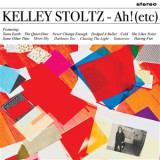
First pressing of 400 units comes as yellow vinyl! "I was guzzling wine at my favorite bar in San Francisco, the Rite Spot, and the entertainment that night was some local opera singers singing along with a big video screen showing a collage of various operatic moments with subtitles. One particular subtitle, 'Ah!-(etc)' made me laugh, I thought it was a perfect description of life - the joy of existence against the etcetera of it all, the struggle. With a heavy head of rose' it seemed like ecstatic poetry! I scribbled it on a napkin and thought it might make a good title for something" And so the mystery behind the title of Kelley Stoltz new record is solved. Less of a mystery is the quality contained therein_ after 12 self-titled releases and a several more under pseudonyms, Stoltz is the word for "one-man-band-home-recording-pop-songs of idiosyncratic character." A quick follow up to his more power pop and pub rock LP only "Hard Feelings" offering in the summer, "Ah-(etc)" finds Stoltz returning to his sweet spot, writing songs that never were, but should have been in the 60's and 80's. As with other LPs Stoltz makes virtually every noise on the album which was written and recorded in 2019 at his Electric Duck Studio in. San Francisco. A few friends popped in to play along_ Stoltz former bandmate, Echo & the Bunnymen's Will Sergeant adds electric guitar to "The Quiet Ones" a sort of Scott Walker lyrical take on strangers and neighbors. Karina Denike formerly of Dance Hall Crashers adds gorgeous vocals on the bossanova groover "Moon Shy", where Sergeant pops up again in a spoken word role on the outro. Allyson Baker of SF's Dirty Ghosts sings on "She Like Noise", a song Stoltz wrote for her in celebration of her love of seeing live bands. The album was mastered by Mikey Young in Australia.
An unlikely meeting of two like-minded spirits, »First Man in the Moon« sees the former Swans guitarist and Hallow Ground regular Norman Westberg and the prolific double bass player Jacek Mazurkiewicz collaborate for five evocative tracks. The pair finds common ground beyond the boundaries of atmospheric drone, abstract jazz and experimental music and blurs the lines between the acoustic and the electronic.The two first met when the composer Mazurkiewicz supported Swans with his solo project 3FoNIA on their 2014 European tour. »I really enjoyed his approach,« says Westberg about the Polish musician’s blending of the acoustic qualities of his instrument with electronically generated sounds. A decision to collaborate was made and when the US-American musician returned to Eastern Europe to support Michael Gira on his solo tour in late 2019, Mazurkiewicz reached out to him with the idea of booking some studio time before Gira’s two concerts in Warsaw. »Recording was very fun and easy,« remembers Westberg. »It was just two people enjoying hearing and reacting to what the other is doing.« »First Man in the Moon« is not however a plain document of these improvised sessions, but also shaped by Mazurkiewicz’s approach as a composer. Once the recordings were finished, he selected and edited the recorded material, refining the peculiar dialogue between the guitarist’s meditative drones and bright chords and his own rhythmic yet subtle approach to playing the double bass, sometimes plucking the strings and occasionally using his bow to underscore
Westberg’s fleeting melodies, but also using the instrument in unconventional ways to generate sound. A feeling of weightlessness prevails throughout the aptly-titled »First Man in the Moon.« Even at their most abstract however, these five improvisations-turned-compositions remain tangible, lively, and joyfully explorative. It is a record that you wouldn’t expect from either of these musicians, but
the logical result of two idiosyncratic minds sharing not only space and time, but also their respective visions with each other. Credits:
Recorded at Studio Diamentowy Pies/ Damian Pielka, engineering/Piotr Mazurek, engineering assistance/Jacek Mazurkiewicz, mix/
Lawrence English, mastering/John Fell, photographs.
It's with great pleasure that we announce the Swedish raw punk legends ANTI CIMEX have finally reached the joyful lands of Agipunk. On this record we're collecting in chronological order all the demos and the studio recording sessions that haven't been released on any official release so far. A total of 29 tracks that originally appeared on "K.A.A.S January 1982", "K.A.A.S April 1982", "En Produkt Av Dagens Skitsamhälle" tapes plus the studio session right before the "Raped Ass" 7" EP and the discarded recordings for the full length that never saw the light and eventually became the "Victims Of A Bomb Raid" 7" EP. All you Cimex maniacs out there probably already know most of the songs, but you'll definitely find a bunch of extremely obscure tracks which I bet you've never heard before. All the tracks come from the original tapes and the sound has been restored and remastered by Lasse at Ballade Studio in Copenhagen.
Father John Misty is the nom-de-plume of Josh Tillman, who
has been recording and releasing solo albums under his own
name since 2003 and who recently left Seattle’s Fleet Foxes
after playing drums with them from 2008-2011.
When discussing Father John Misty, Tillman paraphrases Philip
Roth: “‘It’s all of me and none of me, if you can’t see that, you
won’t get it.’”
‘Fear Fun’, Father John Misty’s album from 2012 and now
available again through Sub Pop, began gestating during what
Tillman describes as an “immobilizing period of depression” in
his former Seattle home, when he had lost interest in
songwriting and wound up finding his voice by writing a novel.
After breaking from Seattle and settling in a spider-infested
Laurel Canyon treehouse, Tillman spent months demoing
songs, eventually liberating himself from his creative impasse.
With the help of LA producer/songwriter/pal Jonathan Wilson, a
wealth of talented musicians kicking around LA and producer
Phil Ek (who everyone knows has worked with Built to Spill,
Modest Mouse, Band of Horses, Fleet Foxes), ‘Fear Fun’
blossomed into a fully-formed expression of Tillman’s
unrestrained vision.
‘Fear Fun’ consists of such disparate elements as Waylon
Jennings, Harry Nilsson, Arthur Russell, All Things Must Pass
and Physical Graffiti, often within the same song. Tillman’s
voice has never been better and often sounds like Roy Orbison
at his most joyous, while the music maintains a dark,
mysterious yet playful, almost Dionysian quality.
Lyrically, his absurdist fever dreams of pain and pleasure elicit,
in equal measures, the blunt descriptive power of Bukowski or
Brautigan, the hedonist-philosophy of Oscar Wilde and the
dried-out wit of Loudon Wainwright III.
6-panel digipack CD. Gatefold LP.
Father John Misty is the nom-de-plume of Josh Tillman, who
has been recording and releasing solo albums under his own
name since 2003 and who recently left Seattle’s Fleet Foxes
after playing drums with them from 2008-2011.
When discussing Father John Misty, Tillman paraphrases Philip
Roth: “‘It’s all of me and none of me, if you can’t see that, you
won’t get it.’”
‘Fear Fun’, Father John Misty’s album from 2012 and now
available again through Sub Pop, began gestating during what
Tillman describes as an “immobilizing period of depression” in
his former Seattle home, when he had lost interest in
songwriting and wound up finding his voice by writing a novel.
After breaking from Seattle and settling in a spider-infested
Laurel Canyon treehouse, Tillman spent months demoing
songs, eventually liberating himself from his creative impasse.
With the help of LA producer/songwriter/pal Jonathan Wilson, a
wealth of talented musicians kicking around LA and producer
Phil Ek (who everyone knows has worked with Built to Spill,
Modest Mouse, Band of Horses, Fleet Foxes), ‘Fear Fun’
blossomed into a fully-formed expression of Tillman’s
unrestrained vision.
‘Fear Fun’ consists of such disparate elements as Waylon
Jennings, Harry Nilsson, Arthur Russell, All Things Must Pass
and Physical Graffiti, often within the same song. Tillman’s
voice has never been better and often sounds like Roy Orbison
at his most joyous, while the music maintains a dark,
mysterious yet playful, almost Dionysian quality.
Lyrically, his absurdist fever dreams of pain and pleasure elicit,
in equal measures, the blunt descriptive power of Bukowski or
Brautigan, the hedonist-philosophy of Oscar Wilde and the
dried-out wit of Loudon Wainwright III.
6-panel digipack CD. Gatefold LP.
Philly-based indie rock band Tigers Jaw release
their new album and Hopeless debut ‘i won’t care
how you remember me’.
Described by the members’ moms as Saves The
Day meets Fleetwood Mac, Tigers Jaw have been
carving out their own legacy in the indie,
alternative and emopunk genres since 2006.
The band’s last two albums, 2014’s ‘Charmer’ and
2017’s ‘Spin’, were their most successful to date,
receiving critical acclaim from the likes of Pitchfork
and Stereogum, as well as charting at #3 in the
US vinyl charts and #11 in the current rock and
alternative album charts.
For fans of Joyce Manor, The Front Bottoms,
Turnover.
Frank Nuyens, alias Rainman, was the guitarist for bands like Circus and a founding member of Q65. His solo debut album from 1971 is a slice of psychedelic folk & rock sounds and features fellow Q65 member Jay Baar, Dick Beekman and Eelco Gelling (Cuby & The Blizzards). Rainman is a very rare and hard to find album from the Dutch psychedelic
70’s era. The album is part of Music On Vinyl’s Behind The Dykes series, which comprises rare and sought-after albums from the Netherlands.
Rainman celebrates its 50th anniversary in 2021. This release includes an insert with song lyrics and is available as a limited individually numbered edition on transparent green vinyl.
Nearly three years on from that release (for Bernice a rapid turnaround by comparison to the seven-year gap between their 2011 debut and Puff), the band return with their third full-length, Eau de Bonjourno, out March 5th from Telephone Explosion and figureeight records. It marks their first collaboration with producer Shahzad Ismaily, the acclaimed multi-instrumentalist who has worked with artists as varied as Laurie Anderson, Lou Reed, Elvis Costello, Iggy Pop, John Zorn, and Bonnie ‘Prince’ Billy. While their genre reconstruction remains distinctly Bernice, Dann’s lyrics bring a newfound focus to storytelling in the present moment, compassionately meeting ourselves where we are, and finding joy in spaces that are familiar but ever changing.
Eau de Bonjourno, according to Dann, “openly plays with the shape of a pop song,” drawing on the band members’ backgrounds in jazz, subverting rhythmic formulas, and resting in grooves that sit just outside of predictable. Instead of letting instruments take
extended solos, the tone is set on opener “Groove Elation” with brief blurts of synthesized sax, patient passages of space, or clusters of beats, tenderly held together by Dann and Williams’ intimate vocals. The album’s sound is experimental in its truest definition, chopped up like musique concrète and then delicately placed back together with the loving touch of a scrapbook collagist.
This project is funded in part by FACTOR, the Government of Canada and Canada’s private radio broadcasters.
This album was created with the generous support of the Ontario Creates.
Though it’s hard to pick a winner among the estimable Black Jazz catalog, this 1972 release from bassist Henry “The Skipper” Franklin would have to be near the top of the list. Franklin got his start woodshedding with Latin maverick Willie Bobo in the mid-‘60s and went on to play with The Three Sounds, but probably his most notable gig prior to this debut album was his stint in Hugh Masekela’s band (that’s Franklin playing bass with Masekela at the 1967 Monterey Pop Festival). For The Skipper, Franklin assembled a crack outfit that included a horn section of trumpeter/flugelhornist Oscar Brashear (Bobby Hutcherson, Ry Cooder, Donny Hathaway) and tenor & soprano sax man Charles Owens (Buddy Rich, Horace Tapscott, John Mayall) along with a Masekela bandmate in electric pianist Bill Henderson and ace drummer Michael Carvin (Pharoah Sanders, Lonnie Liston Smith, Freddie Hubbard). This is such a unique, organic recording that it’s hard to make comparisons; definitely a little fusion, a little ‘60s Blue Note feel, and the usual Black Jazz journey to the more lyrical, pop-inspired (“Little Miss Laurie”) and funk-infused (“Plastic Creek Stomp”) sides of jazz, but perhaps the best comparison is late-‘60s Miles before he went electric. In any case, The Skipper is just a joy to listen to from start to finish, beautifully recorded by Black Jazz producer Gene Russell and blessed with some really fine writing, most of it by Franklin himself. First-time LP reissue and a must-have!
The music on Dance Nos. 1-5 was originally conceived as a three-way collaboration between composer Philip Glass, choreographer Lucinda Childs and artist Sol LeWitt. Dance received its world premiere in Amsterdam on October 19, 1979 and its New York premiere at the Brooklyn Academy of Music on November 29, 1979.
Post-dating Einstein on the Beach - Glass’s 1975-76 collaboration with director Robert Wilson - Dance was another Glass collaboration, this time with choreographer Lucinda Childs, known for her austere, athematically exact dances, and artist Sol LeWitt, who provided a ghostly, gigantic black- and-white film for several of the piece’s five sections.
RELEASE: 5-3-2021
• 180 GRAM AUDIOPHILE VINYL
• DELUXE HEAVYWEIGHT SLEEVE WITH GLOSS LAMINATE
• PVC JACKET
• THE COMPLETE ALBUM, AVAILABLE ON VINYL FOR THE FIRST TIME IN ITS ENTIRETY ON A 3LP-SET
WITH FIVE SIDES OF MUSIC
• INCLUDES PHILIP GLASS CATALOGUE WITH INFO ON THE PHILIP GLASS SERIES ON MOV
SIDE A
Dance has an abstract purity that easily earned it the label “minimalist,” a term that Glass himself disavows but that seems appropriate, at least in this case. After Dance, Glass’s music took several turns, not so much in style as in the various new contexts in which it was presented: major opera commissions and film scores led him to write for forces other than those of the Philip Glass Ensemble. At the same time, an attempt to reach a wide audience resulted in some shorter, perhaps more accessible, narrative pieces. Dance marked the blossoming of the composer’s experimental work. Here, though, the music - particularly Dance Nos. “1”, “3” and “5”, all written for the Ensemble— has an unforgettable exuberance that somehow speaks all at once of joyful innocence, intense erotic desire, tenderness, regret and, finally, acceptance. On the other hand, Dance Nos. “2” and “4” see Glass composing several large-scale works for solo organ; for instance, Dance No. 2 originated as a 1978 work entitled Fourth Series Part Two. This piece, later incorporated into Dance, and Dance No. “4” as well, have a more subdued, more darkly romantic quality than the work’s other sections and are quite unlike anything Glass had previously written. Still, they too, with their mysterious tilts of time and key signatures, continue the exploration of polyrhythms and harmonic complexities within the context of Glass’s repetitive, “minimalist” style.
The complete Dance Nos. 1-5 album is now available on vinyl for the first time in its entirety on a 3LP-set with five sides of music. The 3 LP’s are housed in a heavyweight sleeve.
Due to the Covid-19 pandemic, De Nor had no choice but to free all its prisoners - even the jazz ones - and shut its gates. But the red beacon shall shine again! Until such a time, we asked some of the artists who were booked to play there this summer to submit a piece for this new publication in lieu of their cancelled performance. This compilation lp contains tracks by Lori Goldston, Hiele, Agnes Hvizdalek, Nubots, Justine Grillet, Thurston Moore, Sami Bergold, Possessed Factory, Stacks, David Edren, Aaron Dilloway & Lucrecia Dalt, Ka Baird, Ben Bertrand, Miaux, Lorie Bevins, and C.O.P. and is housed in a deluxe dye cut linnen sleeve and comes with an insert and a mini Nor cut out made by Gerard Herman. De Nor is a sculpture-pavillion in the grounds of the Middelheim Museum conceived and designed by Dennis Tyfus and FVWW Architecten. In peace time it hosts concerts, lectures, and various presentations throughoutthe summer.
2x12" + DL Repress
NOTE: ALL FORMATS CONTAIN THE FULL VERSION OF "RAUSCH". THE ALBUM IS MEANT TO BE HEARD FROM BEGINNING TO END AS A WHOLE. IT HAS BEEN TRACK MARKED OR SEPARATED DUE TO FORMAT RESTRICTIONS
Rausch with no name / My beautiful shine / You are the sun / This is where I want to be / Rausch with no morning / This is where we burn / The Stars sparkle / In a sea of flames / Horns and fanfares / Fanfares of joy / Fanfares of fear / The wine we drink through the eyes / The moon pours down at night in waves / Careful with that axe Eugene / Personal Jesus / No beginning no end / Eighteenth of Oktember / The night falls / The king comes / The hunt starts / Freude schöner Götterfunken / The long march through the underwood / Trust me there's nothing / Once upon a time there was a bandit / Who loved a prince / That was long ago / Spring Summer Fall and Gas / There is a train heading to Nowhere / Drums and Trumpets / Future without mankind / Warm snow / Alles ist gut / The bells toll / You are not alone / The murmur in the forest / The murmur in the head / Light as mist / Heavy as lead / Music happens / To flow like gas / A clearing / Heavy baggage / Debut in the afterlife / Death has seven cats / World heritage Rausch / Finally infinite
Wolfgang Voigt 2018
Rausch ohne Namen / Mein schöner Schein / Du bist die Sonne / Hier will ich sein / Rausch ohne Morgen / Wir brennen hier / Die Sterne funkeln / Im Flammenmeer / Hörner und Fanfaren / Fanfaren der Freude / Fanfaren der Angst / Den Wein den man mit Augen trinkt / Gießt Nachts der Mond in Wogen nieder / Vorsicht mit der Axt Eugene / Personal Jesus / Kein Anfang Kein Ende / Achtzehnter Oktember / Die Nacht bricht an / Der König kommt / Die Jagd beginnt / Freude schöner Götterfunken / Der lange Marsch durchs Unterholz / Glaub mir da ist nichts / Es war einmal ein Räuber / Der liebte einen Prinzen / Das ist lange her / Frühling Sommer Herbst und Gas / Es fährt ein Zug nach Nirgendwo / Pauken und Trompeten / Zukunft ohne Menschen / Warmer Schnee / Alles ist gut / Die Glocken läuten / Du bist nicht allein / Das Rauschen im Wald / Das Rauschen im Kopf / Leicht wie Nebel / Schwer wie Blei / Musik ergibt sich / Strömt wie Gas / Eine Lichtung / Schweres Gepäck / Einstand im Jenseits / Der Tod hat sieben Katzen / Weltkulturerbe Rausch / Endlich Unendlich
Wolfgang Voigt 2018
Previously unreleased recordings by various lineups drawn from Derek Bailey, Tristan Honsinger, Christine Jeffrey, Toshinori Kondo, Charlie Morrow, David Toop, Maarten Altena, Georgie Born, Lindsay Cooper, Steve Lacy, Radu Malfatti and Jamie Muir.
Journalists often make the brief history of Free Improvisation conform to the idea that the history of music is a nice straight line from past to present: Beethoven… Brahms… Boulez. Thus Derek Bailey, Evan Parker and John Stevens — together with Brötzmann and co across the Channel — were the trailblazing ‘first generation’, forging a wholly new language alongside contemporary avant-garde and free jazz. Figures like Toshinori Kondo and David Toop, willing as they were to incorporate snippets of all kinds of music, were the pesky ‘second generation’, happily cocking a snook at the ‘ideological purity’ of Bailey’s non-idiomatic improvisation.
‘Company 1981’ shows up the foolishness — the wrongness — of such storylines. Check the eclectic collection of guests Bailey invited to Company Weeks over the years. He had clear ideas about the music, but he was no ideological purist.
One of the founders of Fluxus, Charlie Morrow injects blasts of Cageian fun into half the recordings here, whether blurting military fanfares from his trumpet, or intoning far-flung scraps of speech. Cellist Tristan Honsinger and vocalist Christine Jeffrey join in the joyful glossolalia, while Bailey, Toop and Kondo contribute delicious, delicate, hooligan arabesques, by turns.
The remainder are performed by a different ensemble: Bailey, bassist Maarten Altena, former Henry Cow members Georgie Born and Lindsay Cooper on cello and bassoon, the insanely inventive Jamie Muir on percussion, and trombonist Radu Malfatti, showing his mastery of extended technique. Were that not enough, there’s the inimitable purity of Steve Lacy’s soprano ringing high and clear above the melee. Glorious!
There’s always been this idea that Free Improvisation is somehow Difficult Listening, but when the doors of perception are thrown open and prejudice cast aside, you realise that it’s not difficult at all. “Is it that easy?” chirps Morrow, at one point. Indeed it is.
Enjoy yourself.
For a band that resists repeating itself, picking up lessons from a decade prior is the strange route Cloud Nothings took to create their most fully-realized album. Their new record, The Shadow I Remember, marks eleven years of touring, a return to early songwriting practices, and revisiting the studio where they first recorded together.
In a way not previously captured, this album expertly combines the group’s pummeling, aggressive approach with singer-songwriter Dylan Baldi’s extraordinary talent for perfect pop. To document this newly realized maturity, the group returned to producer Steve Albini and his Electrical Audio studios in Chicago, where the band famously destroyed its initial reputation as a bedroom solo project with the release of 2012 album Attack on Memory.
Another throwback was Baldi’s return to constant songwriting à la the early solo days, which led to the nearly 30 demos that became the 11 songs on The Shadow I Remember. Instead of sticking to a tried-but-true formula, his songwriting stretched out while digging deeper into his melodic talents. “I felt like I was locked in a character,” Baldi says of becoming a reliable supplier of heavy, hook-filled rock songs. “I felt like I was playing a role and not myself. I really didn’t like that role.” More frequent writing led to the freedom in form heard on The Shadow I Remember. What he can’t do alone is get loud and play noisily, which is exactly what happened when the entire band— bassist TJ Duke, guitarist Chris Brown, and drummer Jayson Gerycz—convened.
The band had more fun in the studio than they’ve had in years, playing in their signature, pulverizing way, while also trying new things. The absurdly catchy “Nothing Without You” includes a first for the band: Macie Stewart of Ohmme contributes guest vocals. Elsewhere, celebrated electronic composer Brett Naucke adds subtle synthesizer parts.
The songs are kept trim, mostly around the three-minute mark, while being gleefully overstuffed. Almost every musical part turns into at least two parts, with guitar and drums opening up and the bass switching gears. “That’s the goal—I want the three-minute song to be an epic,” Baldi says. “That’s the short version of the long-ass jam.”
Lyrically, Baldi delivers an aching exploration of tortured existence, punishing self-doubt, and the familiar pangs of oppressive mystery. “Am I something?” Baldi screams on the song of the same name. “Does anybody living out there really need me?” It’s a heartbreaking admission of existential confusion, delivered hoarsely, with an instantly relatable melody.
“Is this the end/ of the life I've known?” he asks on lead single and album opener “Oslo.” “Am I older now/ or am I just another age?” Despite the questioning lyrics, the band plays with more assurance and joy than ever before. The Shadow I Remember announces Cloud Nothings’ second decade and it sounds like a new beginning.
For a band that resists repeating itself, picking up lessons from a decade prior is the strange route Cloud Nothings took to create their most fully-realized album. Their new record, The Shadow I Remember, marks eleven years of touring, a return to early songwriting practices, and revisiting the studio where they first recorded together.
In a way not previously captured, this album expertly combines the group’s pummeling, aggressive approach with singer-songwriter Dylan Baldi’s extraordinary talent for perfect pop. To document this newly realized maturity, the group returned to producer Steve Albini and his Electrical Audio studios in Chicago, where the band famously destroyed its initial reputation as a bedroom solo project with the release of 2012 album Attack on Memory.
Another throwback was Baldi’s return to constant songwriting à la the early solo days, which led to the nearly 30 demos that became the 11 songs on The Shadow I Remember. Instead of sticking to a tried-but-true formula, his songwriting stretched out while digging deeper into his melodic talents. “I felt like I was locked in a character,” Baldi says of becoming a reliable supplier of heavy, hook-filled rock songs. “I felt like I was playing a role and not myself. I really didn’t like that role.” More frequent writing led to the freedom in form heard on The Shadow I Remember. What he can’t do alone is get loud and play noisily, which is exactly what happened when the entire band— bassist TJ Duke, guitarist Chris Brown, and drummer Jayson Gerycz—convened.
The band had more fun in the studio than they’ve had in years, playing in their signature, pulverizing way, while also trying new things. The absurdly catchy “Nothing Without You” includes a first for the band: Macie Stewart of Ohmme contributes guest vocals. Elsewhere, celebrated electronic composer Brett Naucke adds subtle synthesizer parts.
The songs are kept trim, mostly around the three-minute mark, while being gleefully overstuffed. Almost every musical part turns into at least two parts, with guitar and drums opening up and the bass switching gears. “That’s the goal—I want the three-minute song to be an epic,” Baldi says. “That’s the short version of the long-ass jam.”
Lyrically, Baldi delivers an aching exploration of tortured existence, punishing self-doubt, and the familiar pangs of oppressive mystery. “Am I something?” Baldi screams on the song of the same name. “Does anybody living out there really need me?” It’s a heartbreaking admission of existential confusion, delivered hoarsely, with an instantly relatable melody.
“Is this the end/ of the life I've known?” he asks on lead single and album opener “Oslo.” “Am I older now/ or am I just another age?” Despite the questioning lyrics, the band plays with more assurance and joy than ever before. The Shadow I Remember announces Cloud Nothings’ second decade and it sounds like a new beginning.