
also available
black LP[38,24 €]
black LP[38,24 €]

Albert Hammond is one of the most prolific, versatile songwriters and performers of his or any generation. His earliest solo hits include “It Never Rains in Southern California” and “The Free Electric Band.” His contributions to popular music (writing and and/or contributing to hit songs by Tina Turner, Whitney Houston, Willie Nelson and Julio Iglesias, Diana Ross, Starship, The Hollies, Joe Cocker, Johnny Cash, Aretha Franklin) cross genres and generations. Body of Work is an all-new, original, and essential addition to this iconic canon. Written during a time of tumultuous change, Body of Work is the moment a master songsmith takes a step back to reflect on the world, “This is the first step I had to take and the album is what I discovered about me and all of us once I started here,” says Albert. “I can feel the discomfort and impatience in it. That’s just the honest feeling when the world changes for you from oasis to desert, from beauty to chaos… freedom to fences.” From gutsy opener “Don’t Bother Me Babe” through the wistful “Looking Back” and closing with the reflective “Goodbye LA,” Body of Work is an album for the ages, crafted with 50 years of words, experience, and wisdom.

Limited edition release of this project featuring Chris Braide of The Producers (Trevor Horn,
Chris Braidqe, Lol Crème), Andy Partridge (ex-XTC) and Tim Weller (Divine Comedy).
Recorded in Los Angeles and London, this release will appeal to fans of all three artists as
well as being a strong release in its own right.
Chris Braide is a British producer & songwriter who has co-written, produced and
collaborated with a wide array of artists, including Sia, Hans Zimmer, Beyonce, David
Guetta, Lana Del Rey, Adele, Baz Luhrmann, Nicki Minaj, Selena Gomez, Halsey, Madonna,
Starrah, Demi Lovato, Robin Schulz, Yuna, Elle King, Afrojack, Wrabel, Paloma Faith, Britney
Spears, Christina Aguilera, Bibi Bourelly, Kylie Minogue, Zendaya, Bebe Rexha, Theophilus
London, LP, Natalie Portman, Celine Dion, Kate Hudson, Beth Ditto, Toni Braxton, Tate
McRae, Snoop Dogg, Big Sean, Jason Mraz, Donna Missal, Julia Michaels, Kali Uchis, Jessie
Reyez, Lucy Hale and many more.
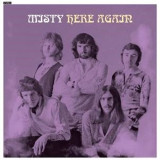
First ever vinyl release of the album recorded in 1969/70 by UK prog-psych band Misty. Including their terrific mod-psych “Hot Cinnamon” 45.
A dazzling fusion of classically-inspired progressive rock and song-based psychedelic pop with an organ-based sound, in the vein of Procol Harum and The Nice.
“In October 1969, King Crimson released their debut, In The Court Of The Crimson King, Pink Floyd unleashed Ummagumma and Led Zeppelin put out their second LP. At the same time, Misty were in London’s Regent Sound Studios recording what turned out to be the only album of their career with producer, Adrian Ibbetson, who had cut his teeth as an engineer working with everyone from the Beatles to the Equals.
After only a handful of gigs, Misty signed a deal with Parlophone and began to gather momentum with the release of Hot Cinnamon. Although they received a lot of airplay, the single failed to chart and the band’s hopes of releasing their debut album were dashed. Reluctantly, Misty went their separate ways and the Here Again master tapes sat gathering dust on a shelf until Gelardi came across the original acetate and decided it was time for the album to finally see the light of day.
Bridging late psych and early prog, songs like Life Has Just Begun, Witness For The Resurrection and the title track were played with a perfect mix of high-flying experimentation and virtuosic musicianship. Blurring the fine lines between rock, jazz, classical and chamber pop, Here Again is a transcendent kaleidoscope of colour that is beyond definition.
Maybe you can tell an album is truly timeless when it takes half a century for it to be properly appreciated. Misty were a rare bird, a brilliant, truly original band who should have left an indelible mark instead of joining what now seems like the never-ending line of half-remembered and long-forgotten flotsam and jetsam of the psychedelic era.
Both the first and the final statement from a group who never really got their chance to be heard, Here Again is a slice of pristine psychedelic pop that so embodies the dizzying energy and the progressive spirit of the time, it’s astonishing that it stays afloat under the weight of its own intentions. But float it does, like mist in the air - a half-forgotten diaphanous dream slowly coming back to you after 50 years of silence.” – Jonathan Wingate

Record label boss, producer / DJ, and revered collector Marc Davis returns to his Chi-Talo series with the much-anticipated second volume. A concept of a split EP, taking one ultra-rare Chicago gem and the other a scarce Italian disco record and re-interpreting them for the modern dancefloor aesthetic.
With the first volume, released on Marc’s own Black Pegasus label, now trading hands for considerable amounts of money, round two sees him impart another double dose of digging sorcery for this Mr Bongo 12”.
Marc began his illustrious career in the Windy City in the ‘80s and was one of the first out of Chicago to be recognised for his eclectic approach to DJing. Presenting a global sound palette that took in choice cuts from Brazil, Africa, jazz fusion, house, soul and disco, whilst mixing it together Chicago style. Decades of knowledge and experience that is now distilled down into the Chi-Talo series.
The Italo selection came via a tip from Marc's Swedish friend, Julian Wareing. Hearing the track led Marc down the rabbit hole to secure a copy of this Italo-Disco, album cut oddity by the New Sound Quartet from 1979. The original of 'Bass Construction', measures in at four and a half minutes and is already a feverish funk groover. But Marc saw an opportunity to extend and re-edit the track, keeping in the vein of the original but giving it space to breathe. Tweaking out every last ounce of goodness, Marc locks you into a hypnotic groove for maximum dancefloor deliverance.
The Chicago side is as rare, as the rarest of hens-teeth, only ever existing as a one-off acetate by the band The Saucer Planes. One of the members of the group was the sadly passed-away older brother of Marc’s DJ mentor, Jahmal Anderson. From the very first listen, Marc knew he’d been hooked up with an undiscovered boogie gem. A long-lost track that the world needed to hear. But the project has remained dormant until now, not least due to the fact that the original recording of this low-fi vocal boogie groove is housed on an ever-deteriorating solo acetate. Rescued, restored and given a brand-new lease of life, Marc has turned the track into a low-slung, psychedelic instrumental boogie bounce. Raw, rough and mesmerising, it’s a refreshed relic that is a testament to Chicago’s club sound and swagger.
Whichever side you draw for, this is guaranteed to move bodies as much as it wins over hearts.

From out of nowhere - if nowhere is the febrile, warped and twilit imagination of Julia McFarlane - comes Whoopee, the second album by J.McFarlane’s Reality Guest. Whoopee is an esoteric, kaleidoscopic movie in music form directed by Julia McFarlane and co-conspirator Thomas Kernot. Full of life, breakbeats and smokey vignettes on the fragile nature of interpersonal relationships, Whoopee is a stylistic evolution from everything McFarlane has done before. Surreal, beautiful in parts and replete with the aching wisdom McFarlane’s songwriting has always promised, this Reality Guest pulls back the curtain on a whole scene of naked truth. Recorded in Melbourne in bursts since the release of 2019’s Ta Da, Whoopee features a new sound palette and band member in Kernot. The duo dive deep into electronic pop tropes, mining digital synths, samples, breakbeats and deep bass grooves, largely dispensing with live instrumentation. If Ta Da took twists and turns with your expectations, offering a Dada-ist, monochromatic take on pop music, Whoopee is McFarlane’s subterranean love-sick pinks, reds, greens, purples and blues. Becoming something of a tradition, the album starts with an instrumental intro pilfered from a 90s’ spy film or cinema intro music, puffing up the listener for the heart-squeezing bathos of Full Stops. Over a bleary backdrop of walking bass lines, jazz- inflected keys and smoked-out atmosphere, McFarlane’s poetry narrates the fragile state of a relationship: “You put a full stop where I thought there’d be a comma, I want the story to continue even with all the drama.” Over a palpable pain, the narrator is revelling in the drama of a relationship, addicted to tumult and heightened emotion. On Sensory, a space age bachelor lounge pad ballad, the converse state of the previous song is explored, here the narrator is battling the numbness of being out of the drama, stuck in a sensory-deprivation tank, anaesthesized and battling to emerge from the fog. Wrong Planet explores an otherworldly pop music, hewing a bright hook out of a sense of confusion. A bona-fide, sing-along chorus bursts out of the narrator musing on the absurdity of existing in this reality. It speaks of one of Julia McFarlane’s main talents, her knack of inspecting human relationships and states with a clear perspective, like an alien visiting Earth and realising everything we are is really, really strange. Whoopee is both more accessible than previous Reality Guest work and somehow more obfuscated. Where the production on Ta Da was dry, sharp and strange, this Reality Guest is blurred, almost smeared with the effluvium of 90s+00s culture and existence. Through it all, it’s hard to deny the undeniable pull of the songs. Precious Boy carries on the lounge theme with a whole sampler of cut up sounds fading in and out of the haze as McFarlane’s voice is right up to the speaker cooing and free- associating, maybe in love or maybe in confusion... maybe they’re the same thing? Sometimes the listener is invited to just bathe in the tone of the vocal, as on Apocalypse, where the texture and timbre of the vocal is luxurious, bathing in piano tinkles and double bass throb. On lead single Slinky, a cut up beat reminiscent of Washingtonian Go-Go drum patterns leads, the song slipping through your fingers, elusive and presenting sound as pure pleasure. Closer Caviar jumps back into the broken breakbeats of a surreal funk, fuelled by the sensory pleasure of the music, a hedonistic whirl in rapture, the narrator now living life to the fullest in all its giddy heights and deep troughs. This is the album’s main character fully-actualised and in the terrible, beautiful moment.

Das Debütalbum der irischen Post-Punk Newcomer.
"Madra" (was auf Irisch "Hund" bedeutet) ist ein
gitarrenlastiges, instinktgeleitetes Album, auf dem sich die
irischen NewDad auf eine Reise der Selbsterkundung,
Selbstsabotage und Reflexion begeben. Durchtränkt von
Dysfunktion sucht "Madra" Trost im Schmerz und setzt
sich mit Themen wie Mobbing,
Selbstmedikation/Depression, Zerstörung, Co-Abhängigkeit
und Widerstand auseinander. Geschrieben in ihrer
Heimatstadt Galway, Irland, fanden die Aufnahmen des
Albums in den legendären Rockfield Studios (Black
Sabbath, Queen) in London statt, wo die Band inzwischen
auch wohnt. Julie Dawson, Cara Joshi und Fiachra
Parslow gründeten ihre Band, um bei der
Musik-Abschlussprüfung der Secondary School nicht solo
antreten zu müssen; kurz darauf stieß Sean O'Dowd
dazu, erst nur als Toningenieur, bald aber festes
Bandmitglied. Ihren Bandnamen NewDad ließen sie von
einem Zufallsgenerator erzeugen, und ein weiterer Zufall
kam ins Spiel, als kurz nach der Bandgründung Anfang
2020 die Welt plötzlich fast zum Stillstand kam. Trotzdem
schafften es die vier, im März 2021 ihre Debüt-EP
"Waves? zu veröffentlichen und im Januar 2022 den
Nachfolger "Banshee?. NewDad erinnern uns an die
Rastlosigkeit, all die Ängste und Beziehungsprobleme, mit
denen wir alle im Laufe unseres Lebens konfrontiert
werden. Sie verschmelzen Fantasie und Autobiografie mit
Einflüssen aus dem modernen Kino und Fernsehen - und
der ruhigen Küstenlandschaft von Galway, die den
Hintergrund ihrer prägenden Jahre bildet.

Canadian bowed guitarist and multi-instrumentalist C. Diab announces his fifth album Imerro, out February 16th, and presents the trip-infused lead single 'Lunar Barge'.
(Real name) Caton Diab creates soundscapes that evoke the spectacular wilderness of his childhood home in northern Vancouver Island. Incorporating experimental textures, folk overtones and tape manipulations, C. Diab uniquely finds the unseen spaces in-between, and fittingly dubs his creations "post-classical grunge". Imerro explores new sonic realms and is the culmination of a sound world that Diab has built up since the critically acclaimed 'No Perfect Wave' (2016, Injazero) and subsequent releases 'Exit Rumination' (2018), 'White Whale' (2020) and 'In Love & Fracture' (2021). The Wire calls it "ambient music in the best sense - music for living, which can be both non-invasive and immersive...epic"
Imerro was recorded in late July and August of 2021 at Risque Disque Studio in Cedar, BC, during the summer's unprecedented second "heat dome", which saw temperatures soaring to over 40 degrees. Recorded with regular collaborator and engineer Jonathan Paul Stewart, the pair journeyed by boat to the studio to a place with minimal distraction with a plan of "simple ecstatic improvisation." Diab explains: "I wanted to place myself in a space for creation with little thematic pretence, with the belief that music 'shows its face' as you move along. I would pick up an instrument, whether I had experience playing it or not, and make a sound. If it wanted to be played, it would play."

KIRLIAN CAMERA sind ein kreativer Wirbelwind der musikalischen Innovation. Die mitreißende Kraft ihrer Inspiration manifestiert sich sowohl destruktiv, wenn es um das Einreißen von Grenzen in Bezug auf Genre, Stil und Konventionen geht, als auch konstruktiv, wie beim Errichten einer neuen Klangarchitektur auf den Ruinen der alten. Auch das jüngste Meisterwerk der Italiener, "Radio Signals for the Dying", folgt dieser Tradition und erklimmt dabei einen weiteren künstlerischen Höhepunkt. Oberflächlich betrachtet wandeln KIRLIAN CAMERA erneut auf dem dunklen musikalischen Pfad, den sie auf ihrem letzten Doppelalbum "Cold Pills (Scarlet Gate of Toxic Daybreak)" (2021) eingeschlagen haben. Dass die italienischen Elektro-Provokateure direkt mit dem Nachfolger noch ein prächtiges Doppelwerk folgen lassen können, spricht Bände über ihre ungeheure kreative Energie. Dabei bringt "Radio Signals for the Dying" keineswegs eine bloße Wiederholung des glorreichen Vorgängers. Stattdessen verändern KIRLIAN CAMERA ihren Sound auf subtile Weise durch raffinierte Details, reizvolle Tricks, großartige Effekte, unerwartete Wendungen und musikalische Ausflüge sowie spannende Variationen bestehender Themen. Seit über vier Jahrzehnten erschaffen KIRLIAN CAMERA ein Reich vielschichtiger Klangkonstruktionen, okkulter Transzendenz und subversiver Inhalte, die schon immer zum Kern ihrer Kunst gehörten. In der Vergangenheit hat die im besten Sinne schamlose, zuweilen geradezu unverschämte Lust der Italiener an der Provokation der Welt einen ehrlichen Spiegel vorgehalten und damit wiederholt Kontroversen ausgelöst. Die Italiener haben nie damit aufgehört, nach neuen Antworten zu suchen und ihre Hörer auf eine abenteuerlichen musikalischen Reise zu okkulte Dimensionen und magischen Orte von gefährlicher Schönheit und freudiger Dunkelheit mitzunehmen. KIRLIAN CAMERA sind Elektro-Schamanen, Rockmystiker, Klangrevolutionäre und Hohepriester der freien Künste, die als musikalischer Phönix im kreativen Feuer von "Radio Signals for the Dying" erneut wiedergeboren werden.

High Roller Records, reissue 2024, black vinyl, ltd 200, 425gsm heavy cardboard cover, insert, black vinyl bonus 7" in p/s (Can`t Get Enough (EP 2010) + Until Death Do You Part (EP 2010), new vinyl mastering by Patrick W. Engel in July 2023

High Roller Records, reissue 2024, yellow/ red splatter vinyl, ltd 300, 425gsm heavy cardboard cover, insert, yellow vinyl bonus 7" in p/s (Can`t Get Enough (EP 2010) + Until Death Do You Part (EP 2010), new vinyl mastering by Patrick W. Engel in July 2023

Die Versuchung, Bill Fay zu mythologisieren, kann überwältigend sein. Sein Status als unbesungener Held hat sich langsam, aber stetig, über fünfundzwanzig Jahre hinweg entwickelt und mit jedem neuen Album kommen Fans hinzu, darunter prominente Musiker wie Jeff Tweedy, Kevin Morby, Adam Granduciel und Julia Jacklin, um nur einige zu nennen. Fay war jahrzehntelang ebenso produktiv wie unterschätzt, innerhalb seines Katalogs ist die Bill Fay Group seine bedeutendste Zusammenarbeit. Nach seinem selbstbetitelten Debüt Bill Fay (1970) und dem Klassiker "Time of the Last Persecution" (1971) hatte Decca Records kein Interesse ein drittes Album zu veröffentlichen. Bill Stratton, Gary Smith, Rauf Galip formierten sich mit Fay zur Bill Fay Group und nahmen zwischen 1978 und 1981 in mehreren Sessions, trotz minimaler finanzieller Mittel, ein brillantes Album auf. Die Bandmitglieder beschwören ein elegantes Gegengewicht zu seinem Gespür für das Unauffällige. "Tomorrow Tomorrow and Tomorrow" bringt die galaktischen Qualitäten des frühen Rock, die Komplexität der Jazz-Improvisation und Fays erdigen Folk-Zauber zusammen. Zur Zeit der Fertigstellung fand sich aber leider kein Label für das Projekt. Erst 2005 brachte David Tibet auf seinem Label Durtro Records eine unvollständige, nur auf CD erhältliche Version heraus. Eine Neuauflage von 2006 machte das Album auf Vinyl erhältlich, allerdings mit stark gekürztem Tracklisting, es fehlten neun Songs. Jetzt endlich erscheint Tomorrow Tomorrow and Tomorrow weltweit in voller Länge. Es enthält die 22 Original-Songs des Albums, dazu 6 Bonustracks, sowie seltene und bisher unveröffentlichte Fotos von den ursprünglichen Aufnahmesessions von "Tomorrow Tomorrow and Tomorrow".

Building friendship through joint sonic exploration, Khang & Elias basically started having long Sunday jams right from the start when they first met in Oakland. Recorded in two live sessions, one in May 2023 in Oakland and the other in July in San Francisco using a scattered array of little boxes of synthesis and audio manipulation. "Reflecting on the recording process it felt like we had a completely nonjudgemental mindset to the sound created and discovered sonics through kind of a lens of a child entering a playground."

We're happy to offer "As Bold As Brass" by Booze & Glory as a 10 Years anniversary Edition. This album was sold out for more than 5 years. The refreshed Artwork comes as Gatefold Cover with UV Print, glossy artwork with matte background. Also the Music got a new mastering By Rafal aka "Teddy Bear" z STone Studios. Strap on your suspenders, grab a pint of beer and a fistful of friends and sing along as loud as you'd like. This is Oi! the way it was meant to be played.


World Of Echo are proud to announce the long-awaited reissue, on 17th February, of the self-titled debut album by Bristol’s Movietone. Originally released in 1995 by Planet Records and reissued on CD in 2003 by The Pastels’ Geographic Music imprint, this is the first time Movietone has been reissued on vinyl. An expanded double-LP edition, it includes the extra tracks from the 2003 CD (their first two singles, and an unreleased demo of “Chance Is Her Opera”), and adds three more unearthed gems: demos of “Alkaline Eye” and “She Smiled Mandarine Like”, and an early take of “Late July”, recorded in a garden by Dave Pearce (Flying Saucer Attack) in 1993. Taken together, this is the definitive collection of music from the first phase of one of Bristol’s most remarkable groups.
Movietone was the cumulation of a series of events, explorations, and discoveries, starting at secondary school – the group’s core membership of Kate Wright, Rachel Brook, Matt Elliott and Matt Jones met at Cotham School in Bristol. As for many other groups, their early years were all about experimenting, and finding ways to ‘make do’, a DIY sensibility that would inform Movietone through their decade-long lifespan. From formative rehearsals in a shed in the garden of Brook’s family home, to recording early material to four-track in Redland Library, and on into the Whitehouse and Mr Grin’s studio sessions for their debut album, Movietone’s music fell together in a creatively unpredictable, yet conceptually rigorous manner.
By the time they released Movietone, they’d found a home with Bristol’s Planet, run by author Richard King and James Webster, who had both released their first two singles, “She Smiled Mandarine Like” and “Mono Valley”. There was other music happening around them in Bristol, too, from the Jones brothers’ avant-rock outfit Crescent (who were Movietone’s closest conspirators), through Elliott’s jungle/electronica project Third Eye Foundation, and Brook and Elliott’s membership of Flying Saucer Attack. A closely knit community, Movietone are the centre of this nestling architecture of groups.
The vision in the music, mostly, belongs to Wright, but Movietone ran in democratic creative consort. Listening back to Movietone, you can hear this democracy in action through the wildness of the music, which is balanced by the poetics of Wright’s lyrics and melodies. Full of half-captured memories and entangled abstractions, there’s an elliptical, ruminative quality to much of the writing here that shows the deep influence of the Beat Generation writers, along with a twilight environment captured in the songs that’s pure third-album Velvets, Galaxie 500, early Tindersticks, Codeine. Unpredictable interventions – the crashing glass in “Mono Valley”, the sudden explosions of “Orange Zero” – point towards the noise blowouts of My Bloody Valentine, the unpredictability of Sonic Youth; Wright’s understated vocal cadence suggest a deep, embodied understanding of John Cage’s Indeterminacy.
Movietone would go on to make three fantastic albums for Domino – Night & Day (1997), The Blossom Filled Streets (2000) and The Sand & The Stars (2003) – and their Peel Sessions were released early in 2022 by Textile. Still held in high regard by artists like Steven R. Smith, and The Pastels, whose Stephen McRobbie once described them as “one of the great unknown English groups,” it’s an absolute thrill to listen to Movietone anew – still inspired, still seductive, still magic, still mysterious.

Musique Infinie is the collaborative project of Manuel Oberholzer a.k.a. Feldermelder and Noémi Büchi.Their album »Earth«, released through the Hallow Ground label, is based on a spontaneously composed live score for Alexander Dovzhenko’s groundbreaking 1930 silent movie »Zemlya« (»Earth«) created for the 24th edition of the VIDEOEX festival for experimental film.
Frequently cited as a masterpiece of early 20th century filmmaking, the movie deals with the collectivisation of Ukraine’s agriculture. The Swiss duo complemented it with atmospherically rich electronic soundscapes that are both deeply immersive and highly evocative. As a stand-alone music release, the two-piece »Earth« album captures the essence of Büchi and Oberholzer’s collaboration that is marked by mutual trust and musical versatility that puts them in a state of »togetherness trance,« as they call it.
Oberholzer has been highly productive as a composer, musician, sound designer, and installation artist in recent years, releasing a slew of solo albums as well as a variety of collaboration records with artists such as Sara Oswald and Julian Sartorius. Büchi has recently debuted as a solo composer and sound artist working with electroacoustic techniques to create a »symphonic maximalism for the end of the world,« as she dubs it.
Both are prolific and versatile artists with a penchant for working conceptually, however their collaboration as Musique Infinie is an improvisational and thus by design an intuitive one.
Their sessions start with an exchange on emotions and thoughts rather than theoretical questions or aesthetic debates. When they get to work—often for several hours—they rarely talk.
They approached »Earth« the same way, improvising freely together and using only a few select samples from the film’s original score in the process. Their open-ended approach is marked by an aesthetic ambivalence that perfectly corresponds with the movie’s own inherent contradictions.
Dovzhenko approached his socio-political subject with poetic imagery and philosophical rigour, juxtaposing notions of traditionality with the depiction of modernity.
Büchi and Oberholzer accordingly work with motives that at o ce seem anthemic and elegiac, working with sounds and musical motives that evoke a sense of familiarity in one moment before transforming into something futuristic and uncanny in the next. Their score for »Zemlya« is not to be understood as a mere interpretation of the movie, but rather a re-narration or even re-negotiation of its aesthetic and emotional qualities under their very own terms. »Earth« is an album that concisely depicts what is at the core of the duo’s musical partnership

Heute kündigt die mitreißende Pfeiferin Molly Lewis ihr Debütalbum „On The Lips“ an, das am 16. Februar über Jagjaguwar erscheint. Im vergangenen Jahr hat Molly an der Seite von Mark Ronson und Andrew Wyatt eine der emotionalsten Szenen des Hollywood-Hits „Barbie“ vertont, Modehäusern wie Chanel, Gucci und Hermes ihr einzigartiges Talent geliehen und Weyes Blood auf Tour unterstützt. Auf ihrem kommenden Debütalbum lädt sie ein ins Café Molly, eine Lounge-Bar, wie es sie nicht mehr gibt. Das Licht ist gedämpft, die Martinis sind eiskalt, die Bänke sind aus Samt, und die Bühne ist bereit für das elektrisierende Talent der Pfeiferin Molly Lewis. Nach dem exotischen Stil der „The Forgotten Edge“ EP und der an Tropicalia angelehnten „Mirage“ EP wollte sie den Sound des Café Molly für ihr Debütalbum „On The Lips“ einfangen, eine verträumte Hommage an klassische Stimmungsmusik, die neblige Visionen von Hollywood-Jazzclubs, italienischen Kinosoundtracks und anhaltenden Umarmungen zwischen Liebenden heraufbeschwört. Ziehen Sie sich also einen Stuhl heran, bestellen Sie Ihren Lieblingsdrink und machen Sie sich bereit, sich zu verlieben. „On The Lips“ wurde mit dem Produzenten Thomas Brenneck (Menahan Street Band, Charles Bradley, Amy Winehouse) in den Diamond West Studios in Pasadena aufgenommen. Während der Sessions wurde Molly auf den 10 Tracks des Albums von einer Reihe gefeierter Musiker unterstützt, darunter Nick Hakim, der für den Latin Grammy nominierte brasilianische Gitarrist Rogê, Leland Whitty und Chester Hansen von Badbadnotgood, die Chicano-Soul-Gruppe Thee Sacred Souls auf dem melancholischen "Crushed Velvet", der experimentelle Jazz-Pianist Marco Benevento und Leon Michels von El Michels Affair. Das Album enthält zwei Coverversionen: Dave Berrys Pop-Standard "The Crying Game" aus den 1960er Jahren und Jeanettes "Porque Te Vas" von 1974. Gleichzeitig mit der heutigen Ankündigung wird die Single "Lounge Lizard" mit Musikvideo veröffentlicht, inspiriert von Julie Londons Erscheinung im Film The Girl Can't Help It von 1956.

Heute kündigt die mitreißende Pfeiferin Molly Lewis ihr Debütalbum „On The Lips“ an, das am 16. Februar über Jagjaguwar erscheint. Im vergangenen Jahr hat Molly an der Seite von Mark Ronson und Andrew Wyatt eine der emotionalsten Szenen des Hollywood-Hits „Barbie“ vertont, Modehäusern wie Chanel, Gucci und Hermes ihr einzigartiges Talent geliehen und Weyes Blood auf Tour unterstützt. Auf ihrem kommenden Debütalbum lädt sie ein ins Café Molly, eine Lounge-Bar, wie es sie nicht mehr gibt. Das Licht ist gedämpft, die Martinis sind eiskalt, die Bänke sind aus Samt, und die Bühne ist bereit für das elektrisierende Talent der Pfeiferin Molly Lewis. Nach dem exotischen Stil der „The Forgotten Edge“ EP und der an Tropicalia angelehnten „Mirage“ EP wollte sie den Sound des Café Molly für ihr Debütalbum „On The Lips“ einfangen, eine verträumte Hommage an klassische Stimmungsmusik, die neblige Visionen von Hollywood-Jazzclubs, italienischen Kinosoundtracks und anhaltenden Umarmungen zwischen Liebenden heraufbeschwört. Ziehen Sie sich also einen Stuhl heran, bestellen Sie Ihren Lieblingsdrink und machen Sie sich bereit, sich zu verlieben. „On The Lips“ wurde mit dem Produzenten Thomas Brenneck (Menahan Street Band, Charles Bradley, Amy Winehouse) in den Diamond West Studios in Pasadena aufgenommen. Während der Sessions wurde Molly auf den 10 Tracks des Albums von einer Reihe gefeierter Musiker unterstützt, darunter Nick Hakim, der für den Latin Grammy nominierte brasilianische Gitarrist Rogê, Leland Whitty und Chester Hansen von Badbadnotgood, die Chicano-Soul-Gruppe Thee Sacred Souls auf dem melancholischen "Crushed Velvet", der experimentelle Jazz-Pianist Marco Benevento und Leon Michels von El Michels Affair. Das Album enthält zwei Coverversionen: Dave Berrys Pop-Standard "The Crying Game" aus den 1960er Jahren und Jeanettes "Porque Te Vas" von 1974. Gleichzeitig mit der heutigen Ankündigung wird die Single "Lounge Lizard" mit Musikvideo veröffentlicht, inspiriert von Julie Londons Erscheinung im Film The Girl Can't Help It von 1956.

"We Started Nothing is the debut studio album by English indie pop duo The Ting Tings. Jules & Katie's combination of dance, indie pop and new wave proved to be one of the hottest things in 2008. The result being the album peaking at #1 in the UK Albums Chart. We Started Nothing spawned no less than six hit singles, including ""That's Not My Name"", which reached #1 on the UK Singles Chart. Eventually, the band, the album and several singles and videos were nominated for a variety of NME, MTV, Grammy Award and Brit Awards. The Ting Tings won the MTV Award for Best UK Act and ""Shut Up and Let Me Go"" won the award for Best UK Video. We Started Nothing is available on black vinyl and contains an insert."
