Heady power pop trio Portable Radio announce the release of their debut eponymous LP on March 12th 2021 on Crimson Crow Records. Lead track and first single Hot Toddy, out in February, introduces the album with its ethereal brooding pop arrangement.
Some years ago, the world started to go weird – and that’s when the then duo, Portable Radio, decided it was as good a time as any, to start making first steps.
Phil … and Mof … shared some messages and a love of melodies, and as a gift to friends and those feeling the weight of everything, recorded a version of Brian Wilson’s gorgeous opus, ‘Love & Mercy’. The result was enough for them to start writing songs, and the blueprint for Portable Radio was born – hope, empathy, fun, love, and mercy.
Phil had cut his teeth in the Beep Seals and Mof was a DJ and student of pop, and in each other they both wanted to make music that was a tonic for the times; what transpired was a clutch of songs that were filled with uplifting, rich harmonies – stirring power pop inspired by Todd Rundgren, Wings, Carole King, Electric Light Orchestra, NRBQ, Emitt Rhodes, ‘70s West Coast AOR, The Zombies, and of course, The Beach Boys.
The duo released their Baroque Pop debut single with You Are The Cosmos recordings – the double A-Side of ‘Seven Hills’ and ‘Parades’. A cult following started and some shows and radio sessions ensued, joined by extended family – tap room-Mozart Jim Noir, shed-pop wizard Aidan Smith, and Phil’s previous bandmate, the supremely talented Ian Smith (Beep Seals/Alfie).
Soon, Robyn Gibson (The Junipers/Bob Of The Pops) joined the ranks for their star turn and appearance on the ‘12 String High’ compilation. The two becoming a trio, the output cranked up, seeing the release of the debut Portable Radio EP (produced by Jim Noir) and the Christmas Selection Box, all loaded with killer hooks, washes of dreamy harmonies, and just a sprinkling of cynicism because no-one is impervious to the all-encompassing weirdness of the last couple of years.
All of these things were the groundwork for the imminent full-length, self-titled debut, out in March 2021. The LP (vinyl/download/streaming) is full to bursting with big choruses, reflective popsike, FM ready pop, melancholic ballads, with each song is treated like it’s going to be a single.
Buscar:jus phil
The American rock/metal band Alter Bridge released their third album AB III in 2009. It was a new venture in which they combined progressive metal and hard rock. The album received acclaim from many music critics. Rob Laing from MusicRadar called it “one of the guitar albums of the year” and Rick Florino from Artistdirect gave the record a perfect 5 out of 5 score and said “it’s a sprawling masterpiece that illuminates just how brilliant this band truly is”. “Isolation”, the band’s most successful single to date, is one of the many highlights the band recorded for this album. It doesn’t matter if you like to call it a metal or a hard rock album, because it’s the music that speaks for itself.
Alter Bridge was formed by Creed bandmembers Mark Tremonti, Scott Phillips and Brian Marshall. They recruited vocalist Myles Kennedy, and have since released five albums, all of which charted in both the UK as well as the US charts.
I’ve known Alex Bleeker my entire life. Well, okay, maybe not since I was born, but there’s no doubt that I’ve shared a fair bit of memories with him over the years. We’ve acted in high school productions of Shakespeare together, gone on late-night diner runs, argued about which Weezer album is the band’s best, and swapped mutual appreciation for the music of Yo La Tengo on car rides careening around the snaky suburbia of our hometown. Just like his Real Estate bandmates Martin Courtney and Julian Lynch, we attended high school in the New Jersey enclave of Ridgewood, a place where sticky summer days yielded cool nights with a glow so nocturnal that you can practically hear the fireflies buzzing off of this sentence alone.
Indie rock—a type of music that can easily be made or listened to in someone’s garage—often dominates teenage suburban preoccupations, and both Alex and I were no exception. You can hear this legacy of listening on his new album Heaven on the Faultline, which departs from his last full-band outing as Alex Bleeker and the Freaks, 2015’s Country Agenda. Whereas that album had a more full-bodied explicitly folk-y feel, Heaven on the Faultline finds Bleeker getting back to his homespun roots over the course of its 13 songs, from the jangly guitar pop of New Jersey heroes the Feelies and YLT’s hushed, acoustic reveries to the open-hearted folk rock that marks so much of the Grateful Dead’s early catalog.
Written and recorded over the last several years, Heaven on the Faultline’s songs were initially recorded straight to GarageBand in Bleeker’s bedroom before receiving further studio refinement in co-producer Phil Hartunian’s Tropico Beauty space in Los Angeles. With contributions from Confusing Mix of Nations’ Josh Da Costa, Cameron Stallones of Sun Araw, singer-songwriter Kacey Johansing, and Parting Lines’ Tim Ramsey, Heaven on the Faultline achieves a warm and intimate feel that defines Bleeker’s mission for the album: “I wanted to capture the moment in which I fell in love with making music to begin with. This is music for myself—me getting back to music for music’s sake.”
The unsteady times we live in certainly creep into view on Heaven on the Faultline. The deceptively easygoing “D Plus” was written on the day of President Donald Trump’s inauguration with the cursed event in mind, while the anxiety of climate change hovers just above the lovely guitar loops of “Felty Feel.” “The album is very much about dealing with the anxiety of a sense of impending doom,” Bleeker states while discussing the album’s portentous vibes. “When is the hammer going to fall? How do we go forward in the face of such anxiety and experience the complexity of life?”
Tough questions with few answers, but try not to stress too much. It’s possible to experience such existential doubt while also enjoying the simple pleasures that life has to offer, and that ethos is square at the heart of Heaven on the Faultline. It defines who Alex Bleeker is, too, and is one of many reasons why I’m proud to have known this special person and artist for so long.
Larry Fitzmaurice
Justin Thurgur has been at the heart of the UK's World Music scene for over twenty years, primarily through his collaborations with the Afrobeat maestro Dele Sosimi (former keyboardist for both Fela and Femi Kuti) and with the pianist Kishon Khan. Most recently in Khan's projects Lokkhi Terra and the Afrobeat/Cuban crossover, Cubafrobeat.
Thurgur has worked with Cuban giants Giraldo Piloto, Changuito and Julito Padron, with the Nigerian drum legend Tony Allen and with Damon Albarn's Africa Express project; which included Cheick Tidiane-Seck and Fatoumata Diawara. He's also worked with the likes of Bukky Leo, Francis Fuster, Pandit Dinesh, Baby Akhtar, Inemo, Tony Kofi, Kodjovi Kush, The Soothsayers, The Levellers and The Selecter.
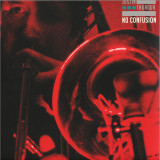
He is perhaps most known as the trombonist from the multi-award winning 'folk' group Bellowhead. Their split in 2016 led to him forming his own band and releasing his debut album as a bandleader, 'No Confusion'.
The album features original compositions written by Thurgur in collaboration with double bassist Max De Wardener, piano/rhodes/Hammond organ player Kishon Khan and guitarist Phil Dawson, with band members including the likes of Graeme Flowers on trumpet, James Allsopp on bass clarinet and Oreste Noda on congas.
Thurgur promoted 'No Confusion' throughout 2016 and 2017, culminating in an enthusiastically received performance at Love Supreme Jazz Festival in 2017. Jazz FM, in particular Chris Philips, gave extensive airplay to the album as well as streaming a live performance from the Jazz FM studios and doing an interview. They subsequently playlisted two of Thurgur's single releases. Lopa Kothari played a track on BBC Radio 3's show 'The World On 3'. The band did a live interview and performance on DJ Ritu's 'A World In London' show on Resonance FM. Beyond this Thurgur has been developing relationships with various other digital radio stations, including Gordon Wedderburn, John Waugh and a number of Global music stations based in Europe.
Born in Newtownards, County Down, Northern Ireland, singer/songwriter/guitarist Ricky Warwick was cut from the cloth of a mill workers’ jacket. Raised on a diet of Patsy Cline, Johnny Cash, Thin Lizzy, Stiff Little Fingers, Motown and everything in between. Saving his money from a newspaper round and a little help from his father, Ricky got his first electric guitar at age 13. “That cheap electric guitar changed my life....it saved me, it was more than just notes on a fretboard, it was the deepest breath of life I ever experienced.“ explains Warwick.
At age 14 Ricky and his family relocated to Strathaven, Scotland. It was here that Warwick fully immersed himself in the sonic seas of Rock n Roll. Writing and practicing every free moment he wasn’t working on his father’s farm, Ricky got a call to join acclaimed U.K. Punk/Folk band New Model Army as rhythm guitarist on their 1987 ‘Ghost Of Cain‘ World Tour. Following New Model Army, Ricky went on to form The Almighty in Glasgow who enjoyed ten top forty singles and four top twenty albums in the U.K. during the late 80’s/early 90’s, touring worldwide with such iconic bands as The Ramones, Motorhead, Megadeth and Iron Maiden.
In 2002, after relocating back to Ireland, Ricky recorded his first solo album ‘Tattoos & Alibis‘ in Joe Elliott of Def Leppard’s studio in Dublin with Joe also handling production duties. It marked a shift in direction “I realized that I didn’t need to yell over a wall of sound to make my point...less is more, stripped back instrumentation could achieve the same goal just as effectively. I learned so much making that record, primarily about myself”. Warwick would go on to release two more solo albums between 2002 -2010 and tour globally opening for the likes of Def Leppard, Cheap Trick, Bryan Adams and Lynyrd Skynyrd.
In January 2010 Ricky received a call from his old friend Scott Gorham who was spearheading a reformation of Ireland’s favourite sons Thin Lizzy and wanted Ricky to front the new line up. ”I was shocked, terrified, excited and extremely humbled when I got that call. Phil Lynott was my hero and Thin Lizzy were the soundtrack of my life. I realized that I could never hope or even dare to try and stand in Phil’s shoes. All I could do was try and stand beside them and sing his songs with as much heart, soul and passion possible. In late 2012, with a necessity to write and perform new material, out of respect for the Thin Lizzy name, Black Star Riders were born. Warwick is the frontman and main songwriter for the band and 2013 saw the release of Black Star Riders acclaimed debut album
‘All Hell Breaks Loose‘.
Black Star Riders have now released four critically-acclaimed and commercially successful albums, the most recent being 2019’s ‘Another State Of Grace‘. They have achieved two U.K. top 15 albums and one U.K. top 10 album as well as mainstream radio play which includes claiming two “singles of the week” on BBC Radio 2.
Following 2016’s lauded ‘When Patsy Cline Was Crazy... And Guy Mitchell Sang The Blues’, Warwick is getting ready to unleash his 5th solo album in 2021. Titled ‘When Life Was Hard And Fast‘, it was recorded in Los Angeles and produced by Keith Nelson (ex-Buckcherry), who also co-wrote the majority of the songs on the record with Warwick. “Keith Nelson and I share a passion for good, honest, rock ‘n’ soul. Making the album with Keith who shares a similar outlook and work ethic as myself was a no brainer ....also the fact that he has a killer collection of vintage guitars contributed greatly”
“I wanted to create an album that had the simplistic melodies of Tom Petty and the Heartbreakers charged with the electric hedonistic fury of Johnny Thunders And The Heartbreakers. Recording the album as live as possible with a full band was requisite to achieving the desired effect”. Xavier Muriel (Ex-Buckcherry) on drums and Robert Crane (Black Star Riders) on bass completed the core band and turned in stellar performances, giving the songs a real lease of life.
Also, once again, Warwick tapped some of his closest friends for guest appearances on the record, including Andy Taylor (Duran Duran & Power Station) Luke Morley (Thunder), Joe Elliott (Def Leppard), Dizzy Reed (Guns n Roses). Ricky also duets with his daughter Pepper on the song ‘Time Don’t Seem To Matter‘. “I can’t wait for people to hear this album and to hit the road touring it whether it’s with my band The Fighting Hearts or just myself and my acoustic - it will be amazing. I’m grateful that after 30 years of making records my appetite for writing and playing is the same as it was that day all those years ago when I got my first electric guitar”
For those intrigued by the album cover, it depicts a crash scene from the famous Ards TT Motor Car Race in County Down Northern Ireland. The race ran from 1928 until 1936 was watched by over 250,000 spectators annually. The embankment in the photograph that the spectators are on is actually a field belonging to Ricky’s Great Grandfather’s Farm, which he grew up on for the first fourteen years of his life.
For Another Michael, it all boils down to trust. In mid-2017, the critically acclaimed indie three-piece packed their bags and collectively relocated from Albany, NY to a shared house in West Philadelphia. This move signaled not only the start of a new chapter for the trio, but also a deepening of the bonds that would come to define their captivating debut LP, `New Music and Big Pop.' "It's hard for a group of people to get closer than living together," says bassist and producer Nick Sebastiano. "The stronger our connection grew, the more it shaped the music we found ourselves making." It should come as little surprise, then, that `New Music and Big Pop' is Another Michael's most collaborative work yet. Recorded in a small A-frame house-turned-makeshift studio outside Ferndale, NY, the record finds the trio pushing their sound in a dreamier, more folk-influenced direction, building songs around vulnerable, intimate performances using an ethereal palette of breezy guitars, subtle keyboards, and layered harmonies. As on the band's early EPs, singer and songwriter Michael Doherty's mesmerizing voice is front and center here, calling to mind Robin Pecknold or Ben Bridwell in its reedy, crystalline timbre, but it feels more at home than ever before amidst the album's lush, Technicolor landscape, which the band partnered with producer and fellow housemate Scoops Dardaris to create. The result is a masterfully understated record that belies its status as a full-length debut, a thoughtful, poetic, collection all about growth and change, hope and faith, endings and beginnings, delivered by a band that's only just begun to scratch the surface of their story.
SebaKaapstad is not just a band; SebaKaapstad is about showingpeople what it looks like when cultures collide - stories that come from the lives of PalesaModiga, Philip Scheibel, Ndumiso Manana, and Sebastian Schuster. If you have ever wondered what it would sound like if a South African, a Swazi and a few Germans got together and used their talents to express themselves, this is your answer. SebaKaapstad is the coming together of worlds and experiences while appreciating how alike we are as human beings. Through the global perspective of the members, SebaKaapstad are able to explore a soundscape influenced by soul, groove, electronic undertones, jazz and African music.
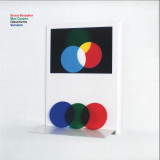
Laurel Halo, Donato Dozzy and Teheran sound artist Tegh give us their "Glassforms Versions"alongside a new edit by Max Cooper. The works of Philip Glass are reflected and refracted in a myriad of ways by some of the most renowned electronic artists alive, making for a blissful, multi-dimensional listening experience.
Textextext - (add your write up)
With "Glassforms", Max Cooper and Bruce Brubaker set out on an intimate, nuanced exploration of the works of Philip Glass. The resulting recordings, developed in a fluctuating exchange between the American pianist and the Irish scientist-artist, are an astounding testament to the innovation that artistic collaboration can achieve and what depths are yet to discover in Philip Glass' compositions. The two artists did not just rework, but fundamentally rewired the original songs using algorithmic software to process and augment the musical data it received from Brubaker's piano live on stage.
When approaching his remix, Donato Dozzy also tapped into that inspiration to create something new rather than just reworking it, which is one of the core motives that emanates from "Glassforms". The Italian producer and label owner is known for his drive to explore: he develops installations for public spaces and museums, uses obscure musical instruments and collaborates with classical singers or visual artists. "I chose "Two Pages" for it's hypnotic feel in the notes repetition", he says, "but I did not want to merely sample the piano, but instead ask someone I trust and admire to carve it from scratch and even go further." So he followed the lead of Brubaker and Cooper and teamed up with the renowned Italian percussionist and jazz musician Daniele Di Gregorio to completely rewire "Two Pages" into a gorgeous piece of endlessly modulating ambient electronica.
Laurel Halo, the second remixer on "Glassforms Versions", does not need a long introduction either: the American musician is at the forefront of electronic music in 2020, a bright star today after releasing her debut "Quarantine" on Hyperdub in 2012. Her remix of "Opening" brings to mind the string section of an orchestra tuning their violins before the performance - forever. They glide in and out of tune, sometimes individually, then together, then are accompanied by keys that are most likely a ghostly representation of Brubaker's piano, sampled and pitched down, but sound almost jazzy in the context of Halo's remix. It's a blissful listening experience, calling to mind her recent collaboration with cellist Oliver Coates on "Raw Silk Uncut Wood" and showing a deep understanding of Philip Glass' work.
Sound artist Tegh is the third on the remix bill - the electronic musician from Teheran delivers his take on "ƒTwo Pages", once again showcasing how versatile, how inherently complex the works of Philip Glass are. They can be interpreted in a myriad of ways - Tegh's version is a bounding, brooding piece filled with raw energy that feels like it is performed live, just for you, every single time you listen. His version is, at first, much more focused on the underlying moods, electronic undercurrents of the original than Dozzy's version, and yet, when the piano finally does break through, it becomes clear that we are listening to Philip Glass, reflected manifold: through the piano of Bruce Brubaker, the synths of Max Cooper, and then again through the mind of the artist Tegh.
Concluding the new "Glassforms Versions" is a previously unheard edit of "Two Pages". It's difficult to edit a piece of minimalistic beauty without losing it's essence, but Max Cooper - after many efforts and close conversations with Bruce Brubaker - managed to bring these shorter edit into a satisfying, conclusive form.
Leeds-based art-rock trio Mush release their feverish second
album, ‘Lines Redacted’, via Memphis Industries. The new
release, which finds the group recruiting Lee Smith (The Cribs,
Pulled Apart By Horses) on mixing duties, arrives just under a
year after their debut, ‘3D Routine’, capping off what has been
an obviously tumultuous but remarkably prolific year for the
band. With any prospect of live shows decimated, the group,
led by songwriter Dan Hyndman, have found the time to
release two EPs (‘Great Artisanal Formats’ and ‘Yellow Sticker
Hour’) and now a duo of full-length albums.
Tipped previously by the likes of 6 Music, Loud & Quiet, Uncut,
Q, Stereogum, DIY, The Line of Best Fit, Dork and more, Mush,
comprised of Hyndman (guitar/vox), Nick Grant (bass/vox) and
Phil Porter (drums), present their own sonic idiosyncrasy. It’s a
sound that blurs the lines of abstract surrealism, existentialism
and social commentary; utilising guitars as tools in 2020 to
stave off malaise whilst simultaneously commenting on the
nation’s ability to fall into such dire straits. It’s a sensory
overload of wiry tones that zig-zag between punk, prog and
sardonic-funk with a relentless ability to reflect society’s faults
and apathy in a unique and acerbic manner.
Whereas the band’s debut was very much a product of its time,
something part-inspired by the political atmosphere of mid-
2019 and a genuine moment of optimism when the prospect of
a socialist government in the UK was on the cards, this new
record uses tongue-in-cheek cynicism as a coping mechanism
for the environment that we now find ourselves in. From one
song to the next, ‘Lines Redacted’ introduces a string of
different narrators with each providing a different reflection on
the Armageddon scenario that we are slowly entering, whether
that’s bemoaning it or gleefully willing it along. ‘3D Routine’
presented a bed of scathing political jibes latching onto themes
and decisions of the time. ‘Lines Redacted’ mutates these ideas
into something slightly more sinister whilst maintaining all of
Hyndman’s razor-sharp wit that permeates the album.
MSG is a legendary name. After two phenomenal records under the guise of Michael Schenker Fest, a true guitar hero is returning to his roots. By forming Michael Schenker Group (MSG) back in 1979, Michael Schenker laid the foundations for one of hard rock’s most glorious solo careers of all times. And while nobody expected anything less from a former guitarist for Scorpions and UFO, it’s close to impossible mentioning everything Michael has built over the past 50 years, or the countless people he influenced or played with. This, truly, is the stuff that hard rocking myths are made of.
“I never looked back,” is how Michael dryly sums up an extraordinary career. Due to this mindset, he only realised much later what a huge impact his playing had made on the world of metal and hard rock. Very few guitarists can be cited as a primary influence for the likes of James Hetfield, Kirk Hammett, Dave Mustaine, Dimebag Darrell, Slash or Kerry King. However, to understand Michael Schenker means to understand one primary thing: he’s not here to be worshipped or adored, he’s not here to get rich, he’s here to play. And at 65, he’s doing it with the same swagger, verve and dizzying artistry as always. “I’m still 16 in my head,” he laughs.
Right in time for his 40th anniversary as a solo artist and his 50th birthday as a musician, he resurrects the immortal Michael Schenker Group. “Immortal” is also the name of his new album, recorded by likely the strongest line-up in his long history. Its a lightning bolt of an album that sounds fresh, bloodthirsty and agile. “Immortal” showcases the gargantuan vocal talents of Chilean hard rock prodigy Ronnie Romero (Rainbow), backed by singers Ralf Scheepers (Primal Fear), Joe Lynn Turner (ex-Deep Purple) as well as Schenker’s brother in arms, Michael Voss (Mad Max) who again produced the record alongside Michael Schenker – flawlessly, punchy and at full steam as if their very lives depended on it.
Next to Michael Schenker caressing his iconic black and white Dean Flying V, we hear bass player Barry Sparks (Dokken), keyboard player Steve Mann as well as the three drummers Bodo Schopf, Simon Phillips (ex-Toto) and Brian Tichy (ex-Whitesnake) pumping gallons of fresh blood through the tracks. And that’s not all, keyboard wizard extraordinaire Derek Sherinian (Dream Theater, Black Country Communion) gives the listener a baptism of fire in the blistering, heavy hitting opener “Drilled to Kill”, powered by Ralf Scheepers’ unbelievable vocal tornado.
Michael Schenker doesn’t live to play, he plays to live, and there’s no better way of summing up his relationship to his music than this – now for half a century and counting. The most emblematic representation of this relationship is the monumental closing track “In Search Of The Peace Of Mind”, a new recording of the very first song he ever wrote. “I composed this track in my mother’s kitchen back when I was 15,” he looks back half a century and smiles broadly: “The solo is just so perfect, I wouldn’t change a single note even today. This is the most important song of the last 50 years for me. It’s what started it all.”
When it finally got released in 1972 on the Scorpions’ debut “Lonesome Crow” Schenker had already moved on to UFO. What followed were several decades of pure hard rock ecstasy on and off stage, featuring a rotating cast of stellar players, always pressing the pedal to the metal. Now, in 2020, he reaps what he sowed. Alongside many of his peers, friends and contemporaries, he is celebrating 50 years of hard rock – fittingly with an album that is something like a zeitgeisty reminiscence of everything he’s ever done. The massive midtempo smasher “Don’t Die On Me Now” sees Joe Lynn Turner going all in, Ronnie Romero works his magic in “Knight Of The Dead” while Michael Voss cuts a grand figure before the microphone as well as behind the mixing desk on the furious second single “After The Rain”.
Towering above them all, Michael Schenker and his guitar prove they’re truly and utterly invincible. The celebrated icon pulls out all the stops – including his legendary “howler”, the fabled magnet he’s used on his fingerboard for a while now. And here’s yet another thing that’s just so archetypically Schenker, when bringing up his fiery and dedicated performance on “Immortal” he nonchalantly shrugs it off: “I simply played from the heart, as always.” This, dear Michael, is the understatement of the year – all the more so for a record that is already one of the top contenders for hard rock/metal album of the year.
MSG is a legendary name. After two phenomenal records under the guise of Michael Schenker Fest, a true guitar hero is returning to his roots. By forming Michael Schenker Group (MSG) back in 1979, Michael Schenker laid the foundations for one of hard rock’s most glorious solo careers of all times. And while nobody expected anything less from a former guitarist for Scorpions and UFO, it’s close to impossible mentioning everything Michael has built over the past 50 years, or the countless people he influenced or played with. This, truly, is the stuff that hard rocking myths are made of.
“I never looked back,” is how Michael dryly sums up an extraordinary career. Due to this mindset, he only realised much later what a huge impact his playing had made on the world of metal and hard rock. Very few guitarists can be cited as a primary influence for the likes of James Hetfield, Kirk Hammett, Dave Mustaine, Dimebag Darrell, Slash or Kerry King. However, to understand Michael Schenker means to understand one primary thing: he’s not here to be worshipped or adored, he’s not here to get rich, he’s here to play. And at 65, he’s doing it with the same swagger, verve and dizzying artistry as always. “I’m still 16 in my head,” he laughs.
Right in time for his 40th anniversary as a solo artist and his 50th birthday as a musician, he resurrects the immortal Michael Schenker Group. “Immortal” is also the name of his new album, recorded by likely the strongest line-up in his long history. Its a lightning bolt of an album that sounds fresh, bloodthirsty and agile. “Immortal” showcases the gargantuan vocal talents of Chilean hard rock prodigy Ronnie Romero (Rainbow), backed by singers Ralf Scheepers (Primal Fear), Joe Lynn Turner (ex-Deep Purple) as well as Schenker’s brother in arms, Michael Voss (Mad Max) who again produced the record alongside Michael Schenker – flawlessly, punchy and at full steam as if their very lives depended on it.
Next to Michael Schenker caressing his iconic black and white Dean Flying V, we hear bass player Barry Sparks (Dokken), keyboard player Steve Mann as well as the three drummers Bodo Schopf, Simon Phillips (ex-Toto) and Brian Tichy (ex-Whitesnake) pumping gallons of fresh blood through the tracks. And that’s not all, keyboard wizard extraordinaire Derek Sherinian (Dream Theater, Black Country Communion) gives the listener a baptism of fire in the blistering, heavy hitting opener “Drilled to Kill”, powered by Ralf Scheepers’ unbelievable vocal tornado.
Michael Schenker doesn’t live to play, he plays to live, and there’s no better way of summing up his relationship to his music than this – now for half a century and counting. The most emblematic representation of this relationship is the monumental closing track “In Search Of The Peace Of Mind”, a new recording of the very first song he ever wrote. “I composed this track in my mother’s kitchen back when I was 15,” he looks back half a century and smiles broadly: “The solo is just so perfect, I wouldn’t change a single note even today. This is the most important song of the last 50 years for me. It’s what started it all.”
When it finally got released in 1972 on the Scorpions’ debut “Lonesome Crow” Schenker had already moved on to UFO. What followed were several decades of pure hard rock ecstasy on and off stage, featuring a rotating cast of stellar players, always pressing the pedal to the metal. Now, in 2020, he reaps what he sowed. Alongside many of his peers, friends and contemporaries, he is celebrating 50 years of hard rock – fittingly with an album that is something like a zeitgeisty reminiscence of everything he’s ever done. The massive midtempo smasher “Don’t Die On Me Now” sees Joe Lynn Turner going all in, Ronnie Romero works his magic in “Knight Of The Dead” while Michael Voss cuts a grand figure before the microphone as well as behind the mixing desk on the furious second single “After The Rain”.
Towering above them all, Michael Schenker and his guitar prove they’re truly and utterly invincible. The celebrated icon pulls out all the stops – including his legendary “howler”, the fabled magnet he’s used on his fingerboard for a while now. And here’s yet another thing that’s just so archetypically Schenker, when bringing up his fiery and dedicated performance on “Immortal” he nonchalantly shrugs it off: “I simply played from the heart, as always.” This, dear Michael, is the understatement of the year – all the more so for a record that is already one of the top contenders for hard rock/metal album of the year.
MSG is a legendary name. After two phenomenal records under the guise of Michael Schenker Fest, a true guitar hero is returning to his roots. By forming Michael Schenker Group (MSG) back in 1979, Michael Schenker laid the foundations for one of hard rock’s most glorious solo careers of all times. And while nobody expected anything less from a former guitarist for Scorpions and UFO, it’s close to impossible mentioning everything Michael has built over the past 50 years, or the countless people he influenced or played with. This, truly, is the stuff that hard rocking myths are made of.
“I never looked back,” is how Michael dryly sums up an extraordinary career. Due to this mindset, he only realised much later what a huge impact his playing had made on the world of metal and hard rock. Very few guitarists can be cited as a primary influence for the likes of James Hetfield, Kirk Hammett, Dave Mustaine, Dimebag Darrell, Slash or Kerry King. However, to understand Michael Schenker means to understand one primary thing: he’s not here to be worshipped or adored, he’s not here to get rich, he’s here to play. And at 65, he’s doing it with the same swagger, verve and dizzying artistry as always. “I’m still 16 in my head,” he laughs.
Right in time for his 40th anniversary as a solo artist and his 50th birthday as a musician, he resurrects the immortal Michael Schenker Group. “Immortal” is also the name of his new album, recorded by likely the strongest line-up in his long history. Its a lightning bolt of an album that sounds fresh, bloodthirsty and agile. “Immortal” showcases the gargantuan vocal talents of Chilean hard rock prodigy Ronnie Romero (Rainbow), backed by singers Ralf Scheepers (Primal Fear), Joe Lynn Turner (ex-Deep Purple) as well as Schenker’s brother in arms, Michael Voss (Mad Max) who again produced the record alongside Michael Schenker – flawlessly, punchy and at full steam as if their very lives depended on it.
Next to Michael Schenker caressing his iconic black and white Dean Flying V, we hear bass player Barry Sparks (Dokken), keyboard player Steve Mann as well as the three drummers Bodo Schopf, Simon Phillips (ex-Toto) and Brian Tichy (ex-Whitesnake) pumping gallons of fresh blood through the tracks. And that’s not all, keyboard wizard extraordinaire Derek Sherinian (Dream Theater, Black Country Communion) gives the listener a baptism of fire in the blistering, heavy hitting opener “Drilled to Kill”, powered by Ralf Scheepers’ unbelievable vocal tornado.
Michael Schenker doesn’t live to play, he plays to live, and there’s no better way of summing up his relationship to his music than this – now for half a century and counting. The most emblematic representation of this relationship is the monumental closing track “In Search Of The Peace Of Mind”, a new recording of the very first song he ever wrote. “I composed this track in my mother’s kitchen back when I was 15,” he looks back half a century and smiles broadly: “The solo is just so perfect, I wouldn’t change a single note even today. This is the most important song of the last 50 years for me. It’s what started it all.”
When it finally got released in 1972 on the Scorpions’ debut “Lonesome Crow” Schenker had already moved on to UFO. What followed were several decades of pure hard rock ecstasy on and off stage, featuring a rotating cast of stellar players, always pressing the pedal to the metal. Now, in 2020, he reaps what he sowed. Alongside many of his peers, friends and contemporaries, he is celebrating 50 years of hard rock – fittingly with an album that is something like a zeitgeisty reminiscence of everything he’s ever done. The massive midtempo smasher “Don’t Die On Me Now” sees Joe Lynn Turner going all in, Ronnie Romero works his magic in “Knight Of The Dead” while Michael Voss cuts a grand figure before the microphone as well as behind the mixing desk on the furious second single “After The Rain”.
Towering above them all, Michael Schenker and his guitar prove they’re truly and utterly invincible. The celebrated icon pulls out all the stops – including his legendary “howler”, the fabled magnet he’s used on his fingerboard for a while now. And here’s yet another thing that’s just so archetypically Schenker, when bringing up his fiery and dedicated performance on “Immortal” he nonchalantly shrugs it off: “I simply played from the heart, as always.” This, dear Michael, is the understatement of the year – all the more so for a record that is already one of the top contenders for hard rock/metal album of the year.
2 printed inner sleeves, insert. first ever legal reissue with permission of Phil Newtons family and Heir, the copyright owners. Sleevenotes by band members and family.
a masterpiece of progressive rock, heavy yet melodic, dominated by phil newtons brilliant guitar playing and songwriting. remastered sensitively to retain the power of the original which was lost in all the previous pirated editions. the record collector edition was unofficial. 6 perfect songs ranging from the melodic charm of dawn and leaving, to the fab riffs of saga of the sad jester. a string of mishaps destroyed a career that should have seen grannie the equals of stray and wishbone ash. instead the world is left with one lp, badly mixed in 1971 by amateur srt engineers, and a legacy of just six songs on one of the most cohesive, consistent and masterful lps of the early seventies. one of the only uk private lps that may attain classic status alongside Argus and Led Zep IV.
Originals have sold for over £5000.
This is a particularly deluxe edition with die-cut sleeve, inner sleeves and special art work, hence slightly more.
- 1: Fender Iv - Everybody Up
- 2: The Sonics - Marlene
- 3: James Mask - Hootchie Coochie Gal
- 4: John Worthan - The Cats Were Jumpin
- 5: Vince Maloy - Hubba Hubba Ding Ding
- 6: Don Wade - Gone, Gone, Gone
- 7: Billy Wayne - I Love My Baby
- 8: Wally Willette And His Globe Rockers - Pink Elephantssi
- 1: Darrell Rhodes And The Falcons - Four O'clock Baby
- 2: Arlie Miller And The Bullets - Lou Ann
- 3: Cruisers - Betty Ann
- 4: Joe D. Johnson - Rattlesnake Daddy
- 5: Bobby Mcdowell - Lonely
- 6: Jerry Arnold And The Rhythm Captains - Can't Do Without
- 7: Gene Terry - The Woman I Love
- 8: Glen Glenn - Blue Jeans And A Boys' Shirtside C
- 1: Red Moore - Crawdad Song
- 2: Maylon Humphries And His Tri-Seniors - Worried 'Bout Yo
- 3: Van Brothers - Servant Of Love
- 4: Sonny Fisher - Sneaky Pete
- 5: Benny Cliff Trio - Shake Um Up Rock
- 6: Gene Norman - Snaggle Tooth Ann
- 7: Tommy Nelson - Hobo Bop
- 8: Lloyd Mccollough - Gonna Love My Babyside D
- 1: Don Ellis And Royal Dukes - Blue Fire
- 2: Sonny Wallace - Black Cadillac
- 3: Floyd Mack - I Like To Go
- 4: Rod Morris - Alabama Jailhouse
- 5: Carl Trantham And The Rhythm Allstars - Where There's A
- 6: Jim Oertling - Back Forty
- 7: Hodges Brothers - I'm Gonna Rock Some Too
- 8: Lonesome Drifter - Eager Boy
Nach Crazy Rhythms Of Mata Hari, Shake Your Bones, dem Cool Cat Club und Born To Hula! Folgt nun der 5. Teil der DJ-Set Serie auf Stag-O-Lee. Wie auch bei den Vorgängern handelt es sich hier um einen auf 80 Minuten eingedampftes DJ-Set von einem verdienten Recken der Zunft - Keb Darge. Gaz Mayall folgt direkt mit Volume 6. Linernotes: Rockabilly didn't cross my world until the early nineteen eighties at a Dirtbox weekender in Bournemouth, until then I was a pure northern soul boy. I didn't really get stuck into collecting the stuff until a decade later, but when I did what a wonderful world of tunes opened up to me, and I went wild on it. I was very lucky to be doing a record stall in Camden market at the time just across from Boz Boorer and Neil Scott's stall. They along with other serious collectors Dave Vickers, Barney Koumis, Cosmic Keith, Jim Fox, Dave Crozier, and many others taught me all I needed to know. I only ever made one great rockabilly discovery which none of them knew, "Little Bit Lonesome" by Charles Ross, but I was happy enough buying all their recommendations as they were all new and exciting for me. I have done several rockabilly comps before, but sadly the Philippines typhoon in 2013 destroyed my village and forced me to sell the bulk of my collection. Here are some of my favourites that I never got round to putting out before that happened. Two of the aforementioned collectors are no longer with us. I therefore dedicate this comp to Dave Vickers and Cosmic Keith who both had a huge influence on my life and my musical taste.
- A4: How Does It Feel To Feel
- A1: How Does It Feel To Feel
- A2: Sylvette
- A3: Life Is Just Beginning
- A5: I Am The Walker
- A6: Ostrich Man
- A7: Sweet Helen
- B1: Midway Down
- B2: The Girls Are Naked
- B3: Bony Moronie
- B4: Mercy, Mercy, Mercy
- B5: For All That I Am
- B6: Uncle Bert
• The Creation was formed in 1966 from beat combo The Mark Four, and was quickly signed to a production deal with Shel Talmy, The Who’s producer. The first release was the urgent “Making Time”, which featured guitarist Eddie Phillips playing his guitar with a violin bow, two years before Jimmy Page started doing so.
• Alongside the “We Are Paintermen” LP, “How Does It Feel To Feel” rounds up the remainder of the recordings they made with Shel Talmy. This LP features the 2016 stereo mixes of Creation classics “How Does It Feel To Feel” (both the UK and US versions), “Life Is Just Beginning” and “Sylvette”. The last 60s lineup of The Creation, which featured future Face and Rolling Stone Ron Wood, is represented by all four sides of their two single releases.
• Pressed on 140 gram clear vinyl, the inner sleeve features 60s photos of The Creation from the collection of designer Phil Smee.
a A1. How Does It Feel To Feel UK version
[d] A4. How Does It Feel To Feel [US version]
Kiwi Jr. is a phenomenal "rock" and/or "punk" and/or "indie-rock" (whichever you like more) band from Canada, made up of Jeremy Gaudet (mic, guitar), Brohan Moore (drums), Mike Walker (bass), and Brian Murphy (guitar). Cooler Returns is their second album, and their first for Sub Pop. Despite being a snapshot of the pandemic-infused beginnings of this decade, Cooler Returns is truly a whole lot of fun. RIYL indie-pop from down under, things that are smart/exuberant/catchy all at once. Buildings burning in every direction; macabre unknowns in your friendly neighbor's basement; undecided voters sharpening their pencils: under pressure we could call Kiwi Jr.'s Cooler Returns "timely." But what year is it, again? On Cooler Returns, Kiwi Jr. cycle through the recent zigs & looming zags of the new decade, squinting anew at New Year's parties forgotten and under-investigated small town diner fires, piecing together low-stakes conspiracy theories on what's coming down the pike in 2021. Put together like a thousand-piece puzzle, assembled in flow state through the first dull stretch of quarantine, sanitized singer shuffling to sanitized studio by streetcar, masked like it's the kind of work where getting recognized means getting killed, Cooler Returns materializes as a sprawling survey from the first few bites of the terrible twenties, an investigative exposé of recent history buried under the headlines & ancient kings buried under parking lots. Not so long since their debut Football Money in archaeological time, unending gray eons later in the dog years of quaran-time, spiritually antipodean Canadians Kiwi Jr return to disseminate this year's annual report to the shareholders, burying the incriminating numbers in the endless appendices of a longform narrative record, a 3,000 word tract for stakeholders to pore over. These stories - memories of Augusts past, unrepressed & transcribed fast - go down easier thanks to meaningful changes enacted in 2019's KiwiCares Pledge: delivering on a promise to transition from Crunchy to Smooth by 2021, the caveman chug of Football Money has been steamed & pressed with the purifying air of a saloon piano - operated with bow-tie untied - and a spring green side-salad of tentatively up-tempo organ taps & freshly fluted harmonica. A chronically detuned spin of the dial through swivel-chair distractions & WFH daydreams, an immersive ctrl-tab deluge cycling through popular listicle distractions like the unentombing of Richard III, or the deja vu destruction of the Glasgow School of Art, Kiwi Jr. sing this song to an indoor audience, crisscrossing canceled, every other prestige distraction source wrung dry, only songwriting remaining to deliver engrossing tales to the populace, just how I imagine it worked in the old days. Fixing loose ingredients into a sturdy whip, Kiwi Jr. beam in live from the 9-5, striding into 2021 with a mastered brainwave that comes equally from the back room of the record store as the penalty box. And how do we, left holding this box of deliberate entanglements, sign off to those as yet uninitiated, undecided, uncertain, unseen, absent return coordinates - Best Wishes, Warm Regards, Good Luck? Cooler Returns, Cooler Returns, C o o l e r R e t u r n s ! Cooler Returns was produced by Kiwi Jr., mixed and engineered by Graham Walsh (METZ, Bully) in Toronto, and mastered by Phillip Shaw Bova at Bova Labs in Ottawa, Ontario.
LTD. LOSER EDITION
Kiwi Jr. is a phenomenal "rock" and/or "punk" and/or "indie-rock" (whichever you like more) band from Canada, made up of Jeremy Gaudet (mic, guitar), Brohan Moore (drums), Mike Walker (bass), and Brian Murphy (guitar). Cooler Returns is their second album, and their first for Sub Pop. Despite being a snapshot of the pandemic-infused beginnings of this decade, Cooler Returns is truly a whole lot of fun. RIYL indie-pop from down under, things that are smart/exuberant/catchy all at once. Buildings burning in every direction; macabre unknowns in your friendly neighbor's basement; undecided voters sharpening their pencils: under pressure we could call Kiwi Jr.'s Cooler Returns "timely." But what year is it, again? On Cooler Returns, Kiwi Jr. cycle through the recent zigs & looming zags of the new decade, squinting anew at New Year's parties forgotten and under-investigated small town diner fires, piecing together low-stakes conspiracy theories on what's coming down the pike in 2021. Put together like a thousand-piece puzzle, assembled in flow state through the first dull stretch of quarantine, sanitized singer shuffling to sanitized studio by streetcar, masked like it's the kind of work where getting recognized means getting killed, Cooler Returns materializes as a sprawling survey from the first few bites of the terrible twenties, an investigative exposé of recent history buried under the headlines & ancient kings buried under parking lots. Not so long since their debut Football Money in archaeological time, unending gray eons later in the dog years of quaran-time, spiritually antipodean Canadians Kiwi Jr return to disseminate this year's annual report to the shareholders, burying the incriminating numbers in the endless appendices of a longform narrative record, a 3,000 word tract for stakeholders to pore over. These stories - memories of Augusts past, unrepressed & transcribed fast - go down easier thanks to meaningful changes enacted in 2019's KiwiCares Pledge: delivering on a promise to transition from Crunchy to Smooth by 2021, the caveman chug of Football Money has been steamed & pressed with the purifying air of a saloon piano - operated with bow-tie untied - and a spring green side-salad of tentatively up-tempo organ taps & freshly fluted harmonica. A chronically detuned spin of the dial through swivel-chair distractions & WFH daydreams, an immersive ctrl-tab deluge cycling through popular listicle distractions like the unentombing of Richard III, or the deja vu destruction of the Glasgow School of Art, Kiwi Jr. sing this song to an indoor audience, crisscrossing canceled, every other prestige distraction source wrung dry, only songwriting remaining to deliver engrossing tales to the populace, just how I imagine it worked in the old days. Fixing loose ingredients into a sturdy whip, Kiwi Jr. beam in live from the 9-5, striding into 2021 with a mastered brainwave that comes equally from the back room of the record store as the penalty box. And how do we, left holding this box of deliberate entanglements, sign off to those as yet uninitiated, undecided, uncertain, unseen, absent return coordinates - Best Wishes, Warm Regards, Good Luck? Cooler Returns, Cooler Returns, C o o l e r R e t u r n s ! Cooler Returns was produced by Kiwi Jr., mixed and engineered by Graham Walsh (METZ, Bully) in Toronto, and mastered by Phillip Shaw Bova at Bova Labs in Ottawa, Ontario.
ACCEPT ARE BACK! The German kingpins of heavy metal will release their new, eagerly-awaited studio album via Nu- clear Blast on January 15th 2021. The ingenious title of the masterpiece is “Too Mean To Die”.
Speaking of heavy metal kingpins, when ACCEPT first launched at the end of the 70s, the metal genre didn’t even exist - at first the band could only be labelled with the (quality) seal “crazy loud and crazy wild”. Today we know that this was (and is) metal par excellence. And we also know that ACCEPT opened the door to thrash metal, inspiring giants such as Metallica. Guitarist Kirk Hammett recently stated in the German magazine “Gitarre & Bass”: “Wolf Hoffmann has a huge influence on me.“
ACCEPT, who once had their origins in the city of Solingen, a city of sound, have been a worldwide music phenomenon for more than 40 years. They still impress with razor-sharp guitar licks and a steel-hard sound. The band created all-time metal classics like “Balls To The Wall”, “Metal Heart” and many more.
Countless world tours and headline slots at the biggest, cutting-edge festivals cemented the band’s reputation as one of the best, hottest and loudest live acts ever. In addition, the band has sold millions of records, has achieved gold status in the USA, top 10 chart positions worldwide and a number 1 album (Germany, Finland) for “Blind Rage” (2014).
Now with “Too Mean To Die” their 16th studio album is in the starting blocks - it is the fifth album that US vocalist and front man Mark Tornillo has put his incomparable vocal stamp on.Recorded in the world music capital of Nashville (USA), ACCEPT’s music was once again produced by British master producer Andy Sneap, who is responsible for the mix. Sneap, who works for Judas Priest and Megadeth among others, has also been responsible for all ACCEPT productions since 2010.
Special circumstances often lead to very special albums. This is certainly true for “Too Mean To Die”, which of course alludes to the Corona period, although in a different way than one might assume. Hoffmann says: “Its to be expected that many musicians will address the Corona situation in their songs. There will certainly be slogans for cohesion, through which positive vibes should be spread, which is also good. But we have decided to not let ourselves be influenced by it. The fans will get a hard, direct and uncompromising metal album, but of course accompanied with a wink: We are too mean to die! Weeds do not go away! ACCEPT do not let themselves get down!”
Wolf isn’t wrong - the title track is a classic Accept cracker: dynamic and unwavering, turned up to eleven!
Zombie Apocalypse’, also relentless and hard, strikes the same note in the band’s signature style.
The first single - which will be released on October 2nd 2020 together with a remarkable video - is different. Titled ‘The Undertaker’, its a terrific midtempo number with great vocals and a built-in character that chugs along – certain to deliver some mermorable live moments! According to Wolf Hoffmann its one of the most catchy, pleasing pieces of the album.
New to the band, and thus to be heard for the first time on an ACCEPT album, is Philip Shouse (Gene Simmons Band, among others). The US guitarist fights hot duels with Hoffmann, while Uwe Lulis makes the guitar trio perfect and pro- vides the right rhythm. “Phil was part of our orchestra project and was also completely convincing live. We recognised his great talent immediately and simply didn’t let him go,” explains Hoffmann.
Just how varied the ACCEPT guitar trio performs on the new album is proven by one of the secret highlights: ‘The Best Is Yet To Come’ – a beguiling ballad in which Mark Tornillo is at his best. The metal world knows that Mark can scream like no other, but here it shows once again that the frontman can also sing magnificently. “Mark sang this, for us rather unusual song stunningly well. The fantastic thing about Mark is that he not only masters the typical metal screams, but can also sing melodically and beautifully. He proves this impressively in this song”, chief guitarist Hoffmann raves.
In addition, ACCEPT have strengthened their team even further with newcomers Martin Motnik (bass) and Philip Shouse (guitar), thus forming an unbeatable team together with “Drum God” Christopher Williams and “Rhythm Mas- ter” Uwe Lulis.
There’s no doubt that with “Too Mean To Die” Accept are once again playing at the top of the Champions League of the genre. Wolf Hoffmann & Co. present the (music) world eleven masterpieces at the beginning of 2021 - eleven songs for eternity!
Philipp Gorbachev presents his latest 5-track EP "Nichego Ne Ponyal" on System 108. Philipp Gorbachev is amongst Moscow's most renowned dance music artists. The musician, DJ, and live performer is also known as the resident of MUTABOR, a member of ARMA17 and the System 108 community. His previous releases on Comeme, Trip, ARMA, and his own PG TUNE label contribute to a big variety of music genres: full live bands, church bell music, and techno. The new EP, which translates to 'I understood nothing' is an ode to isolation, where one's personal state of solitude simultaneously clashed with a global pandemic lockdown. The record was produced in the process of a fleeting stream of thought, and rather than relying on the use of automatization and the digital, it consists of recorded instruments. Drum machines, live drums, drum pads, keyboards, accompanied by bewildering vocals - all create an enticing audio tale that embodies the ethereal state of today's existence. Whilst being confined in the new secluded and virtual reality of the world, the artwork was devised via Facetime by photographer Nick Gavrilov, and just like the EP, it depicts the act of creation as such; Gorbachev's kitchen transformed into a temporary art studio where the interchange of imagination roamed free. The 'Nichego Ne Ponyal' EP is a result of Philipp Gorbachev's collaboration with System 108 and is the 3rd vinyl release of the creative platform, which is recognized for delivering outstanding events in Moscow's electronic music scene.
2023 Restock
Within the elusive confines of this film awaits an unreleased album that defies categorisation by a musician who in a different time and space would be revered amongst some of the most important exponents of progressive rock, dark ambient, Krautrock and pioneering synthesiser composition - not to mention sound design and art-house film scores. As a protégé of François Bayle and Luc Ferrari who had studied classical music before immersing himself in found-sound manipulation and oscillators, Alain Pierre quickly became an enthusiastic go-to man for sound sculpture and technical studio proficiency in Belgium’s small film industry.
To the many generations of dedicated fans of the visual work of Philippe Druillet it might seem virtually impossible to adequately “score” the alien, futurist landscapes of the man who many called the “space architect” (on account of his space age reductions of Gothic cathedrals, Art Nouveau, and Indian temples), but once you have heard the sonic reactions of Alain Pierre on this the first-ever dedicated Druillet documentary, Ô Sidarta, complete with his own equivalent sound palette, it will be difficult to “hear” Druillet’s world via any other composer. Despite Druillet’s truly incredible record sleeve designs for projects like cosmic disco ensemble Black Sun, concept albums such as Attention by Jean-Pierre Mirouze (composer of Le Mariage Collectif), Parisian metal bands like Sortilège, gatefold portraits of Jimi Hendrix, later period albums by William Sheller and most relevantly on albums by Igor Wakhévitch (Docteur Faust, 1971) as well as separate releases by both Richard Pinhas and Georges Grünblatt (both from the cosmic prog outfit Heldon), it is fair to say that this criminally unreleased album by Alain Pierre would conjure up the closest synergy between sound and vision that either artist would come close to.
The almost twelve of continuous music that Alain Pierre supplied for Ô Sidarta in 1974 fortunately appears in its entirety, unedited, as it does here for the first time ever away from its original broadcasts. Broadcast on Belgian and French TV that autumn, the film received a warm reception from Druillet fans, prospective film producers and space rock fans lucky enough to catch the short feature.
Throughout his career Alain’s commitment to conceptual music excelled within both cinematic realms as well as with the live arena. Never shying away from the constraints of transporting heavy synthesiser technolog and unpredictable analogue equipment to public spaces, Alain took his self-initiated “live” work very seriously. It was within his lesser-documented performances that you would find the closest sound to the music on Ô Sidarta, proving that the Druillet collaboration was naturalistic and conceptually close to Alain’s personal stylistic agenda. A rare recording of a one-off concert at the Université libre de Bruxelles in October 1976 reveals a very similar set of movements and soundscapes found on Ô Sidarta. This rare artefact has been included on the second side of this record under its original title Notions de physique intérieure (Notions Of Interior Physics) and stands as a perfect companion piece to Ô Sidarta - complete with a very similar “kit list” including the welcome addition of an Arp Sequencer, a Korg Vocoder and a Theremin (a back line whose total would far surpass any stationary studio of the era never mind a live show!).
By looking back at his original composition for one of his very first solo soundtrack commissions, Ô Sidarta, you can hear that back in 1974 Alain had already successfully managed to combine more unlikely musical influences, experimental techniques, and previously unheard soundscapes and studio tricks in to one twelve-minute score than most musicians fail to cram in to a whole discography. But still there is so much music yet to be discovered and Ô Sidarta is just the tip of the iceberg in the middle of a cosmic sea. Much like a character from one of Philippe Druillet’s books, Alain Pierre is a rogue pilot, steering his own ship in to the unknown, uncharted, unnoticed and quite unbelievable.