Donovan Philips Leitch is a Scottish singer-songwriter and guitarist who in the 1960s developed an eclectic and distinctive style that blended folk, jazz, pop, psychedelia, and world music. He emerged from the British folk scene and reached fame in the UK in early 1965 before replicating this in the US the following year, baring the fruits of the blossoming, successful, and eventually long collaboration with record producer Mickie Most.
Fast forward to 2018 and we're very pleased to say we're re-issuing these wonderful albums on our own state51 Conspiracy label - these are the first two of five, with another special release to follow in 2019. All five were cut at Abbey Road, pressed on 180g audiophile vinyl and lovingly re-created to replicate the original releases. They are all strictly limited to just 300 copies for the world too.
Suche:jus phil
- A1: Ann Sexton – You’ve Been Gone Too Long
- A2: Psychodelic Frankie – Putting You Out Of My Life
- A3: The Sweet Vandals - Papa’s Got A Brand New Bag
- A4: The Tom – Emmanuel And Ron Experience – When You Lose Your Groove
- A5: Sharon Jones & The Dap-Kings - What Have You Done For Me Lately (Part 1)
- A6: Tony & Tandy – Two Can Make It Together
- B1: The T.s.u. Toronadoes – What Good Am I?
- B2: Coke Escovedo – I Wouldn't Change A Thing
- B3: Maxine – A Love I Believe In
- B4: Carl Carlton – I Can Feel It
- B5: Al Supersonic & The Teenagers – Paint Yourself In The Corner
- B6: Esther Phillips – Just Say Goodbye
- B7: Joe Valentine – I Lost The Only Love I Had
LP with printed Innersleeve with Linernotes by Eddie Piller (Acid Jazz) The compilation series “DJ's Choice” was launched in 2008 and has already enjoyed the participation of several high-profile curators, such as Keb Darge, Marc Hype, and DJ Suspect. A few years before the death of Unique Label founder Henry Storch in 2018, a DJ's Choice edition was created with his long-time friend and fellow DJ Eddie Piller. Unfortunately, it never came to fruition—as is so often the case, life had other plans, and sadly not all of them were pleasant. However, the idea was never completely forgotten, and with the help of Eddie and Henry's DJ partner in crime Sandra (Frollein Taube), a list of tracks that were on Henry's quick-select list for his sets was finally compiled.
In his own time, in his own tone and in his own company.
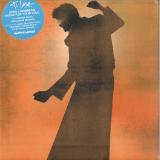
‘Win and lose without losing oneself’’ This line from French rapper Oxmo Puccino greatly accompanied David Walters while composing his fourth studio album. Over the eleven tracks on ‘Ti Love’, David took his time to find the right tone and in turn, tell his truth.
‘Ti Love’, is a French-Creole abbreviation for “petite love”, meaning ‘little love’, evoking that sweet fondness found in those small gestures and little acts of kindness.
Think of things like young kids' brotherly love or a stranger lending you a helping hand, while expecting nothing in return. It’s these motions that allow this album to feel full of real life, carried by beating drums that also pull at our heart strings.
Basing himself in a small village in Martinique, where David had not long since scattered the ashes of his late mother, the multi-instrumentalist decided to remain there and let the writing of Ti Love pour out from deep inside him. Taking influence from around the island, the energy from his makeshift studio set up in Fort de France, allowing a resilient yet grieving man to recount, let go and come to terms with his recent loss.
So embracing these new circumstances, on the rugged coastal Caribbean island of Martinique, David took up an artist’s residency in the island’s capital Fort de France, located near the town’s port is the ‘Manoir des Artistes’, a bustling recording studio space. A place where the walls shake as the latest sounds being created are blasted by locals and visitors alike. Most studio doors are wide open; as music here is a huge part of everyday life, feedback from encouraging neighbouring musicians is on hand and welcomed. A contrast to the isolation often assumed with working in more traditional music studios.
It was here in this stimulating environment that David recorded Ti Love’s initial demos.
With his first collaborator onboard, Neeweed, a 25-year-old producer and gospel expert who David met at the Martinique Jazz Festival.
Of the album’s initial versions of the record David recollects: ‘It took me three years to write it, then I rewrote it, reworked it. In the end I'm really glad I stepped back and listened to myself.’ I found a great ally in GUTS, who ended up being the artistic director of the record”
David surrounded himself with the right people who helped him express himself in the best possible way. He called on other friends and musical comrades; album opener and title track, ‘Ti Love’ features the incomparable Fatoumata Diawara (World Circuit Records / Africa Express) and further along additional production came in from; Izem, Art Of Tones, and GUTS himself, who all added just the right amount of ‘little love’ to this
project. Further helping hands came from Californian producer and DJ Captain Planet, who David was introduced to a few years ago. Closer to home, here in Europe, the German producer Bluestaeb appears on two tracks: the very catchy disco funk ‘Mr Maraboo’ and ‘Kite Koule’, the latter being the first single lifted from the album, where David invited Nigerian guitarist Keziah Jones.
Elsewhere on the album, fellow Heavenly Sweetness recording artist Blundetto contributed two tracks; the reggae ‘Voodoo Love’, which is David's tribute to Studio One, and the very sweet and resilient ‘Bon Voyage’, which closes the album... "It's gold, it doesn't need anything changing.” remarked David - ‘Bon Voyage’ is a goodbye to his mother, whose voice called him from the bottom of the sea one night while he was surfing during the full Moon.
Released almost 20 years after his debut album ‘AWA’ released on French imprint Ya Basta, home to Gotan Project and many others, David boasts a long list of radio supporters including; Gilles Peterson, Cerys Matthews and Don Letts at the BBC, while further field Cosmo Radio in Germany, and KCRW in Los Angeles.
On this new record, David has shown sincerity and vulnerability, while still honouring the infectious groove that he is known for the world over. Despite the upsets, a little love can indeed go a long way.
CREDITS:
Produced by Bluestaeb / Blundetto / Captain Planet / Izem / Art of Tones
A&R : Guts
Mixed by Mr Gib @ Onetwopassit
Except "Bon Voyage” and "Voodoo Love" mixed by Jerome “Blackjoy” Carron
Mastered by Benjamin Joubert @ Biduloscope
Art by Elliott Walters
- A1: Eden
- A2: Sun
- A3: Hawaii Oslo
- A4: Pour Trois
- A5: Biesy
- B1: Luka
- B2: Glass
- B3: Today It Came
- B4: Esja
- B5: Now, Run
Hania Rani is a pianist, composer and musician who splits her life between Warsaw, where she makes her home, and Berlin where she studied and often works. She has written for strings, piano, voice and electronics and has collaborated with the likes of Christian Löffler, Dobrawa Czocher and Hior Chronik, and released an album with her Polish group teskno last year. She has performed at some of the most prestigious venues in Europe - from the National Philharmony in Warsaw, to Funkhaus in Berlin, to The Roundhouse in London (where she made her debut at the Gondwana 10thanniversary festival last October) and at festivals such as Open'er, Scope Festival and Eurosonic. Her compositions for solo piano were born out of a fascination with the piano as an instrument, and her desire to interpret its sound and harmonic possibilities in their entirety and in her own way.
LP comes with heavy weight reverse board sleeve including a double sided printed insert plus digital download code.
Esja is her debut solo album and for Rani it is her first, real, personal statement as an artist. "No hiding behind the "collaborations" or "projects" anymore. For the very first time, finally - just me, as I am".
Recorded at Rani's apartment in Warsaw (the piano room has a beautiful reverb and the space has become part art studio and part sound laboratory for Rani) and at her friend Bergur Þórisson'sstudio in Reykjavik, Esja is a series of beautiful melodic vignettes. Sensual, sensitive, rhythmic, atmospheric, free but harmonious, beguiling and hypnotic, collectively they project a sense of unlimited space and time.
Expect support from accross the media spectrum from Mojo to Uncut and Gilles Peterson and Mary Ann Hobbs on 6 Music to Radio 3 and beyond. Full servicing to the Gondwana Records datebase.
- A1: Explain It To Her Mama
- A2: If I Could Say What's On My Mind
- A3: (Girl) I Love You
- A4: I Love You, You Love Me
- A5: We've Only Just Begun
- B1: Dedicated To The One I Love
- B2: My Baby Love
- B3: I'm For You, You For Me
- B4: Love... Can Be So Wonderful
black vinyl[28,15 €]
Produced by Josephine ''Jo'' Bridges and signed to her We Produce imprint, The Temprees were a Memphis soul vocal trio powered by one of the great falsettos in pop music, that of Jasper ''Jabbo'' Phillips. Their 1972 debut Lovemen is aptly named; this is one of the greatest make-out R&B albums ever made, with one smoldering slow jam after another. Their take on ''Dedicated to the One I Love'' is rightly considered the greatest version ever made, but ''If I Could Say What's on My Mind,'' ''Love... Can Be So Wonderful,'' and ''I Love You, You Love Me,'' will get you and your partner's hips swaying (and patch up any lovers' quarrels tout suite, too). Stax didn't really know what to do with soul this sweet (We Produce was a Stax imprint), so Lovemen languished commercially, but nowadays it's recognized as a model of its kind. For its first-ever LP reissue, we've cut Lovemen ALL-ANALOG straight from the original two-track album master, and pressed it up in two versions, one in black vinyl, the other in eco-friendly, sonically superior valentine red PET plastic. The heart on the front cover sums this one up...
Gothenburg trio Dark Horse present their new album "Listen", released by We Jazz Records on 13 November. The band, comprising of John Holmström (piano), Alfred Lorinius (bass) and Mårten Magnefors (drums) recorded their second album in a remote cabin by the ocean in Norway, owned by Holmström's family. The natural sound of the album owes a lot to the relaxed surroundings and the result is some high degree of improvised music turning into collective composition as the music unfolds.
The album recording took place at a very active spot in the trio's calendar, following extensive touring in Europe, Japan and their native country Sweden. The two days of improvising were edited down to highlights that easily fill an album's worth of quality listening and reveal what playing live brought to the three musicians: A natural ability to react to ideas, build on them and form coherent, compositional tracks on the spot. A task much easier said than done.
"We're a non-conceptual basement band all the way", laughs pianist Holmström. "We have been moving from free form music into collective composition and this is our pinnacle recording with that idea thus far. We just set out to play as honestly as possible and this is what followed."
A testament to the power of a fixed band unit developing over time, "Listen" comes across as a work by a group constantly keeping its nose to the wind when it comes to developing their music. The long-form opener "Allas Favorit" is a monumental piece building and releasing tension along its 12+ minute length. First single "Brutet Groove" assumes a fascinating, almost mechanic-sounding swing while assembling and reassembling the pieces of the puzzle, and the closing track "Fjäll-låten" gives us something of an ever-shifting sonic landscape in glorious colors, much akin to its name ("Mountain Song" in Swedish).
"That one Fjäll-låten includes some of the best musical moments of my life so far" confirms bassist Alfred Lorinius. "It's actually an edit of a 20-minute improvised sequence, and it has the real feeling of the band coming together and doing something new and fresh in the moment. I feel it's something you can revisit as many times as you like and there's always something to find in there."
Dark Horse formed in 2012 after Lorinius joined Holmström and drummer Mårten Magnefors to complete the group. Things quickly started taking shape musically from there on, but the group took their time in honing their craft with a method they now refer to as "tryout development". Their self-titled debut album appeared in 2015 and the current We Jazz album "Listen" marks the first internationally distributed release for the trio.The roots of Dark Horse lay firmly in the buzzing creative music scene of Gothenburg, Sweden, where the members have close ties with local establishments such as the legendary venue BrÖtz, and the city's vast scene of highly-regarded musicians.
In brief, "Listen" presents Dark Horse gloriously putting into use their musical philosophy what they describe "improvising as composing together".
"Listen" by Dark Horse is released by Helsinki's We Jazz Records on 13 November 2020 on vinyl and digitally. The vinyl comes in a heavy duty tip-on sleeve and the album design features the painting "Overwhelming Structure" by the Helsinki-based visual artist Maija Lassila.
- A1: Bad Luck (Eric Kupper Remix)
- A2: Bad Luck (Eric Kupper Remix Instrumental)
- A3: Love Train (Eric Kupper Remix)
- B1: Love Train (Eric Kupper Remix Instrumental)
- B2: The Love I Lost (Eric Kupper Remix)
- B3: The Love I Lost (Eric Kupper Remix Instrumental)
- C1: Back Stabbers (Eric Kupper Remix)
- C2: Back Stabbers (Eric Kupper Remix Instrumental)
- D1: I Don't Love You Anymore (Eric Kupper Remix)
- D2: I Don't Love You Anymore (Eric Kupper Remix Instrumental)
- E1: Love Is The Message (Eric Kupper Remix)
- E2: Love Is The Message (Eric Kupper Vocal Remix)
- F1: Do It Any Way You Wanna (Eric Kupper Remix)
- F2: Do It Any Way You Wanna (Eric Kupper Remix Instrumental)
Remixer extraordinaire Eric Kupper takes a set of epic, lost recordings from 1982, that feature the cream of the crop session musicians behind the soulful sound of Philadelphia - Earl Young (Drums), Ronnie Baker (Bass), Norman Harris (Guitar), Lenny Pakula (Organ), Larry Washington (Percussion), Vince Montana, Jr (Vibes, Keyboards), John Bonnie (Saxophone) - along with powerhouse vocalists Joe Freeman, David Simmons, Bobby Love and Ron Tyson, and lovingly applies his own modern sheen, spinning them into ear candy for today’s listener as well as those who were there from the very beginning. These incredible remixes, which have individually been topping the charts on Traxsource, can now be had in one place - this exclusive 3-LP vinyl collection that is not just a tribute to the past, but a vibrant continuation of the legacy these legendary musicians helped create.
- A1: There's A New Place On The Market
- B1: Every Time You Put Me Up, I Get Down Some New Way
Having taken their name from a line in Hooray For Hollywood – inspired by the song’s jarring use in Robert Altman’s Philip Marlowe detective movie The Long Goodbye – there is an aptly cinematic quality to Any Young Mechanic’s music.
With intricate scenes, enthralling narratives and unique characters cropping up across the lyrics, and a kaleidoscopic yet coherently interwoven spectrum of moods and emotions stretching through the music, the Adelaide five-piece bring a fresh language to folk music’s natural propensity to spin a good yarn.
So rather than offering borrowed references illuminated by the cosy flickers of campfire flames, on their debut album The Modern Shoe Is Ruining The Foot, the Australian band’s urgent songs conjure up vivid, widescreen vistas that blend the genre’s enduring charms with a musical dexterity and sharp vision reaching beyond folk’s usual corners.
“We are trying to make folk music for now,” suggests frontman Sam Wilson. “Turning it on its head in a new, sometimes uncanny way, because we don't want to just do the old thing again. I don't think it’s interesting to make things again, so we’re searching for a contemporary edge.”
The roots of this original yet inclusive approach, in part, go back to the Adelaide music scene that helped to forge Any Young Mechanic.
- A1: Ready Set
- A2: Prove
- A3: On The Road
- A4: Thought You’d Know By Now
- A5: Like A Fool
- B1: Fluorescent
- B2: Idwbf
- B3: Still Sweet
- B4: Fade
- B5: This Is The End
Dylan Atlantis' Insta bio read 'amateur artist' at the start of the year. Now she's on a billboard in Times Square. With vocals and lyrics that extend well beyond her young years, Dylan Atlantis is the definition of meteoric rise. Pitchfork describes her as "the silky R&B singer, sliding in with the laid-back cool." THE PHILIPPINES-BORN, WEST SYDNEY BASED MUSICIAN WAS RAISED on a musical diet of RnB and Hip-Hop by her Mum. Now a self-professed lover of all genres of music (even country), she's out here sharing her innermost thoughts and lyrical experiments with the world. "I kinda just treat music like a diary but also a science lab where I can experiment expressing myself in different ways until it's awesome enough that I feel compelled to share it." Impressed Recordings are proud to present Dylan Atlantis' release - It Starts Again, on limited edition vinyl.
- A1: Robert Pico - Le Chien Fidèle
- A2: Annie Girardot - La Femme Faux Cils
- A3: Spauv Georges - Je Suis L'état
- A4: Zoé - Zoé
- A5: Jacques Da Sylva - Fou
- A6: Valentin - Je Suis Un Vagabond
- A7: Jacques Malia - Histoire De Gitan
- A8: Bernard Jamet - Raison Legale
- B1: Jean-Pierre Lebort - Barbara Au Chapeau Rose
- B2: Les Concentrés - Fils De Dégénérés
- B3: Les Missiles - Publicité
- B4: Hegessipe - Le Credi D'hegessipe
- B5: Marechalement Votre - Ethero Disco
- B6: Mamlouk - Decollez Les
- B7: Mozaique - L'amour Nu
- B8: Jean-Marc Garrigues - Je Dis Non
- B9: Penuel - Astronef 328
The journey through French-speaking pop archives continues with this fifth volume, packed with fuzz, gimmicks, and dissent. Far from the charts, the selected tracks display a great creative freedom, often backed by corrosive humor. Welcome to the surprising, kaleidoscopic, and colorful world of the late sixties and early seventies, Wizzz!
Born in Montauban, Robert Pico stumbled into music by chance when he met René Vaneste, then artistic director at Pathé-Marconi. René brought him to Paris to record his first 45 RPM EP in 1964. A year later, Pierre Perret introduced him to Vogue, where he recorded his second album with Claude Nougaro’s orchestra. Sylvie Vartan then introduced him to RCA, where he recorded four singles, including the astonishing "Chien Fidèle," a track backed by a hair-rising fuzz guitar. Alongside his solo career, he also composed for other artists like Alain Delon (the song was recorded but remains unreleased), Magali Noël, Bourvil, and Georges Guétary. In the Paris of the sixties, he mingled with Mireille Darc, Elsa Martinelli, Marie Laforêt, France Gall, Françoise Hardy, Petula Clark, Régine, Dani, Serge Gainsbourg, Joe Dassin, Franck Fernandel, Charles Level, and Roland Vincent. Despite his efforts and winning a Grand Prix Sacem for his final record, Robert Pico didn’t achieve the expected success in show business and decided to leave Paris and return to the Southwest, where he devoted himself to writing. He is the author of 23 books (including Delon et Compagnie, Jean-Marc Savary Editions 2025, a memoir about his youth and his many encounters). Today, he is relieved to never have become a celebrity and devotes himself to his work with passion.
In 1969, the Franco-Italian movie Erotissimo was released, directed by Gérard Pirès (who later directed Taxi in 1998, written and produced by Luc Besson). This pop comedy features Annie Girardot, Jean Yanne, Francis Blanche, Serge Gainsbourg, Nicole Croisille, Jacques Martin, and Patrick Topaloff. The soundtrack was written by Michel Polnareff and William Sheller, with lyrics by Jean-Lou Dabadie. "La Femme Faux-cils," performed by Annie Girardot. It recounts the feelings of a rich CEO's wife who seeks to develop her sex appeal under the influence of advertisement and magazines. Groovy, sparkling and light, this track, with ITS lush arrangements humorously critiques consumer society and feminine beauty standards.
“Je suis l’Etat” (1967) is the flagship track of the first EP by singer-songwriter Spauv Georges, aka Georges Larriaga, better known as Jim Larriaga (1941-2022). Born into a family of bakers, the young man was initially planning to become a hairdresser when he discovered English-speaking music through Elvis Presley and the Beatles. After this revelation, he decided he would become a songwriter and gave himself five years to succeed. He recorded his first two EP’s independently for RCA under the pseudonym Spauv Georges; meaning “that poor George”, a nickname given to him by the mother of her friend Jean-Pierre Prévotat (future drummer of the Players, Triangle, or Johnny Hallyday). Portraying a depressed and eccentric young man, Spauv Georges created corrosive and amusing songs that didn’t reach a wide audience, despite a TV appearance with Jean-Christophe Averty.
Supported by his loyal friend and fellow songwriter Jean-Max Rivière, Georges Larriaga met the future singer Carlos in the early '70s, then Sylvie Vartan’s assistant. He wrote songs for Carlos, including the popular "La vie est belle," "Y’a des indiens partout," and "La cantine", which went onto become a huge hit in 1972. He also composed for Claude François (“Anne-Marie”, 1971), Charlotte Julian (“Fleur de province”, 1972), helped launch child singer Roméo (who sold 4 million records), and later wrote the hit "Pas besoin d’éducation sexuelle" (1975) for the young Julie Bataille. In 1971, Jim recorded an album for Disc'Az: “L’univers étrange et fou de Jim Larriaga”, which featured pop gems like “La maison de mon père”.
The story of the song "Zoé" began when Pierre Dorsay, artistic director at Vogue Records, asked Swiss singer and musician Pierre Alain to write a song for a new female singer. The inspiration came when he realized that Zoé (the artist's name) was also the name of France's first atomic battery, created in 1948, which consisted of uranium oxide immersed in heavy water! The lyrics reflect a bubbling energy that must be handled with caution, while the instrumentation echoes this atomic theme, notably with the use of a theremin.
Zoé’s career lasted only as long as a single 45 RPM, but it seems Christine Fontane was the vocalist behind this pseudonym, who is known for several EPs, a good "popcorn" album in 1964, and a handful of children’s singles in the '70s. Regardless, the photograph on the cover is of a different girl entirely.
Later, Pierre Alain continued his career, writing songs for himself, Marie Laforêt, Danièle Licari, Alice Dona, Arlette Zola (3rd place in Eurovision 1982), and achieving multiple gold and platinum records in Canada. Also an inventor with several patents, president of the Romande Academy, and head of the French Alliance in Geneva, he now composes atonal music, books, and poetry. Moreover, he is also the host of "Les Mardis de Pierre Alain" at "Le P'tit Music'Hohl" in Geneva.
Filled with oriental choruses and fuzz guitar, "Fou" is from Jacques Da Sylva's only EP released by Vogue in 1967. Despite the quality of this recording, all traces of this singer disappear after this first effort.
Valentin is a baroque pop singer born in Belgium. He is the songwriter and composer of most of the tracks on his three singles released in the late 60s in Canada. A legend says that he reincarnated himself as Jacky Valentin during the 1970s for a rock'n'roll revival career in Belgium, but his older brother sadly debunked this story. Valentin's first two singles were arranged by Claude Rogen, a Parisian session pianist who had come to Canada to promote the song “Mister A Gogo”, a cover of David Bowie’s “Laughing Gnome”, adapted by singer Delphine, his wife at the time. Far from his usual network, Claude Rogen arranged music for Polydor, including the arrangements for “Je suis un vagabond” in 1969, a jerk tune with string arrangements and a furious optimism.
Jacques Malia wrote, composed, and recorded his only 45 EP for Festival in 1966. “Histoire de gitan” is an incredible beat track with bohemian scat that tells the story of a gypsy musician who came to Paris to make it in the Music-Hall, to no avail. The hero of the song and its author probably shared a similar fate, as Jacques Malia faded into anonymity after this remarkable attempt.
Bernard Jamet recorded two EPs for Barclay in the late sixties and co-wrote several songs with Christine Pilzer, Pascal Danel, and prolific songwriters Michel Delancray and Mya Simile. The track “Raison Légale” (1968), his masterpiece, immerses the listener in a courtroom right when a murderer is being judged, with jerk rhythm and free arrangements. A unique, paranoid, judicial, and psychedelic oddity.
Jean-Pierre Lebrot-Millers started his career in show business in 1967 as a singer and songwriter for the Philips label. After three singles, he wrote several songs of a new kind with his friend Pierre Halioche, in the midst of the sexual liberation movement and the democratization of drugs. With provocative lyrics, “Les filles du hasard” and “Barbara au Chapeau Rose” were released on a Philips singles in 1968. The character of Barbara was inspired by a queen of Parisian nightlife during the psychedelic years: model Charlotte Martin, who dated Eric Clapton from 1965 to 1968, then Jimmy Page from 1970 to 1983. Jean-Claude Petit’s arrangements, with a table-filled intro, soul brass, and Hendrixian guitar, emphasize the flamboyance of a hedonistic and sexy character, whose dog is named Junkie because “Junkie est un nom exquis”! The track was recorded live in three takes with a full orchestra.
Upon its release, the record was censored by Europe 1 and RTL due to its references to drug use. Jean-Pierre Lebrot was then banned from the airwaves and later dismissed by his record label. He changed his artist name to Jean-Pierre Millers, while his companion Pierre Halioche became D. Dolby for a new dreamy composition, “Chilla”, which Jean-Pierre produced himself with arrangements by Jean Musy. Once again, the song was immediately censored everywhere. After this setback, he decided to stop singing and started taking on odd jobs to support his Swedish wife and their son until the day he met Jean-Pierre Martin, then production manager at Decca, who had worked with Manu Dibango. Martin offered Jean-Pierre Lebrot-Millers, then employed at Rank Xerox, the position of artistic director at Decca. He accepted and became, a year later, promotion director (radio, press, TV). He worked on Julio Iglesias’s first album for Decca, which became a massive hit and allowed him to meet Claude Carrère. The latter asked him to write new songs and find their performers, much like a “talent scout.” It’s through him that Jean-Pierre discovered Julie Pietri and Corinne Hermès. He composed “Ma Pompadour” for Ringo, Sheila’s husband, and took the microphone again for the syncope hit “Rendez-Vous” in 1982.
That same year, Jean-Pierre Lebrot-Millers tried to release a track for which he had heavily gone into debt: “Si la vie est un cadeau”. Having recorded it in London, he presented it to numerous professionals, all of whom refused to get involved. The same thing happened with Antenne 2 and the Sacem when he proposed the song as France’s entry for Eurovision. He then met Haïm Saban, who was producing cartoon soundtracks and had just launched the Goldorak theme song. Saban, having listened to the song, declared it had the potential to become a hit. He sent Jean-Pierre and Corinne Hermès to meet the CEO of the Luxembourg radio and television network. The latter received them, asked to hear a verse and chorus a cappella in his office, and immediately hired them to represent Luxembourg at Eurovision 1983. They reworked the arrangements and recorded a new version with Haïm Saban as co-producer. The song ended up winning Eurovision 1983, a great comeback for our hero. He continued producing and hung out with the band Nacash in Belgium when a couple came to introduce their daughter for an impromptu audition in a hotel room. The girl sang “Les démons de minuit” while dancing to a radio cassette. Impressed, he had her take singing lessons for a year and composed a song for her (for which he had the melody and title, but no lyrics). This required him to go on the hunt for a lyricist, who ended up being Guy Carlier. They recorded the song, which was initially a ballad, at Bernard Estardy’s CBE studio, and gave the singer a new name: Melody. They showed the song around their industry network without success. Later, Estardy called Jean-Pierre to suggest changing the rhythm and making it pop-rock. Orlando, Dalida’s brother, liked the result and decided to co-produce the track. “Y’a pas que les grands qui rêvent » became a classic hit. The song has since been covered by Juliette Armanet (as a ballad, like the original) and Valentina.
Born into an aristocratic Breton family, Hervé Mettais-Cartier worked as a DJ at Queen Kiss, a nightclub in Poitiers, where he formed the band Les Concentrés with Michel (an actor) and Christian (a radio technician). Together, they created a repertoire of whimsical songs (“Ma bique est morte”, “J’suis un salaud”, “Fils de dégénéré”...) that they performed on stage dressed in white (in homage to “concentrated milk”). They performed at Bliboquet and Olympia in 1968 for the 10th edition of the “Relais de la chanson Française” organized by L’Humanité-Dimanche and Nous les Garçons et les Filles, sponsored by Pepsi Cola. Winners in the author-composer category, alongside Danish singer Dorte, their visibility allowed them to record a 45, and appear on television in Jean-Christophe Averty’s show. The A-side of the disc features Bruno le ravageur, a casatchok dedicated to Bruno Caquatrix, the director of Olympia, nicknamed in the song “Coq Atroce” or “croque-actrices”. The B-side is dedicated to “Fils de dégénéré”, a quirky tribute to Hervé's aristocratic roots, mixing absurdity with sophisticated vocal harmonies.
After Les Concentrés, Hervé Mettais-Cartier formed the duo La Paire et sa Bêtise with his friend Olivier Robert. They performed in Parisian cabarets and toured with Pierre Vassiliu. In the late 1970s, Hervé began a solo career. He recorded two albums for the Motors label in 1978 and 1979, which did not achieve their anticipated success due to lack of promotion. In 1980, he met Bernadette, with whom he started a family and created a “Chansons à voir” (songs to see) show that he performed until his death at the end of 2024.
Publicité comes from the final EP by the Missiles (Ducretet Thomson, 1966), a disc that also includes “La (nouvelle) guerre de cent ans”, featured on Volume 4 of our Wizzz! series. Please refer to the booklet for the story of the band.
“He’s 1.82 meters tall, 28 years old, weighs 135 kg, is black and Belgian”: this is the description of singer Hegesippe on the back of his sole single (Decca, 1967). He appears on the album cover wearing a Greek toga, like a hippie gag – we are at the end of the year 1967. In “Le crédo d’Hegesippe”, this former bodyguard of Antoine and the Charlots plays the delightful card of the thick brute converted to Flower-Power and non-violence, with arrangements by Jean-Daniel Mercier, aka Paul Mille.
“Ethéro-disco” was released on a promotional record for clients of the Maréchal company (Liège, Belgium) for the New Year 1979. Over a funky rhythm, celebrity impersonations (Brigitte Bardot, Jacques Dutronc, Fernandel…) deliver an enigmatic text about pharmaceutical products like ether, bismuth, and aspartate. The track was composed by Dan Sarravah (responsible for Joanna's “Hold-up inusité” featured on Wizzz! Volume 3) and Tony Talado, who was also a singer (one 45 in 1967), songwriter (with over a dozen credits between 1964 and 1985 in various styles from surf music to disco), author (Devenez Végétarien, Dricot Editions, 1985), ad designer, and psychologist.
Décollez-les is on the A-side of Mamlouk's only single, a pseudonym for Marsel Hurten, who is known for his work on several EPs in the late sixties, as well as composing music for Hervé Vilard’s “Capri, c’est fini”, Claude Channes' “La Haine”, Annie Philippe’s “On m’a toujours dit”, and Nancy Holloway’s “Panne de Cœur”.
This strange song, with Afrobeat horns and absurd dialogues between a chef and his kitchen staff, is the result of a collaboration between Marsel Hurten and one of his neighbors, a photographer from Pavillon-sous-Bois (93), where the musician settled after returning from the Algerian War. A music video was shot to promote the record.
Marsel Hurten was born in Tourcoing (59) into a musical family. At a young age, he joined the brass band founded by his grandfather, playing the piston before studying trumpet at the conservatory, as well as teaching himself how to play the guitar. As an orchestra musician, he toured in France, Belgium, Germany, and England. He released a series of solo 45’s between 1965 and 1968 for the DMF and Az labels before stopping recording to focus on working for other artists (Gilles Olivier, Noëlle Cordier…).
“L’amour nu” (Vogue, 1971) is the work of the short-lived Belgian band Mozaïque. The track, written by singer Jacques Albin, closely resembles another of his compositions, “Carré Blanc”, which he recorded in 1969 for Disc’AZ.
Represented by the Lumi Son micro-label based in Marignane (Côte d'Azur), Jean-Marc Garrigues released two 45 RPMs in the late sixties, defending the French jerk sound. The song “Je dis Non” is a short, joyful ode to youth, pop music, and rebellion.
Songwriter and performer Jacques Penuel released three singles. The first one, “Astronef 328” (Fontana, 1969), features a dizzying series of chords punctuated by sound effects, a sci-fi story, and arrangements by Jean-Claude Vannier.
We would like to sincerely thank Pierre Alain, Moon Blaha, Marsel Hurten, Bastien Larriaga, Jean-Pierre Lebrot-Millers, Bernadette Mettais-Cartier, Robert Pico, Olivier Robert, Claude Rogen, Micky Segura.
Back In Stock!
Grammy Award winner Louie Vega has the unique ability to spotlight and highlight the most essential elements of classic dance tracks and remix and recreate them to create something just as powerful for today’s audiences. Currently in the midst of putting the finishing touches on his forthcoming album, Expansions In The NYC, Louie took some extra time to gather together the original members of the seminal New York – based disco funk band Unlimited Touch and collaborate with them at Log Cabin Studio in Manhattan and his own Daddy’s Workshop Studio in New Jersey to produce the 2020 edition of “I Hear Music In The Streets.”
Unlimited Touch consists of Audrey Wheeler (lead singer), Phil Hamilton, Tony Cintron, Sandy Anderson (RIP), Stephanie James and Lenny Underwood. “I Hear Music In The Streets” was originally released on legendary imprint Prelude Records in 1981.
Growing up in the Bronx, from an early age Louie had an affinity and love for all the various musical genres that were bubbling up in New York during that era defining creative period. It is that passion that has stayed with him during a career that has brought him Grammy’s, several worldwide hit records, and a status as one of the world’s most sought after DJs. It was especially fulfilling for Louie to work with the original members of Unlimited Touch, He quickly realized that their talents were still as strong as ever as they performed musical and vocal elements from the original song, and that they had the vision to see how the song could be re-energized by having Louie add his unique production elements to this seminal tune.
Louie is in the midst of an especially prolific and productive period. In 2016 he released the Grammy nominated Louie Vega Starring….XXVIII full length album; 2018 saw the release of the widely acclaimed and chart topping NYC Disco 2 X CD and 4 X vinyl album on Nervous Records. Known universally as “The Maestro” due to the standards of excellence he maintains in his productions, DJ Performances and live appearances with his Elements of Life Band, Louie Vega is now ready to unleash another gem to add to one of the music industry’s most remarkable body of work.
- Somewhere, Nowhere
- Angles Mortz
- False Prophet
- Fluoride Stare
- The Void
- Ascension
- Just A Kid
- Host
- Landslide
- Renaissance
- 7: Am
- Blue In Grey
2026 Repress
Flickering in ultraviolet, there is an elusive place where blue pill meets red, ups become downs, and day merges with night. Those liminal spaces where anything is possible is where you’ll find Nightbus and their hypnotic debut album Passenger. Doom, uncertainty, and opportunity lurk in the shadowy corners of their murky existence with stops at disassociation, co-dependency, and addiction before reaching its final destination - a glimmer of hope.
The in-between of Nightbus’ own Gotham lies where Manchester’s city pulse meets Stockport’s outer realm. An audio-visual entity formed among a musical family of friends, freaks, and foes in messy mills and after hours on dancefloors alike, their sound bleeds from tension where collective creative forces are bound together and collide with the fallout of being torn apart. Before even playing a show, their So Young released single ‘Mirrors’ – a knowing nod of respect to some well-known gloomy Northerners - may have made old school indie heads shimmy at shows in Salford’s The White Hotel but also signalled the duo’s knack for offering listeners a Bandersnatch approach to hitchhiking their own personal Nightbus in whatever direction they choose to take. “Everyone can have their moment with our songs; the music is our response to who we are as young people, living in the city full of this energy right now,” they say.
Whilst reverb hefty melodies and dread-filled loops embody isolation from writing at each of their home studio set-ups, magic happens in the ether across 90s trip-hop, indie sleaze and electronica; Jake’s production layers Olive’s pop sentimentality with drums and samples whilst tales of a cast of faceless characters place Olive as puppet master; her severed self’s perspective manipulating their stringed limbs at arm’s length to see how their stories play out when scenes reflecting her own lie close to the bone. “It’s a bit fucked; like having this out of body experience with a made-up movie running through my head,” she says. “As I write I can see they’re all from a similar world, but they allow me to explore different feelings without giving away part of myself.”
Recorded at The Nave in Leeds with producer-engineer Alex Greaves (Heavy Lungs, Working Men’s Club), surprise and danger lies in every crevice. Brooding whispers turn to chants on 6-minute opus ‘Host.’ Improvised when performed live, its immersive shift in tempo leads to hefty dub courtesy of Jake’s pedals. Even then, you won’t know shit’s hit the fan until its mid-point reveal when ominous bass blasts a thunderous soundtrack as its protagonist defiantly walks away after committing the perfect crime. “It makes you wait, and more songs should have sirens,” Olive grins.
Leaning deeper into alter-egos via the video game-psychological horror of a Silent Hill dystopia, the band’s Fight Club moment ‘Angles Mortz’ turns its literal translation of death angles on its head as it reflects upon kink and internalised shame reincarnated as pride. Elsewhere the ice cool ‘Landslide’ is a Requiem for a Dream about the addiction of being in a band; ‘The Void’ explores co-dependency and estranged relationships; and carefully selected samples revive house track ‘Just A Kid’ from the band’s early incarnation. Passenger’s every direction is to face challenges head on. “That is what’s so great about horror; you can see through predictable patterns so when the unexpected occurs it's more realistic and uncomfortable… I want to own the dark stuff!”
As for Passenger’s first single, the pulsating ‘Ascension’ is a spiralling deep dive into death, suicide, and legacy around who or what we leave behind. A noughties club banger by way of NYC beats - ergonomically designed for those who like to stay out a little too often and too late - it throbs like a house party’s partition wall as the literal levelling up undergoes a neon transformation; blue glitching to pink, diffusing the white construct of the Nightbus Matrix. “It really does feel like the end of something and was purposely written that way,” they say, “the ascension is like a firework going off!”
With wheels in motion, Nightbus has become a movement surpassing sonic realms. Between shows from Porto to Brighton taking in The Great Escape, Rotterdam’s Left Of The Dial and Paris’ Supersonic; DJing; remixing; guesting (BDRMM’s Microtonic album); and even enlisting talented like-minds to craft a 3-part queer coming-of-age music video series which ties in with a new ‘hyperpop’ phase in the evolution of their popular Nightbus Soundsystem club night, heads are now being turned from sports brands to high-end fashion designers. “There are things we can’t reveal just yet,” tells Olive, “but we’re excited about the direction this beast we’ve created is heading.” As the album philosophises and asks one ultimate question; what does it truly mean to be ‘Passenger’? Nightbus may not claim to offer a definitive answer, but it might make you feel a bit better about those demons.
Whilst YTM is at home presenting dancefloor focussed material, we see him explore the other side too, with "Memory Is A Clock" like the earlier "Vortix", he ditches the 4x4 for breakbeat territory. Whilst the bass keeps the solid metronome you would expect, "Memory Is A Clock" is a track that takes a few moments, contemplative melody and trademark arpeggios take the lead. When it comes to the other collaborations on the record, the appearance of Brame And Hamo on "Raver's Heart Is A Mess" sees them lean into the Progressive nature both artists love so much. Then Pablo Bozzi lends his own unique outlook to "We Don't Know The Way, We Just Stay" in one of the standout tracks, epitomising Younger Than Me’s ability to create profound experiences.
The album concludes with "Music Will Never Stop, Heartbeat Will Never Fade, Party Will Never End", less of a title and more of a personal philosophy – the perpetual essence of rave culture and its timeless impact on music. A rhythmic belter, juxtaposed with incendiary synth-lines and staple catchy sequence work, finishing the record with one of the true highpoints. In addition the release also features four digital bonus tracks, including "The Other Face Of Loneliness" and a Prog Dance Reshape of one of the records more eclectic cuts "Zarathustra Dance" all offering an extended exploration into the creative landscape YTM inhabits.
- A1: Herb Alpert & The Tijuana Brass - Casino Royale (Main Title)
- A2: Dusty Springfield - The Look Of Love
- A3: Moneypenny Goes For Broke
- A4: Le Chiffre's Torture Of Mind
- A5: Home James, Don't Spare The Horses
- A6: Sir James' Trip To Find Mata
- B1: The Look Of Love (Instrumental)
- B2: Hi There Miss Goodthighs
- B3: Little French Boy
- B4: Flying Saucer/First Stop Berlin
- B5: The Venerable Sir James Bond
- B6: Dream On James, You're Winning
- B7: Herb Alpert & The Tijuana Brass - The Big Cowboys & Indians Fight At Casino Royale/Casino Royale Theme (Reprise)
- C1: Herb Alpert & The Tijuana Brass - Casino Royale (Main Title)
- C2: Opening Cars Converging/To The Bond Chateau
- C3: The Black Rose/James Bond In Scotland
- C4: The Widow Duty Of Lady Fiona/Wassail
- C5: The Grouse Shoot/Mimi's Lament
- C6: Gymnasium Training
- C7: Proposals, Super 8 & Costumes
- C8: Sir James' Trip To Find Mata/Temple Dance
- C9: Mike Redway - Have No Fear Bond Is Here (Single Version)
- D1: Dusty Springfield - The Look Of Love (Film Version)
- D2: Sitar Background/Old Berlin House/Mata Hari School For Spies
- D5: Vesper's Kidnapping/End Of Torture Sequence
- D6: Fight In Casino Manager's Office/Dr Noah's Headquarters/The Lsd Room
- D7: Mike Redway - The Big Fight At Casino Royale/Even Bond In Heaven/End Title (Have No Fear Bond Is Here)
- D3: Bond Arrival In France/Vesper In The Shower
- D4: Le Chiffre's Magic Act
Quartet Records and MGM present the re-issue of the first official complete vinyl edition of Burt Bacharach’s timeless classic soundtrack for the 1967 James Bond spoof Casino Royale.
The infectious main theme performed by Herb Alpert and the Tijuana Brass is just the starting point of an epic comedy ride that includes such highlights as the unforgettable “The Look of Love,” sung by Dusty Springfield, or the epic fight music at the end of the film. Produced by record industry legend Phil Ramone, the original soundtrack LP offered selected highlights, expertly edited to showcase the best parts of the entire score. Thanks to the legendary sound quality of the stereo copies, this record became one of the most highly sought-after collectibles in the industry.
This straight re-issue of our 2019 vinyl edition was produced, restored and mastered by Chris Malone, rebuilding the score from the ground up. The soundtrack album has long been considered a cornerstone of an audiophile’s collection. Lauded by The Absolute Sound, the original Colgems release continues to remain in pole position as the best sounding “popular” LP vinyl disc of all time.
Malone’s work was focused on addressing unintended technical anomalies (such as filling dropouts and covering analogue splices) rather than broadly applying a modern sound palette. He has eschewed dynamic range compression and retained the brilliance of the original recording. The first LP is a fully remastered reissue of the iconic original stereo vinyl, playing in all its splendor. The second LP contains all the unreleased material, in mono, which are still the only available source to date.
This special 2xlp is a limited edition pressed on 180-gram black vinyl, all of it housed in a gatefold jacket, retaining the iconic original cover art by Robert McGinnis
Swan Song
The vinyl LP at the heart of this éthiopiques 31 tracks 2 to 11 was one of the very last vinyl records ever released in Ethiopia. But above all it represents, we felt, the absolute masterpiece of the Ethiopian Groove – the Swan Song of Swinging Addis. The album leaves a clear idea for posterity of the level of sophistication and mastery that modern Ethiopian music had achieved, before being crushed under the Stalino-military heel of the Derg – as the bloody revolution that was unfolding came to be called.
Ethiopia1976.
The Revolution that broke out in February 1974 rolled on in a ruthless march. The whole of Ethiopian society was utterly stunned. The bouquets of flowers handed joyfully to the first tanks of the coup d'état were to wilt very rapidly. From September 1976 to February 1978, 18 months of Red Terror (the name given by the junta itself) spilled blood throughout the country. This fratricidal conflict took its heaviest toll among students and youth. The shift from feudalism to a cruel and primitive Stalinism left the country's citizens deeply traumatised, and snuffed out any pretence of activism, whatever the sector of society. This ice age was to last for seventeen long years.
ሙሉቀን፡መለሰ Mulukèn Mellèssè Muluqän Mälläsä
It was three tracks by Muluken that served as the opener for éthiopiques-1 more than 25 years ago. Seven more tracks appeared on éthiopiques-3 and 13, all accompanied by The Equators, which was soon to become the Dahlak Band.
The first track, Hédètch alu, also the very first piece that Muluken ever recorded, left audiences both unsettled and amazed. Reflecting the singer's extremely young age (he was just 17 at the time), this angelic voice mystified many, who thought they were in fact listening to a feminine voice. He was not yet 22 when he released his last vinyl record in 1976 with Kaifa Records (KF 39LP), one of the very last to be issued in Ethiopia, before the cassette tape became the dominant medium for music distribution – and before the new revolutionary regime put a stop to all independent musical life, via an unspeakable barrage of prohibitions and other persecutions.
Mulu qèn, literally, “A well filled day”. This tender maternal intention wasn't enough to ward off the cruelty of fate. His mother's premature death drove Muluken to leave his native Godjam, in northeast Ethiopia, to live with an uncle in Addis Ababa. Born Muluken Tamer, he took his uncle's last name – Mèllèssè.
The spelling Muluken appeared in his administrative records. Transcription of Amharic to the Latin alphabet, both in Ethiopia and for scholars, gives rise to controversies and quibbles that can never be neatly settled. French allows for a closer approximation of the original pronunciation, thanks to its battery of accent marks, confusing as they may be to anglophones.
Between rather accommodating administrative record-keepers and the various versions that pop up in interviews given by the artist, Muluken's year of birth oscillates between 1953 and 1955…
1954? One thing is certain: the artist's talent made itself known very early indeed, because he got his start in 1966-67, at the age of 13 or 14. Photos from the period attest to his extreme youth. It's a strange sort of initiation for a very young teenager to become a sensation in the heart of Addis's nightlife at the time, Woubé Bèrèha – the Wilds of Woubé. And what's more, in the club of the Queen of the Night, the Godjamé Assègèdètch Alamrèw herself, the very same that was portrayed by Sebhat Guèbrè-Egziabhér in his novel-memoir Les Nuits d’Addis Abeba2… The legendary female club owner who is remembered to this day by the capital's ageing boomers.
Muluken first tried his hand at the drums, before he grabbed the microphone. He emigrated briefly to the Zula Club, across the street from the old Addis Post Office, one of the ground-breaking bars of the burgeoning musical scene, before joining the Second Police Band in 1968, for around three years. He spent a few months with the short-lived Blue Nile Band founded by saxophonist Besrat Tammènè. As the musical scene grew increasingly successful, and pulled slowly but decisively away from its institutional ties, Muluken released his first 45rpm single in February 1972 (Amha Records AE 440). It was included in two LP Ethiopian Hit Parade compilation albums in September of the same year. All in all, Muluken released eight two-track 45s and the same number of original cassette tapes between February 1972 and 1984, the year that he departed for permanent exile in the USA. After converting to Pentecostalism in 1980, Muluken gradually abandoned all secular musical activity. In 1985, at the end of a concert in Philadelphia, he decided to quit concerts and recording for good. Mèlakè Gèbré, the historic bass player from the Walias band who was playing with him that night, recalls that everything appeared so irredeemably diabolical in Muluken's eyes, that it was to be the end of his contribution to Ethiopian Groove.
The end of the story, the beginning of a legend.
Dahlak Band, forgotten by History
Aside from his personal history and vocal talents, it must be remembered that Muluken Mèllèssè was one of the biggest names in the musical innovations that marked the end of the imperial period. These éthiopiques aim to convince those who are just discovering this hidden gem... As for Ethiopians themselves, they are to this day captivated by this singular and atypical figure in the Abyssinian pop landscape – even though he withdrew from public life some 40 years ago. Incorrigible devotees of poetic twists, of more or less hidden meanings, Ethiopians appreciate above all the care Muluken took in choosing his lyrics and the writers who penned them, such as Feqerte Haylou, Alemtsehay Wodajo and, here, Shewalul Mengistu (1944-1977). Love songs, written by women, a far cry from the conventional drivel that pleases sappy sentimentalists.
Muluken is equally acclaimed for his perfectionism when it came to music, the opposite of the overly casual approach that is all too common. He remained a faithful partner of musicians who came from a lineage that borrowed from several inventive and pioneering bands (Venus, Equators, Dahlak). Amongst them were certain artists who began their musical lives with Nersès Nalbandian at the Haile Sellassie Theatre and who come of age in around 1973 – at just the wrong time, you might say. Among them were the pillars Shimèlis Bèyènè (trumpet), Dawit Yifru (keyboards) and Tilayé Gèbrè (sax & flute). Most notably Tilayé Gèbrè, certainly one of the most important musicians, composers and arrangers of his generation, of the end of the imperial era, and of the early years of the Derg.
It was only in 1981 that a miraculous opportunity arose for Tilayé to escape the Stalinist paradise of the dictator Menguistou Haylè-Maryam. Once again it was Amha Eshèté (1946-2021) who provided a solution. The spirited and courageous producer, who had been in exile in Washington since 1975, succeeded, thanks to his incredible perseverence, in bringing the Walias Band to the USA. It was, in fact an extended Walias Band comprising ten musicians3, six of whom chose to slip away after a few concerts and the recording of an LP (The Best of Walias, WRS 100). Tilayé Gèbrè was one of these. He has been living in the USA ever since. There he joined the then-nascent Ethiopian diaspora, which lived largely unto itself, and was making only very modest headway in the American musical market. It seems unfair that Tilayé Gèbrè and the Dahlak Band were not able to benefit earlier from the public recognition that they do deserve.
A similar draining away of the top-rate talents would lead to the reorganization of the major groups of the “Derg Time”. The remaining artists spread themselves around between Ibex Band (renamed Roha Band), Ethio Star Band and a remodeled Walias Band. That spelled the end of the Dahlak Band.
With this record, produced by the essential Ali Abdella Kaifa a.k.a. Ali Tango, we can appreciate everything that the Derg not only destroyed, but also prevented from flourishing. This gem of Ethiopian-style afrobeat came out in 1976 (and, by way of a parenthesis, before the FESTAC 1977 in Lagos, which was attended by an impressive delegation of Ethiopian musicians — although Fela was already personna non grata in his own country). Despite everything that might distinguish this ethio-groove from Fela’s music – no colonial axe to grind, no question of political confrontation with the authorities, no claims to negritude or Africanism for the Ethiopian musicians, and less extrovertion! –, this LP fits beautifully into the saga of intense and electrified soul of the new “African” groove that Fela and Manu Dibango embodied so well from that point onwards.
In restoring this record to its place in the afrobeat epic, it can be seen that, if nothing else, the timeline bestows a legitimate pedigree and a historical primacy to works that had no international impact when they were originally released.
Warning! Masterpiece!
Rakkit Records is a brand new label that specialises in darkside jungle techno.
Heading in a different direction to Radman's older releases, this EP is inspired by two of his young loves: London squat parties and militant EA raves. That darkside hardcore sound you'd hear in the morning at the squats, with the energy of the main event at a Thetford Forest party. Dark, stompin', and drenched in 303s.
It's dedicated to one of his partners in crime of the time, Phil Sayer, who introduced him to much of the above and always pushed Radman to keep releasing tunes, with his support and brutal critique. Radman took samples of one of Phil's original poems for the track ACAB, from his performance in his old living room. Phil loved vinyl, 303s, darkside and hardcore, so we think he woulda been chuffed.
Just 150 copies getting pressed. Once they're gone, they're gone.
- Ett
- Misinfom The Uninformed
- Noll
- Hello Scotland
- Final Touch/Hidden Agenda
- He Came, He Stayed, He Fell
- Tomorrow My Friend
- We'll Meet In The End
White[34,87 €]
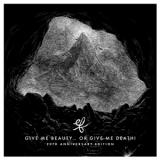
Long regarded as singular architects within European post-rock, EF have built a catalogue defined by dynamic patience, melodic clarity, and widescreen emotional reach. Across two decades of touring, the Gothenburg ensemble have carried that language to clubs and theatres at home and abroad, earning a reputation for meticulous, high-impact live shows and a body of work that has steadily gathered critical regard and a devoted international following. Reimagined and with expanded production including strings and brass, this edition is a considered re-engagement with the material that first crystallised EF's voice. The band returns to thesesongs with the benefit of twenty years' craft, presenting new arrangements that stretch time and deepen narrative, while retaining the quiet-to-catharsis arc that has always set their music apart. "Since it's our precious first born we wanted to give it the love it surely deserves. We felt we didn't want to celebrate its big 20th birthday by just remastering it and we surely didn't want to make the songs too modern and unrecognisable for the old fans. We wanted to give it a tighter, more dramatic and bombastic make over_ a gentle touch of today's EF." (Niklas Åström) Originally released in 2006, `Give Me Beauty_ or Give Me Death!' introduced EF's signature blend of cinematic guitars, patient dynamics and aching melody. For this new edition, along with an incredible cover illustration by Phillip Janta and brand-new bonus track `Noll', the band returned to the material with fresh ears and clear intentions: to open more space in the arrangements and to enrich the melodic lines with orchestral colour. `Give Me Beauty_ or Give Me Death!' (20th-Anniversary Edition) is a document of growth rendered with care: more instrumentation, more time, more consequence. The album is an act of stewardship_ both a homage and a forward-looking manifesto for EF and for discerning listeners everywhere. FOR FANS OF Explosions in the Sky, Mogwai, Caspian, Gospeed You! Black Emperor, Yndi Halda, Mono Black or White Double Vinyl, Digisleeve Single CD. Includes bonustrack Noll.
Long regarded as singular architects within European post-rock, EF have built a catalogue defined by dynamic patience, melodic clarity, and widescreen emotional reach. Across two decades of touring, the Gothenburg ensemble have carried that language to clubs and theatres at home and abroad, earning a reputation for meticulous, high-impact live shows and a body of work that has steadily gathered critical regard and a devoted international following. Reimagined and with expanded production including strings and brass, this edition is a considered re-engagement with the material that first crystallised EF's voice. The band returns to these songs with the benefit of twenty years' craft, presenting new arrangements that stretch time and deepen narrative, while retaining the quiet-to-catharsis arc that has always set their music apart. "Since it's our precious first born we wanted to give it the love it surely deserves. We felt we didn't want to celebrate its big 20th birthday by just remastering it and we surely didn't want to make the songs too modern and unrecognisable for the old fans. We wanted to give it a tighter, more dramatic and bombastic make over_ a gentle touch of today's EF." (Niklas Åström) Originally released in 2006, `Give Me Beauty_ or Give Me Death!' introduced EF's signature blend of cinematic guitars, patient dynamics and aching melody. For this new edition, along with an incredible cover illustration by Phillip Janta and brand-new bonus track `Noll', the band returned to the material with fresh ears and clear intentions: to open more space in the arrangements and to enrich the melodic lines with orchestral colour. `Give Me Beauty_ or Give Me Death!' (20th-Anniversary Edition) is a document of growth rendered with care: more instrumentation, more time, more consequence. The album is an act of stewardship_ both a homage and a forward-looking manifesto for EF and for discerning listeners everywhere. FOR FANS OF Explosions in the Sky, Mogwai, Caspian, Gospeed You! Black Emperor, Yndi Halda, Mono Black or White Double Vinyl, Digisleeve Single CD. Includes bonustrack Noll.
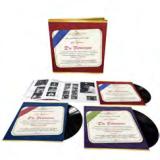
Eine der Perlen aus dem unvergleichlichen Opern-Katalog von Decca: Anlässlich des 200. Geburtstags von
Johann Strauß legt das Label Herbert von Karajans Einspielung der „Fledermaus” aus dem Jahr 1960 neu
auf – und zwar auf drei LPs und zwei SACDs. Eine Wiener Besetzung par excellence! Mit Hilde Gueden,
Erika Köth, Walter Berry, Erich Kunz und den Wiener Philharmonikern. Die Neuauflage wurde von den
originalen Stereobändern mit 24 Bit/192 kHz neu gemastert. Sie erscheint in einer Deluxe-Verpackung mit
einer Faksimile-Ausgabe des Originalbooklets sowie der Galaleinlage mit Gastkünstlern wie Renata Tebaldi,
Jussi Björling und Joan Sutherland.