
Cerca:k de
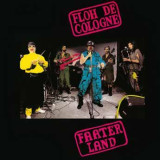
- 1: Nicht So Eng Sehn
- 2: Kopf An Die Wand
- 3: Die Drei
- 4: Erkennst Du Dich Nicht
- 5: Die Erste Millionen
- 6: Faaterland
- 7: Stalingrader Appell
- 8: Der Anti-Ami
- 9: Der Amerikanische Freund
- 10: Dann Ist Es Erreicht
- 11: Ballade Von Samstag Auf Sonntag
- 12: Es Gab Eine Zeit
Das letzte FL0H-Opus - vor dem großen Abschlußspektakel -hieß „F“ und knüpfte an alte Action-Theater-Tage an. Mit einer Musik allerdings, die erneut bewies, wie offen und aufnahmebereit die Routiniers geblieben waren. Moderner Rock, nicht modische Masche. Atemberaubend militante Intensität in den New-wave-Stücken, feinnervige Einfühlsamkeit in epischen Songs. Dazu bitterböse Satire, die an Biss nichts eingebüßt hat.
Die LP zu „F“ heißt FAATERLAND. Sie wurde in C0NNY‘S STUDI0 von Dave Hutchins aufgenommen und gemischt.

- B2: Orestes, Keyboards
- C1: Sleeping Beauty (Extended Intro), Bass – Paz*, Guitar
- C3: Renholdër, Engineer
- D1: Thinking Of You, Guitar
- D3: Over (Alt.), Kalimba
- A1: The Hollow, Drums – Tim Alexander*
- A2: Magdalena 4:04
- A3: Rose, Arranged By
- B1: Judith 4:05
- B3 3: Libras, Viola – Luciano Lenchantin
- C2: Thomas, Percussion – Draven Godwin
- D2: Breña 4:04
c A3 Rose, Arranged By [Strings] – Paz*
[e] B2 Orestes, Keyboards [Keys] – Billy*
[g] C1 Sleeping Beauty (Extended Intro), Bass – Paz*, Guitar [End Lead Guitar] – Troy*
[i] C3 Renholdër, Engineer [Drums] – Alan Moulder, Lead Vocals, Piano – Billy*, Percussion – Josh*, Vocals – Kelli Shafer, Maynard*
[j] D1 Thinking Of You, Guitar [End Lead Guitar] – Troy*
[l] D3 Over (Alt.), Kalimba [Gord] – Maynard*, Piano – Billy*
[c] A3 Rose, Arranged By [Strings] – Paz*
[e] B2 Orestes, Keyboards [Keys] – Billy*
[g] C1 Sleeping Beauty (Extended Intro), Bass – Paz*, Guitar [End Lead Guitar] – Troy*
[i] C3 Renholdër, Engineer [Drums] – Alan Moulder, Lead Vocals, Piano – Billy*, Percussion – Josh*, Vocals – Kelli Shafer, Maynard*
[j] D1 Thinking Of You, Guitar [End Lead Guitar] – Troy*
[l] D3 Over (Alt.), Kalimba [Gord] – Maynard*, Piano – Billy*

11
Borghesia is an electronic music group, founded in 1982 in Ljubljana, Slovenia. The band was formed by four members of alternative theatrical group Theatre FV-112/15: Dario Seraval, Aldo Ivancic, Neven Korda and Zemira Alajbegovic. They established FV Video to self-publish their video projects and FV Založba – the first independent record label in ex-Yugoslavia. Aldo and Dario took care of songwriting, production and recording while Zemira and Neven handled the visuals. In the late 80s the band signed to PIAS and went on to release a string of successful albums and played world-wide tours.
Clones was Borghesia's second album, self-released on cassette only in 1984. The band borrowed synthesizers (Roland SH-101, Casio VL-1, Korg Polysix) and a Roland 808 drum machine from friends. Every song was played live - no overdubs - and recorded to a cassette deck over a few nights at their club Disco FV during 1983-1984. The music on "Clones" is meant to accompany various video installations and performances. All of the songs are instrumental and feature various cutting edge techniques for 1983. Hypnotic, proto-techno and acid rhythms and synth lines. Music on the A Side of the LP is faster and club oriented while the B Side offers a drugged out soundtrack to get lost in.
All songs have been remastered for vinyl by George Horn at Fantasy Studios in Berkeley directly from the original master tape. Each LP is housed in a silver jacket with original gelatin print by photographer Jane Štravs. A fold-out poster is included with unreleased photos, original artwork and liner notes by Željko Luketić. After 28 years, Borghesia's "music for video" is finally appearing on vinyl for the first time.
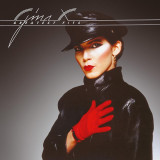
- A1: No G D.m
- A2: Exhibitionism
- A3: Be A Boy
- A4: Tropical Comic Strip
- B1: Nice Mover
- B2: Cologne Intime
- B3: Opposite Numbers
- B4: Vendor's Box
- C1: Strip Tease
- C2: I C. Code
- C3: Kaddish
- C4: Hypnosis_Hypnose
- D1: Babylon Generation
- D2: Die Kunst Des Liebens (The Art Of Loving)
- D3: Kanal Banal
- D4: French Lift
- D5: Waiting
17
Gina X makes her way to Dark Entries for Greatest Fits, a compilation of gems and jams from the eccentric New Wave icon. Gina X Performance was formed in Cologne in 1978 when art history student and chanteuse Gina Kikoine teamed up with synth wizard Zeus B. Held. Inspired by Patti Smith and Lou Reed, Kikoine aimed to create "the absolute union of music, poetry and travesty," a lofty goal that she most certainly would achieve. 1979 saw the release of the classic first LP, Nice Mover, which put Held’s lush electronic production in dialogue with Gina X’s deadpan delivery. Songs explore androgyny, decadence, and avant-garde art in a fashion that is stylish, sexy, and more than a touch transgressive. Nice Mover quickly became a cult favorite thanks to tracks like the euphoric “Nice Mover” and the dancefloor bomb “No G.D.M.”, dedicated to queer icon Quentin Crisp. Three more LPs followed in the coming years: X-Traordinaire in 1980; Voyeur in 1981; and Yinglish in 1984. The duo continued their genre deviance throughout, exploring uptempo space disco on “Strip Tease,” punk-laced New Wave on “Babylon Generation,” and icy electro-pop on “French Lift.” Greatest Fits is the first-ever double LP compilation of Gina X material.
The 17 tracks on Greatest Fits were selected by Kikoine and Held, reflecting the duo’s most cherished moments from their wide-ranging catalog. The record comes housed in a gatefold sleeve designed by Eloise Shir-Juen Leigh featuring press clippings and photographs, and includes an insert with lyrics and memories about each song from Kikoine and Held.

11
Just a year after her critically-acclaimed album Still, Erika de Casier returns to surprise release her fourth album Lifetime.
A sonic moodboard fully written and produced by Erika herself, Lifetime is a testament to de Casier’s singular taste—her ability to pull from the past, to curate sonic and visual references with intention, and to transform them into something uniquely hers. Thoughtfully composed yet effortlessly cool, Lifetime is an album that resonates, proving that Erika’s vision isn’t just about what she creates, but how she makes us feel when we listen.
She began dropping breadcrumbs about the record last month, Erika mysteriously putting a limited set of nameless cassettes up for sale on Bandcamp. Even with no context of what was on it, the tapes quickly sold-out in under thirty minutes and fans began to speculate new music coming. As cassette deliveries began to pour in last week, their theories proved correct. Derrick Gee streamed the cassette live on his channel and fans online began freaking out as they put the pieces together (see here and here!). That so many rushed to embrace the music before even knowing what it was speaks volumes — Erika isn’t just admired, she’s trusted, and with Lifetime, she rewards that devotion in the most Erika way: subtly, stylishly, and on her own terms.
Lifetime follows last year’s aforementioned album Still, which was named one of the Best Albums of the Year by Pitchfork, Stereogum, NPR, Vogue, Vulture and more, and features Blood Orange, They Hate Change, and Shygirl. The album took her on a world tour including a US run that included both weekends of Coachella. She also released one of the best songs of the summer shortly after in the form of “Bikini,” a track with her frequent collaborator Nick León (“Ex-Girlfriend,” “Friendly” Remix) that was named the #1 song of the year by The FADER and Resident Advisor.

In celebration of Pride Month, Kinga struts to Dark Entries with “Sexy Boy,” a steamy Canadian pop gem. Inspired by gender-bending pop stars of the 1980s like Boy George and Janet Jackson, a young Tomas Fussey aka Kinga ditched his “schoolboy appearance” to adopt an edgier, androgynous style. Immersed in Calgary nightlife, he became acquainted with sexy synthpop and disco songs like Madonna’s “Everybody,” Divine’s “Native Love,” and the Flirts’ “Passion” - songs which still linger in his mind. He began writing music: “It was 80s. Everyone was making a record. So I made one too.” In 1988 he teamed up with keyboardist Dan Madison and veteran producer Bob Gallo to make “Elevator Operator” and “Sexy Boy.” Kinga was surprised when the B-side “Sexy Boy” garnered substantial radio play from CFNY in Toronto. But he notes: “They saw the obvious... My physical appearance supported the lyrics.” In 1989, Amok Records backed a new “Late Night Dance Mix” version of “Sexy Boy.” Almost every part was re-recorded or remade, including Kinga’s vocals. The new version surprised Kinga with its slick production and moody atmosphere. Sales were disappointing, and Kinga stated “It was not the sound of the moment.” But these deeper house-inflected grooves feel like the sound of our current moment. This release of Sexy Boy includes five different mixes, including the original 7” mix, three versions from the 12”, and the previously unreleased “TV Mix”. Sexy Boy comes sleeved in a reproduction of the original artwork and includes an insert with liner notes and lyrics, as well as an 8x10 glossy press photo of the sexy boy himself.

Senselessness 1/2 is the very first solo issue of the Swiss electronic composer Robin Félix, on his own label De l’Aube (Of Dawn), the occasion for him to prove that field recordings can be (or should be?) an integral part of the global matter, when so often they are just something hovering in the background because it’s “nice” or reminds the artist of a place he loves.
Throughout the length of these four tracks, they are litterally central; moreover, they are electronically transformed, manipulated, skewed and twisted in order to form some sort of framework, a backbone on to which sounds and genres intertwine. On Cluster, violins and cellos (recorded in the gardens of the Venice Biennale) are soon transmuted into the abrasions of the electroacoustic realm, until the pulse of a relentless bass introduces a pure and pristine electronic music that knows and uses the roots of dub, drum’n’bass and the meticulousness of Jan Jelinek’s Glitch aesthetics. A tad “housy”, Chi comes as a second pulse where a modified didgeridoo and African percussions (recorded in a Swiss forest) lead the listener to a sort of tribal mode, as suited to dancers than to those who prefer inner journeys; here, the spatial dub of King Tubby moves from background to foreground.
The more abstract Boiler verges on the IDM and the heady, elegant and spartan Detroit techno – headphones reveal its numerous minute and delicate details. Based on the recording of insects, of which one can hear the actual rubbing of elytras, the closing Swarm ends the record with and intricate blend of ambient, which in some way winks to the Aphex Twin and The Future Sound Of London. Overall Senselessness 1/2 is a mesmerising and concise update of the famous Deutsche elektronische musik of old, that gathered on its way the other genres that made Robin Félix tick. Since field recordings have hardly been that meaningful, one wonders where Senselessness 2/2 will lead us to

12
YES! Originally released in 2000, Mark de Clive-Lowe's Six Degrees captures the early essence of what would later be known as broken beat, club-jazz and future soul; bridging the sounds of 70s jazz-fusion, jungle, hip-hop, house and Afro-Cuban rhythms. With fender rhodes, synths and an MPC2000 at the core of his production, de Clive-Lowe blended live musicianship with beat-driven sensibilities in a way that was ahead of its time.
Originally released in New Zealand via Kog Transmissions, the album found its way onto the global stage when Universal Jazz UK picked it up. Now, 25 years later, Be With is proud to present a special anniversary vinyl reissue, celebrating a landmark album that laid the foundation for an international career spanning continents, collaborations, and countless musical evolutions. Limited to just 400 copies for the world, these are gonna fly.
In 1998, a 23-year-old Mark de Clive-Lowe set off on a year-long journey that would shape his career and musical identity. Fuelled by an insatiable curiosity and a grant from New Zealand supporting emerging artists, he traveled across the globe — digging through record stores in San Francisco, immersing himself in the rhythms of Havana, collaborating in London’s underground studios and experiencing the jazz legacy of New York. Along the way, he crossed paths with pioneers, mentors and kindred spirits who would deeply influence his sound.
Six Degrees is the sonic diary of that transformative year — a musical world tour distilled into one groundbreaking album. It's both a snapshot of a pivotal moment in de Clive-Lowe’s life and a timeless statement of creative exploration.
The jazzy jungle vibes of "Roundtrip" opens proceedings, inspired by de Clive-Lowe's deep love of drum & bass. It kicks off with a rhythm pattern picked up in Havana, combined with Lonnie Liston Smith-style Rhodes textures and a rolling jungle breakbeat. Sublime. Up next, "La Zorra" is a moving tribute to the folkloric 6/8 rhythms he was surrounded by in Cuba. Afro-Cuban music had a huge impact on his sound and this track reflects those deep grooves brilliantly. Hip-hop has also been a major influence since de Clive-Lowe's teenage years and Manuel Bundy’s scratches bring an essential turntable element to "Melodious Funk", giving it that raw boom-bap edge.
Underground favourite "El Día Perfecto" came about by de Clive-Lowe wanting to write something as catchy as Incognito’s "Colibri", combined with his deep love for Lonnie Liston Smith. Effortless as it sounds, it pretty much wrote itself, seemingly. "Cosmic Echoes" is a nod to house music, but on the chiller side. Named after Lonnie Liston Smith’s band, with bouncy bass, a steady 4/4 groove and chopped tabla percussion, the mood this track conjures up is special. The deeply soulful "Day By Day" became the biggest track from the album, partly thanks to DJ Spinna’s remix and Café del Mar featuring it on their compilation. Cherie Mathieson’s vocals shine here. The lyric came to de Clive-Lowe while hanging out at Cause Célèbre in Auckland: “Day by day, side by side, hand in hand, no turning back.”
"Restless" is a jazz-funk jam built on a classic drum break, heavily influenced by Roy Ayers and the Mizell Brothers. Named in homage to Phil Asher’s Restless Soul moniker, his impact on de Clive-Lowe's journey can’t be overstated. Following on, "Mindscape" is a darker, rawer drum & bass track. The chopped-up drum break and moody synths channel everything he loved about the deeper, more atmospheric side of the genre. "Control" continues the jungle influence — this one’s all about the heavy grooves and deep bass, inspired by nights out listening to Jumping Jack Frost and Grooverider in packed basement clubs.
"Por La Mañana" is a musical snapshot of walking the Malecón in Havana in the morning sun. The city had such a profound impact on de Clive-Lowe and this track captures some of that energy and movement. Penultimate gem "Motherland" is a nod to his Japanese heritage. The melody draws from Japanese scales, shifting between moody introspection and uplifting harmony. Built on a chopped live drum break he recorded in Tokyo years earlier. We end with "El Día Perfecto (Reprise)", a stripped-down reprise featuring percussion, vocoder, Rhodes and synths — leaving the listener with a warm, uplifting final moment.
Speaking to Be With, de Clive Lowe explained just how much celebrating the 25-year anniversary of this album means to him: "Since then, I’ve released so much more music, but Six Degrees still resonates — it captures a really special moment in my life. A turning point, a fork in the road that ultimately changed everything. It’s amazing to reflect on where this journey has taken me, and I’m incredibly grateful for it. I still remember the night I finished "El Día Perfecto". I took a minidisc of it to my friend Cian’s DJ set at Galatos in Auckland. He plugged it in, and I watched the dancefloor move to something I’d just created hours earlier — it was a magical moment.
When Six Degrees was first released, the internet was still in its early days. There was no YouTube, no streaming, no instant global access to new sounds. The album was my way of bringing together all the music and places I had experienced over that year, blending them into something uniquely mine. It introduced me to listeners around the world and opened the doors to a career that would take me to more countries, collaborations and experiences than I ever imagined.
25 years later, I’m so grateful for everything this record set in motion. It’s a document of a moment in time, but it still feels alive — and I’m thrilled to share it again in this special anniversary edition."
Mastering for this 25 year vinyl edition was overseen by Be With regular Simon Francis and it was cut by the esteemed Cicely Balston at Abbey Road Studios to be pressed in the Netherlands by Record Industry. The original artwork has been lovingly brought back to life by de Clive-Lowe himself, with updated liner notes written specially for this landmark reissue.


DUVEL & GIT HYPER - De Rode Draad
Duvel is een pionier binnen de Nederlandse Rap-scene. Met z'n herkenbare stijl en vooruitstrevende visie heeft hij menig artiest geinspireerd en is zijn naam in steen gehouwen. Dit geldt eveneens voor DJ en producer Git Hyper, wiens naam sinds de 'golden era' van de Rap niet is weggeweest. De samenwerking van Duvel & Git Hyper vormt dan ook een nieuwe HipHop mijlpaal. De solide productie ligt in handen van Duvel en Git Hyper en vormt de fundatie voor de scherpe teksten van Duvel, ondersteund door klinkende namen als $keer&Boo$, Faberyayo, Nosa en Maximilli. Het album wordt uitgebracht door Redrum Recordz, het underground label wat Duvel ooit z'n eerste wapenfeiten bracht. Tezamen met de geschiedenis die hij met Git Hyper heeft, is de muziek het kloppende hart en HipHop 'De Rode Draad'.
10
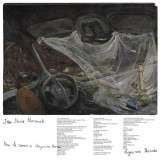
The road is a wrinkled timeline. Uncanny flatness conceals unfolding textures, transparent layers and open tabs. The truck cuts the landscape, tracing the road with a line of mad logic that composites time, space, thought. On “Le Camion de Marguerite Duras,” French duo Jean-Marie Mercimek have returned with a road movie for the blind. Composed and recorded by Marion Molle and Ronan Riou over six years across France and Belgium, this unlikely distillation of microtonal MIDI composition, French B.O., and post-punk chansons brazenly expands the duos’ penchant for lowkey narrative spectacle.
Across “Le Camion,” sounds form a theatrical screen. Our ears are the curtains drawn wide and listening with a look that pans across the shot. No title cards, they cut straight to action. The truck is a camera, zooming and framing the tracks as scenes. Songwriting and sound design blur in a tangle of delicate economy. The balance of mutant music-boxes and dewy miniatures recalls otherworldly hits from Gareth Williams’ Flaming Tunes, Residents, and catchier corners of the Lovely Music catalog. Strange, sure, but this flick is never quite a cartoon. Molle and Riou’s vocals dilate into a cast of very human characters. Voices sing borrowed texts like untrained actors (playing themselves, in fact) stepping into the frame once before disappearing forever. And when they’re gone, you miss them. But here in the truck, it all comes back again under the cyclic spell of repose in perpetual motion. Turn up the radio and appuyez sur le champignon. - Turner Williams Jr.

Charlotte de Witte’s unrelenting single ‘No Division’ featuring XSALT drops digitally on May 29th while she plays six NYC shows in four days (vinyl on 6th June) – with different DJ sets across venues from small and intimate to big and uncompromising. The vinyl version (including the Original Mix and Instrumental Mix as a B-side) gets an early release and will be on sale at the shows.
Why the NYC connection? Says de Witte: ‘Launching this single while I’m in New York feels symbolic. There’s something about the city, its chaos, its diversity, its constant movement, that perfectly mirrors the spirit of ‘No Division’. It’s a place where differences collide and coexist.’
‘No Division’ is the second single from Charlotte’s eponymous long-awaited debut album (out November 7th). ‘This track is another chapter of my upcoming album, and like the others, it reflects a part of who I am. ‘No Division’ is both a call and a celebration. It’s a reminder of what’s possible when we lose ourselves in the music and come together on the same frequency. It reminds us that we are one.’
‘No Division’: Brimming with an overwhelming, penetrating techno power, this track demands our full attention, with spacey hoover sounds, piercingly hooky main theme, a classic organ sound and hissy robotic spoken vocal lyrics like ‘…cut the wire/break the system/fight the fire/no division…’ It’s a manifesto you can dance to. Charlotte de Witte has an agenda as well as making a killer track; ‘‘No Division’ comes from a place of unity and the understanding that when we come together through music, the barriers between us start to dissolve. It’s about erasing the invisible lines that separate us, whether cultural, emotional, or personal.’
XSALT was previously sampled by de Witte on her tracks ‘Overdrive’, ‘High Street’, ‘Roar’ and ‘How You Move’. Here he provides exclusive vocals for her for the first time.

4
Introducing ‘Principauté de Bowl-Air’.
A brand-new label founded by DJ Bowlcut from South Korea, a key figure in supporting Seoul’s underground scene through Seoul Community Radio. This project presents his vision of deep, glitchy, minimal house music—woven with the story of a secret micronation hidden in the heart of Seoul.
The debut vinyl release, PBAVINYL001, features an original track by DJ Bowlcut, alongside reinterpretations by his friends DOTT and Rudolf C.
The A-side opens with “Tibetan Bowl”, a track built around the sound of a Tibetan singing bowl and vocal samples taken from a singing bowl tutorial—inviting listeners into the surreal world of Bowl-Air.
The second A-side track, “The Moment”, delivers a minimal yet gritty bassline and a hypnotic minimal house rhythm, layered with glitchy, acidic patterns and a Korean vocal sample that says, “Now it’s the moment you are waiting for.”
The B-side features remixes by DOTT and Rudolf C. DOTT reimagines “Tibetan Bowl” into a deeper, darker exploration of Bowl-Air’s hidden layers. Meanwhile, Rudolf C transforms “The Moment” into a nostalgic machine-funk-style track reminiscent of the early 2000s—perfect for injecting some funk into the dance floor.

Following the cinematic jazz-funk of Ufo Bar (2021), Banda Maje are back, ready to take you on another sonic journey across Salifornia—and beyond.
Their new 7" single, available starting May 30 via Four Flies, offers an exciting glimpse into the expanded horizons of Banda Maje, serving as a prelude to their sophomore album, Costa Sud.
These past four years, Peppe Maiellano—the band's composer and mastermind—has further refined his unique Mediterranean sound. A deep connection to Italian and Neapolitan roots remains, as evidenced in the heartfelt cover of Peppino di Capri's 1981 track, "Mo…" on Side A. Maiellano keeps things simple, staying faithful to the original, yet manages to freshen the track for today's listeners, making the lyrics resonate with his compelling vocal rendition.
But Maiellano has also embraced new influences, particularly Brazilian music, as showcased in the infectious "(Roda De) Samba Maje" on Side B. This roda-de-samba version of the upcoming album track "Samba Maje," a collaboration with the Amor Pela Roda group featuring Antonio Montuori on percussion and Pasquale Del Solio on cavaquinho, gives us a taste of Maiellano's vision for Costa Sud—a 'music of the South' that transcends geographical and time boundaries, bridging Italy, Brazil, Africa, and contemporary vibes.
Out on 30th May 2025 on 7" and digital.

- A1: Minos Pour Main Basse (Sur La Ville) - Le Patron Est Devenu Fou (Sur La Ville)
- A2: Air - Soldissimo (Edc Remix)
- B1: Etienne De Crecy - Prix Choc
- B2: La Chatte Rouge - Affaires A Faire
- B3: Mr Learn - Fermeture Definitive
- C1: Mooloodjee - Les 10 Jours Fous
- C2: Minos Pour Main Basse (Sur La Ville) - Tout Doit Disparaitre (Sur La Ville)
- D1: Alex Gopher - Super Disco
- D2: Dj Tall - Tout A 10 Balles
- D3: Etienne De Crecy - Liquidation Totale
- D4: Alex Gopher - Destockage Massif
11
Reissue of seminal ’90s house LP ‘Super Discount’ from Étienne
de Crécy, a founding classic of the French touch sound feat. Air,
Alex Gopher & more. Double LP housed in a gatefold sleeve.
Released in 1996, ‘Super Discount' is the debut album by Étienne de Crécy, one of the most influential figures on the electronic music scene and one of its most inspired producers.
Over time, this record has become one of the pioneering records of the French Touch and a founding classic of electronic music, both in France and abroad. It was a critical and commercial success from the start and is an icon of its time..

- 01: Call Me Frank
- 02: The World Is One
- 03: Psychedelic Man
- 04: Think Of The Future
- 05: Afe Ato Yen Bio
- 06: Yare Ye Ya
- 07: Sometimes We Love
- 08: We Can Take Time
- 09: Hippy Around
- 10: Groovy In Groove
- 11: Come On Baby
- 12: Funky Train
- 13: Ayee Menko
- 14: Get On Tonite
- 15: Dig This Way
- 16: Dankasa
- 17: Rain, Rain
- 18: Worry
- 19: Keep On Loving
- 20: Sons Of Jehovah
- 21: Baby Don&Apos;T Play Me Wayo
- 22: Mefa Medo
- 23: Rasudilahi
- 24: Abusua
Not much is known about De Frank Kakra - let alone his birth name or where he is today. A few liner notes scattered across his records give a glimpse of his career as a backing vocalist and percussionist on the Ghanaian highlife scene of the 1970s, notably with Vis-A-Vis, K. Frimpong's band (Cubano Fiestas). He later formed his own bands, The Professionals and The Diggit Ways, alongside Sammy Copper, recording throughout West Africa. His recordings have now been unearthed, remastered and compiled in a triple LP anthology of his musical works. Although much remains unknown, RastaPastaRecords' goal is to ascertain several discoveries made about his life during the production of this record and to continue the research. "Call Me Frank" is a funky take on 1970s highlife set to a vintage Afro - rock fusion that evokes a time when West African dance floors vibrated with raw energy and relentless groove. "Psychedelic Man" is a full dive into the De Frank Kakra sound. With its hypnotic guitar riffs, cosmic organs and head- nodding drum rhythms, this infectious anthem will plunge you into a state of nostalgic psychedelia.

disponibile anche
Coloured[16,18 €]

disponibile anche
Black[15,59 €]
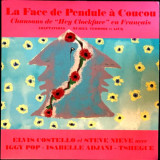
- A1: Iggy Pop - No Flag (Chanté)
- A2: Isabelle Adjani Et Elvis Costello - Revolution #49 (Parlé)
- A3: Tshegue Et Elvis Costello - Hetty O'hara Confidential (Tshegue Remix)
- B1: Iggy Pop Et Elvis Costello - No Flag
- B2: Isabelle Adjani Avec Steve Nieve - Revolution #49 (Chanté)
- B3: Etta Somatis, Ajuq Et Elvis Costello - Hetty O'hara Confidentiel
