Deviation Records is pleased to present you their latest and exiting collaboration with the Mieruba Label Team.
The Super Biton has existed since the 60s, like Ségou, its orchestra, the Super Biton has always remained behind what was done in Bamako and in the big cities of Africa. The Ségou orchestra developed and incorporated amplified instruments that mingle with brass, in particular electric guitars, symbols of modernity at the time. It opens up to Cuban music, and congas and bongos complement the sound of the orchestra. The group drew a unique sound from it, a perfect balance between tradition and the modern. There are about fifteen artits on stage, singers, guitarists drummer and percussionists. The Super Biton has for years been the best known and most sought-after orchestra of Mali outsid the country's borders, the Super Biton transcends the only Bambara heritage with its repertoire. Ségou is crossroads between Bambara, Fulani, Mandingo and Somono cultures and Biton has drawn on all these traditions to creat a repertoire extremely rich in rhythms and words. Some musicians completed their training in Cuba. They play "bambara jazz", incorporating a lot of
brass instruments such as saxophone, trumpet, clarinet. The compositions are modern and sophisticated.
Mieruba Art Center is a place dedicated to the transmission and safeguarding of Malian musical heritage through musical exchange between the older and newer generation - Artist residences, music lessons, rehearsals, Workshops, Masterclasses - and so on. Just as happy former musicians of Mali, the members of Super Biton give lessons on site. It is also the office of the Mieruba-ML label in the same place where Deviation Records is collaboration for the second time on the album - After the « Lost Maestros Collection » - with the
support of La Manufacture de Vinyles. Phil of Deviation Records tells: "I am very enthusiastic at the idea of offering you these two volumes of the History of the Super Biton of Ségou, Clique of Super Heroes of sound,
a source of inspiration for generations of musicians, DJs and also griots and storytellers of great renown! This double LP compiles the first Chapter of the rich Afro-Jazz-Folk Collection whose tapes have been remastered by Monsieur Jonin and cut at the MB Mastering Studio in Aubervilliers .The gatefold artwork is conceived by
Ewwanuelle Collage and formatted by Bertrand Tondeur, Graphic designer of Les Mouches. All that’sleft to say is that i hope that you enjoy listening to the final result !"
Поиск:k de
Все
- 1: Mise En Relation Avec L'opã©Ra
- 2: Annonce
- 3: Norma : Sediziose Voci
- 4: Norma : Casta Diva
- 5: Norma : A ! Bello A Me Ritorna
- 6: Il Trovatore : D'amor Sull'ali Rose
- 7: Il Trovatore : Misere
- 8: Il Barbiere Di Siviglia : Overture
- 9: Il Barbiere Di Siviglia : Una Voce Poca Fa
- 10: Tosca : Tosca
- 11: E Un Buon Falco
- 12: Tosca : Ell A Vera Per Amor Del Suo Mario
- 13: Tosca : Tal Violenza !
- 14: Tosca : Ed Or Fra Noi Parliam Da Buoni Amici
- 15: Tosca : Orsu
- 16: Tosca
- 17: Parlate
- 18: Tosca : Floria ! Amore !
- 19: Tosca : La Povera Mia Cena Fu Interrota
- 20: Tosca : Giã
- 21: Mi Dicon Venal
- 22: Tosca : Vissi D'arte
- 23: Tosca : Vedi
- 24: Le Man Giunte
- 25: Tosca : Tosca
- 26: Finalmente Mia !
The gala evening at the Paris Opera on December 19, 1958 was announced in the press as "the greatest show in the world". Maria Callas, at the height of her glory, performed for the first time in front of a Parisian audience. The diva delivered all the facets of her art through the Italian classics that she loved, with the theatrical genius that is proper to her. Paris gave her a triumphant evening!
The original recording of this evening, broadcast in Eurovision throughout Europe, has been newly restored with the greatest care.
Presentation by Benoît Duteurtre, novelist, essayist and music critic.
Excerpts from Norma by Bellini
Excerpts from Il Trovatore by Verdi
Excerpts from Il Barbiere di Seviglia by Rossini
Complete second act of Tosca by Puccini
- A1: Mon Amour Tu Bois Trop - 3 27
- A2: Les Chants De Maldoror (Kraut Koto) - 4 37
- A3: À Rebours (Hang Bôté) - 3 33
- A4: Intérieur Négro - 3 13
- A5: Vowel - 2 33
- B1: Hard Billy - 3 41
- B2: La Mort De Pierre - 2 38
- B3: Le Cirque De Consolation - 3 40
- B4: Il Pleut Des Hommes - 3 43
- B5: Dandelion (Piano Solo) - 2 15
- B6: Missing Love - 3 22
Léonie Pernet's second album Le Cirque de Consolation, to be released November 19th on InFiné & CryBaby, inhabits a world where borders dissolve and everyone makes their own unique and singular utopia. Hereby, the record questions the links between pop music, African cultures and electronic music, neo-classical music or the role of voice, whether human or synthetic. Sophomore albums can be a painful process for an artist - how refreshing it is to hear one so decidedly optimistic.
Textextext - (add your write up)
The sought after whirlwind of French Pop that exploded onto the scene with her debut "Crave", Leonie Pernet, returns with her second album, "Le Circque de Consolation", a sort of double negative of her first. While the yearning that sat at the center of "Crave"might not have been resolved, the young multi-instrumentalist and singer has found a new perspective - a more open and positive outlook on her own life and work. Perhaps telling, then, that the title was the first element of the album to exist: as it is and has always been a journey of personal (and collective) consolation first, a musical confrontation with the self.
"This record parallels my life's journey," confirms Léonie, "it reflects what has happened in my life since 'Crave' came out and how I feel today. There's still a lot of melancholy, but a lot more sunshine and light. In four years, I've become sober, which has saved me; I've worked a lot on my voice, which is a part of a desire to speak, to address my audience more directly, and also a more pronounced pop desire." In line with her new-found "openness", Leonie invites another musician into her creative process for the first time on "Le Cirque de Consolation": Jean Sylvain le Gouic, who lended his coproduction and perspective to her, while Leonie still plays almost all instruments herself with an astounding prowess.
Leonie's voice oozes with a new-found self-confidence and takes center stage amidst eclectic, distinctively fun and open-minded production. Sometimes she sings in English, mostly in French: "I worked a lot on my voice," confirms Léonie, "I didn't dare to sing before, neither live, nor on record, nor in the studio." Surrounding her astounding, intoxicating voice are forays into any direction imaginable: from harsh, experimental electronics to the more sombre, organic and quiet moments - and everywhere, there is the vision of Africa, (also Middle East) it's many sonic gifts and cultures.
Leonie has found a universal utopia that she craves for - a musical, cultural amalgamation that is decidedly non-western, political and poetic, rooted in self-discovery and the connection with other humans: African and oriental percussion, synthesizers, drum-machines; Léonie mixes genres and instruments with ease and precision. The French novelist and philosopher Édouard Glissant - whose work and writing had a big influence on Pernet - coined the term "Creolization ", the "bringing together of several cultures or at least several elements of distinct cultures, in one part of the world, resulting in new data, totally unpredictable in relation to the sum or the simple synthesis of these elements."
From "Hard Billy ", a techno-influenced rebellious anthem, to "Les Chants de Maldoror," a club and dance song propelled forward by feverish derboukas, to the deeply moving "A rebours" and its Afro-electronic rock. Léonie Pernet inhabits a world where borders dissolve and everyone makes their own unique and singular utopia. Hereby, the record questions the links between pop music, African cultures and electronic music (Intérieur Négro), neo-classical music (Le Cirque de consolation, Dandelion), or the place of the voice, whether human or synthetic as in the atmospheric "Vowel". Sophomore albums can be a painful process for an artist - how refreshing it is to hear one so decidedly optimistic.
Rising singer-songwriter Roxanne de Bastion announces the release of her cathartic second album ‘You & Me, We Are The Same’. The ten songs were written by Roxanne, then recorded and produced with Bernard Butler, during the two-year period Roxanne was losing her father. However, ‘You & Me, We Are The Same’ is not a sad album. It has moments of euphoria, of fun, of falling in love, as well as falling apart, because as Roxanne explains “all those things still happen, even in our darkest chapters.”
As producer Bernard Butler explains “Roxanne sings great modern pop songs about being Roxanne in 2019. I really enjoyed making this album, I think we created something emotional and special.”
Rising singer-songwriter Roxanne de Bastion announces the release of her cathartic second album ‘You & Me, We Are The Same’. The ten songs were written by Roxanne, then recorded and produced with Bernard Butler, during the two-year period Roxanne was losing her father. However, ‘You & Me, We Are The Same’ is not a sad album. It has moments of euphoria, of fun, of falling in love, as well as falling apart, because as Roxanne explains “all those things still happen, even in our darkest chapters.”
As producer Bernard Butler explains “Roxanne sings great modern pop songs about being Roxanne in 2019. I really enjoyed making this album, I think we created something emotional and special.”
4 titles of the cult Japanese cartoon (Candy) that marked a whole generation of babies fed at the Club Dorothée.
A vinyl edition in limited series with the original versions fully remastered! ... To sing the heady chorus "In the land of
Candy, like in all countries… ”
French version released in 1980 and reissued for the first time on vinyl in a remastered version, the credits were written by Eric Charden and Didier Barbelivien and interpreted by Jean Pierre Savelli.
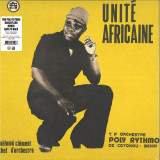
Two monumental full-side tracks from a pair of late 70s Orchestre Poly-Rythmo albums, ‘Unité Africane’ isn’t exactly a compilation, more a combination of the standouts at a time when the band was at the peak of its powers. Originally released in 1977, the title track is an infectious Afro-Latin workout that is interwoven with driving horn stabs by master trumpet player Tidiani Kone. ‘Unité Africaine’ was recorded over the Nigerian border at the state-of-the-art EMI Studios in Lagos, yielding majestic sonic results. ‘Mede Ma Gnin Messe’ is taken from the 1978 ‘Special 30 Novembre’ and this time Poly-Rythmo wore their Afro-funk hat to deliver almost sixteen minutes of dancefloor fire. Propelled by PolyRythmo’s super-tight beats and underpinned by a relentless keyboard refrain, the magic is in the stellar horn parts that take this track to another level. As with much of the Albarika catalogue, copies of the original LPs are incredibly tough to locate in anything approaching reasonable condition, so this should be a gift.
Horacio Vaggione (born 21 January 1943) is an Argentinian composer of electro-acoustic and instrumental music whose music is regularly played worldwide in major centers and festivals of contemporary music. "La Maquina de Cantar" (1978) is his first solo recorded work; originally released on the Italian Cramps Records label as the 18th volume of the Nova Musicha series dedicated to contemporary avant-garde composers, "La Maquina de Cantar" is now made available again on Dialogo in a faithful reproduction of the original gatefold cover artwork, including also an inner sleeve with the English translation of the liner notes
It’s been said that writing about music is like dancing about
architecture but what about singing about movies? Sufjan
Stevens and Angelo De Augustine have paired up for a
collaborative project that does just that. ‘A Beginner’s Mind’ is
their debut album and contains 14 songs (loosely) based on
(mostly) popular films. The source material is highbrow, lowbrow and everything in
between. The music is folksy, sweet, sincere and harmonically
effervescent - Simon & Garfunkel with New Age flourishes. This
album runs the gamut and has fun with it, even while its
songwriters remain fully rooted in the melancholy folk idioms
they are known for. Daniel Anum Jasper, a pioneer of Ghanian movie poster
painting, was commissioned to paint a series of new works for
‘A Beginner’s Mind’. His paintings are a graphic simulacrum for
the same sense of wonder, wordplay and intrigue that shape ‘A
Beginner’s Mind’. By transforming old films into vital new songs,
Stevens and De Augustine ask us to consider ourselves from a
previously unconsidered vantage point - a new way of seeing
and hearing - an exercise that’s as necessary and relevant now
as it’s ever been. “In the dizzying chime of his careful fingerpicking and highpitched howls, De Augustine captures love’s bright blaze.” - Pitchfork
“What we find here, on what is arguably the pinnacle of his
output to date, is De Augustine achieving the beautiful balance
between introspection and grandeur; straddling the place where
pain and hope intersect.” - Line of Best Fit
Tape
Marc Romboy presents his upcoming album "Voyage de la planète' his first solo full-length production in over eight years. Released on his newly launched Hyperharmonic label, Voyage de la Plantète signifies an exciting new chapter for Marc as he experiments with his sound - pushing the boundaries between classical and electronic music to create both an emotional and atmospheric experience.
The first impression of this new sound can be heard on album opener forerunner 10" "Monde futuriste" (February 17th 2017) which blends together beautiful strings and soft flittering synths. "Jules Verne" named after the French science fiction writer, combines echoing arpeggios and a subtle woodwind harmony to create a cosmic soundscape. Whilst "Atome de danse", "Symphonie oblique" and "La machine du temps" use elegant strings to further enhance an unearthly effect, title track "Voyage de la planète" mixes the two mediums together with fluttering synths and somber strings before "La lune et l'étolie" builds introduces the bustling sound of the piano to create an upbeat melody.
Whilst there is a strong classical influence, there are tracks on the album that reference Marc's electronic background. This can be heard in
"L'univers étrange", which has an ambient sound, whilst pitched-down chords take "L'universe parallèle" to a dark and moody space.
"Phénix" is a bass-driven track, layered with crashing synths, taking the journey to a high before the celestial experience draws to a close on an uplifting note with "Nocturne" a laid-back soothing track that exudes optimism and wonderment.
Inspired by a concert with the Dortmund Philharmonic Orchestra where he performed Claude Debussy works in a contemporary way, "Voyage de la planète' signifies the start of a new chapter for Marc Romboy. Combining the strange, fascinating sounds of electronic music with the sublime beauty of classical music to create an extraordinary sonic experience for the listener.
It’s been said that writing about music is like dancing about
architecture but what about singing about movies? Sufjan
Stevens and Angelo De Augustine have paired up for a
collaborative project that does just that. ‘A Beginner’s Mind’ is
their debut album and contains 14 songs (loosely) based on
(mostly) popular films. The source material is highbrow, lowbrow and everything in
between. The music is folksy, sweet, sincere and harmonically
effervescent - Simon & Garfunkel with New Age flourishes. This
album runs the gamut and has fun with it, even while its
songwriters remain fully rooted in the melancholy folk idioms
they are known for. Daniel Anum Jasper, a pioneer of Ghanian movie poster
painting, was commissioned to paint a series of new works for
‘A Beginner’s Mind’. His paintings are a graphic simulacrum for
the same sense of wonder, wordplay and intrigue that shape ‘A
Beginner’s Mind’. By transforming old films into vital new songs,
Stevens and De Augustine ask us to consider ourselves from a
previously unconsidered vantage point - a new way of seeing
and hearing - an exercise that’s as necessary and relevant now
as it’s ever been. “In the dizzying chime of his careful fingerpicking and highpitched howls, De Augustine captures love’s bright blaze.” - Pitchfork
“What we find here, on what is arguably the pinnacle of his
output to date, is De Augustine achieving the beautiful balance
between introspection and grandeur; straddling the place where
pain and hope intersect.” - Line of Best Fit