
Pink Vinyl
Electronioca Hardtek papa !! One of the joyfull rare record offer a impossible melt of style... Well done !!!
non in magazzino
Ordina ora e ordineremo l'articolo per te presso il nostro fornitore.
9,45 €
Last In: 5 years ago
Pink Vinyl
Electronioca Hardtek papa !! One of the joyfull rare record offer a impossible melt of style... Well done !!!
Ordina ora e ordineremo l'articolo per te presso il nostro fornitore.

2021 looms, the world stands on the brink.
A Pandemic rages, economies crumble, leaders sacrifice individuals on the altar of the media.
Adelphi Music Factory resurface with a siren call of hope.
My People: an ode to humanity in the grip of crisis, a joyous tribute to enduring love for empty dance floors across the world.
Sisterhood, brotherhood, freedom, peace
4 x R1 Hottest Records
Ordina ora e ordineremo l'articolo per te presso il nostro fornitore.

RICO PUESTEL debuts on his TIME IN THE SPECIAL PRACTICE OF RELATIVITY label with a mind-boggling journey of 41 minutes — split in two parts to fit on vinyl! HEPTAKAIDEKA is what it won't be and will be what it never was: Something from in-between worlds, a place beyond far beyond, where time dissolves into relativity...
Every modern electronic music presenter should be able to find joyful, elevated, convulsing or simply useful moments within the extent of this track that is designed to have its inherent connecting factors and starting points in place for every DJ set — letting it be just a few minutes, well-placed groove looping or bigger amounts of its entirety for diving into a long night, bringing it to an end or making it standing out in-between.
Starting off with a hazy half-grasp hint of what's to come, a mysteriously pervasive bionic loop emerges, slowly coalescing with a bone-dry groove on the rise. Taking up a first quadrant of the track, already gnawing into the long-term memory, it manages to gradually establish itself along the pathway while the "rhythmatics" endure some subtle layer-shifting with occult-like strings come sliding in from somewhere unknown like an admonitory subtext.
Being halfway through (and all the way in), everything smoothly crumbles down to its basic framework, still shaking off its own reminiscences while foregone vestiges almost perilously try to reassemble themselves. All of that leading to a clearly unforeseen yet fortunate drift into a 1980's-like synth peak time section after about 27 minutes being in that track, finally cherishing an evolving emotional felicity and the climax of its own being that tends to feel like an overarching salvation.
As everything being eventually finite, the track starts to bring to mind where it came from by assuredly falling back into a story told before with the well-established bionic loop that once used to run free, sounding somehow different and more tamed now. Ending with dignity, the consistently resurfaced admonitory strings lead the way to its conclusion and possibly new beginnings, solely leaving behind the heartbeat-like booming that carried it all, now fading away...
Coming into existence during a series of multiple productions of exuberant proportions with Rico making the studio his citadel-like stronghold, this is an extensive story of desires, instincts, pride, fall, mirth, solicitude, tension, détente and basically life itself while subtly yet versatilely entertaining on a dodgy yet accessible level throughout the wingspread of Techno, House, Minimal, Dub, Electronica and Ambient influences.
The CD version not only brings you the title track in the guise of its non-split completeness but eminently churns out the extra drumming dub treat DEKAEPTA for a pleasurable groove-delight as well as the trippy bonus beauty VOSEM' that transits as a precious component of infinity.
Ordina ora e ordineremo l'articolo per te presso il nostro fornitore.

Three years after their last collaboration “Lost in the Moment”, part of Darius’ debut album Utopia, the French producer and Nigerian born future soul artist Wayne Snow unveil their stellar single “Equilibrium”.
The message of unity has never felt more relevant than the times we are living through right now. This project composed one year ago, serves as a stark reminder that we can all transcend above our differences and connect through the experience of music together, regardless of colour and race.
The undeniable synergy of both artists create a harmony magnified by the richness of their diverse cultures and musical background.
The beat instantly catches us in a warm and arresting atmosphere. The main melody reveals an uptempo rhythm gently interwoven in Wayne Snow’ emotive voice, born in Nigeria, living in Berlin in preparation for his next album. His lyrics infuse a carefree candor, which only suggests love and euphoria, fruit of an universal balance and a collective caring energy.
After multiple collaborations among “Helios” or the “Nightbirds” improvised live project (feat. FKJ and Crayon), the two artists reunite once again on “Equilibrium”. Heady and joyful, only few seconds are enough to form a timeless memory and make this track an instant classic. Darius holds Wayne’s powerful vocals, which travel through the composition as gospel pipe dreams. His Funk and Disco influences, embodied by his heart-warming and dynamic groove reminds us of his iconic project Romance (2014). Driven by a festive and upbeat energy, Darius finally renews himself with a return to his musical roots, whilst Wayne Snow steps up towards an audacious expression and a peek into his forthcoming artist album.
Lovers of pastel and retro aesthetics, we find the artist’s aesthetic language elevated through an impressive video treatment by the esteemed French director Alice Kong set for release on July 23rd. The audio release will precede a week earlier on July 16th, part of his forthcoming project.
Ordina ora e ordineremo l'articolo per te presso il nostro fornitore.

Trouble, the aptly named new album on Goner Records, is a confident and joy-filled statement delivering the good-news gospel message unapologetically through music influenced by Ray Charles, Junior Kimbrough, Bill Withers and of course, his father.
Recorded at legendary Royal Studios in Memphis by Lawrence “Boo” Mitchell (Al Green, Solomon Burke, John Mayer, Buddy Guy, Mark Ronson & Bruno Mars, North Mississippi Allstars), Trouble is the culmination of everything in Rev. Wilkins’s remarkable life, his regional history, his family music history. And in a world once again riven with discord and division, like the Memphis of Wilkins’ youth in the 1960’s, Trouble delivers passionate and confident musical performances with a message of hope that meets our present moment equal to the best music from that earlier era.
To call the Reverend John Wilkins a national treasure would not be an overstatement. He is the son of pre-war blues/folk-revival legend Reverend Robert Wilkins and he leads one of the most exciting and uplifting musical acts on the blues and gospel circuit today. His multiracial, multi-generational band blends soul, southern gospel and hill country rhythm, into a sound that has the infectious drive of hill country blues with the emotional heights of a summer tent revival.
Following in the footsteps of his famous father Rev. Robert Wilkins, a blues-singer turned preacher who went from the juke joint to the pulpit, the life of Rev. John Wilkins took a similar path, echoing the story of the elder Wilkins’ most famous song, “Prodigal Son.”
But in 2020 John Wilkins’ life has been closer to a different iconic bible character, Lazarus, as he has miraculously risen after surviving a month-long stay in intensive care battling Covid19 in a Memphis hospital. As Rev. Wilkins sings on the closing track of his forthcoming album, “I’ve come through the storm and rain, I’ve come through the storm and rain, and I made it!”
And there is much to celebrate with this resurrection.
dovrebbe essere pubblicato su 02.10.2020

West coast composer, artist, and producer Kaitlyn Aurelia Smith has chartered a pioneering career with multiple critically-acclaimed albums since 2015. Following the release of The Kid in 2017, Smith focused her energy in several directions. She founded Touchtheplants, a multidisciplinary creative environment for projects including the first volumes in her instrumental Electronic Series and pocket-sized poetry books on the practice of listening within. She's continued to explore the endless possibilities of electronic instruments as well as the shapes, movements, and expressions found in the physical body's relationship to sound and color. It is this life-guiding interest that forms the foundational frequencies of her most recent full-length, The Mosaic of Transformation, a bright, sensorial glide through unbound wave phenomena and the radiant power discovered within oneself. "I guess in one sentence, this album is my expression of love and appreciation for electricity," says Smith. While writing and recording, she embraced a daily practice of physical movement, passing electricity through her body and into motion, in ways reflecting her audio practice, which sends currents through modular synthesizers and into the air through speakers. Not a dancer by any traditional definition, she taught herself improvisatory movement realizing flexibility, strength, and unexpectedly, a "visual language" stemming from the human body and comprised of vibrational shapes. Understood as cymatics, as Smith says, "as a reference for how frequencies can be visualized," much like a mosaic. Smith describes her first encounters with this mosaic; "the inspiration came to me in a sudden bubble of joy. It was accompanied by a multitude of shapes that were moving seamlessly from one into the other...My movement practice has been a constant transformation piece by piece. I made this album in the same way. Every day I would transform what I did yesterday...into something else. This album has gone through about 12 different versions of itself." As it has arrived, in a completed state, The Mosaic of Transformation is a holistic manifestation of embodied motions. Smith's signature textural curiosity that fans have grown to adore pivots naturally into a proprioceptive study of melody and timbre. Airy organ and voice interweave with burbling Buchla-spawned harmonic bubbles. "The Steady Heart" quivers to life, peppering blasts of wooden organ between winding vocal affirmations. As with a body, moving one portion requires a balance and counterbalance; here, subtle tonal twitchy signals fire in conjunction with coiling arias to create a mesmeric core. When the beat arrives at the midway mark, a swooping and jittery waltz, a sense of stasis in motion, a flow state, is sonically achieved. As soon as it syncs, it disappears back into the swirling ebbs of electric force. Other tracks stray into more ruminative physical realms. "Carrying Gravity" is built around string-like pads that expand and contract like a solar plexus, becoming taught and then loose. If the record could be summarized in a single movement, it is the 10-minute closing suite, a rapturous collage called "Expanding Electricity." Symphonic phrases establish the piece before washes of glittering electric peals and synthesized vibraphone helix into focus. Soon, Smith's voice grounds it all with an intuitive vocal hook, harmonized and augmented by concentric spirals of harp-and-horn-like sounds. Smith's music doesn't capture a specific emotion as much as it captures the joys of possessing a body, and the ability to, with devotion and a steady open heart, maneuver that vessel in space by way of electricity to euphoric degrees.
Ordina ora e ordineremo l'articolo per te presso il nostro fornitore.

2025 Repress
On his fourth album proper, Now Here No Where, Danish producer Kölsch (aka Rune Reilly Kölsch) is charting new terrain. Fans of his ‘years trilogy’ – 1977, 1983 and 1989, released on Kompakt over the past decade – were privy to a kind of sonic diary, an autobiography, tracking the artist’s early years through three albums of superior, meticulously rendered techno. Calling in collaborators where needed – most notably, the strings of Gregor Schwellenbach – there was still something deeply personal going down, not quite hermetic, but internally focused; the albums proved not only Kölsch’s mastery of his chosen form, but also his capacity to make techno personal, individual, and to trace histories of the self through music. But on Now Here No Where, Kölsch finds his feet firmly planted in the present. Reflecting on his new album, he notes, “It is fascinating to write about memories and feelings that have had years to manifest and develop, but how would I approach current emotions?” It’s a good question: our past coheres through the narratives we build around memories, but the moment we’re in, the newness of the now-ness, is harder to navigate; this story is as yet untold. For Kölsch, this makes Nowhere Now Here “an album about life in the year 2020. A time defined by confusion, misinformation and environmental challenges. It is an emotional interpretation of personal and mental challenges, observations and personal growth.” Kölsch does this with music that effortlessly balances emotional heft with the dancefloor’s brimming desires. It’s a space that Kölsch has navigated for a while now – one of techno’s breakthrough acts, an in-demand DJ across the globe and a prolific and restlessly creative producer, he’s also Kompakt’s biggest-selling act – but Now Here No Where ratchets up the lushness, making for a delirious drift across twelve tracks that are at once perfectly poised and deeply trippy. “Great Escape” is an elegant swoon, an opener that pivots on a sigh and a prayer; then “Shoulder Of Giants” bustles into view, subliminal clatter and an aching violin line giving way to a riff that glows with fluorescence and iridescence. “Remind You” combines an odd ECM jazziness with notes from a twenty-first century torch song; “Sleeper Must Awaken” mines huge buzzing synths and lets them float, in and out of sync, with reduced, ticking beats; “Traumfabrik” (dream factory – there’s a giveaway) is oddly lush, the tones malleable and plastic, morphing across a glitching undertow. There are sad, emotional washes of strings throughout the penultimate “While Waiting For Something To Care About”, while “Romtech User Manual”’s patterns twist and shape in the light. Throughout, Kölsch never keeps his eye off the dancefloor, and you can tell this is his still his home. “The amount of energy and joy I experience every time I perform, has a profound effect on me. It has inspired me so much of late and has become an integral part of my musicality.” “The way we join in expressing our hope for the future every weekend has given me so much,” Kölsch concludes. The club as a temporary autonomous zone, as a space both of freedom and of politics; somehow, that’s all here, Now Here No Where. “Most of all, it is an album about hope.”
Auf seinem vierten Album “Now Here No Where” betritt der dänische Produzent Kölsch (alias Rune Reilly Kölsch) neues Terrain. Seine Trilogie mit den Jahreszahlen 1977, 1983 und 1989, die in den letzten zehn Jahren bei Kompakt erschienen war, hatte seine Fans durch eine Art akustisches Tagebuch, eine Autobiografie geführt, die die frühen Jahre des Künstlers über die Länge von drei großartig produzierten Techno-Alben nachgezeichnet hatte. Wo es nötig war, wurden Kollaborateure hinzugezogen - allen voran für die Streicher, arrangiert von Gregor Schwellenbach -, dennoch zeichnete die Musik immer auch etwas zutiefst Persönliches aus, etwas nicht Hermetisches, auf eine bestimmte Art immer auch nach Innen fokussiert. Die Alben bewiesen nicht nur, wie sehr Kölsch die von ihm gewählte äußere Form beherrscht, sondern auch seine Fähigkeit, Techno zu etwas Persönlichem und Individuellem zu machen und der eigene Geschichte durch Musik näher zu kommen.
Auf “Now Here No Where” steht Kölsch nun mit beiden Beinen fest auf dem Boden der Gegenwart. Mit Blick auf sein neues Album stellt er fest: "Es ist faszinierend, über Erinnerungen und Gefühle zu schreiben, die Zeit hatten, sich zu manifestieren und zu entwickeln, aber wie nähere ich mich meinen aktuellen Emotionen?”. Eine gute Frage: Unsere Vergangenheit wird im Innersten zusammengehalten durch Geschichten, die aus Erinnerungen entstehen, aber der Moment, in dem wir uns befinden, die Neuheit des Neuen, ist schwieriger zu beschreiben; die Geschichte ist noch nicht erzählt. Für Kölsch ist “No Here Now Where” daher "ein Album über das Leben im Jahr 2020. Eine Zeit, die von Verwirrung, Desinformation und ökologischen Herausforderungen geprägt ist. Es geht dabei um die emotionale Interpretation von persönlichen und mentalen Herausforderungen, von Beobachtungen und der eigenen, individuellen Weiterentwicklung".
Kölsch tut dies mit Musik, die mühelos kleine Gefühlsausbrüche mit den großen Sehnsüchten der Tanzfläche in Einklang bringt. Es ist dieser Zwischenraum, in dem sich Kölsch schon seit einiger Zeit bewegt, als weltweit gefragter und gefeierter Live Act, DJ und so unermüdlicher wie kreativer Produzent (nicht umsonst ist Kölsch der “biggest-selling-artist” bei Kompakt), doch “Now Here No Where” treibt all das noch weiter auf die Spitze: ein enormer Sog entsteht, der uns über zwölf Tracks hinweg gefangen hält wie ein perfekt ausbalancierter Trip. Der Opener "Great Escape" ist pure Eleganz, ein Track, der irgendwo zwischen Seufzer und Gebet hin und her schwankt; dann drängt "Shoulder Of Giants" ins Blickfeld, ein unterschwelliges Geklapper, eine wehende Geige, schließlich ein schillernder Riff, der in der Dunkelheit zu leuchten und zu glühen scheint.
"Remind You" kombiniert seltsamen ECM-Jazz mit einem sentimentalen Liebeslied des 21. Jahrhunderts; "Sleeper Must Awaken" schürft im Bergwerk riesiger Synthesizer, mal im Takt, mal aus dem Takt ticken die minimalen Beats; "Traumfabrik" ist ungewöhnlich “lush”, die einzelnen Töne, geschmeidig und modelliert, zerfließen in einem glitzernden Abgrund. Das vorletzte Stück "While Waiting For Something To Care About" wird von traurigen, emotionalen Strings untermalt, während sich die Strukturen von "Romtech User Manual" im Licht drehen und immer wieder neu formieren. Die ganze Zeit über behält Kölsch die Tanzfläche im Auge, und man merkt ihm an, dass sie immer noch sein Zuhause ist: "Die Menge an Energie und Freude, die ich bei jedem Auftritt erlebe, hat eine tiefe Wirkung auf mich. Sie hat mich gerade in letzter Zeit stark inspiriert und ist zu einem integralen Bestandteil meiner Musik geworden.”
"Die Art und Weise, wie wir an jedem Wochenende gemeinsam unsere Hoffnung auf eine bessere Zukunft zum Ausdruck bringen, hat mir viel gegeben", so Kölsch abschließend. Die Vision des Clubs als eine temporäre autonome Zone, als ein Raum von großer Freiheit aber auch von politischen Ideen, das ist irgendwie alles hier drin, Now Here No Where. "Es ist vor allem ein Album über Hoffnung."
Ordina ora e ordineremo l'articolo per te presso il nostro fornitore.

A dramatic, string-drenched epic, James Ralph Bailey’s Just Me ’N’ You has been a sought-after soul masterpiece for decades. A lush suite of beautiful songs, it was conceived as a concept album; a sophisticated paean to love.
Originally released by MAM Records in 1974, Just Me ’N’ You is a breathtaking jazzy soul album. It’s similar in style to Marvin Gaye’s What’s Going On - particularly the performances, orchestrations and chord progressions - but dealing with a different universal subject matter. If What’s Going On was about romance instead of politics, it would sound like this.
Fans of Marvin, Leon Ware, Donny Hathaway, Leroy Hutson and Willie Hutch will love this record. Not as well known - this is definitely an underrated gem - the work of James Ralph Bailey is no less mind-blowing. It’s got to be one of the best soul albums of all time.
The original productions were made on a basic home tape machine and enhanced with strings, rhythmic overdubs and a variety of other instrumentation. These are beautiful arrangements of strings and jazzy horns. Rhythm guitars and bouncy bass serve as the groove foundation, congas provide a Latin feel whilst the vibraphone and harmonica add colour. And then of course there’s JR’s voice.
His style recalls Hathaway, with a delivery akin to Marvin at the time. As he scats and sings, accompanying himself in sweet harmonies, there is still a rawness of pain and longing in his voice, the rawness familiar to all deep soul.
As an album, Just Me ’N’ You is no mere collection of songs. The tender, smooth tunes flow perfectly together into a fluid, single artistic statement. This is one where it’s hard to pick out any standouts. You may have heard the soaring title track before, maybe on Gilles Peterson’s Digs America compilation. The opening track “After Hours” sounds as fresh now as it ever was and segues beautifully into the majestic “Heaven On Earth”. Recorded by Hathaway the previous year, Bailey’s original of “Love Love Love” is incredible and arguably the definitive version. The powerful, dreamy, sax-and-harmony-laced “All Strung Out Over You” has echoes of the Chi-Lites, it’s that good. Goosebumps. And we could go on.
Mastered by Simon Francis, cut by Pete Norman and pressed at Record Industry, this Be With edition of Just Me ’N’ You sounds every bit as brilliant as it should. A joyous celebration of love, this album is perfect in every way. If you don’t already own a copy then now is the time.
Ordina ora e ordineremo l'articolo per te presso il nostro fornitore.

Walter ‘Junie’ Morrison released his third solo LP, Suzie Super Groupie, in 1976. A slick, smooth and soulful record, it’s a genre-melting tour de force with rich elements of proto-boogie, funk and jazz. In short, this is yet another essential album reissue from Be With.
The sublime “Suzie Thundertussy”, is a favourite of Harvey and Theo, and was brilliantly sampled by Madlib for Kanye West’s “No More Parties In LA”. The track opens with a sinuous synth and combines Junie’s storytelling abilities with an emphatic vocal style and funky arrangements. The powerful bass and sinister chords create an undeniable groove, and the explosive chorus is full of ambition and joy.
“If You Love Him” is a great, mid-tempo soul song. With a swinging jazz-infused middle-eight, it demonstrates Junie was much more than a mercurial funkateer. The laconic groove of “What Am I Gonna Do” recalls “Fresh”-era Sly Stone, whilst the frantic “Super Groupie” showcases his sharp imagination and sense of fun. The lyrics range from humorous to dirty, all fuelled by an infectious groove and tight horn arrangements.
The P-Funk of B-side opener “Surrender” bounces and sparkles, with a strutting Junie backed by great harmony vocals and joyous horns. “Suzie” is a sleek, softer affair albeit with a disco pulse; a beautiful combination of bright, funky horns, fluid basslines and vigorous rhythms. “Stone Face Joe” is another character song, this time one that chugs along on a sweet boogie rhythm.
The winner for us, however, is the closing piece. An extended funk-rock jam, “Spirit” has a heart-rending spoken-word intro and, as a nod to Jimi Hendrix, creates a live concert sound, complete with screaming crowd and fuzzy vocals.
Junie made his name as the lead singer and keyboardist of the Ohio Players. As the mastermind behind “Pain”, “Pleasure”, “Ecstasy”, and the oft-sampled “Funky Worm”, he was beloved by countless musicians, not least Prince. As co-writer of some of Funkadelic’s seminal works - “One Nation Under A Groove”, “(Not Just) Knee Deep” – his standing as one of the structural fathers of funk is undisputed.
In late 2016, Solange’s “A Seat At The Table” featured a track called “Junie”, a tribute to the freedom he created in music. His work continues to be as relavent and inspiring as it was when it was first recorded.
In February 2017, Junie died, aged just 62. With records as mighty as Suzie Super Groupie, his legacy will live forever and Be With is proud to be able to do our bit to make this LP accessible again on vinyl.
Ordina ora e ordineremo l'articolo per te presso il nostro fornitore.
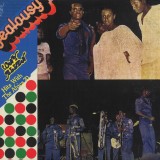
Comet Records presents the Tony Allen & Africa 70 reissue series with the classic late seventies first four solo albums of Tony Allen remastered and restored: Jealousy, Progress, No Accomodation for Lagos & No Discrimination, all coming in an heavy Deluxe Tip-On Jacket.
Recorded with Afrika 70 at the height of their power as Fela Kuti’s band, these are seminal recordings in the pantheon of Afrobeat history. Once again, Comet Records has the opportunity to shine a light on the sheer musicality and originality of the humble drumming giant. Tony Allen’s passing in April 2020 sent a shockwave across the world, as fans and collaborators from Lagos to Brooklyn and everywhere in between mourned the loss of a generous and powerful being, the kind of being we thought would live forever. Thankfully, we have the gift of Tony’s timeless music, starting with these four special solo albums, through which his musical voice guides our dancing feet and full hearts forever.
Produced by Fela Kuti in 1975, Tony Allen’s first solo album with Afrika 70, Jealousy, is like the man himself: light on its feet yet deeply settled, spacious yet bursting with magical talent. On the title track “Jealousy,” Tony is joyously in his element, conducting one of the mightiest bands in the world - he is the head chef, and the band is cooking. The second track, “Hustler,” features one of the most iconic solos in drumming history, a rare glimpse into Tony’s gift of musical phrasing - it is possibly the best example of Tony’s ability to literally
speak through his beloved drumset.
Tony Allen possessed magic within him, which he spent his entire life sharing with us through his drumming hands, tapping feet and generous heart. That magic is ever-present and strong on these formative solo albums - they are must-haves for Afrobeat fans across the globe.
Ordina ora e ordineremo l'articolo per te presso il nostro fornitore.

The 80s owed everything to the punk revolution ... and betrayed it time and again.
ln 76-77, the incredible explosion of English-speaking bands focused the energies of a whole generation of Western youth - rebels ready to pick up a guitar and use it like a weapon. Yet more than punk music itself, it was the creative burst it triggered that radically shaped 80s pop and heralded an unending stream of inspired performers.
Although we often speak of the British and American golden age of post-punk from 78 to 84, with artists that included Talking Heads, Joy Division, PIL and Devo, France (together with Switzerland and Belgium) joined the movement too. Today, on a new album, the group Nouvelle Vague have paid tribute to this sumptuous "Frenchy" period clothed in the nihilism of punk, along with bitterness fuelled by the economic crisis and, paradoxically, the bewitching spirit of pop.
lts title, Couleurs sur Paris (Colours on Paris) is based on both a famous postcard collection and Oberkampf's 1981 punk anthem, and reflects the period, which oscillated between elation and despair. Written by artists sometimes known as "the modern young people" and including faux naïf electropop nursery rhymes by Elli & Jacno ("Anne cherchait l'amour", 1979), Lio ("Amoureux solitaires" , 1980)
and Etienne Daho ("Week-end à Rome", 1984), along with Lili Drop ("Sur ma mob", 1979) and Taxi Girl ("Je suis déjà parti", 1986), the songs clearly express the hopes and disappointments of the day.
The sense of melancholy suggested by the disenchanted lyrics of "Déréglée" - performed in 1977 by Marie-France, an icon of Paris nightlife - is even more noticeable on the 1981 hit by The Civils, who cynically sang, "Tonight, they're dying in Chad, but l'm buying my dream Walkman" before taking it to the chorus: "The economic crisis is fantastic, decadence is the right feel".
The punk shockwave con also be felt in the music of bands who radically shaped French culture and song. Like Rouen, with Les Dogs ("Sandy, Sandy", 1982), every provincial town and city in France began to produce bands at the end of the 70s and the start of the 80s. Wunderbach's 1983 punk pamphlet "Oublions l'Amérique" was a foretaste of what is now called alternative punk, a genre that won acclaim in 1988 with Mano Negra's "Mala Vida". Indochine, French pop legends for the last thirty years, also encouraged the trend in the summer of 1983 with "L'aventurier", after a first single brimming with the spirit of rebellion, "Dizzidence Politik".
Rita Mitsouko, the duo that emerged from the underground Parisian punk scene of the late 70s, rocketed to stardom in 1984 with "Marcia Baïla". Equally baroque, TC Matic - the first band fronted by Belgian singer Arno - released an ironic, political underground hit in 1983: "Putain, putain". Other artists fuelled a post-punk movement that explored the romanticism of machines and the darkness of new wave, including the cult, much-neglected duo from Nancy, Kas Product ("So Young but so Cold", 1982) and Switzerland's Stephan Eicher, whose "Two People ln A Room" (1985) followed on from "Eisbaer", a hit in a more underground style written with Grauzone in 1981. However, the genre's most influential practitioners were certainly Noir Désir. From their first single in 1987 ("Où veux-tu qu' je r'garde?"), they won mainstream success with their unique fusion of 80s gloom and power rock. Beyond from the meteoric success of Bordeaux's Gamine ("Voilà les anges", 1988) and the subversive spirit of Jad Wio ("Ophélie", 1989), French post-punk reached its climax with the success of Noir Désir, Rita Mitsouko, Stephan Eicher and Manu Chao, whose albums reigned supreme in the 90s French charts. From the underground scene to gold records: the eternal story of pop.
Ordina ora e ordineremo l'articolo per te presso il nostro fornitore.

BAFTA Award-winning actor Matt Berry has been the star of a number of high profile TV series including Toast Of London, The IT Crowd and most recently What We Do In The Shadows. Concurrently he has
cultivated a career as a musician that has seen him release six solo albums and collaborate with the likes of Bond composer David Arnold, Jean-Michel Jarre and most recently Josh Homme, who invited him to perform on the Desert Sessions.
His most recent album ‘TV Themes’ was a UK Top 40 hit and was awarded four stars by Will Hodgkinson writing for The Times. His reinterpretation of British TV themes of the past was no mere wallow in nostalgia but an exploration of recording techniques and a joyous celebration of the music.
‘Phantom Birds’ was inspired by a fascination with Bob Dylan’s ‘John Wesley Harding’, the way it was recorded with the minimum of musicians to draw attention to the songs. For the recording Matt worked with drummer Craig Blundell - known for his work with
Steven Wilson and Steve Hackett - and legendary pedal steel player BJ Cole, yet the tinges of Americana are never allowed to overwhelm Matt’s own distinctive style.
dovrebbe essere pubblicato su 18.09.2020

Dukes of Chutney, the transcontinental trio of Dustin Lynn, John Paul Jones, and Petra, explore the different spaces and places, between nothingness and nature, that nurture inner and outer peace for their debut full-length Hazel. Cosmic yet intimate, long-gestating and free-flowing, diffuse and centered, Dukes turned toward their immediate sanctum, and a network of friends and colleagues, to realize the vision of Hazel. “Pretty much everything we do is without purpose,” the Dukes admit, in line with their pursuit of joy. But it’s not empty hedonism or passivity at play on Hazel, so much as an expression of freedom. “Why not?” was scribbled on the white frame of the Polaroid documenting their first appearance on Tim Sweeney’s Beats in Space many years ago, and it remains their motto, their mantra.
Ordina ora e ordineremo l'articolo per te presso il nostro fornitore.

It's the third chapter in our 'Moonshine Recordings meets...' series where we focus on various talented vocalists from the UK sound system scene. In this session we have met the inimitable Rider Shafique straight out of Bristol. Riddims and versions built by the Moonshine family members - Baodub, Bukkha, Dubbing Sun, Inner Echo and our fresh signing Joyful Lion. Vocals mixed by Sam Binga and the whole project was mastered from stems by Studio As One.
Ordina ora e ordineremo l'articolo per te presso il nostro fornitore.

THE KILIMANJARO DARKJAZZ ENSEMBLE are a project which has always been tied to films. Films are luxurious because they dispose of all these boring, unimportant, and trivial parts of our lives. This allows them to fully control our sensations, to put us in a very specific mood. Joy and sadness are occasionally OK, endless joy or endless sadness are clinical. But there is one sensation which can be persistent and unconditionally bearable at the same time. In the absence of a better alternative, let's call it "the mood". The mood is what TKDE are aiming at. The mood.
The mood is infinite and illimitable, but not uniform and unique. On "From The Stairwell", TKDE deliver eight new incarnations of the mood. Stairwells have always been intriguing. They appear to unavoidably lead you to your destination, but they only disclose the path bit by bit. What lies far ahead of you and far beyond you is hidden in the shadows. The stairwell could just as well be infinite. You climb up this murky stairwell, passing by many doors. Every door contains a variation of the mood, a short film, a song. You open the first one, "All Is One". The evaporating mist discloses a large and empty room with a barstool in the middle. On the barstool, a chanteuse from the roaring twenties. Her voice starts to trigger vibrations of the ground, the walls start spiralling around her, but she remains untouched in the eye of the storm. Second room, "Giallo". Sly guy, telling smile, nice suit. Walking down the streets in the dusk. The ambience starts to get out of phase, the guy stumbles in horror while blending with the surrounding to a brown soup. Fourth room. "Cocaine". Naked people with pig heads crawl on the floor, on the walls, on the ceiling. They try to hopelessly suck up the white dust which covers every single piece of this room and is constantly spit out by tubes coming out of the walls. Dissonant sounds accompany the work of this desperate hive. As the people manage to counteract the tubes, fragile melodies start to overpower the dissonances. Sixth room, "Cotard Delusion". Baby morphing into a black fluid morphing into an old man which turns his eyes inwards and finds his inside to be completely empty. The journey up the stairwell, down the stairwell, continues. The pictures fill your head and make you forget where you wanted to go in the first place.
"From The Stairwell" is a surprise and a logical step at the same time. It is a surprise because the songs are far less beat-driven in comparison to TKDE's earlier works, and even contain a few hopeful tints here and there. It is a logical step because in the end each song turns to have a very diverse dramaturgic flow. This could raise the conjecture that TKDE, initially started out to make music for existing and non-existing films, wanted to incorporate the audiovisual impression completely into songs, making the films superfluous. At times, "From The Stairwell" makes you think of 60's soundtracks, but the organic feeling of those is always interwoven with mechanical elements. Altogether, every single of the numerous details present in TKDE's new songs feels to be at the right place and you can either just dive into the mood or pick one of the many aspects and enjoy it on its own - be it Gideon Kiers' beats & fx, Jason Köhnen's bass & piano, Hilary Jeffery's trombone, Charlotte Cegarra's voice & piano, Eelco Bosman's guitar, Nina Hitz' cello, Sarah Anderson's violin, or - appearing as guest musicians - Eiríkur Óli Ólafsson's trumpet and Coen Kaldeway's saxophone & bass clarinet.
Ordina ora e ordineremo l'articolo per te presso il nostro fornitore.

Two high grade tracks by one of Grime’s greatest producers D.O.K. 06 is Grime at its purest; gliding synths, weird bleeps and a heavy bassline whilst the flip Look Uno continues on the Coolie Joyride path. Relentless beats, a heavy sub and catchy samples. Perfect. Out on the 19th of July on marbled purple vinyl
Ordina ora e ordineremo l'articolo per te presso il nostro fornitore.

Linda “Babe” Majika’s insanely brilliant Don’t Treat Me So Bad is a tight six tracks of blistering electro-flavoured bubblegum and synth-drizzled solar-powered machine-funk. It has become increasingly hard to find, with copies currently moving for over £200. But this is definitely a case of eye-watering price equalling heart-thumping quality.
Once of the Hot Soul Singers, Don’t Treat Me So Bad was Linda’s debut LP as a solo artist. It was produced by Ace Mbuyisa of boogie-funk maestros Freeway and was originally released on Umkhonto Records in South Africa in 1988.
The enormous “Let’s Make A Deal” is probably the best known track here, and it’s definitely the best one if you ask us. Linda’s vocals drip with attitude over warm, breezy synths and an urgent, edgy electro beat to create a timeless club-ready bomb that sounds as fresh as ever. But the rest of the album is far from filler.
Opening track “Kunzima (Tabalaza Mjita)” instantly brings the sunshine vibes, strutting out the gate with that unmistakable South African steppers groove. It’s a deceptively simple song, with multiple instrumental elements arriving and taking leave with admirable restraint.
“It’s Our Home” is a powerful showcase for Linda’s vocals, enhanced by some life-affirming call and response backing vocals throughout. In fact they’re a joyous presence on the whole album. The insistent pipes and swirling, bubbling synths of title track “Don’t Treat Me So Bad” follow. A spacious proto-piano house banger that closes out the first side in phenomenal fashion.
Arriving as track two on the second side, “Unga B’Omthemba Umuntu” has the unenviable task of following the huge “Let’s Make A Deal”. It does the job with class, bringing the tempo down to a mid-paced tropical bounce with lilting harmonies and welcome traces of hi-life guitar. Wonderful stuff. “Playboy” is is another unbeatable head-nod groover rounds out the set wonderfully. That bassline high in the mix is to die for, and the chorus will make any dancefloor smile.
As ever, Simon Francis on mastering duties elevates this release, adding heft and elegance in all the right places with his customary deft touch. The memorable cover art, in which Linda appears straight out of the 1950s with her polka dot skirt and butter-wouldn't-melt pose, has been faithfully restored. But don’t let the innocent styling fool you - Don’t Treat Me So Bad is the work of one badass woman who can hold her own, and then some.
Ordina ora e ordineremo l'articolo per te presso il nostro fornitore.

Ordina ora e ordineremo l'articolo per te presso il nostro fornitore.

HIGHLIGHTS First ever reissue of "Kabwlú", a very hard-to-find album released by Discos Fuentes in 1965. The mysterious Los Picapiedra (which translates as The Flintstones, inspired by the 1960s American cartoon show), was a short-lived studio group with one albumto their name, "Kabwlú", mixing 'folkloric' and 'modern' elements with calculated 'caveman' humor. It is very musically diverse; not only are there the requisite genres that could be found on similar Colombian teenage-oriented groups' records of the time, such as cumbia, gaita, rock, twist and pachanga, but there is also a smattering of surf, doo-wop, Latin jazz, guajira, ska, and calypso. But what makes the whole thing so special is the odd, off-kilter arrangements, spooky tunings, rudimentary clanging percussion, invented 'cave' language, prominent twanging electric guitar and many zany sound effects. Several of Los Picapiedra's songs became very popular in Colombia as well as Venezuela and especially in the 'rebajada' (slowed down) version as played by the 'sonidero' sound system DJs in Mexico, such as "La Hossa". Presented in its original artwork and pressed on 180g vinyl. Part of Vampisoul's reissue series of classic Fuentes LPs. DESCRIPTION While Discos Fuentes was known for recording all sorts of interesting sounds from traditional folkloric Colombian music to the latest popular international styles, every once and a while they would put out a "novelty" record, perhaps to exploit a passing fad, and at times the label would green-light something strange or even outlandish. Many of those left-field releases have their merits and have subsequently become collectors' items over the years. One such case is the mysterious Los Picapiedra (which translates as The Flintstones, no doubt inspired by the 1960s American sitcom cartoon show), a short-lived studio group with one album to their name, "Kabwlú" (an unpronounceable, invented "caveman" term that is also untranslatable, but seems to have been the 'traditional rhythm' of Los Picapiedra's 'homeland'). What is interesting about the record is that it is very musically diverse; not only are there the requisite genres that could be found on similar Colombian teenage-oriented groups' records of the time, such as cumbia, gaita, rock, twist and pachanga, but there is also a smattering of surf, doo-wop, Latin jazz, guajira, ska, and calypso. But what makes the whole thing so special is the odd, off-kilter arrangements, spooky tunings, rudimentary clanging percussion, invented 'cave' language, prominent twanging electric guitar and many zany sound effects. Much like its namesake American cartoon The Flintstones, "Kabwlú" trades in creative anachronism, mixing 'folkloric' and 'modern' elements with calculated 'caveman' humor that works on many different levels. For instance the title tune seems to have been inspired by the pachanga craze and recalls the vibe of Ray Barretto's massive 1962 hit, 'El Watusi', but it has a certain joyful simplicity and rock-solid underpinning that elevates it beyond mere novelty or exploitation - and argues for its timely reissue for today's audience. The band was a studio invention that had no major significance in Medellin's live music activity. However, several of Los Picapiedra's songs were very popular in Colombia as well as Venezuela and especially in the 'rebajada' (slowed down) version as played by the 'sonidero' sound system DJs in Mexico, such as "La Hossa". Pablo E Yglesias (aka DJ Bongohead, Peace & Rhythm) Additional research by Luis Daniel Vega
Ordina ora e ordineremo l'articolo per te presso il nostro fornitore.

Middle Name Dance Tracks Vol 1 is the second release from Sampology’s new imprint. The Middle Name Dance Tracks project reflects standout live & club nights in Brisbane of recent years, where there has seen a steady cross pollination between the club and soul/jazz communities. The blurred line between these two musical worlds has delivered an array of diverse and joyful events for both artists and avid music fans.
This project is a collaborative creative effort between Sampology, Megan Christensen and Sam Stosuur. The recording process was live in nature with Megan on piano and keys, Sam Stosuur on bass/bass synth and Sampology on MPC drums and programming. Having live conga & timbale from Brisbane based Latin percussion staple Gus Cereiji glues the groove together. These sonic choices were inspired by listening to NYC early 80s disco labels, especially Prelude 12" releases, which balanced drum machine & synths as well as live studio musicians. Vocals on 'Only Joy' were recorded by Kerry Raywood. Vocals for 'Bless' come from Brisbane jazz vocalist Merinda Dias-Jayasinha. The combination of the Middle Name Dance Tracks trio and the additional Brisbane artists offers a specific music palette that’s live in essence, dancefloor in orientation, and magical in delivery.
Middle Name Records Dance Tracks Vol 1. artwork was created by artist Sue Poggioli, Sampology’s mother who also created the artwork for the 2016 Natural Selections EP.
Ordina ora e ordineremo l'articolo per te presso il nostro fornitore.
