MTY-3.14 “π”, released on March 14, 2026, is the fifth and final chapter of a journey begun fifteen years ago.
This standard edition presents the final form of Polar Inertia across three 12" vinyl records, featuring 11 tracks. Nothing added, nothing removed—only the music, unfolding in full.
Images dissolve, words fall away. What remains are faint echoes, like footprints slowly erased in fresh snow.
This final opus does not close the path. It fades into it. π is not an ending, but a state: the moment where movement continues, even as the world turns silent.
A last step.
A final trace.
Still moving, beneath the cold.
POLAR INERTIA
We are no one because we want to be no one,
And to be no one we have to be everywhere and nowhere- Polar Inertia examines the enigmatic and blurry realms, embracing the art of obscured vision.
Encountering the collective Polar Inertia is much like being absorbed by fog and captivated by its ever-shifting forms and densities, with things being as indistinguishable as in a whiteout.
Formed in 2010 by a group of artists, Polar Inertia transcends visibility, delving into structures that lie beyond the public gaze. Layers upon layers intertwine within the fabric of Polar Inertia, extending beyond their profound electronic compositions and live performances. It manifests as a conceptual universe, where sound, monochrome aesthetics, and elusive narratives converge, much like trying to grasp the intangible fog. The entity that is Polar Inertia is involved in installations, print- and video work and texts created for different contexts and live in different spheres such as Palais de Tokyo in Paris or the Lyon Biennale of Contemporary Art. Still, clubs and festivals are perfect spaces to experience these nebulous soundworlds and immerse in them. Fittingly, some of Polar Inertia’s appearances include the colossal halls of Berghain and Bassiani and at experimental festivals like Mutek Montreal and Atonal Berlin, that like to break with the classic club conventions.
Polar Inertia's sonic landscape unfolds with wafting textures accompanied by resonating beats and drones, reverberating through empty spaces, merging with the vast expanse of nothingness. Their sound exists at the crossroads of ambient, experimental, and deep techno, interwoven with vocal narratives. Since their inaugural release “Indirect Light“ on Dement3d Records in 2011, they remain a stronghold of relevance and captivation in the electronic domain.
Mastered by sixbitdeep, with artistic direction by Diplomatie Studio.
quête:k step
- Kyle
- Being A Man
- An Angry Man
- Mood 01
- Fight A
- The View
- Rage
- Fight B
- Fight C
- Safe Zone
- Mood 02
- Chase 03
- Chase 04
- Mood 03
- Fight E
- Chimera 01
- Mood 04
- The Exiles
- Mood 05
- Timer 01
- Chimera 03
- Timer 02
- The Beast
- Mood 06
- Revenge
- A Changed Man
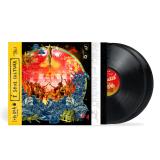
Double LP pressed on transparent red vinyl with black marbles. In Dying Light: The Beast, you step back into Kyle Crane's skin, but he's no longer the man he once was. Years of experiments have left him torn between fragile humanity and a monstrous power that he can barely control. Every light, every shadow, every choice feels dangerous. The forests and ruins of Castor Woods don't just set the stage, they breathe, they watch, and they punish the reckless. This is survival stripped to the bone, where horror is not just outside, but inside you. Olivier Deriviere's powerful and capturing score for Dying Light: The Beast doesn't just accompany Crane's journey, it is his voice. Sometimes it whispers in empty rooms, fragile and broken, sometimes it roars with distorted rhythms and pounding drums when the Beast takes over. Between silence and sound, the music pulls you deeper into Kyle's fractured soul, making every step and every heartbeat part of the story. It's not just a soundtrack, it's the echo of a man losing, and maybe finding, himself.
Igor Tamerlan is a stranger in his own land. Born in 1954 the Hague and spent most formative years in Paris, Igor suddenly had the urge to relocate to Bali in 1986. “I want to settle in Indonesia and marry a local girl,” he told his sister shortly before flying out.
His next journey would be as audacious as his time in the Fifth Republic. Born from a prominent Indonesian expatriate family in Paris with ties to Indonesia’s first prime minister Sutan Sjahrir, Igor earned a degree in architecture at Ecole nationale supe´rieure d’architecture de Paris-La Villette.
He could have been a brilliant architect or a political scientist (he was accepted to Sciences Po), but his passion for music distracted him from his academic works. He was after all named after Russian composer Igor Stravinsky.
During his brief stint at Sciences Po, Igor spent most of times hanging out at recording studios and rub shoulders with the likes of singer-songwriter Jean-Jacques Goldman and Michel Polnaref. He had a brief encounter with The Rolling Stones at the Cha^teau de Thoiry studio in the early 1970s.
But Igor’s musical education and his occidental eyes appeared to be ill-suited for Indonesia. His first record, titled Langkah Pertama (First Step) on the mainstream label Musica was met with a shrug and was a commercial dud. An experimental record blending the influence of Spanish motifs, Francophile production and a whiff of hip hop and ska was seen by critics as being too alien. His sarcasm-laden lyrics and his biting critique of excessive materialism among the upper tier of Indonesia’s nouveau riche in the album was met with confusion from the audience. He was just too far ahead of his time.
He left the label Musica – or may had been dropped – soon after Langkah Pertama and decided to go independent. He then relocated to Bali and set up a state-of-the-art recording studio in Sanur, across the street from Southeast Asia’s first boutique hotel where luminaries like Mick Jagger, David Bowie, Sting, Yoko Ono and Ringo Starr stayed for their holiday.
From the studio, Igor recording everything from the sounds waterfalls, geckos, minibuses to motorized rickshaw and mix them with hip hop, jazz, electronica, dub and Balinese gamelan. A visionary, Igor was the first musician to use MIDI, which started to be available globally in the early 1980s.
On paper, songs like “Bali Vanilli” should not work, a mish mash of disparate elements mentioned above, sung in three languages, Balinese, English and Bahasa Indonesia while tackling the subject of overtourism. The song was also the first to introduce rap to an unsuspecting audience. But for some strange reason “Bali Vanilli” became a sensation and overnight Igor became household name. And in 1987, long before overtourism was an issue, Igor broached the subject to a national audience in Indonesia on the possible destruction of nature and culture from tourism.
Ever an iconoclast, Igor decided to step out of the limelight following the success of “Bali Vanilli” and in early 1990s he relocated to Indonesia’s cultural capital, Yogyakarta. Here, he worked on some more experimental music while juggling as music video director. He passed away in 2018 at the age of 64.
The 10 songs in this compilation, Bali Vanilli: Experimental Pop from Paradise Island (1987-1991), are some of Igor’s best works, music that would have gone into obscurity had it not been for the diligent work of film director Alfred Pasifico Ginting, who managed to track down some of the master tapes while researching on a documentary on the musician.
These recordings have never before been released outside of Indonesia. Igor would have been proud with this reissue project.
- Mahjong Room
- All It Home
- Having Fun
- Jeanie
- Two Step
- Shmoopie
- Red
- Hazel Street
- Undertaker
- Ohio
Mahjong Room is the second album Cameron Lew released under the artist name Ginger Root which explores his coming of age and discovery of his own signature sound; self coined as Aggressive Elevator Soul. Self Produced and Performed, this album marked the beginning of Ginger Roots' rise in popularity outside of his Huntington Beach hometown. Lew was still in film school at the time of recording and releasing Mahjong Room. His attention was equally focused on the music videos that were made for singles `Two Step', `Call it Home', `Jeanie', `Mahjong Room', and `Ohio'. Becoming a signature of Ginger Root releases, the video treatments of songs were humor-filled and directed and produced by Lew himself. Catching the attention of other touring indie acts Ginger Root spent most of the fall of 2018 on tour with artists Khrunagbin, Duran Jones & The Indications, The Marias, and Omar Apollo.
- 1: Back For Guts
- 2: Its Many Faces
- 3: Deadlights
- 4: The Knife Of H.b
- 5: The Macroverse
- 6: Laurie Ann
- 729: Neibolt St
- 8: Our Name Is Legion
- 9: Stanley Uris Takes A Bath
- 10: Children Of The Damned
- 11: Afraid Of Spiders
- 12: D.e.r.r.y
LTD ORANGE + BLACK YOLK VINYL[22,65 €]
Mit ITS MANY FACES legen DERRY ihr lange erwartetes Debütalbum vor und machen unmissverständlich klar, warum sie längst fest zur deutschen Horror-Punk-Szene gehören. Nach der EP REMEMBER THE CURFEW, erscheint auch das Album auf Fett Fleck Records und bündelt all das, wofür die Marburger Band steht: düstere Stories, treibender Punkrock und eine kompromisslose Liebe zum Horror. Horrorpunk, Skate Punk und melodischem Punk Rock mit klarem 90s-Vibe - DERRY schaffen den Spagat zwischen roher Direktheit und eingängigen Hooks, zwischen dunkler Atmosphäre und maximalem Vorwärtsdrang. Schnörkellos, druckvoll und hochgradig eingängig - ein Sound, der gleichermaßen im Club, auf dem Weg zur Arbeit und im Festival-Moshpit funktioniert. ITS MANY FACES ist mehr als nur eine Sammlung von Songs - es ist ein geschlossenes Werk, ein Liebesbrief an den Horror, an Punkrock und an Stephen King: inhaltlich ist es nämlich ein konsequentes Konzeptalbum, das sich ausschließlich Stephen Kings ES bzw. IT widmet, der Roman bildet die Grundlage der Recherchen, Texte und Motive. Die bereits veröffentlichten Singles Laurie Ann, Deadlights, Afraid of Spiders sowie die finale Vorab-Single 29 Neibolt St. beleuchten dabei unterschiedliche Facetten derselben Geschichte - und fügen sich zu einem geschlossenen, düsteren Gesamtbild zusammen. Und bitte auch das famose Coverartwork beachten. Sehr gelungene, runde Sache das. Auf farbigem Vinyl oder als Digipak-CD zu haben.
- Sun Dogs
- Sanibel
- Farewell, Little Island
- Misty Step
- Dragline Silk
- Hinterland I
- Hinterland Ii
- Hinterland Iii
- Well Of The World
- Under The Oak
- Bronze Age
- Valley Of Blue
Cassette[14,08 €]
Als Green-House beschäftigen sich die Musiker Olive Ardizoni und Michael Flanagan mit der menschlichen Natur und der natürlichen Welt durch eine freudige, dynamische Synthese. Frequenzen und Ausdrucksformen werden wie eine Tarnung übereinandergelegt, und ihr tiefgründiger, vielschichtiger kollaborativer Prozess beginnt mit einem der beiden Künstler: Ardizoni fühlt sich oft zur Melodie hingezogen, Flanagan zur Harmonie. Die Kraft liegt darin, wie ihre Ideen sich miteinander verflechten und eine Tiefe erreichen, die größer ist als die Summe ihrer Teile. Für ihre erste LP mit ihrem neuen Label Ghostly International entwickelt Green-House ihre lebendige Instrumentalmusik weiter und verfeinert sie mit unbekannten, genreübergreifenden Freiheiten und Bewegungen, einer aktiveren, perkussiven und emotionsgeladenen Energie, die durch fließende Klänge und weitläufige Aussichten gekennzeichnet ist. Hinterlands stimmt sich mit einer rebellischen, radikalen Aufrichtigkeit auf die Schönheit der Welt ein. Seit 2020 hat das Duo mit einer Reihe von gefeierten Veröffentlichungen über das einflussreiche Label Leaving Records aus Los Angeles seine Neugier für Umgebungen weiterverfolgt und nach organischen und fernen Räumen gesucht. Seit 2020 hat das Duo in einer Reihe von gefeierten Veröffentlichungen über das wegweisende Label Leaving Records aus Los Angeles seine Neugierde für Umgebungen ausgelebt und mit organischen und synthetischen Instrumenten, hochauflösendem Sounddesign und ,eigenwilligen Melodien, die mit der geduldigen und methodischen Hand eines Gärtners geschaffen wurden", wie Pitchfork schreibt, nach inneren und fernen Räumen gesucht. Green-House lässt sich nicht eindeutig in eine einzige Kategorie einordnen. Ardizoni und Flanagan stehen nicht im Einklang mit New-Age-Ideologien oder Spiritualität, und das Label ,Ambient" erscheint angesichts all dessen, was in ihren Songs vor sich geht, zunehmend eingeschränkt. Green-House lässt sich nicht eindeutig einer einzigen Kategorie zuordnen. Ardizoni und Flanagan stehen nicht im Einklang mit New-Age-Ideologien oder Spiritualität, und die Bezeichnung ,Ambient" erscheint zunehmend eingeschränkt angesichts all dessen, was in ihren Songs vor sich geht, die auf ihrem neuen Album eher in Richtung IDM oder sogar moderne Klassik tendieren. Was bleibt, ist ein offenes Gefühl des Staunens, ,die Idee, bestimmte Emotionen in der Musik zu legitimieren, die in der Kunst oft nicht ernst genommen werden, wie Glück und Freude", sagt Ardizoni, dessen eklektische Persönlichkeit auch ohne Texte zum Vorschein kommt.
- A1: Shake
- A2: Freedom
- A3: Closer
- B1: Quiet Power
- B2: Colorblind
- B3: Love By The Hour
Lush Life is the Sonar Kollektiv debut EP by German singer, songwriter and multi-instrumentalist Flo Naegeli.
Originally hailing from the Bavarian forests of southeastern Germany, Naegeli began his musical journey at the age of seven as a folk accordionist, later switching to electric guitar and developing a disciplined approach to songwriting and musicianship that led to formal music studies and a professional career. After moving to eastern Germany, he gradually stepped away from band projects to focus on solo work, embracing self-production tools to realise a sound that blends soulful songwriting with warm, organic instrumentation.
Written and largely recorded by Naegeli himself, Lush Life is a deeply personal yet accessible collection of songs reflecting on fatherhood, family relationships and friendship.
- 1: Redirect Revenge
- 2: All Contrast
- 3: Preserve/Manifest
- 4: Dead Calls
WHITE Vinyl[24,79 €]
INTERWOVEN' is a four-track split EP that binds together two of Denmark's most forwardthinking heavy acts: HIRAKI and Meejah. Built on a shared appetite for boundary-pushing intensity, the collaboration channels the urgency of electronic hardcore, the spaciousness of experimental rock, and the emotional depth of cinematic metal into an immersive work that is at once confrontational and deeply connective. As a part of Denmark's flourishing underground scene for dark and heavy music, the HIRAKI trio deploys an aggressive style of progressive synthpunk from the edge of the abyss. The band presents this sonic assault to accompany the inevitable fact that our world is sick, and we all take part in maintaining the fucked up systemic structures. MEEJAH is a Post/Experimental Danish-Korean band from Copenhagen weaving together Nordic Melancholia & Korean Ancestry. The results sound like Heaven, Thunder, Mountain, Earth, Wind, Fire, Water, Lake. Across these four tracks, both bands challenge each other to step past familiar contours, unraveling and recombining their musical identities until a new hybrid shape emerges_volatile, textured, and unmistakably alive. FOR FANS OF The Body * The Armed * Sightless Pit * Massive Attack * Julie Christmas * Death Engine
Black Vinyl[22,65 €]
INTERWOVEN' is a four-track split EP that binds together two of Denmark's most forwardthinking heavy acts: HIRAKI and Meejah. Built on a shared appetite for boundary-pushing intensity, the collaboration channels the urgency of electronic hardcore, the spaciousness of experimental rock, and the emotional depth of cinematic metal into an immersive work that is at once confrontational and deeply connective. As a part of Denmark's flourishing underground scene for dark and heavy music, the HIRAKI trio deploys an aggressive style of progressive synthpunk from the edge of the abyss. The band presents this sonic assault to accompany the inevitable fact that our world is sick, and we all take part in maintaining the fucked up systemic structures. MEEJAH is a Post/Experimental Danish-Korean band from Copenhagen weaving together Nordic Melancholia & Korean Ancestry. The results sound like Heaven, Thunder, Mountain, Earth, Wind, Fire, Water, Lake. Across these four tracks, both bands challenge each other to step past familiar contours, unraveling and recombining their musical identities until a new hybrid shape emerges_volatile, textured, and unmistakably alive. FOR FANS OF The Body * The Armed * Sightless Pit * Massive Attack * Julie Christmas * Death Engine The single colour edition comes as white vinyl!
Against all odds, a devout audience has ridden shotgun and grown with them every step of the way. This symbiotic relationship speaks to the band's quiet impact with over 167 million streams in the United States alone, widespread acclaim, and sold-out shows. They loudly carved out their own corner of heavy music with an inimitable hybrid of head-crushing polyrhythmic prog-spiked metal, hardcore spirit, and unbridled attitude.
They have assuredly leveled up over the course of albums such as Via 2011, No Sleep [2014], Different Animals [2017], and Happier? [2021]. Kerrang! hailed the latter as "an album that gives a nod to the band's past while still bringing in new ideas." Meanwhile, the group shared stages on tour with everyone from Ice Nine Kills and Born of Osiris to Dance Gavin Dance and Counterparts.
The first resonant space Zosha Warpeha played in was the Emanuel Vigeland Museum in Oslo, Norway. Built as a mausoleum, its walls reach up into a gradual archway, creating an environment where sound expands and reverberates for twelve seconds before decaying into silence. Warpeha was greeted only by dim lights when she entered, and it wasn’t until she had spent several minutes listening that she was able to make out the frescoes that covered every inch of the room: graphic depictions of the cycle of life from conception through death. As the sound of her Hardanger d’amore encountered the walls and these slowly emerging scenes, they obscured its point of origin in both time and space, augmenting its own life cycle. The experience sat in the back of her mind over the next several years as she developed her own patient style of composition and performance, one that comes into full bloom on her new album I grow accustomed to the dark.
When Warpeha was selected as an artist in residence at Brooklyn’s ISSUE Project Room in 2025, she saw it as an opportunity to more intentionally explore how her music might fill a room with ample natural reverb. I grow accustomed to the dark documents two single-take solo performances for Hardanger d’amore and voice at IPR, with both pieces composed in a unique tuning system developed to interact with the space itself. Listeners can trace resonance from the contact of the bow on gut strings into the body of the instrument, its five sympathetic strings offering another layer of refraction, before the sound is thrown about the cavity of the room. The echoes emerge like a photographic double exposure, or wisps of smoke that linger in the air, creating ghostly harmonic convergences that blur the line between what is there and not-there. Sound begins to act like light, a synesthetic alchemy that transforms drones into beams and ornamental trills into flickers.
Both side-long compositions, “filament” and “visual purple,” exemplify a duality that animates Warpeha’s music: an expressive, individualistic style that draws on extensive knowledge of her instrument’s history in folk traditions, and an austere, devotional quality maintained by focus and precision. Though very different in character and structure, both pieces evolve slowly through numerous repetitive phrases, passages of stillness, and bursts of intensity. “filament” opens with a cycle of delicate melodic fragments played and sung around a drone before blossoming into an outpouring of swooping arpeggios, harmonics flying from the strings like sparks off a bonfire. The disorienting pulsation of harmonic beating forms the core of “visual purple,” the close-tone dissonance building to a swarm of open strings ringing boldly throughout the space. After the knotty tones reach their climax, the piece collapses into studied quietude, hushed, but without any drop in intensity.
When Warpeha first visited the Vigeland Museum in 2019, she was in Oslo to deepen her relationship to the Hardanger fiddle through the study of Norwegian traditional music, which is primarily passed down aurally. The experience of learning songs by ear, not only internalizing the tune but also absorbing the techniques and tonalities by listening, was a crucial step in her development as a composer. The years since have seen her sharpen those skills as a prolific member of the New York avant-garde and improvised music communities. Warpeha’s music encourages listeners to join her in this journey, to listen closely with each repeated phrase and through each dramatic shift. Like the frescoes on Vigeland’s walls, with time and intention, the depth of I grow accustomed to the dark comes on like a revelation.
- A1: Harris & Orr - Spread Love
- A2: Terry And Deep South - Trying To Get By
- A3: Toshiyuki Honda - Burnin' Waves
- A4: Igna Igwebuike - Disco Bomp
- B1: Janette Renee - What's On Your Mind (Super Club Remix)
- B2: Grupo Serenata - Sodade, Tem Pena D’mim
- B3: Vital Disorders - Zombie
- B4: Alphonsus Idigo - Flight 505
- C1: Dj Food - Peace (Harvey's 30 Something Mix)
- C2: Man Jumping - In The Jungle
- C3: Stars - Dancin’ People
- D1: Gaucho - Dance Forever (Club Version)
- D2: 49Th Floor - Night Passage (Bongo Mix)
- D3: Orion Agassi - Desacato
- D4: Fatdog - Remember Feat Cj Raine
yellow vinyl[28,15 €]
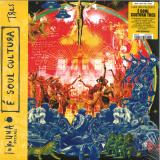
With two deeply cherished compilations already in the bag, Luke Una steps up for the third volume in his É Soul Cultura series on Mr Bongo. A love letter to the dancefloor and its power to unite people from all corners of society amid growing division and extremist politics. Genre-spanning in nature, the 15 tracks travel between cosmic soul, boogie, proto-house, slo-mo technoid grooves, drum machine afro, astral bass-bugging futurism, jazz funk, dance, and disco. Each having the ability to move the body as much as the heart.
From his formative years in Sheffield to co-founding Manchester’s much-fabled Electric Chair with Justin Crawford, through to helming the iconic LGBTQ institutions of Homoelectric / Homobloc, Luke has spent 40 years immersed in dance music. His latest outlet, É Soul Cultura, has grown from a label to a globe-spanning events series with Luke holding residencies and embarking on tours across the world from Japan and Australia to America and Europe.
“For me, the dancefloor was never about a one-dimensional, thudding, 130 BPM beat only. It's a much more dynamic, broader vision than that. I cut my teeth in an era where a 100 BPM record had as much impact, excitement, and energy as a 134 BPM dancefloor jazz funk or techno record”, Luke mentions. É Soul Cultura Volume 3 is the perfect embodiment of that notion: “It’s about four decades in the trenches playing dance music, the late-night afters, the shebeens, the basements, warehouse parties, the eight-hour journeys in East London, through to festival sets at Houghton and We Out Here. It’s music unconstrained by genre or tempo and more about making your body move”.
But this isn’t simply a collection of disparate dance tracks; they carry meaning and soul. “It’s less about escapism, more about reconnection. My experience of post-covid has been the coming together of all the clans in various clubs and gatherings. A reaction to a very toxic world out there, where the aggro rhythms of division have sought to divide us, and people don't meet as often. The coming back together face-to-face in clubs has encouraged a real love in the air, there's a real togetherness and collective spirit”.
Opening up the compilation is a track that channels that very message, the transcendental, soul-rousing Harris & Orr ‘Spread Love’. Joining the dots from there, to the low-slung deep house closer of Fatdog ‘Remember’, you’ll find electronic drum machine Nigerian funk, sitting side by side with dancefloor Cape Verdean brilliance, a post-punk cover of Fela Kuti, rubbing shoulders with cosmic electro, and an Una-championed, 8-minute, kickless DJ Harvey remix. There’s jazz funk in various guises moving from boogie synth to astral travelling, slo-mo acidic raw techno, and a ‘79 soul stepper, alongside swirling percussive Italo disco and tribal-charged house. All infused with an innate ability to bring people together.
As society becomes increasingly fractured, É Soul Cultura Volume 3’s message is more than movement. It’s about dance music’s power to unify people from all walks of life and break down the barriers that divide us.
- A1: Harris & Orr - Spread Love
- A2: Terry And Deep South - Trying To Get By
- A3: Toshiyuki Honda - Burnin' Waves
- A4: Igna Igwebuike - Disco Bomp
- B1: Janette Renee - What's On Your Mind (Super Club Remix)
- B2: Grupo Serenata - Sodade, Tem Pena D’mim
- B3: Vital Disorders - Zombie
- B4: Alphonsus Idigo - Flight 505
- C1: Dj Food - Peace (Harvey's 30 Something Mix)
- C2: Man Jumping - In The Jungle
- C3: Stars - Dancin’ People
- D1: Gaucho - Dance Forever (Club Version)
- D2: 49Th Floor - Night Passage (Bongo Mix)
- D3: Orion Agassi - Desacato
- D4: Fatdog - Remember Feat Cj Raine
black vinyl[28,36 €]
With two deeply cherished compilations already in the bag, Luke Una steps up for the third volume in his É Soul Cultura series on Mr Bongo. A love letter to the dancefloor and its power to unite people from all corners of society amid growing division and extremist politics. Genre-spanning in nature, the 15 tracks travel between cosmic soul, boogie, proto-house, slo-mo technoid grooves, drum machine afro, astral bass-bugging futurism, jazz funk, dance, and disco. Each having the ability to move the body as much as the heart.
From his formative years in Sheffield to co-founding Manchester’s much-fabled Electric Chair with Justin Crawford, through to helming the iconic LGBTQ institutions of Homoelectric / Homobloc, Luke has spent 40 years immersed in dance music. His latest outlet, É Soul Cultura, has grown from a label to a globe-spanning events series with Luke holding residencies and embarking on tours across the world from Japan and Australia to America and Europe.
“For me, the dancefloor was never about a one-dimensional, thudding, 130 BPM beat only. It's a much more dynamic, broader vision than that. I cut my teeth in an era where a 100 BPM record had as much impact, excitement, and energy as a 134 BPM dancefloor jazz funk or techno record”, Luke mentions. É Soul Cultura Volume 3 is the perfect embodiment of that notion: “It’s about four decades in the trenches playing dance music, the late-night afters, the shebeens, the basements, warehouse parties, the eight-hour journeys in East London, through to festival sets at Houghton and We Out Here. It’s music unconstrained by genre or tempo and more about making your body move”.
But this isn’t simply a collection of disparate dance tracks; they carry meaning and soul. “It’s less about escapism, more about reconnection. My experience of post-covid has been the coming together of all the clans in various clubs and gatherings. A reaction to a very toxic world out there, where the aggro rhythms of division have sought to divide us, and people don't meet as often. The coming back together face-to-face in clubs has encouraged a real love in the air, there's a real togetherness and collective spirit”.
Opening up the compilation is a track that channels that very message, the transcendental, soul-rousing Harris & Orr ‘Spread Love’. Joining the dots from there, to the low-slung deep house closer of Fatdog ‘Remember’, you’ll find electronic drum machine Nigerian funk, sitting side by side with dancefloor Cape Verdean brilliance, a post-punk cover of Fela Kuti, rubbing shoulders with cosmic electro, and an Una-championed, 8-minute, kickless DJ Harvey remix. There’s jazz funk in various guises moving from boogie synth to astral travelling, slo-mo acidic raw techno, and a ‘79 soul stepper, alongside swirling percussive Italo disco and tribal-charged house. All infused with an innate ability to bring people together.
As society becomes increasingly fractured, É Soul Cultura Volume 3’s message is more than movement. It’s about dance music’s power to unify people from all walks of life and break down the barriers that divide us.
Crave Tapes is thrilled to announce the first vinyl release on the label which will be the second album from Frankfurt's underground post-punk/dark wave band Babes of Enola Grey, Krieg und Wohlstand.
Krieg und Wohlstand sees Babes of Enola Grey follow the path of their 2021 debut, Anfang vom Ende, and take a step further into the realm of melancholic and disillusioned soundscapes. While keeping a certain retro character to the songs, Deborah Vision, Salvador Islero and Fabian van Castorp focus on quite contemporary themes, which some might call the most German obsessions:
War and prosperity.
But this is not the only reference to the band's heritage. Sometimes more, sometimes less, there are musical allusions to various German influences and contributions to (modern) music and music history. While Doppelt Frei is a nod to EBM and bands like DAF or the early Die Krupps and Wie auf Schienen as well as Die Heuschrecken pay homage to German düster punk bands like Fliehende Stürme or EA80, Panik and the title track Krieg und Wohlstand refer to the romantic German art song tradition of the 19th century (not to mention the obvious hint at a certain successful German Schlager in Die Kugeln und das Herz).
This makes Krieg und Wohlstand not only a worthy epigone of the band's debut, but also takes the album and the artistic approach to another level.
Commenting on the chosen format (12" vinyl), the band members said: "It was clear to us that we wanted to release this album on vinyl. When you look atGerman history, war and prosperity have to be seen as two sides of the same medal, or in this case of a record".
Strut Records presents a fresh look at Oblivion Express, the 1971 album that marked Brian Auger’s shift into a new musical frontier. After years spent shaping the sound of British jazz-soul with the Trinity, Auger stepped into the new decade with a leaner, electrified ensemble and a renewed sense of purpose. This record captures the moment that transformation took shape.
Oblivion Express introduced a sound that was distinctly Auger’s own. Rather than echoing the fusion emerging in the United States, Auger developed a language rooted in the UK’s jazz underground, culminating in a spaced out jazz- rock / prog-fusion album awash with larger than life drum fills and Auger’s virtuosic organ playing. Between bassist Barry Dean and drummer Robbie McIntosh the album moves effortlessly between tight, articulated phrases and broader, improvisational passages. The trio’s interplay forms the backbone of the album and sets the tone for the sound that would define the early years of the Express.
Album opener “Dragon Song” launches with a restless drive that immediately signals Auger’s new direction. Auger chose to record this version of John McLaughlin’s piece (his friend and former bandmate in 'The Niddy Griddys') after hearing McLaughlin’s album Devotion during its mix at New York’s Record Plant Studios. Auger was blown away, recalling, “Oh my god, this is amazing. I wanted to record that myself - and I did!”. Pieces like “Total Eclipse” demonstrate the Oblivion Express’ command of dynamic contrast, and title track “Oblivion Express” explores the cinematic and compositional prowess of the group through stripped back, building moments vs. explosive melodic breakdowns. Riff-heavy “The Sword” later became known through Madlib’s usage in 2014 tracks “Yeti Movie” and “Parodies”.
In retrospect, Oblivion Express stands as a jazz leaning, prog-rock masterpiece and foundational moment in Auger’s catalogue. It captures the starting point of a new sound that is more focused, more urgent, and fully committed to the possibilities of jazz-rock at the dawn of the seventies. The album remains a vivid document of a band discovering its identity and setting the stage for the further array of influential releases that would follow.


![Babes Of Enola Grey/artist] - Krieg und Wohlstand](https://www.deejay.de/images/l/1/7/1226617.jpg)