
Cerca:k sub


Repress!
Le Très Jazz Club keeps on exploring Japanese jazz and Three Blind Mice catalog with the reissue of this amazing 1976 record by drummer George Otsuka. This LP is reissued for the first time since 1976. Reissued for the first time outside of Japan, “Physical Structure” by Japanese drummer George Otsuka is an amazing jazz-fusion album, featuring Fumio Karashima on the piano and Fender Rhodes and Shozo Sasaki on tenor sax. Check the surprising and sublime cover of “Naima” which alone justifies to get this record! With : George Ostuka (drums), Shozo Sasaki (tenor & soprano sax), Fumio Karashima (piano, electric piano, synthesizer), Mitsuako Furuno (bass), Norio Ohno (percussion). Recorded on February 11, 1976

8

It is always our pleasure to have new talents in the house, and we've been following Notzing's development since long ago. His approach to techno is absolutely personal and complex, hard and intrincated, mental and physical.
Protae is the first missile in this box full of weapons, a super busy techno exercise with compacted drums, drilling synth lines and random metallic hits breaking the monotony. The effect on the floor is devastating and has been tested extensively in dancefloors worldwide by label owner Oscar Mulero in the past months. 7 minutes of pure dancefloor mayhem.
Fagus continues with the sickness, with hysterical synth washe repeating an hypnotic chant, adding layers of sound as the groove goes by. Repetition is here the key to proper trance, not exactly with pleasant tones but by aggression.
Ekaterin is gummy and elastic with formant synth sounds chewing frequencies and changing constantly in shape. Another mental mantra with a physical drive.
Molniya slows down the pace and dives into profound sound scapes full of unnatural underwater sounds and washes providing a feeling of scuba diving.
To end this sonic odyssey, Emision goes completely beatless, growing from the profound sub bass frequencies to crispy and crunchy surface noises, creating the soundtrack of floating in outer space with no gravity. Please beware of the super intense bass tones when playing on a big sound system.
The perfect combination of experimentation and punchiness, keep an eye on this guy, is gonna make some proper noise in the coming years.

Moving to England for its second release, Rant & Rave Records presents a proper EP from South Wales-based producer JoeFarr, known for his dancefloor jams on labels such as: 'SLAM', 'Arts', and his most recent success with 2019's epic 12" 'Death Becomes Us'. On the a-side 'In This Anger', which JoeFarr has written with Louisahhh, an anxiously dark, slowly developing atmosphere menaces behind a slow rolling, broken beat for maximum effect. This is punctuated by dark, slightly distorted female vocals with sporadic lyrics subtly encouraging its dance floors to move.. and think. Signature hard and bouncy grooves with infectious in-yer-face techno riffs dominate the rest of the EP with tracks 'Laced Up', 'You Can See Me' and 'You will See Me (Hardcore)', effortlessly weaving in and out of the pulsating groove with an interesting palette of machine sounding synths and heavily processed vocals.

Faitiche welcomes Andrew Black aka blackbody_radiation. His debut album Ultra Materials gathers six ghostly drones, created with the help of sound masking.
Andrew Black, who hails from one of the UK's post industrial North West Milltowns has a sensitive feeling for space and its acoustics. Having trained as a designer and operated within the realms of architecture and public space, it was only natural to extend his interest to manipulating field recordings.
The six pieces collected on Ultra-Materials provide an insight into Black's highly sensitive minimalism: they stand for a subtly meandering mediation on room acoustics and place, which are manipulated with the help of sound masking, among other things - that is, the addition and superimposition of artificially generated frequencies to mask unwanted sounds.
Sometimes the pieces are reminiscent of warm engine noise, sometimes one thinks of carefully captured natural phenomena. Their strength lies in their elusiveness: free of concrete attributions or musical location, they can unfold their hypnotic pull without revealing anything about their origins. Harmonics at times shimmer, at times warble and at times coexist. It is an attempt to get in touch with our listening abilities.

4
Falling Ethics' sublabel Moral Standards presents their first V.A. with a stellar lineup of some of the most relevant names of this era.
P.E.A.R.L. starts off the 4-tracker with a groovy and stripped back tool, whereas Not A Headliner contributes a rather driving track, typical for his sound.
On the B-side Ryan James Ford comes with a heavy thumping track led by staccato synth stabs. To close off the V.A., DJ TOOL has the deepest and most trancy cut with stripped back drums and dreamy synths.

4
Mila Stern's groove-heavy and highly danceable sound explores fringe soundscapes informed by Post-Punk and Electro. What sets her apart is a willingness to embrace unorthodox sounds, explore the beauty in harshness and dissonance, and transform jarring atmospheres into captivating dancefloor moments. With 'Five Finger EP', Mila Stern delivers an eclectic six-tracker featuring two high-pressure originals and four carefully selected reimaginations by Camea, mytripismytrip, Öona Dahl, and Hardt Antoine for Kiosk catalog number 021.
'Five Finger Discount' encapsulates Mila's uncompromising aesthetic: warm, powerful, energetic, and constantly teetering on the brink of disintegration. Morphing, overdriven stabs build energy atop a sub-heavy groove and a sea of pads. A sweeping break fractures the track into shuddering bursts of corroded machinery, before the compact groove returns with punishing dancefloor power.
Camea transforms 'Five Finger Discount' into a heavy-weight techno roller. Shuddering, pitch-shifting bass hits and salvos, sizzling white noise sweeps, and an ominous mantra morph the track into a darkly efficient peak- time banger.
Hardt Antoine builds his rendition of 'Deadline Disco' around an infectiously body-moving arpeggio. Layers of distortion add a searing edge, transforming the original into a stripped powerhouse with Dark Disco undercurrents.
Few artists move on the fringe so comfortably, make unconventional sounds so accessible, or pursue their vision with the same bright-eyed conviction.
With 'Five Finger EP', Mila Stern epitomises the magic that happens when uncommon sounds are embedded in the framework of commanding, floor-focused energy. 'Five Finger EP' embodies her stand-out style and the stunning range of musical interpretations it inspires.

- A1: Yantra
- B1: Tor 8
- B2: Temple
- C1: Black Jack
- C2: Astra
- D1: Gamma (Alternate Mix)
- E1: Sexuality (My Reality)
- E2: Space Cowboys I
- F1: Raum 422
- G1: Friedrichshain Funk
- G2: Solar
- I1: Hymn (In The Name Of Fantasy)
- I2: Gamma (The Other Side)
- J1: Don't Be Stupid Day (Extended Album Mix)
- K2: Waver
- L1: It's Time (To Move Your Body)
- M1: Shri Yantra
- M2: Make Me Scream
- N1: Liyah
- O1: Halide Part 1
- O2: Voices
- P1: Halide Part 2
- K1: Space Cowboys Ii
23
EACH COPY Personally SIGNED BY LEN FAKI
Len Faki has always been a defining character of the techno underground. His unique approach to DJing, the consistent work as a producer and the quality output of his label Figure has all shaped the current environment.
Starting out as a clubber in the 90's, his inspirations have always reached back to the first encounters with electronic music, when new worlds opened and everything seemed possible.
While these experiences have always influenced Faki's productions and used to be released under many different aliases back in the day, they have been waiting since to be made into a proper album under the Len Faki moniker.
After quickly climbing to the top of the international DJ circuit, busy touring schedules never quite allowed for it. Finally faced with the opportunity of a long overdue creative break, Faki decided tackle the life-time venture with the necessary dedication and focus.
Excited about the new project, he also took the time and energy needed to expand his production methods. Finding new techniques allowed him to truly bring all his different influences to the surface. The process was one of following his own heart, occasionally challenging and surprising himself. Naturally the result emerged as two parallel experiences, which are now presented across two discs. Both still carry all the signature features of Faki's style but with added layers of depth and detail. There's that special contrast of dark and heady grooves, paired with dreamy melodies that transport the listener to places beyond the mind. But we also see all strains of his previous work being incorporated, mixed and molded into something new altogether.
While the first disc focuses on the kind of techno, which Faki has been brought up by and given back to for so many years of his life, the second is more loose and experimental, with forays into house, ambient and broken beats - the sounds he has always kept very passionate about.
It creates two distinct experiences, showcasing the entire breadth of Faki's cosmos. Where some ideas stay straight and kick hard, like the neon bleep opener Tor 8 or joyfully booming Astra, others take the newfound freedom to inspire a wistful broken beat ballad such as Hymn (In the Name of Fantasy) or the soulfully subdued Drum & Bass closer Voices.
Many songs even exist as pairings, with their respective counterpart on the other disc. For example, the duo of Shri Yantra/Yantra, where similar soundscapes have been looked through different lenses, making for a more straight-laced or shuffled rhythm. Also noteworthy are Faki's appearance as a veritable house producer on Hymn (In the Name of Freedom) as well as the inclusion of two very personal pieces:
The Halide tracks were made in remembrance of Faki's late mother, who passed away during the final production stage of the EP. These delicate tracks capture the intense sadness Faki was feeling at the time and helped him to process his grief and eventually to finish off the album.
By doing so Faki has given us a complete artistic statement, one that proves him to be as curious and driven now as ever, taking his sound to all-new realms.

9
For over two decades Jonathan Katsav has used his Crave project to fray rap at its fringes, using Memphis and Houston's low-and-slow legacy to inform sounds that have as much in common with Merzbow as they do Tommy Wright III. Working under a variety of different monikers such as Lieu Noir, Sniper Bait and Soul Collector, the French producer is most prolific as Crave, and "Inner War Delirium" is a substantial and broadly cinematic addition to his canon. Katsav approaches each track as if it's a scene from a movie, using real life experiences to explore separate characters and contrasting emotions. Using different narrators and disparate vocal styles, he navigates grim, blown-out landscapes, driving neon drenched trap synths and horror choirs against overdriven kicks and waterlogged industrial atmospheres. Mangled field recordings, squealing static and gurgling synthesized bass opens 'PHYLLIS', goading the cautious with serrated, carnival synths and cacophonous vocals that sway lugubriously between rap and grindcore. The relationship between dark and light, death and rebirth, is at the heart of "Inner War Delirium", rippling through every track's oozing amalgamation of inebriated hip-hop and buzzsaw noise. Katsav's sounds are an attempt to subject us to the physicality of his own life's puzzle, and he cuts them into vignettes like a director. On the album's final track, listeners are swiped from in front of the speakers and bundled into the trunk of a car, rain rattling on the metal and the album playing on in the distance. It's a way for the producer to turn the camera back on the audience and ask them to consider their own complicated reality - it's Crave's story, but everyone's a part of it.

6
Pressing Info: 180g black vinyl double LP, etched D-side, hand-numbered gatefold sleeve, limited to 500, download card included. Porto-based trio 10 000 Russos will release their new 'Live In Berlin' double LP on March 24th 2023 via Rubber Duck, a new live album imprint by Fuzz Club Records. The record captures the band storming through their subterranean motorik psych-drone live at Berlin's Astra Kulturhaus on October 16th 2021. Recorded whilst out on a European tour, 'Live In Berlin' finds 10 000 Russos performing their 2021 'Superinertia' LP in full the album's five songs expanded and taken to even more transfixing and hedonistic heights in a live setting. These shows were 10 000 Russos' first with the new, more-electronic line-up and sound, with newly-recruited synth player Nils Meisel making his debut on the 'Superinertia' LP and completing the line-up alongside founding members Joao Pimenta (drums/vocals) and Pedro Pestana (guitar). Across the hour-long set, Pimenta's deadpan sprechgesang vocal and machine-like percussion, Pestana cascading psych guitar-loops and Meisel's repetitive synth basslines all combine on a performance that will pull you into a trance at times and get you on your feet at others.

12
Working with Bat For Lashes producer David Kosten (aka Faultline), the recording of Man Alive was completed mainly in a chapel in North Wales. The album sounded unique. Nothing dates like the future, yet Man Alive sounds dateless, placeless, and as a result, stands up perfectly many years later.
Man Alive was only the beginning of the group's adventures in – to use their words – 'Mismatched styles of music mashed together.' The result is often exhilarating; there are Brazilian drums and a prog guitar breakdown in Schoolin', classical influences, as well. Its subject matter is often way outside the realms of conventional songwriting; MY KZ, UR BF explored the different Americas: the cosy self-centred domesticity of programmes such as Friends versus a foreign policy
based on killing; Qwerty Finger examines imperialism. Anglo Saxon guilt is also present.
The album's artwork was striking – a photograph of a fox by Swiss photographer, Laurent Geslin, reflecting the track Tin (The Manhole) which deals with the theme of depression, through, as the band said in 2010, "the story of an urban fox that ingests all our pollution and grows massively in a sort of dream sequence. We chose photos of an urban fox for this reason, but we partly attacked the code of the digital image to create a glitch distortion . . . a reference to digital manipulation and chaos as well as our modern lives online".
Released in August 2010, Man Alive made the UK Top 20 and was well reviewed.
For example, BBC Music commented that the group "know more than most how to craft a song, how to make an album. They know how to give it depth, light and dark, and they - crucially - know when to stop." Man Alive was shortlisted for the 20th Mercury Music Prize in 2011.
The original LP edition of the album is super- scarce, released before the 'vinyl revival' kicked in, hence the original pressing now selling in the high three figures.
This re-issue is presented with scrupulous attention to the detail of the original UK first pressing, complete with gatefold sleeve, poster and 8 page booklet. It is pressed on 140gm vinyl.

8
Each song has its own story, which the duo has reimagined in their own unique way, covering topics such as love, heartbreak, and friendship - with tradition with emotions nestled underneath.Nominated for Best Vocalist at the Scottish Jazz Awards in 2022, vocalist and songwriter Louise Dodds released her self-penned album The Story Needs an Ending in 2022, subsequently touring the album around the UK. The album was selected as one of three notable jazz releases of 2022 by The Scotsman. Prior to this, 2020 saw Louise having the honour of opening for Norma Winstone MBE.
Elchin Shirinov is a jazz pianist, composer, and arranger, originally from Azerbaijan. Most recently he was included in All About Jazz's December 2022 poll of the Top 200 favourite living pianists in the world. From 2018 to 2022 he was a member of the famous jazz double bassist Avishai Cohen's trio, during which time he recorded three albums and toured internationally as a member of the trio.

10
Recorded at Channel One and Randy's with a mix done at King Tubby's. 'Love Train' highlights The Revolutionaries 'rockers' sound and is a 'showcase' album which means the corresponding dub follows each vocal track. The album contains the original vocal cut of West Man Rock which was dee-jay'ed over by Ken Quatty under the same title, plus some outstanding Revolutionaries dubs of Jerry's vocal tracks. 'Love Train', was originally issued by Burning Sounds' sublabel Burning Rockers on red vinyl in 1979. Burning Sounds have on this re-issue album kept the original colour and label.
11
disponibile anche
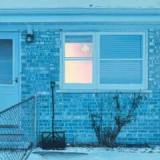
The sessions with Walla (Death Cab for Cutie, Tegan and Sara, Foxing) struck the perfect balance between preparation and experimentation, injecting new life into the band's style of soft- hearted Midwestern indie rock with an ever so subtle Americana twist. The solidified Ratboys lineup stretched and expanded their vision in the studio, adding unexpected elements and instruments like rototoms, talkboxes, and fiddles. The result is Ratboys' most sonically diverse record, shifting wildly from track to track. It flexes everything from fuzzy power pop choruses on "Crossed That Line" and "It's Alive!" to a warm country twang on "Morning Zoo" to mournful folk on the titular track. After more than ten years and four studio albums, The Window finally captures Ratboys as they were always meant to be heard--expansive while still intimate, audacious while still tender--the
sound of four friends operating as a single, cohesive unit.

Like a nervous amalgam of Death Grips' blown out bass frequencies, This Heat's jittery spasms, and Young Widows' imposing oratory, DITZ have created a sound that's equally suited for degraded dance floor gyrations and forward- thinking hardcore shows. At times a blurry tirade against invasive social media and at other times a celebration of cheap rolling tobacco, "Riverstone" was crafted while the band was on tour and deep in the delirium of road fatigue as an ode to the
hallucinatory spirit of their exhaustion. "Riverstone" by DITZ is available today on all digital platforms.
DITZ singer Cal Francis explains, "We wrote this track on a day off on our July tour. Caleb had recently bought this sub phatty and had taken it with him so we were trying to find anyway to make it fit in a track. I think we were listening to lots of Death Grips and hardcore that week. The lyrics were related to whatever we were talking shit about that day. Dirt cheap baccy and annoying invasive TikToks.
It's hard to recall."

Birthed amidst a vibrant artistic community fragmented and dislocated through the pandemic, tds bem Global is a message in the bottle blasting from a streetparty sub- woofer encouraging others to make their art. FFO: Rosalia, Tokischa, Major Lazer.

- 1: Hello
- 2: A Love From Outer Space
- 3: Crack Up
- 4: Timewind
- 5: What's All This Then?
- 6: Snow Joke
- 7: Off Into Space
- 8: And I Say
- 9: Yeti
- 10: Conundrum
- 11: Honeysuckleswallow
- 12: Long Body
- 13: In A Circle
- 14: Fast Ka
- 15: Miles Apart
- 16: Pop
- 17: Mars
- 18: Spook
- 19: Sugarwings
- 20: Back Home
- 21: Down
- 22: Supervixens
- 23: Insect Love
- 24: Sorry
- 25: Catch My Drift
- 26: Challenge
26
A.R. Kive collates the three most astonishing works from that most miraculous of duos - A.R. Kane - comprising the ‘Up Home’ EP from 1988 that signified the band’s dawning realisation of their own powers and possibilities, their legendary debut LP ‘sixty nine’ (1988) and its kaleidoscopic, prophetic double-LP follow up ‘i’ (1989).
In founder-member Rudy Tambala’s new remastering, the music on these pivotal transmissions from the birth of dream pop, have been reinvigorated and re-infused with a new power, a new depth and intimacy, a new height and immensity. Vivid, timeless and yet always timely whenever they’re recalled, these records still force any listener to realise that despite the habits of retrospective myth-making and the
safe neutering effects of ‘genre’, thirty years have in no way dimmed how resistant and dissident to critical habits of categorisation A.R. Kane always were. Never quite ‘avant-pop’ or ‘shoegaze’ or ‘post-rock’ or any of those sobriquets designed to file and categorise, A.R. Kive is a reminder that those genres had to be coined, had to be invented precisely to contain the astonishing sound of A.R. Kane, because
previous formulations couldn’t come close to their sui generis sound and suggestiveness. This is music that pointed towards futures which a whole generation of artists and sonic explorers would map out. Now beautifully repackaged, remastered and fleshed out with extensive sleeve notes and accompanying materials, ‘A.R. Kive’ reveals that 35 years on it’s still a struggle to defuse the revolutionary and inspirational possibility of A.R. Kane’s music.
A.R. Kane were formed in 1986 by Rudy Tambala and Alex Ayuli, two second-generation immigrants who grew up together in Stratford, East London. From the off the pair were outsiders in the culturally mixed (cockney/Irish/West Indian/Asian) milieu of the East End, with Alex and Rudy’s folks first generation immigrants from Nigeria and Malawi, respectively. The two of them quickly developed and fostered an innate and near-telepathic mutual understanding forged in musical, literary and artistic exploration. Like a lot of second-generation immigrants, they were ferocious autodidacts in all kinds of areas, especially around music and literature. Diving deep into the music of afro-futurist luminaries such as Sun Ra, Miles Davis, Lee Perry and
Hendrix, as well as devouring the explorations of lysergic noise and feedback from contemporaries like Sonic Youth and Butthole Surfers, they also thoroughly immersed themselves in the alternate literary realities of sci-fi and ancient history (the fascination with the arcane that gave the band their name), all to feed their voracious cultural thirsts and intellectual curiosity.
It was seeing the Cocteau Twins performing on Channel 4 show the Tube that spurred A.R. Kane into being - “They had no drummer. They used tapes and technology and Liz Fraser looked completely otherworldly with those big eyes. And the noise coming out of Robin’s guitar! That was the ‘Fuck! We could do that! We could express ourselves like that!’ moment”, recalls Tambala - and through a mix of
confidence, chutzpah, ad hoc almost-mythical live shows and sheer innocent will the duo debuted with the astonishing ‘When You’re Sad’ single for One Little Indian in 1986. Immediately dubbed a ‘black Jesus & Mary Chain’ by a press unsure of WHERE to put a black band clearly immersed in feedback and noise, what was immediately apparent for listeners was just how much more was going on here - a
tapping of dub’s stealth and guile, a resonant umbilicus back to fusion and jazz, the music less a conjuration of past highs than a re-summoning of lost spirits.
The run of singles and EPs that followed picked up increasingly rapt reviews in the press, but it was the ‘Up Home EP’ released in 1988 on their new home, Rough Trade that really suggested something immense was about to break. Simon Reynolds noted the EP was: Their most concentrated slab of iridescent awesomeness and a true pinnacle of an era that abounded with astounding landmarks of guitar-reinvention, A.R. Kane at their most elixir-like.
If anything, the remastered ‘Up Home’ that forms the first part of ‘A.R. Kive’ is even more dazzling, even more startling than it was when it first emerged, and listening now you again wonder not just about how many bands christened ‘shoegaze’ tried to emulate it, but how all of them fell so far short of its lambent, pellucid wonder. This remains intrinsically experimental music but with none of the frowning orthodoxy those words imply. A.R. Kane, thanks to that second generation auto-didacticism were always supremely aware about the interstices of music and magic, but at the same time gloriously free in the way they explored that connection within their own sound, fascinated always with the creation of ‘perfect mistakes’ and the possibilities inherent in informed play.
‘sixty nine’ the group’s debut LP that emerged in 1988 had
critics and listeners struggling to fit language around A.R. Kane’s sound. As a title it was telling - the year of ‘Bitches Brew’, the year of ‘In A Silent Way’, the erotic möbius between two lovers - and as originally coined by the band themselves, ‘dream pop’ (before it became a free-floating signifier of vague import) was entirely apposite for the music A.R. Kane were making. Crafted in a dark small basement studio in which Tambala recalls the duo had “complete freedom - We wanted to go as far out as we could, and in doing so we discovered the point where it stops being music”. There was an irresistibly dreamy, somnambulant, sensual and almost surreal flow to ‘sixty nine’s sound, but also real darkness/dankness, the ruptures of the primordial and the reverberations of the subconscious, within the grooves of remarkable songs like ‘Dizzy’ and ‘Crazy Blue’. Alex’s plangent vocals floated and surged amidst exquisite peals of refracted feedback but crucially there was BASS here, lugubrious and funky and full of dread, sonic pleasure and sonic disturbance crushed together to make music with a center so deep it felt subcutaneous, music constructed from both the accidental and the deliberate, generous enough to dance with both serendipity and chaos. ‘sixty nine’ remains - especially in this remastered iteration - ravishing, revolutionary.
The final part of this ‘A.R. Kive’ contains 1989’s astonishing double-LP ‘i’ which followed up on ‘sixty nine’s promise and saw the duo fully unleash their experimental pop sensibilities over 26 tracks, plunging the A.R. Kane sound into a dazzlingly kaleidoscopic vision of pop experiment and play. Suffused with new digital technologies and combining searingly sweet and danceable pop with perhaps the duo’s strangest and boundary-pushing compositions, the album did exactly what a great double-set should do - indulge the artists sprawling pursuit of their own imaginations but always with a concision and an ear for those moments where pop both transcends and toys with the listeners expectations. Jason Ankeny has noted that “In retrospect, ‘i’ now seems like a crystal ball prophesying virtually every major musical development of the 1990s; from the shimmering techno of ‘A Love from Outer Space’ to the liquid dub of ‘What’s All This Then?’, from the alien drone-pop of ‘Conundrum’ to the sinister shoegazer miasma of ‘Supervixens’ — it’s all here, an underground road map for countless bands to follow.” Perhaps the most overwhelmingly all-encompassing transmission from A.R. Kane, ‘i’ bookended a three year period in which the duo had made some of the most prophetic and revelatory music of the entire decade.
After ‘i’ the duo’s output became more sporadic with Tambala and Ayuli moving in different directions both geographically and musically, with only 1994’s ‘New Clear Child’ a crystalline re-fraction of future and past echoes of jazz, folk and soul, before the duo went their separate ways. Since then, A.R. Kane’s music has endured, not thanks to the usual sepia’d false memories that seem to maintain interest in so much of the musical past, but because those who hear A.R. Kane music and are changed irrevocably, have to share that universe which A.R. Kane opened up, with anyone else who will listen. Far more than other lauded documents of the late 80s it still sounds astonishingly fresh, astonishingly livid and vivid and necessary and NOW.
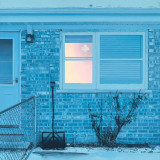
The sessions with Walla (Death Cab for Cutie, Tegan and Sara, Foxing) struck the perfect balance between preparation and experimentation, injecting new life into the band's style of soft- hearted Midwestern indie rock with an ever so subtle Americana twist. The solidified Ratboys lineup stretched and expanded their vision in the studio, adding unexpected elements and instruments like rototoms, talkboxes, and fiddles. The result is Ratboys' most sonically diverse record, shifting wildly from track to track. It flexes everything from fuzzy power pop choruses on "Crossed That Line" and "It's Alive!" to a warm country twang on "Morning Zoo" to mournful folk on the titular track. After more than ten years and four studio albums, The Window finally captures Ratboys as they were always meant to be heard--expansive while still intimate, audacious while still tender--the
sound of four friends operating as a single, cohesive unit.
